


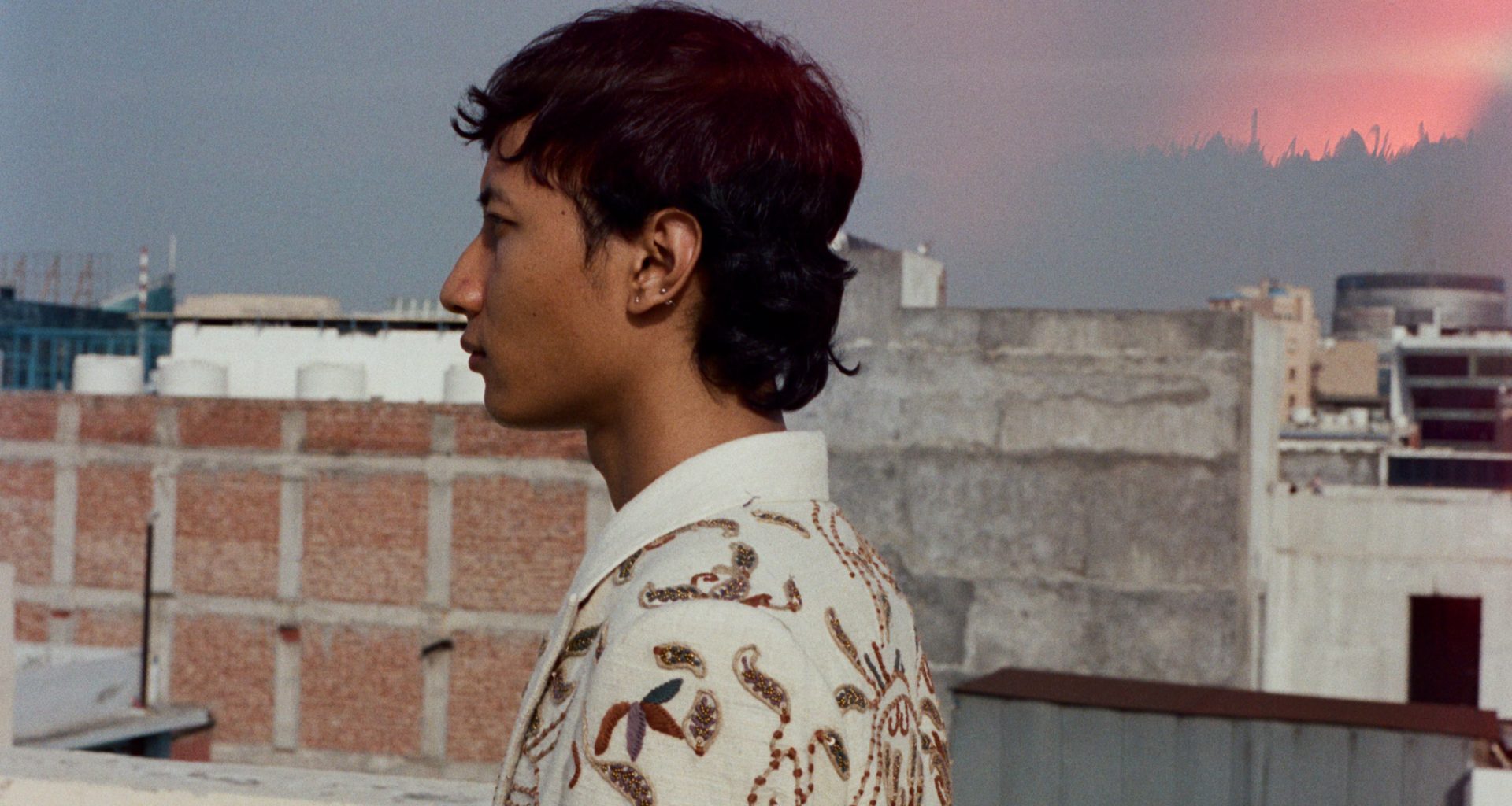
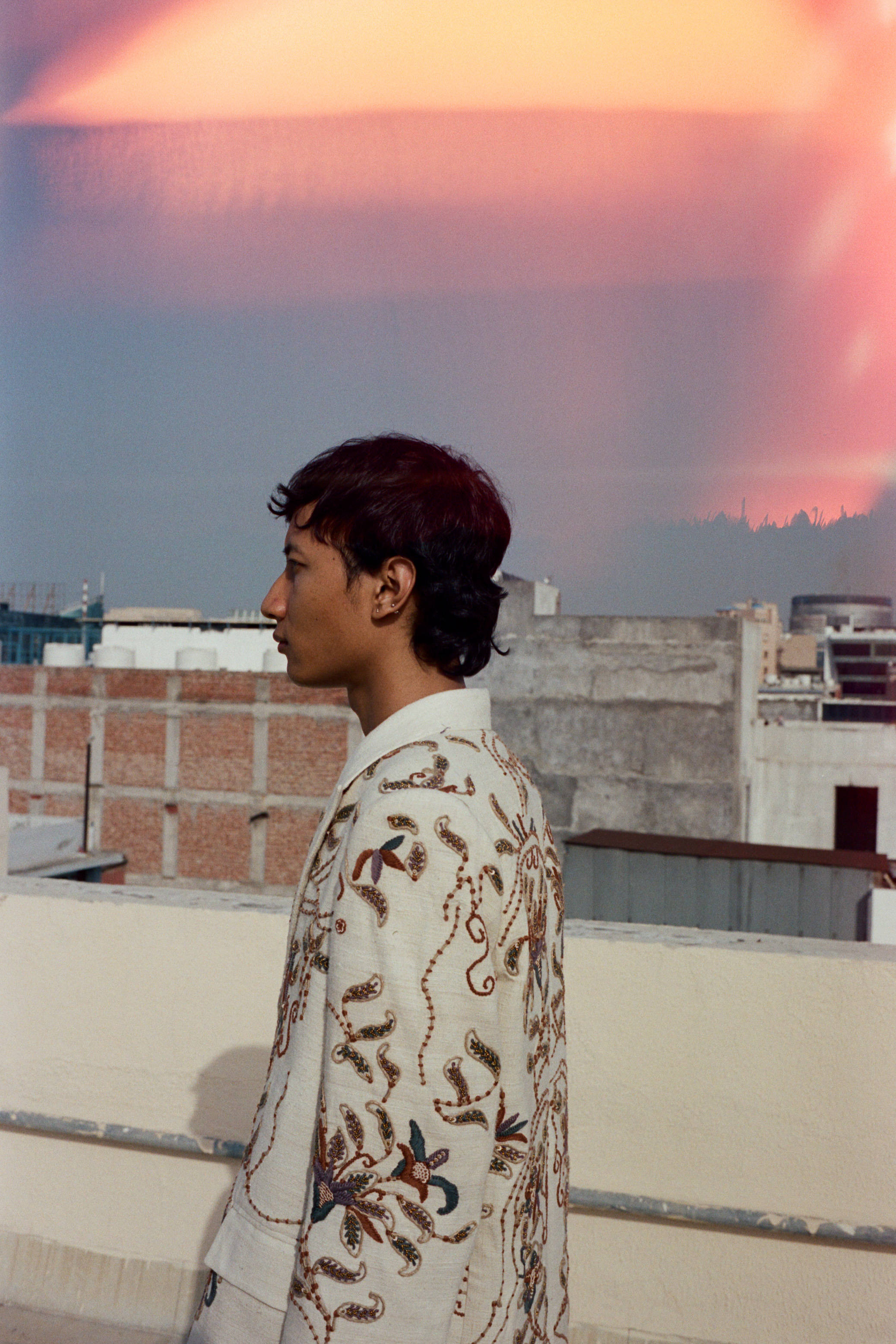
As Kartik Kumra prepares to bring his vision to Florence, a new factory raises a bigger question for menswear: who gets to control the craft, the production and the story behind the clothes?
Fashion loves craftsmanship. It loves it even more when it comes with a compelling backstory. The harder question is what happens when craft stops being a selling point and becomes a question of who holds power over production. Kartik Research is starting there.
Founded in New Delhi in 2021 by Kartik Kumra, the label works with handloom textiles, plant-based dyes and hand embroidery, drawing on India’s subcultures and craft traditions without treating them as museum pieces. Its references span 1960s psychedelic rock and Indo-modernist art, translating cultural memory into contemporary menswear. In 2025, it became the first Indian menswear label to debut on the official Paris Fashion Week Men’s calendar. Now, Kumra is turning his attention to a different kind of statement: building his own factory.
The ambition, as he describes it, is not simply to scale faster. Kartik Research has long operated across a fragmented network of weavers, embroiderers and stitching units, often in different regions. Bringing parts of that process in-house could give the brand greater control over how fabric behaves, how techniques meet and how a garment retains its original intention. It could also bring the people behind the work into a more continuous relationship with one another. The distinction is crucial: a factory is not inherently more ethical, and proximity alone does not guarantee better working conditions. The real test will be whether greater control over production also means greater accountability to the people who make it possible.
That tension makes Kartik Research a compelling choice for Pitti Immagine Uomo, where it will appear as Guest Designer at the 111th edition in Florence, from 12 to 15 January 2027. Since its beginnings in 1972, Pitti has helped shape the international menswear market, evolving from a trade platform for Italian fashion into a global meeting point for tailoring, emerging design and the business of male identity. Its invitation to Kumra reflects a wider shift: Indian craft is increasingly being recognised as a source of contemporary design authority, not merely as a production resource or an exotic detail attached to somebody else’s vision.
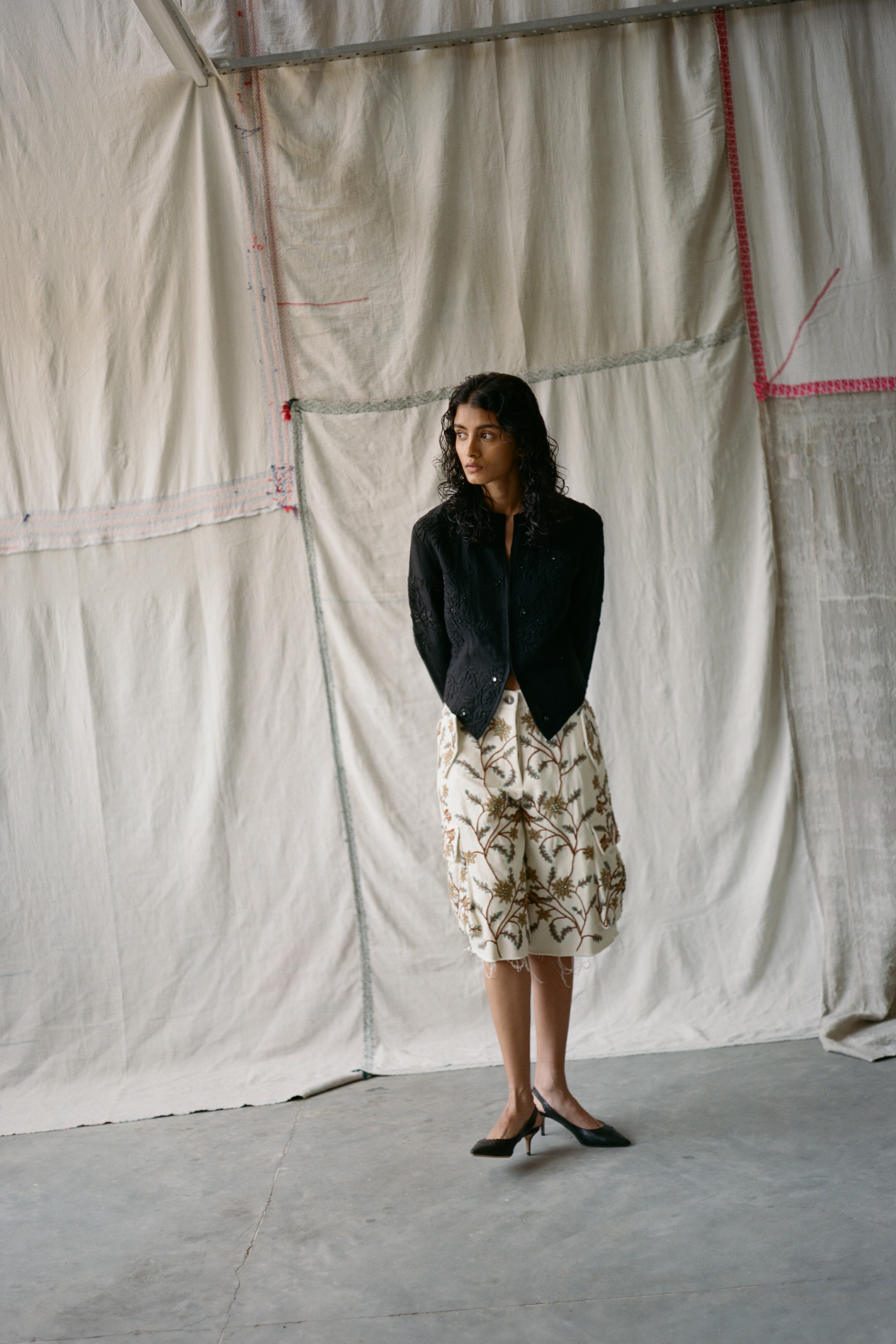
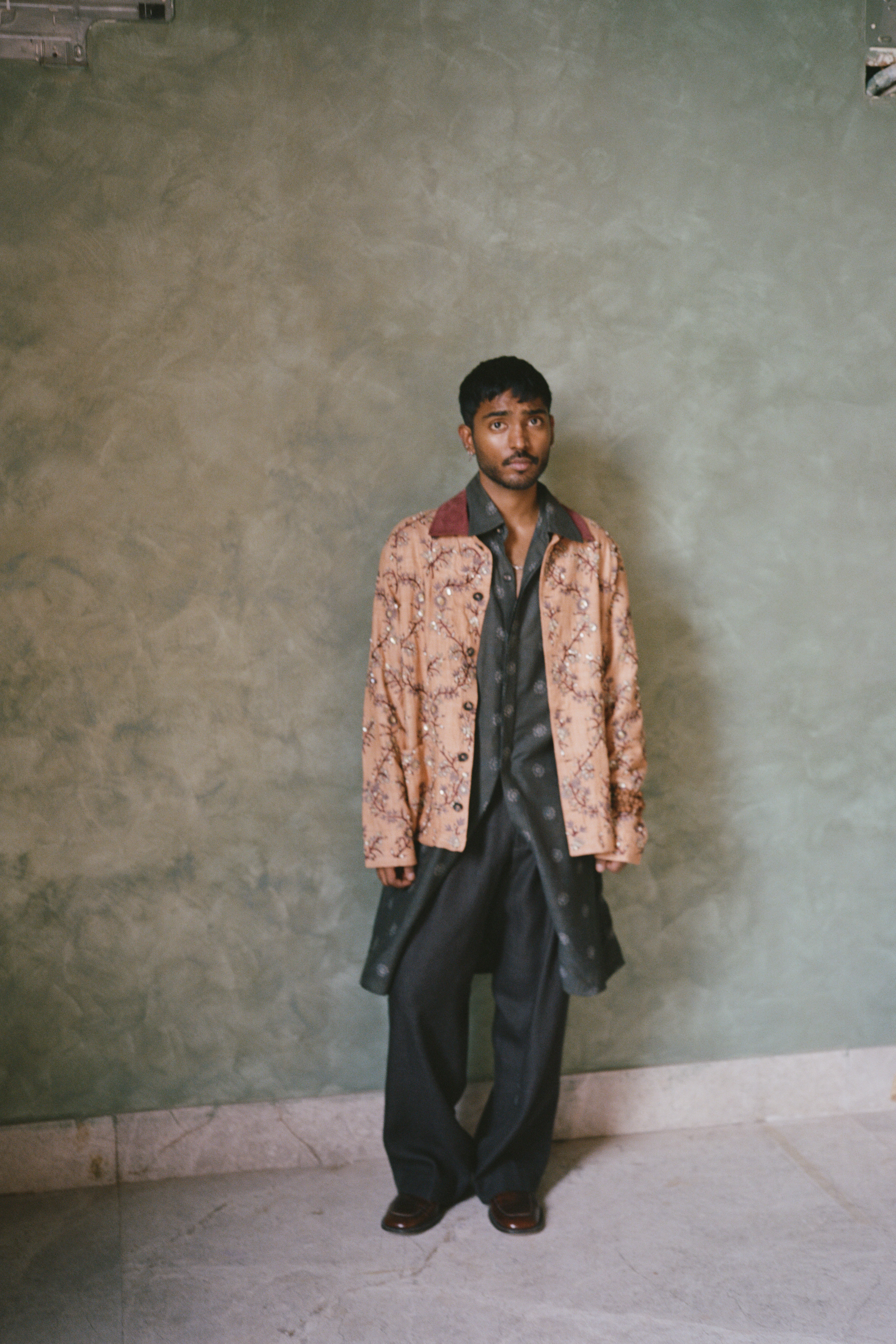
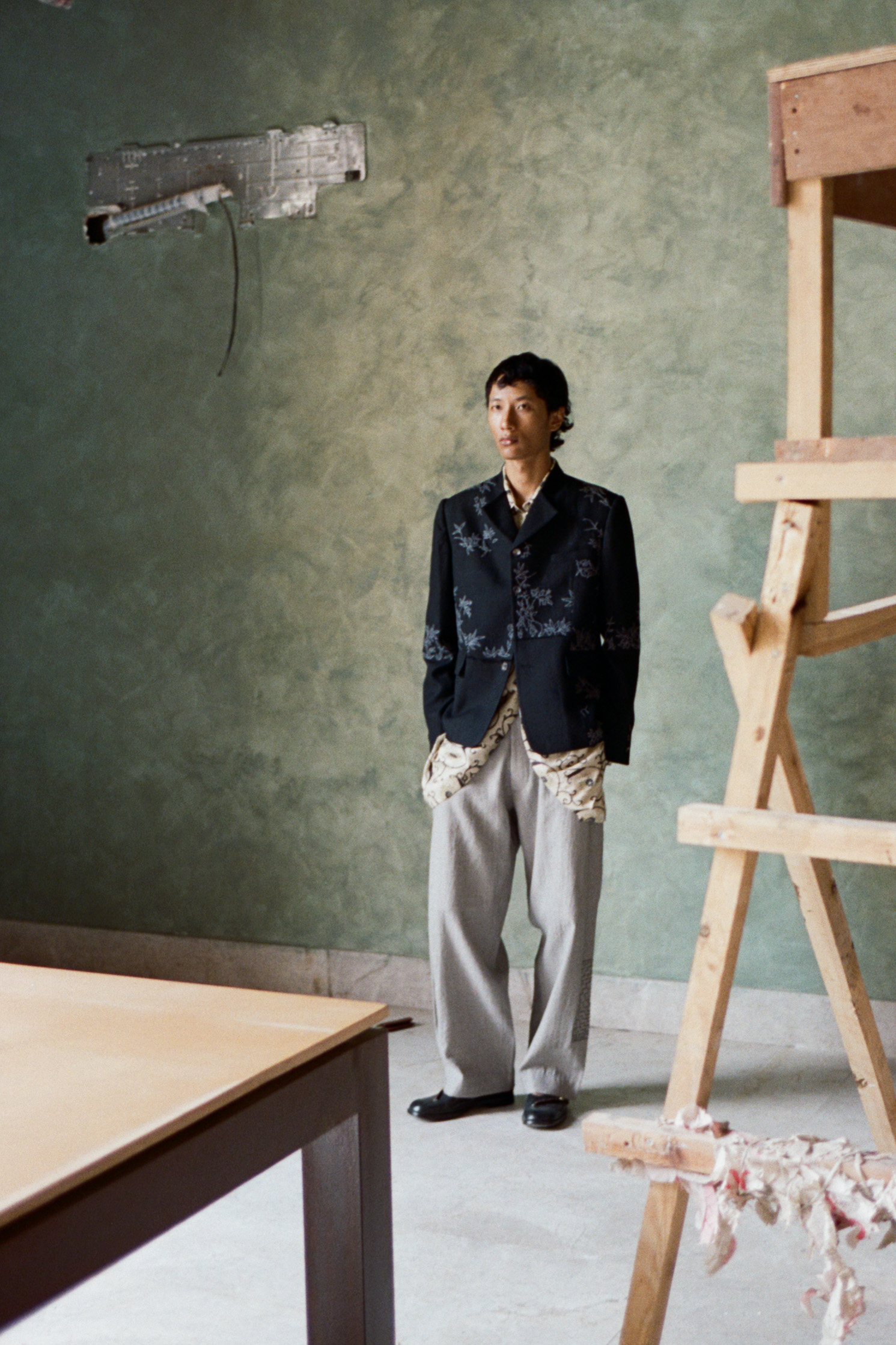
The distinction carries historical and social weight. Global fashion has long depended on the skills, labour and textile knowledge of regions whose makers have not always received equivalent visibility or influence. Kartik Research’s approach challenges that hierarchy by placing Indian craftsmanship at the centre of its creative language. Yet representation is only one part of the equation. Who owns the production infrastructure, who makes the decisions and who benefits from the value created remain equally important questions.
Kumra’s research into Golconda Ashram in Pondicherry, where architect and woodworker George Nakashima studied, offers another way into the collection’s thinking. Nakashima’s relationship with material was grounded in patience, attention and the belief that making involved more than technical skill. That philosophy resonates with Kartik Research’s move towards a more integrated production system, but the point is not to romanticise the handmade. Craft is also labour, expertise and livelihood. Treating it seriously means looking beyond the finished object to the conditions that produce it.
The clothes themselves follow a similarly restrained logic. Longer inner kurtas, soft unstructured jackets and relaxed trousers form a repeatable wardrobe rather than a series of disconnected statements. Embroidery and surface work remain present, but increasingly as part of the garment’s baseline, not as decorative punctuation designed to announce its own expense. The proposition is a system of dressing built through repetition, variation and the way pieces acquire meaning over time.
For Pitti, the appointment offers an opportunity to expand the conversation around menswear beyond the familiar codes of European tailoring. For Kartik Research, the factory marks a more consequential transition: from coordinating a dispersed network of craft specialists to taking greater responsibility for the system that connects them.
The real flex is not putting craftsmanship on the label. It is taking responsibility for what happens before the label goes on. Kartik Research is still working out what that responsibility looks like. In Florence, the clothes will tell part of the story. The factory will have to tell the rest.