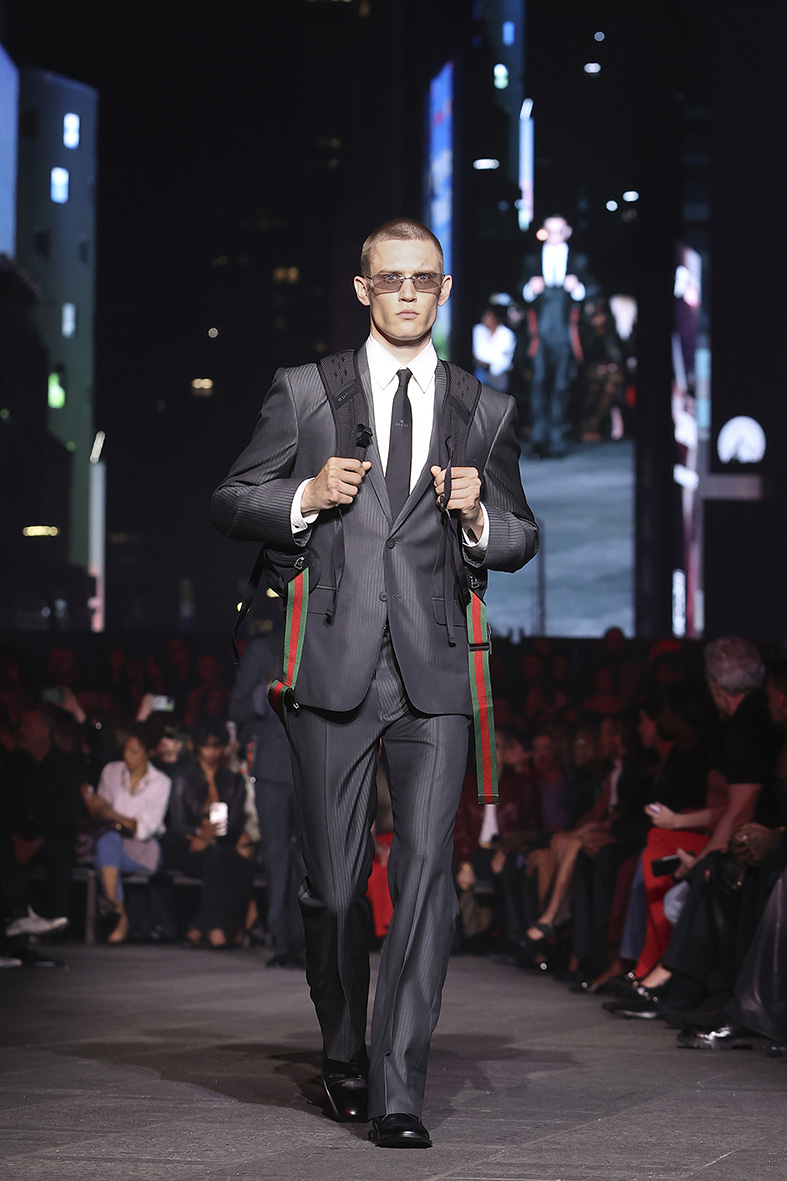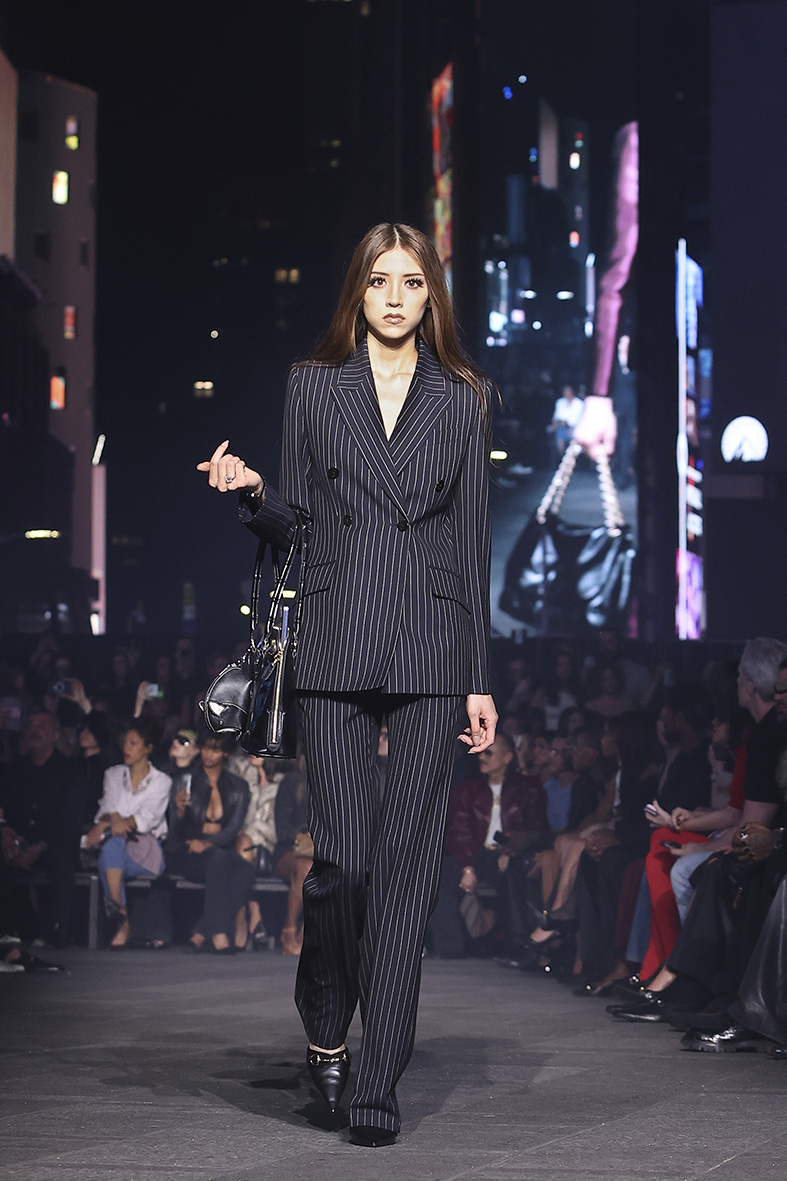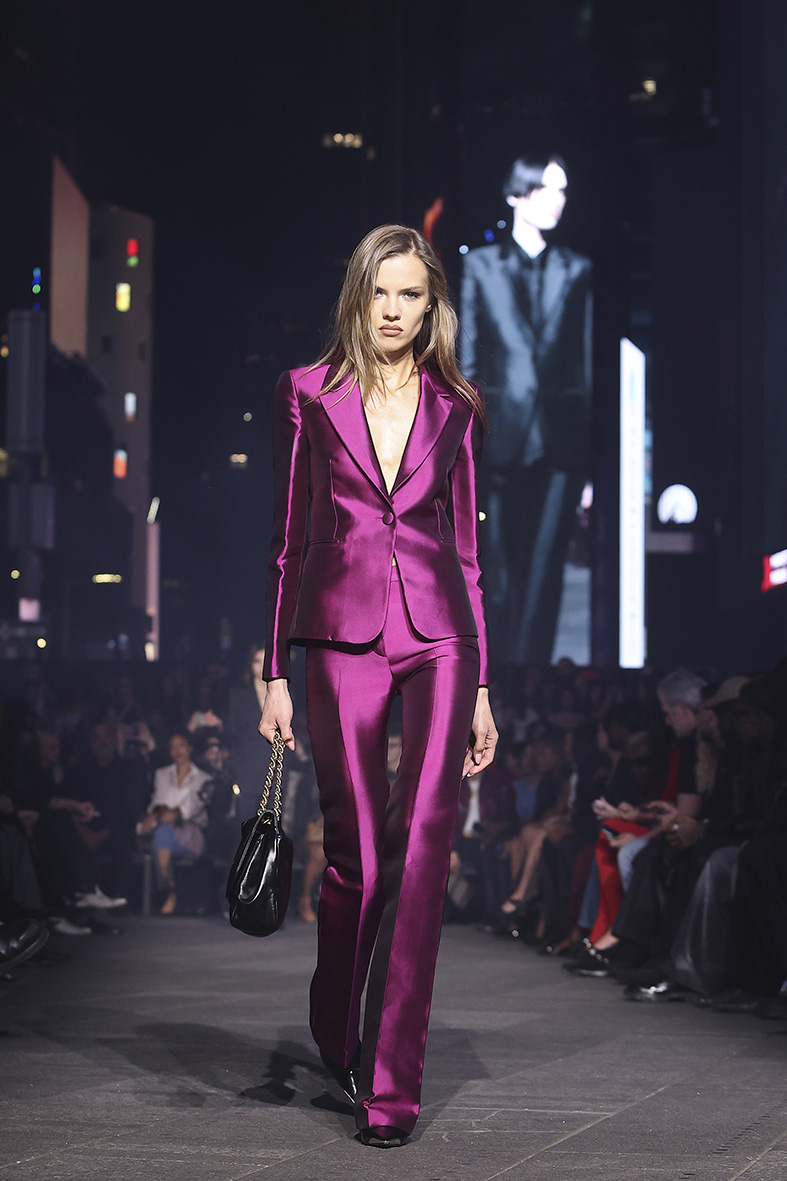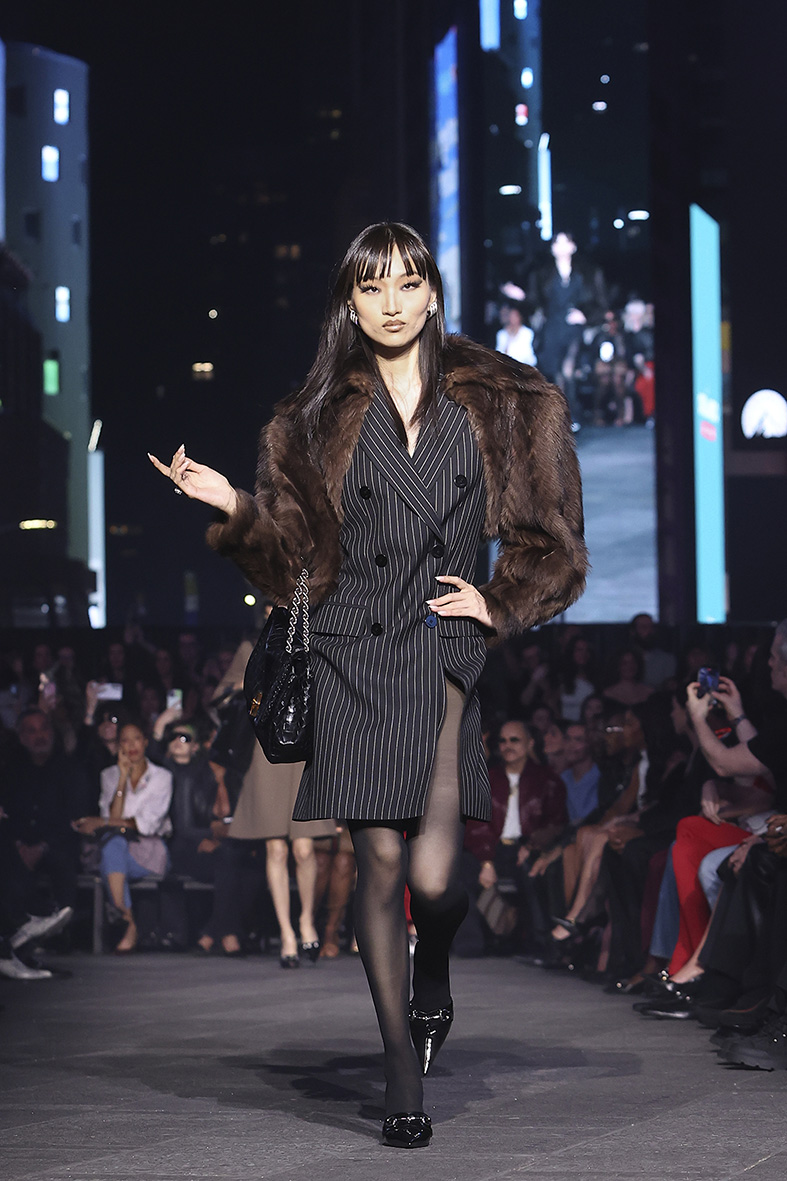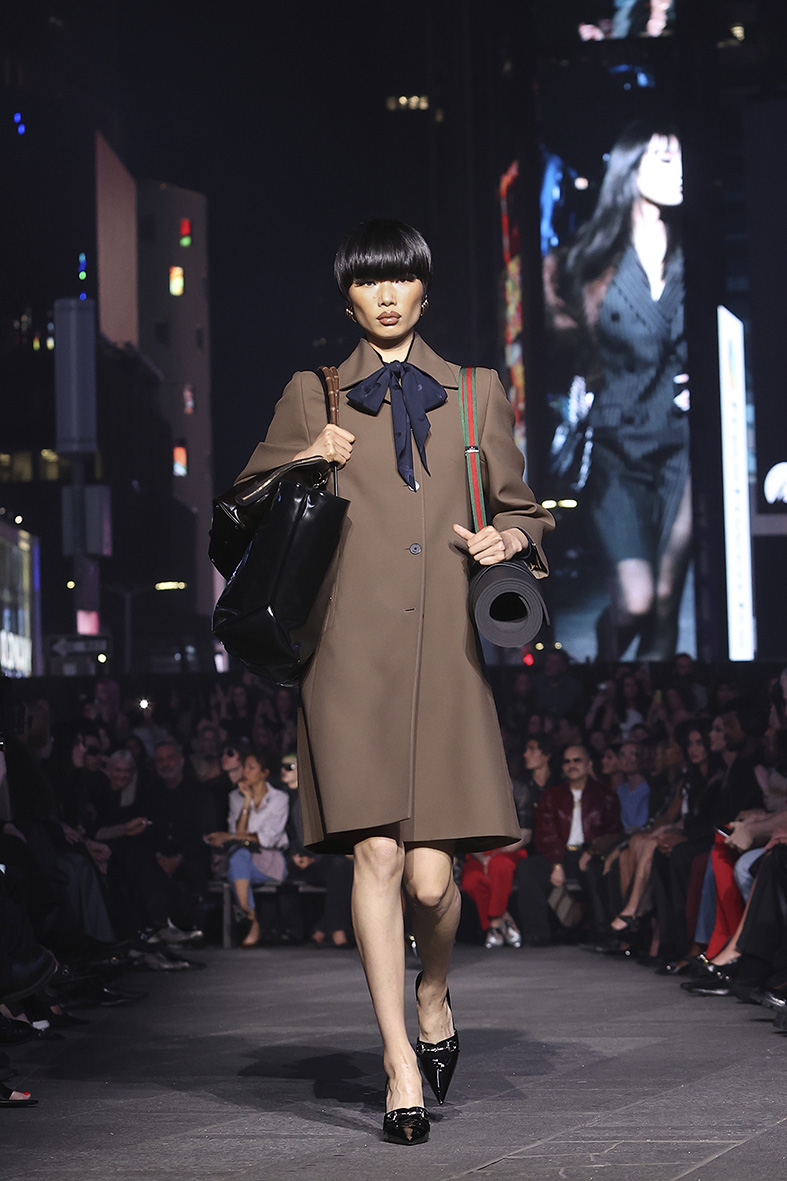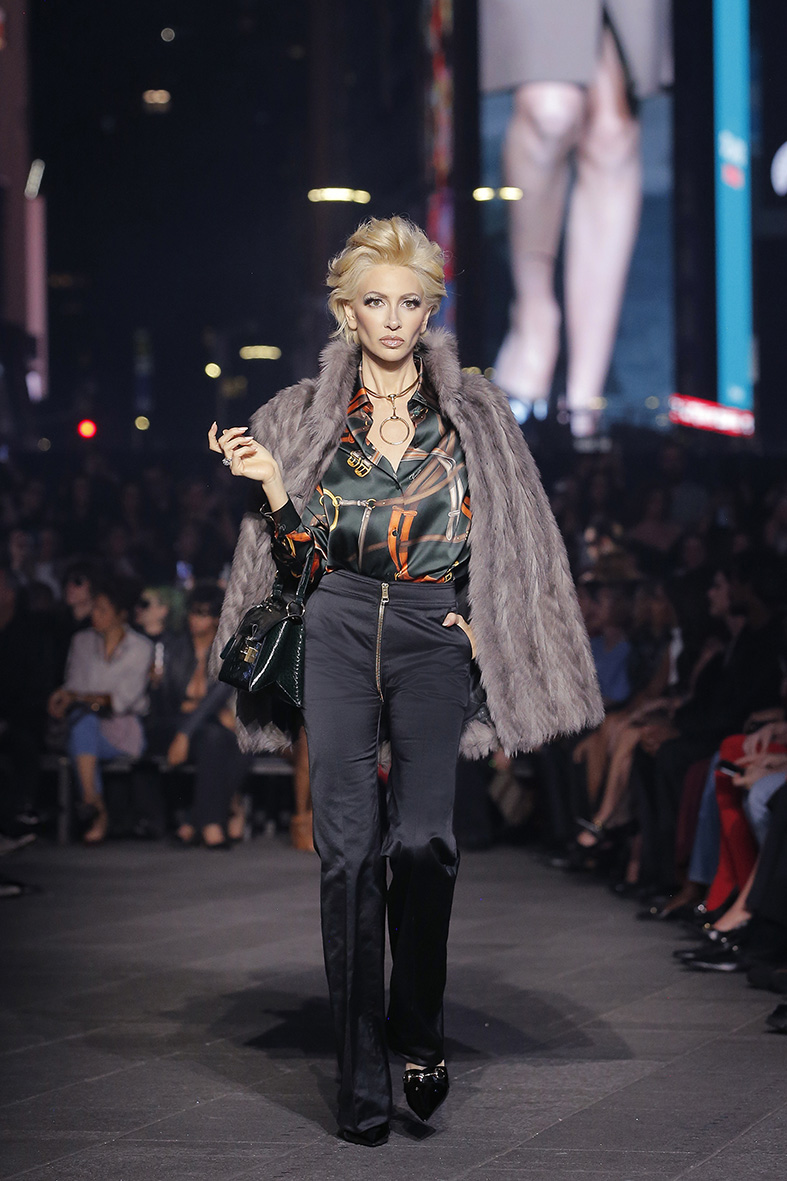
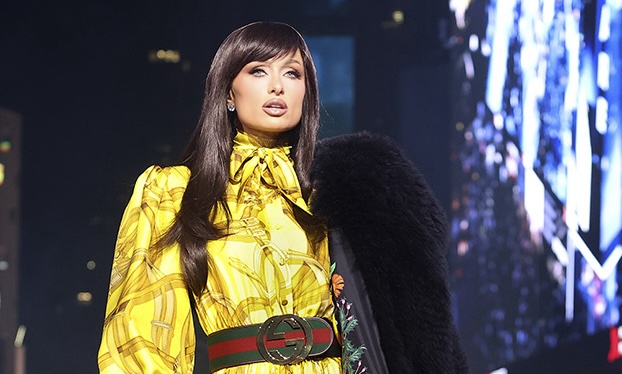
New York has held a unique place in Gucci’s history for over 70 years. It was here, in 1953, that the House opened its first store outside Italy. With GucciCore, staged in the hyper-symbolic setting of Times Square, Gucci doesn’t just return to a city — it returns to its own language.
by Giorgia Cantarini
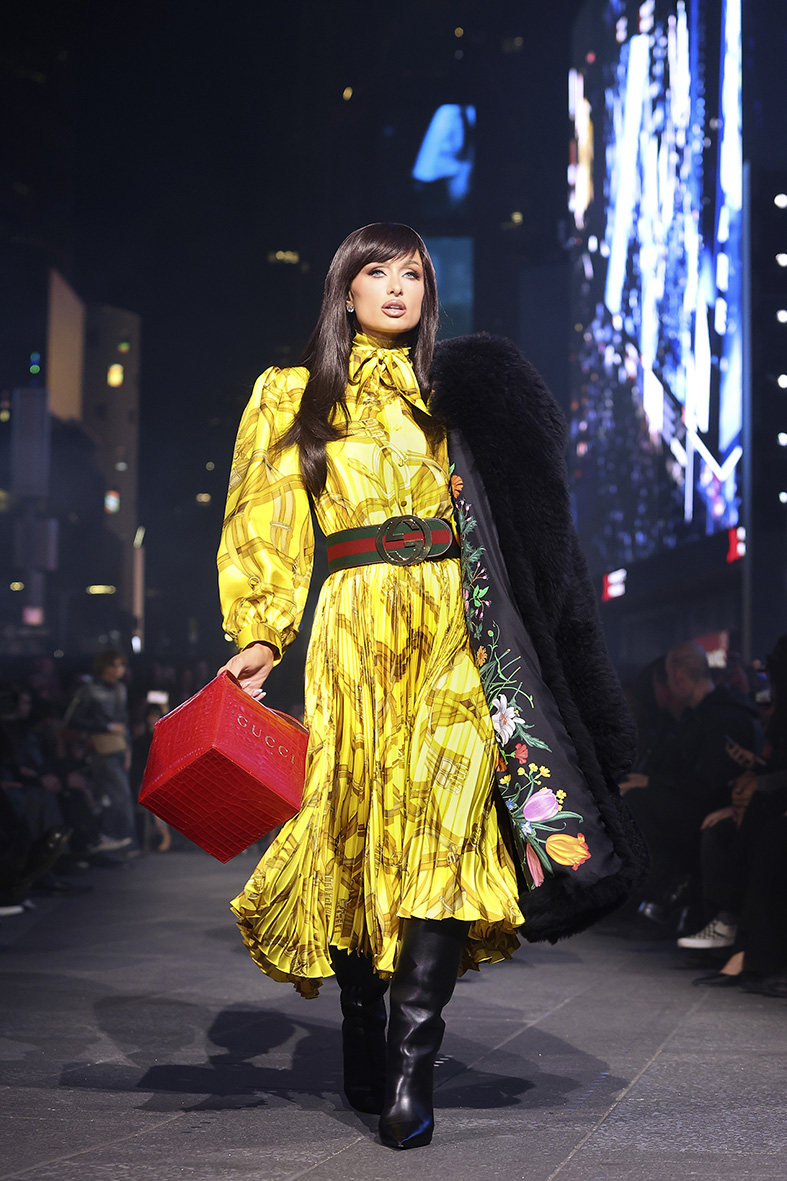
Set against the overwhelming visual noise of billboards and digital screens, the show transforms Times Square into a cinematic backdrop where Gucci is no longer just a brand, but a fully formed cultural ecosystem. A pre-show video montage blending found footage with fictional campaigns expands this universe into something almost mythological: Gucci Gym, Gucci Automobili, Gucci Pets, even a Palazzo Gucci hotel. The message is clear: Gucci is not a collection, it is an ethos.
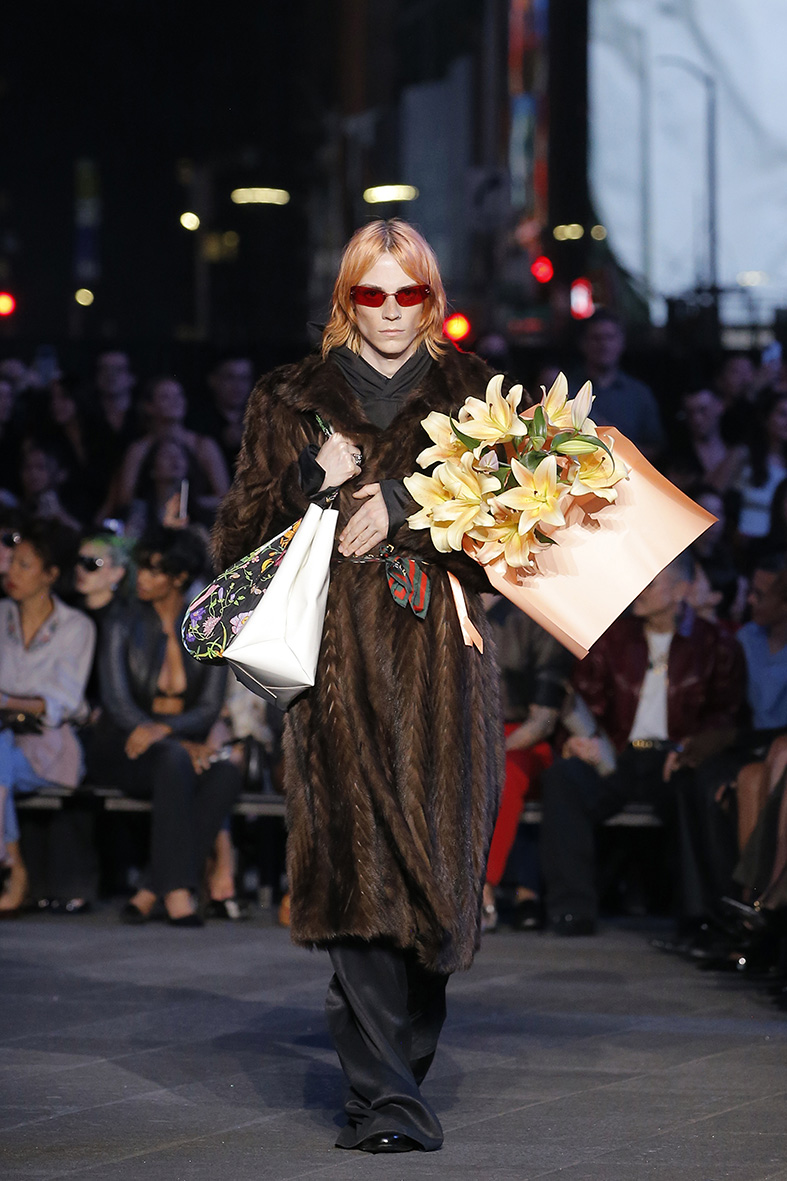
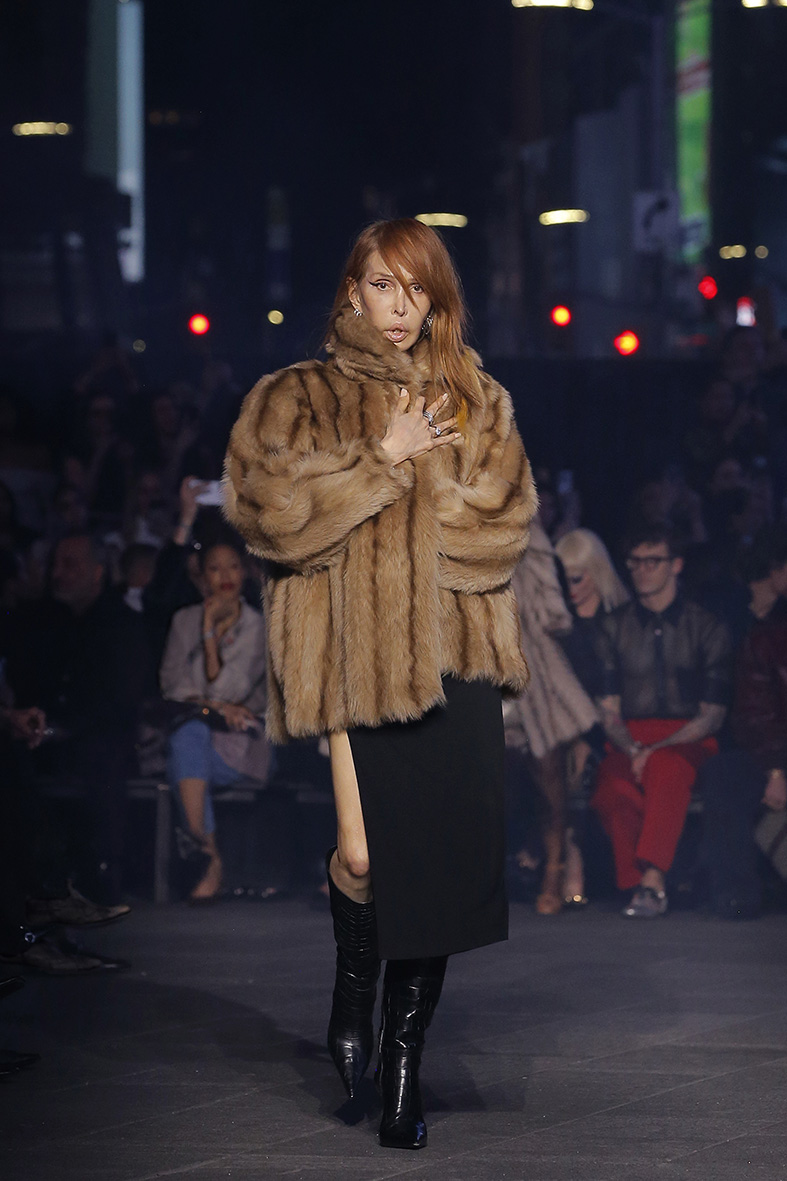
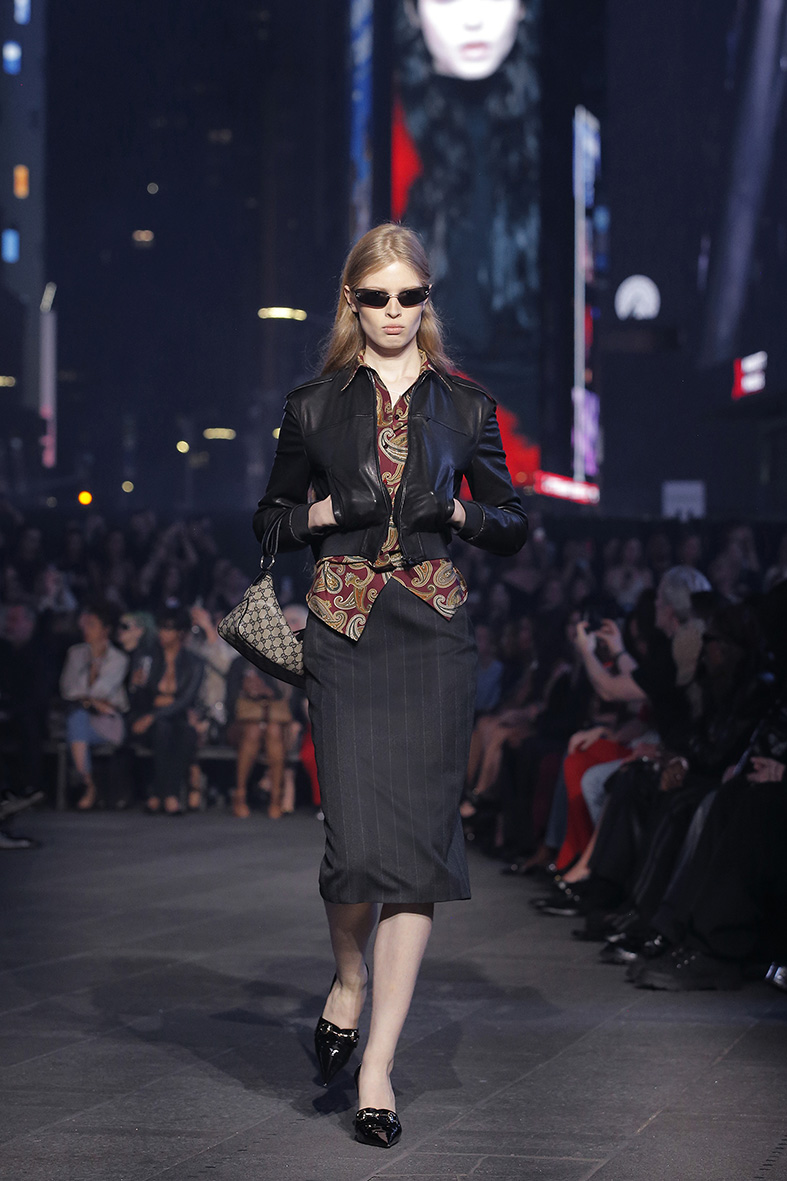
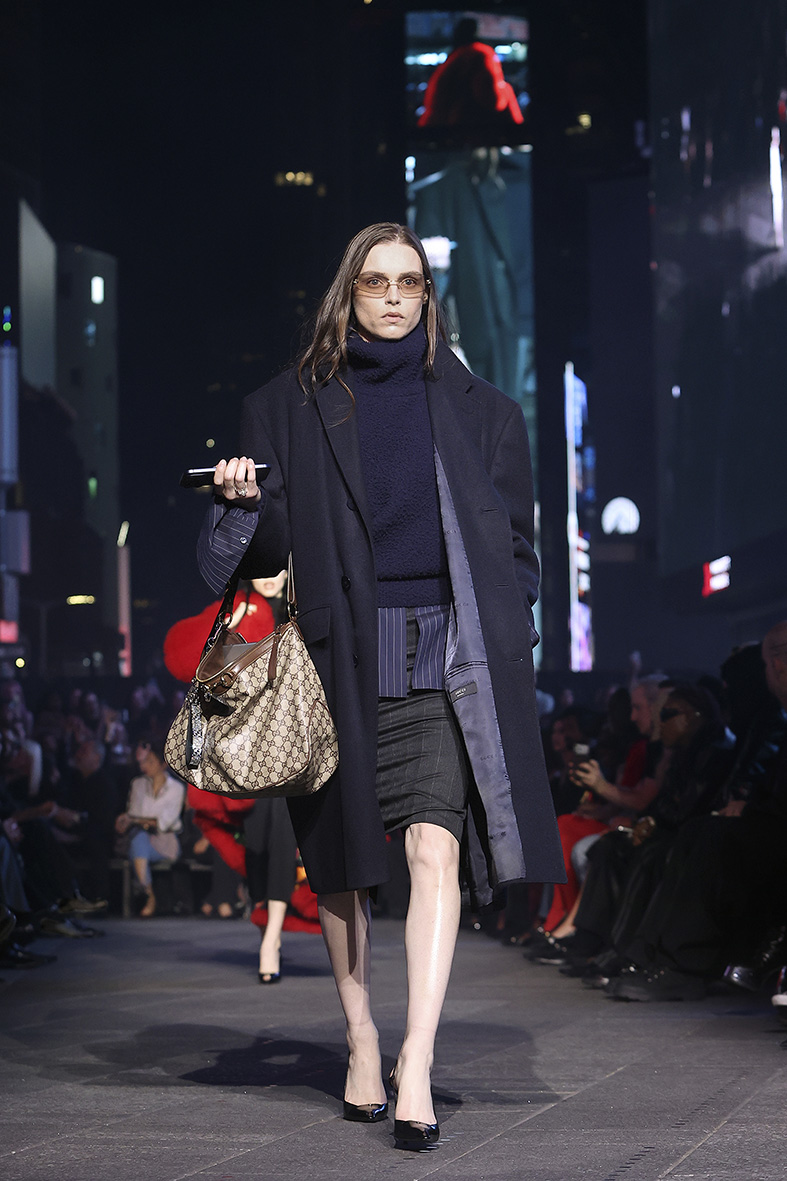
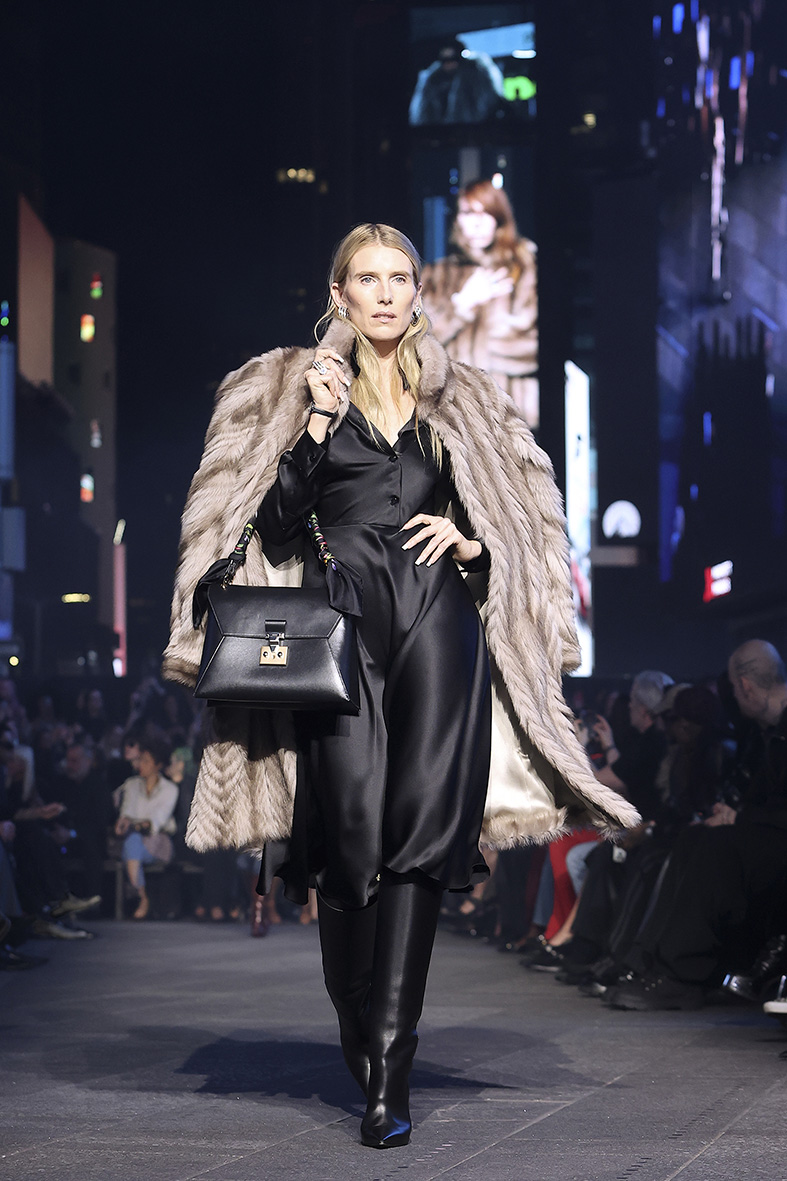
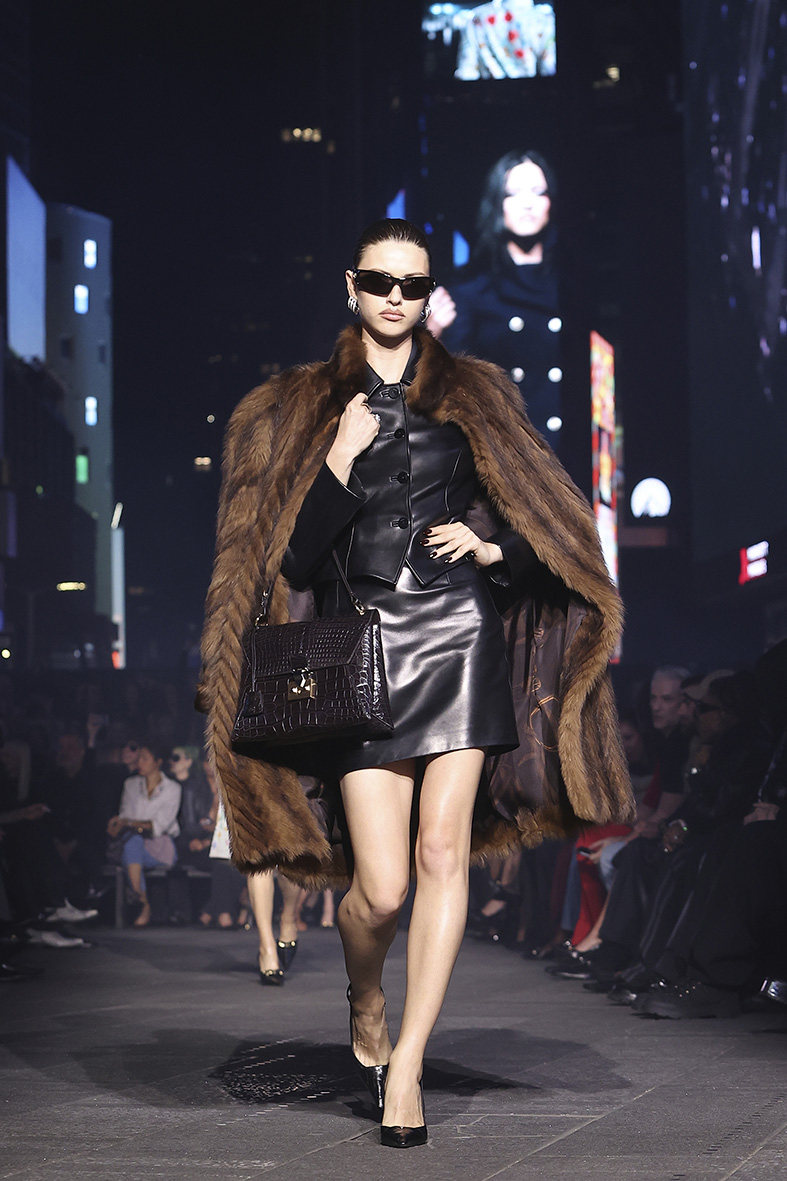
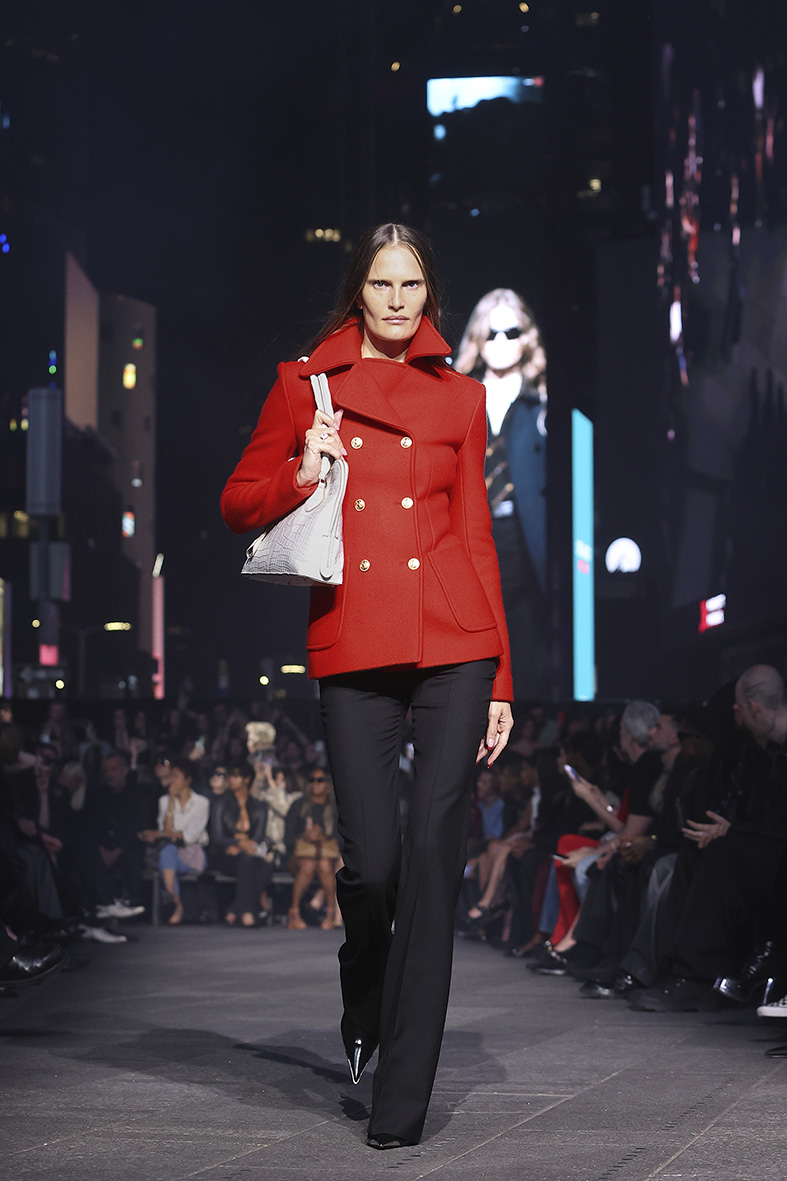
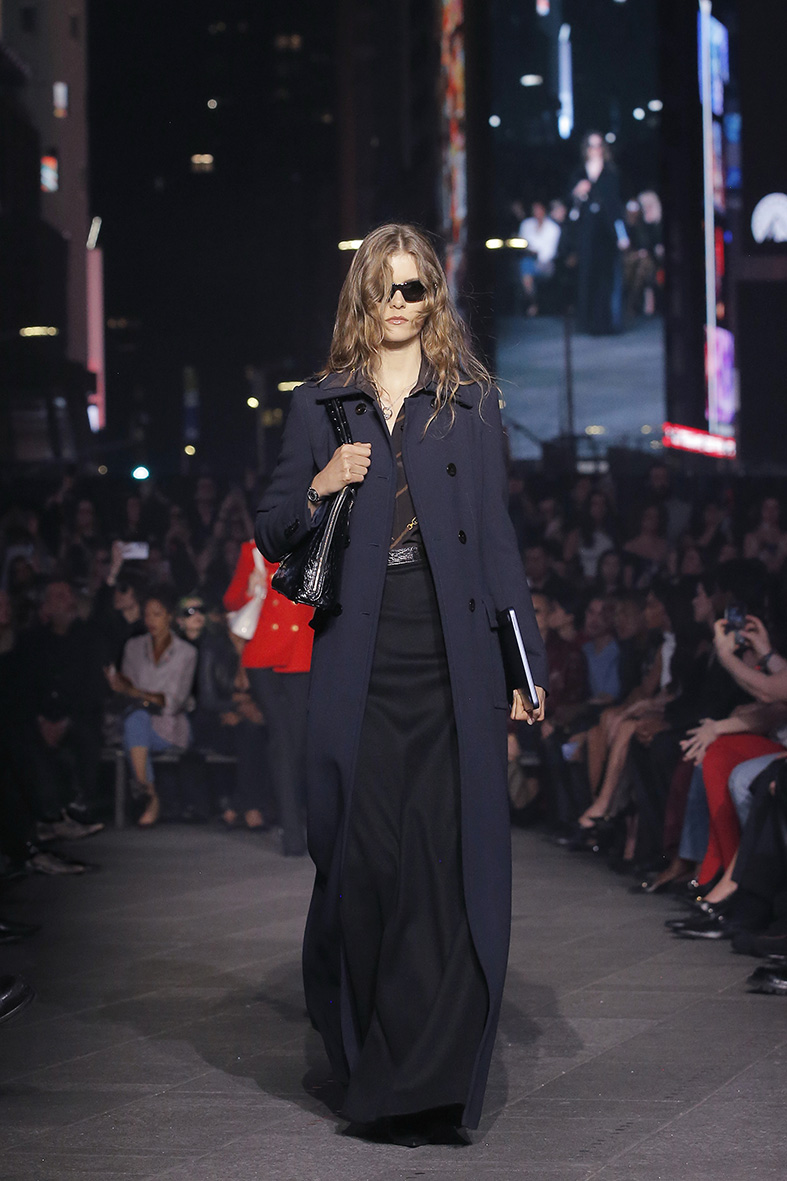
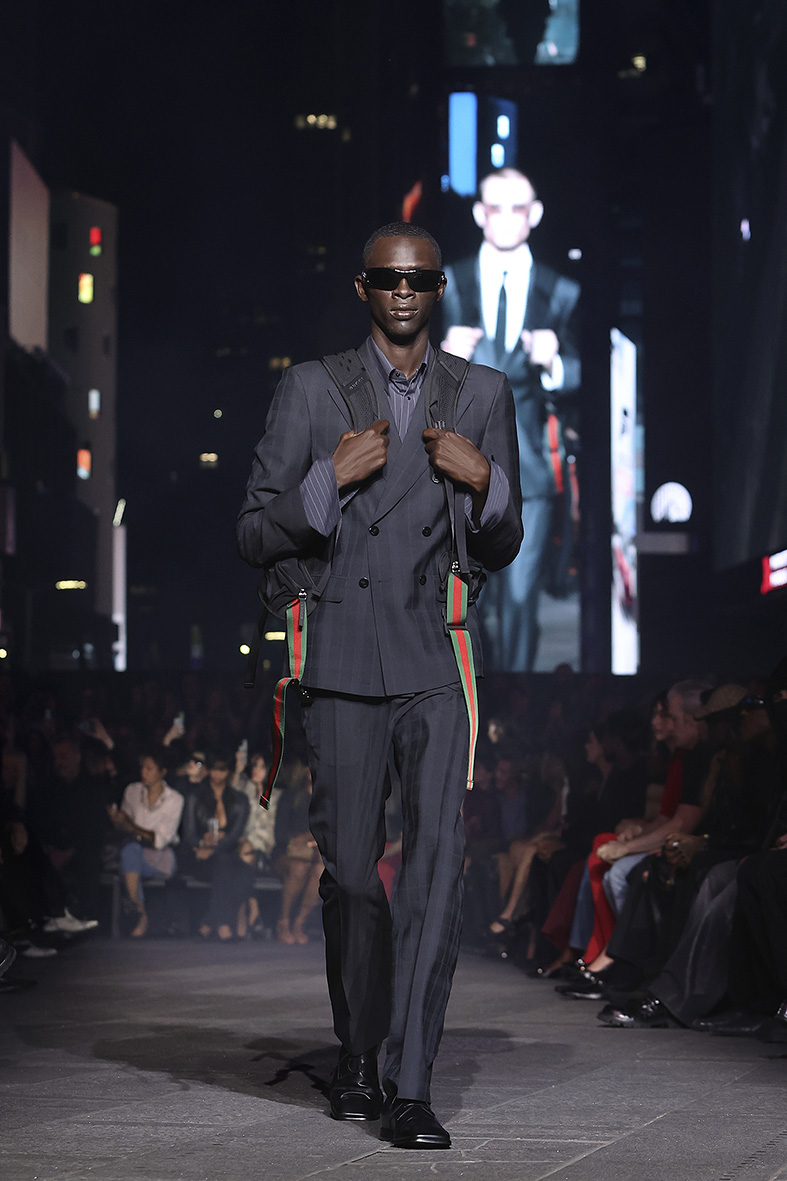
GucciCore unfolds as a cross-section of New York itself — from Madison Avenue to Brooklyn, SoHo to Harlem — translating the city’s social archetypes into a cohesive visual system. Financial brokers in pinstripes, ladies-who-lunch wrapped in shearling coats, skaters reinterpreted through relaxed tailoring, and evening socialites in controlled silhouettes coexist within the same narrative. This multiplicity is not chaotic — it is constructed.
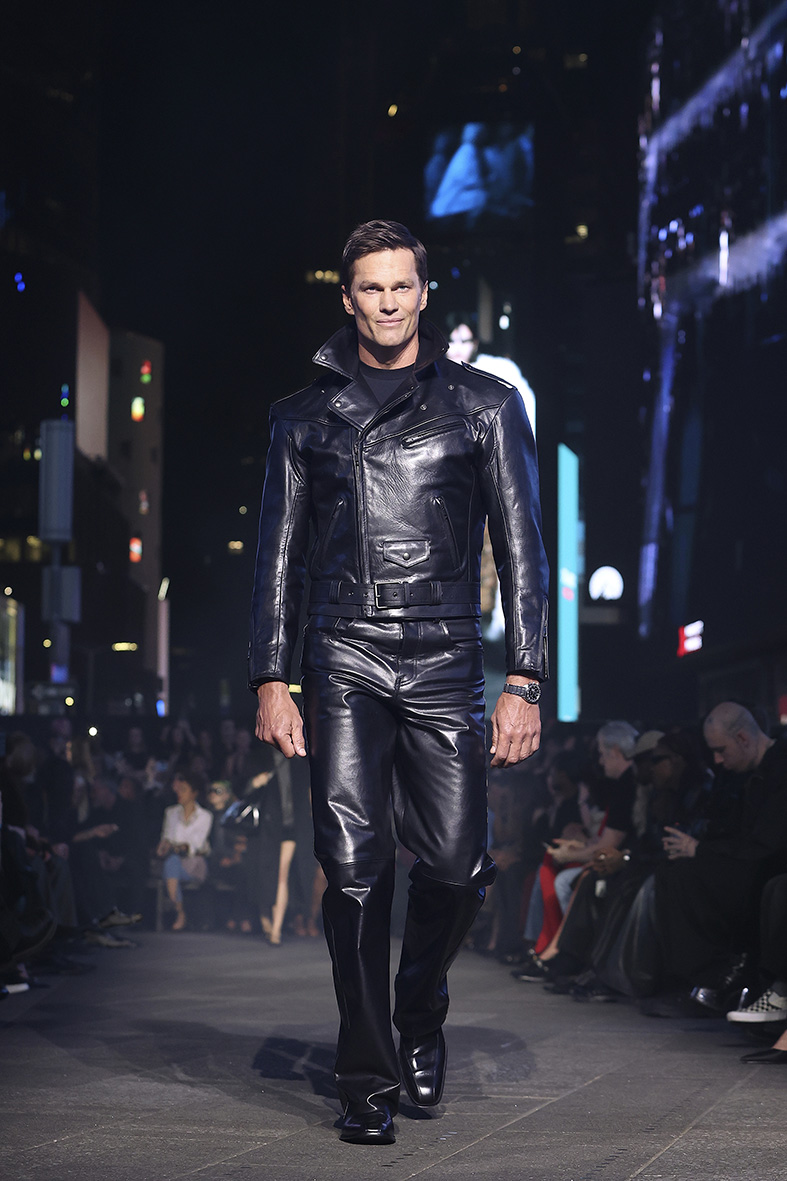
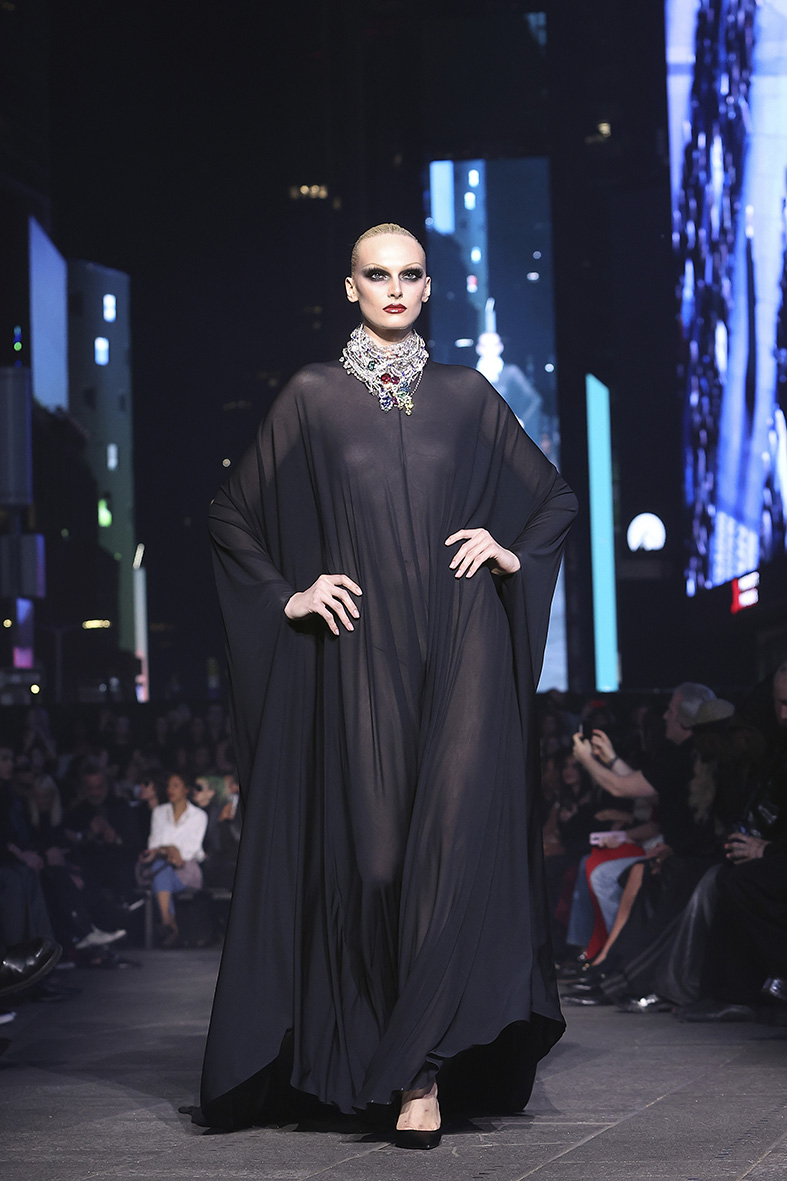
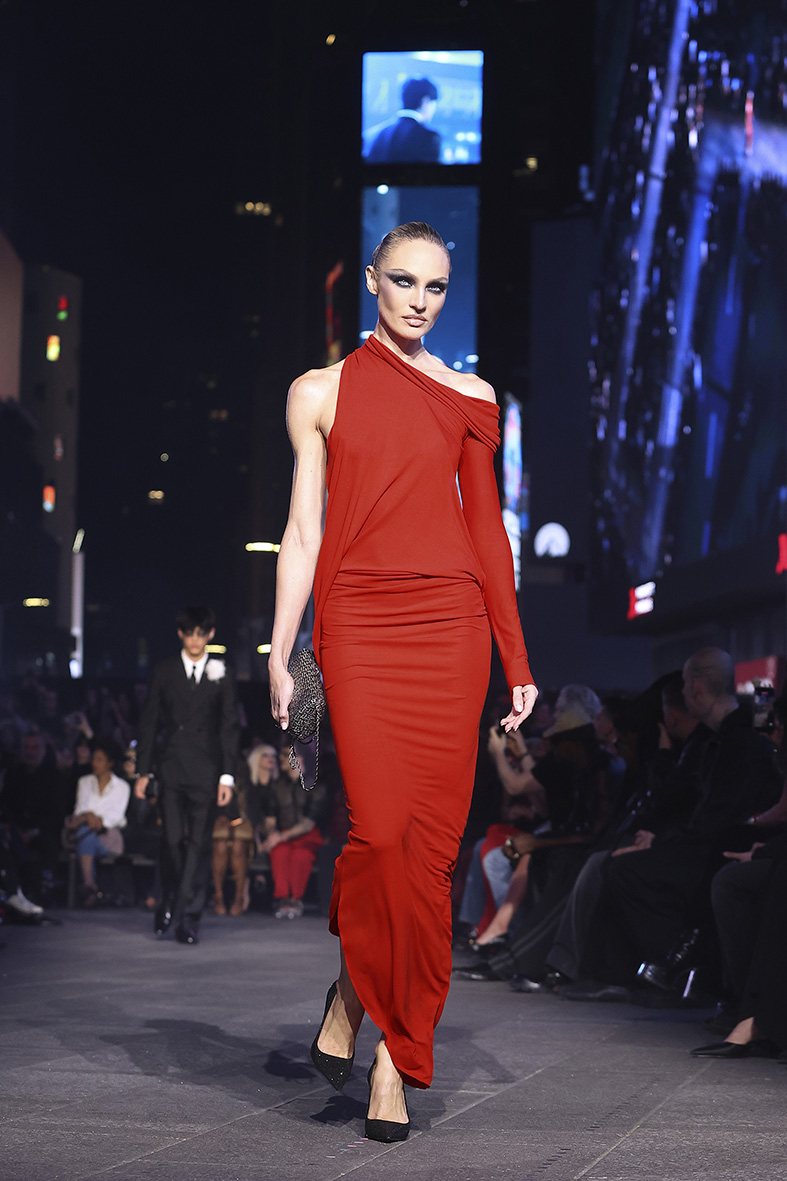
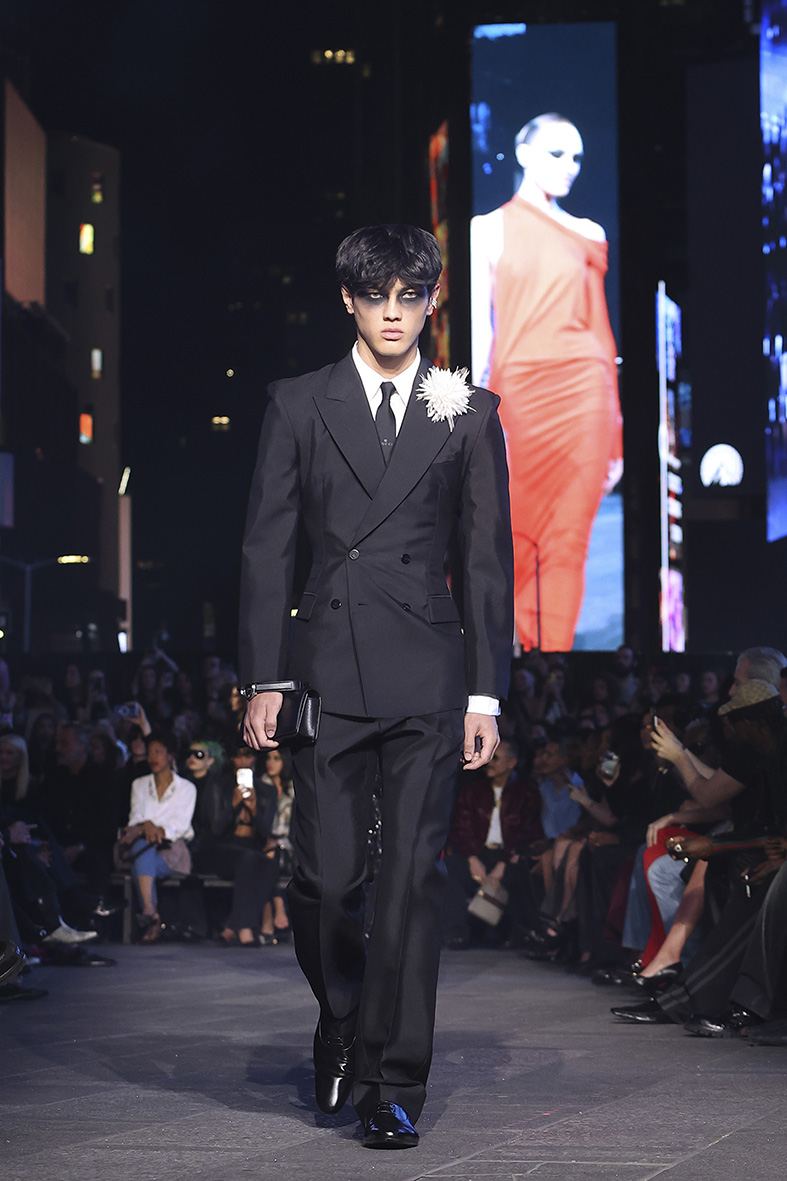
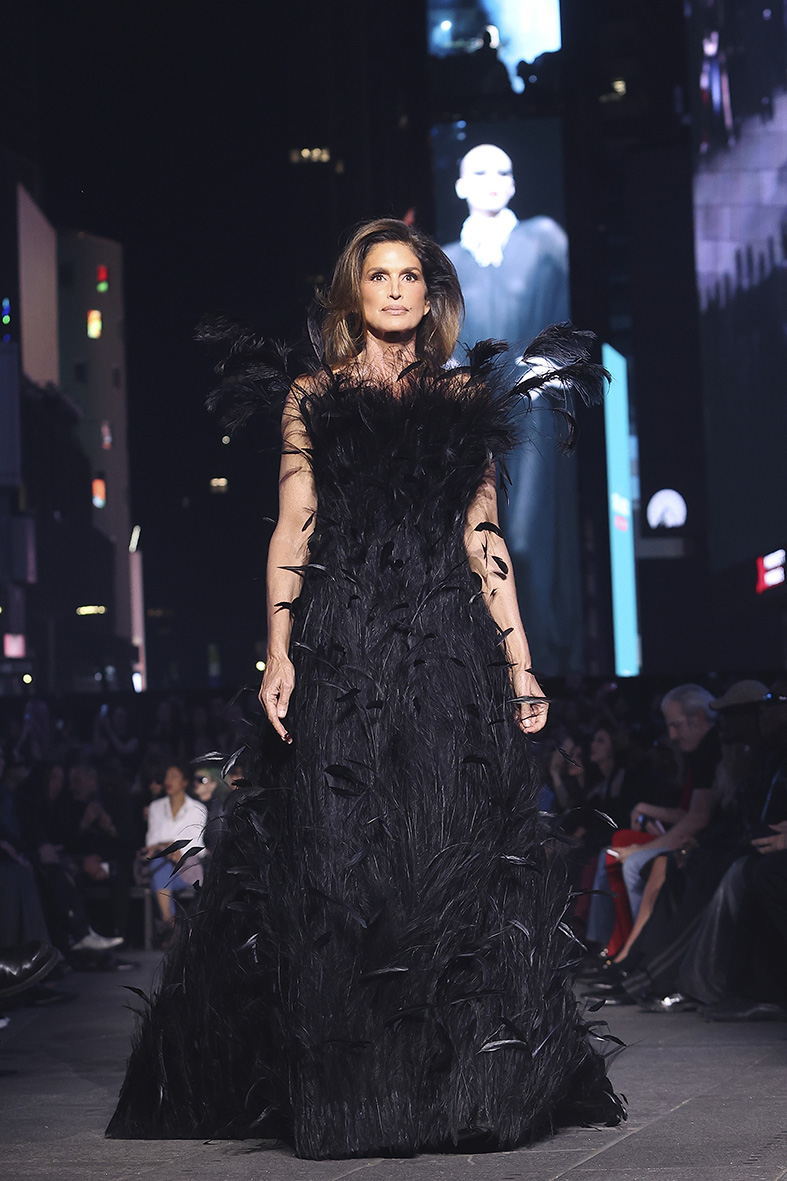
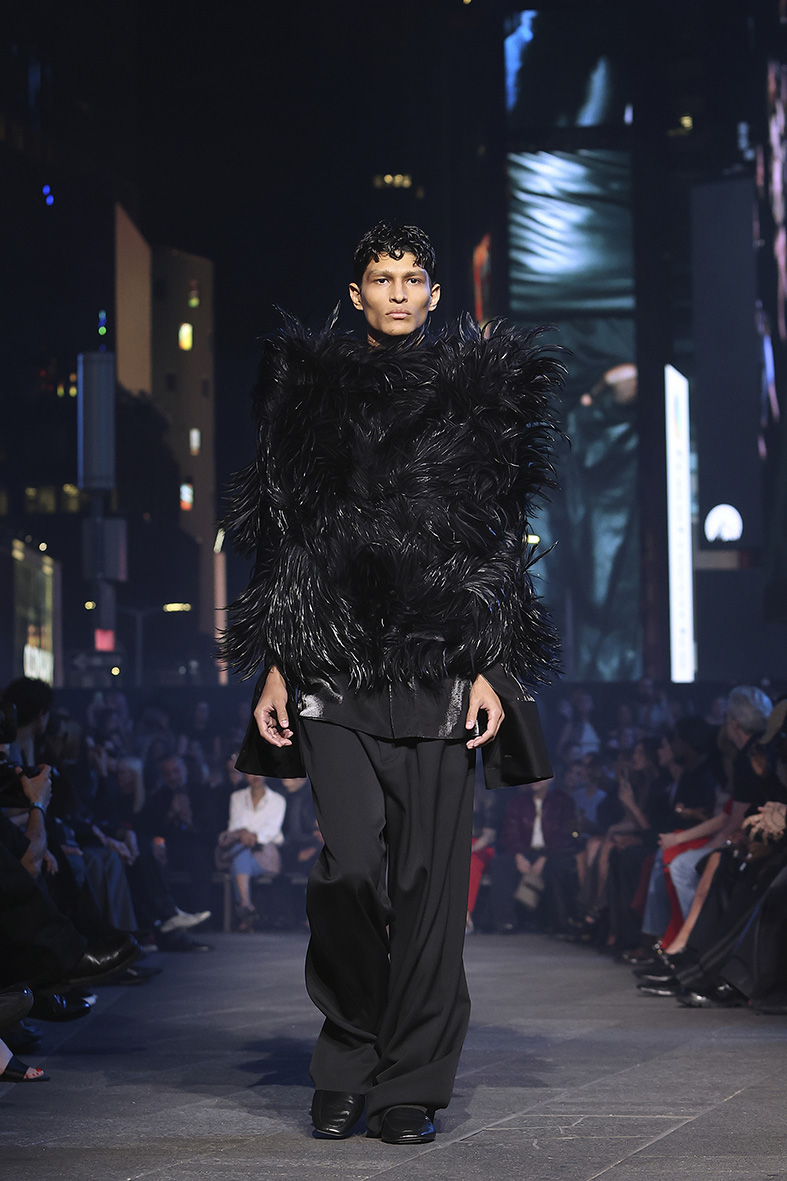
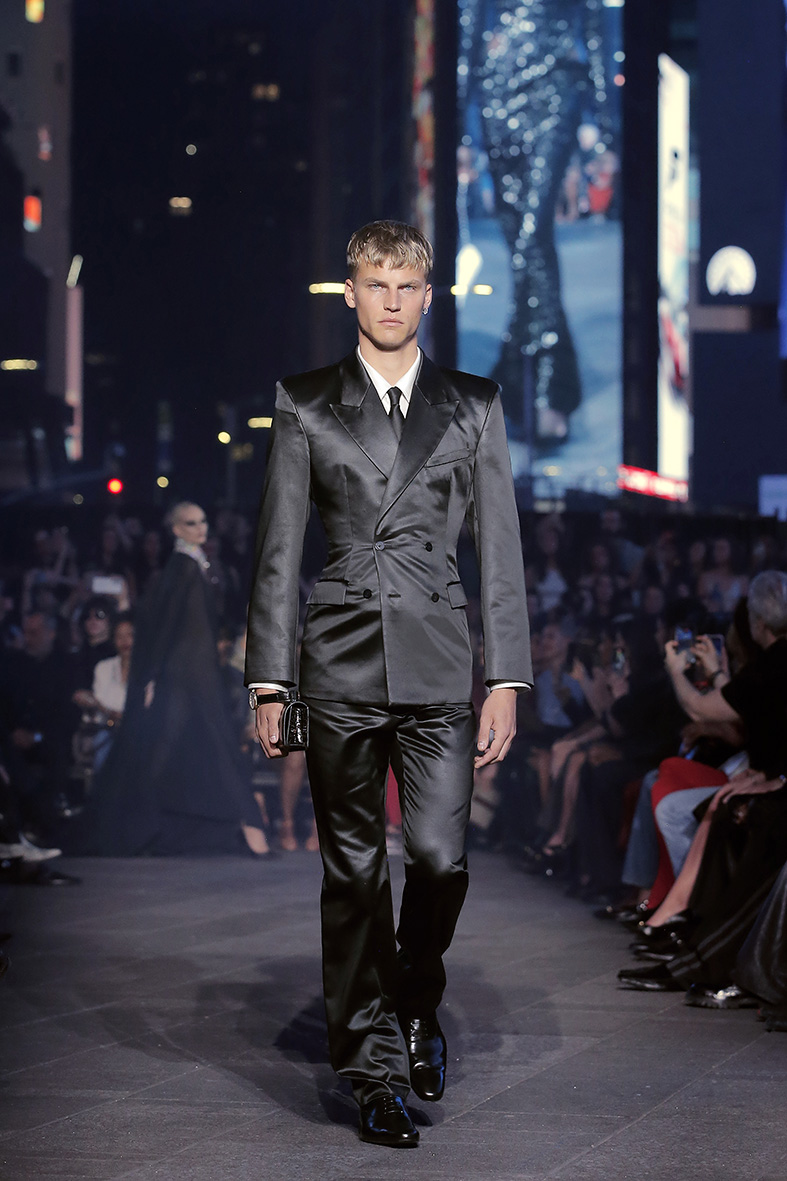
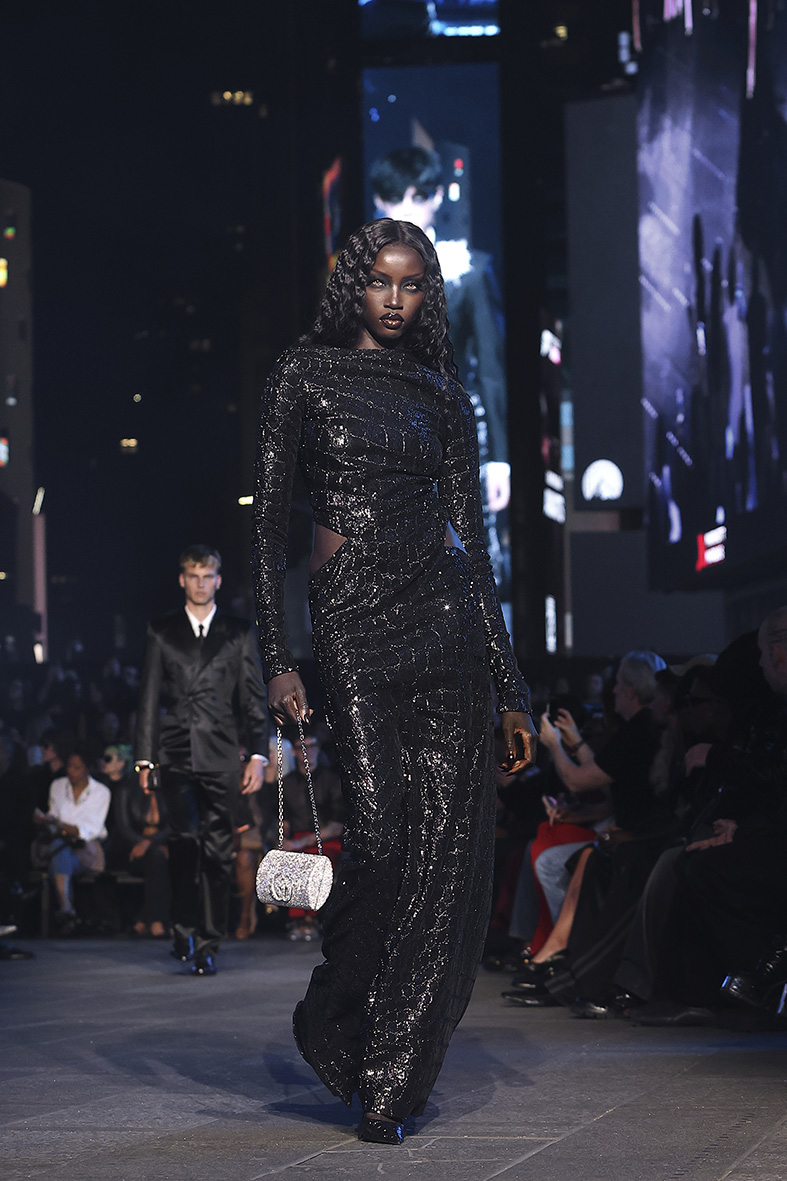
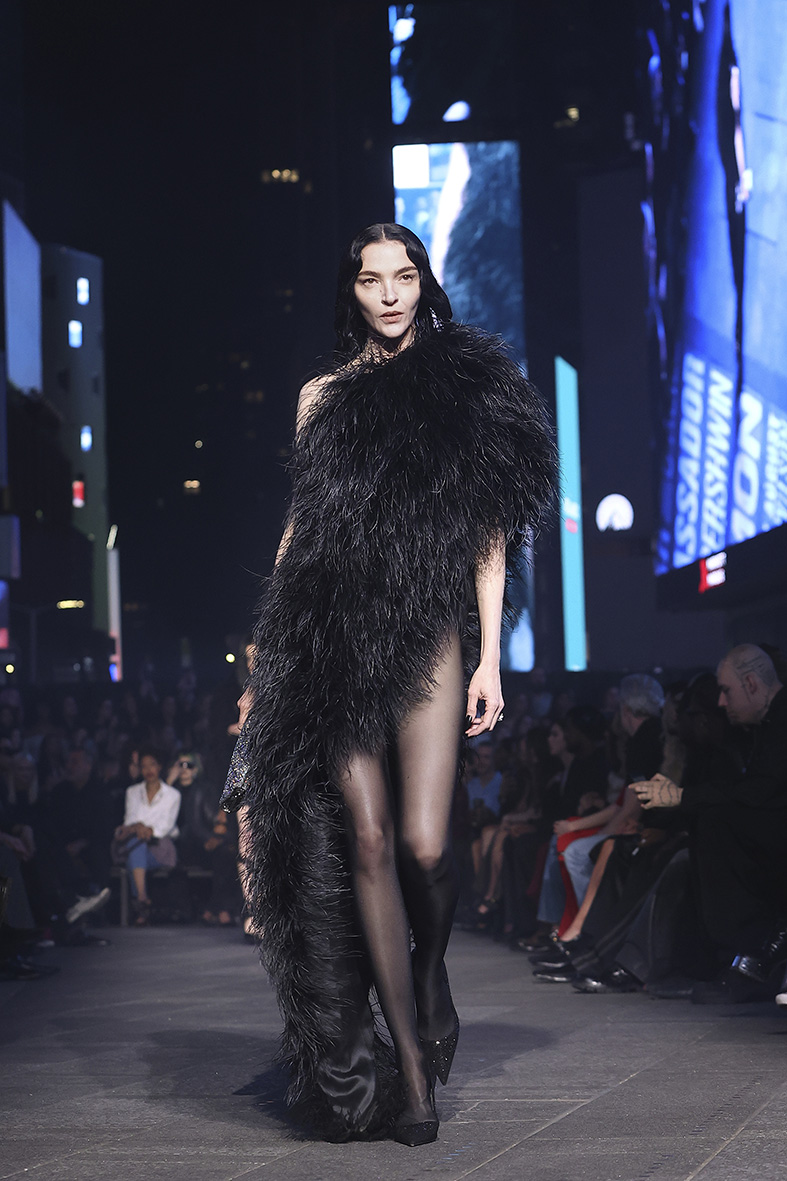
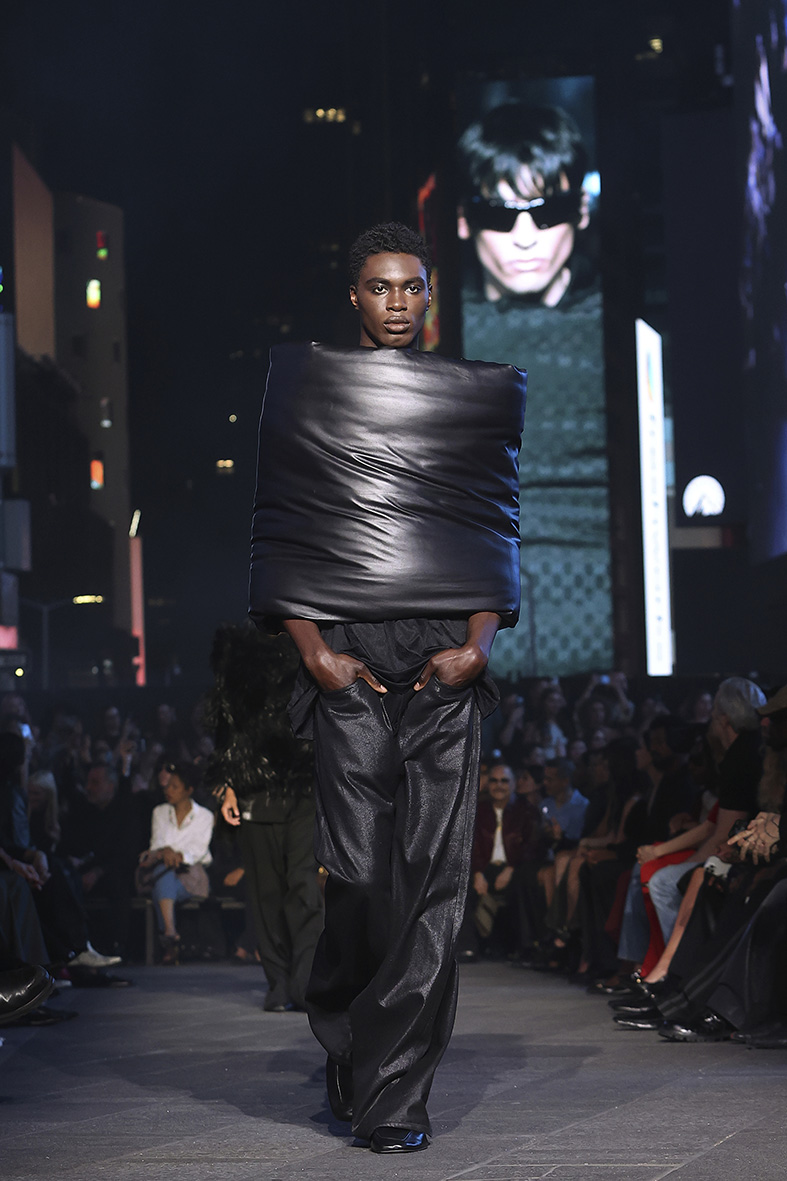
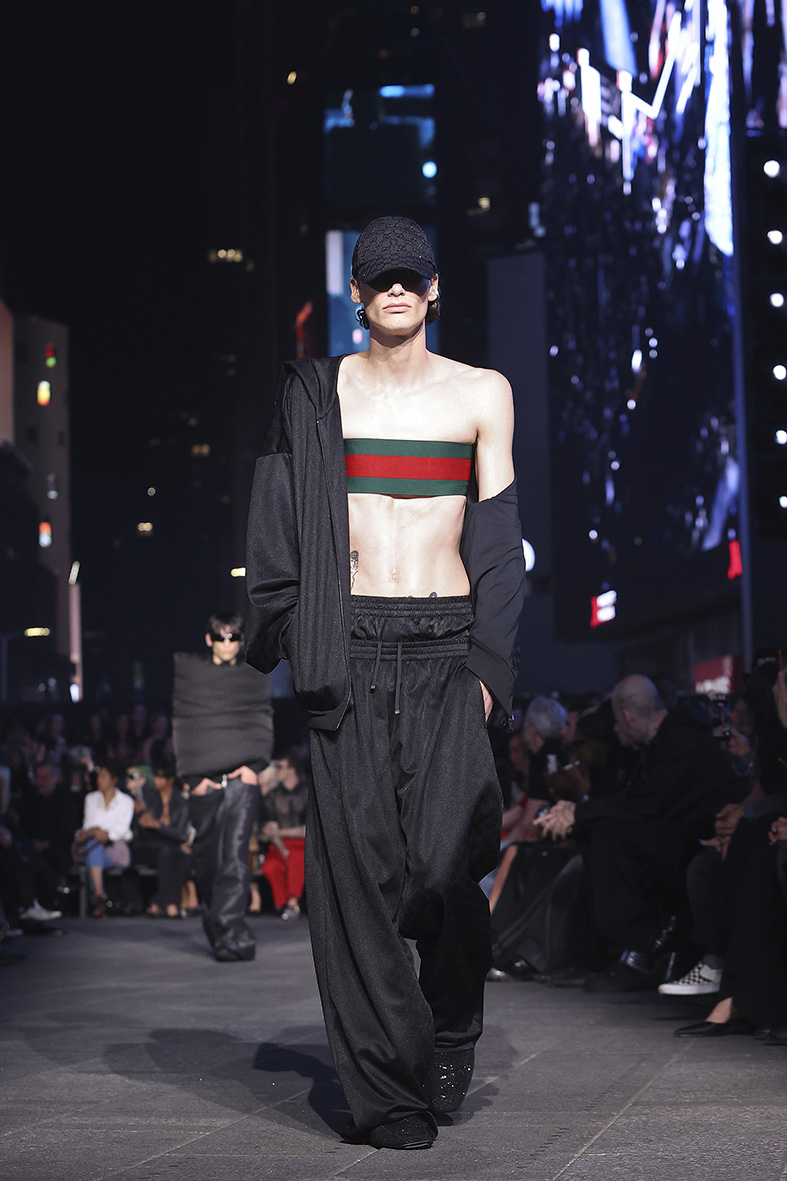
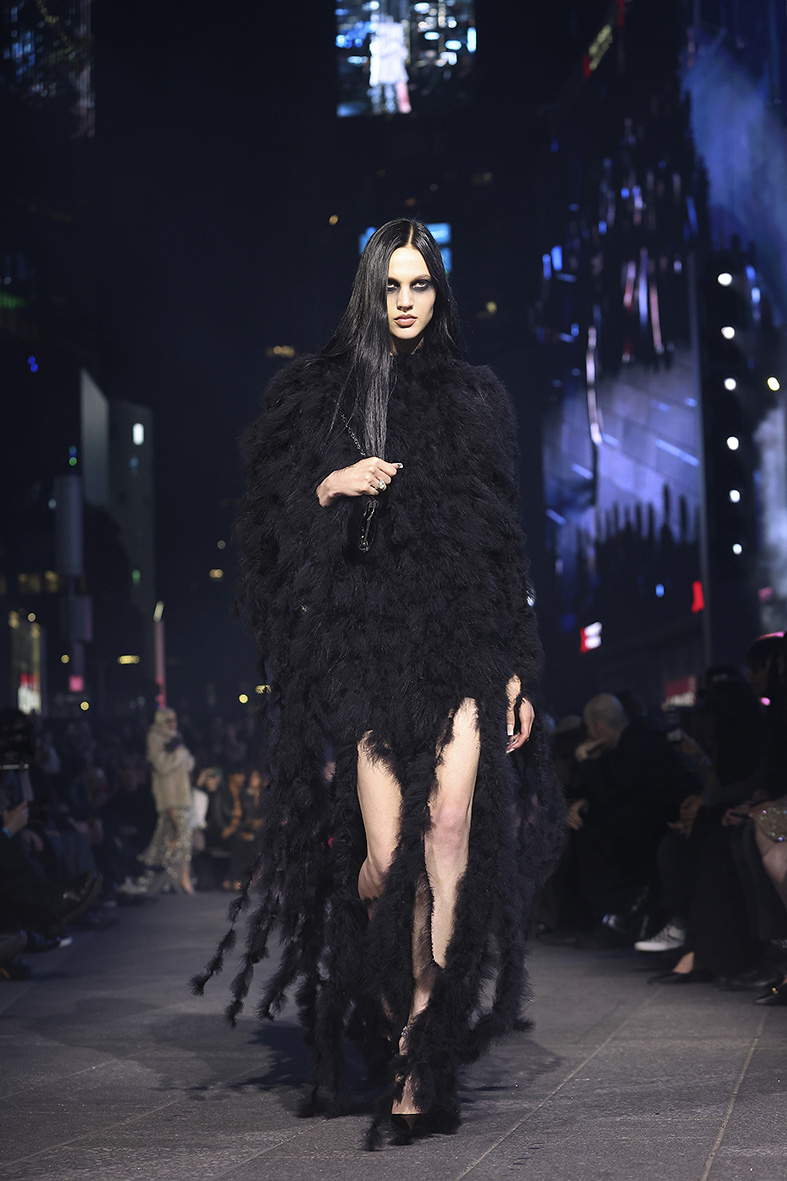
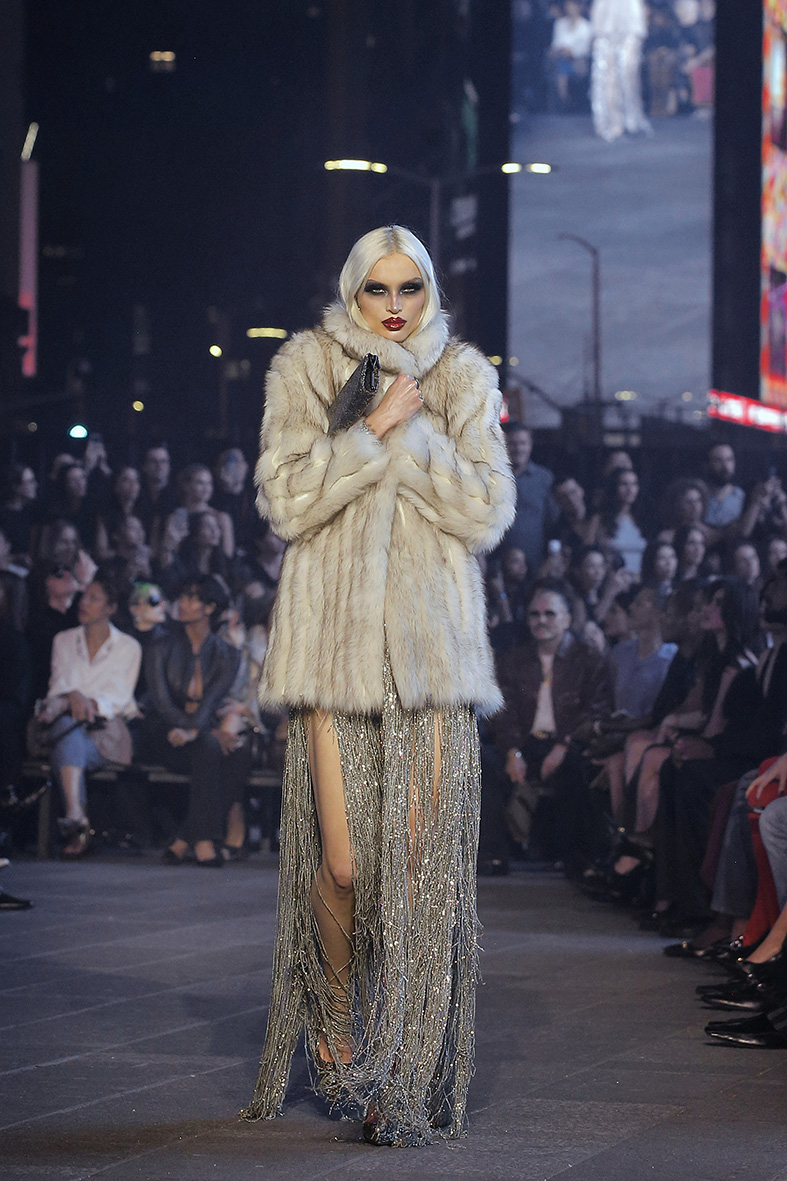
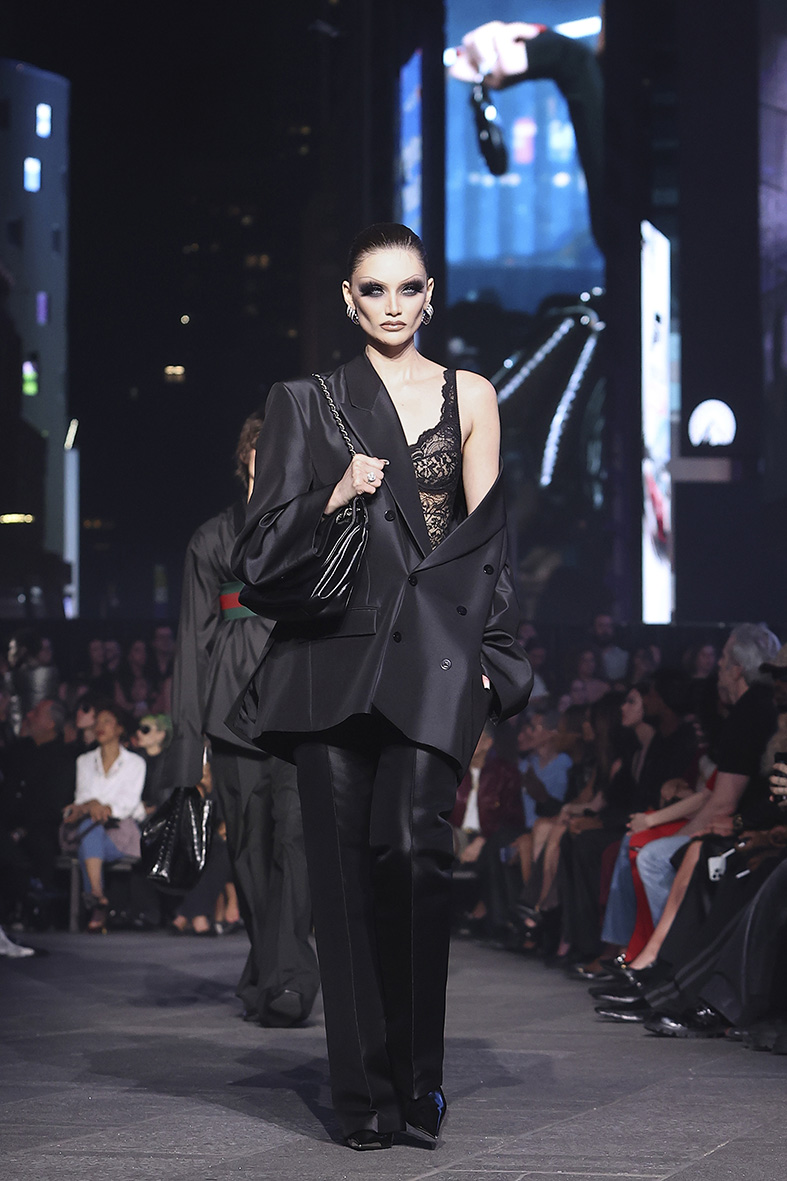
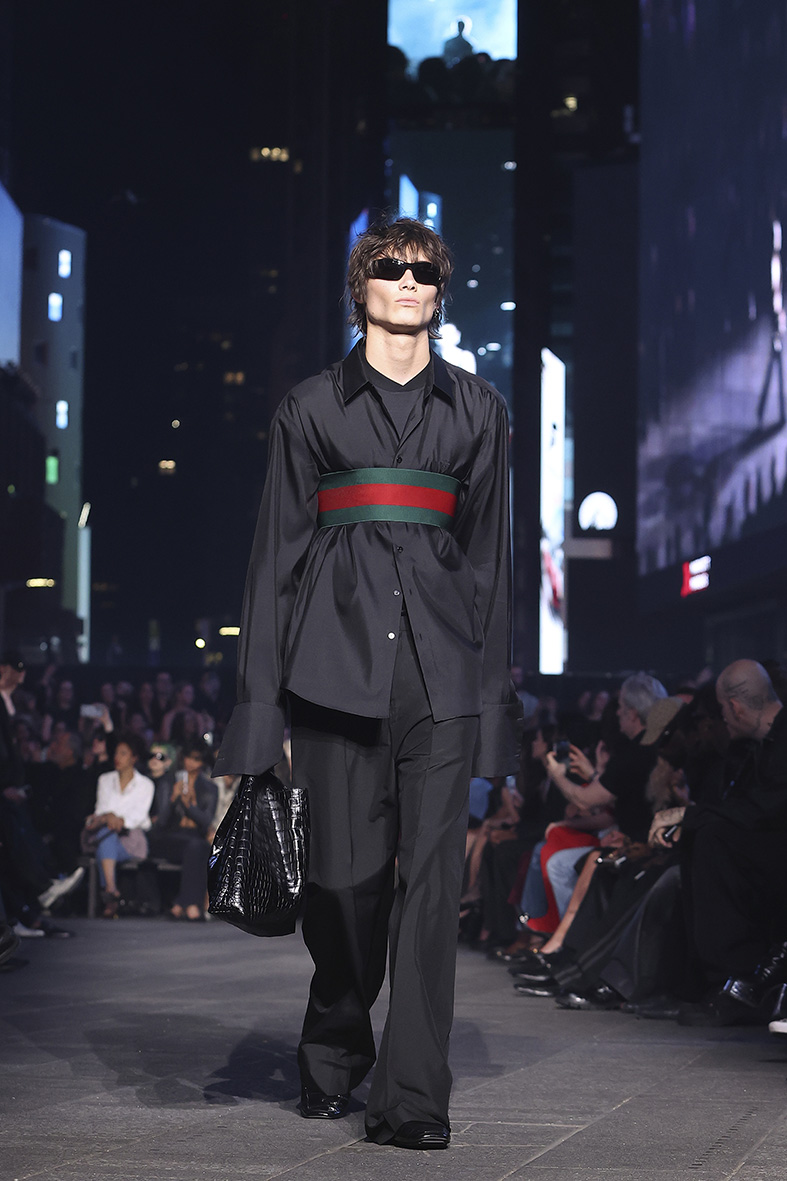
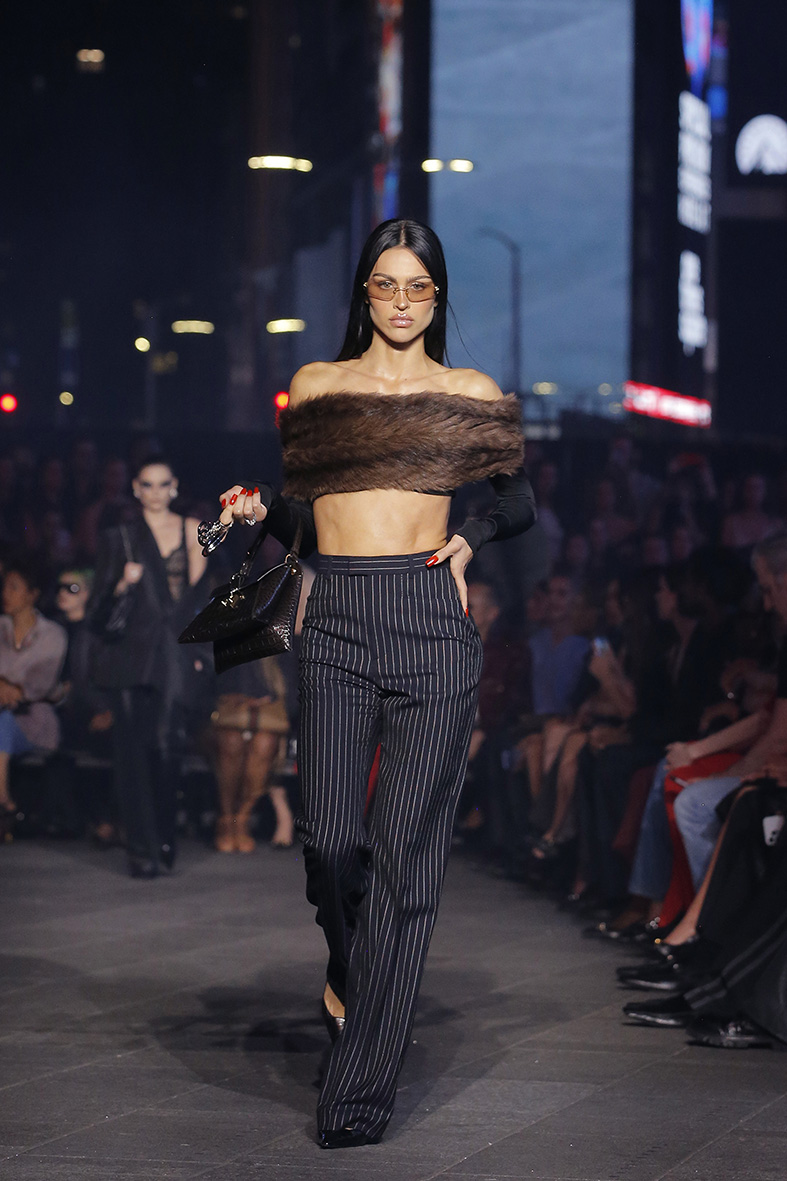
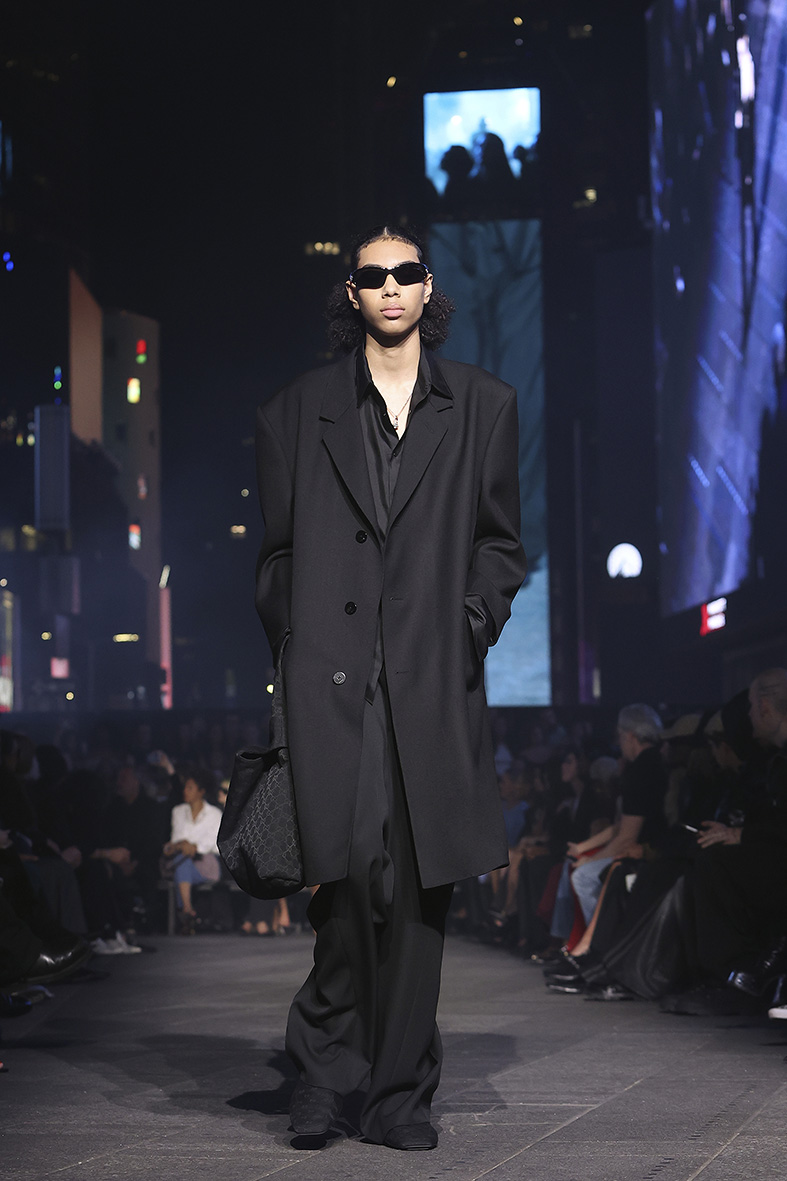
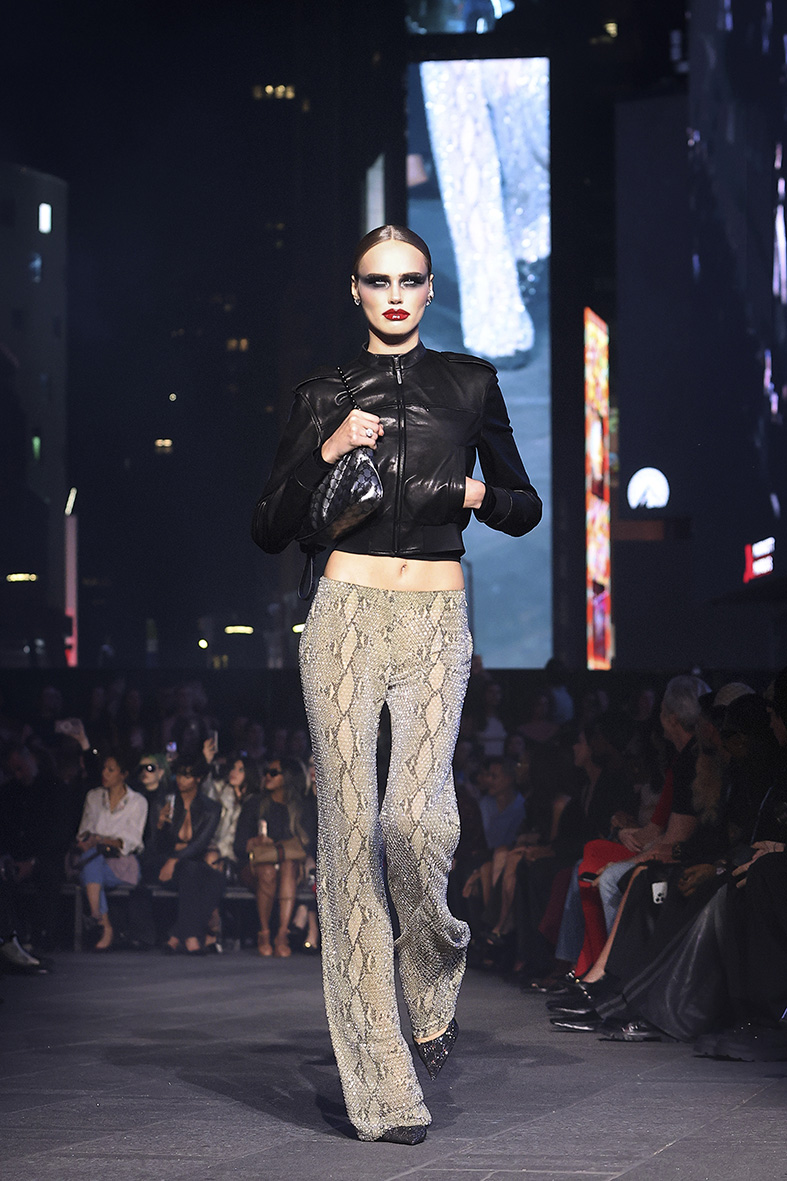
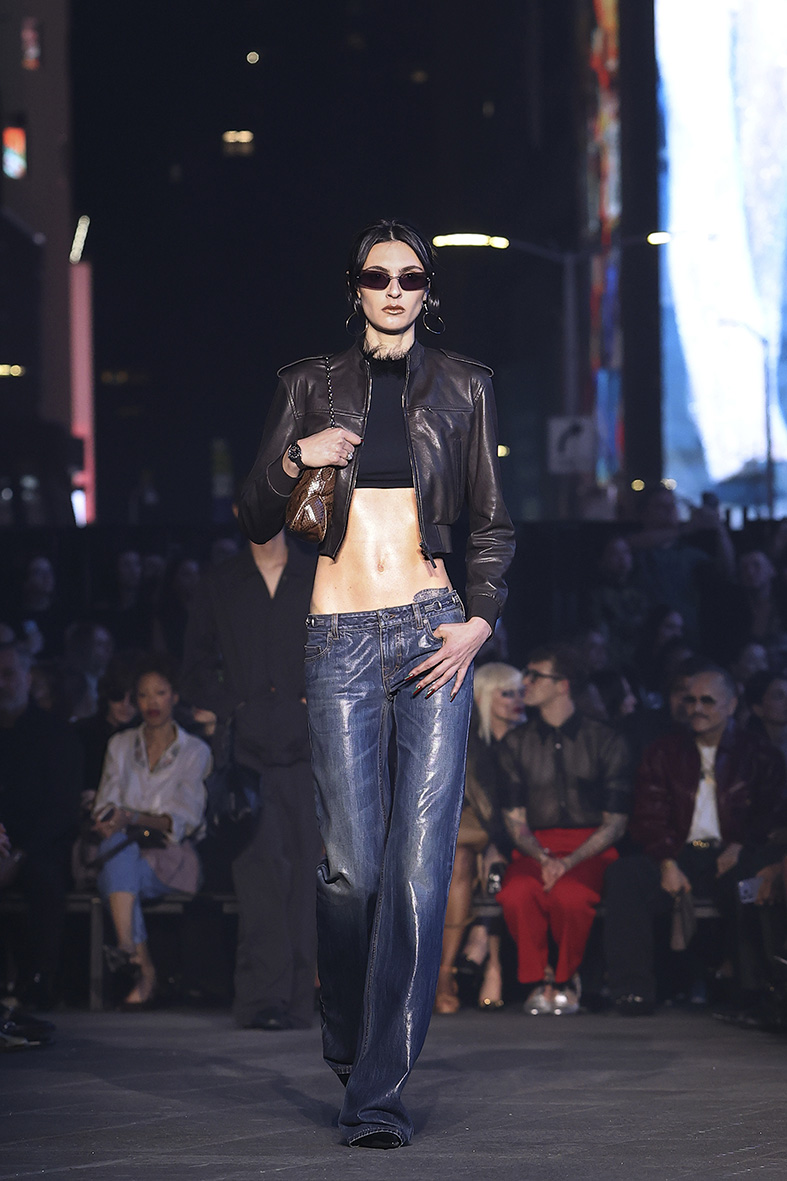
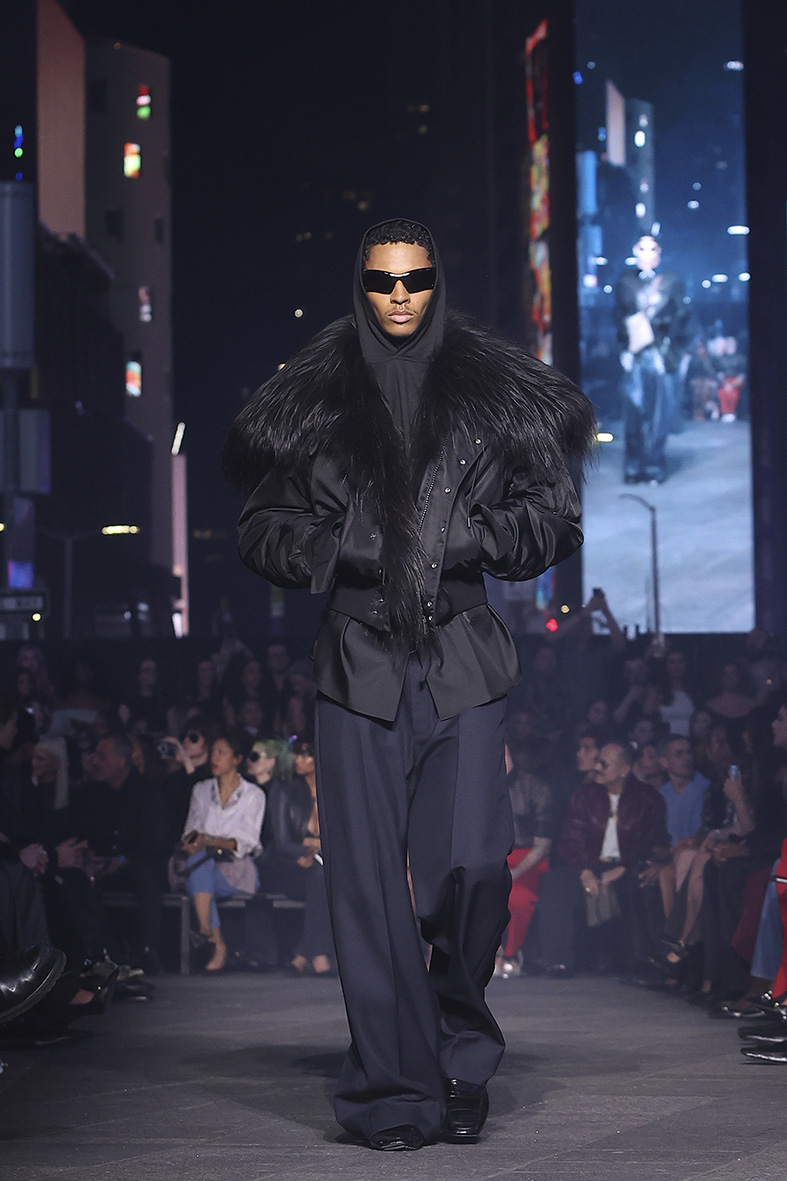
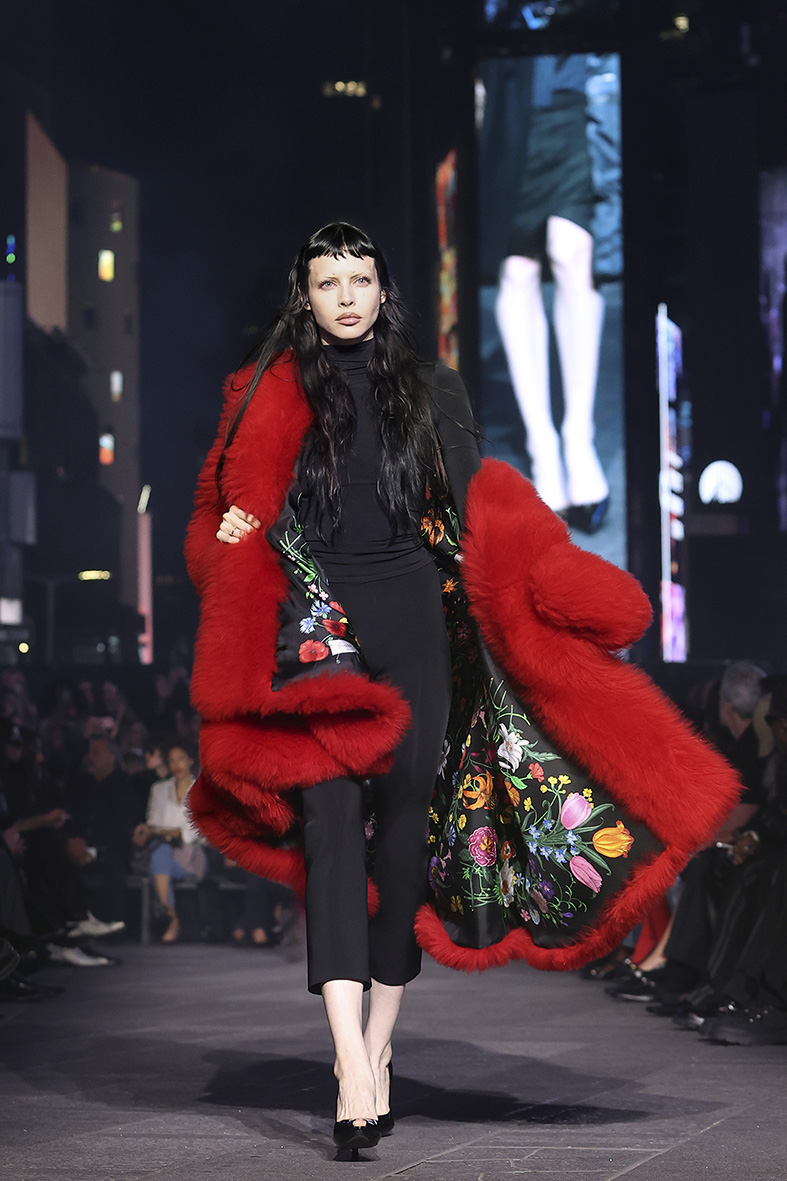
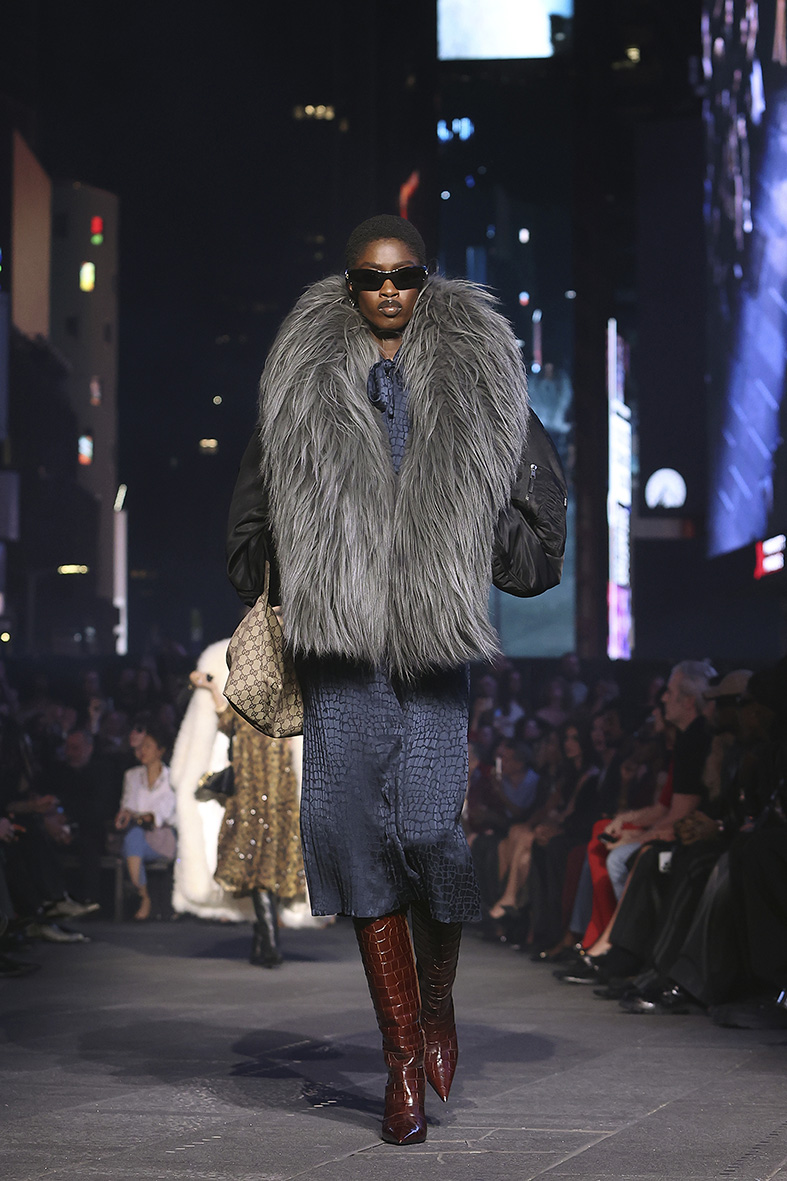
The collection is anchored in a new essential wardrobe, where pragmatic pieces and elevated opulence collide: reversible coats in technical fabrics and shearling, monogrammed duvet-like leather stoles that privilege form over function, sequins mimicking crocodile textures, and feather embroideries extending couture codes into menswear. Heritage elements are reprogrammed — the Web stripe becomes a bandeau top, the Horsebit transforms into a structural stirrup detail on boots, while accessories from jewel-toned leather bags to watch-clutches reinforce the idea of Gucci as a total lifestyle proposition.
What sharpens the collection is its underlying discipline — a clear echo of Tom Ford’s Gucci. The precision of tailoring, the dominance of leather, and the controlled sensuality recall the late-’90s moment when Ford redefined the House through reduction rather than excess. This reference is subtly reactivated through the presence of Tom Brady, whose image channels a contemporary version of that same masculine ideal once embodied by David and Victoria Beckham. Here, leather is no longer just provocative — it becomes architectural, precise, almost uniform-like.
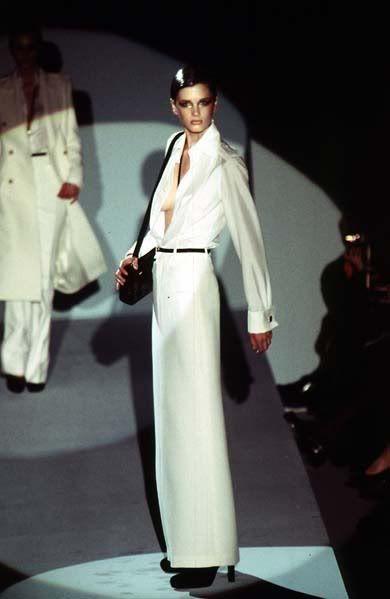
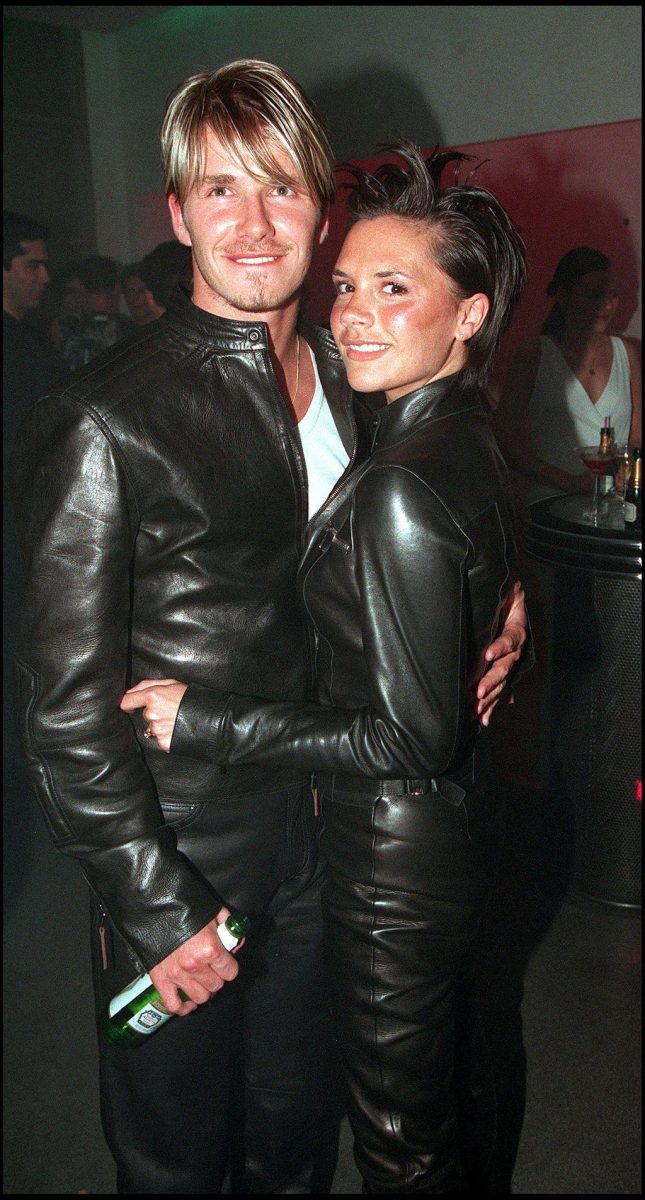
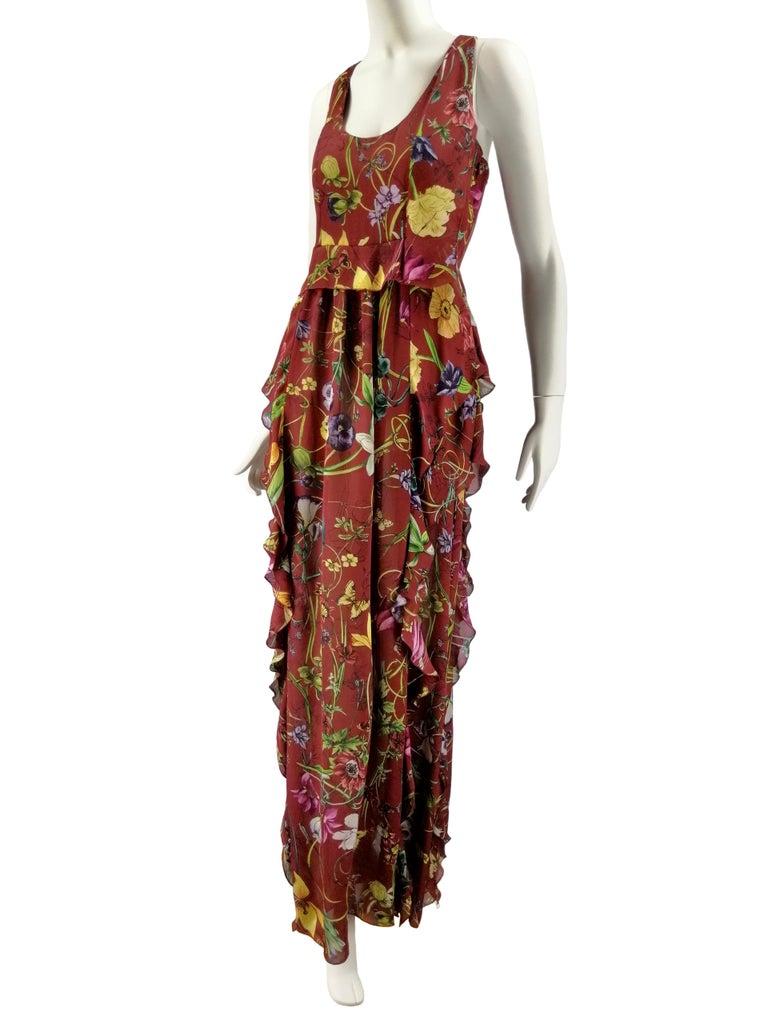
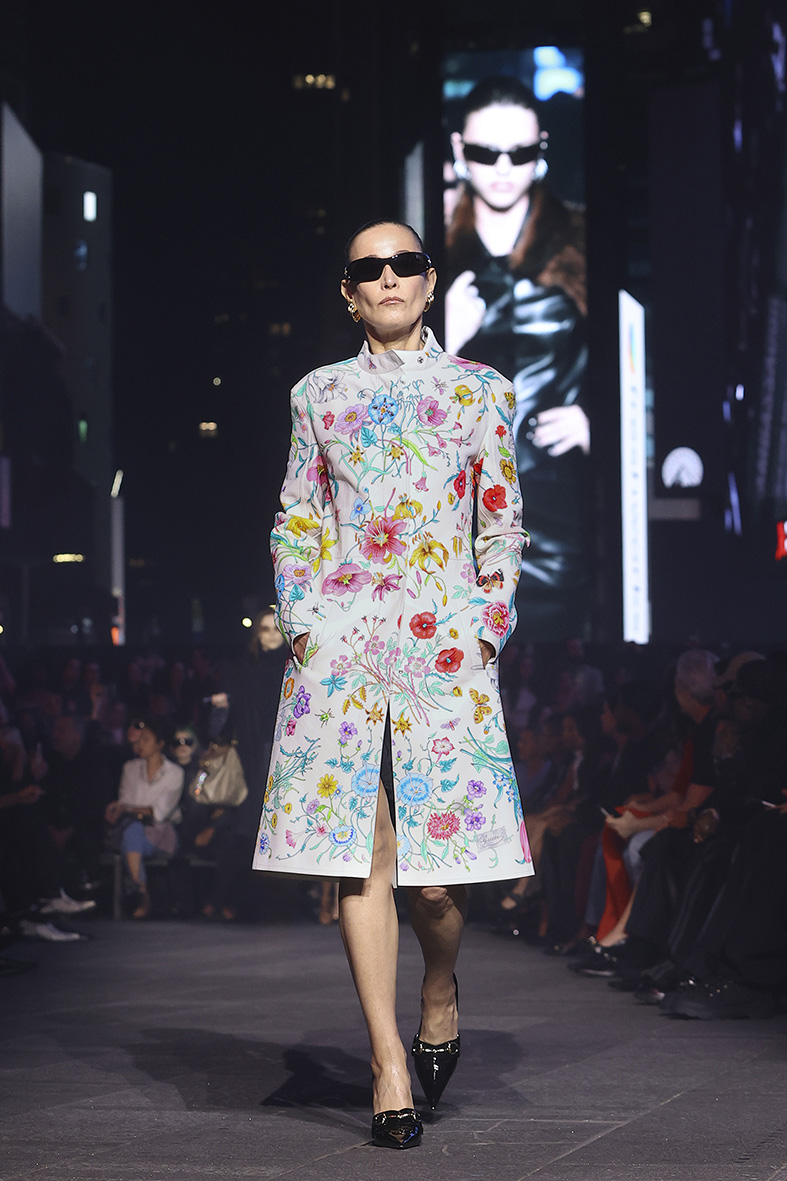
Counterbalancing this severity is a softer, more fluid layer that recalls Frida Giannini’s tenure. Floral motifs, echoing the historic Flora language, reintroduce a sense of continuity and heritage. Under Giannini, these elements defined a polished and romantic femininity; here, they are reframed, lighter, integrated into a broader system where decoration coexists with structure rather than opposing it.
Described as the fourth chapter in Demna’s ongoing character study — following La Famiglia, Generation Gucci, and Primavera — GucciCore consolidates multiple visual languages into one cohesive statement. At its core lies the idea of a permanent wardrobe: pragmatic, wearable, and unmistakably Gucci.
What makes the collection resonate is not its wearability, but its awareness of its own history. GucciCore doesn’t attempt to define a single direction. Instead, it stages a tension: Ford’s minimalism versus Giannini’s decoration, utility versus opulence, archetype versus individuality.
In doing so, Gucci proposes a more relevant question for today: can a brand’s identity still be singular, or must it exist as a layered contradiction? Staged at a reported cost of around 10 million dollars, the show also reflects a broader shift in luxury strategy. Gucci joins a growing list of maisons such as Dior and Louis Vuitton — and potentially Chanel — that have chosen the United States as the backdrop for their cruise and destination shows. Beyond the spectacle, this geographical pivot suggests a recalibration of focus toward markets with stronger spending power, raising a question that lingers beneath the surface: is the future of luxury storytelling increasingly shaped by different customers?