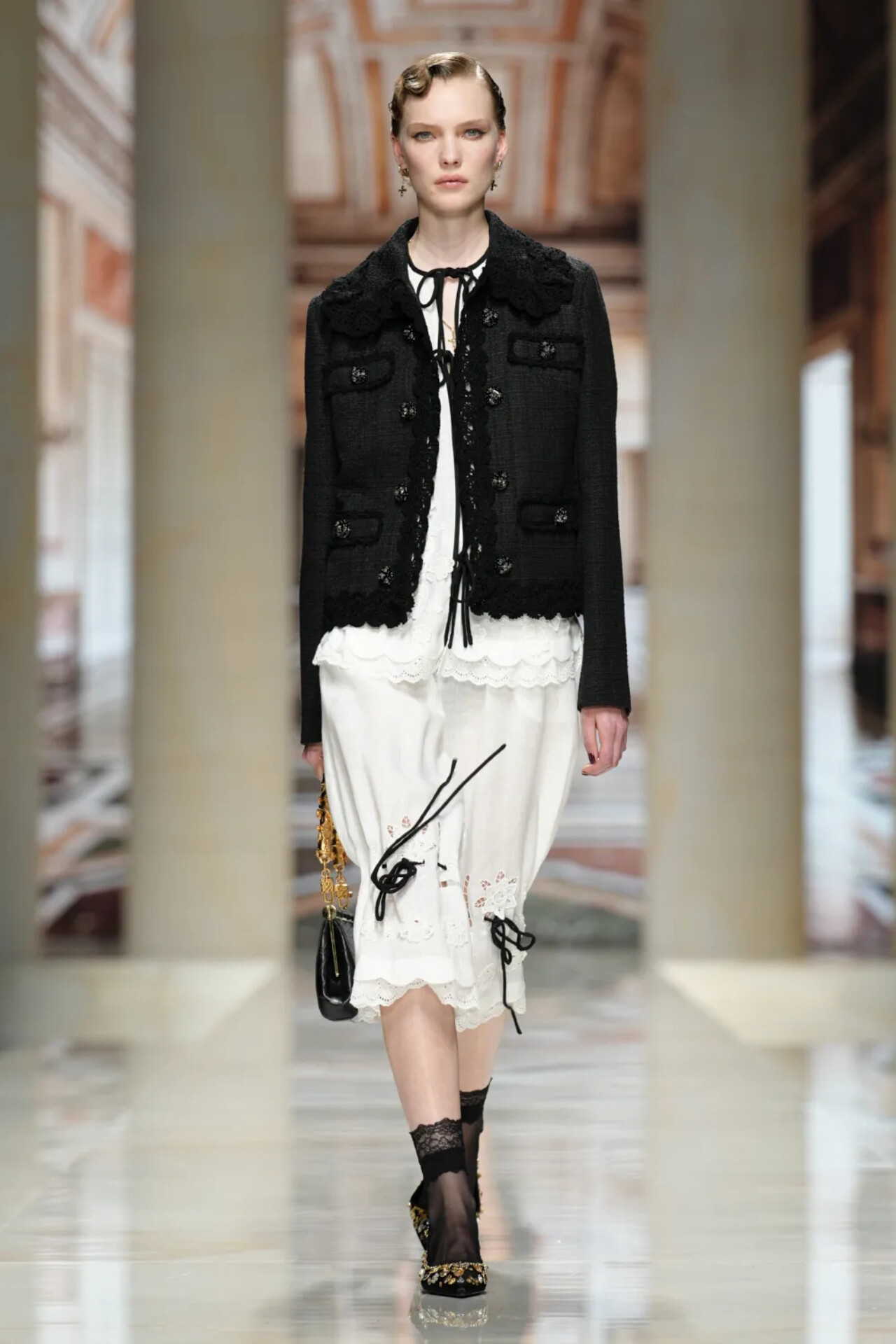
What remains of Dolce&Gabbana when Dolce&Gabbana no longer needs to prove that it is Dolce&Gabbana?
Milan, September 26, 2026.
Metropol. Viale Piave.
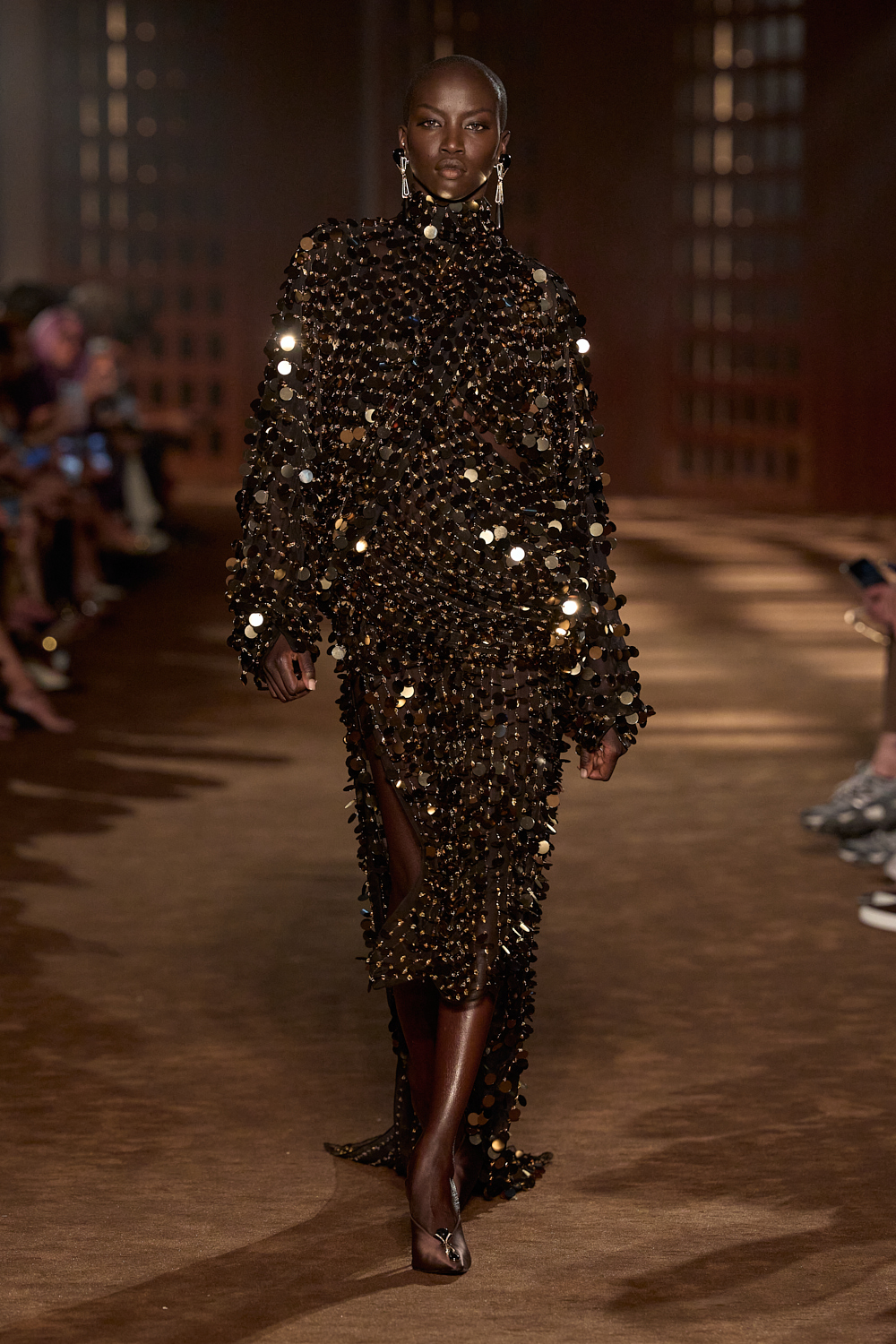
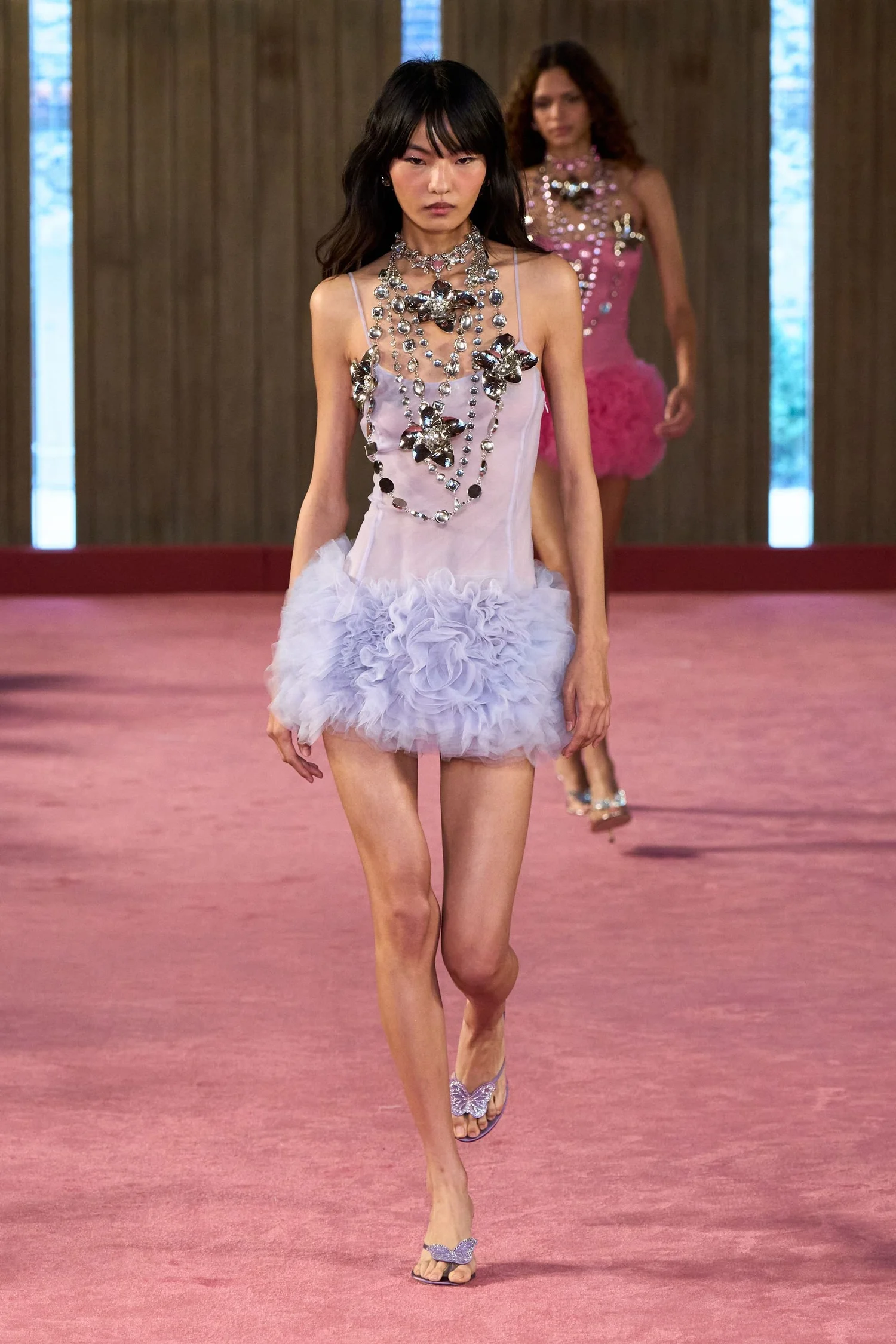
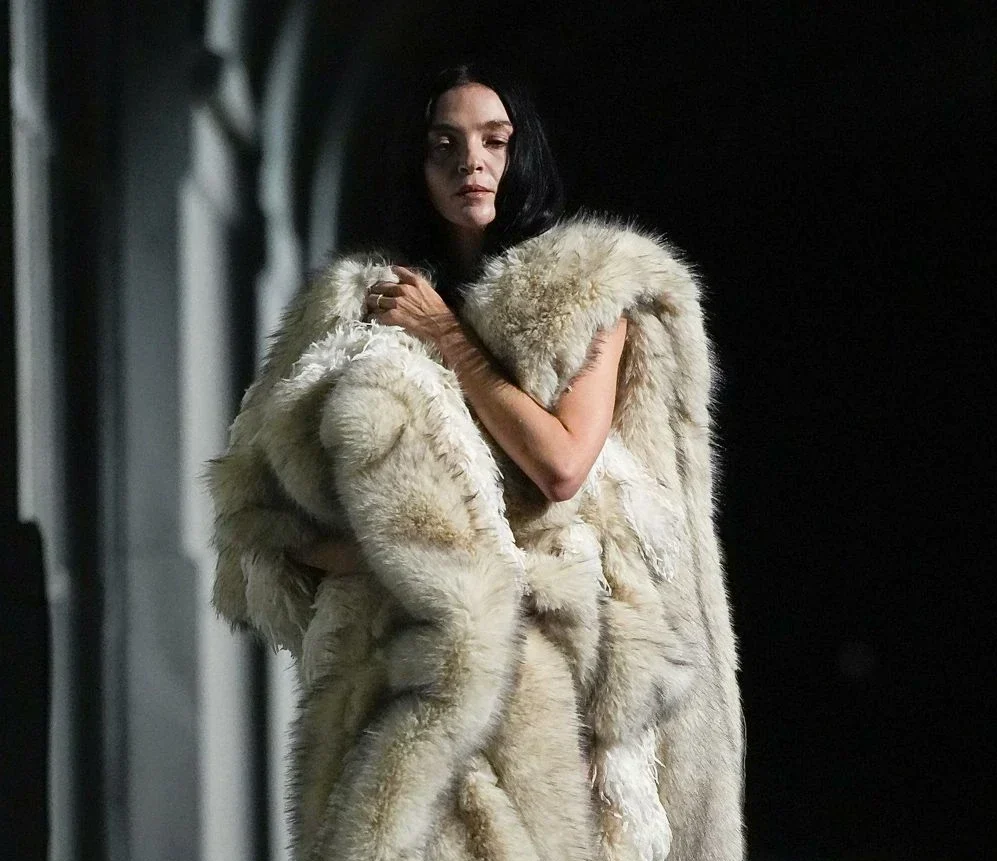
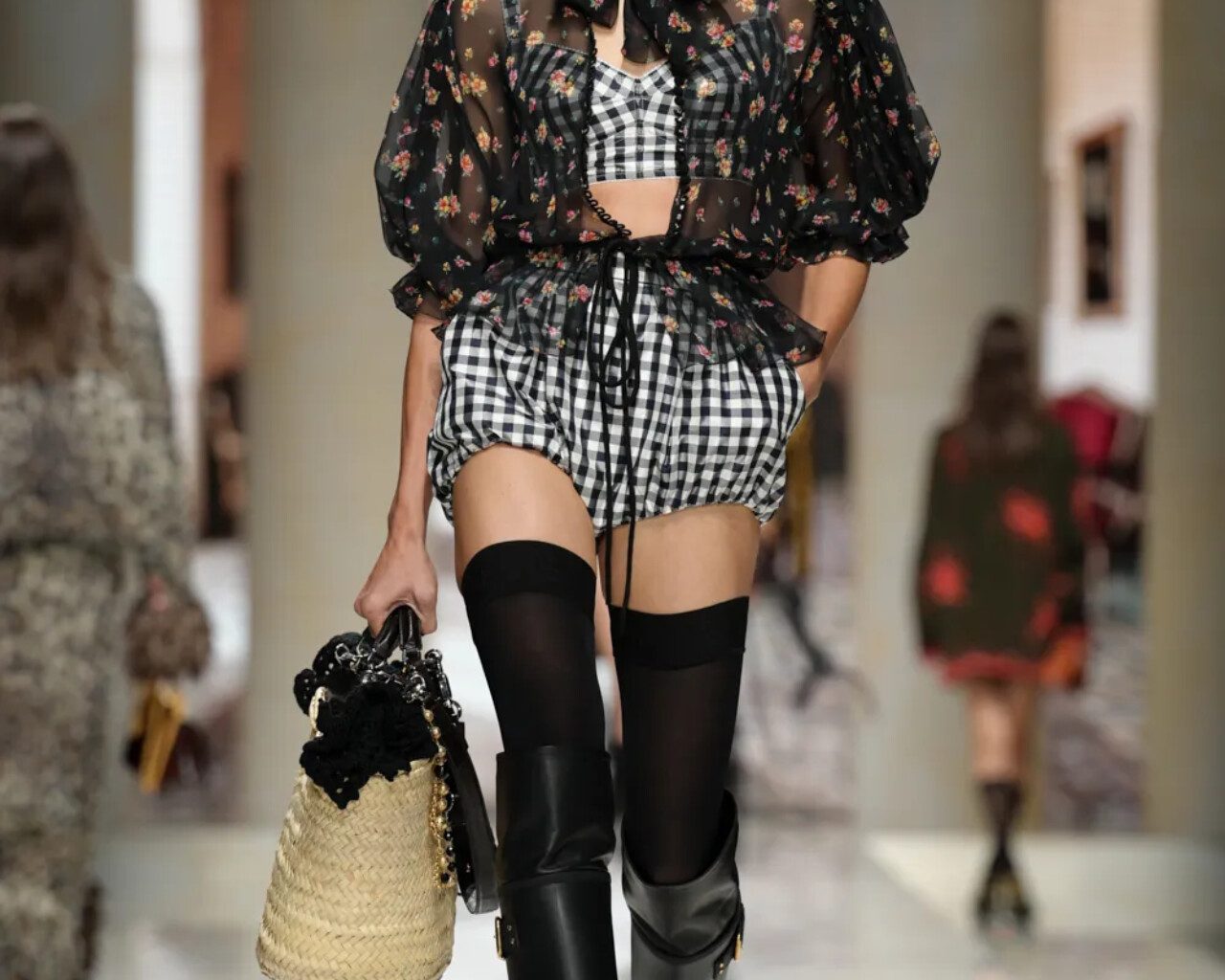
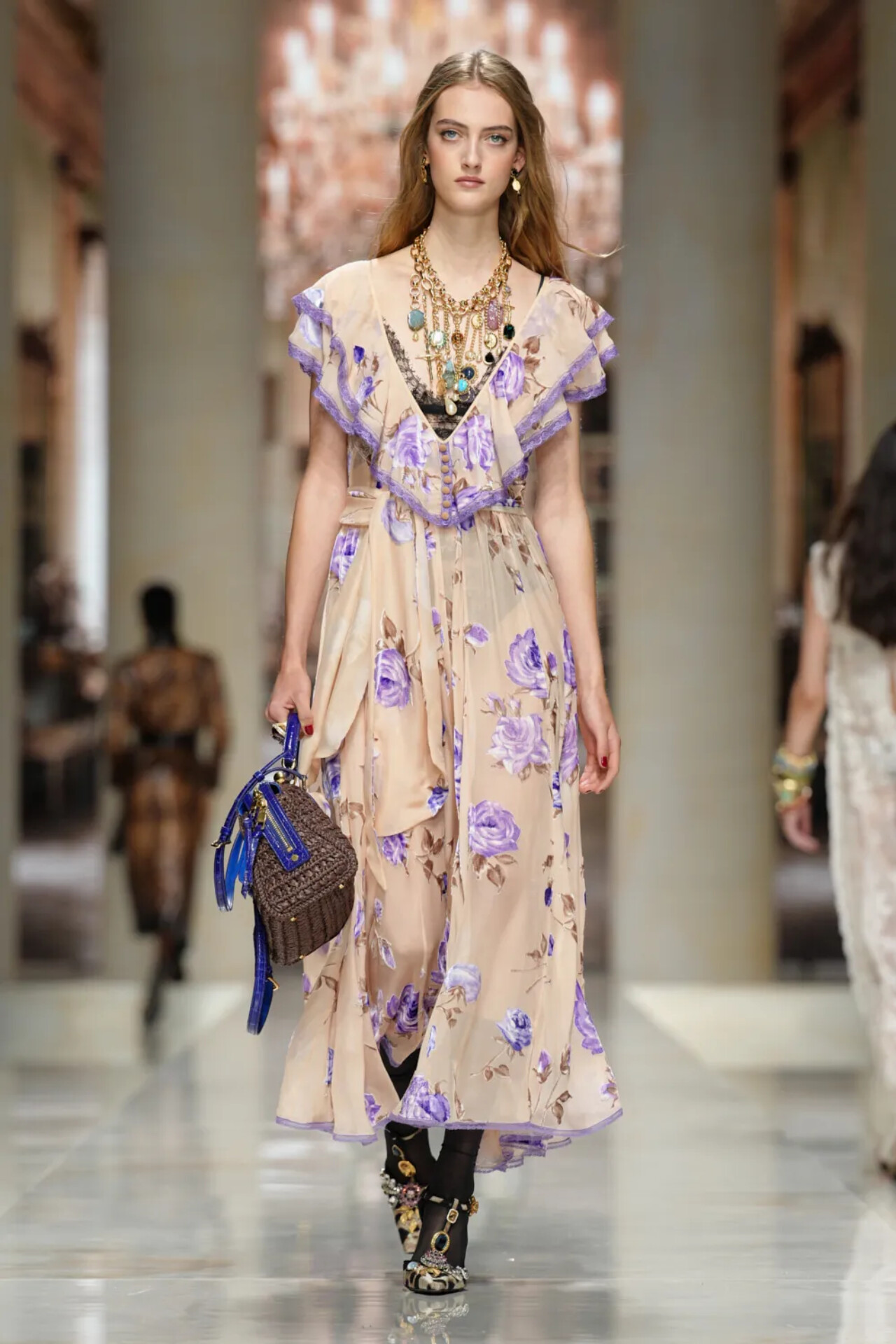
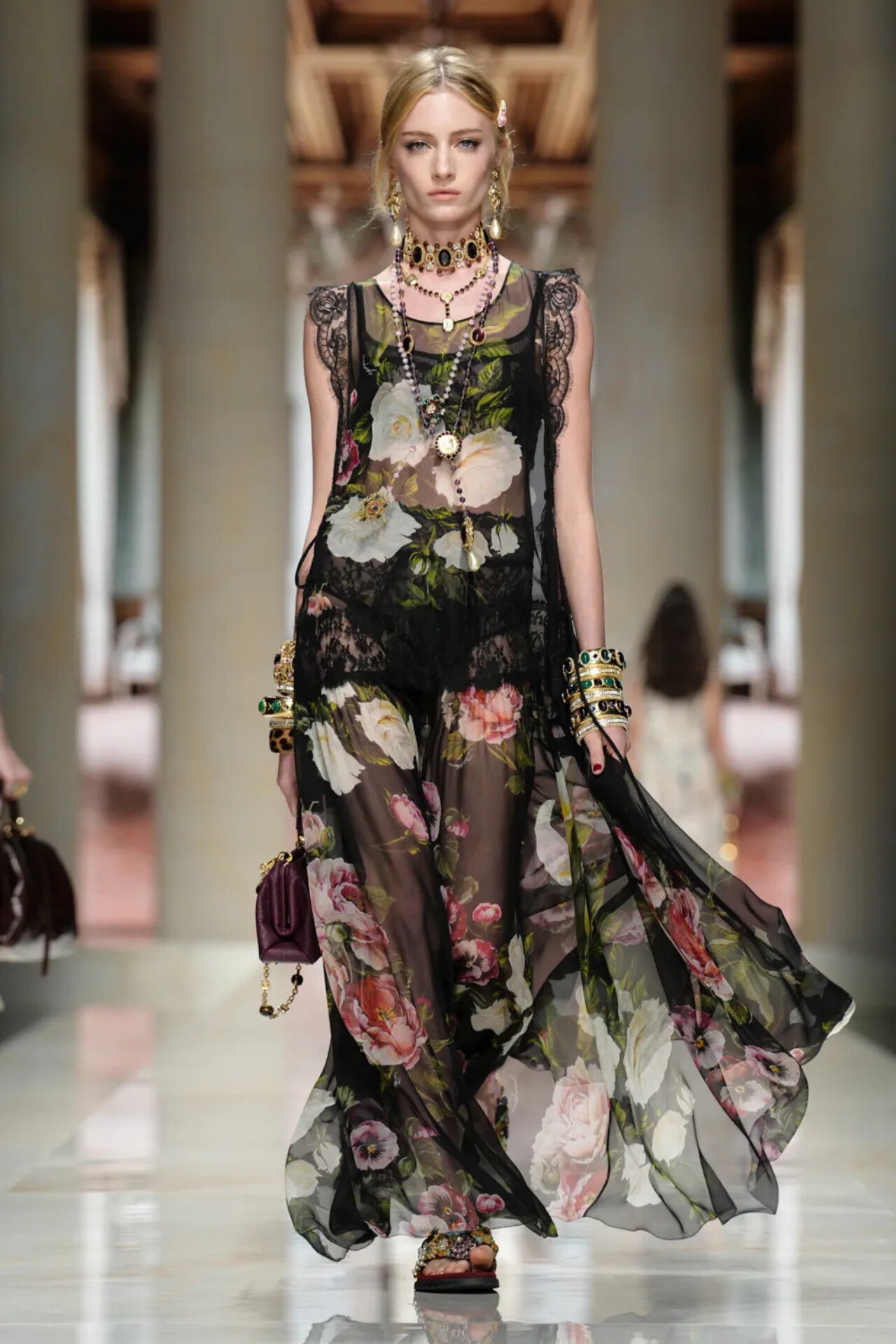
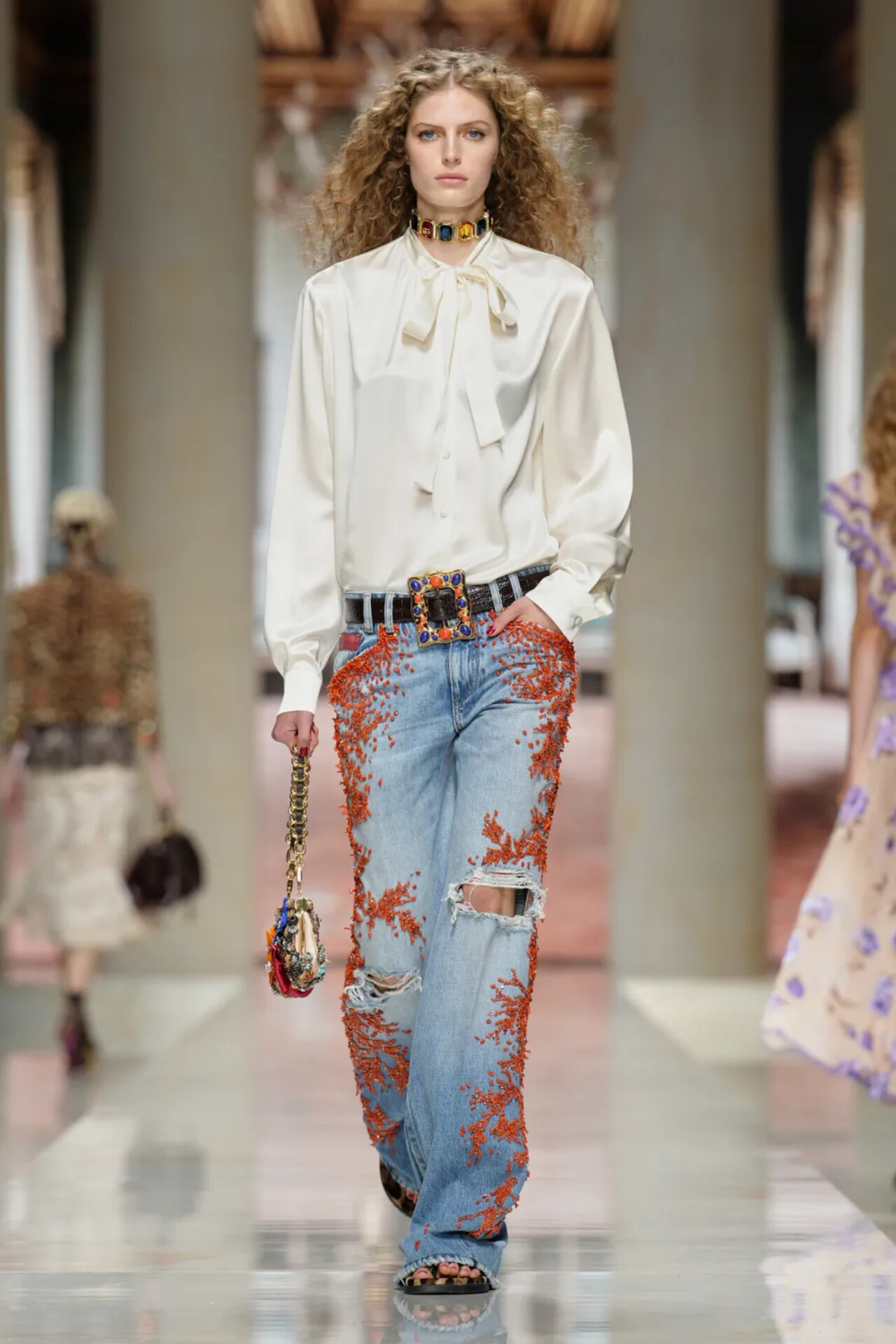
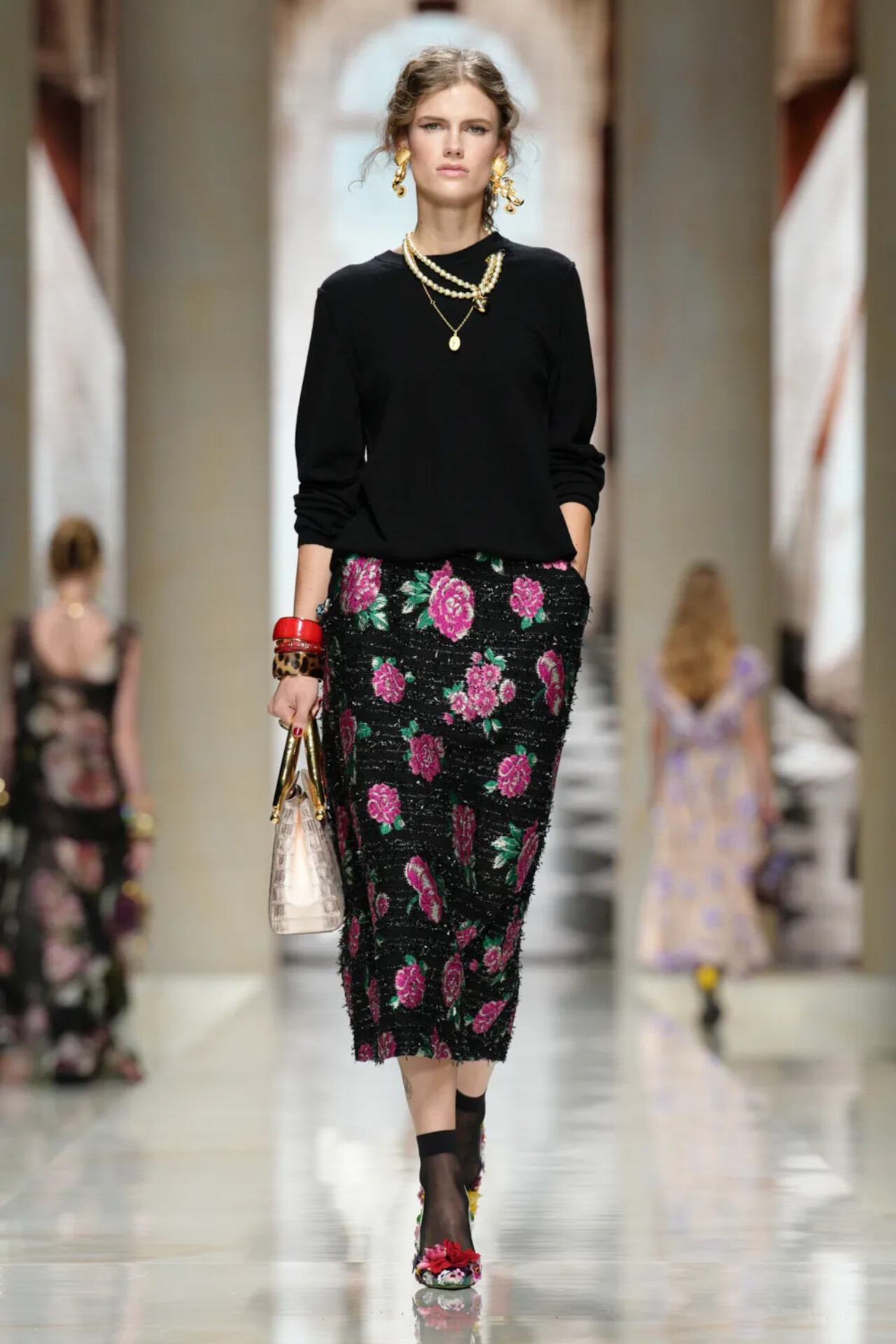
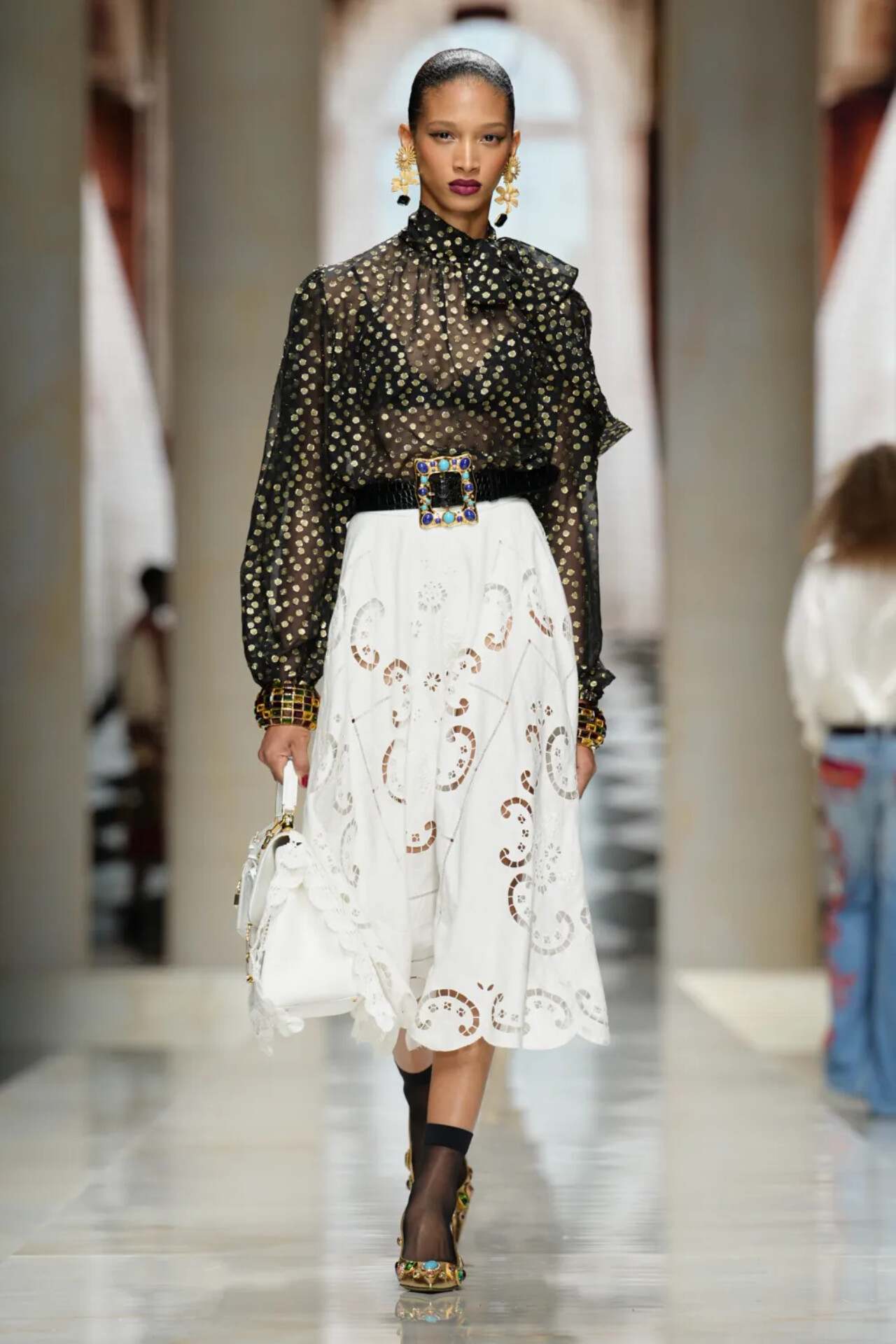
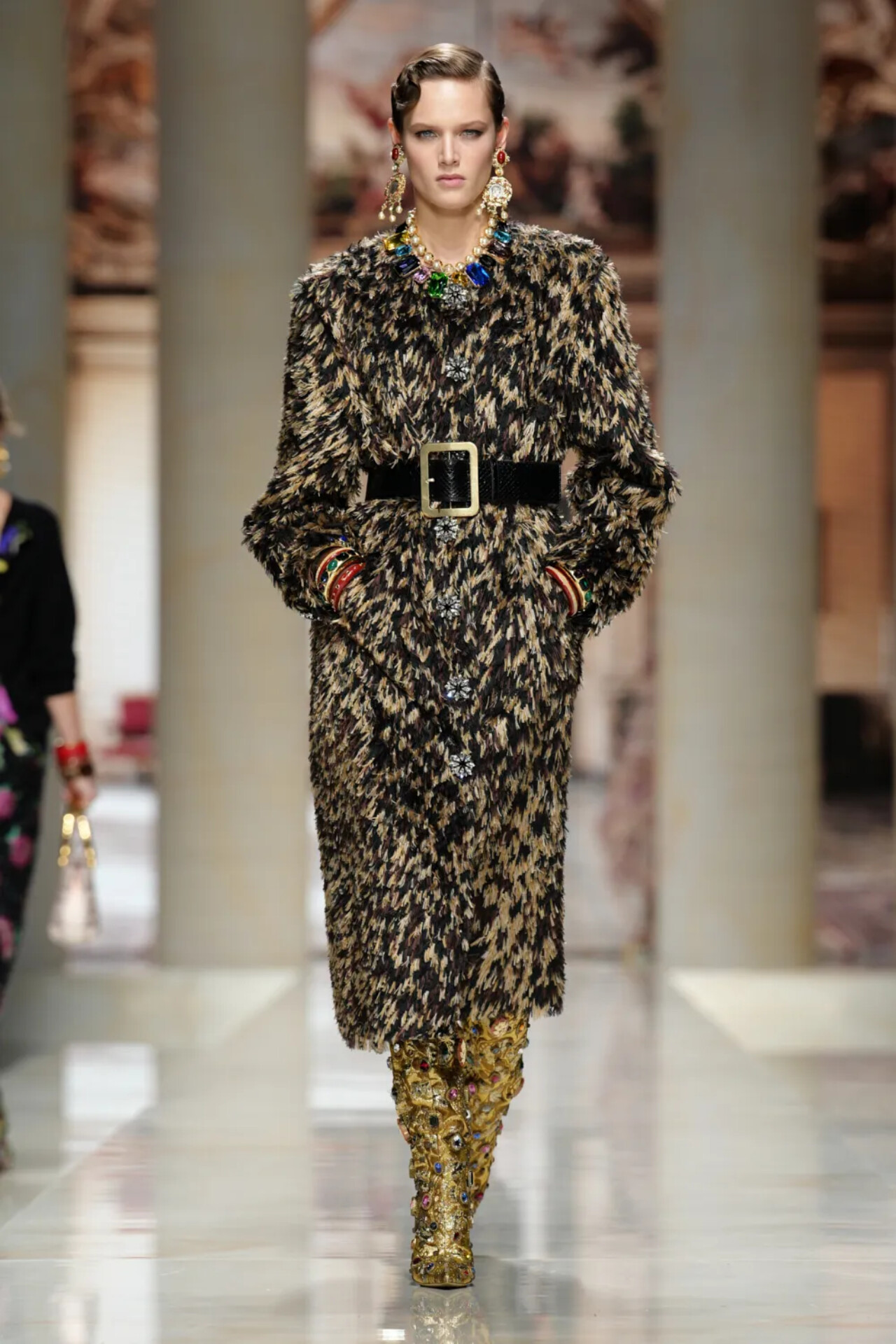
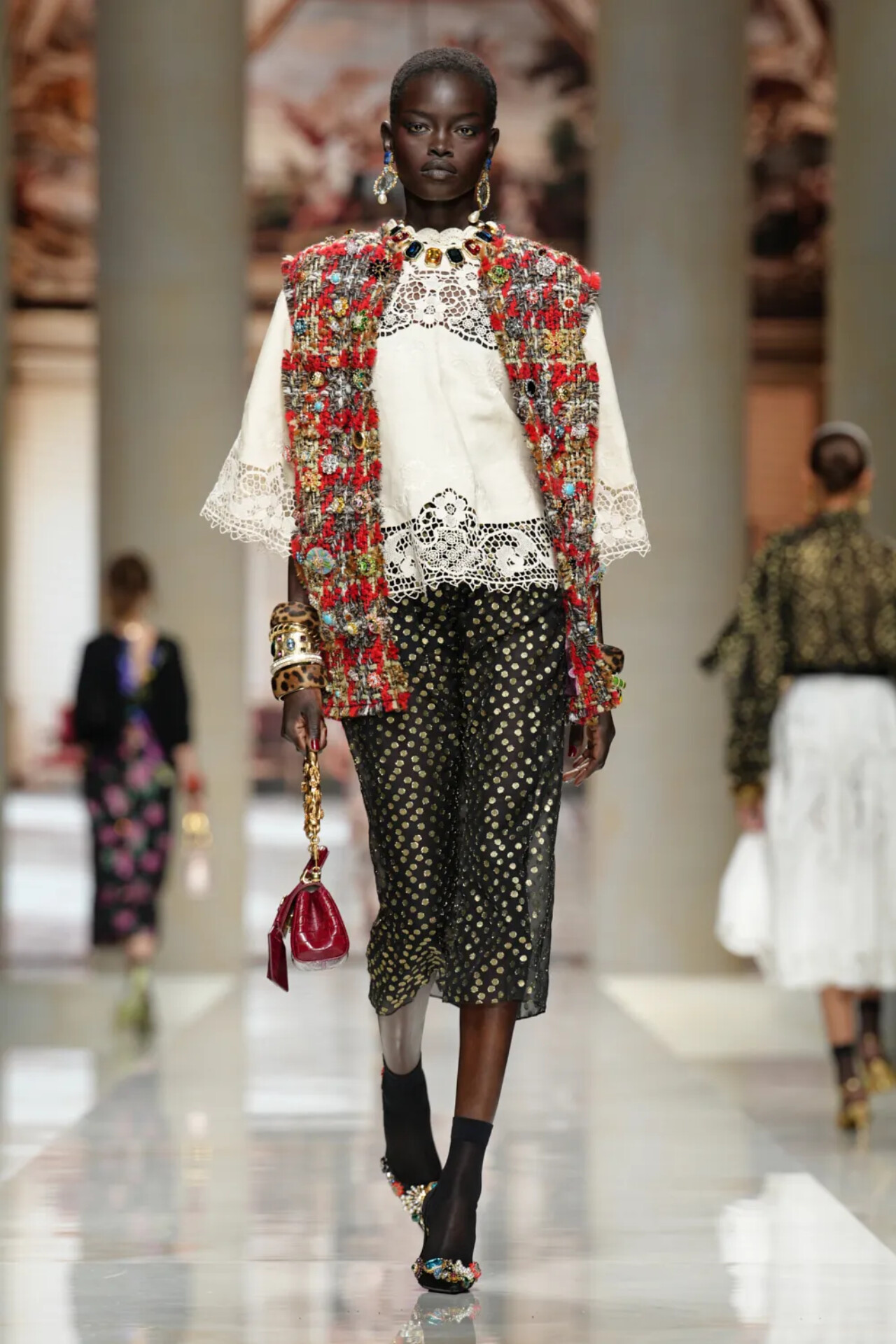
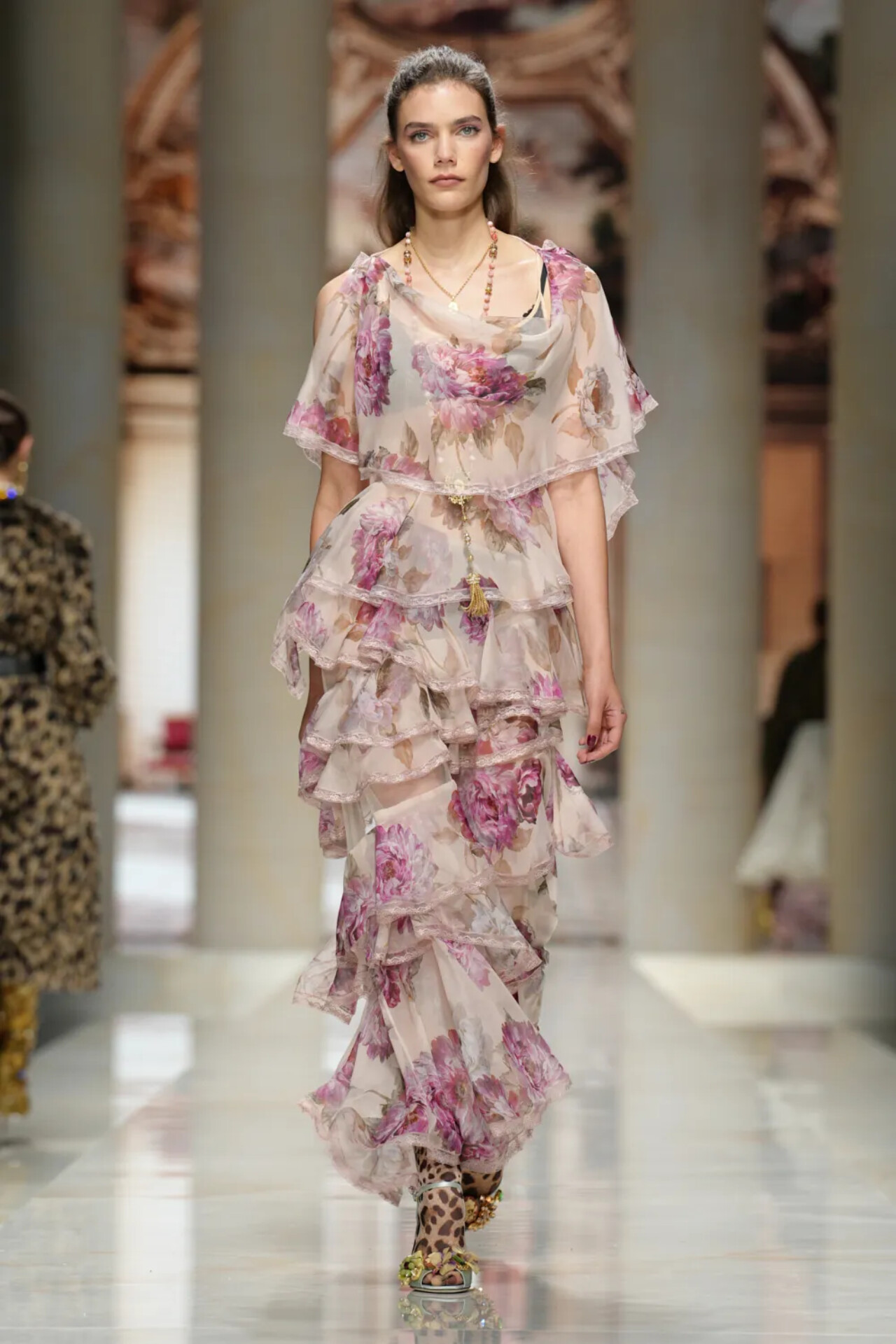
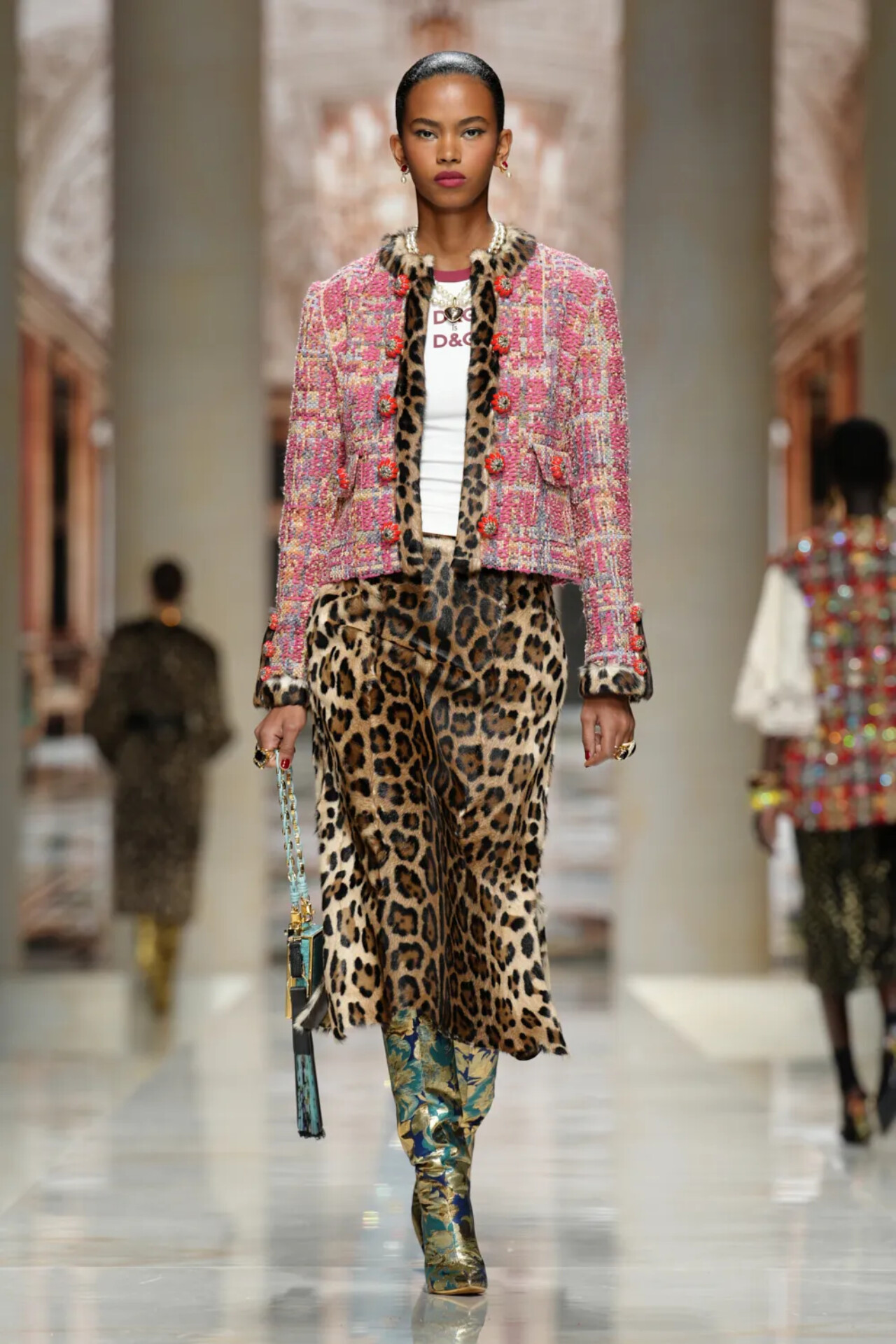
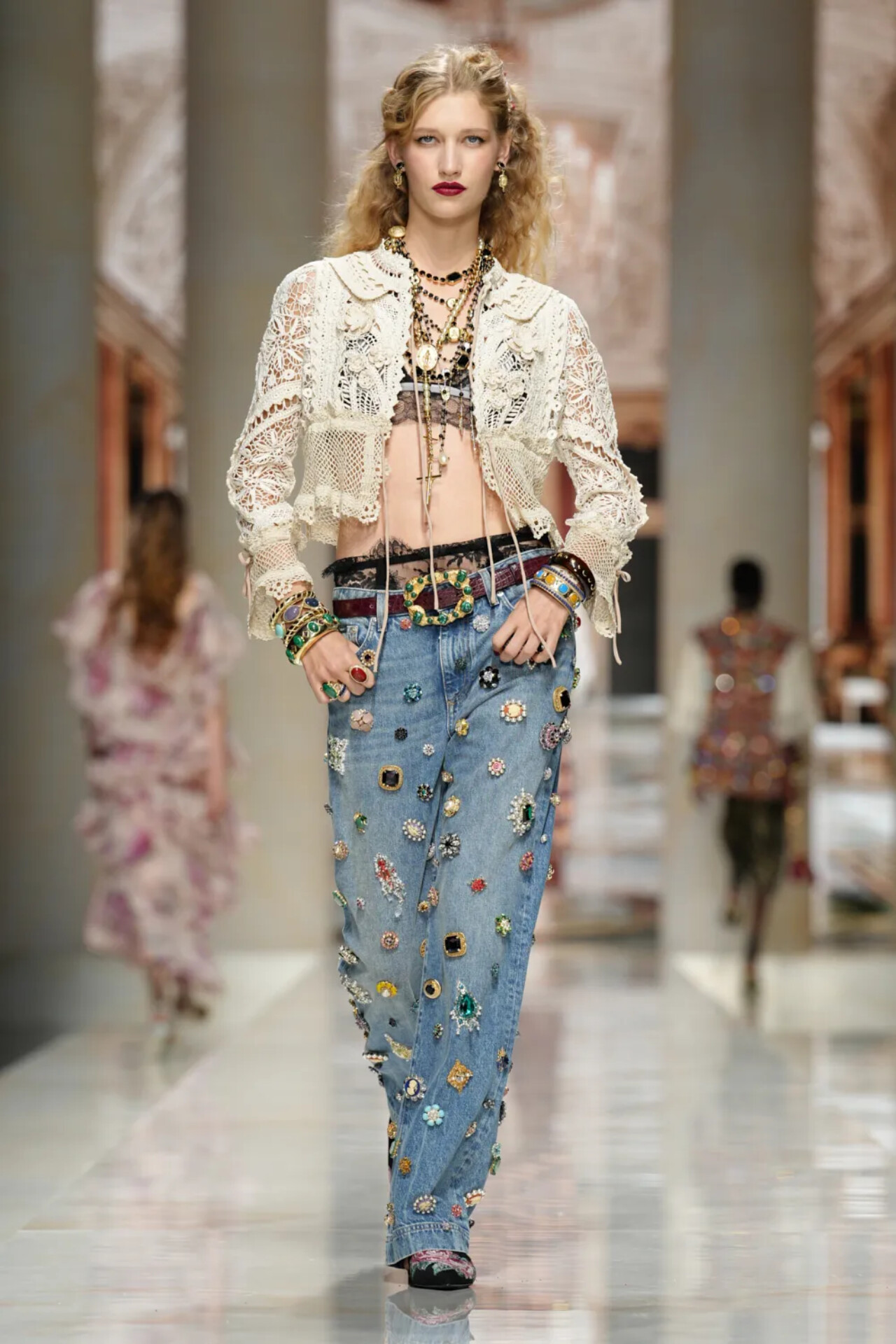
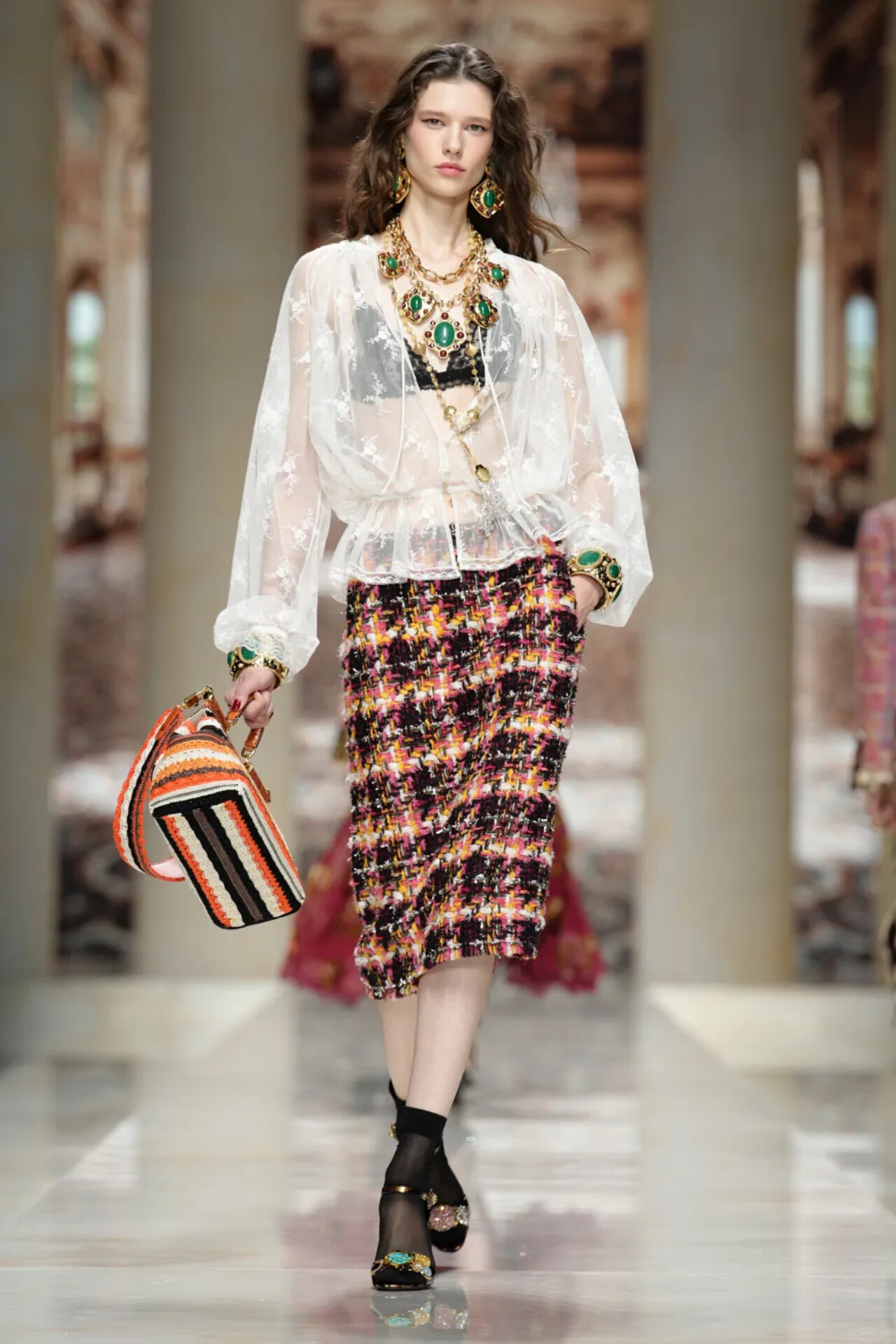
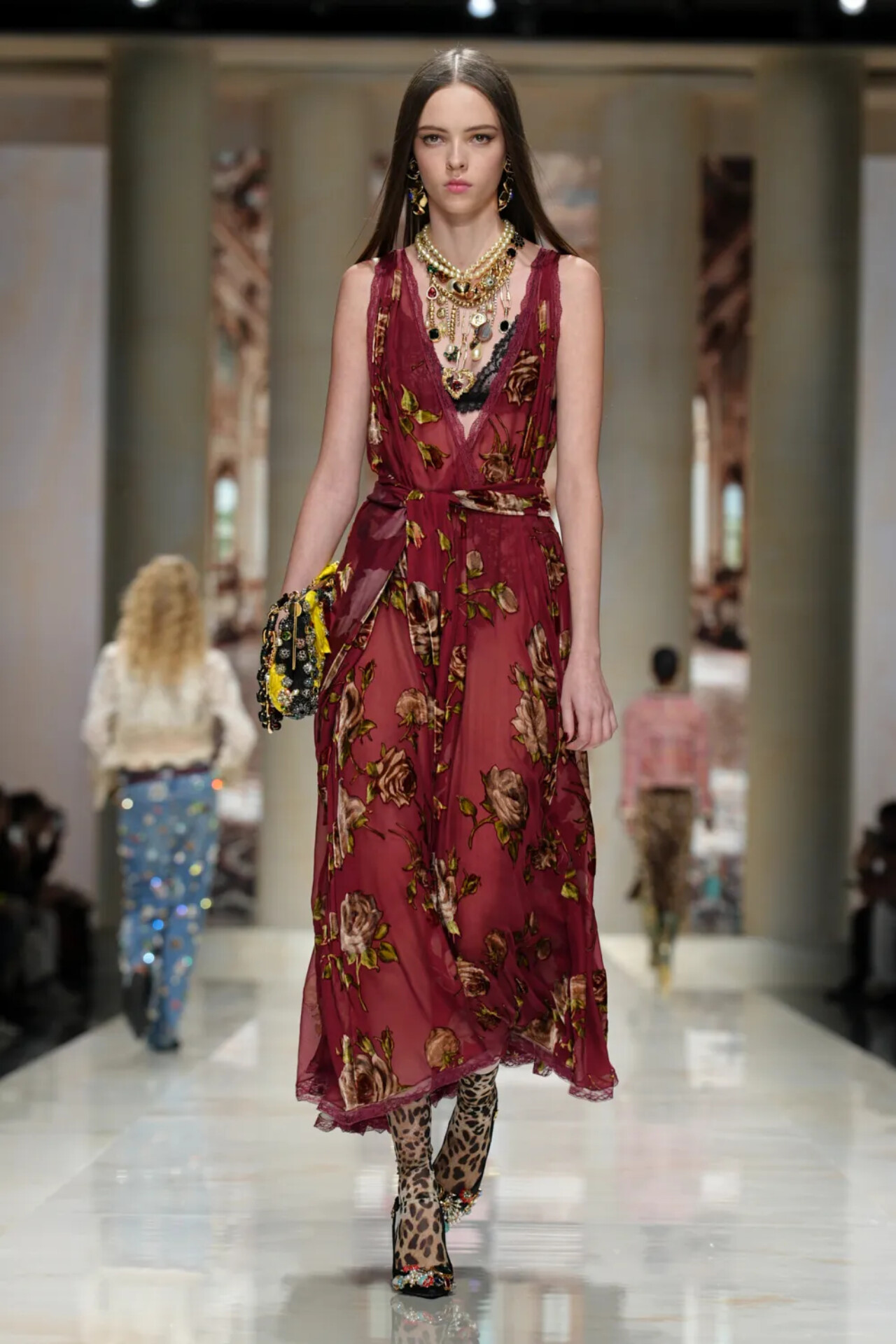
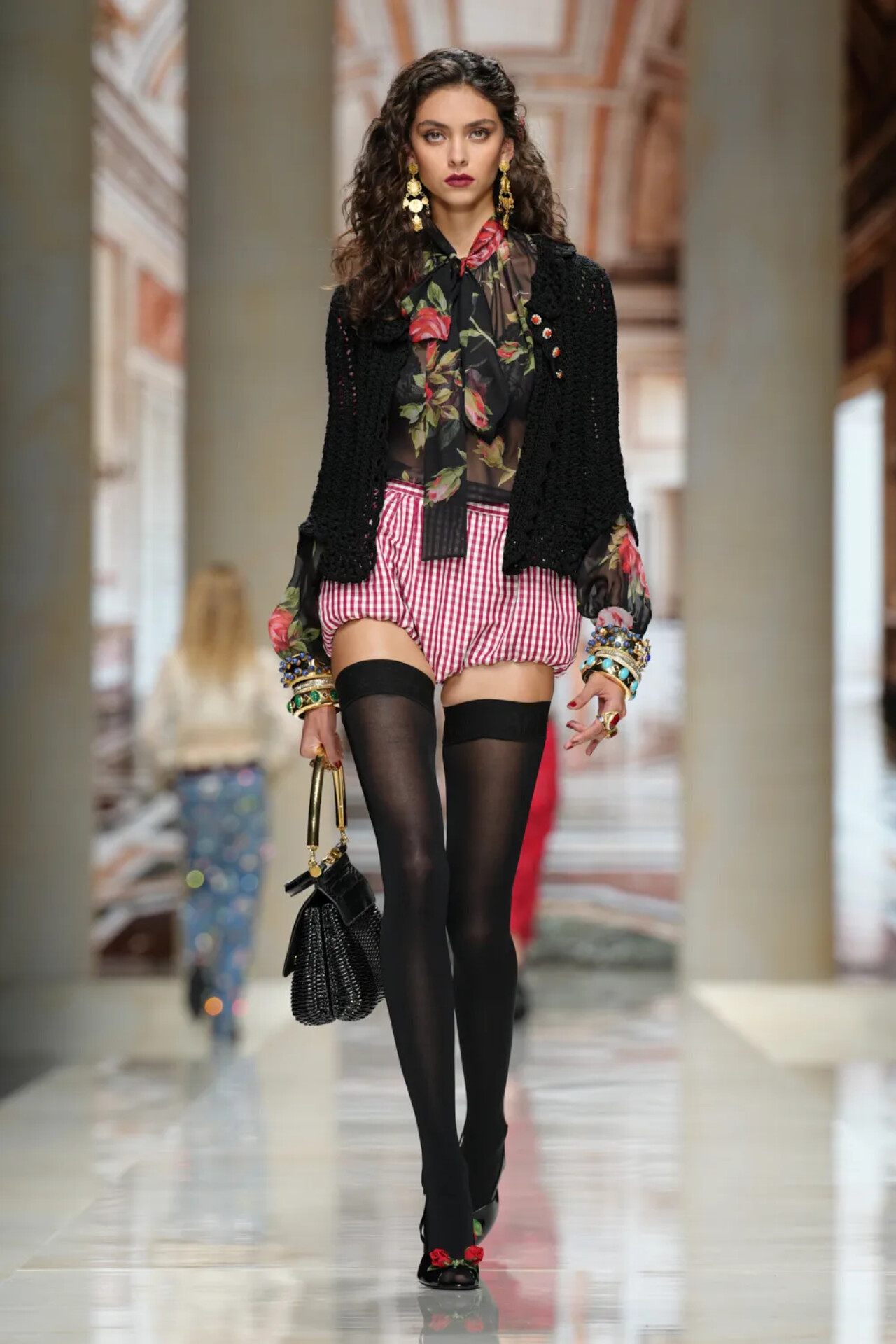
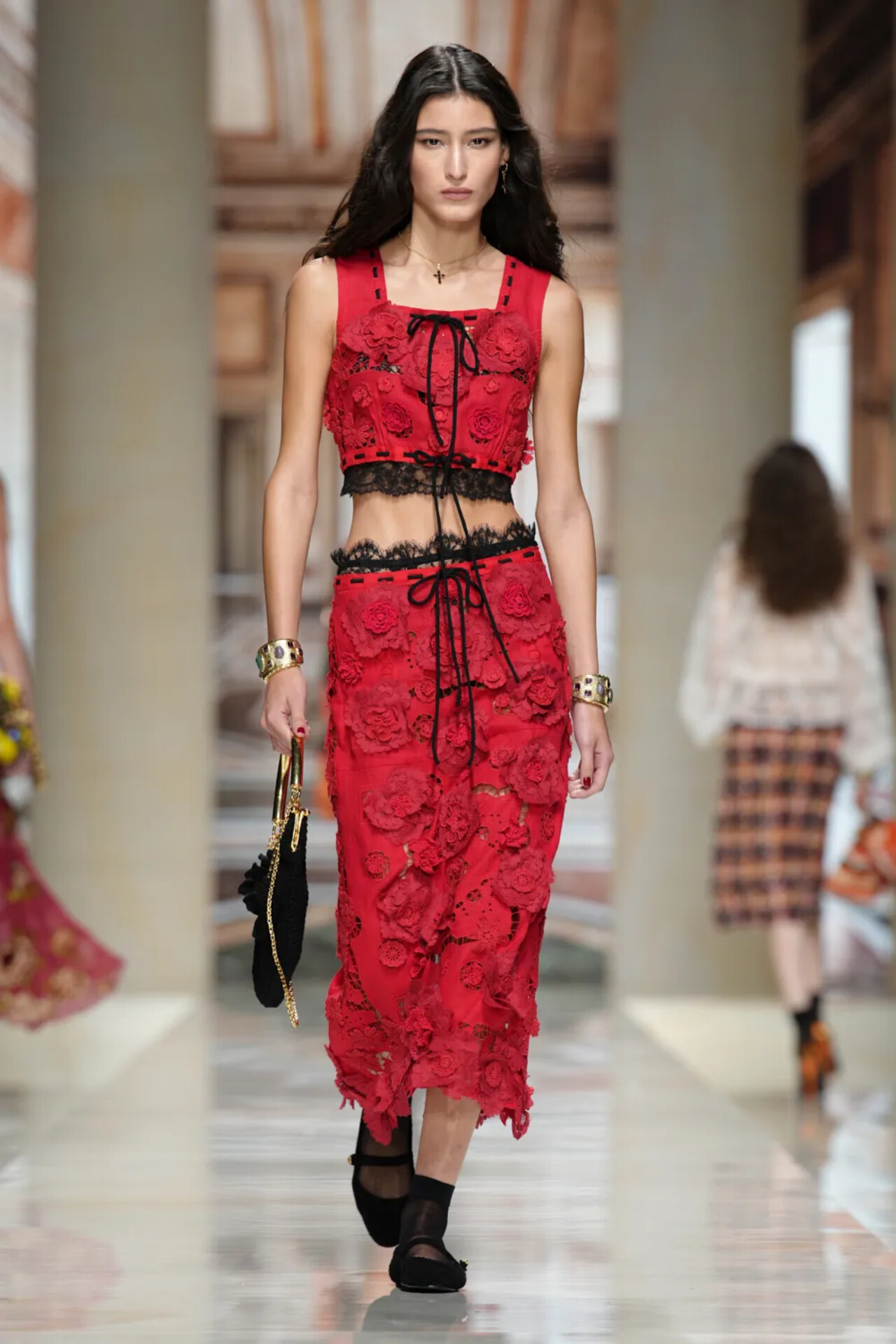
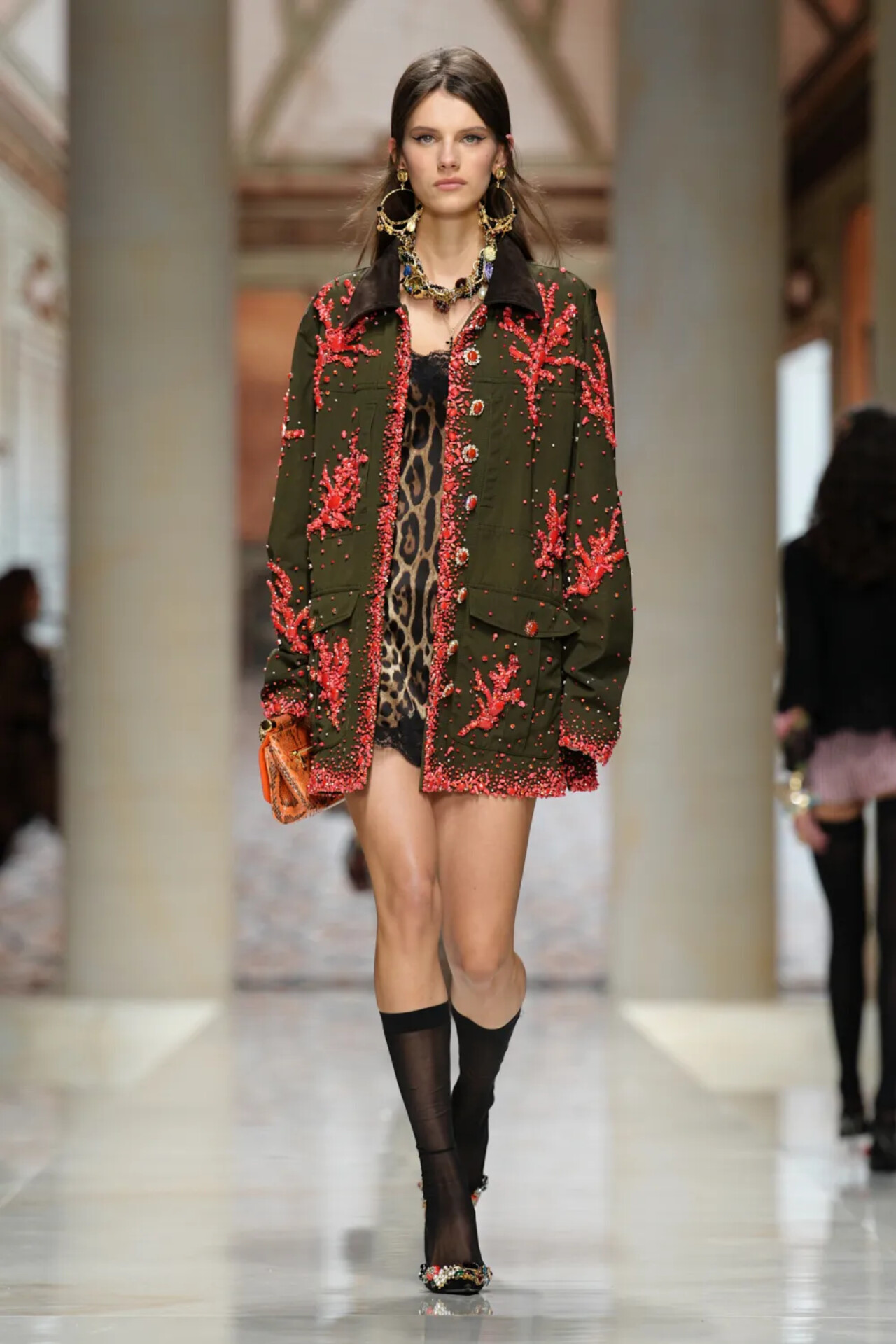
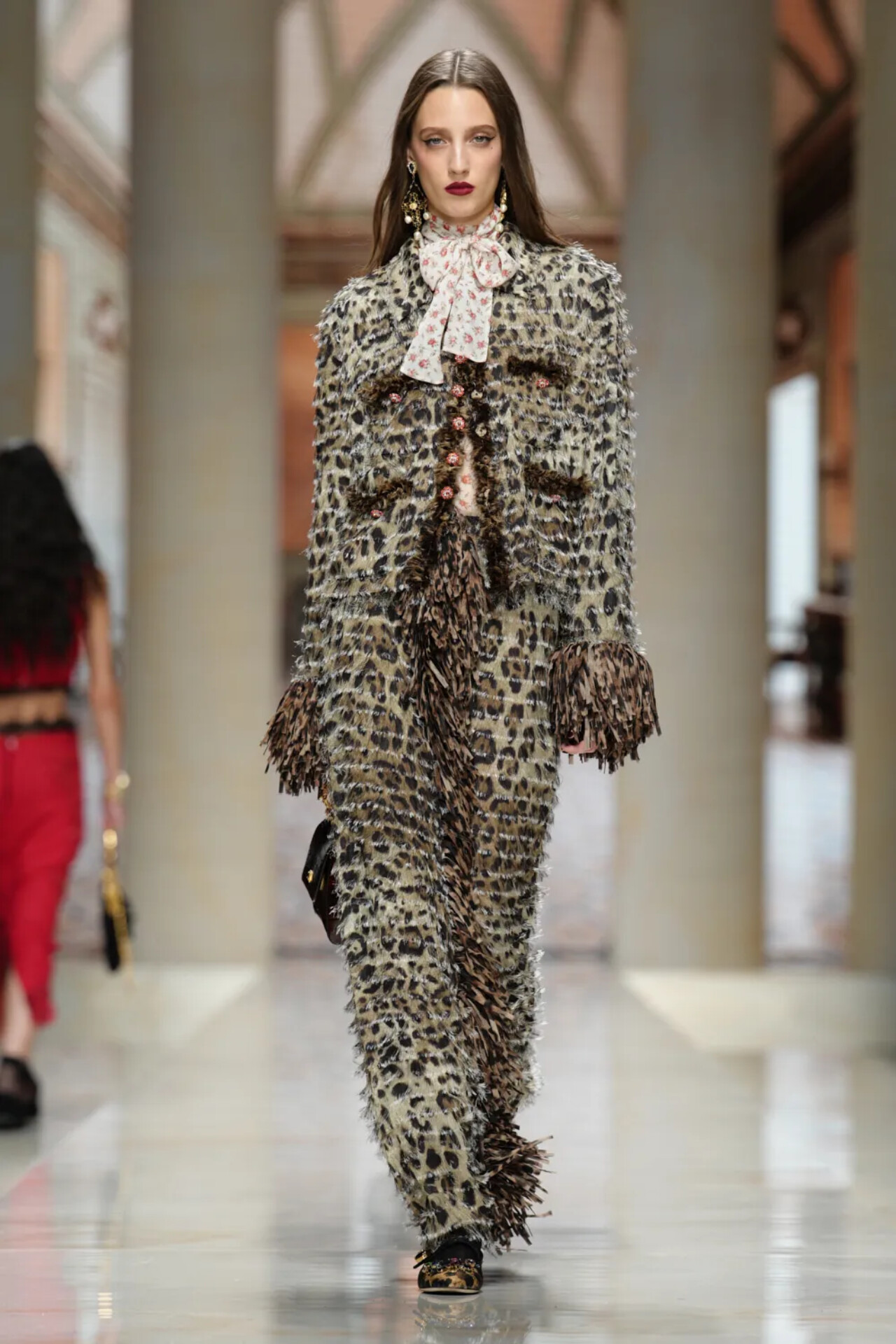
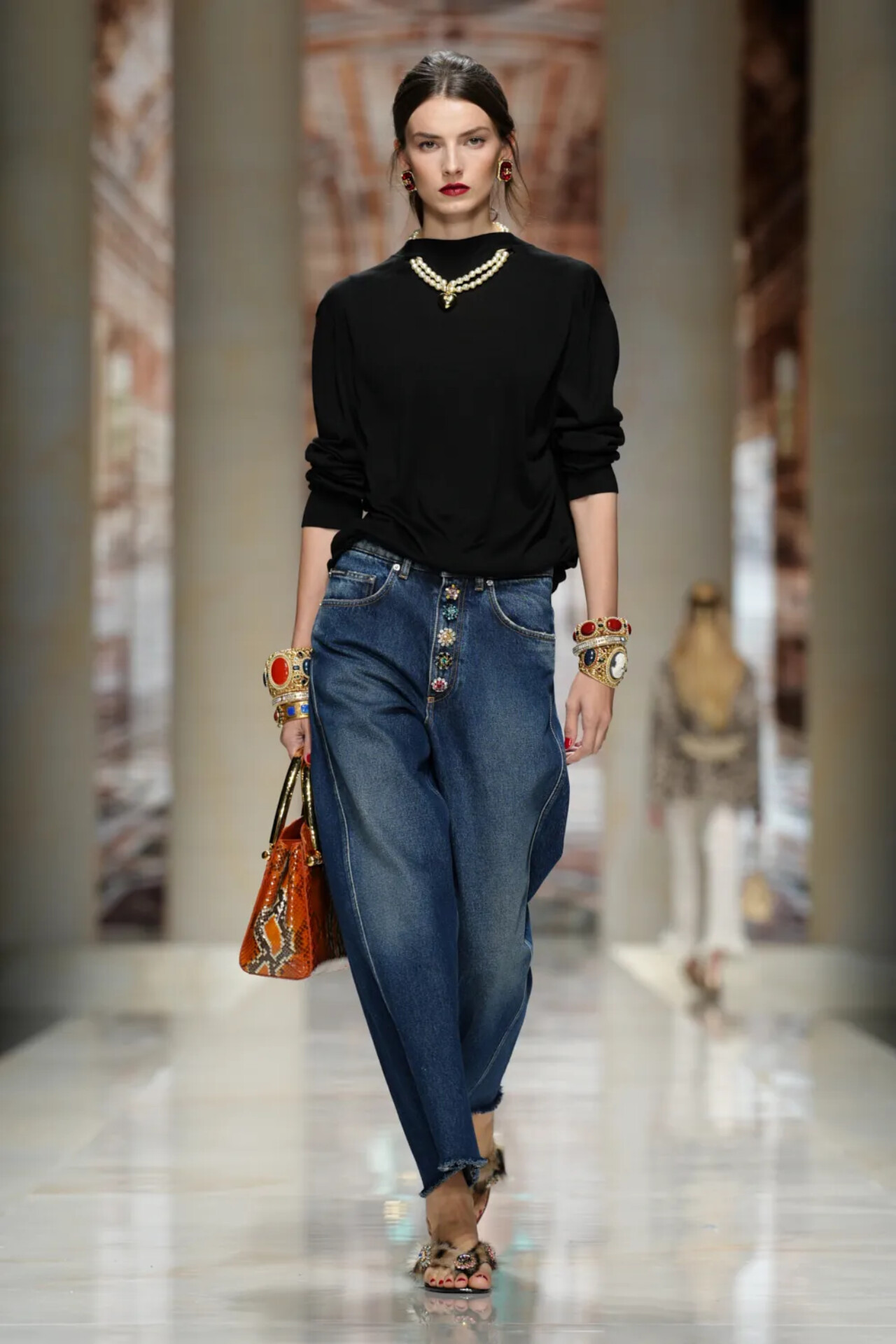
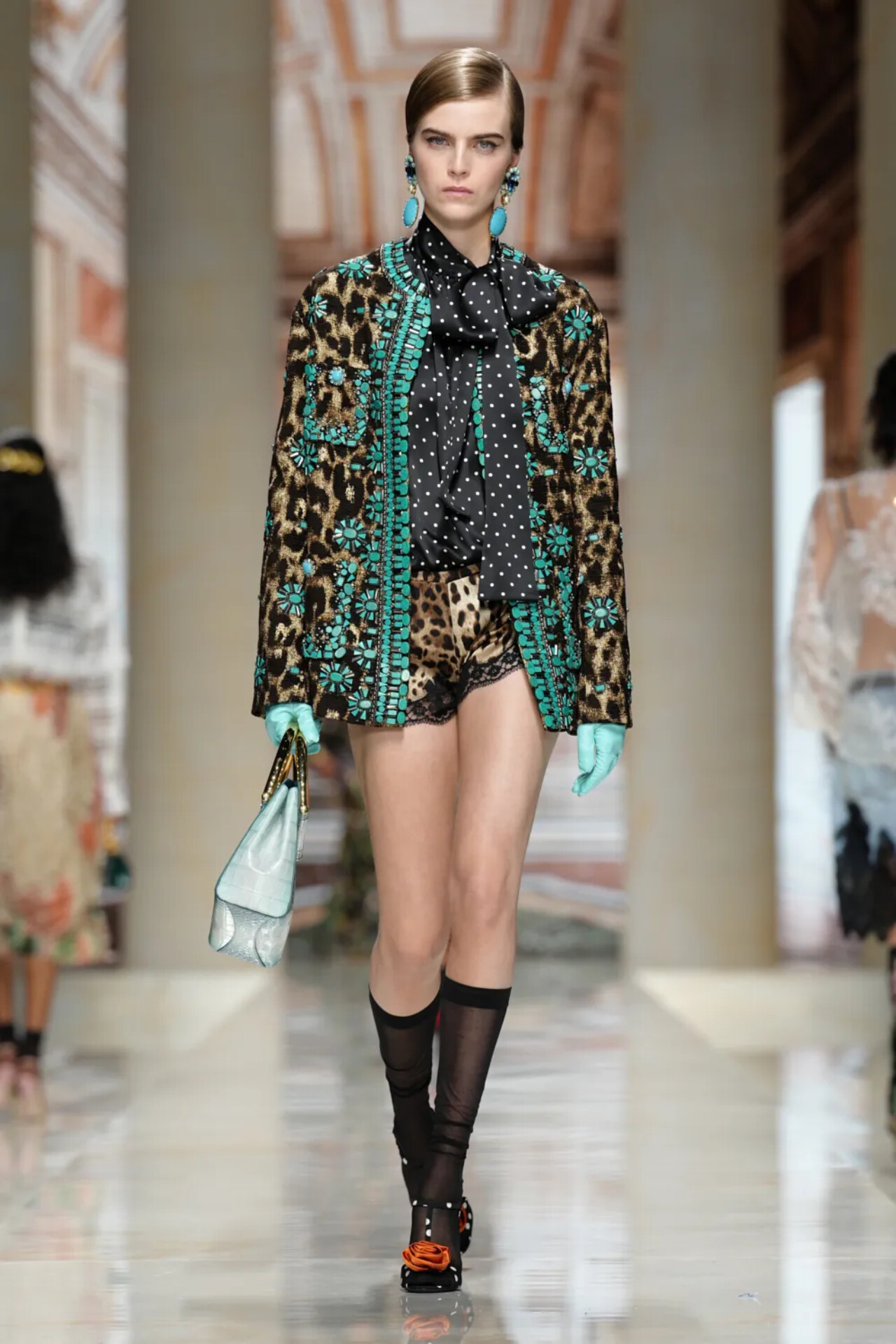
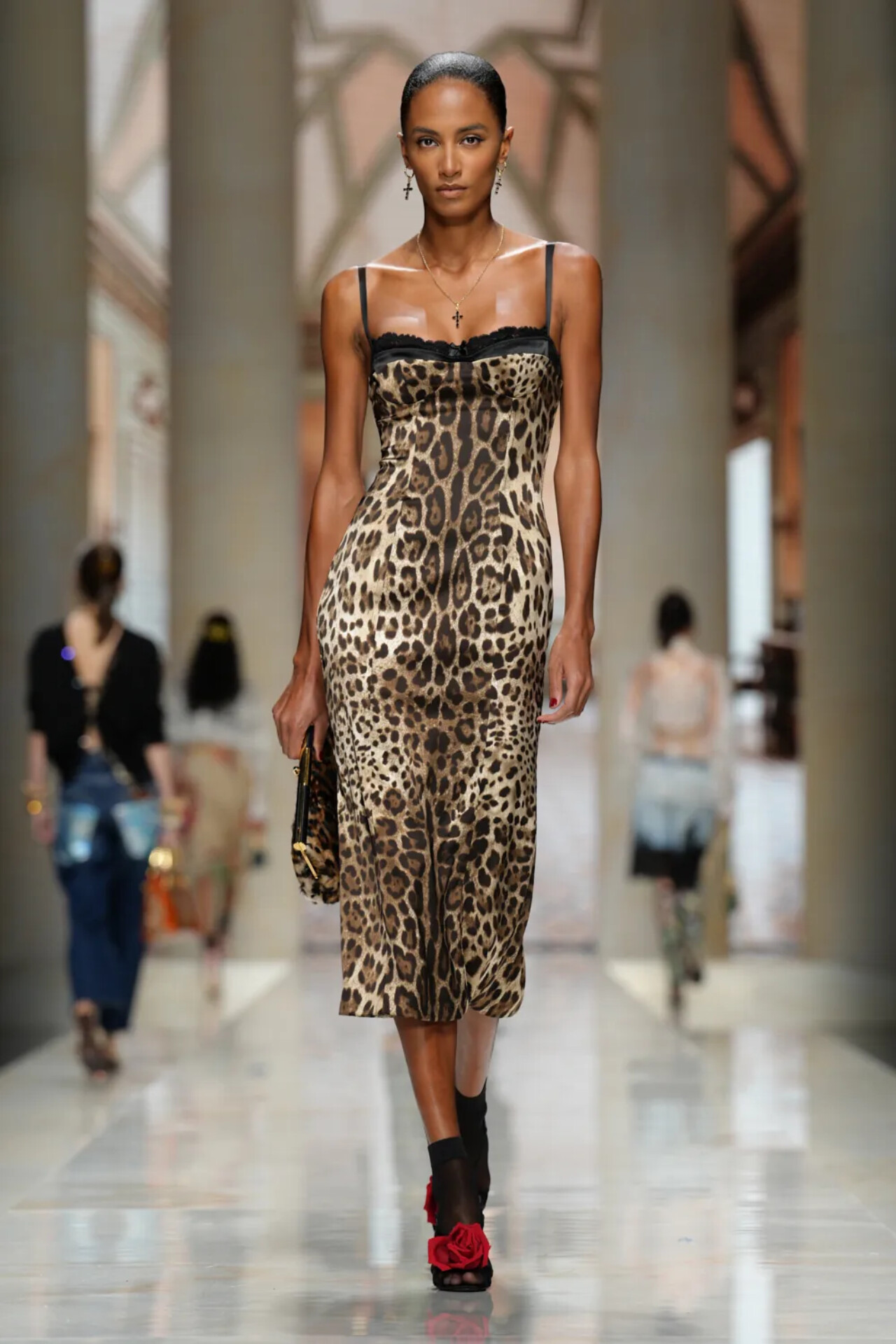
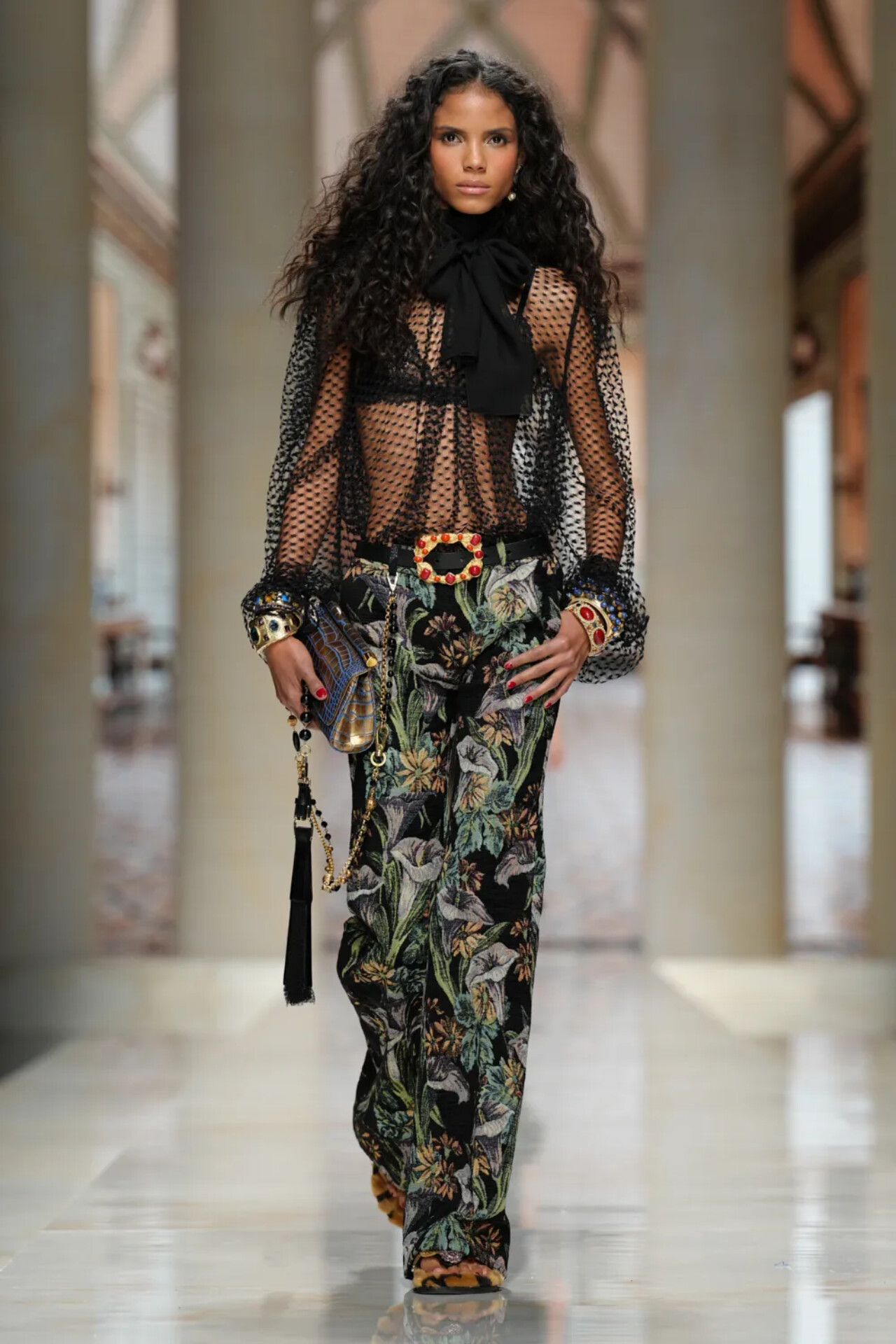
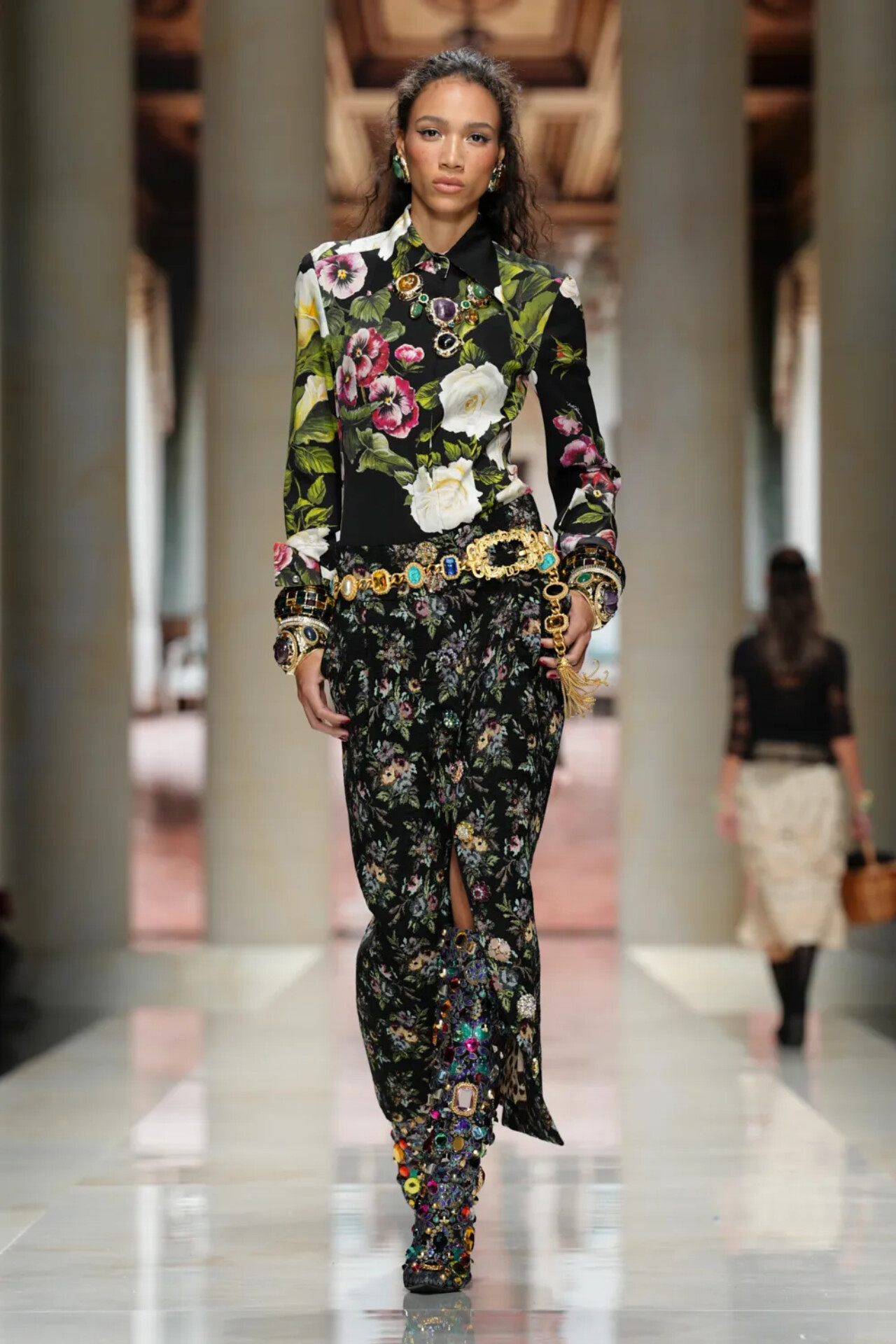
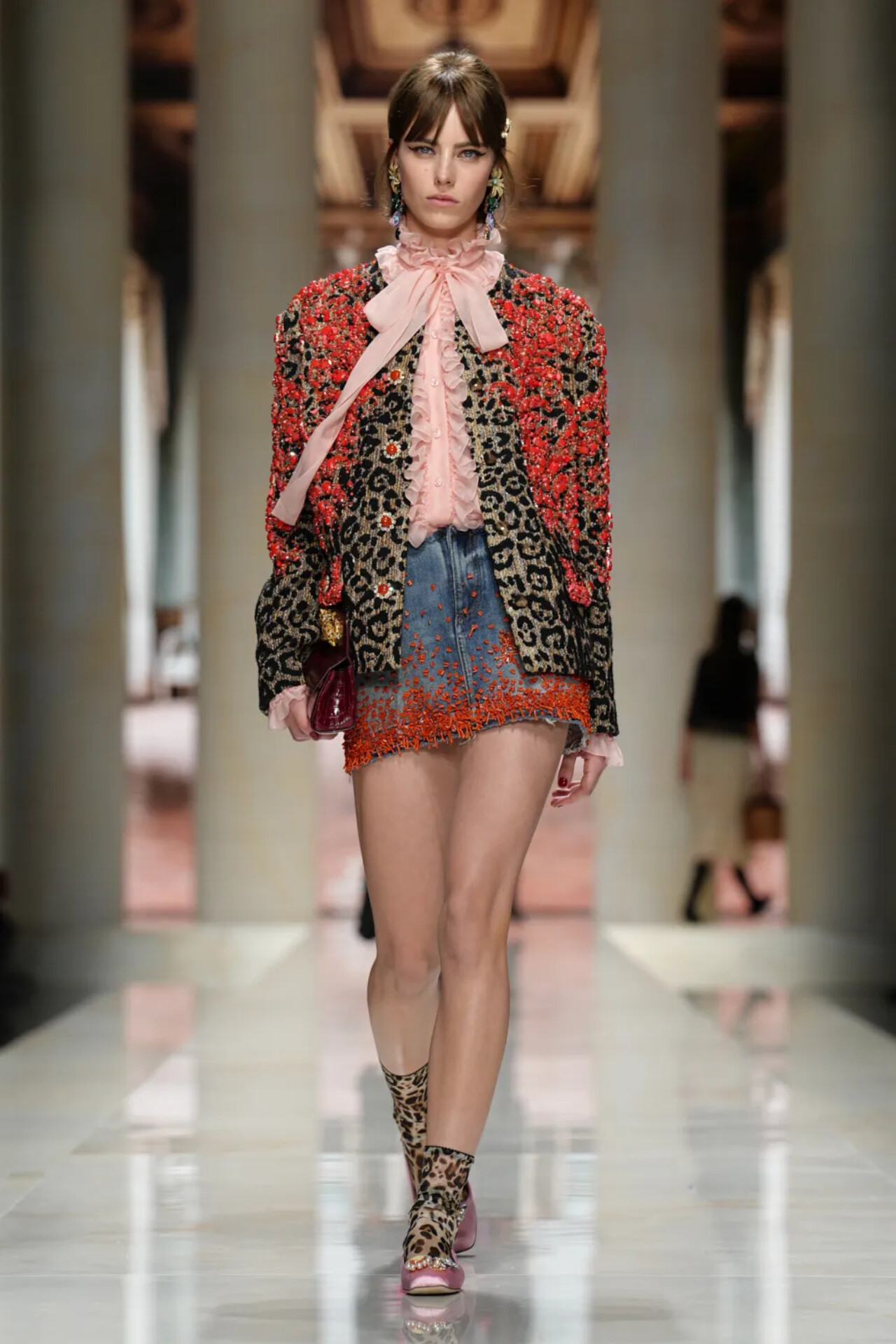
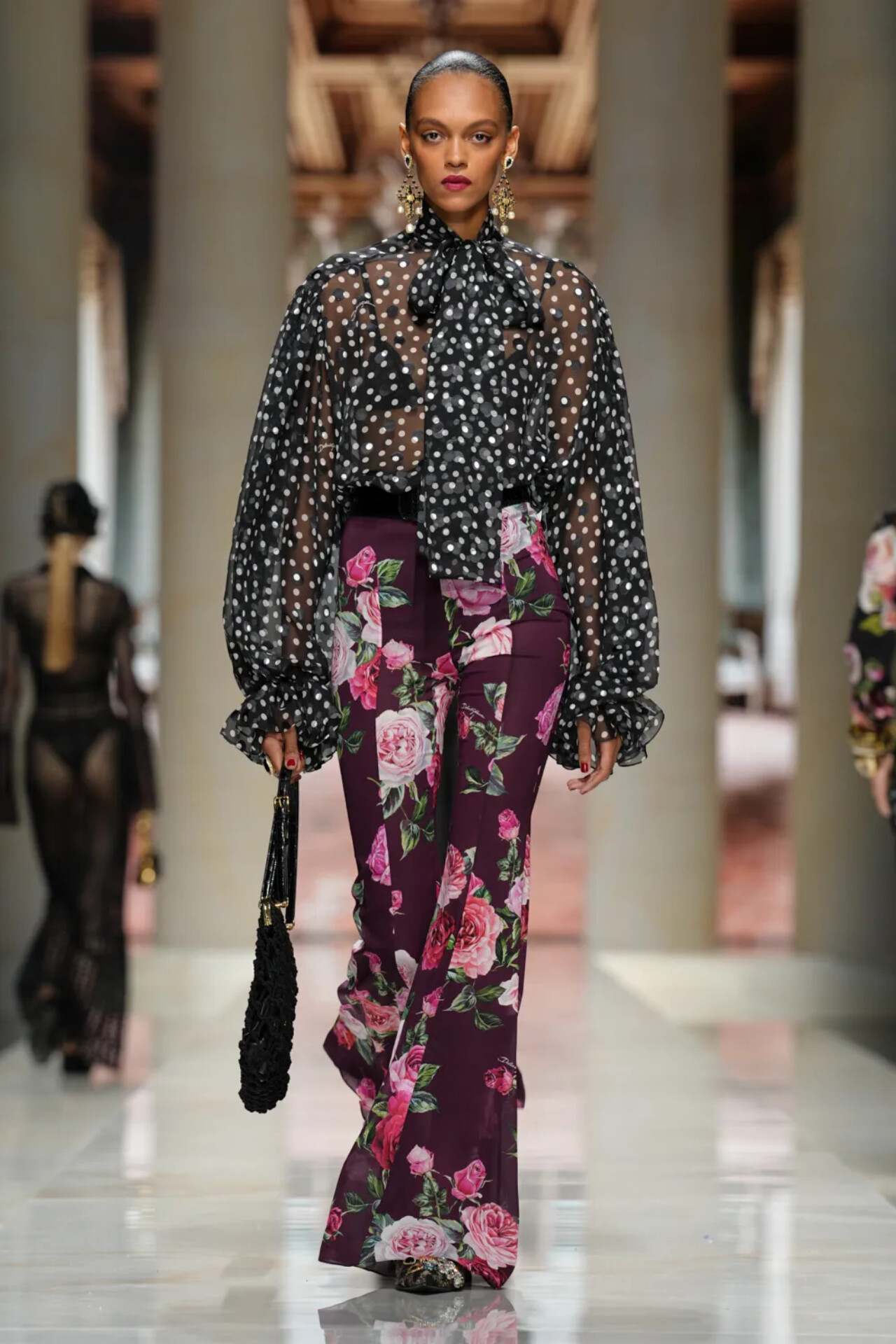
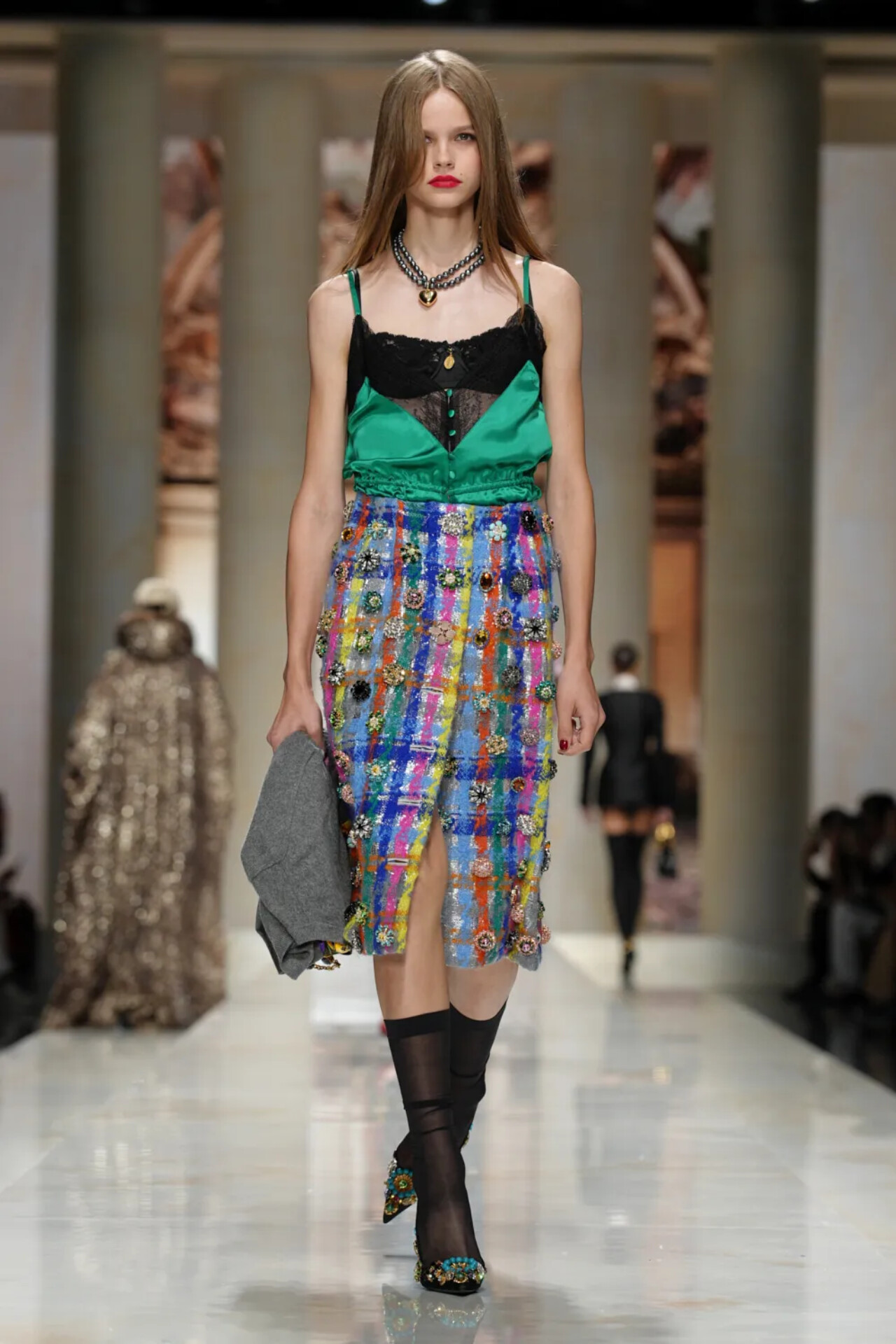
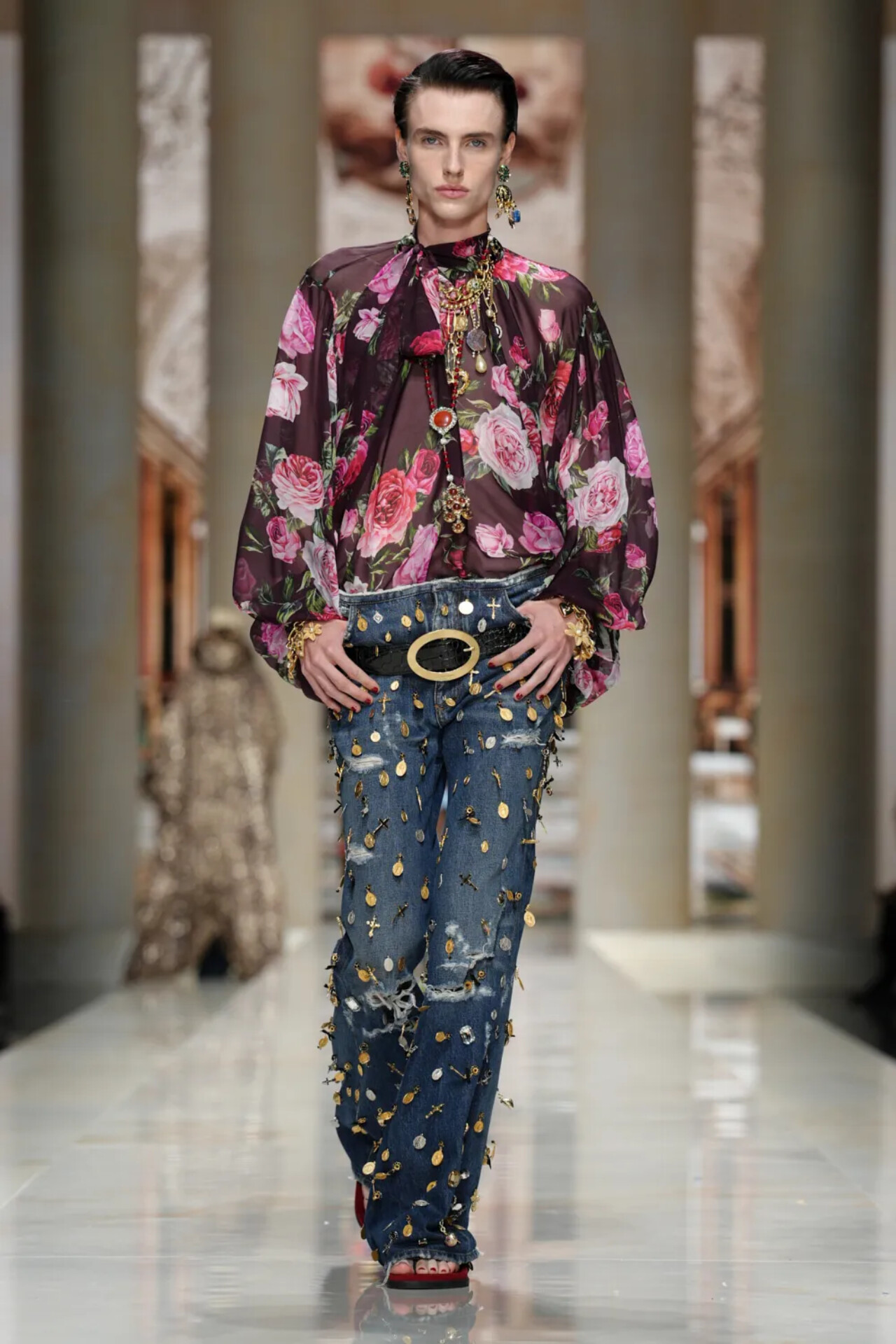
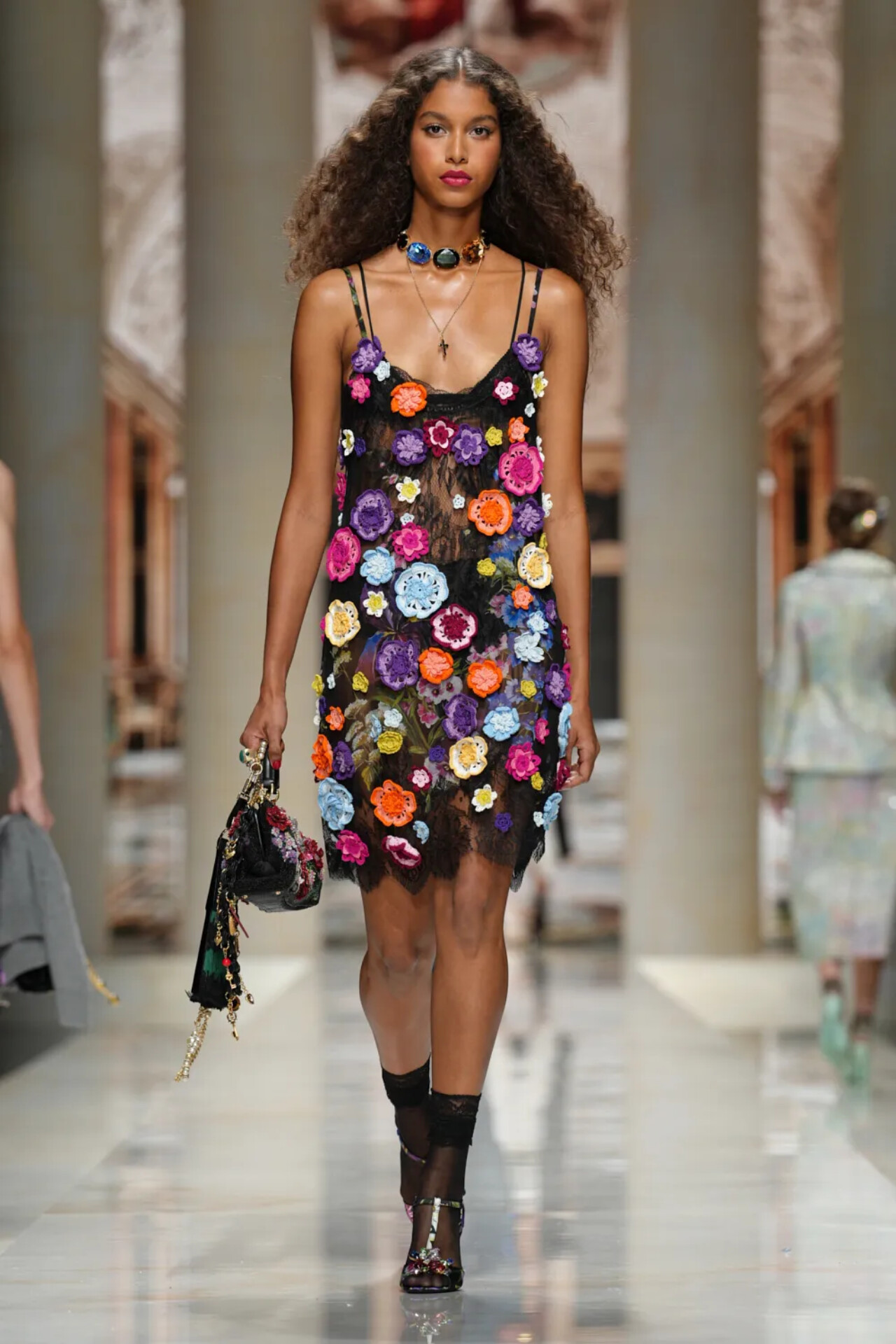
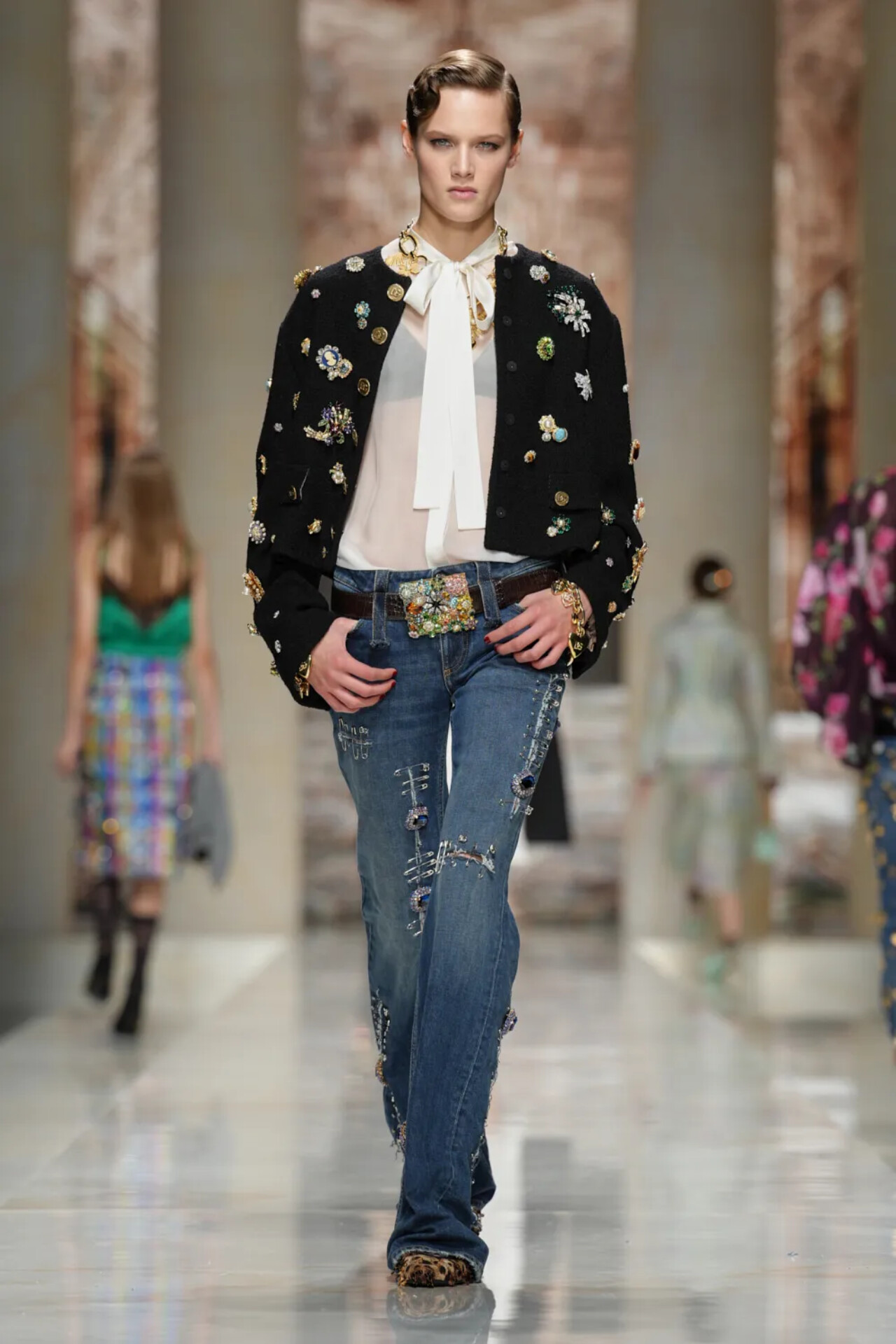
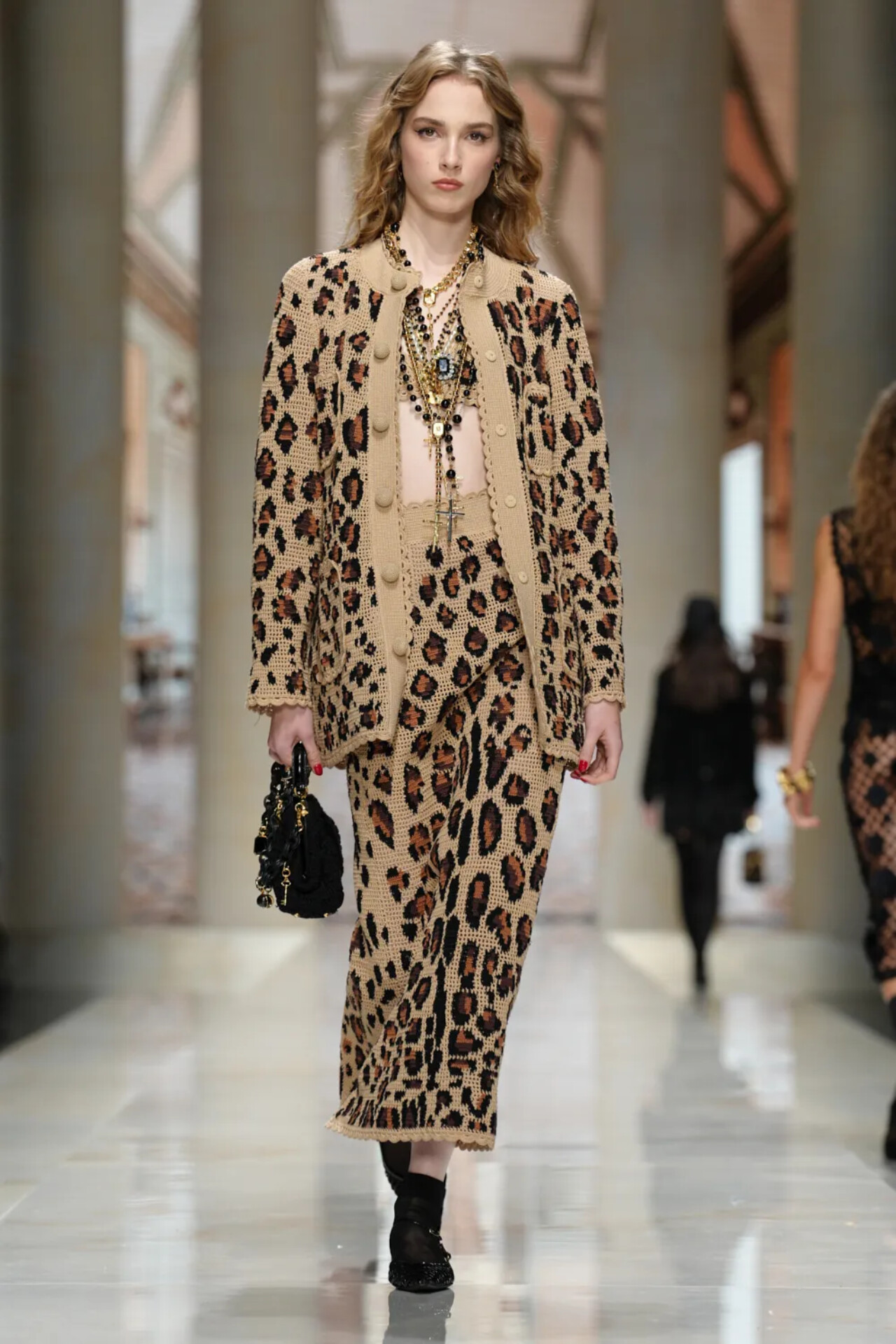
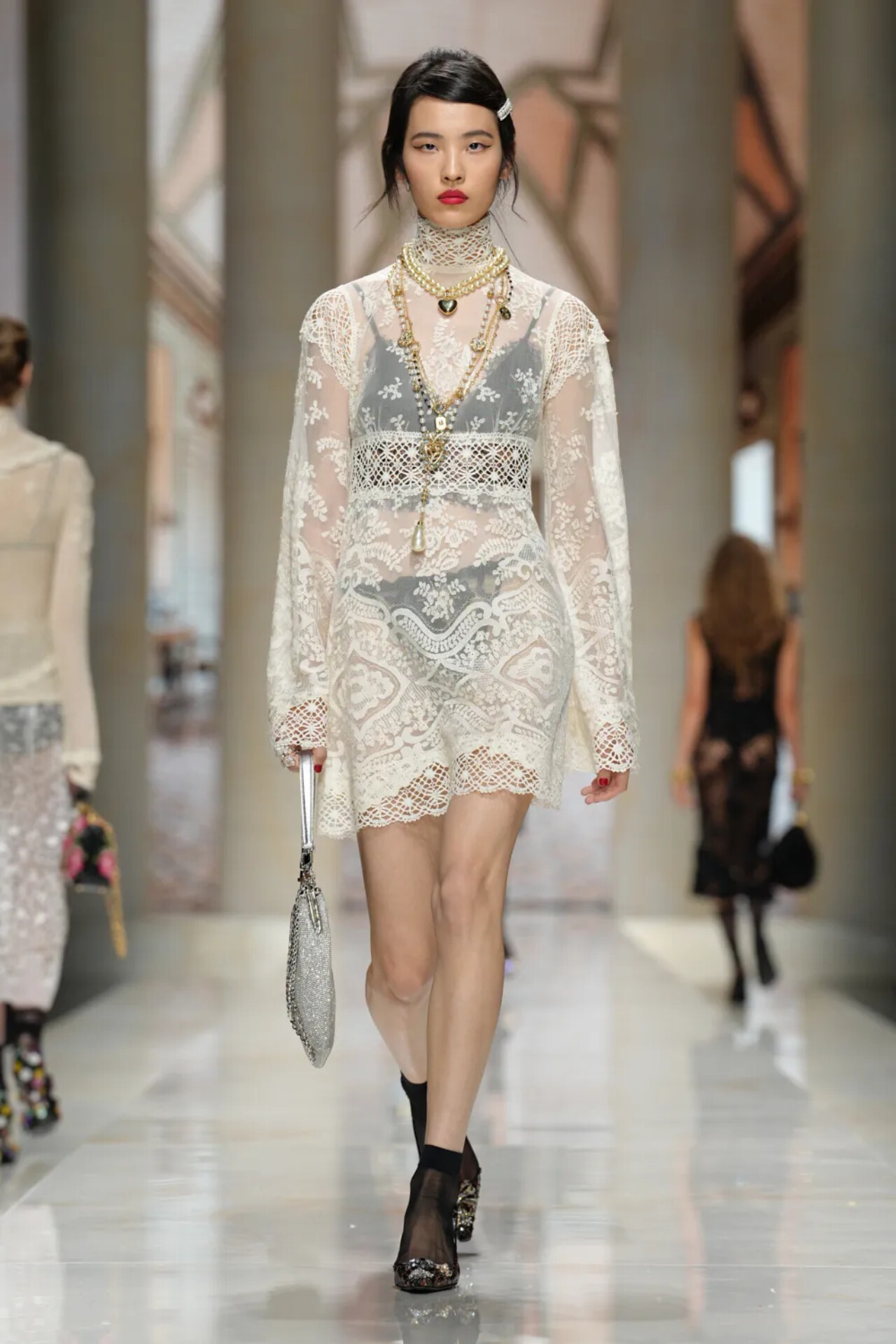
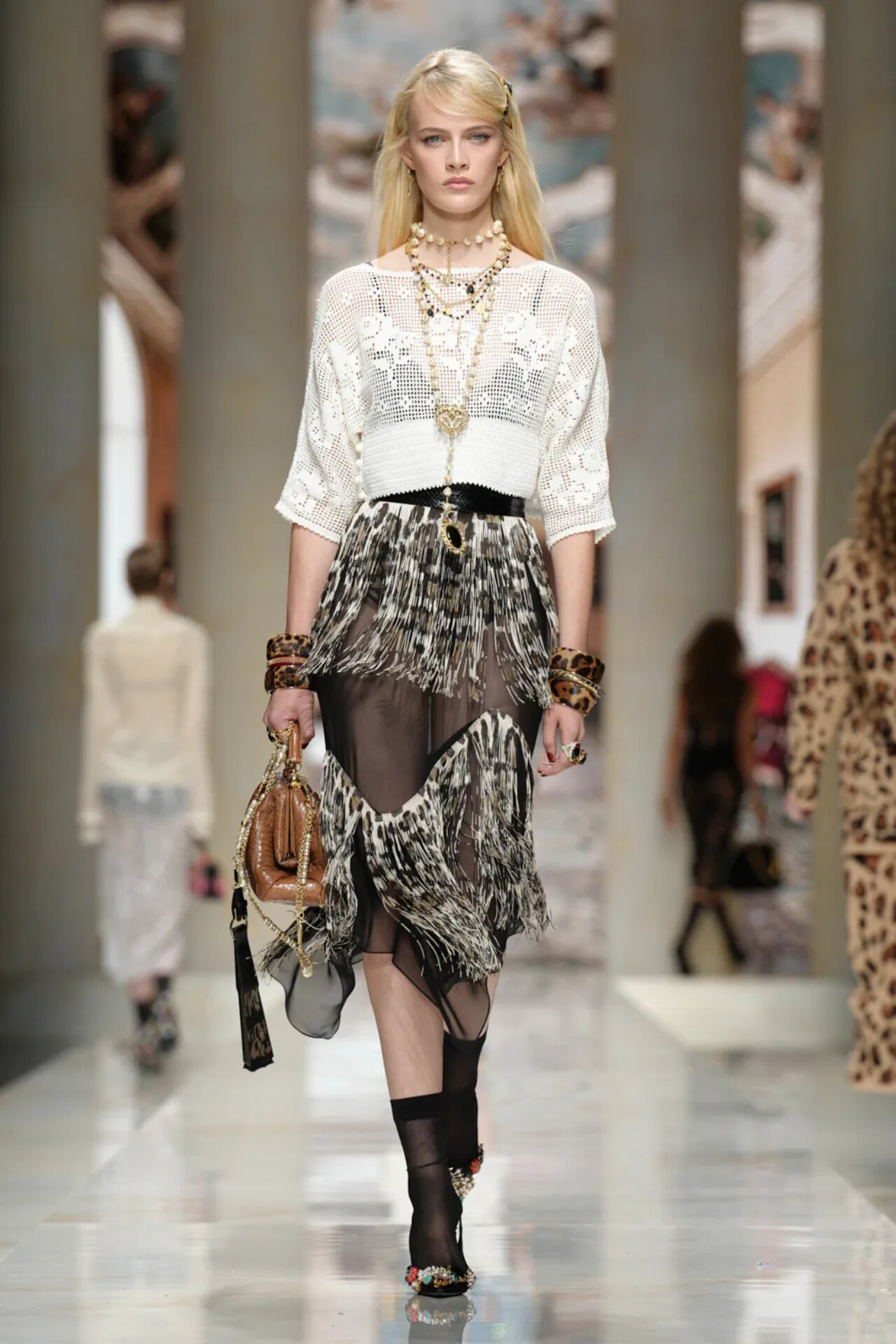
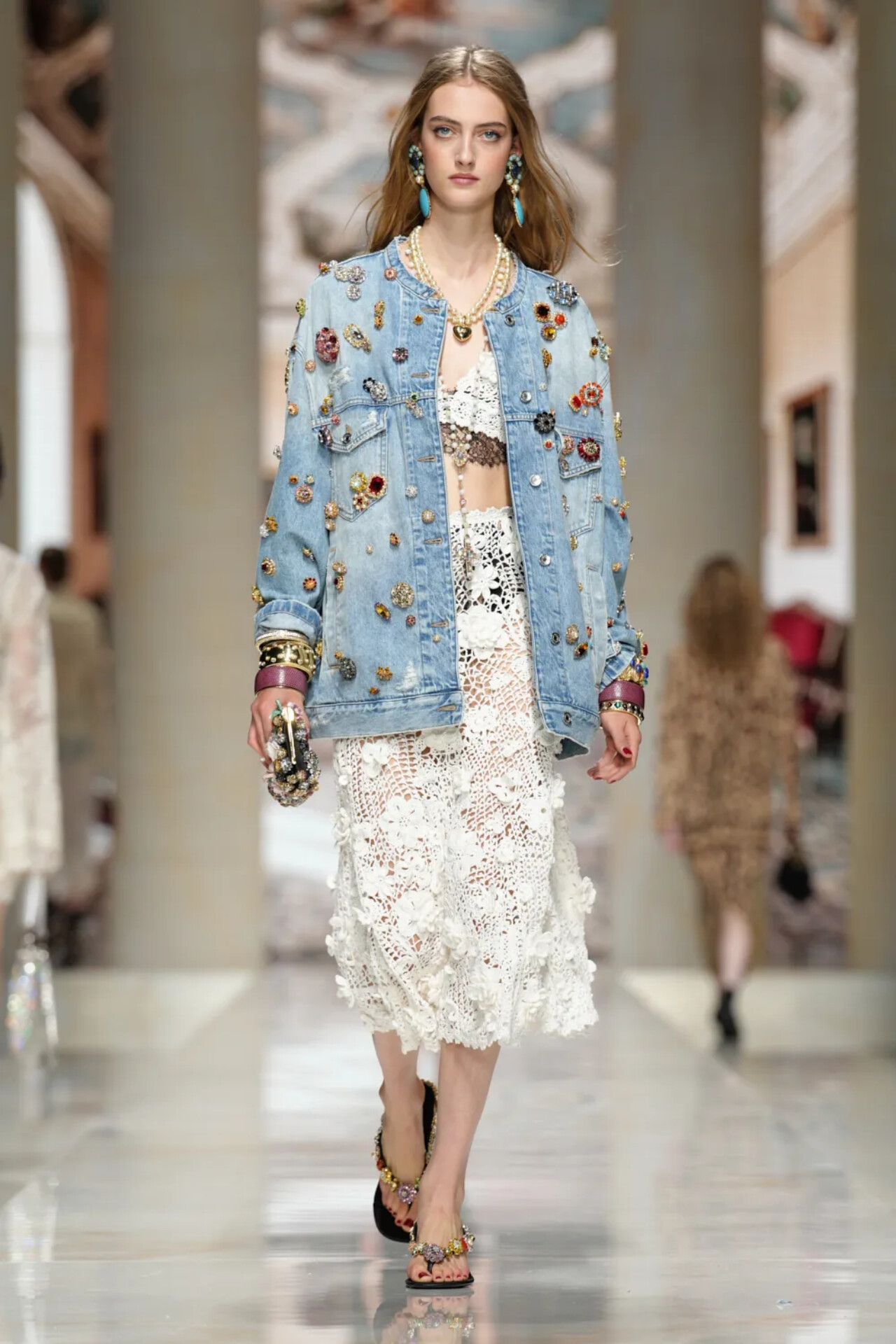
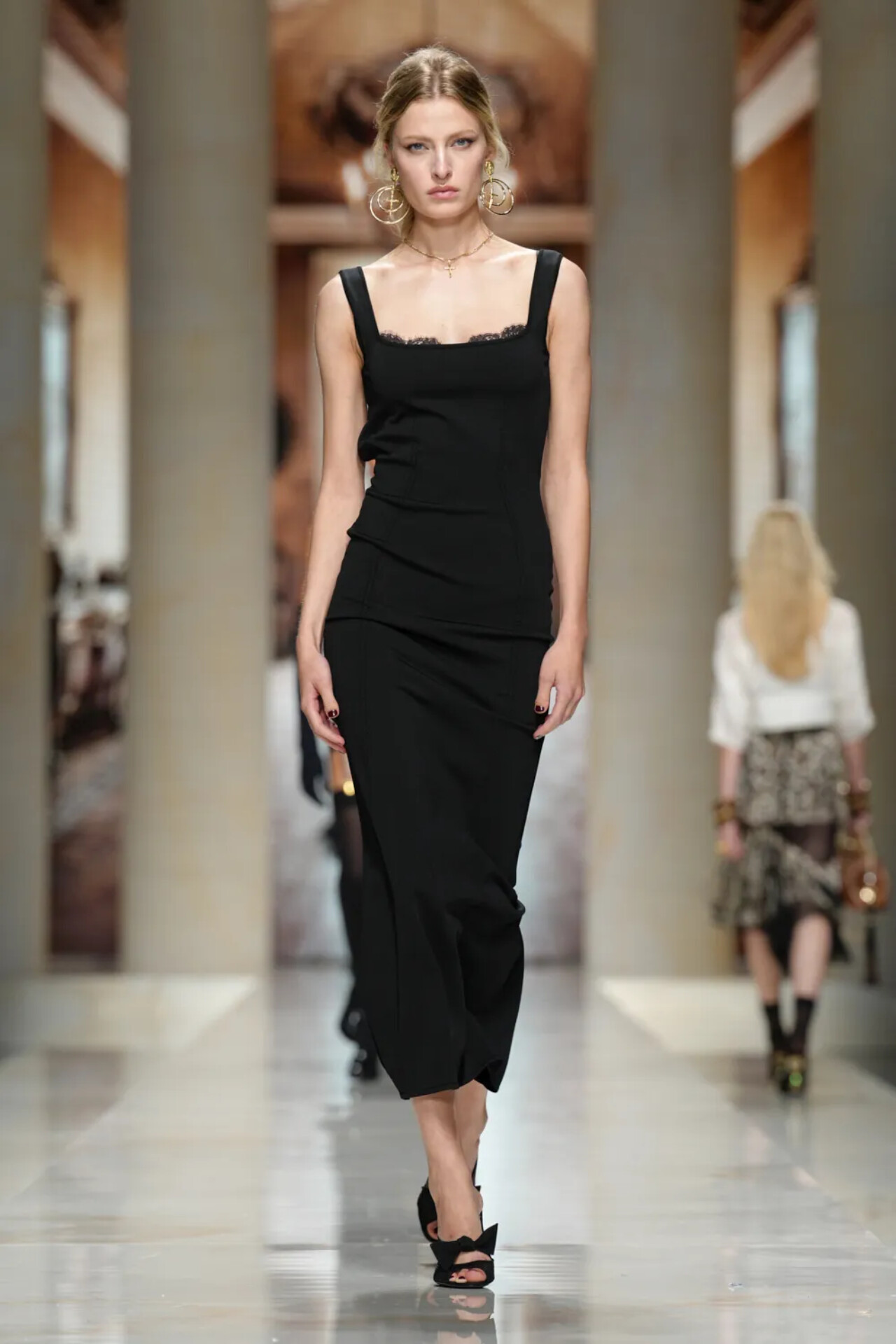
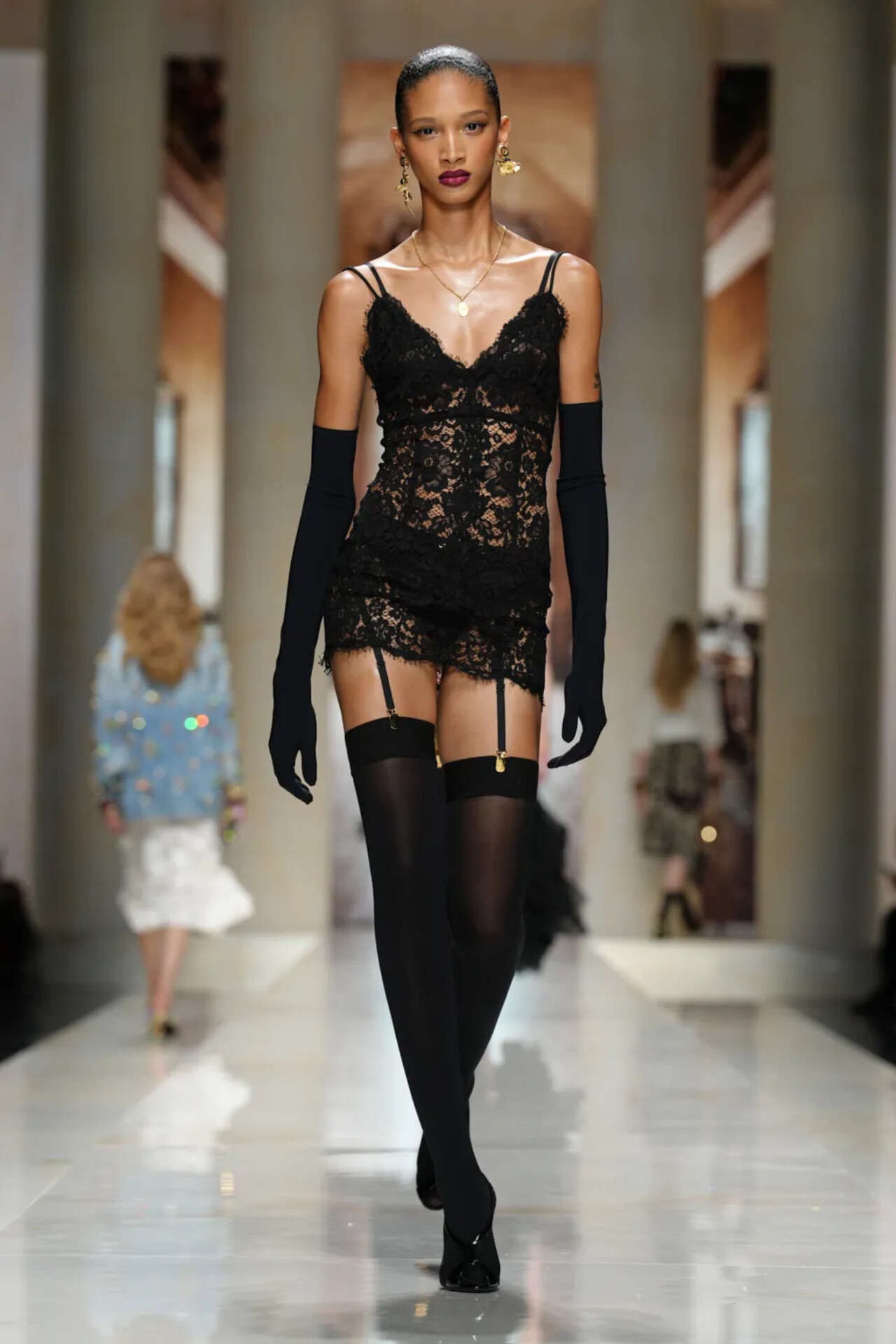
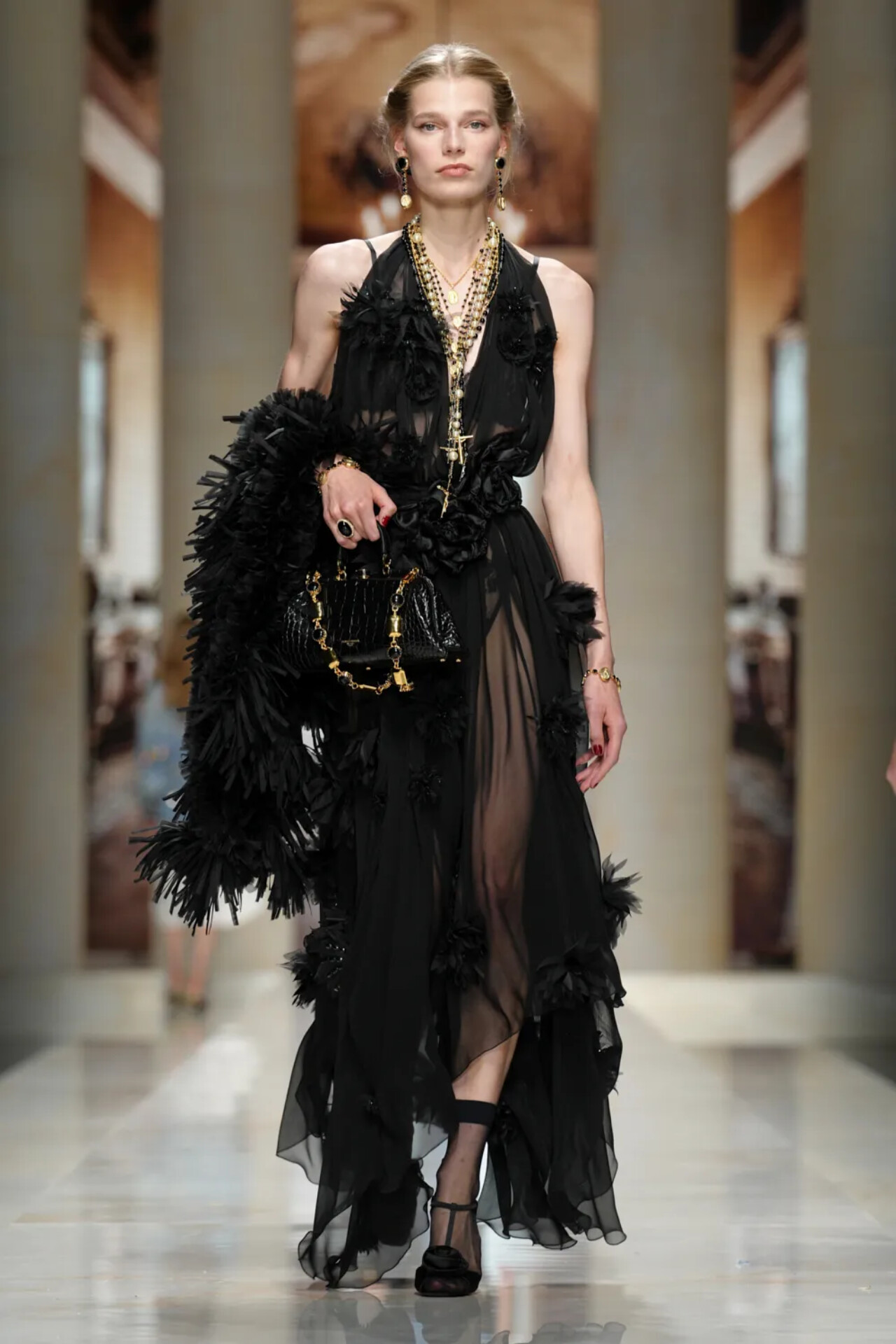
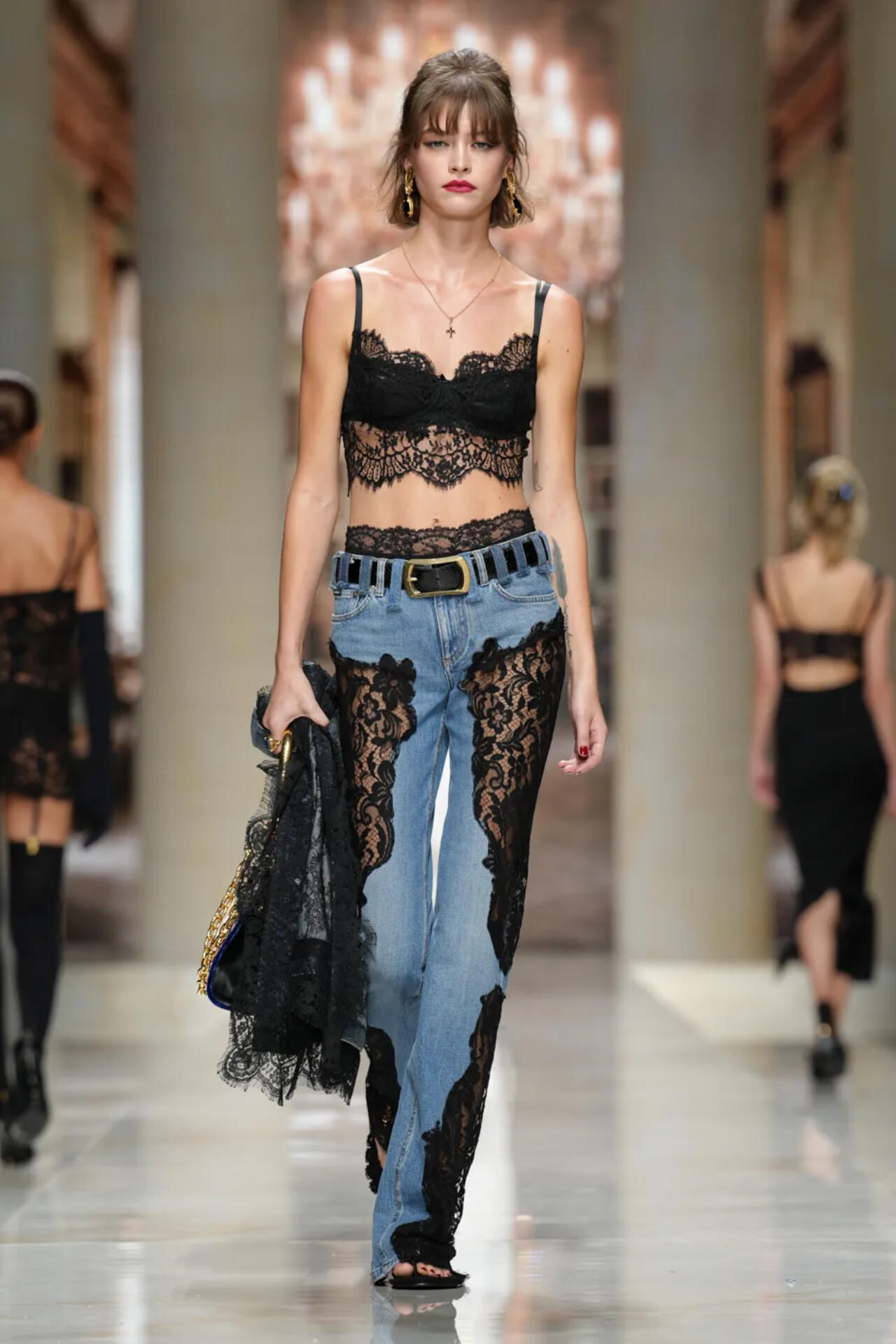
Domenico Dolce and Stefano Gabbana’s answer arrives with Stravaganza Siciliana, the house’s Spring/Summer 2027 women’s collection.
And once again, it comes from Sicily.
But this time, something is fundamentally different.
Sicily is not presented as landscape, postcard, folklore or Mediterranean fantasy. Or, at least, not only as that.
It is home.
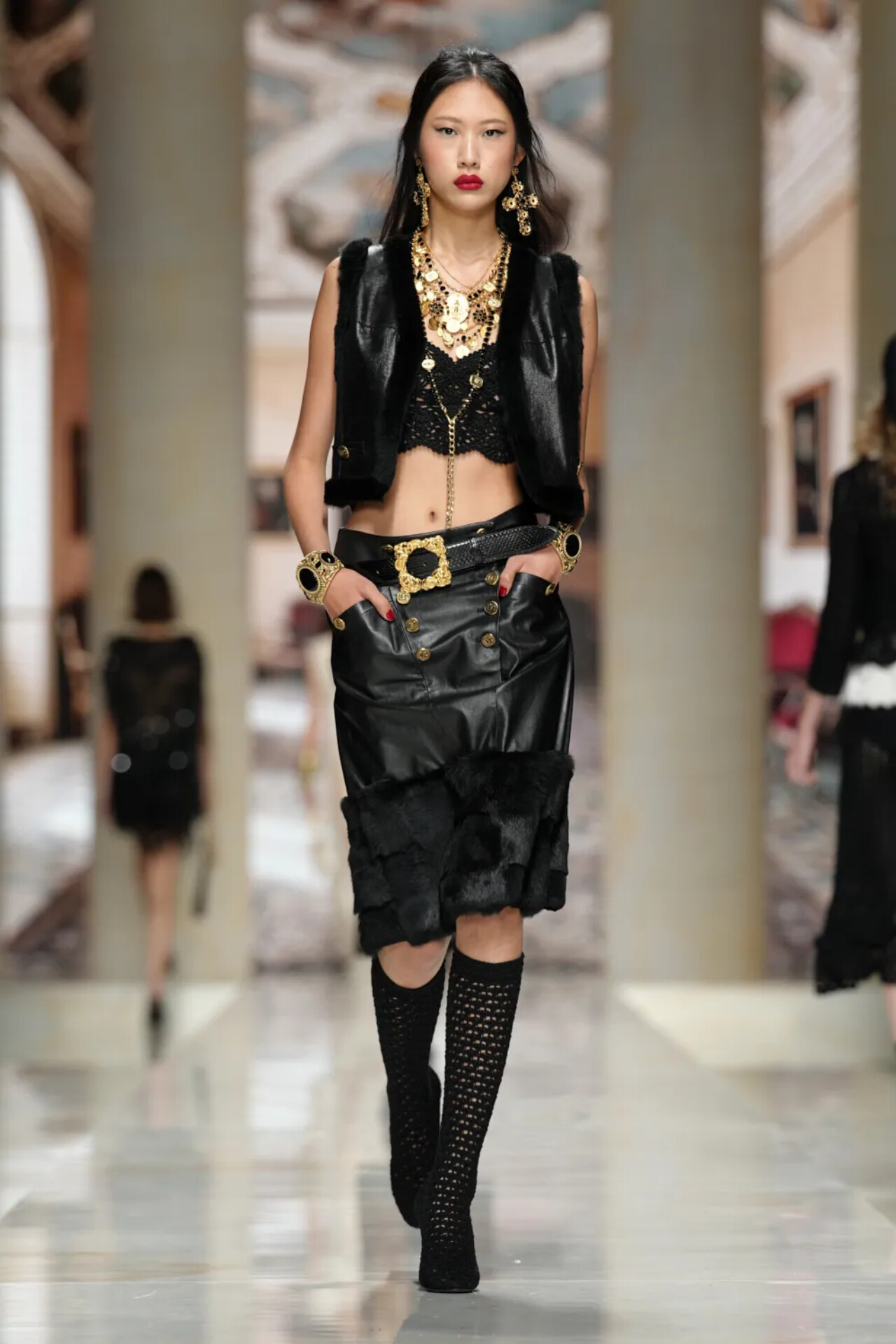
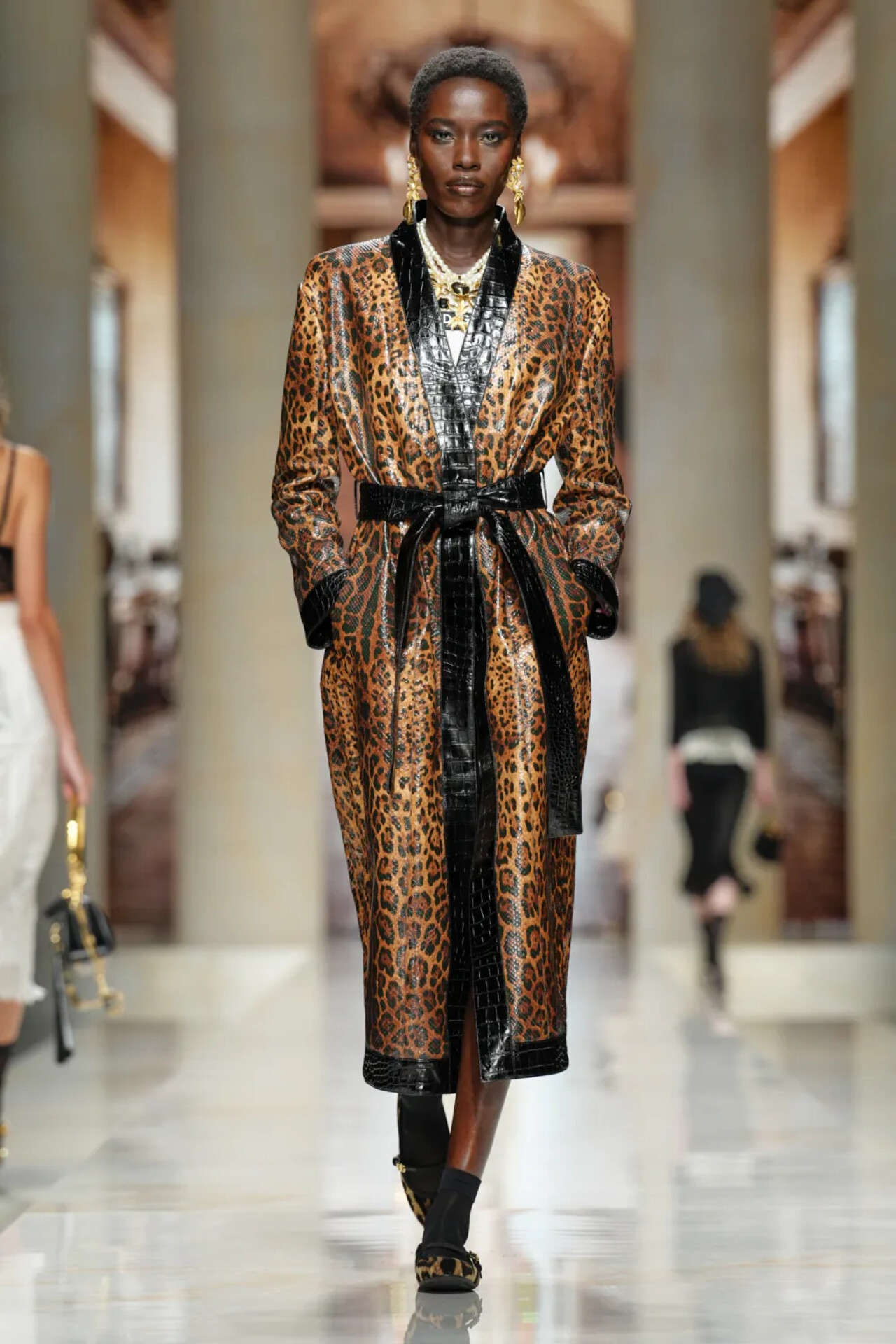
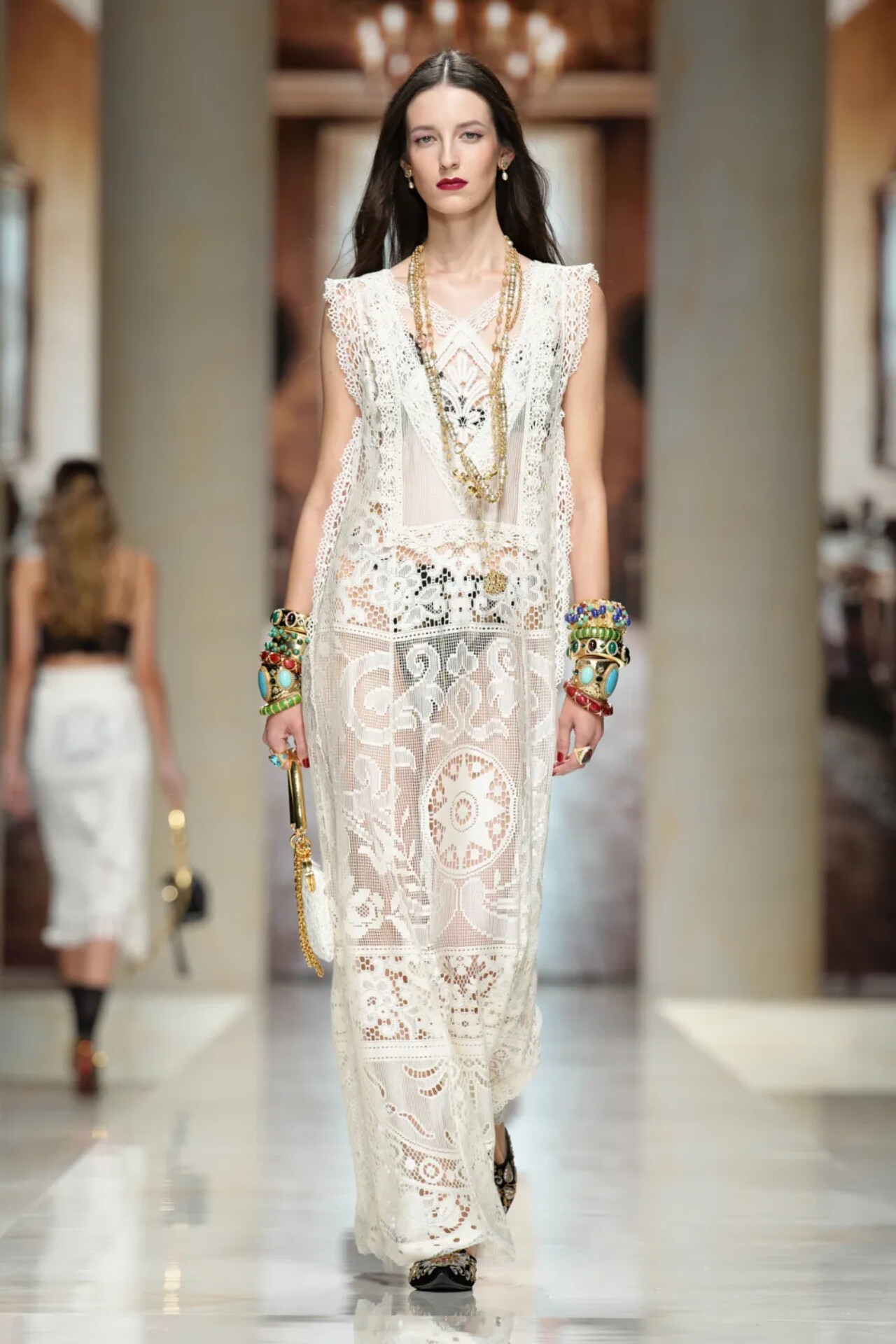
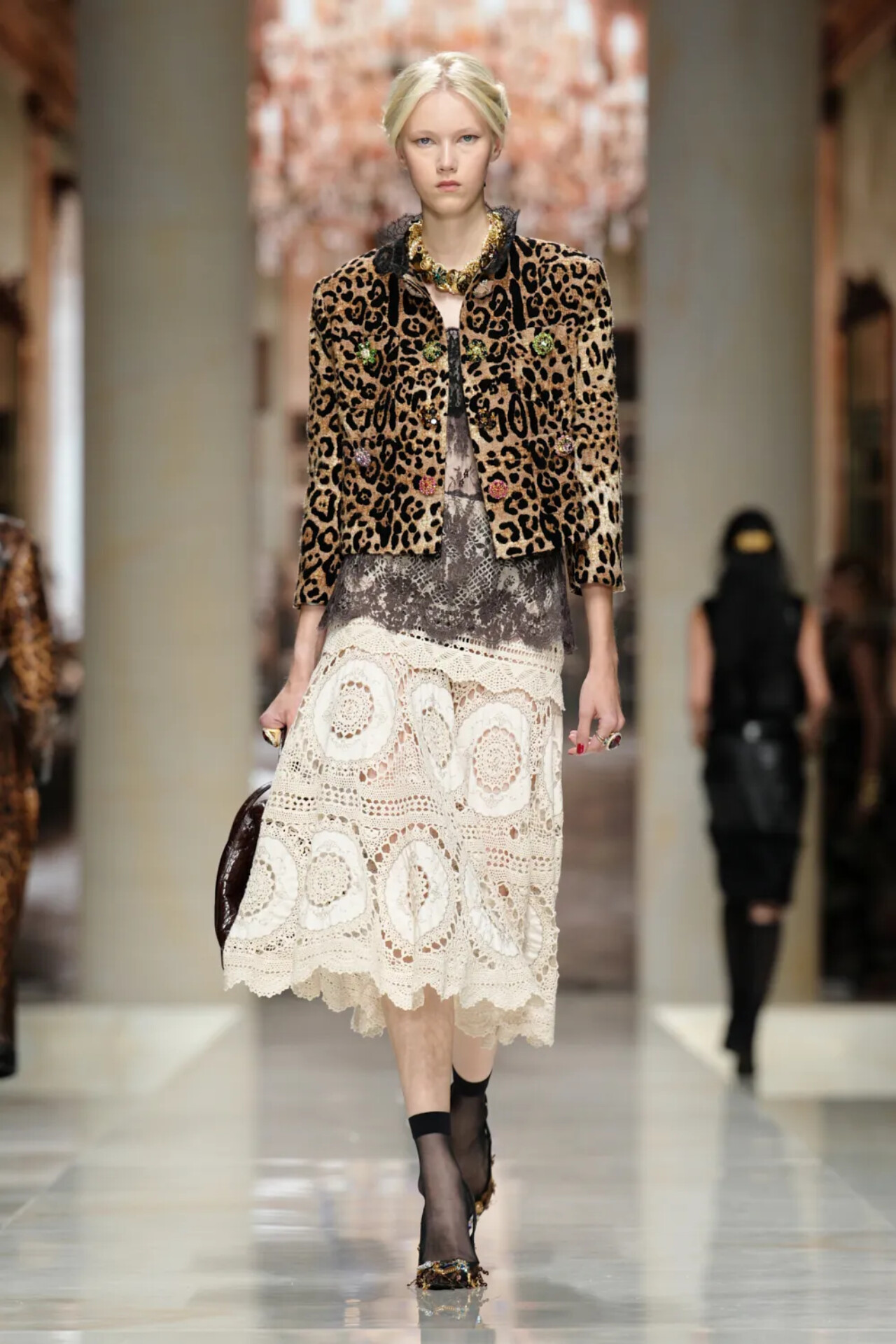
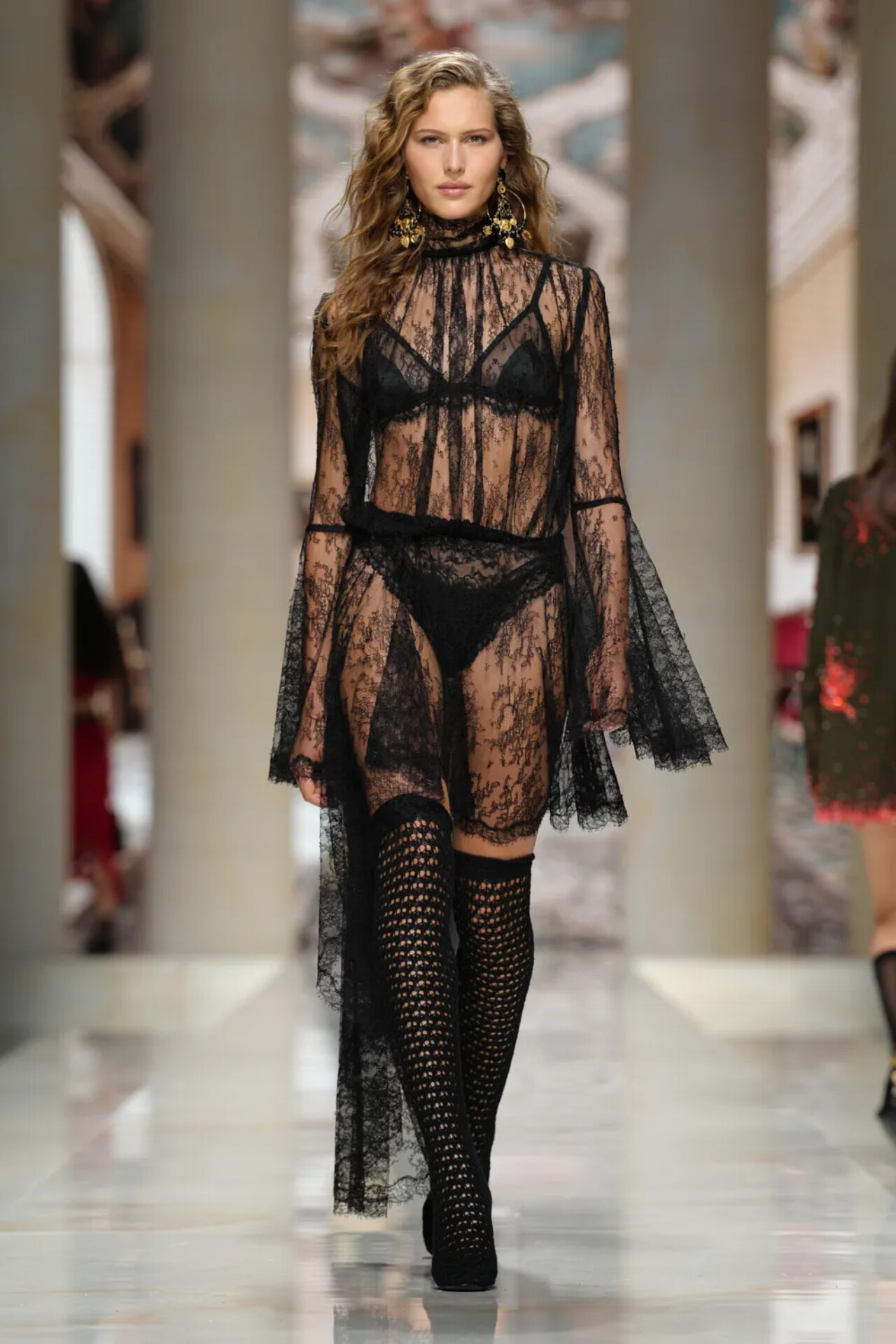
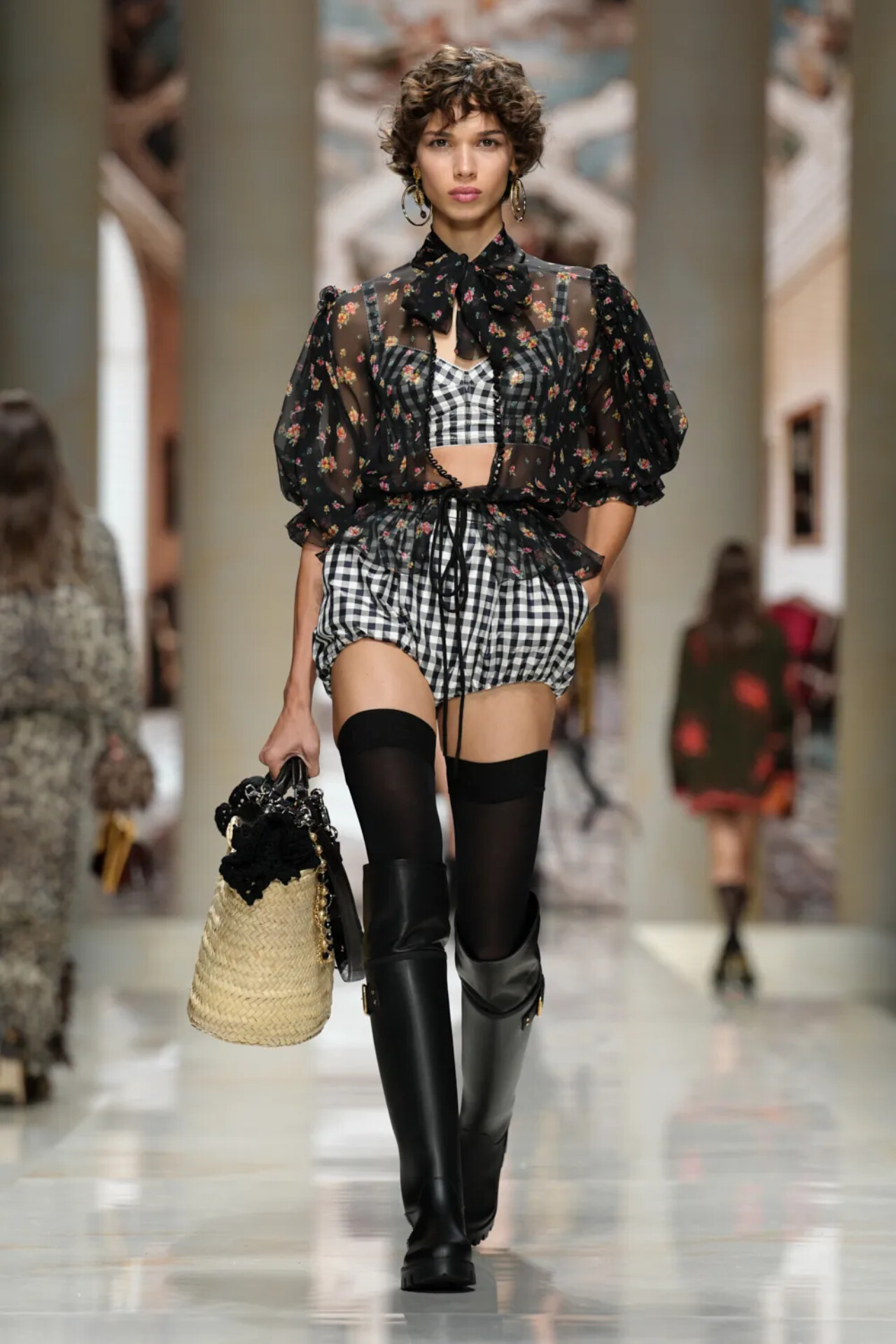
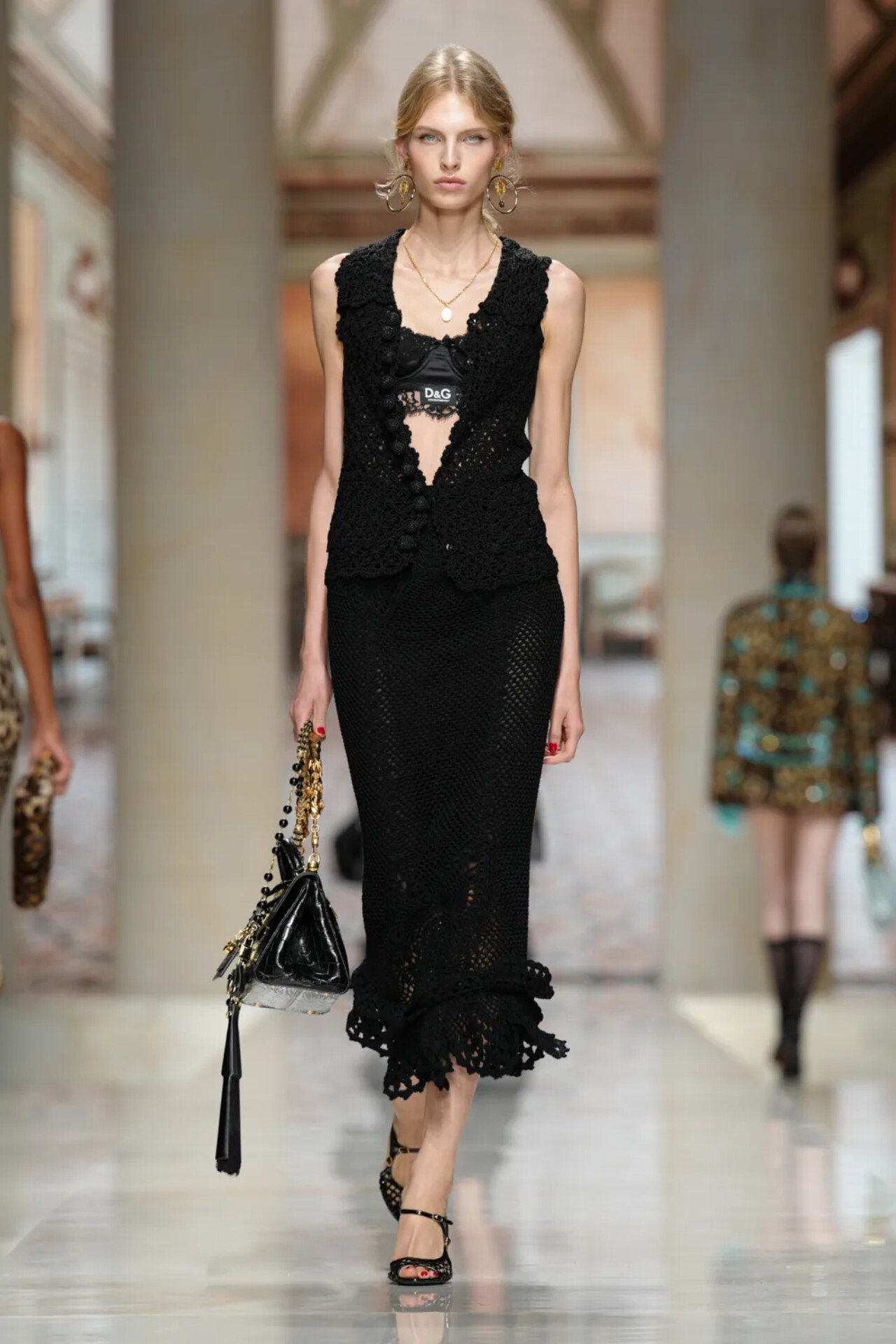
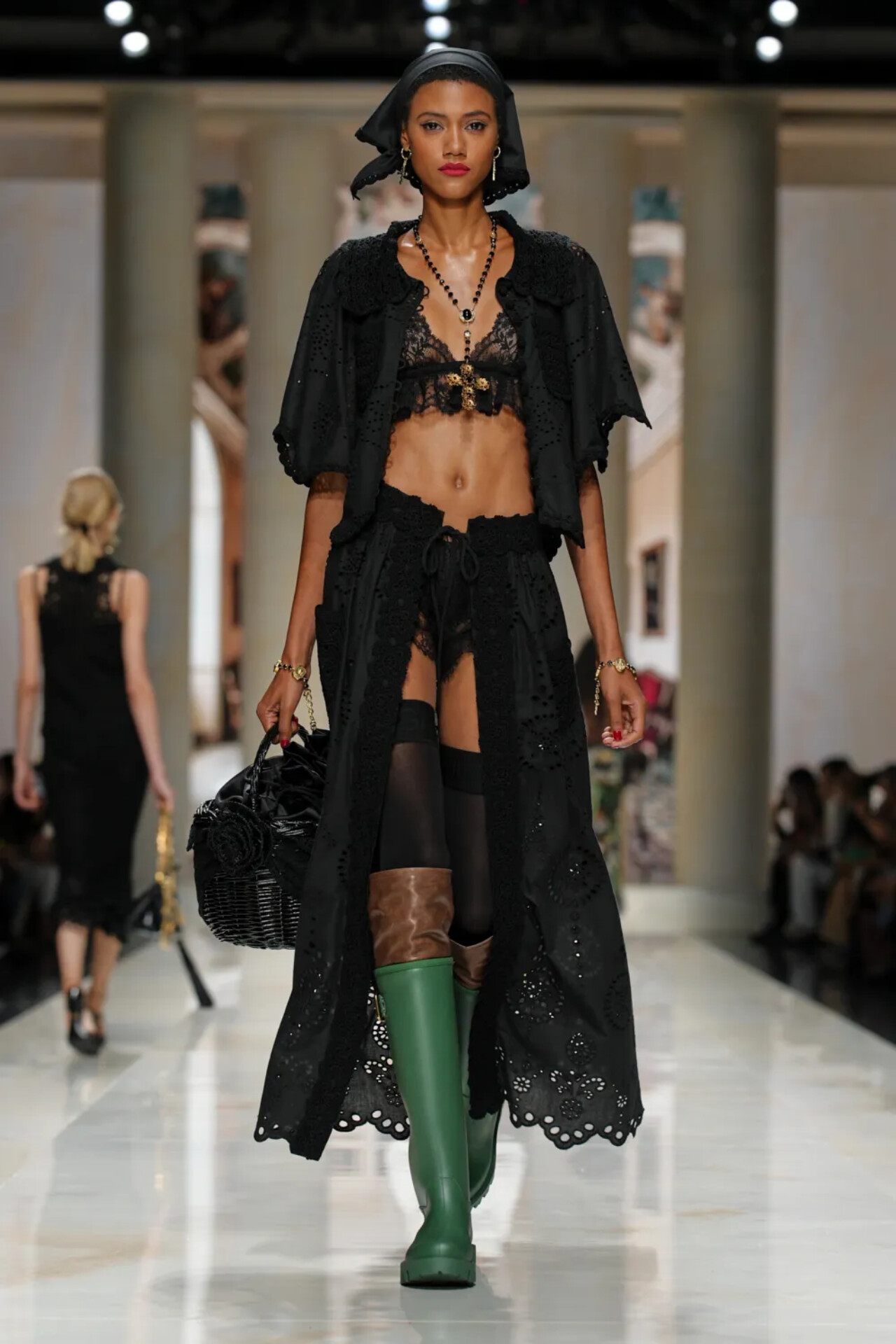
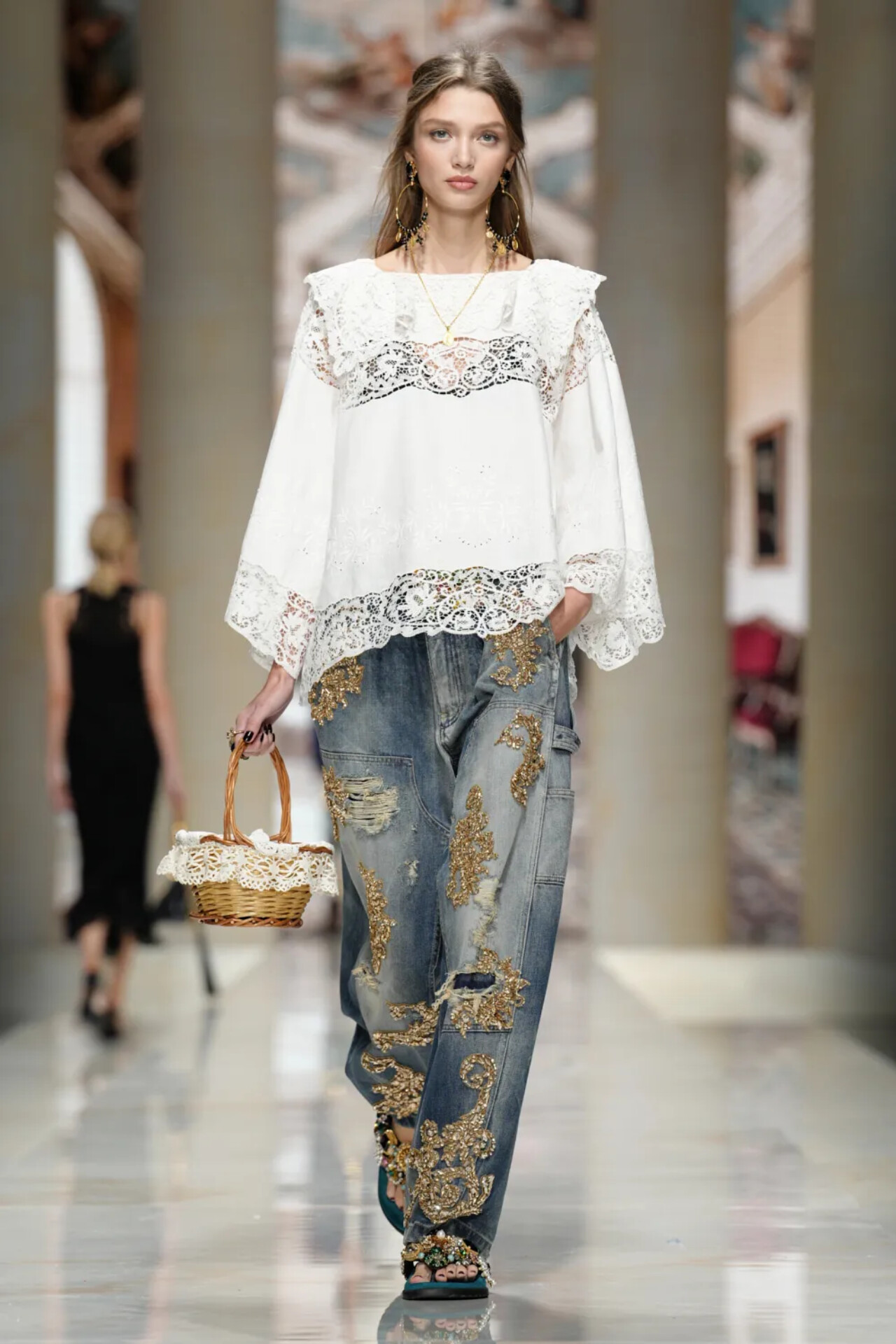
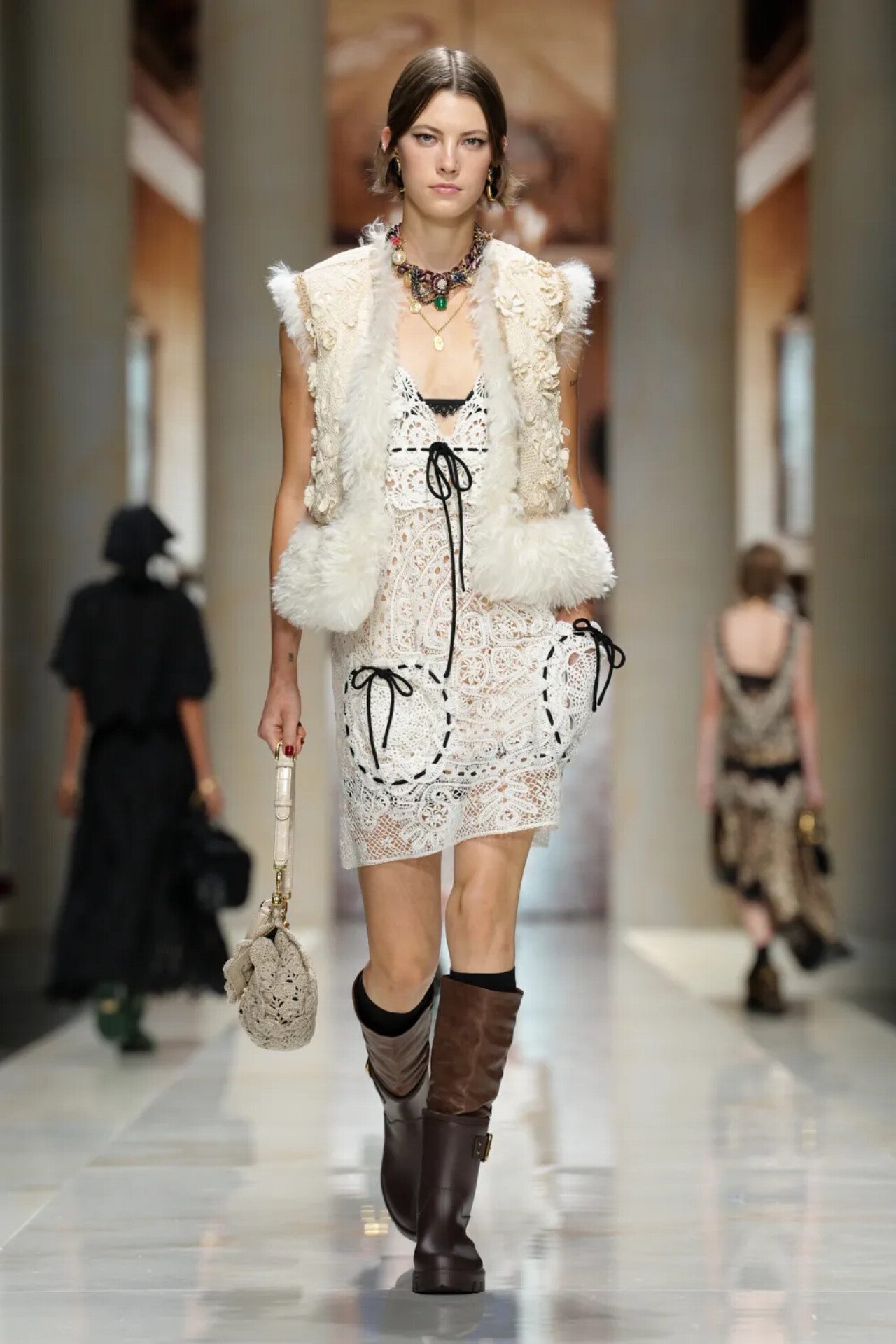
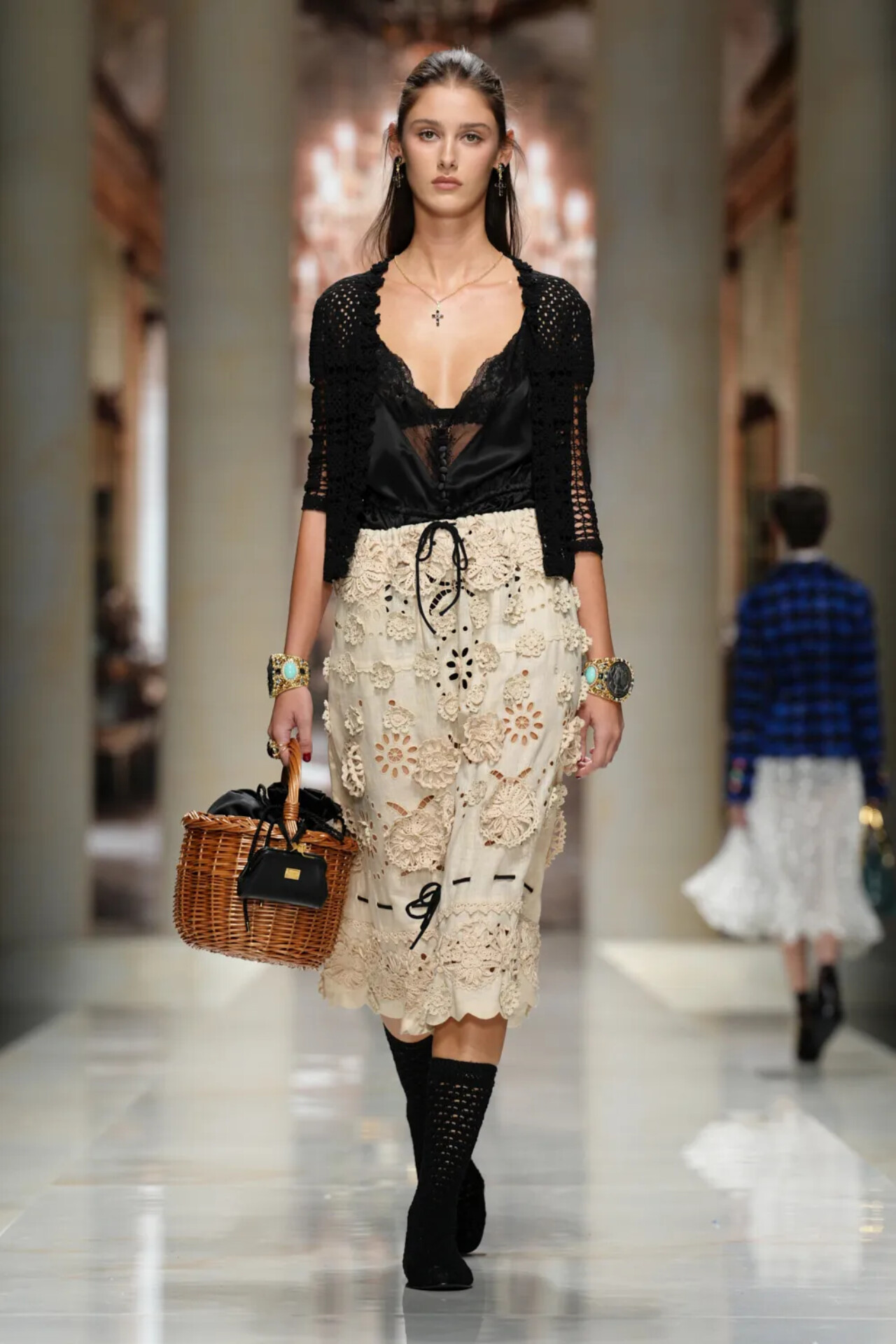
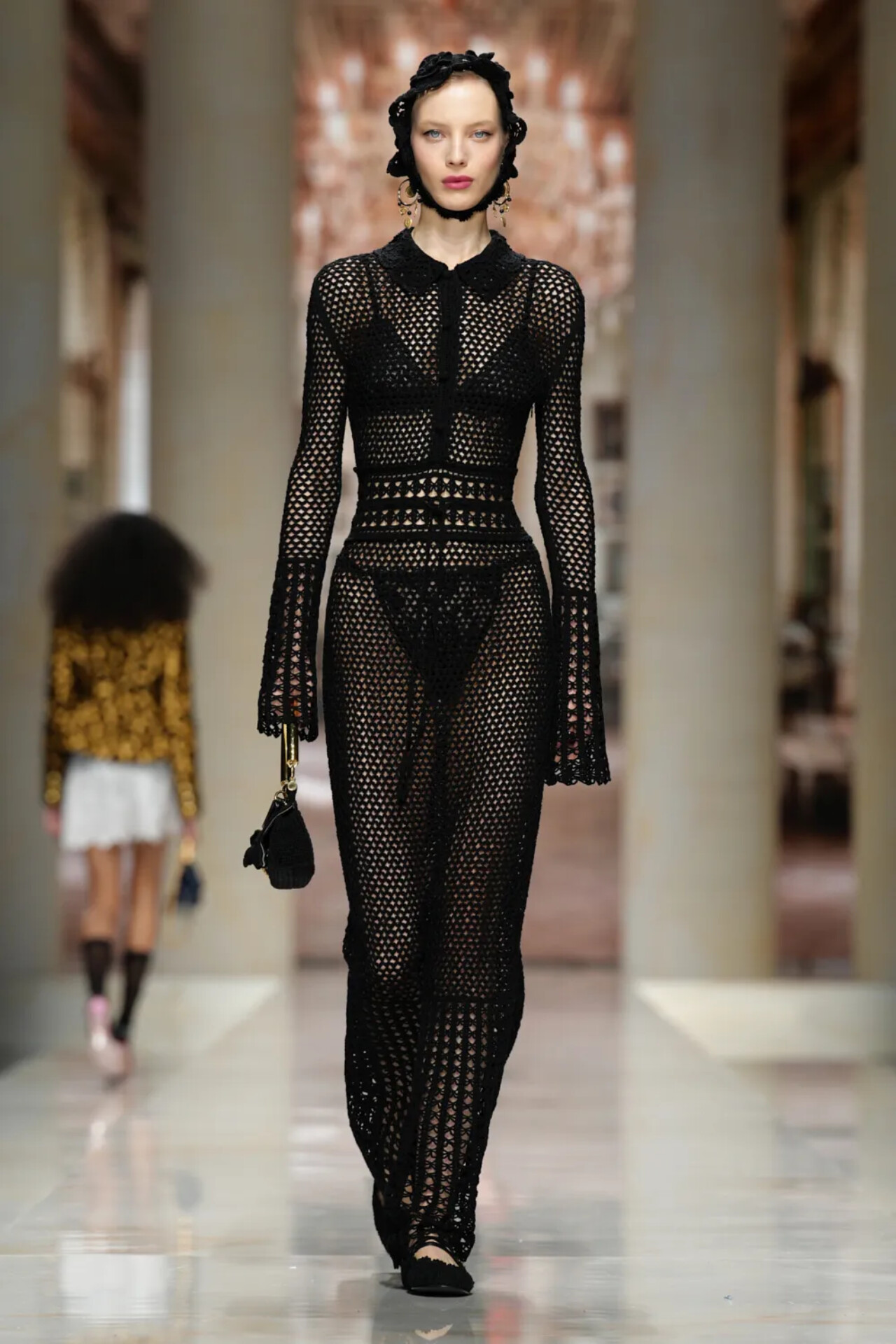
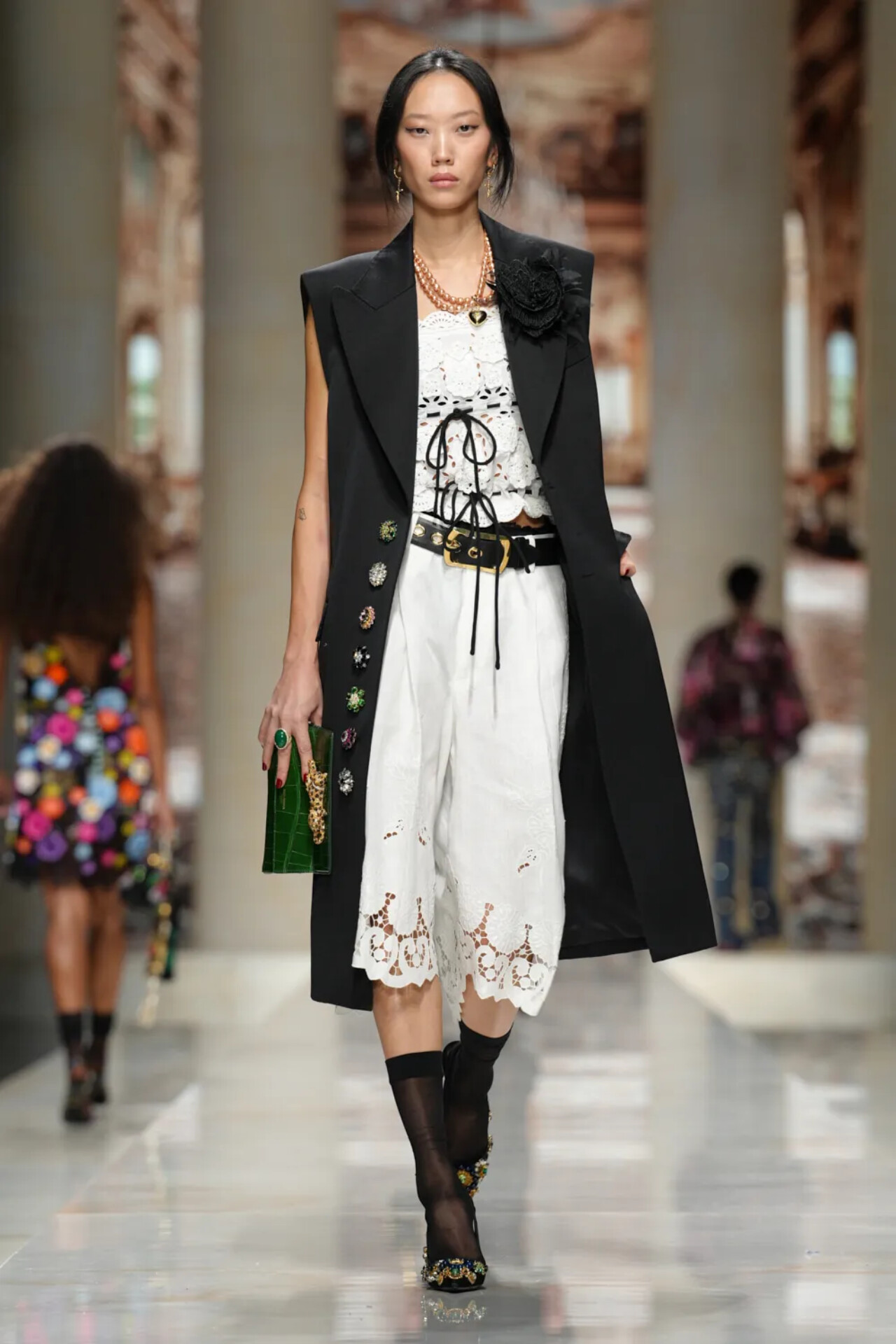
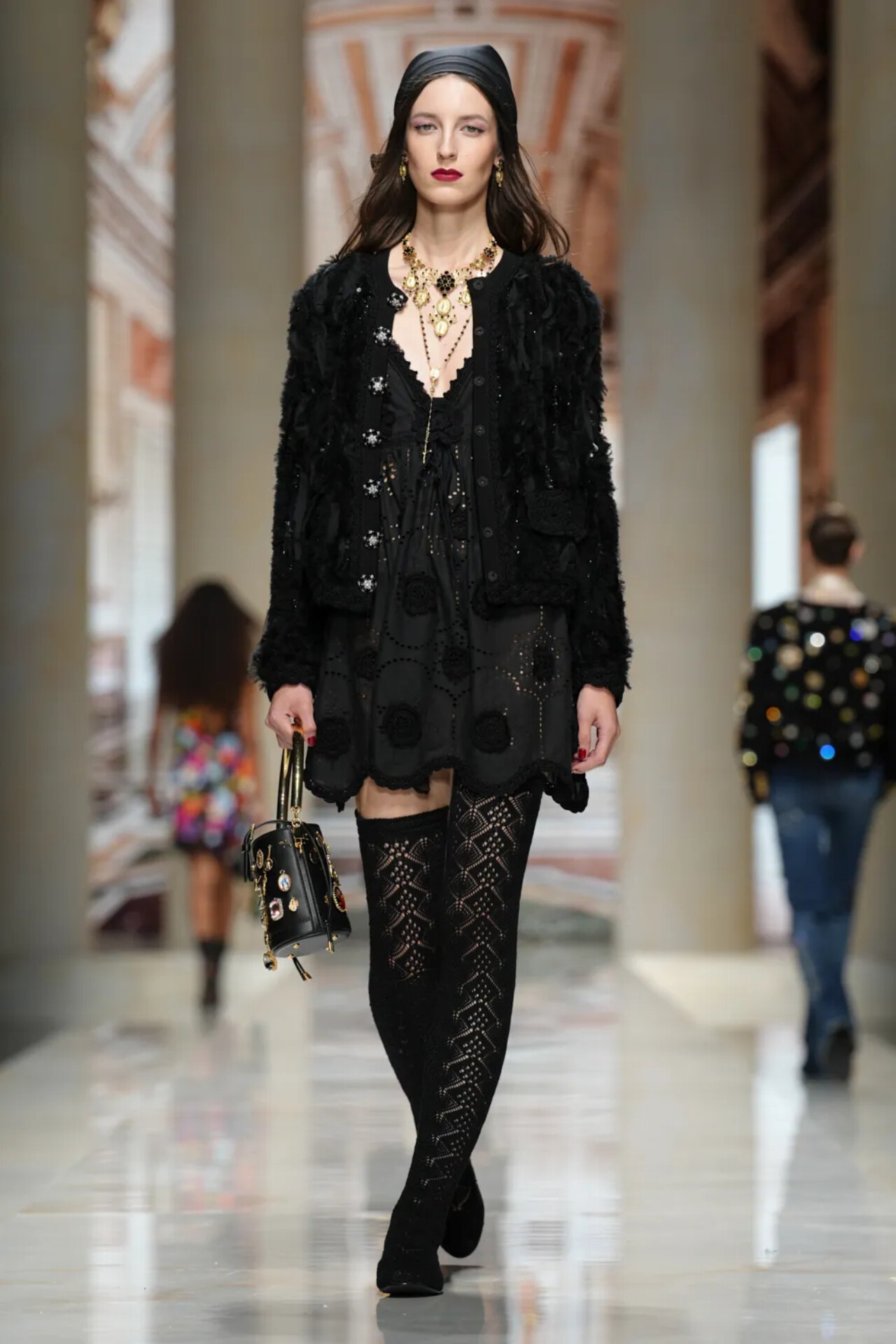
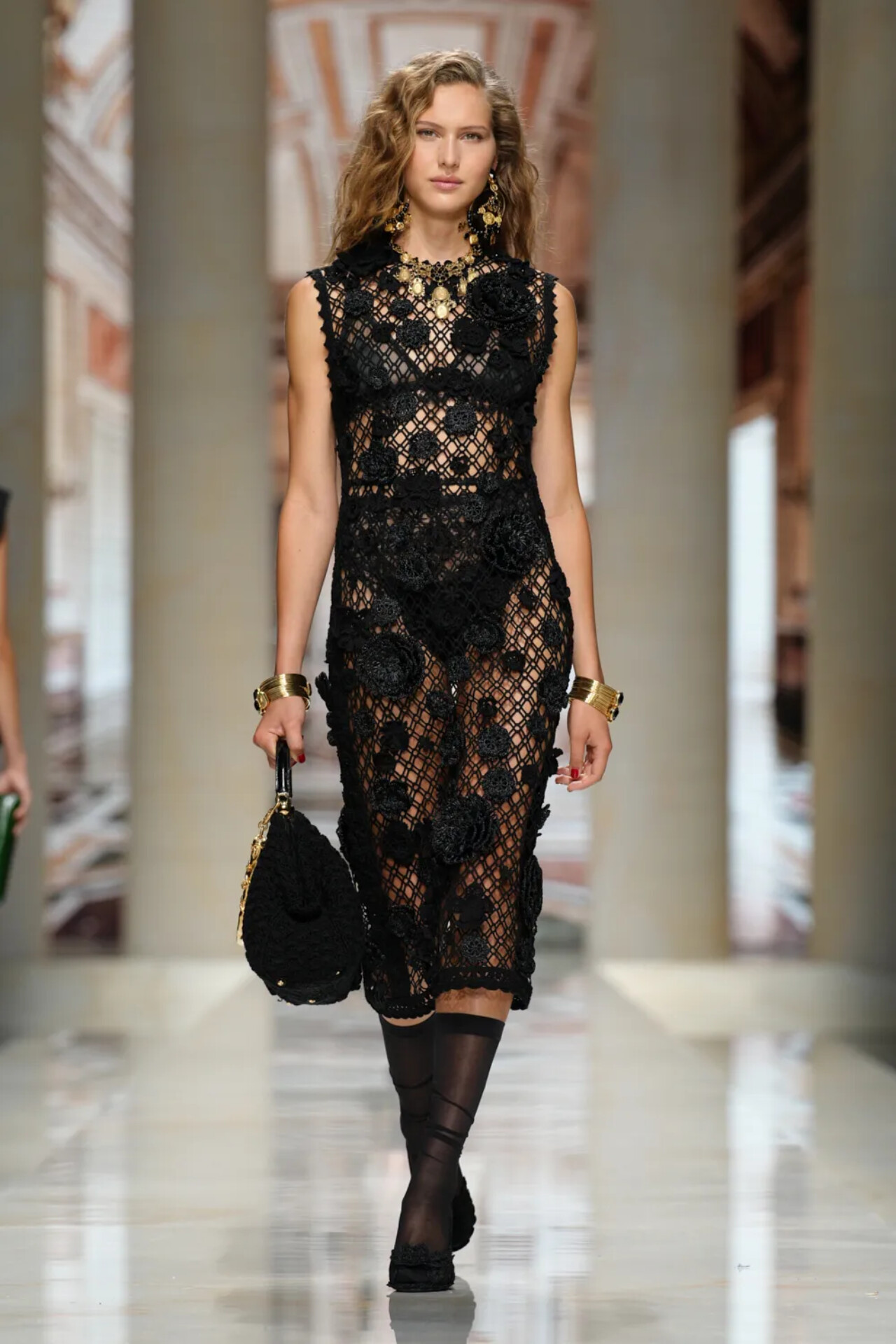
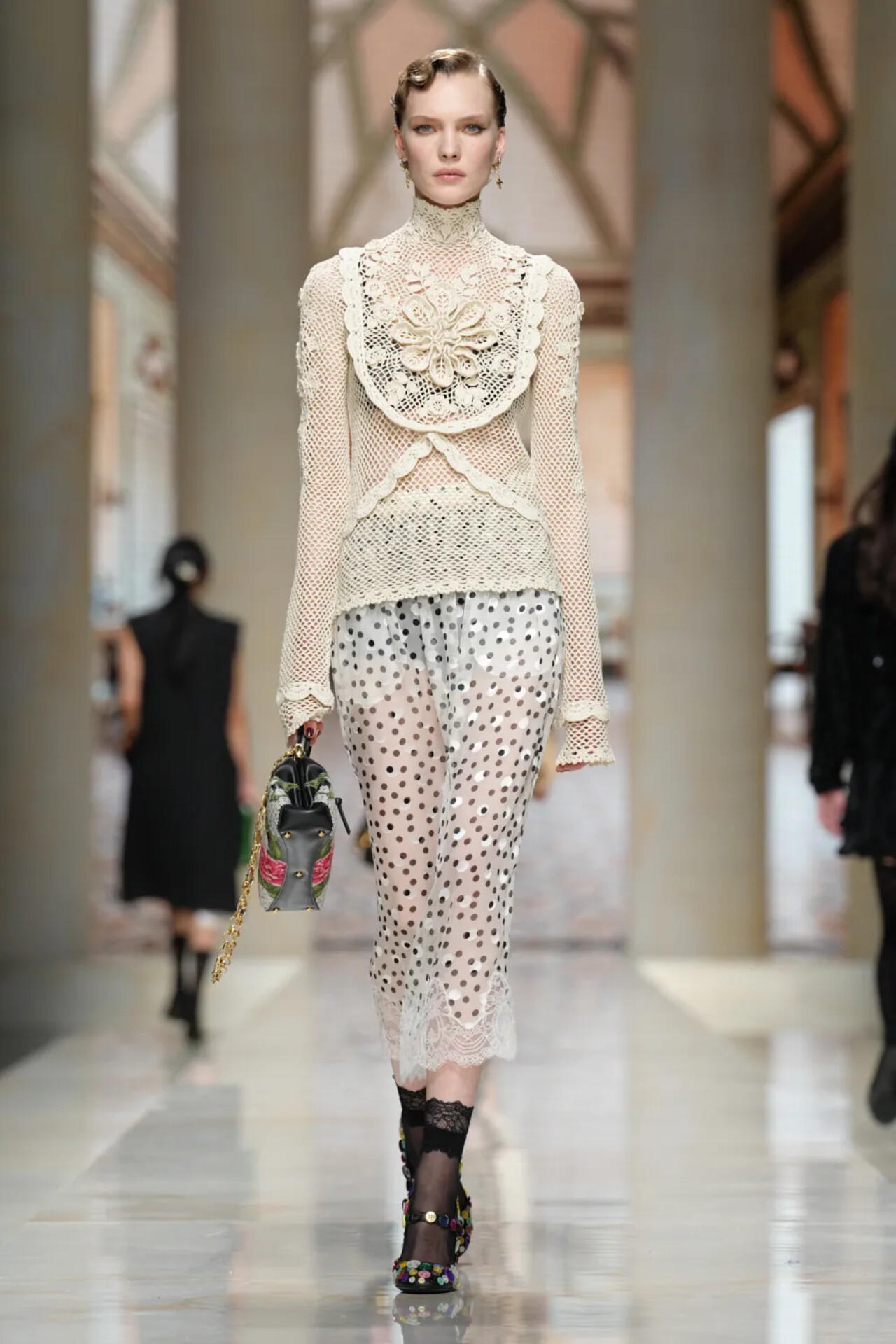
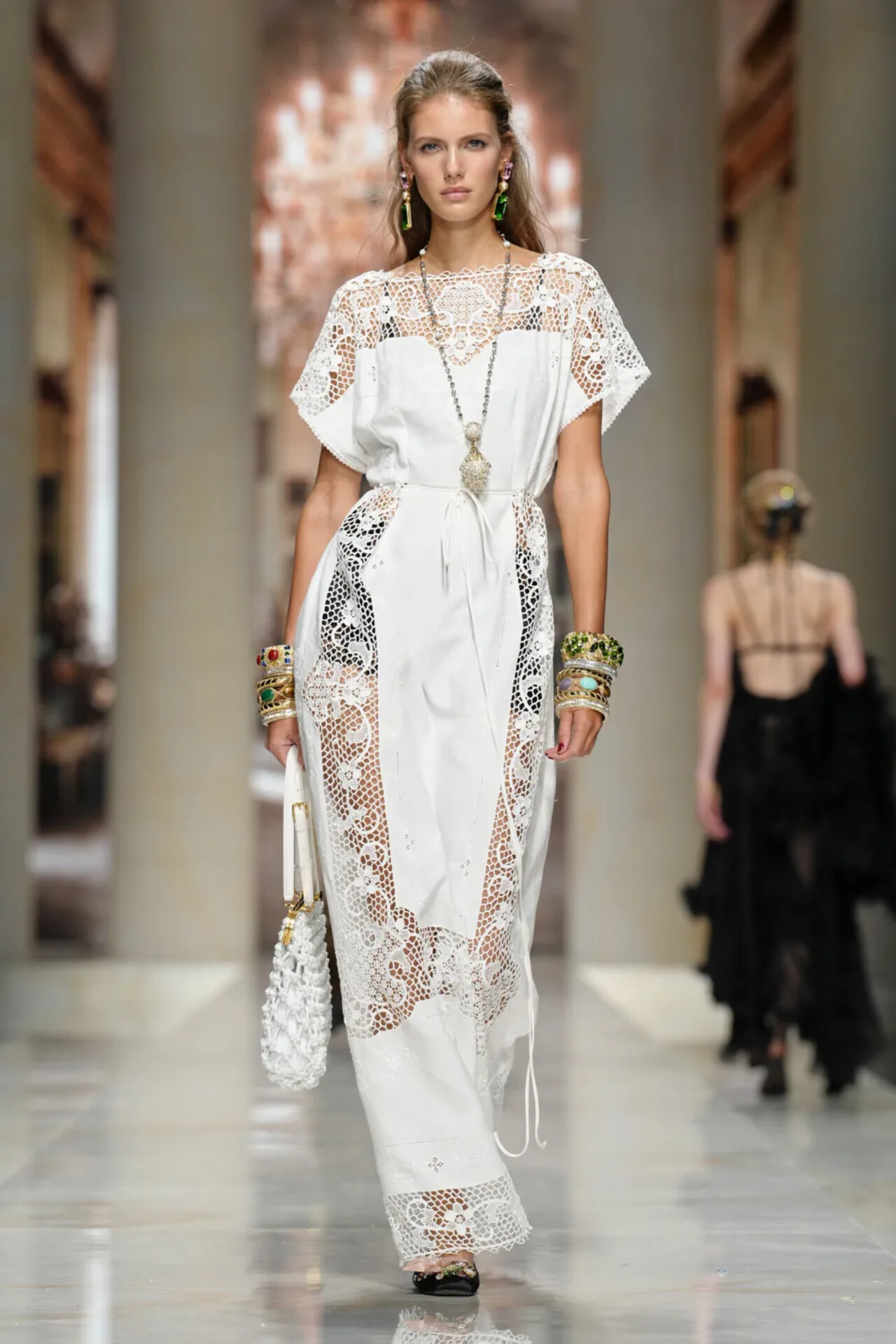
The mother. The grandmother. The trousseau. The linen stored away in drawers. Curtains. Tablecloths. Crochet. Lace. Lingerie glimpsed beneath a dress. The female body as something that belongs to memory before it belongs to seduction.
And perhaps this is the most interesting thing Dolce&Gabbana has done in recent seasons: turning its archive from an image into an experience.
FORTY YEARS OF IDENTITY
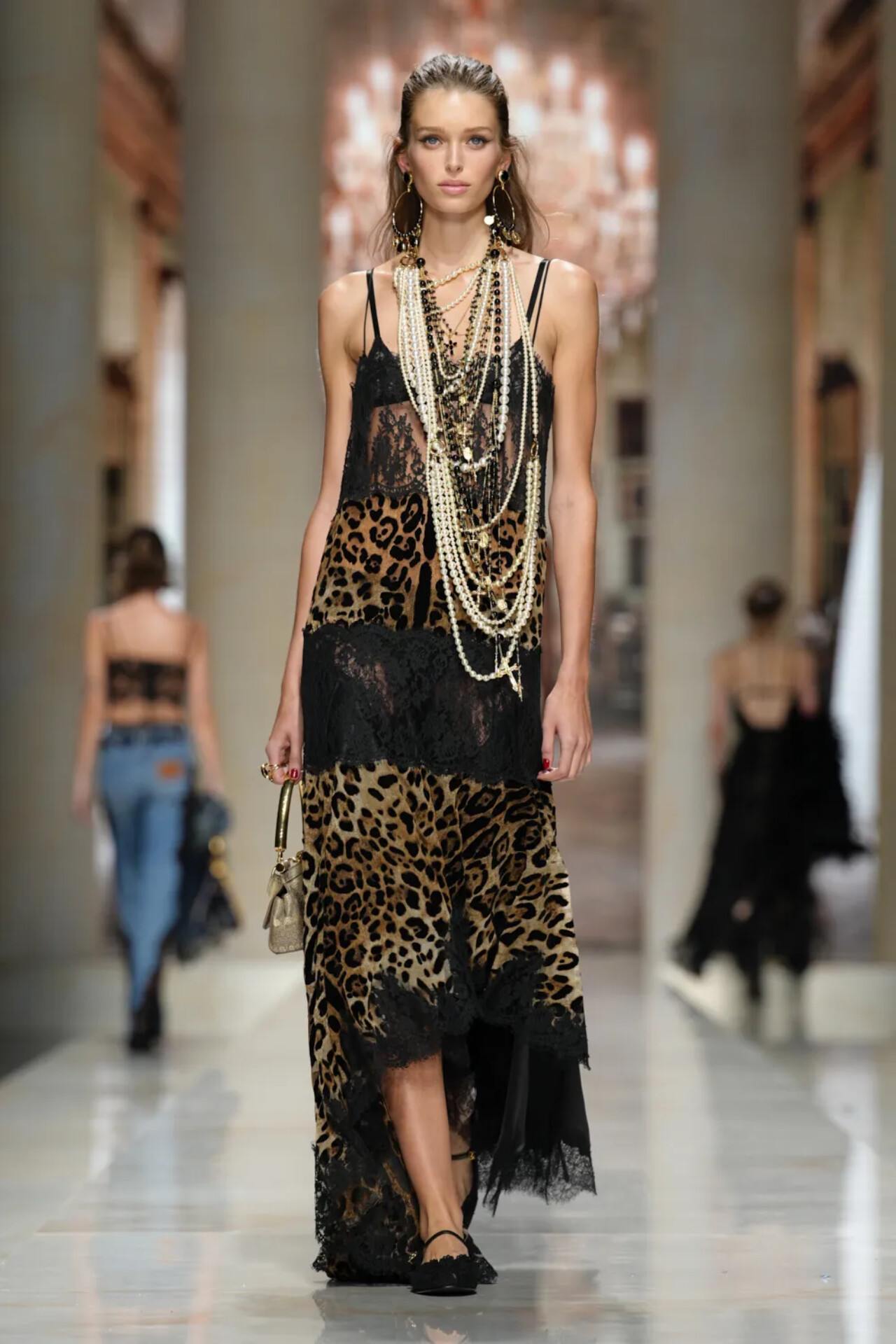
Dolce&Gabbana was founded in 1985 and, almost from the beginning, constructed one of the most immediately recognisable identities in contemporary fashion: Sicily, black, lace, lingerie, corsetry, animal print, masculine tailoring, the female body, theatricality.
Vogue continues to identify tailoring, la bella figura, leopard print, lingerie and lace among the house’s defining codes.
That matters because Dolce&Gabbana is not a house that built its reputation through constant reinvention.
It did almost the opposite.
It turned consistency into a language.
The starting point was the body.
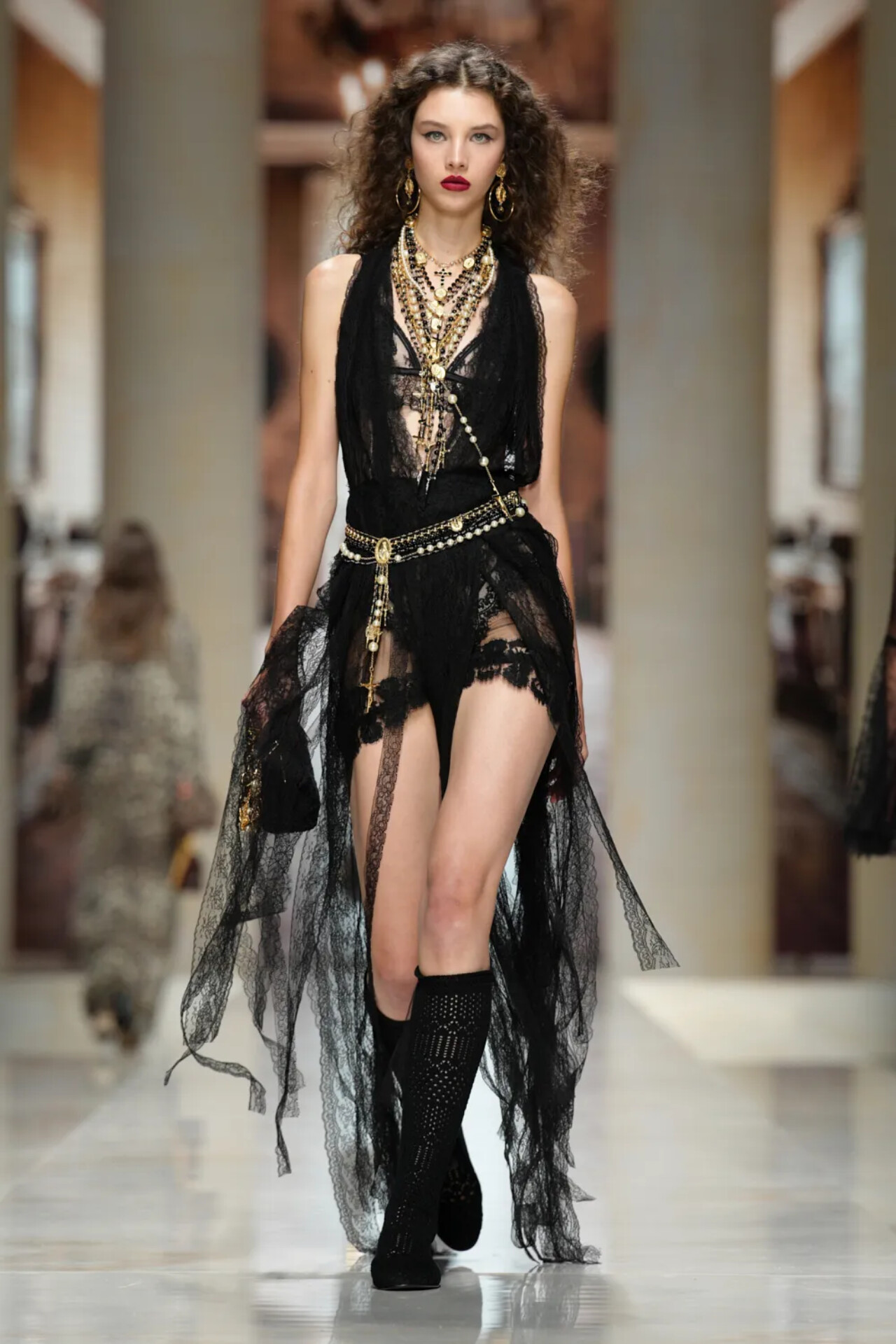
The corset, exposed lingerie, the bra worn outside underwear, the black dress, the black lace of the Sicilian widow: throughout the Eighties and Nineties, Dolce&Gabbana constructed a woman who did not ask permission to be sexual.
The bra itself became almost a manifesto for the house. Dolce&Gabbana’s own archive traces the evolution of the iconic brassiere from the Sicily collections of 1987–88 through to Hollywood Glamour in 1995, when it became an unmistakable signature of the brand.
This is not a minor detail.
It is practically a statement of intent.
The body is not hidden by fashion. Fashion is built to exalt the body.
THE DOLCE&GABBANA WOMAN HAS ALWAYS BEEN A PARADOX
The house’s real talent has never simply been making sexy clothes.
It has been putting seemingly incompatible things together.
Madonna and the grandmother.
The Sicilian widow and the supermodel.
The apron and the corset.
Masculinity and femininity.
Religion and eroticism.
The province and Hollywood.
The church and the nightclub.
Family and desire.
Vogue has identified these oppositions – virgin/prostitute, romance/sex, countryside/city, masculine/feminine – as fundamental mechanisms within the designers’ work.
And this is where Dolce&Gabbana has historically been far more intelligent than it is sometimes given credit for.
The Sicily of Dolce&Gabbana was never truly documentary.
It was a cinematic construction of Italian memory.
An Italy filtered through Visconti, neorealist cinema, Sophia Loren, Anna Magnani, Monica Bellucci, Catholicism, melodrama, sex, mourning, the family lunch, sunlight and black.
A country that was simultaneously real and completely invented.
FROM SEX TO MEMORY
And this is where SS27 becomes interesting.
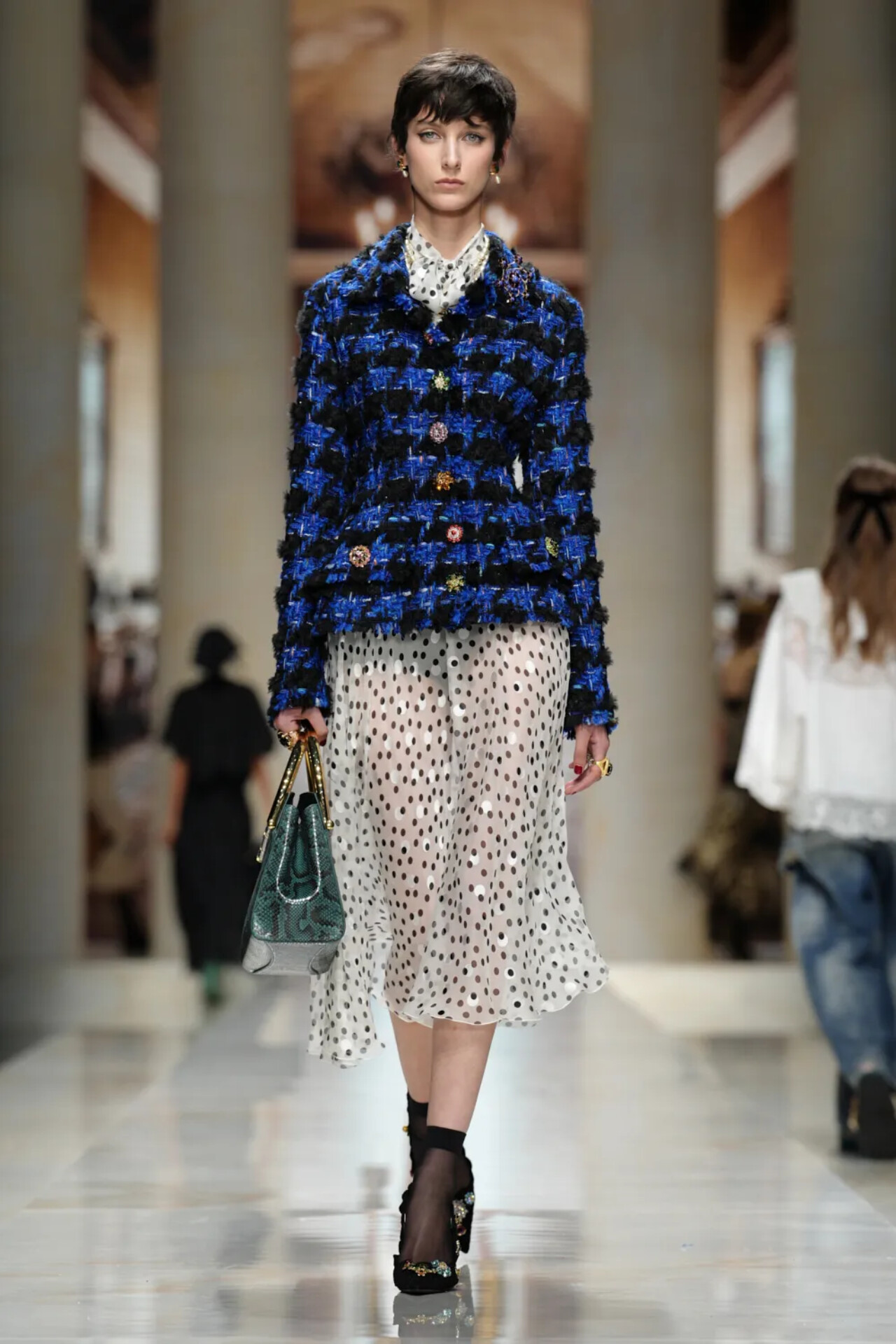
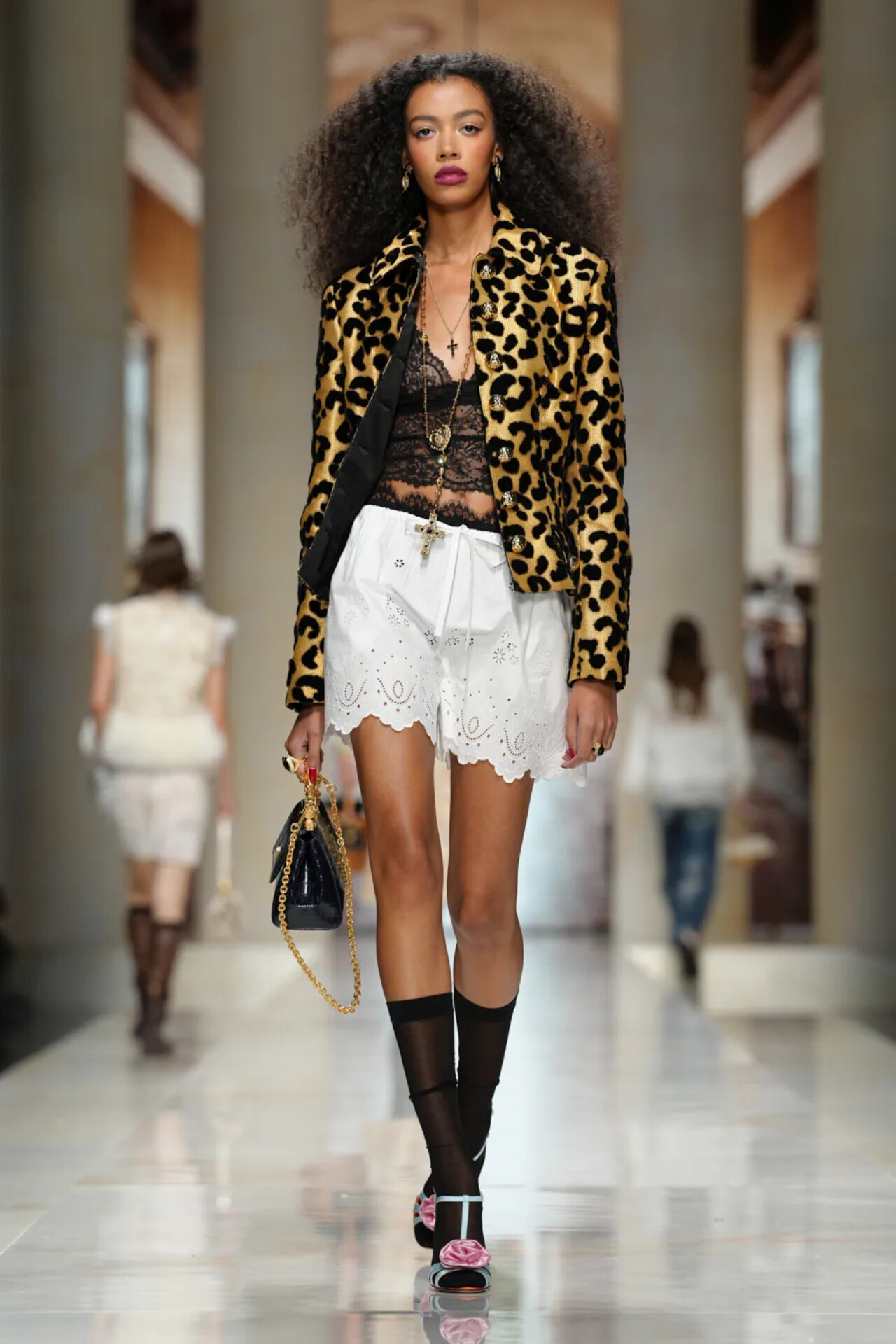
Because the collection abandons none of the house’s historic codes.
It changes their perspective.
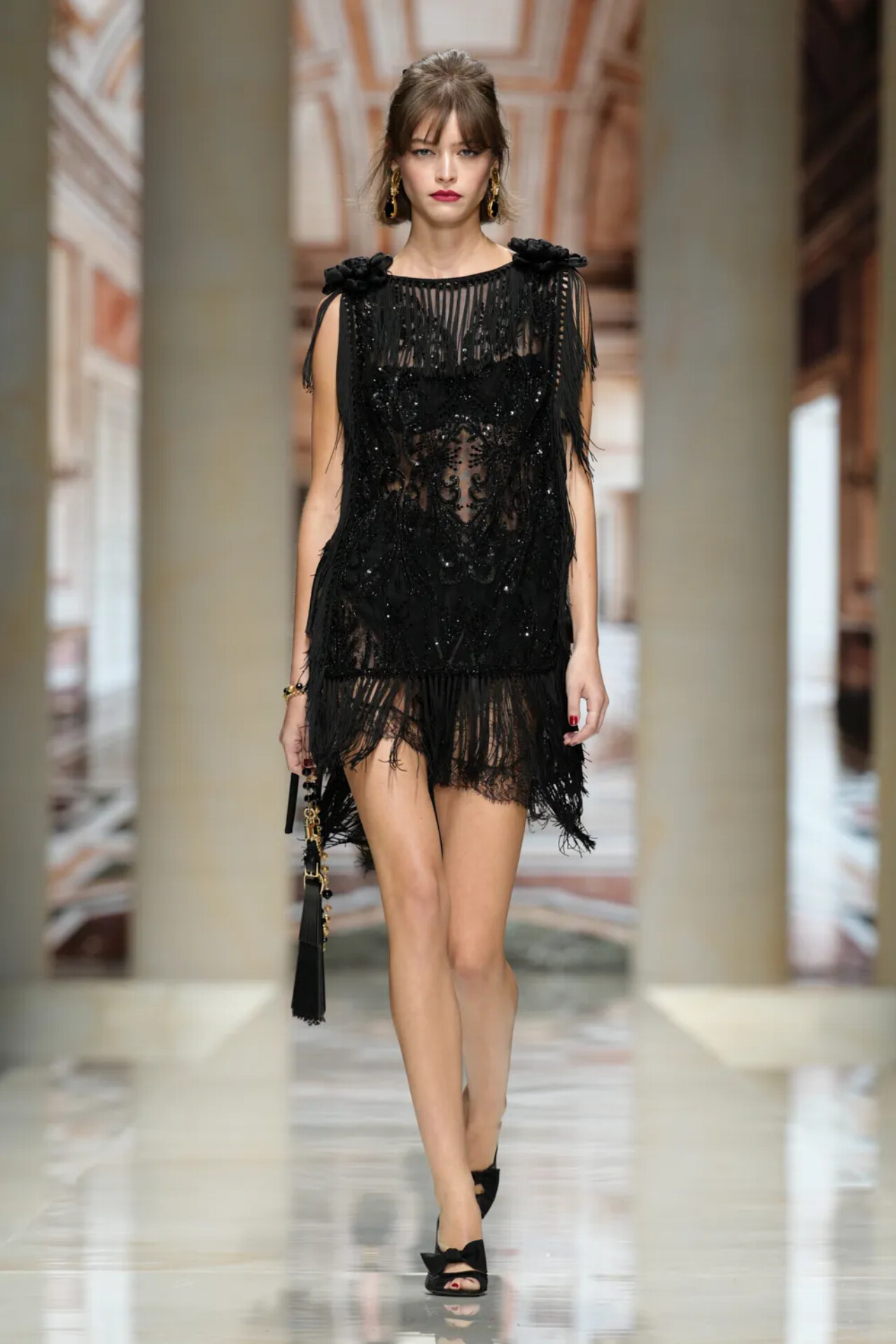
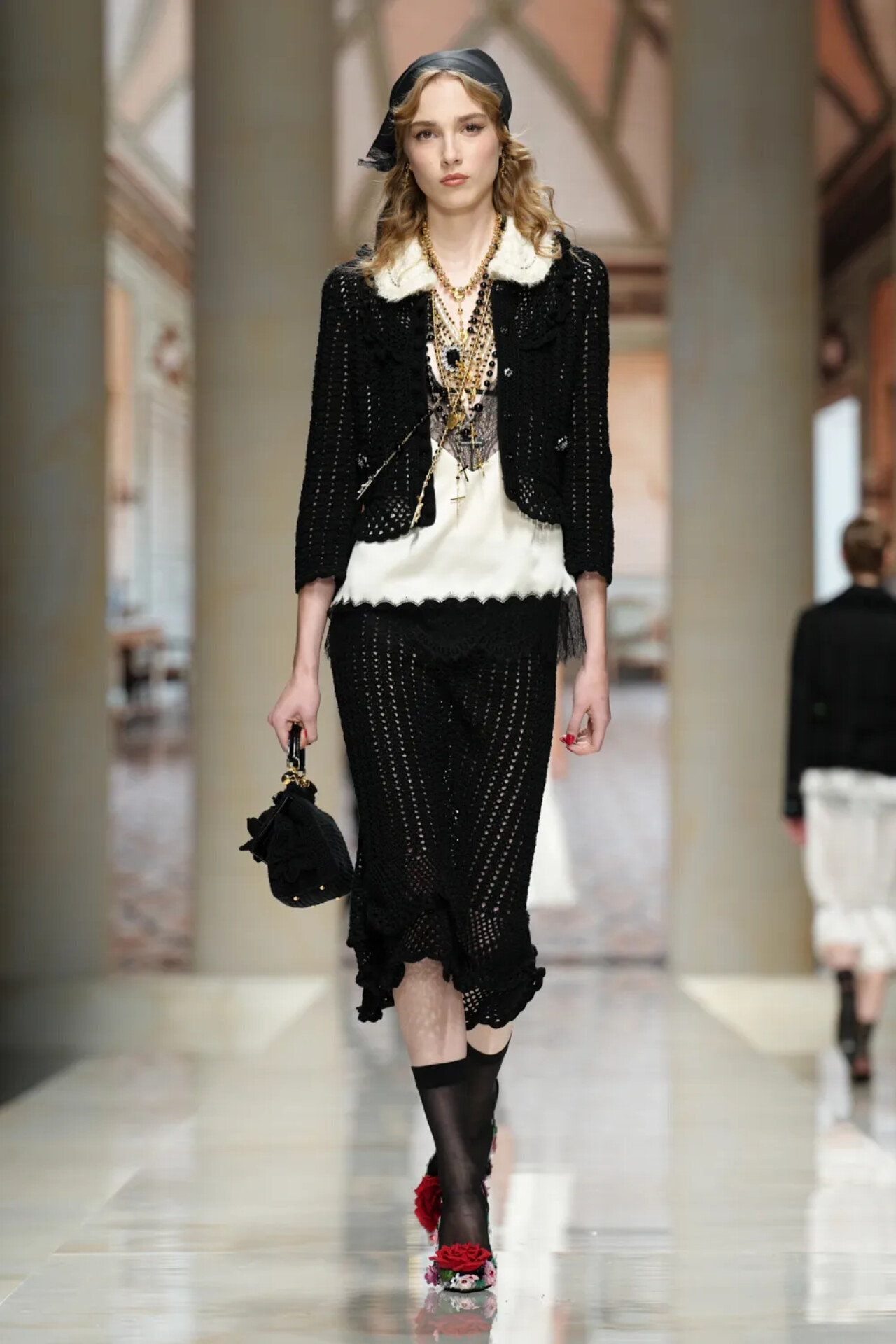
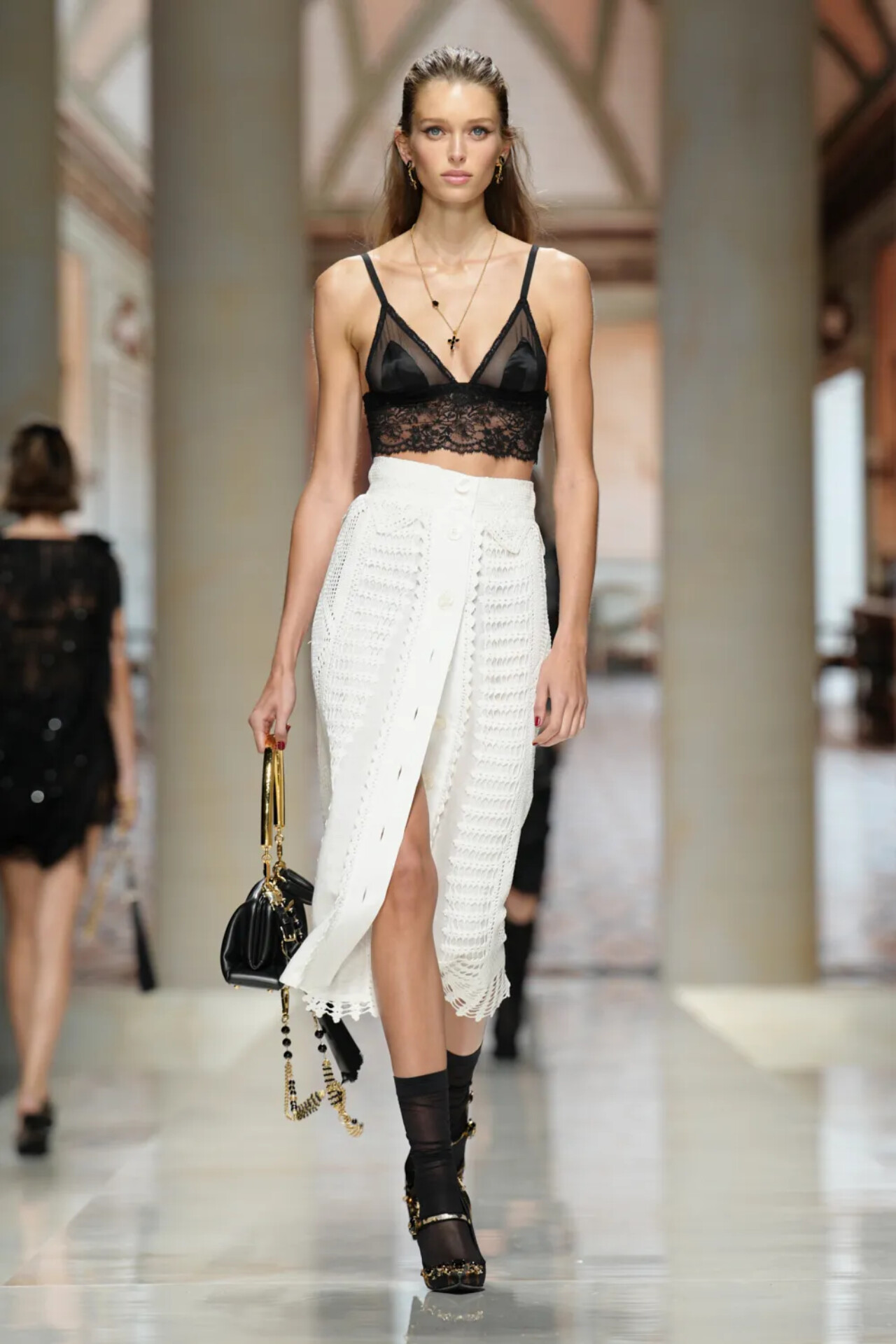
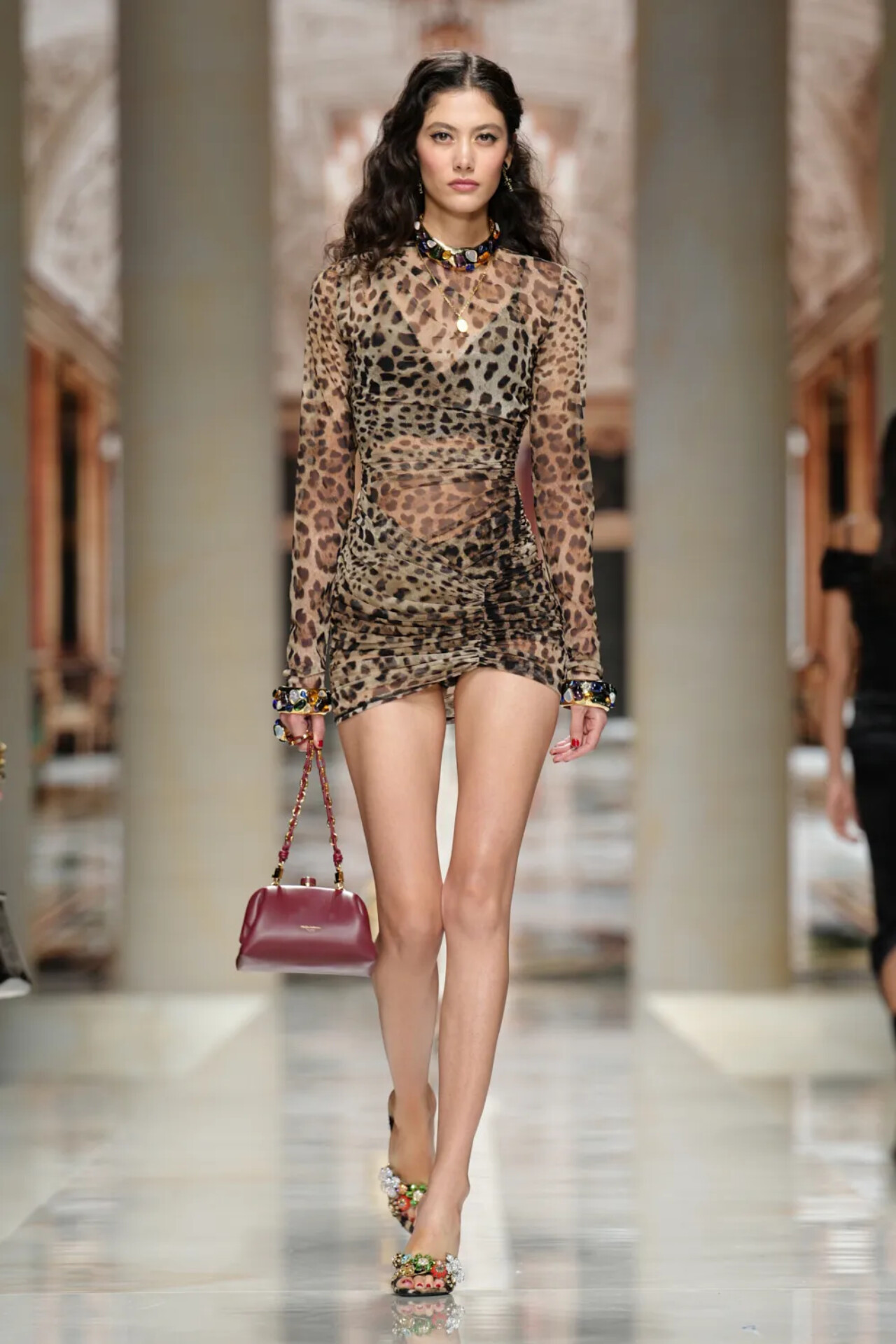
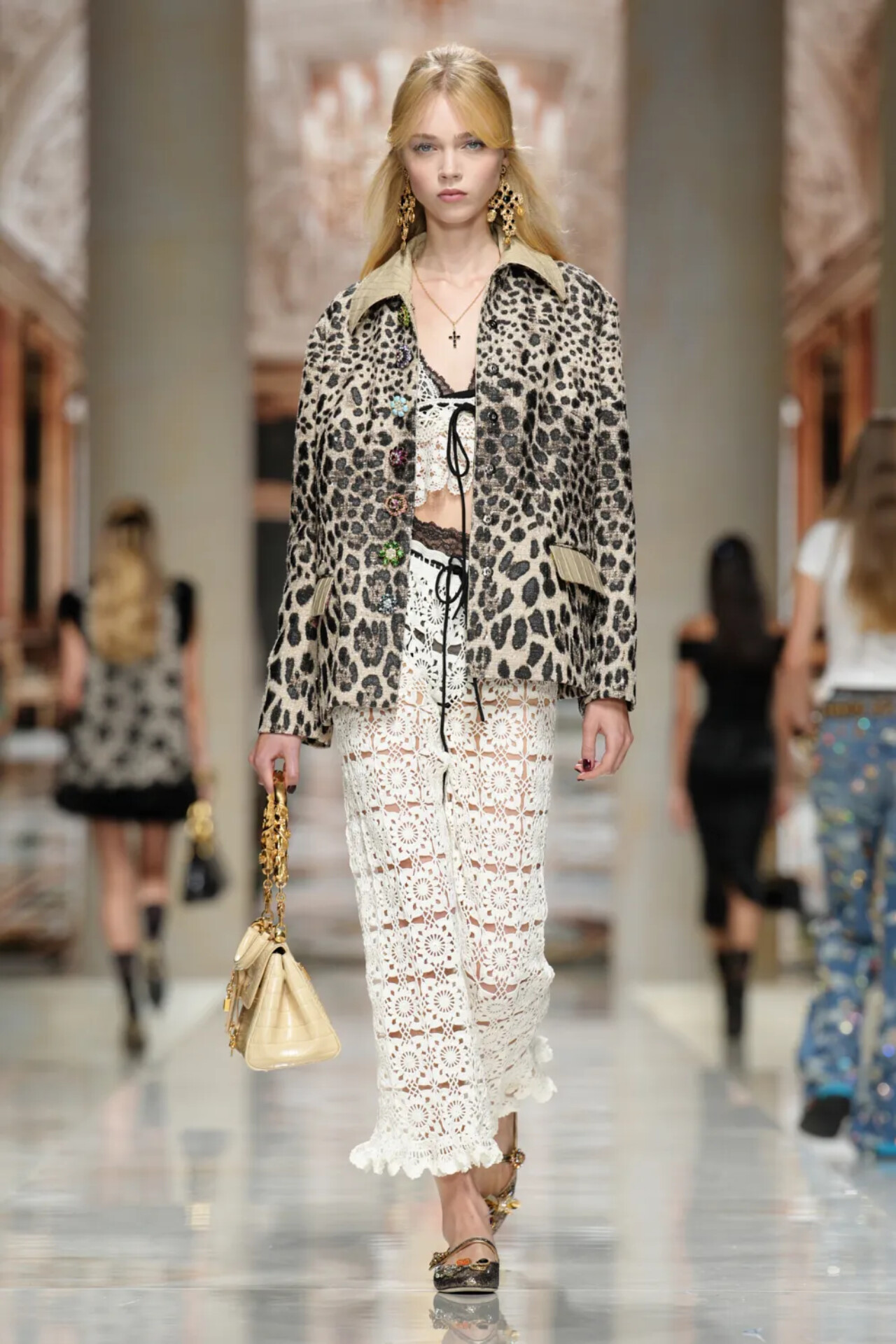
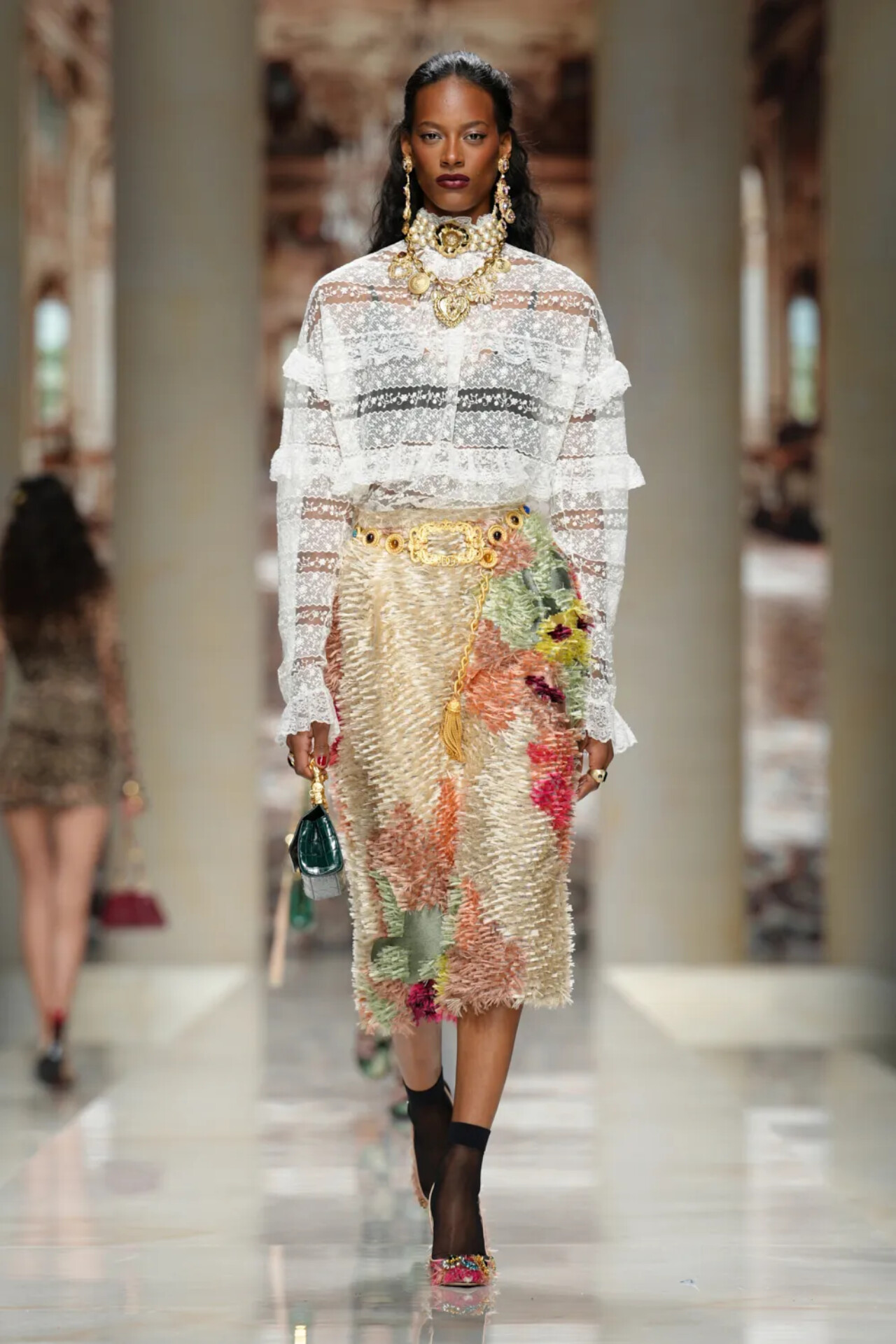
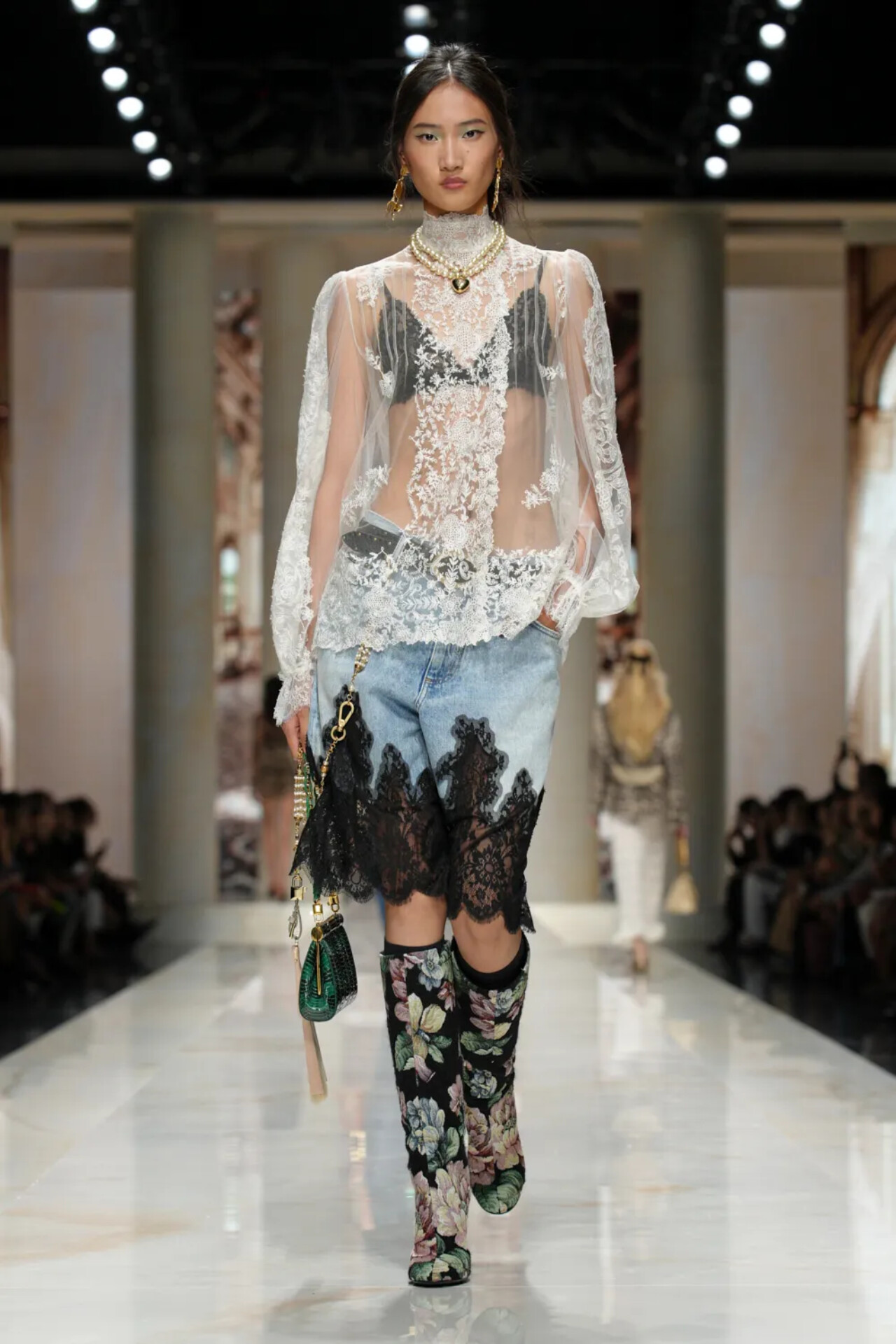
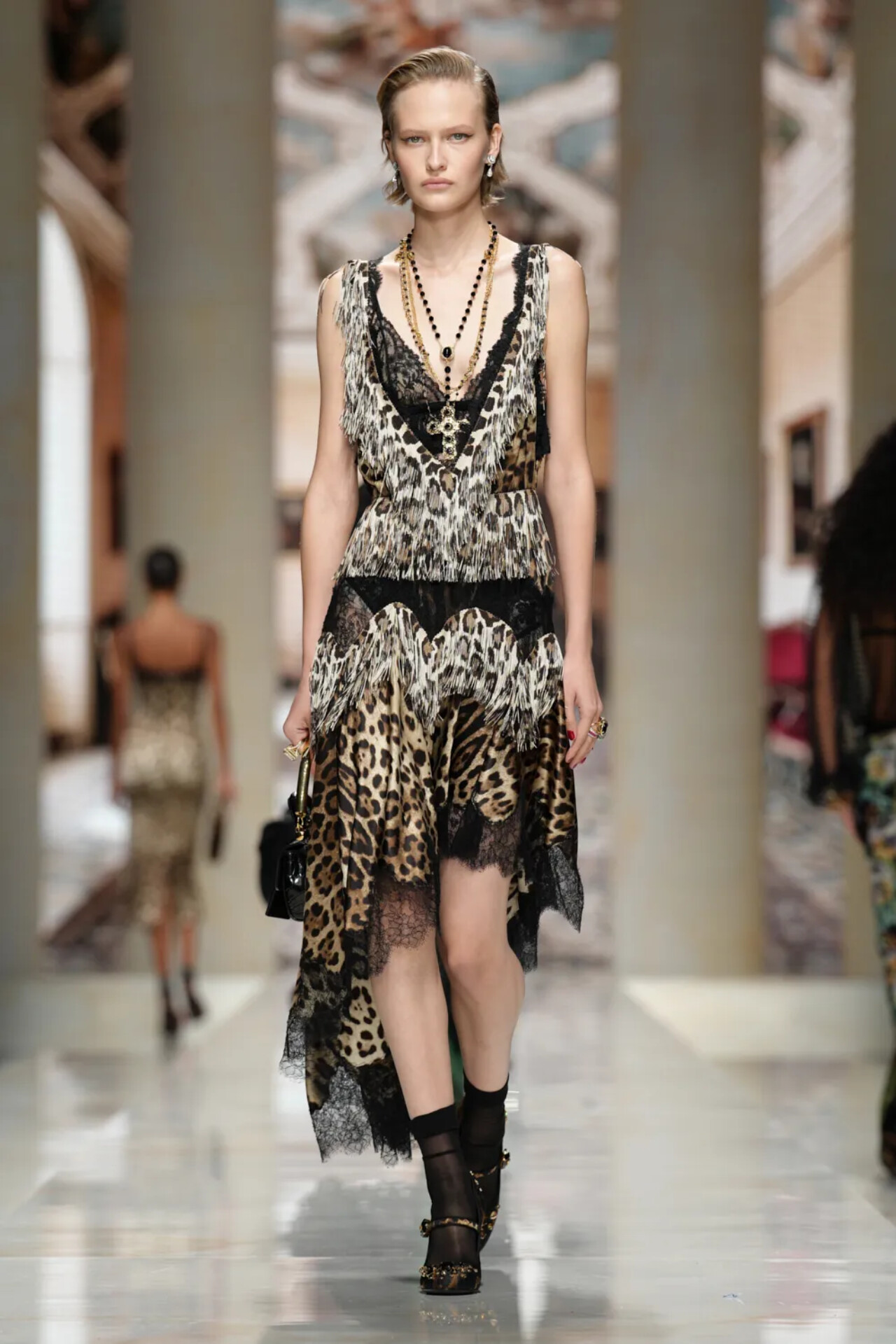
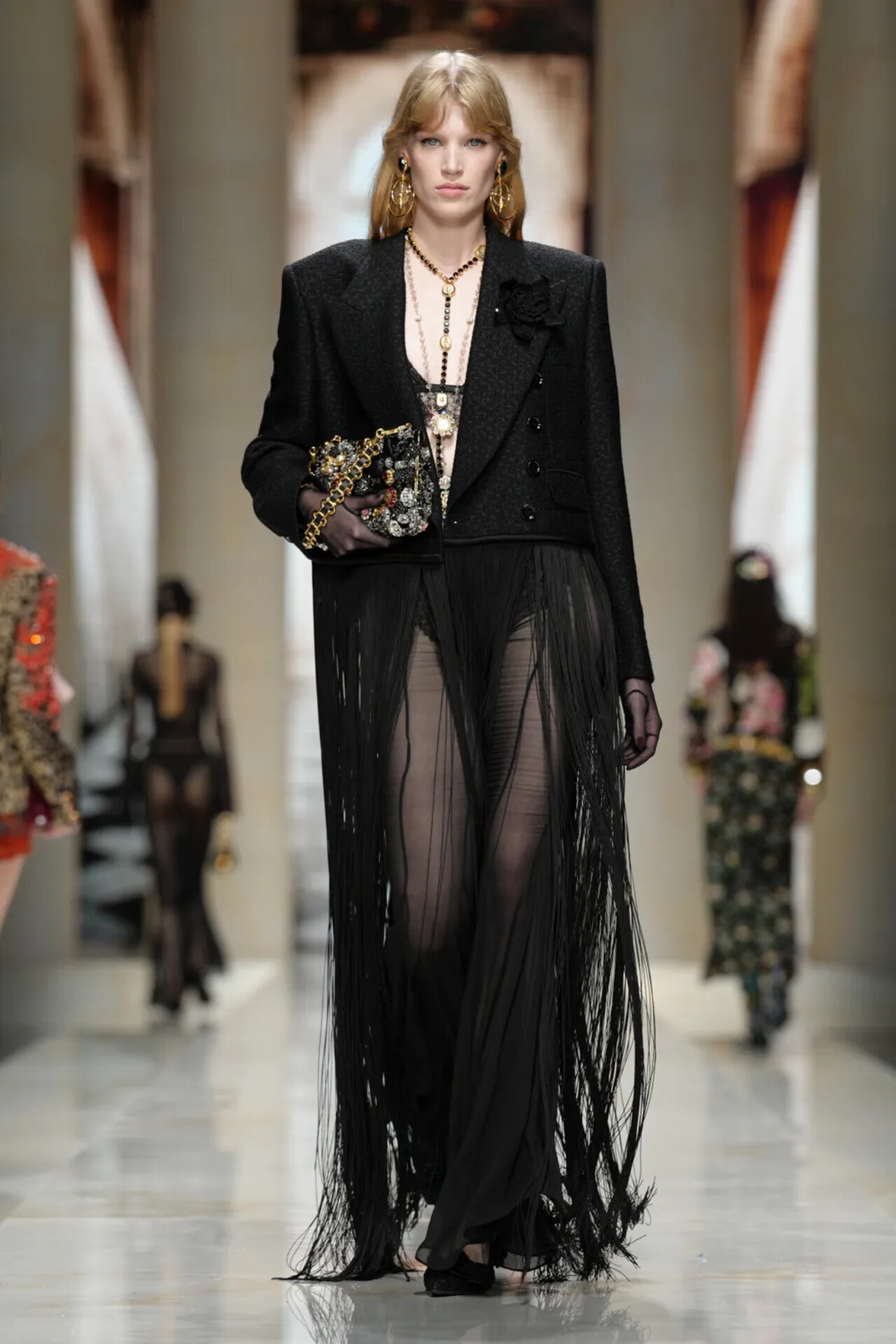
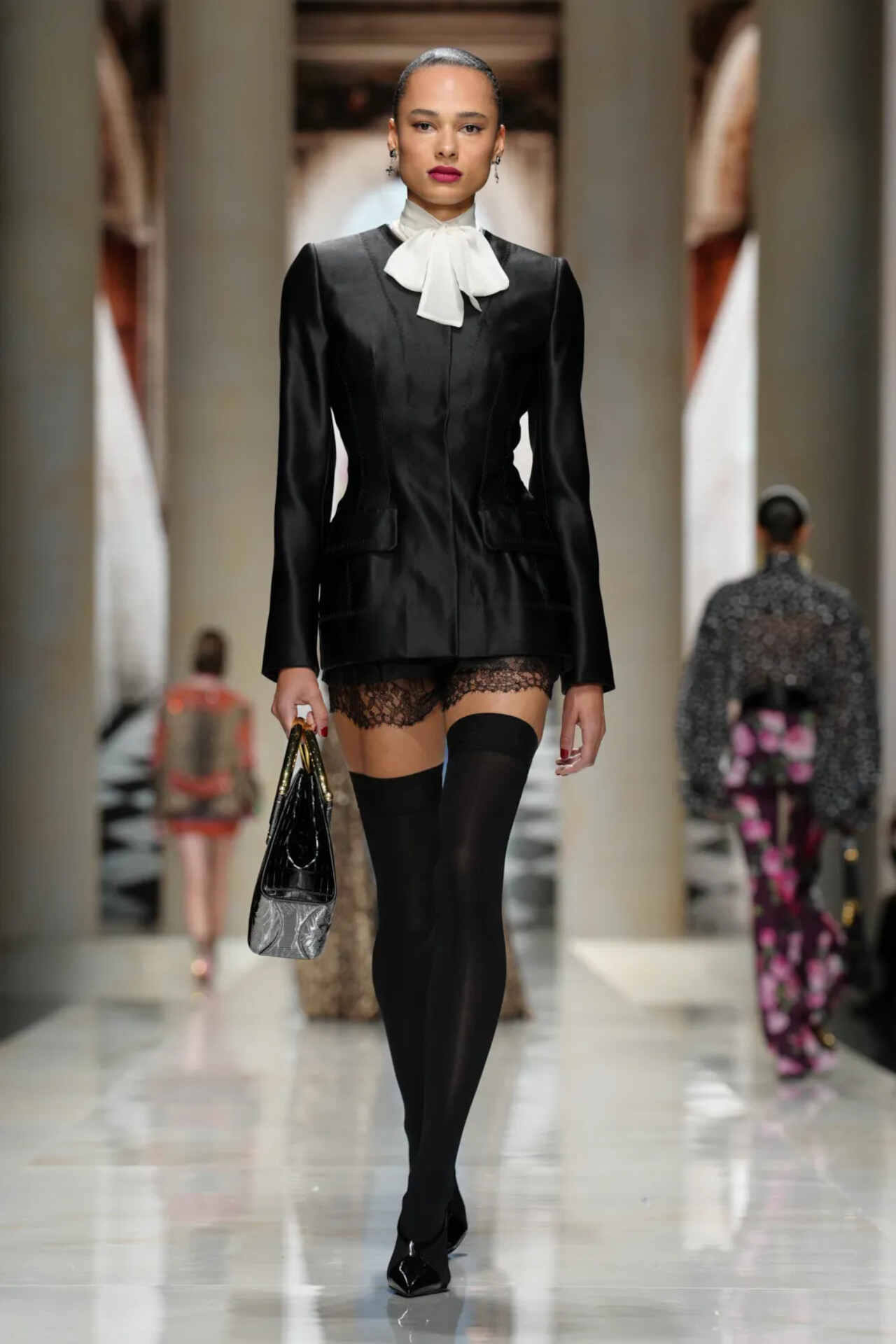
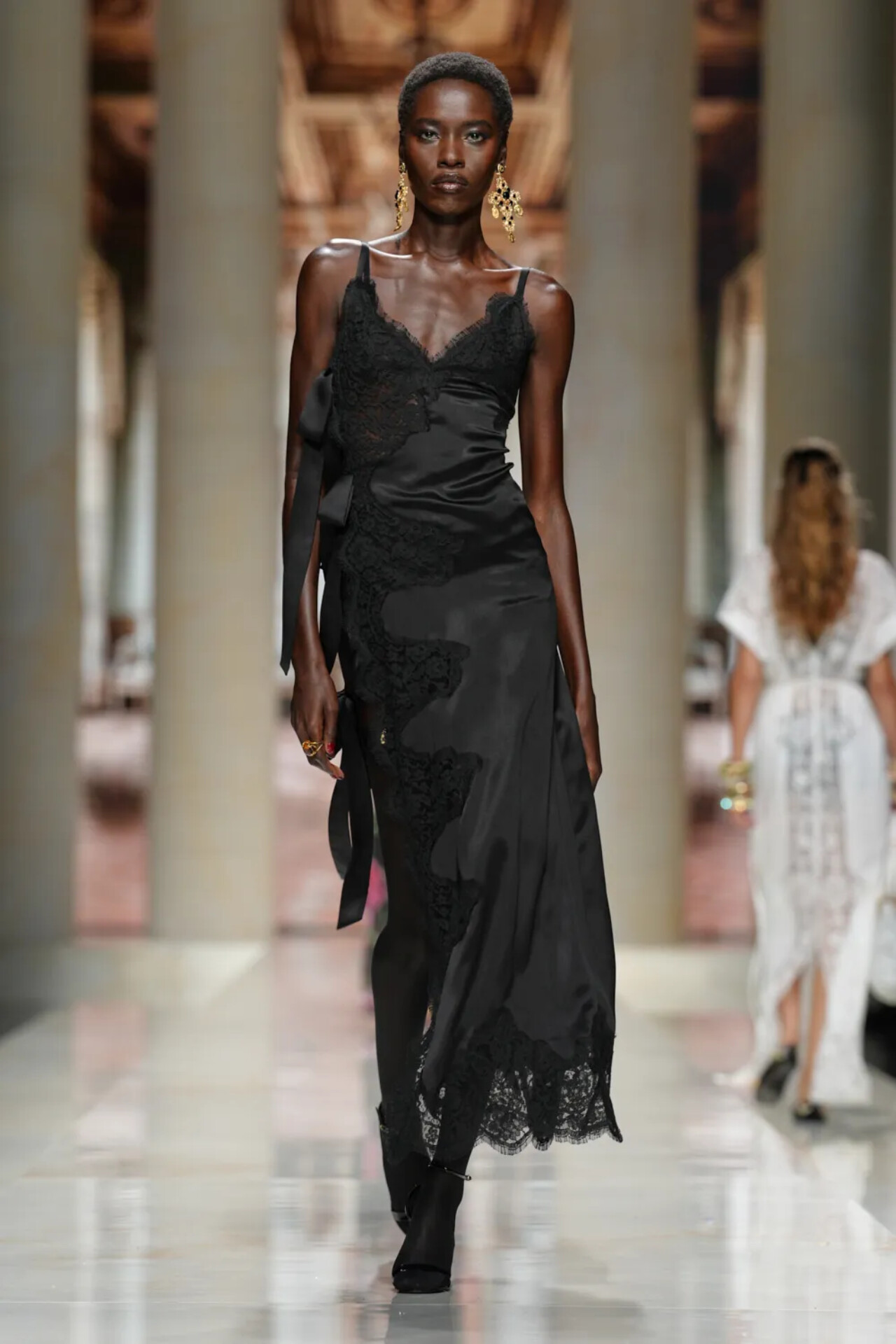
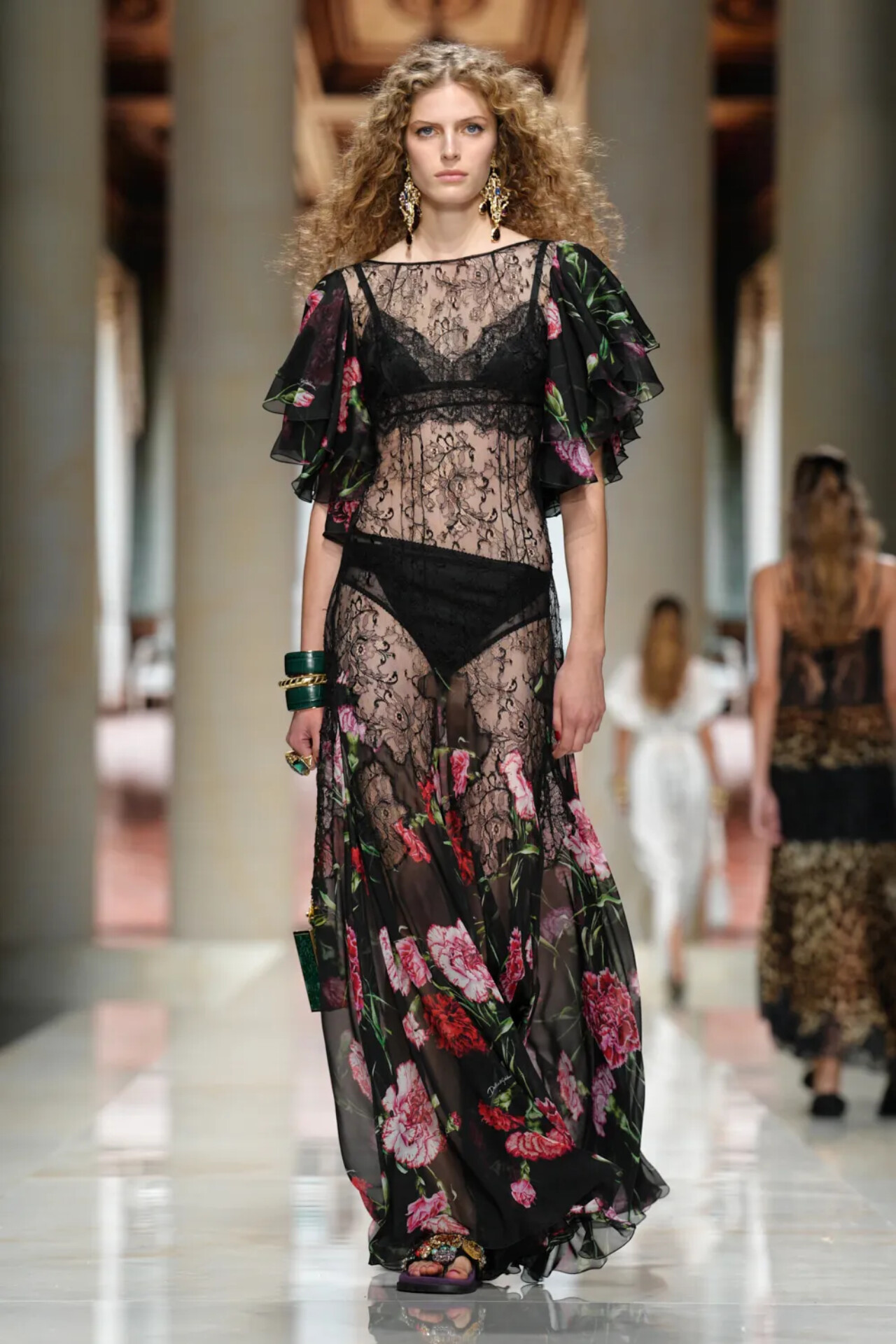
The lace remains.
The lingerie remains.
The black remains.
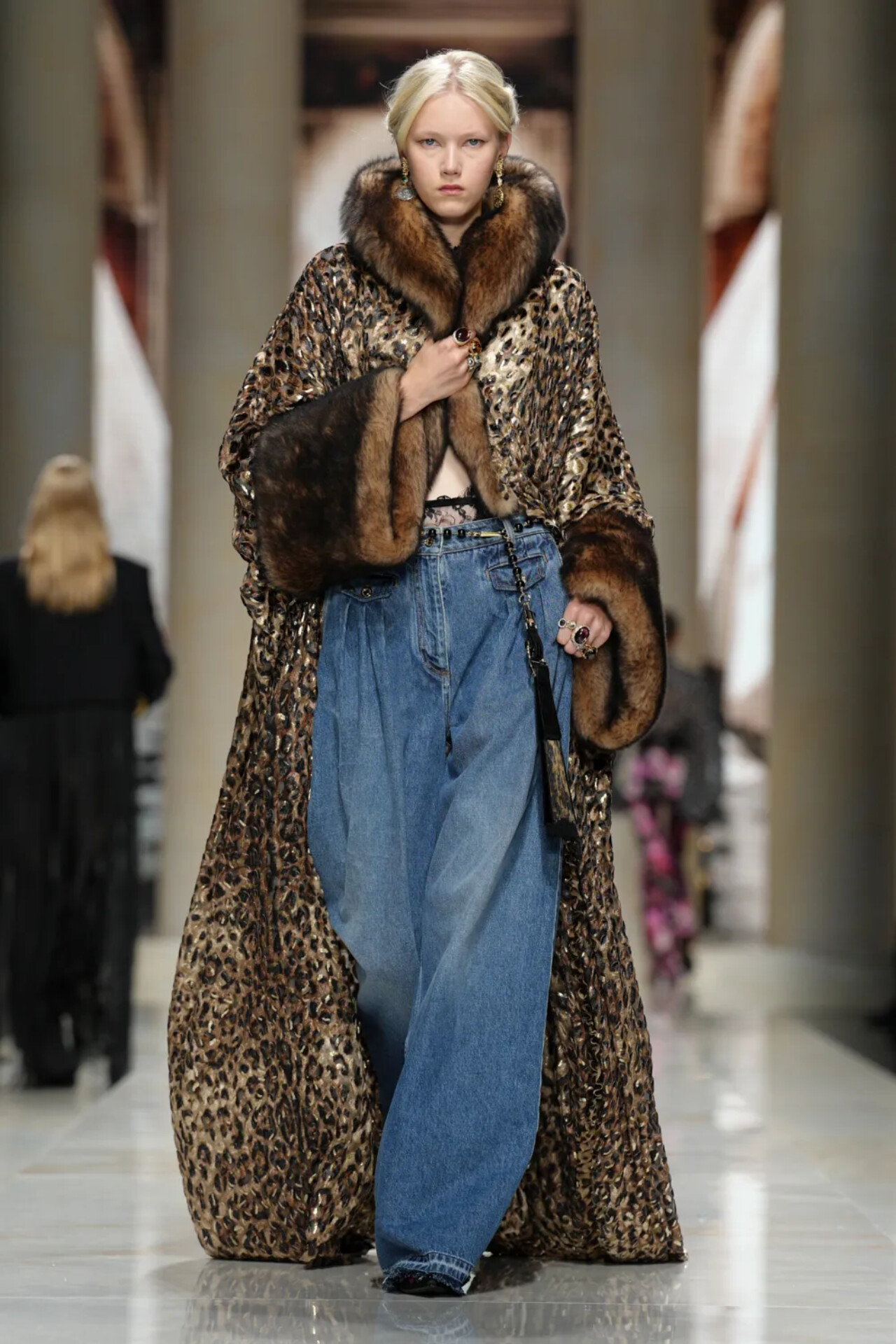
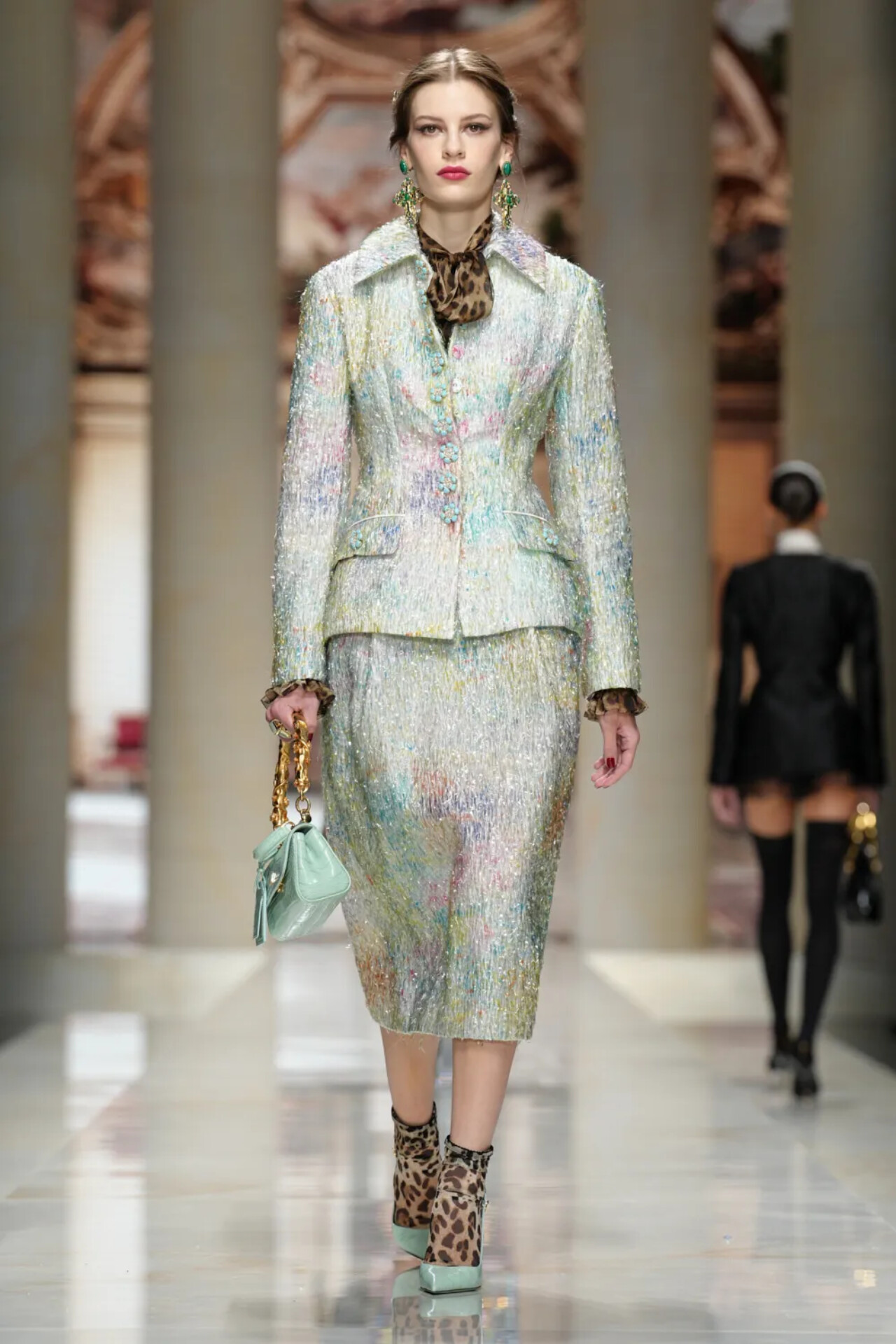
The leopard print remains.
The corset remains.
The body remains.
The tailoring remains.
But something shifts.
Seduction is no longer necessarily the destination. It becomes the consequence of memory.
Lace no longer reads simply as lingerie.
It becomes inherited fabric.
Crochet is not merely Mediterranean decoration.
It becomes craft.
The trousseau becomes an archive.
A tablecloth can become a skirt.
A curtain can become a dress.
Domestic linen can become couture.
It is a subtle but enormous shift.
Because it means Dolce&Gabbana is moving its obsession from the desired woman to the remembered woman.
And perhaps, after forty years, that shift was inevitable.
THE NEW THROUGH-LINE: THE TROUSSEAU
If we had to choose a single word to explain where the house is going, I would choose this:trousseau.
Not Sicily.
Not sensuality.
Not Baroque.
Trousseau.
Because the trousseau contains almost every historic Dolce&Gabbana code.
Lace is there.
White is there.
Black is there.
Handcraft is there.
Family is there.
Marriage is there.
Femininity is there.
The body is there.
Memory is there.
And, above all, there is a powerful idea of time.
A trousseau is something a woman receives, preserves, inherits and transforms.
It is not vintage.
It is genealogy.
That is the most interesting conceptual shift in Stravaganza Siciliana.
FROM POSTCARD TO ARCHIVE
For decades, Dolce&Gabbana has risked – and at times seemed perfectly happy to risk – turning Sicily into a logo.
The problem with imagery that is too powerful is that it can become predictable.
Lemons.
Majolica.
Crosses.
Lace.
Leopard.
Black.
Baroque.
Mediterranean women.
Sicilian men.
The danger is self-tourism.
And there have certainly been moments in recent years when the house seemed determined to prove that it could exist beyond its own mythology.
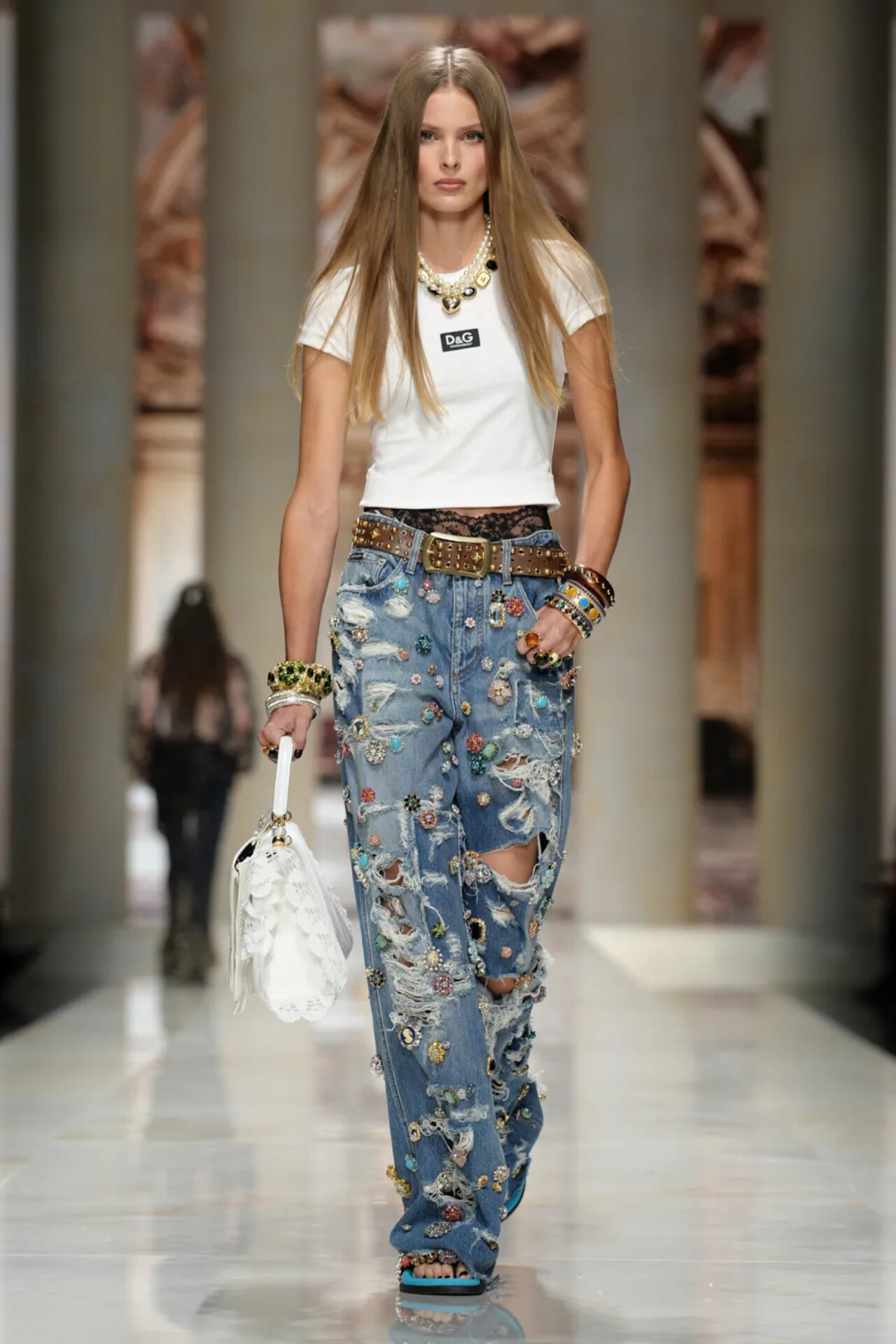
Pajamas, casualwear, denim, biker jackets, an off-duty attitude: temporary attempts to challenge the historic grammar.
Then, in 2026, came the opposite answer.
Identity.
The house openly declared that identity itself was its fundamental luxury: Sicily as emotion, black as strength, lace as intimacy, tailoring as authority.
SS27 is the logical consequence of that decision.
But it is also more interesting.
Because it does not simply say:
“Let’s go back to our roots.”
It says:
“Let’s look more closely at where our roots came from.”
MEN AND WOMEN: TWO DIFFERENT SICILIES
The relationship with the SS27 menswear collection is also crucial.
In June, Sicilian Holidays treated Sicily as a place: vacation, sun, sea, colour, coral, lemons, rope, decoration, expanded masculinity.
The women’s collection comes afterwards.
And it does something different.
The man goes to Sicily.
The woman comes home.
It is a beautiful distinction.
The man is the journey.
The woman is the memory.
The man wears the Mediterranean.
The woman wears the house.
And this division allows Dolce&Gabbana to tell the same identity without simply duplicating the same collection.
BUT HOW NEW IS THIS NEWNESS?
Here we have to be honest.
This is not a revolution.
And it would be wrong to present it as one.
Dolce&Gabbana is not doing what many contemporary houses are doing: erasing the archive, handing the brand over to a new sensibility, or completely rewriting its grammar.
It is doing the opposite.
It is digging.
And that is precisely what makes the collection both contemporary and risky.
Because the line between heritage and self-reference is incredibly thin.
When a fashion house possesses codes this recognisable, the audience can identify the product instantly — but it can also stop expecting surprise.
The problem for Dolce&Gabbana is no longer:
“Who are we?”
Everyone knows.
The problem is:
“How much can we repeat who we are before identity becomes formula?”
THE ECONOMIC CONTEXT MAKES IT MORE INTERESTING
It is impossible to look at this collection without considering the moment in which it arrives.
In 2026, Dolce&Gabbana is navigating a financially delicate period. The company has reported another operating loss and increased debt, while creditors agreed in August to waive certain financial covenant requirements.
In June, Bloomberg, via Business of Fashion, reported that the company was considering selling several Milan properties and subsequently leasing them back in order to release cash, amid a broader debt restructuring. The report also noted the management reshuffle, including the appointment of Stefano Cantino as co-CEO alongside Alfonso Dolce, while Stefano Gabbana stepped down from the chairmanship without any stated change to his role in creative direction.
This does not mean that Stravaganza Siciliana is a collection dictated by the balance sheet.
That would be too easy a reading.
But context inevitably changes the meaning of a runway.
When a company enters a period of pressure, identity can become both refuge and strategy.
Dolce&Gabbana appears to be choosing refuge.
It is not trying to become another fashion house.
It is trying to make its specificity more valuable.
AND THEN THERE IS THE HISTORY OF CONTROVERSY
This, too, requires nuance.
Dolce&Gabbana has a history of controversy stretching far beyond the current financial situation: campaigns and products criticised for problematic racial or cultural representations, the designers’ 2015 comments regarding IVF and same-sex parenthood, and, most significantly, the 2018 crisis in China.
The Chinese episode remains particularly important.
In 2018, a campaign showing a Chinese model attempting to eat Italian food with chopsticks triggered an intense backlash, a boycott of the brand, the removal of products from major Chinese e-commerce platforms and the cancellation of the planned Shanghai runway show. The founders subsequently issued a public apology.
There is no need to turn this history into a permanent moral verdict.
But neither should it be erased.
Because it becomes particularly interesting when Dolce&Gabbana now returns so insistently to questions of tradition, culture, identity and memory, using a global communication system that must constantly translate a deeply local idea of Italian identity for audiences thousands of miles away.
The question is no longer simply how to represent Sicily.
It is who gets to tell its story, how it is told, and what happens when a local memory becomes a global luxury product.
THE DOLCE&GABBANA TENSION
Perhaps this is the house’s defining tension.
Dolce&Gabbana is one of the few brands that can afford to be instantly recognisable.
But in contemporary luxury, recognisability can be either a blessing or a trap.
Everyone talks about brand codes today.
Dolce&Gabbana has had those codes for forty years.
The problem is that when a code becomes too powerful, it can become a costume.
And so the real challenge of SS27 is not inventing a new Dolce&Gabbana.
It is stopping the old Dolce&Gabbana from becoming a folkloric costume of itself.
MEMORY IS THE MOST MODERN THING OF ALL
And here, unexpectedly, the collection finds an answer.
Because contemporary fashion is obsessed with newness, while contemporary culture seems increasingly obsessed with the archive.
Vintage.
Remakes.
Reissues.
Archive.
Deadstock.
Heritage.
Restoration.
Nostalgia.
Dolce&Gabbana has possessed all of this material for decades.
The difference is that it can now stop using it merely as quotation.
It can use it as narrative raw material.
Domestic memory becomes design.
The trousseau becomes silhouette.
Craft becomes luxury.
Linen becomes eroticism.
Inheritance becomes future.
And this is probably the house’s real new through-line.
DOLCE&GABBANA IS NOT CHANGING. THE REASON IT LOOKS BACK IS.
Forty years in, the question is not whether Domenico Dolce and Stefano Gabbana still know how to make Dolce&Gabbana.
The answer is obvious.
The much harder question is:
Can they still give Dolce&Gabbana a contemporary meaning?
Stravaganza Siciliana seems to answer yes; but with a qualification.
Not through reinvention.
Through recontextualisation.
Sicily is no longer simply the aesthetic territory from which to extract lace, black, sunlight, mourning, religion, eroticism and Baroque.
It has become a private memory.
And the Dolce&Gabbana woman is no longer simply the woman who walks into a room and is looked at.
She is the woman who has already lived in that room.
That is the difference.
Perhaps it is also the only real evolution available to a house that has made identity its greatest form of capital.
Dolce&Gabbana is not searching for a new Sicily.
It is trying to understand how much Sicily memory can still contain before memory itself becomes myth.
And in 2027, paradoxically, the house’s most radical gesture may be precisely this: not moving forward.
Going deeper.