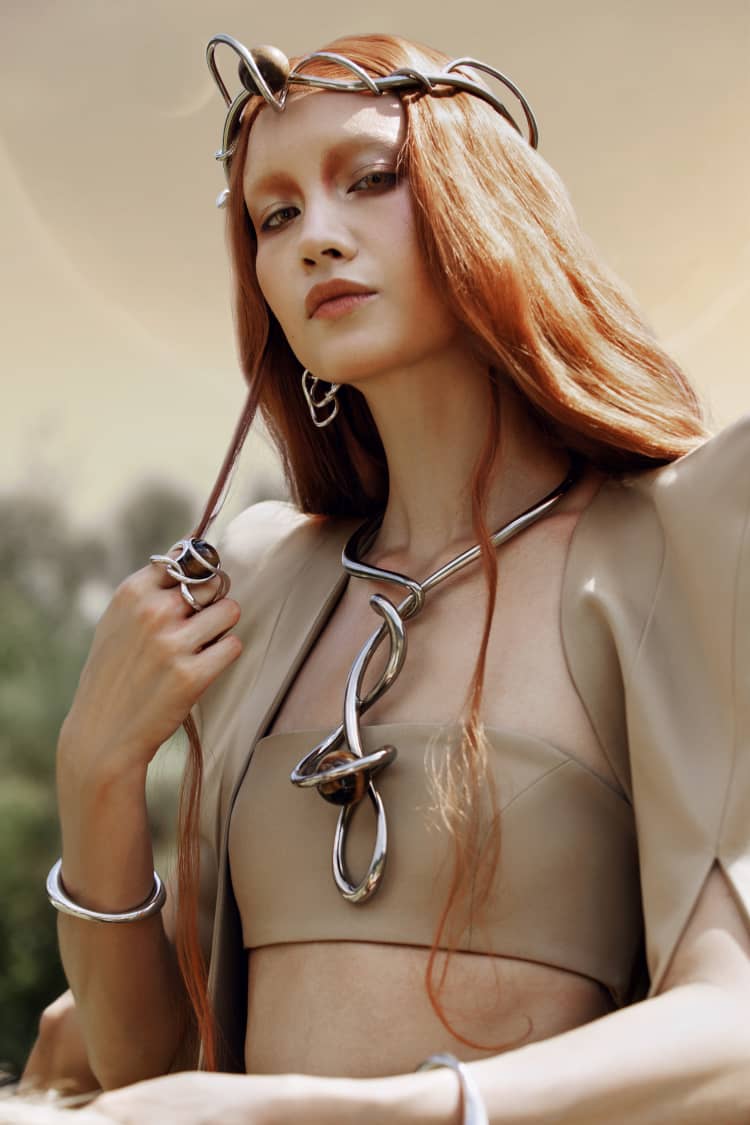
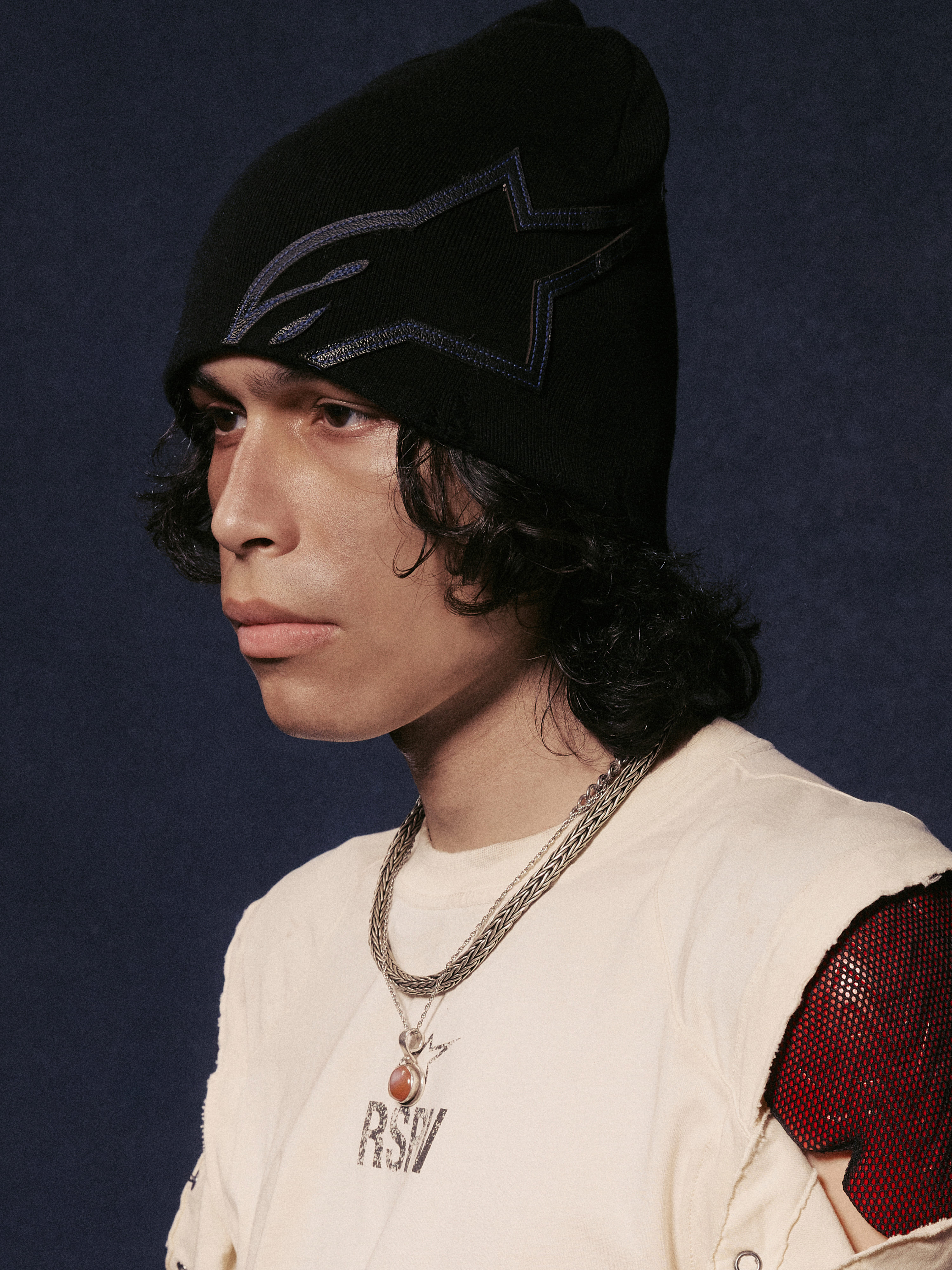
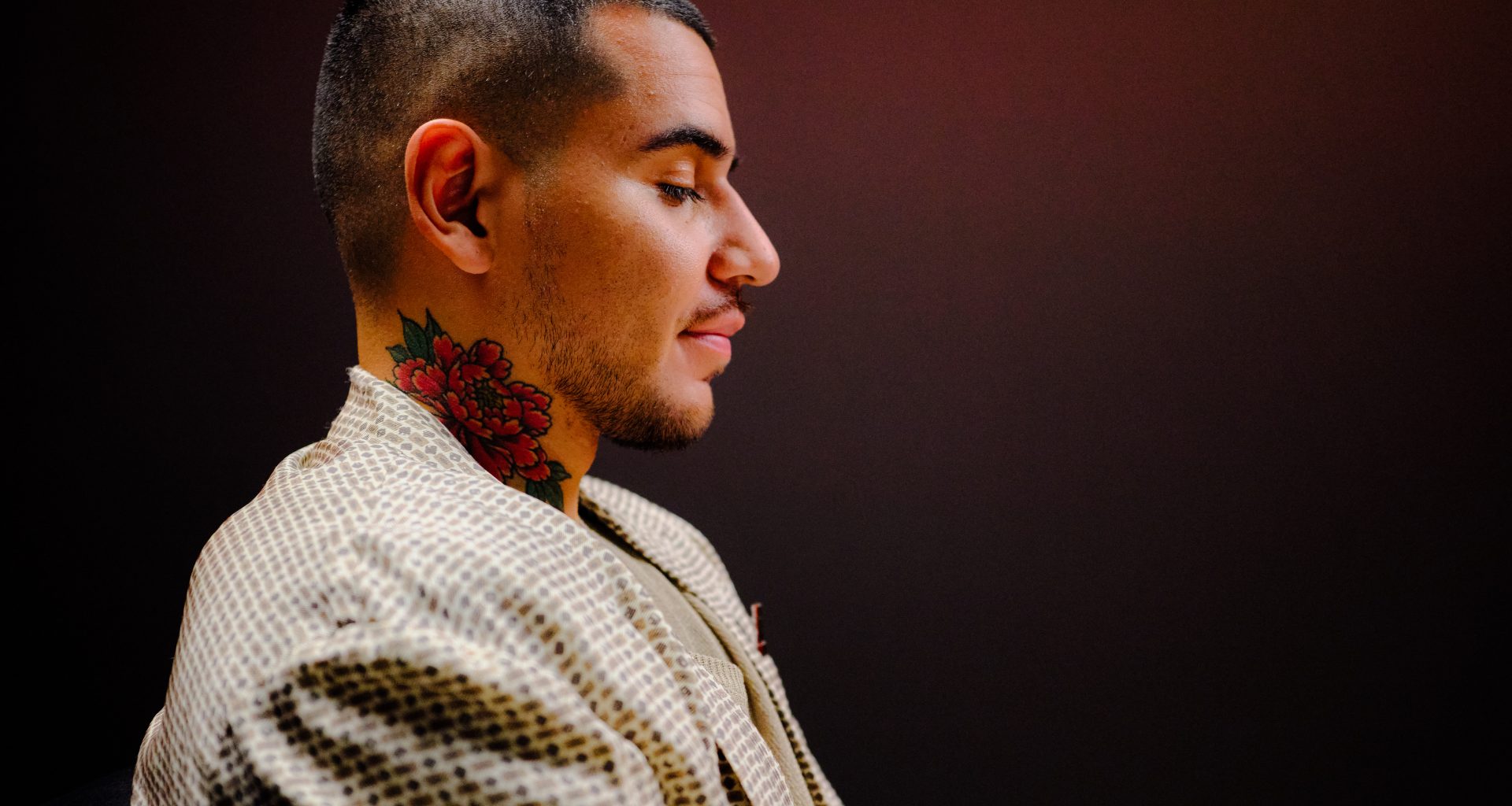
Featuring Jonathan Bailey, J Balvin, Carlos Sainz and Simon Squibb, the new video series turns portraiture into a conversation about ambition, identity and the person behind the public image. We speak to its host about the art of looking closer.
What happens when everyone thinks they know you?
In a culture obsessed with visibility, recognition has become a strange kind of intimacy. We know the faces, follow the careers, collect the highlights. Yet the person behind the image remains largely out of frame. With The Power of WILL, Armani beauty turns that distance into the starting point for a different kind of conversation.
Hosted by artist and digital storyteller Devon Rodriguez, the new video series brings together four of the Giorgio Armani fragrance I WILL ambassadors: actor Jonathan Bailey, musician J Balvin, Formula 1 driver Carlos Sainz and entrepreneur Simon Squibb. Each encounter begins with a portrait and opens into something less polished than a campaign image: a conversation about the decisions, doubts and moments of conviction that shape a life.
Rodriguez knows the power of an unexpected encounter. He first built his global following by drawing strangers on the New York City subway, turning brief exchanges with people who had no reason to perform into portraits that reached millions. His practice has always depended on a simple premise: looking at someone is not the same as seeing them.
That distinction gives The Power of WILL its central tension. Ambition is usually presented through its finished product: the career, the achievement, the version of ourselves that finally makes sense to the outside world. Rodriguez shifts the focus to what happens before the outcome, when determination is less a declaration than a decision to keep going without knowing where it will lead. As Jonathan Bailey reflects in the series, the fear and failures behind a finished performance rarely make it into the final picture.
Drawing becomes a way to get closer. As Rodriguez sketches, conversation, gestures and fleeting expressions begin to reveal dimensions that a carefully constructed public persona cannot contain. The portrait captures one impression; the moving image preserves the moments that made it possible. Together, they ask a more interesting question than who someone is: what has made them that way?
The series also arrives at a moment when attention is increasingly measured in seconds. Rodriguez works within that reality without surrendering entirely to its pace, allowing the process of drawing to create a rare space for curiosity, vulnerability and genuine exchange.
The Power of WILL concludes on 25 October with an episode devoted to Rodriguez himself, turning the camera towards the artist whose own journey began with a sketchbook and strangers on the subway. The shift feels fitting. Behind every image is another story, and even the person holding the pencil is still becoming.
We spoke to Devon Rodriguez about celebrity, the intimacy of portraiture, the pressure of digital culture and the determination to stay connected to the person you were before the world started watching.
DEVON RODRIGUEZ ON THE POWER OF WILL
With The Power of WILL, you step into a world where ambition is often carefully curated and public personas can become almost as recognisable as the people behind them. What interested you most about exploring the space between who we are and who the world believes us to be?
What interests me is how much of the real person you can miss when you feel like you already know them. You might recognise their face or know their accomplishments, but that doesn’t really tell you who they are, what keeps them going, what they’ve struggled with or what they deeply care about. As an artist who loves capturing people, I’ve always been curious about those things. With The Power of WILL, I wanted to explore the person behind the ambition. There’s something powerful about seeing someone who seems larger than life and recognising a real human feeling or experience you share with them.
Your collaboration with Armani beauty brings together portraiture, conversation and the idea of personal determination. How did you translate the spirit of I WILL into your own visual language, and what did you want your portraits to reveal that a traditional campaign image might leave unseen?
For me, “I WILL” starts long before anyone sees the result. It’s the decision to keep showing up for something you believe in, even when there’s no guarantee it will work. I connect with that through my own journey with art, so I approached the portraits with curiosity about what that determination looks like in each person. Drawing while we talk allows the conversation to influence what I notice about them. I got to see things like their focus, their warmth and the way their expression changes when something matters to them. I wanted the finished portrait and the conversation together to give people a sense of the life and personality behind a recognisable face.
You have built a distinctive practice around observing people, often capturing something unexpectedly intimate in a brief encounter. How does that process change when you are sitting across from someone as globally recognisable as Jonathan Bailey, J Balvin or Carlos Sainz? Does celebrity make it harder to see the person, or does it give you more to look beyond?
Of course, I’m aware of what they’ve accomplished, and I respect the work it took to get there, but I still see celebrities as people. My approach starts with the same curiosity I bring to someone I meet on the subway or the street. I want to understand who’s sitting in front of me and give them room to be themselves. Celebrity means there’s already a familiar image of that person in people’s minds, so I try to stay open instead of letting that image guide the whole encounter. Drawing helps with that. It gives us something to share, and the conversation can feel more natural as it unfolds.
Your Passion
A portrait is never simply a record of someone’s appearance; it is also an interpretation of how they are seen. During this project, was there a particular moment, gesture or admission that changed the way you understood one of your subjects, even if only for a second?
What interests me most is often a small shift, like the way someone’s face softens, how they move their hands when they’re excited or the pause before an answer. Those details can change how you understand the person you’re drawing.
I’ve always been an artist, and drawing and painting have always been my foundation. Through projects like this, though, I’ve started to see the video and the portrait as parts of the same artwork. I’m trying to capture someone’s energy and spirit through their likeness, their voice, their gestures and the little expressions that happen during a genuine conversation. The drawing holds one impression of them, while the video lets you experience the moments that helped shape it.
Your journey from drawing strangers on the New York subway to collaborating with an international luxury house is a remarkable shift in scale. How do you protect the spontaneity and human connection that defined your early work when the setting becomes more polished, the production more elaborate and the audience considerably larger?
I keep coming back to what made me want to draw people in the first place: curiosity and connection. The setting has changed a lot, of course, but at the end of the day, I’m still just sitting across from another person with a sketchbook in front of me, trying to pay attention. I prepare, but I also leave room to follow something unexpected they say or ask a question I hadn’t planned. That’s where a lot of the connection happens. Working with Armani beauty is an incredible opportunity, and I want to bring that same openness into it. Whatever the scale, the encounter still has to feel personal to me.
There is something fascinating about the tension between an image that takes hours to create and a digital culture that can consume it in seconds. As both an artist and a creator, how do you balance the slower demands of making something meaningful with the pressure to keep people watching, sharing and moving on?
My videos are usually five to ten minutes long, which is quite long in a world built around short-form content. I try to keep them interesting through the editing, speeding up parts of the drawing process and choosing the most meaningful moments from the conversation. But I also want to leave enough space for people to settle into the experience. Ideally, the video feels like a little journey you take with me. I hope my videos move well enough to hold your attention while still having the depth and almost meditative quality that I’ve always loved about making art.
Your work often begins with looking closely at someone else, while your own story has increasingly become part of the conversation. Has becoming the subject of public attention changed the way you see the people you draw, or made you more conscious of the responsibility that comes with representing someone else’s identity?
It’s made me more aware of how much of a person exists outside the part the public sees. When people know your work or a piece of your story, it’s easy for them to feel like they know all of you. Experiencing that myself has made me more thoughtful about how I represent other people. Someone is giving me their time and trusting me with a part of themselves, and I want to treat that with care. A portrait will always be my interpretation of an encounter, but I want the actual person I’m working with to feel recognised in it. That means truly listening closely and allowing them to surprise me.
The phrase I WILL sounds like a promise, but it can also feel like a challenge: a commitment to the person you hope to become, rather than the person you already are. Looking back at the artist you were when you first began drawing strangers, what would you tell that younger version of yourself about ambition, success and the things that are worth holding on to?
I’d tell him that the hours he’s spending drawing matter, even when it feels like nobody is paying attention. Growing up in the South Bronx, I couldn’t have imagined all the places art would take me, but I knew that I loved it so much that I just had to keep going. I’d tell him to hold on to that love and stay open to learning. Ambition can take you far, but you also have to appreciate your life while you’re building it. It’s important to keep genuine, good people around you who believe in you and to always appreciate the simple pleasure of making something. I still want to achieve so much, of course, but I also like to keep things simple, and I want to stay connected to that Bronx kid who picked up a pencil because drawing just made him happy.