Irving Penn, the faces we remember, the flowers that fade, and everything in between
What connects a face caught in darkness to a flower beginning to decay? What makes us keep looking at something whose beauty is already changing?
Last weekend, while visiting PENN & FASHION at the Maison Européenne de la Photographie in Paris, I found myself returning to a thought that gradually became impossible to ignore. I kept moving between two apparently distant territories in Irving Penn’s work: his extraordinary portraits, with their angular compositions and almost architectural chiaroscuro, and his celebrated flower photographs, those intricate, intensely beautiful botanical studies that once appeared in the pages of Vogue.
One belongs to the human world, charged with psychology, identity, and the mystery of a face. The other seems to inhabit a different universe: organic, sensual, decorative, seemingly untouched by the complications of human presence.
Yet the longer I looked, the less separate they became.
In Penn’s portraits, a face emerges from the shadows as if light were discovering it for the first time. In his flowers, petals open, curl, bruise, and collapse with an equally dramatic precision. Both are isolated from the world around them. Both occupy the frame with an almost unnerving intensity. Both seem to hold something that the camera can approach but never completely explain.
I began to see the flowers as portraits, and the portraits as something closer to still life. Not because Penn reduced people to objects, or flowers to symbols, but because he gave both the same extraordinary attention. He was interested in presence: how it occupies space, how it changes under light, how much of it remains when everything unnecessary has been removed.
A face ages. A flower fades. Neither can negotiate with time.
This is where Penn’s work becomes much more than a story about fashion photography. It becomes a reflection on beauty as a temporary condition, on the relationship between visibility and identity, and on our persistent desire to preserve what is, by definition, passing.
The connection also feels unexpectedly personal today. In a visual culture that seems increasingly uncomfortable with imperfection, Penn’s photographs offer a different kind of seduction. They do not promise permanence. They make us look more closely at its absence.
THE FACE IN THE CORNER
Before Penn became synonymous with the visual language of haute couture, he was already questioning what a portrait could be.
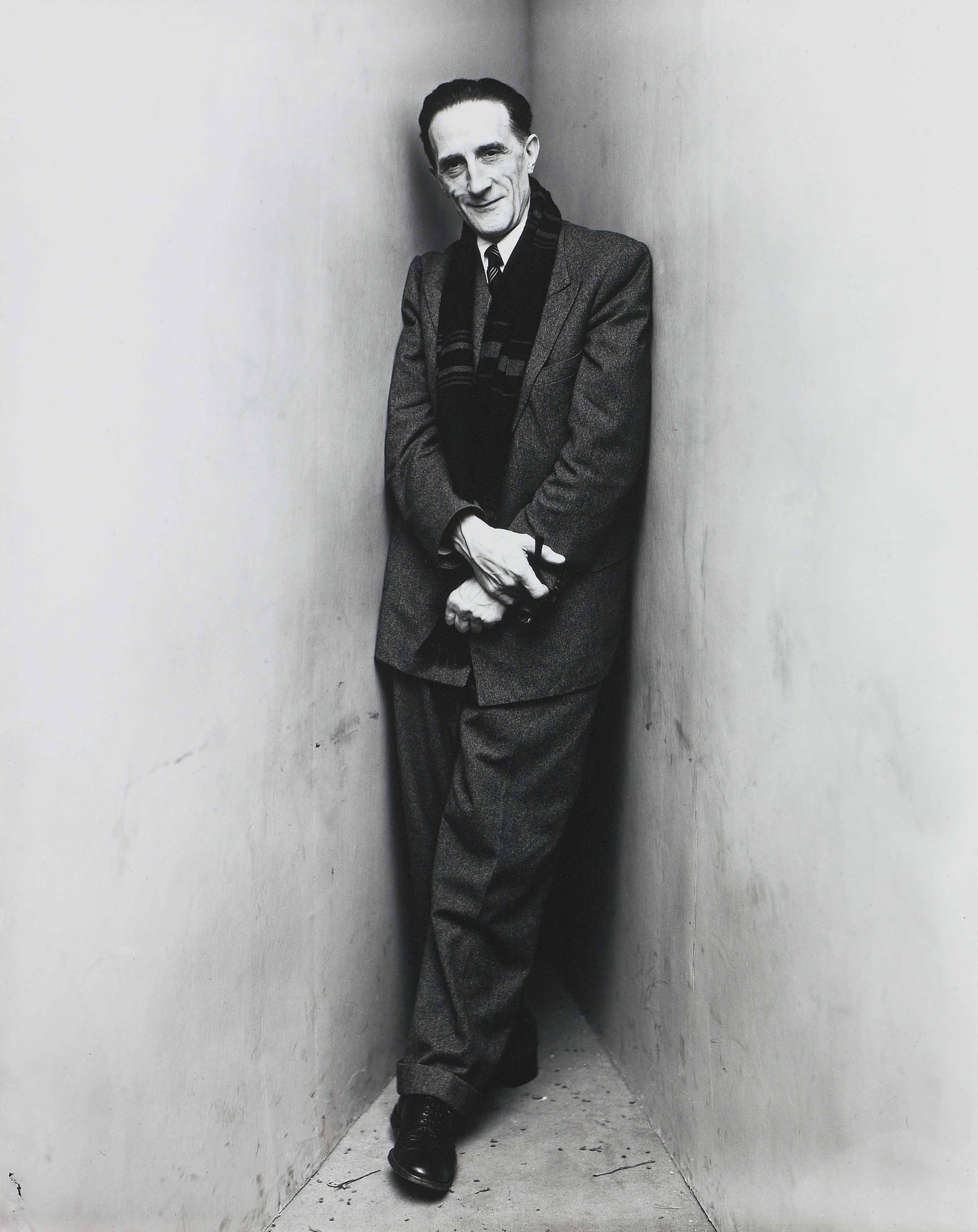
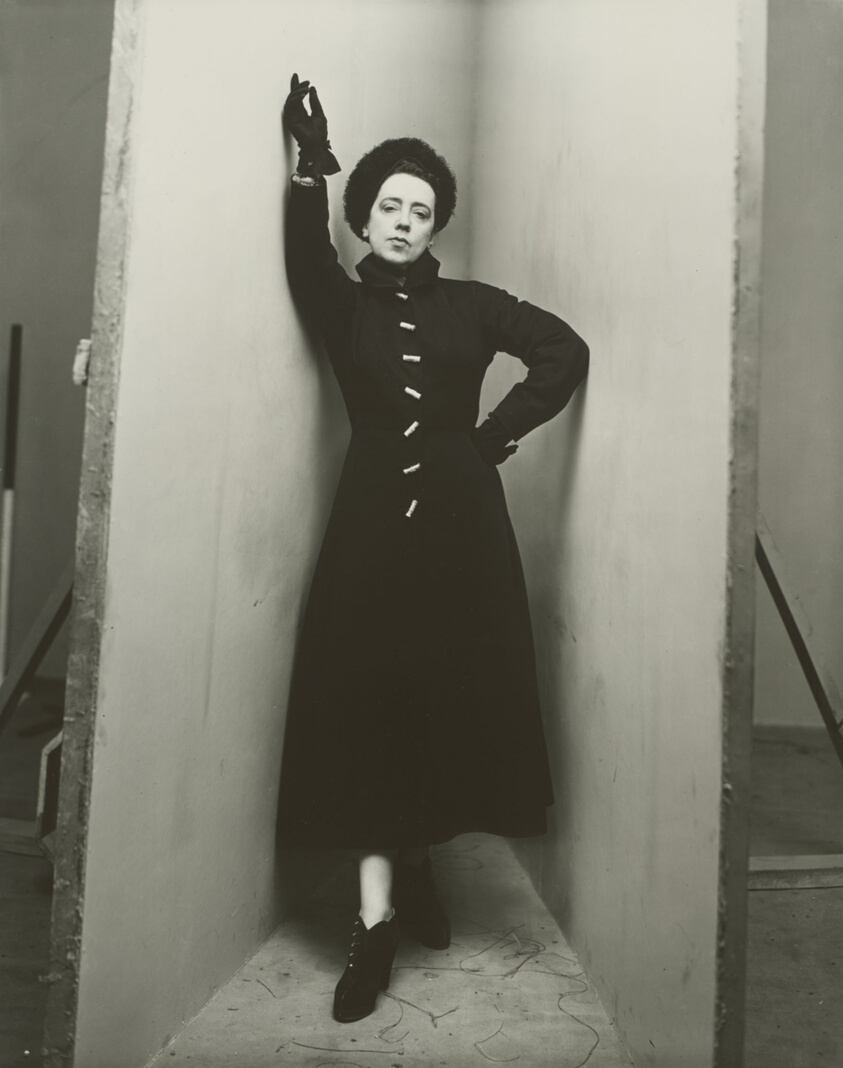
In the late 1940s, he began photographing artists, writers, performers, and cultural figures in a deliberately restrictive setting. Two movable studio walls were pushed together to form a narrow angle. The sitter was placed inside this improvised corner, with very little room to move. Marcel Duchamp, Elsa Schiaparelli, Georgia O’Keeffe, Igor Stravinsky, Martha Graham, and W. H. Auden were among the figures who entered this unusual photographic space.
The setup was almost aggressively simple. No elaborate interiors, no reassuring context, no props designed to explain a personality. Just two walls, a body, a face, and the tension created by confinement.
The corner became a psychological device. It exposed posture, hesitation, authority, discomfort. It made the act of being photographed feel less like a performance and more like a confrontation. Penn understood that a portrait did not need to tell us everything about someone. It needed to make us feel that something was at stake.
The resulting images possess an extraordinary physical intensity. The geometry of the walls, the pressure of the composition, the controlled light, and the sitter’s presence create photographs that seem almost sculptural. A shoulder becomes a line. A face becomes a landscape. A shadow is no longer an atmospheric detail; it becomes part of the subject.
Looking at these portraits now, I am struck by their unexpectedly contemporary darkness. Their chiaroscuro has an almost gothic charge: dramatic without being theatrical, intimate without being comforting, beautiful without being entirely reassuring. The faces seem suspended between revelation and concealment. They are close enough to feel human, yet somehow remain unknowable.
That quality becomes particularly interesting when we consider Penn’s later work. The darker, more introspective dimension of his visual language seems to anticipate, in retrospect, some of the neo-Gothic sensibilities that would become more visible in fashion and image-making toward the end of the twentieth century. This is not a formal label to impose on his photography. It is an atmosphere, a way of reading the tension between the illuminated body and the darkness surrounding it.
Penn did not need theatrical excess to create drama. He needed a face, a corner, and a very precise understanding of light.
FLOWERS ARE NOT INNOCENT
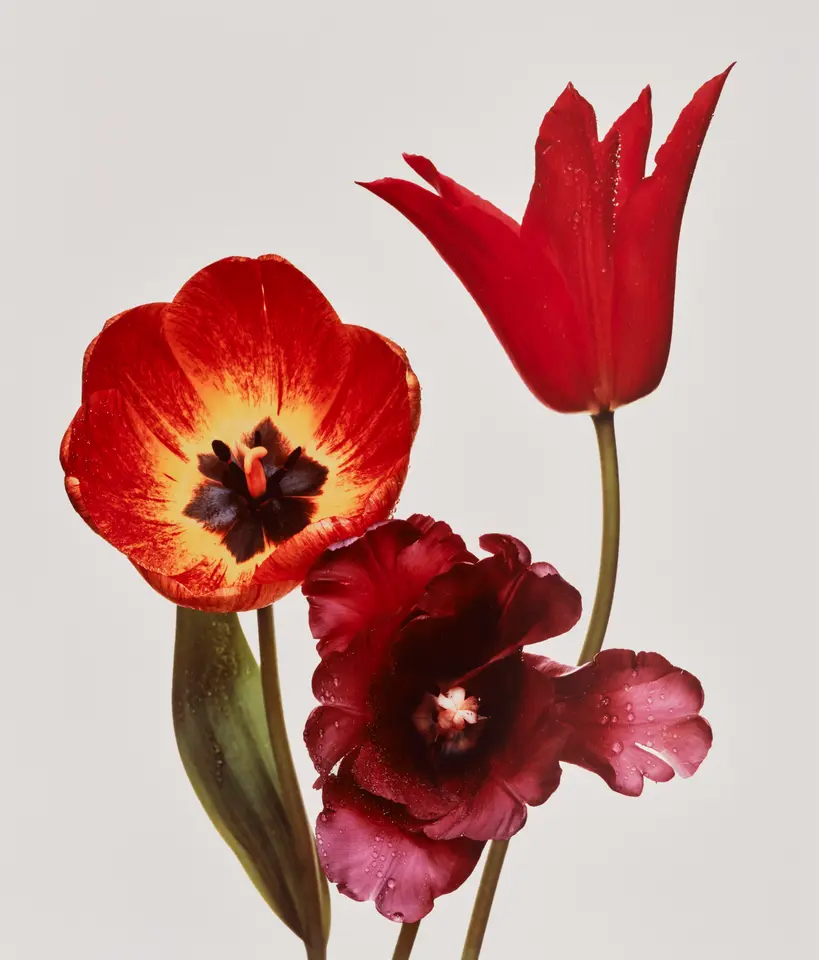
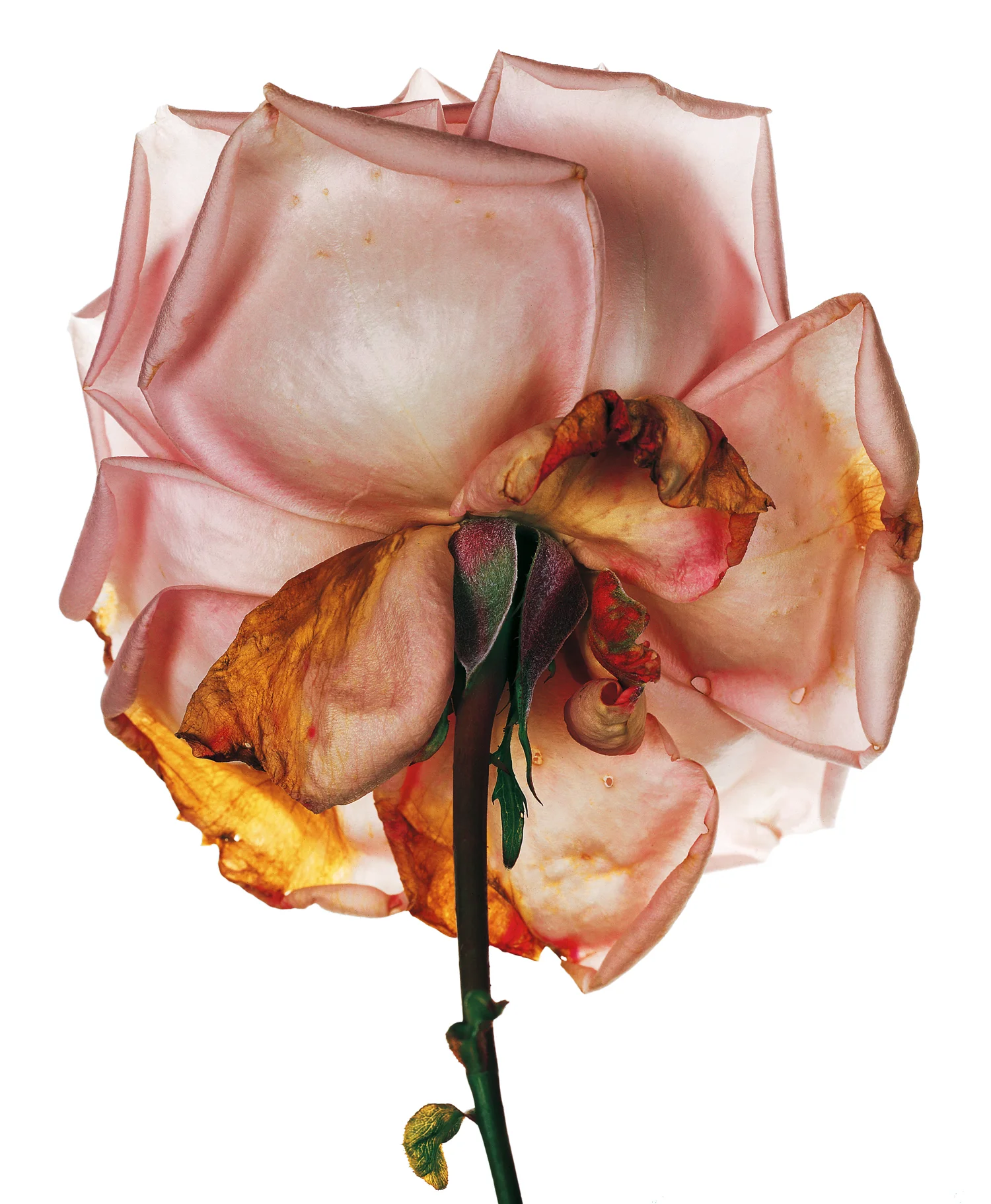
In 1967, Vogue commissioned Penn to photograph flowers for its Christmas issues. Tulips, poppies, peonies, orchids, roses, lilies, begonias: each received the attention usually reserved for a couture silhouette or a celebrated face. The commission continued through 1971, becoming one of the most distinctive bodies of still-life photography in his career.
The original context matters. Flowers entered Penn’s work through an editorial assignment, but he transformed the brief into something much more personal. What could have remained a seasonal exercise in decorative beauty became a sustained investigation of form, color, texture, and the passage of time.
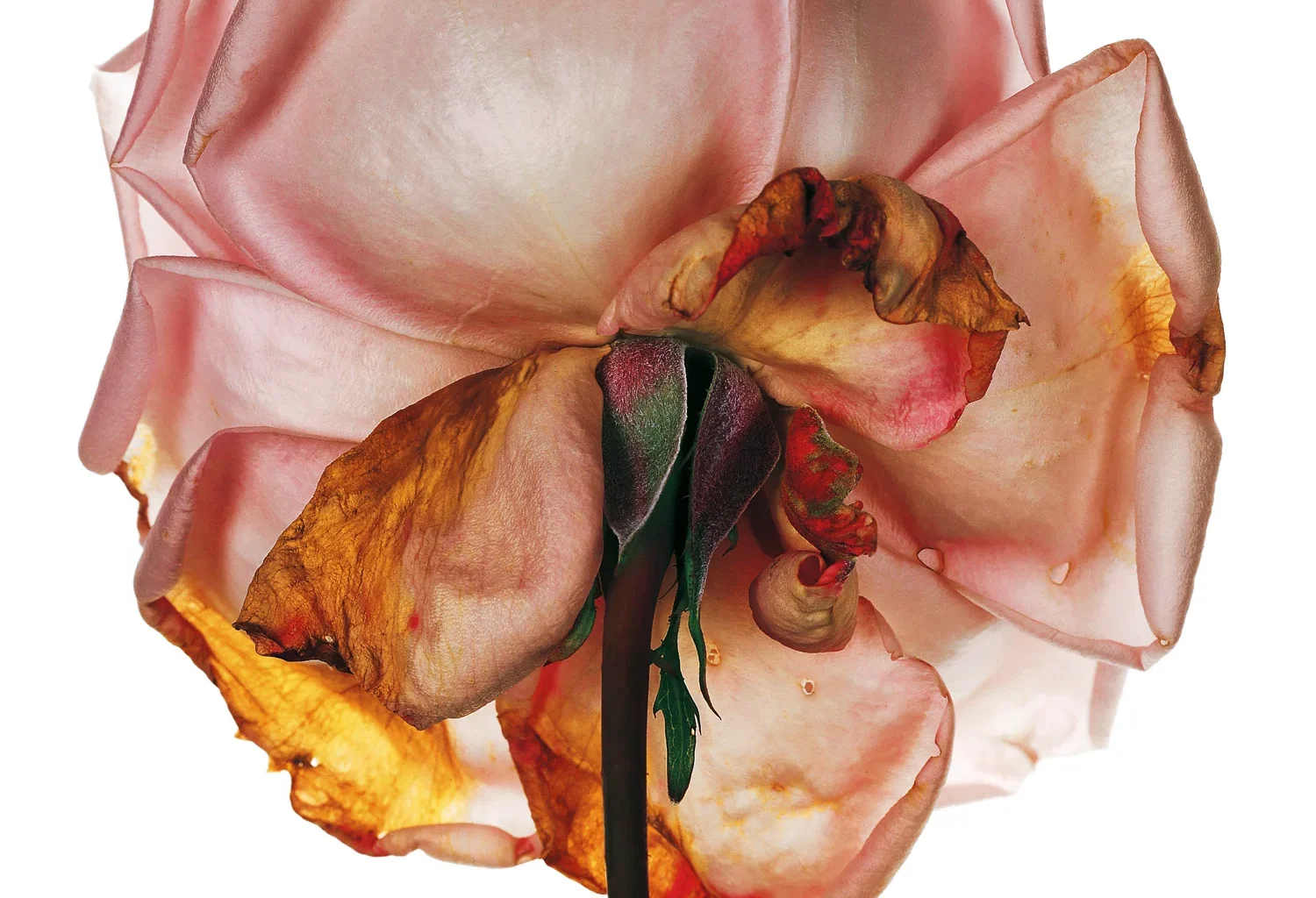
These are not polite flowers. They are not the anonymous blooms of a luxury hotel lobby or the familiar symbols of effortless romance. Penn isolates them against simple backgrounds and looks at them with an almost forensic intensity. Petals become folds; stems become graphic lines; the center of a flower reveals an intricate architecture. Their structures can feel strangely abstract, sometimes even unfamiliar.
He was particularly drawn to specimens that had begun to deteriorate. Petals developed spots, edges turned brown, stems bent, and the perfect arrangement of the flower began to break apart. Penn did not conceal these transformations. He understood that decay could produce its own extraordinary forms.
The flower was not beautiful despite its deterioration. It was beautiful partly because of it.
This is where the parallel with the portraits becomes almost impossible to ignore. A face and a flower are both vulnerable surfaces. One carries the history of expression; the other, the history of growth. One can return our gaze, while the other remains silent. Yet Penn gives both the same formal discipline, the same seriousness, the same right to occupy the frame.
A flower becomes a portrait without a sitter. A portrait becomes a still life without losing its pulse.
The philosophical connection is deceptively simple: beauty is not a fixed state. It is a temporary arrangement of matter, light, and time. Penn does not try to rescue his subjects from that condition. He gives it visibility.
THE WOMAN WHO WAS NEVER JUST A MUSE
Any conversation about Penn’s women has to begin with Lisa Fonssagrives-Penn. Their relationship was personal, but reducing her to the role of a muse would miss the most important part of their collaboration.
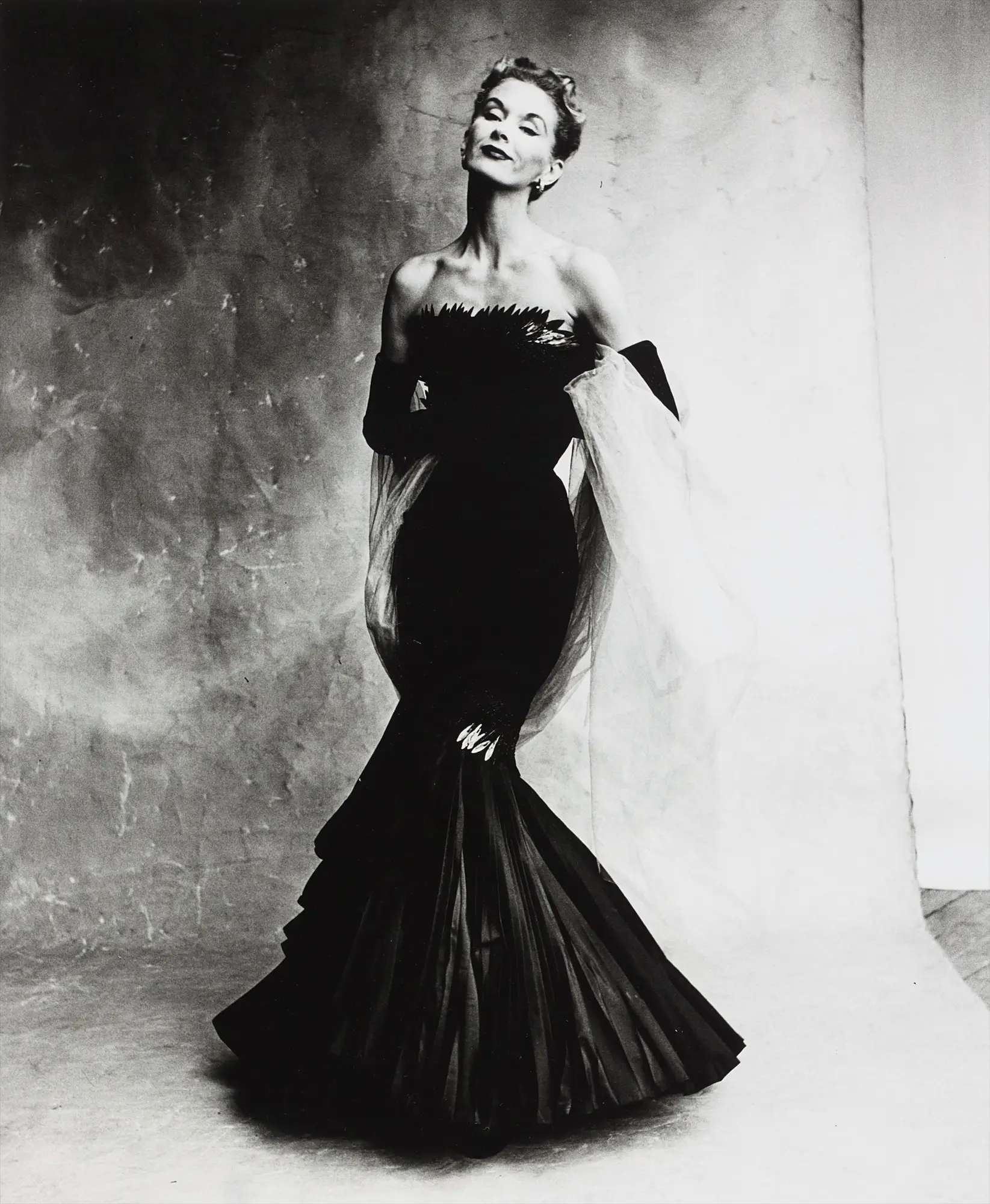
Born in Sweden and trained as a dancer, Lisa brought an exceptional understanding of balance, movement, and physical composition to fashion photography. Penn first met her in 1947. They married in 1950, after working together in Paris. Their creative relationship was built on an unusually sophisticated understanding of the body: how it could occupy space, how a garment could transform it, and how a gesture could alter the entire meaning of an image.
In photographs such as Harlequin Dress and the sculptural Rochas Mermaid Dress, Lisa is not simply displaying a beautiful garment. She is interpreting its construction. Her posture, her balance, the direction of her body, the relationship between fabric and skin: everything contributes to the final image.
She was not a mannequin waiting to be dressed. She was an active presence in the making of the photograph.
Lisa remained a central figure throughout Penn’s life and work. Their partnership also offers a different understanding of the word muse: not an ornamental figure inspiring an artist from a distance, but a person whose intelligence, physicality, and creative sensibility helped shape an entire visual language.
The 1950s brought other defining faces into Penn’s world: Jean Patchett, Dovima, Dorian Leigh, and Suzy Parker, among others. Each belonged to a different chapter in the evolution of postwar fashion photography. Penn was not simply looking for the conventionally beautiful model. He was looking for a presence capable of holding an image together.
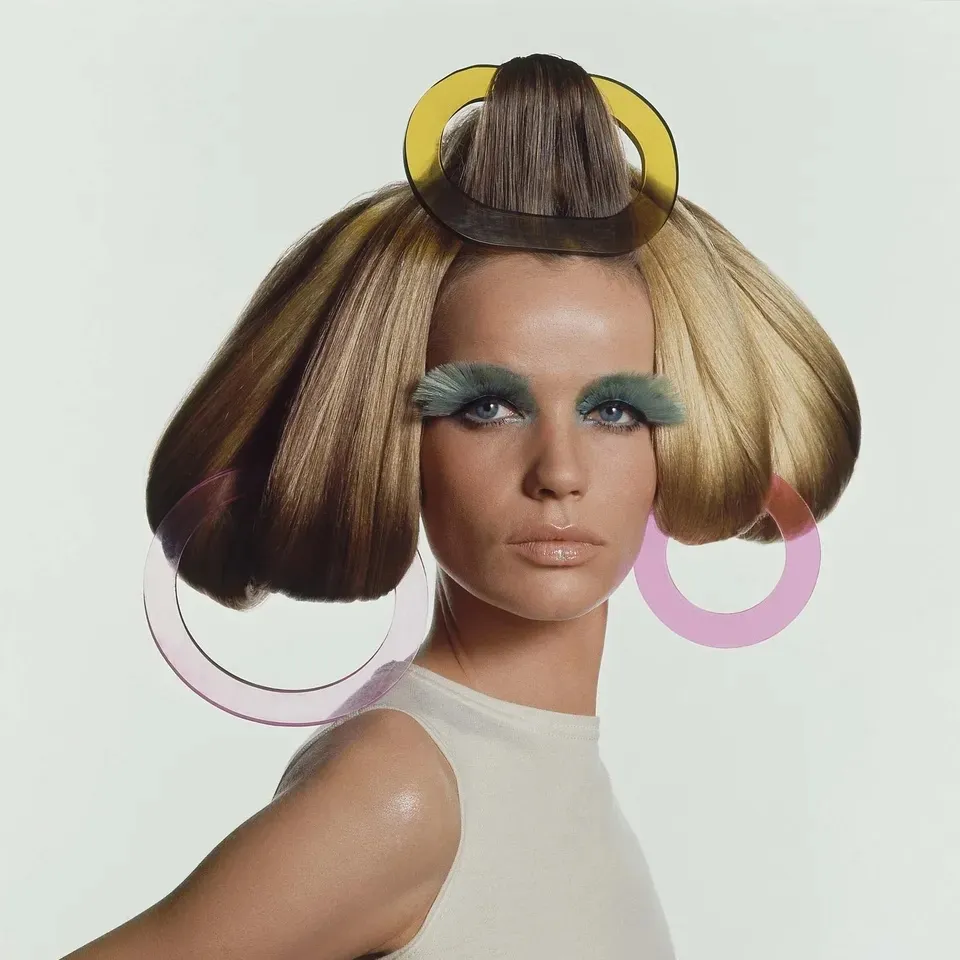
The 1960s introduced Veruschka, whose extraordinary height, theatrical physicality, and capacity for transformation made her one of fashion’s most unforgettable figures. Her presence could be almost otherworldly. She understood the body as a medium, something capable of changing identity through gesture, posture, and movement.
The news of Veruschka’s death, confirmed on November 25, 2026, gives this chapter an unexpected emotional resonance. Vera von Lehndorff, known to the world as Veruschka, died at 87. She was not only one of the defining models of the 1960s, but also an artist who consistently resisted being confined to a single image of beauty. Her work with body painting and photographic transformation extended far beyond the conventional boundaries of modeling. Her career was, in many ways, a lifelong refusal to remain visually fixed.
Her passing makes the connection with Penn’s portraits particularly poignant. Both understood that a face is never simply a face, and that beauty becomes more interesting when it is allowed to change. Veruschka could become another person, another creature, another surface. Penn could reveal the strangeness already present in a face without needing to transform it.
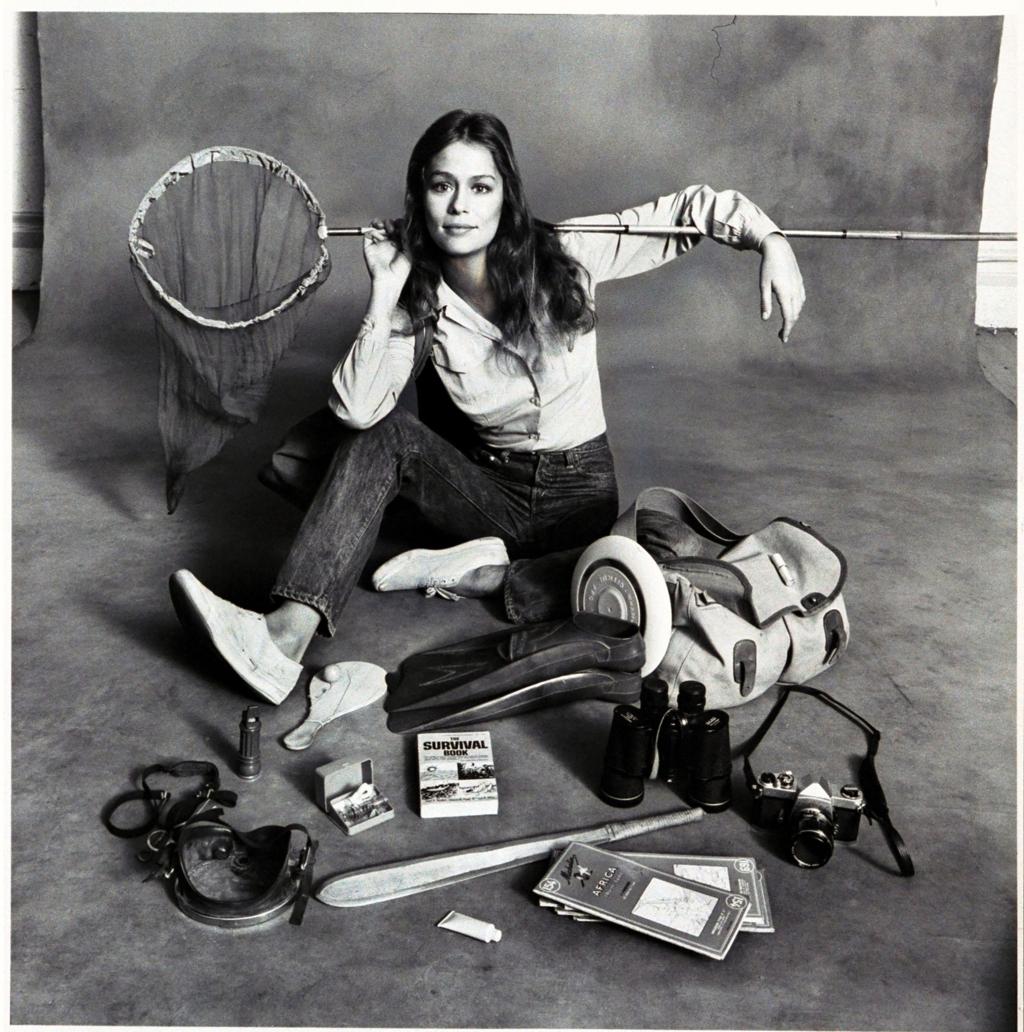
Lauren Hutton brought a different kind of modernity to his photographs: an unmistakable face, an ease that resisted conventional perfection, and a presence that did not need to be overworked. Marisa Berenson, Naomi Sims, and other models of the following decades expanded the visual vocabulary of fashion imagery.
Later, Kate Moss, Naomi Campbell, Christy Turlington, and Amber Valletta entered the broader landscape of Penn’s fashion work. Their appearances belong to different moments and different kinds of collaboration; they should not all be described as personal muses in the same sense as Lisa. What connects them is the way Penn could recognize a face as a formal presence, something capable of sustaining an image without being swallowed by it.
His women were never simply there to make clothes desirable. They were part of the architecture.
PARIS WAS NOT A BACKDROP
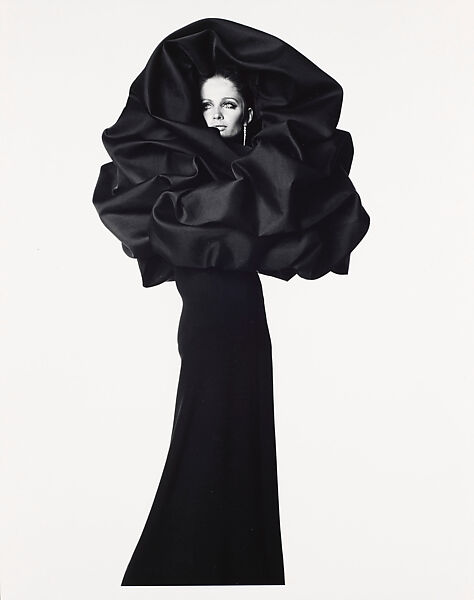
Penn’s relationship with Paris is one of the most revealing chapters of his career, precisely because it was not especially interested in the Paris of postcards.
In 1950, Vogue sent him to photograph the haute couture collections. Alexander Liberman, the magazine’s influential art director, had already recognized Penn’s unusual visual intelligence and encouraged him to move beyond still life and graphic work. Paris was the next step.
The assignment placed Penn inside the most prestigious fashion system of the period, at a moment when postwar couture was reasserting its cultural power. Christian Dior’s New Look had transformed the silhouette of the late 1940s; Balenciaga was developing an increasingly architectural approach to clothing; the Parisian maisons were once again central to the international fashion conversation.
Penn, however, was not particularly interested in the social spectacle surrounding the collections. The crowds, the photographers, the hectic atmosphere of the salons were not where he wanted to work. He preferred a quieter environment, one in which he could control the relationship between the garment, the model, and the light.
Vogue arranged a daylight studio for him on the rue de Vaugirard, on the top floor of an old photography school. The space was far from glamorous. Penn discovered an abandoned theater curtain and used it as a backdrop. The garments arrived from the couture houses, often delivered by bicycle couriers, and were returned to the salons after the photographs were made.
The result was a new way of seeing fashion.
Balenciaga, Dior, Jacques Fath, Rochas, and other designers entered Penn’s visual universe, but the clothes were no longer presented as accessories to an elaborate Parisian fantasy. The background receded. The architecture of the garment became visible. Volume, cut, texture, proportion, and the relationship between fabric and body took center stage.
The old theater curtain, which Penn continued to use for decades, became an unlikely witness to this transformation.
Paris, for Penn, was not a decorative location. It was a working environment, a particular quality of light, a network of couturiers, models, editors, couriers, and craftspeople. His Paris was made of gestures and materials, of the people who constructed beauty and the people who wore it.
The same studio also became the setting for one of his most important personal projects.
THE COUTURE DRESS AND THE WORKER’S APRON
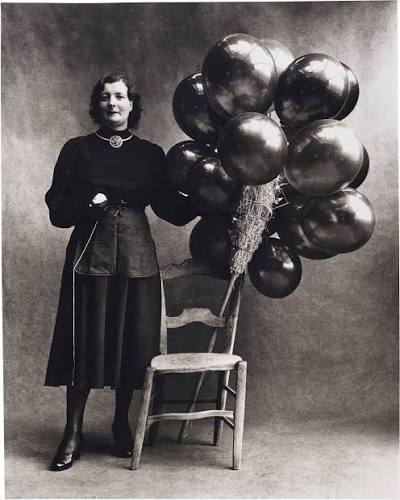
Alongside the fashion assignment, Penn began photographing people in their professional clothes. Butchers, bakers, waiters, street vendors, and other working people appeared in front of the same theatrical curtain, photographed with the same directness and formal discipline as the couture models.
The project, Small Trades, extended to London and New York and became one of his most revealing bodies of work.
The visual connection is striking. A couture model and a tradesperson could occupy the same photographic universe. A Balenciaga dress and a worker’s apron could be treated with equal seriousness. The distinction between their social status remained obvious, but Penn refused to make one subject visually more worthy than the other.
This is where his work becomes particularly interesting from a sociological perspective.
Fashion photography is often a language of aspiration. It shows us what to desire, what to wear, what kind of life to imagine. Small Trades complicates that hierarchy. The worker’s uniform becomes a form of identity, just as the couture dress does. The tools, the marks of labor, the posture developed through years of work; all become worthy of close observation.
Penn did not erase class differences. He gave different social worlds equal photographic dignity.
The couture dress and the worker’s apron were not interchangeable objects. They were, however, both products of human labor, construction, and identity. In Penn’s hands, clothing became more than style. It became evidence of a life.
The same gaze that could reveal the mystery of a flower or the psychological complexity of a famous face could also find extraordinary visual meaning in an ordinary working uniform.
That is a much broader definition of beauty than fashion magazines are usually willing to offer.
VOGUE: A MAGAZINE THAT MADE IMAGES MATTER
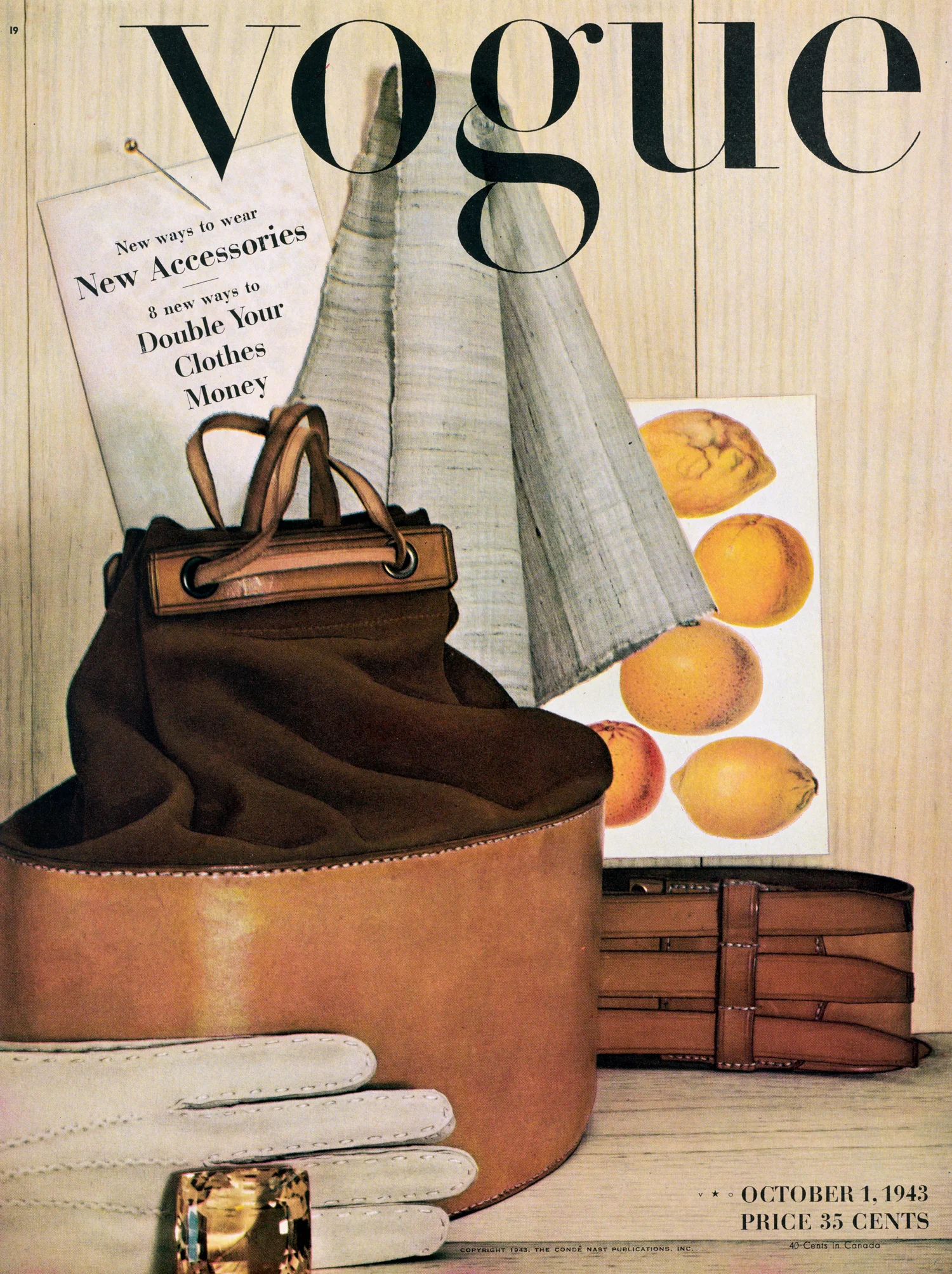
Penn’s relationship with Vogue lasted more than six decades. Understanding that relationship is essential to understanding his work, but also the cultural importance of the magazine itself.
When Penn joined Vogue in 1943, he was not yet the fashion photographer the world would come to know. He had studied design at the Philadelphia Museum School of Industrial Art and worked under Alexey Brodovitch, the influential art director of Harper’s Bazaar. His education was fundamentally graphic: composition, typography, visual rhythm, the relationship between image and page.
Alexander Liberman, who became Vogue’s art director in 1943, recognized Penn’s unusual eye and encouraged him to photograph. His first published color cover appeared in October of that year, featuring a still life rather than a model. The choice already suggested a photographer who was interested in the visual potential of objects, not simply in fashion as a display of clothes.
Liberman was essential to Penn’s development. He understood that photography could be a form of authorship, and that an editorial assignment could become a space for experimentation. The relationship gave Penn a platform, but it also gave him room to develop a language that was distinctly his own.
The Vogue of the 1940s and 1950s was not merely a catalogue of clothes. It was a cultural institution where fashion, photography, painting, design, architecture, cinema, and literature could meet. Its pages helped establish visual codes and circulate ideas about modernity, taste, class, femininity, and consumption.
The magazine was also part of a larger postwar transformation. Dior’s New Look in 1947, the return of couture after the war, the growth of consumer culture, and the emergence of a new international visual language all contributed to a moment when fashion became a particularly visible expression of social change.
A fashion story could be a collaboration between a photographer, an editor, a stylist, a designer, and an art director, but the final image could still carry a distinct artistic signature. Penn was one of the photographers who made that possibility unmistakable.
His images did not simply illustrate a product. They changed the way the product could be understood.
The physical magazine mattered, too. Its paper, typography, sequence, and scale gave photographs a context in which they could be revisited and studied. An image was not simply another item in an endless stream. It belonged to an editorial argument, to a carefully constructed visual world.
This is one of the most interesting differences between Penn’s era and ours. The contemporary image is often expected to perform instantly, to capture attention in seconds and compete with everything around it. The magazine page could give an image room to breathe.
Penn understood that an image could be seductive without being immediate, and memorable without being loud.
THE DESIGNERS HE SAW DIFFERENTLY
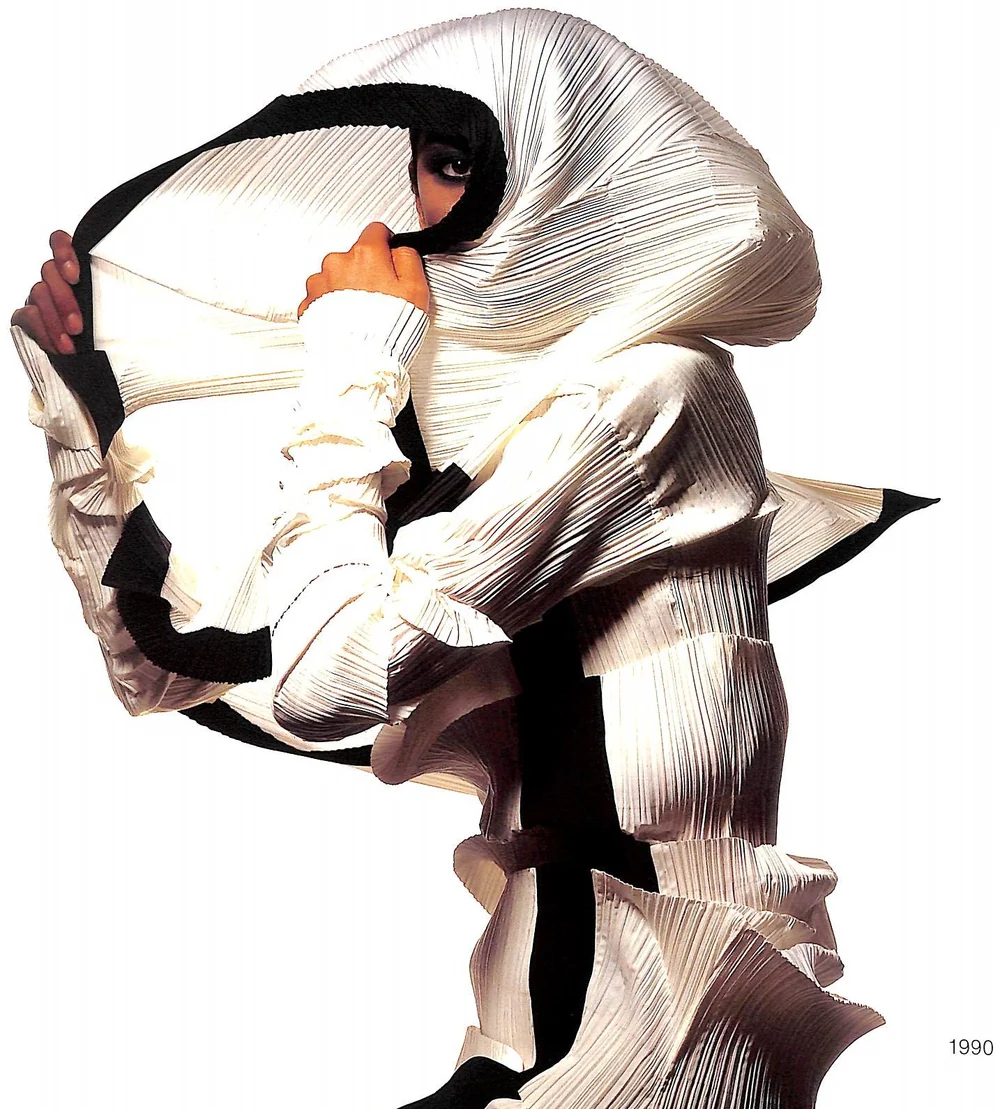
Penn had strong aesthetic preferences, and the designers whose work resonated with him often shared an interest in construction, volume, and the sculptural possibilities of clothing.
Cristóbal Balenciaga was among the most significant. His approach to fashion was architectural: the garment was not simply something that followed the body, but a structure capable of transforming it. Penn recognized this immediately. His photographs reveal the construction of a dress rather than merely recording its appearance.
Christian Dior offered another kind of visual language. The New Look had redefined the postwar female silhouette through proportion, volume, and an emphatic relationship between waist, skirt, and body. Marcel Rochas, whose Mermaid Dress Penn photographed on Lisa in Paris in 1950, provided another opportunity to explore the relationship between fabric, body, and sculptural form.
In later decades, Penn photographed designers including Emanuel Ungaro and André Courrèges, followed by Yves Saint Laurent and Karl Lagerfeld for Chanel. His fashion work continued to engage with designers who were reshaping the visual language of their time, including John Galliano for Dior and Christian Lacroix.
It is important not to turn Penn into a romantic myth of the completely independent photographer who only photographed whoever he personally selected. He worked within an editorial system, and Vogue had its own priorities, commissions, and creative direction. His autonomy developed through the trust he earned, the freedom Liberman gave him, and his increasingly distinctive ability to interpret a collection.
His preferences were unmistakable. He was drawn to designers whose clothes offered something to think about visually: a silhouette, an unexpected construction, a new relationship between fabric and body. He was less interested in documenting the social event of fashion than in discovering what a garment could become inside the frame.
The collaboration with Issey Miyake took this relationship to an entirely different level.
Beginning in 1986, Penn and Miyake developed a collaboration that continued for thirteen years. It was built on an unusual degree of creative independence. Miyake sent garments to Penn in New York; Penn photographed them without attending the fashion shows, while the designer did not need to be present at the sessions. The images traveled back to Japan, where they became part of the visual life of Miyake’s work.
The clothes offered Penn an extraordinary field of experimentation: pleats, volume, movement, texture, and unexpected surfaces. He did not simply document the collection. He interpreted its construction through his own visual language.
Miyake famously observed that Penn’s photographs allowed him to see his own designs differently.
That is a rare kind of collaboration. The photographer does not merely reproduce the designer’s vision. He gives it another life.
NEW YORK: THE WORLD INSIDE THE STUDIO
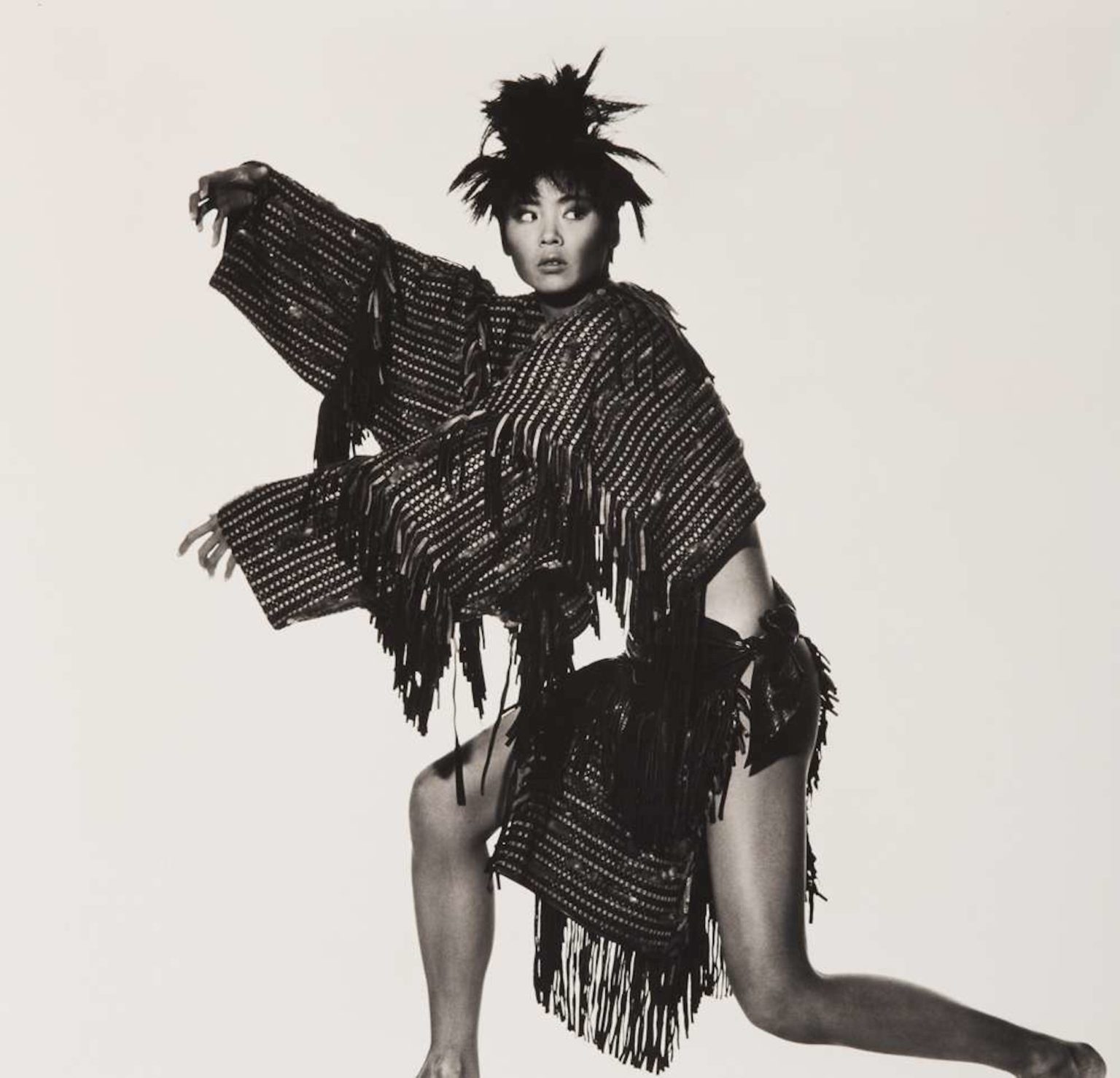
If Paris gave Penn a defining encounter with couture, New York remained the center of his professional universe.
His studio was not simply a place where photographs were made. It was a controlled environment in which he could remove distractions and concentrate on the relationship between subject, light, and form. After establishing his own studio in New York, Penn developed a practice that moved between editorial assignments, advertising, portraiture, and personal projects.
The studio became a laboratory. A model, a famous artist, a flower, a cigarette butt, or an object found in the street could all enter the same visual universe. The subjects changed; the discipline of looking remained consistent.
The contrast between Paris and New York is revealing. Paris offered the encounter with couture, the old photography school, the theater curtain, the couriers, the designers. New York offered continuity: a space where Penn could refine his method and build a body of work across decades.
The studio also had an unusually intimate atmosphere. Concentration was essential. The sessions were quiet, controlled, and intensely focused. Penn did not ask a model to perform an emotion on command. He wanted a presence to emerge. A small adjustment of the head, a change in the position of a hand, a slight shift in the fall of a garment could transform the image.
His photographs can look effortless, but their apparent simplicity is the result of countless decisions. The position of a shoulder, the distance between a face and the background, the exact quality of a shadow: nothing is casual simply because the final image is quiet.
That discipline extended to the printed photograph itself. Penn became deeply involved in the technical production of his images, including the development of platinum-palladium printing. He wanted the final print to preserve the depth, subtlety, and material quality he had seen in the original negative. The photograph was not finished when the shutter clicked. It was finished when the image existed as an object capable of holding its full visual intensity.
WHEN THE FUTURE LOOKED LIKE THE PAST
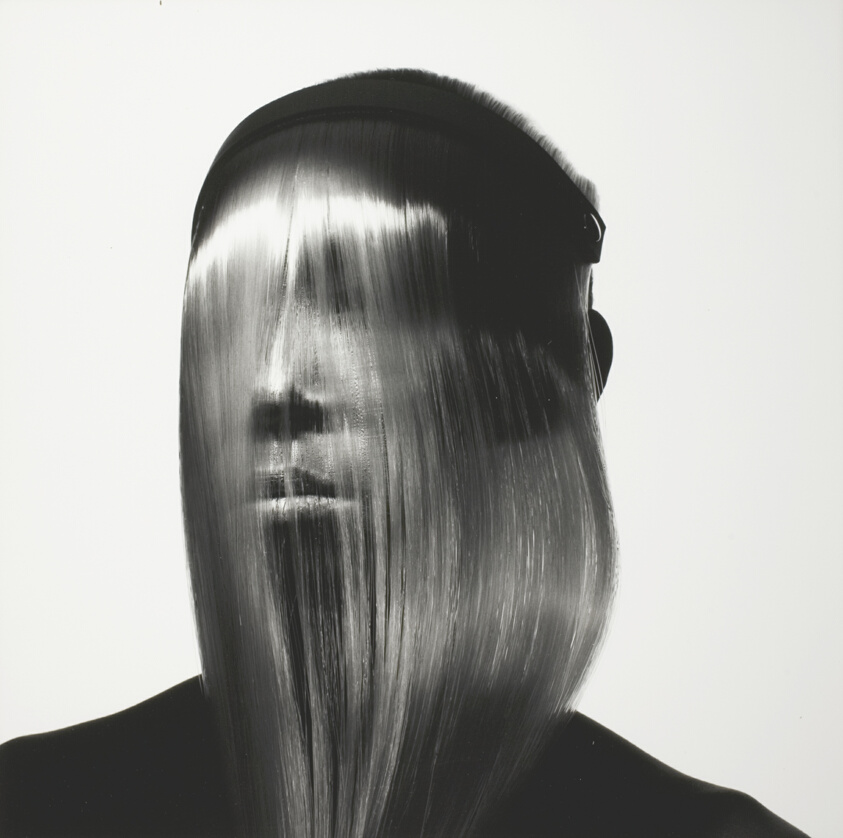
One of the most compelling things about Penn is how little his work seems to belong to a single decade.
His photographs from the 1940s and 1950s can feel startlingly modern. His fashion images from the 1960s and 1970s still look visually daring. His later beauty and still-life photographs continue to surprise, even when placed beside contemporary images produced with entirely different technologies.
During the 1980s and 1990s, fashion photography increasingly embraced spectacle, movement, cinematic narratives, and more elaborate visual production. Penn continued to work in his own way. His images for Vogue could be strange, severe, humorous, even unsettling. A mouth became a landscape; a hairstyle became a sculpture; a beauty image could feel closer to surrealism than to conventional glamour.
His late photographs do not look like attempts to keep up with the present. They look like the work of someone who never felt the need to chase it.
This is perhaps where the comparison with contemporary visual culture becomes most interesting. It would be too easy to claim that photography was simply better in Penn’s time. The present has extraordinary photographers, new forms of experimentation, and visual languages that Penn could never have anticipated. The difference is not a question of technical superiority or nostalgia.
It is a question of intention.
Penn understood that an image did not need to announce its innovation. It needed to contain it. He could make a photograph feel radical through a decision as small as removing a background, changing the angle of a body, or allowing a flower to show the first signs of decay.
Today, visual culture often confuses novelty with speed, and impact with intensity. Penn suggests another possibility: an image can be quiet and still be disruptive. It can be restrained and still possess enormous emotional force.
His work is not contemporary because it predicts every new trend. It is contemporary because it asks questions that have not gone away.
THE SHAPE OF WHAT REMAINS
The portraits, the flowers, the couture silhouettes, the workers in Small Trades: they may appear to belong to different chapters of Penn’s career, but they are connected by a remarkably consistent way of seeing.
He repeatedly brought his subjects into a space where their familiar identities became less important than their physical and emotional presence. A famous face could become strangely anonymous. A flower could become almost human. A couture dress could reveal the intelligence of its construction. A worker’s uniform could carry the dignity of an entire life.
The camera did not simply record these subjects. It changed the conditions under which we looked at them.
That is why the parallel between the portrait and the flower continues to resonate with me. One is full of human expression; the other has none. One can tell us something about a life; the other can only reveal the extraordinary complexity of being alive. Yet both are subject to the same irreversible transformation.
Perhaps Penn was never really photographing beauty as a finished state. He was photographing the moment in which beauty becomes visible precisely because it cannot last.
Walking out of the MEP last weekend, I kept returning to that first connection: a face emerging from shadow, a flower beginning to lose its perfect shape. I thought about Lisa, whose presence runs through so much of his work. I thought about Veruschka, whose recent passing reminds us that even the most unforgettable images cannot preserve the person forever. I thought about the old studio in Paris, the curtain that traveled through decades, and the New York room in which Penn continued to look at the world with almost uncompromising attention.
The photograph survives. The person changes. The flower disappears.
What remains is not simply the image of something beautiful, but the memory of having looked at it closely.
If beauty is always in the process of disappearing, is that what makes us look; or what makes us look away?
Images courtesy of Irving Penn Foundation