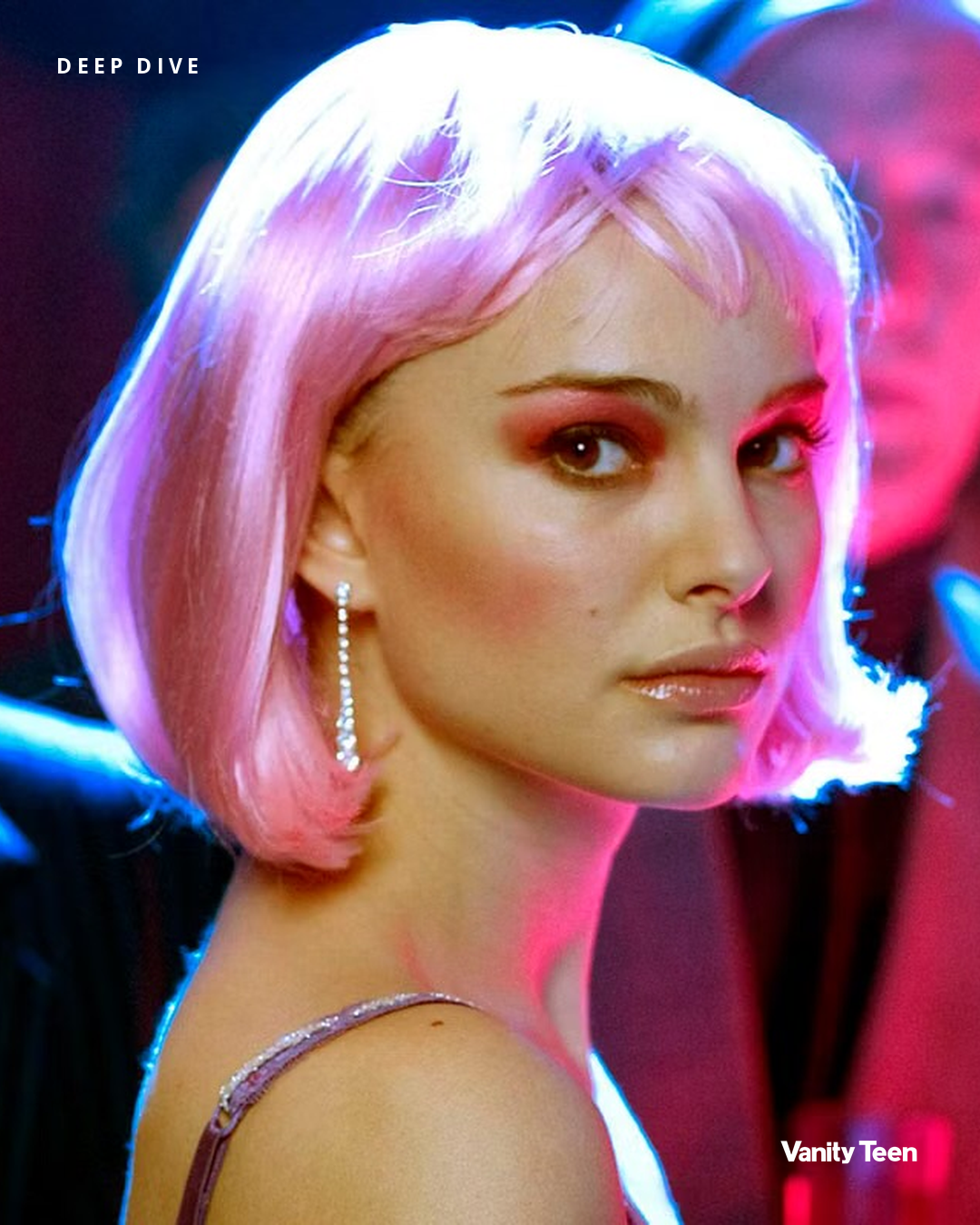


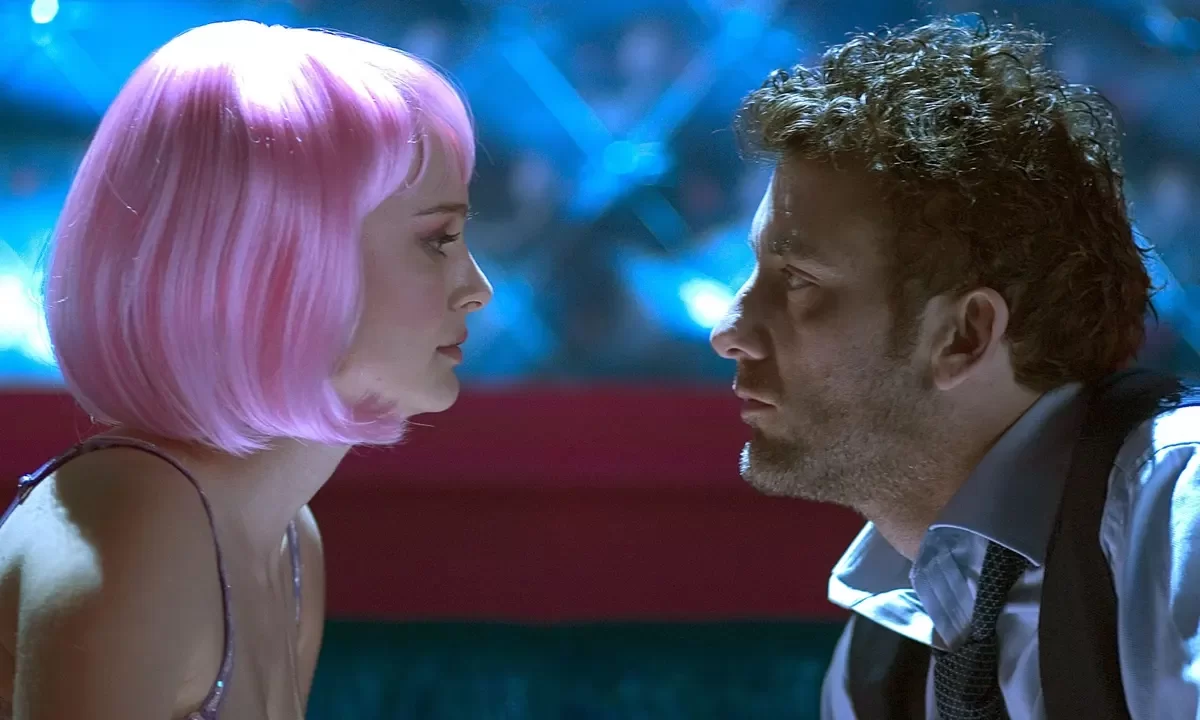
Four characters, one society, and the unsettling fragility of modern relationships.
Are we still capable of loving someone for who they really are, or have we learned to love only the way they make us feel?
It is an uncomfortable question, perhaps even a cruel one. Yet it is the first that comes to mind when I think back to Closer, Mike Nichols’s 2004 film based on Patrick Marber’s stage play.
I first saw it in a movie theater in 2004, shortly after its release, with my best friend Barbara. I was already deeply passionate about cinema. I would not necessarily describe Closer as one of the greatest films I had ever seen, but something about it stayed with me. It left me with a distinct sense of unease, a feeling of emotional instability and vulnerability that I could not quite put into words at the time. I felt strangely close to its characters, to their contradictions, their desires, and their inability to make sense of one another. I was barely in my twenties, beginning to discover adult life and the complexities of relationships.
I watched it again last night. More than twenty years later, I found myself looking at the same story from a very different perspective. What had once been an unsettling impression has become a much clearer reflection on human behavior and the world we live in. The circumstances have changed. The ways we meet, communicate, seduce, and leave one another have changed. The emotional contradictions at the heart of the film, however, remain remarkably familiar.
That is what makes Closer so relevant today. It is not simply a film about infidelity, jealousy, or sexual betrayal. It is about the difficulty of truly connecting with another human being. It exposes a deeply uncomfortable paradox: we can be desired without being loved, loved without being understood, and physically close without ever experiencing genuine intimacy.
The most disturbing possibility is that we have not necessarily become incapable of finding one another. We may simply have become less willing to stay once we do.
The cruelty of a society that wants everything but refuses to choose
There is something profoundly cruel about contemporary society. Not necessarily because it has made us more ruthless, but because it has taught us to expect everything while accepting very little in return.
We live in a culture of endless options, constant stimulation, and seemingly limitless possibilities. There is always someone else to meet, another experience to pursue, another version of ourselves to explore. Choice has become a permanent condition. Commitment, by contrast, is increasingly perceived as a limitation. The possibility of something better always seems to be waiting just beyond the next screen, the next conversation, the next encounter.
Dating apps and social media did not invent emotional instability. They have simply made it easier to navigate, accelerate, and sometimes disguise it. People become profiles, attraction becomes a selection process, and intimacy risks turning into a marketplace in which everyone is simultaneously a consumer and a product.
In Liquid Love, sociologist Zygmunt Bauman describes how relationships become increasingly fragile when we seek the security of connection without accepting the obligations that make it possible. We want closeness without dependence, freedom without consequences, and intimacy without exposure.
This is where the cruelty lies. We have become exceptionally skilled at keeping our options open, yet increasingly uncomfortable with the vulnerability required to make a choice. We want to be wanted, reassured, desired, and remembered. The moment another person asks us to be accountable, however, the relationship can begin to feel like a threat to our freedom.
Closer anticipated this emotional landscape with remarkable precision. Its characters are not simply trapped in a complicated love quadrangle. They are caught in a system of expectations that makes emotional satisfaction almost impossible.
Four characters, four archetypes of our emotional fragility
The film’s four protagonists can be understood as more than individuals involved in a complicated romantic entanglement. They represent recognizable emotional archetypes, different responses to the same fundamental fear: the fear of not being enough for someone else.
Dan embodies emotional narcissism. He wants to be loved, but seems far more interested in the reflection of himself he sees in other people’s desire. His relationships are shaped by his need for validation. He falls in love with the feeling of being wanted, often confusing that feeling with love itself. His problem is not simply that he lies. It is that he seems unable to distinguish between loving another person and needing that person to confirm his own worth.
Anna represents the contradiction between independence and emotional security. She wants freedom, yet she is not immune to the comfort of being chosen. She seeks authenticity while participating in the same evasions that undermine it. Her choices expose an uncomfortable truth: wanting to be free does not automatically mean knowing what to do with that freedom.
Larry is the archetype of control. He demands the truth, not always because he wants to understand, but because he wants to eliminate uncertainty. He uses information as leverage and intimacy as a form of interrogation. His need to know becomes a need to dominate. For Larry, the truth is not necessarily a path toward closeness; it can be a weapon designed to make the other person surrender.
Alice, by contrast, is the most elusive of the four. She resists being reduced to someone else’s definition of her. Her identity remains partly inaccessible, even to those who claim to love her. She represents the possibility that another person will always remain, to some extent, beyond our understanding and beyond our control.
Together, these four characters form a disturbing portrait of modern emotional life: the need for validation, the fear of commitment, the hunger for control, and the struggle to preserve an identity within the gaze of another.
Their behavior is different, but their underlying problem is remarkably similar. Each wants something from the other that the other cannot, or will not, consistently provide. They seek reassurance while creating insecurity, demand honesty while concealing their own intentions, and pursue intimacy while resisting its consequences.
The desire to be loved, and the inability to love
One of the film’s most painful insights is that wanting love and being capable of loving are not the same thing.
Psychology offers useful ways of understanding this distinction. Attachment theory, developed by John Bowlby and later expanded by other researchers, describes how early relational experiences can shape the ways we seek closeness, respond to rejection, and manage emotional insecurity. Some people pursue reassurance relentlessly. Others protect themselves through distance, avoidance, or control.
These patterns should not be treated as diagnoses of the characters, nor as fixed categories into which every person can be placed. They offer a useful framework for understanding why intimacy can trigger as much fear as comfort.
In Closer, the characters repeatedly seek reassurance from people they are simultaneously hurting. They want to feel irreplaceable, yet struggle to accept the responsibility of treating someone else as irreplaceable. They demand emotional honesty while withholding their own. They want to be understood without necessarily making themselves available to understanding.
The result is a vicious cycle: the more they fear abandonment, the more they behave in ways that make genuine connection impossible.
Love becomes less an encounter with another person than an attempt to manage one’s own insecurity. The other person is no longer someone to discover, but someone expected to fill an emotional void.
The other as property: Sartre, Fromm, and the desire to possess
Jean-Paul Sartre’s reflections on the gaze offer another powerful way of interpreting the film. Being seen by another person means becoming an object in someone else’s world. We are no longer entirely in control of how we appear or what we mean. The other person has a perspective of their own, and that perspective cannot be possessed or controlled.
This is precisely what makes intimacy so difficult. We want to be seen, but only in ways we can tolerate. We want to be loved, but often on the condition that the other person continues to confirm the image we have constructed of ourselves.
Erich Fromm, in The Art of Loving, makes a distinction that feels particularly relevant here: mature love is not possession. It requires care, responsibility, respect, and knowledge. Love is not simply a feeling that happens to us; it is a capacity that demands effort and emotional maturity.
The characters in Closer repeatedly confuse attachment with ownership. They want access to one another’s bodies, memories, secrets, and desires. They struggle, however, with the one condition that makes love possible: accepting that the other person remains free.
The cruelest form of intimacy may be the one that claims to know everything about someone while refusing to let that person remain unknowable.
There is a fundamental contradiction here. We want the other person to reveal themselves completely, yet we struggle to accept what that revelation might mean. We want honesty, provided it does not hurt us. We want freedom, provided it does not threaten our position. We want love, provided it does not expose our vulnerability.
That is not intimacy. It is an attempt at emotional ownership.
Desire is also competition: René Girard’s uncomfortable lesson
René Girard’s theory of mimetic desire adds another dimension to the film’s emotional architecture. According to Girard, desire is not always spontaneous or independent. We often learn what to desire by observing what others desire. The presence of a rival can intensify attraction, turning love into competition.
In Closer, desire repeatedly becomes entangled with rivalry. The characters do not simply want one another; they want what someone else has, what someone else desires, or what someone else might lose. The emotional value of a relationship seems to increase when it is threatened by another person.
This is a particularly uncomfortable observation about human nature. Sometimes we do not want someone because we have discovered their value. We want them more intensely because someone else has.
Desire becomes a contest. Love becomes a territory to conquer. The other person gradually disappears behind the question of who has won.
The result is a relationship in which being chosen matters more than choosing, and winning matters more than loving. What appears to be passion can become little more than competition disguised as desire.
Truth as a weapon, intimacy as an interrogation
Few aspects of Closer are as disturbing as its treatment of truth.
The film challenges the comforting idea that honesty is always liberating. Its characters often demand the truth at precisely the moments when they are least prepared to receive it. They ask questions whose answers are intended not to create understanding, but to inflict pain.
Larry’s interrogations of Anna are among the clearest examples. He insists on knowing, but his insistence is not necessarily an expression of emotional courage. It is also an attempt to regain power. He wants details, images, confessions: anything that might turn uncertainty into something he can control.
There is a difference between honesty and cruelty disguised as honesty. Telling the truth does not automatically make someone courageous, just as asking for the truth does not automatically make someone ready to hear it.
Sometimes the demand to know everything is simply another way of refusing to accept that another person has an inner life beyond our reach.
The film raises an uncomfortable question: do we really want the truth, or do we want the power that comes from knowing something the other person would rather keep to themselves?
In this sense, truth can become another instrument of control. It can destroy trust rather than build it, especially when it is demanded without empathy and delivered without responsibility.
Being seen is not the same as being known
Photography is central to the film’s visual and emotional language. Anna is a photographer. Her work involves looking at people, framing them, capturing an image, and deciding what the world gets to see.
Damien Rice’s The Blower’s Daughter captures one of the film’s most unsettling contradictions. Its haunting refrain, “I can’t take my eyes off you,” evokes the intensity of desire, but also its limitations. Being unable to look away from someone does not mean being able to see them for who they really are. We can become so captivated by the image we have created of another person that we fail to recognize the person standing in front of us. We look, we desire, we idealize, sometimes even obsess. Yet looking is not knowing, and desire is not understanding. In Closer, the gaze can be as consuming as it is intimate.
The photograph becomes a powerful metaphor for contemporary identity. We are constantly presenting ourselves, editing our images, selecting what to reveal, and managing how we are perceived. Social media has made this process almost continuous. Visibility is abundant; genuine recognition is not.
We can know what someone looks like, where they have been, what they eat, who they spend time with, and what they choose to share. None of this guarantees that we know who they are.
The paradox is hard to ignore: we have never had so many ways to show ourselves, yet the experience of being truly seen can feel increasingly rare.
Closer understands that exposure is not intimacy. A person can reveal almost everything and still remain emotionally unreachable.
Being visible is not the same as being understood. Being observed is not the same as being recognized. The distinction is especially important in a culture that increasingly measures connection through access, availability, and constant communication.
We can be permanently connected and profoundly alone.
The loneliness of being together
The difference between Patrick Marber’s original stage play and Mike Nichols’s film adaptation makes this idea even more striking.
In the play, Alice dies. Her death occurs offstage, and the other characters are left to confront her absence. The theatrical version offers no comforting resolution, only the devastating finality of a person who can no longer be questioned, possessed, or recovered.
The film takes a different path. Alice survives and returns to New York, leaving Dan behind. Her departure introduces something the play does not offer in quite the same way: the possibility of escape, self-preservation, and a life beyond the emotional violence of the relationships that have defined her.
The distinction matters. The play closes around absence; the film leaves a door open. Yet neither version offers an easy redemption. Neither suggests that love automatically makes people better, or that suffering necessarily leads to wisdom.
What remains is the same unsettling question: how can people share so much of their lives and still fail so completely to meet one another?
The loneliness in Closer is not the loneliness of being alone. It is the far more painful loneliness of being with someone and realizing that the distance between you has never really disappeared.
So, are we still capable of loving?
Watching Closer again after all these years made me realize that the film’s most disturbing quality is not its depiction of betrayal. Betrayal is familiar. Its real cruelty lies in its refusal to let us feel morally superior to the people on screen.
Dan, Anna, Larry, and Alice are not monsters. They are flawed, contradictory, frightened human beings. Their behavior is often selfish and destructive, yet their needs are recognizable. We can condemn their choices while recognizing something uncomfortably familiar in their fears.
That recognition is what makes the film endure.
The cruelty of contemporary society may not be that it has destroyed our capacity for love. It may be that it has made us increasingly reluctant to accept everything love asks of us: vulnerability, compromise, uncertainty, responsibility, and the willingness to choose another person without pretending to own them.
We want the intensity of love without its consequences. We want to be understood without having to explain ourselves. We want someone to stay, provided that staying never limits our freedom. We want intimacy on our own terms, even when those terms make intimacy impossible.
We have become accustomed to protecting ourselves from disappointment, but in doing so, we may also be protecting ourselves from the very experiences that make a relationship meaningful. The price of emotional self-preservation can be emotional isolation.
We have not lost the ability to love, in some ways. We have become less willing to pay its price.
Closer. Closer than ever, perhaps. Yet how close are we really capable of getting?