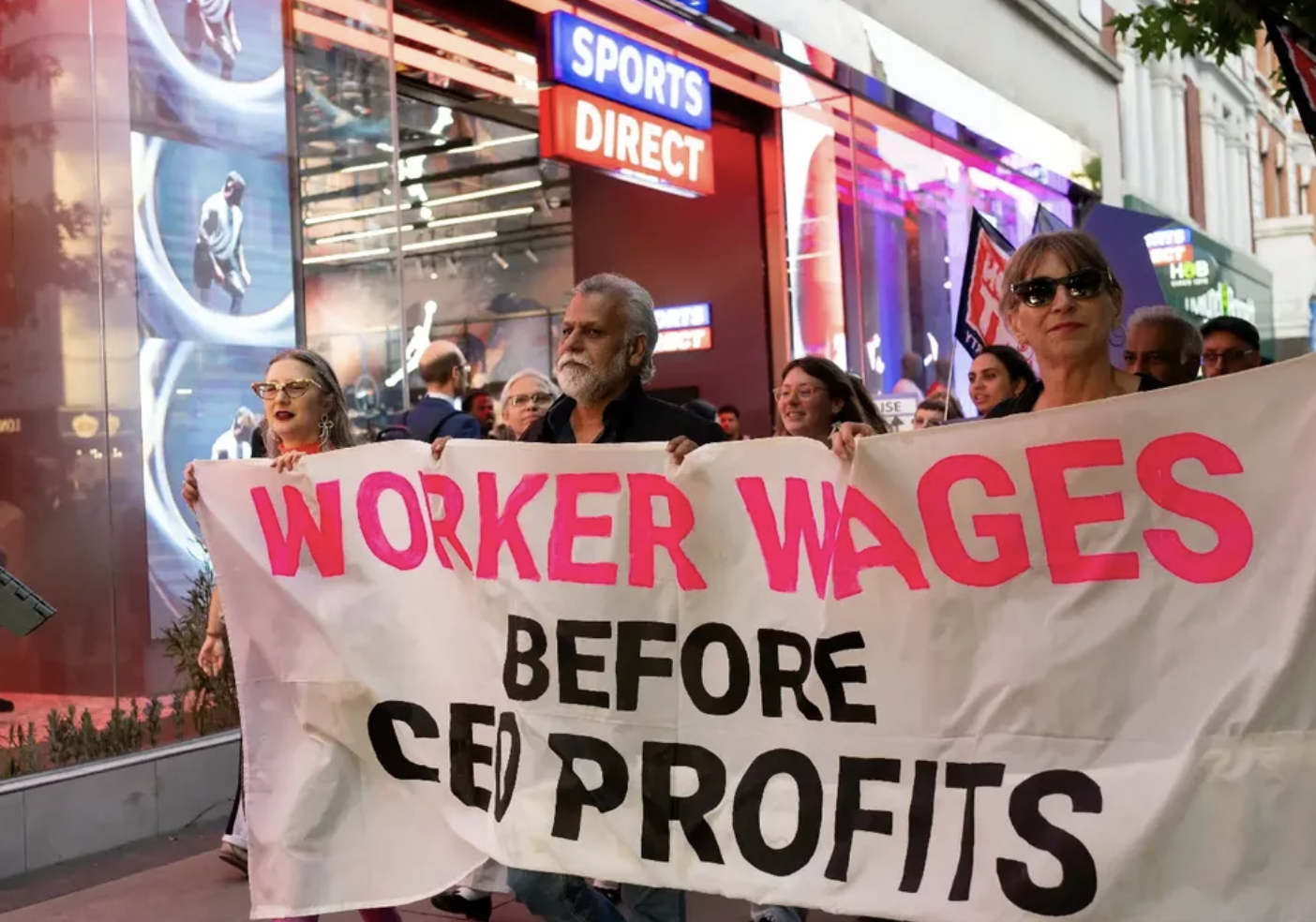

In Bangladesh, the people producing clothes for some of the world’s biggest fashion brands are taking to the streets. And they’re demanding something pretty basic: a wage they can actually live on.
For days, Bangladesh has been gripped by protests involving garment workers who produce clothing for the global fashion industry. At the heart of the unrest is a problem that has been brewing for years: wages that simply haven’t kept up with the cost of living.
To put things into perspective, the current minimum monthly wage for garment workers is just 12.500 taka, roughly €88. Labour unions backed by the Clean Clothes Campaign (CCC), an international network advocating for better working conditions in the fashion industry, are demanding that it be raised to 32,000 taka, or around €230 a month.
That’s an increase of more than 150%. But for workers struggling to pay for food, rent and their children’s education, it’s not about getting rich. It’s about being able to afford the basics.
Bangladesh’s garment industry employs around four million people, most of them women. However, wages aren’t the only issue. Workers are also demanding stronger labour protections and an end to so-called blacklists, a practice allegedly used by some factory owners to identify employees considered troublesome, often simply because they’ve participated in strikes, protests or union activities.
Being blacklisted can make it extremely difficult to find another job, even at a different factory. In other words, speaking up for better working conditions can put your entire livelihood at risk.
It’s a system that can leave workers facing an impossible choice: accept the conditions they’re given or risk losing the income they depend on.
How Have the Protests Unfolded?
The demonstrations began on October 31 and have since escalated into a major confrontation between garment workers and the authorities. Thousands of workers have taken to the streets in Bangladesh’s industrial areas, blocking roads and demanding higher wages.
The protests have also turned violent. Police have used tear gas and stun grenades to disperse demonstrators, with clashes leaving numerous people injured and dozens arrested. One worker has also died following an assault amid the unrest.
The disruption has been significant. More than 600 garment factories have reportedly been forced to temporarily shut down, bringing production to a halt across parts of the country’s crucial textile industry.
Faced with mounting pressure, the government has established a wage commission to review salaries. A new wage structure is expected to be introduced in December, with the first adjusted payments scheduled for January 2027.
There’s just one problem: workers still don’t know how much they’ll actually be paid. The government has yet to announce the new minimum wage, leaving one of the central demands of the protests unresolved.
Who’s Really Paying the Price for Cheap Fashion?
Bangladesh is the world’s second-largest clothing exporter after China. Its garment industry generates around $40 billion in exports every year and accounts for more than 80% of the country’s export earnings. It is a major manufacturing hub for some of the world’s best-known fashion retailers, including H&M, Zara, Primark and Gap. But while the clothes end up in stores around the world, the workers making them are fighting to earn just €230 a month.
So who’s actually responsible for paying them more?
Technically, garment workers are employed by local factories, not directly by the international brands whose clothes they produce. That means factory owners are responsible for paying wages and complying with labour laws.
But there’s another side to the story.
Global fashion brands have enormous bargaining power over their suppliers. They negotiate the prices they pay for garments, place large orders and often demand tight production deadlines. Factories in Bangladesh compete fiercely to secure those contracts, frequently operating on extremely thin profit margins.
According to Reuters, some manufacturers say their profit margins are as low as 2–3%, while rising energy, transport and production costs are putting them under even more pressure.
Here’s the catch: if wages go up but international brands continue paying factories the same prices, who absorbs the extra cost?
The Clean Clothes Campaign argues that simply telling factories to pay workers more isn’t enough. International retailers must contribute by paying suppliers prices that make decent wages financially possible.
In other words, the question isn’t just whether factory owners are willing to pay workers more. It’s whether the global fashion industry is willing to pay more for the clothes it sells.
The protests in Bangladesh are about more than just higher wages. They’re exposing a deeper problem in the global fashion industry, where cheap clothes often come at the expense of the people making them. And as workers continue to demand a living wage, one question remains: are fashion giants willing to take responsibility for the true cost of their clothes?