

Why, in an age of uncertainty, nostalgia has become the ultimate cultural currency.
From archive fashion and the return of the 1970s to the aesthetics of the 1990s, analog cinema, vintage design and the recycling of pop culture, the past is no longer just inspiring the present. It is shaping the way a new generation imagines the future.
What happens when a generation that has never felt more connected to the world starts looking for a way back to a time it never actually lived?
The paradox of our moment is hard to ignore. We have never had more access to the future, more technology to anticipate it, more tools to create it. Artificial intelligence can generate images, identities, entire worlds. Everything is faster, more accessible, more immediate. Yet some of the most compelling cultural references of the moment are coming from somewhere else entirely: the past.
The coolest thing to wear might already be hanging in someone’s closet. The most desirable fashion reference might come from a runway collection twenty years ago. The most interesting interiors are borrowing from the sculptural language of the 1970s. Cinema is revisiting old visual codes, music is sampling its own history, and pop culture is increasingly finding inspiration in decades that seem to hold something the present cannot quite deliver.
Welcome to the age of nostalgia. Not as a passing aesthetic, but as a cultural condition. Not simply retro, not just vintage, and certainly not another microtrend to add to the endless cycle of online aesthetics. Nostalgia is becoming something much bigger: a collective response to a present that feels increasingly difficult to inhabit and a future that is becoming increasingly difficult to imagine.
The most unexpected supertrend of the moment is, perhaps, the desire to look backward.
THE MELANCHOLIA OF NOW
Before nostalgia comes melancholia.
There is a particular emotional atmosphere surrounding contemporary culture, a subtle sense of disorientation that goes beyond fashion cycles or generational taste. Political instability, economic pressure, climate anxiety, technological acceleration and the constant exposure to global events have changed our relationship with time. The present feels permanent in its urgency, while the future seems permanently uncertain.
More information does not necessarily mean more understanding. More connectivity does not automatically produce a stronger sense of belonging. The promise that everything is possible has become strangely exhausting.
This is where the existential dimension of nostalgia begins.
In the nineteenth century, Søren Kierkegaard explored anxiety as an essential condition of human freedom. In The Concept of Anxiety (1844), he described anxiety as the vertigo of possibility: the unsettling sensation of standing before an open future, aware that countless directions exist but none can be guaranteed. Anxiety, in this sense, is not simply fear of what might happen. It is the realization that we are responsible for what has not yet happened.
That philosophical tension feels remarkably contemporary. For younger generations, the future is simultaneously overexposed and unknown. They are constantly asked to reinvent themselves, make choices, optimize their identities and anticipate what comes next. The pressure to be endlessly new has become its own kind of cultural fatigue.
Melancholia, understood here as a cultural mood rather than a clinical condition, becomes the emotional background to this search for something familiar.
Freud, in his 1917 essay Mourning and Melancholia, explored the psychological relationship between loss, attachment and the self. His distinction is more complex than simply being sad about the past, but it offers an important starting point: loss can continue to shape who we are, even when its object is no longer within reach.
Contemporary nostalgia takes this relationship somewhere else. It turns the feeling of distance into a desire to reconnect.
THE PAST IS THE NEW CREATIVE DIRECTOR
Look at fashion.
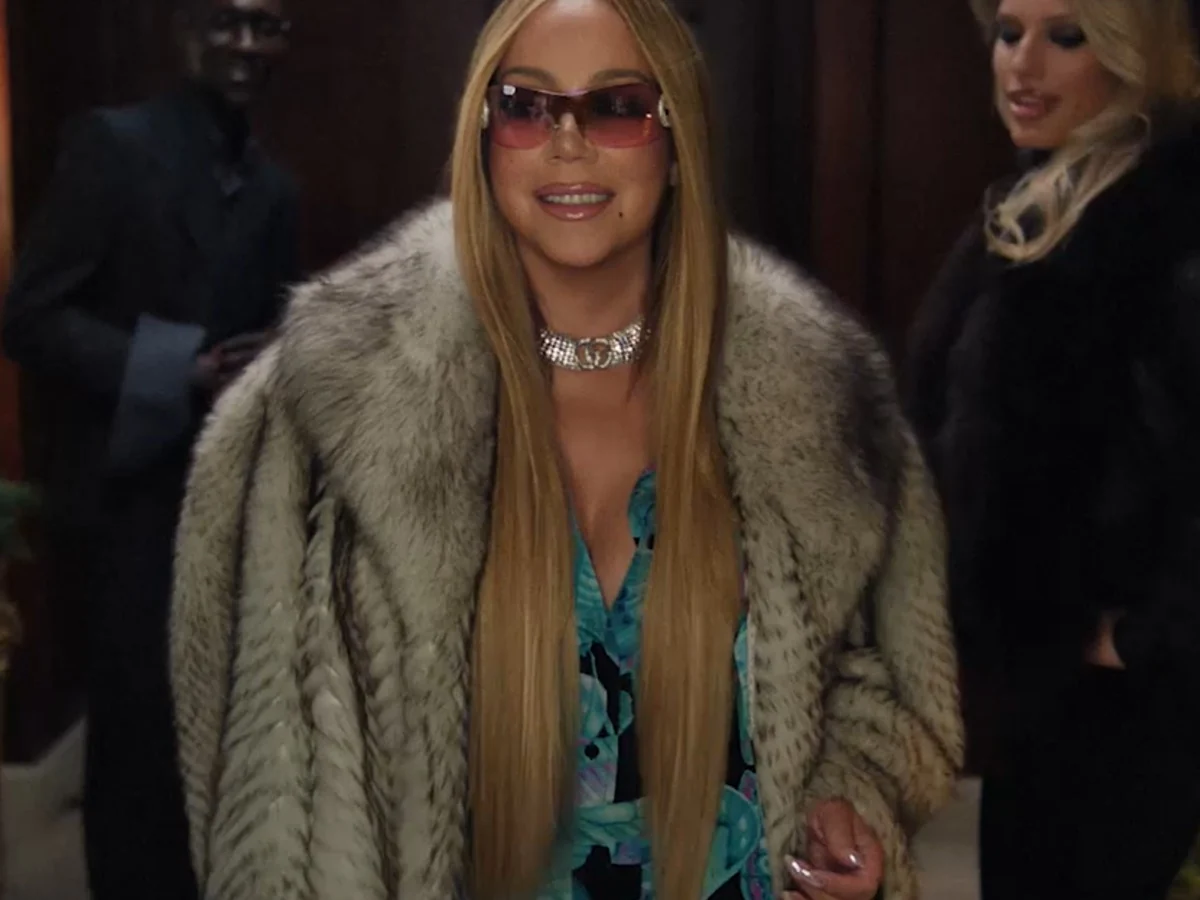
Some of the most interesting styling happening right now is not necessarily coming from the latest collections. It is coming from wardrobes, vintage stores, resale platforms and fashion archives. Pieces from the 1990s, early 2000s and previous designer collections are being rediscovered, recontextualized and made relevant again.
The archive has become a creative territory in its own right.
A vintage bag, an old runway silhouette, a forgotten accessory or a piece that once belonged to another cultural moment can carry more visual and emotional character than something designed to be new. The appeal is not simply that it is old. It is that it already has a life, a history and a visual identity.
The relationship between fashion and time is changing. Newness is no longer the only measure of desirability. Provenance, rarity, memory and the ability to style something in an unexpected way have become part of the creative equation.
The work of sociologists Aleit Veenstra and Giselinde Kuipers on vintage fashion and contemporary consumption is particularly relevant here. Their research identifies the relationship between vintage, authenticity, nostalgia and identity, showing how wearing older garments can become a way of negotiating consumer culture and expressing individuality.
The contradiction is delicious: the fashion industry continues to produce newness at an extraordinary speed, while some of its most compelling creative references come from collections that already belong to history.
The past is no longer just an inspiration board. It is the new moodboard, the new reference library, the new creative director.
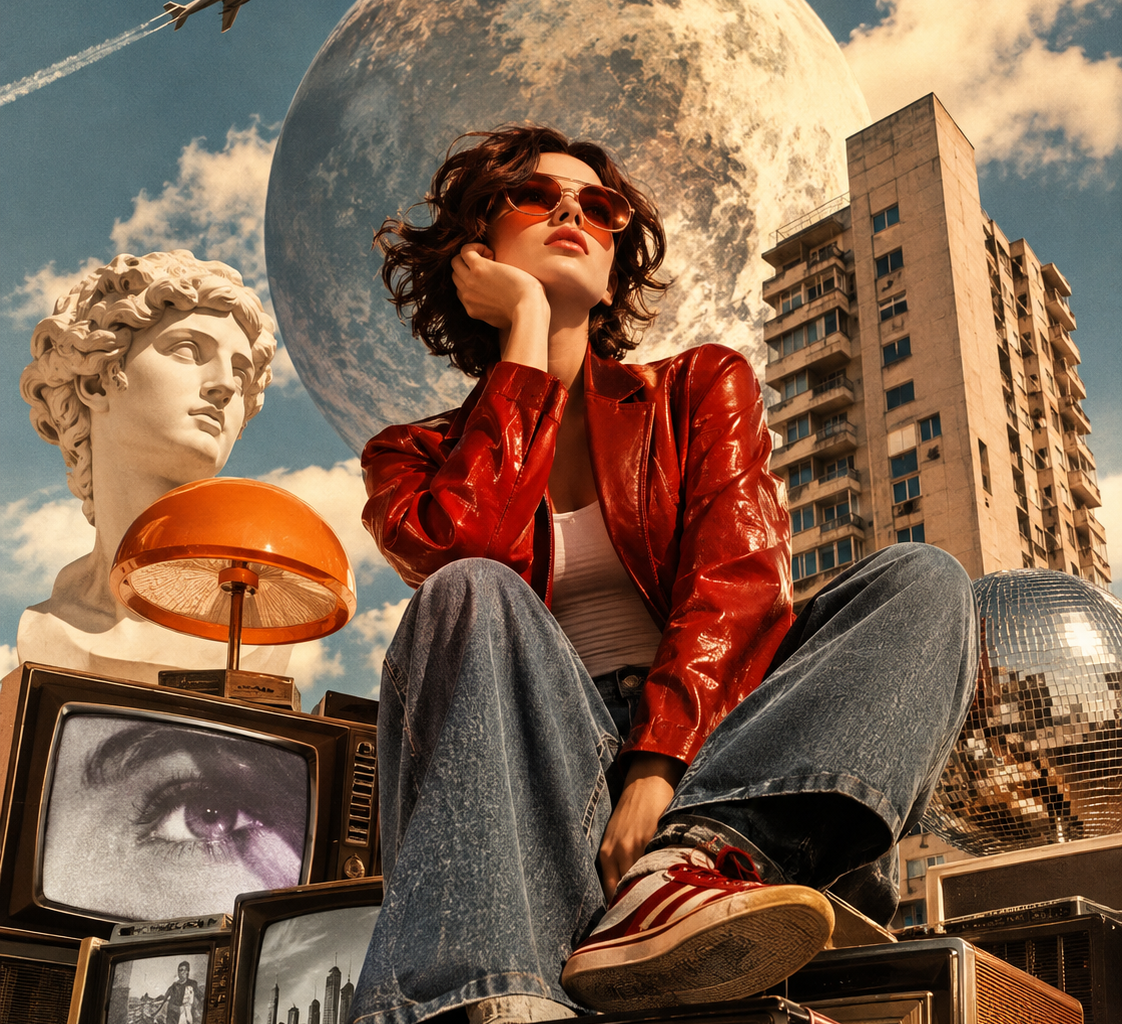
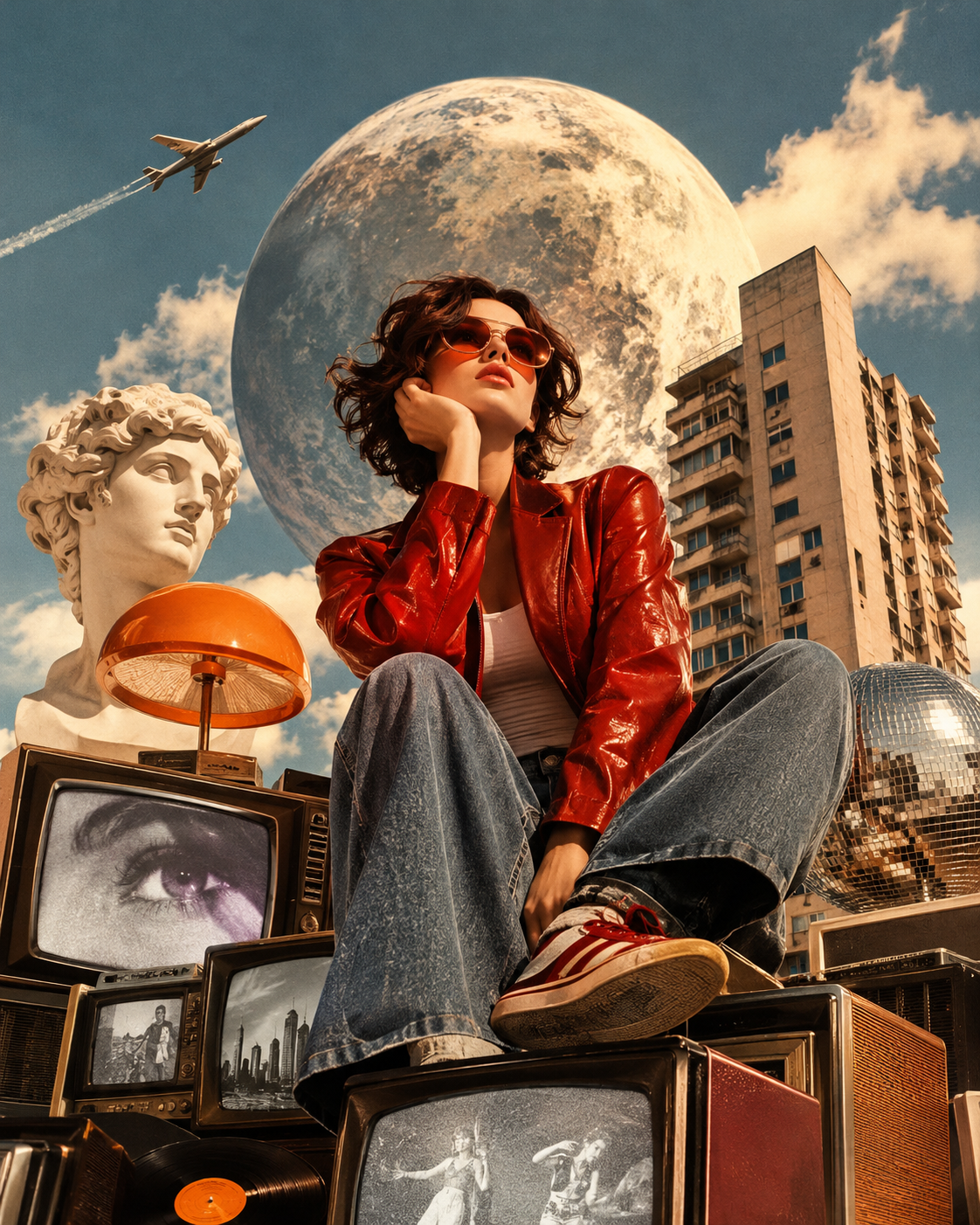
And this is not limited to fashion. The same visual appetite is visible in the revival of 1970s furniture, organic shapes, warm materials, sculptural objects and interiors that seem to favor tactility over technological perfection. In music, samples, vinyl culture and the reinterpretation of older sounds create new connections between generations. In cinema and television, period aesthetics, remakes, sequels and the return of familiar cultural universes reveal an ongoing fascination with the visual and emotional languages of previous decades.
The past has become a common cultural language.
MISSING A TIME YOU NEVER KNEW
Probably, the most fascinating aspect of this phenomenon is that nostalgia is no longer exclusive to those who actually experienced the period they miss.
A generation can be nostalgic for the 1970s without having been born in them, for the 1990s without having childhood memories of them, or for the early 2000s without remembering what life felt like before smartphones became extensions of the self.
This is sometimes described as anemoia: nostalgia for a time one has never experienced.
The past is reconstructed through images, films, music videos, family photographs, digital archives and the endless circulation of visual references online. It becomes a kind of acquired memory, a collective imagination assembled from fragments.
The result is a fascinating reversal of generational identity. Younger audiences are not necessarily looking for the culture of their own childhood. They are searching for the emotional atmosphere of other decades.
Psychological research helps explain why this attraction can be so powerful. A major 2024 cross-cultural study led by Erica Hepper and colleagues examined nostalgia among 2,606 young adults across 28 countries and Hong Kong. The findings showed that nostalgic reflection can strengthen social connectedness, self-continuity and a sense of meaning in life across different cultural contexts.
In other words, nostalgia is not merely about remembering. It can help people understand who they are, where they belong and how their past connects to their present.
Psychologists Constantine Sedikides and Tim Wildschut have spent years investigating this phenomenon. Their research describes nostalgia as a predominantly positive, socially oriented emotion, often triggered by psychological threats or feelings of disconnection.
This makes its contemporary appeal particularly significant. In a world where identity is increasingly fluid, fragmented and performed in public, nostalgia offers something surprisingly grounding: the feeling of continuity.
Even when the memory is borrowed.
THE POLITICS OF LONGING
Nostalgia, however, is not an entirely innocent operation.
Looking backward can be a creative act, but it can also become a political one. The desire to recover a supposedly better past has always been a powerful instrument in the construction of collective identities.
Cultural theorist Svetlana Boym, in The Future of Nostalgia (2001), proposed a distinction that remains essential to understanding the phenomenon.
She identified two different forms of nostalgia: restorative and reflective.
Restorative nostalgia seeks to reconstruct an idealized past, often treating it as a lost home or a golden age that must somehow be recovered. Reflective nostalgia, by contrast, is more interested in the contradictions of memory, the impossibility of returning and the emotional complexity of longing itself.
The distinction matters because the past is never entirely objective. It is selected, edited, romanticized and sometimes politically reconstructed.
Sociological research by Gabriella Elgenius and Jens Rydgren has examined how political movements use nostalgia to construct narratives of national decline, idealized origins and promises of restoration. Their work shows how an imagined golden age can become a powerful political reference point, particularly in times of social transformation and uncertainty.
This is the darker side of the nostalgic impulse: the idea that everything was better before, that complexity is a sign of decline and that the future can only be improved by recovering an imagined past.
The distinction between remembering and idealizing is therefore crucial.
Cultural nostalgia can be playful, experimental and liberating. Political nostalgia can become exclusionary, reactionary and deeply selective about whose past deserves to be remembered.
The question is not whether we should look backward. It is what we choose to bring back with us.
THE FUTURE THAT NEVER ARRIVED
There is another thinker who deserves a place in this conversation: Mark Fisher.
In Ghosts of My Life (2014), Fisher developed his reflections on hauntology, exploring the way contemporary culture is haunted by futures that were once imagined but never realized.
It is a particularly powerful idea. We are not only nostalgic for the past. We may also be nostalgic for the future we were promised.
For decades, popular culture imagined tomorrow as a place of radical possibility: new sounds, new technologies, new social structures, new forms of freedom. The future was supposed to feel different from everything that came before.
Today, however, so much of popular culture appears to recycle existing formats, revive familiar franchises, revisit established aesthetics and reinterpret previous decades. Simon Reynolds identified this tendency in Retromania (2011), examining pop culture’s growing obsession with its own recent history.
The issue is not that cultural references repeat themselves. Reinvention has always involved looking backward. The more interesting question is whether the constant availability of the past has made it harder to imagine something genuinely unfamiliar.
Sociologist Hartmut Rosa offers another useful perspective. In Social Acceleration (2013), he examines how technological acceleration, rapid social change and the increasing pace of everyday life transform our experience of time. One of his central observations is the shrinking of the present: the period during which our expectations, experiences and knowledge remain reliable becomes increasingly short.
When everything changes so quickly, the past can become a source of stability.
The archive, in this context, is more than a collection of old objects. It becomes a place where time slows down, where cultural references can be rediscovered and where meaning can be reconstructed.
IMPERFECTION IS THE NEW LUXURY
There is a final paradox worth considering.
We are living through an era of unprecedented digital sophistication. Images can be perfected, identities edited, environments generated and entire aesthetic universes produced through algorithms. Yet the cultural appetite for analog photography, grainy film, vinyl records, vintage furniture, physical objects and imperfect textures keeps growing.
Why does something that looks old feel so desirable in a world obsessed with the newest technology?
Perhaps because imperfection carries evidence of existence. A worn leather jacket, a scratched record, an old photograph or a piece of furniture marked by time offers something that a perfectly generated image cannot automatically reproduce: the sensation of having been somewhere, of belonging to a story.
Authenticity is becoming an increasingly valuable cultural currency precisely because it is difficult to manufacture convincingly.
The vintage object is not necessarily better than the new one. It simply carries a different relationship with time.
This is also why the archive has become so relevant to contemporary creativity. It allows designers, artists, musicians and filmmakers to work with material that already contains cultural memory, without being obliged to reproduce its original meaning.
The most interesting creative gestures are not nostalgic imitations. They are acts of reinterpretation.
WE DON’T WANT TO GO BACK. WE WANT TO KNOW WHAT COMES NEXT.
So, is nostalgia the ultimate supertrend? Probably. But defining it as another trend would miss the point.
What we are witnessing is something more structural: a shift in our relationship with time, memory, identity and the idea of progress.
Fashion is looking into its archives. Design is revisiting the language of previous decades. Music is rediscovering its own sonic history. Cinema and television are reactivating familiar cultural memories. Art is questioning how images, objects and collective narratives survive through time.
The past is not simply coming back. It is being reorganized into the present.
The real distinction is between nostalgia as repetition and nostalgia as reinvention. One turns history into a comfort zone. The other uses it as raw material for something that has not yet been imagined.
In my opinion, this is what makes the phenomenon so relevant to a younger generation. They are not necessarily asking for a return to another era. They are looking for a sense of continuity in a world that constantly demands reinvention. They want references, identity, connection and a little more emotional permanence.
Kierkegaard understood that the future can be frightening precisely because it is open. Boym understood that longing for the past is never simply about the past. Fisher understood that we can be haunted by futures that never arrived.
Together, these ideas suggest something worth holding onto: looking backward does not necessarily mean giving up on tomorrow.
The future belongs to those who know how to make the past mean something entirely new.
We are not nostalgic because we want to live in the past.
We are nostalgic because we are still trying to imagine a future worth living in.