

At Design Miami Paris 2026, the British architect John Pawson revisits one of his most iconic projects, transforming its minimalist language into a sculptural furniture collection.
From October 21 to 25, the fourth edition of Design Miami Paris takes over L’Hôtel de Maisons, an eighteenth-century Parisian mansion once home to Karl Lagerfeld. Among the projects presented this year, AF Editions introduces the Neuendorf House Collection, a limited-edition furniture series designed by British architect John Pawson, inspired by a remarkable house built almost four decades ago.
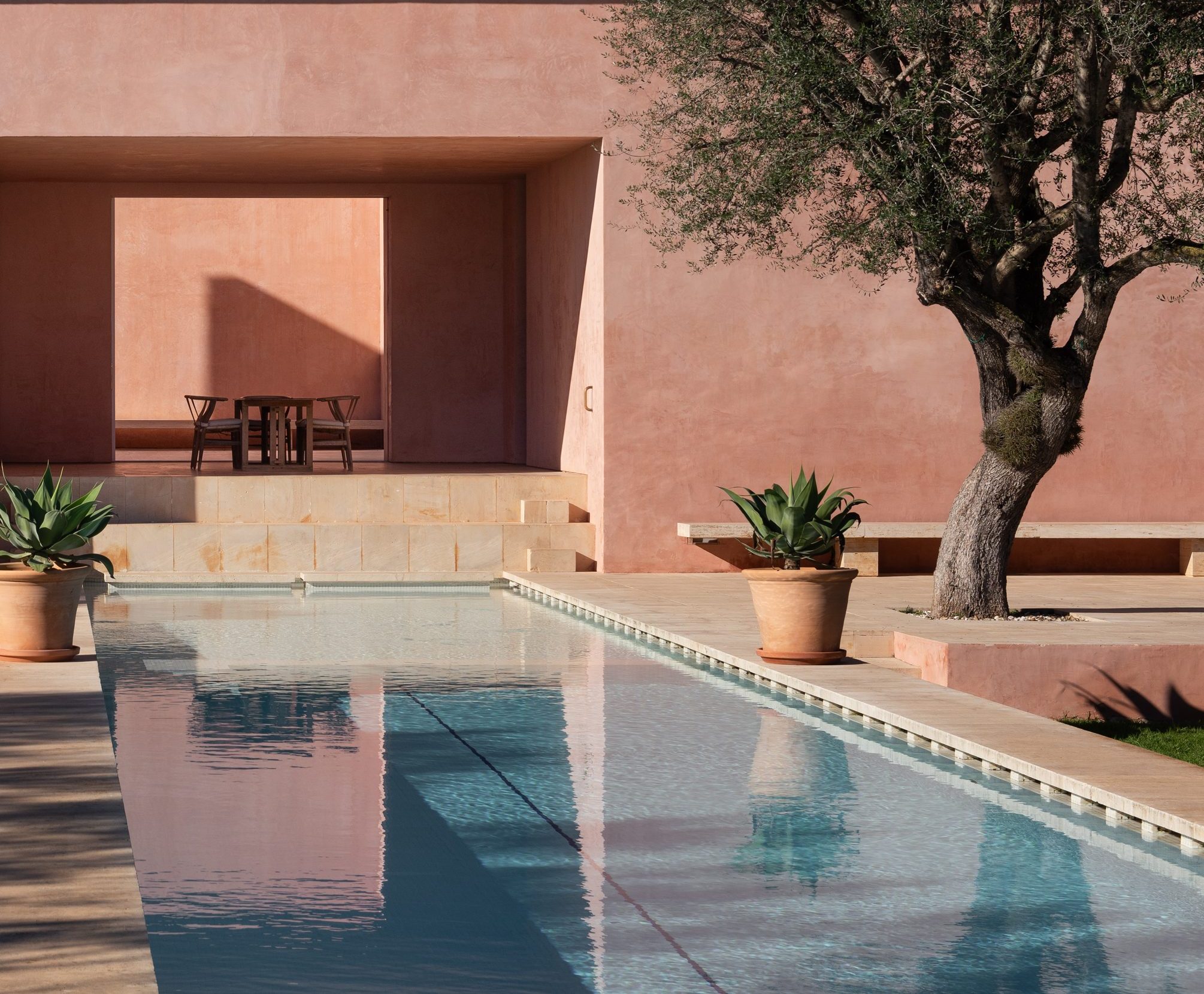
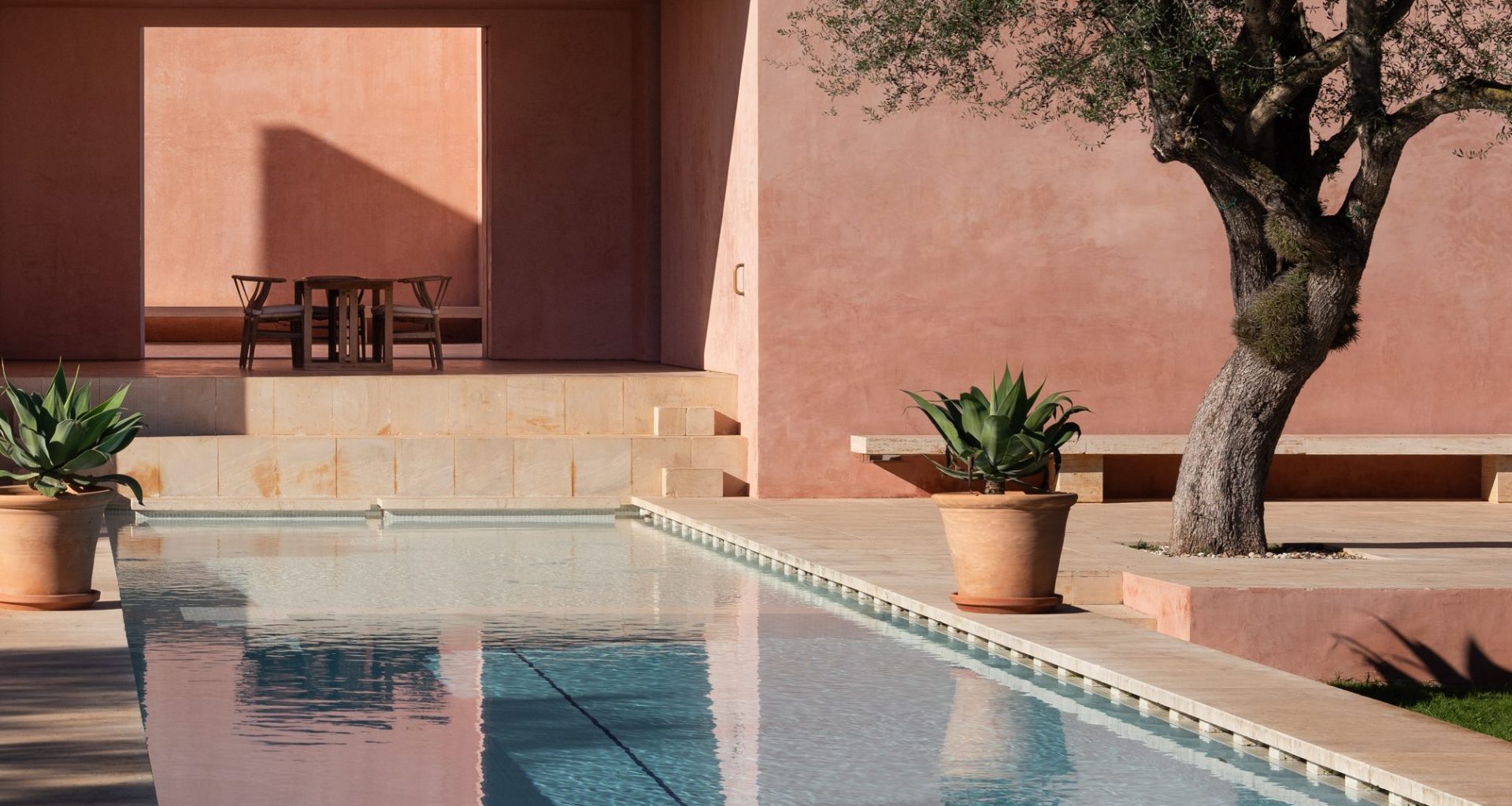
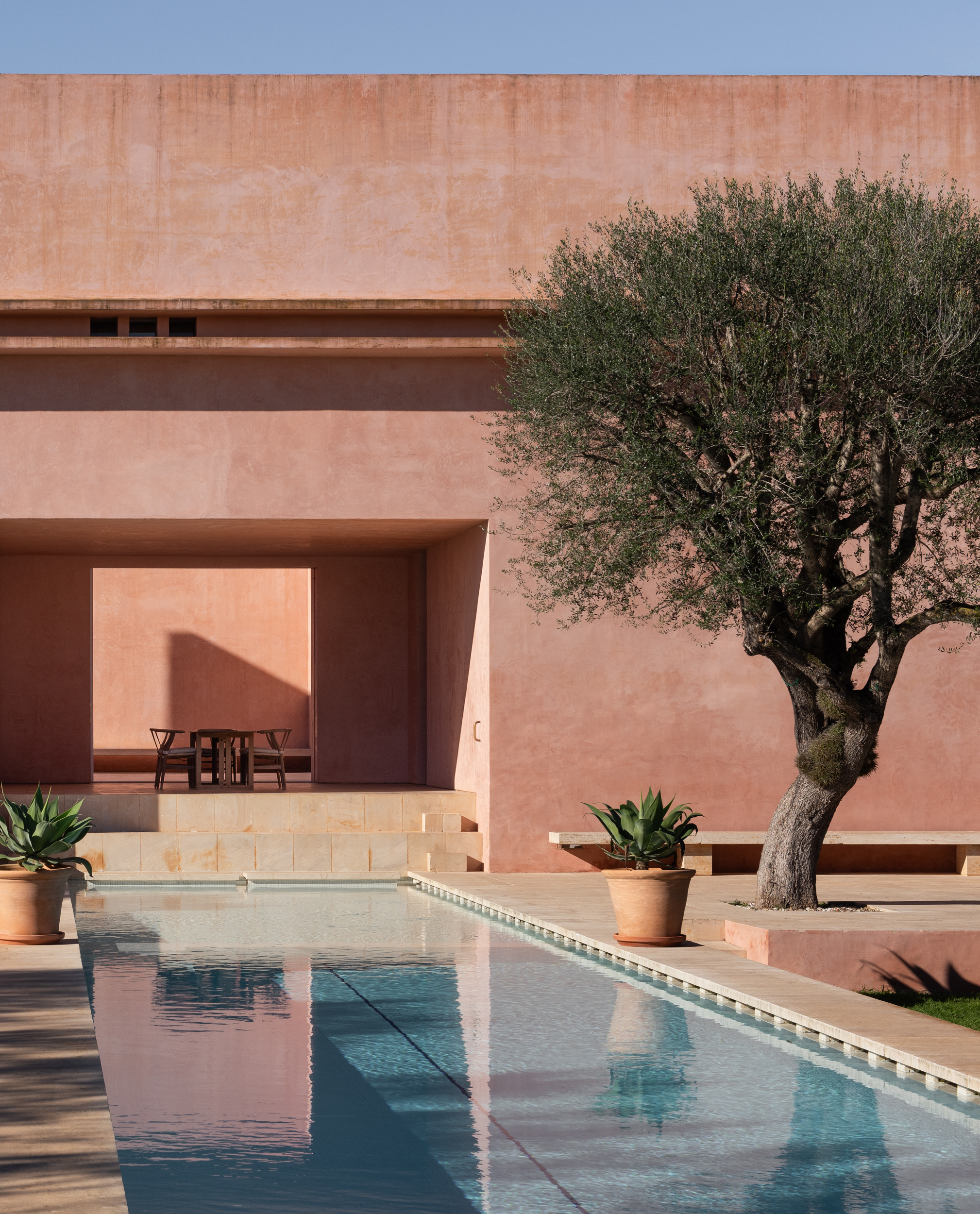
To understand the collection, we have to travel back to Mallorca in 1989. Designed by John Pawson and Italian architect Claudio Silvestrin between 1987 and 1989, Neuendorf House is a holiday residence that has become a reference point for minimalist architecture. Surrounded by the Mediterranean landscape, the building is defined by monumental earth-pink walls, precise geometric volumes and an almost radical absence of decoration.
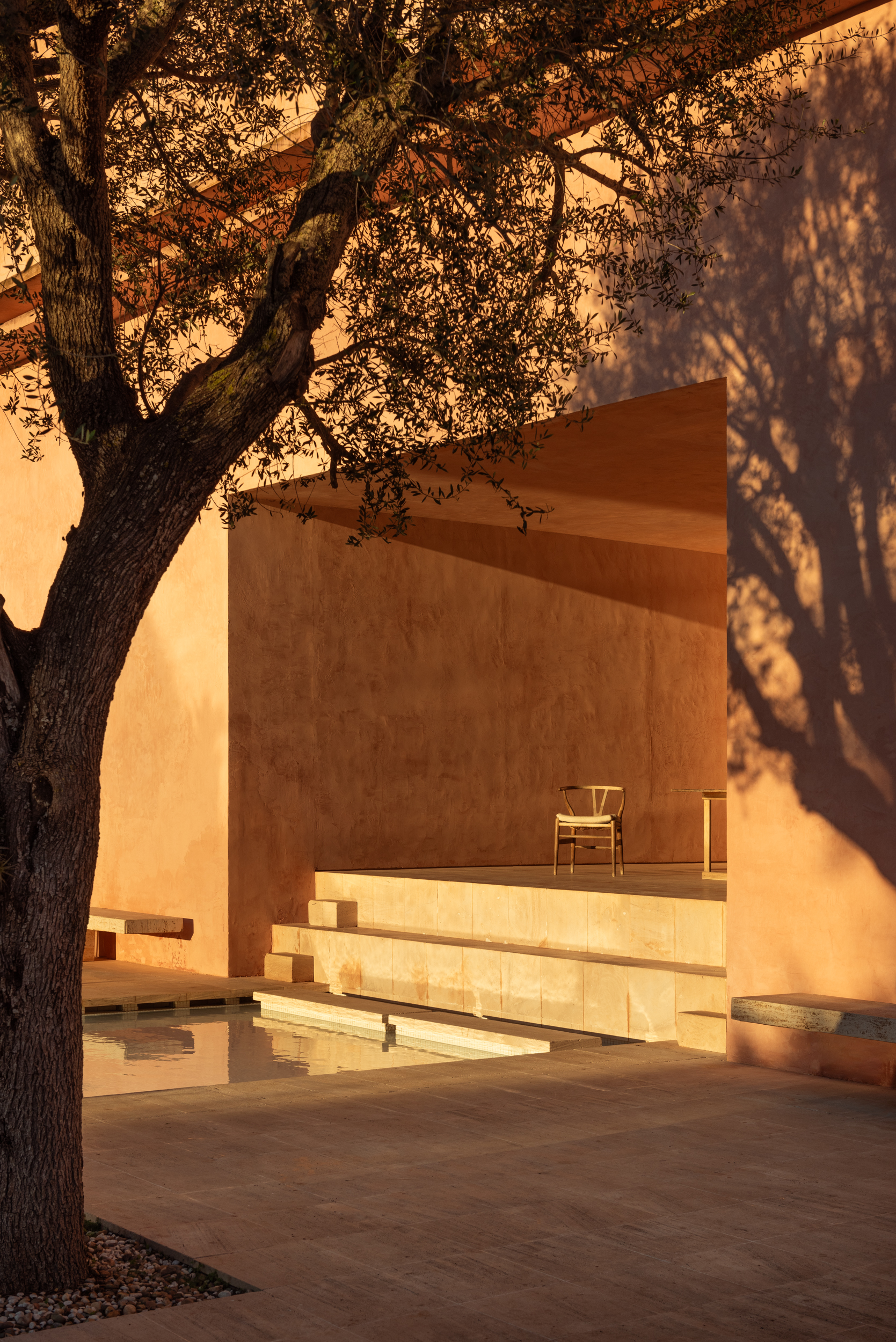
Imagine walking through a garden enclosed by towering pink walls, their colour echoing the pigments of the surrounding earth. A narrow vertical opening marks the entrance, creating a striking contrast between the scale of the architecture and the simplicity of its details. Inside, the house follows a grid of nine squares: five occupied by living spaces and four forming an open courtyard.
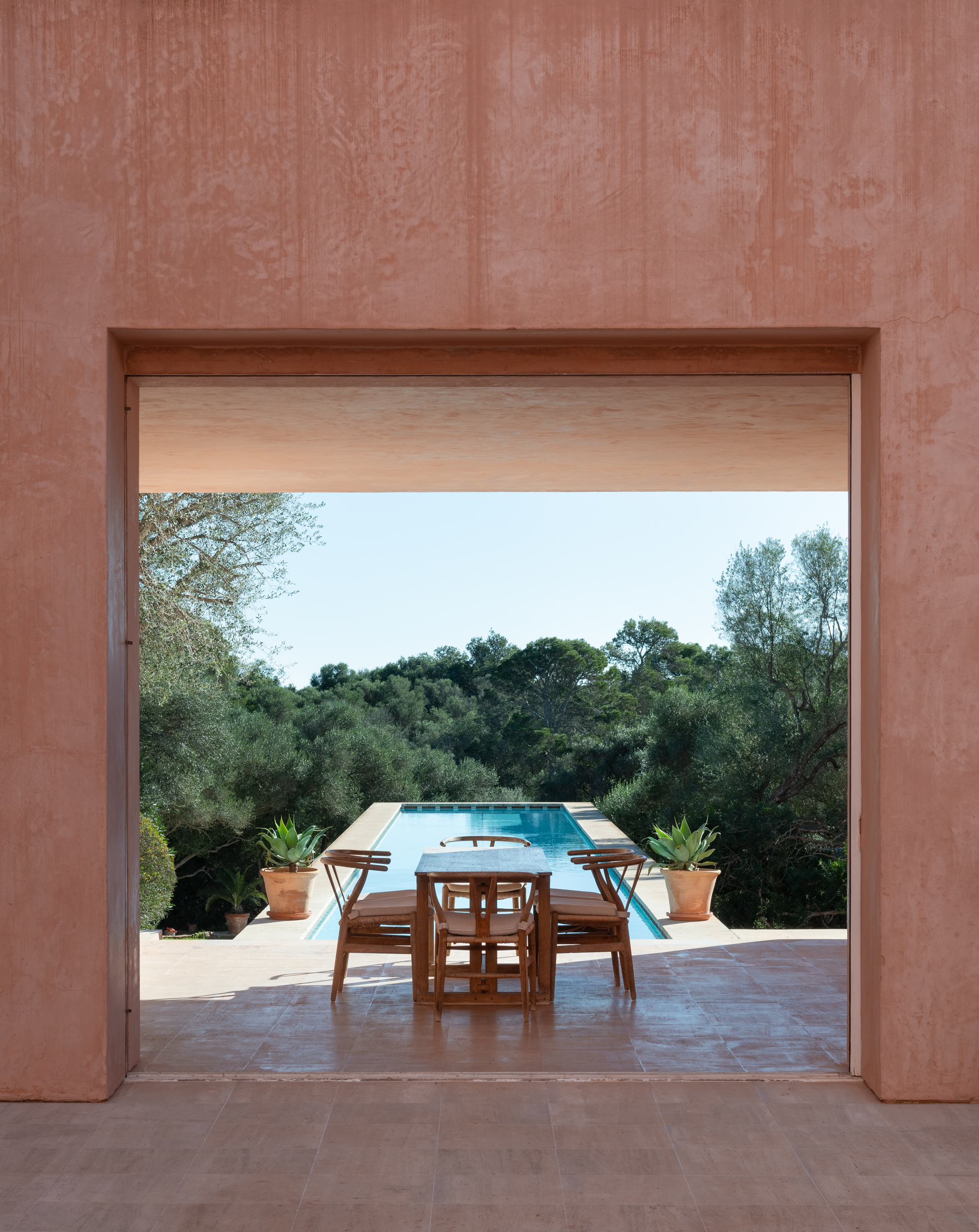
There is nothing unnecessary. Every wall, opening and proportion has a purpose. Rather than filling the space, the architecture allows light, materials and geometry to become its defining elements.
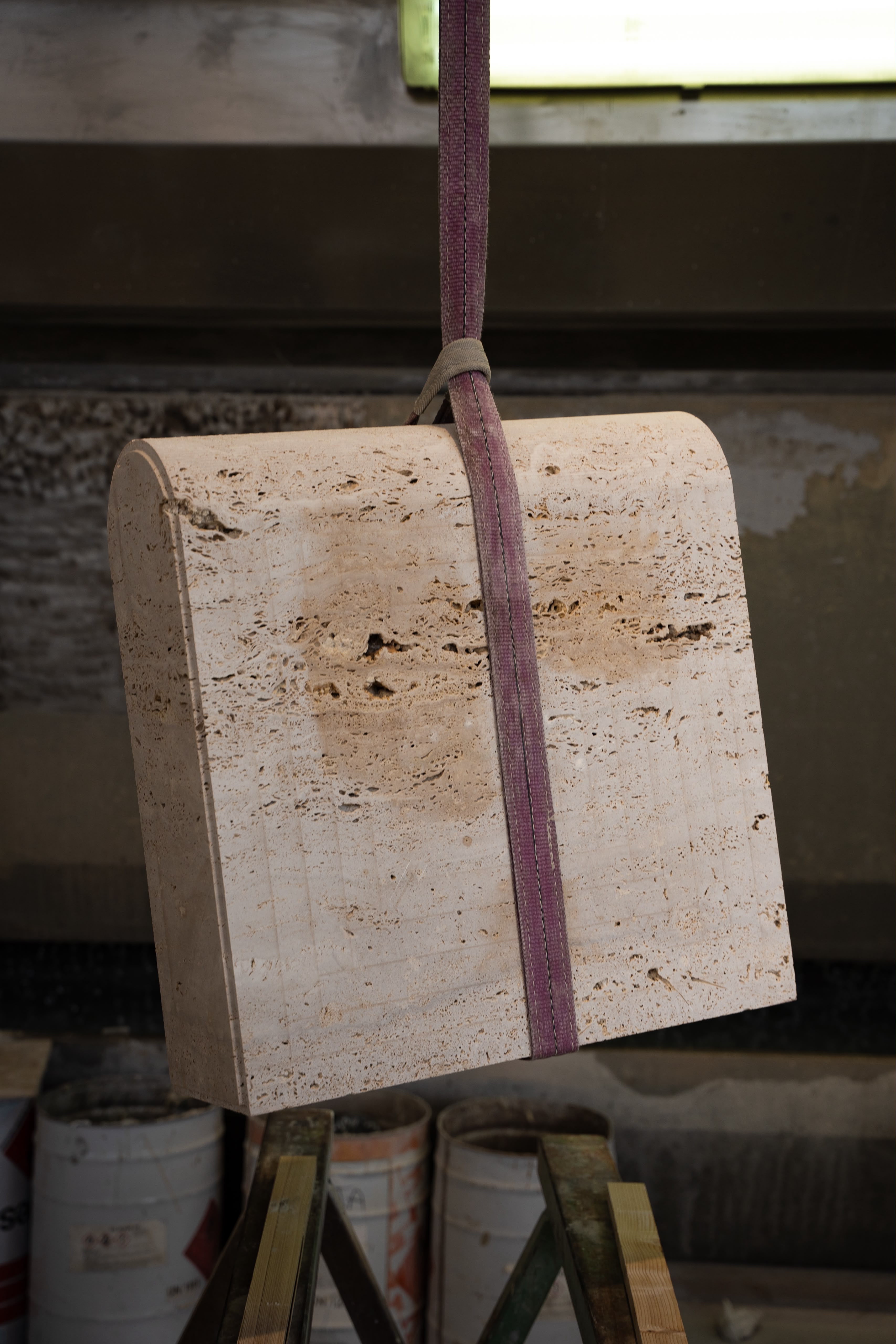
Almost forty years later, Pawson returns to this architectural language with the Neuendorf House Collection, translating the principles of the original residence into a series of tables, benches and seats made from solid travertine.
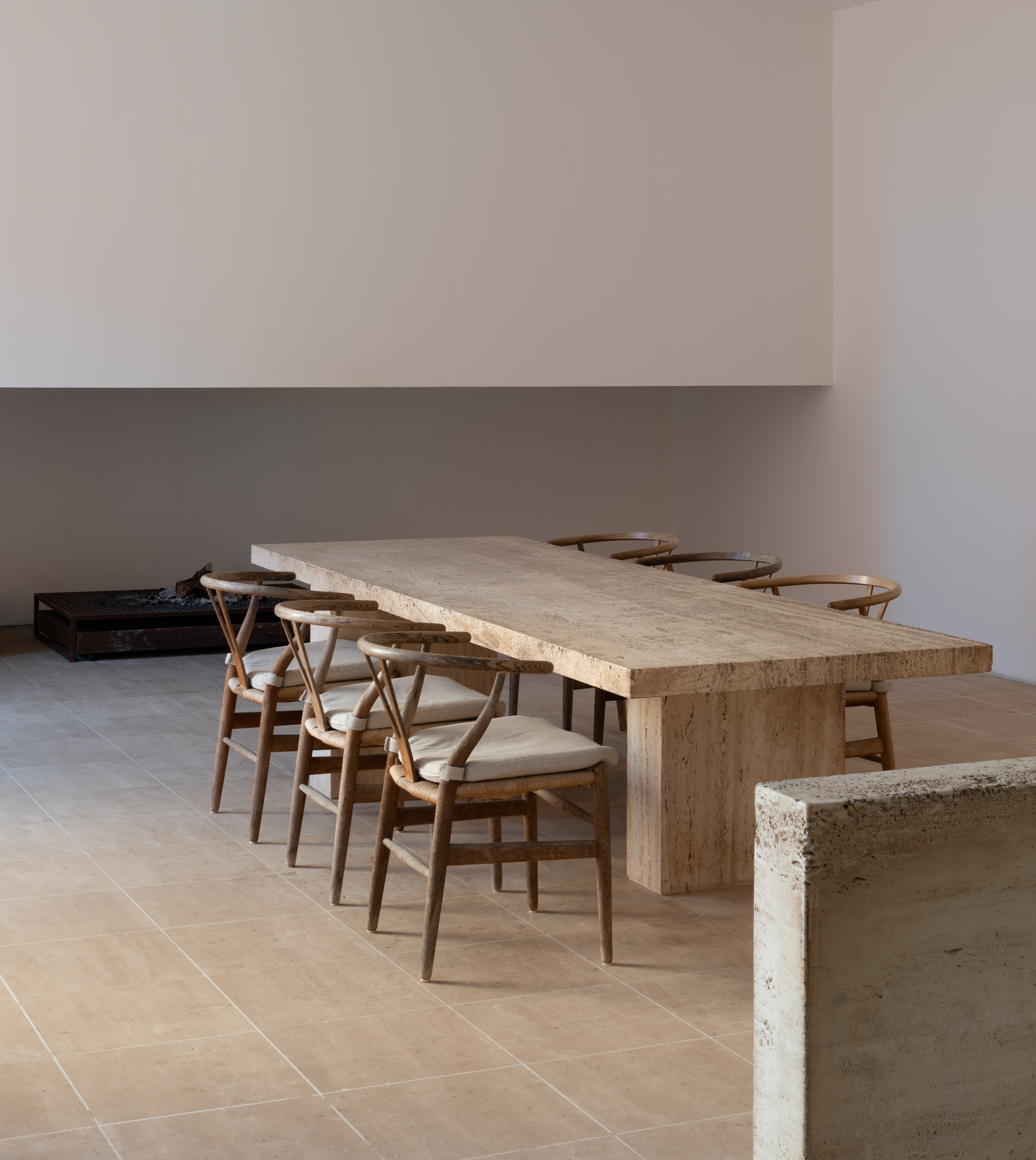
The natural limestone, with its distinctive texture and subtle variations, gives the furniture a sculptural presence. These pieces are conceived not simply as functional objects, but as architectural forms in their own right, designed to interact with both interior and exterior spaces.
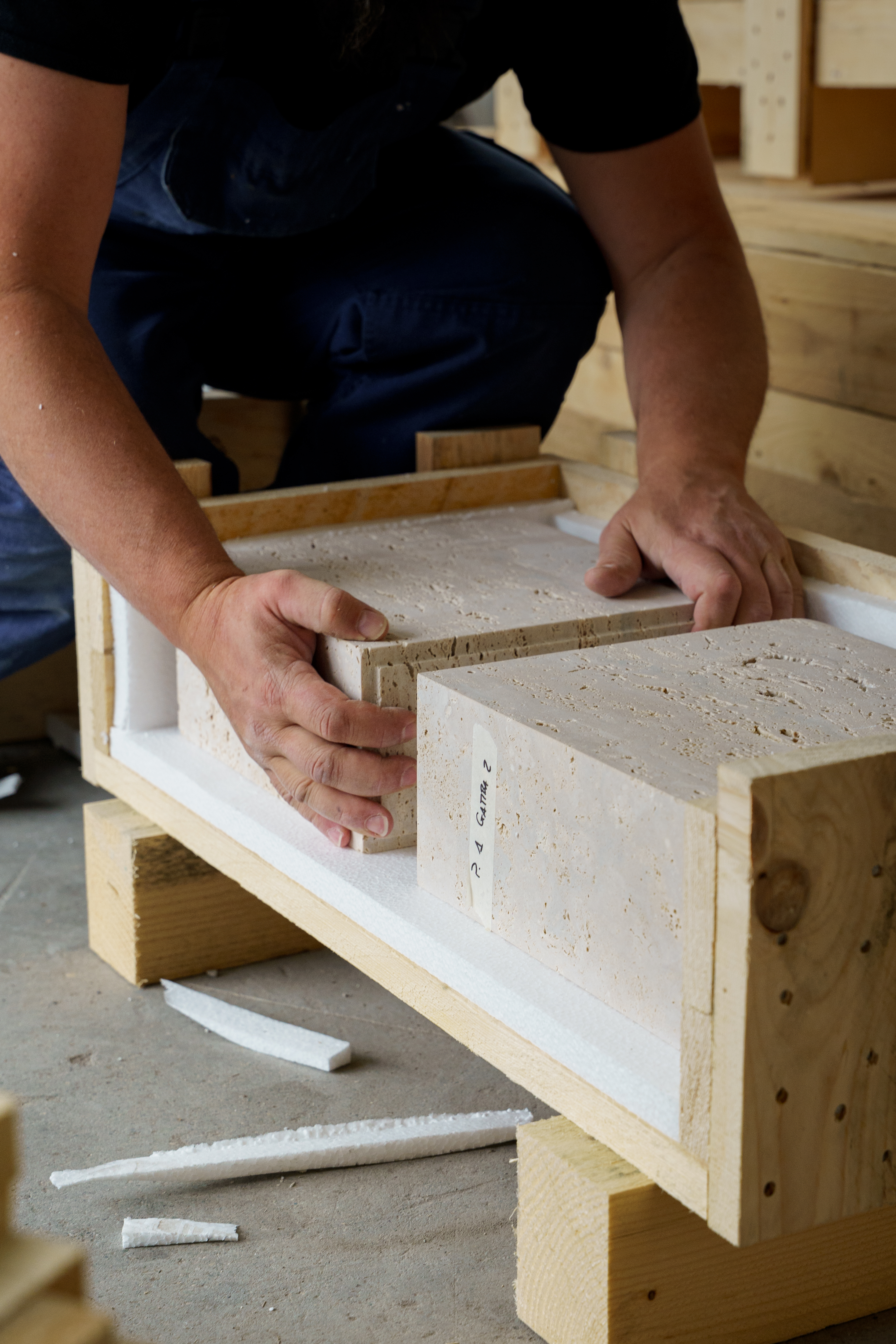
Presented in the historic setting of L’Hôtel de Maisons, the collection creates an unexpected dialogue between the restrained minimalism of Pawson’s work and the decorative heritage of eighteenth-century Paris.
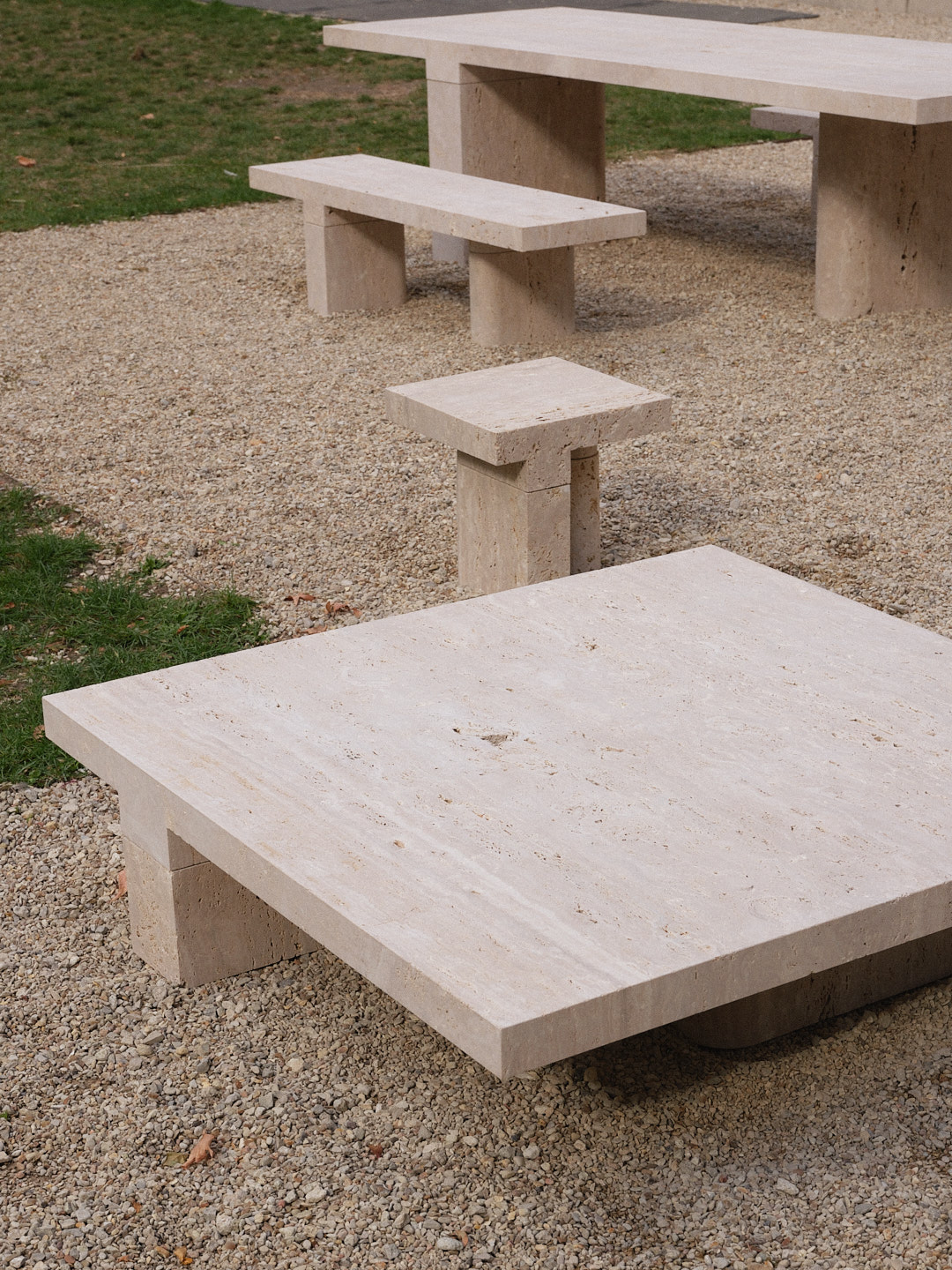
In a design landscape constantly searching for the next visual statement, Neuendorf House Collection offers a different perspective: an exploration of how simplicity, material and proportion can remain relevant across generations.
Sometimes, the most powerful design statement is knowing what to leave out.