
Can a Japanese-inspired bar tell us something about the future of how Paris eats, drinks and desires?
What happens when dinner becomes a little less about hunger and a little more about obsession?
At Bar Nomo, the answer arrives in waves: sharp, savory, seductive, occasionally outrageous. Umami is the word that comes closest to describing it, although even that feels insufficient. It is the elusive pleasure of something so precisely constructed that it seems almost impossible, until it is sitting in front of you.
We went last night, ready for a cocktail and a few rolls. We left thinking about the mechanics of desire.
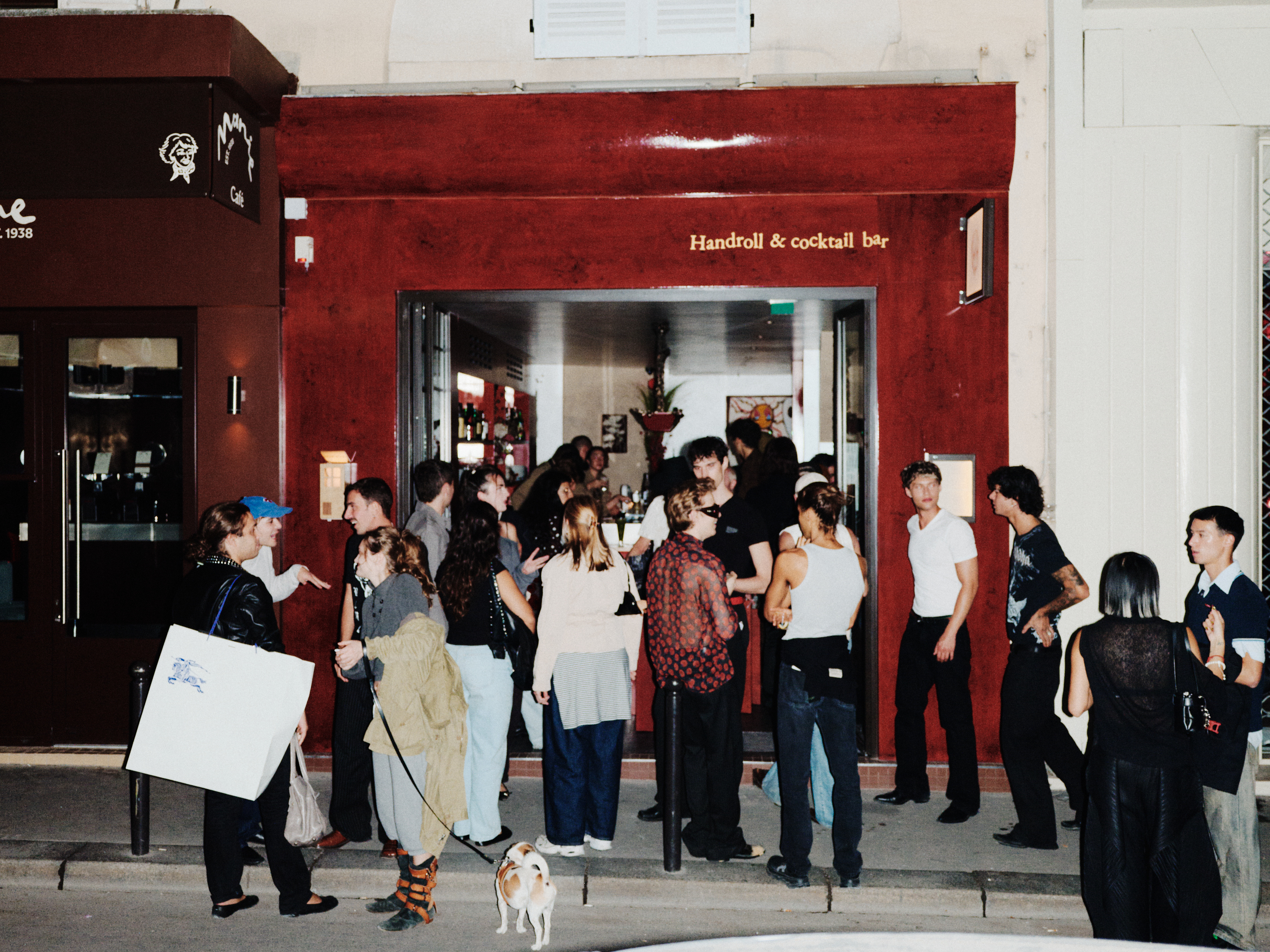
Located at 6 rue du Marché Saint-Honoré, beside its sibling Bar Omi, Bar Nomo is the latest addition to ONII’s expanding Parisian universe of Japanese-inspired dining. Its proposition is deceptively simple: temaki, sashimi, small plates and cocktails, brought together by a shared obsession with flavour. The execution is considerably more interesting. Everything follows a certain internal logic, from the first sip to the final bite, building an experience that feels less like a conventional dinner than a meticulously choreographed escalation.
The cocktail set the tone: bright, acidic and intense, with enough bite to cut through the richness of what followed. The food answered in kind. Each roll pushed the experience a little further, introducing deeper, rounder and more enveloping flavours, at times almost indecent in their voluptuousness. Nothing slipped into heaviness. A fine line of delicacy held everything together, allowing the ingredients to provoke without ever shouting.
Then came the eel temaki. The coup de grâce. A final, gloriously unfair move that made everything before it feel like preparation for the main event. Consider it a deliciously playful act of culinary sabotage.
The point is not simply that the food tastes good. It is that the experience understands pacing, contrast and anticipation. Bar Nomo knows when to sharpen, when to soften and when to leave you wanting another round. In an era obsessed with spectacle, that kind of precision feels almost radical.
Paris Has Acquired a Taste
The French capital’s relationship with Japanese cuisine is hardly new. From the early establishments that introduced Japanese food to Parisian diners to the concentration of restaurants around rue Sainte-Anne, the city’s appetite has evolved alongside its understanding of Japan’s culinary traditions. Sushi was the gateway; ramen, izakaya culture, omakase and increasingly specialised approaches to ingredients and technique have expanded the conversation.
The current moment, however, is about more than culinary discovery. Japanese references have become part of a wider Parisian design and hospitality vocabulary, intersecting with fashion, contemporary art, architecture and nightlife. The restaurant is no longer merely a place to consume. It is a cultural proposition, an environment designed to shape how an evening feels, how a drink tastes and how an experience stays with you afterwards.
This shift also reflects a broader transformation in premium hospitality. As the distinction between restaurant, cocktail bar, gallery and social destination becomes increasingly fluid, identity is built through the coherence of the whole experience. The product matters, naturally. So does the room, the service, the soundtrack, the glassware and the subtle choreography that makes everything feel inevitable.
Bar Nomo understands the assignment. Rather than attempting to be another all-encompassing Japanese restaurant, it concentrates on the intimacy of the bar. Its relationship with Bar Omi gives the project a recognisable family resemblance without reducing the two addresses to variations on the same theme. Where one establishes its own proposition, the other moves closer to the ritual of drinking, sharing and eating at the counter.
Flowers, Resin and Other Forms of Seduction
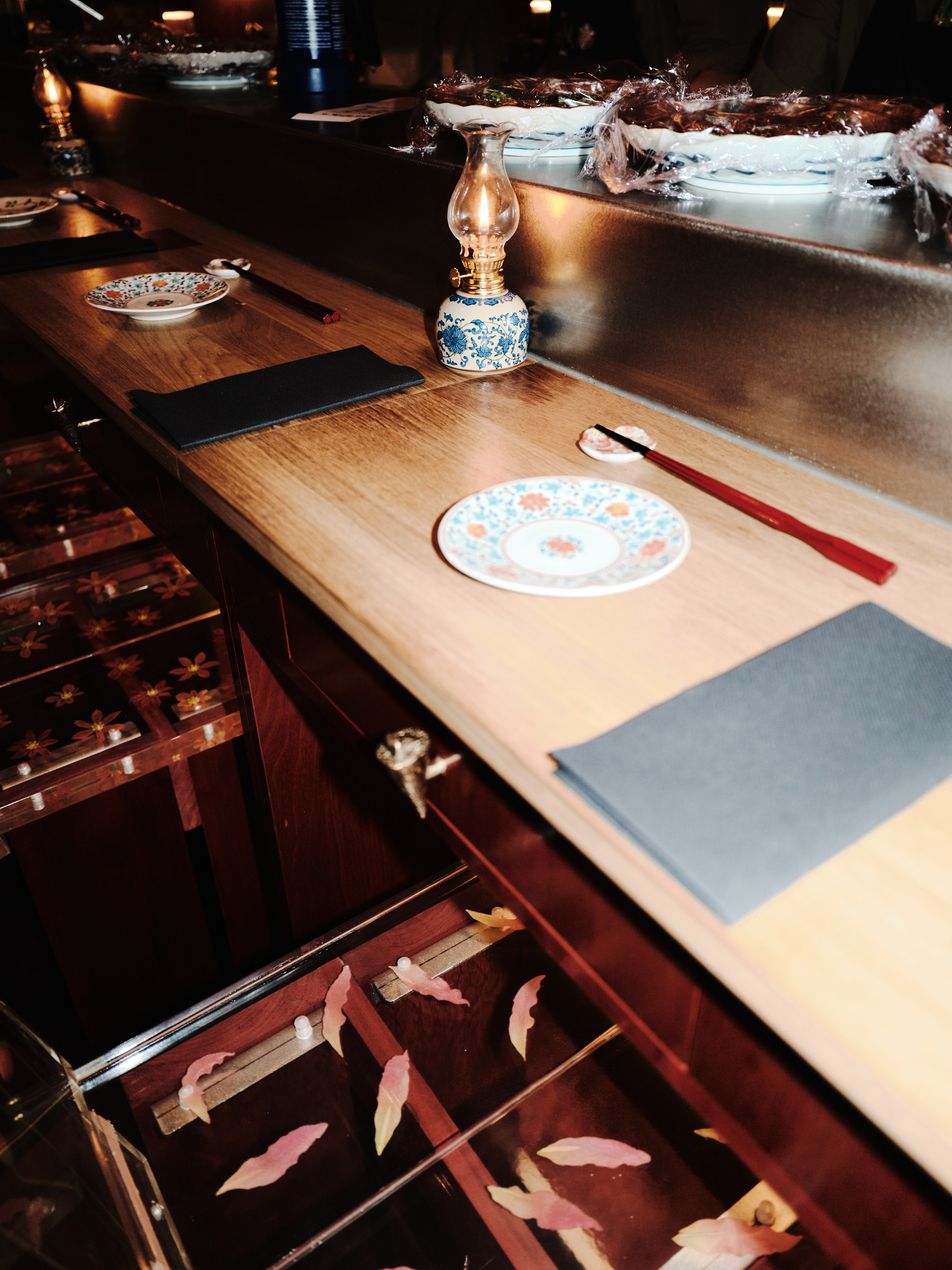
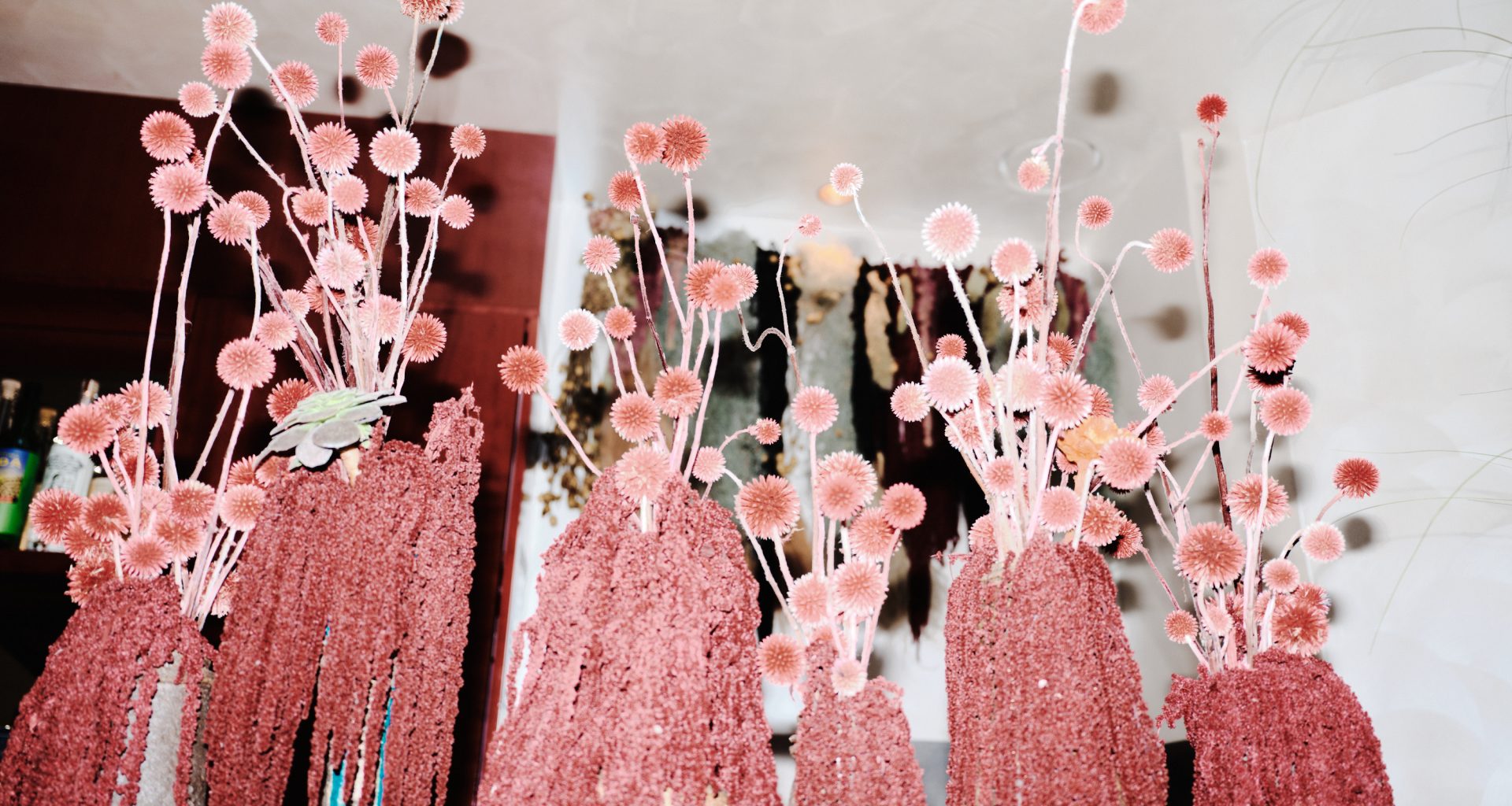
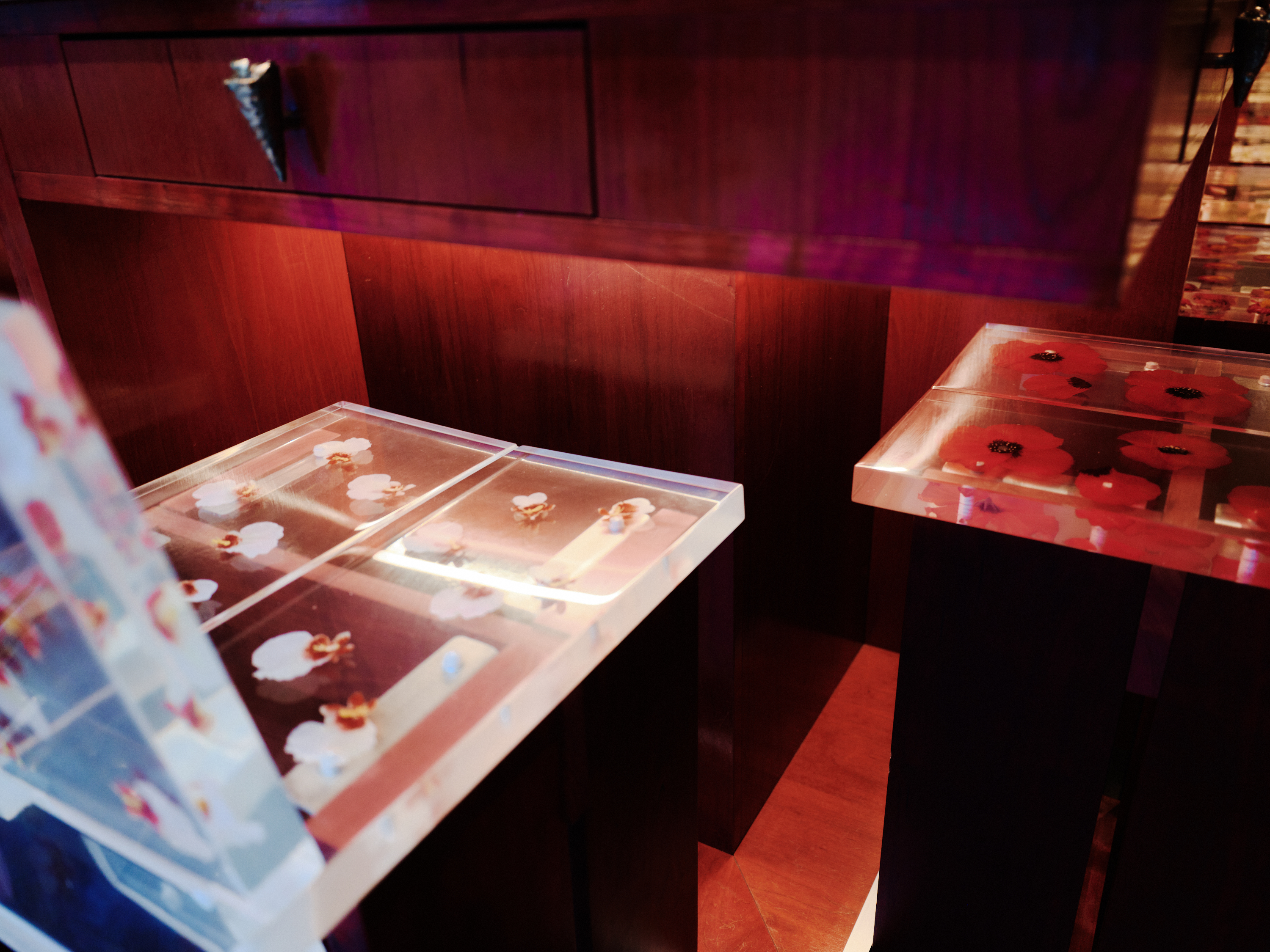
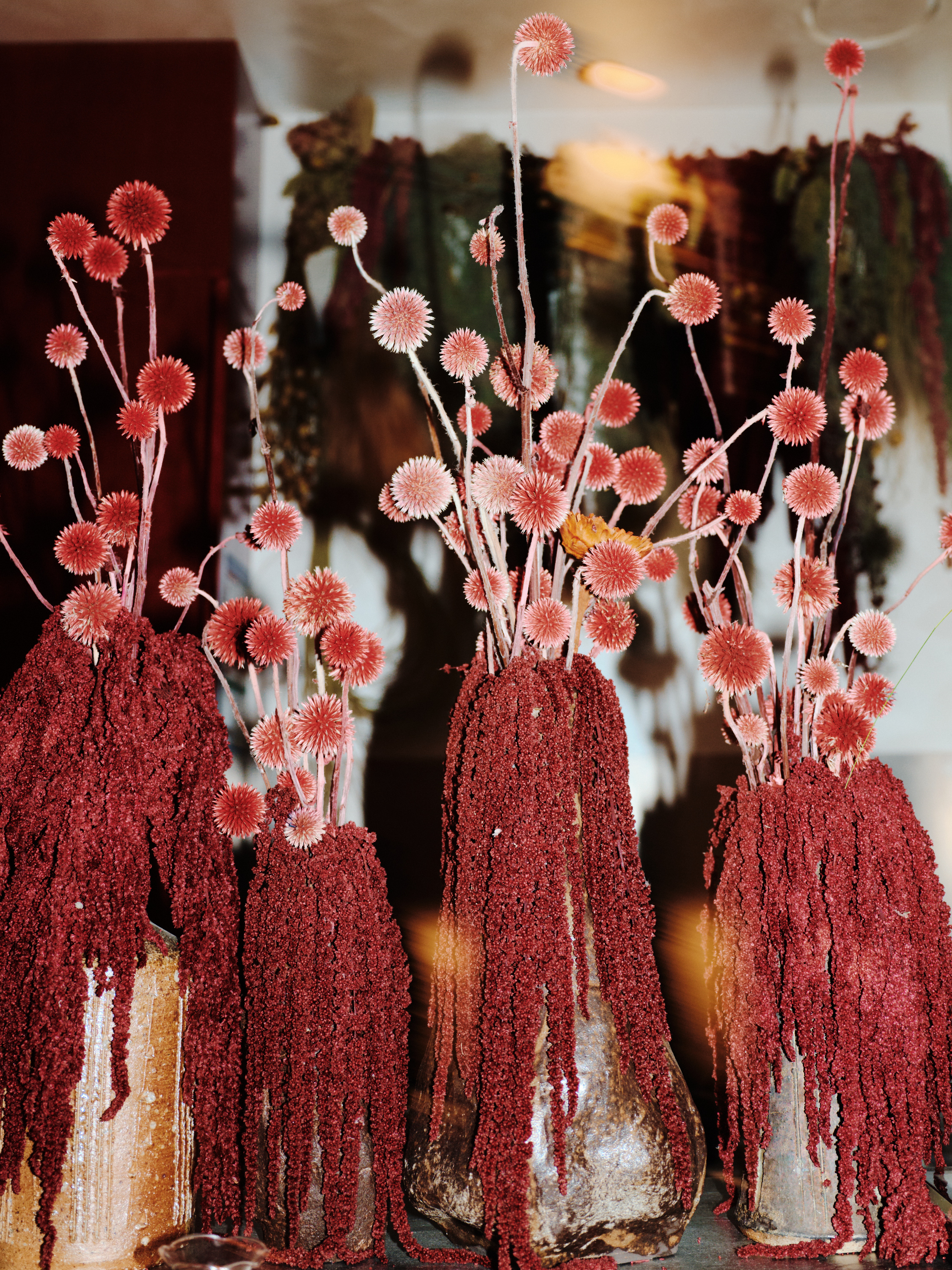
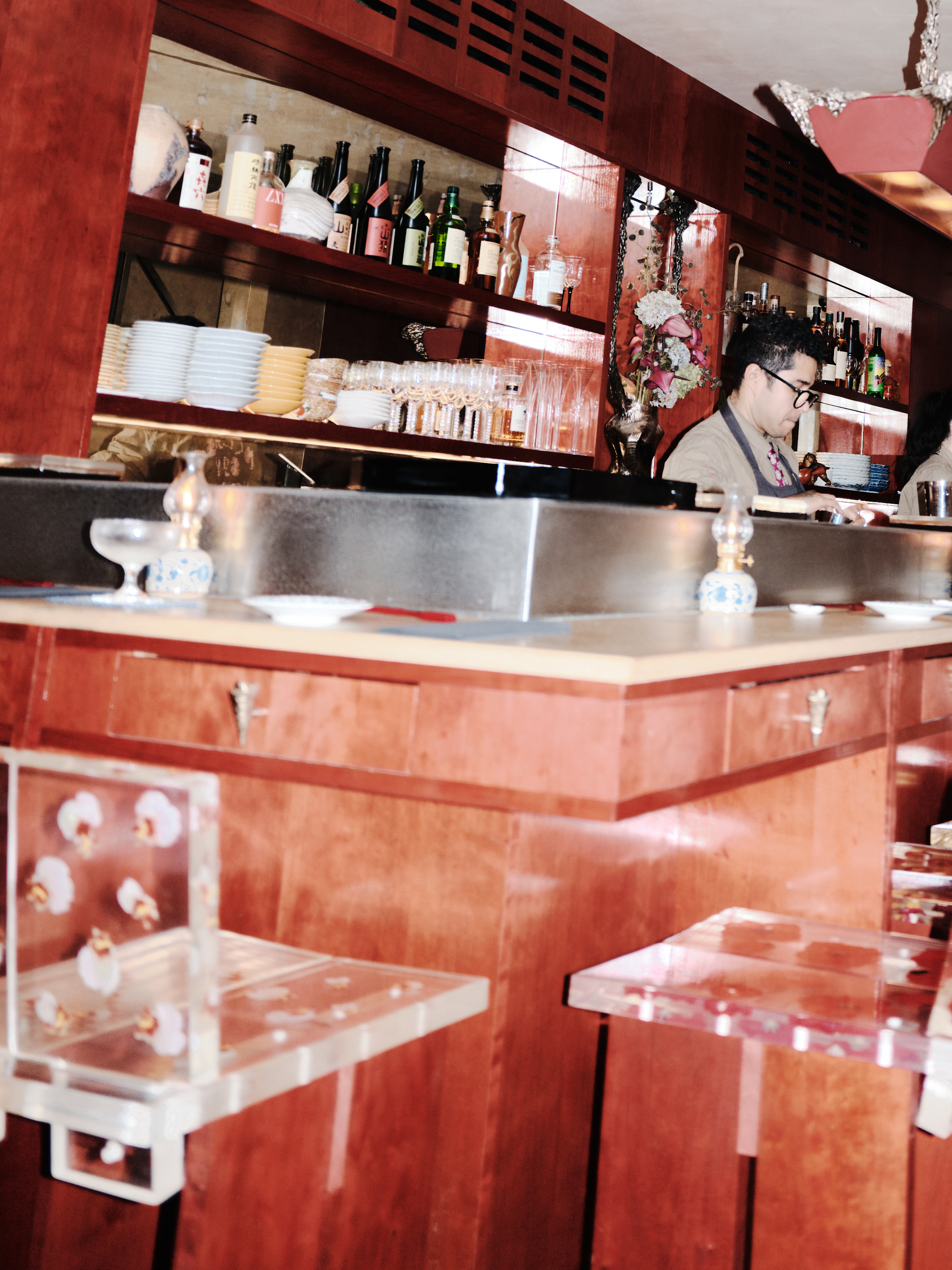
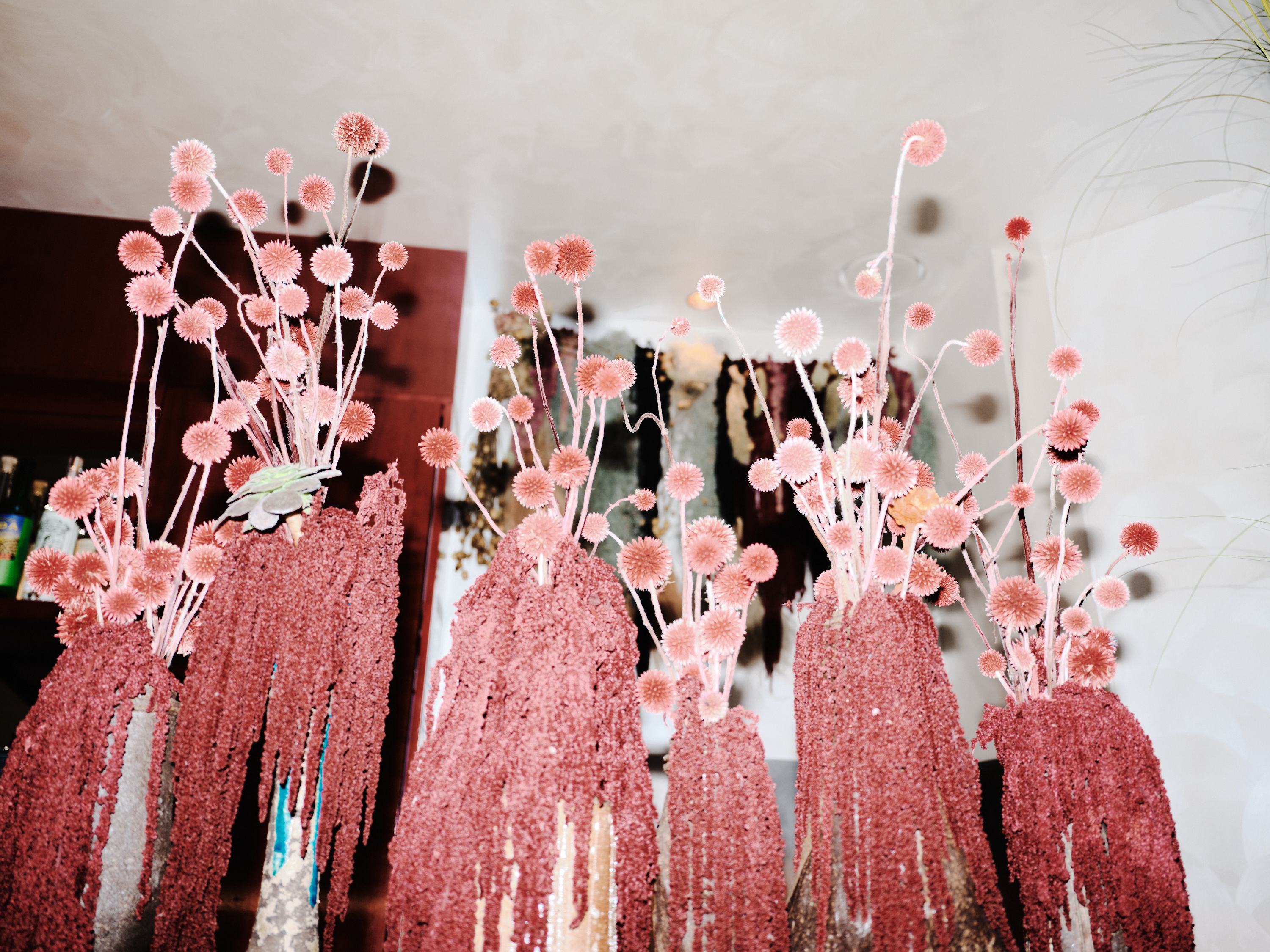
Designed by Studio Tom Ducarouge, the interior takes its cue from Shiro Kuramata’s iconic 1988 Miss Blanche chair, with its roses suspended inside transparent acrylic. At Nomo, the flower becomes an organising principle: appearing across fabrics, resin objects, bronze, ceramics, lighting and fresh arrangements.
The result is a space that treats design as more than expensive scenery. Material, texture and reference work together to create an atmosphere that feels intimate, tactile and faintly surreal. Japanese kissaten cafés inform the lighting, while the floral vocabulary moves between delicacy and artifice. The room is carefully composed without becoming precious, an important distinction in a city where aesthetic intention can sometimes overwhelm the experience it is supposed to serve.
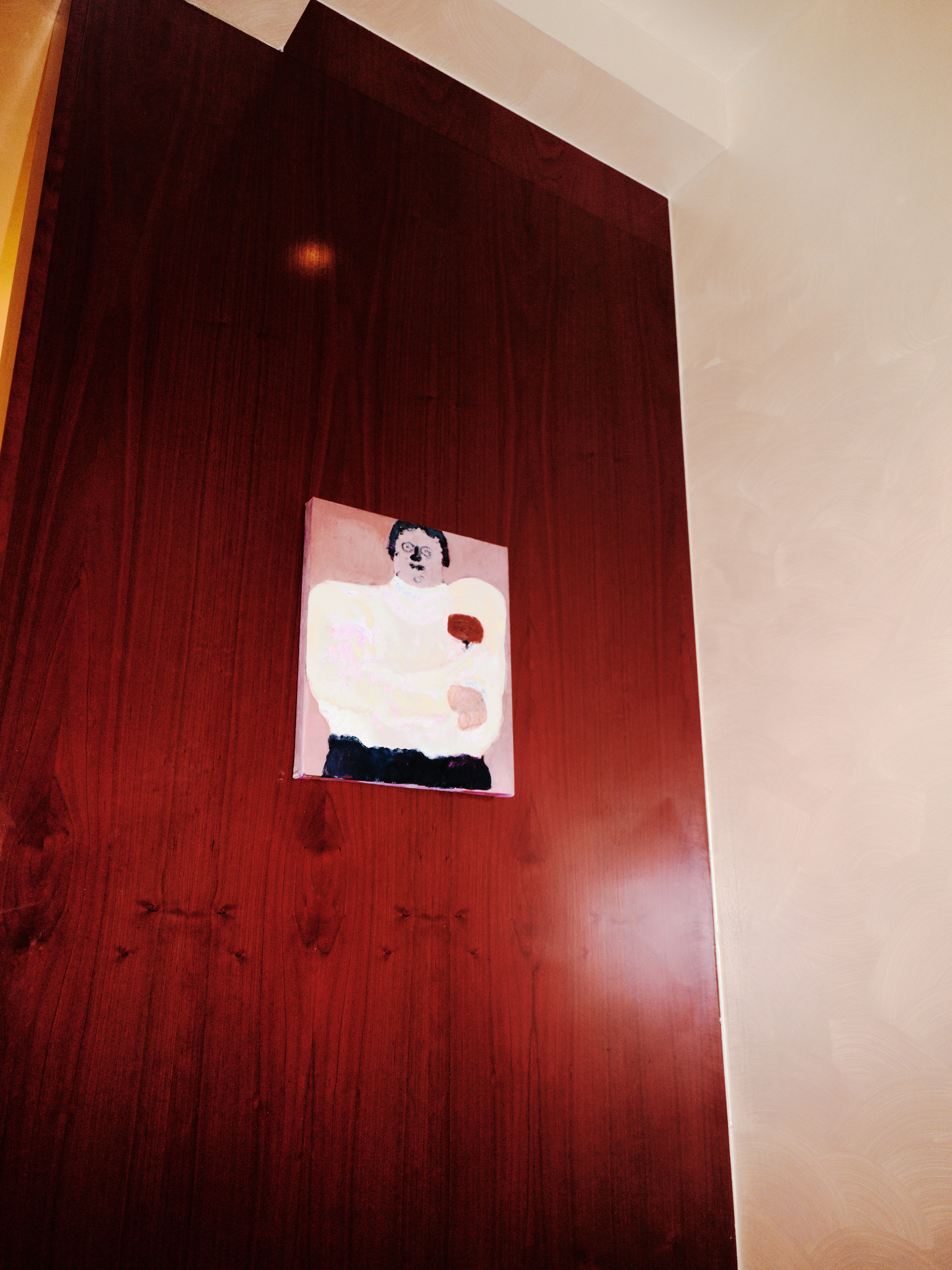
Art extends the same conversation beyond the interiors. Developed through a dialogue between founder Arthur Cohen and Blanche Goudcheaux, director of the Paris gallery Mendes Wood DM, the selection includes works by Precious Okoyomon, Giangiacomo Rossetti, Allan Gandhi and Kara Chin. Their different practices share an attraction to the uncanny, the imaginary and the unstable border between dream and reality.
The effect is less that of a restaurant displaying art than a space allowing food, objects and images to occupy the same imaginative territory. Everything participates in the atmosphere. Nothing needs to explain itself too loudly.
The Business of Pleasure
The kitchen, led by executive chef Yuji “Taku” Mikuriya, with Kazuhisa Akaba as chef de cuisine, follows a product-led approach. Otsumami establish the opening rhythm, moving from pickled vegetables and toro-ponzu monaka to shokupan with Échiré butter and caviar, alongside aged Wagyu cecina. The menu then narrows its focus to seven principal ingredients, explored through fourteen preparations and freshly rolled temaki.
That concentration is part of the appeal. Instead of multiplying choices for the sake of abundance, Nomo builds variation around a controlled set of ingredients. Tuna, eel, Wagyu, salmon, hamachi and vegetarian options become different expressions of the same format. The framework is familiar; the details are where the personality emerges.
The cocktail programme, led by Dimitri Barclais and Mathieu Zouhairi, operates according to a similar principle. Shiitake enters a Manhattan, yuzu kosho sharpens a Margarita, white koji transforms an Espresso Martini, while Okinawan ginger brings its particular character to a Moscow Mule. Clarification, fat-washing, house infusions and diamond-cut ice give the drinks their technical finish without turning technique into the main attraction.
For contemporary hospitality, this is an increasingly relevant equation: a clear product identity, a recognisable aesthetic and a format that encourages guests to engage with the experience rather than simply order a meal. The commercial value lies not in novelty alone, but in the ability to make the concept coherent, distinctive and worth returning to. Nomo’s proposition is focused enough to be immediately legible, yet layered enough to reward attention.
A Very Parisian Idea of Japan
The question is not whether Paris is becoming Japanese. It is how the city is translating Japanese culinary and aesthetic codes into something that belongs to its own present.
That distinction matters. Cultural references can easily become decorative shorthand, reduced to a familiar ingredient, a minimalist interior or a carefully chosen piece of furniture. The more compelling projects use those references to build a genuine relationship between taste, technique, space and behaviour. Nomo’s strongest moments emerge when these elements work together, when the intensity of a cocktail makes sense beside a roll, when a material reference resonates with the atmosphere rather than simply embellishing it.
The result is neither a claim to reproduce Japan nor an attempt to reinvent Paris from scratch. It is a contemporary hybrid, shaped by the international circulation of food, design and desire. The city has always absorbed outside influences and turned them into part of its own cultural identity. Its current fascination with Japanese-inspired hospitality is another chapter in that ongoing exchange.
Last night, the clearest expression of the idea came at the very end, in the form of that eel temaki. No manifesto, no elaborate explanation, just a final bite with enough character to bring the entire evening into focus.
Umami, it turns out, is not merely a flavour. At its most compelling, it is the feeling that every element has found its place, leaving you satisfied, slightly unsettled and already considering a return.
Paris knows a thing or two about desire. Bar Nomo simply gives it a new aftertaste.