A$AP Rocky’s AWGE / Anti-War Global Economics brings military codes, concert dressing, luxury and streetwear together for a collection that stays deliberately caught between seriousness and spectacle.
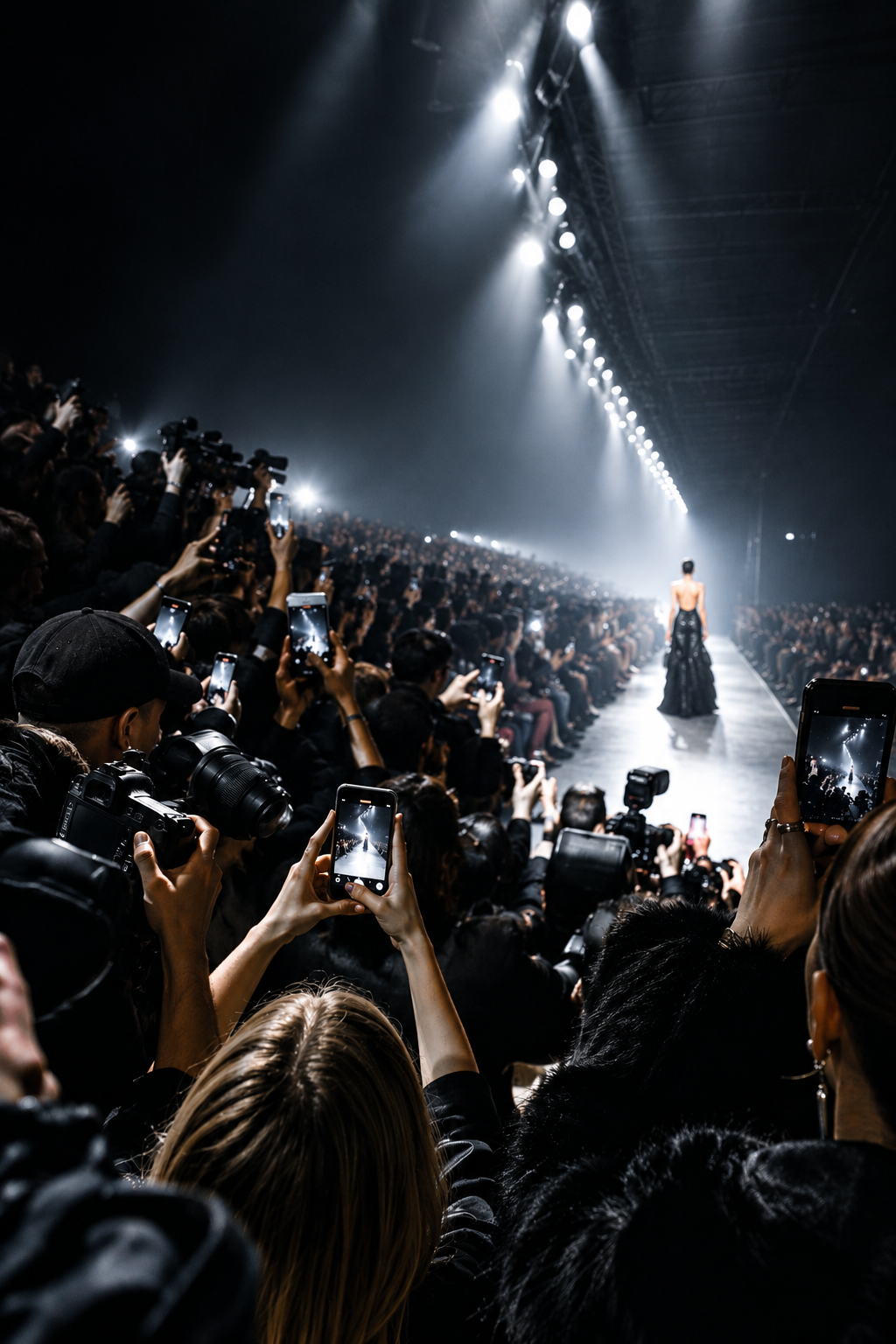
The set said plenty before the first look appeared. A black ship marked AWGE rose at the end of the runway, while screens moved between close-ups of the clothes and the audience. It looked like a warship, but also like an enormous stage waiting for a performer. That tension became the mood of the entire Paris show.
Shop AWGE’s latest collection online, now available for pre-order.
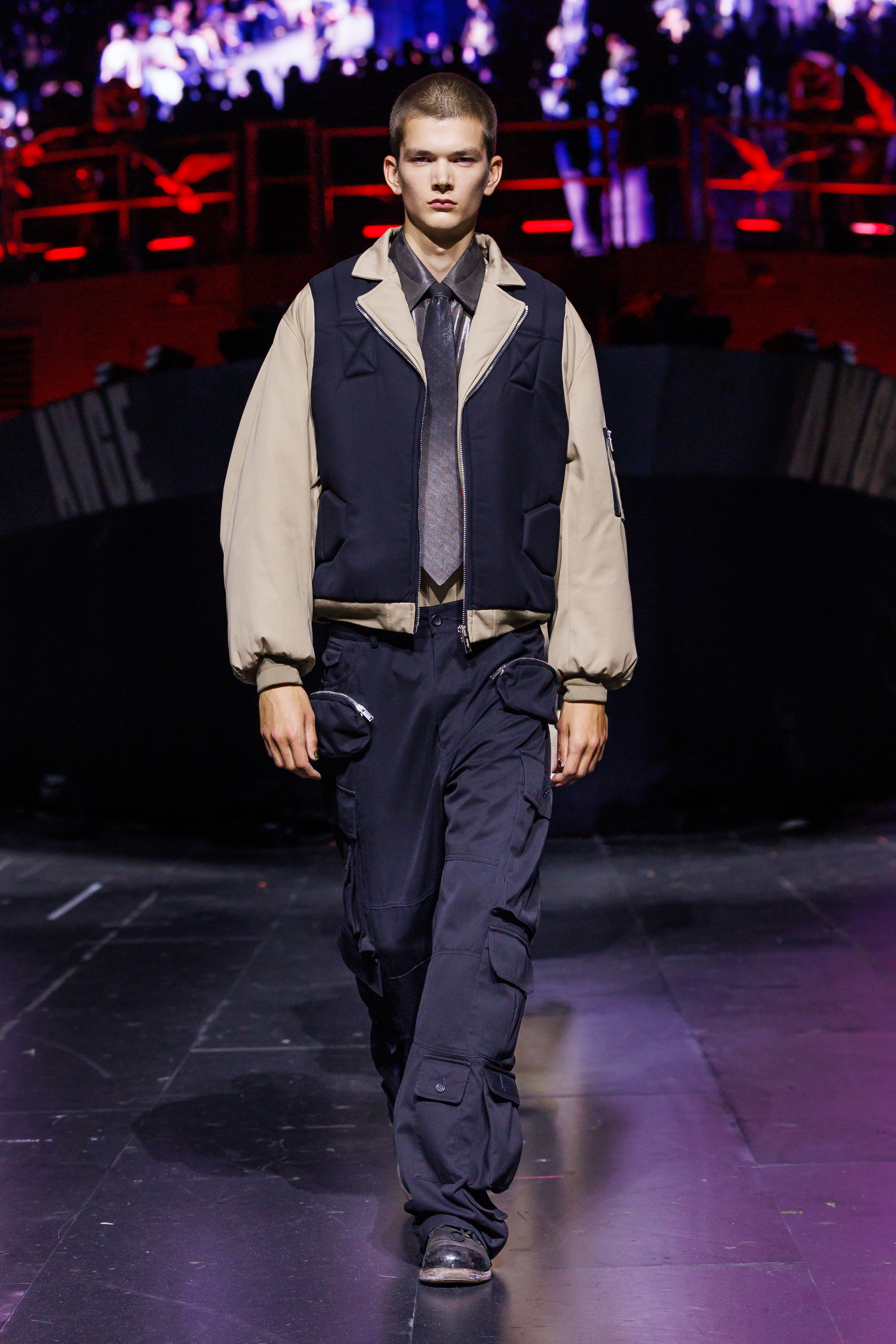
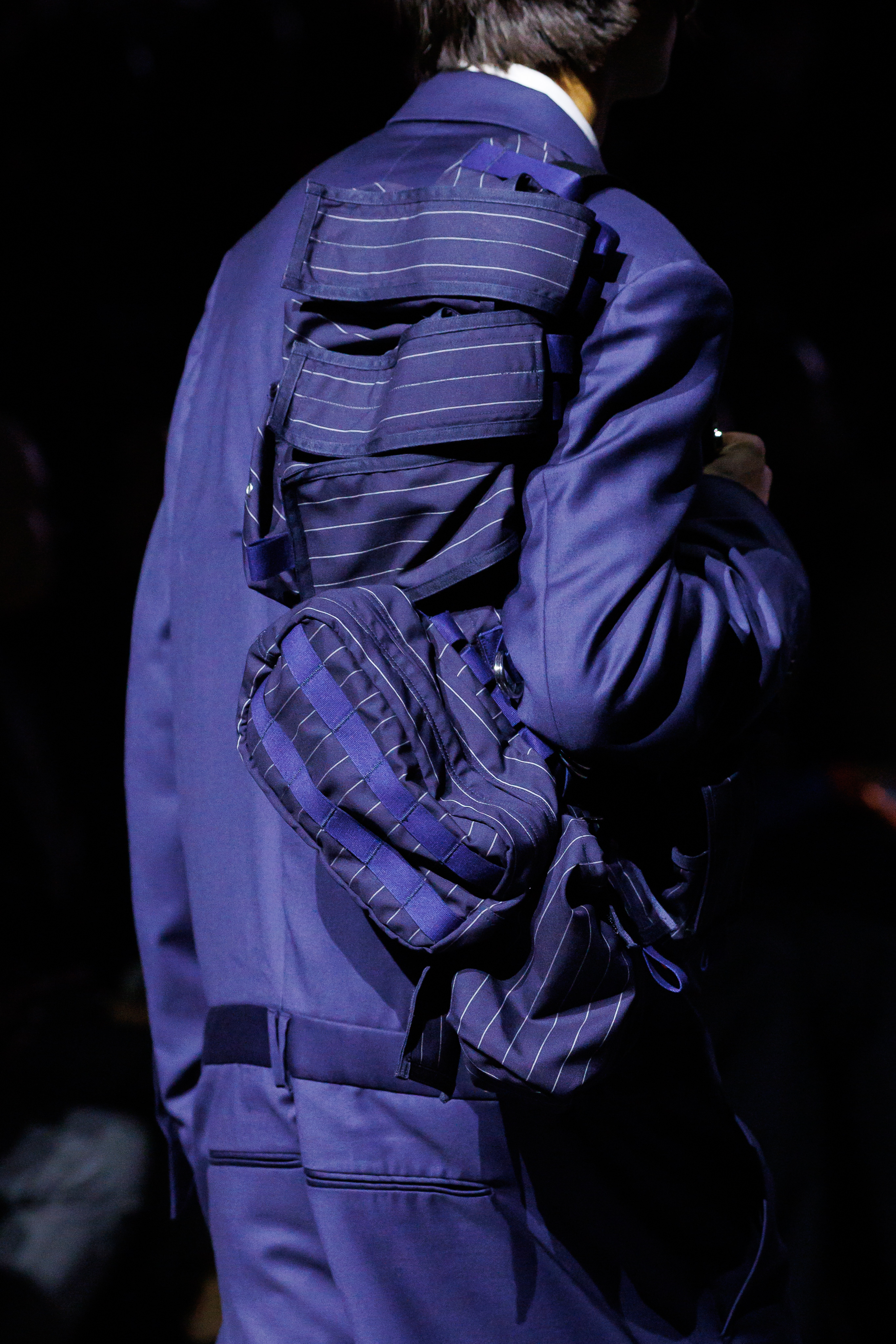
First came out a beige bomber layered with a navy quilted vest, a metallic tie catching the light at the neck, and black cargo trousers with pouches swinging from the thighs. It looked part uniform, part office dressing, part stage costume.
Throughout the collection, those references kept folding into one another.
A$AP Rocky’s label AWGE has always existed somewhere between fashion, music and a wider creative collective, and this collection grew from the clothes he has also been developing for the stage.
And it shows in the way the garments respond to light. The way black varnish catches a spotlight like it catches a camera flash even from the nosebleeds. A khaki jacket and mini skirt appeared coated in a finish that faded into glossy black from both ends, creating the impression that the fabric had been dipped in something slick.
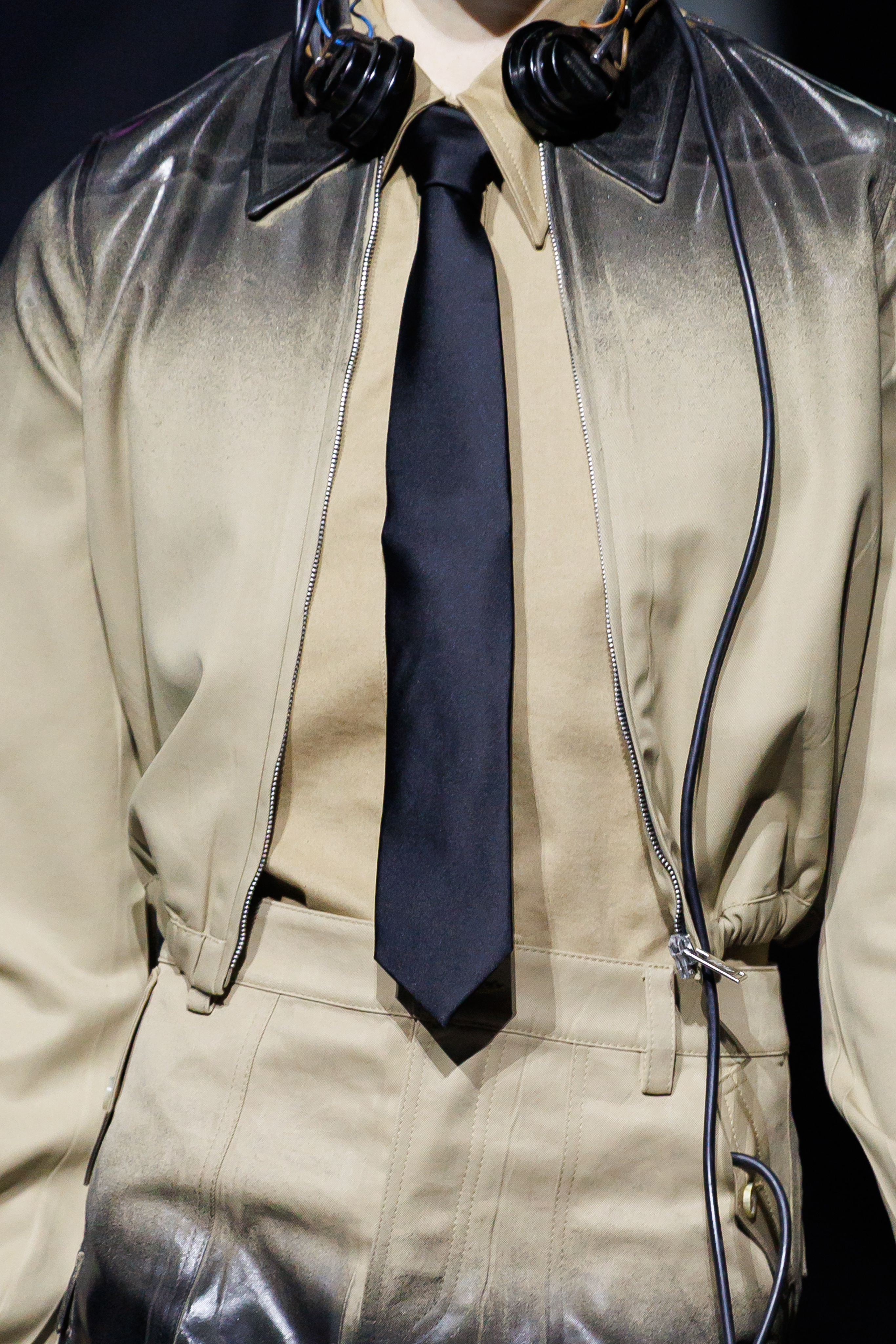
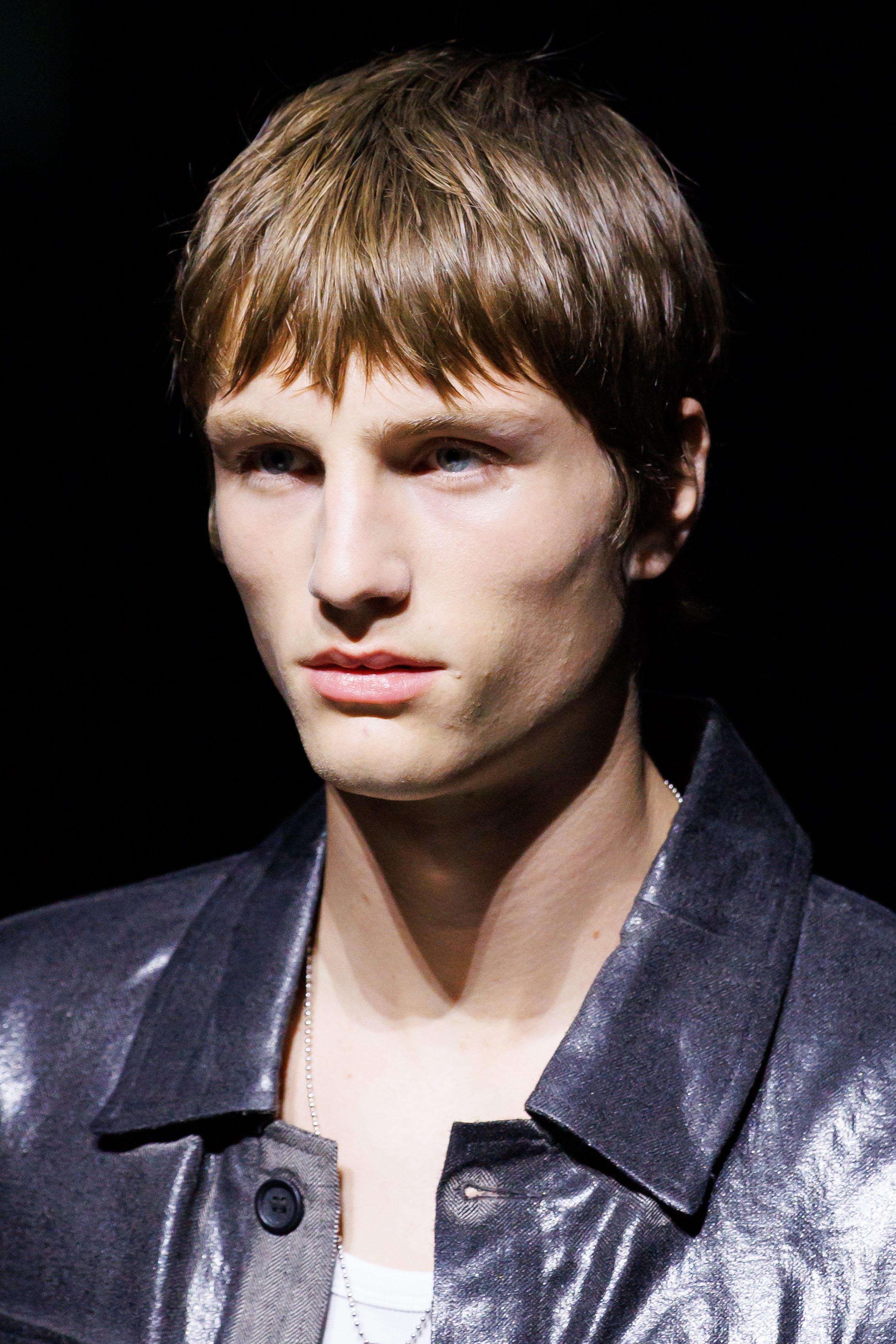
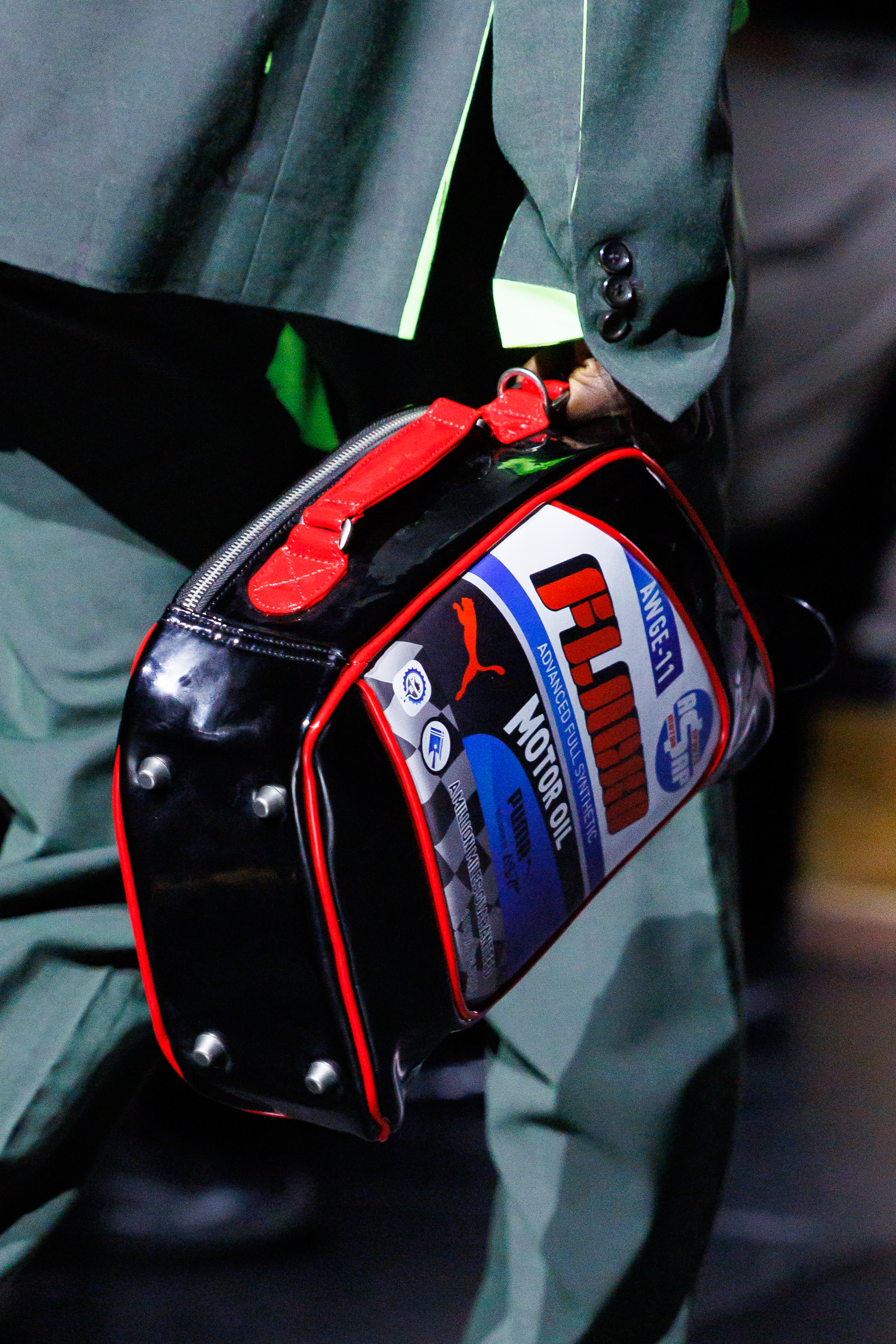
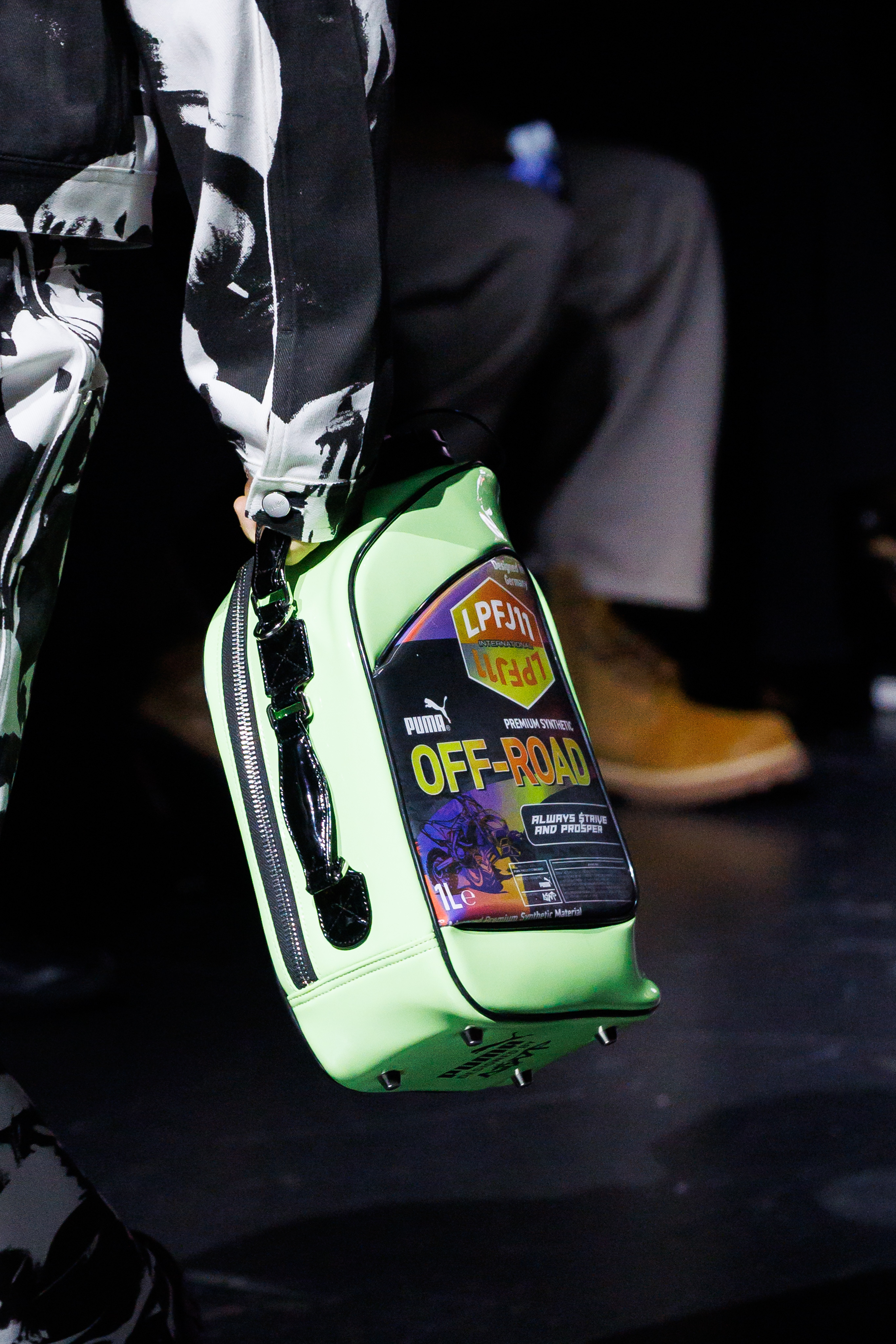
Oil, and oil-like, glossy finishes appeared across coated shirting, skirts and trousers as well as bags in high-gloss outerwear and on accessories that looked freshly dipped.
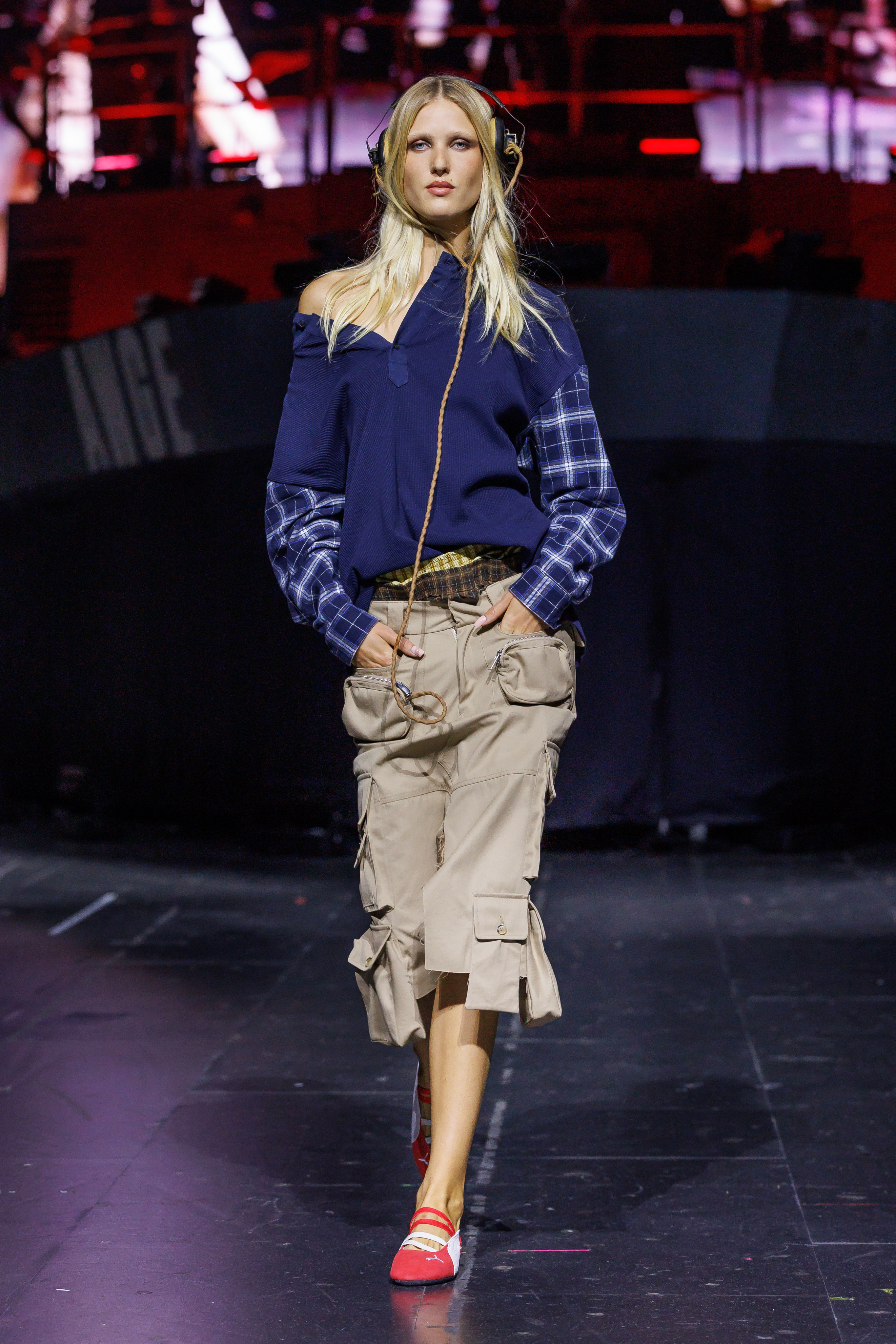
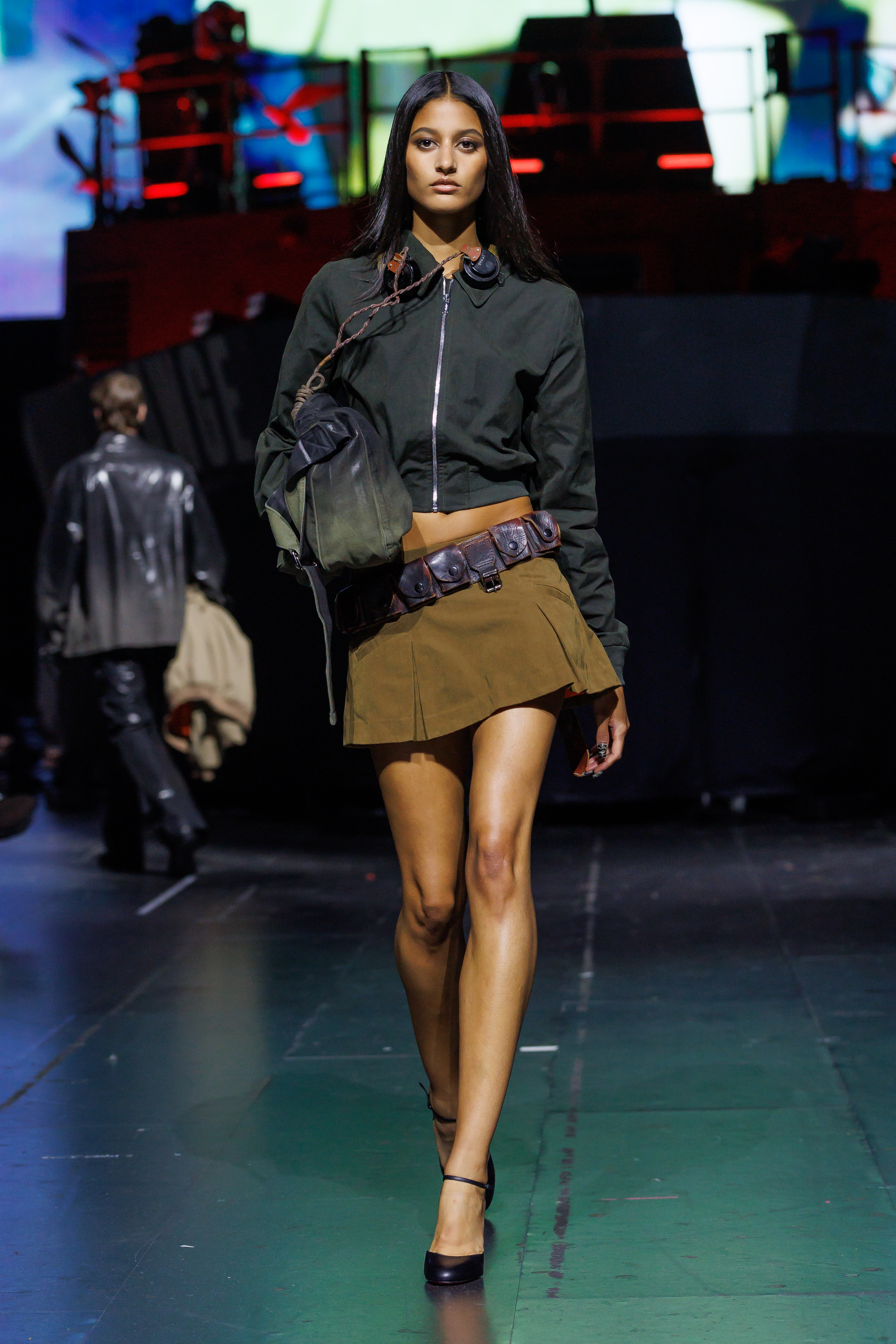
Another nod to music comes in the form of headphones resting around the models’ necks, their cables trailing down their legs.
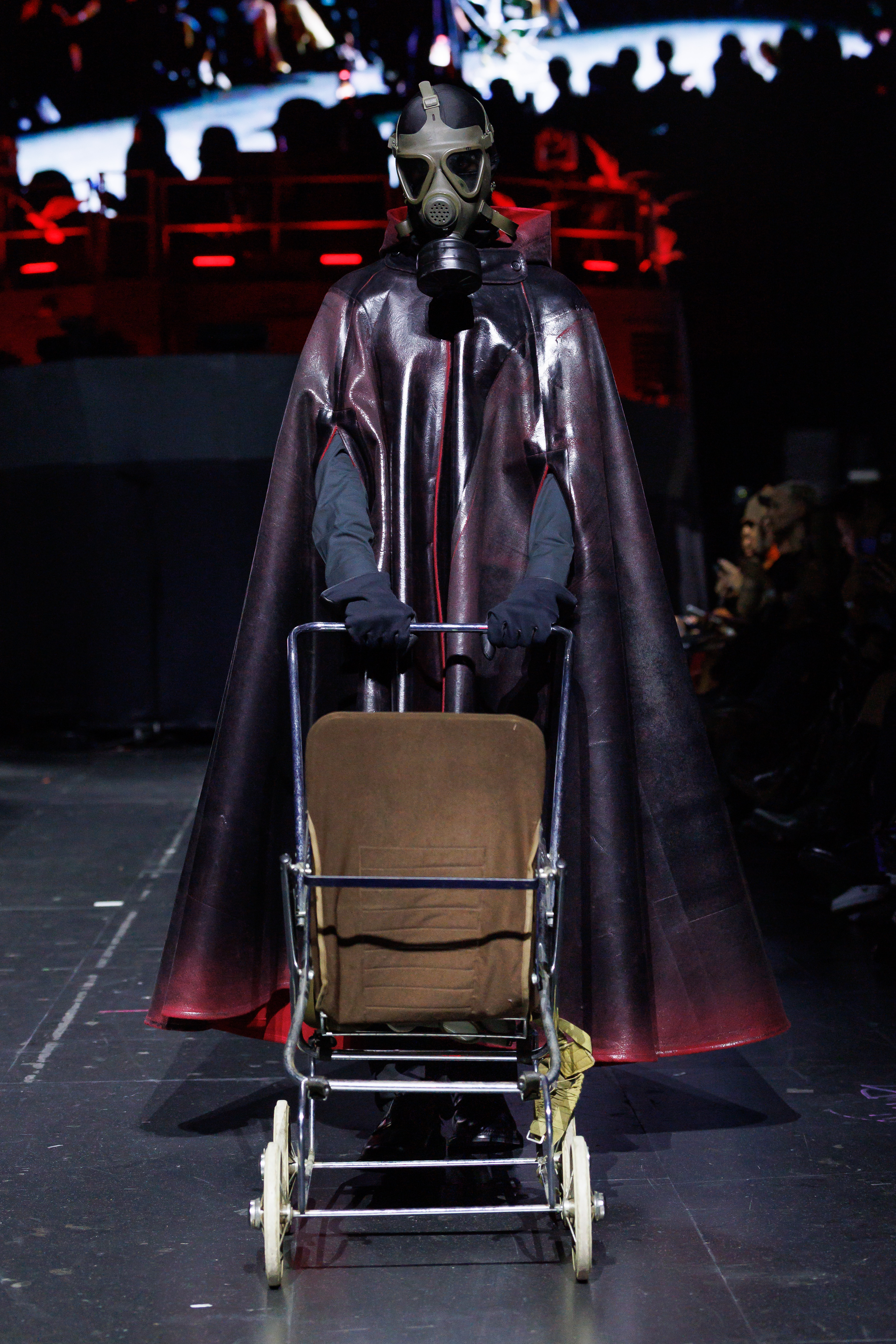
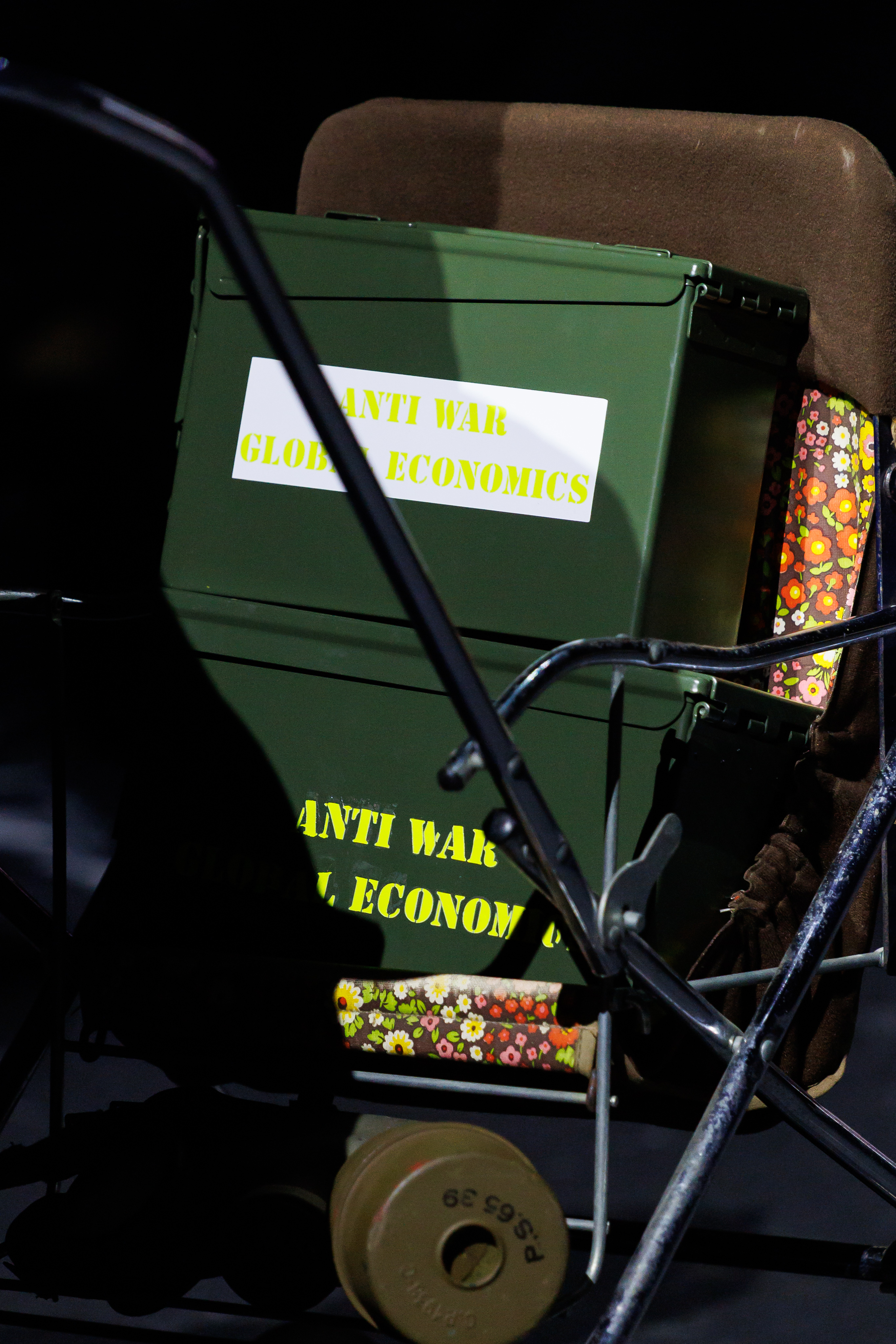
One of the collection’s most striking moments was a long, lacquered cape darkening toward a red hem, worn with a full gas mask and a vintage pram pushed ahead of the model. It was an image that could feel ominous or strangely surreal depending on how long you looked at it.
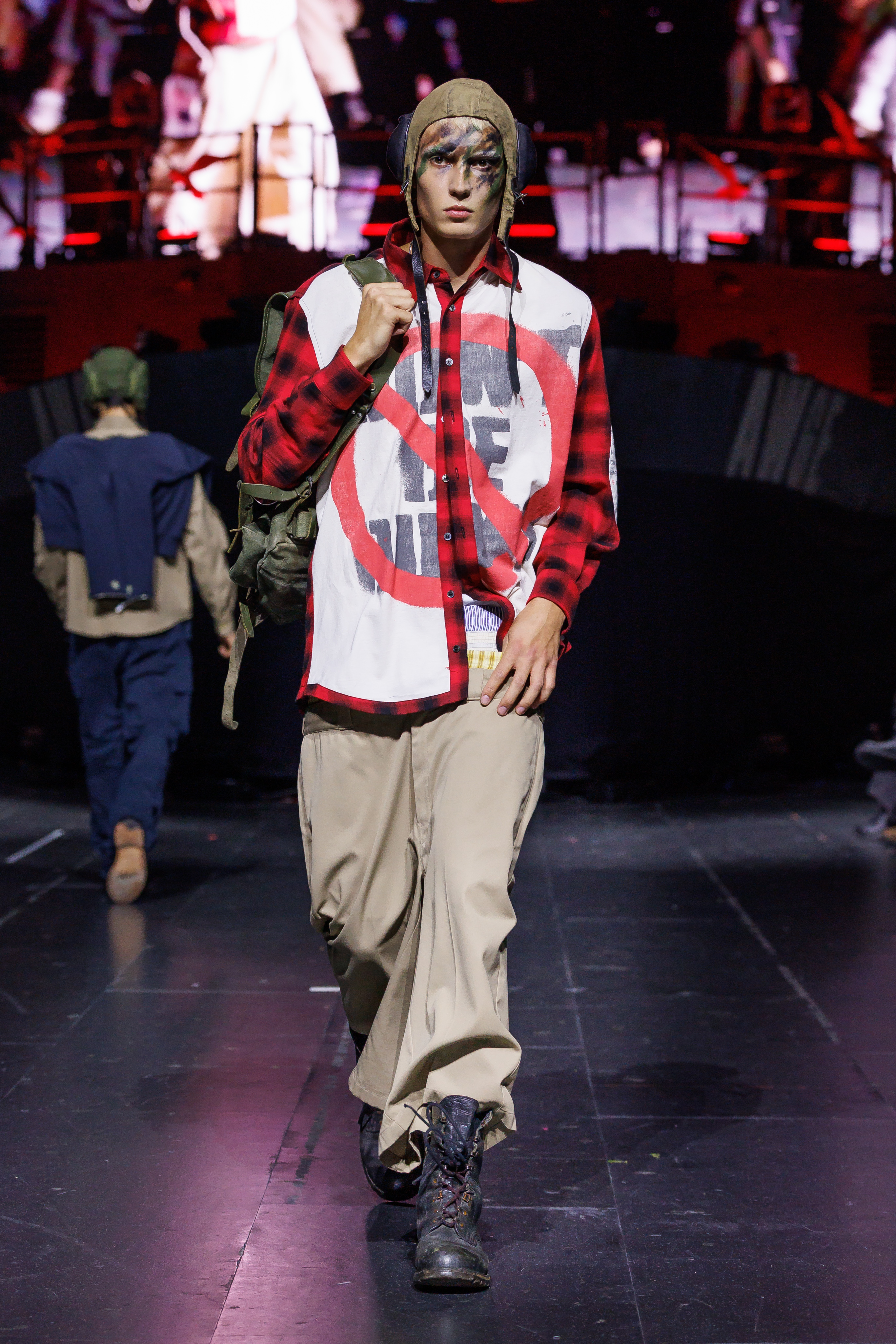
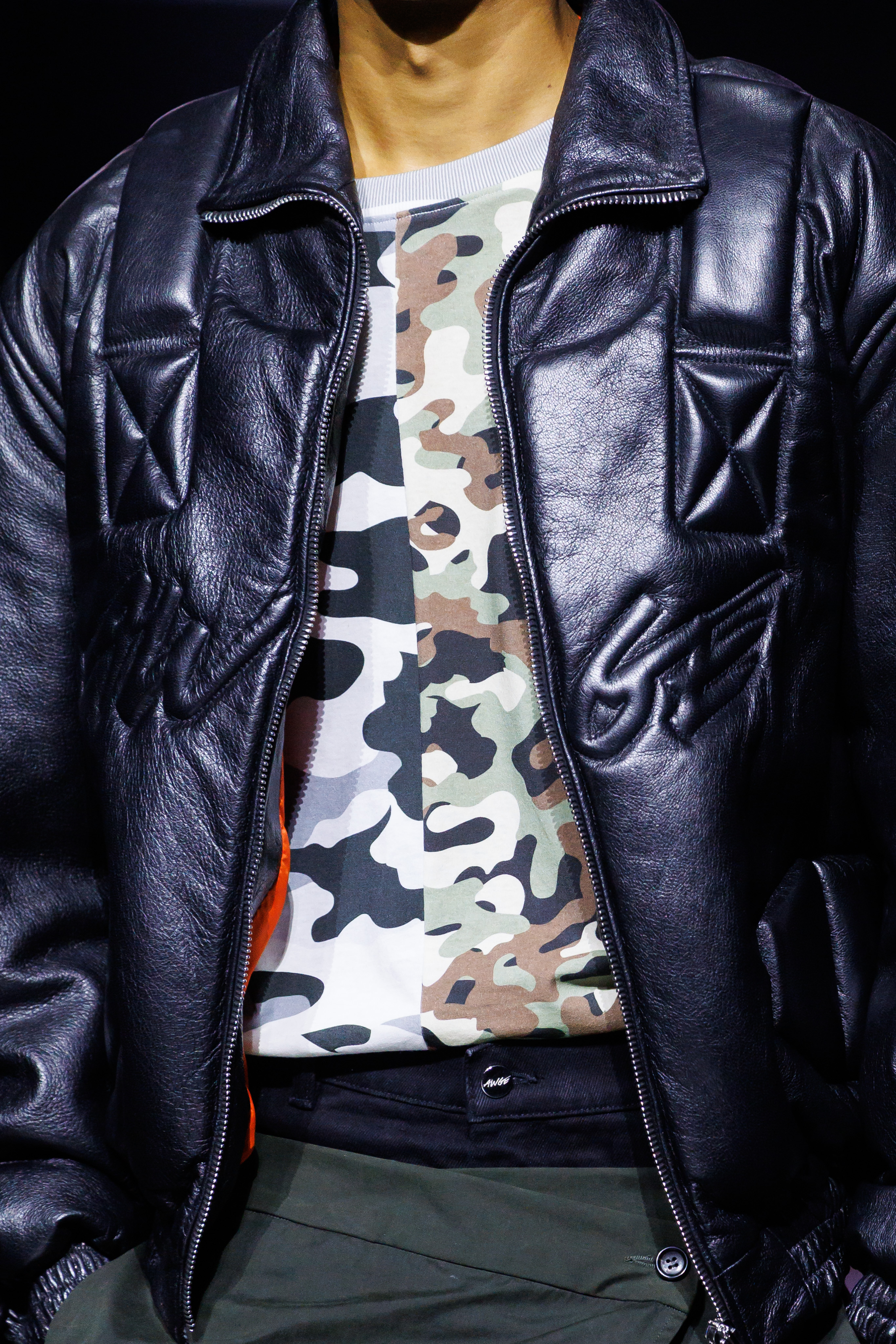
The military references are equally fluid. Aviator caps with leather ear flaps appeared in khaki and olive, some paired with oxygen-mask hoses, others with goggles pushed onto slicked-back hair. Camouflage appeared across faces as well as clothing, turning the models further and further into figures that stood halfway between a war zone and a stage.
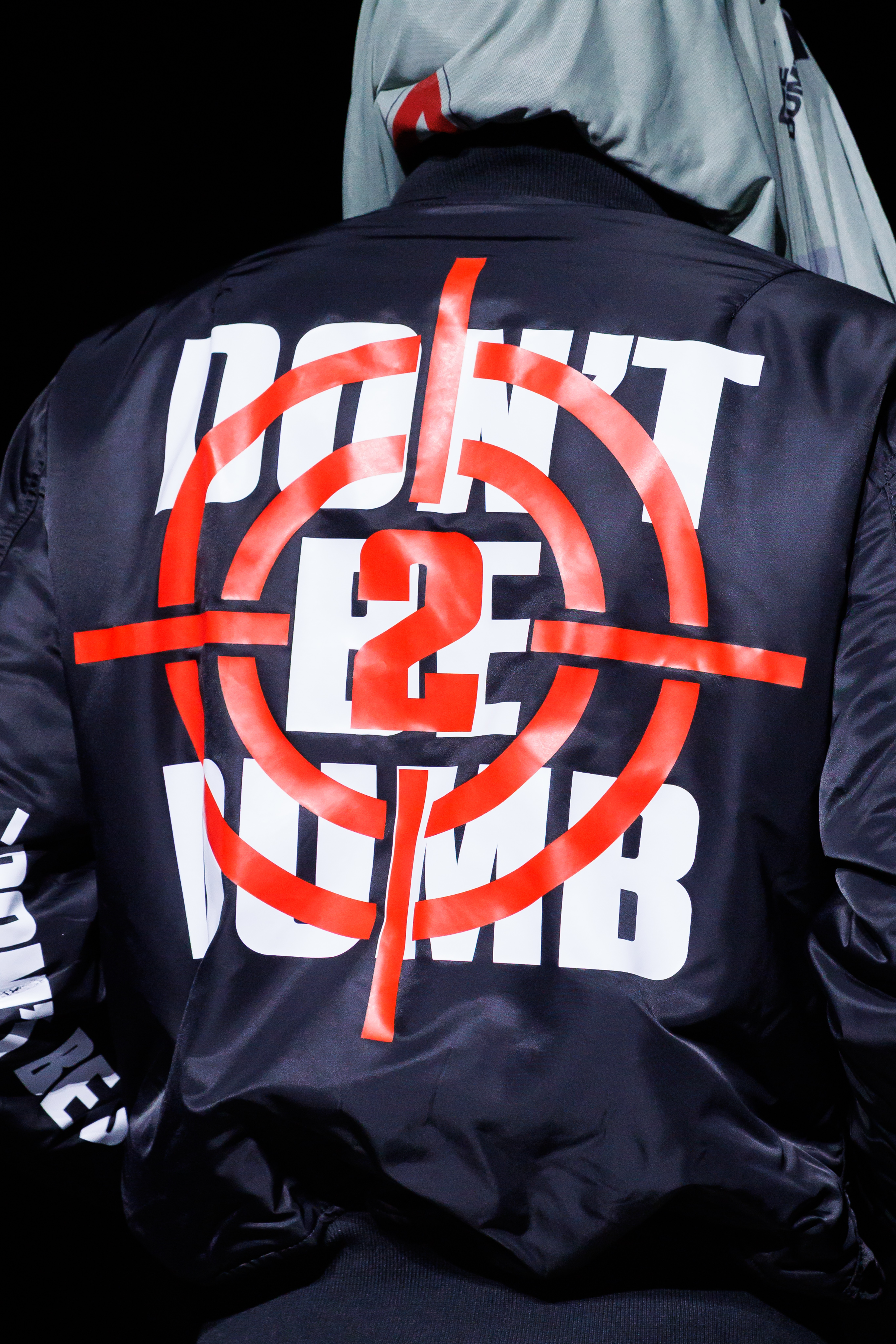
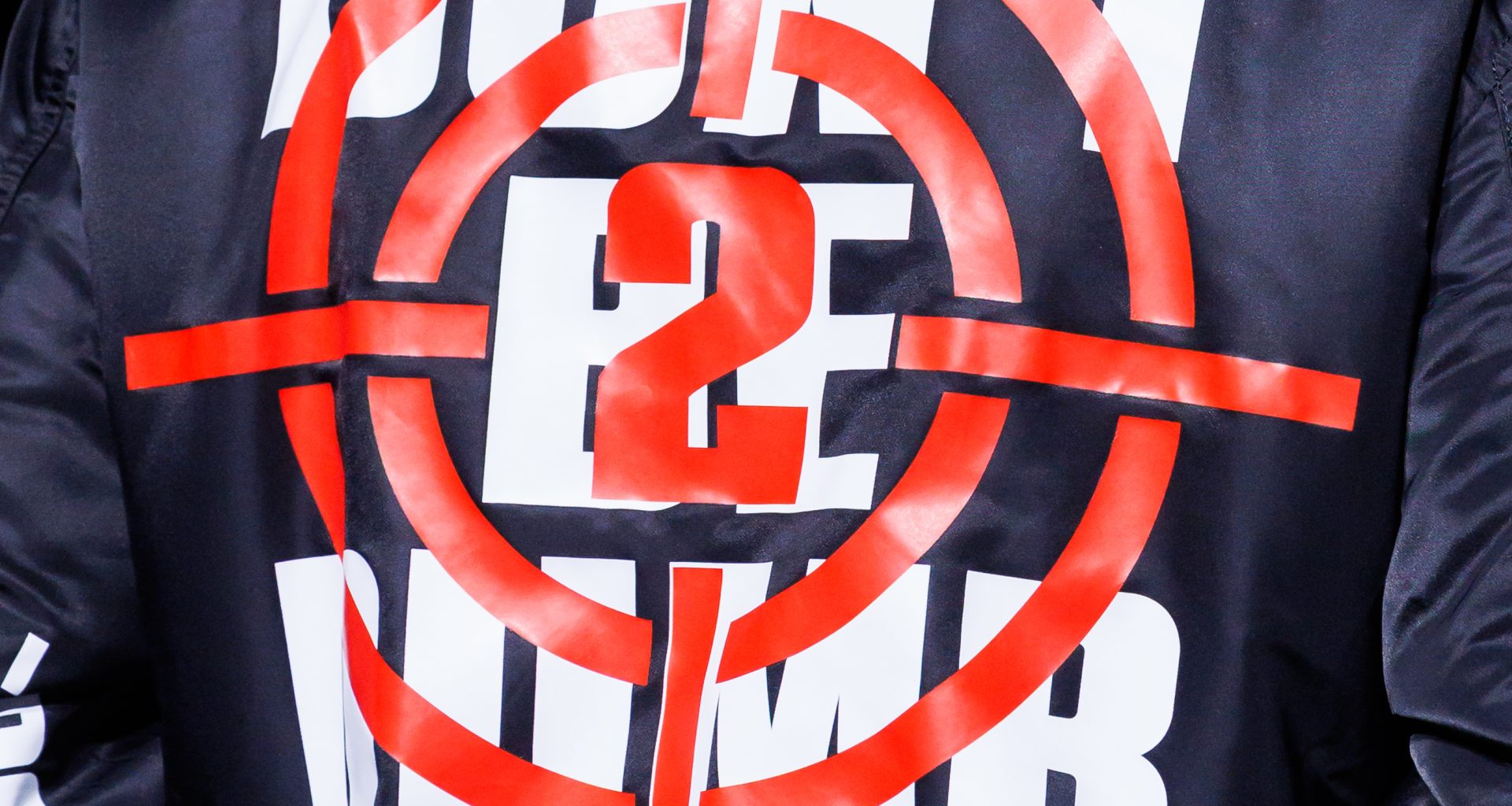
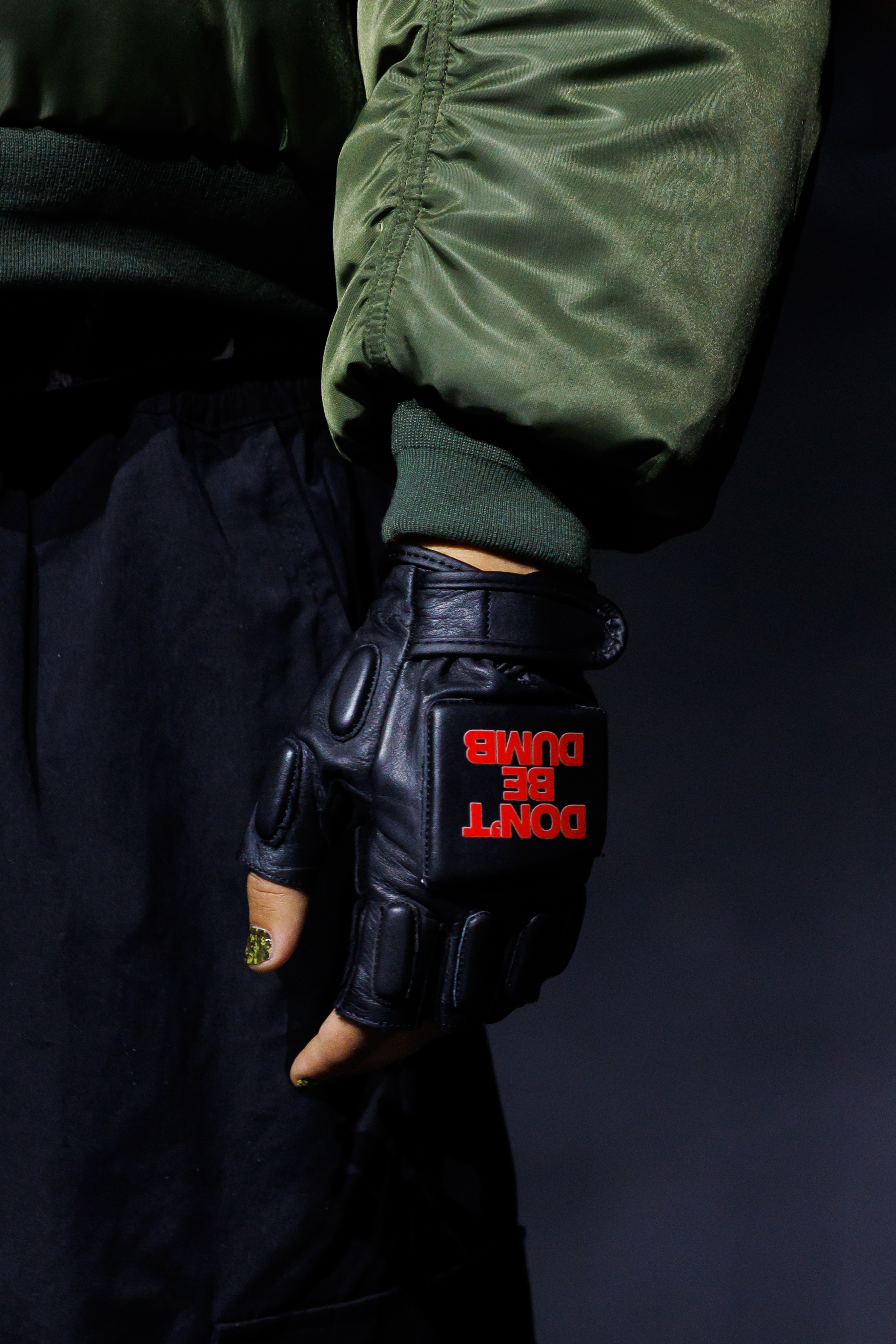
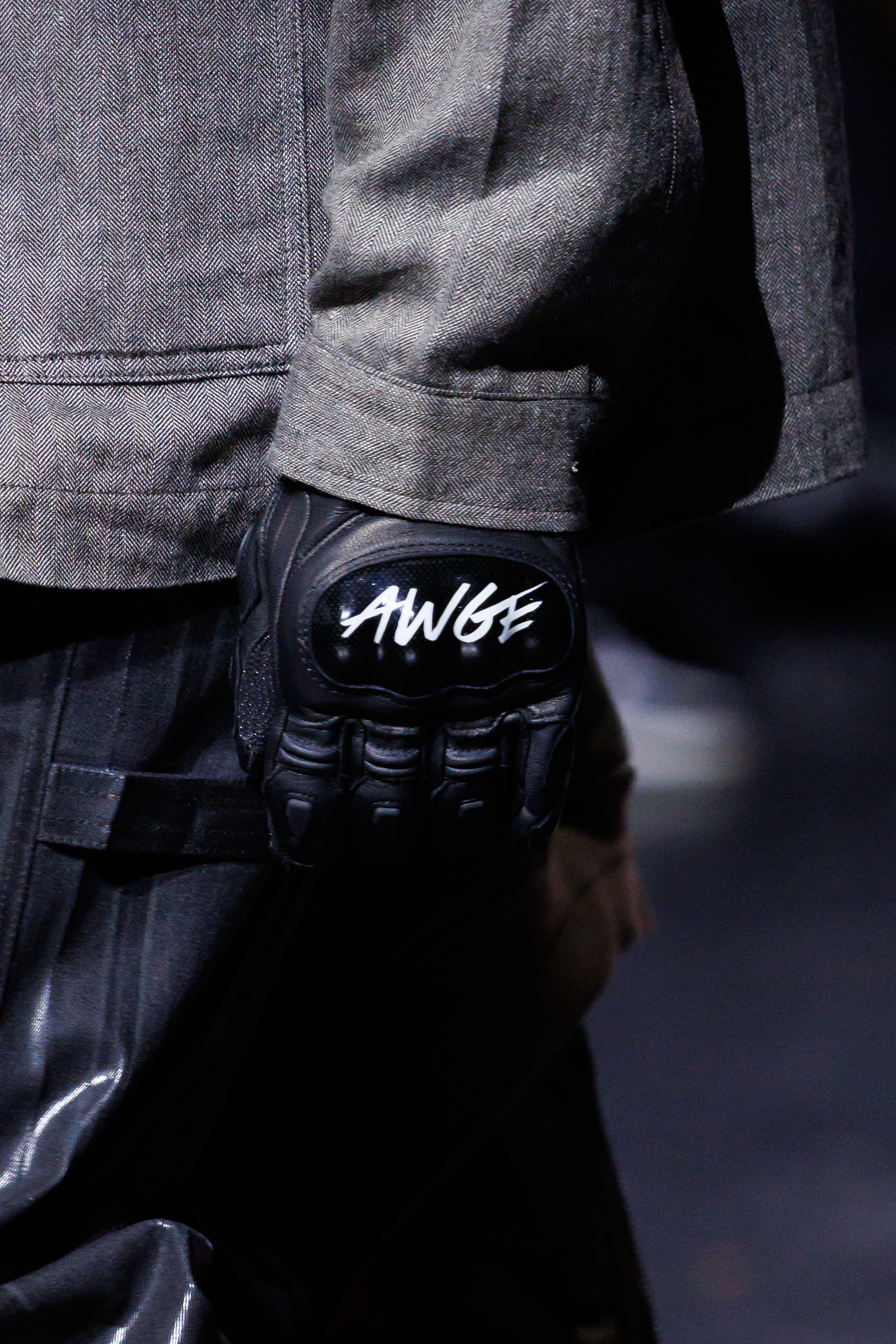
Also worth noting is AWGE’s campaign headline, »DON’T BE DUMB«, which appears across gloves, outerwear, and even in the header on the brand’s online shop on AWGE.com,
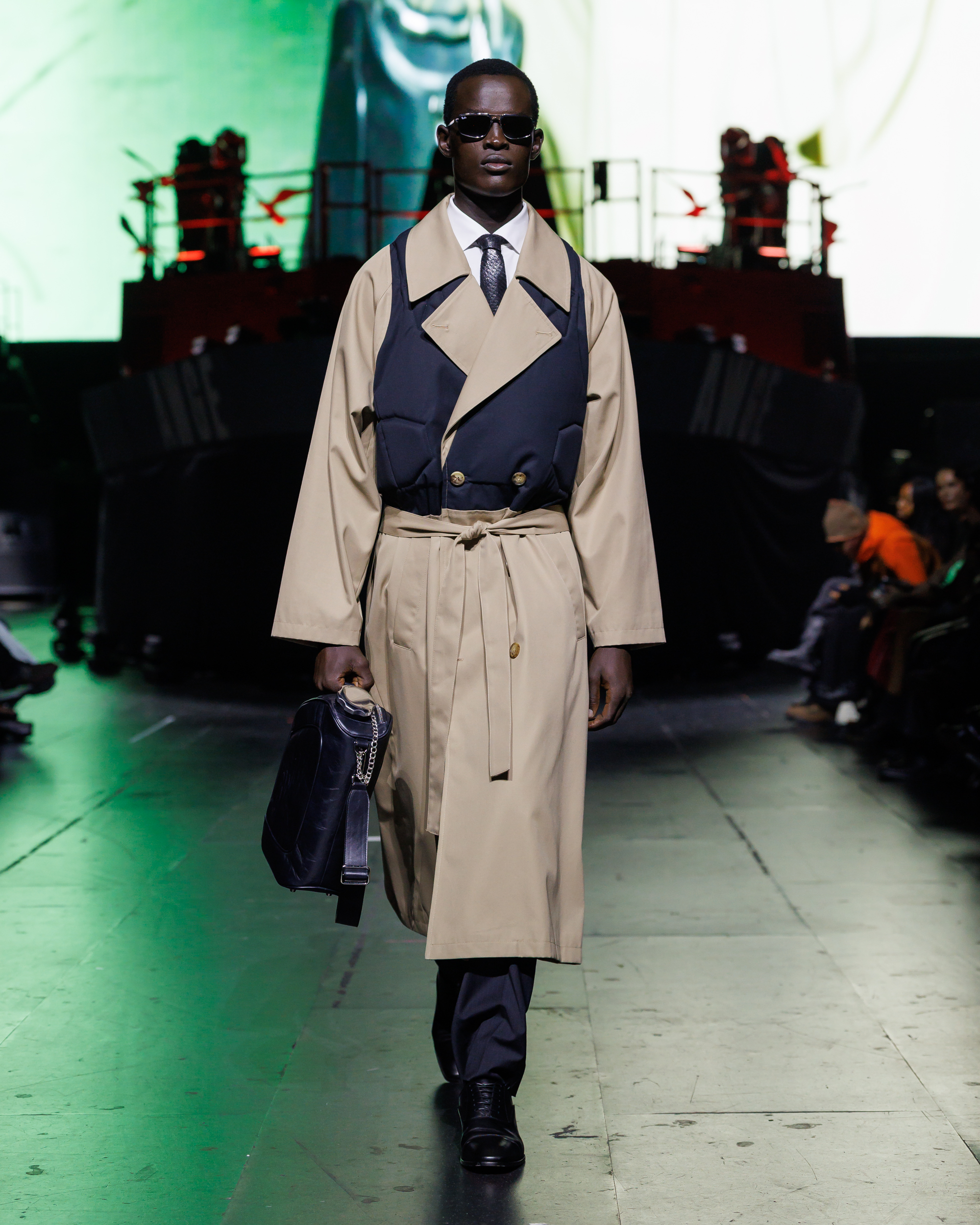
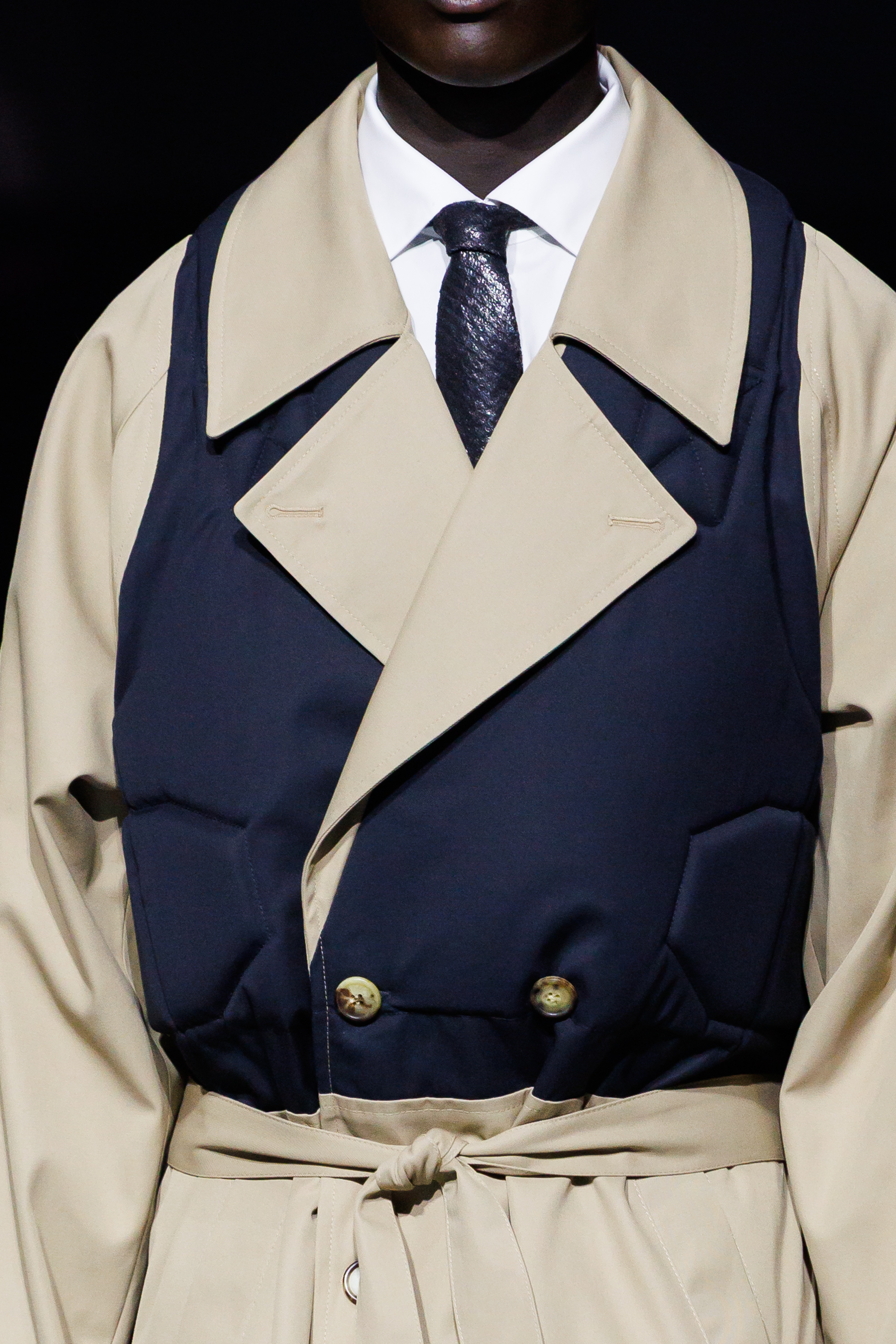
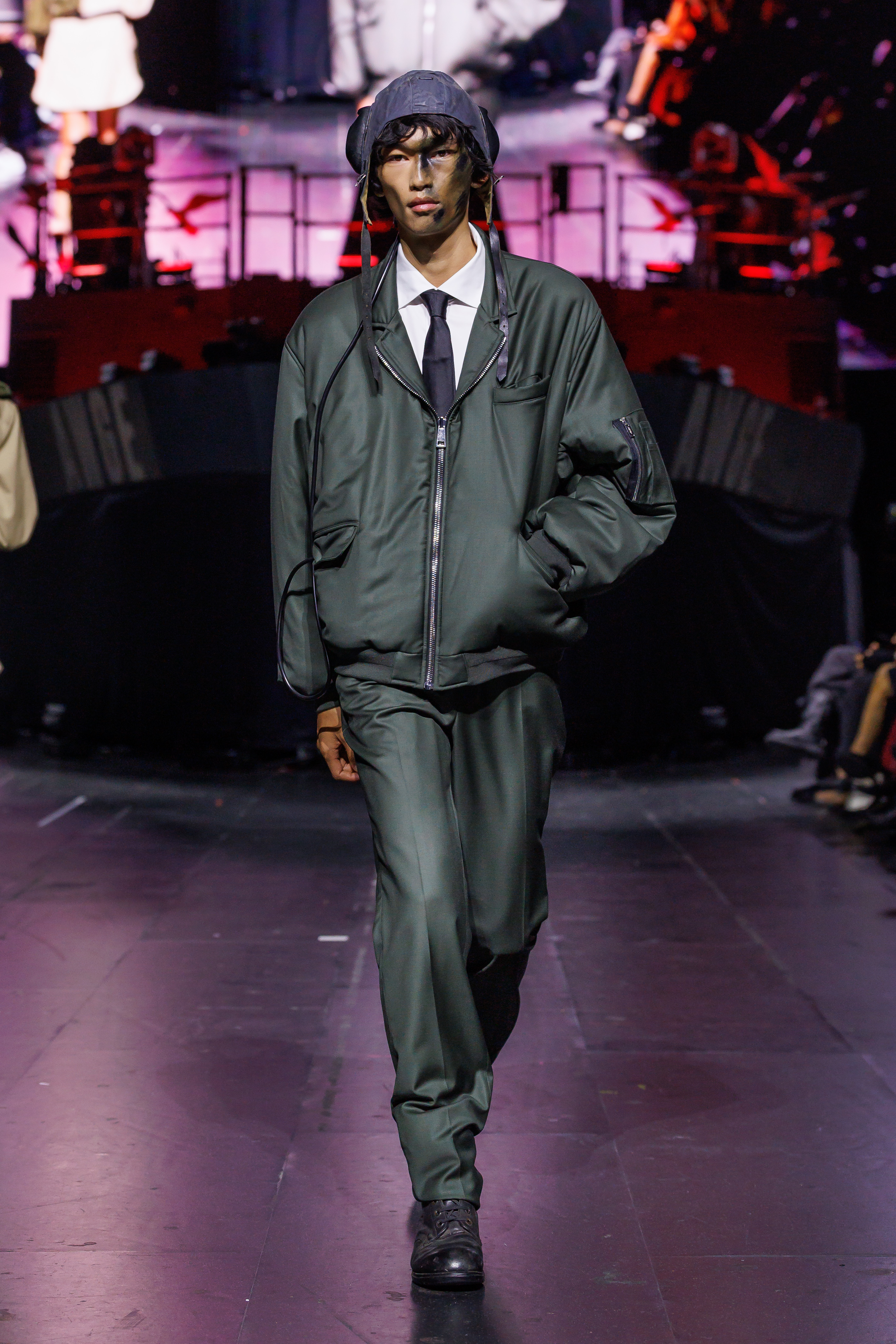
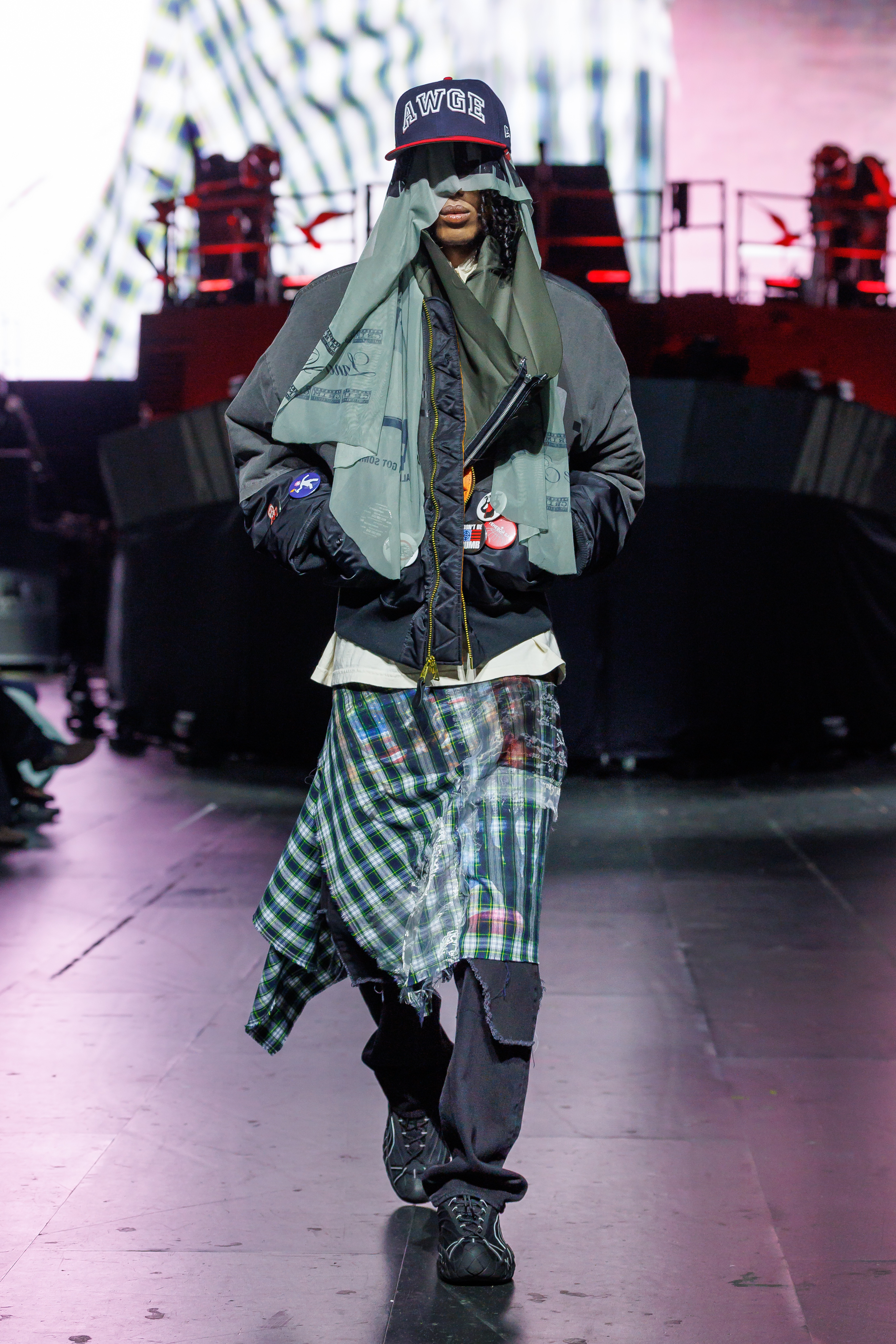
A dark green flight jacket and matching trousers were cut with the proportions of a suit, worn with a white shirt and black tie. A beige trench coat had a padded navy vest built directly into the chest. Another look paired a sailor-collared sweatshirt with the AWGE name framed by stars. The closer the clothes came to resembling armor, the more they drew from military uniforms and wartime tailoring.
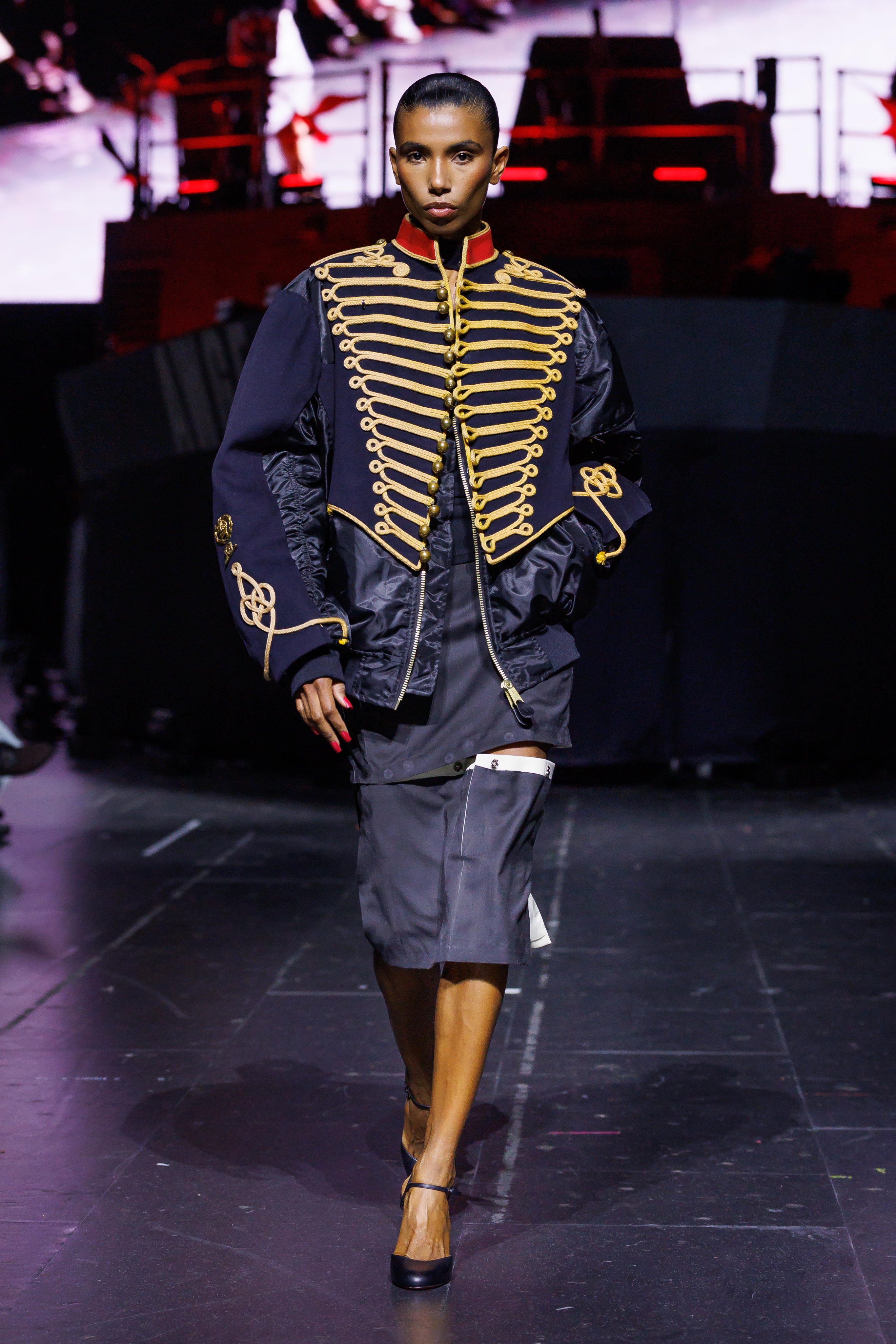
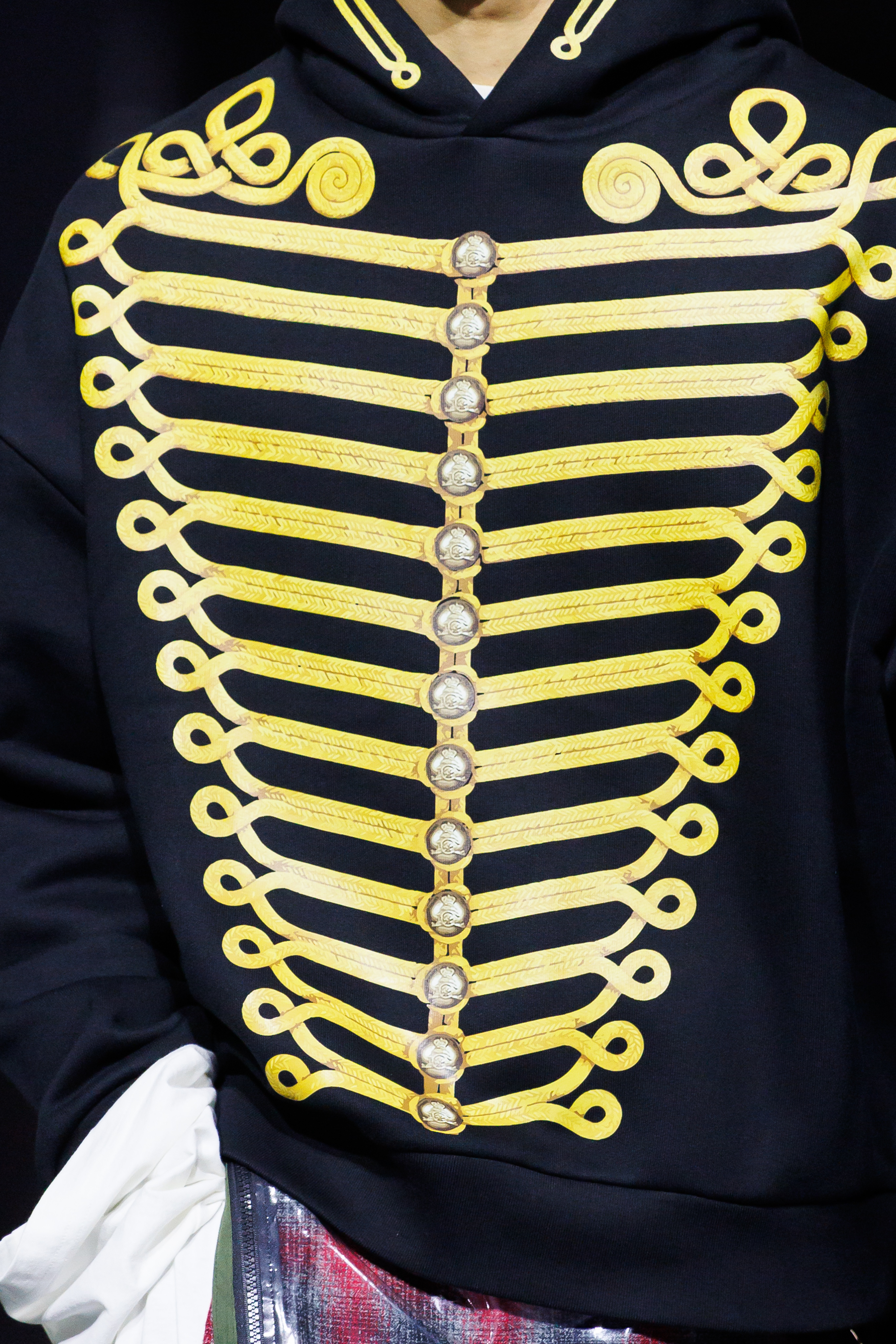
One navy jacket and another Trompe-l’œil Hoodie pushed that idea further with hussar-style gold frogging, brass buttons and a red collar, attached to a nylon flight bomber underneath.
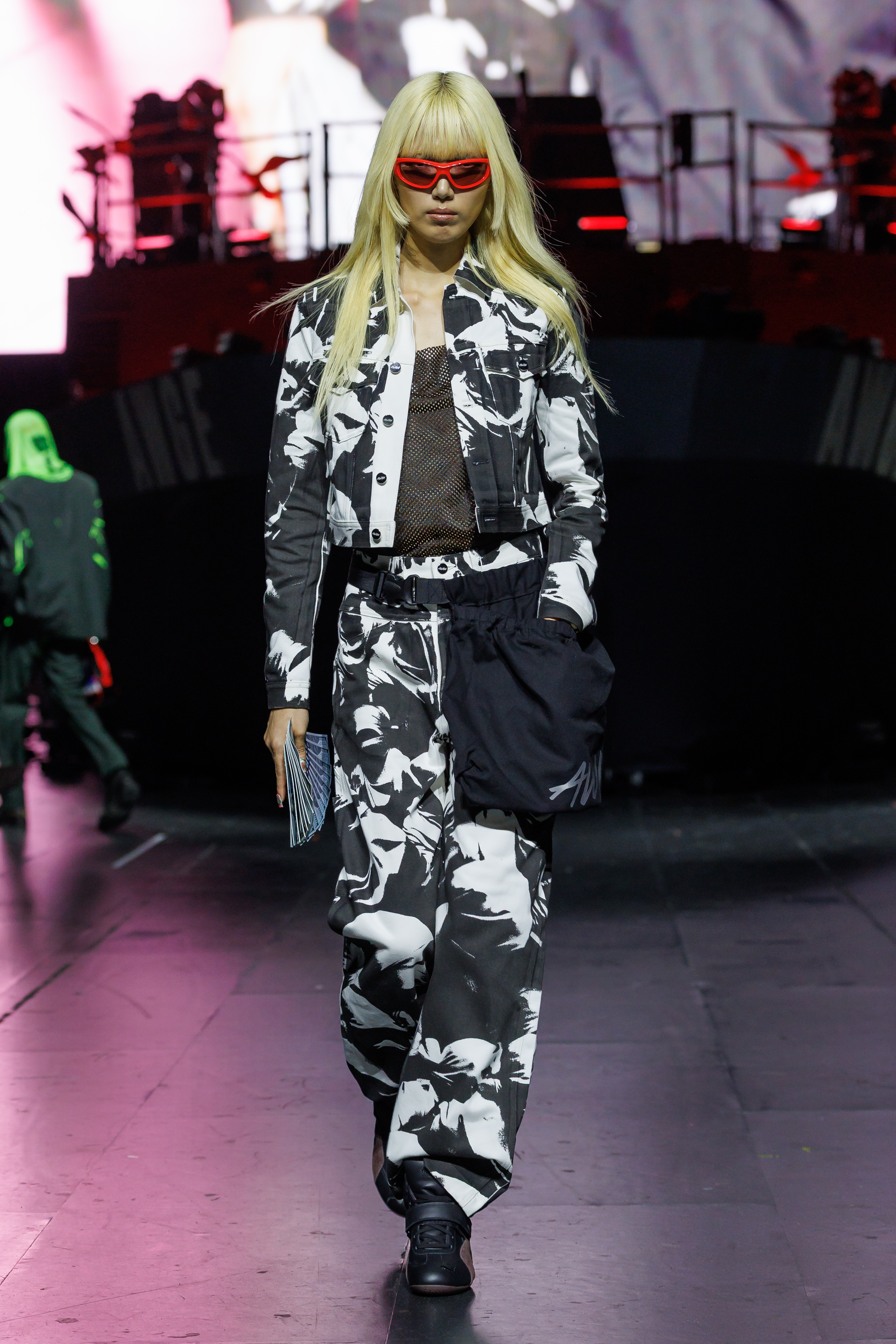
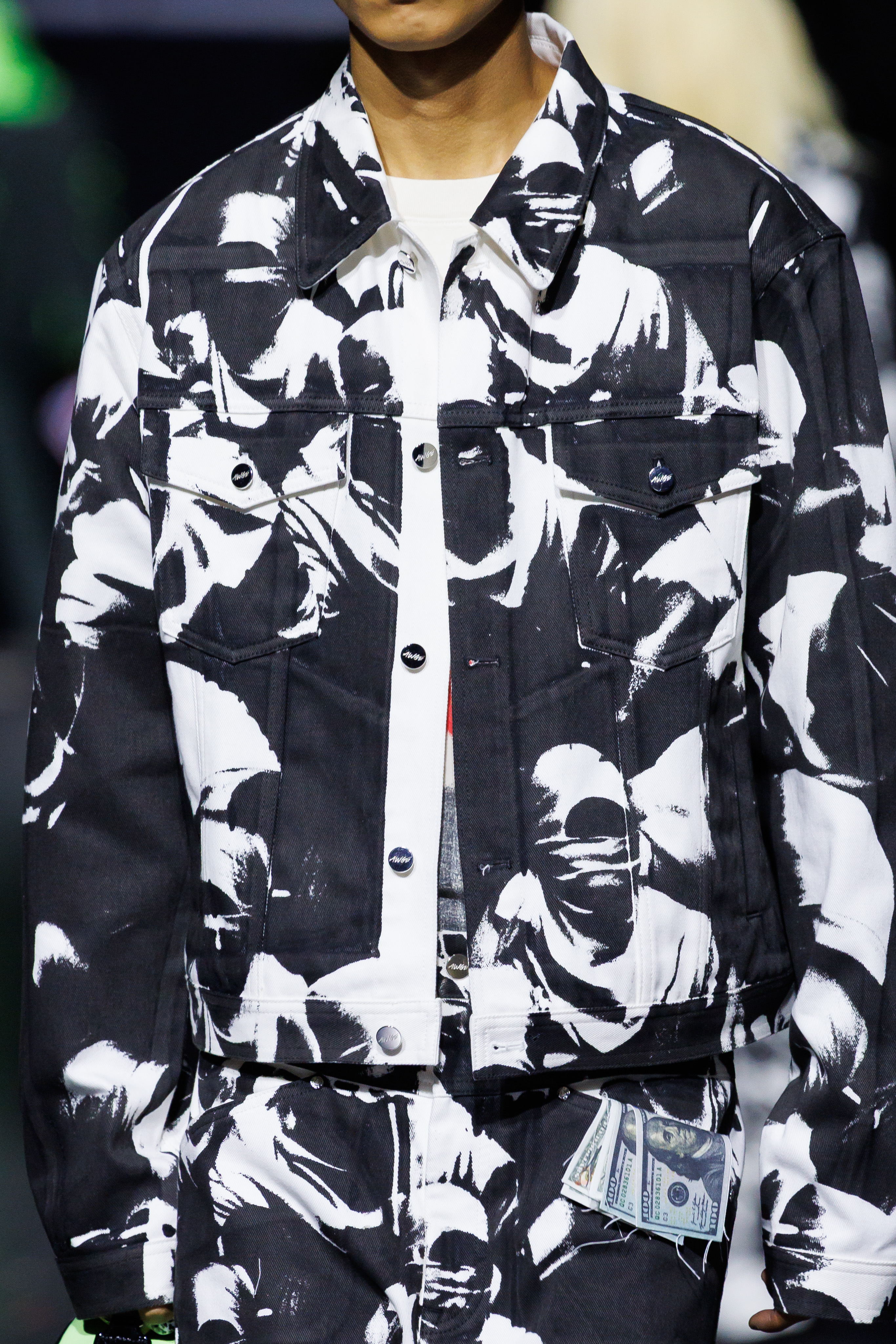
Instead of concealment, camouflage became decoration. Appearing on sheer mesh, catsuits and chiffon, transforming the familiar military print into something closer to a graphic or second skin. One of the strongest interpretations came through a black-and-white denim set covered in an abstracted crowd of faces, recalling the mosh-pit imagery referenced in the collection notes. Finished with red lacquered wraparound sunglasses, models fit somewhere between a protest image and a piece of merchandise from a band that doesn’t exist anymore.
Money was also a subject of the AWGE show with the dollar bill becoming an accessory in its own right. Benjamin Franklin appeared tucked into trouser pockets, spilling from caps and held as a fan. A sheer veil carried banknote lettering across the face, turning cash into something almost ornamental. Elsewhere, a neon green chiffon hood covered in block lettering was layered over a deep green suit with fluorescent lining and splashes of paint. It had the energy of a protest banner meeting a tailored wardrobe.
The collection’s punk-to-playa shift came through most clearly in the styling. Plaid was wrapped around waists and incorporated into layered looks. Underwear was intentionally visible above cargo trousers, with striped boxers rising over the waistband. A sheer, shredded plaid skirt was worn over distressed black trousers and paired with a badge-covered bomber. The effect was deliberately unruly, but never careless.
Made-in-Italy production gives these deliberately messy combinations a level of finish that keeps them from slipping into costume.
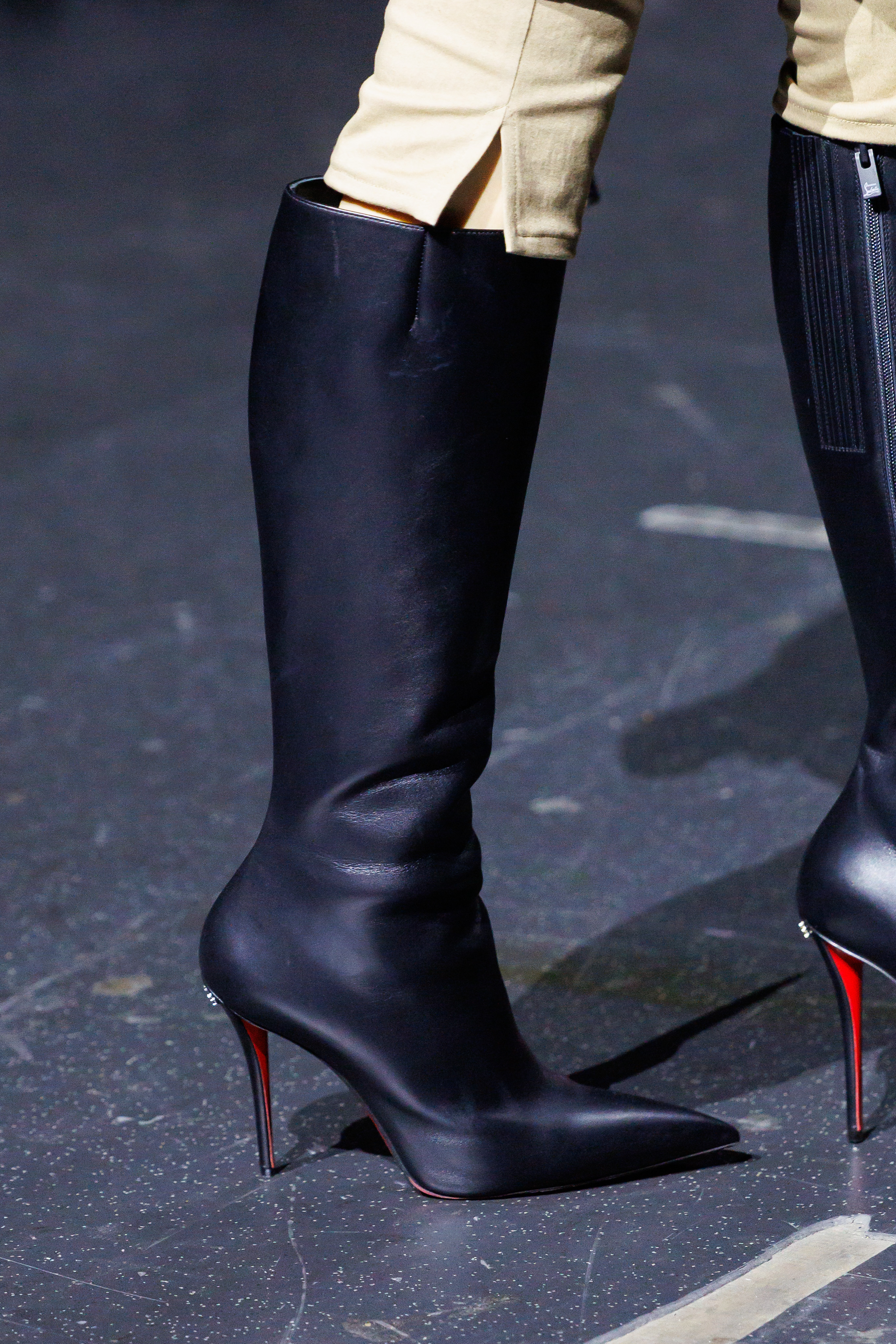
At the bottom, heavy army boots and chunky lace-ups appeared alongside patent ankle-strap pumps and flashes of red soles.
With the PUMA universe naturally folded into the language of AWGE, rather than feeling like a separate collaboration. The result is a collection where sportswear, tailoring and Rocky’s own visual codes exist in the same world.
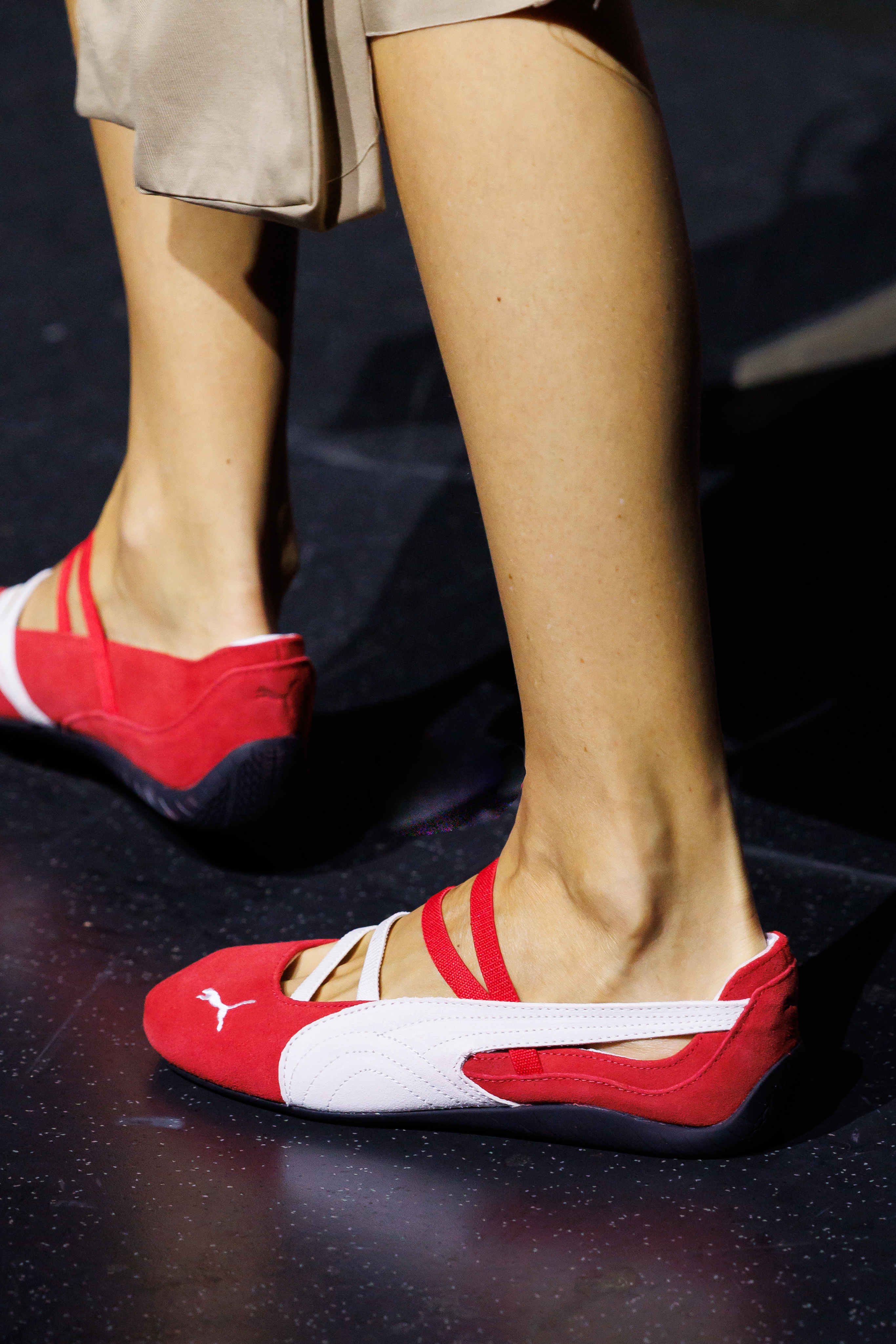
Of course red and navy suede ballet flats appeared during the show, too. The new Straycat styles appeared within the wider wardrobe rather than being isolated as product moments, making the collaboration feel integrated into the collection’s visual language. The same goes for the Ray-Ban eyewear. Lightweight frames, wraparound shapes and reflective surfaces sharpened the looks without taking them away from the clothes.
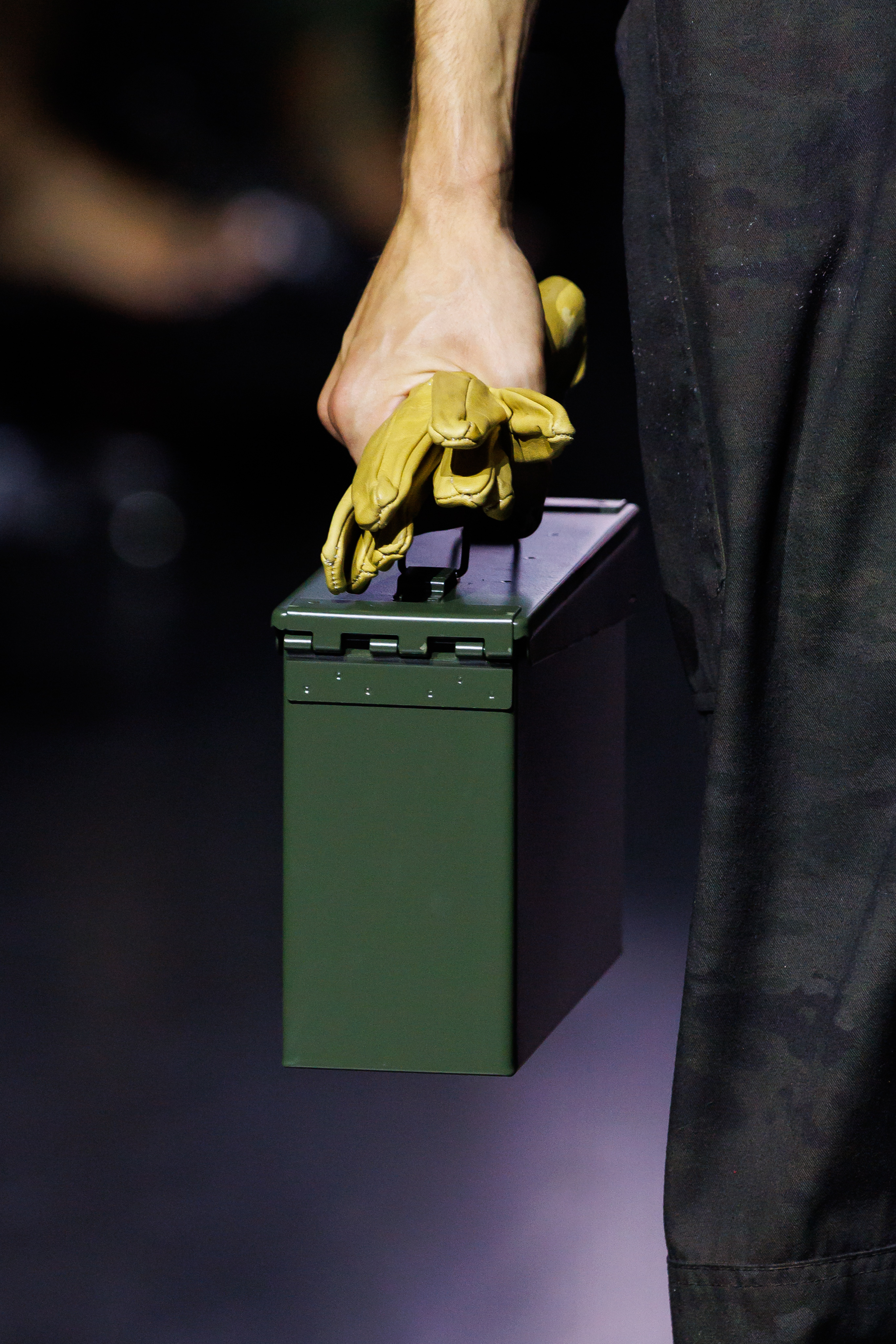
Accessories pushed the military vocabulary further. Ammo-can bags appeared alongside tactical sling bags and thigh holsters, while pouch belts were fastened over tailoring like duty belts. In one look, an ammunition-style bag carried yellow work gloves. The references are specific enough to be recognizable but stylized enough to remain firmly within AWGE’s world.
The Politics of Getting Dressed
Underneath all of this is the collection’s more serious idea: cultural exchange as currency. The press notes point back to the relationship between Paris and Harlem between the wars, when jazz and Black American modernity moved through the French capital while Harlem was developing one of the most consequential cultural movements of the twentieth century.
That history gives the collection another layer. AWGE brings American street and music culture into conversation with Parisian fashion codes, European production and the language of luxury. The result doesn’t feel like one culture borrowing from another. It feels more like an ongoing exchange, where references change hands and come back altered.
That is what keeps Anti-War Global Economics from becoming a straightforward political collection. A warship backdrop, military uniforms, oil, money and protective clothing could easily produce a very literal statement. Instead, Rocky keeps everything slightly unstable. The gas mask can feel threatening; the next look can make the same military vocabulary glamorous. A banknote becomes both a symbol of wealth and a piece of styling. A combat boot shares the runway with a red-soled pump. Concert dressing becomes luxury fashion, and luxury fashion gets pulled back toward the street.
Lastly, AWGE has taken the visual language of uniforms and turned it into something made for movement, performance, fashion and maybe an uncertain future.