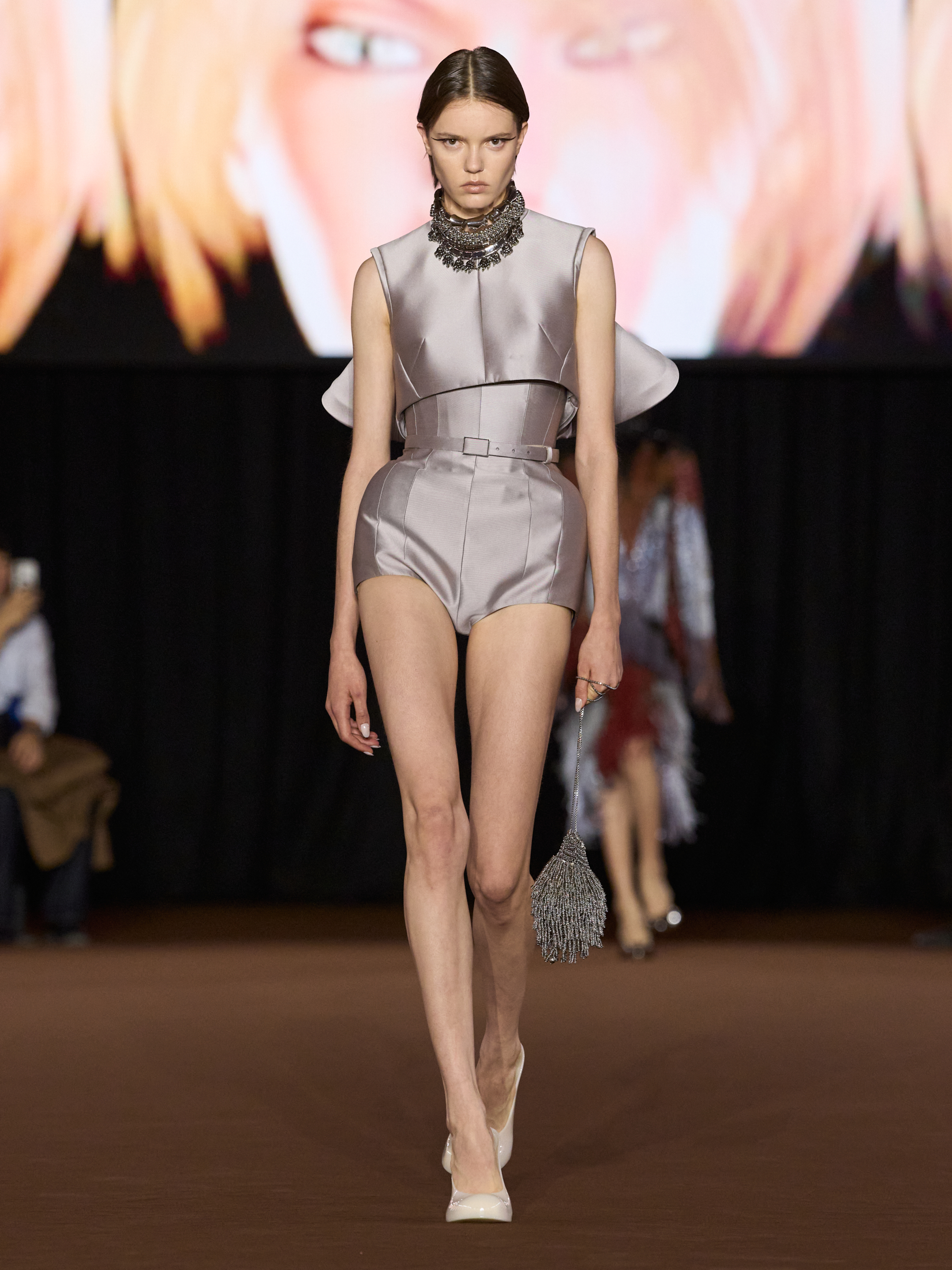
What happens when a fashion house brings its founder back to life, only to remind us that he is no longer the one designing the clothes?
At the entrance of Mugler’s Spring/Summer 2027 show, Thierry Mugler was there.
Or rather, he wasn’t.
Alexis Stone arrived transformed into the legendary designer: face reconstructed, features sharpened, identity performed with the eerie precision of a living photograph. It was funny, uncanny, theatrical. It was also, perhaps unintentionally, the most accurate introduction to the collection.
Because Mugler, today, is precisely this: a body remembered through transformation.
Miguel Castro Freitas is not simply designing a new chapter for the house. He is dealing with one of fashion’s most complicated inheritances: how do you continue a mythology after its creator has become an image?
For Spring/Summer 2027, the answer is Naturalia X, the final chapter of Freitas’s trilogy of glorified clichés. After seduction and power, nature takes over: insects, animals, feathers, scales, skin, exaggerated silhouettes, hyper feminine bodies, creatures that seem halfway between woman, fantasy and alien life.
Nothing here is particularly interested in minimalism.
This is Mugler.
The question is what Mugler means now.
Thierry Mugler understood the body as a place of invention. He did not simply dress women; he engineered them. Shoulders became architecture. Waists became impossible. Corsets, latex, feathers, metallic surfaces and sculpted tailoring turned the human figure into something more than human.
His clothes did not ask to be worn quietly.
They demanded transformation.
That legacy is almost impossible to inherit because it is already so deeply embedded in fashion’s visual memory. The hourglass body, the corset, the naked illusion, the animal woman, the cyborg, the showgirl, the spectacular entrance.
Mugler created these images before fashion learned to circulate them endlessly.
Today, those images circulate faster than fashion itself.
They live in archives, social feeds, celebrity wardrobes, music videos, red carpets, memes, beauty culture and the collective imagination. What was once radical has become recognizable. What was once futuristic can now look almost historical.
This is the paradox Freitas has inherited.
Mugler is no longer simply a fashion language. It is a cultural shorthand.
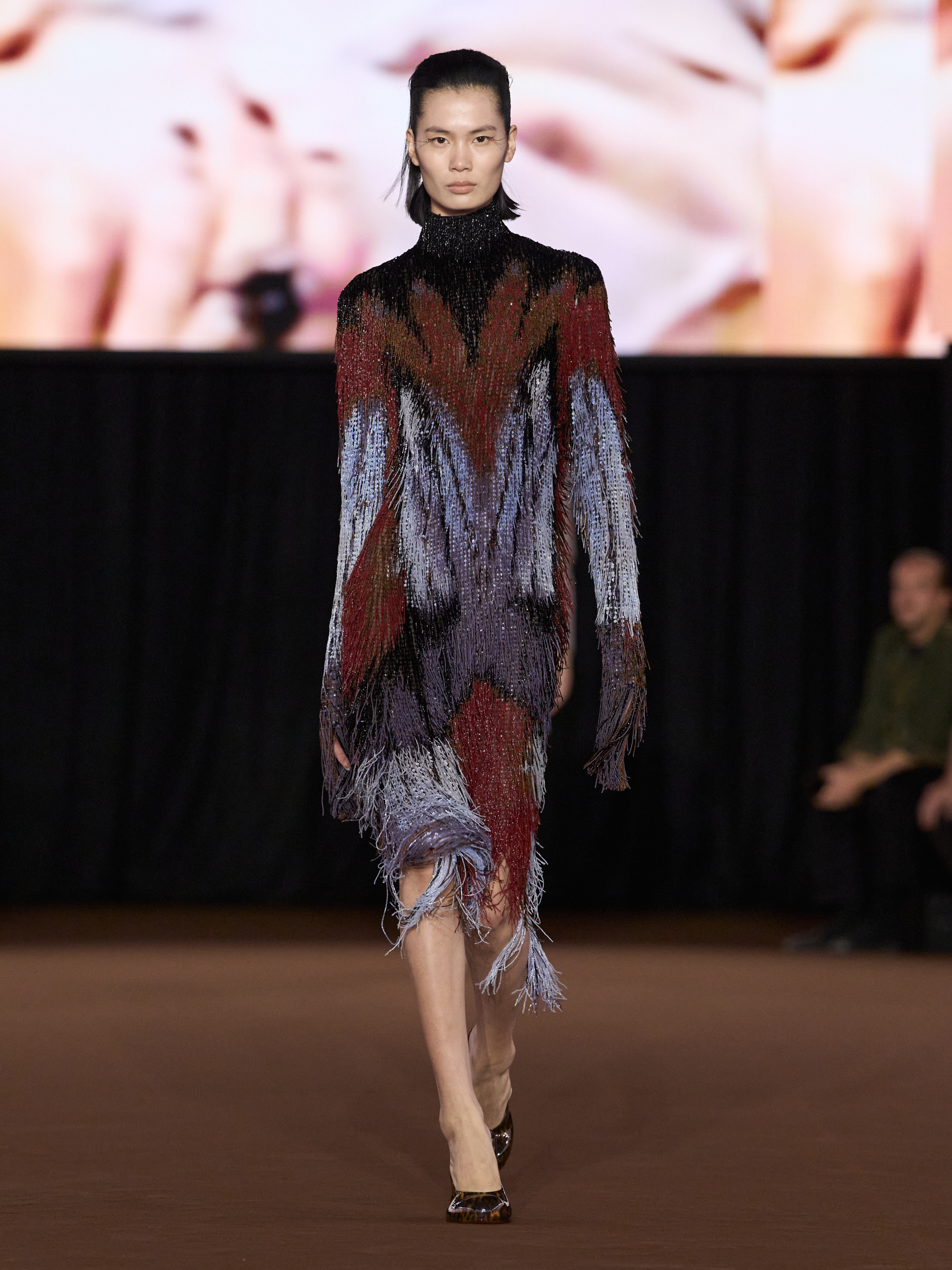
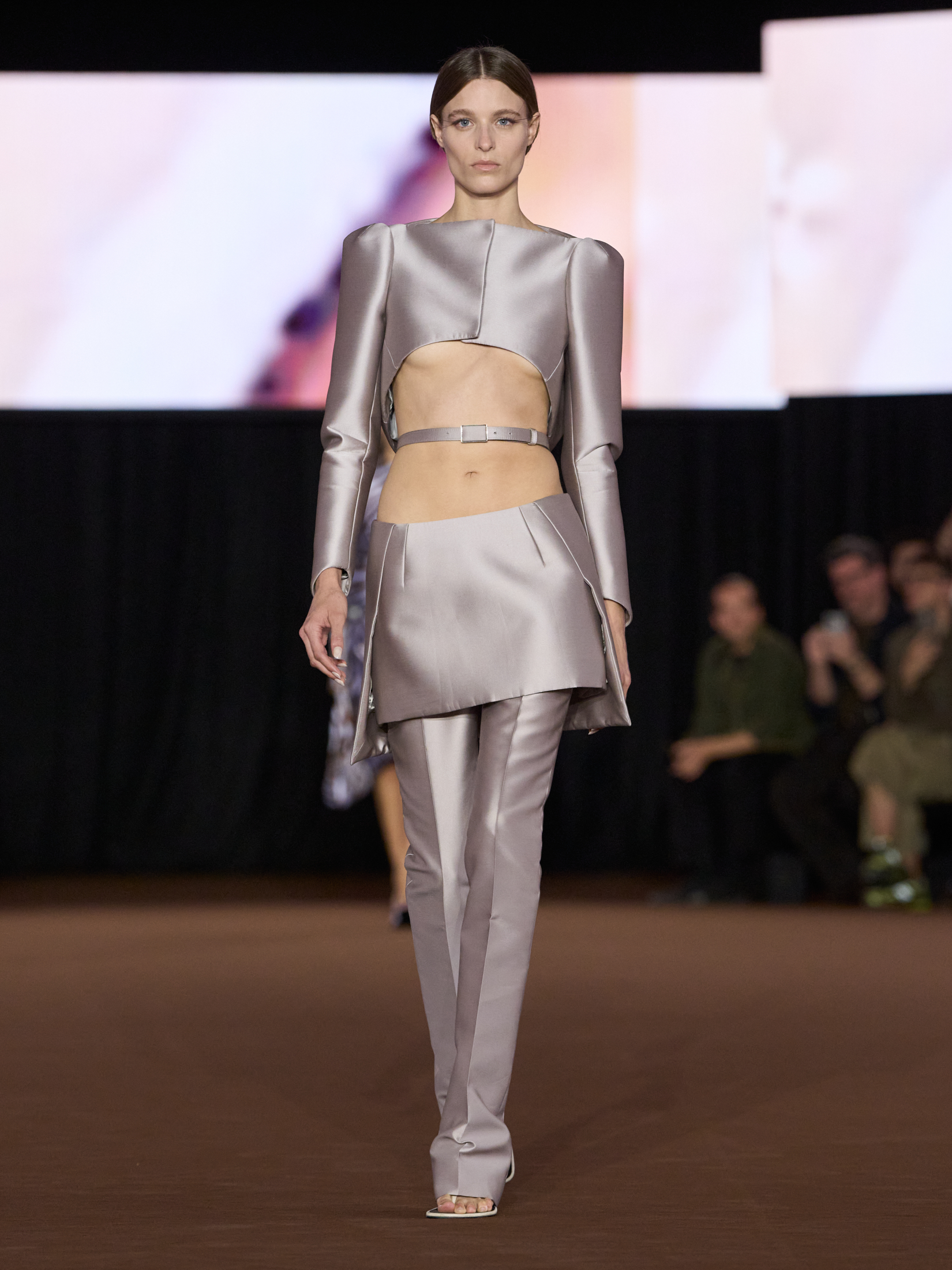
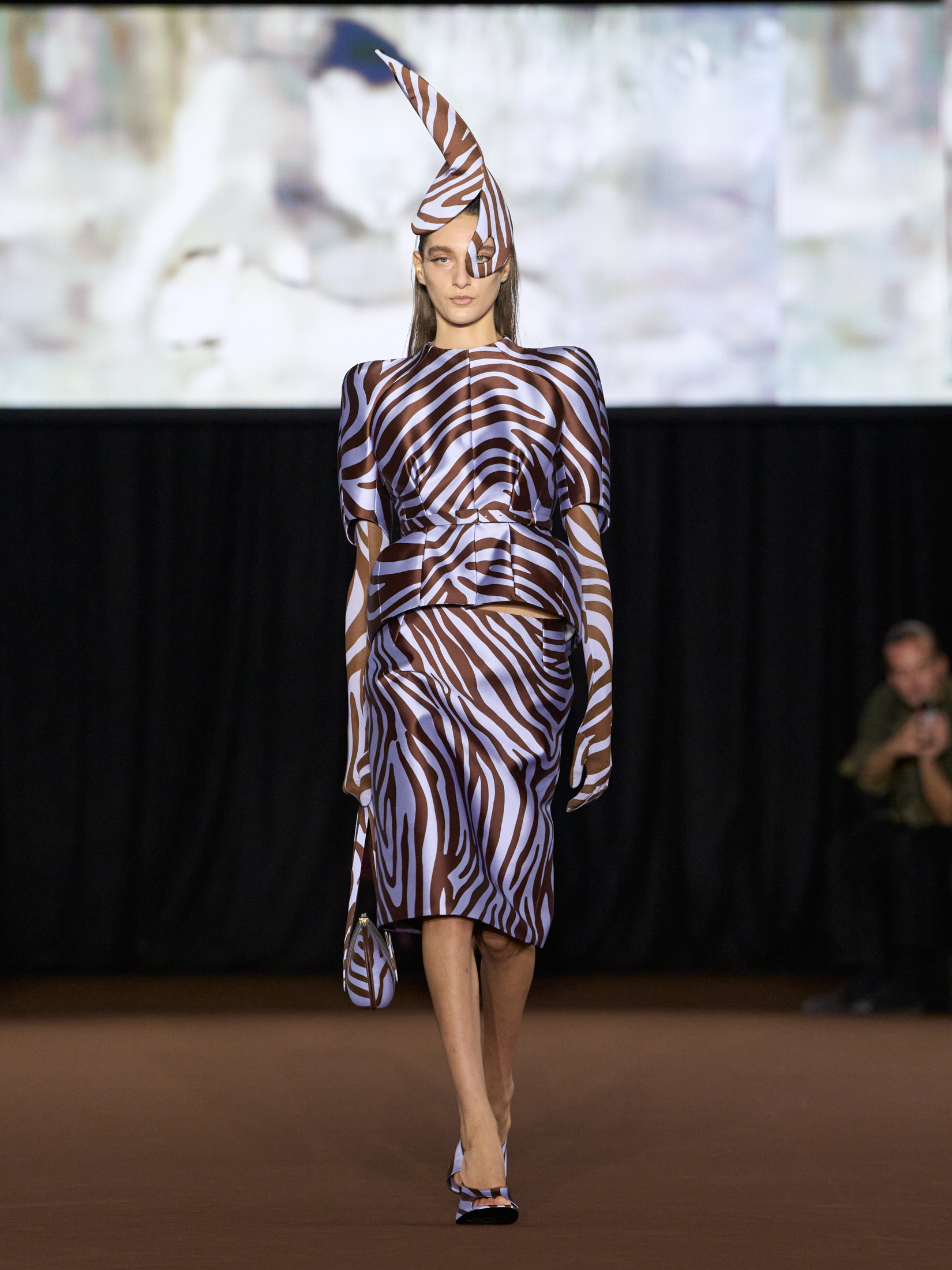
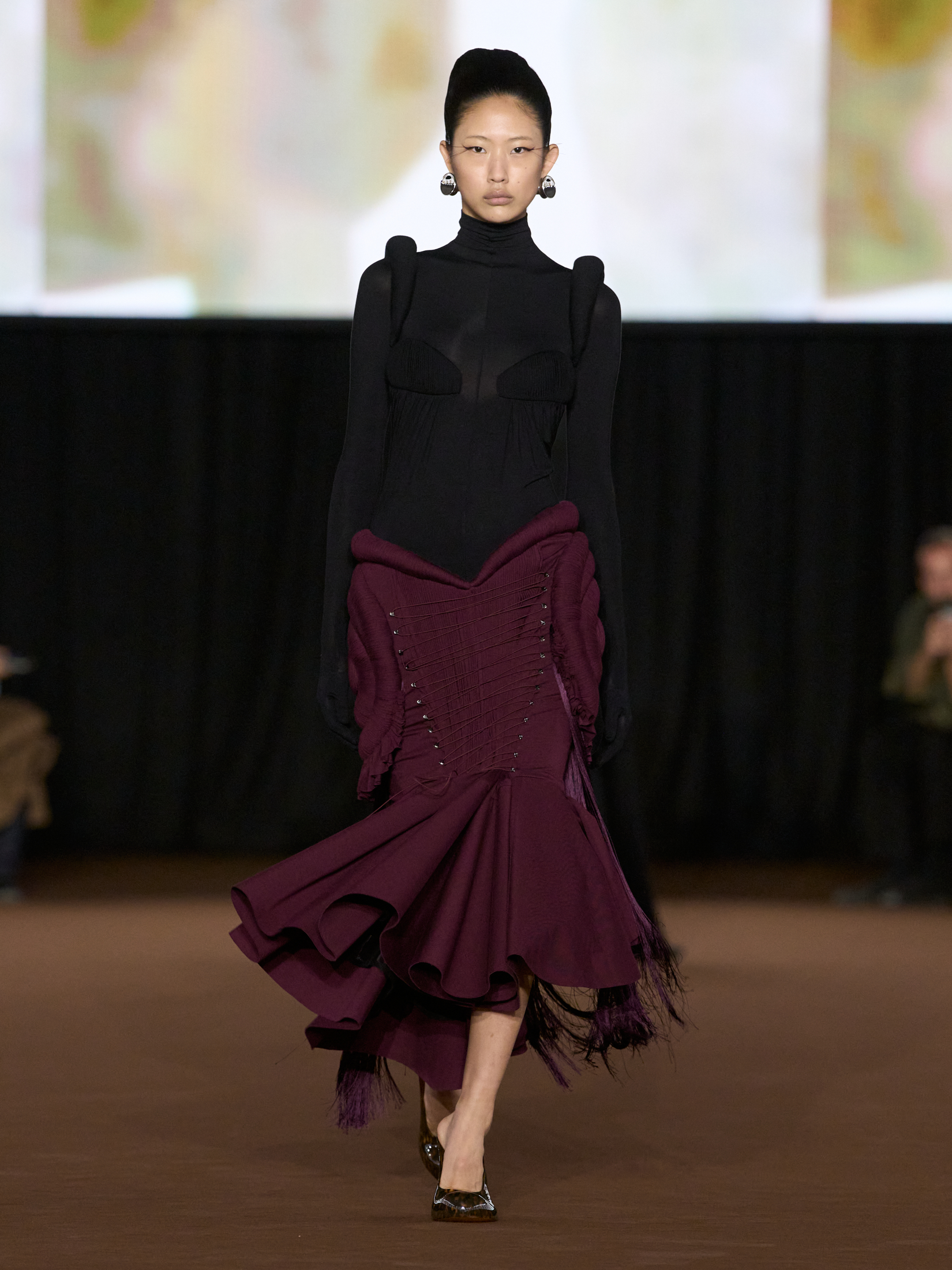
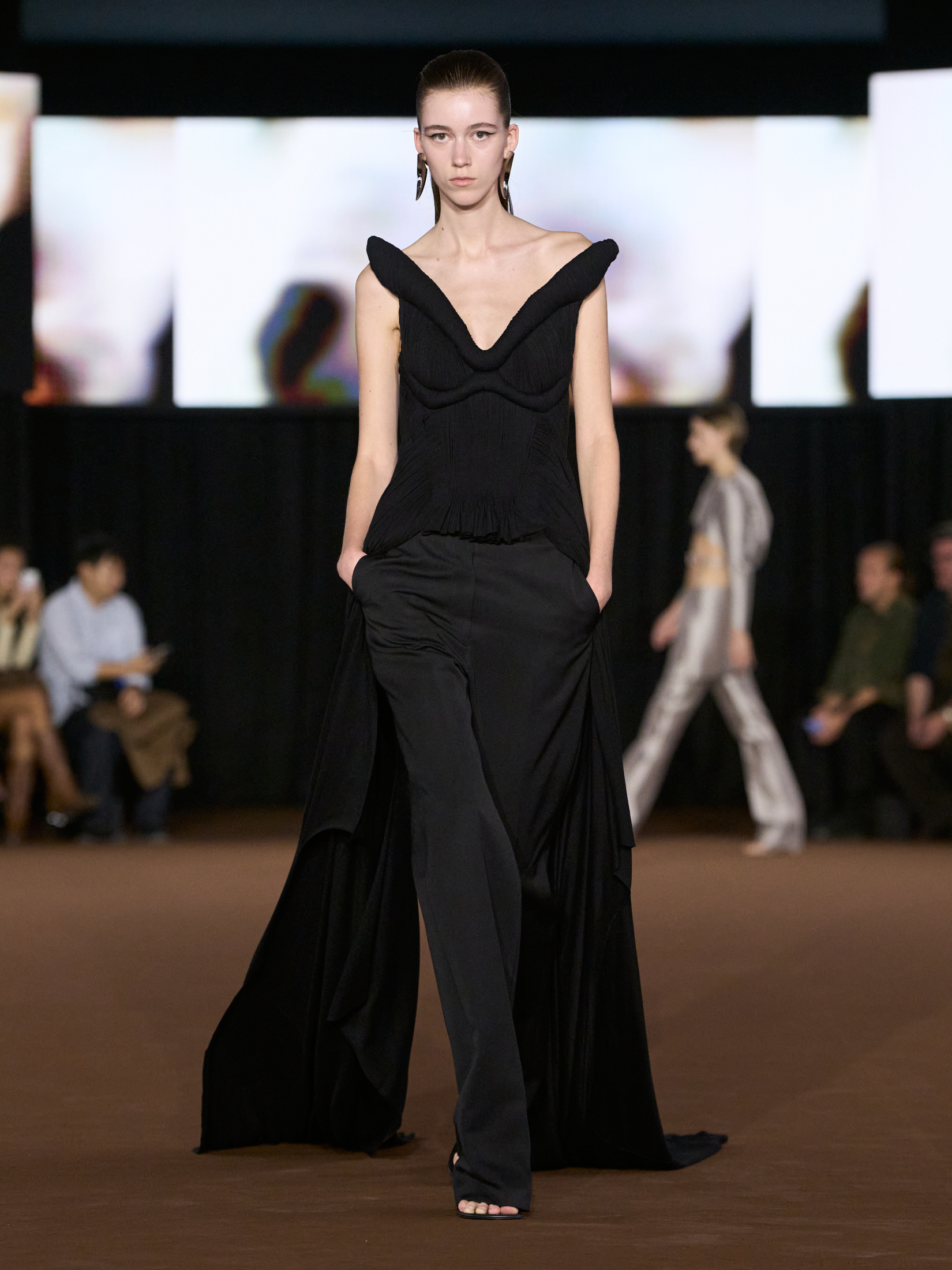
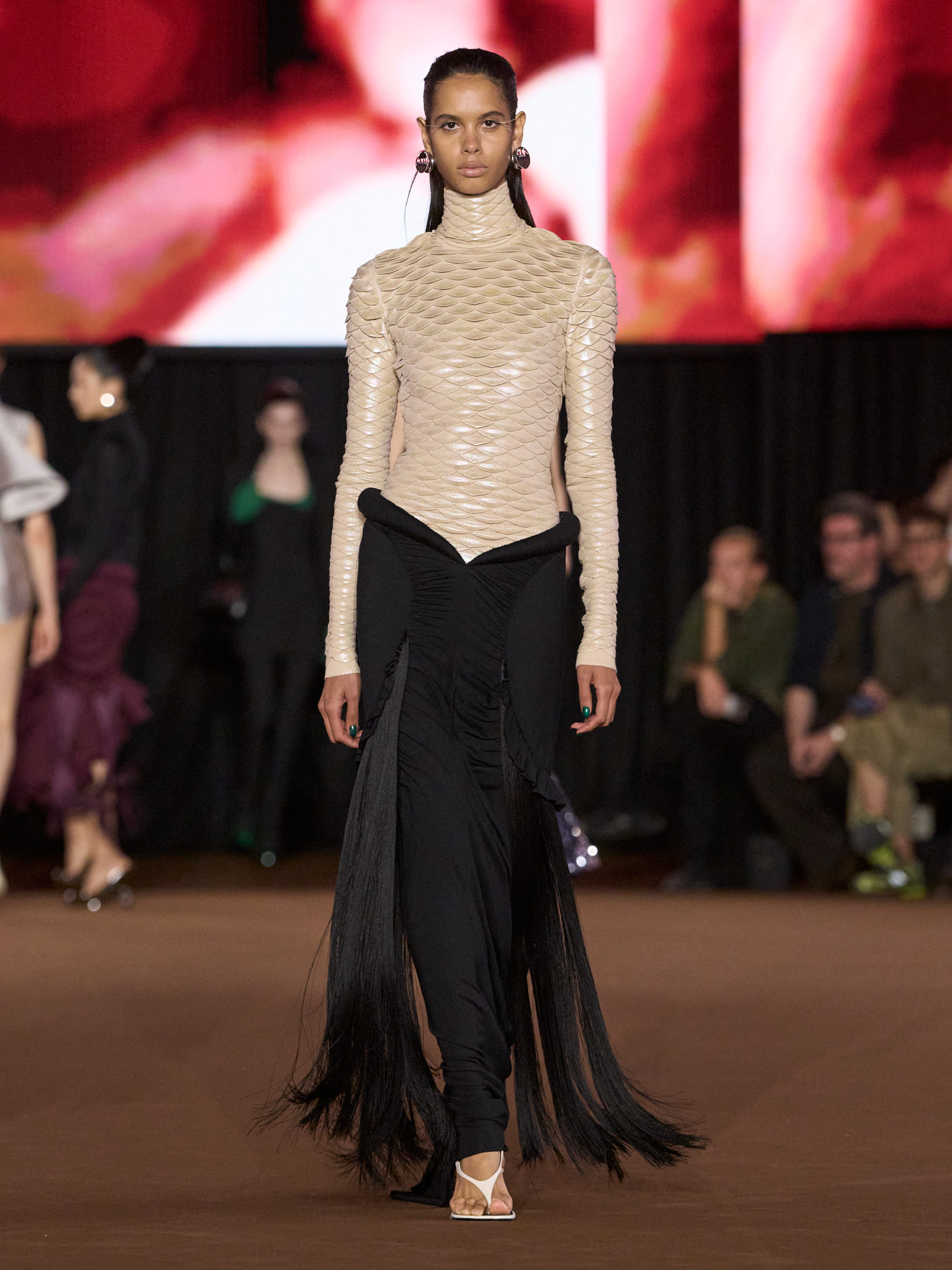
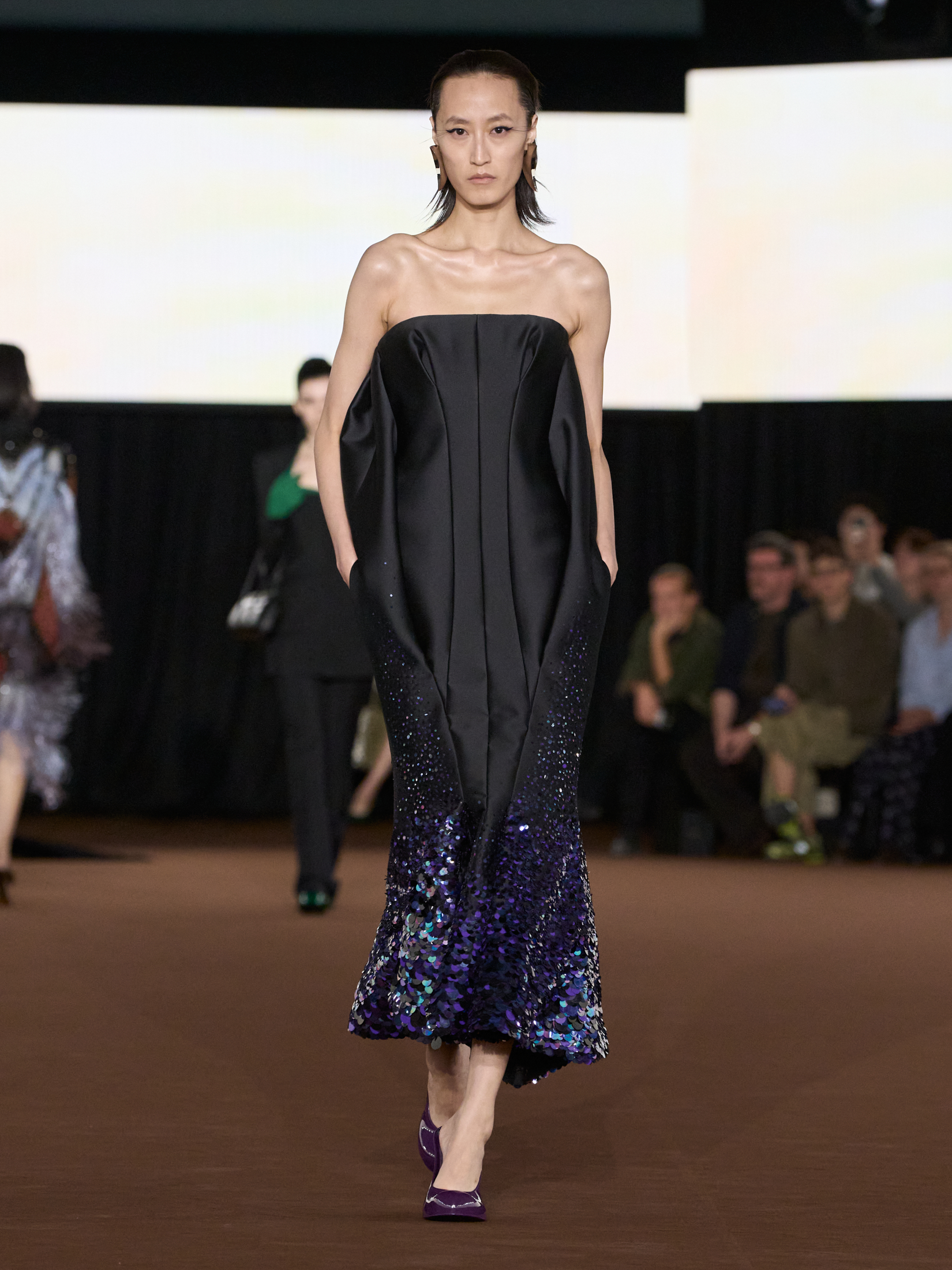
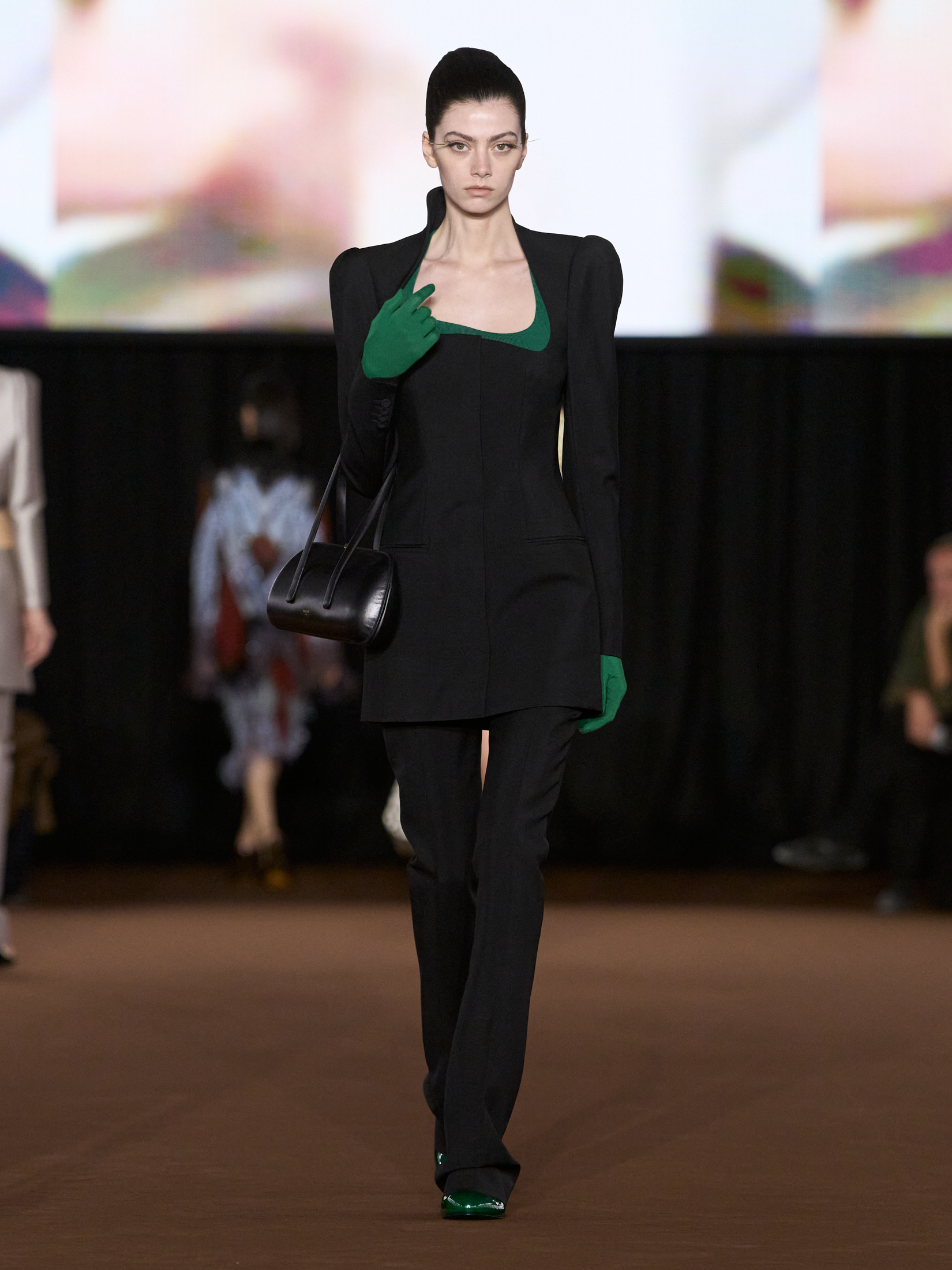
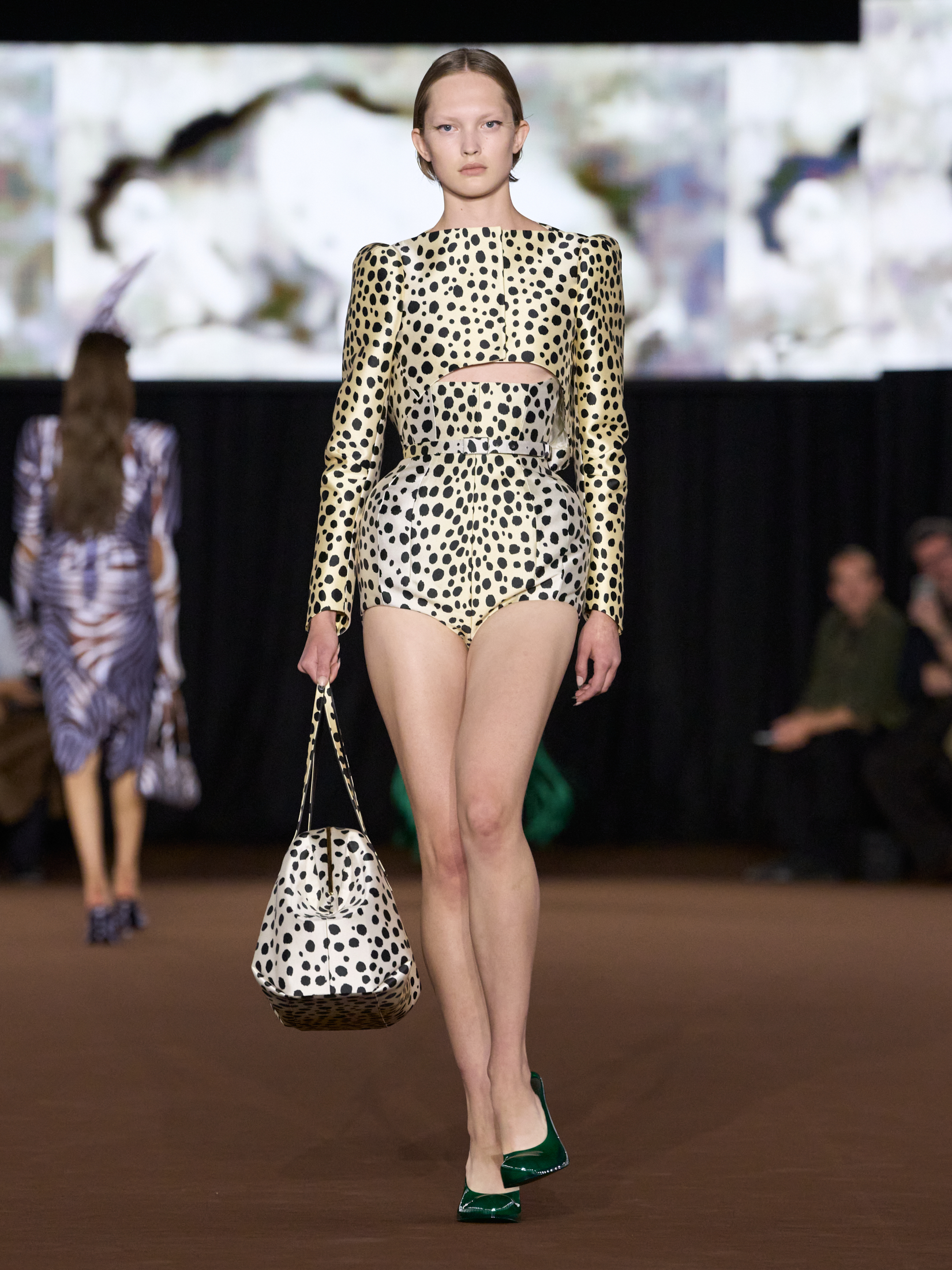
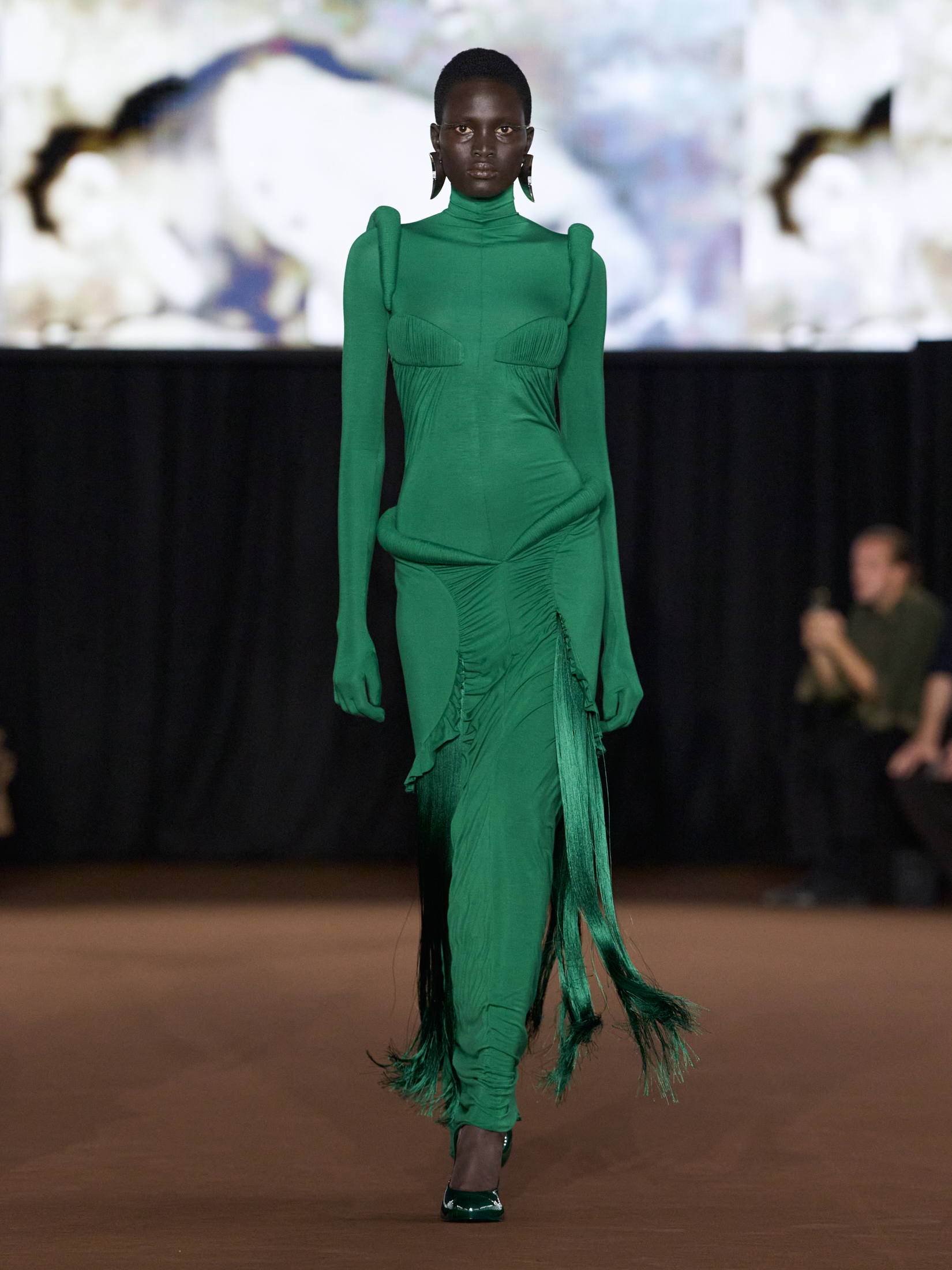
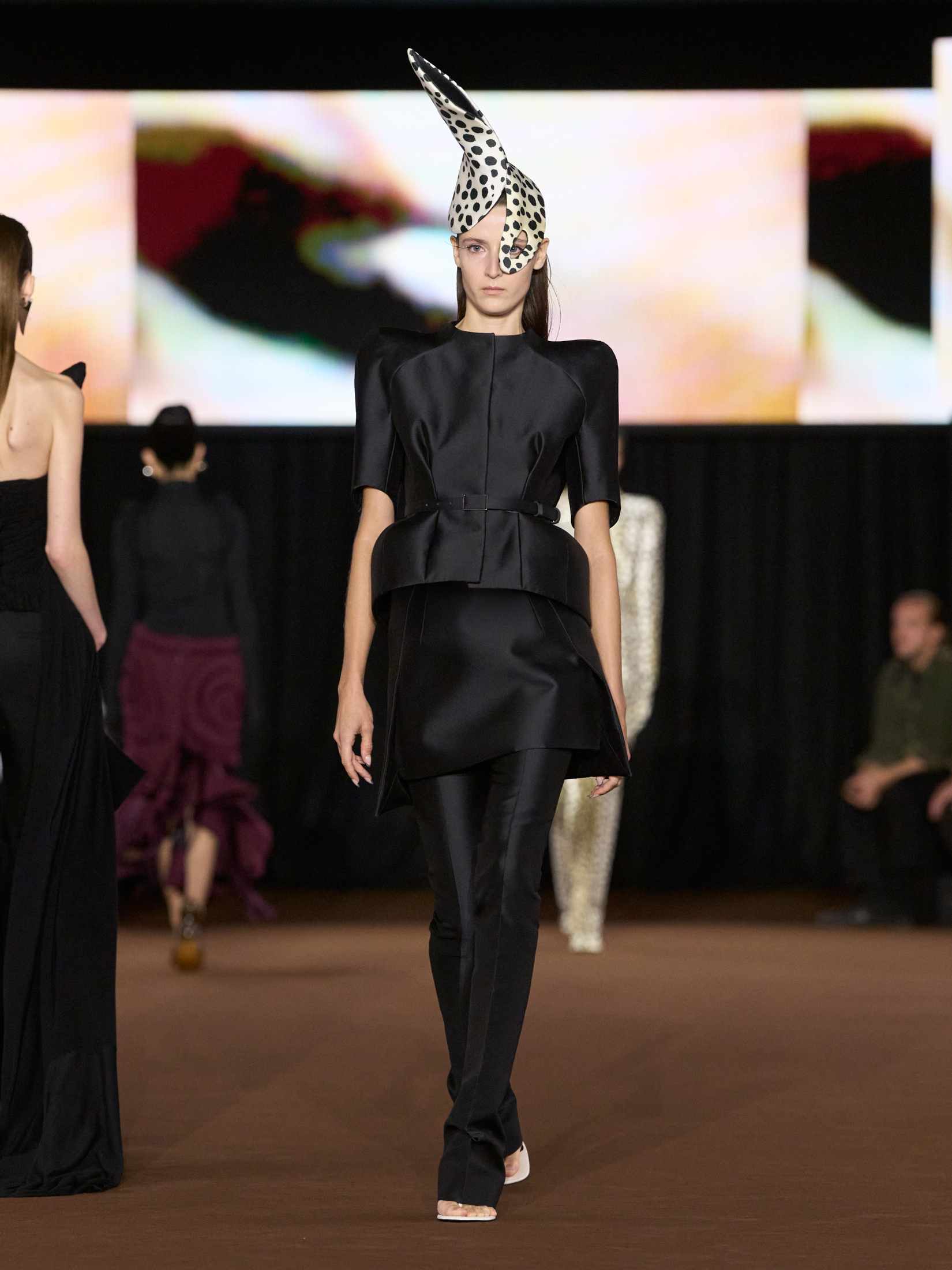
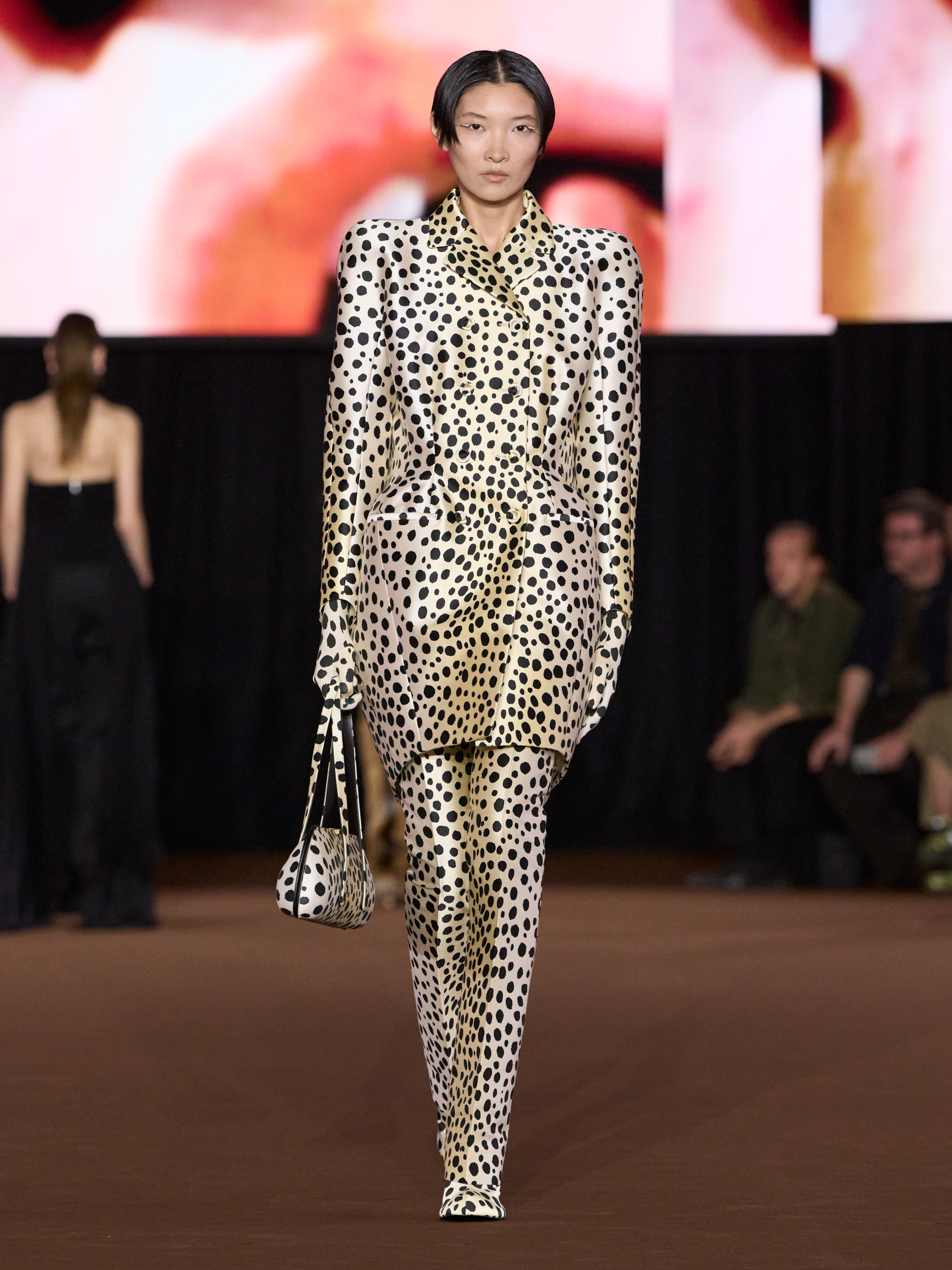
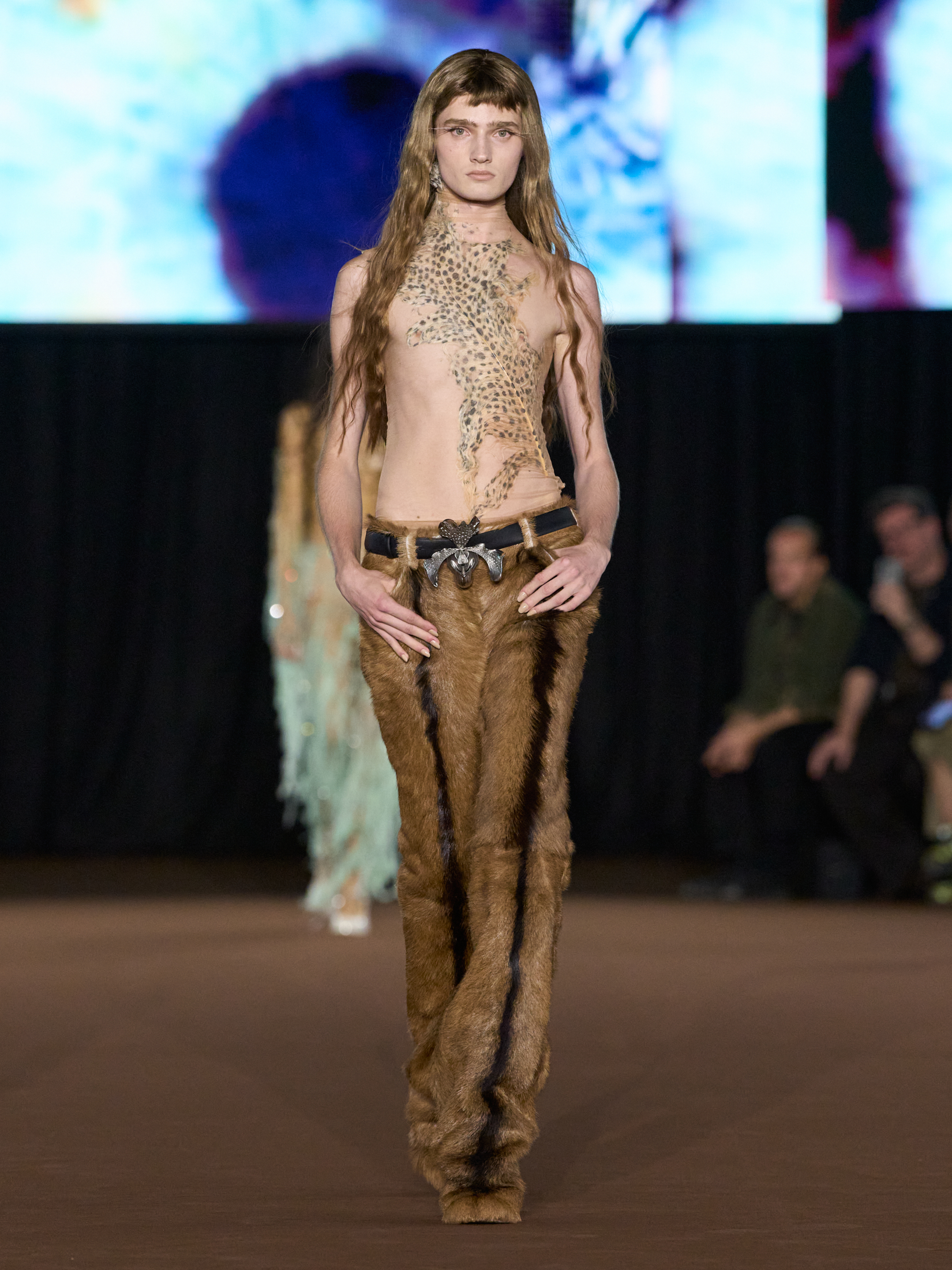
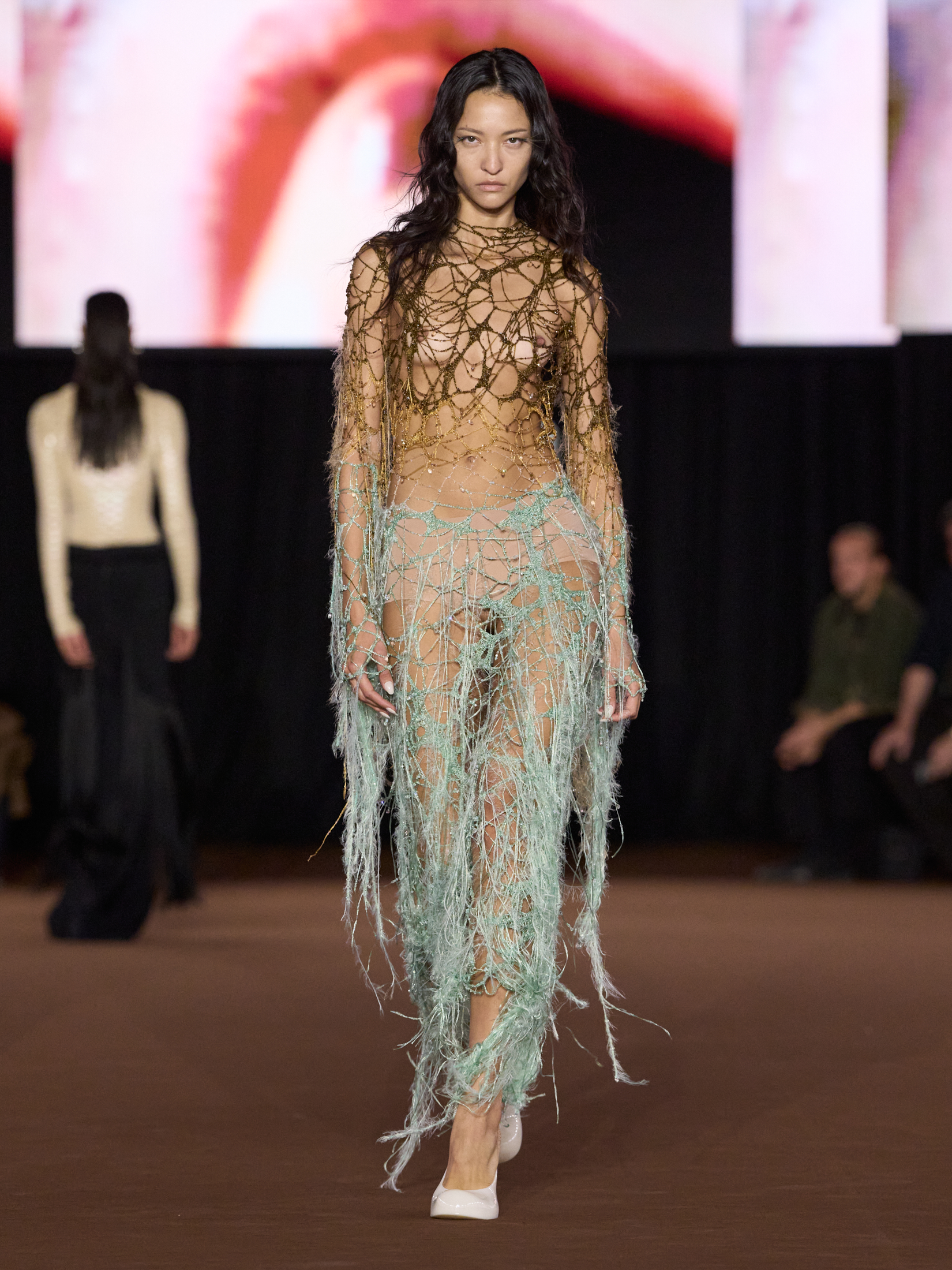
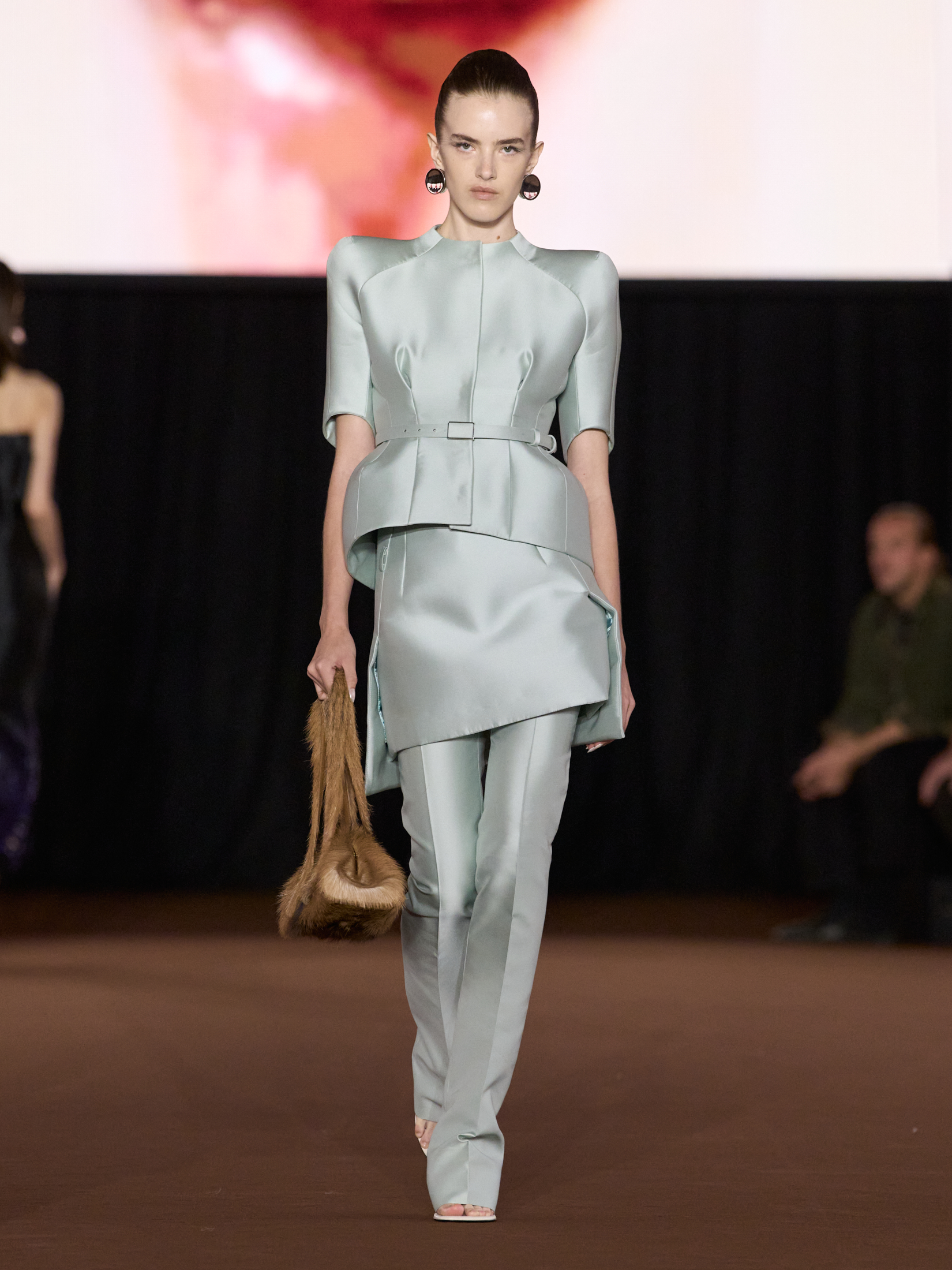
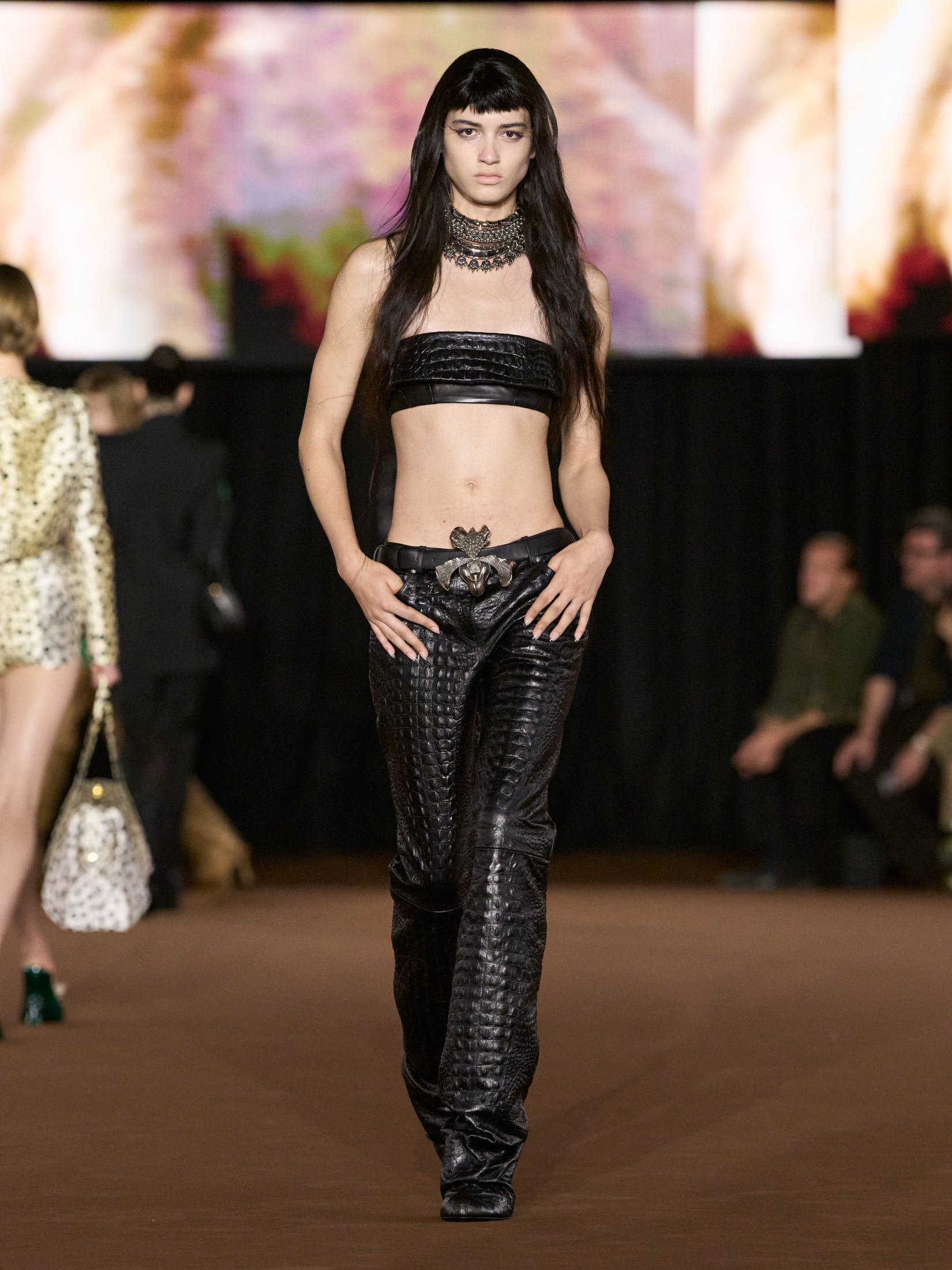
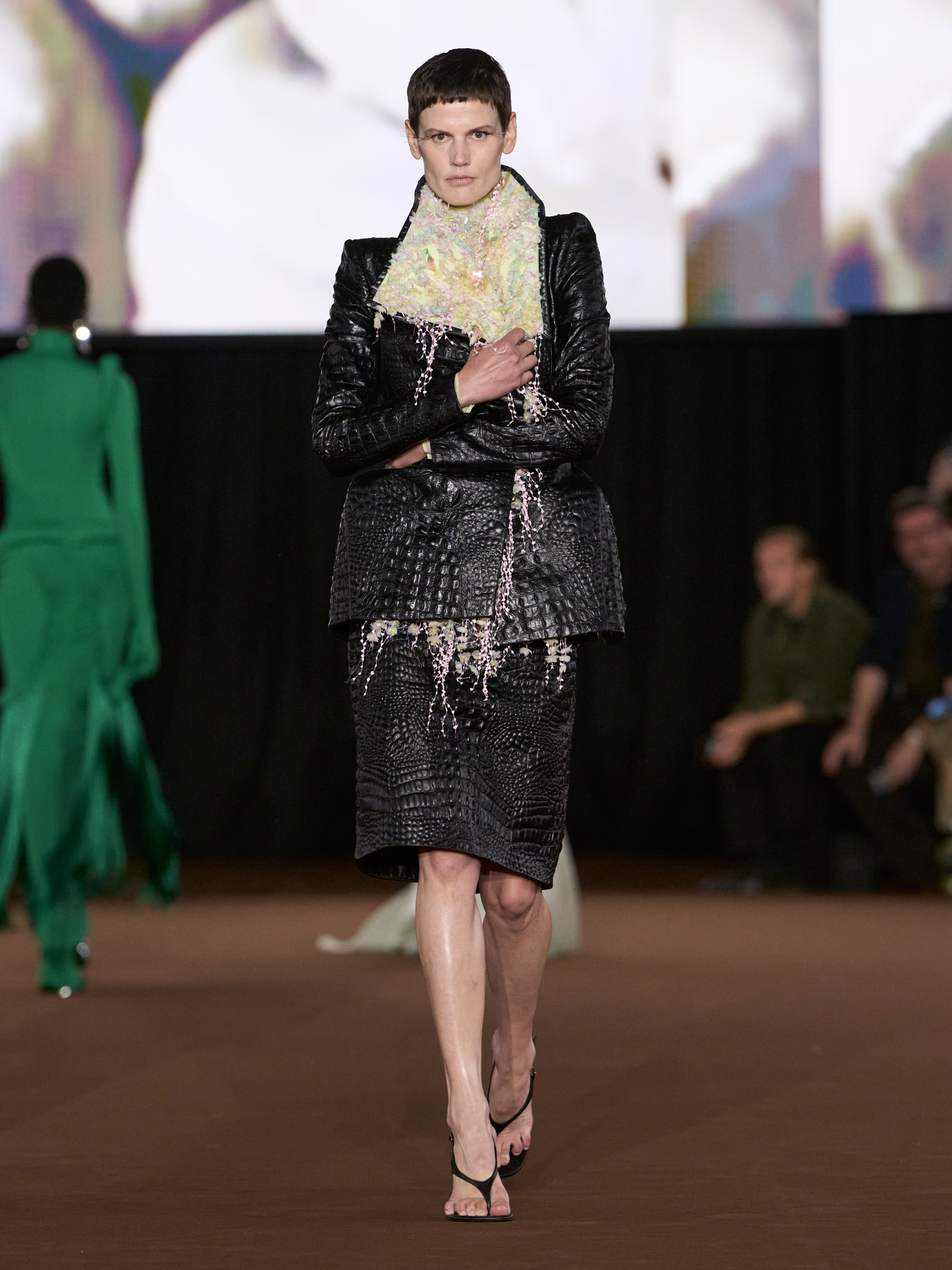
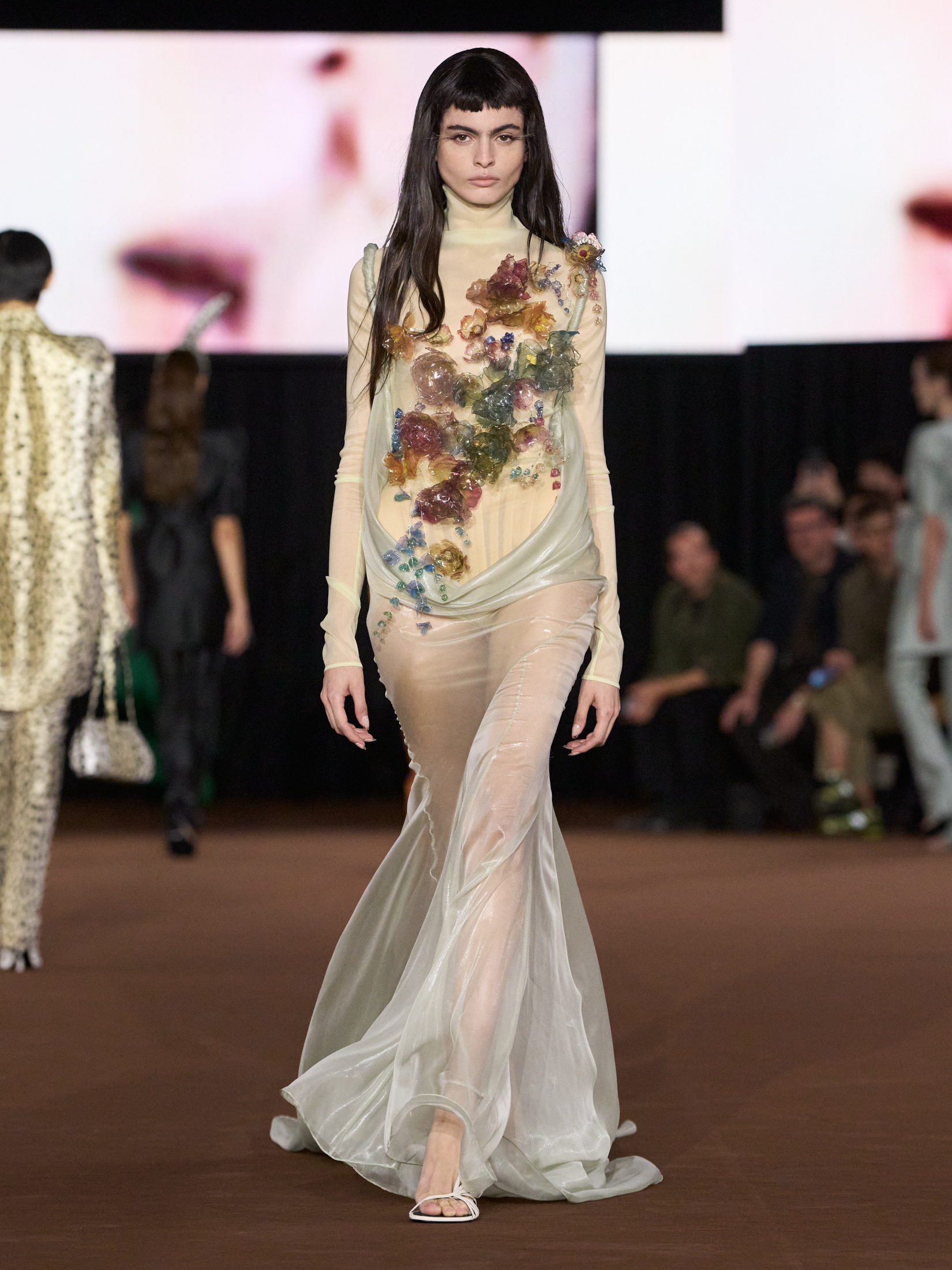
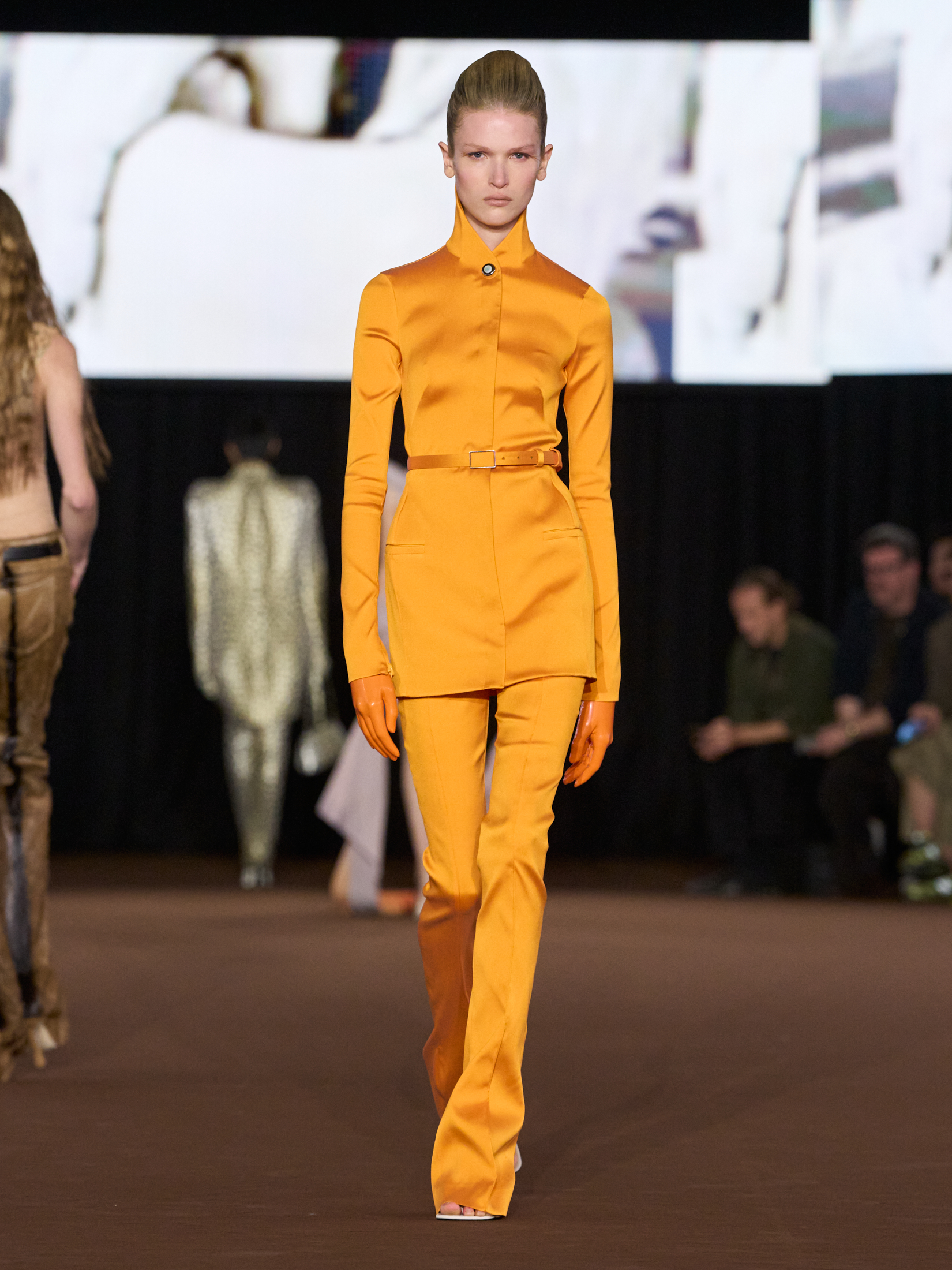
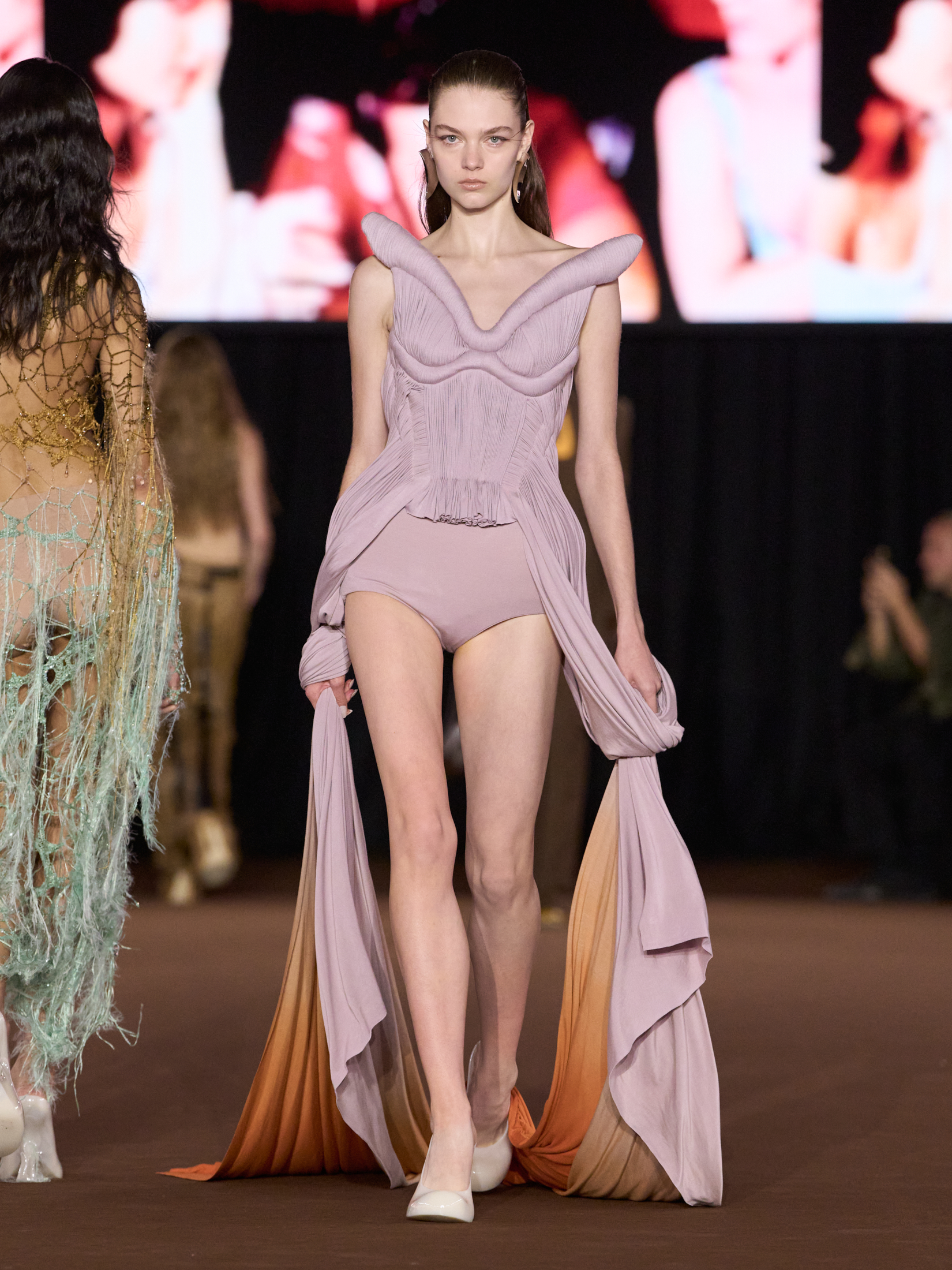
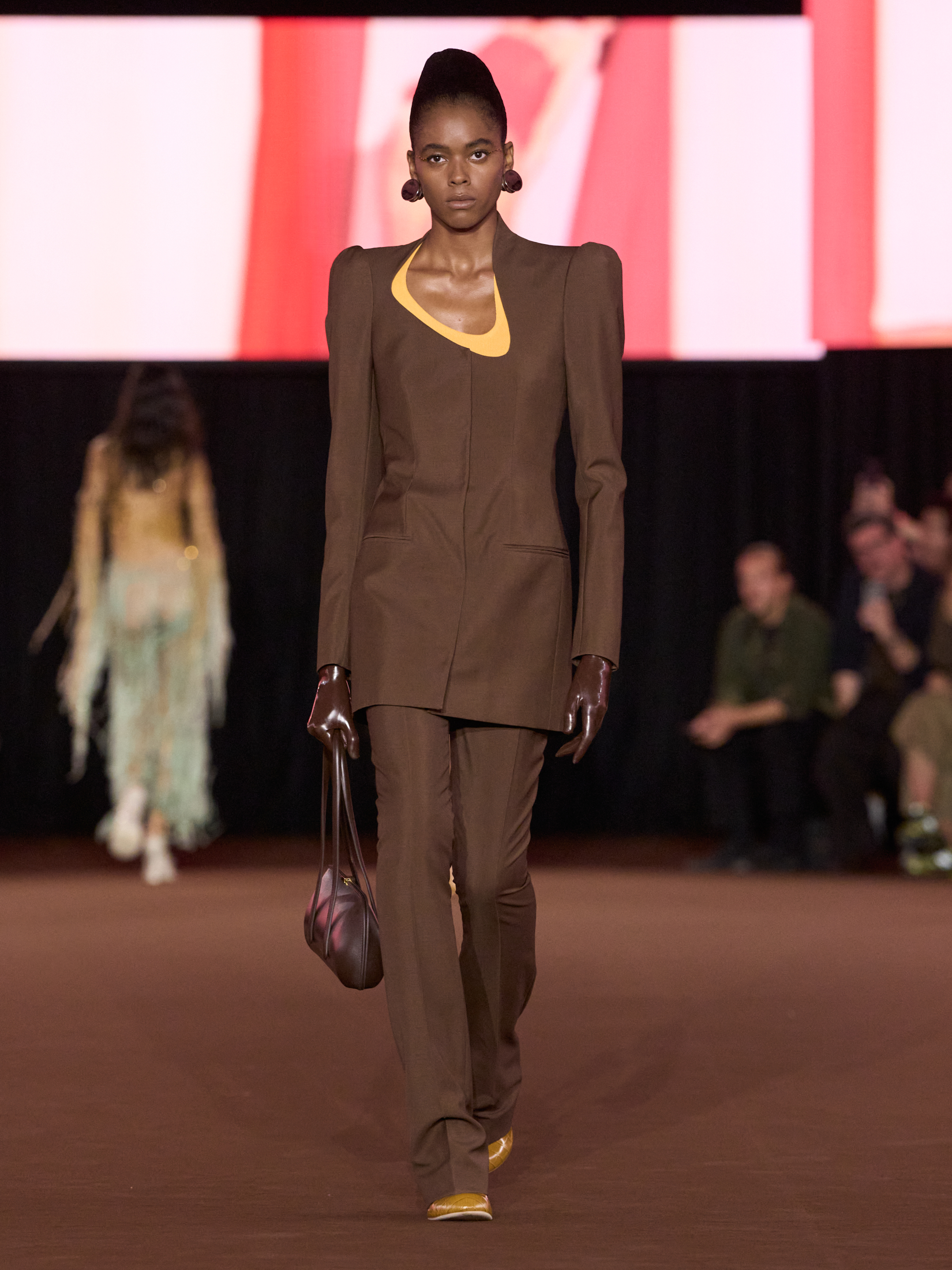
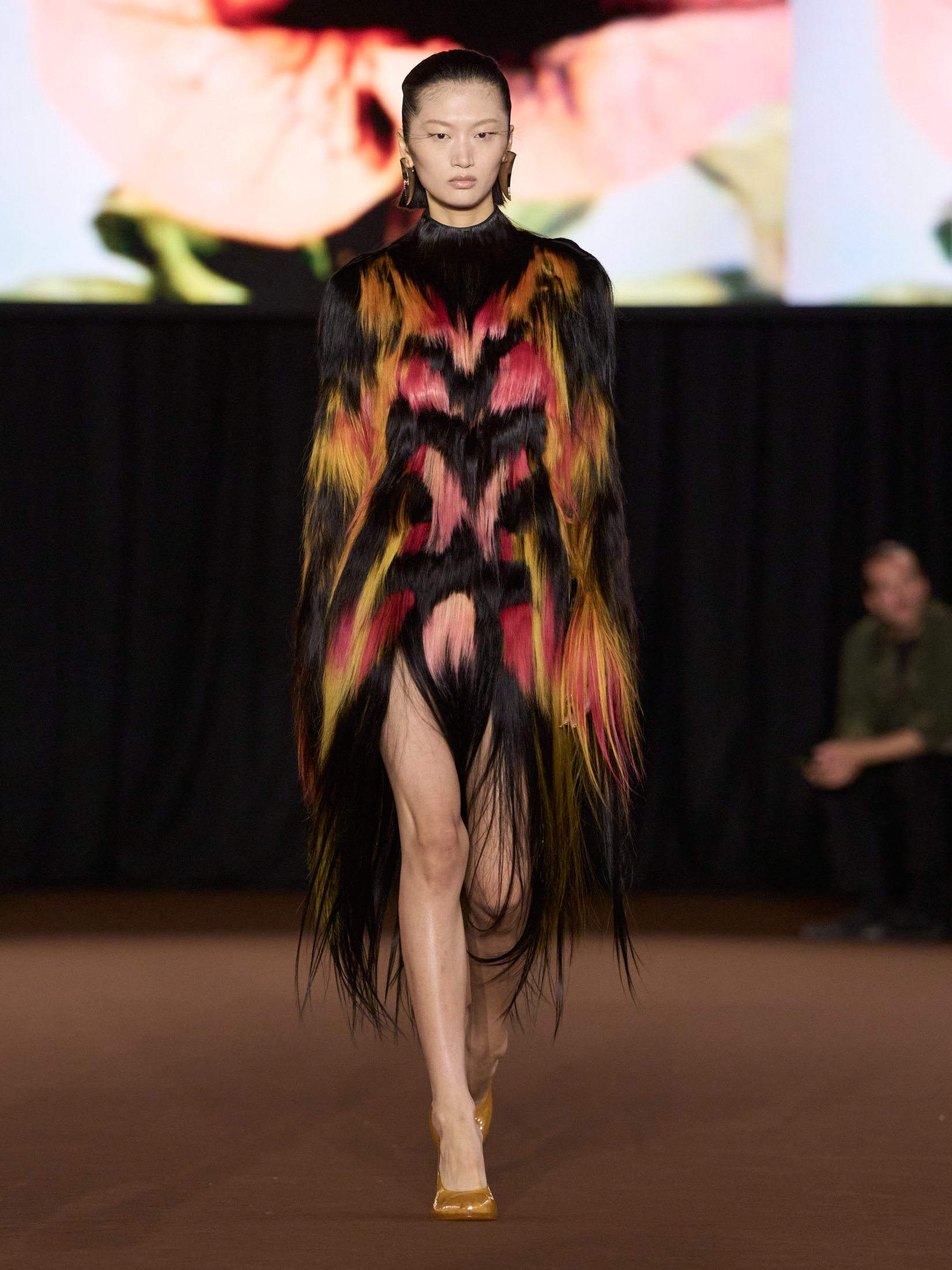
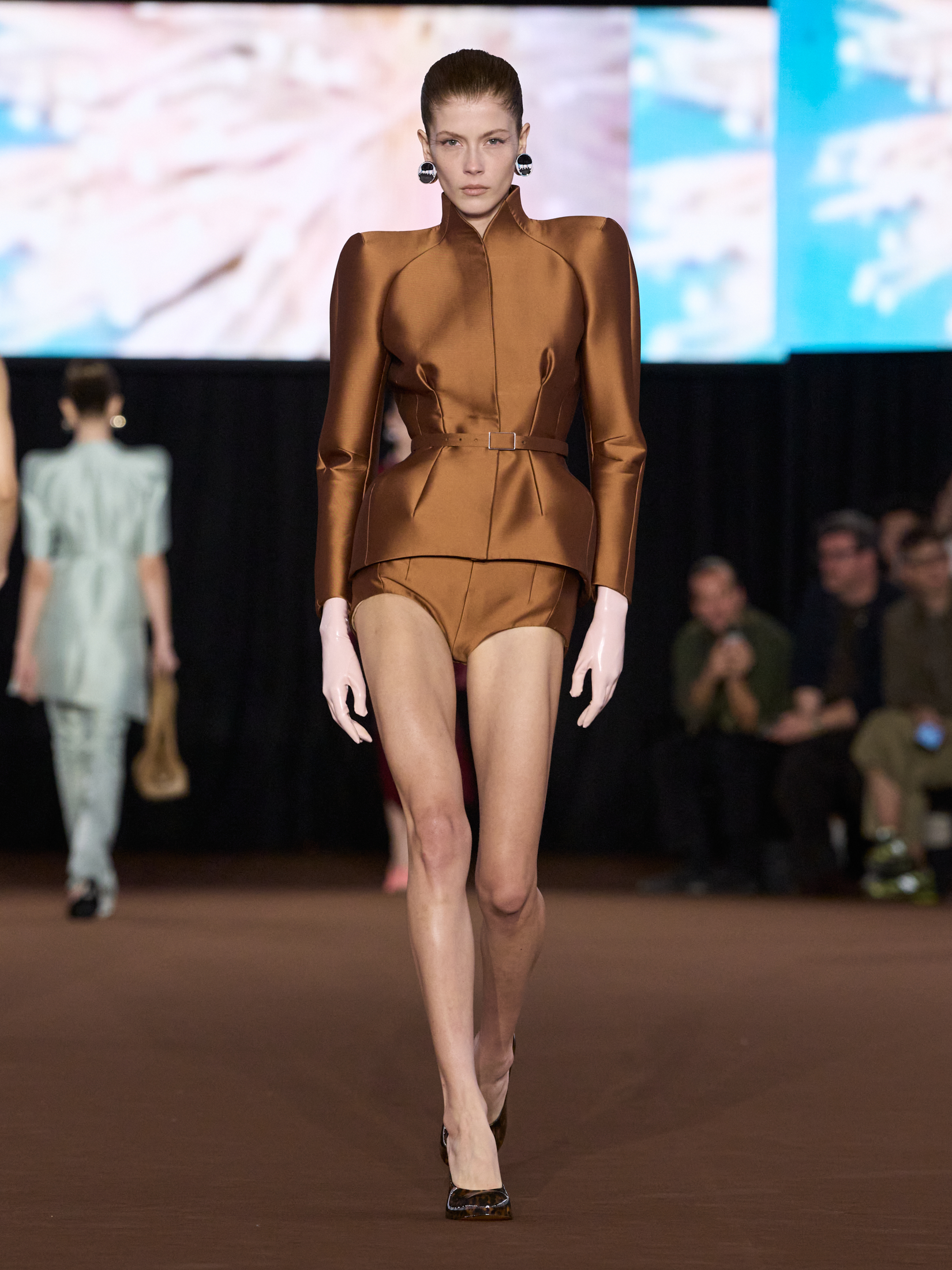
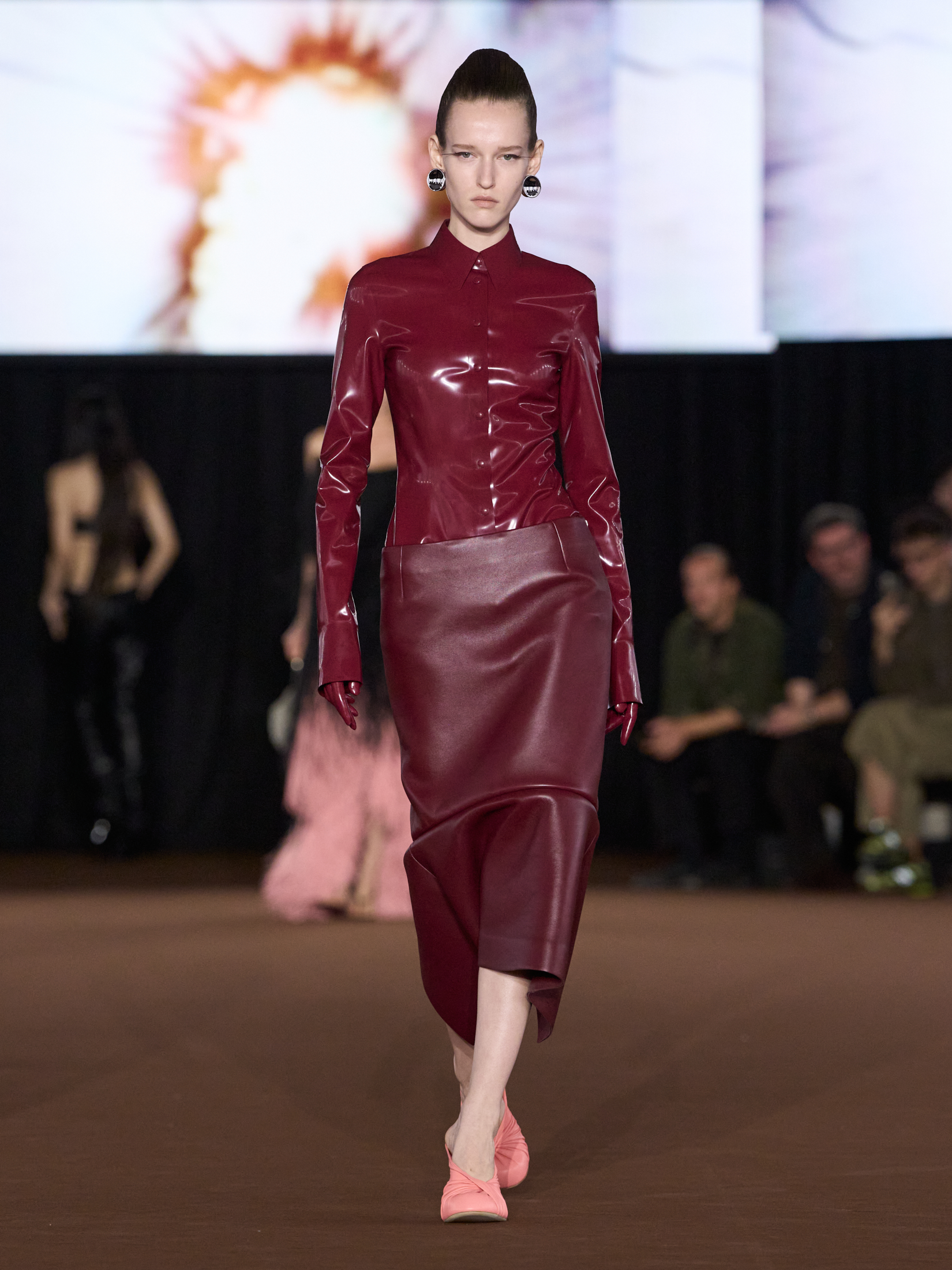
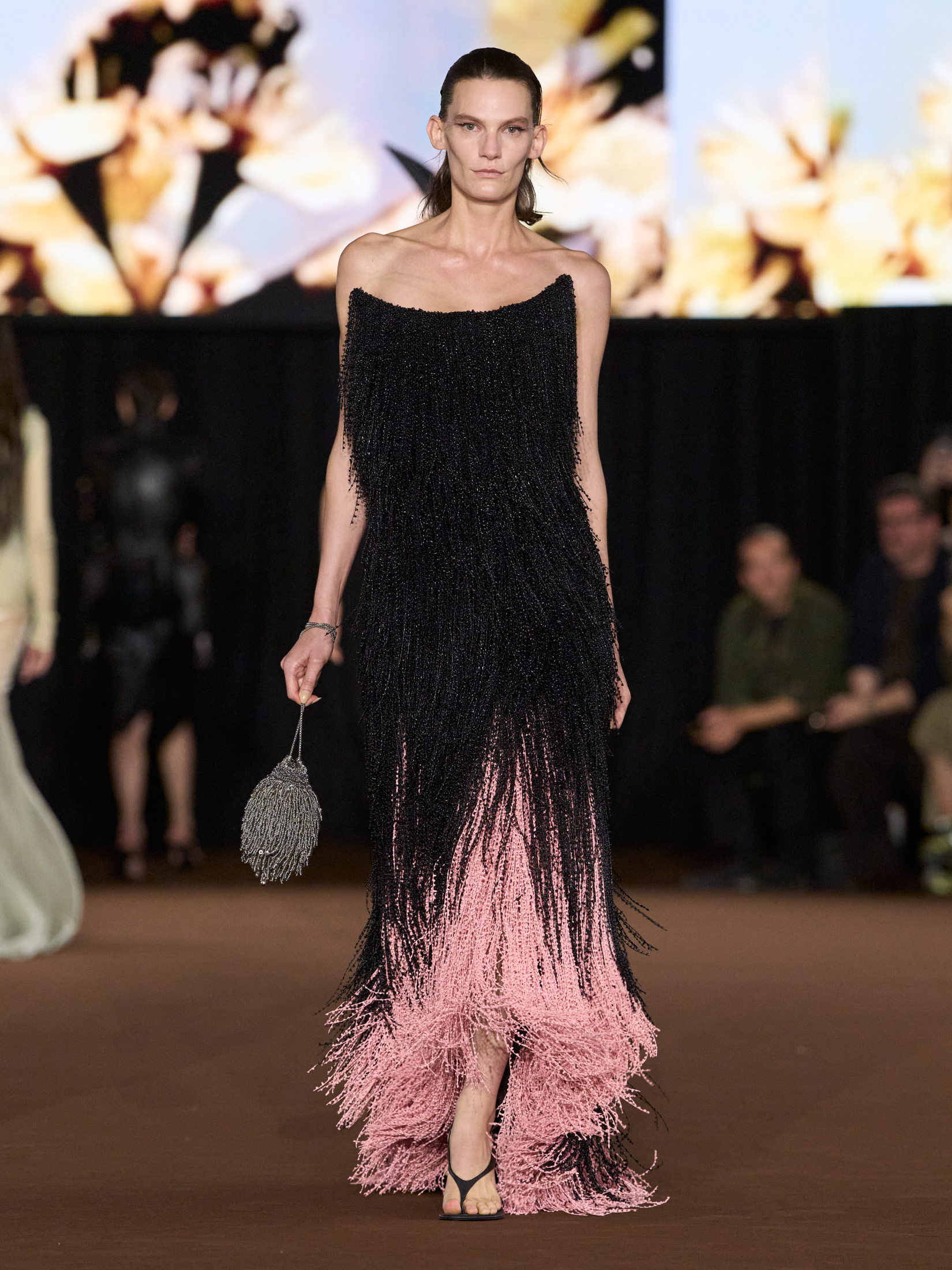
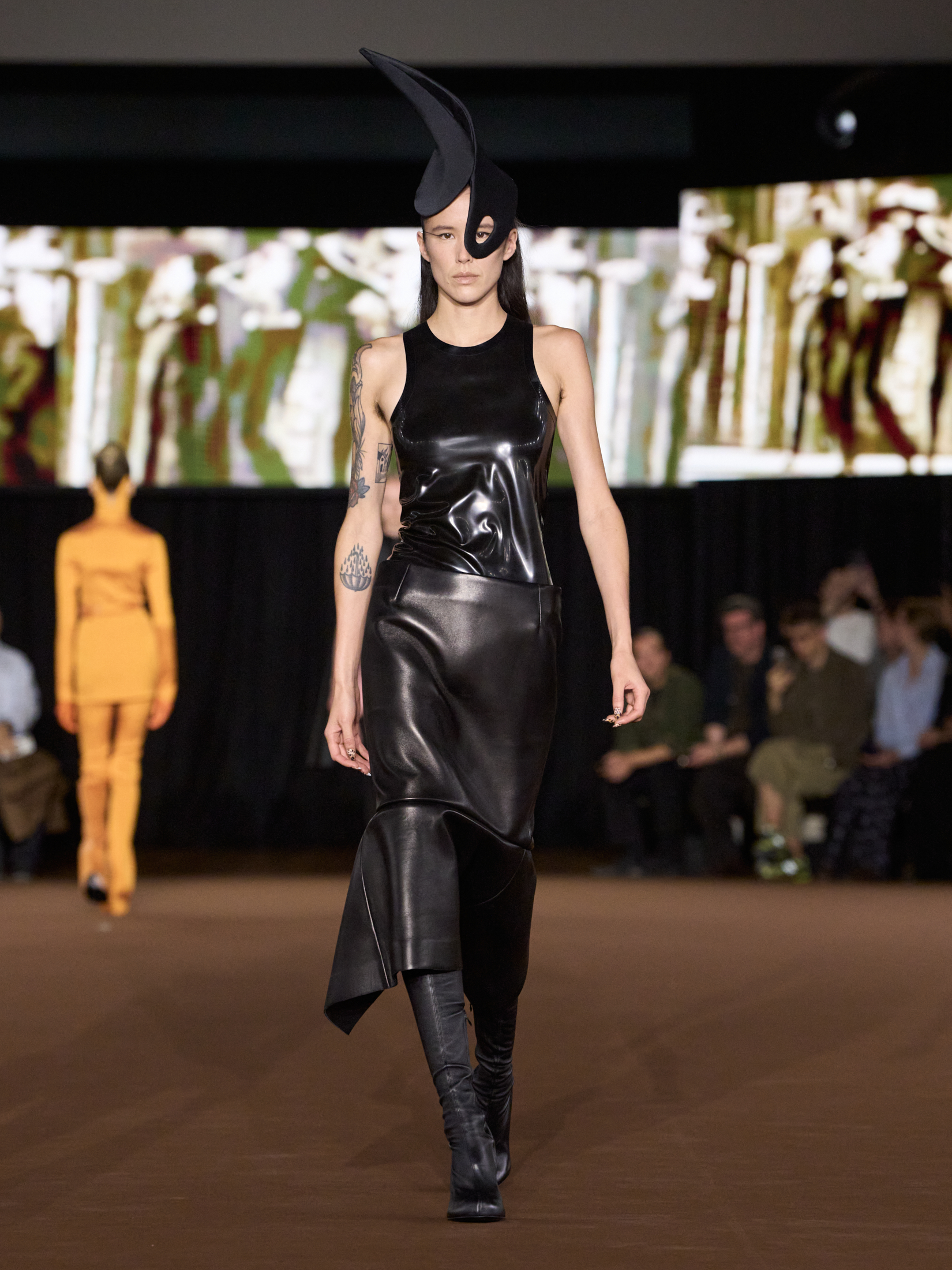
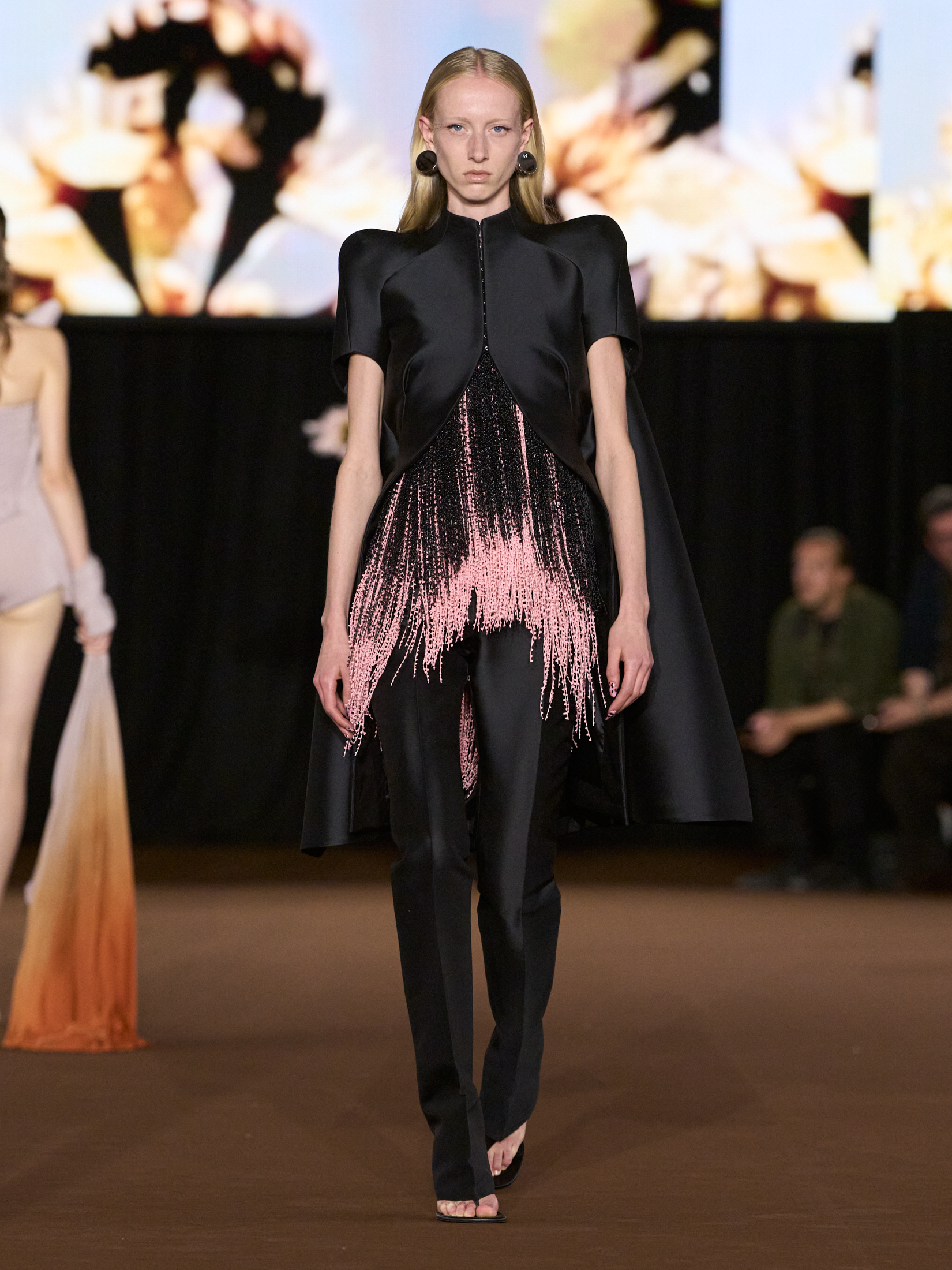
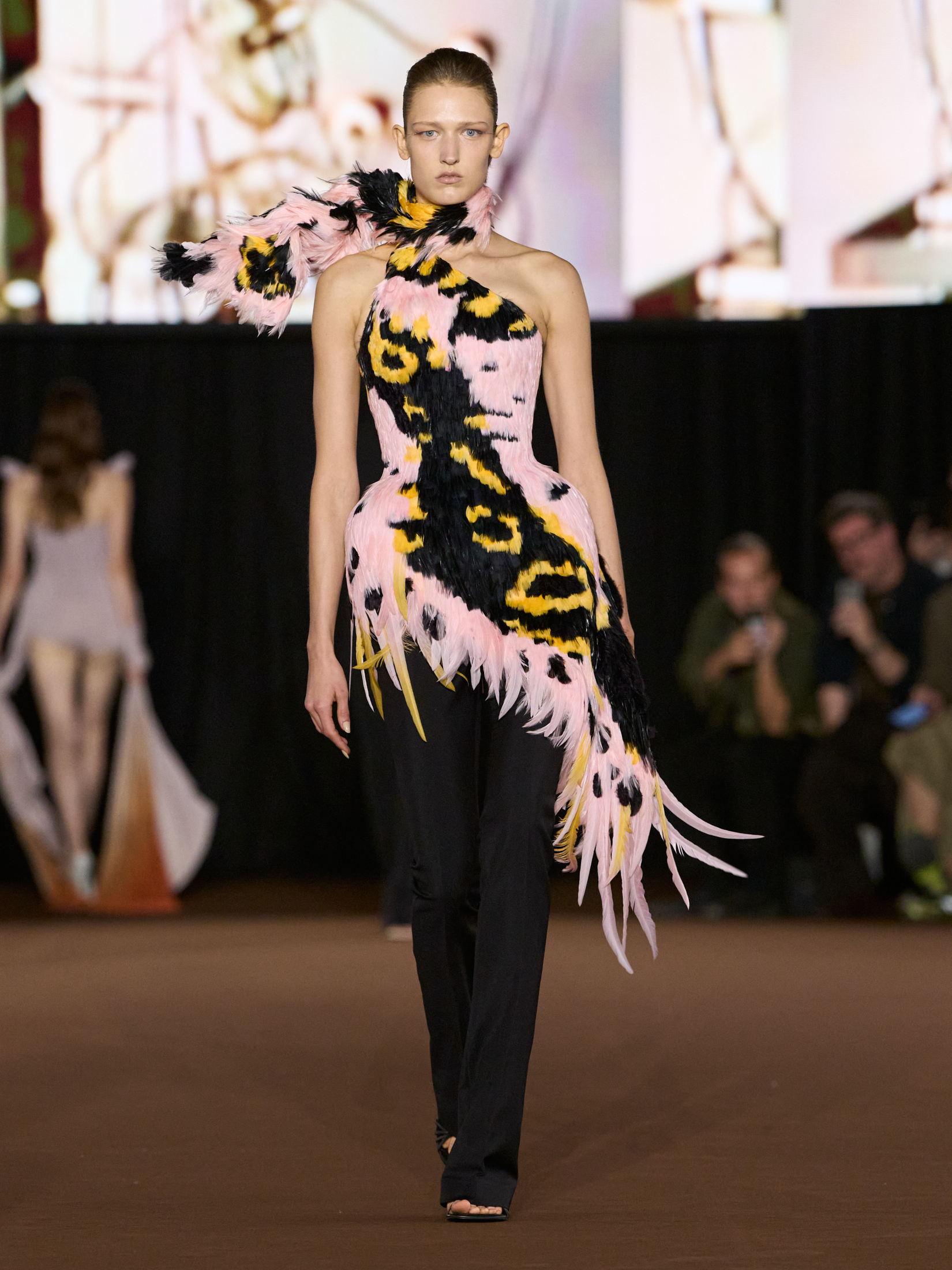
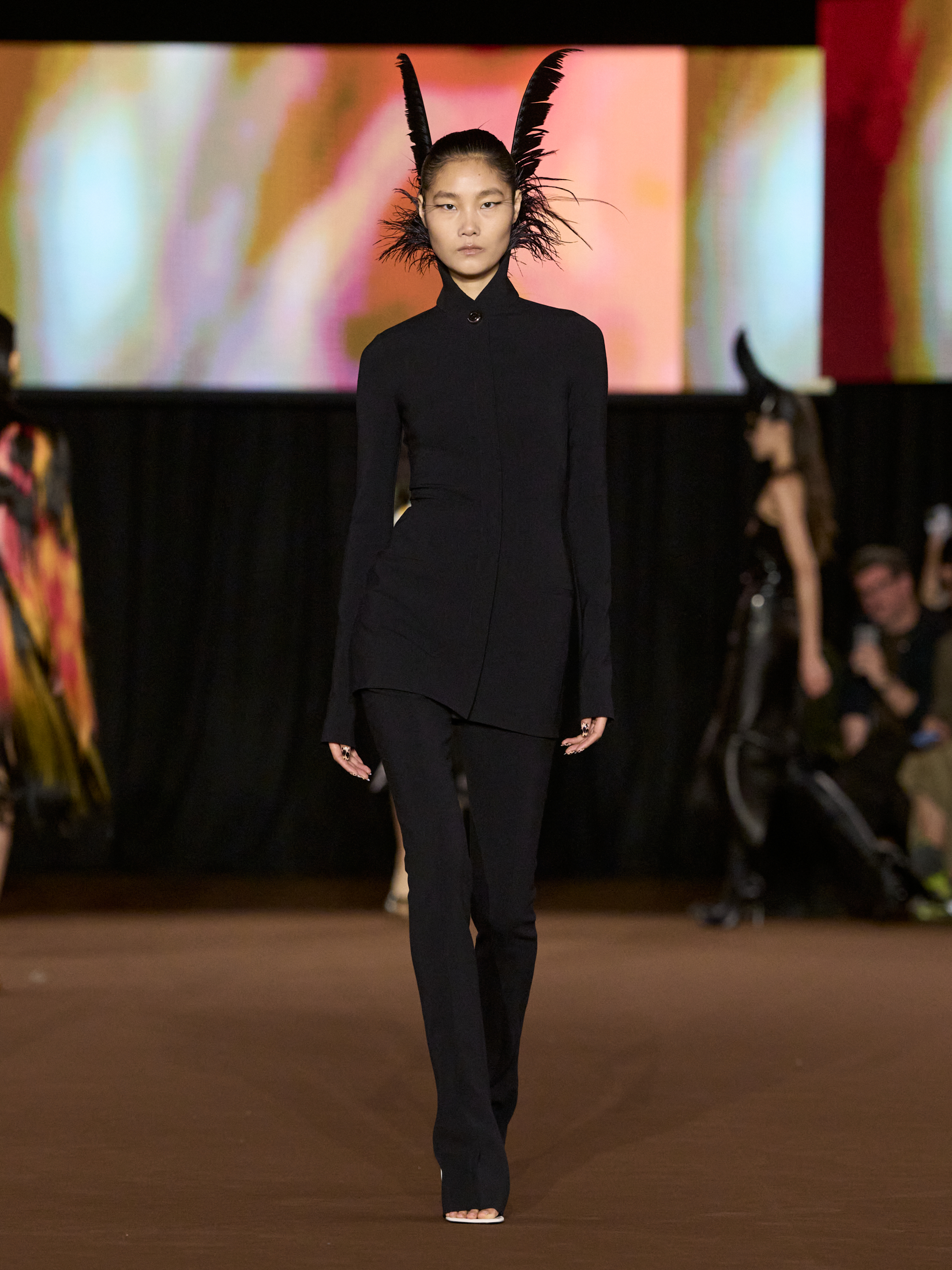
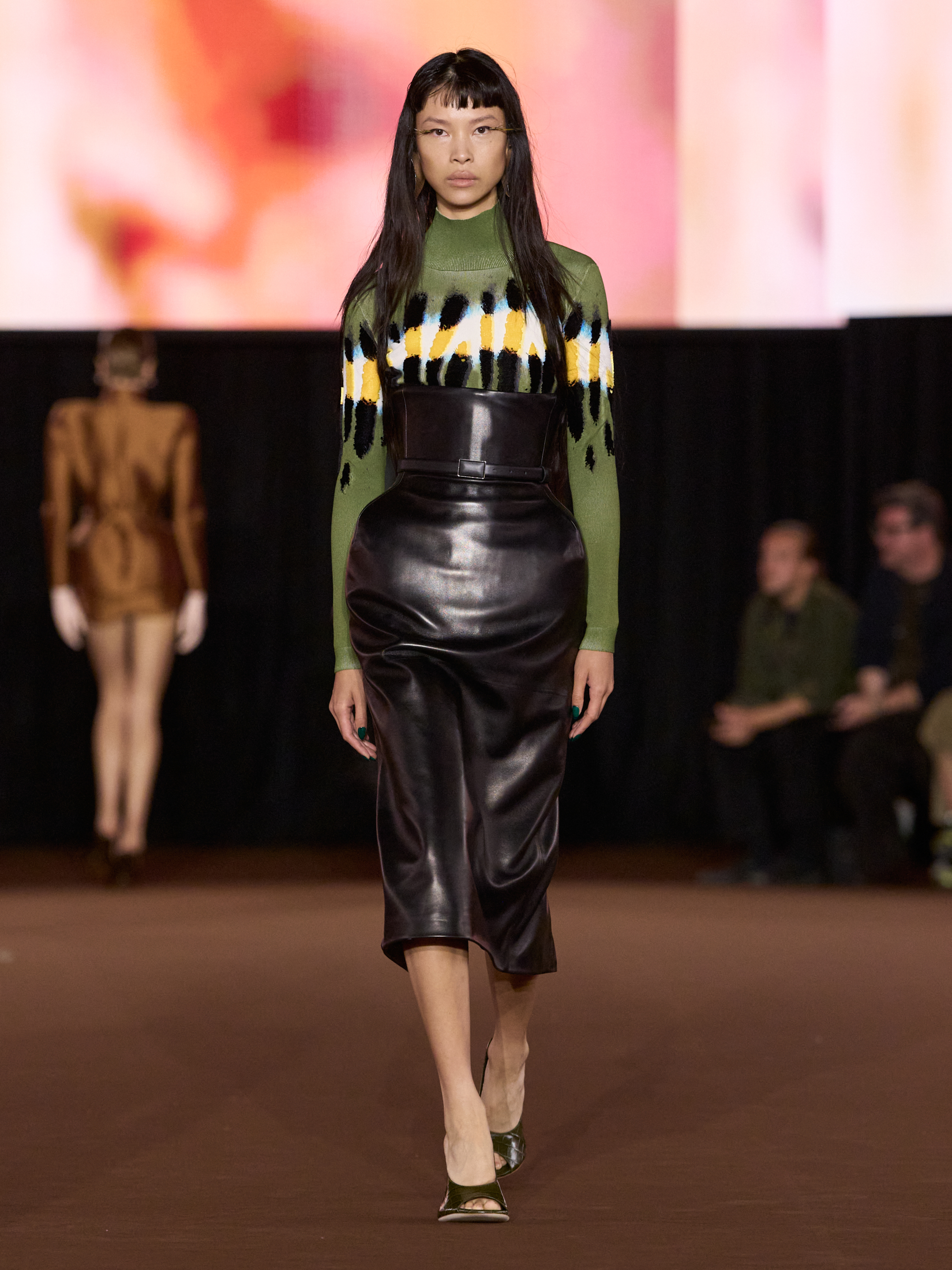
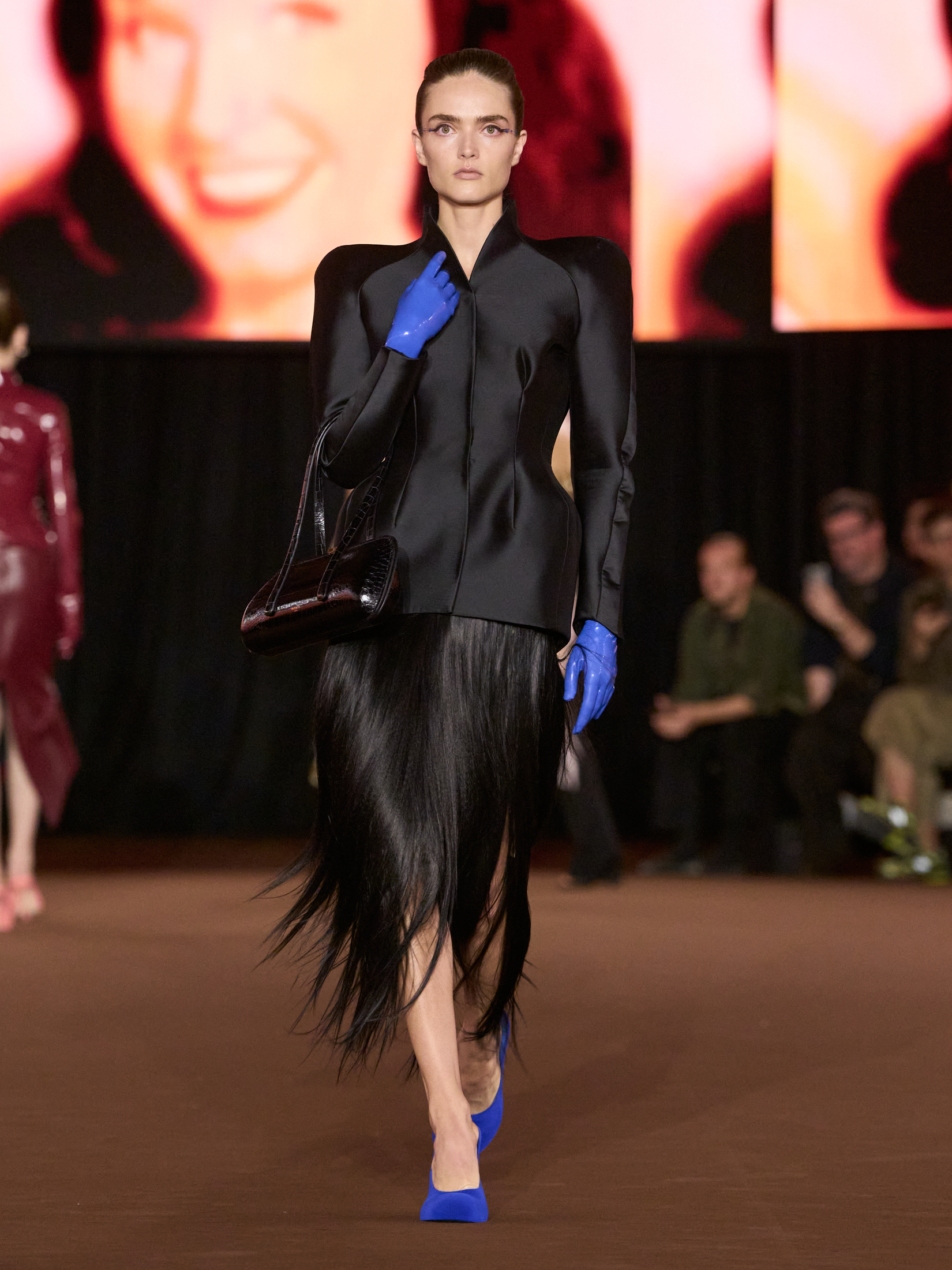
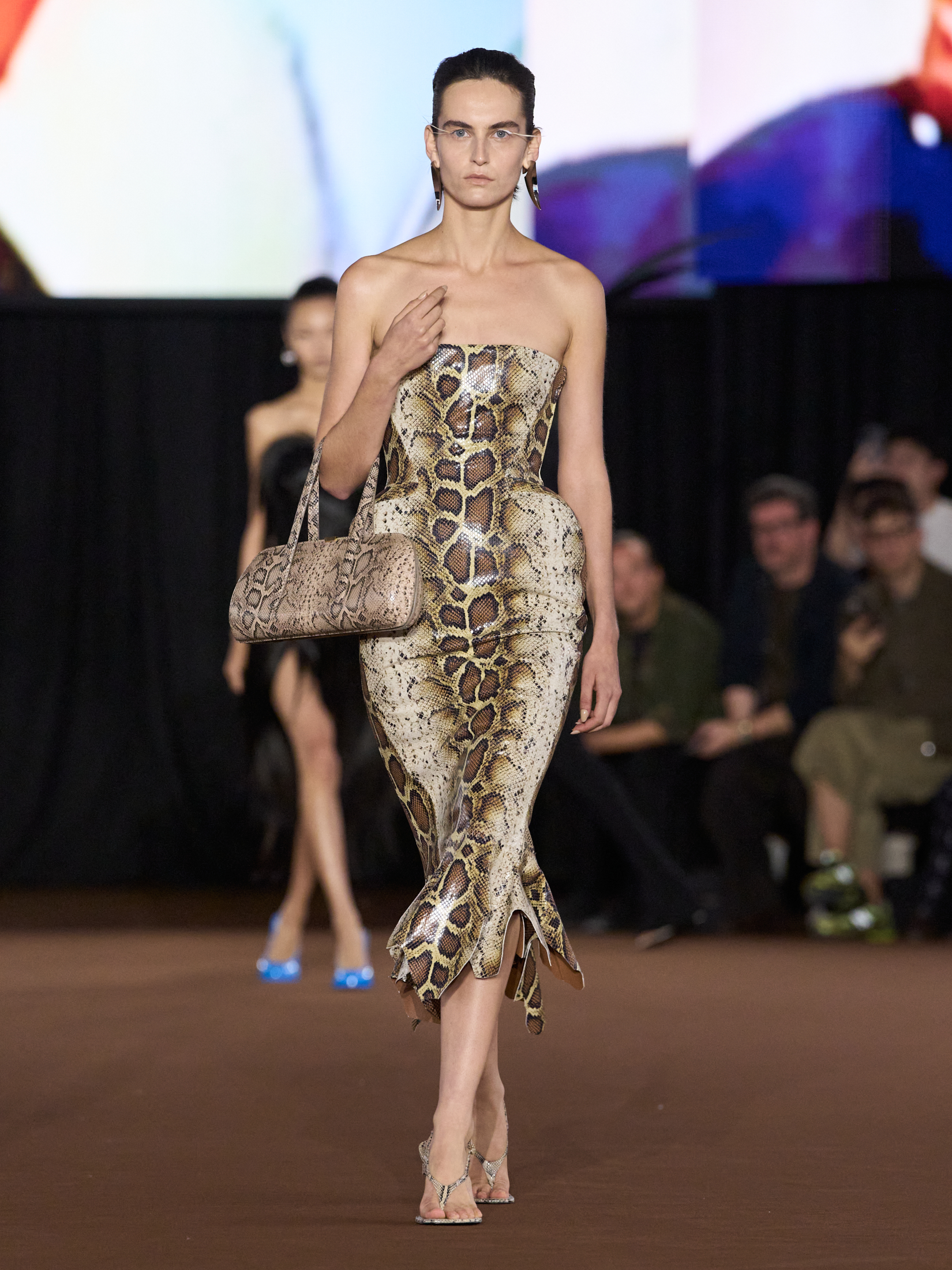
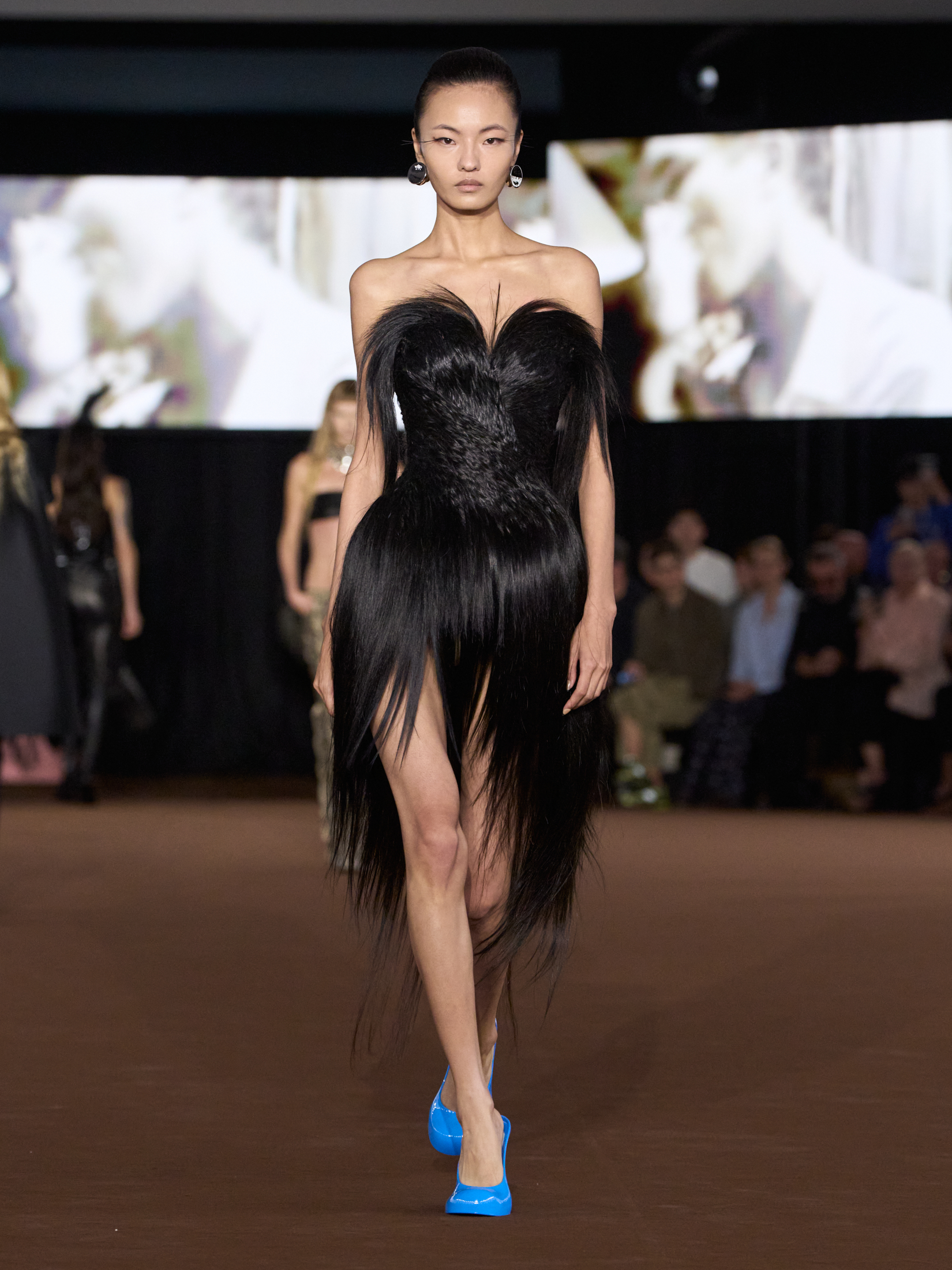
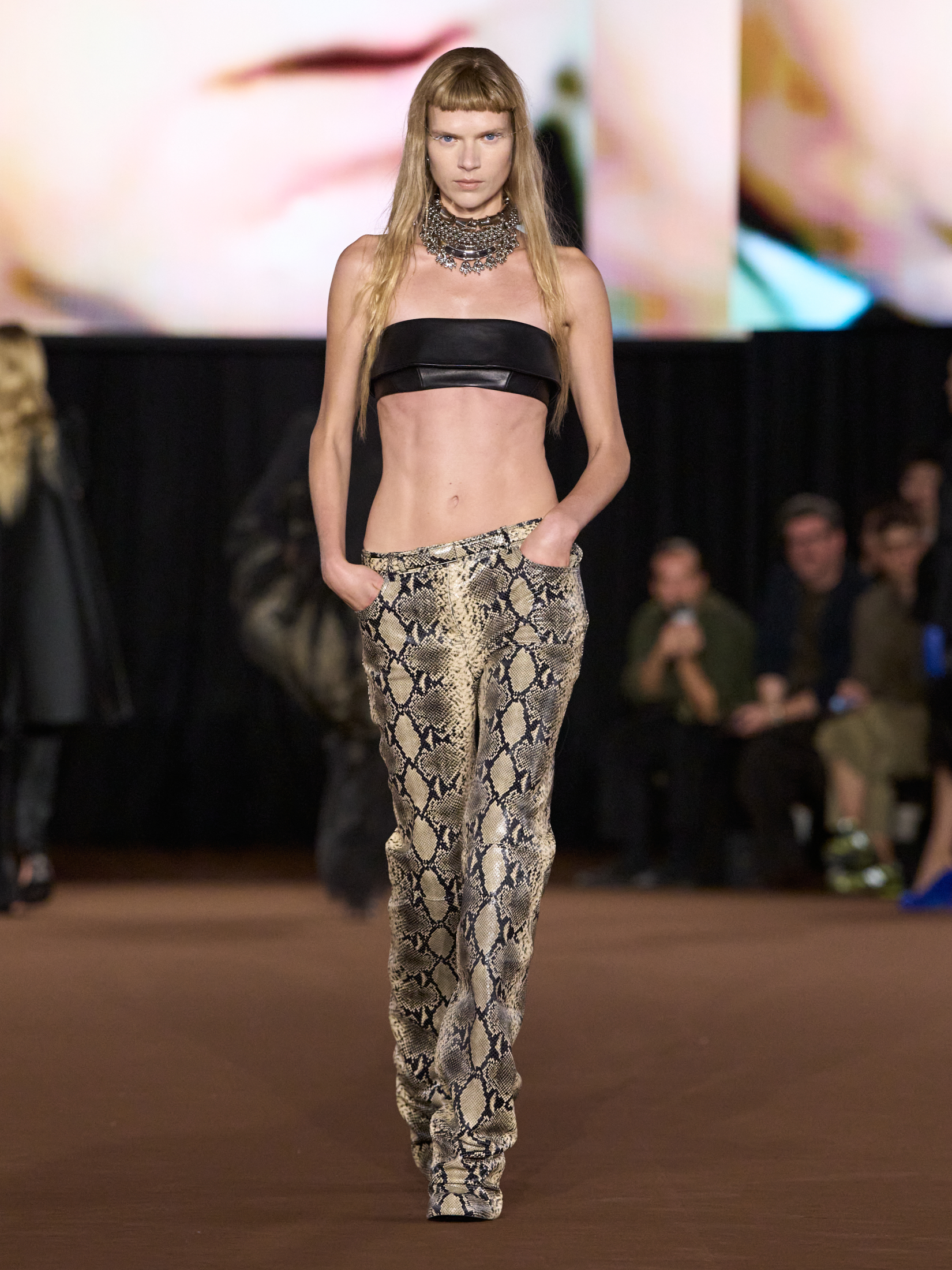
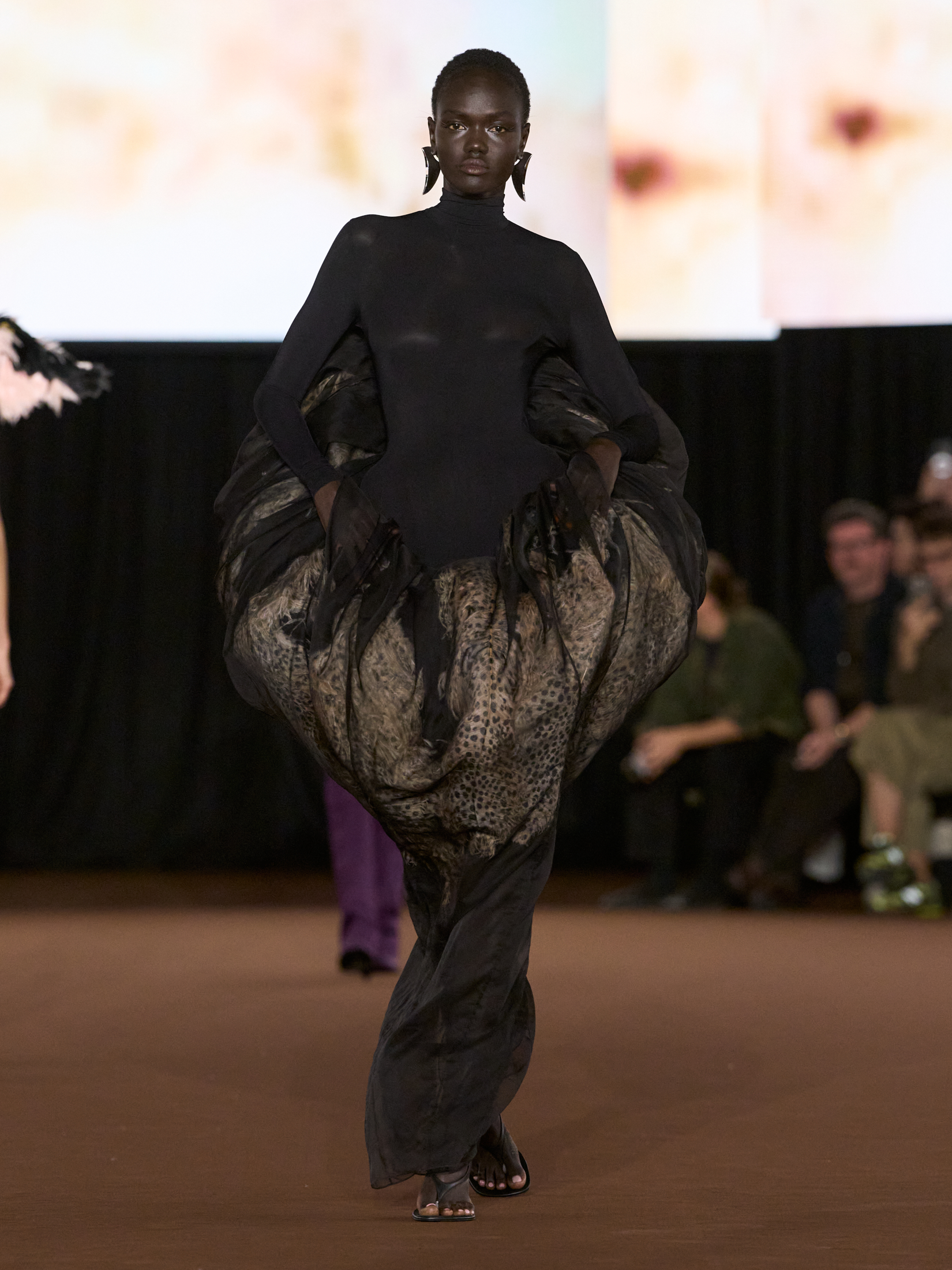
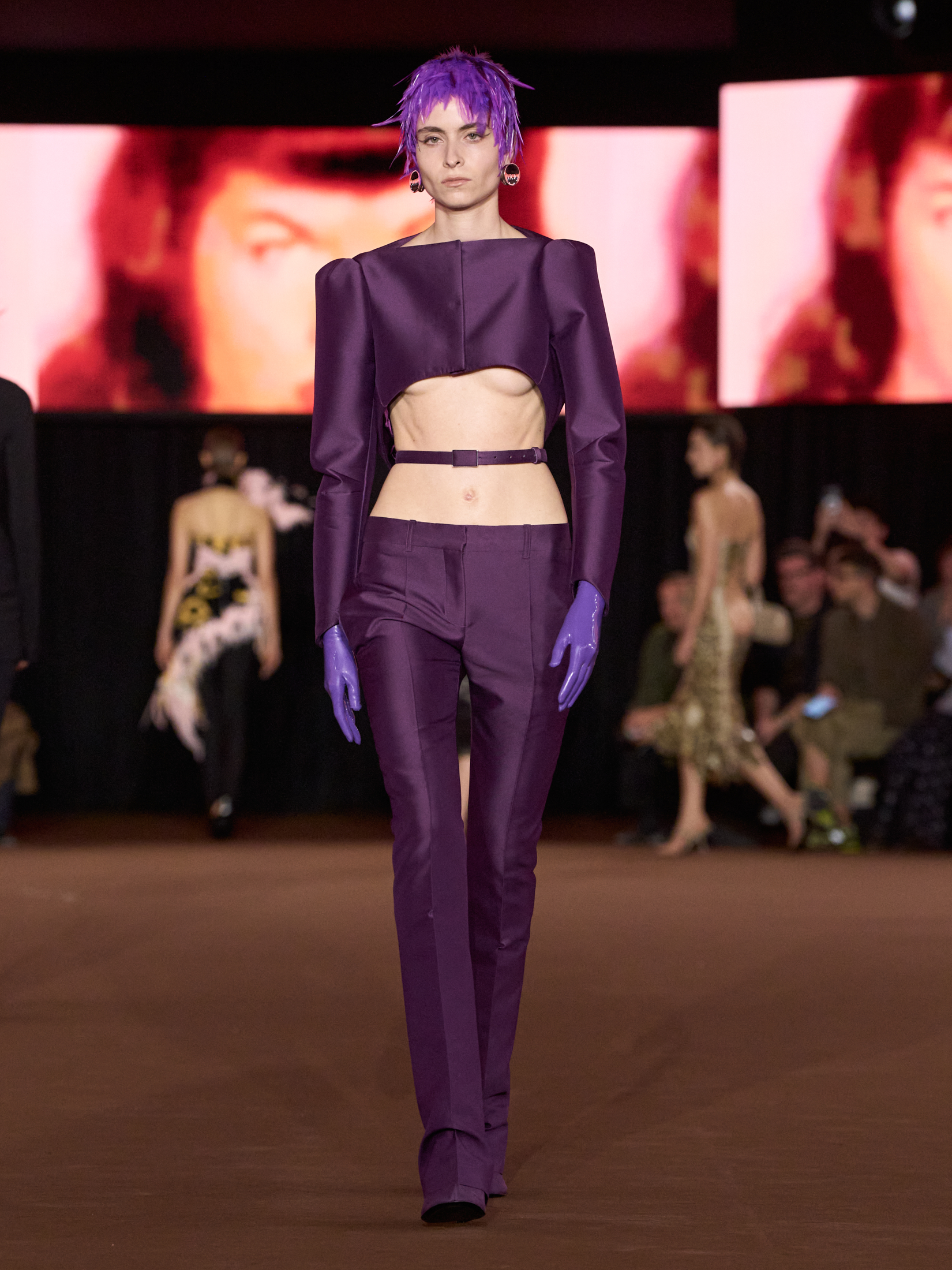
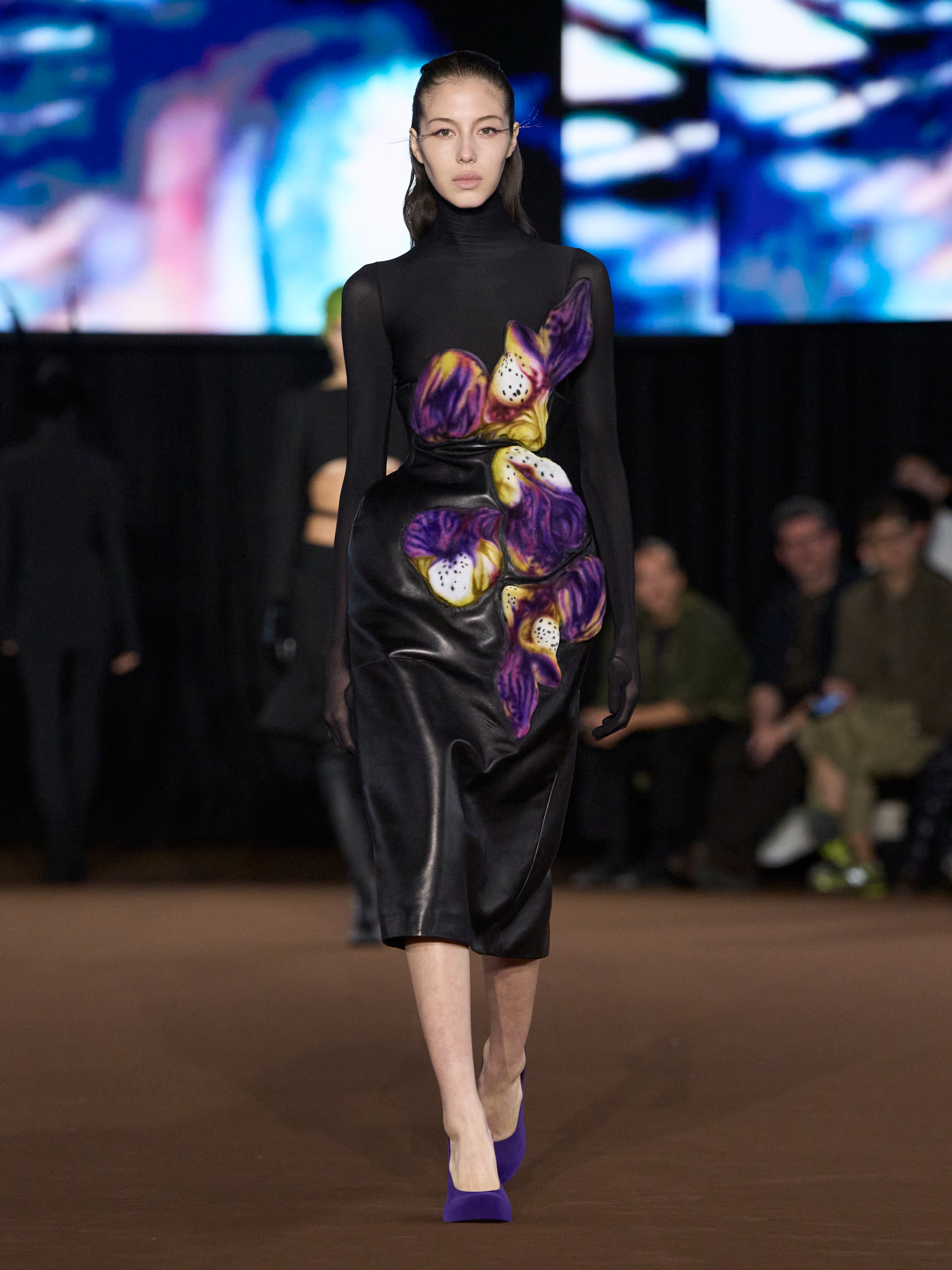
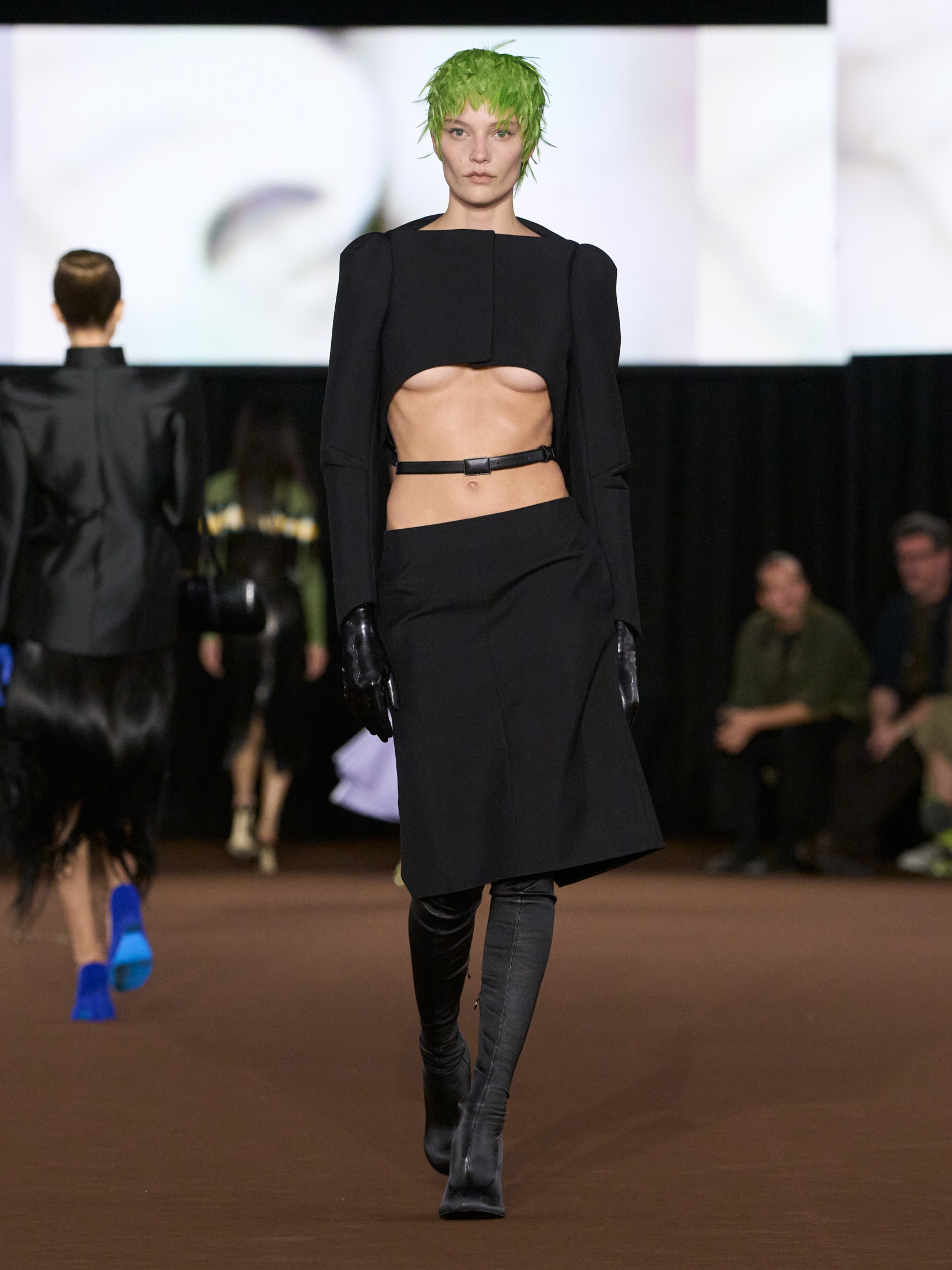
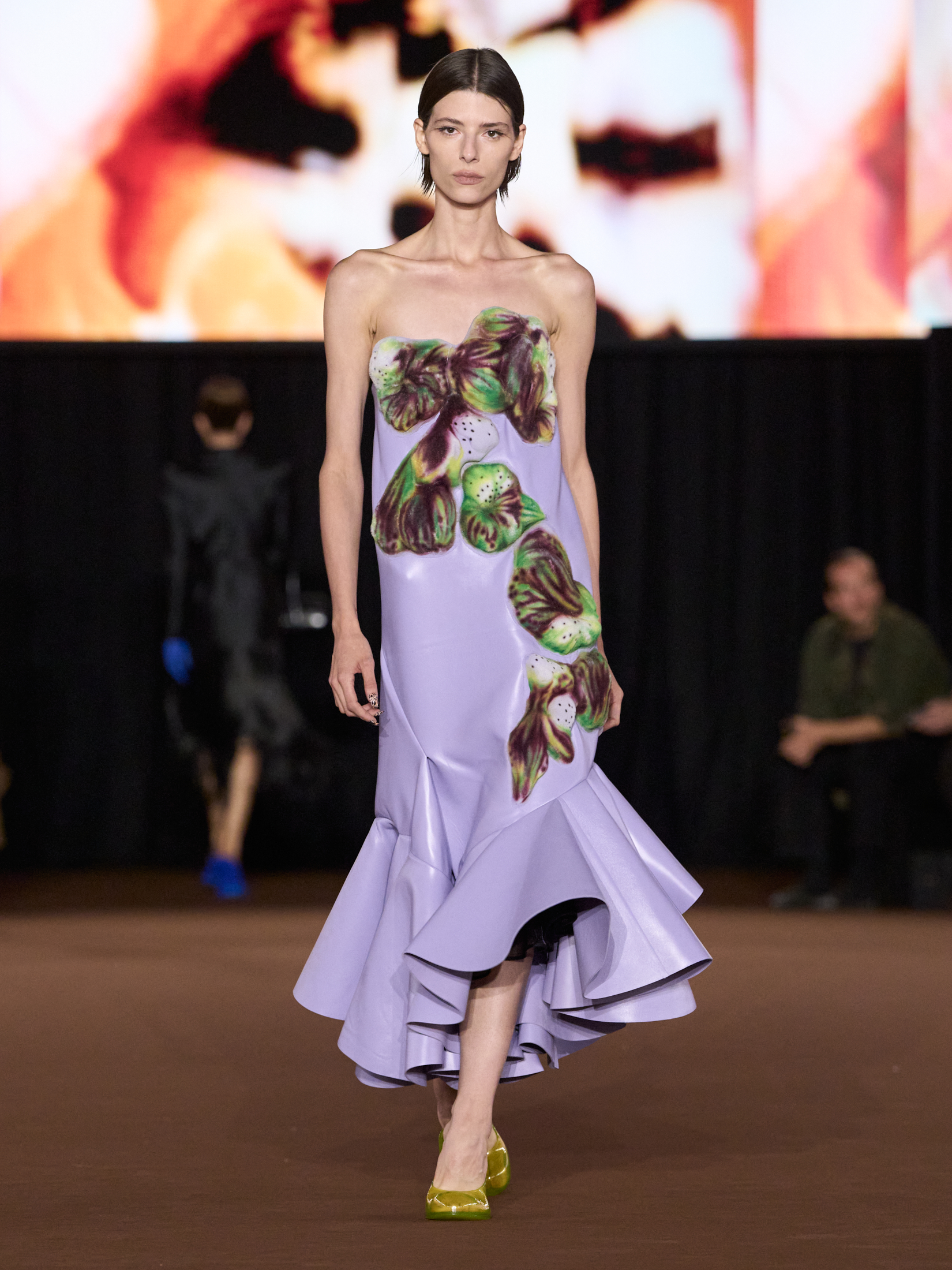
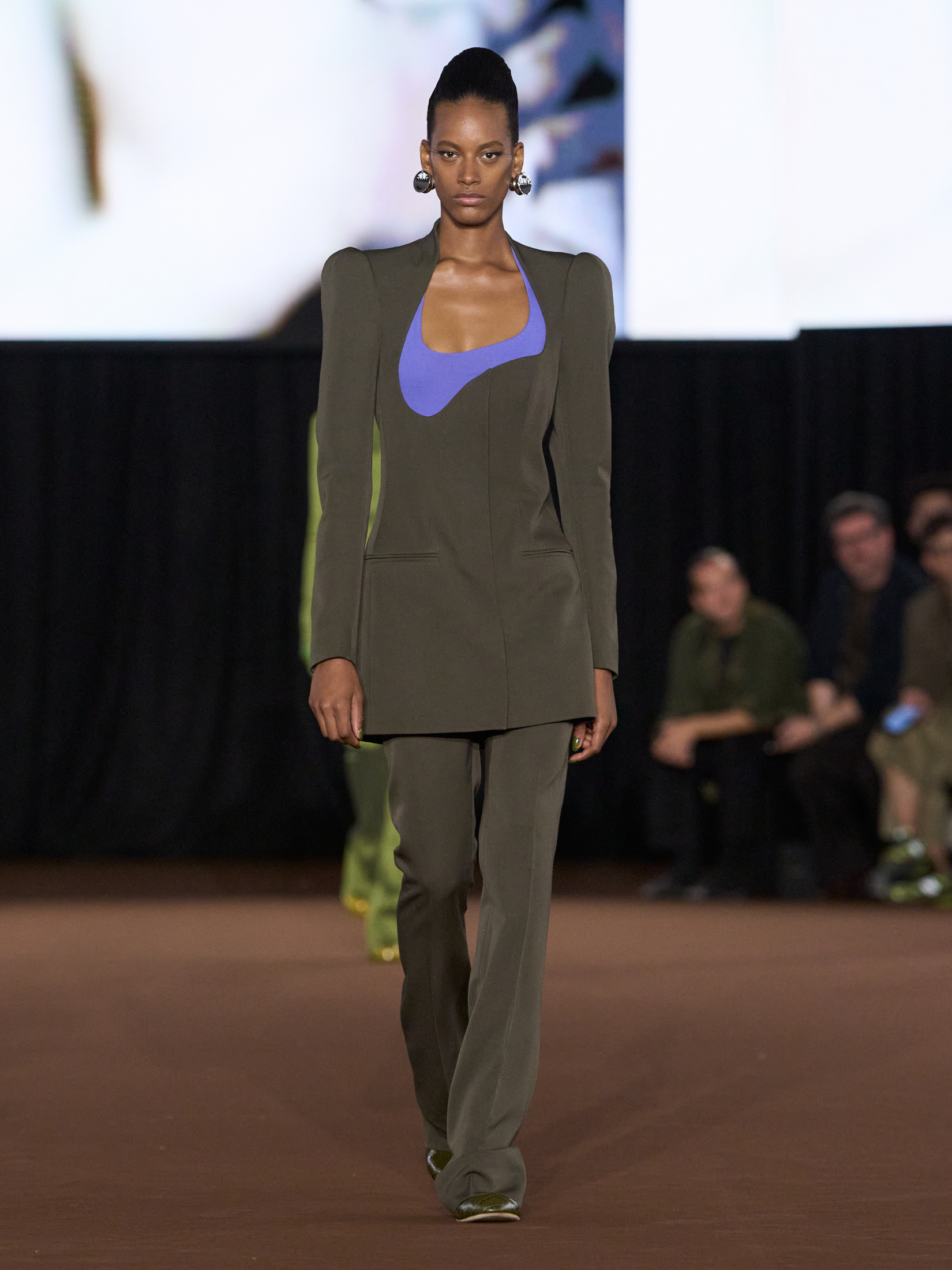
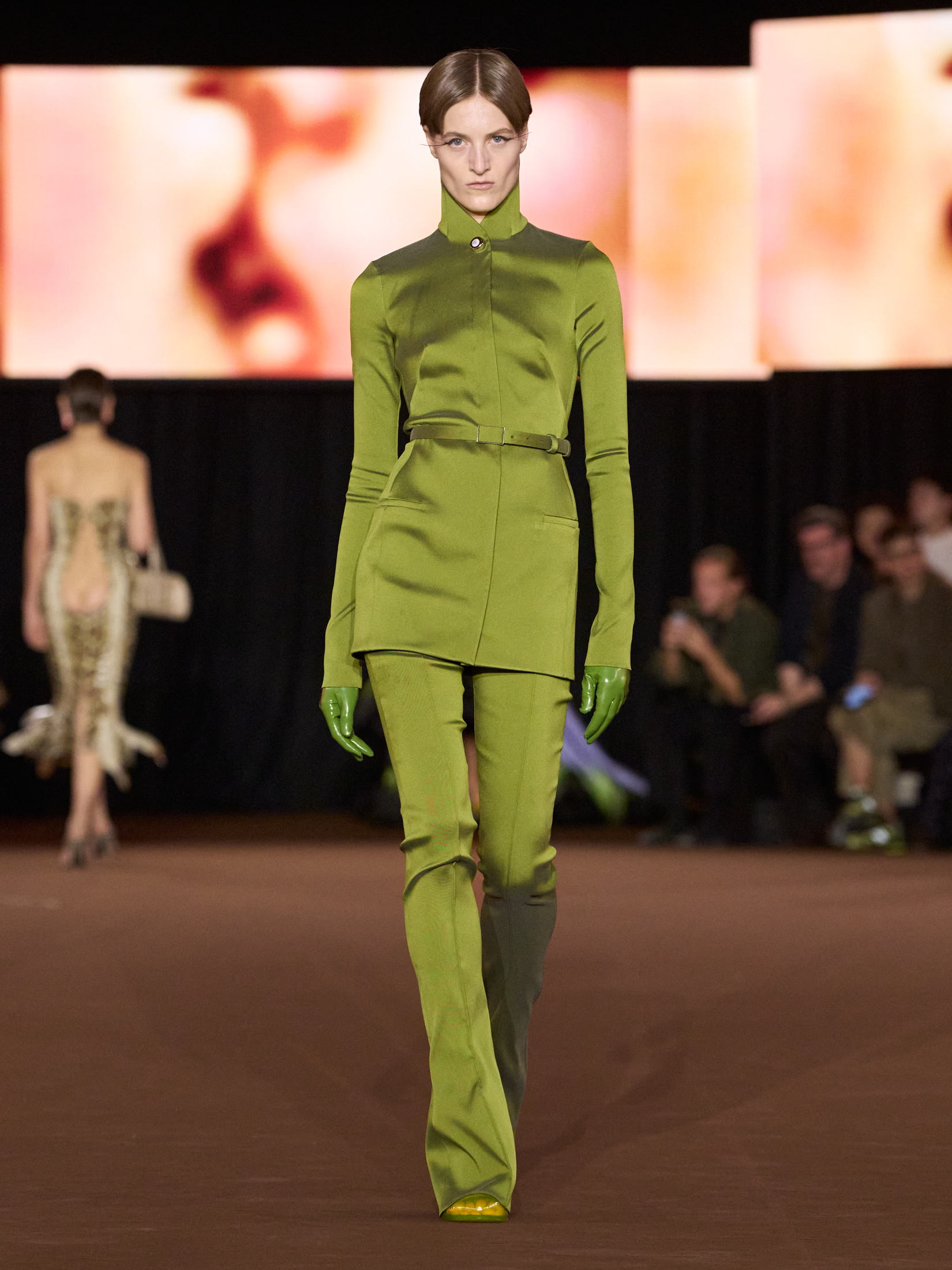
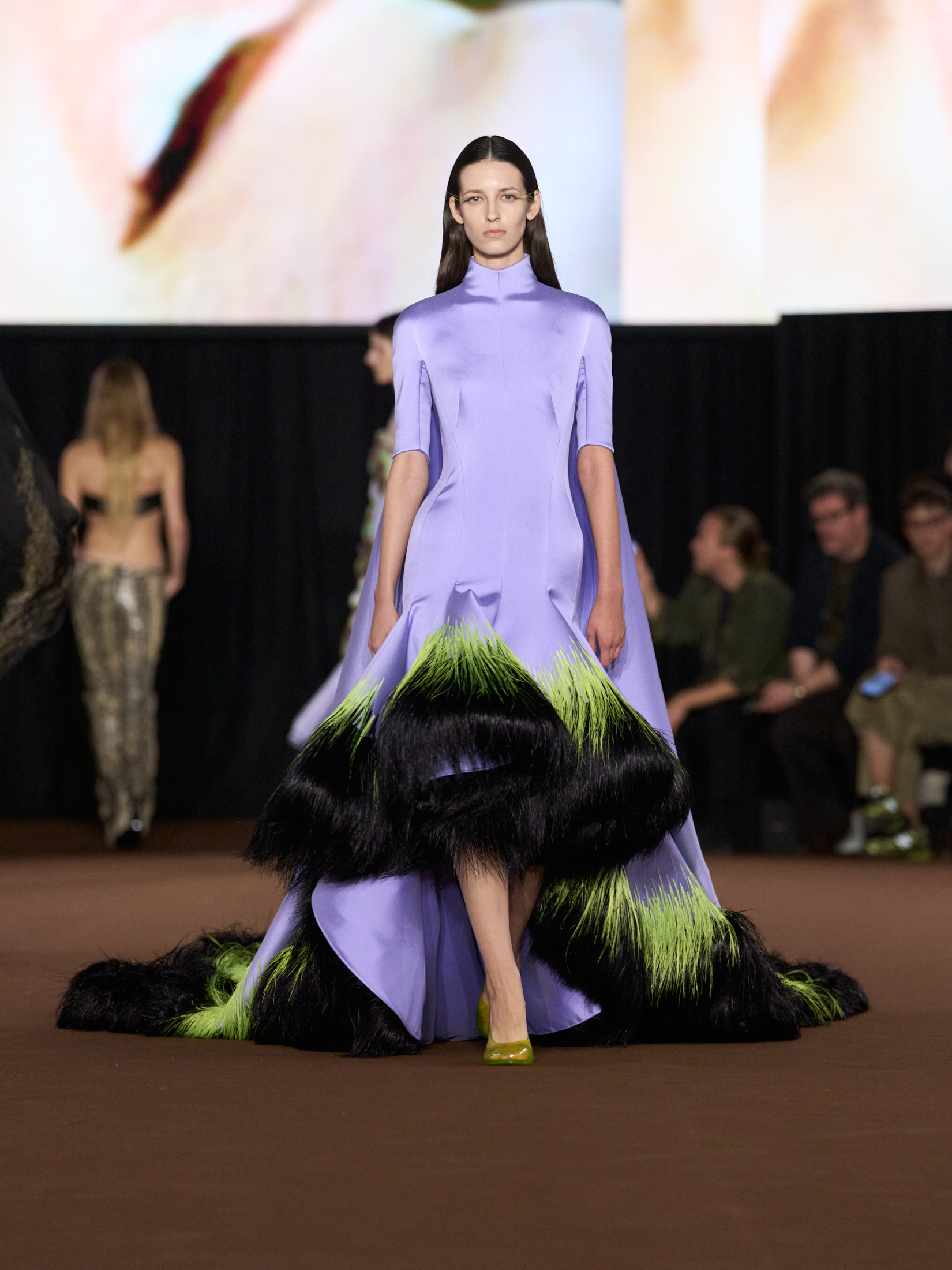
Naturalia X understands that the only way forward is not to escape the archive, but to enter it differently.
Freitas knows the codes. He knows the shoulders, the corsetry, the exposed body, the animal references and the theatrical glamour. He knows that a Mugler woman must never look entirely human, entirely safe or entirely contained.
The more interesting question is what happens when these codes are reactivated rather than merely repeated.
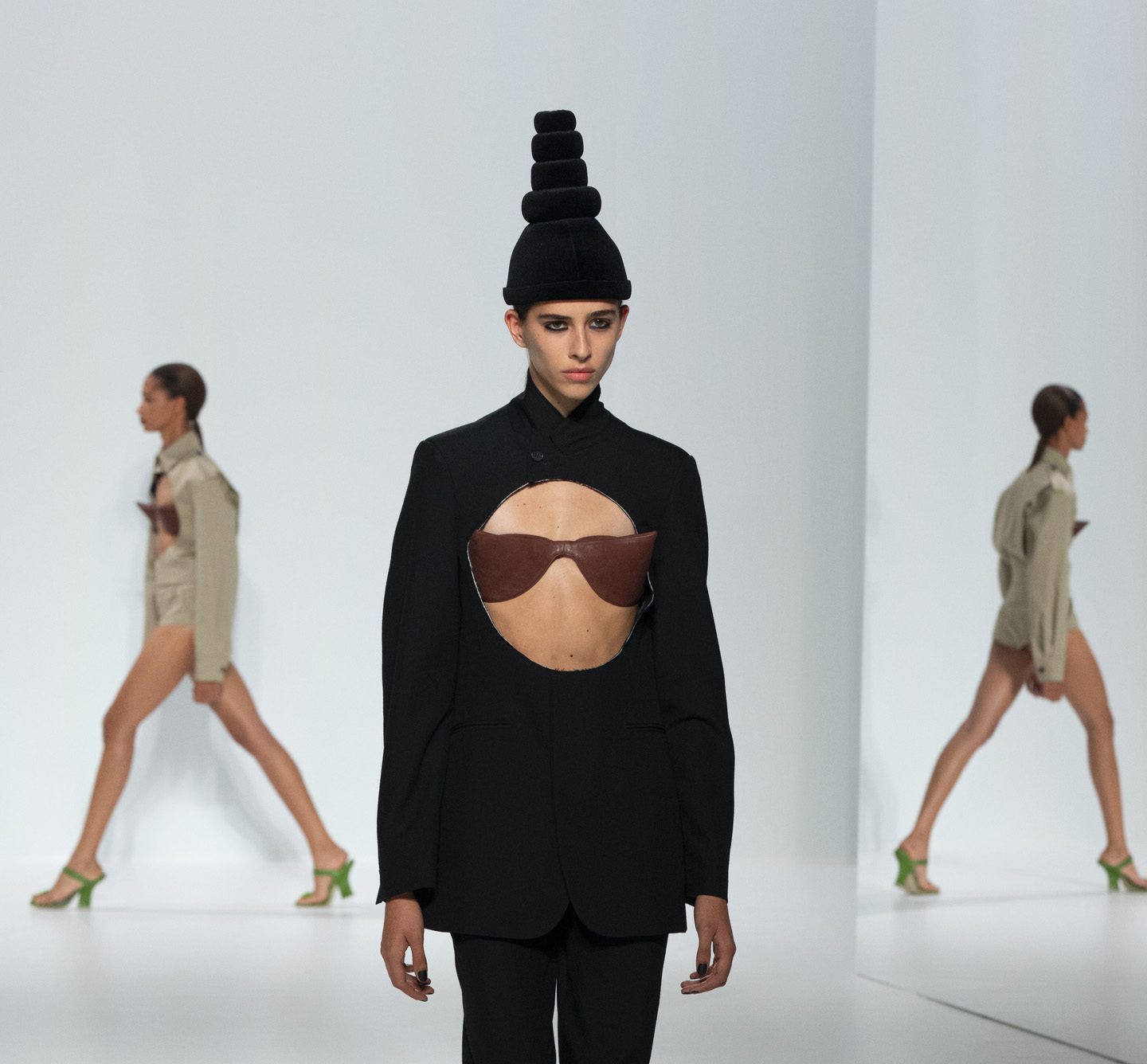
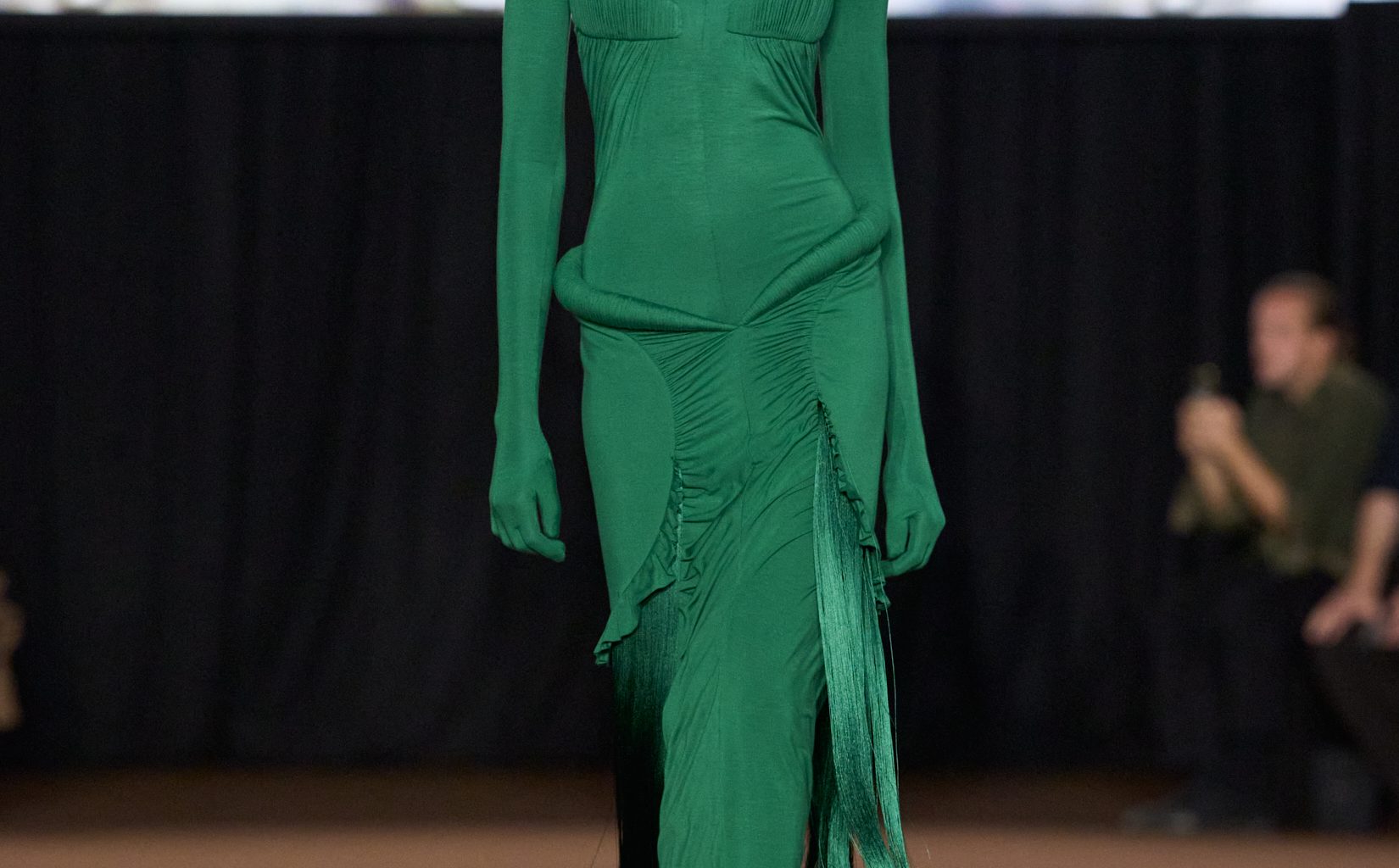
Across the collection, nature becomes less landscape than instinct. Animal prints feel less decorative than biological. Feathers become extensions of the body. Surfaces suggest scales, skin, insects and shells. Tailoring disciplines the fantasy while eveningwear releases it again.
The body remains the battlefield.
That continuity matters.
Freitas has spent his first three collections establishing a vocabulary for his Mugler. Stardust Aphrodite explored seduction and glamour. The Commander turned toward power and authority. Naturalia X moves deeper into the primal, where identity becomes less stable and the human body begins to mutate.
The trilogy works almost like a psychological map:
Desire.
Power.
Instinct.
The result is a Mugler that understands its own history without pretending history can simply be repeated.
The most fascinating figure in this conversation, however, remains Alexis Stone.
His transformation into Thierry Mugler is more than a spectacular entrance. It is a perfect metaphor for what happens to designers after death: they become images that can be reproduced, manipulated, quoted, reinterpreted and endlessly performed.
Stone literally performs the founder.
Freitas performs his language.
Between the two is the real question of contemporary Mugler.
Can a designer become an archive without becoming a museum?
Fashion today is obsessed with resurrection. Designers are constantly asked to revive houses, reactivate archives and translate the visual DNA of dead or absent founders into the present. The industry wants heritage, but it also wants novelty. It wants recognition and surprise at the same time.
Mugler is one of the most extreme versions of this problem because Thierry’s aesthetic is so immediately identifiable.
You see a corset and you think Mugler.
You see an exaggerated shoulder and you think Mugler.
You see a woman transformed into an animal, a machine or a fantasy, and you think Mugler.
Recognition is the brand’s greatest asset.
It can also be its greatest limitation.
Freitas’s achievement, then, is not that he can reproduce the Mugler codes convincingly. That part is almost expected.
His real challenge is to make those codes unstable again.
There are moments in Naturalia X when he succeeds. The strongest looks do not feel like archival costumes. They feel like organisms that have evolved from the archive. The references remain visible, yet the silhouettes have enough contemporary tension to suggest that Mugler can still mutate.
That distinction is crucial.
Because nostalgia is easy.
Reactivation is difficult.
The fashion industry currently has an enormous appetite for the past. Archives have become cultural currency. Old runway images circulate with the speed of new collections. Vintage is no longer merely a source of inspiration; it is a form of contemporary authority.
Mugler was ahead of this culture because Thierry understood something that fashion is still learning: clothes become powerful when they create an image larger than themselves.
Freitas is now working in a world where those images already exist.
His task is therefore not to invent the myth from zero.
It is to make the myth move.
Naturalia X does exactly that when it treats the archive as biological material rather than sacred material. Nothing is completely preserved. Everything mutates.
The result can be extravagant, occasionally excessive, sometimes almost deliberately camp.
That excess is not a flaw.
For Mugler, excess has always been a form of precision.
A shoulder can be too large.
A waist can be too small.
A woman can look too much like a creature.
A dress can become almost an illusion.
The point is not realism.
The point is transformation.
That is why Alexis Stone standing there as Thierry Mugler feels so strangely right. He is not bringing the past back.
He is showing us how the past survives now: through imitation, performance, memory and reinvention.
The founder becomes an image.
The image becomes a reference.
The reference becomes a code.
The code becomes a collection.
Then the collection has to become something else.
That final step is where Miguel Castro Freitas will ultimately be judged.
Spring/Summer 2027 does not need to prove that Mugler still exists. It clearly does.
It needs to prove that Mugler can still change.
Naturalia X suggests that it can.
The body remembers Thierry Mugler.
The real challenge is teaching it to forget him just enough to become something new.