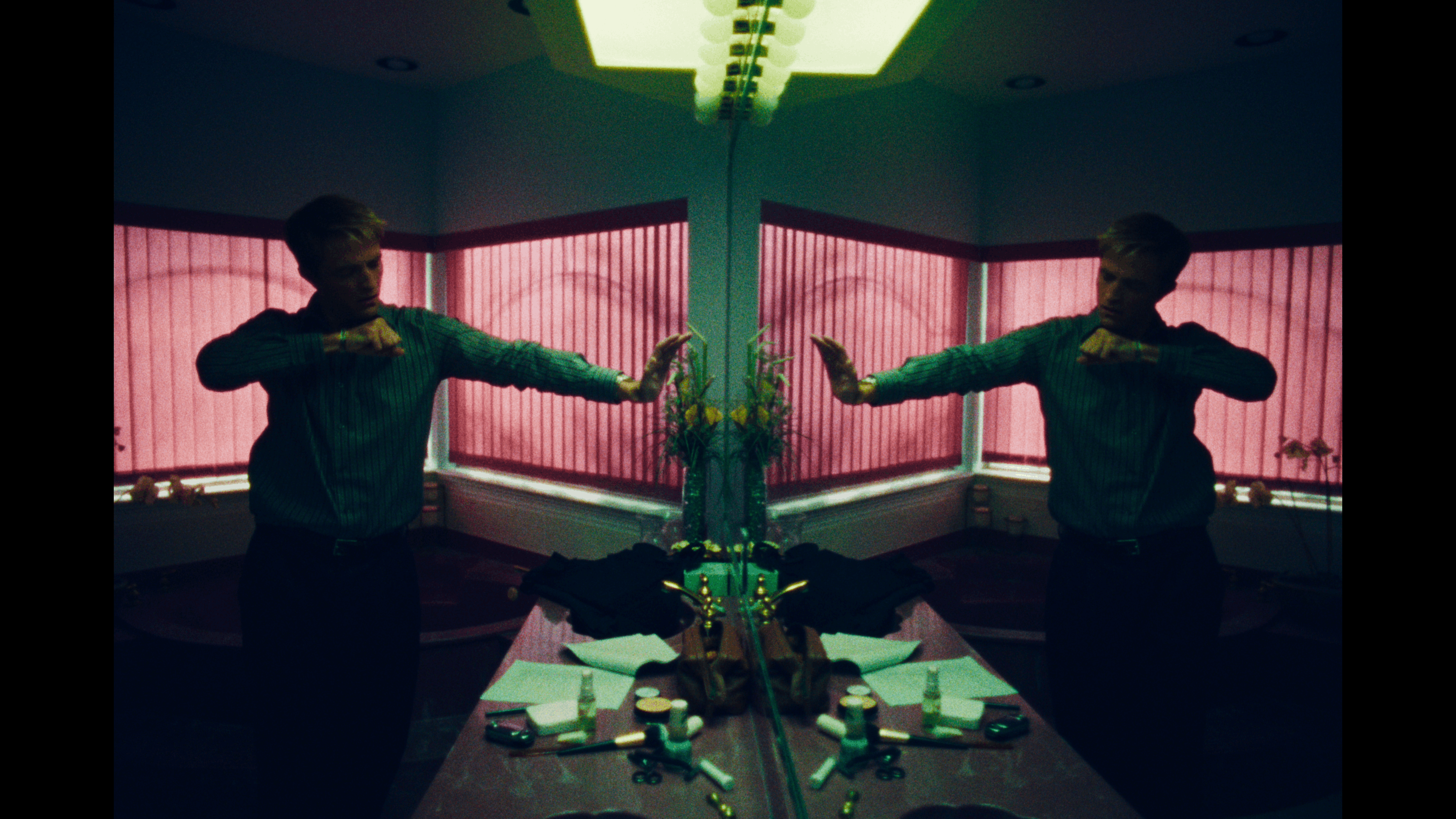
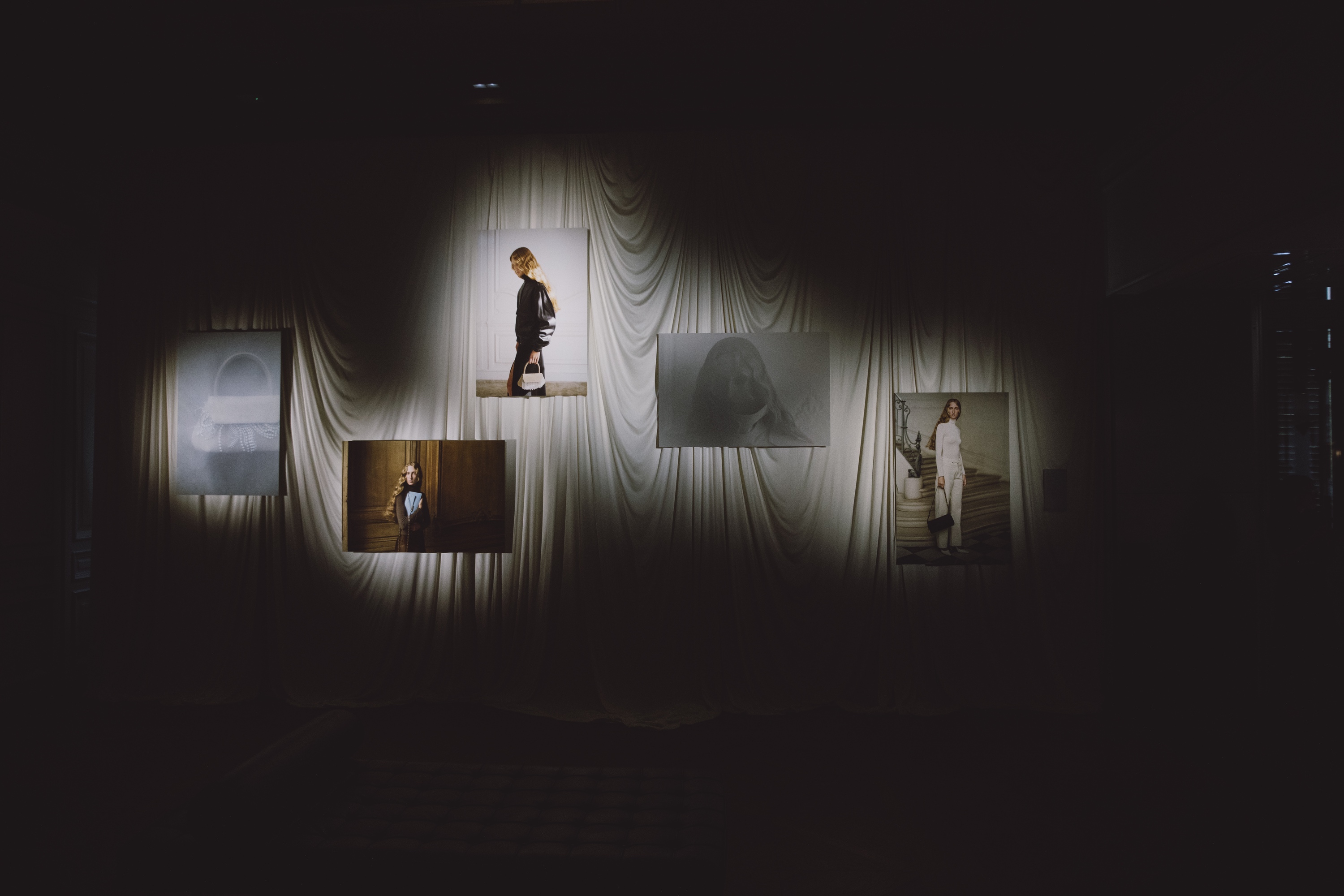
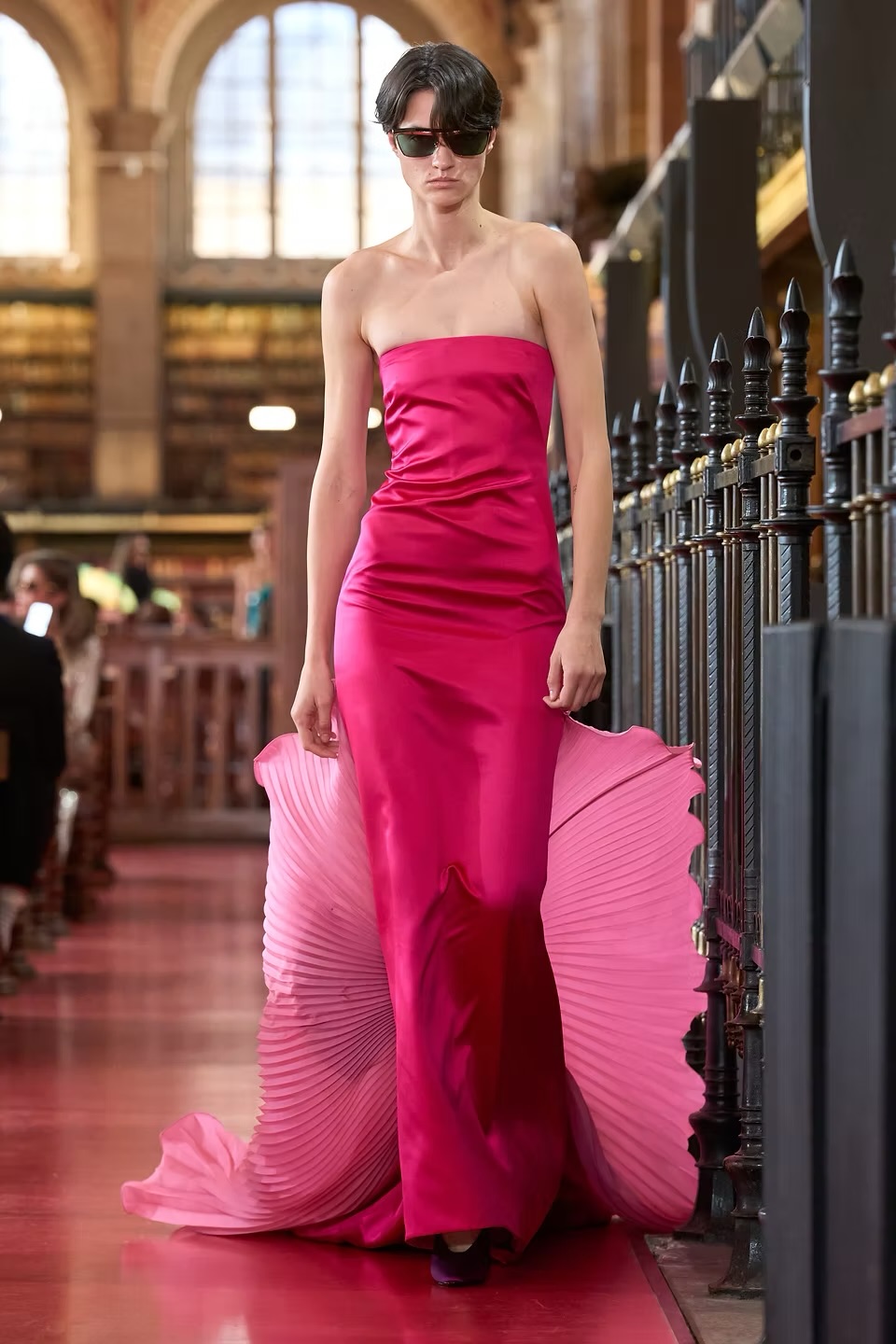
What happens when a fashion house stops treating its archive as an answer and starts treating it as a question?
Valentino Spring Summer 2027 begins there. In the gap between what is known and what is still possible. Alessandro Michele calls it Antibiblioteca, the library of everything we have not read, not seen, not lived, not imagined yet. A rather perfect metaphor for a house whose greatest strength has always been its memory, and whose greatest contemporary risk is becoming trapped inside it.
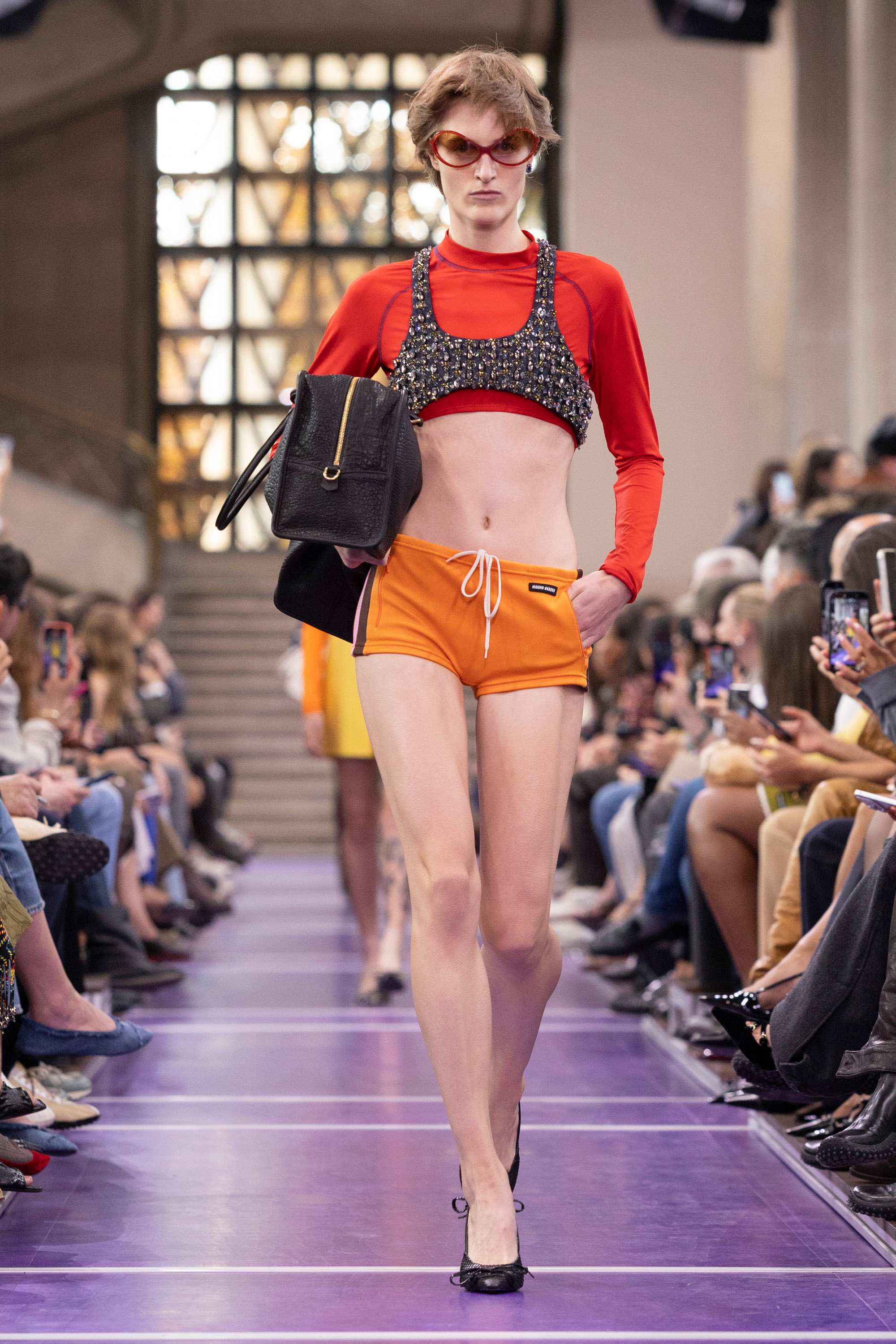
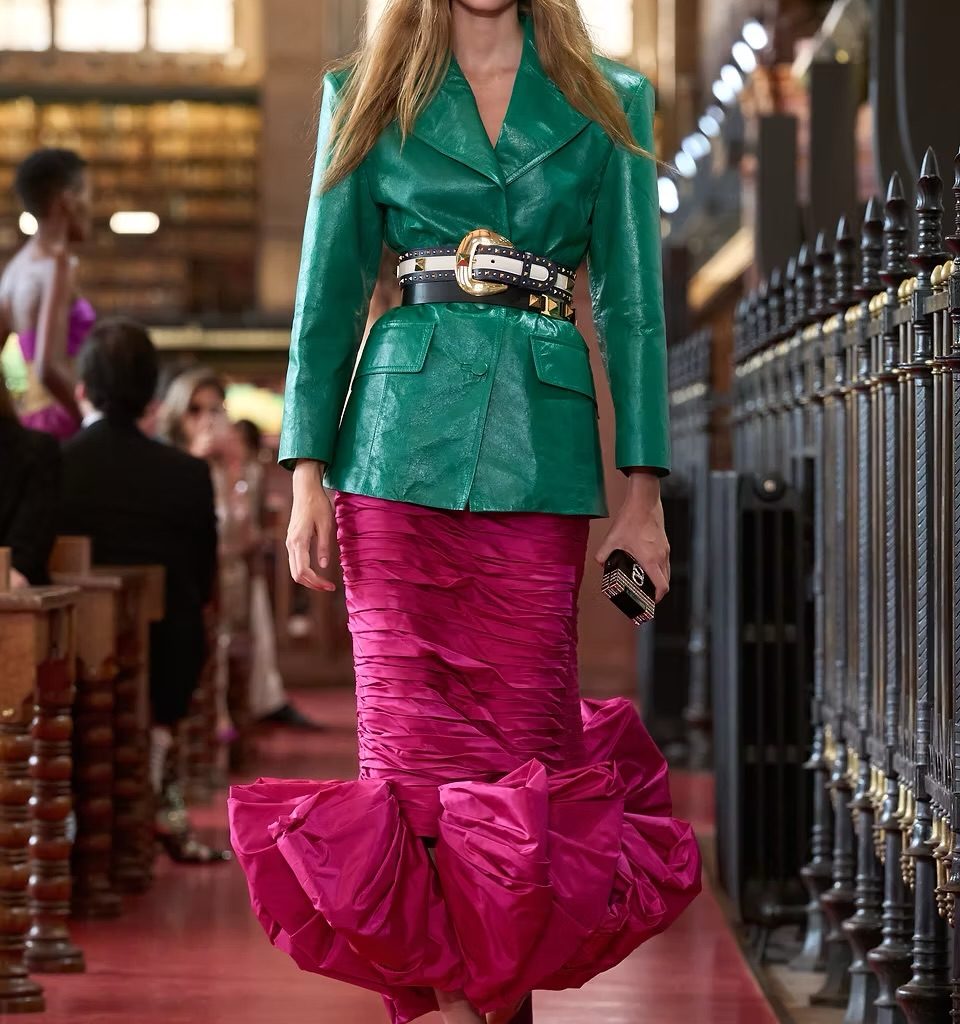
At the Bibliothèque Sainte Geneviève, Michele turns that tension into clothes. Corsets, lace, feathers, sequins, tailoring, transparent layers, oversized jewellery, baseball caps, sunglasses, bows, bags, saturated colour, Valentino red. Everything is there. Nothing stays politely in its category. Couture codes collide with street codes, aristocratic fantasy with teenage vulgarity, romance with aggression, masculinity with femininity, restraint with spectacle. The collection behaves less like a wardrobe than like a cultural browser with thirty tabs open.
That is precisely why it feels different from Michele’s first chapters at Valentino.
His arrival at the house inevitably raised the question of translation. Could the man who had made Gucci synonymous with maximalist eclecticism actually inhabit a maison whose identity had been built around the discipline of Valentino Garavani, the body, the line, the colour, the couture gesture, the cultivated fantasy of elegance? For several seasons, the answer seemed to be an ongoing negotiation. Michele was learning Valentino, while Valentino was absorbing Michele.
Here, the relationship becomes more complicated, and therefore more interesting.
Michele is no longer simply interpreting Valentino. He is testing how many Valentinos can exist at once.
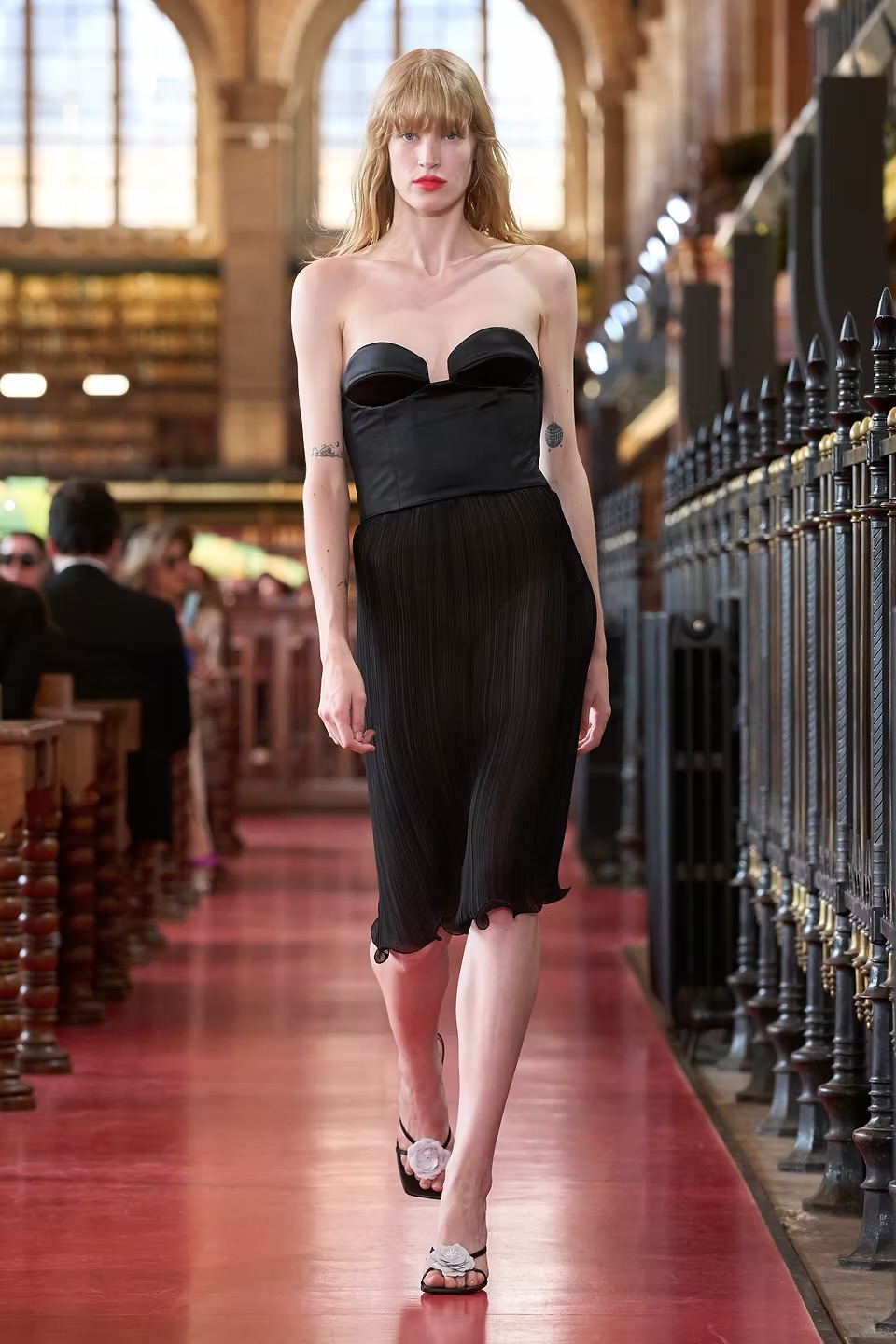
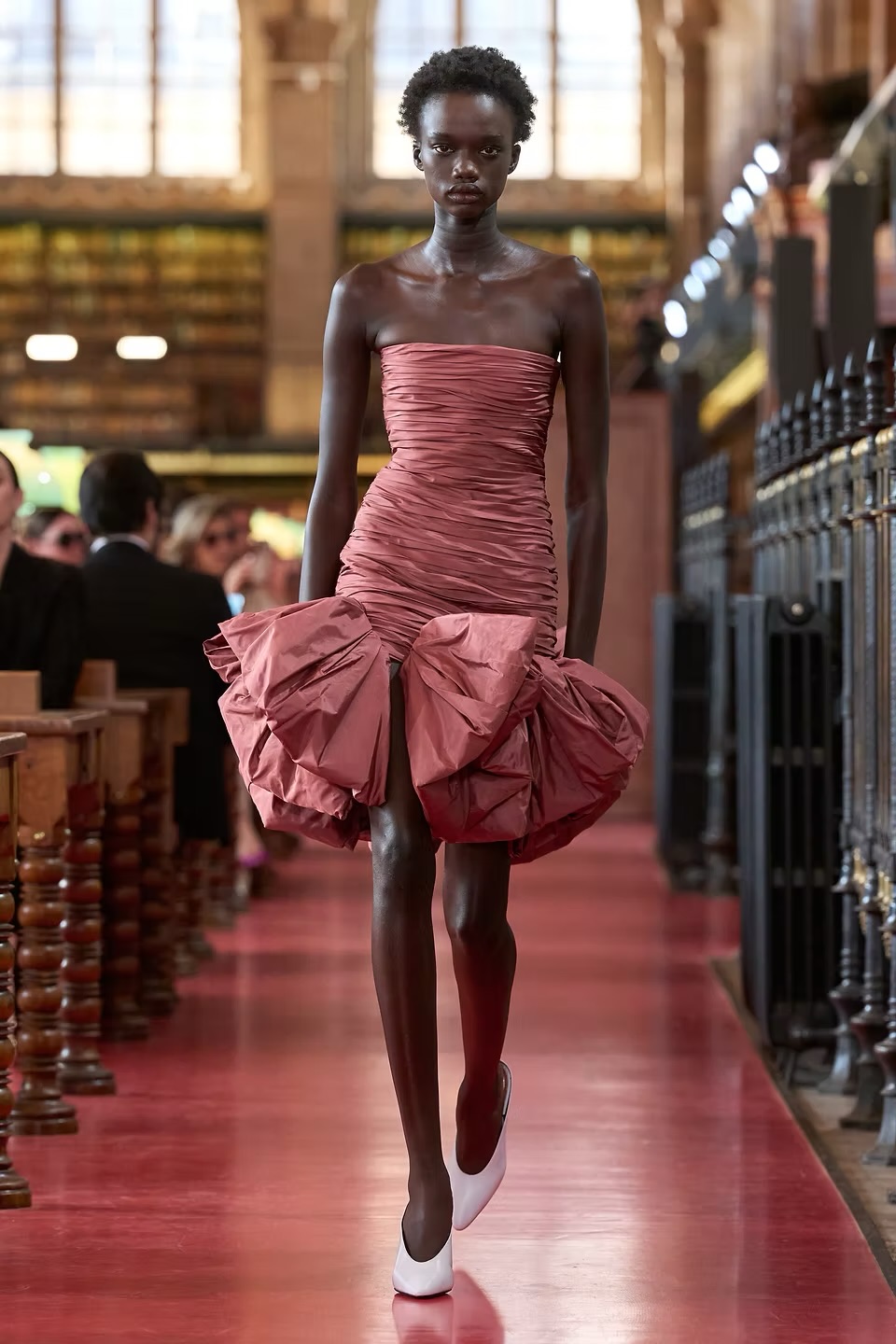
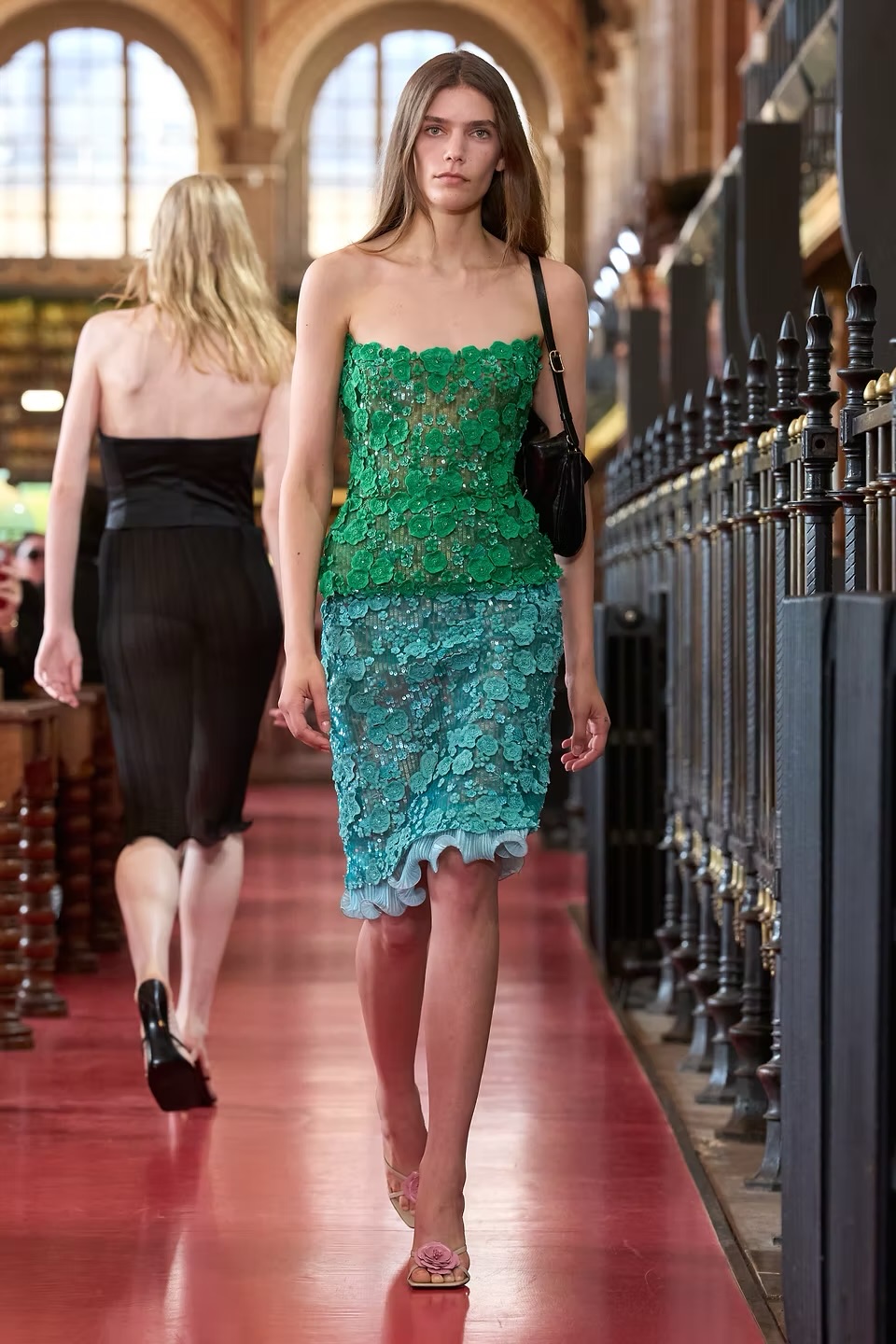
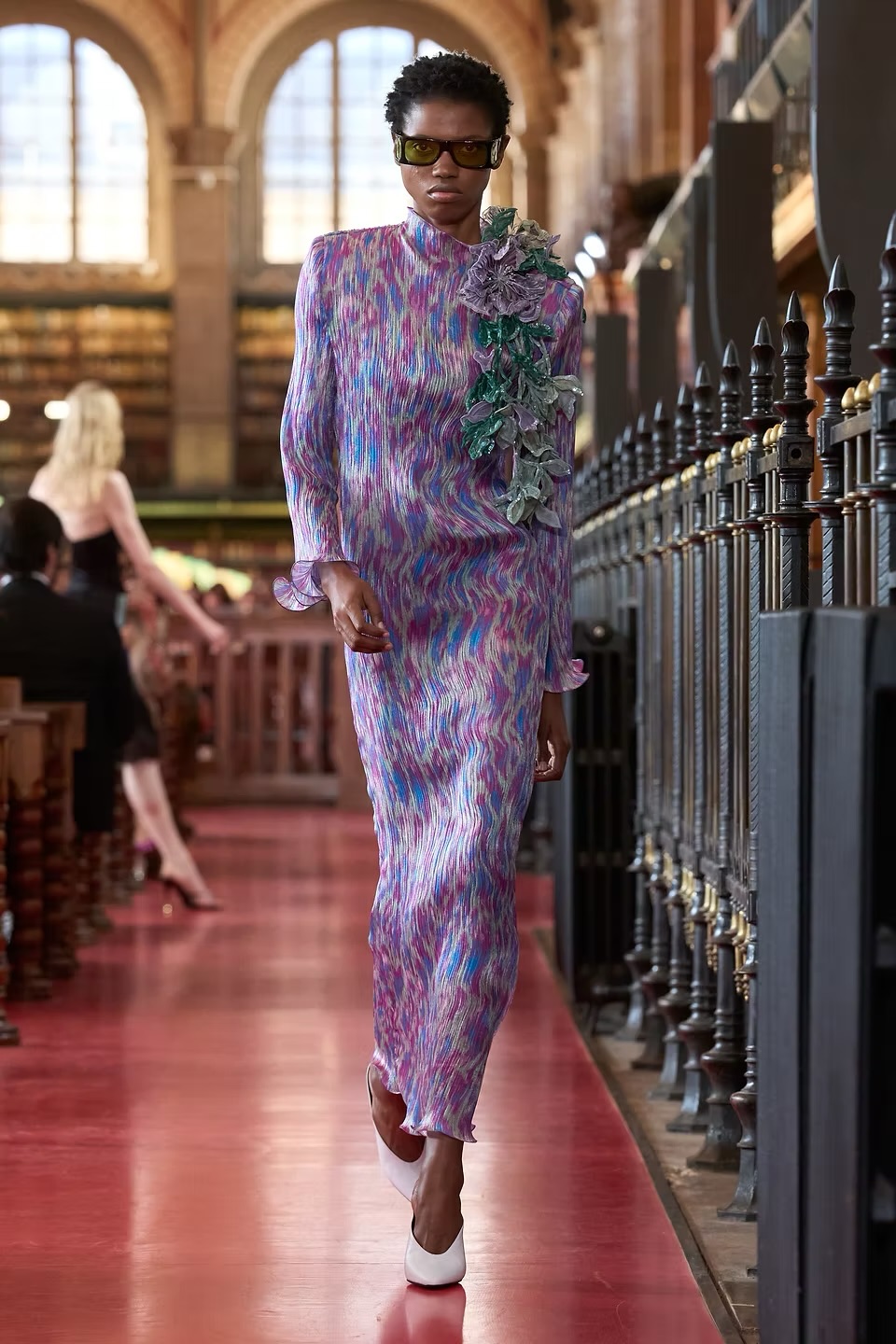
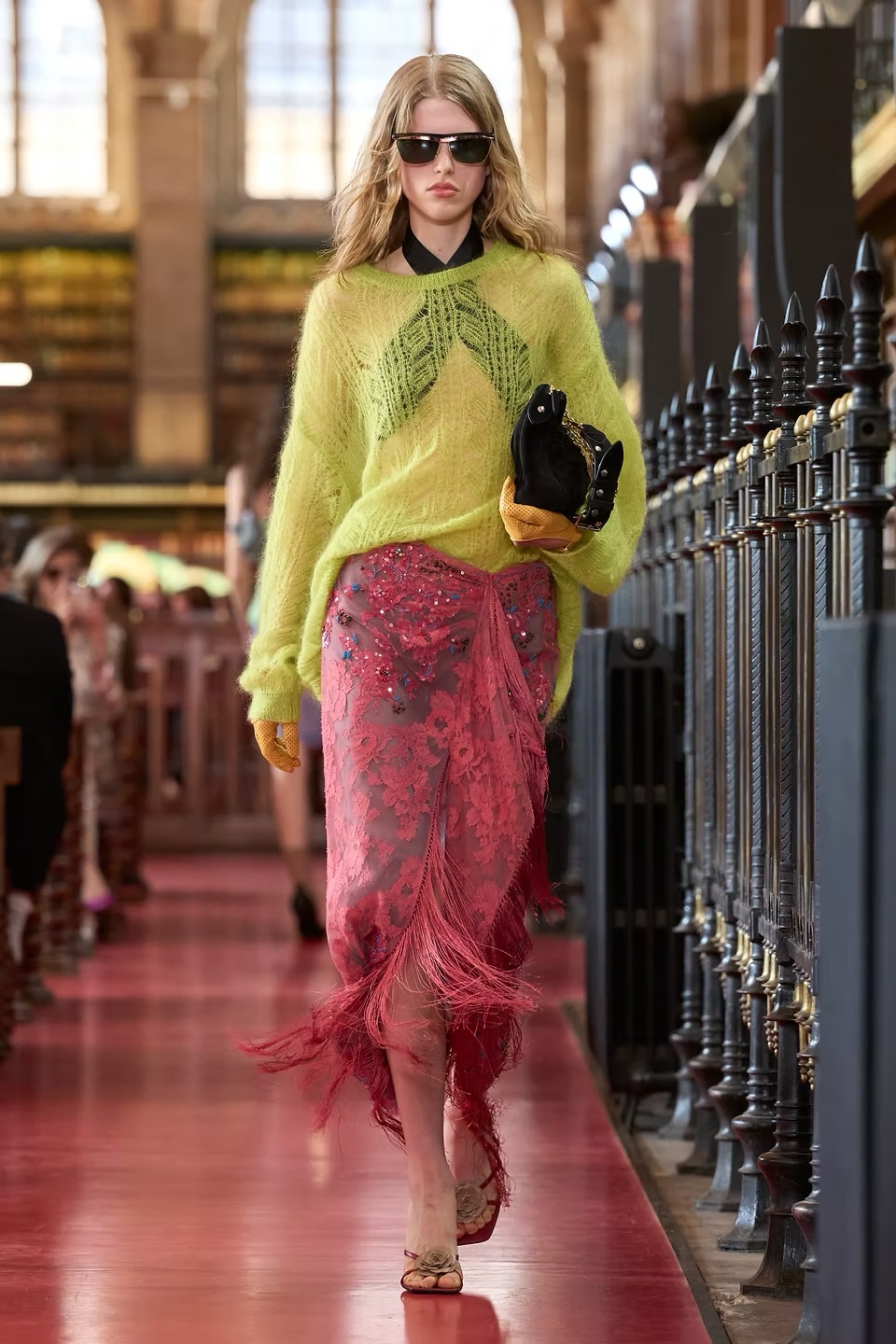
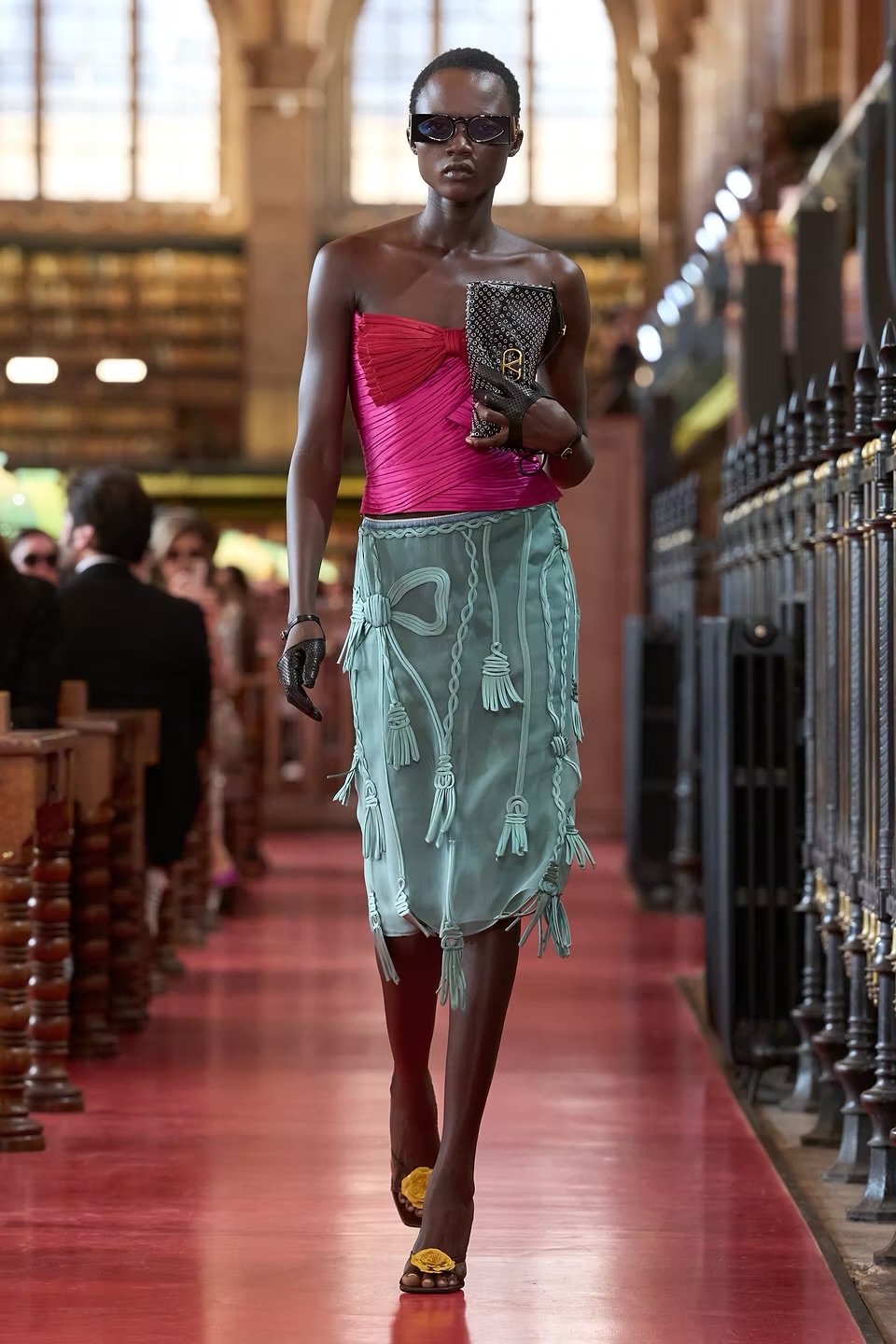
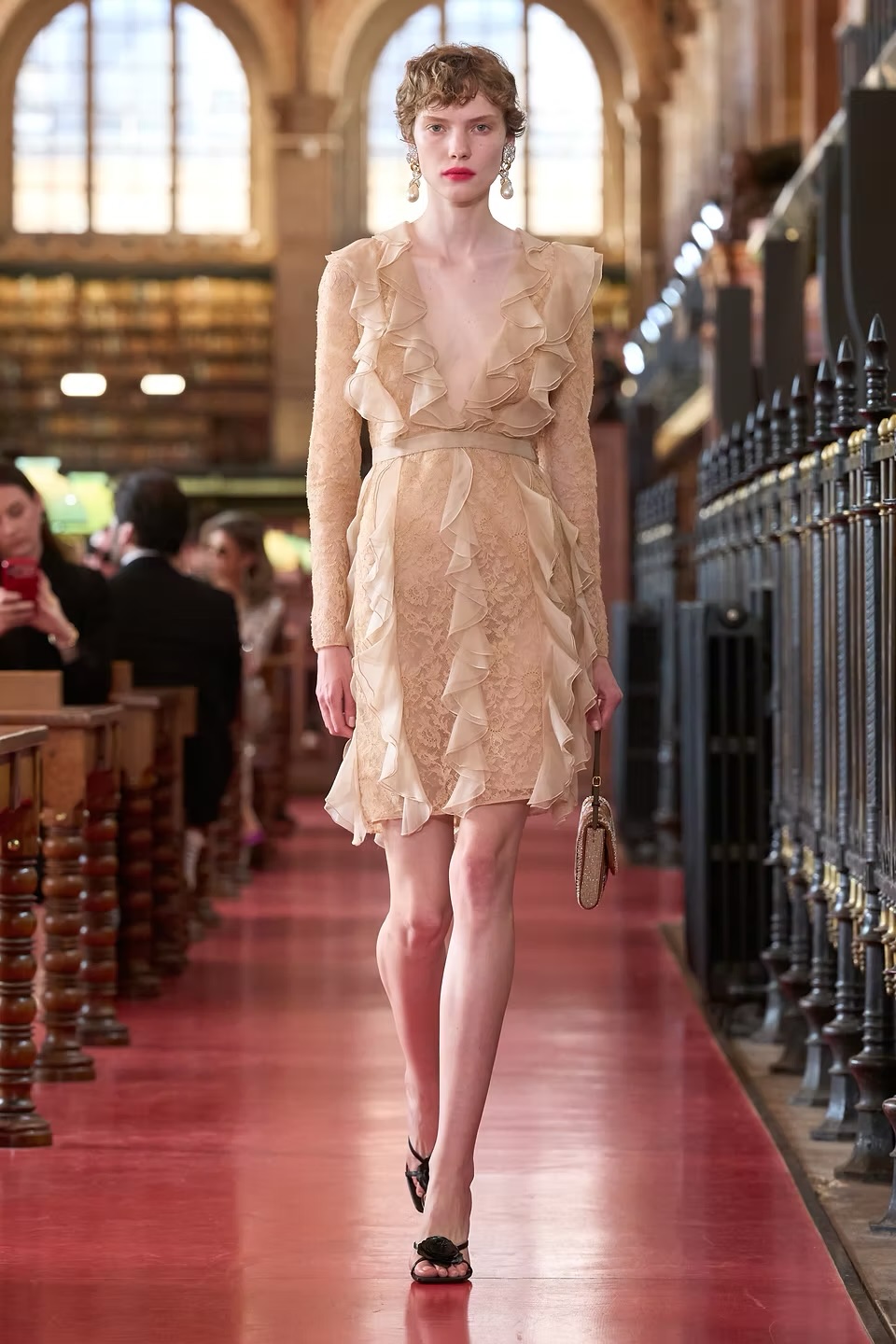
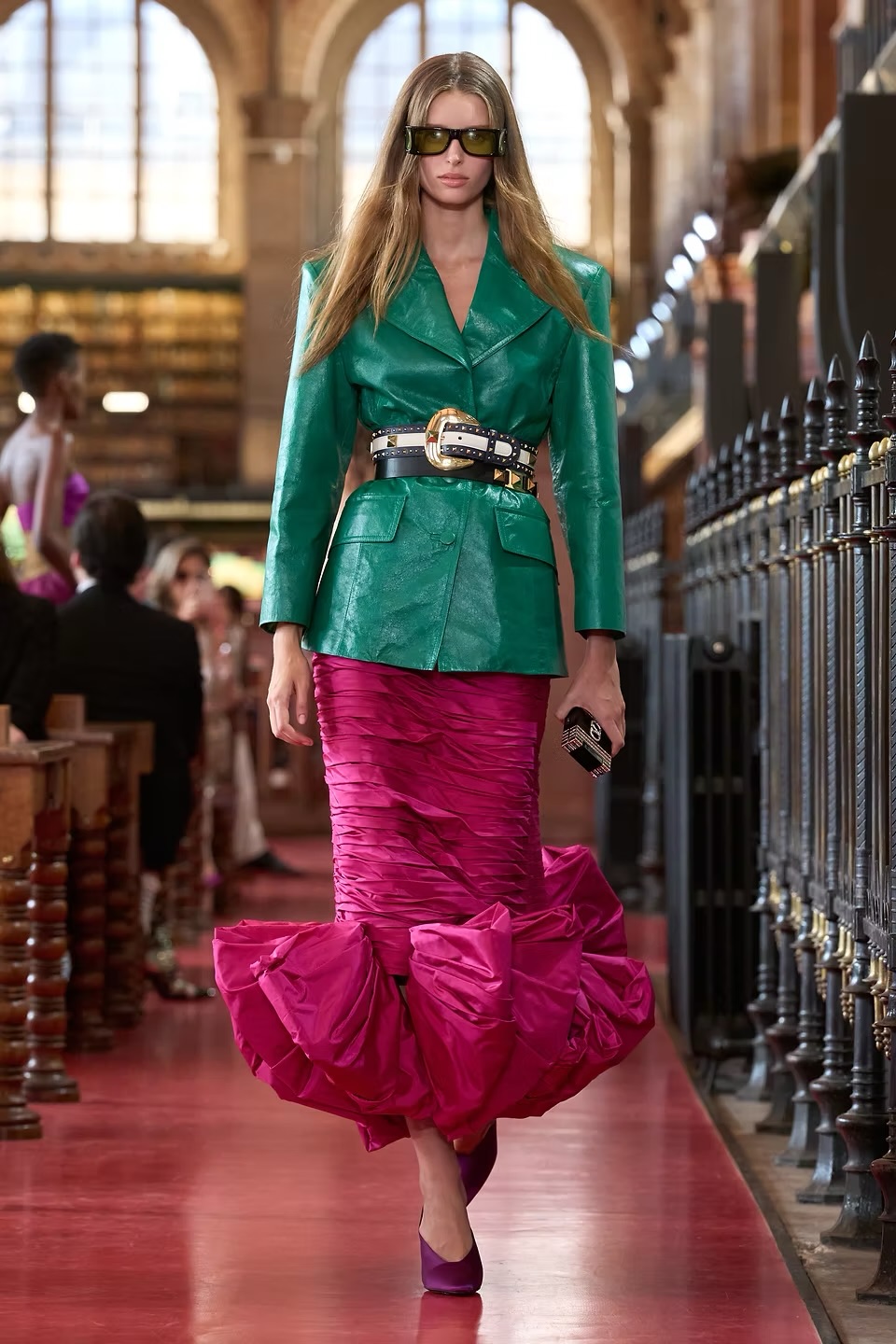
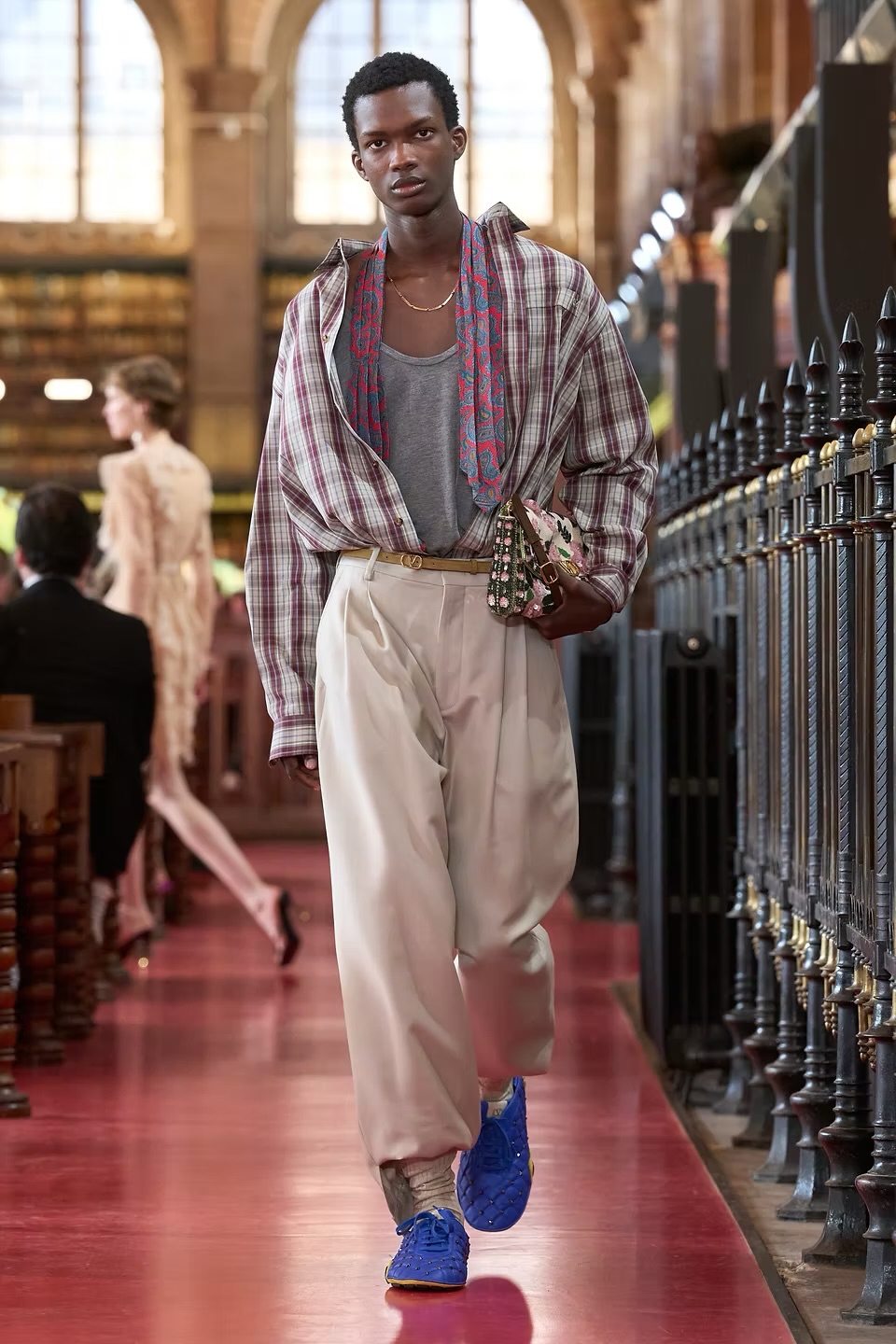
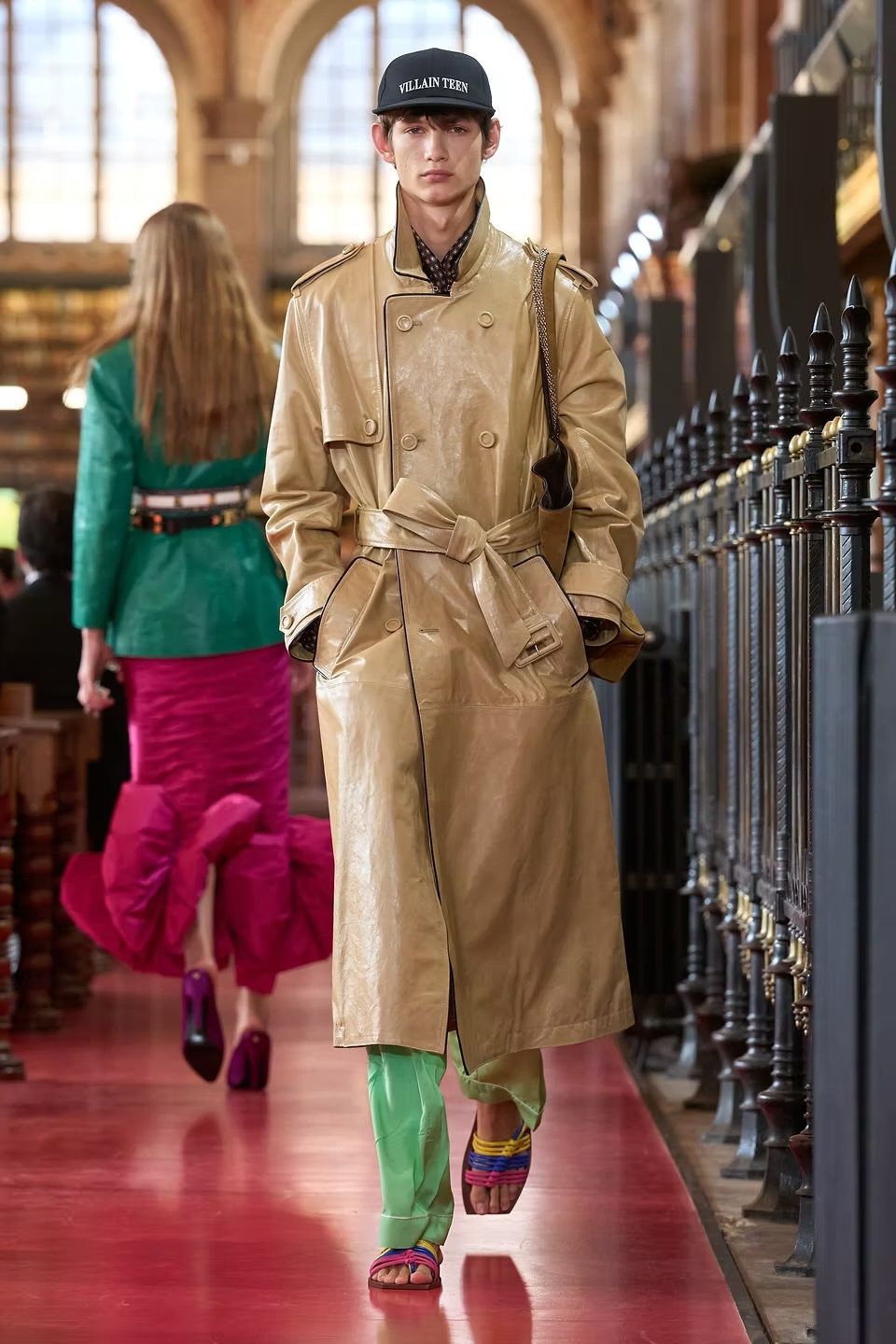
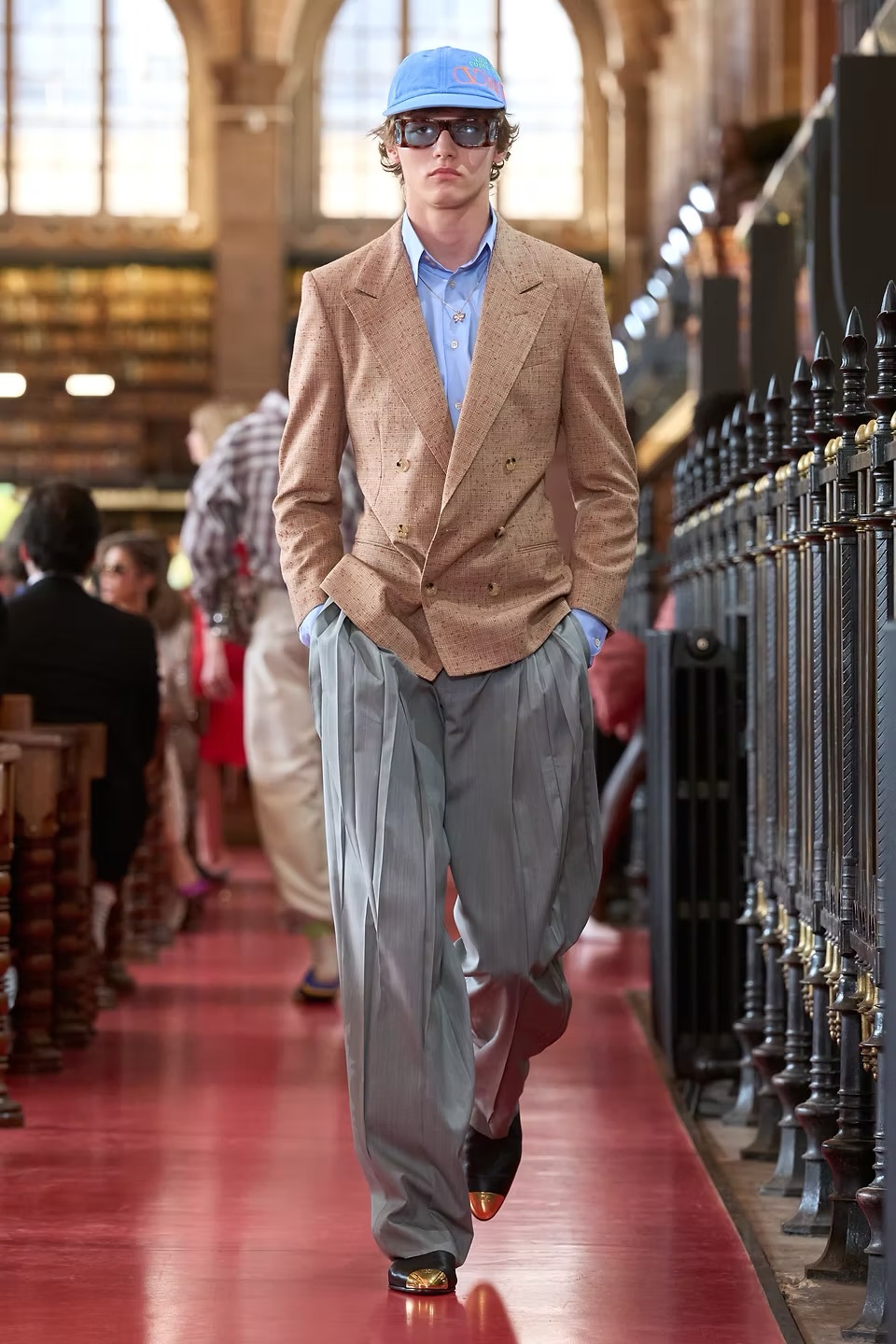
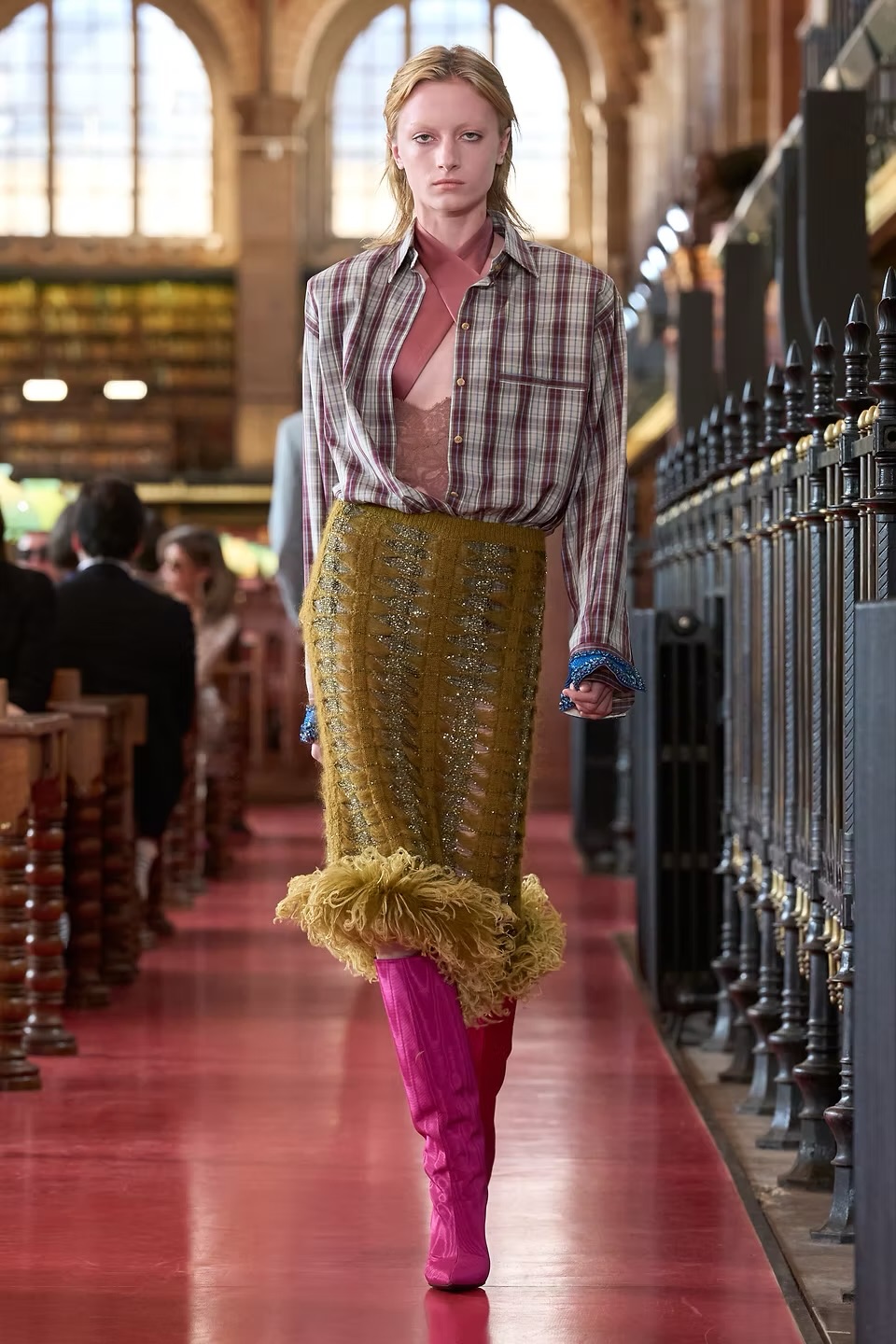
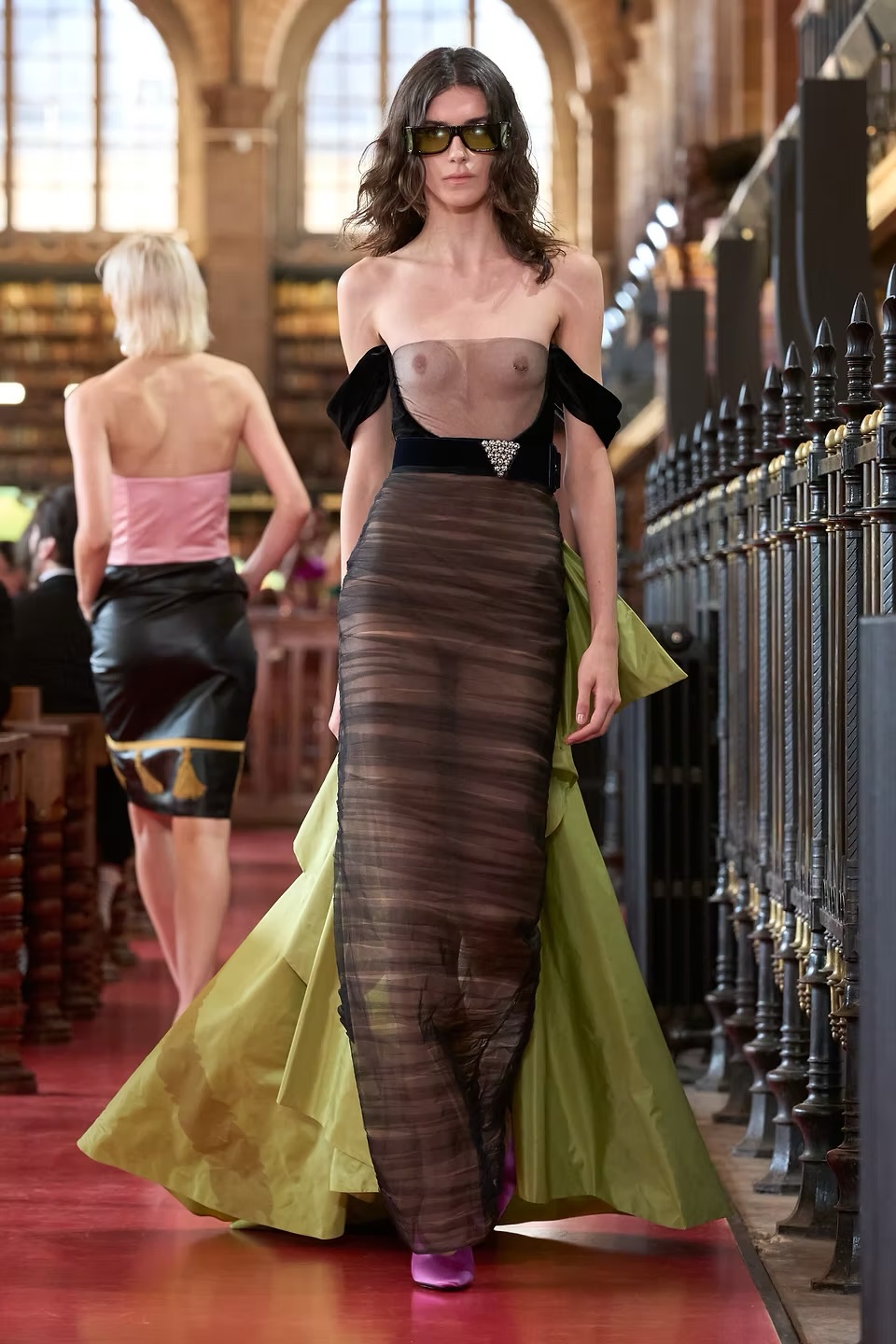
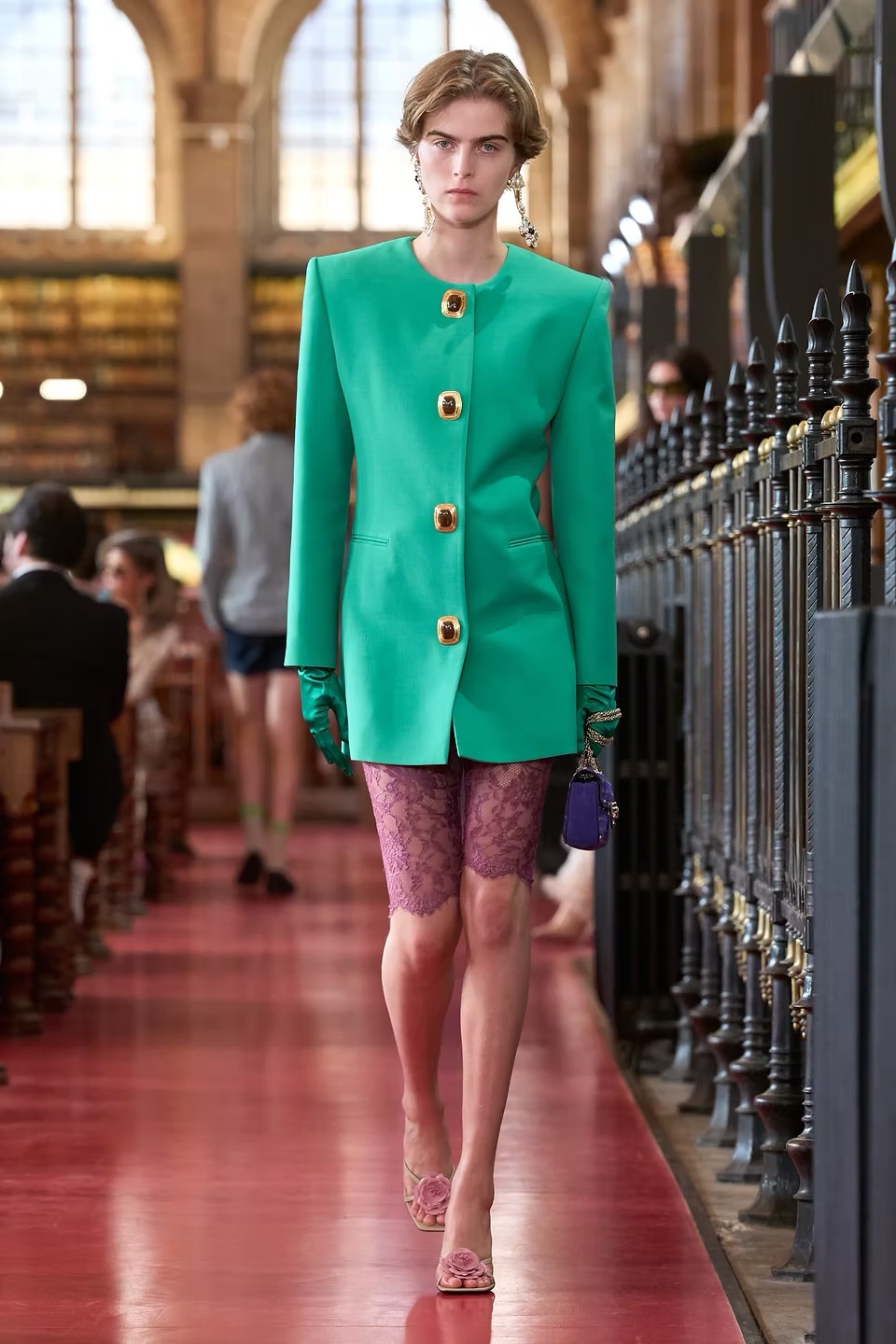
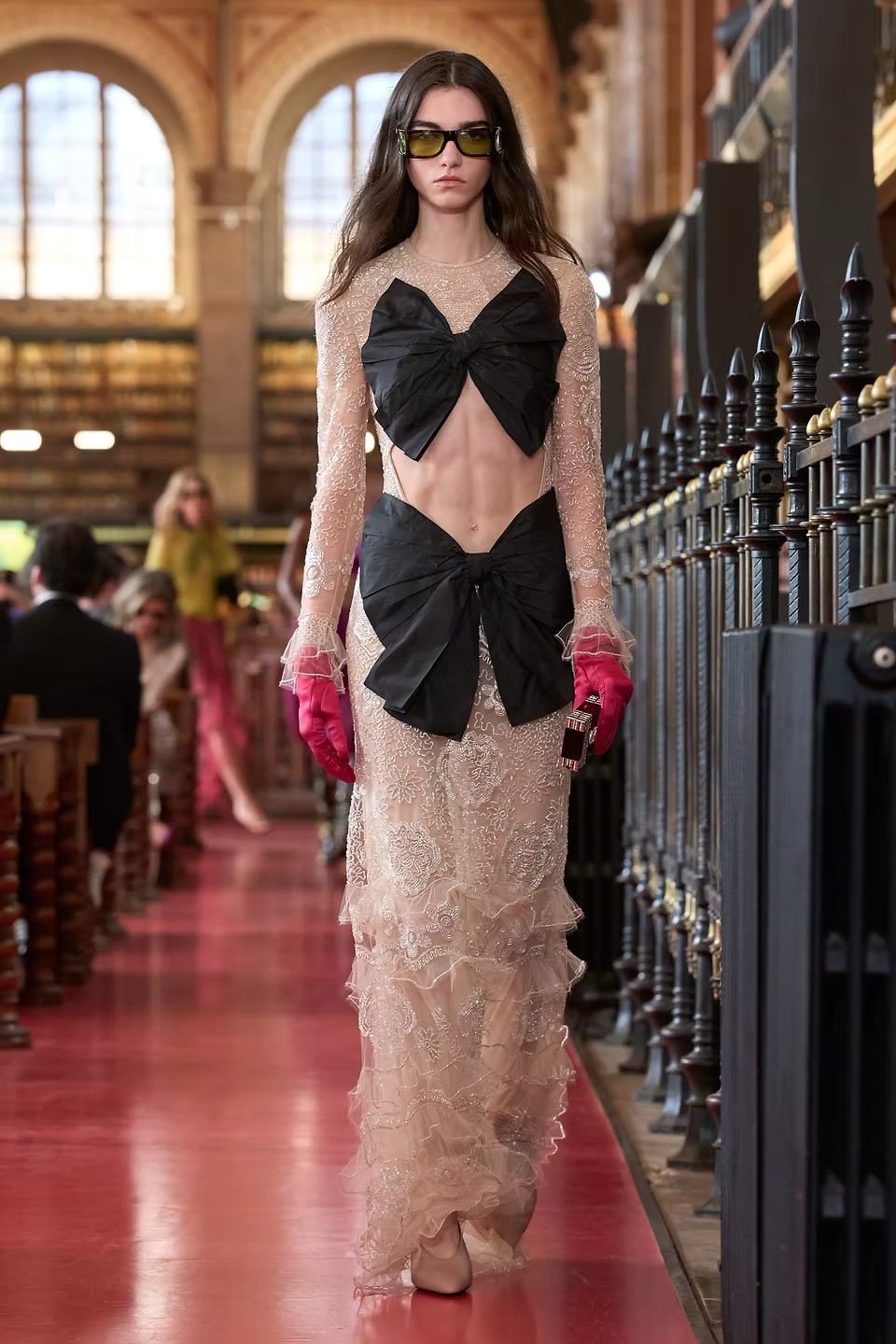
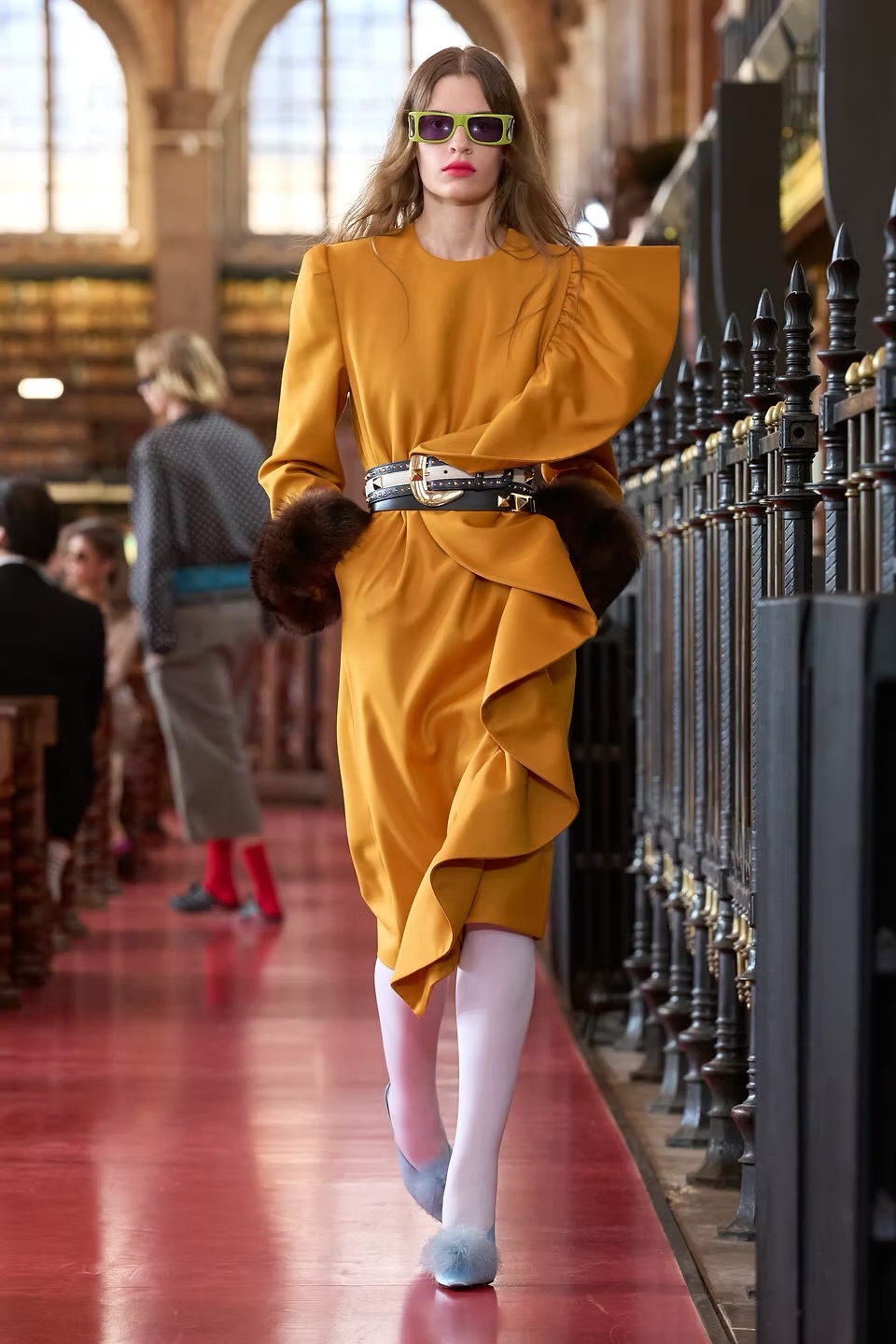
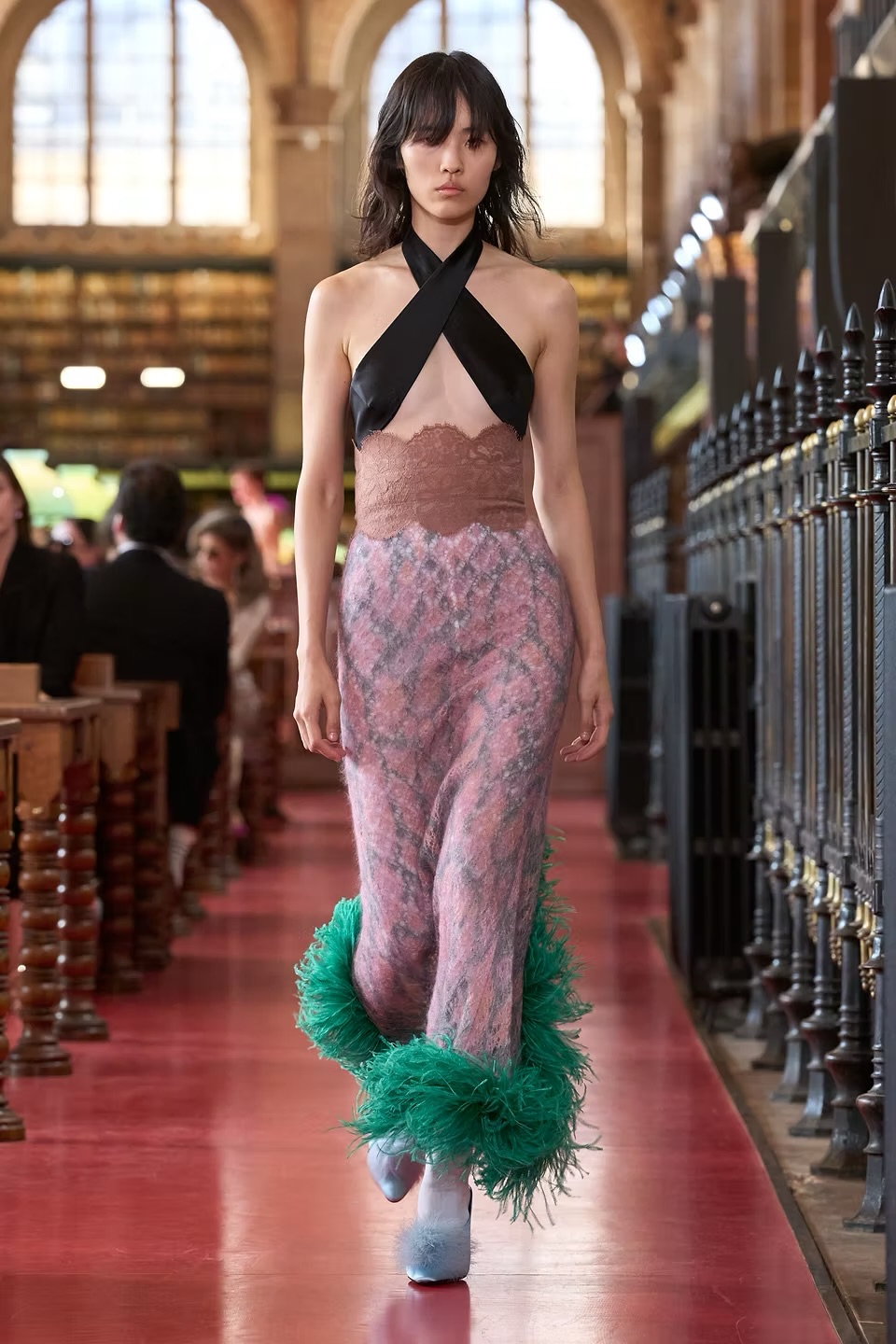
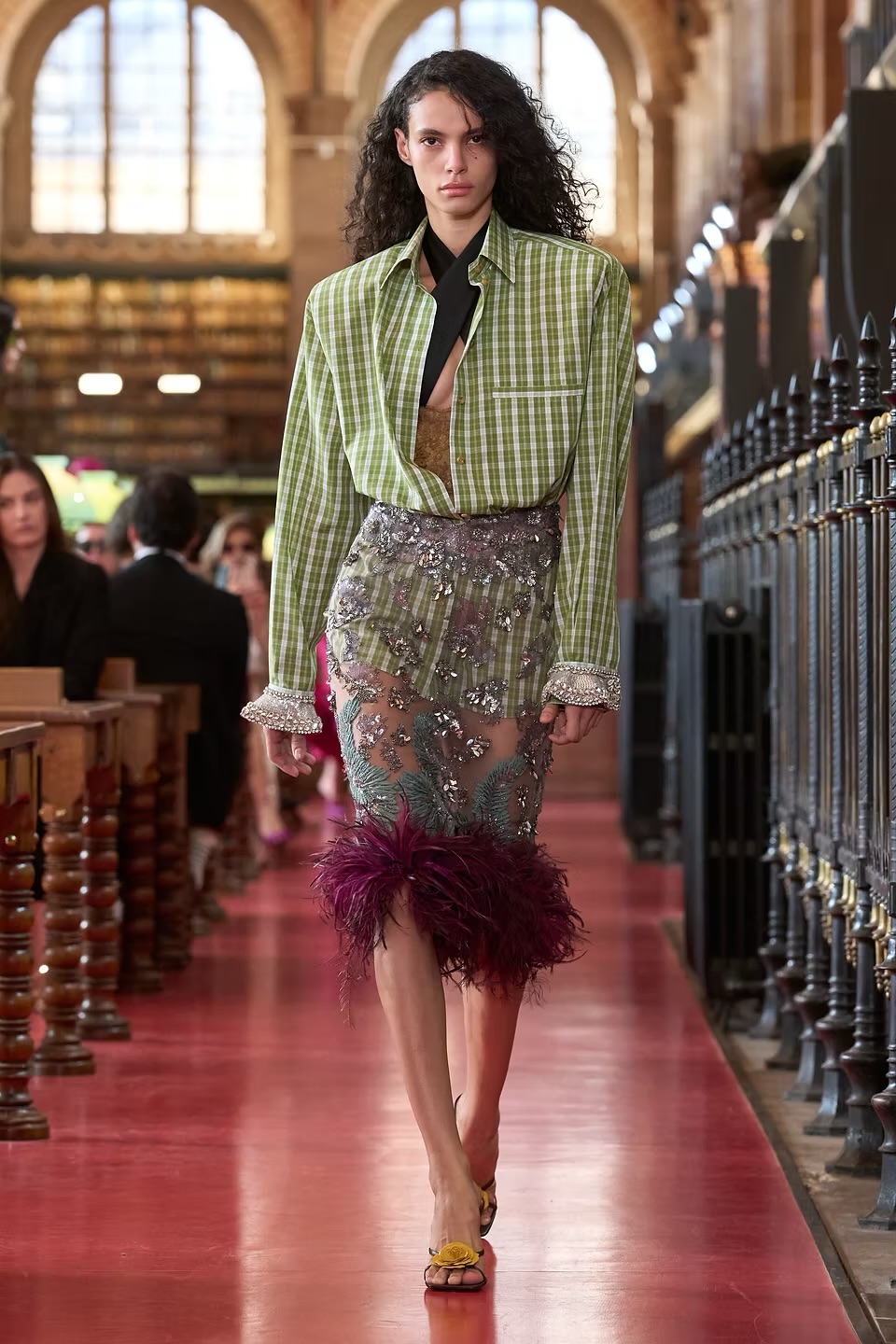
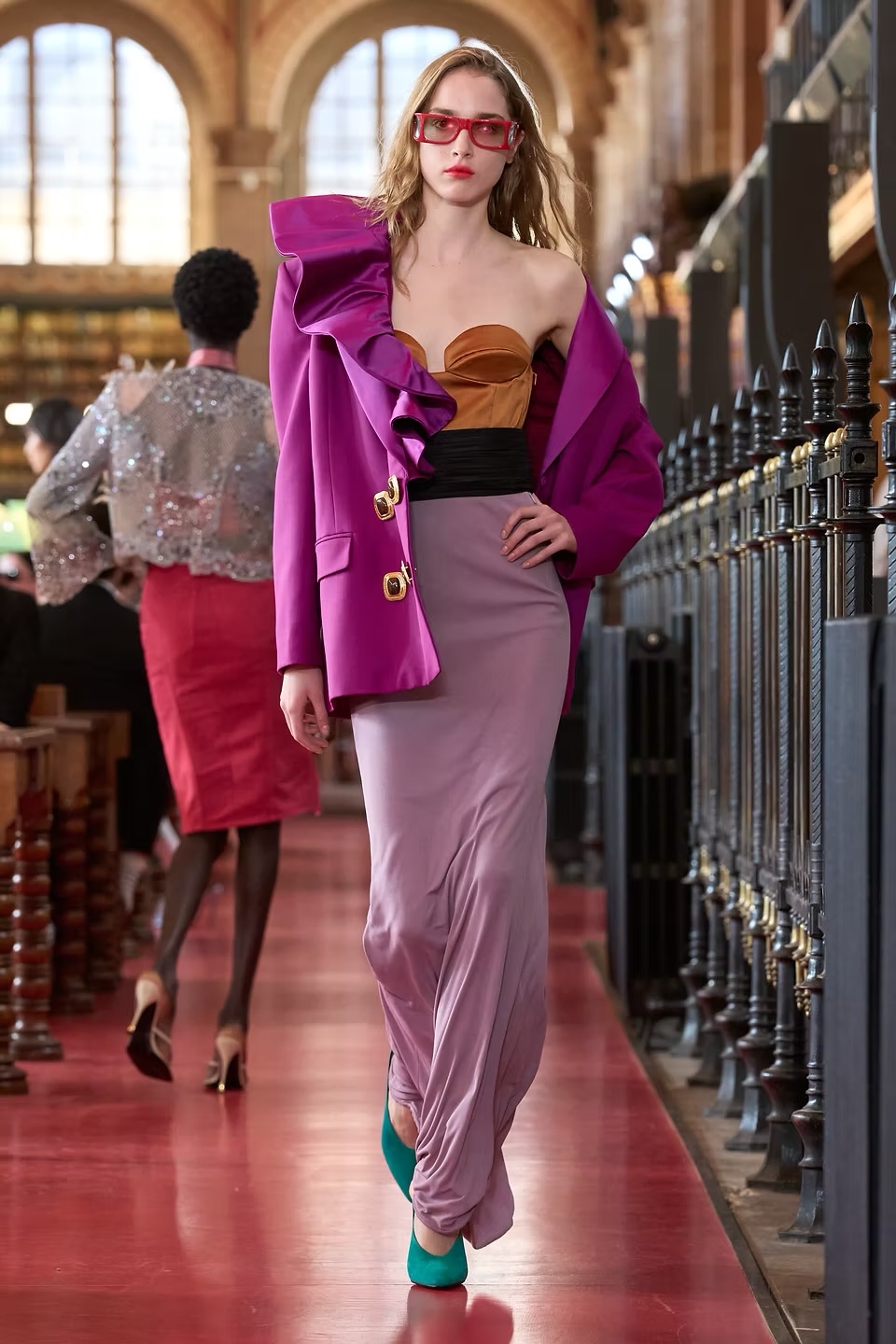
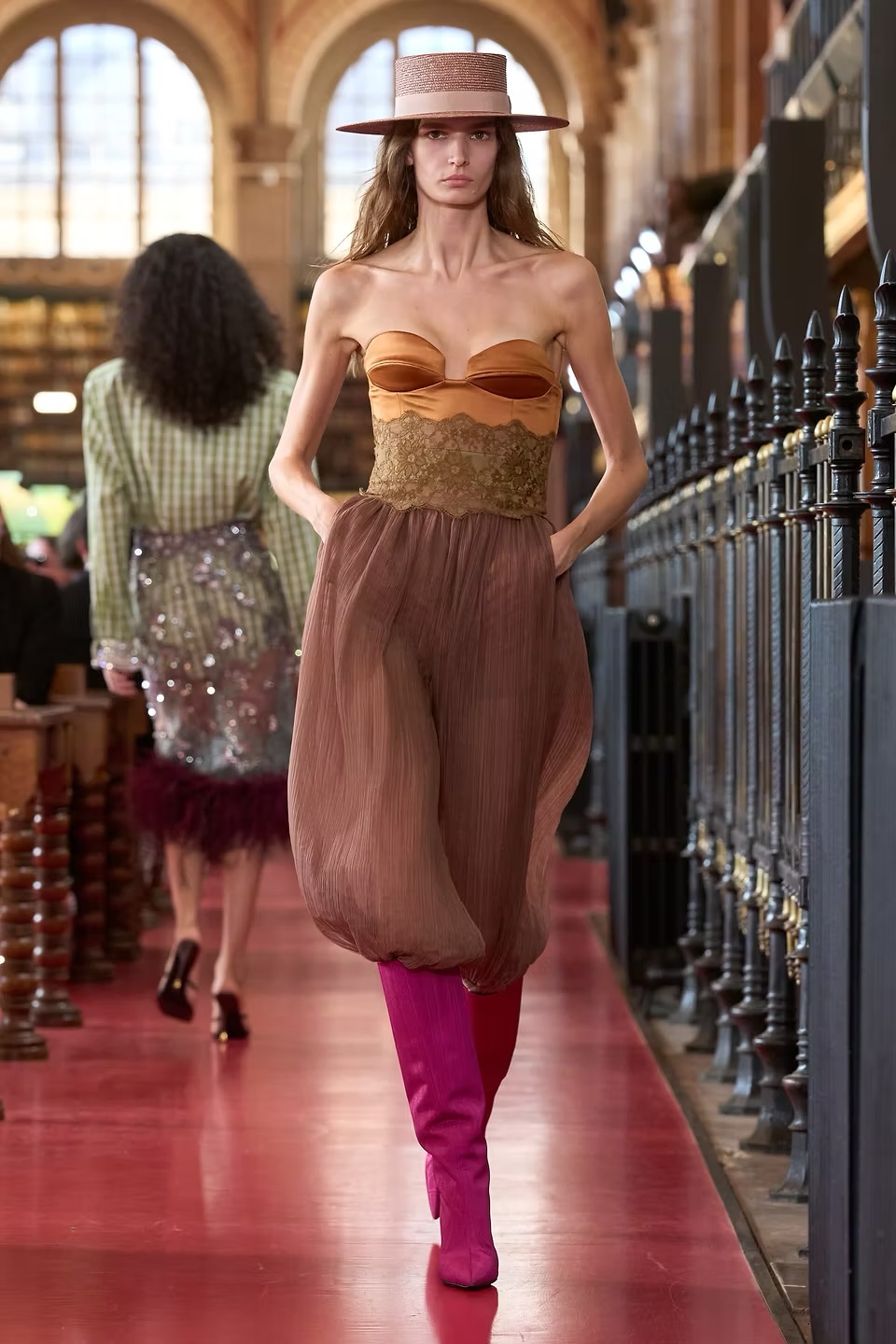
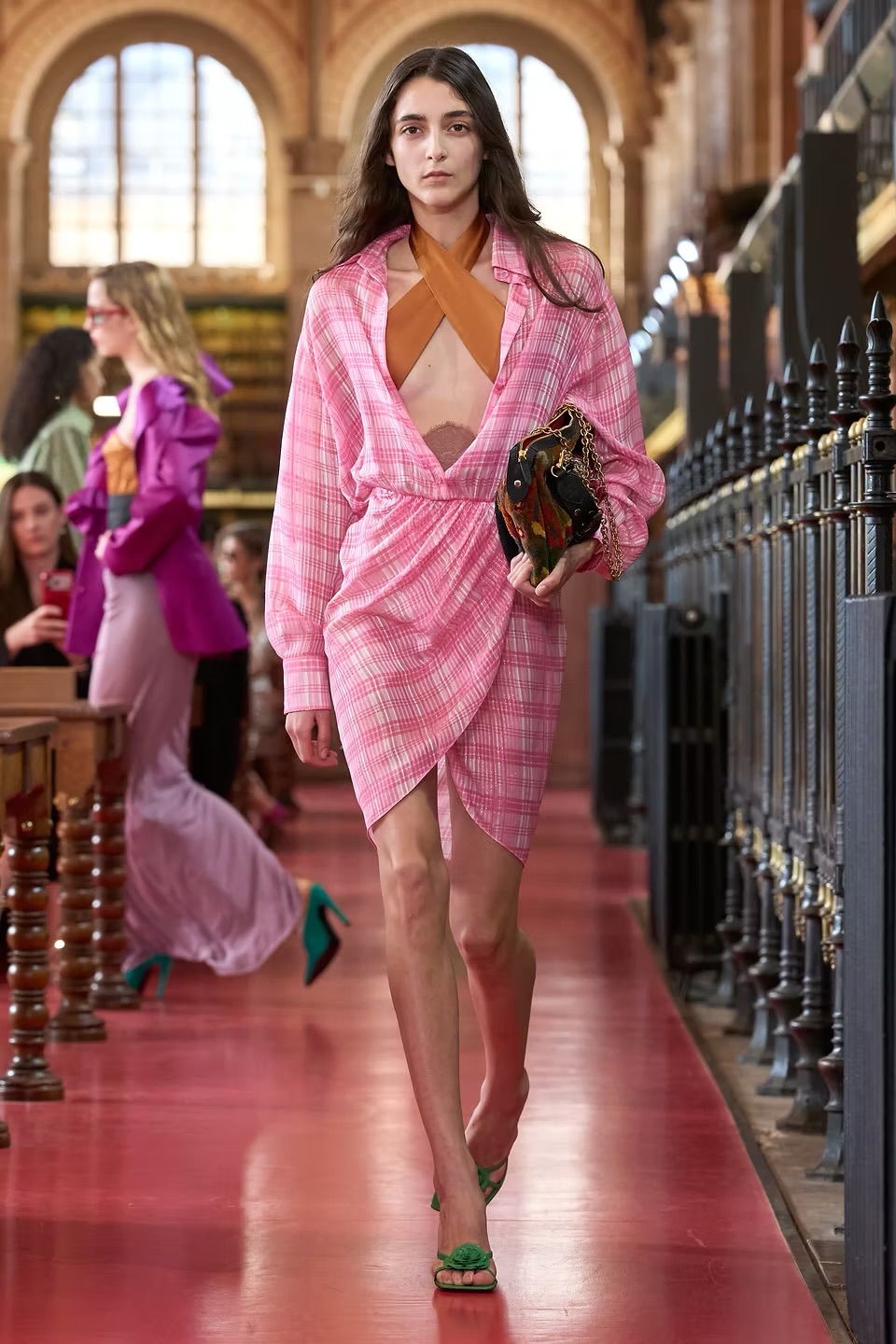
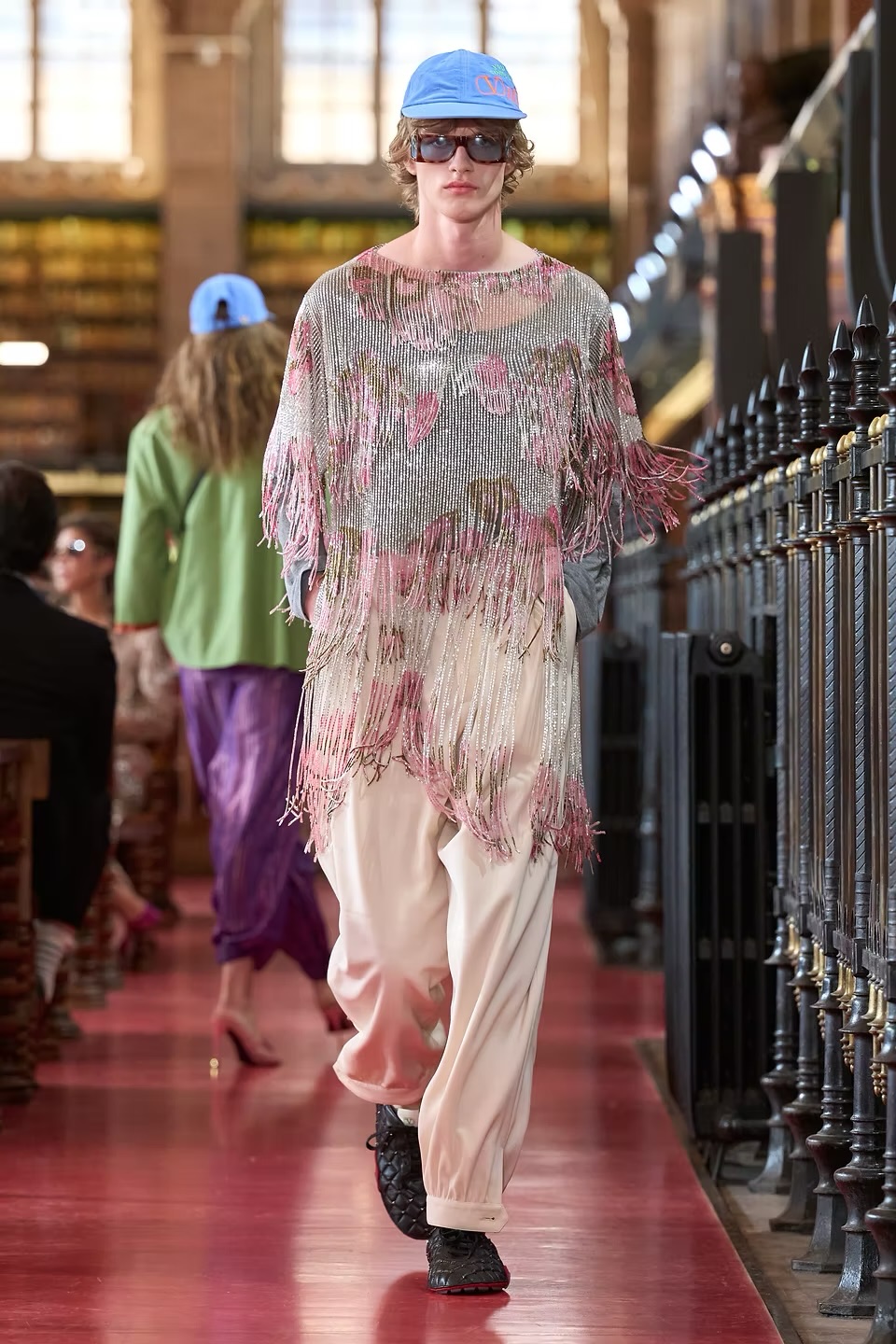
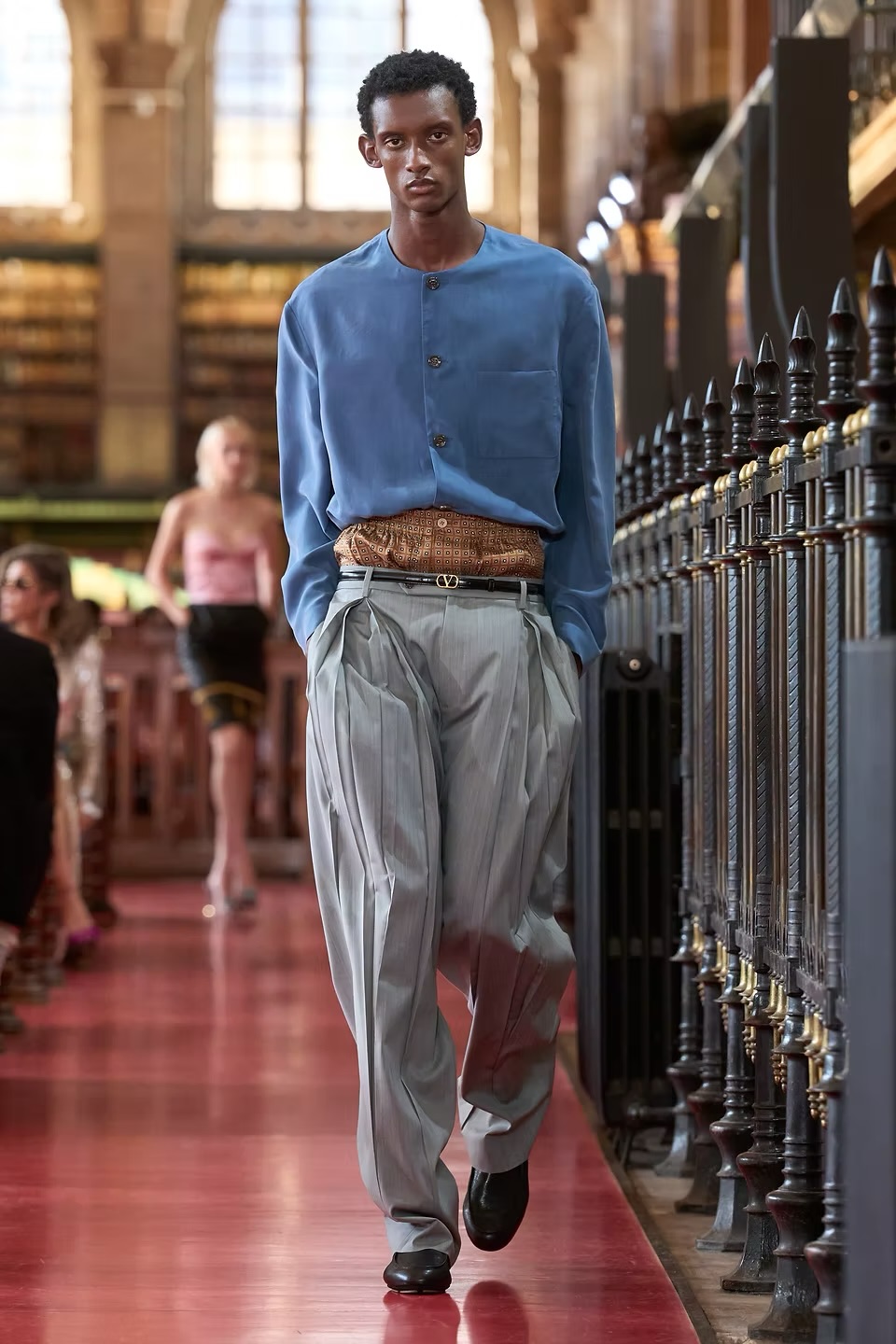
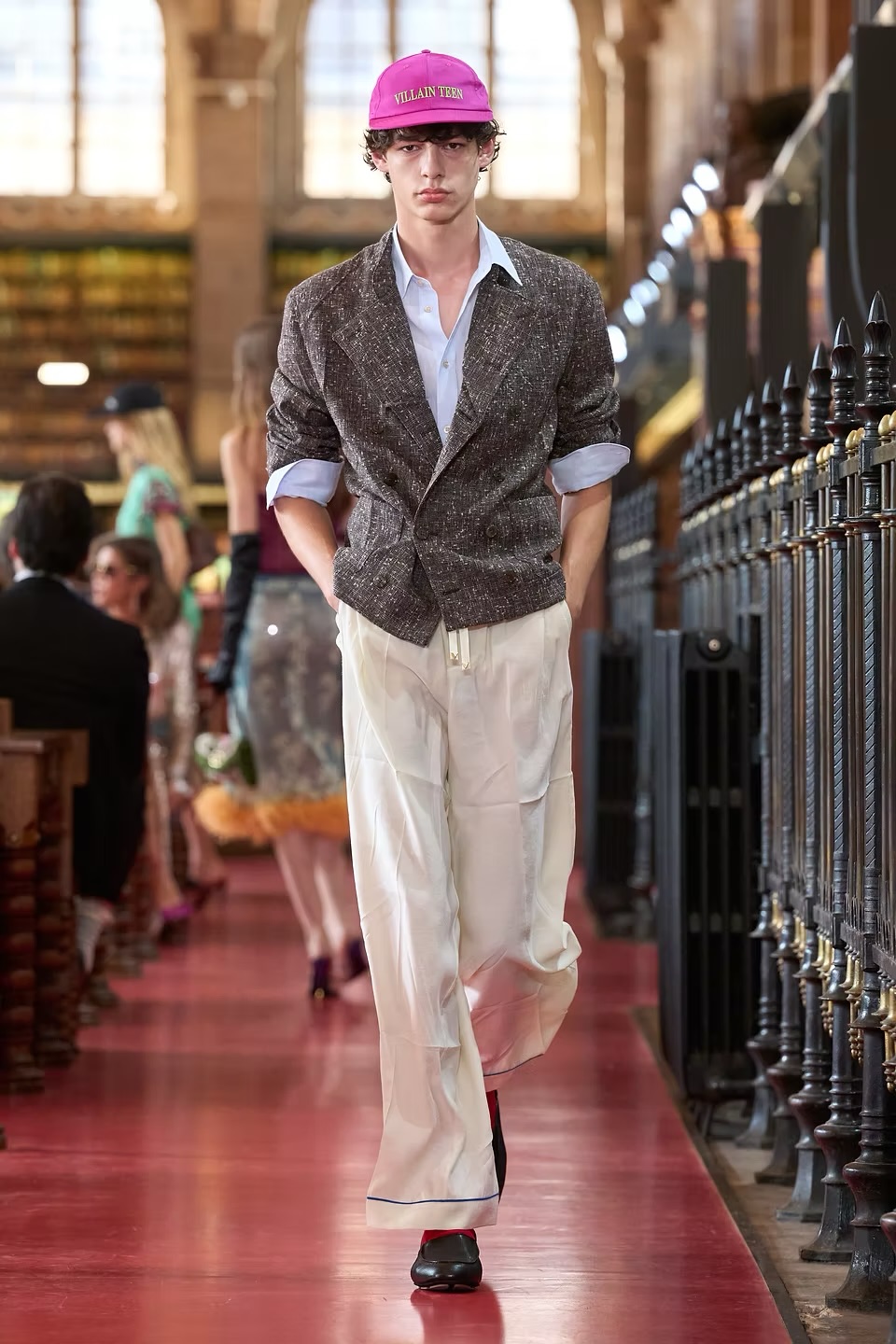
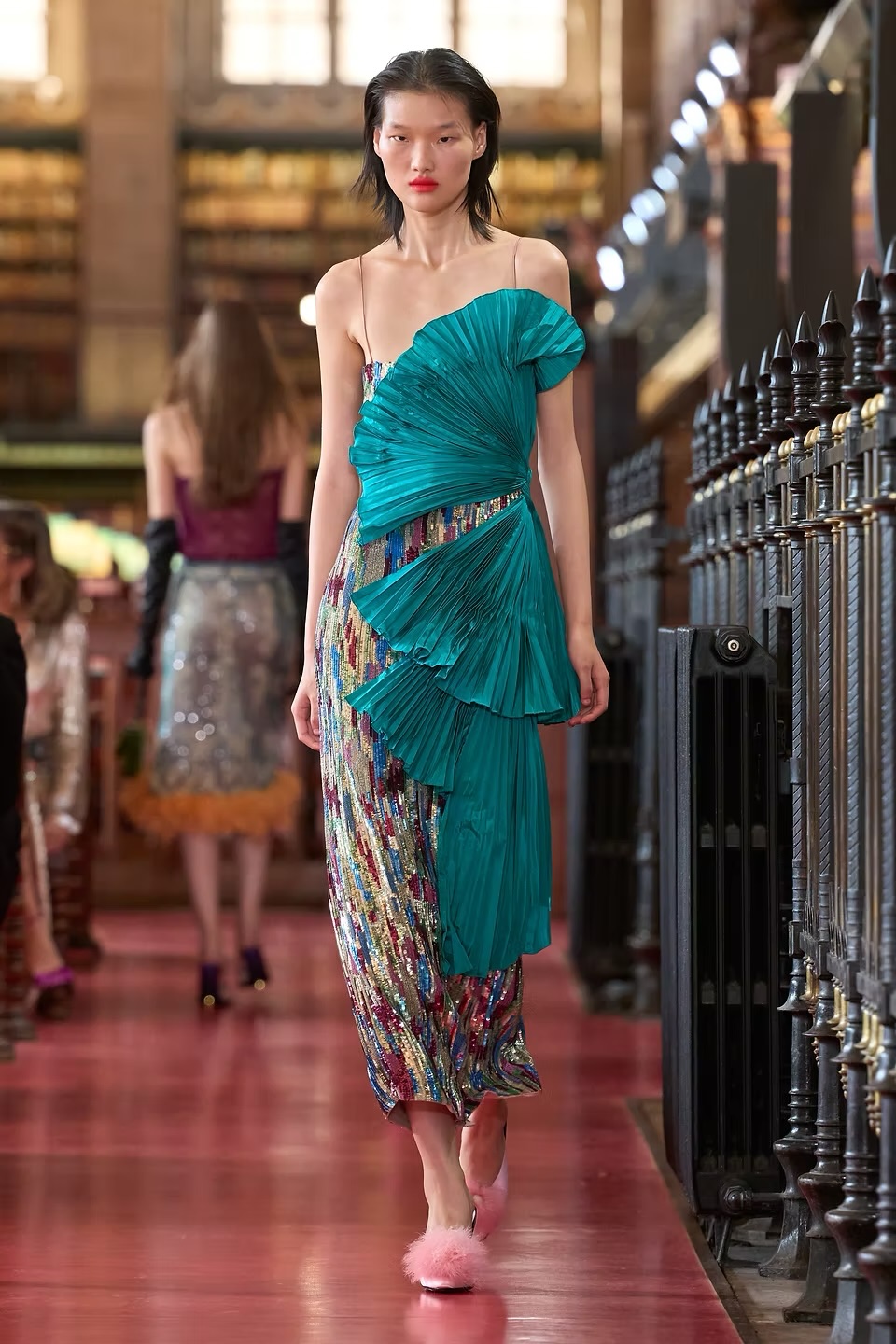
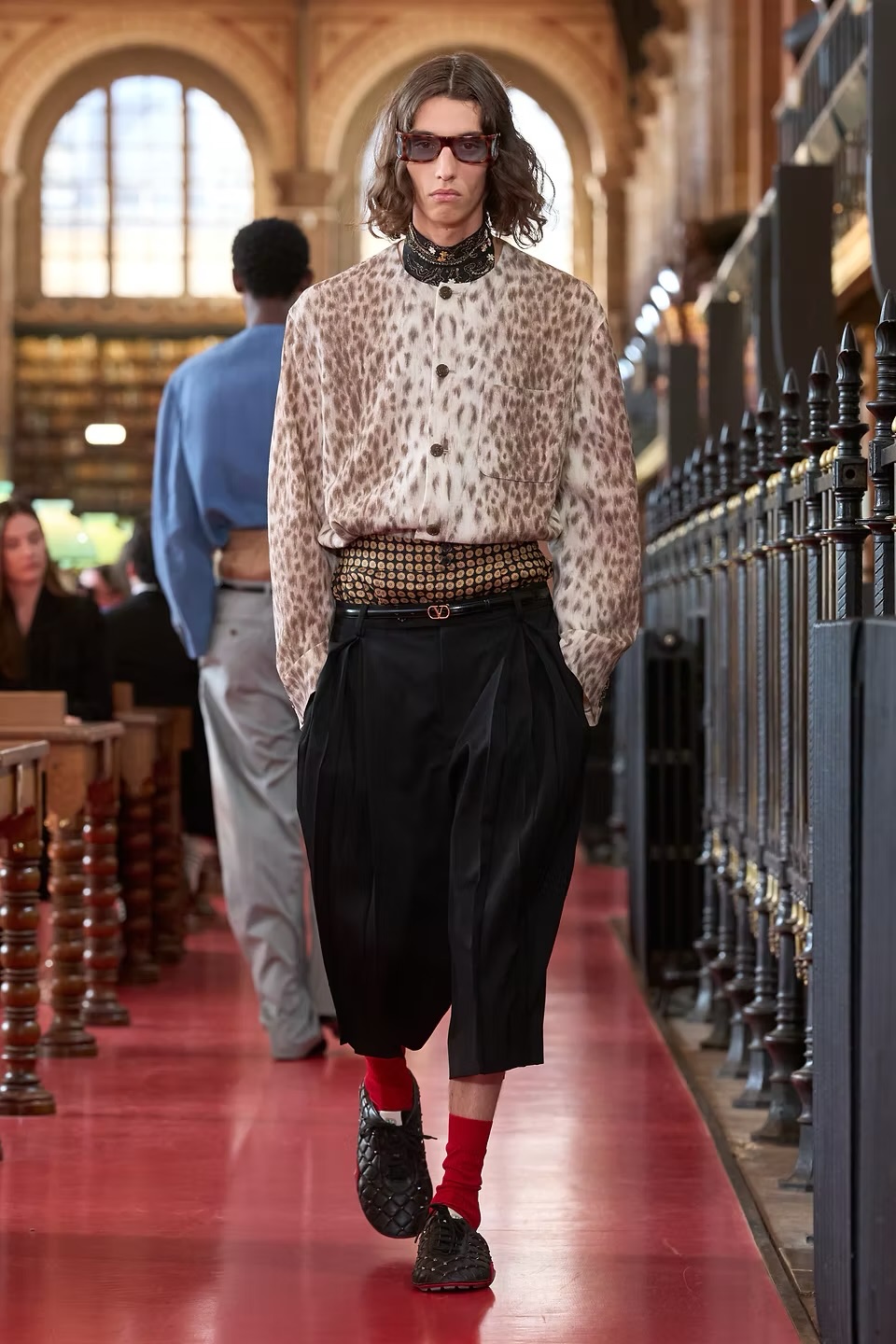
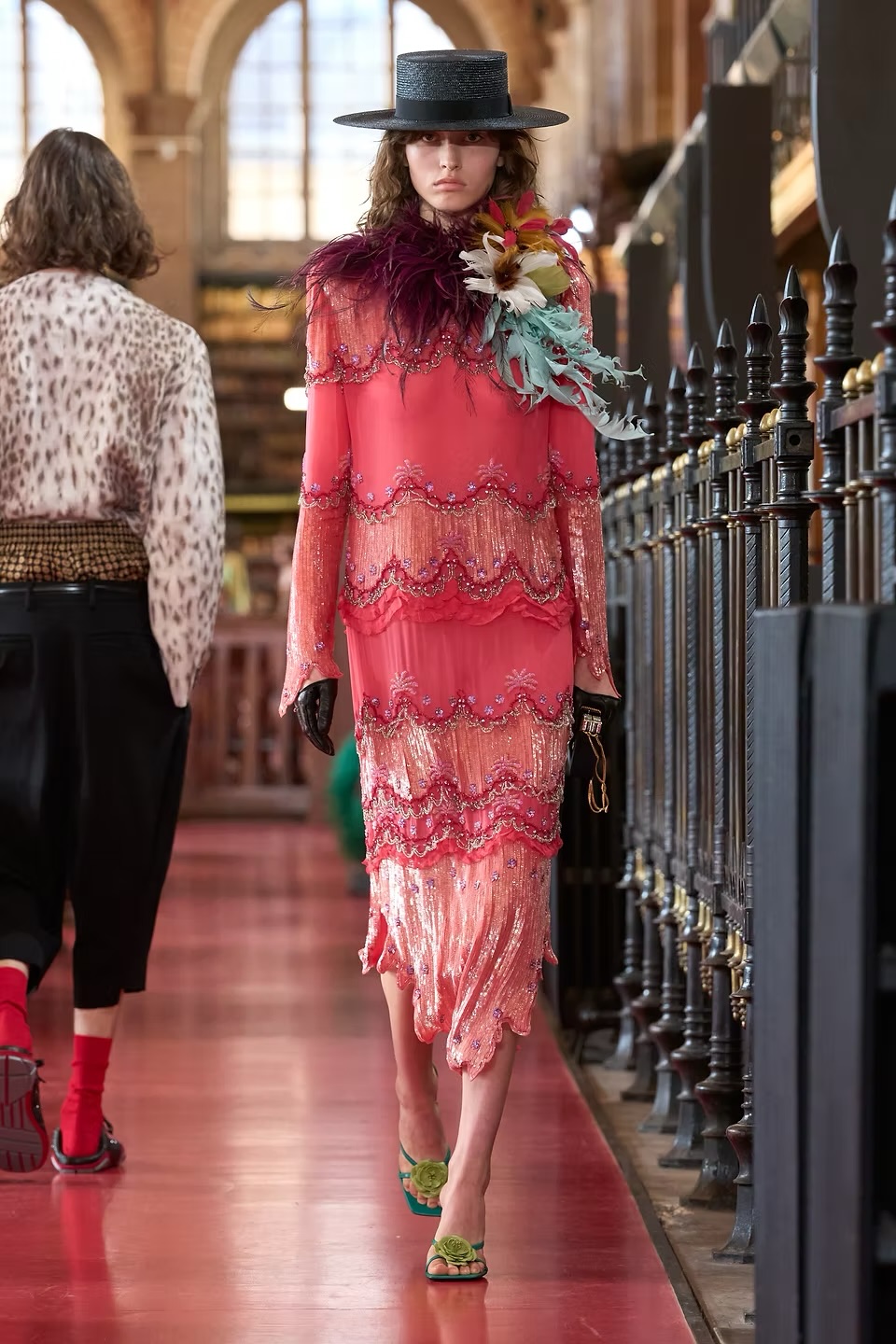
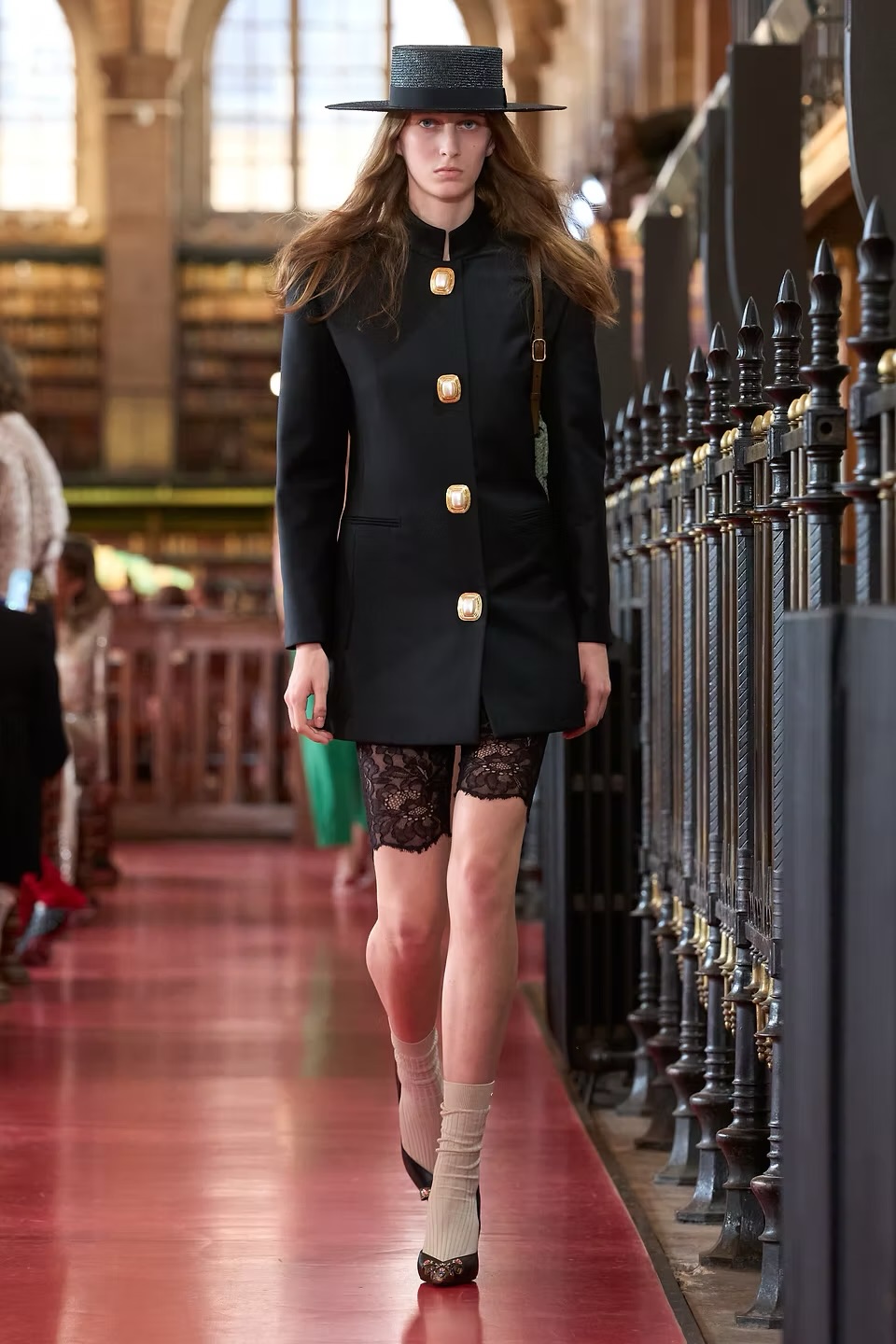
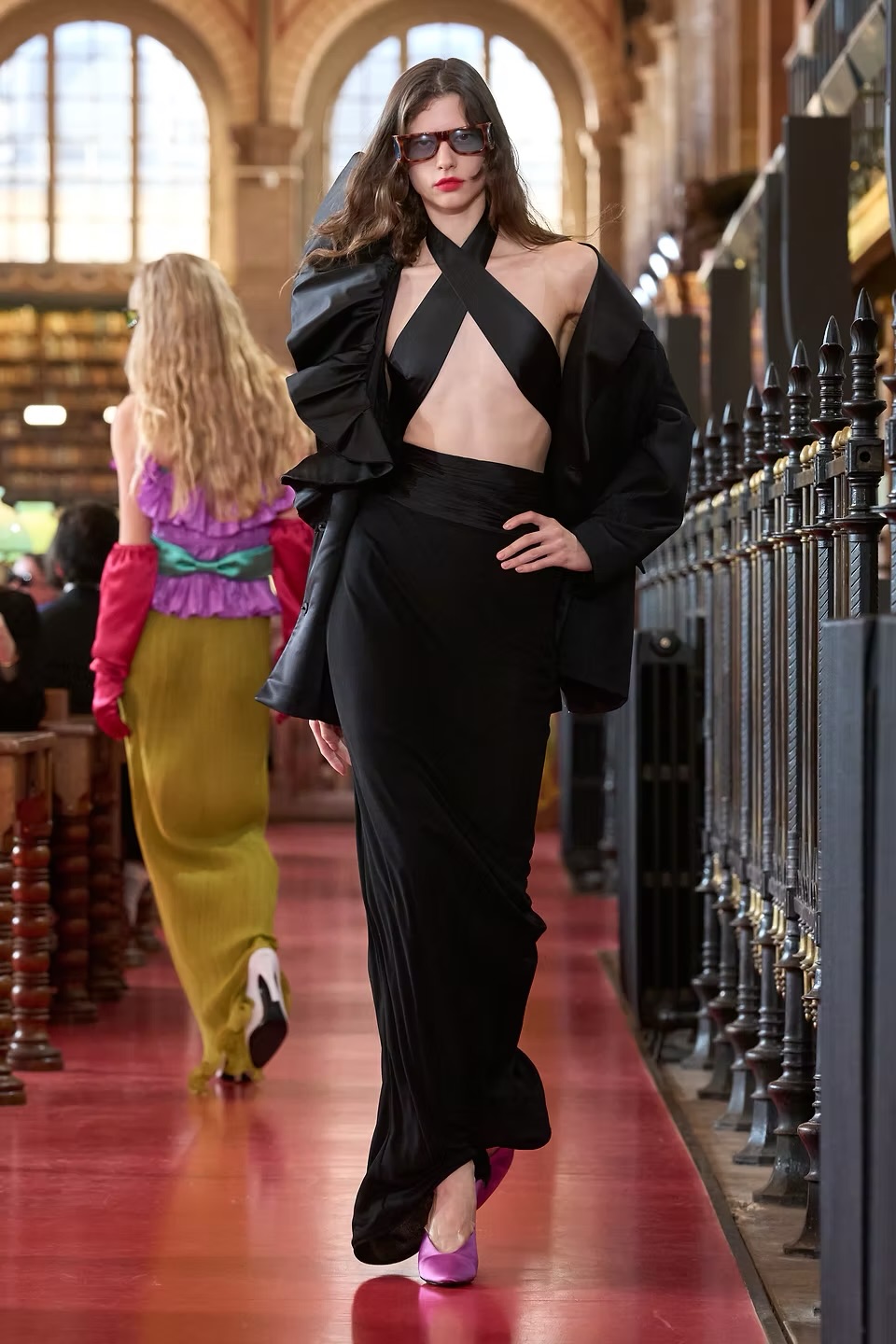
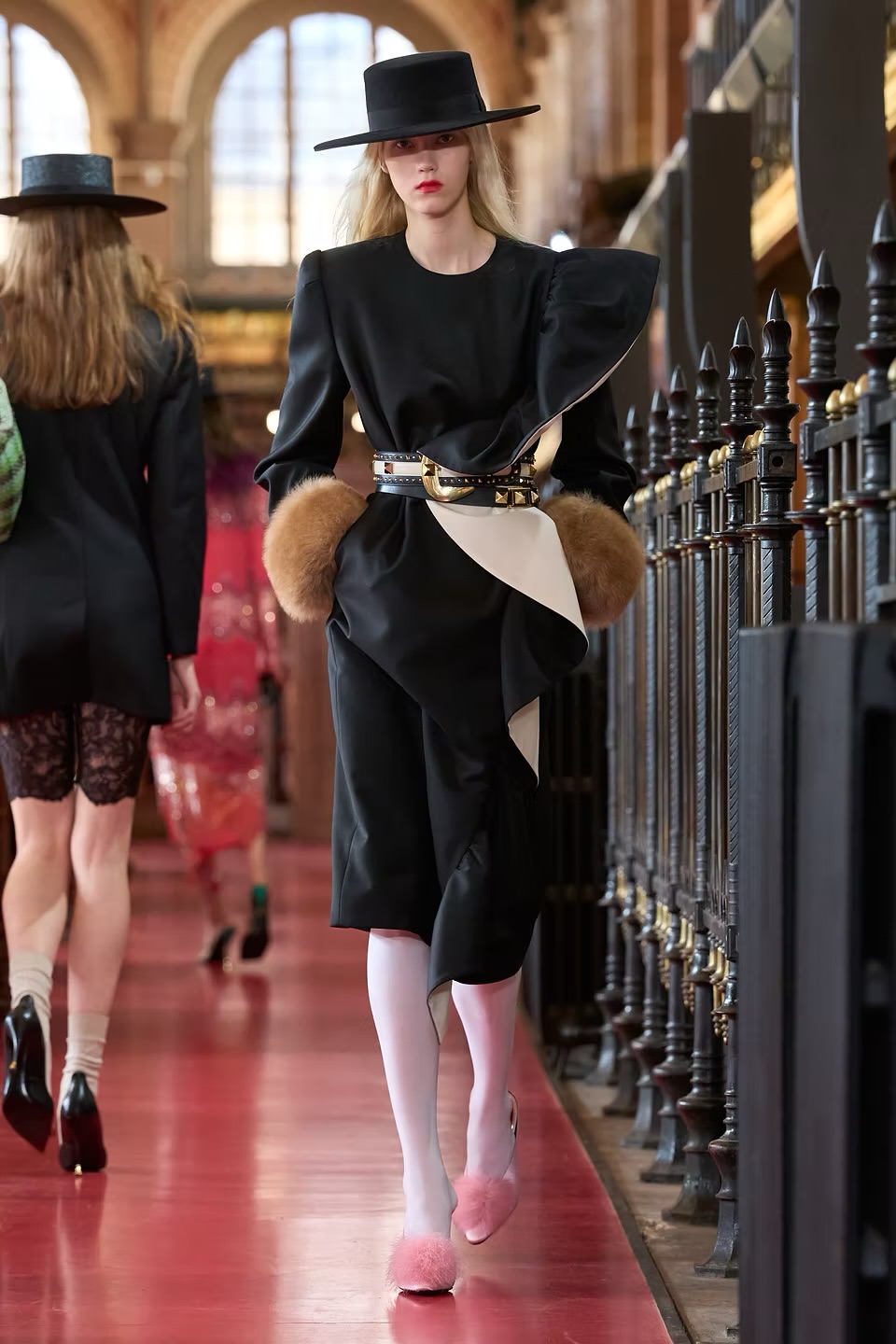
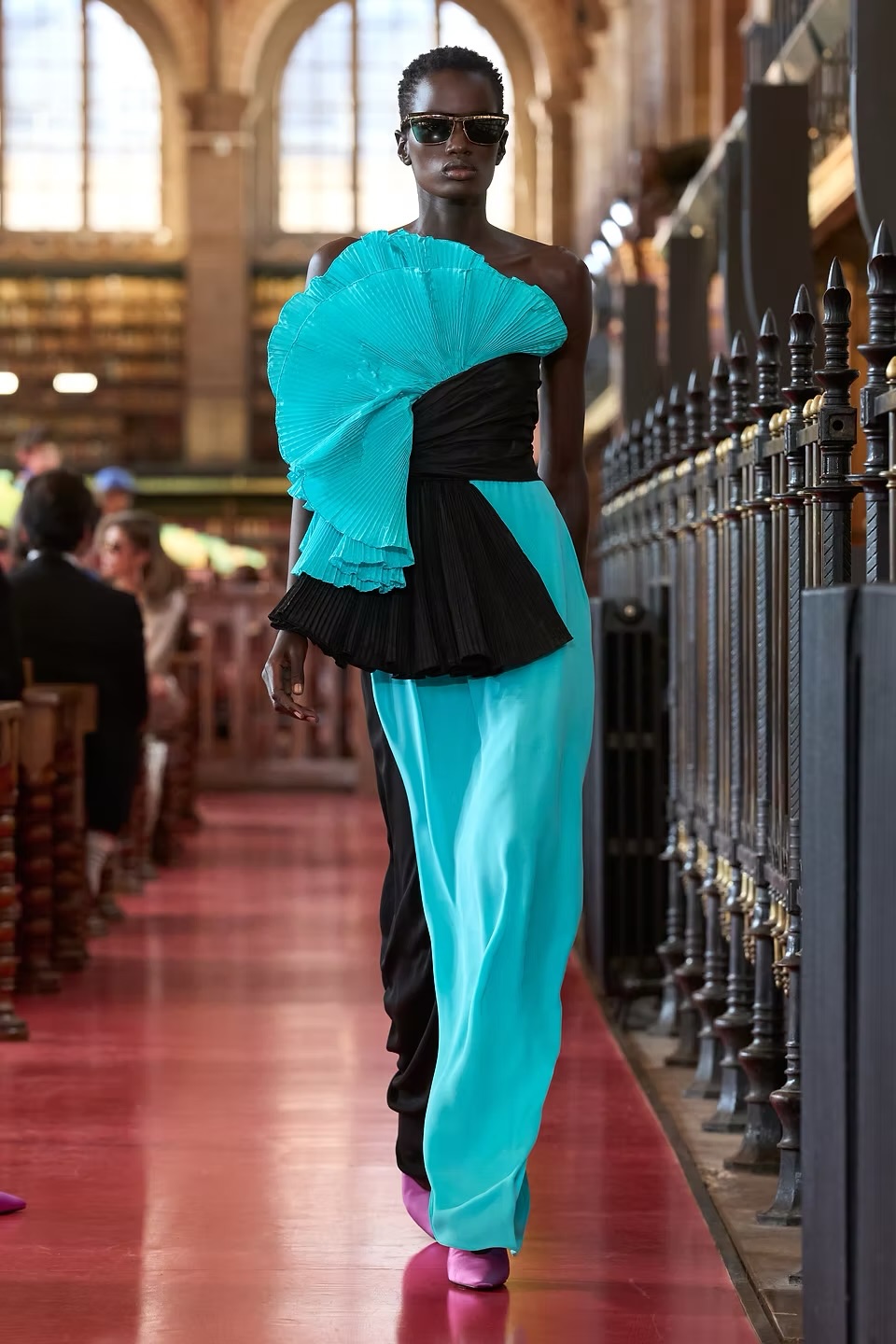
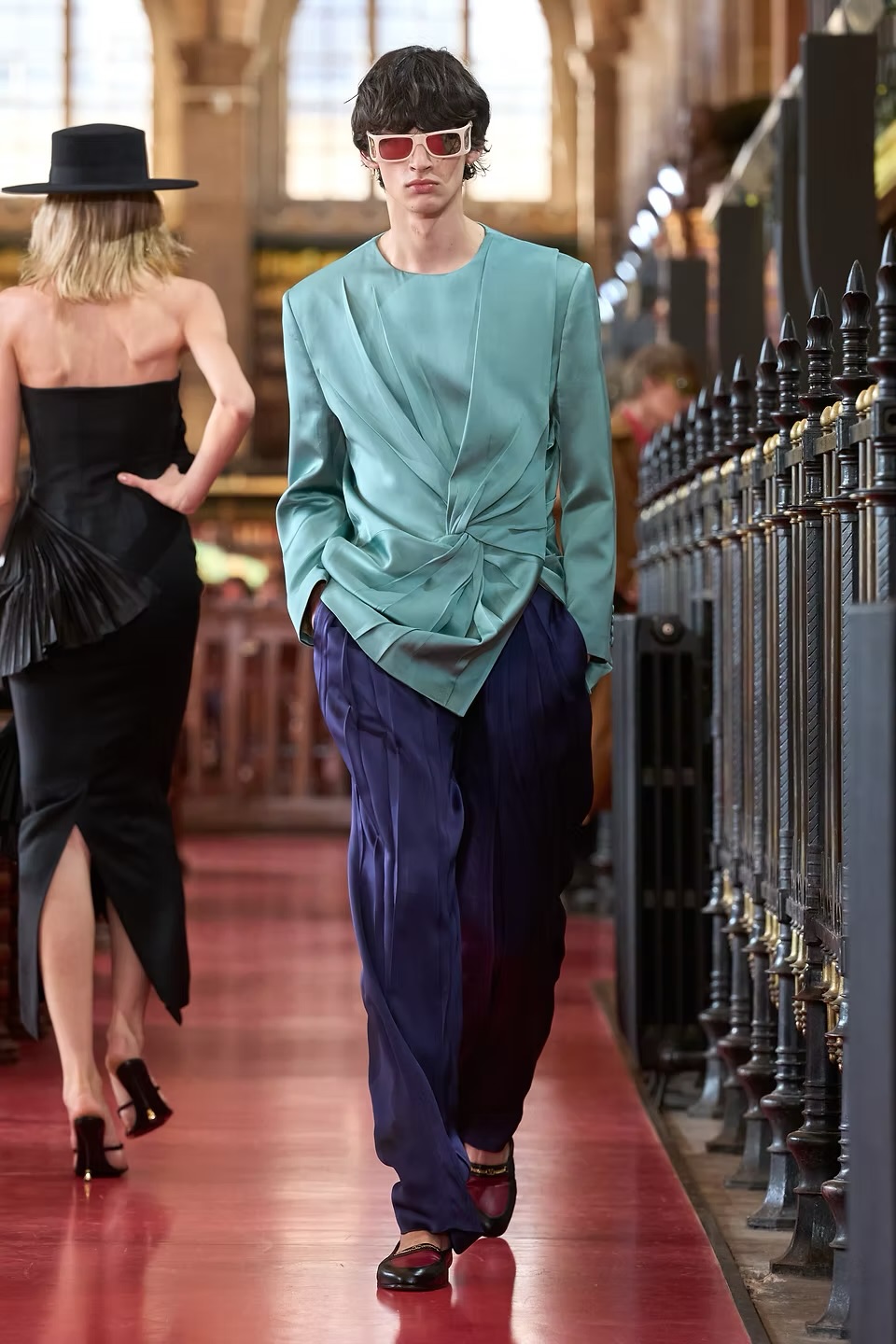
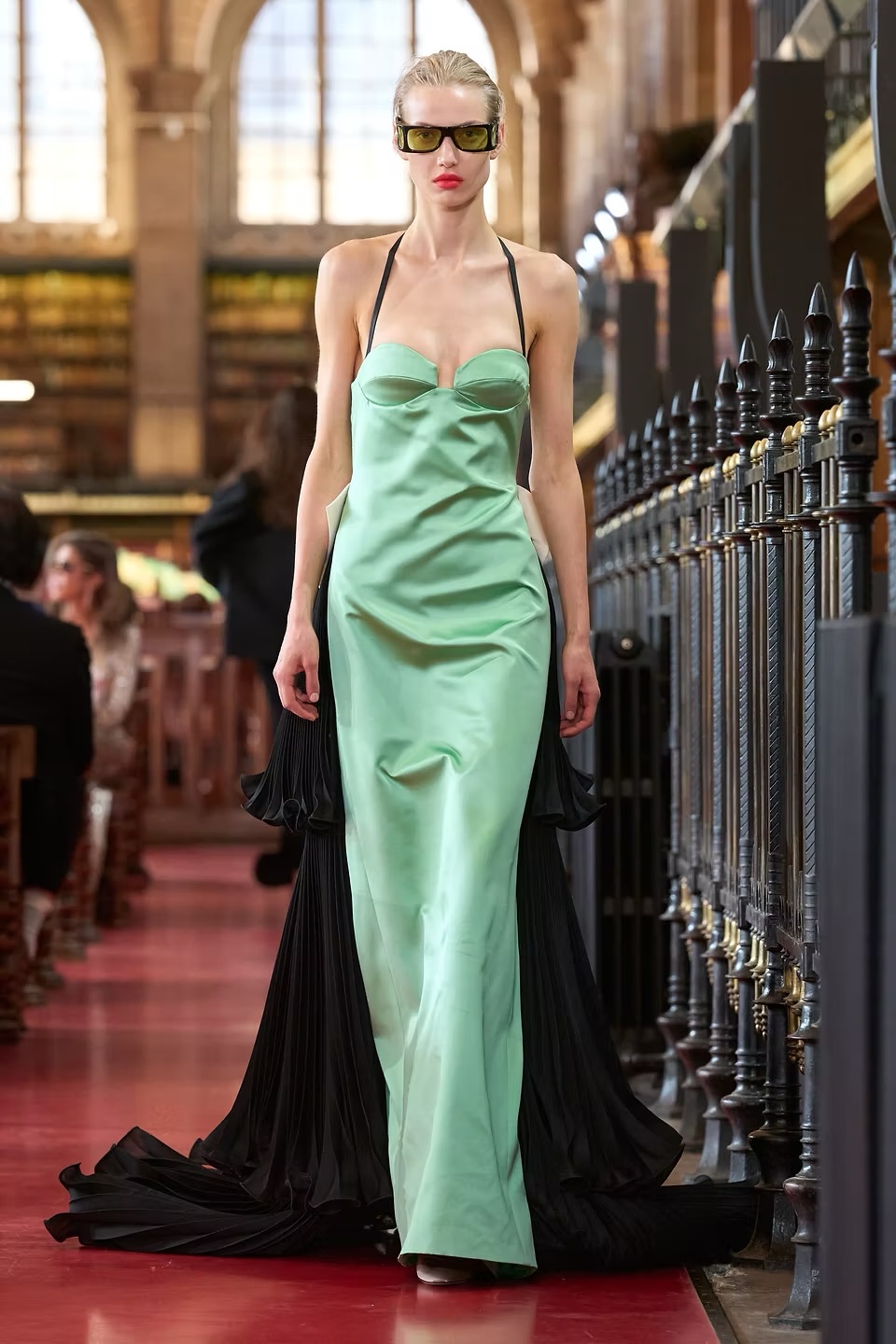
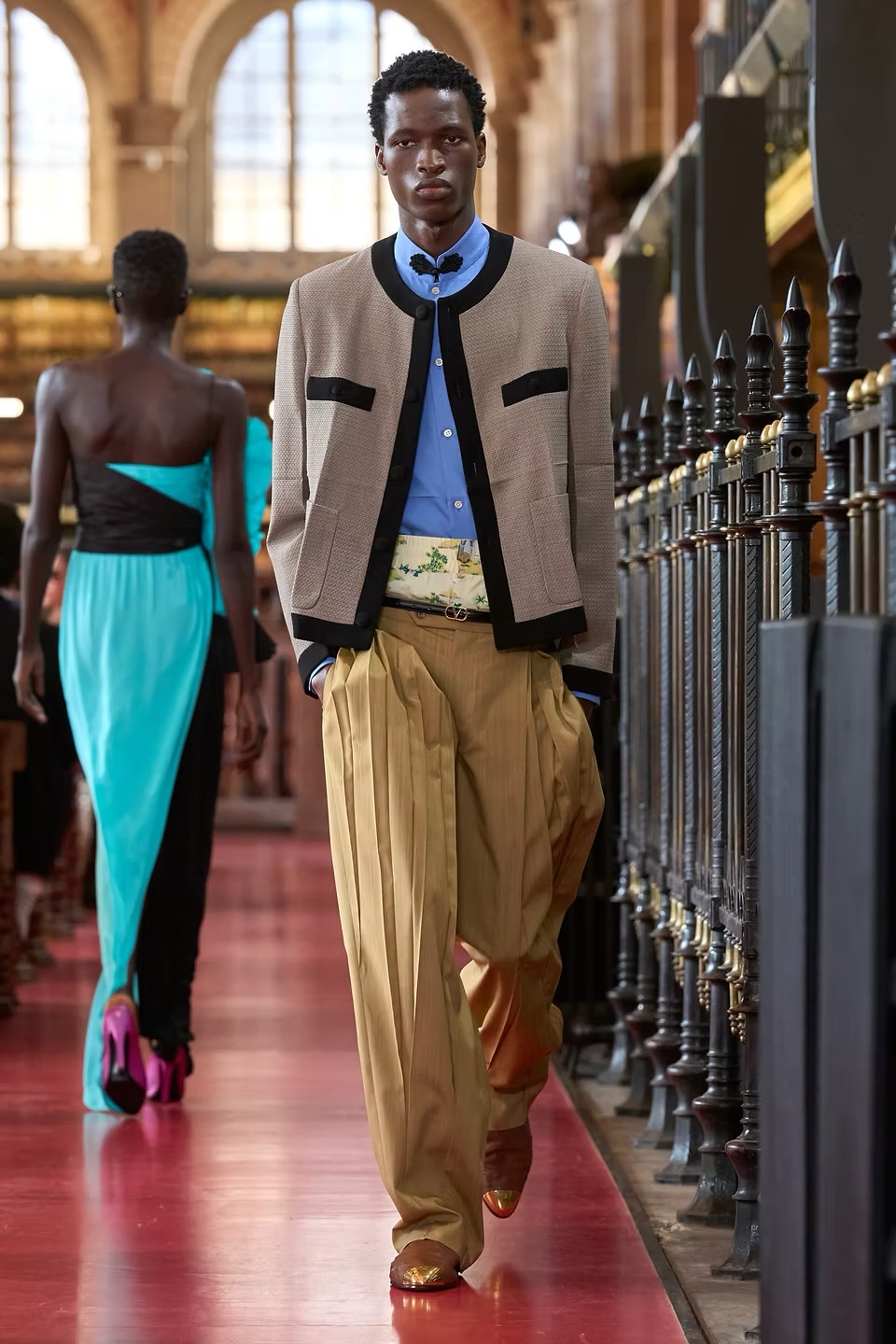
The distinction matters. The most contemporary thing about this collection is not a particular garment, colour or styling trick. It is the refusal to establish a single authorized version of the Valentino woman, man or world. The archive becomes raw material rather than scripture. The past is not sacred because it is finished. It is useful because it is unfinished.
Antibiblioteca therefore becomes more than a literary reference. It becomes a social proposition.
We live in an era obsessed with categorisation. Aesthetics, identities, algorithms, tribes, micro trends, personal brands. Everything wants to tell us what we are. Michele responds with clothes that seem to ask the opposite: what if you are allowed to be contradictory?
A corset and a baseball cap. A baroque jewel and a naked leg. Sequins and tailoring. A romantic bow so enormous it becomes almost absurd. The refined next to the vulgar, the historical next to the disposable, the precious next to the almost stupid. The collection does not reconcile these opposites. It lets them fight.
That friction is the point.
There is something almost anti luxury about it, despite the obvious luxury of the clothes. Not anti luxury in the sense of rejecting craftsmanship or preciousness, but in rejecting the idea that luxury must provide a perfectly coherent fantasy. Contemporary desire is messier. It is referential, contradictory, hyper informed and permanently distracted. It wants the archive and the algorithm. The aristocrat and the teenager. The museum and the nightclub. The old Valentino and whatever comes after it.
The setting makes the contradiction almost too perfect. A nineteenth century library filled with books that have been read by generations is invaded by people dressed as if they have arrived from several different futures.
Knowledge becomes styling. Heritage becomes possibility. Memory becomes fuel.
This is also where Michele’s own evolution becomes visible. At Gucci, his great revolution was to make accumulation feel like liberation, with more references, more identities, more history, more everything. At Valentino, the challenge is different. He has inherited an established mythology so powerful that simply adding more could easily become noise. The real progression is learning to turn excess into a question of authorship.
Who owns the Valentino codes now?
Who gets to wear them?
How far can they mutate before they stop being Valentino?
And, perhaps most importantly, does a heritage house have to look like its own past to remain itself?
Spring Summer 2027 does not answer. It deliberately refuses to.
That refusal is its strength.
There are moments when the collection feels absolutely Valentino, while others make Michele’s fingerprints impossible to miss. Good. The interesting part is no longer deciding where Valentino ends and Michele begins. It is watching the border become unstable.
The final Valentino red look, sealed with an enormous black bow, feels almost like a punchline to the entire exercise. It is the most recognisable Valentino gesture possible, pushed until recognition itself becomes theatrical. Not a museum piece. Not a logo. A loaded symbol, inflated, tied up, almost ready to burst.
Valentino Spring Summer 2027 is not about preserving a legacy. It is about making the legacy unstable enough to have a future.
The real luxury here is not the couture, the jewels or the red.
It is possibility.
And in a fashion system increasingly obsessed with knowing exactly what comes next, that might be the most radical thing a house can offer.