Sarah Burton’s Givenchy finds its voice in sharp tailoring, bold color and lots of leather.
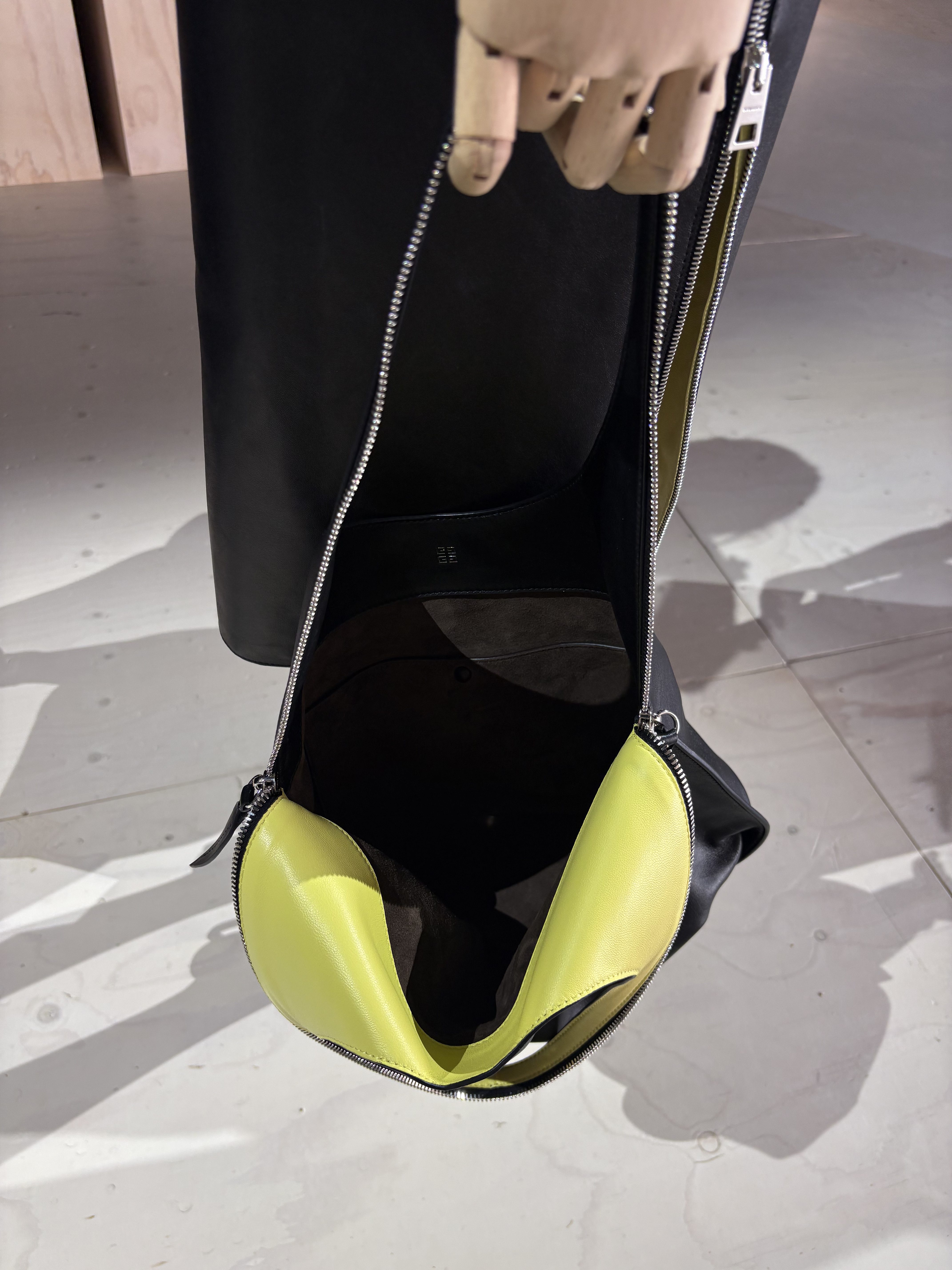
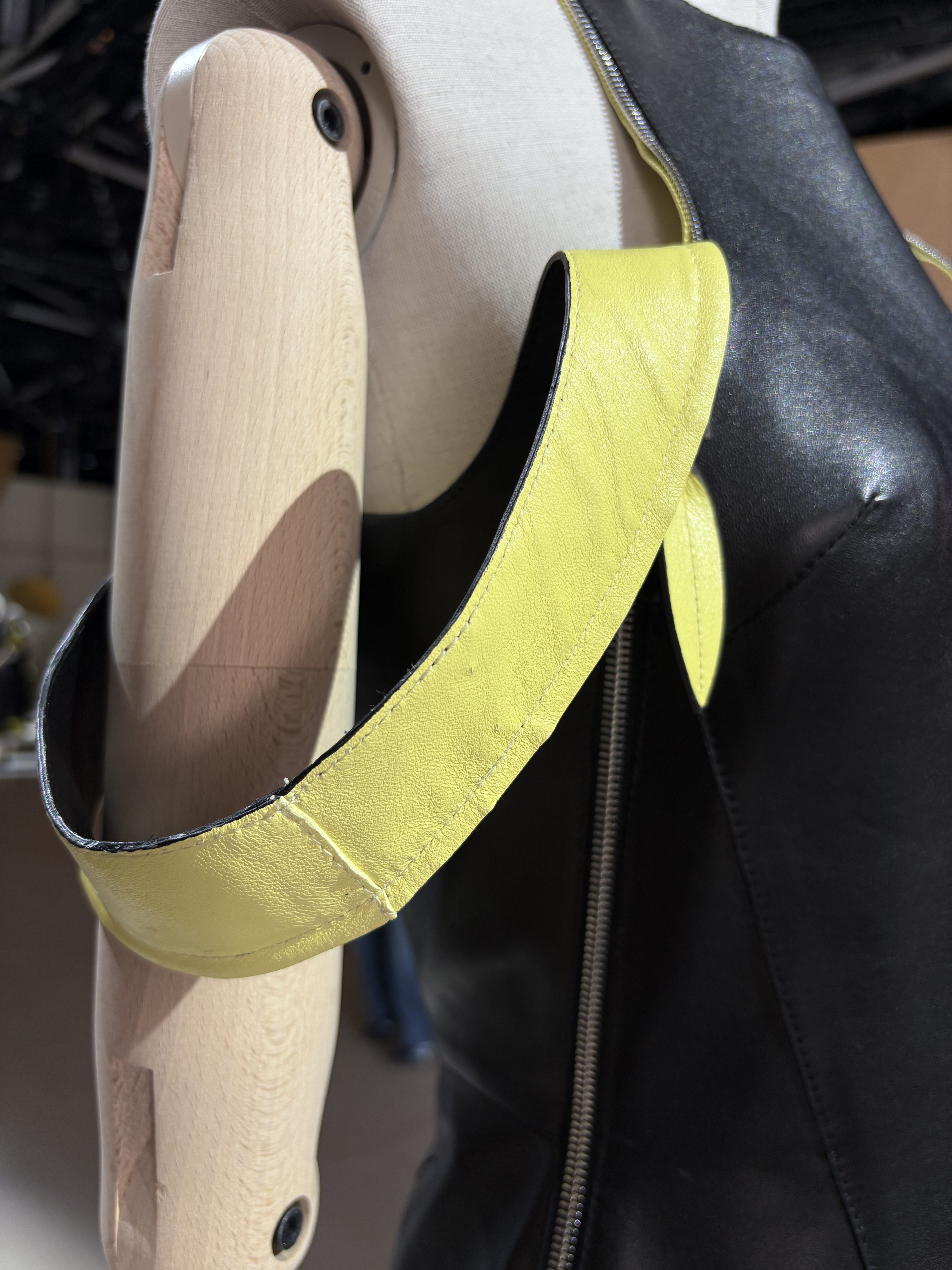
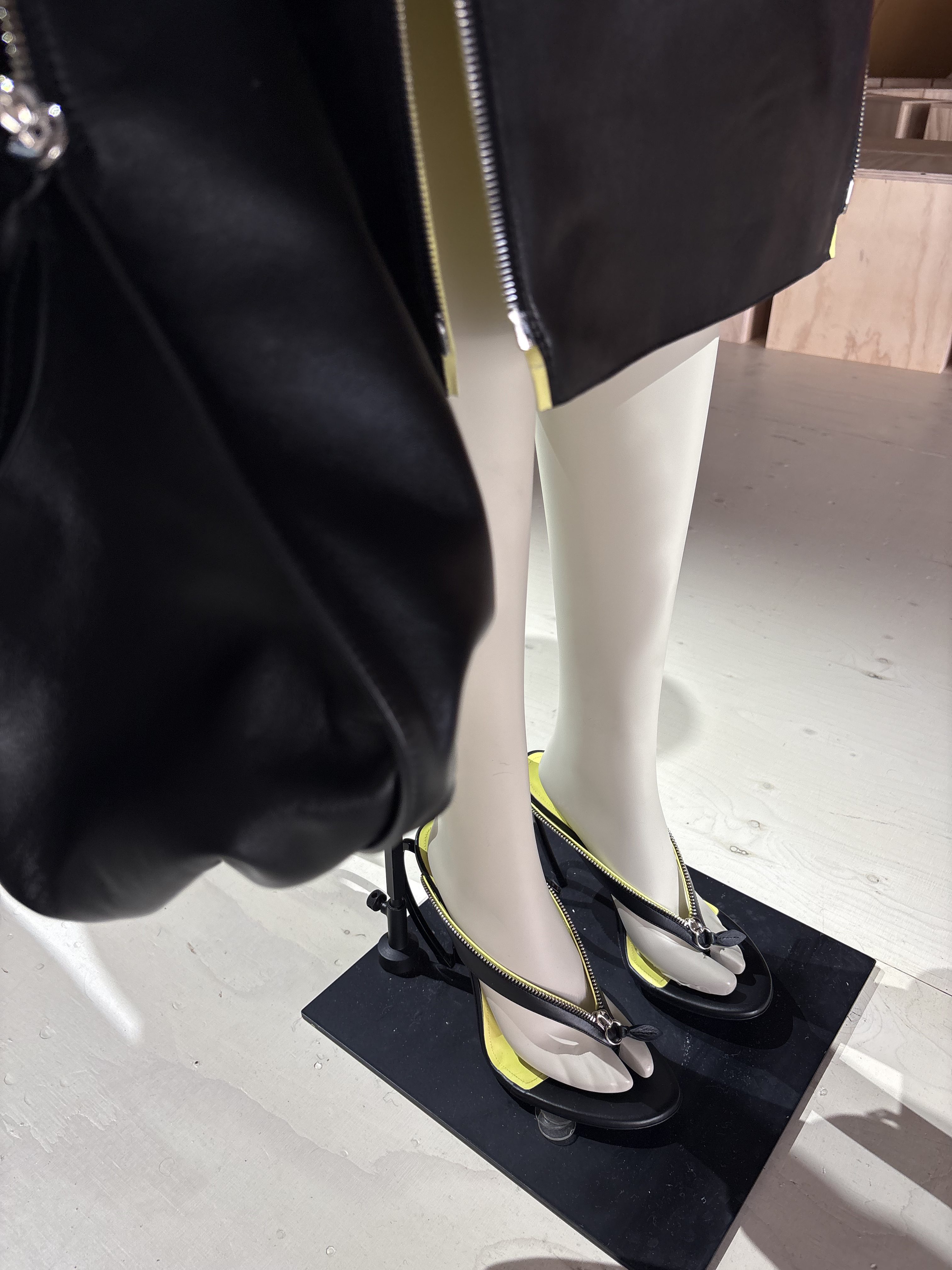
The most telling thing about Burton’s fourth Ready-to-Wear Givenchy collection is how little it asks you to forgive. There is no debut-season housekeeping and no nervous nod to the archive. It opens with a black leather apron dress that flashes acid yellow at the hem, carried with a slouchy bag lined in the same shade, and then proceeds as if the hypothesis about what Burton’s Givenchy looks like has already been settled.
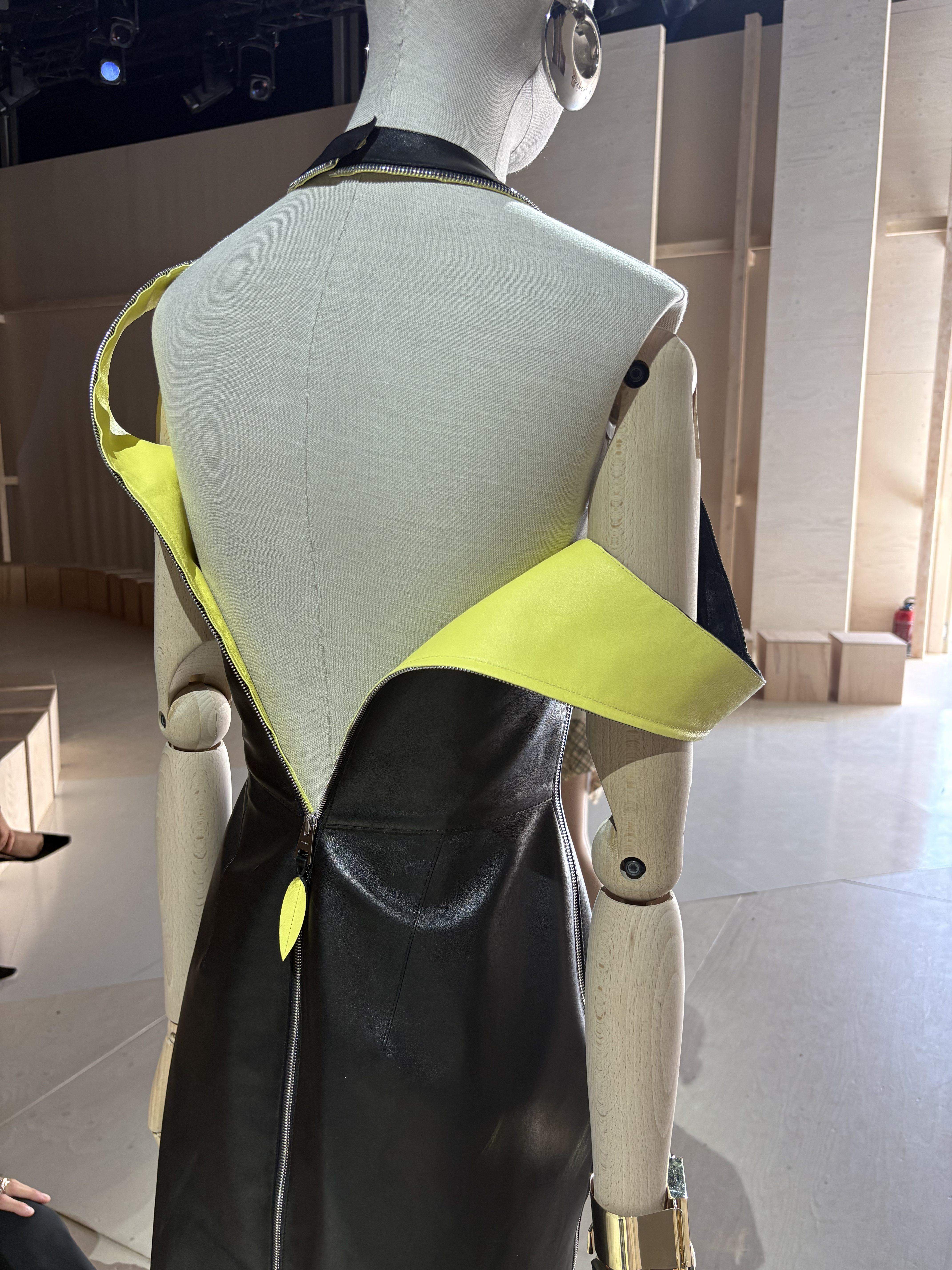
That’s a reasonable assumption at this point. This is her fourth season at the house, following 26 years at Alexander McQueen, and the McQueen training still shows in how she handles a body: she cuts it, exaggerates it, then lets cloth do something unexpected around it. Her own show note frames the collection as an effort at “balance and clarity,” a wardrobe for the “perpetual motion” of modern lives. That’s a modest ambition on paper. On the runway it produces something more interesting than modesty.
Shape first, then everything else
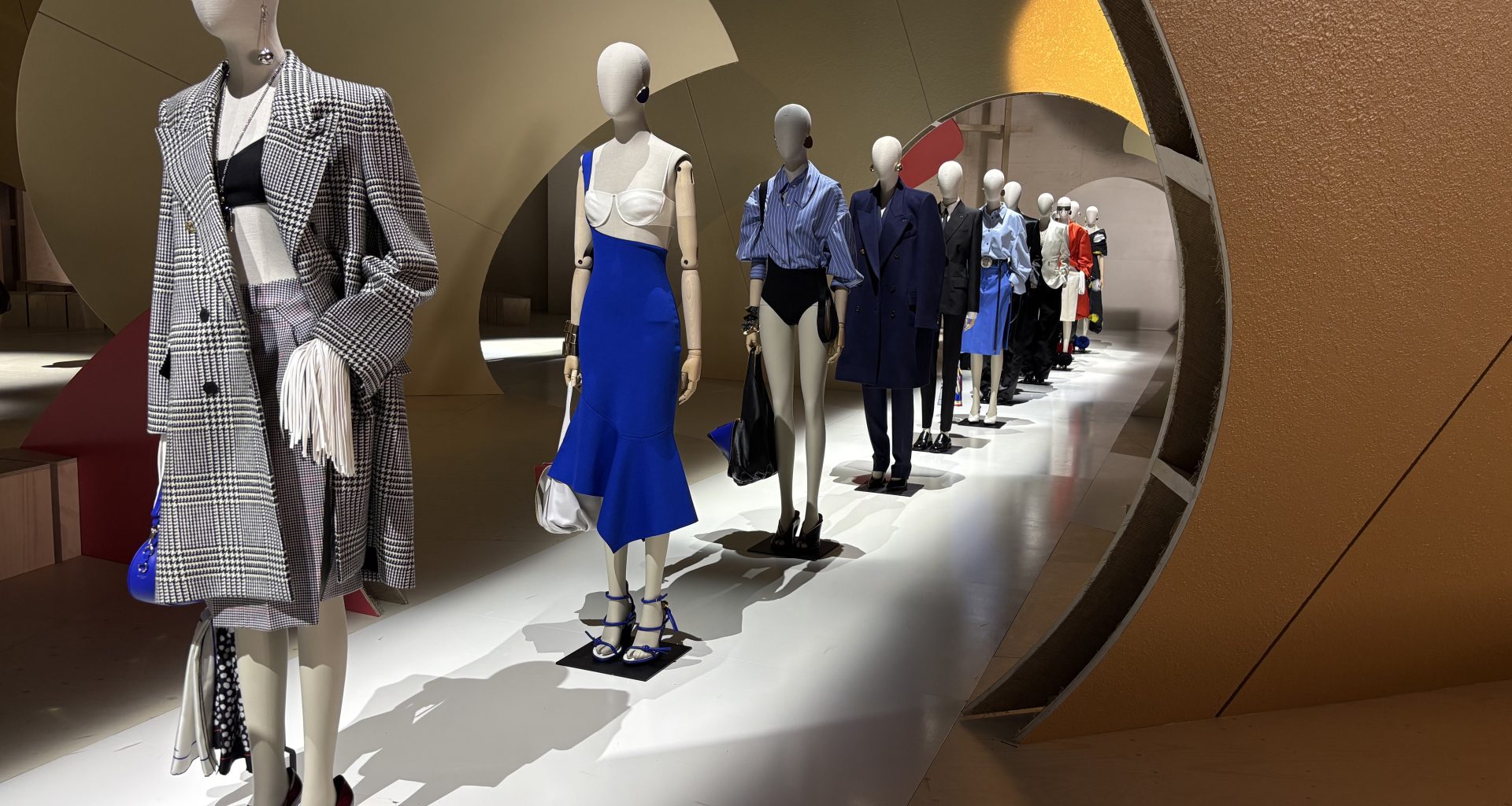
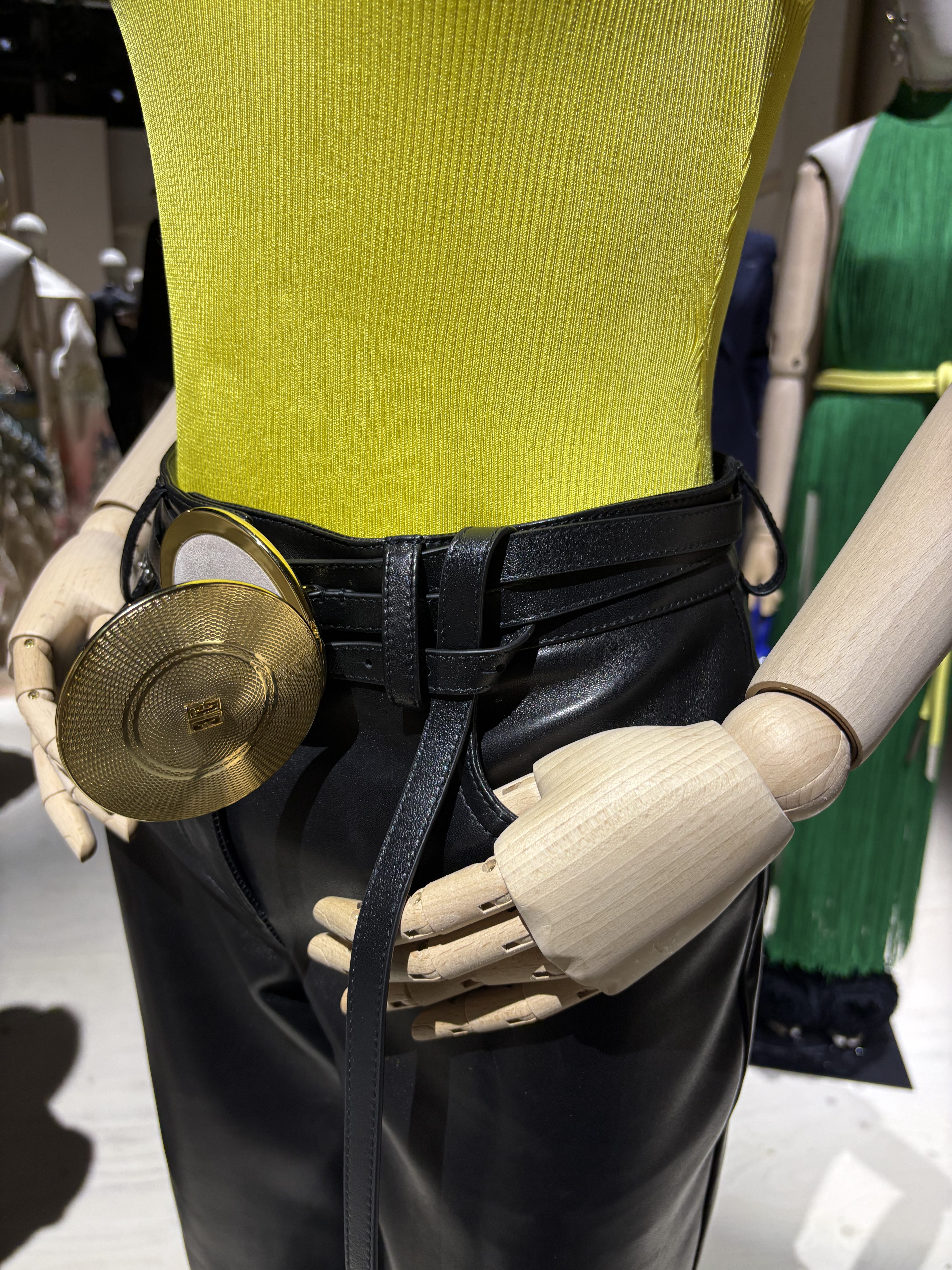
The collection works in two registers, and the tension between them is the point. The first is almost aggressively wearable: straight-leg jeans with a disc-buckled belt and a white tank in look 2, a crisp white shirt over a black pencil skirt, a charcoal double-breasted suit. The second is shape-making that borders on the surreal. The same jeans reappear under a red satin peplum jacket in look 8) and a cobalt one in 11, where the peplum juts out like an architectural afterthought. Later, a trench gets a second layer of trouser fabric spilling from its sides, and a grey waistcoat sits above trousers that balloon at the hip.
What Burton does well is let the tailoring loosen without losing its edge. The pinstripe suit in look 37 is sharp, almost conventional. One look later, the sleeves fold across the torso and become part of the jacket’s structure, so the suit looks as though it has been quietly rearranged. The black trouser suit with flared, dropped cuffs and the satin version with a sculpted, winged shoulder push the same idea toward evening.
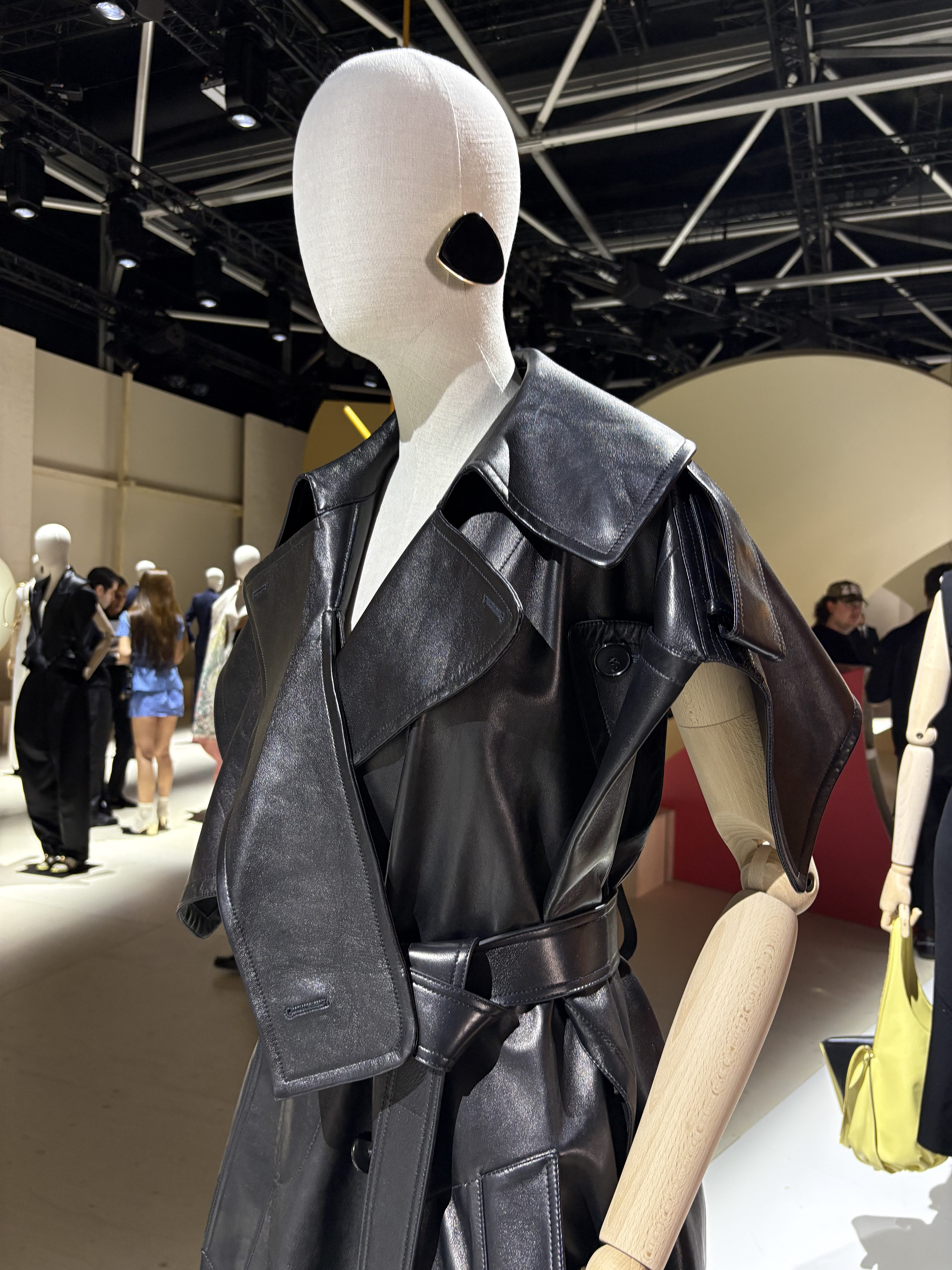
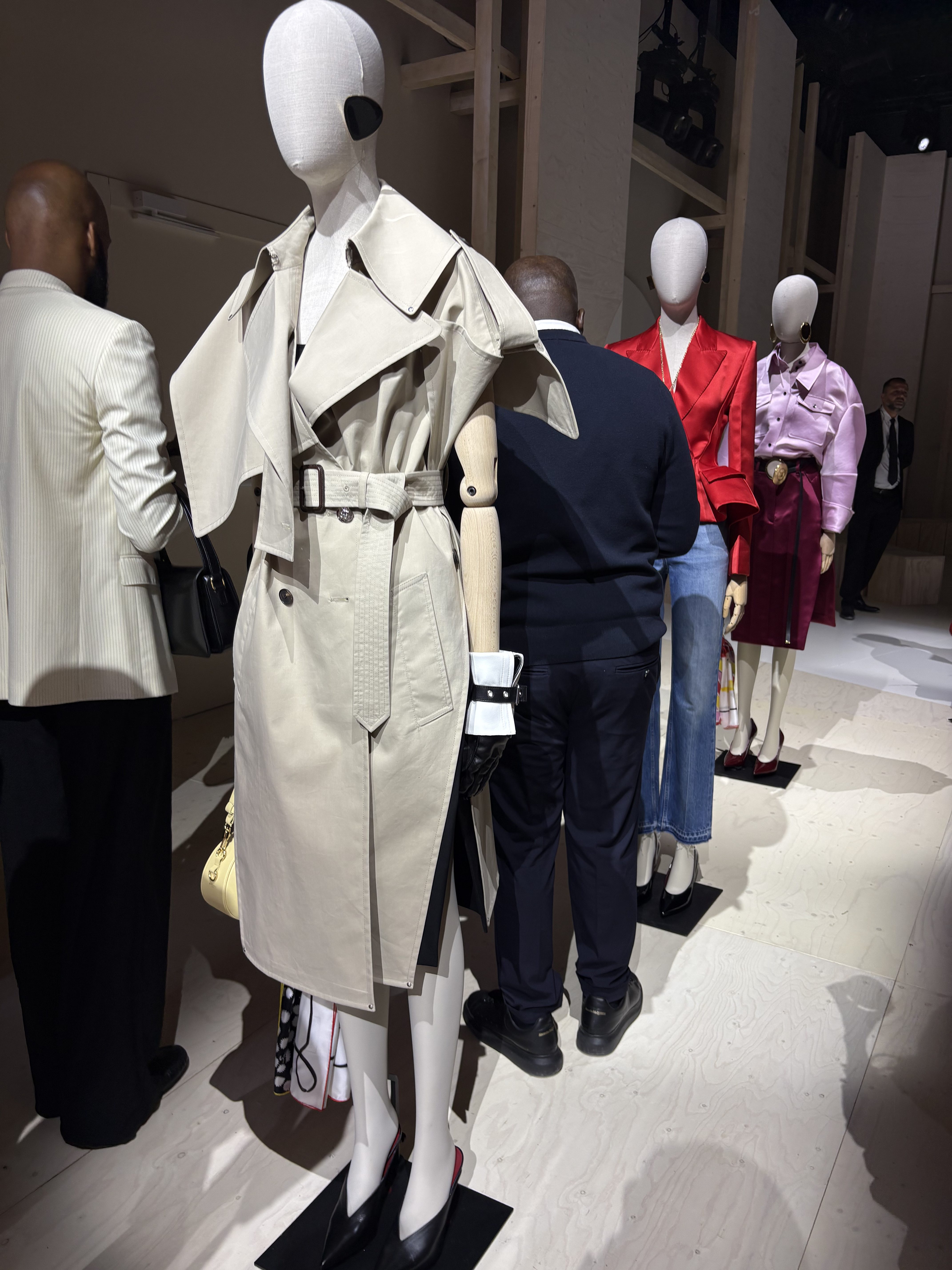
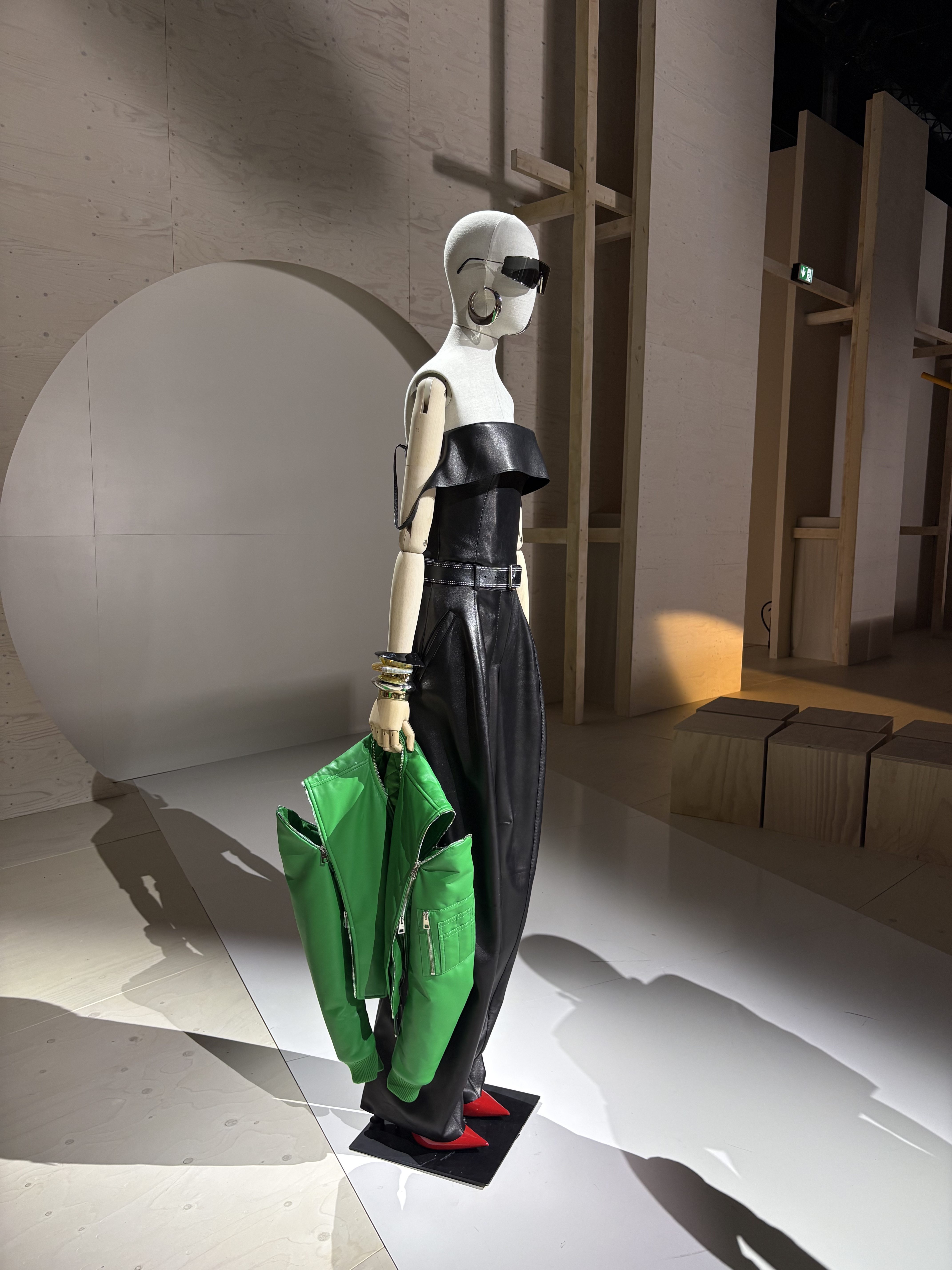
Leather is the collection’s backbone, and Burton plainly doesn’t want it to read as one note. It appears as a biker bodysuit, a strapless jumpsuit with wide legs, a vivid green strapless dress with an asymmetric hem, and navy jeans that pass for denim until you look twice. The leather trench with a cape-like shoulder and its beige cotton twin amount to the same coat in two moods. The repetition is deliberate and it works: the collection keeps showing you one idea in a new material.
The turn toward black, and the colour that cuts through it
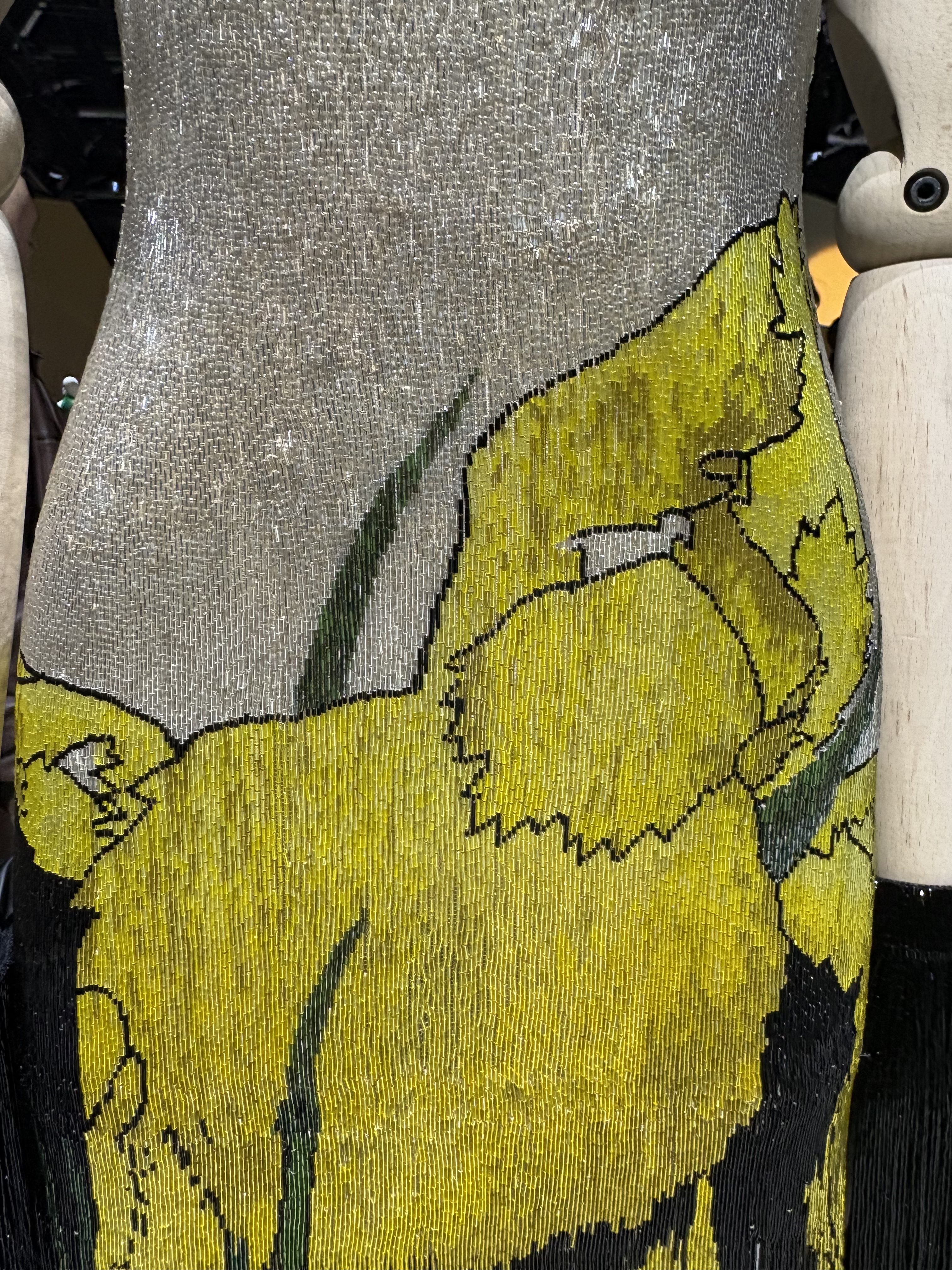
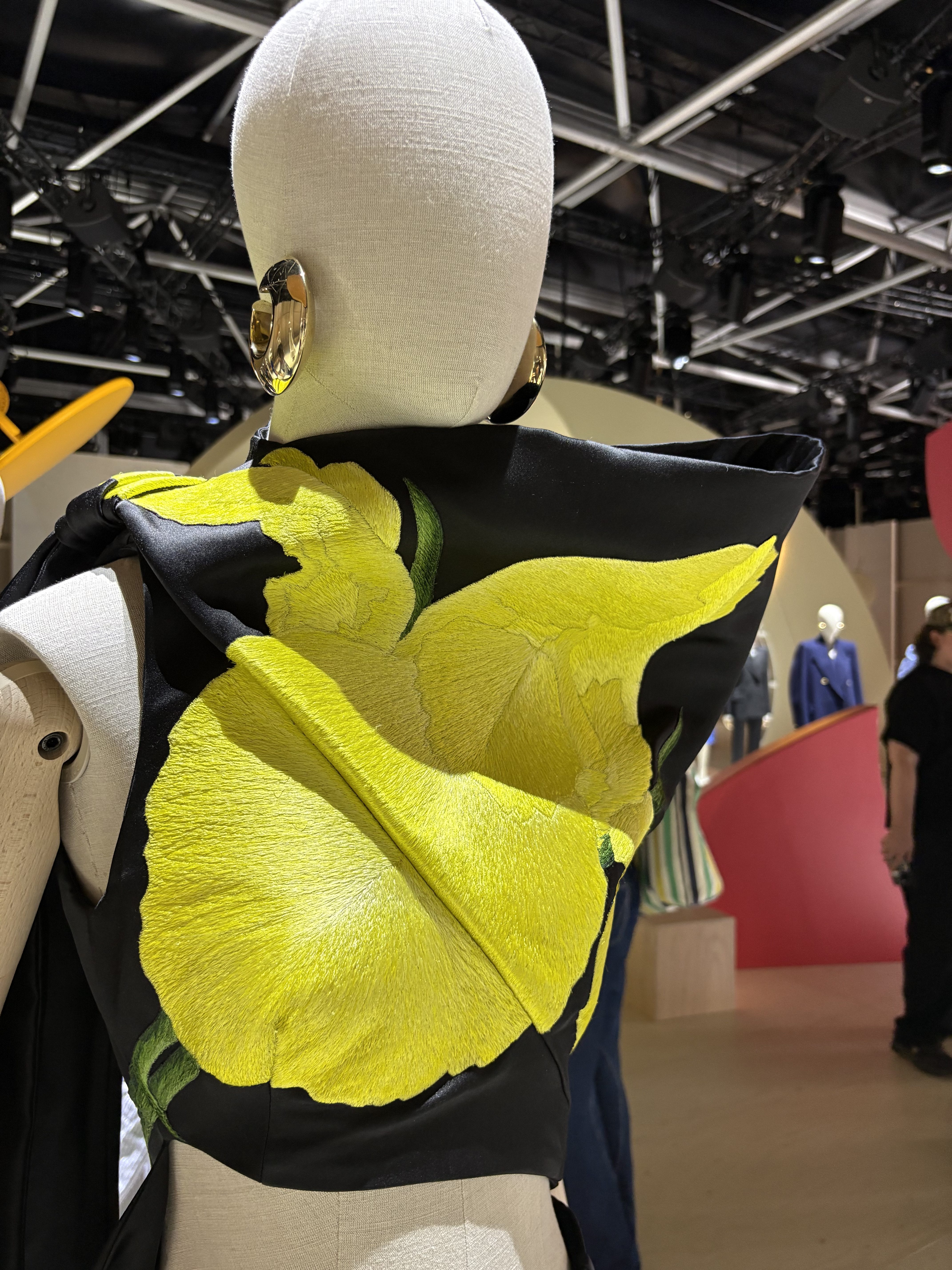
The first half of Burton’s collection is bright: red, cobalt, pink satin, a hard primary green. Past the midpoint the palette narrows, and the final third is mostly black, white and one very specific chartreuse. That yellow-green keeps surfacing like a signature, in the beaded fringe and floral panel of look 50, the oversized bloom on a cropped top in look 53, and the pom-pom shoes that start earlier in red and blue in looks 25 and 26 and arrive here in citrus in look 49 and 53. It’s an unexpectedly effective way to keep a collection of this size from drifting.
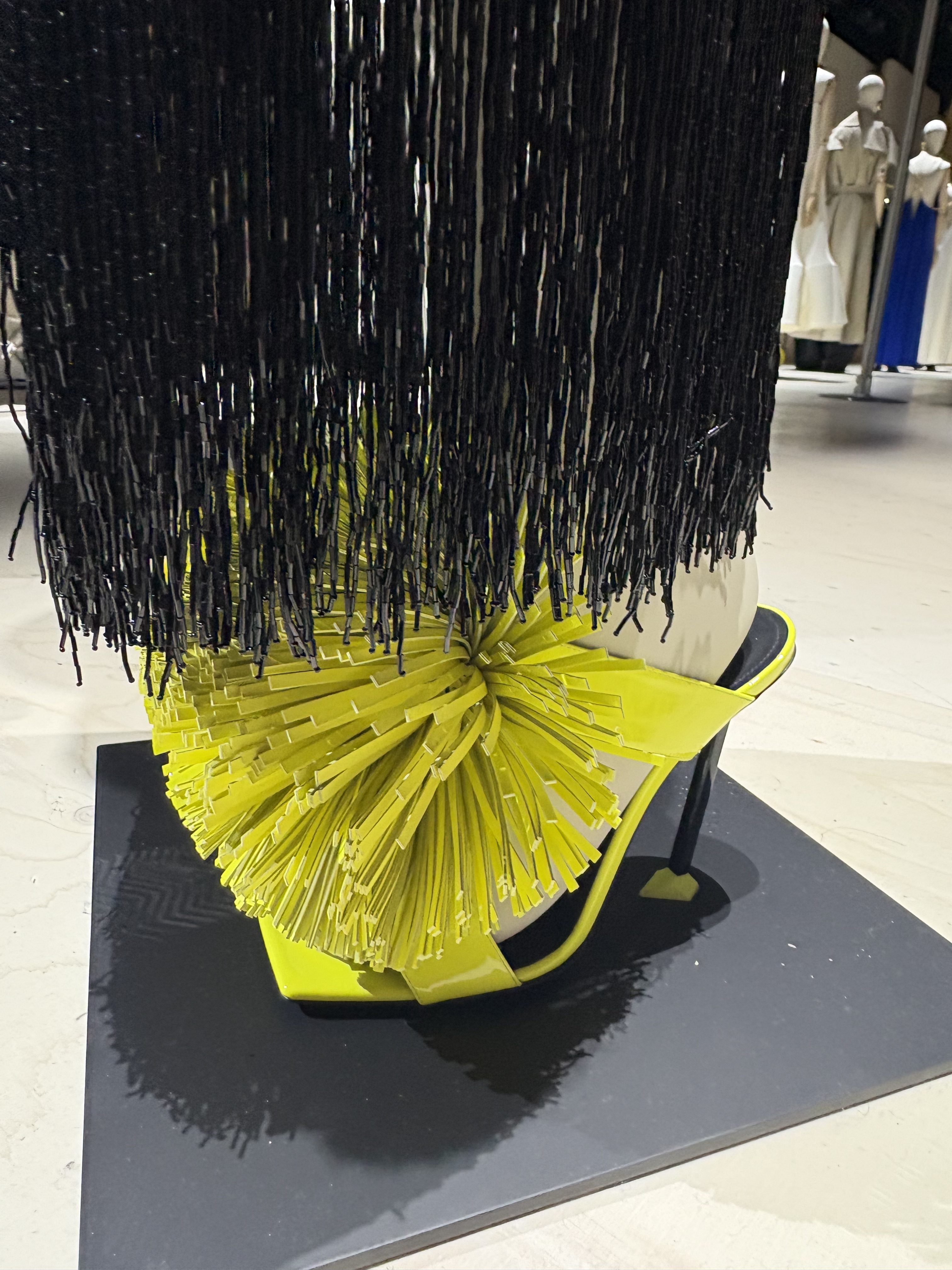
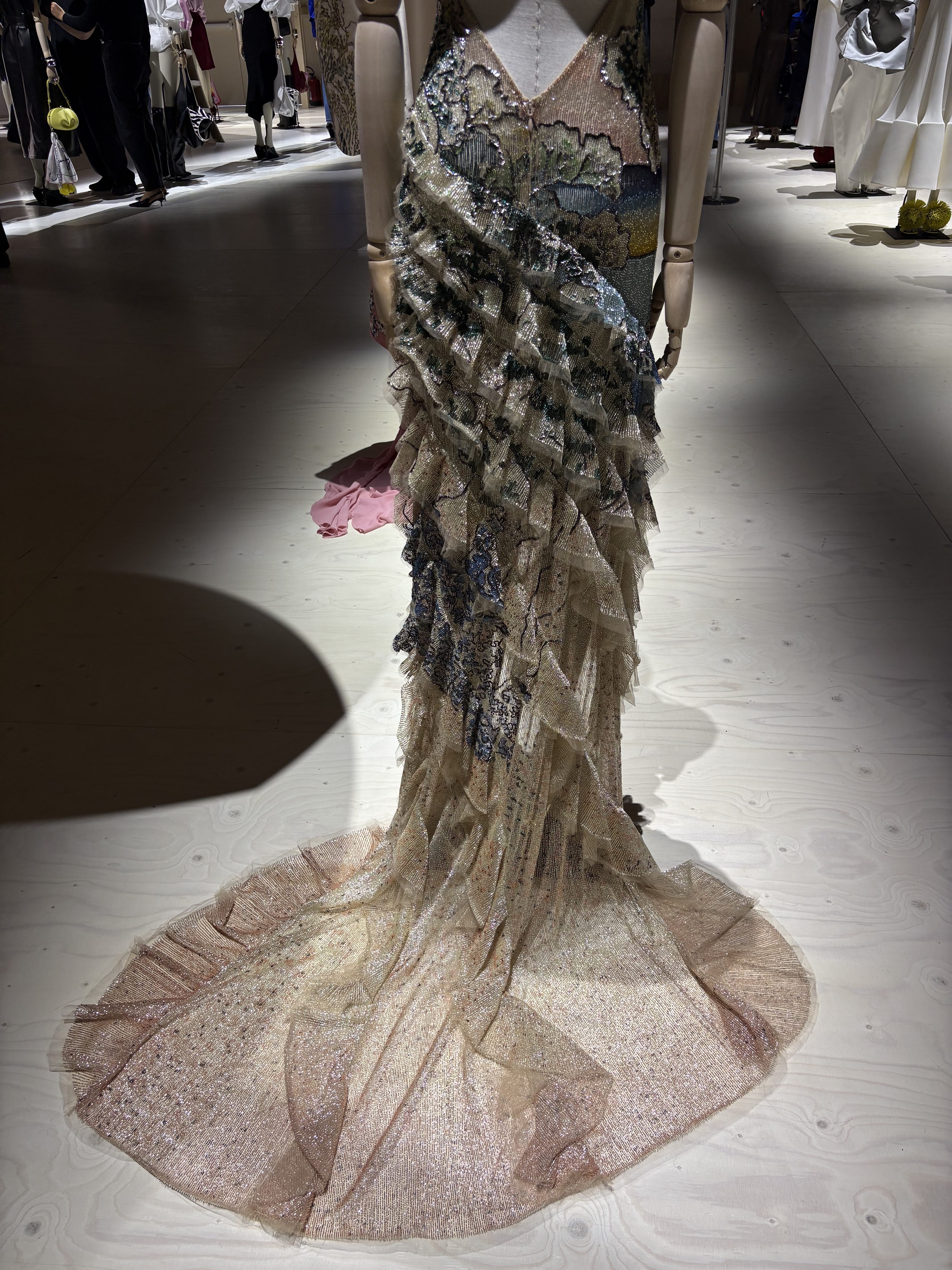
The eveningwear is where Burton lets the McQueen side out. A white slip gown strung with a wire collar and a cobalt strapless dress with gold wire arcing off the shoulders are the most delicate things in the show, and the odd, appealing choice is that they look almost fragile next to everything else. The sheer white dress with a stiffened, cantilevered skirt is the collection’s one real flirtation with couture. Then the red and green fringe dresses bring in movement and noise, and the black beaded fringe dress with glove is the most traditionally glamorous thing on the runway.
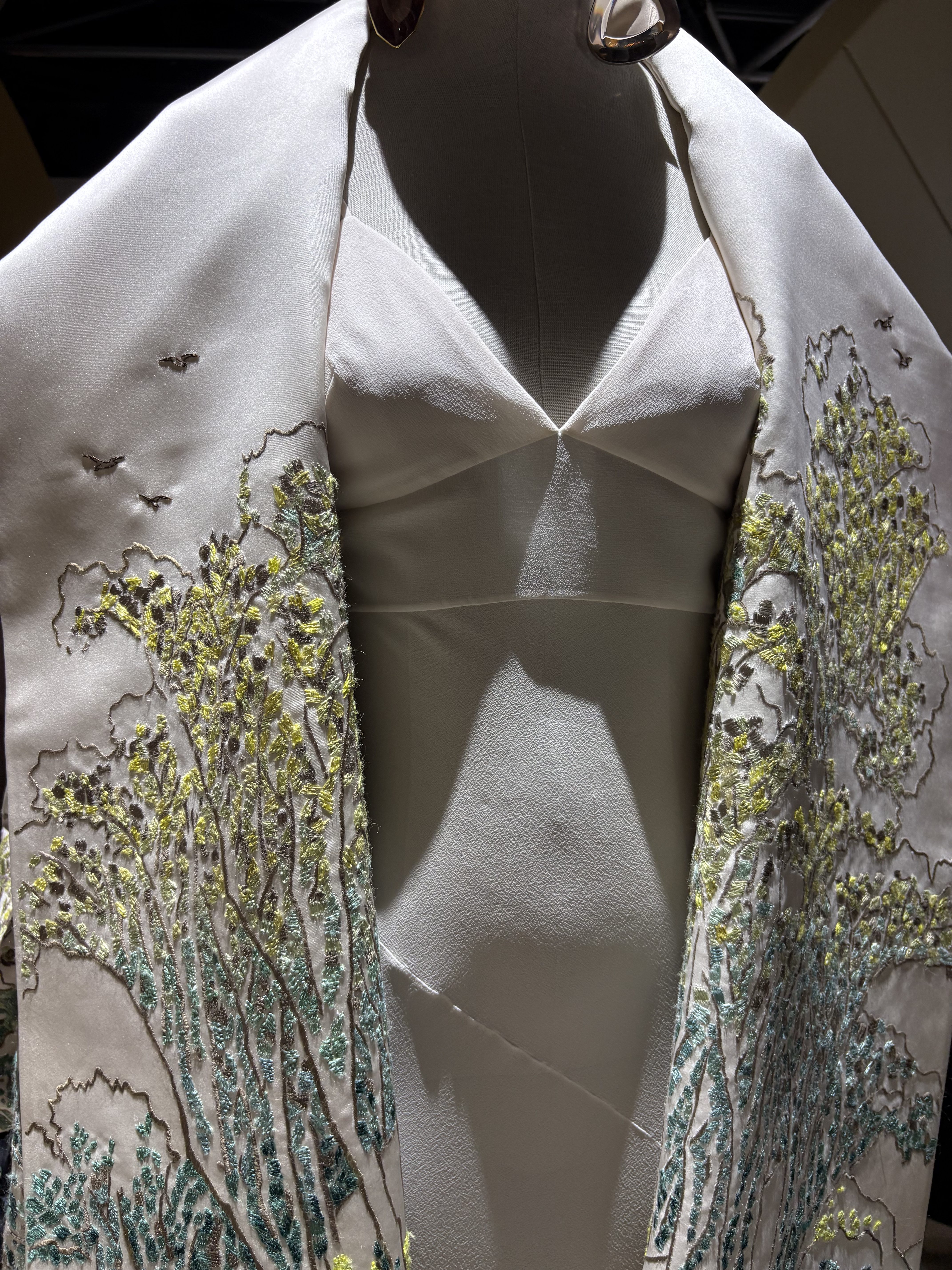
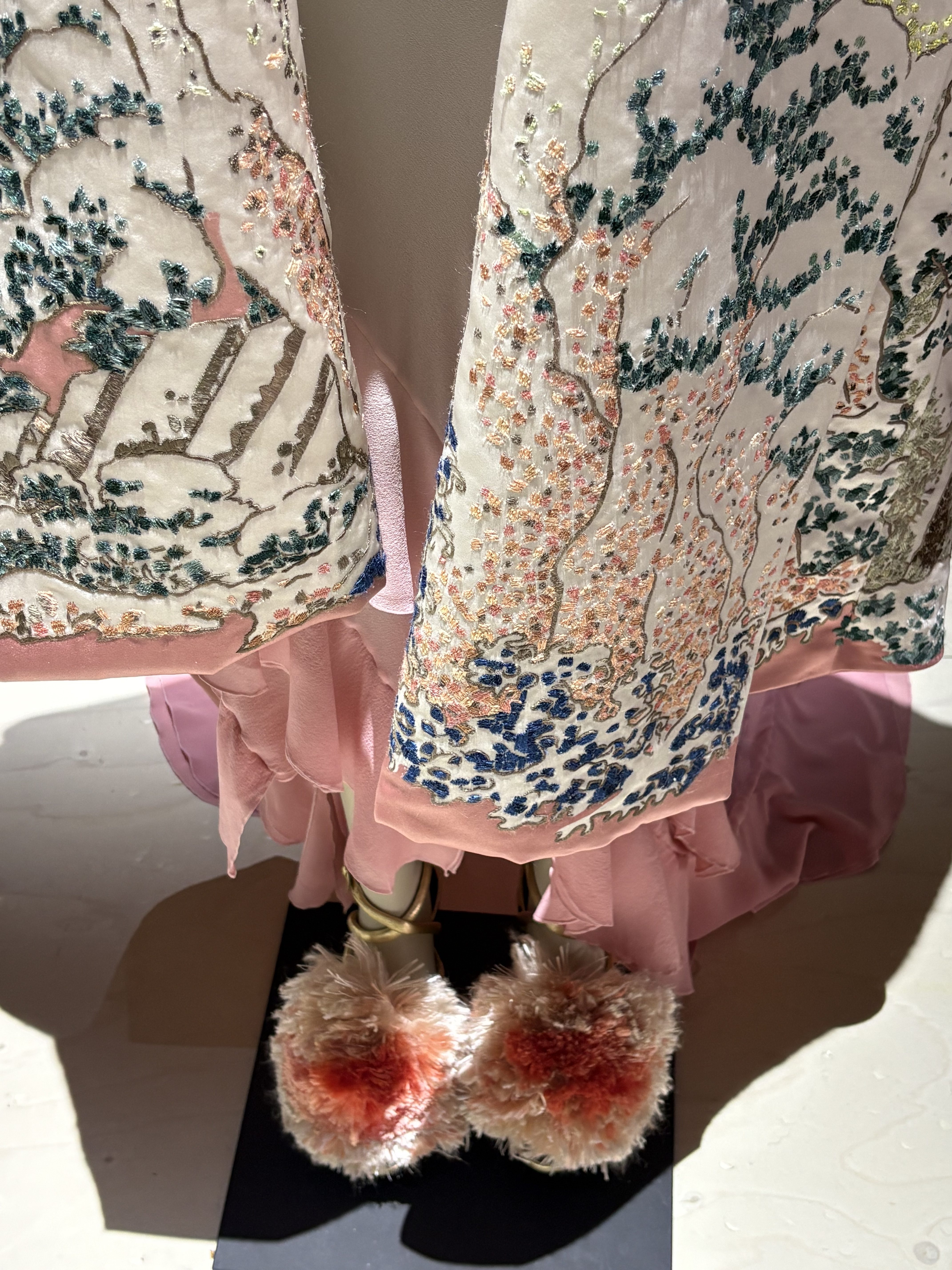
The finale, a pale pink robe embroidered with a wave landscape over a sheer slip is deliberately excessive after so much control. It takes up space, which, in a season of clingy minimalism, is its own statement.
Who this is for
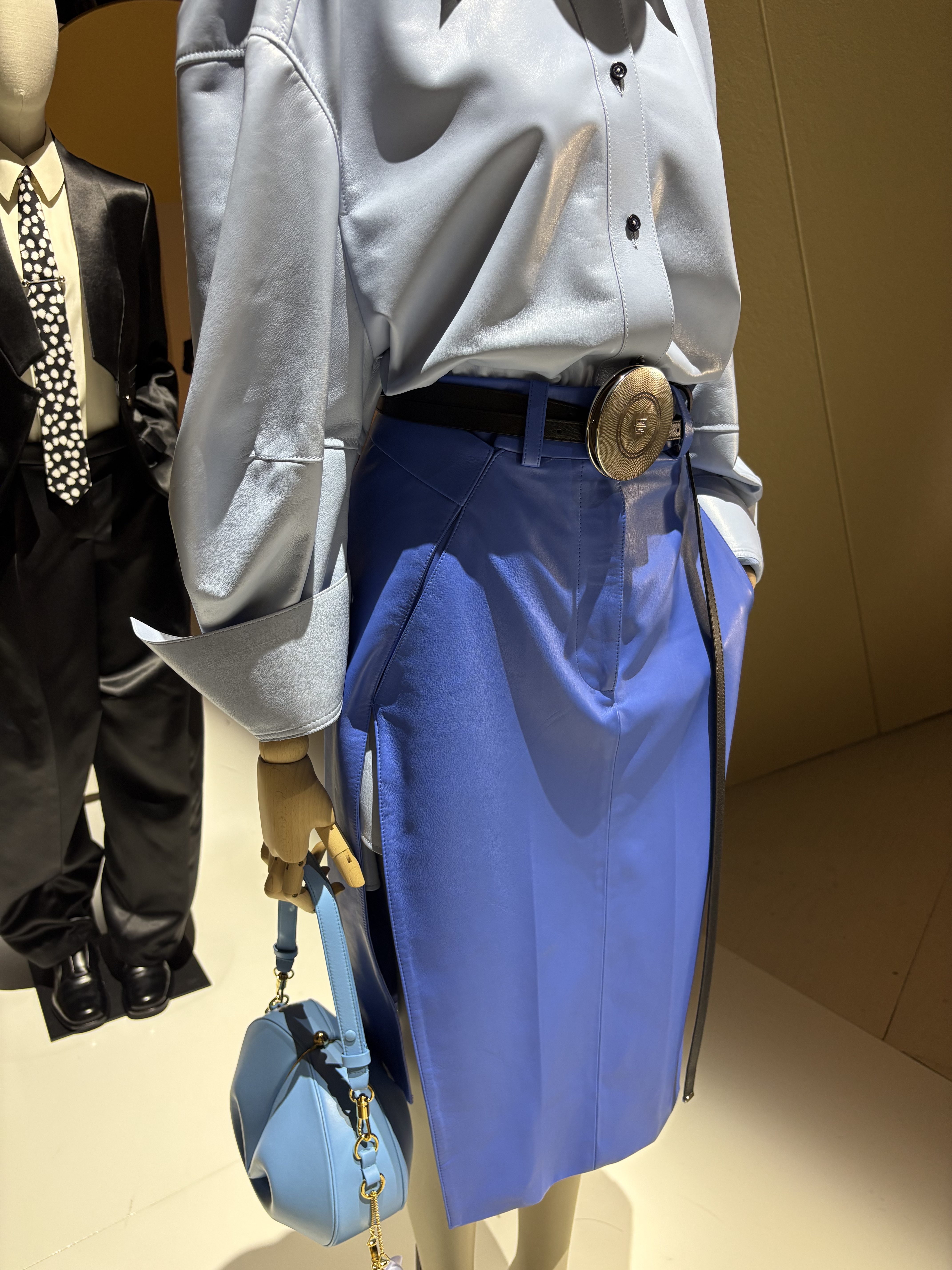
The woman emerging from these clothes has a full life and little patience for costume changes. She wears a satin trouser suit with a polka-dot tie and a leather halter over wide black trousers with equal conviction. The collection’s tailoring suggests someone who wants authority without looking corporate, and the leather and fringe suggest she wants to be noticed when the day ends. Burton’s own language points the same way. Burton’s Givenchy wardrobe built for “perpetual motion” implies pieces that shift across a day, and the clothes support that.
The edgier styling choices, like the mirrored-visor sunglasses on several models and the stiletto-and-zip boots, add a slightly armored attitude without turning the clothes into a costume. It feels more like protective styling than a point of view, and the collection is stronger for not over-explaining it.
The verdict
Is this a turning point? Probably not, and that’s the compliment. A fourth season is often when a designer’s vision stops being a proposal and becomes a house style, and here Burton’s version of Givenchy looks settled: sharp tailoring that has learned to relax, leather used as a wardrobe staple, bursts of saturated color, and evening clothes that prefer volume and movement over restraint. What’s missing is a single image that will define the era; the finale comes closest, but it’s more spectacle than thesis.
It’s a Givenchy that looks like it knows what it is and, more unusually, who might actually wear it.