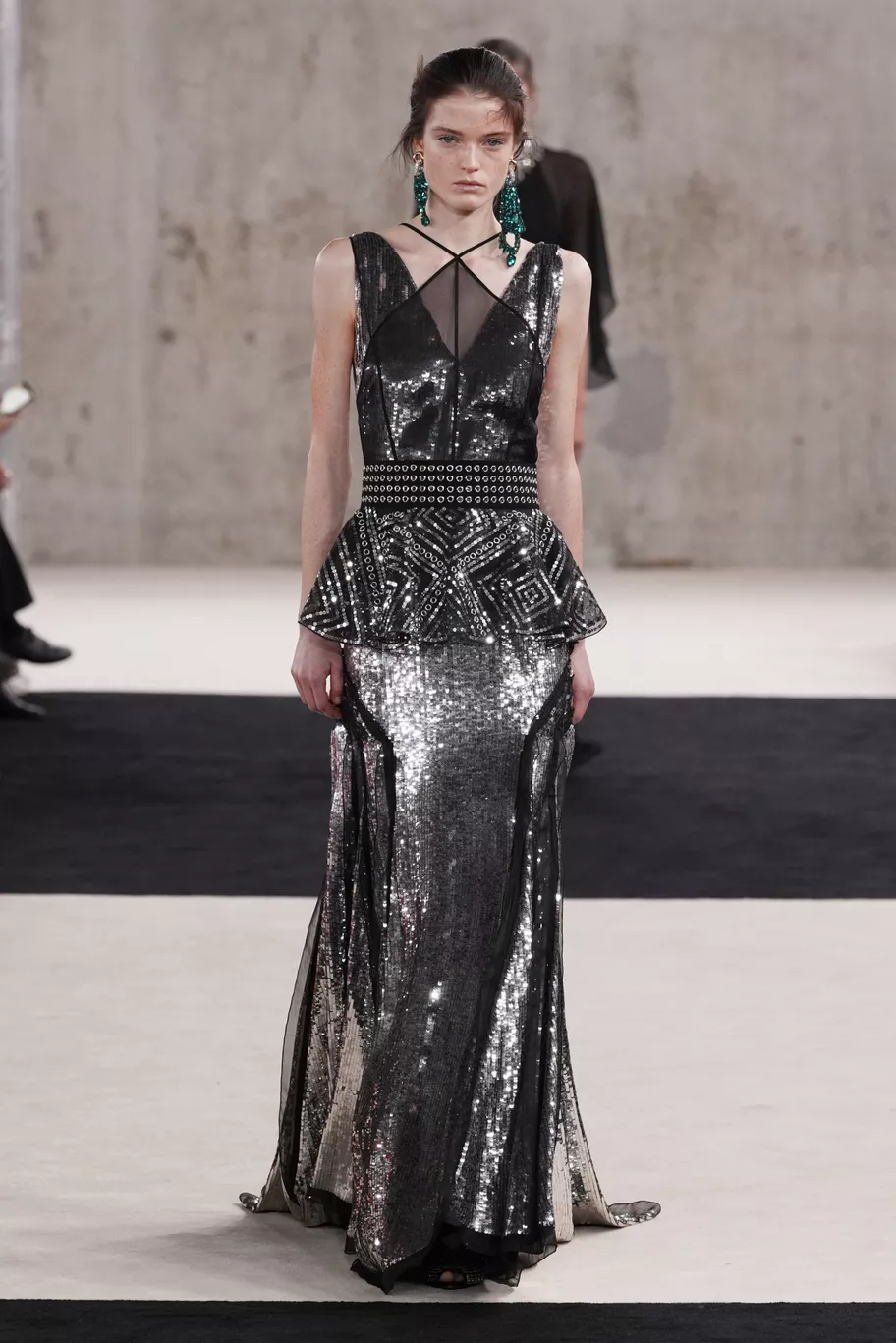
How do you inherit a legend without becoming its ghost?
Every great fashion house has a ghost.
Lanvin has several.
Jeanne is in the archive. Alber Elbaz is in the memory. The twentieth century is in the walls. And Peter Copping, for Spring/Summer 2027, walks straight into the room.
The question is not whether Lanvin can reinvent itself.
The question is whether it can finally become itself again.
Copping’s answer is neither nostalgic nor revolutionary. It is more difficult than that: inheritance.
This is a collection about what happens when a designer enters a house whose history is already louder than most designers will ever be. Lanvin does not need another identity invented from scratch. It needs to understand what, after more than a century, still belongs to it — and what should finally be left behind.
That distinction matters.
Because Lanvin has already experienced one of fashion’s great modern resurrections. Under Elbaz, from 2001 to 2015, the house became more than a name or an archive. It became a personality. The draping, the movement, the softness, the extraordinary cocktail dresses, the almost physical sensuality of the clothes: Elbaz did not simply quote Jeanne Lanvin. He translated her emotional intelligence into a contemporary language.
He made Lanvin feel alive.
That is precisely why his shadow remains so large.
After Elbaz, the house entered a succession of creative chapters that never quite settled into a single, convincing grammar. Lanvin retained its history, its Paris address, its codes, its name; but identity is not the same thing as heritage. A museum can preserve an identity. A fashion house has to produce one.
Copping seems to understand this distinction.
Rather than fighting Elbaz’s ghost, he refuses to perform the exorcism.
He lives with it.
And that is where Spring/Summer 2027 becomes interesting.
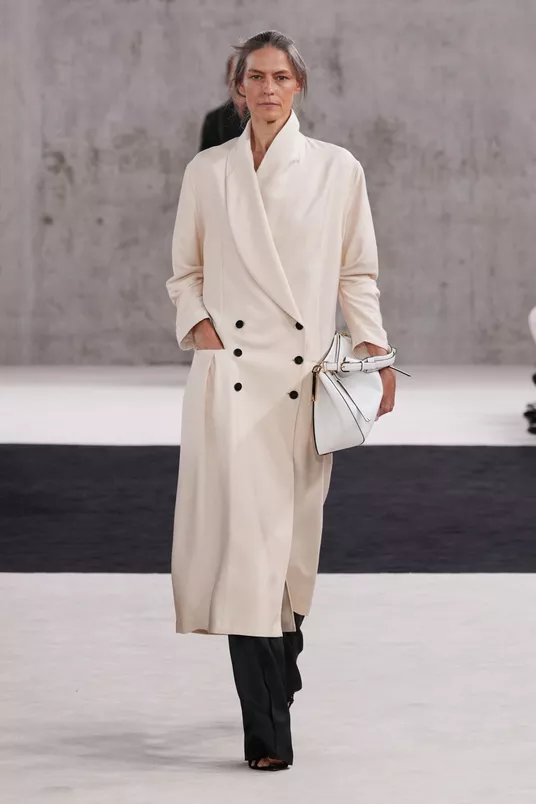
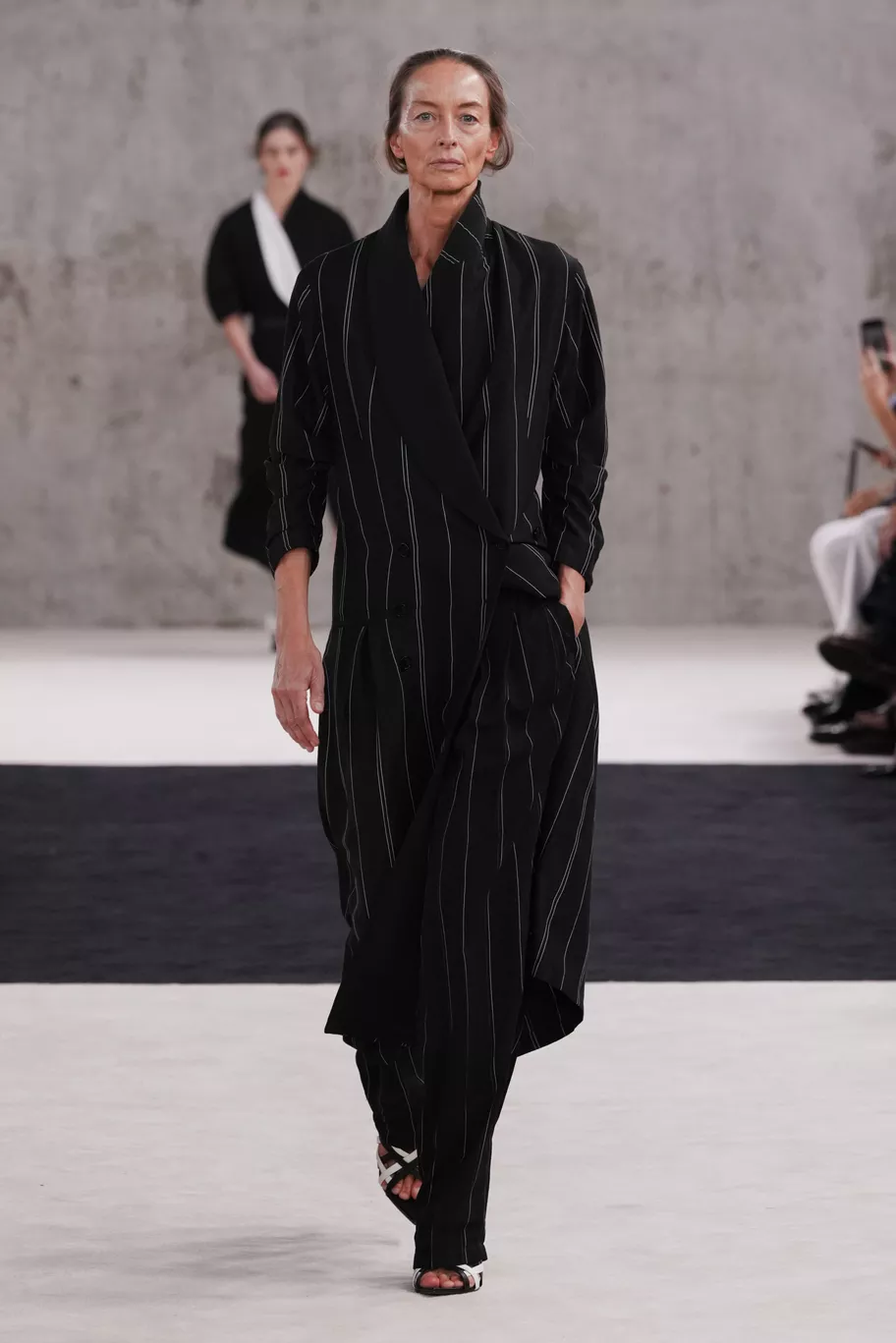
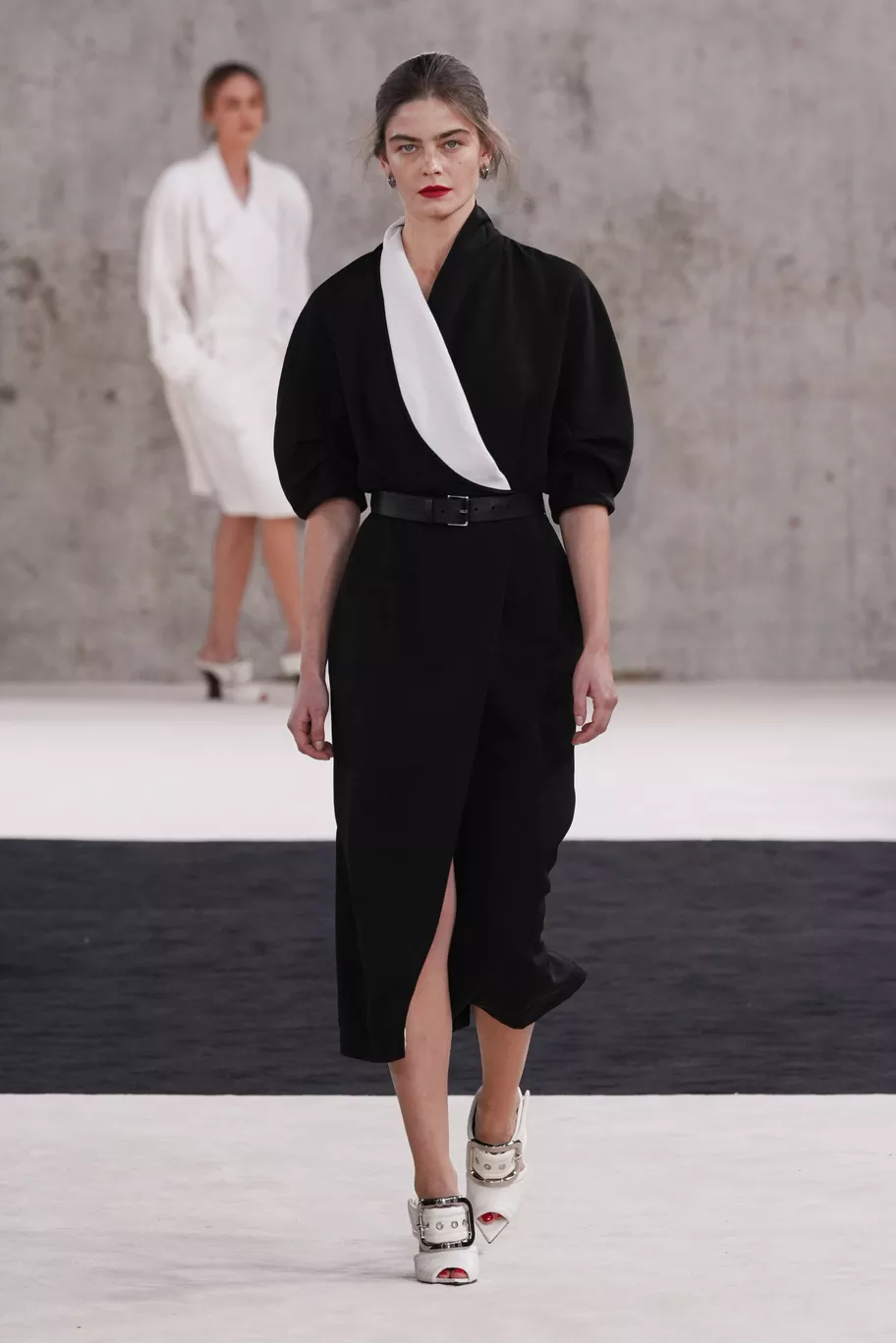
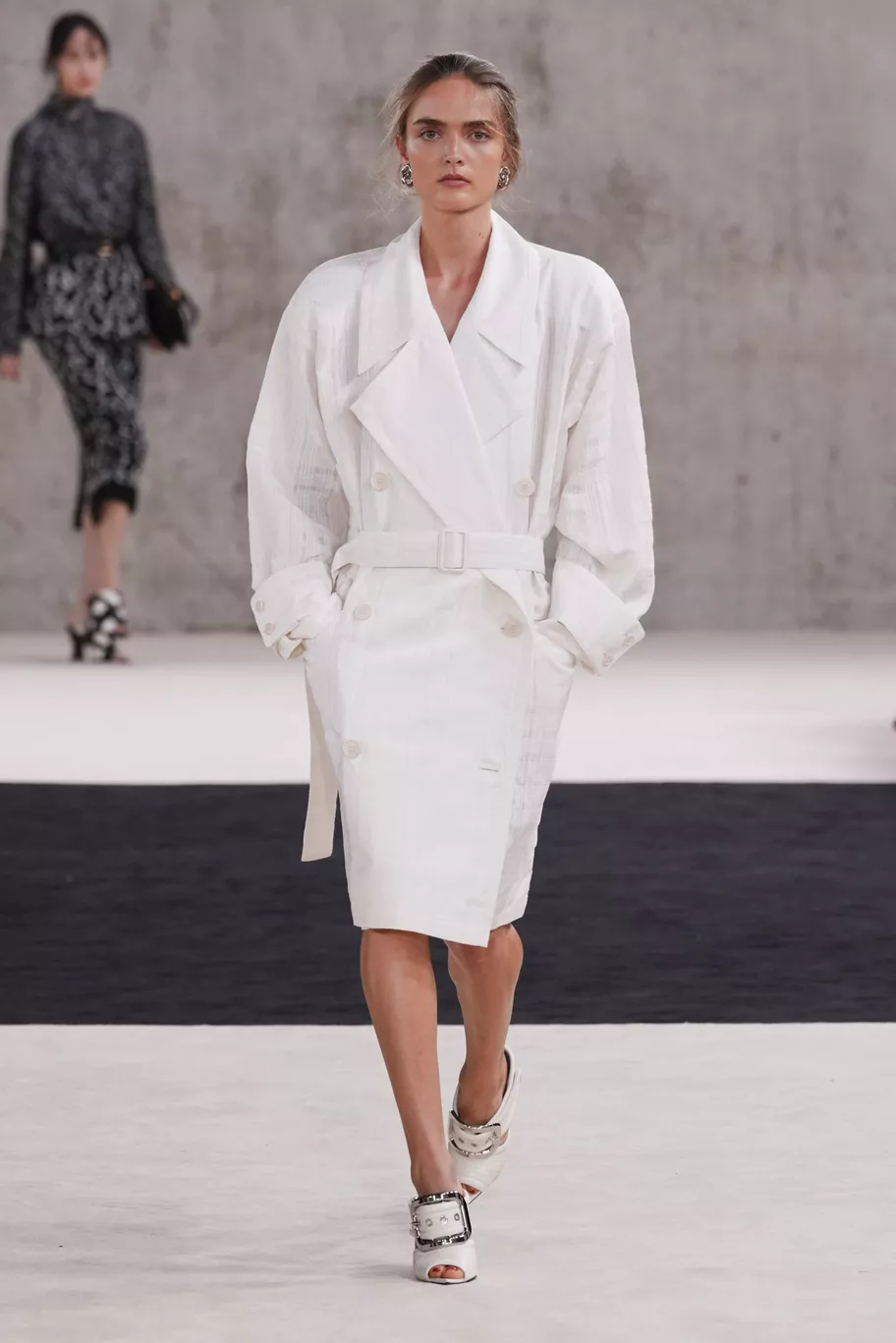
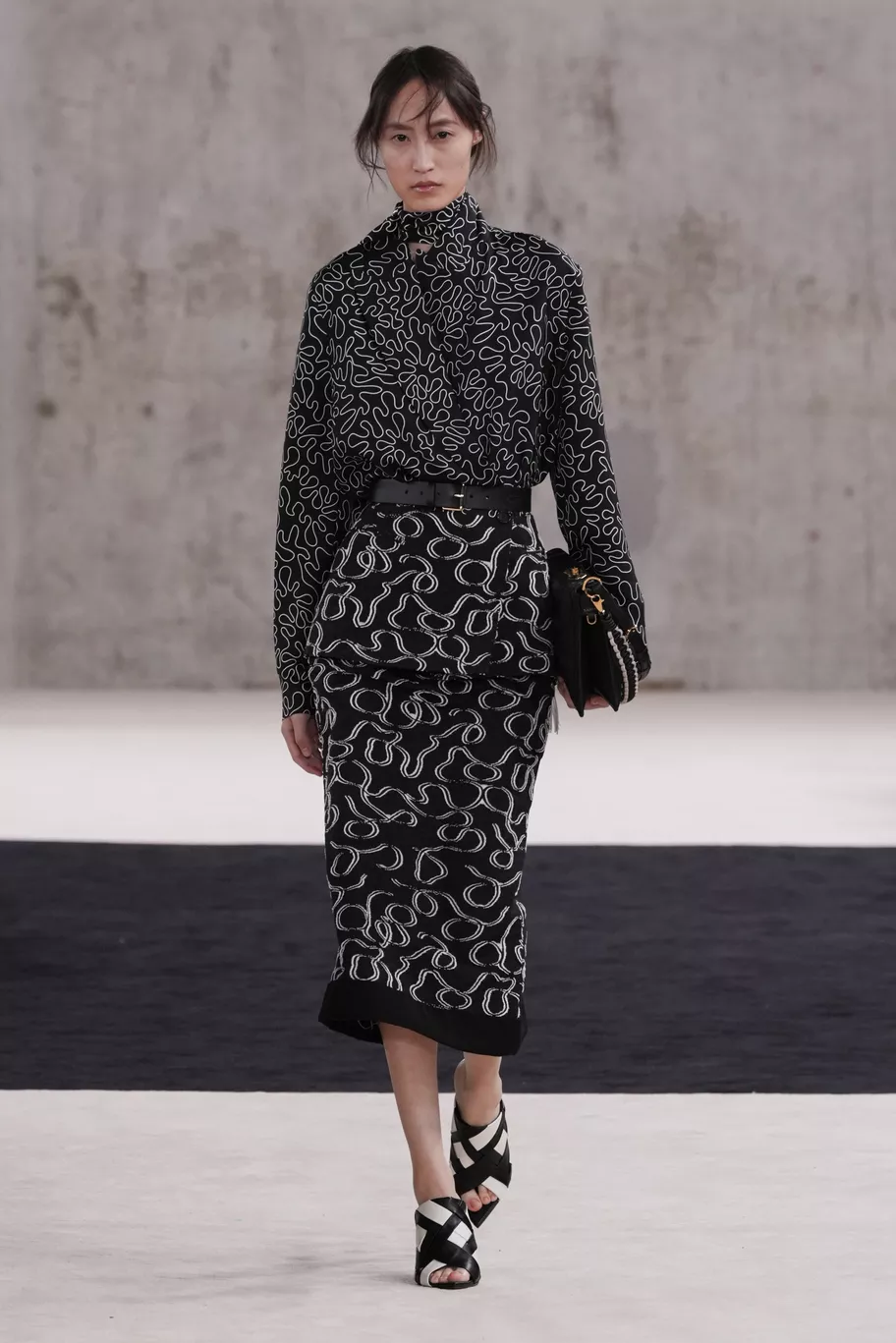
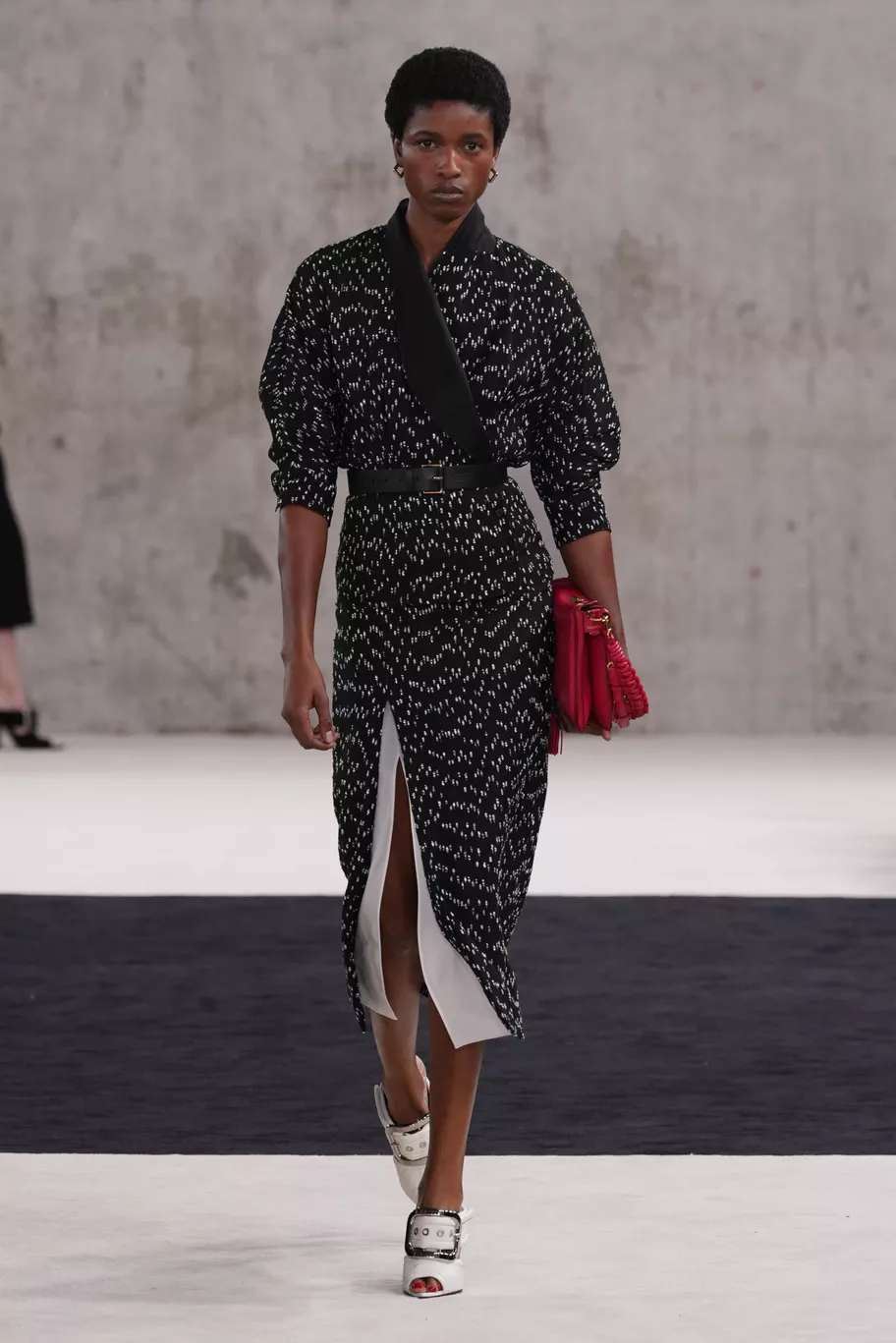
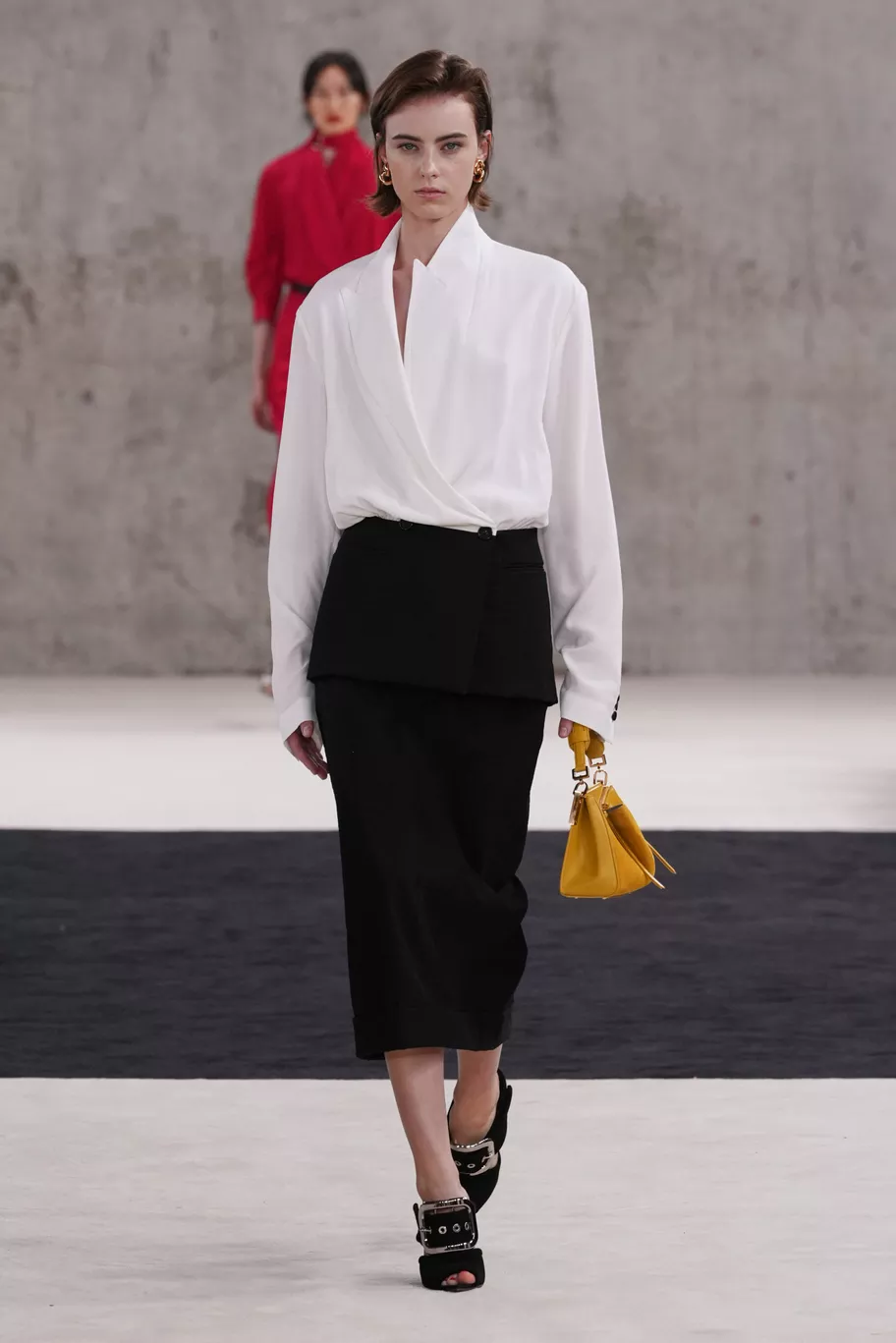
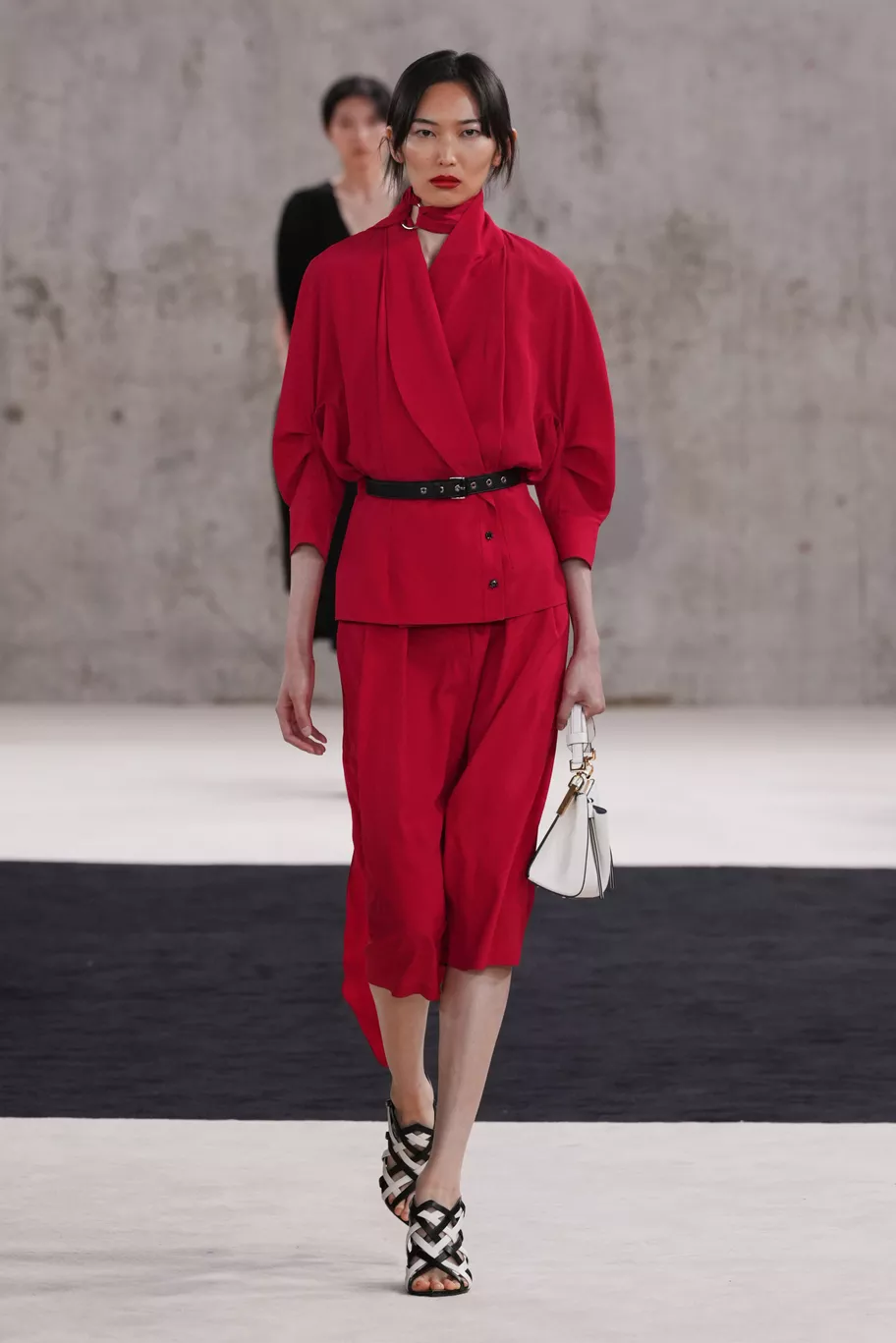
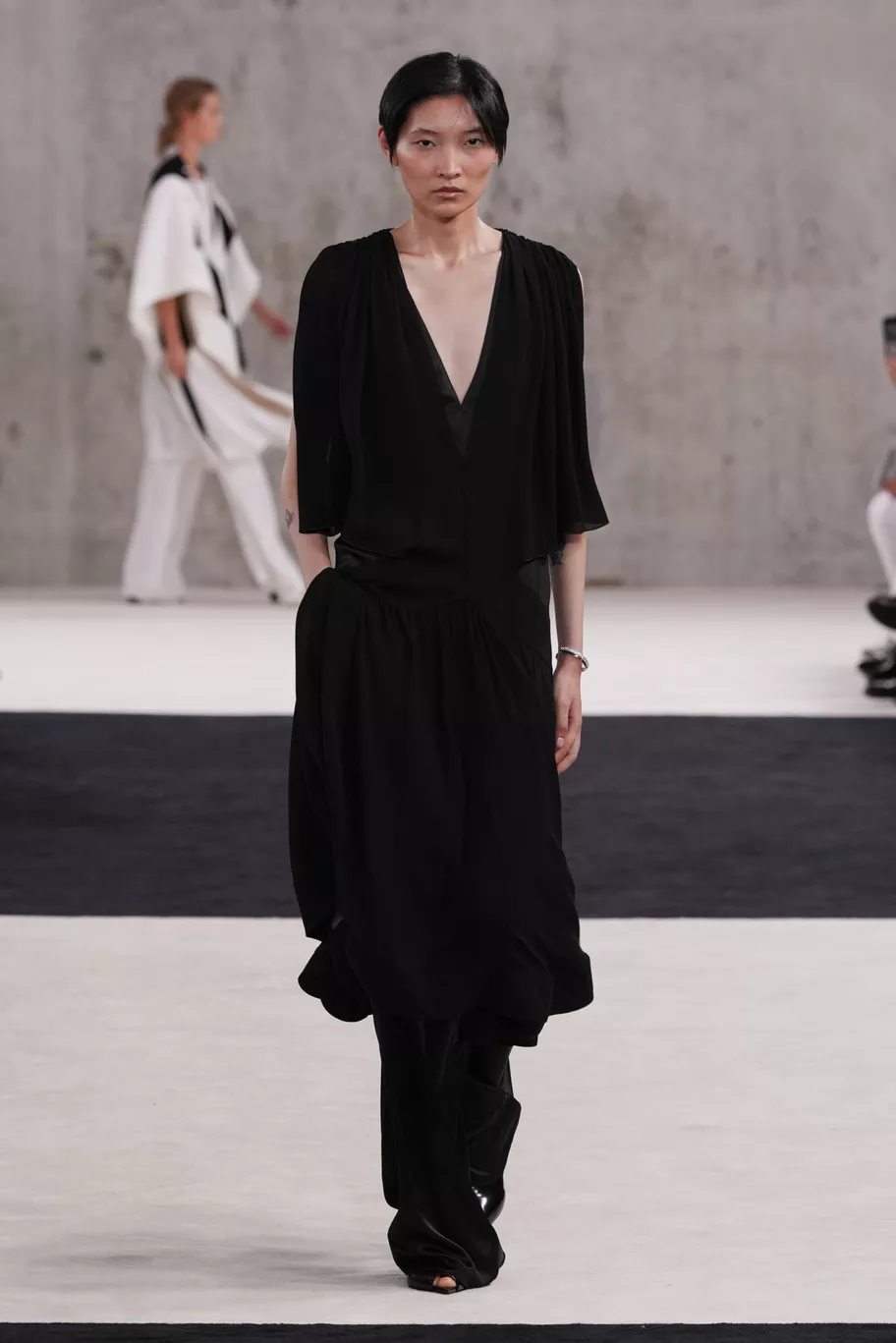
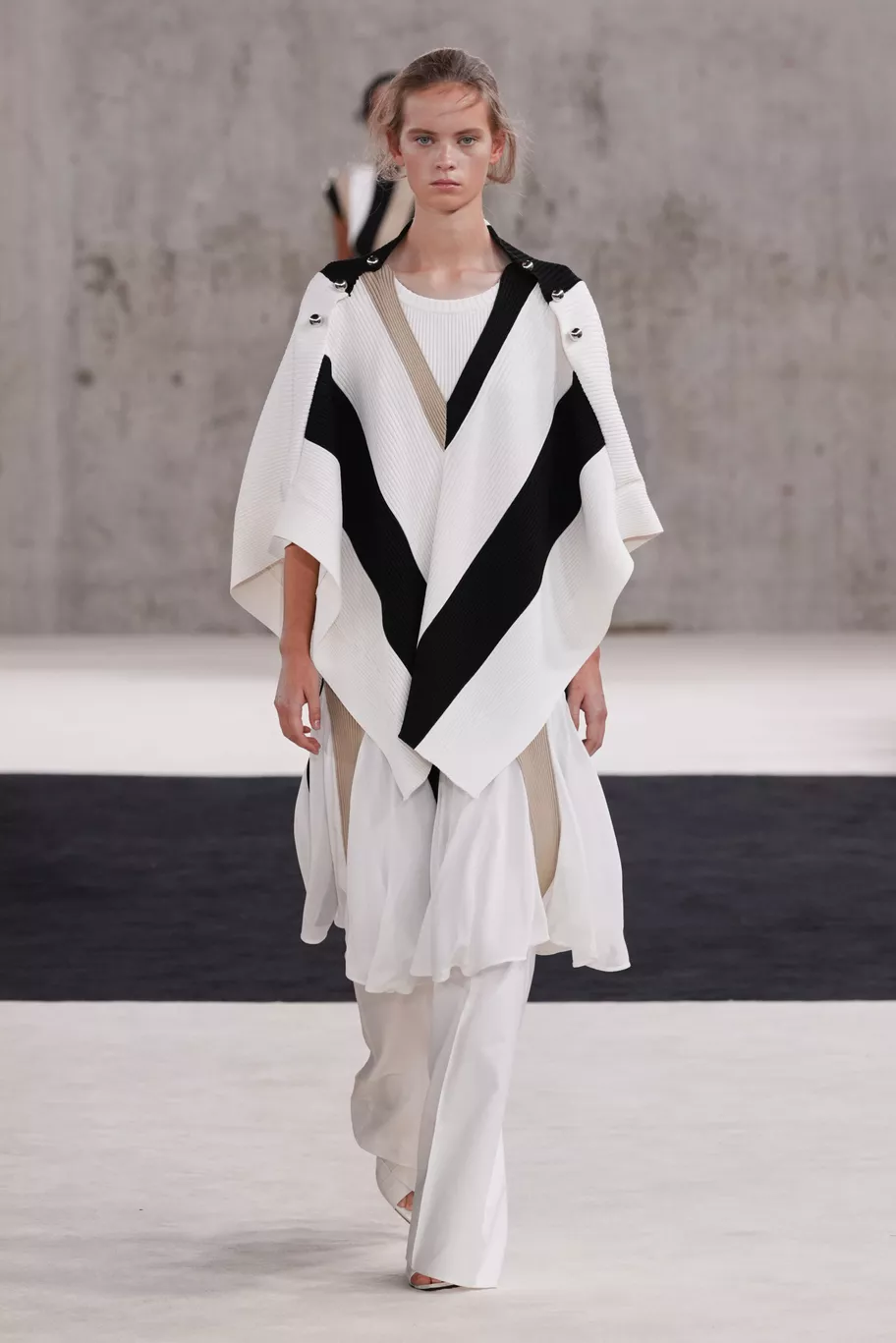
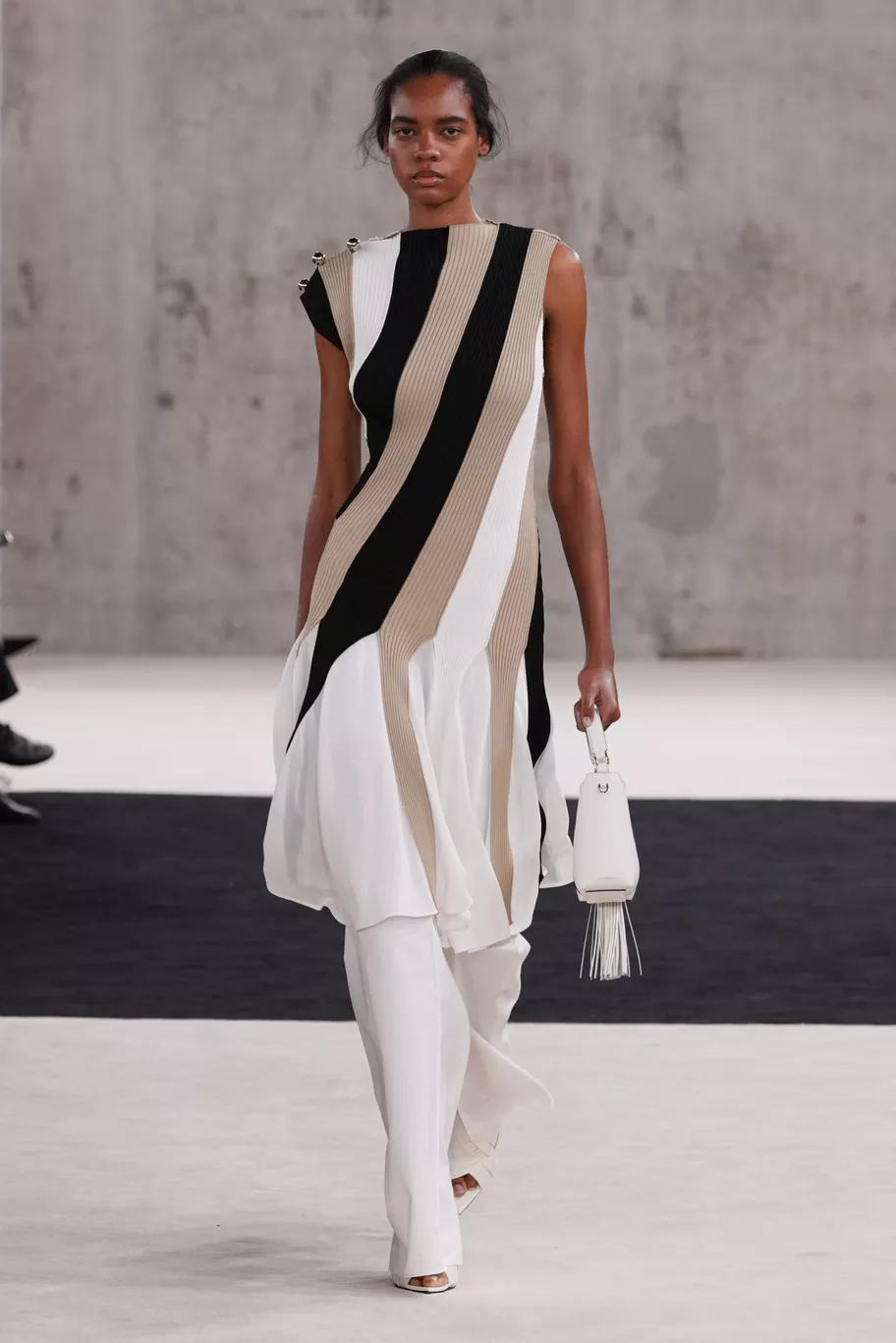
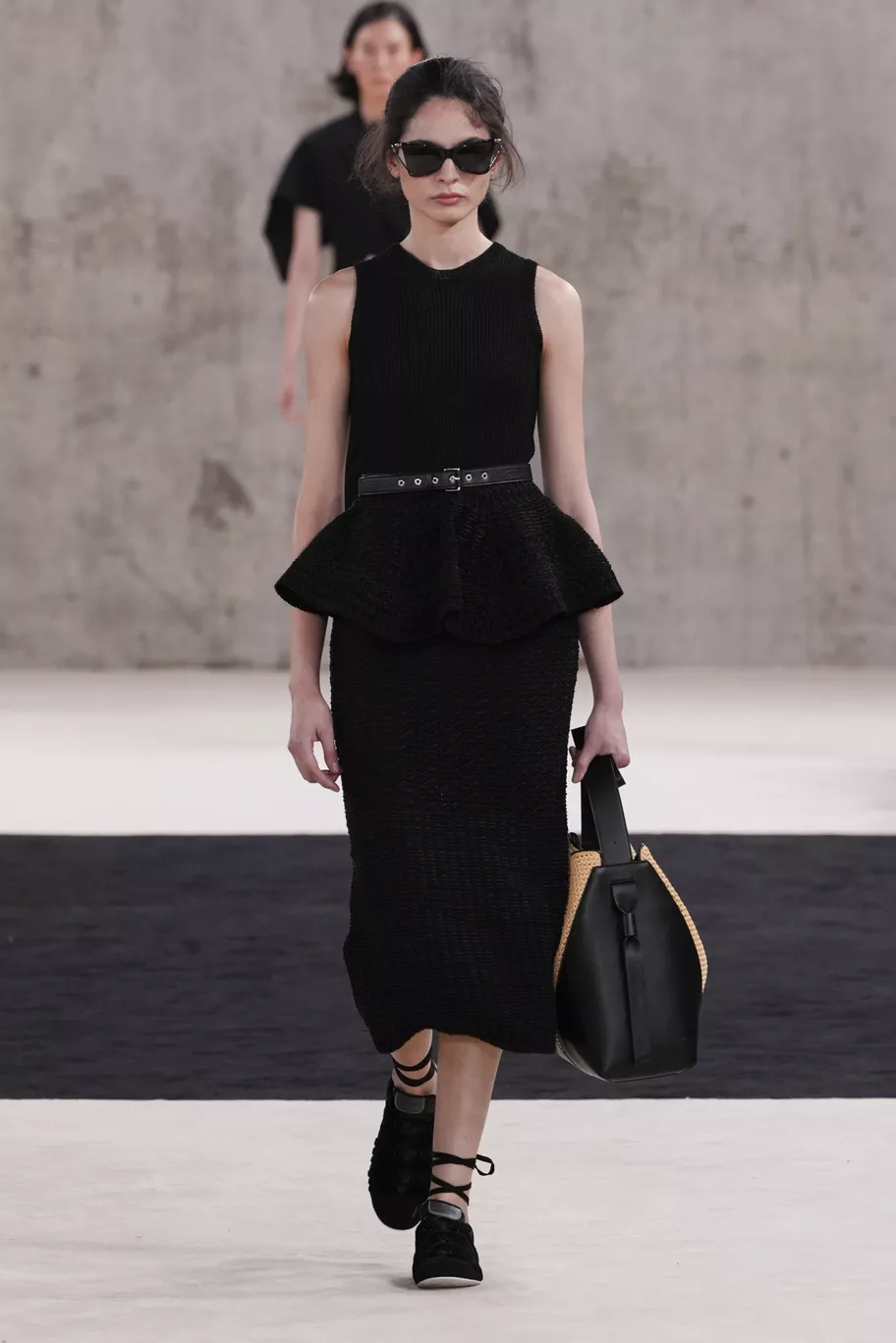
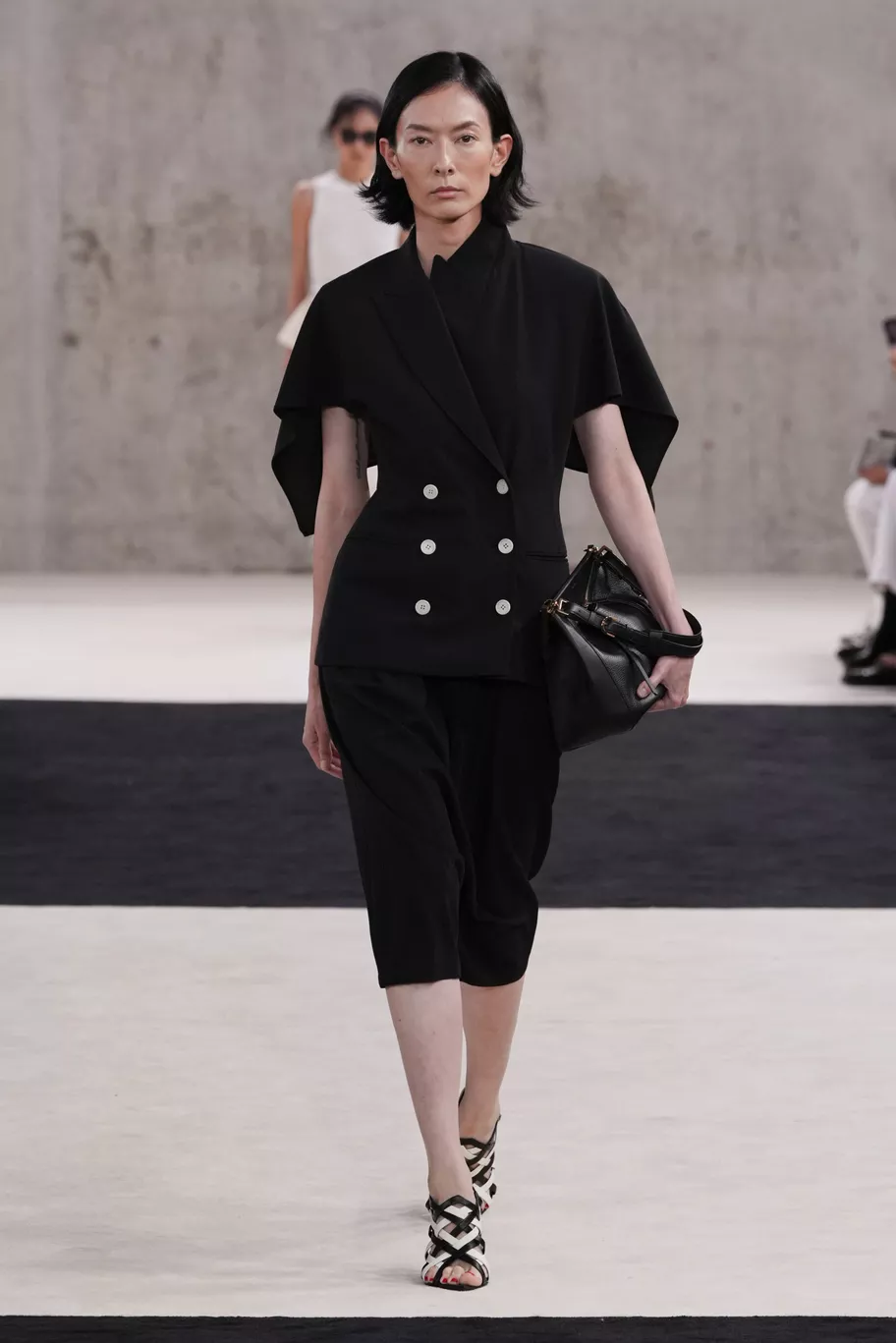
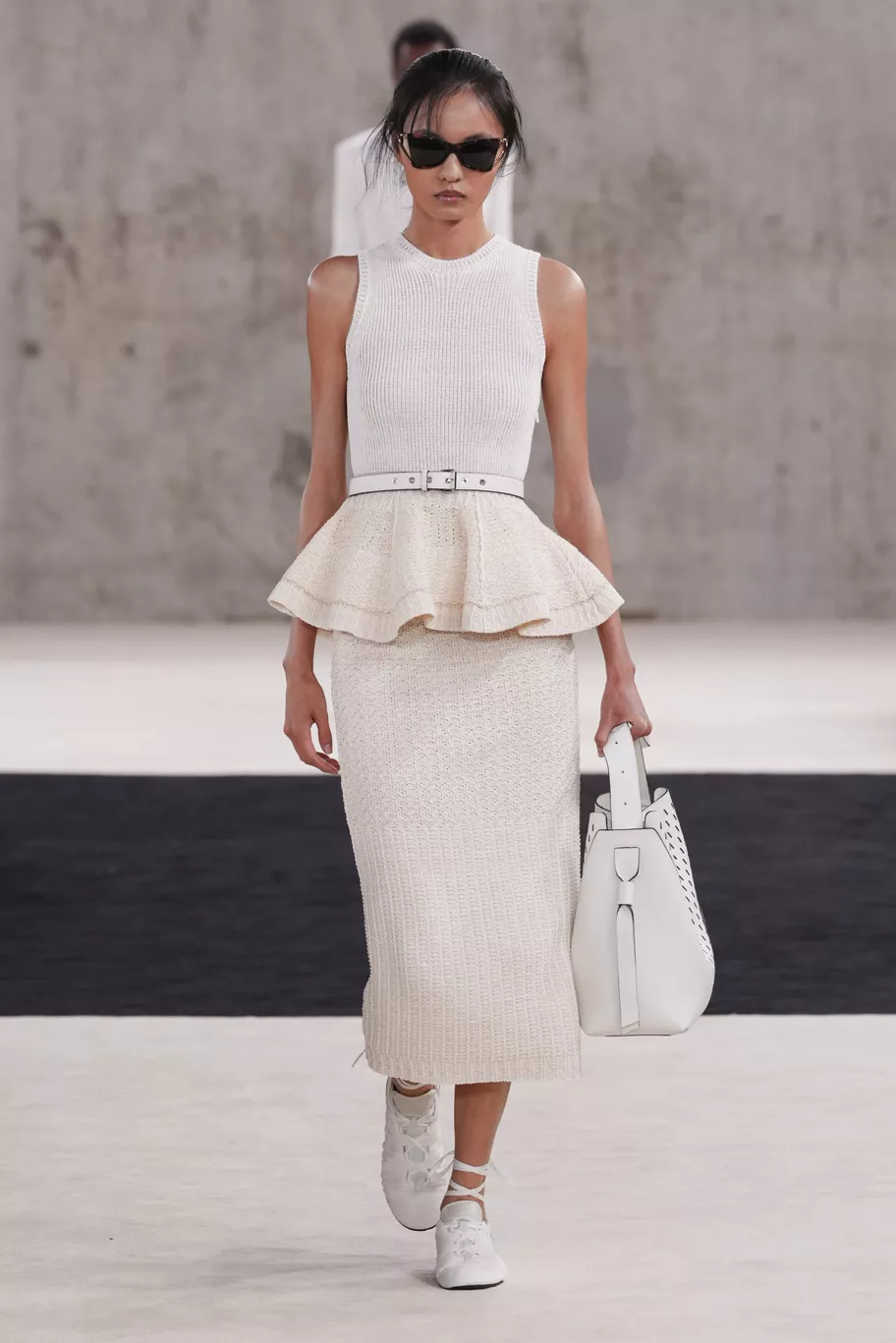
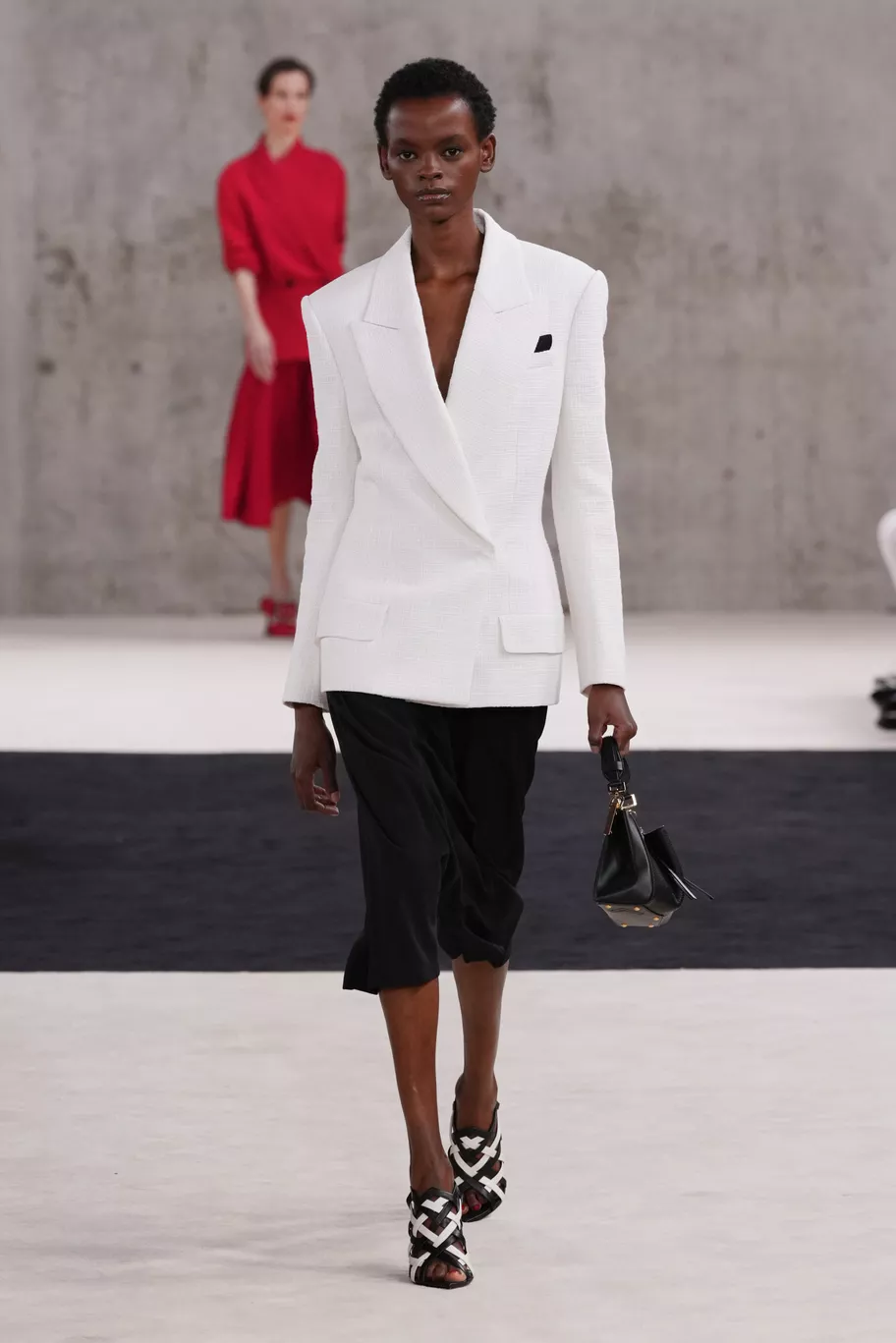
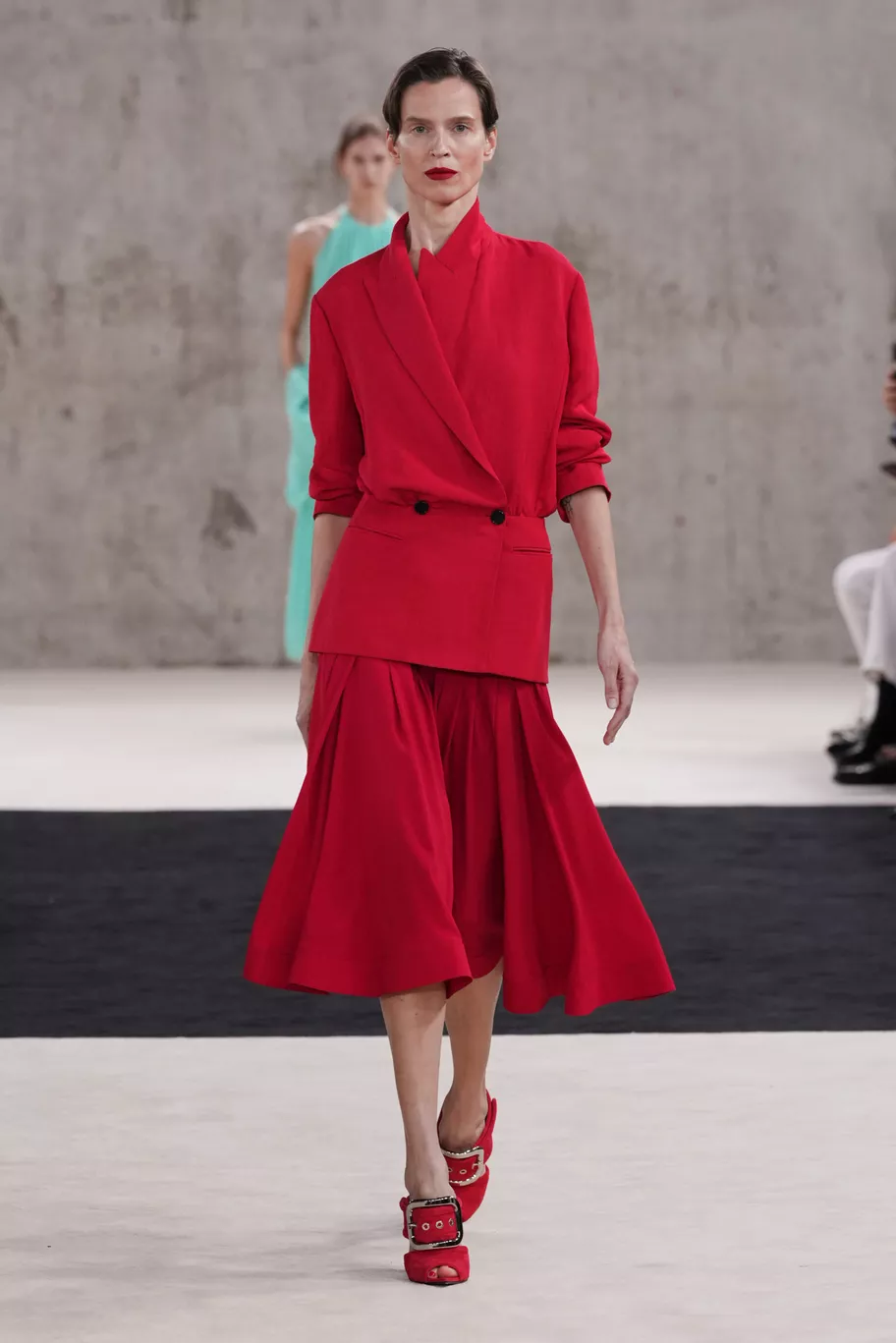
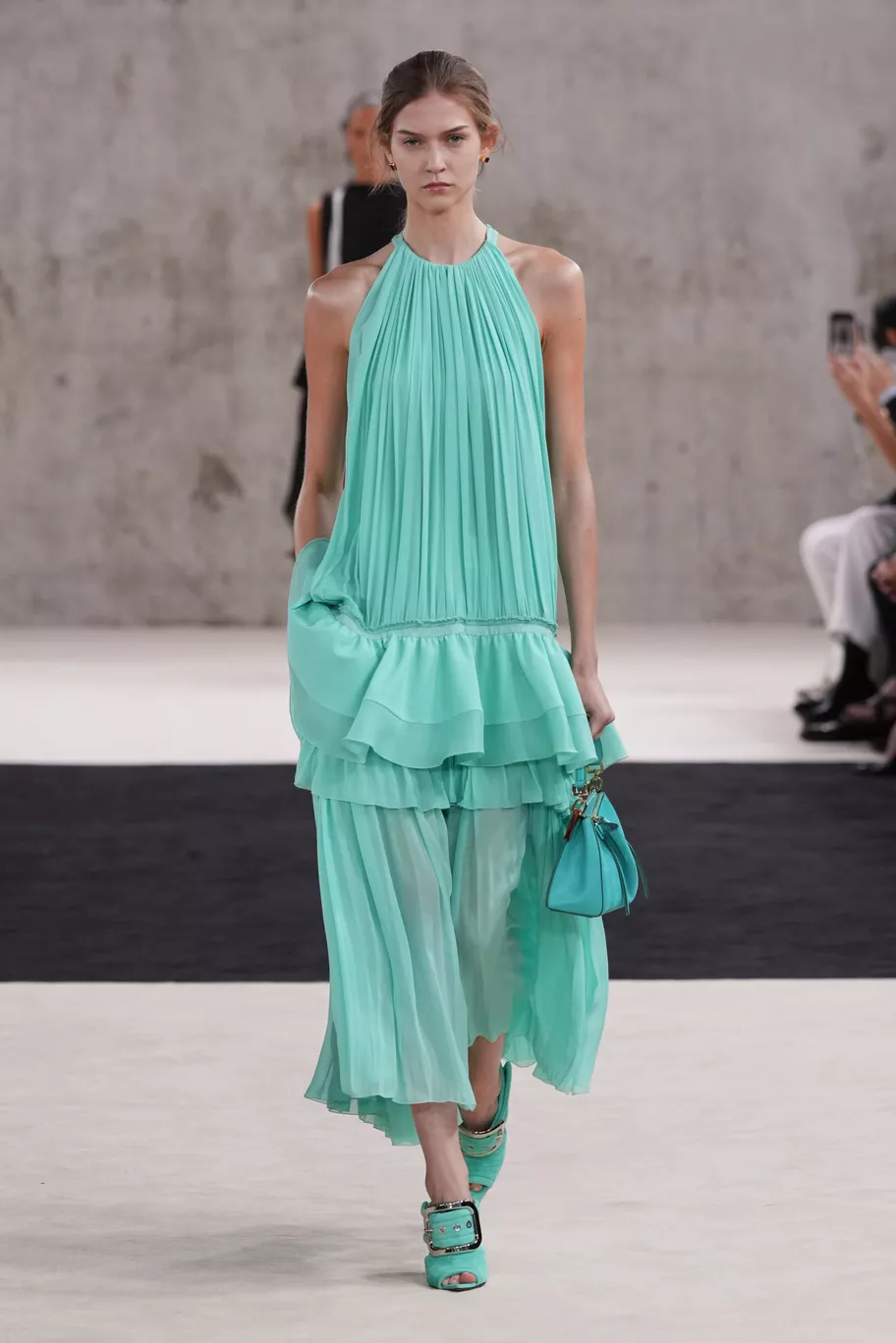
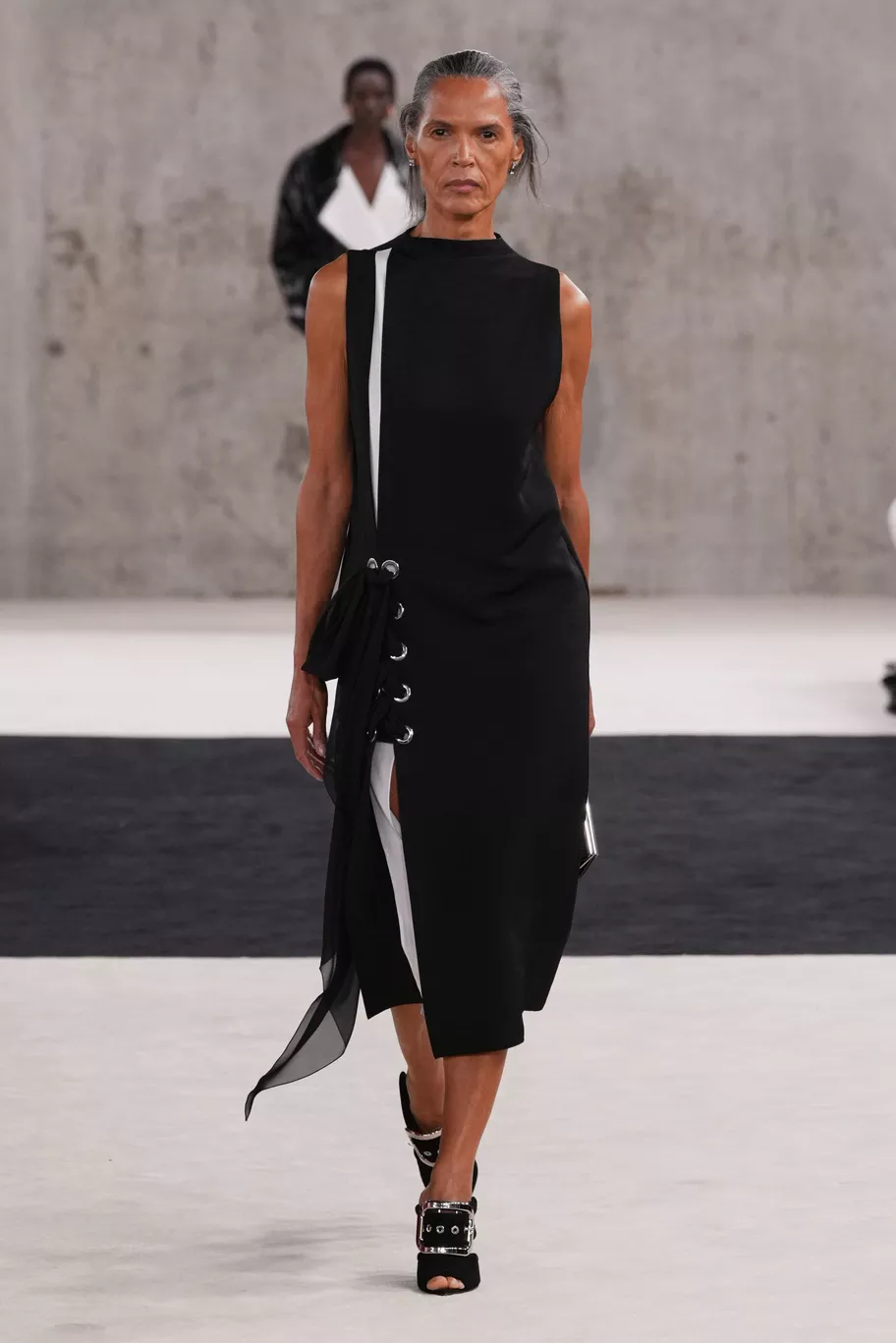
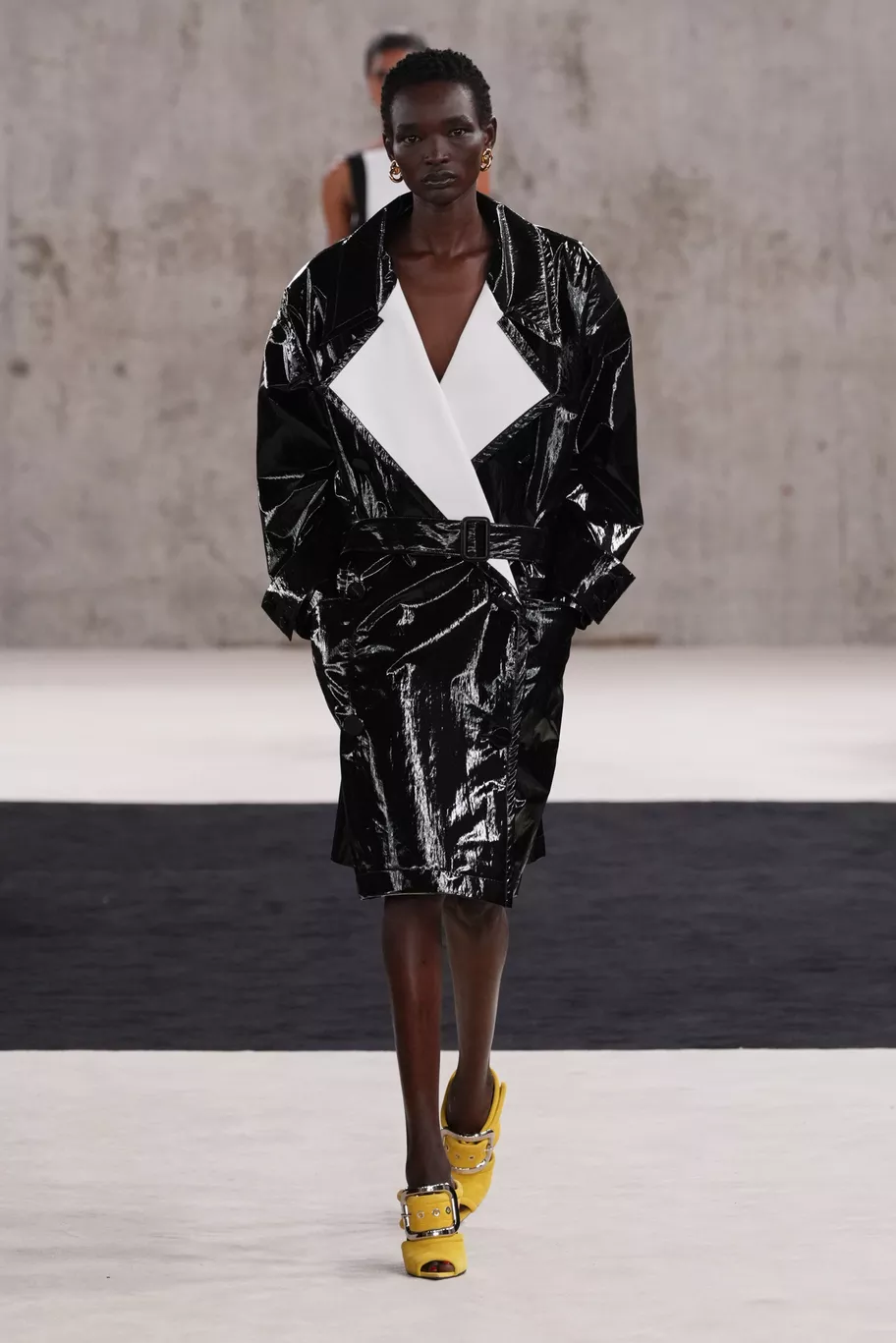
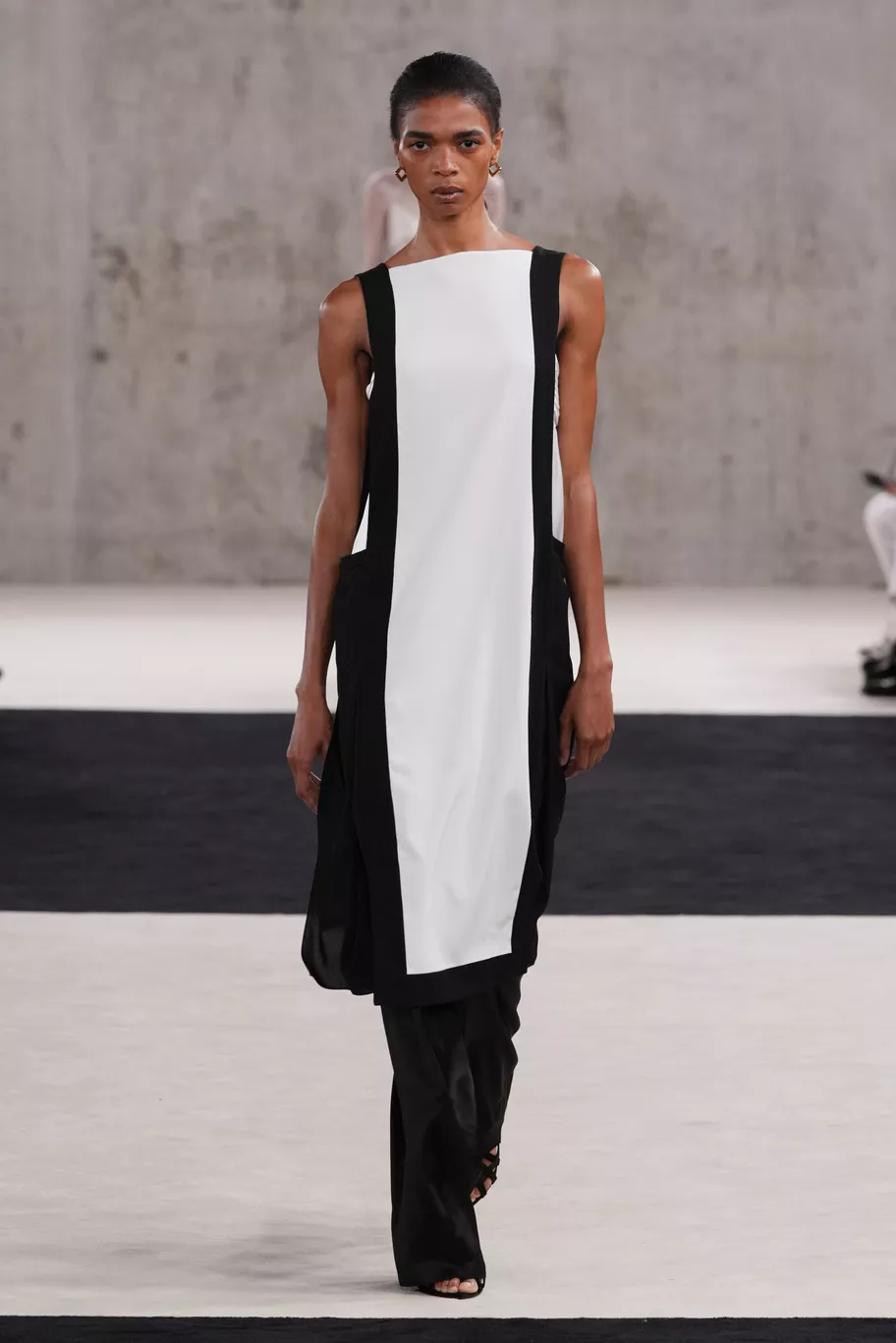
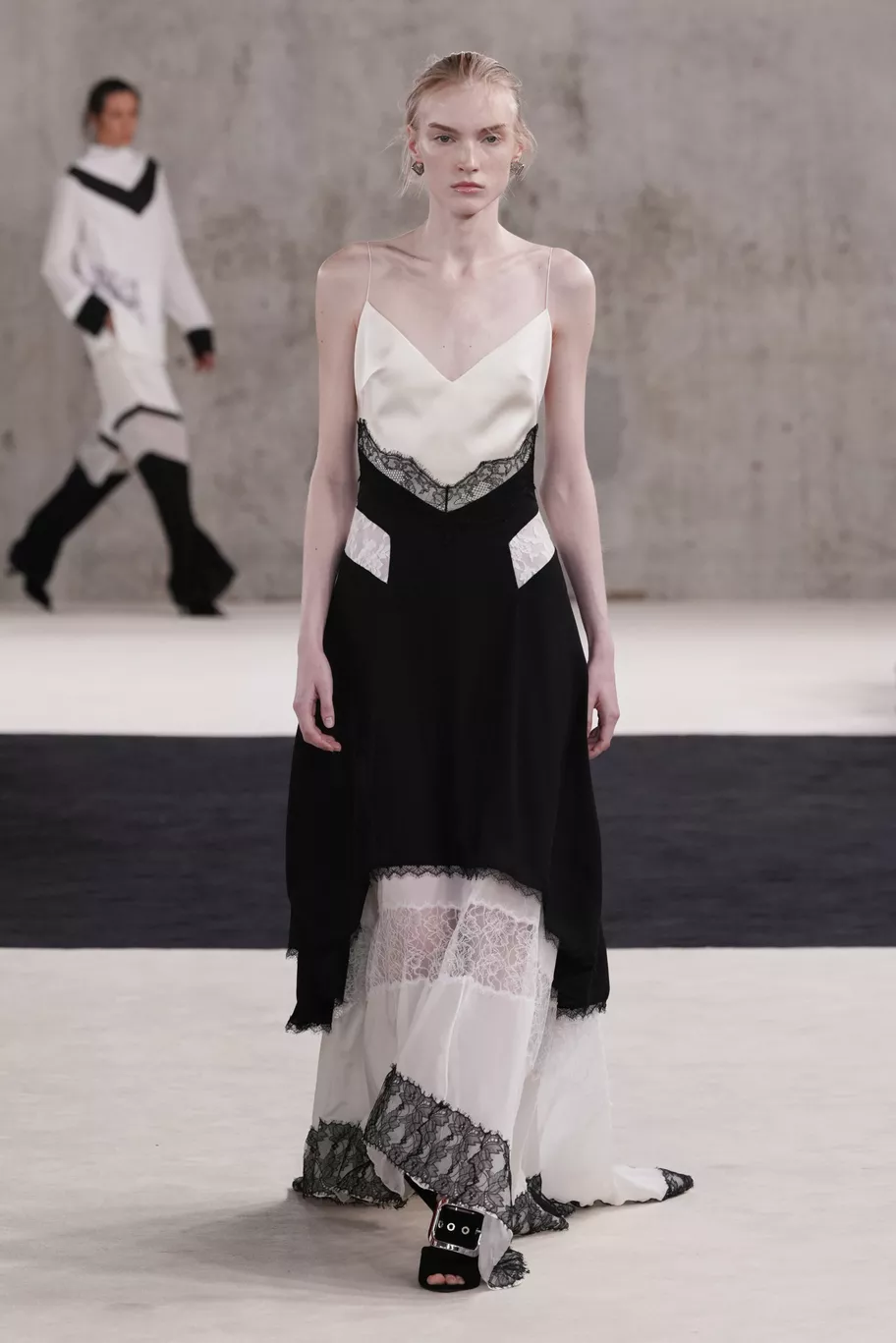
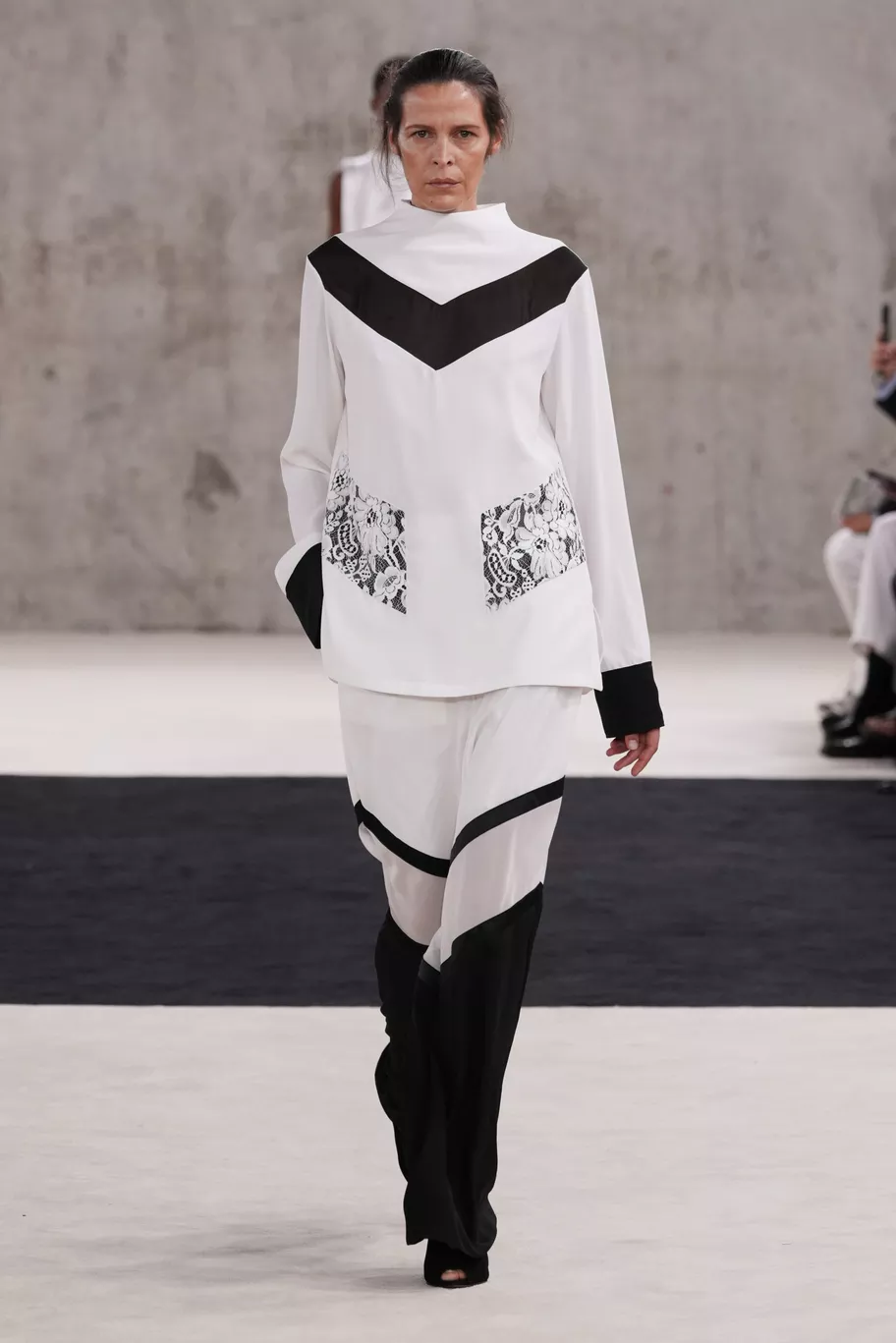
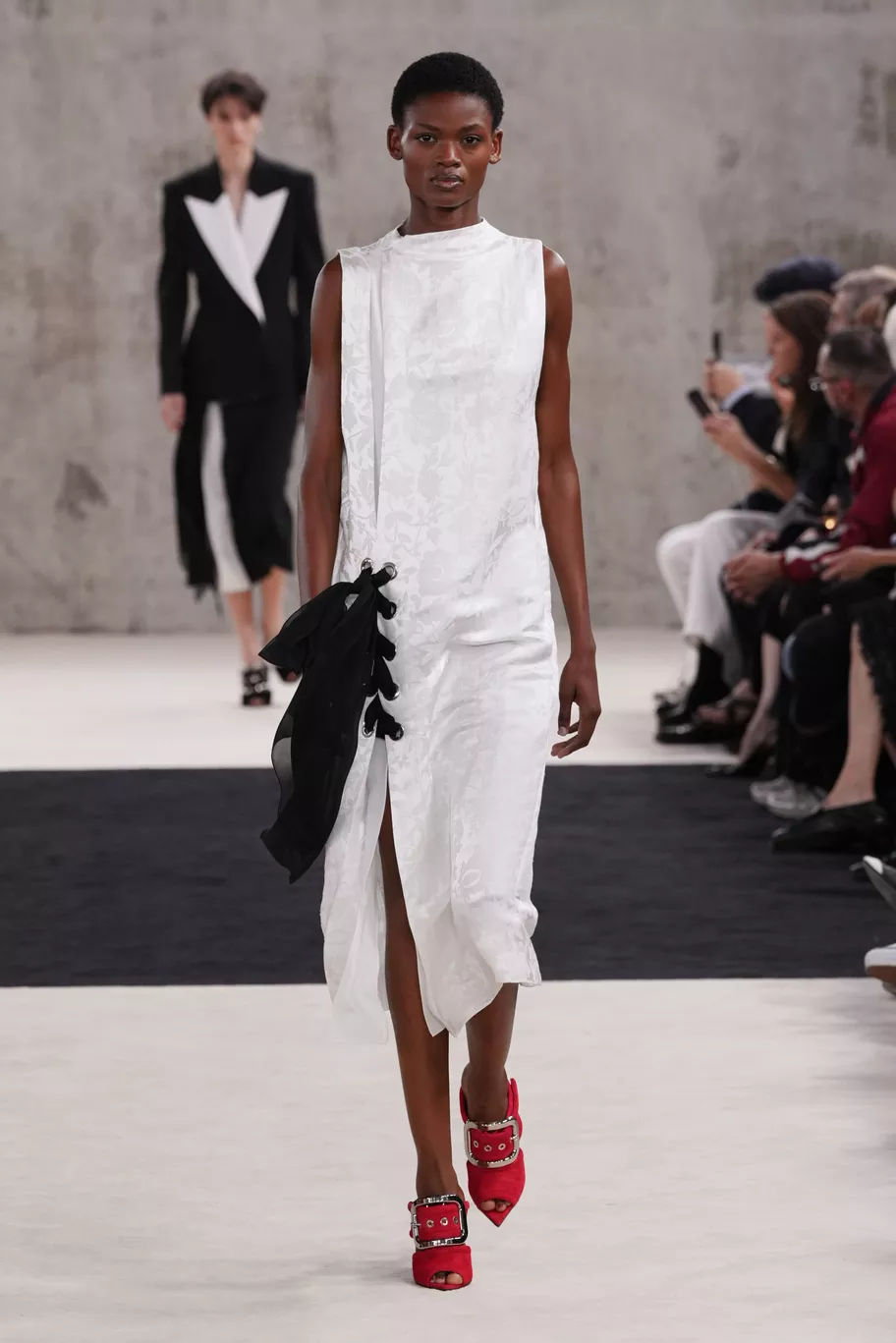
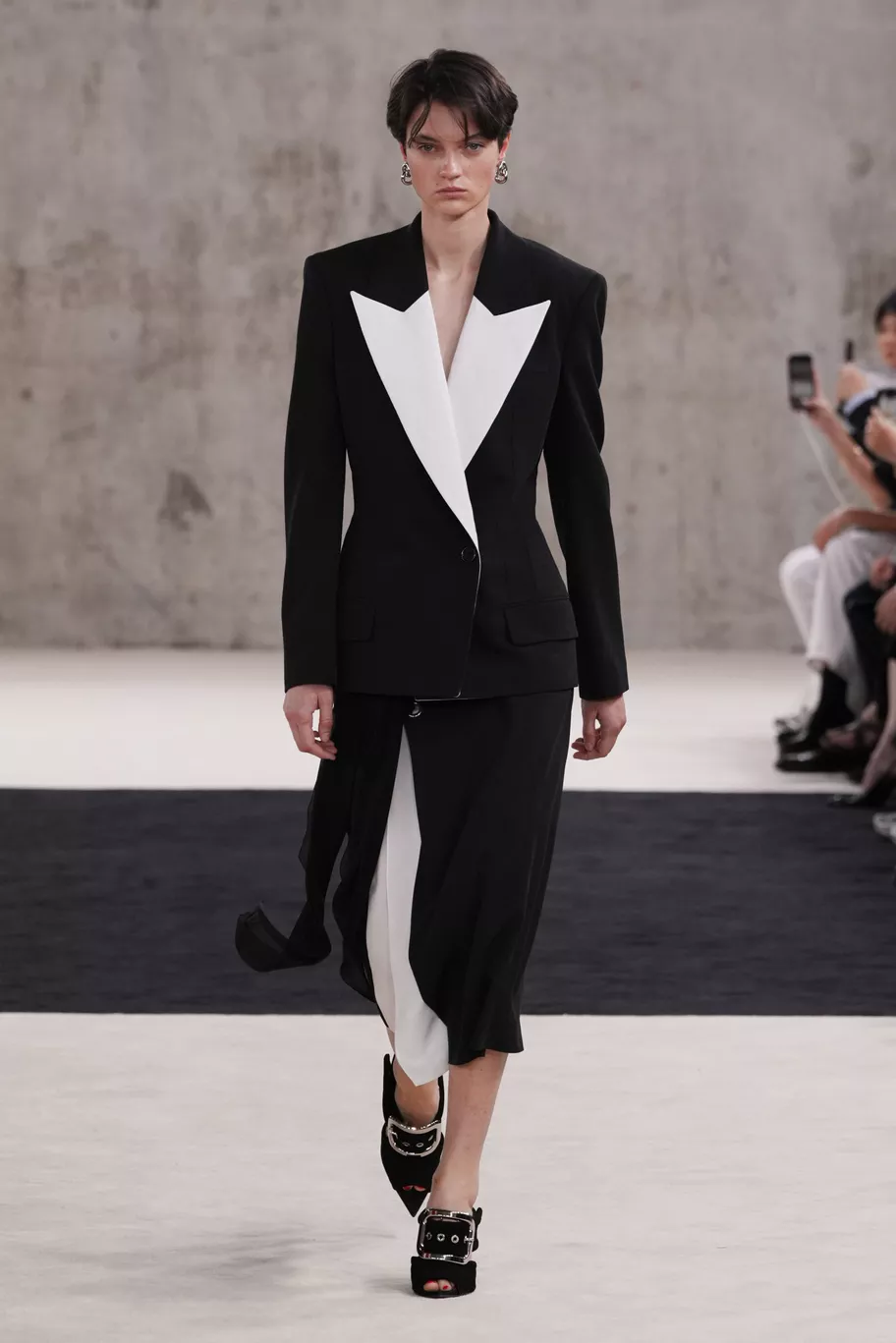
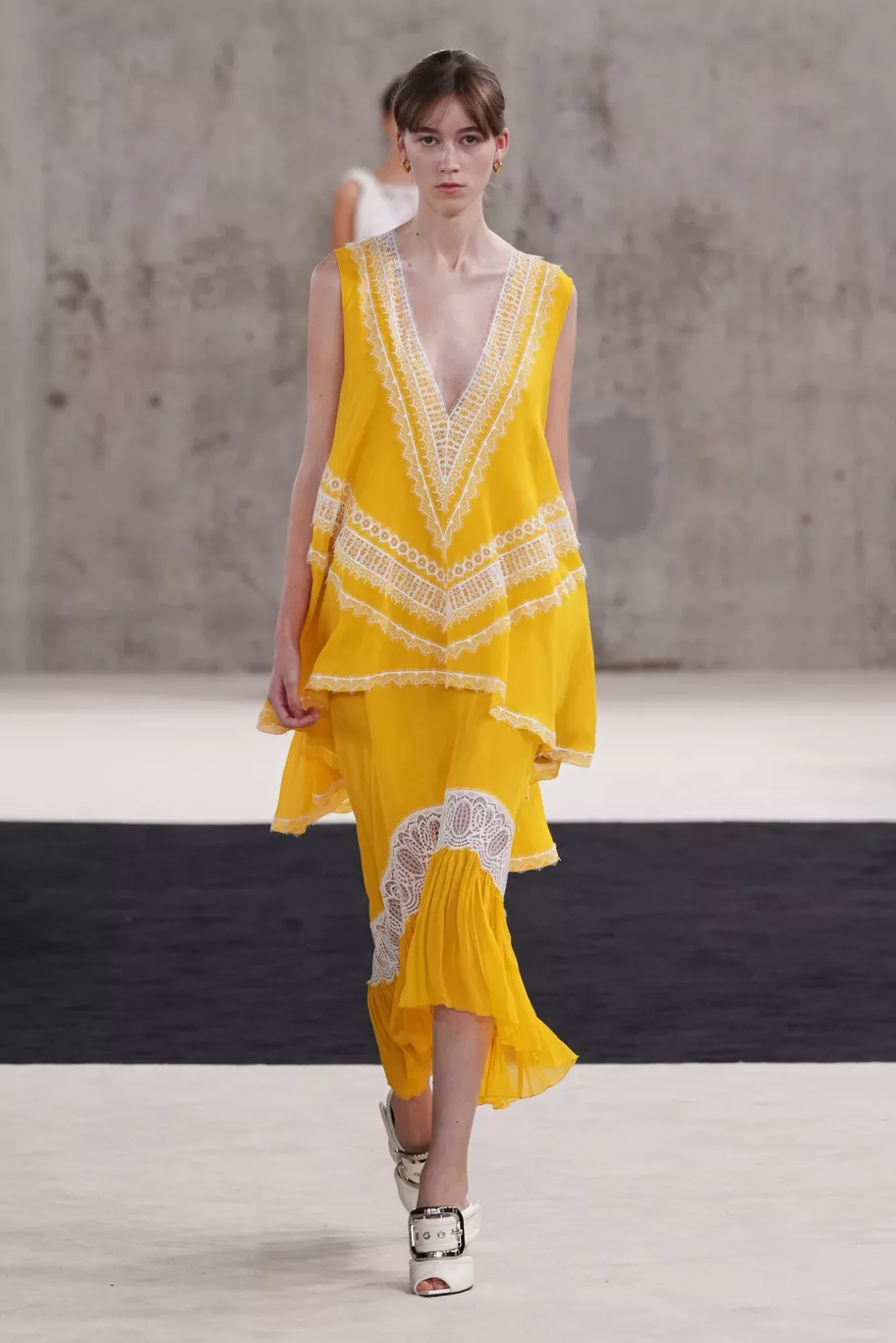
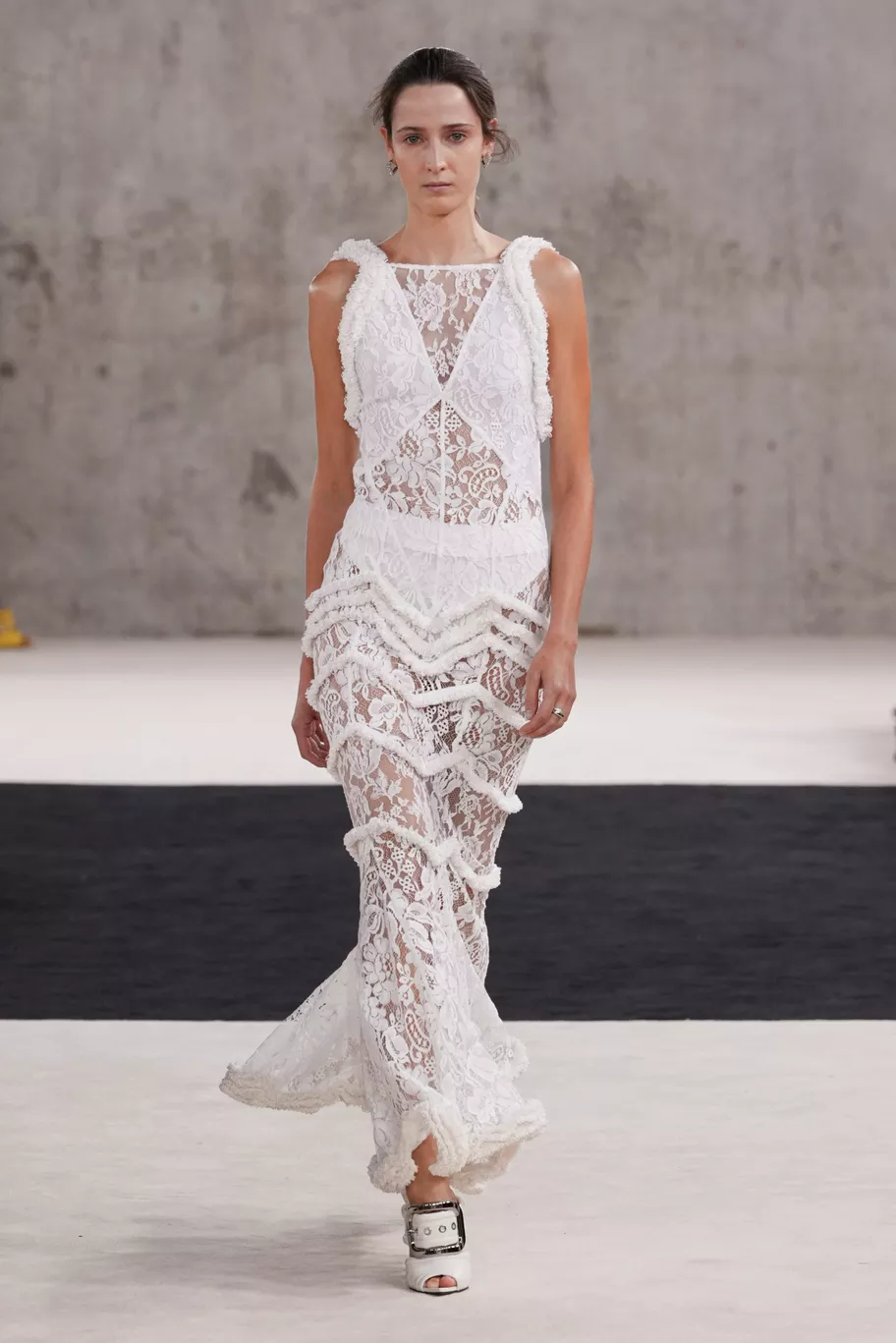
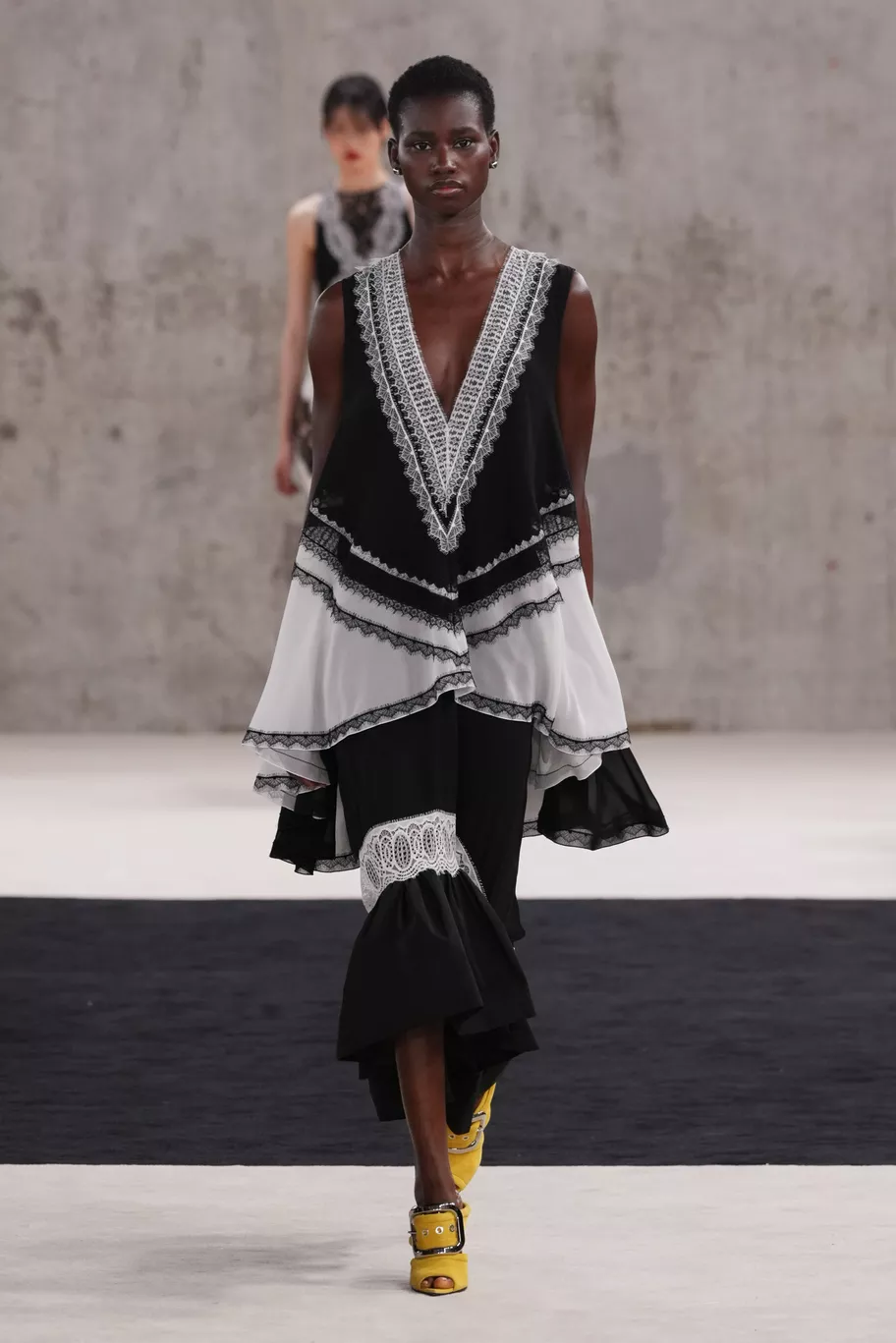
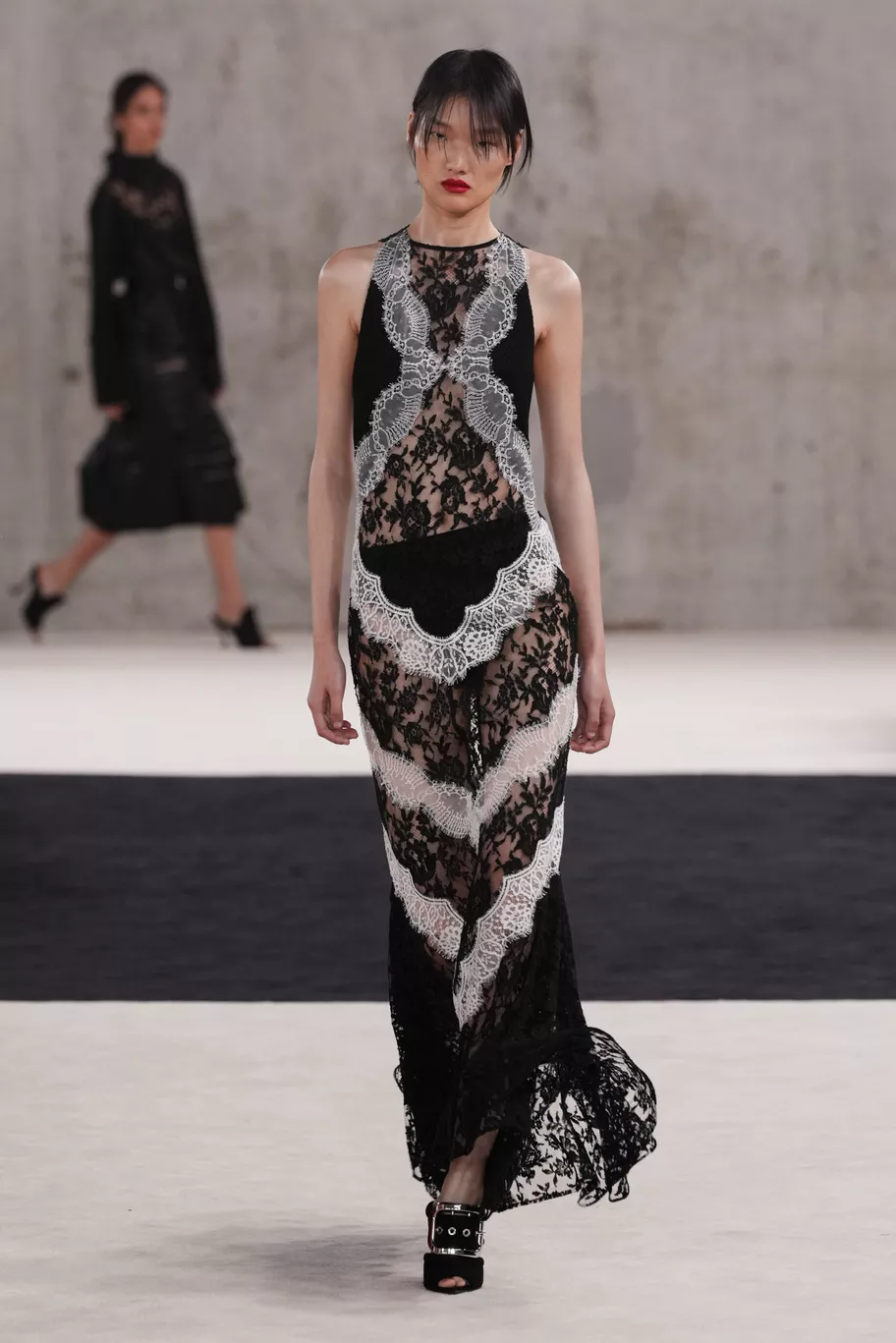
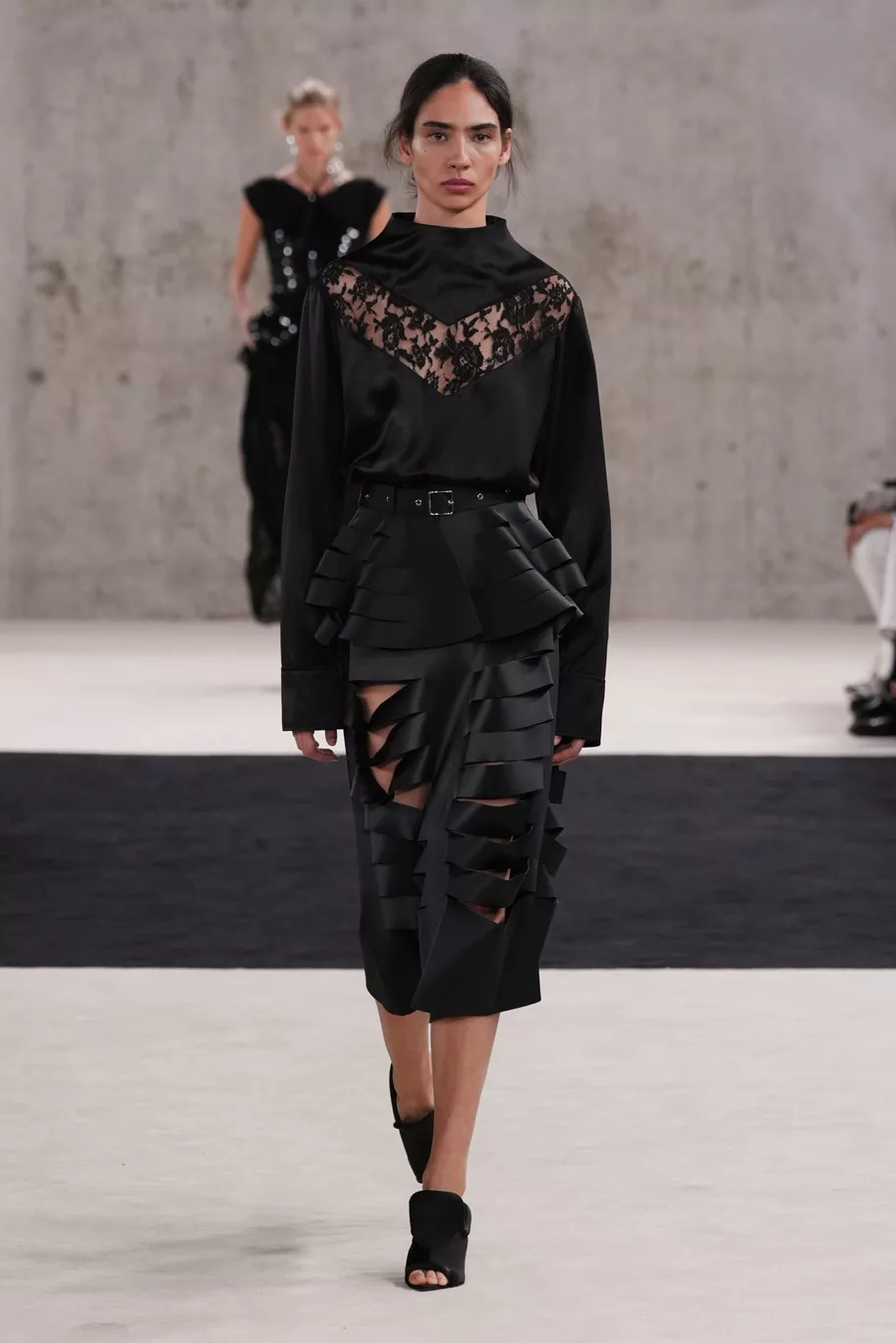
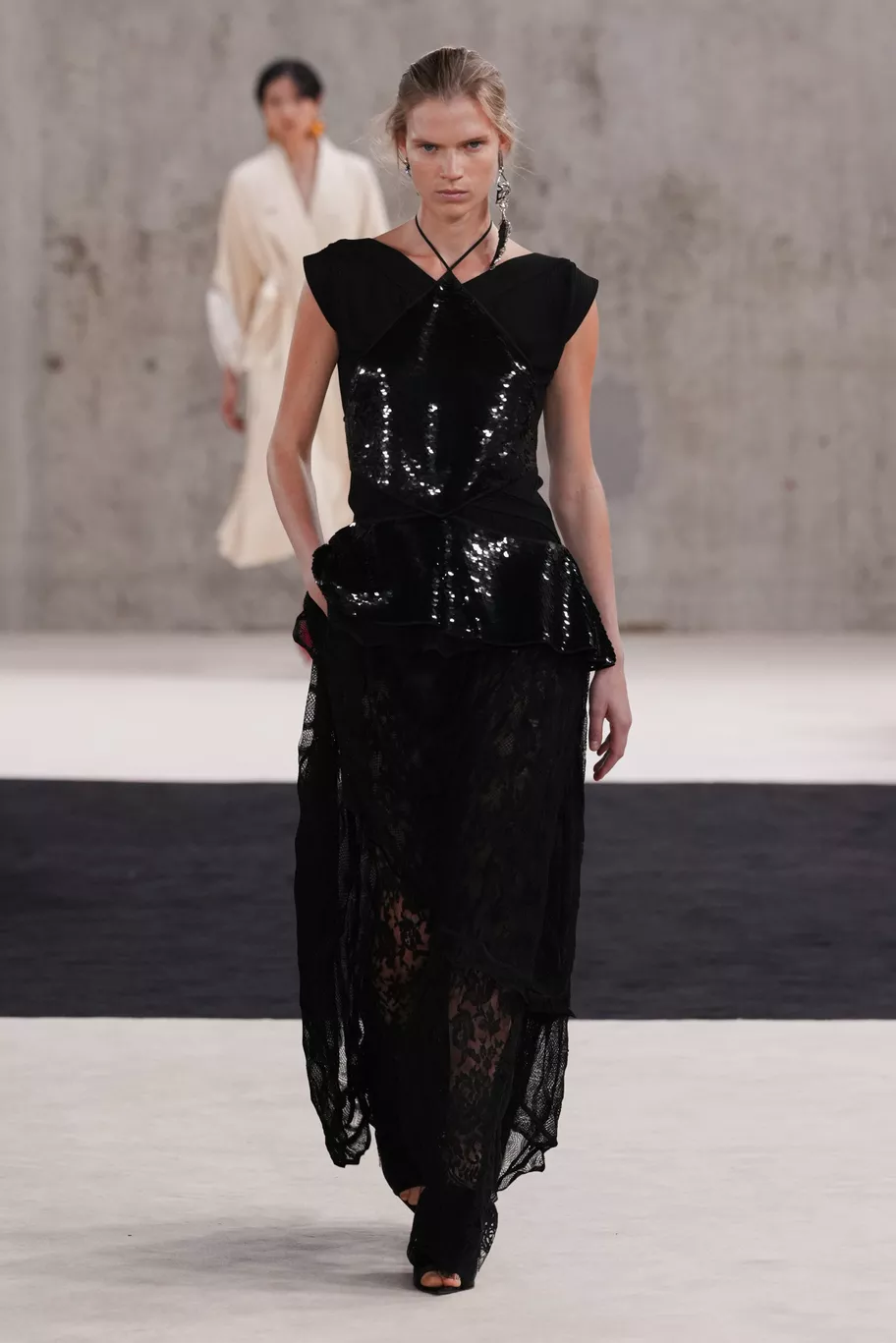
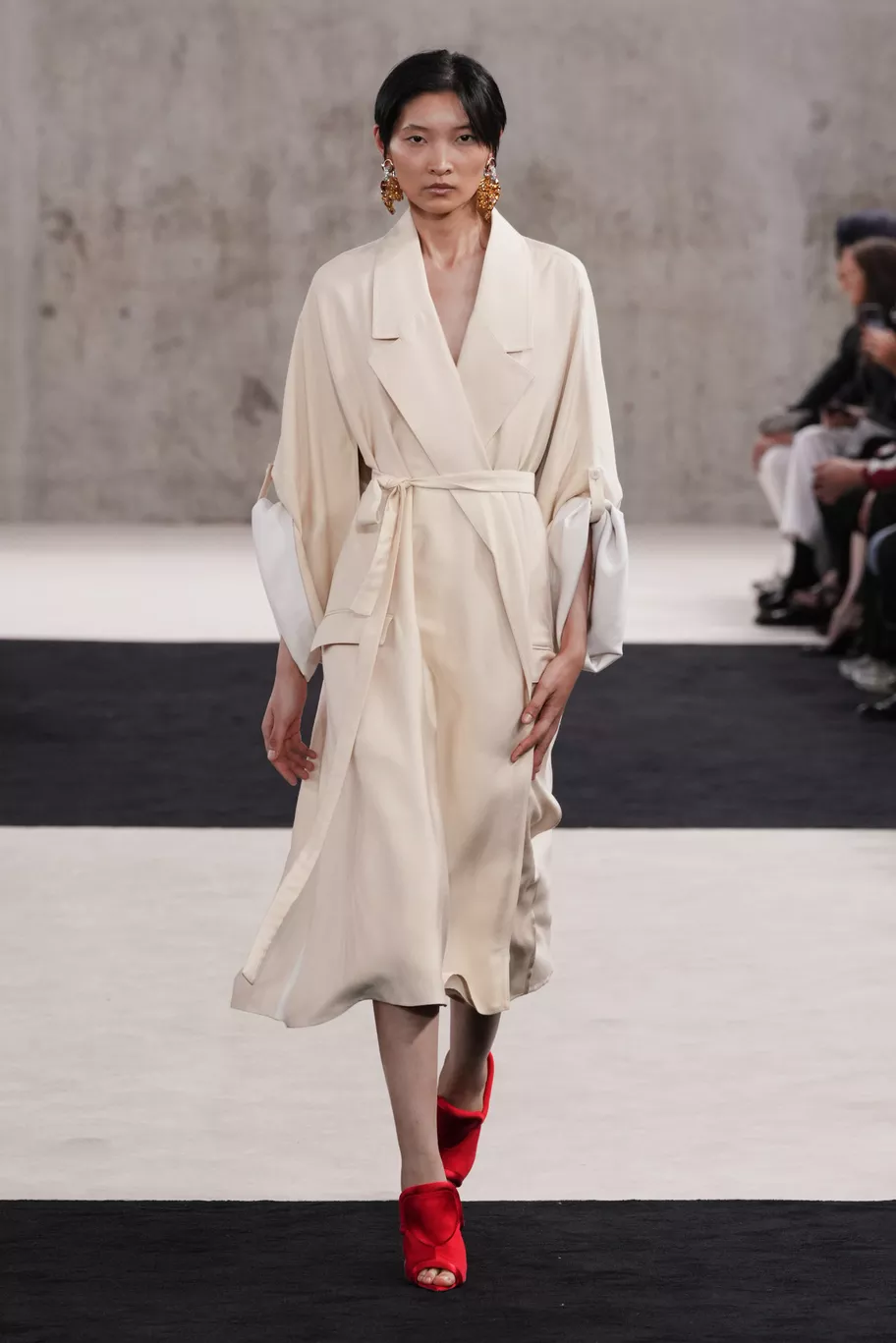
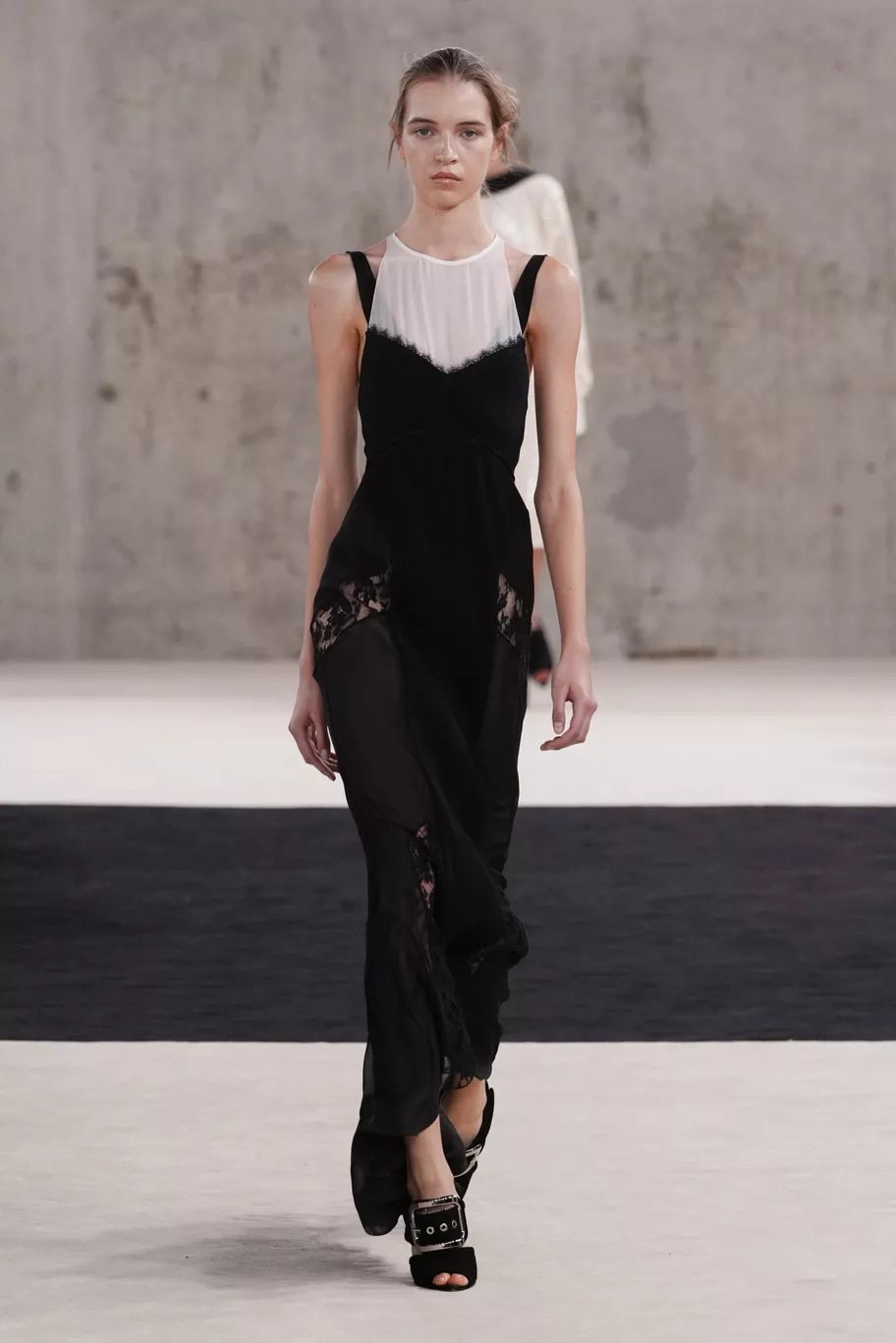
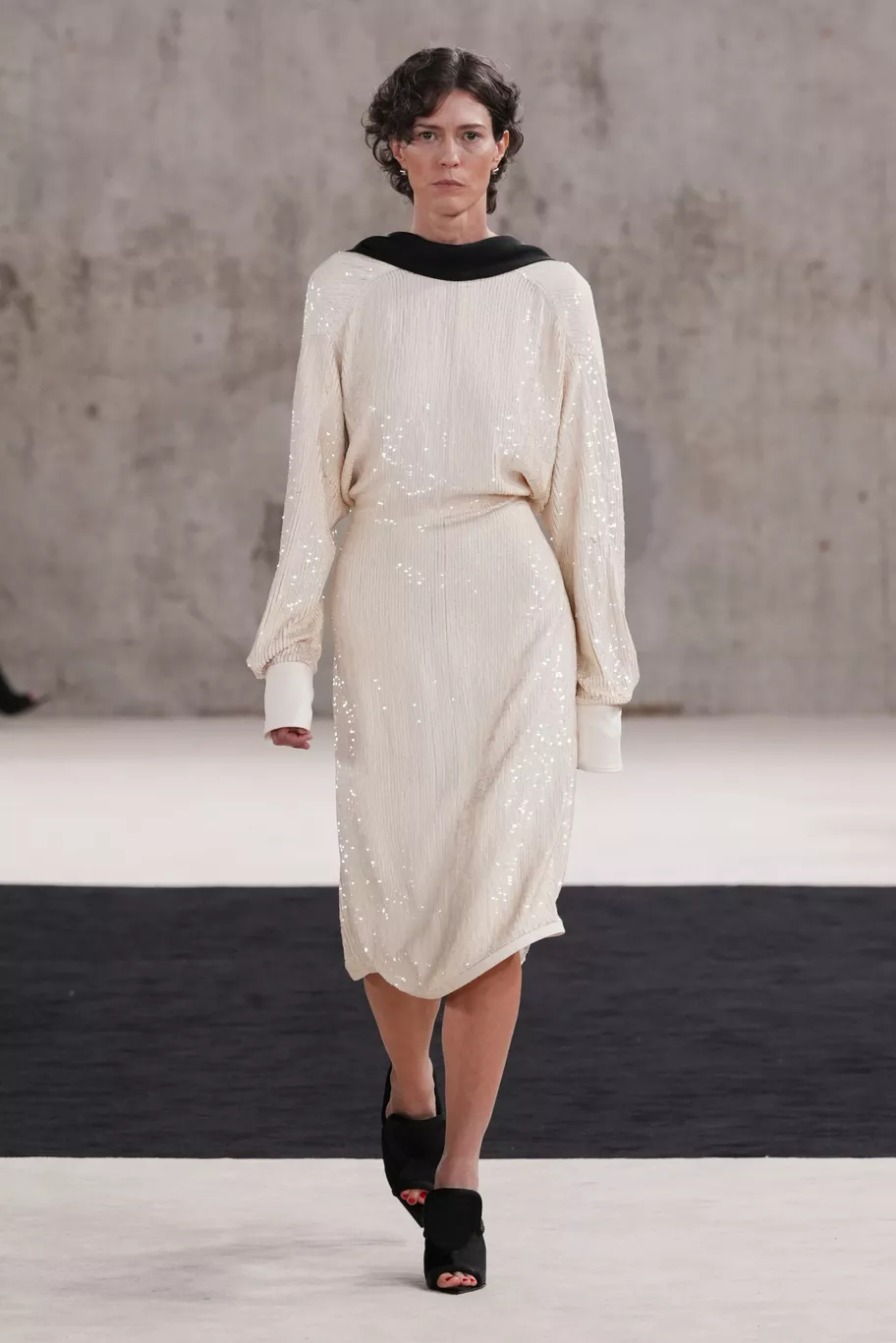
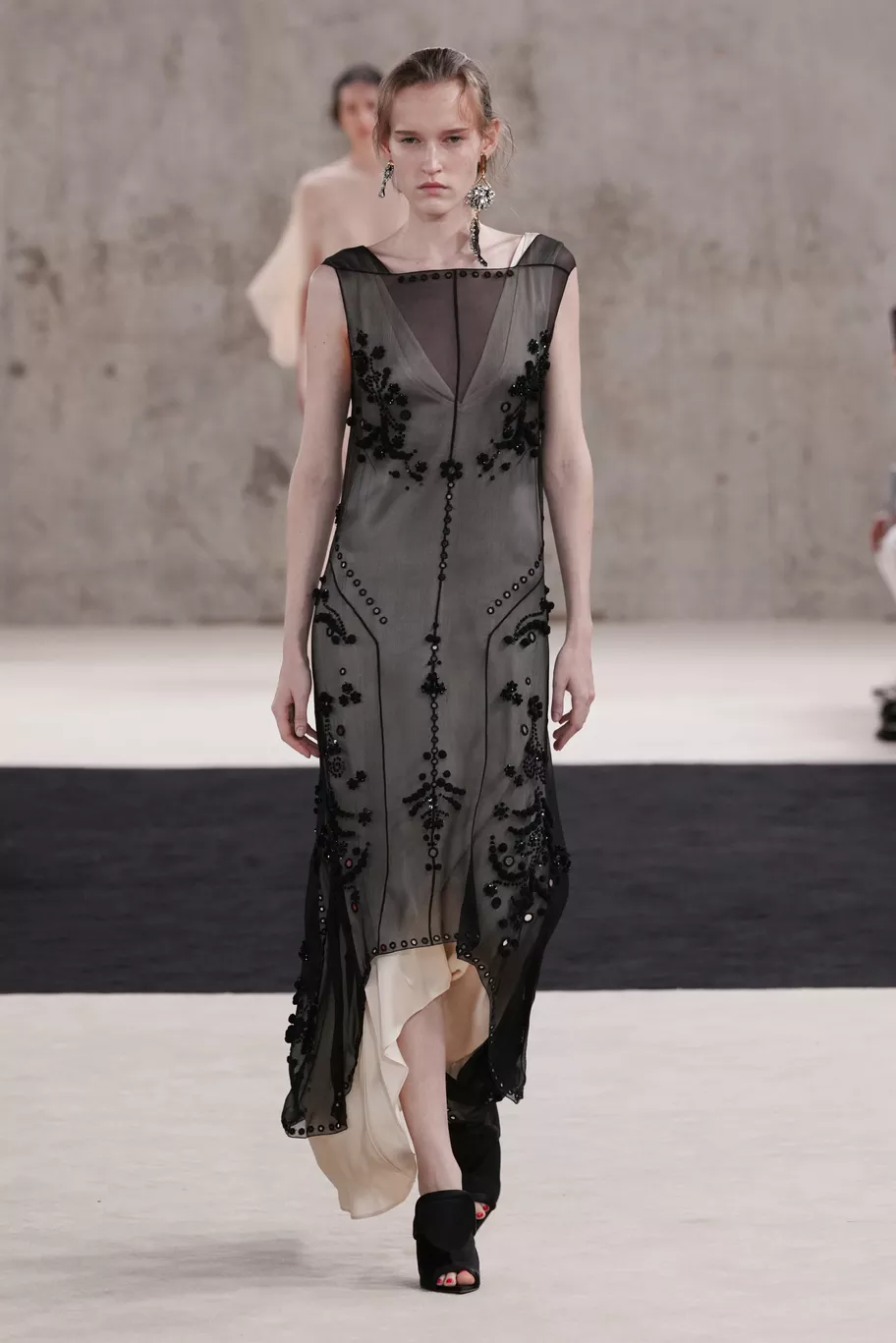
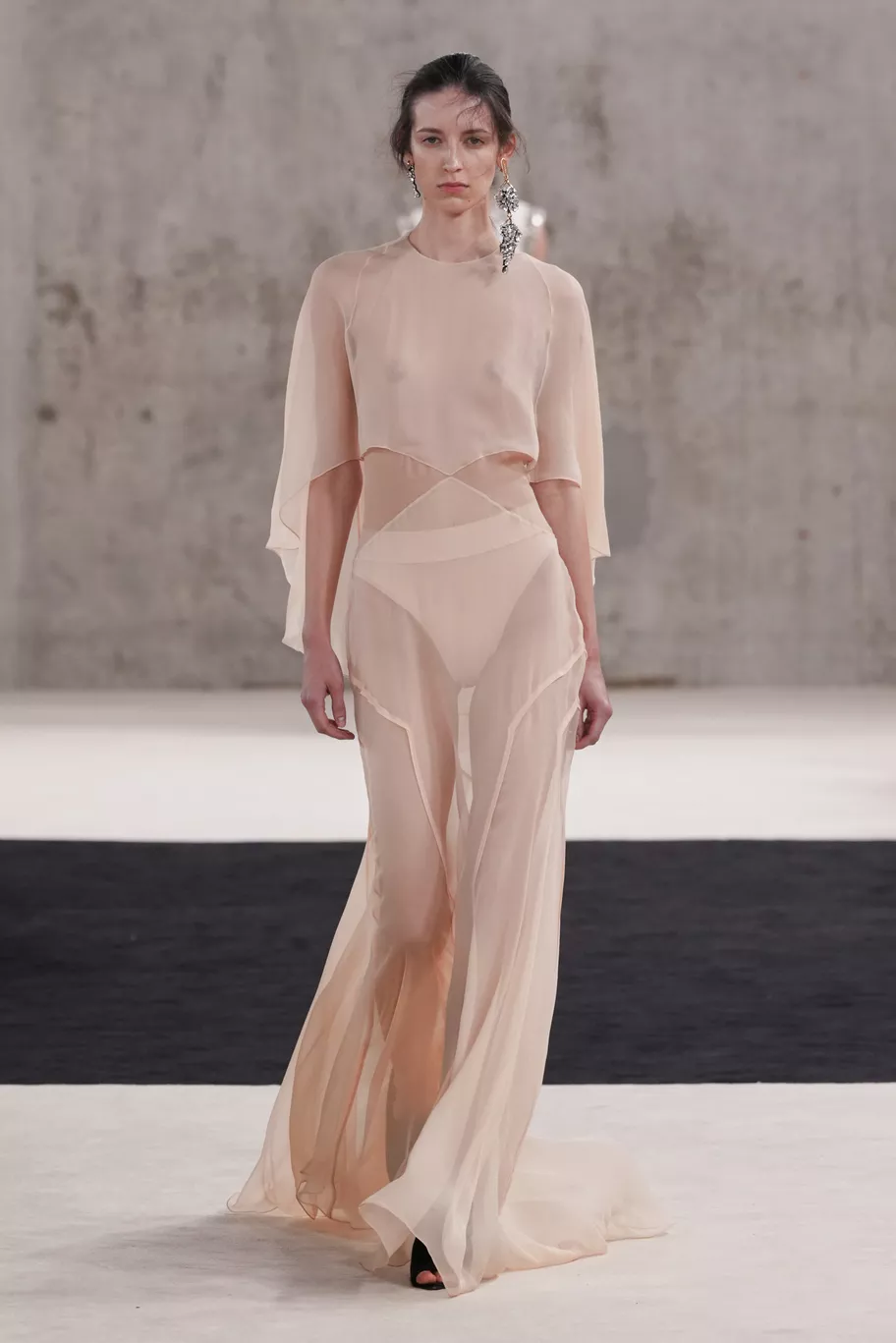
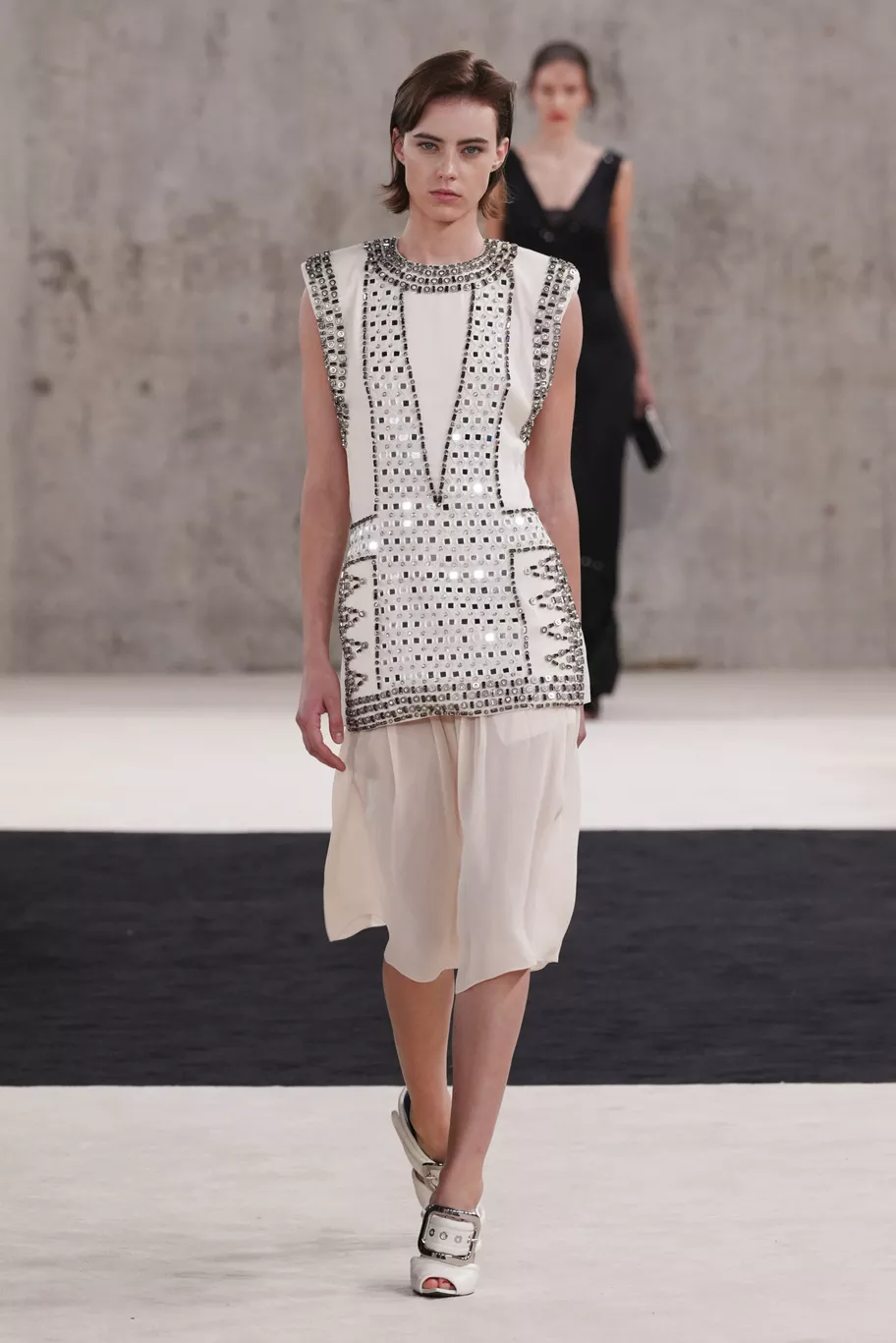
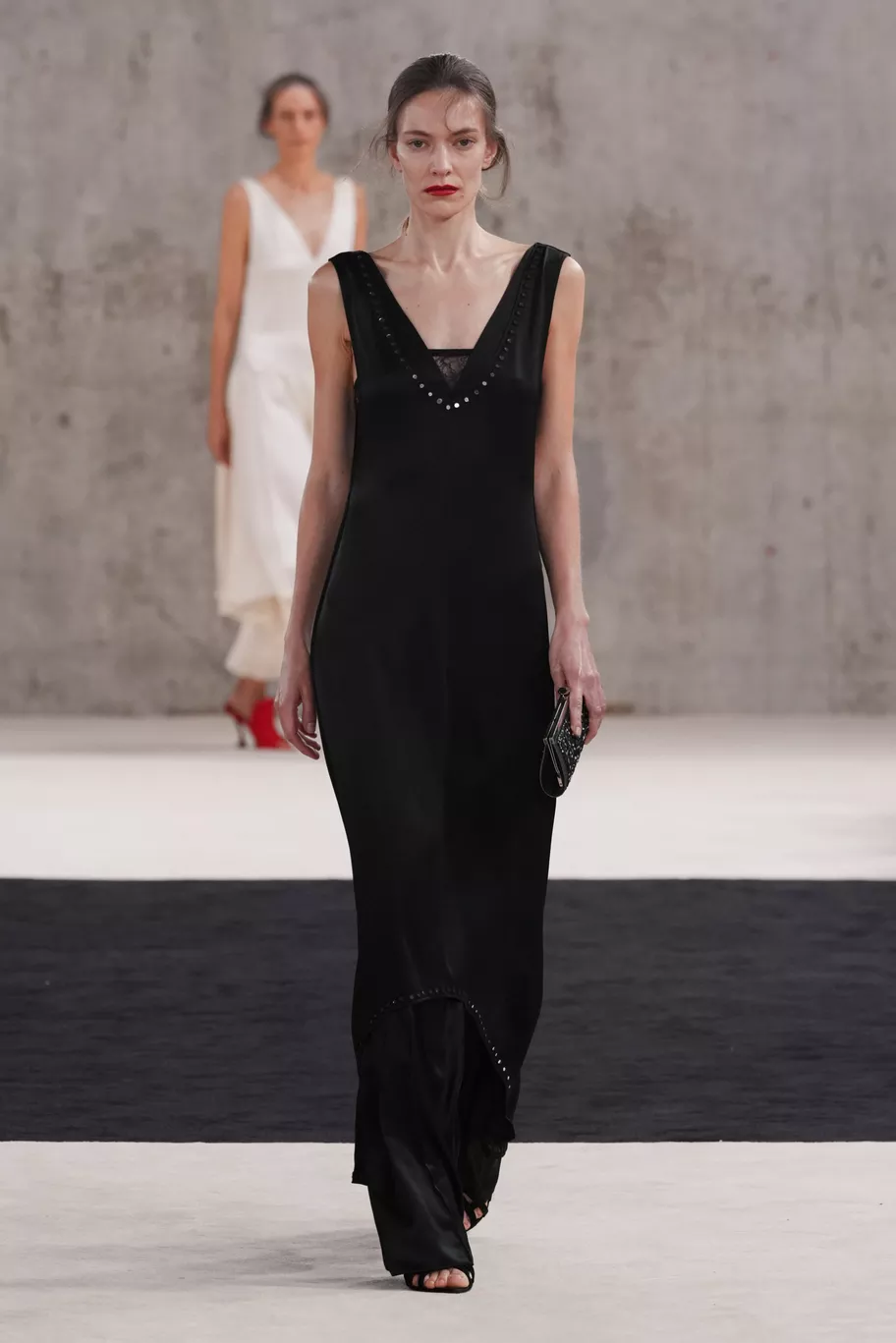
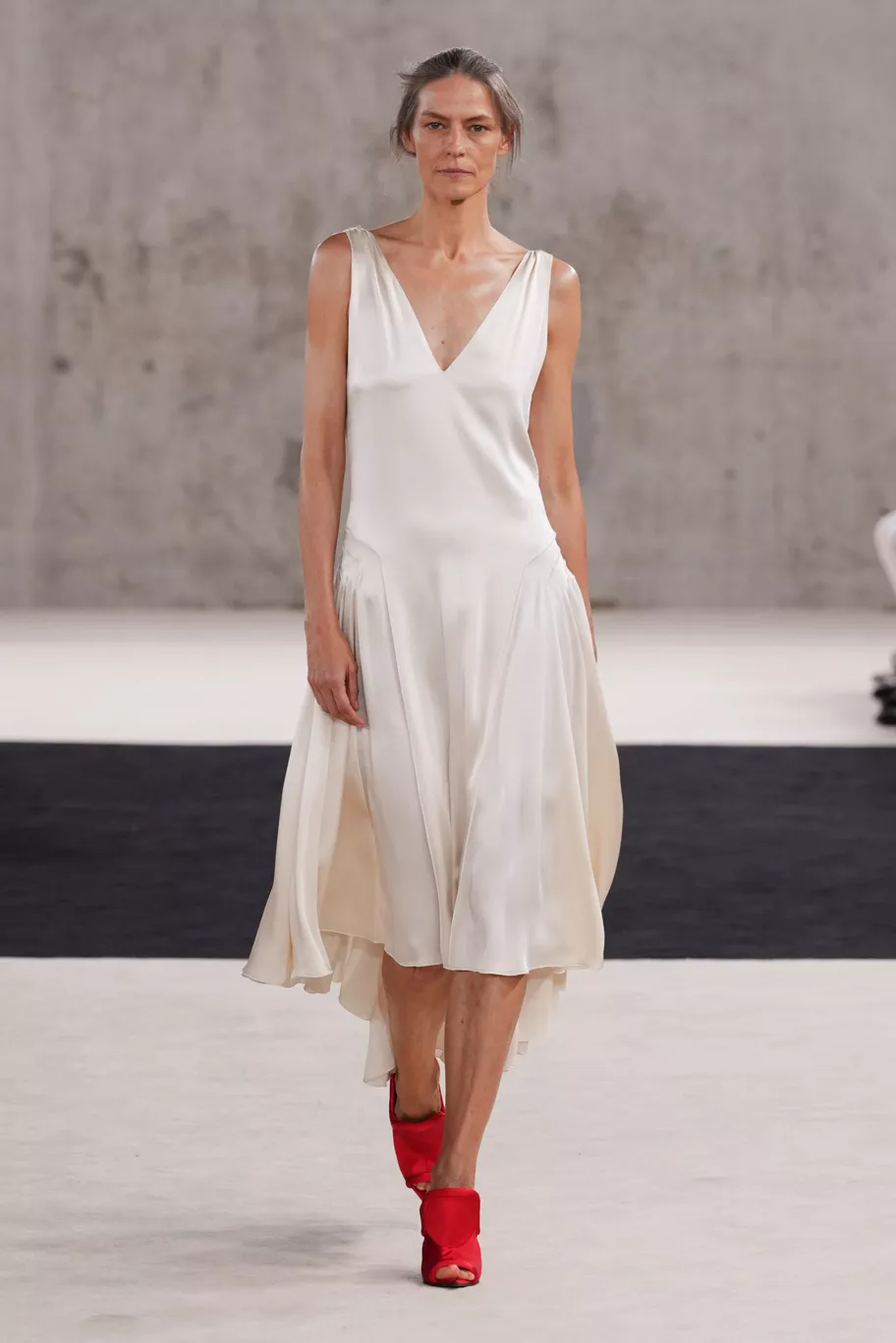
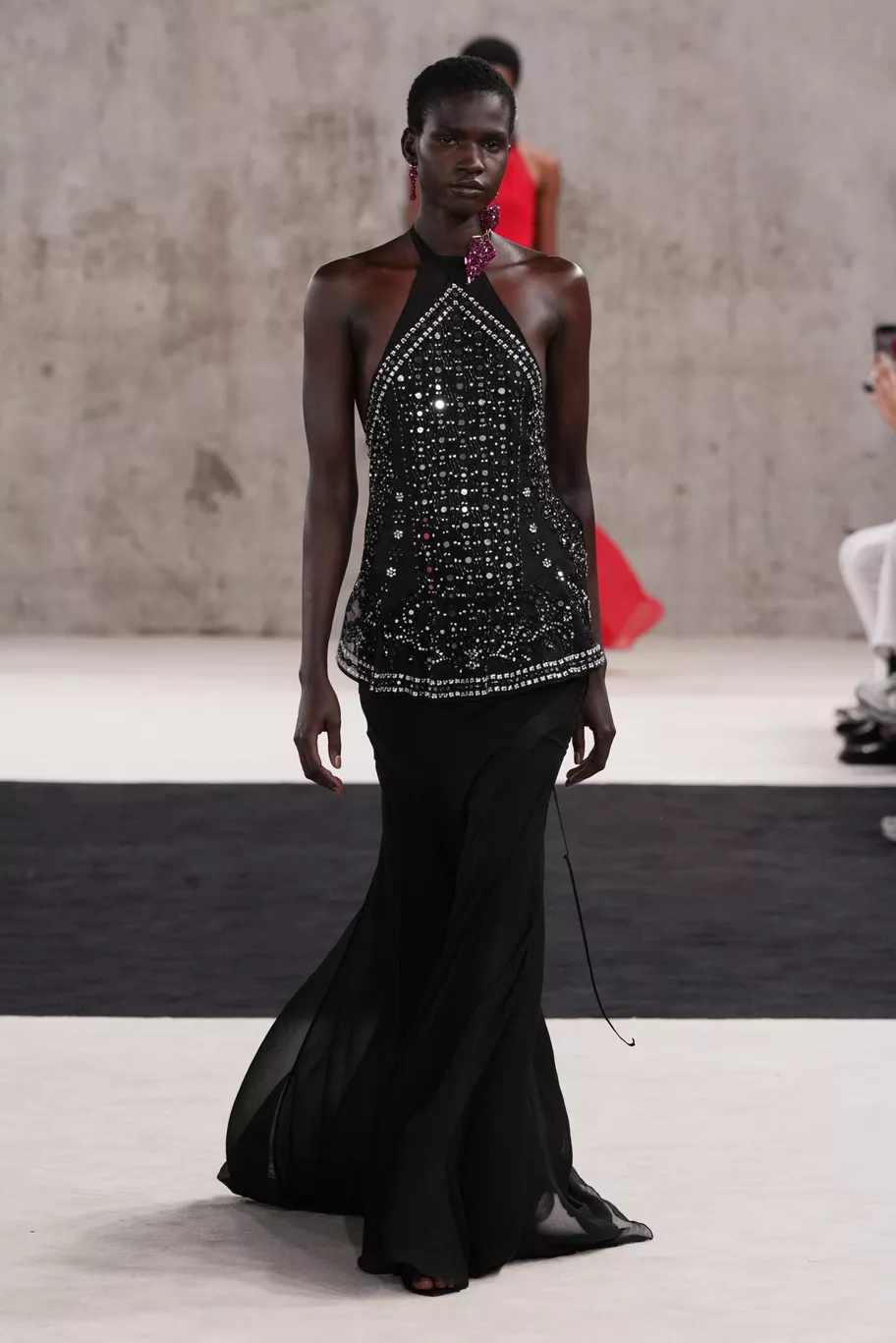
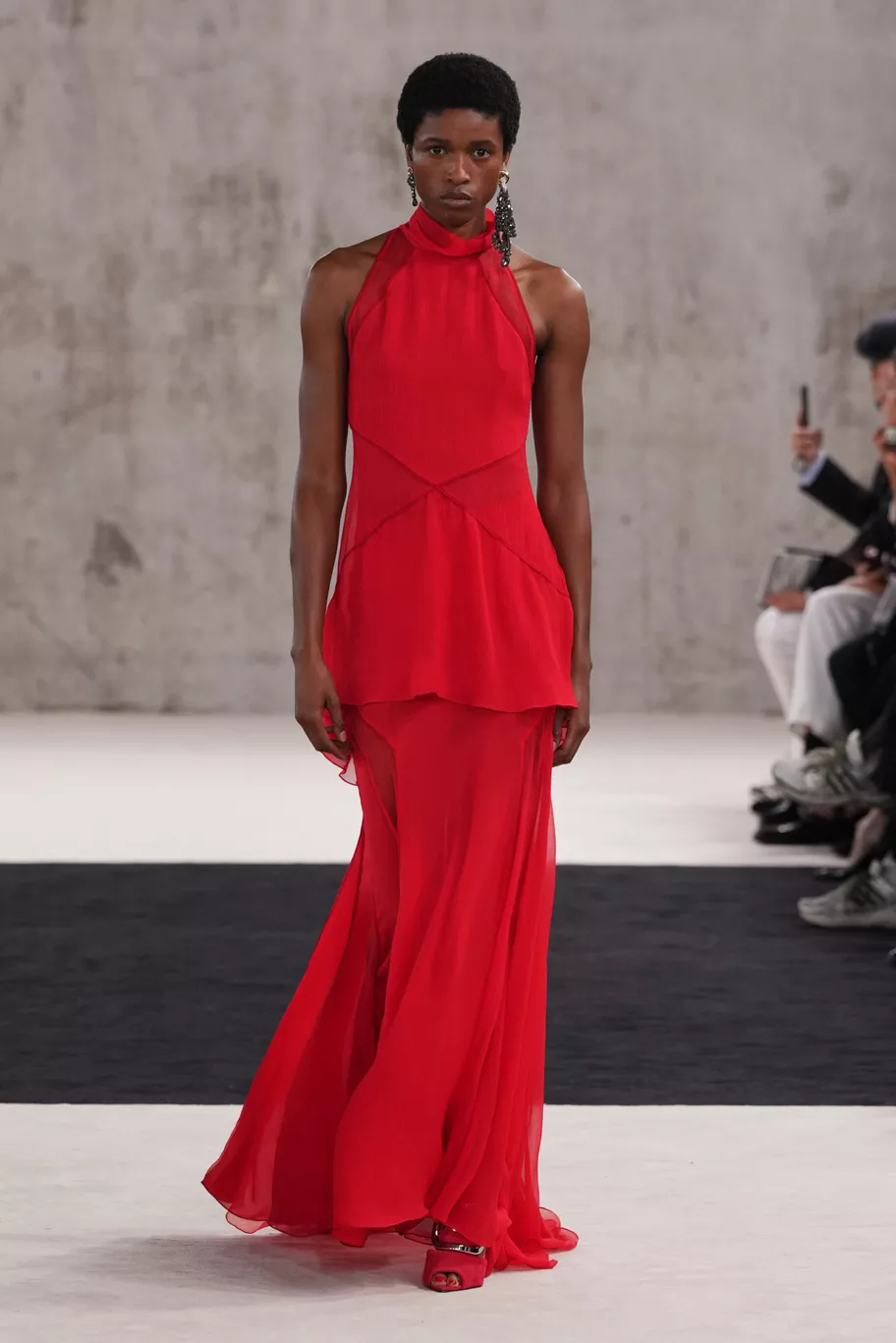
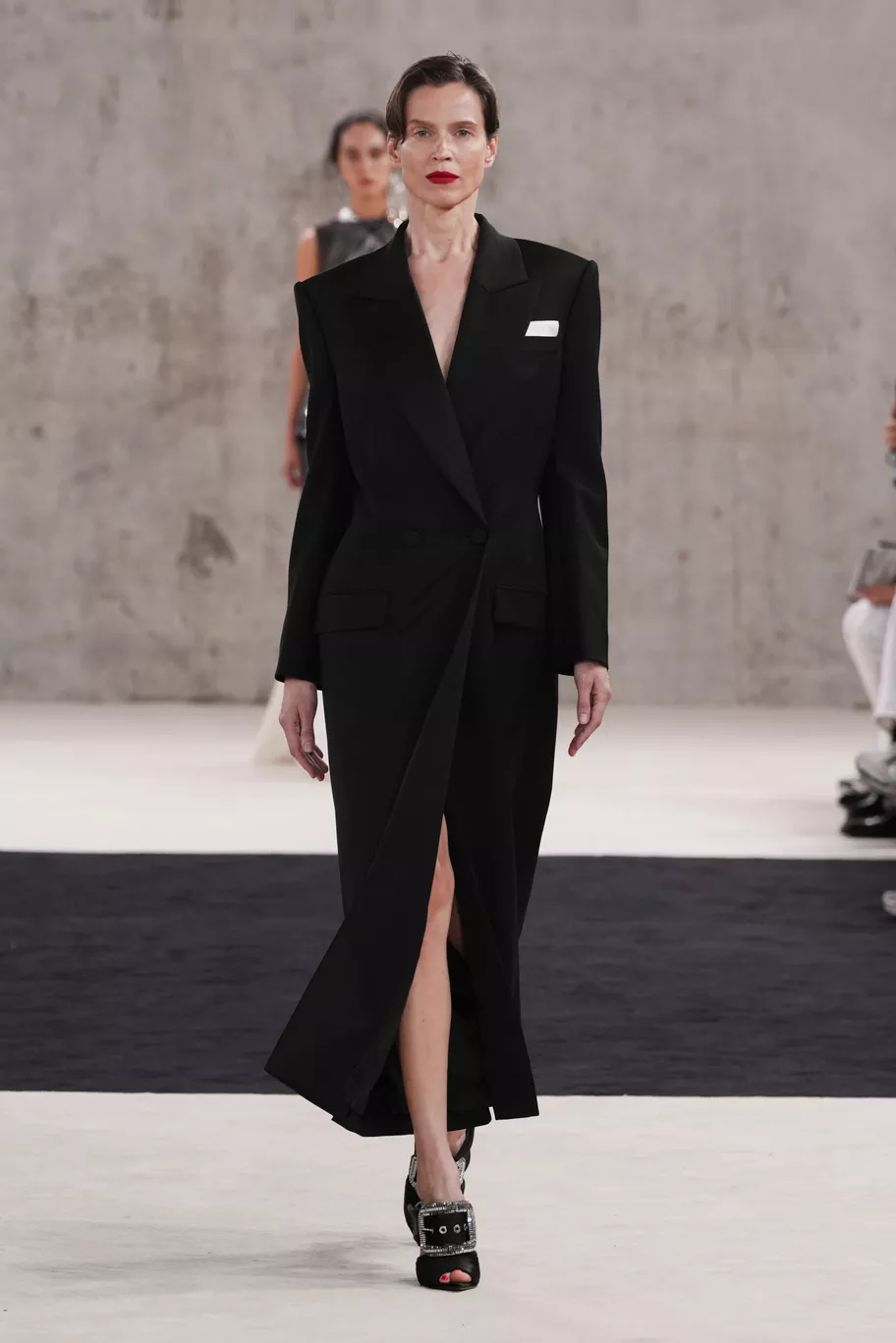
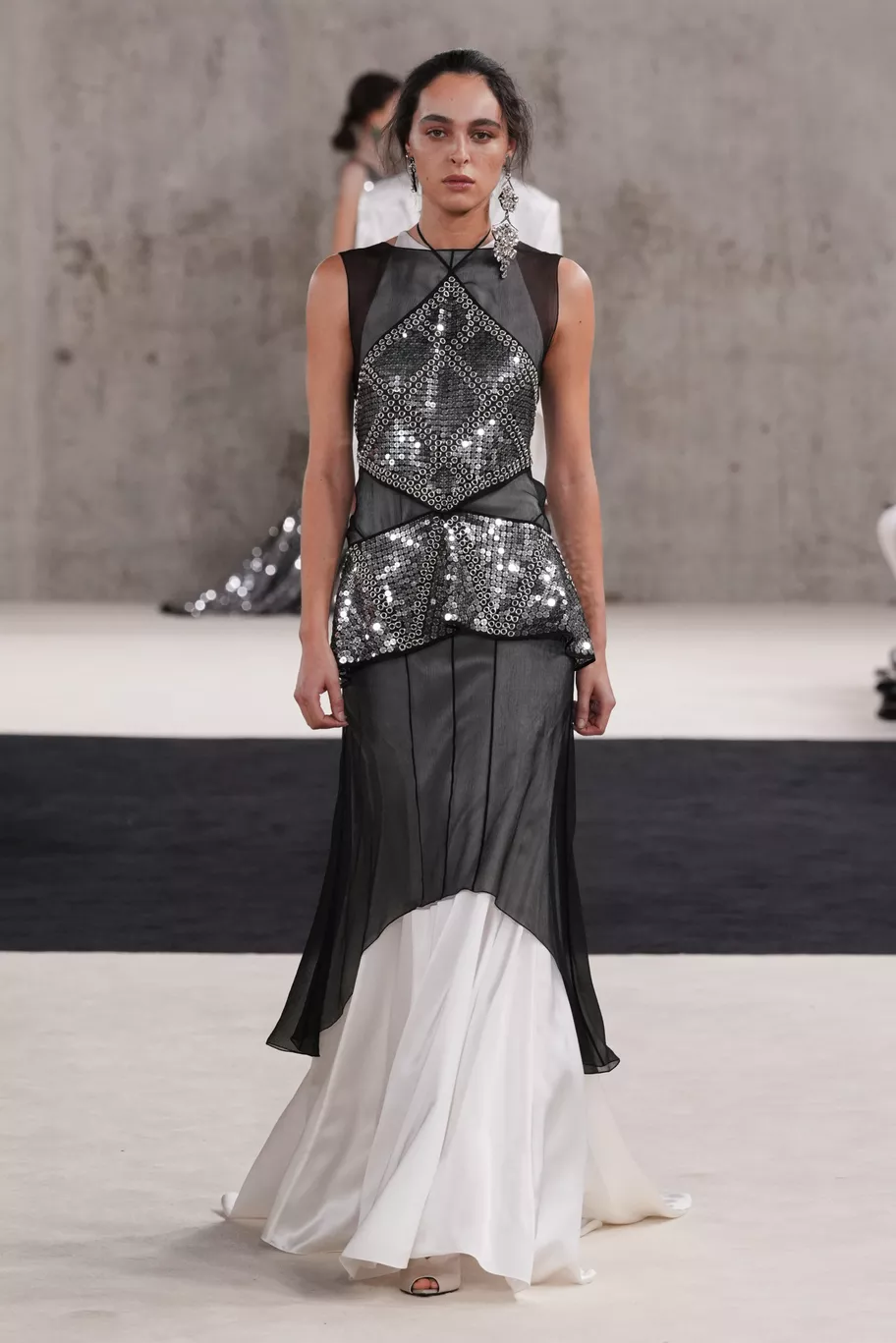
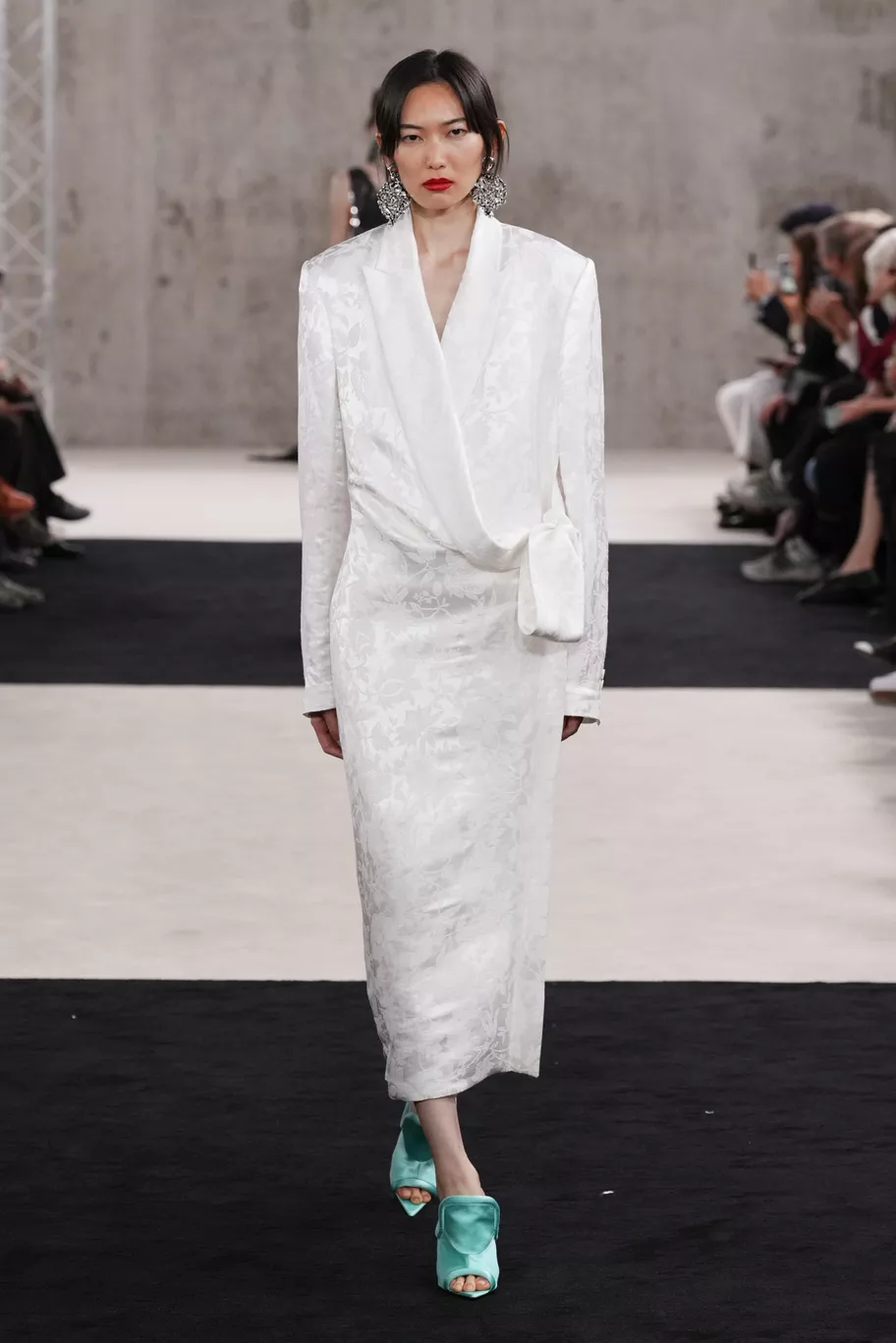
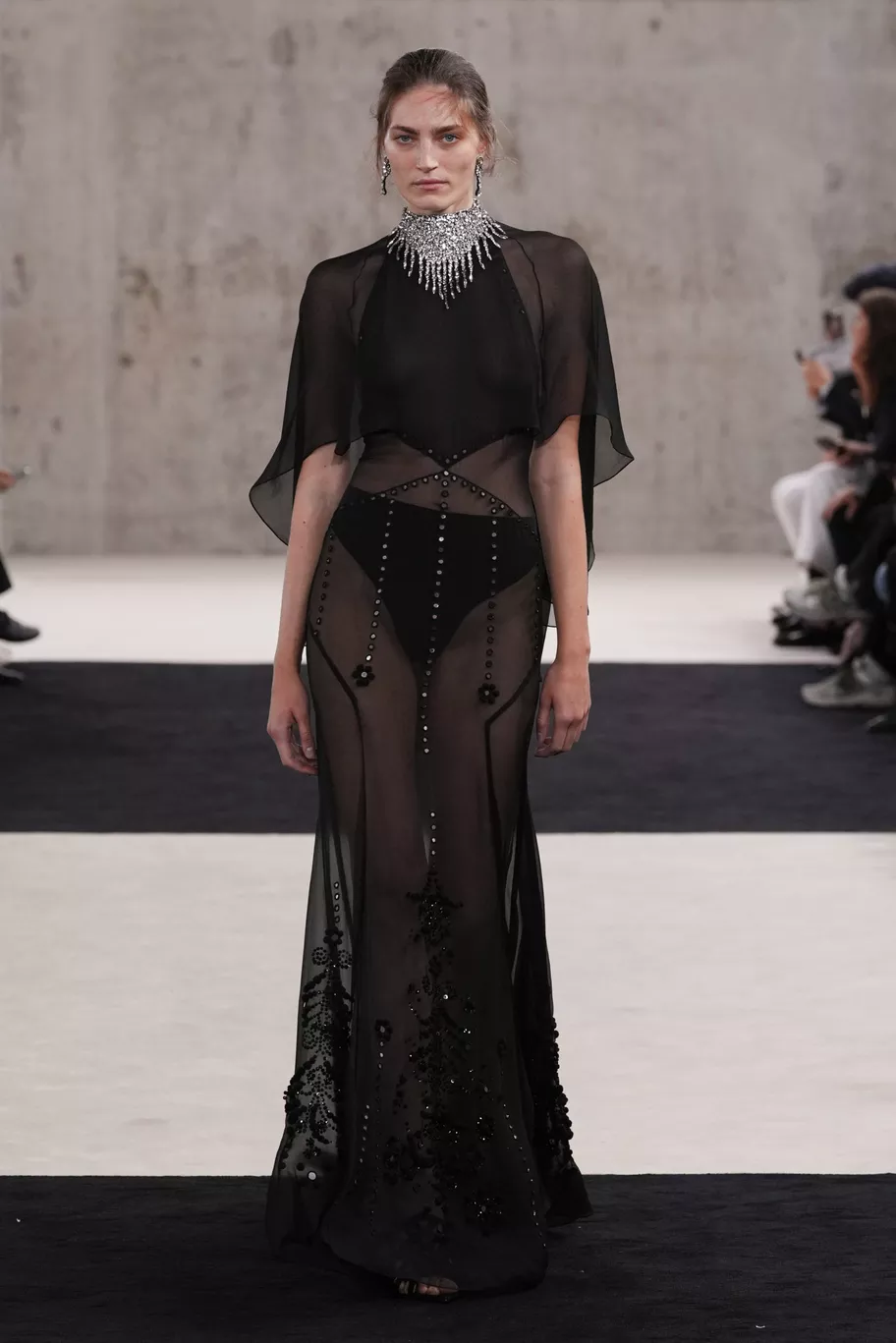
Called Soft Power, the collection proposes a form of authority that feels almost deliberately out of step with the current fashion system. No screaming logo. No obvious spectacle. No desperate attempt to manufacture an image before the clothes have had time to speak.
The power is in the cut.
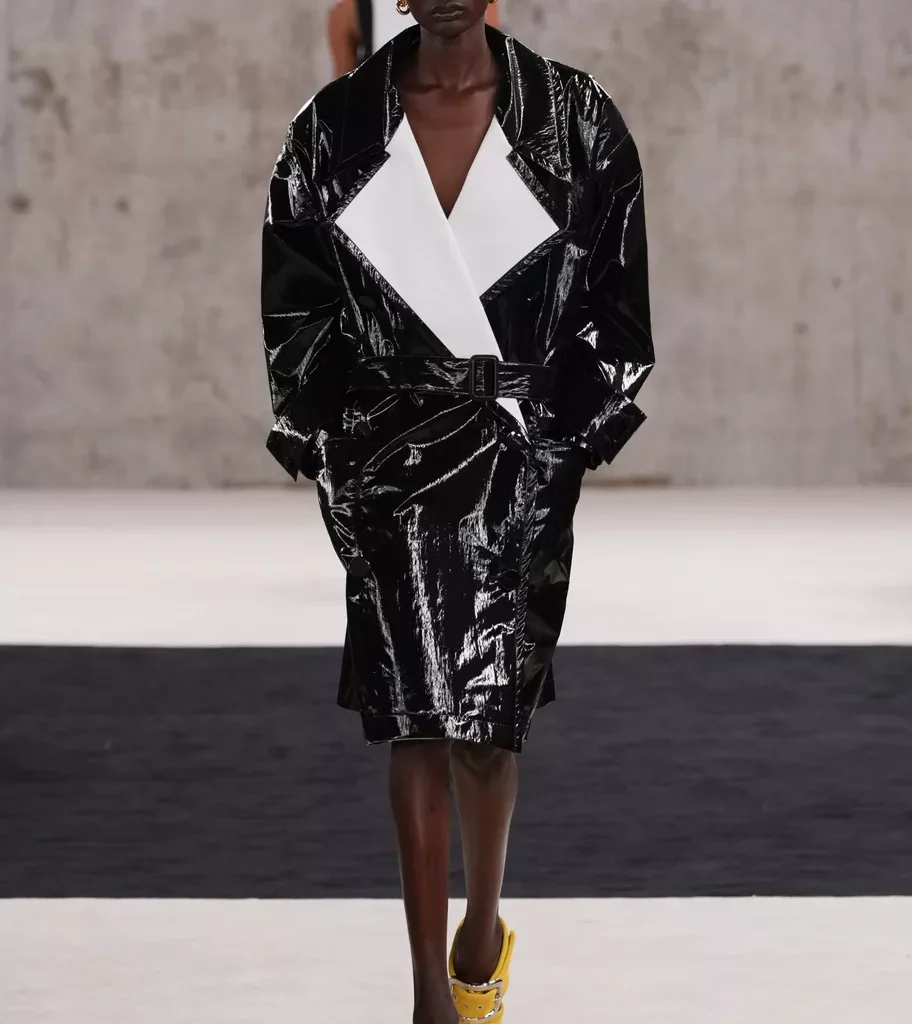
Fluid coats. Elongated lines. Shawl collars. Long tunics. Relaxed tailoring. Restrained peplums. Shorts that almost become skirts. Evening pieces that move between exposure and concealment. Lace, transparency, plastrons, polished surfaces. Black, white, navy, red, khaki.
Everything is controlled.
And control, here, is the point.
Copping is interested in the kind of luxury that does not need to announce itself from thirty metres away. Clothes that reveal themselves through proportion, construction, movement, touch.
It is a quiet proposition in an industry increasingly addicted to volume.
But “quiet” should not be confused with passive.
There is something almost theatrical underneath the restraint. Pina Bausch enters through the red shoes and fragments of music associated with Wim Wenders’ Pina. Lee Miller appears as another kind of historical signal: woman, image, modernity, fashion, war, photography. Anjelica Huston. Thelma Golden. Tina Chow.
And then Jeanne, everywhere and nowhere.
This is where Copping’s relationship with the archive becomes more sophisticated than simple quotation.
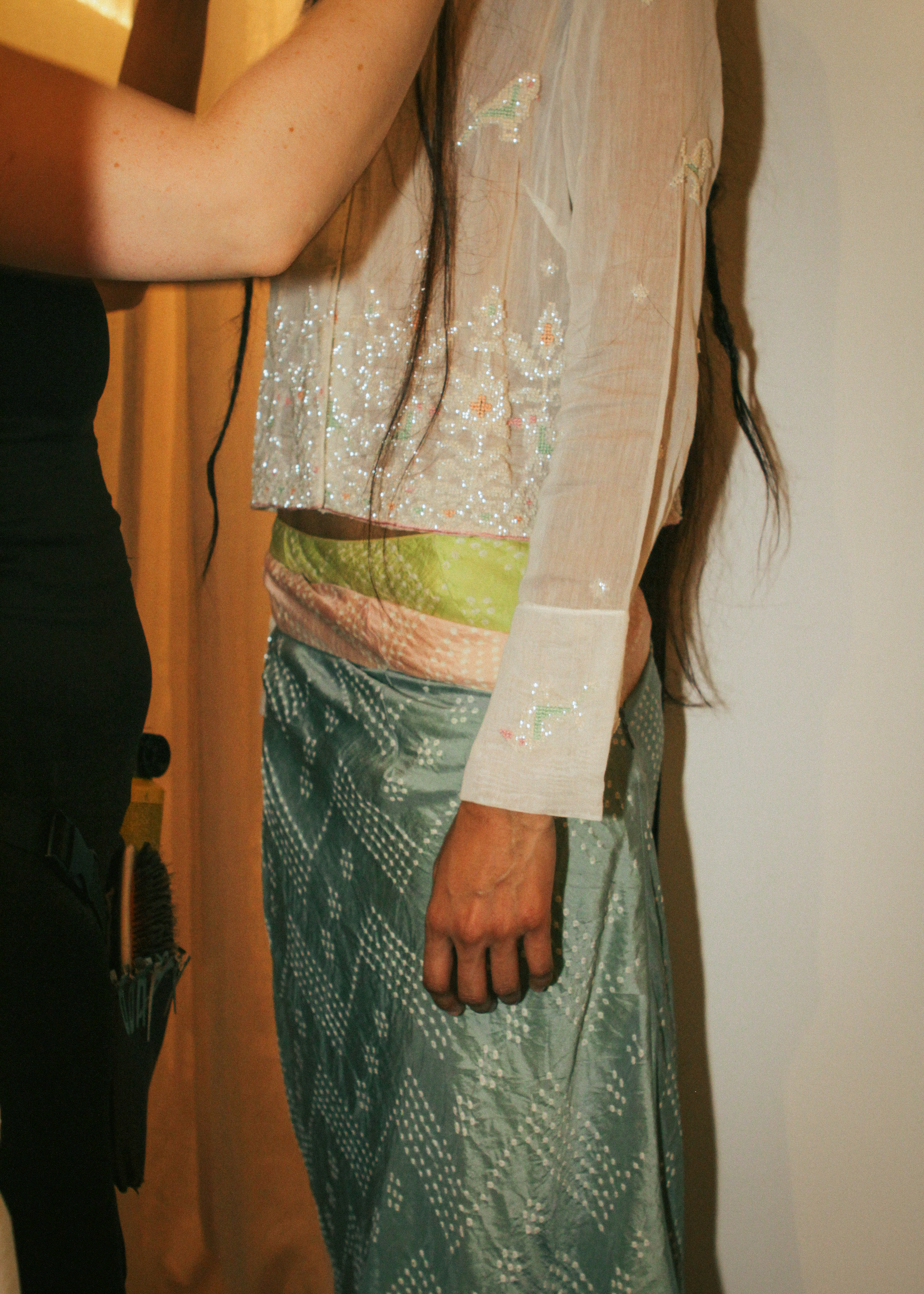
He found Indian textiles in the Lanvin archives, stripped away their original colour, transformed their motifs and turned them into removable plastrons for evening. A new Hobo bag carries a 1936 haute couture archive button as a closure.
The archive is not being displayed.
It is being dismantled and rebuilt.
That may be the most important gesture in the entire collection.
Because an archive is dangerous when it becomes a catalogue of things a brand used to be. It becomes powerful when it becomes a method of thinking.
Copping seems to be using Lanvin’s past precisely in that way.
Not: Look what Lanvin once did.
But: What can this become now?
This is also why the collection feels less like a tribute than a negotiation.
With Jeanne.
With Elbaz.
With Paris.
With couture.
With femininity.
With the very idea of what a luxury house is supposed to look like in 2026.
The result is, at times, almost stubbornly beautiful.
And that is both its strength and its problem.
Because beautiful does not automatically mean new.
There are moments when the collection feels more convincing as an argument about Lanvin than as an entirely new fashion language. Copping clearly understands clothes. He understands construction, proportion, the atelier, the seductive power of eveningwear. He knows how to make a garment look expensive without making it look vulgar.
But the real test of a creative director at Lanvin is not proving that he understands Lanvin.
It is creating something that Lanvin itself could not have predicted.
That is the distance Copping still has to travel.
And perhaps that is exactly why this collection matters.
Because the temptation, after inheriting a house like Lanvin, is to choose between two extremes: become the archivist, or become the destroyer.
Copping chooses neither.
He is looking for a third language.
One that can acknowledge Jeanne without dressing up as Jeanne. One that can survive Elbaz without imitating Elbaz. One that can use the archive without becoming archival.
That is a much harder project than reinvention.
It is transmission.
And transmission is never clean. Something is always lost. Something changes shape. Something unexpected survives.
Perhaps this is what Soft Power really means.
Not softness as weakness, but softness as persistence. The ability of a garment to survive without shouting. The ability of a house to carry its history without being suffocated by it. The possibility that luxury might once again be about the life of a piece rather than the speed of its image.
In that sense, Copping’s Lanvin belongs to a larger question now haunting fashion: what happens when everything has already been referenced?
When every archive is searchable, every iconic silhouette is instantly reproducible, every historical image can become a moodboard within seconds, originality can no longer simply mean finding a new reference.
It has to mean finding a new relationship between references.
Copping is beginning to build precisely that relationship.
And there is something almost radical about the restraint of the attempt.
No one needs another Lanvin that screams Lanvin.
What Lanvin needs is a language so precise that the name becomes unnecessary.
A woman walks into a room. A coat moves. A shoulder falls differently. A dress reveals itself only when the body turns.
And you know.
That is Lanvin.
Not because you saw the logo.
Not because you recognised a historical quotation.
But because something in the proportion, the sensuality, the intelligence of the garment feels inevitable.
That is the moment when the ghost finally becomes useful.
Because inheritance is not the preservation of the dress.
Inheritance is the possibility of transforming it again.
Copping is not rebuilding Elbaz’s Lanvin. He is not impersonating Jeanne. He is trying to discover what exists after both.
That is where the real story begins.
And perhaps the most interesting question is no longer who owns Lanvin’s past.
It is what Lanvin will be able to do once it no longer needs its ghosts to prove who it is.