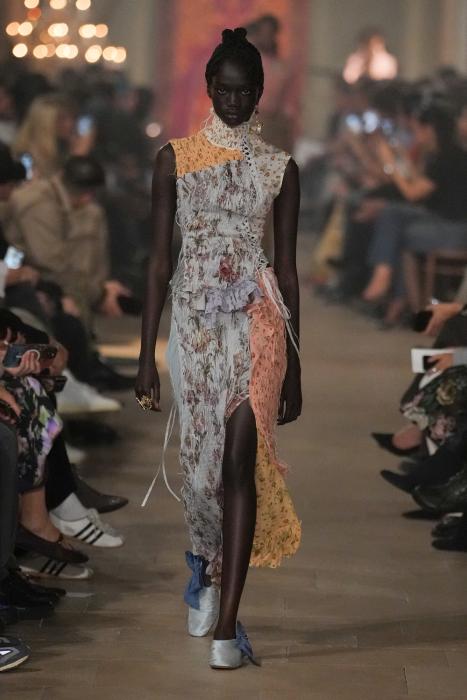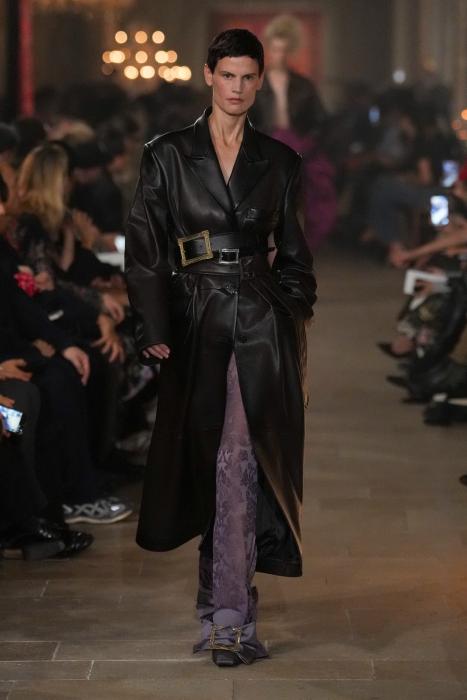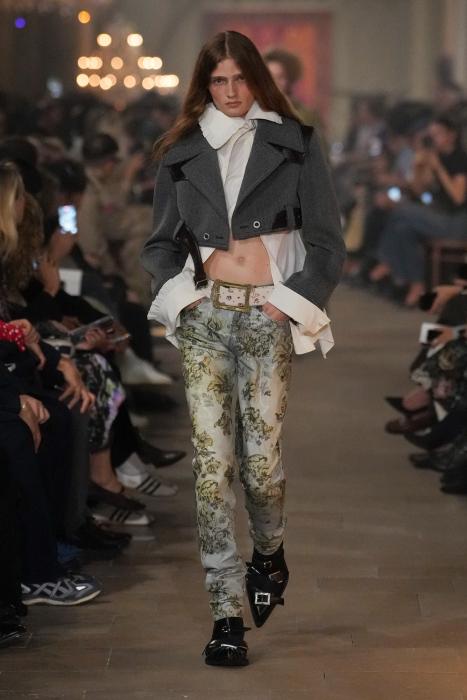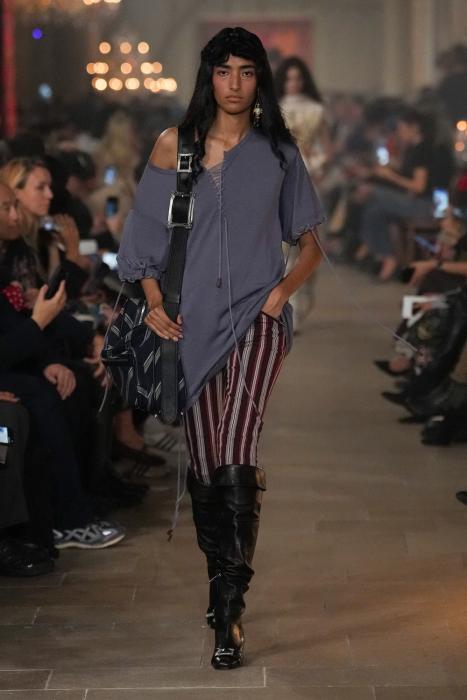
Acne Studios SS27 rewrites fashion history through denim, Rococo opulence and New Romantic rebellion, bringing pirates, punk and aristocratic excess into a radically contemporary wardrobe.
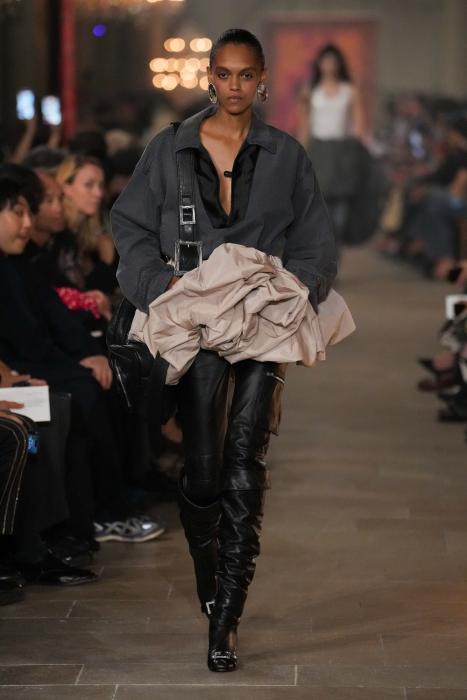
The Acne Studios Spring/Summer 2027 collection, titled Denim Hystoria, takes us on a journey through different eras and visual worlds, evoking the atmosphere of seventeenth- and eighteenth-century European courts. The show took place at the Collège des Bernardins in Paris, where a striking installation by artist Faig Ahmed, featuring his monumental carpets, created an immersive setting suspended between historical opulence and a sense of rebellious romanticism.
Under the creative direction of Jonny Johansson, the collection brings together two seemingly distant worlds: Acne Studios’ origins in denim and the history of European dress. Its starting point is the classic five-pocket jean from 1996, the year the brand was founded, which is juxtaposed with historically inspired silhouettes defined by draping, sculptural constructions and exaggerated volumes. The reference to 1996 is far from accidental: in 2026, Acne Studios celebrates its 30th anniversary, turning the collection into a reflection on the brand’s own origins and identity.
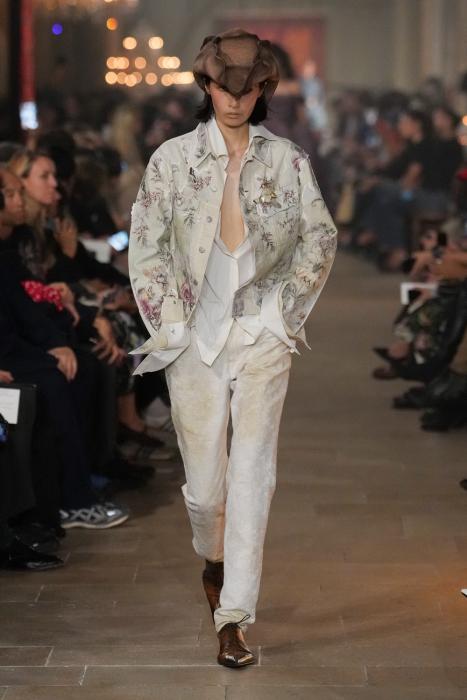
The visual universe of Denim Hystoria, however, does not belong to a single historical period. References to seventeenth- and eighteenth-century courts are layered with elements drawn from pirates, musketeers and punk, creating a continuous tension between aristocratic codes and subversive aesthetics.
Acne Studios and the New Romantic inspiration
Another important key to understanding the collection is the British New Romantic movement, a subculture that emerged between the late 1970s and early 1980s, particularly within London’s club scene. The New Romantics appropriated historical dress and transformed it into something contemporary, theatrical and provocative. Their visual vocabulary drew freely from dandies and aristocrats, pirates, Romantic poets, military uniforms and eighteenth-century court dress, while also incorporating influences from science fiction and Hollywood glamour.
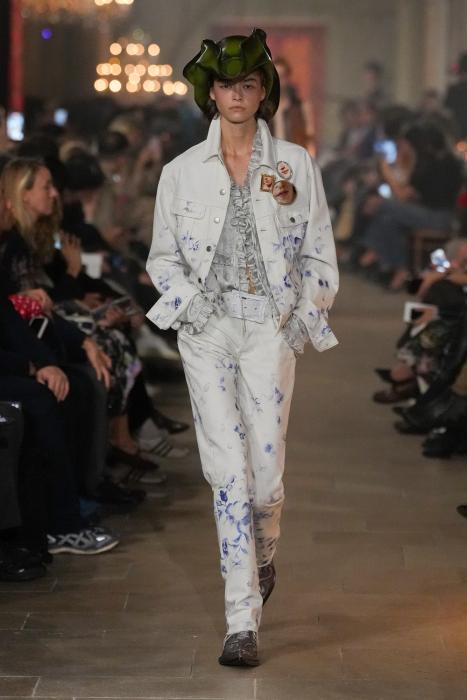
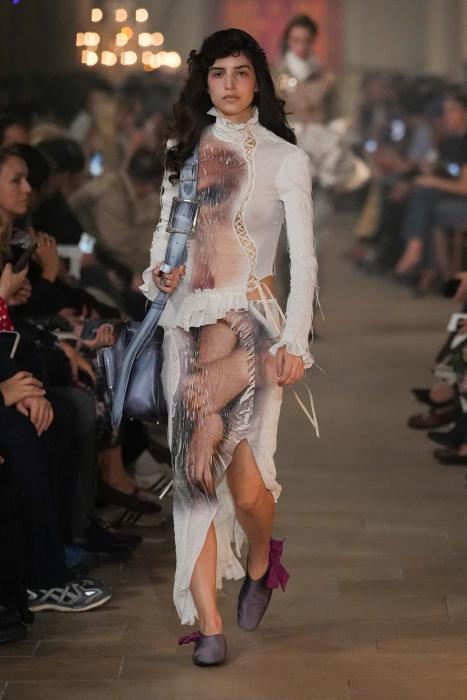
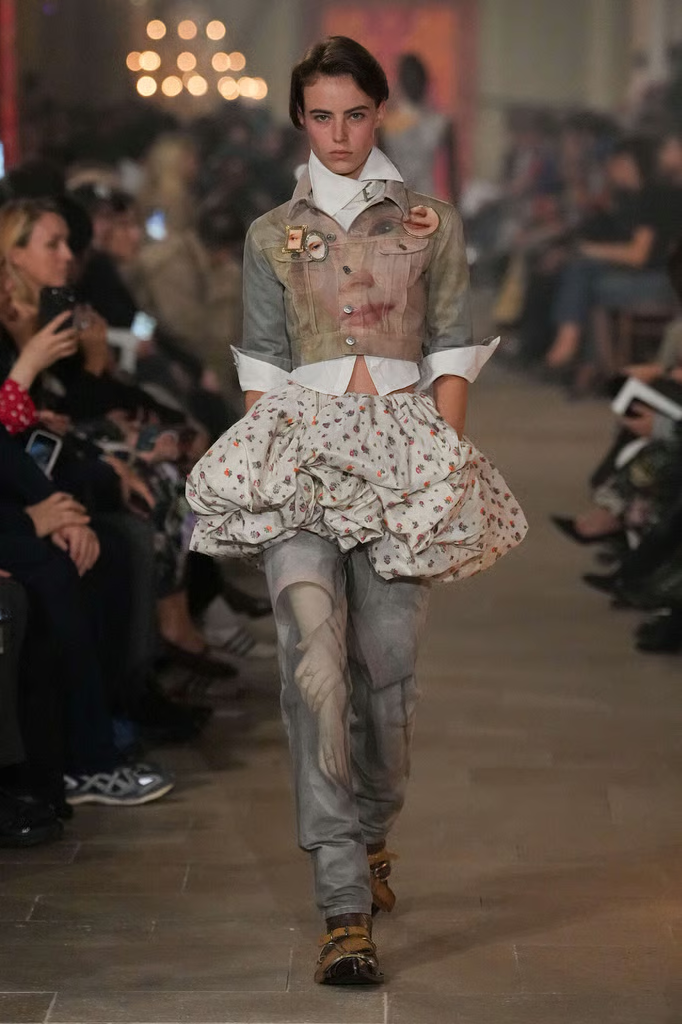
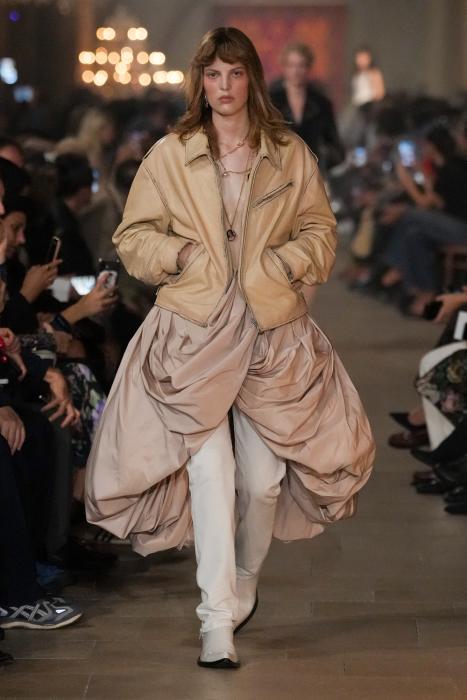
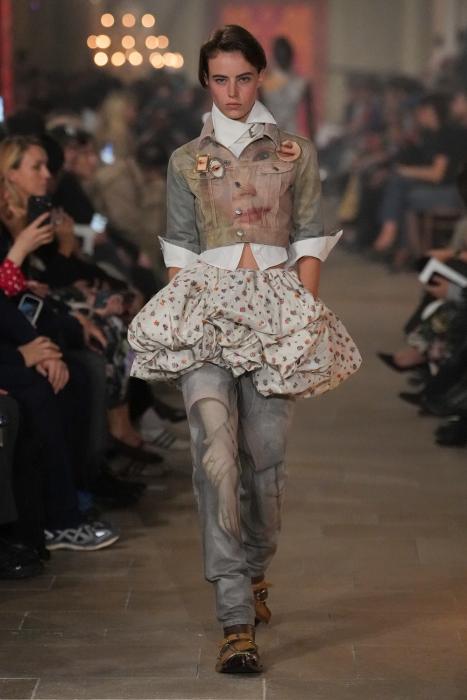
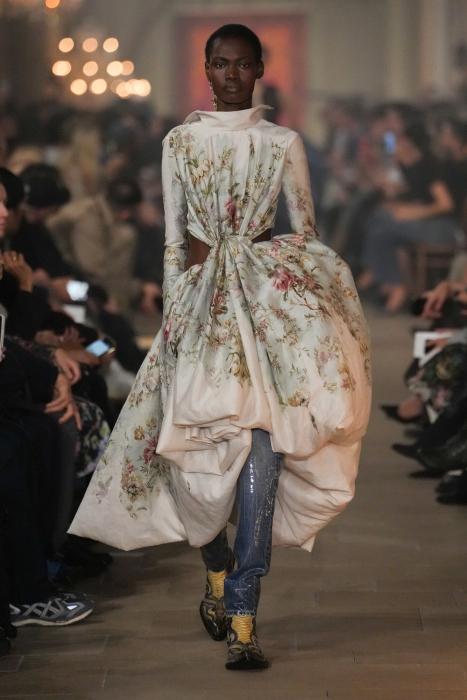
Johansson adopts a very similar approach: history is not faithfully reconstructed, but dismantled and distorted. One of the collection’s most compelling contrasts emerges from the encounter between historical dress and everyday clothing. Monumental, draped skirts are layered over simple jeans, while precious materials and elaborate embellishments coexist with denim.
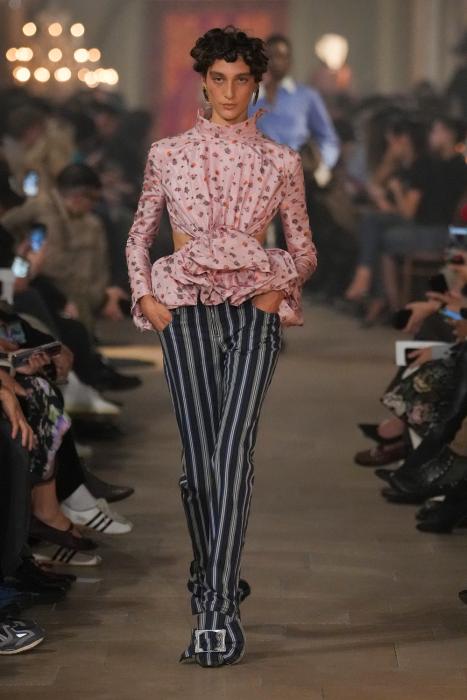
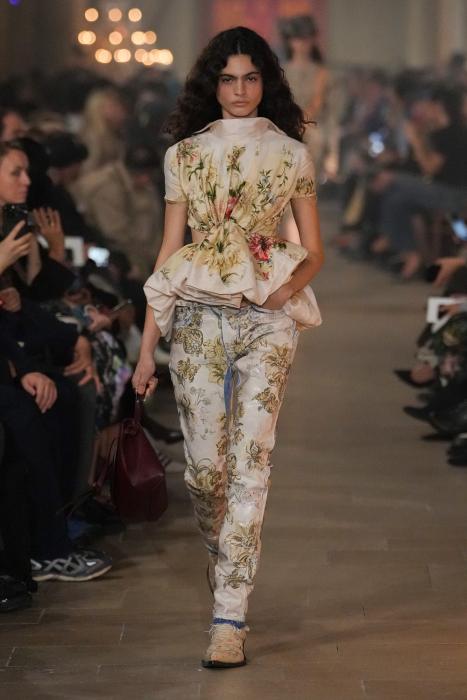
The New Romantic reference also emerges through the show’s soundtrack, which included Prince Charming by Adam and the Ants, a song released in 1981 and closely associated with the theatrical imagery of that scene. In that same year, Vivienne Westwood and Malcolm McLaren presented their celebrated Pirate collection, a pivotal moment in the transition from the rawer punk aesthetic of the late 1970s towards a more historical, romantic and theatrical visual language. Voluminous shirts, buccaneer trousers, boots, draping and references to period dress became tools for reinventing the past rather than simply reproducing it.
The relationship between Pirate, Adam Ant’s visual identity and New Romantic culture therefore helps us understand the visual genealogy revisited by Acne Studios: the subversive energy of punk meets the theatricality of historical dress, producing an eccentric and rebellious form of romanticism. Denim Hystoria reactivates this same tension, translating it into Acne Studios’ contemporary language and, above all, into the material at the very foundation of the brand: denim.
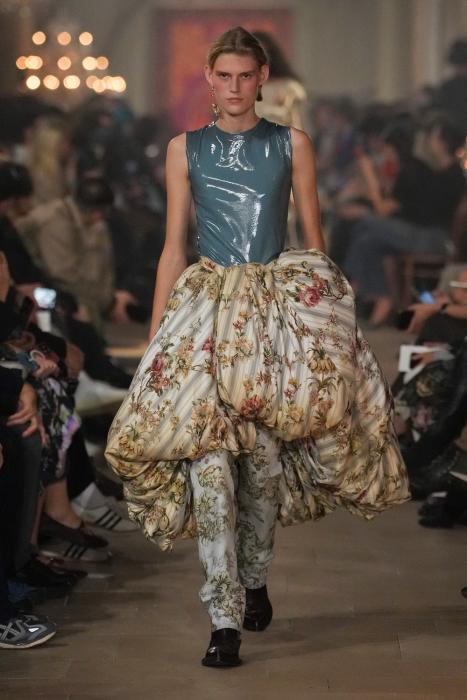
Adding another layer to this network of references is the Vasa, the lavishly decorated seventeenth-century Swedish warship that sank on its maiden voyage in 1628. The reference to the Vasa further expands the collection’s narrative, connecting its nautical and pirate imagery with the opulence of the seventeenth century, while also introducing the idea of magnificence pushed almost to the point of excess.
Overall, Denim Hystoria can be understood as a deliberately altered and non-linear history of dress: the seventeenth and eighteenth centuries, pirates, punk, New Romanticism and 1990s denim all coexist within the same wardrobe. Rather than nostalgically quoting the past, Johansson treats history as material to be deconstructed and reassembled, constantly bringing together aristocracy and rebellion, opulence and everyday life, history and contemporaneity.