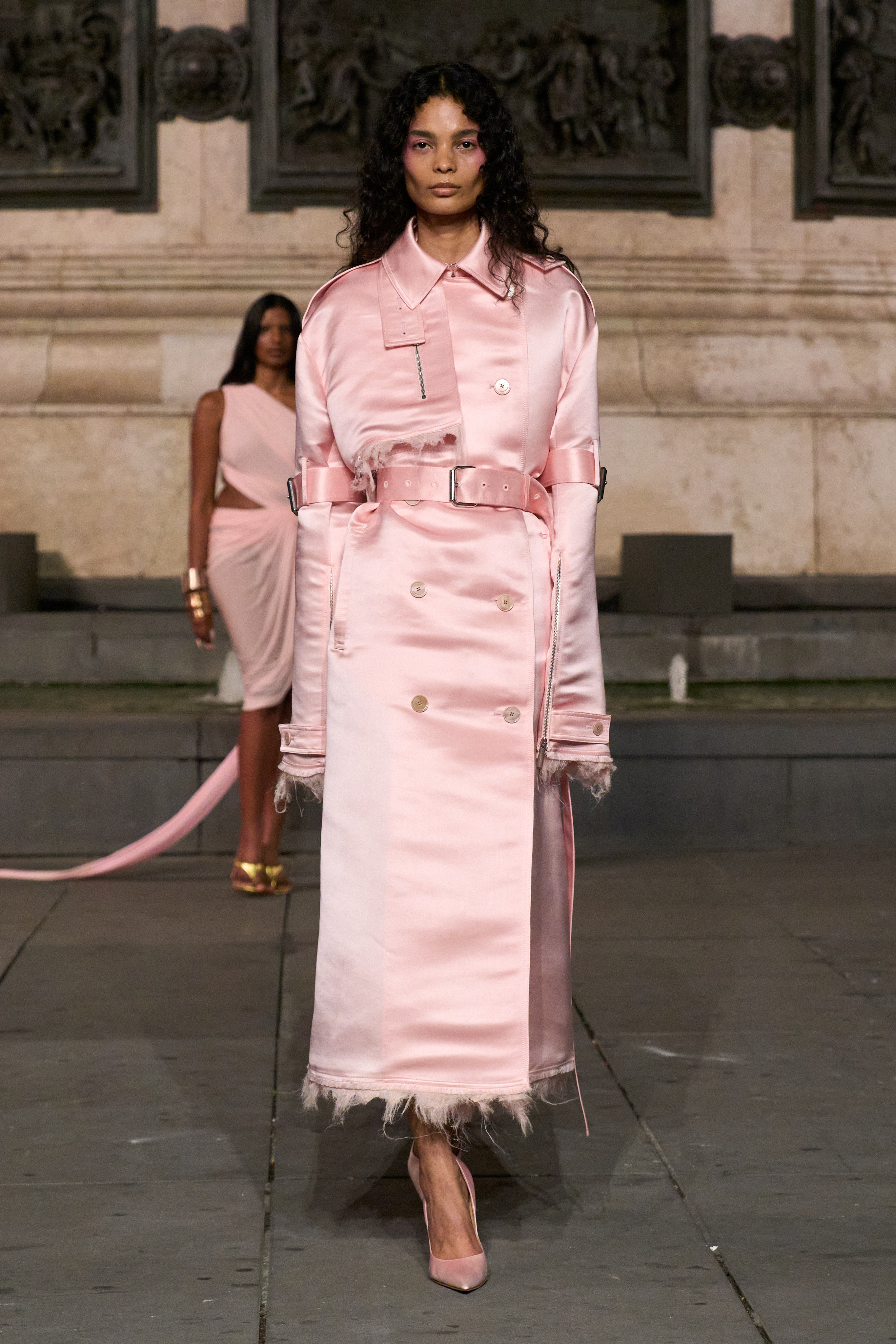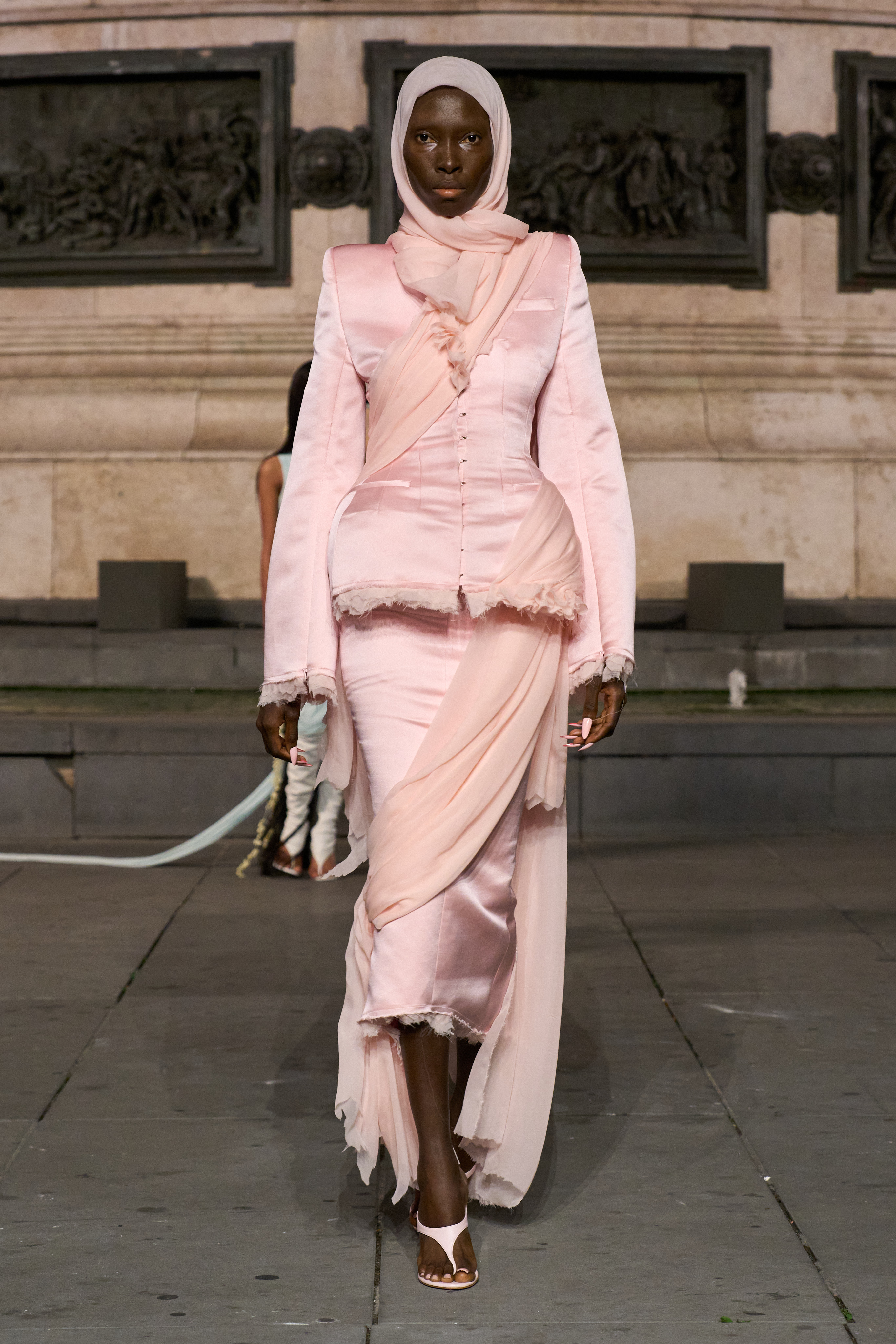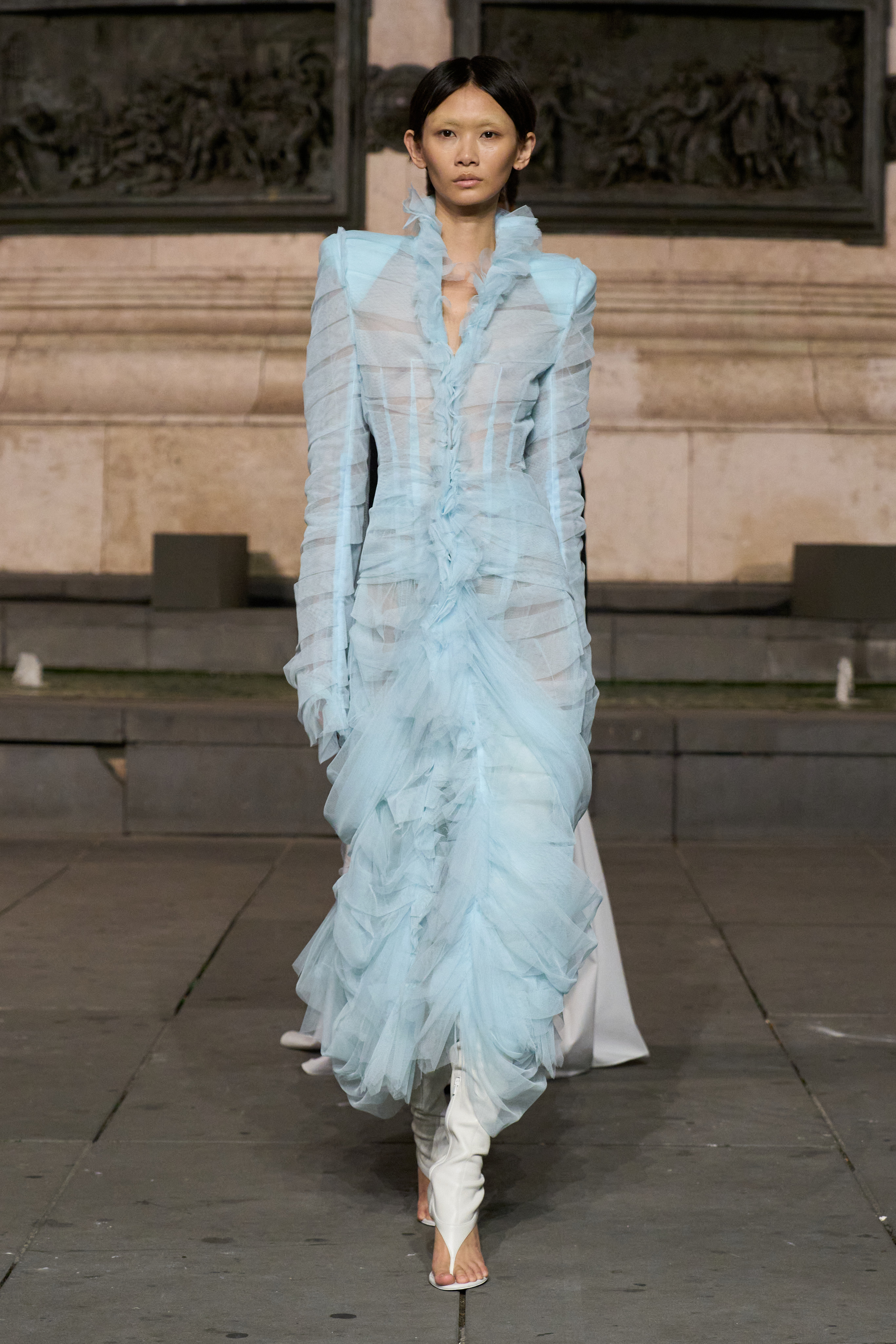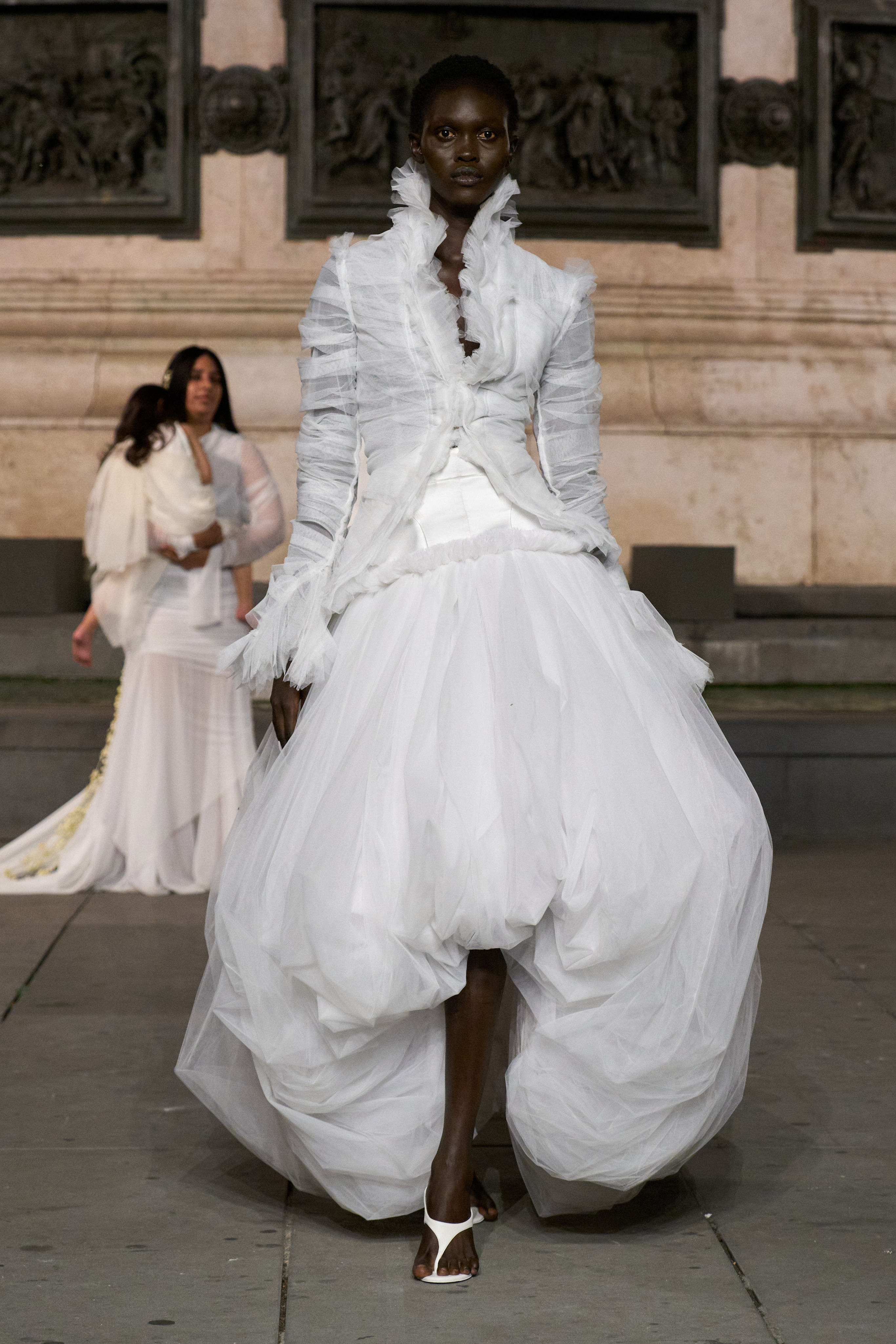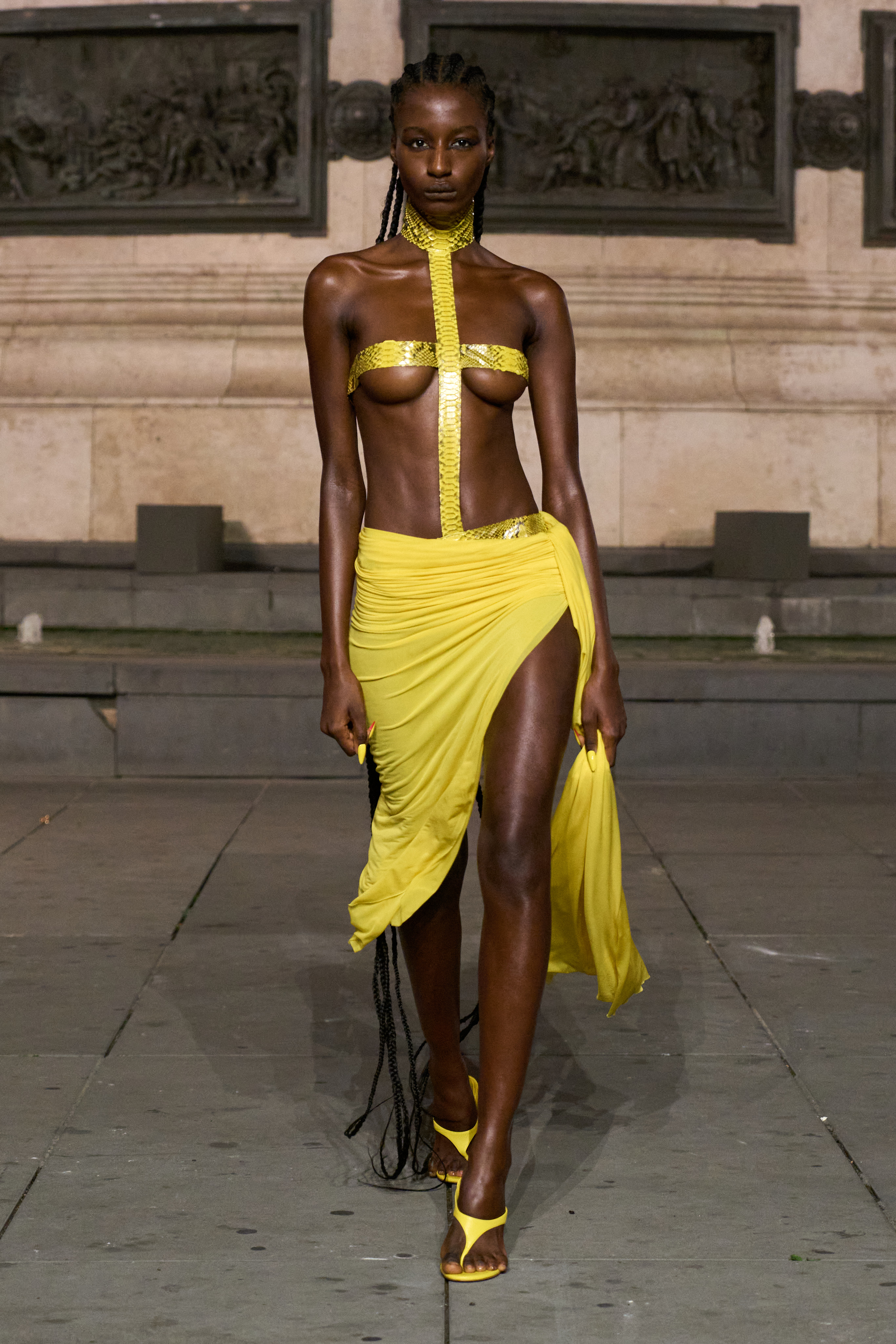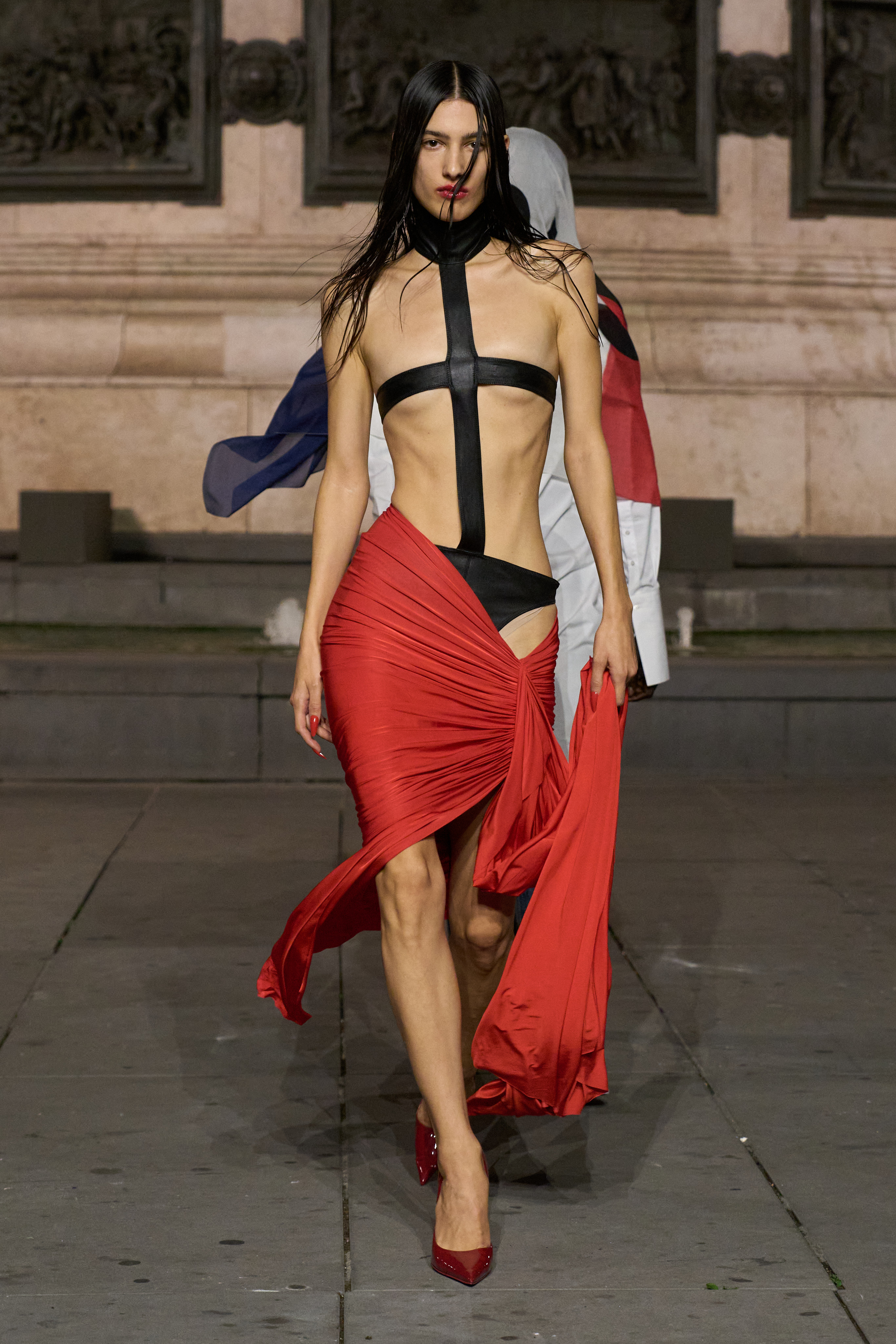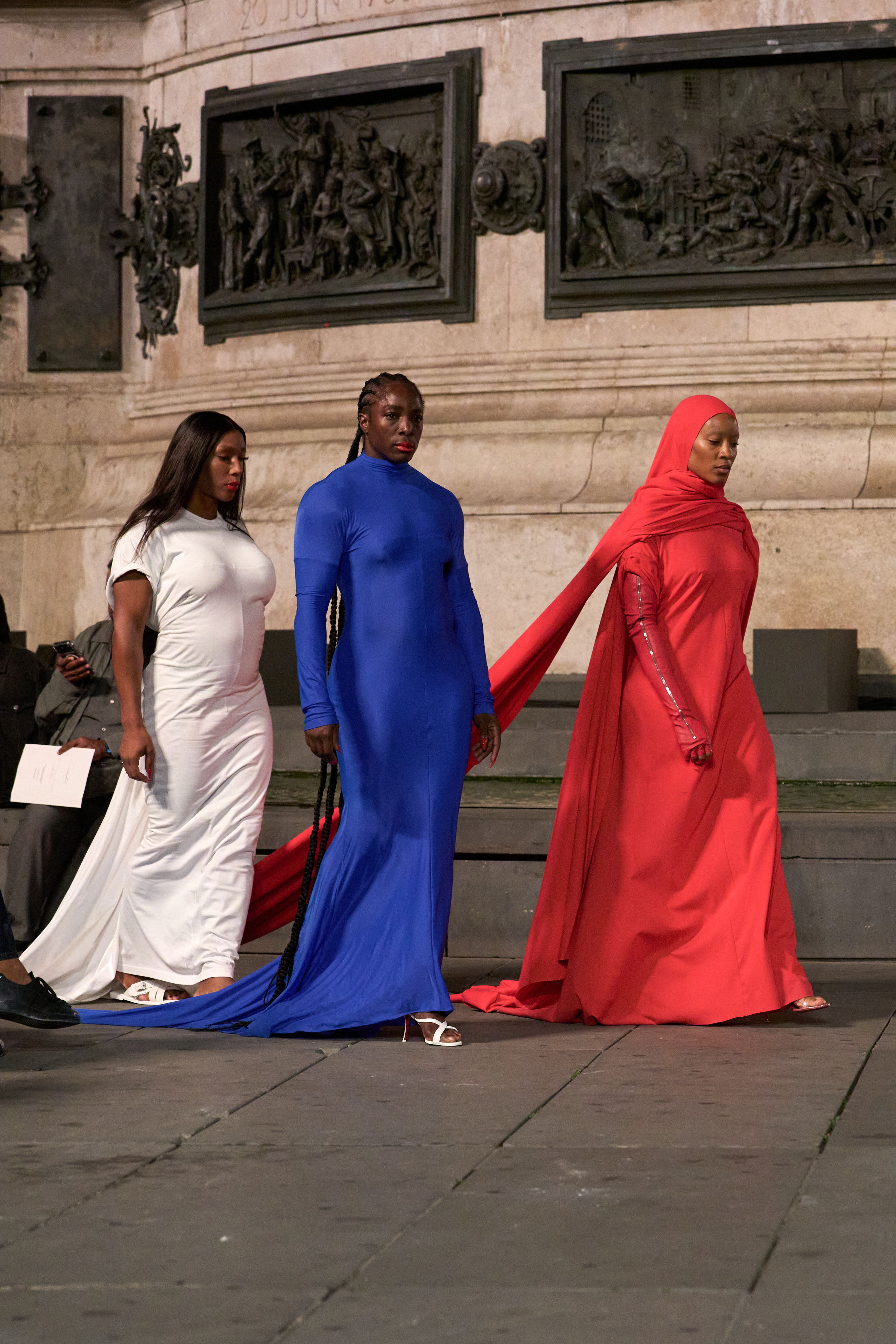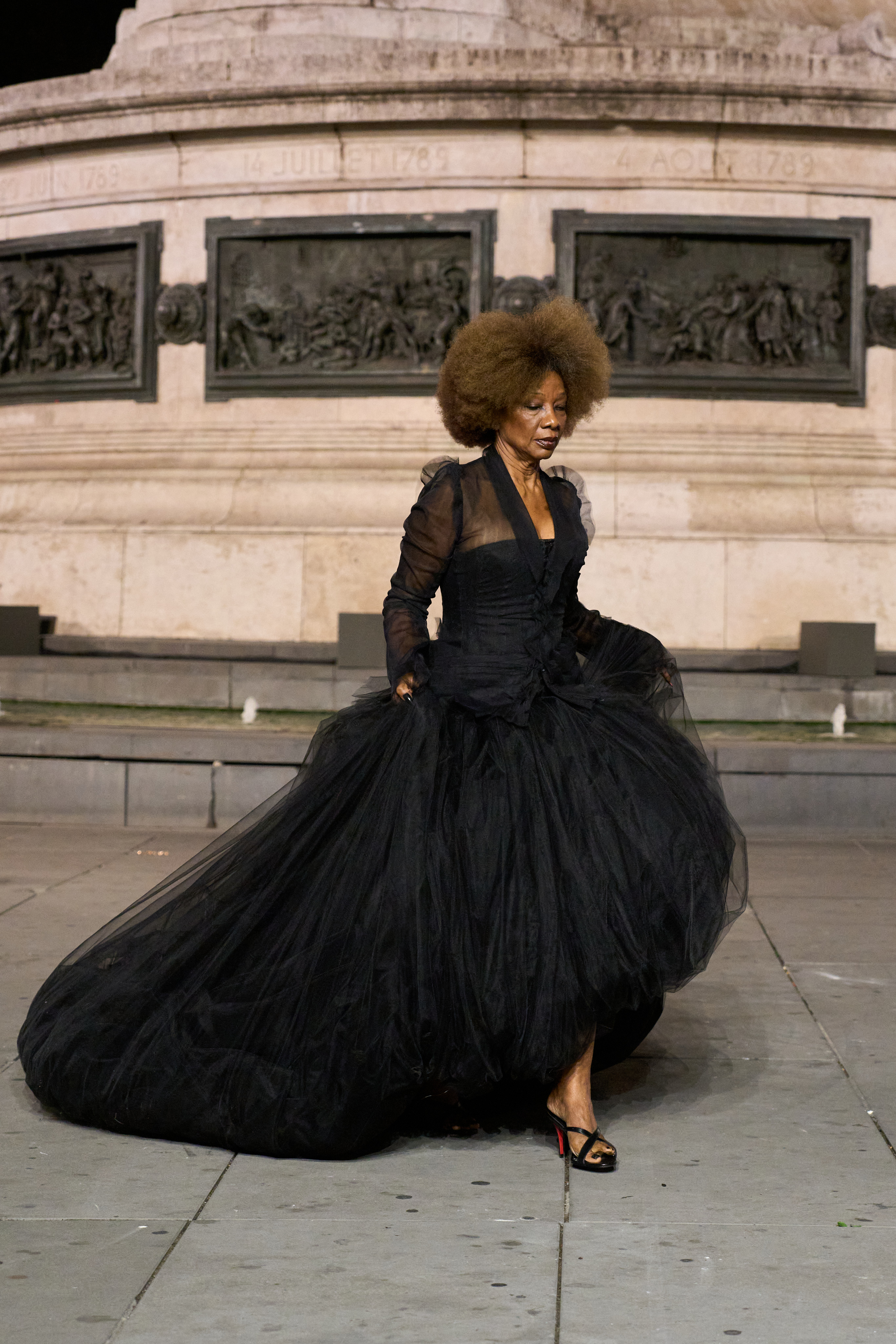
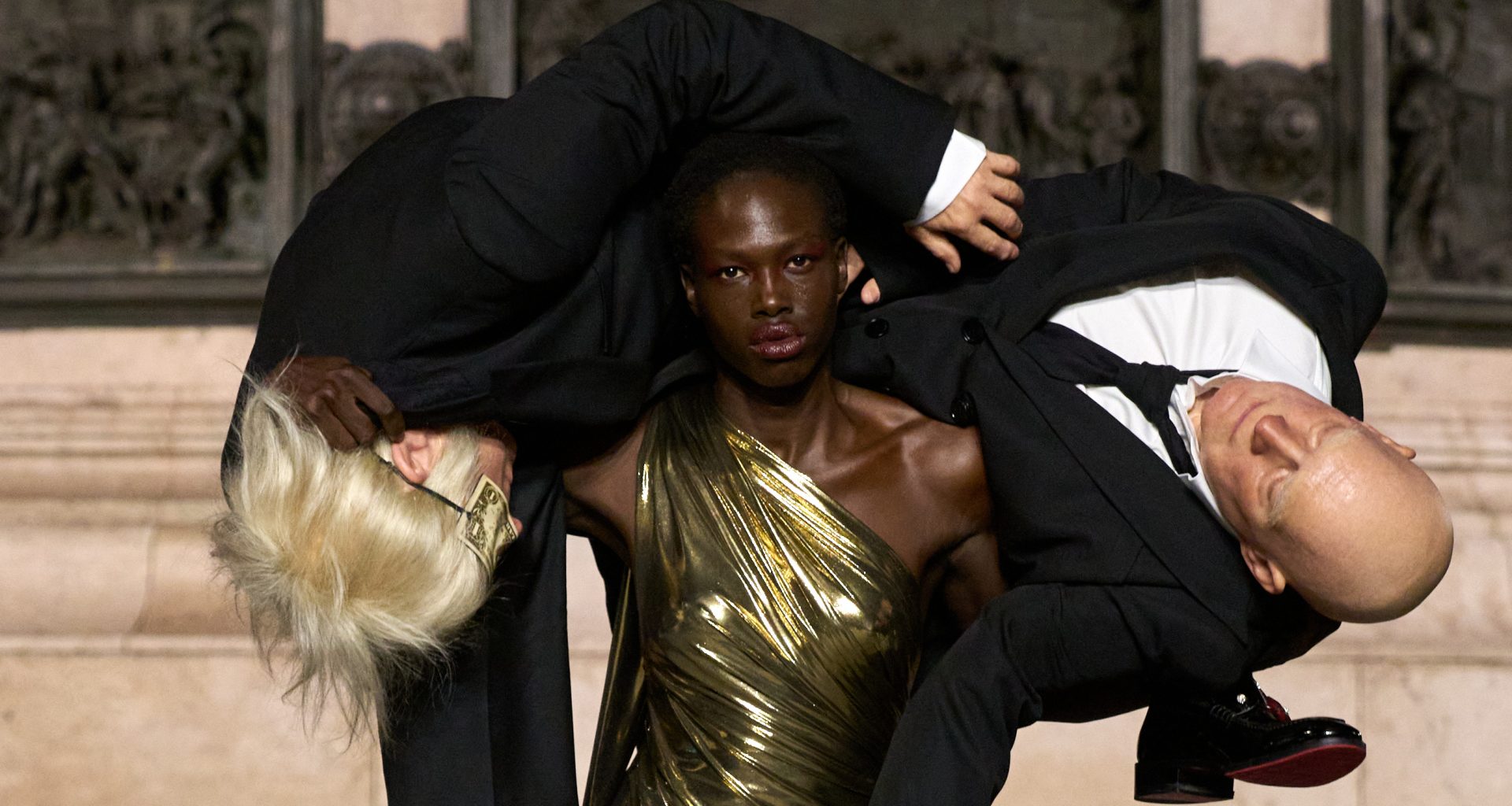
Matières Fécales takes over Place de la République with 99 models, turning SS27 into a radical statement on who carries privilege and who gets to belong.
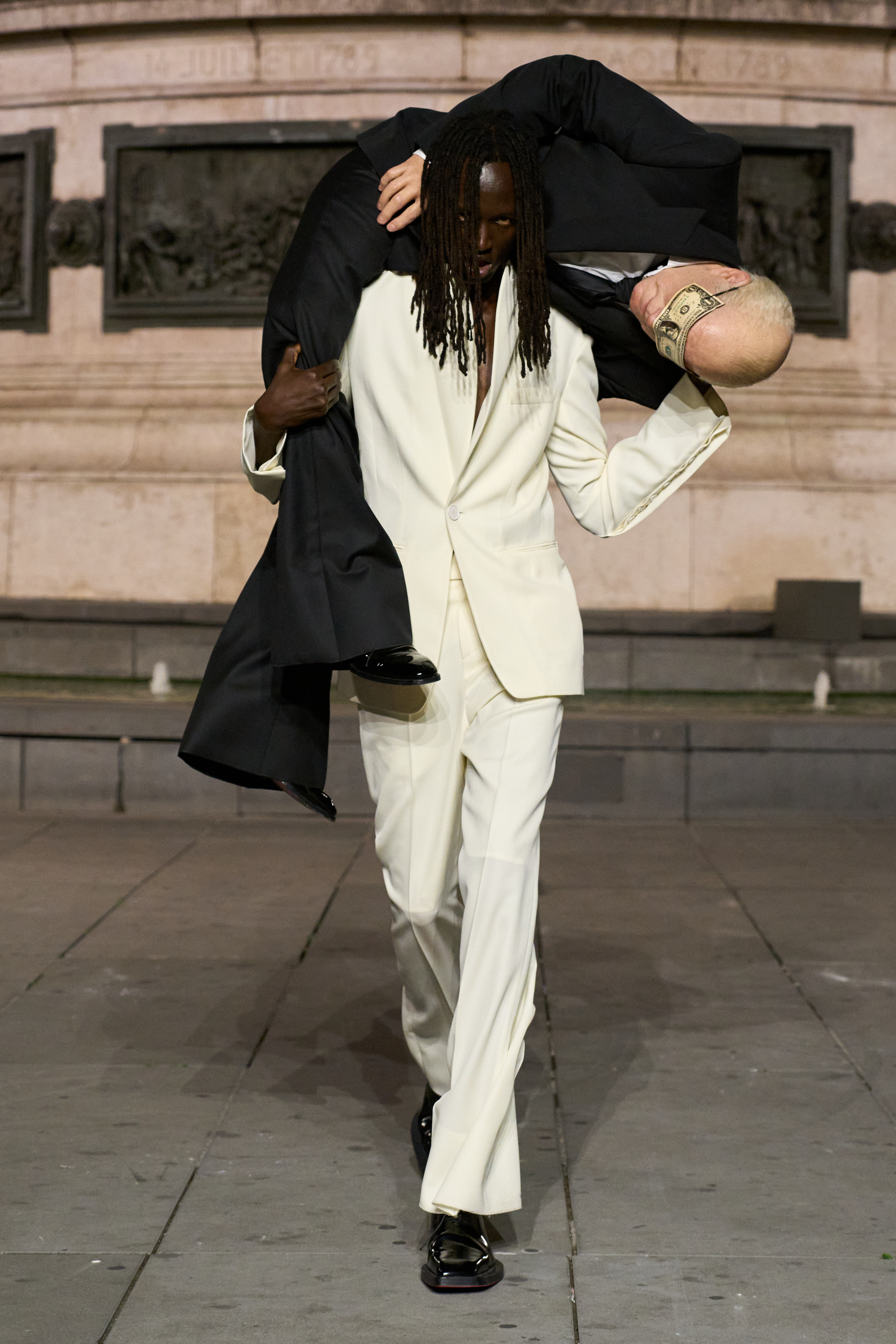
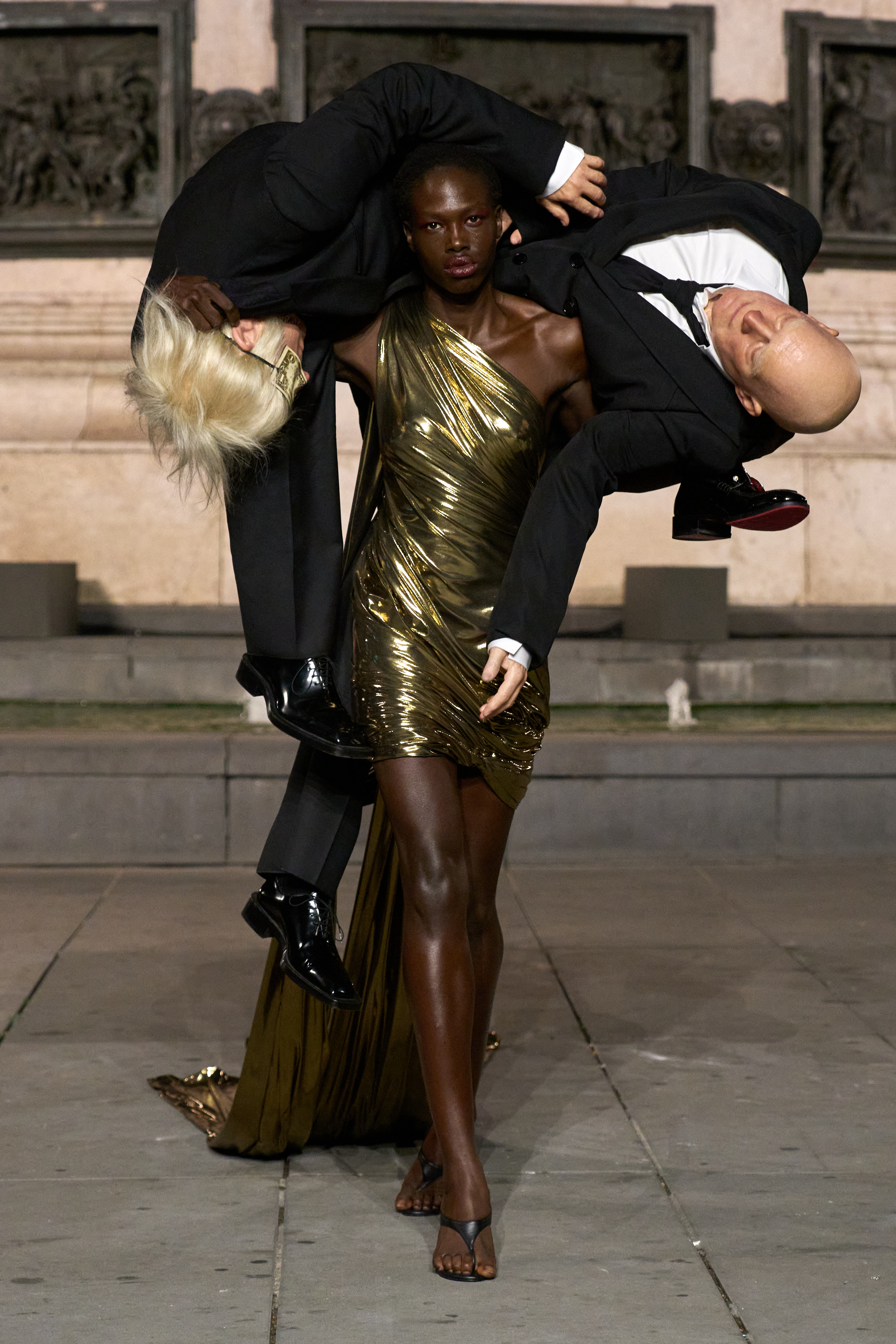
Ninety-nine models of color in the heart of Place de la République, one of Paris’s most emblematic sites of public protest. Once again, Matières Fécales remains uncompromisingly true to its identity. With The Ninety Nine Percent, founders and creative directors Hannah Rose Dalton and Steven Raj Bhaskaran staged what the brand’s team described as its largest show to date, as well as the first Paris Fashion Week show to take place in a public square.
The collection directly responds to its predecessor, The One Percent, which took aim at the narrow elite of the ultra-wealthy. This time, the focus shifts to everyone else: the remaining 99 percent. And the number is more than a concept. The cast consists of 99 people of color, including friends, collaborators and family members of the two founders, making the casting itself an integral part of the narrative.
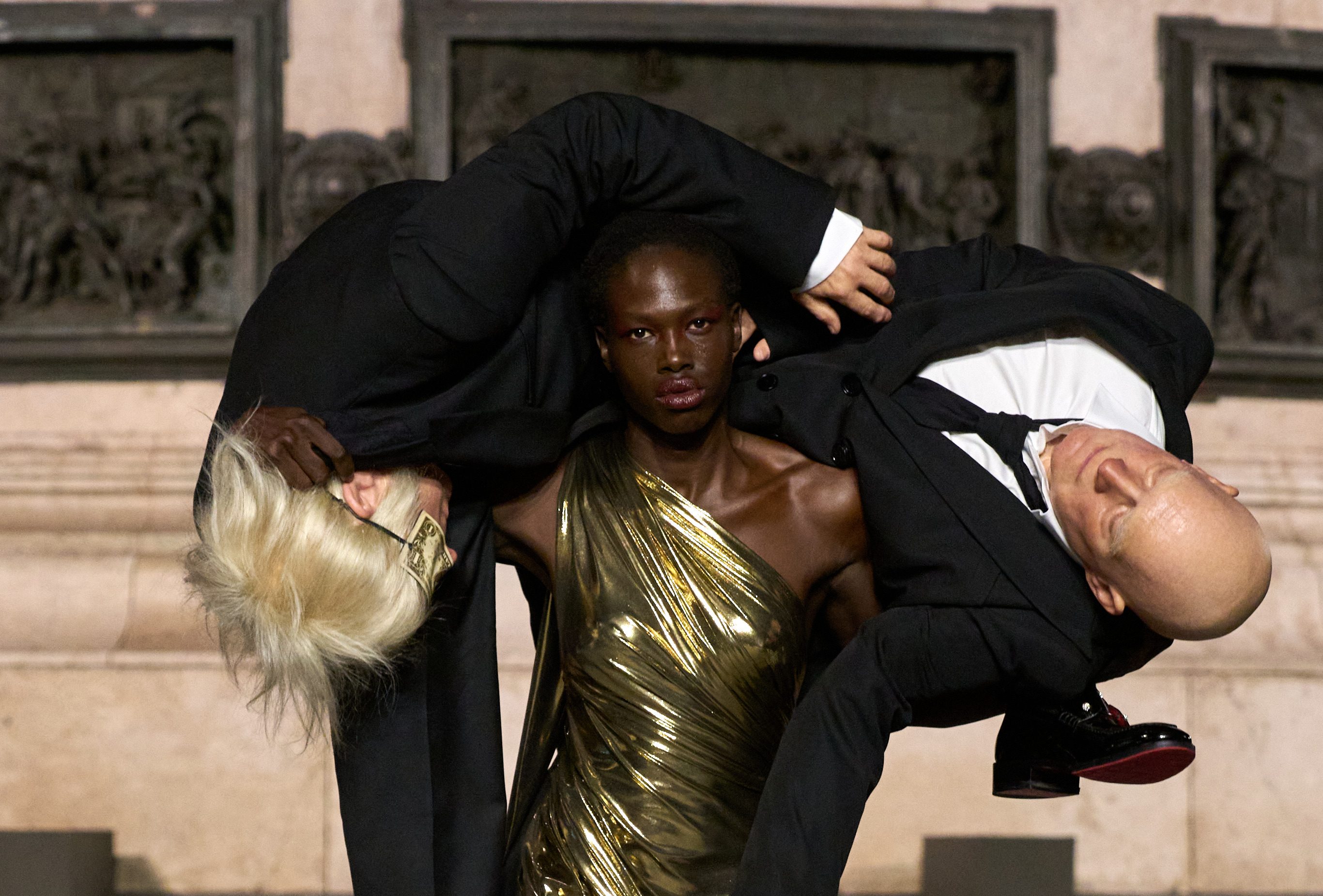
The show opens with two images tied to birth: a pregnant woman and another carrying a newborn in her arms. The circle closes only with the final looks, as two models walk carrying life-size, hyperrealistic figures of wealthy white men on their shoulders, their eyes covered with banknotes. The figures were created by artist Sarah Sitkin.
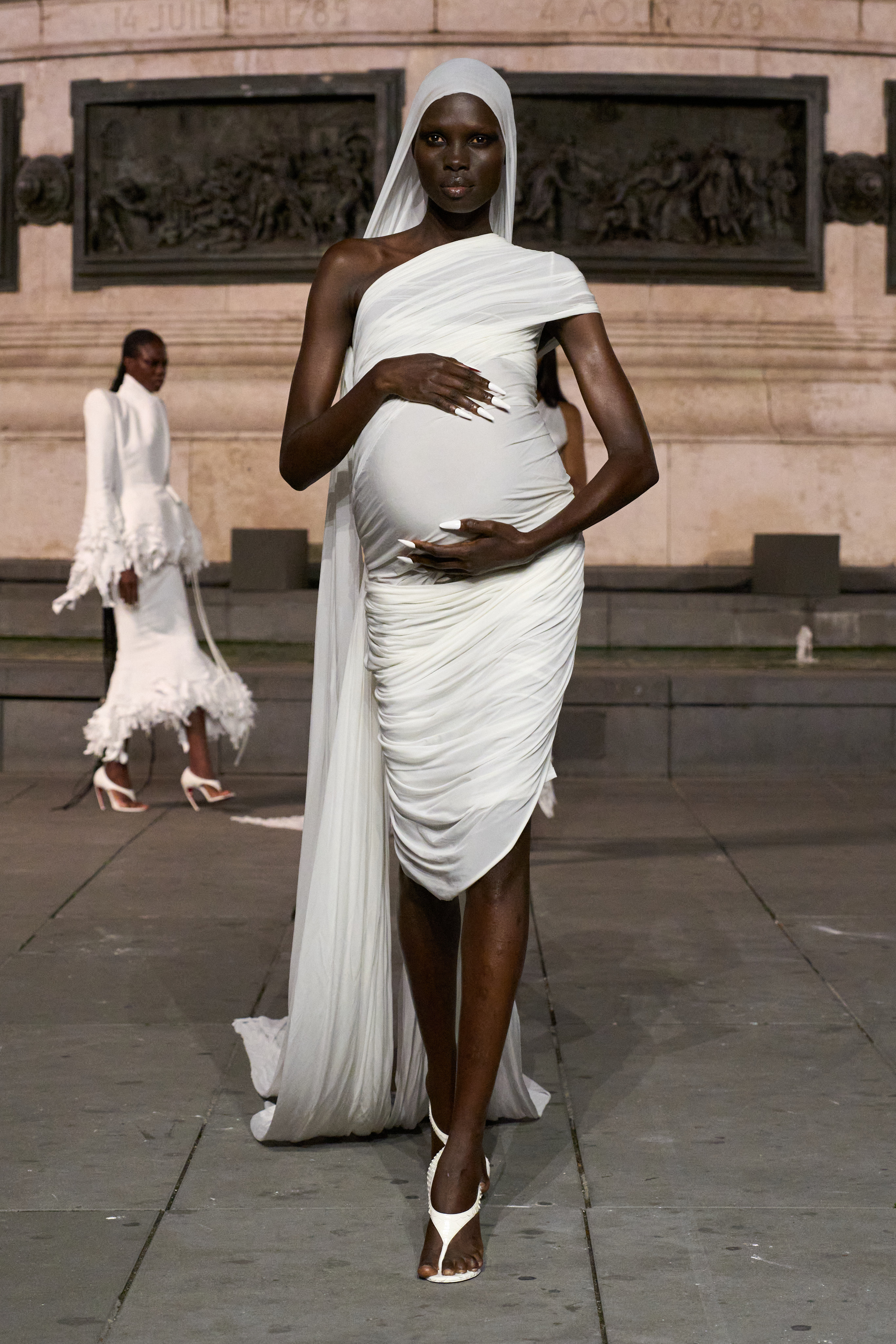
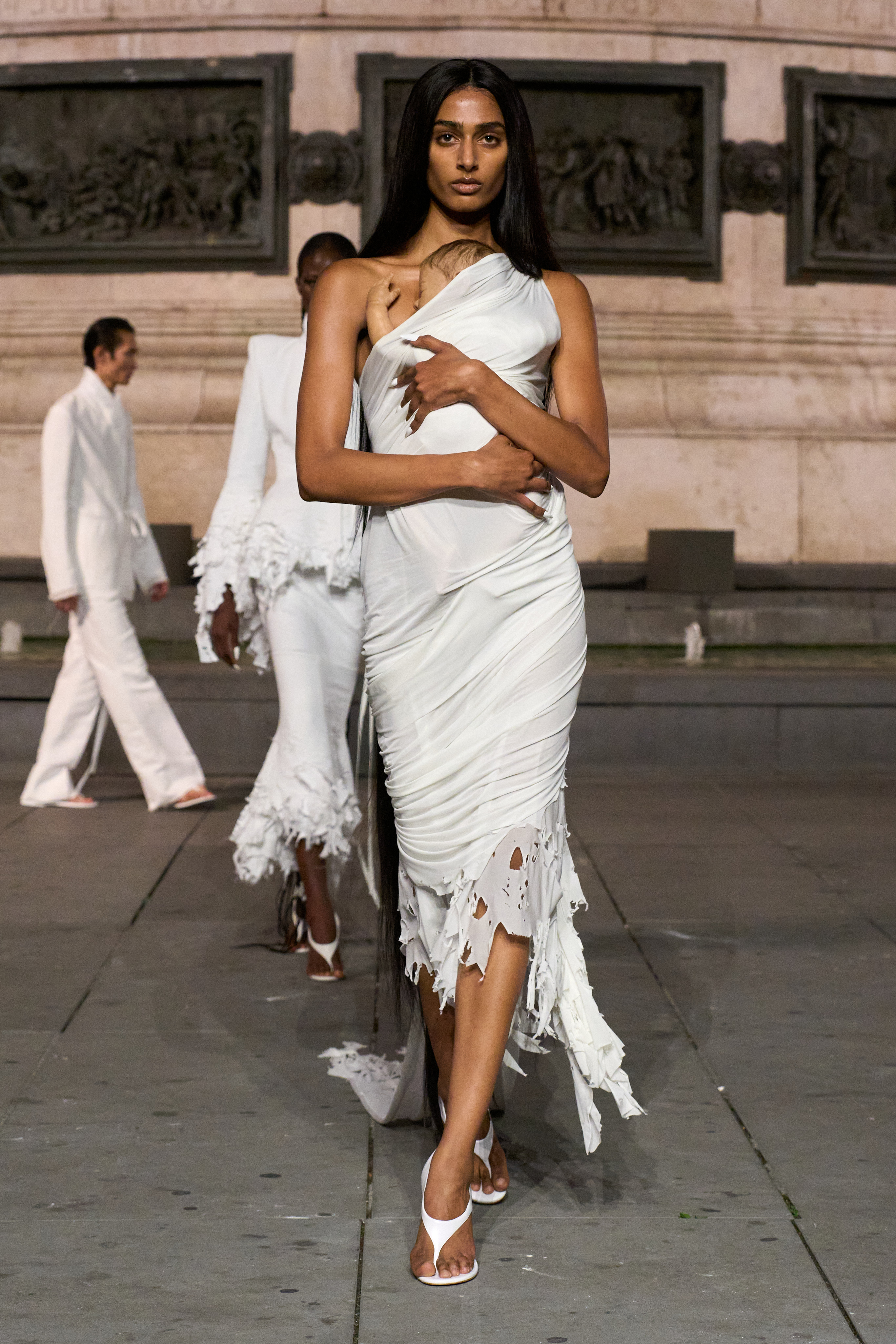
The show is divided into three acts, Family, Tribe and Gods, and draws heavily from Bhaskaran’s personal experience growing up on the outskirts of Montréal, surrounded by different communities, religions and subcultures. The designer sought to place at the center of the runway those who, as he explained, are often denied a voice both within the city and within the fashion industry.
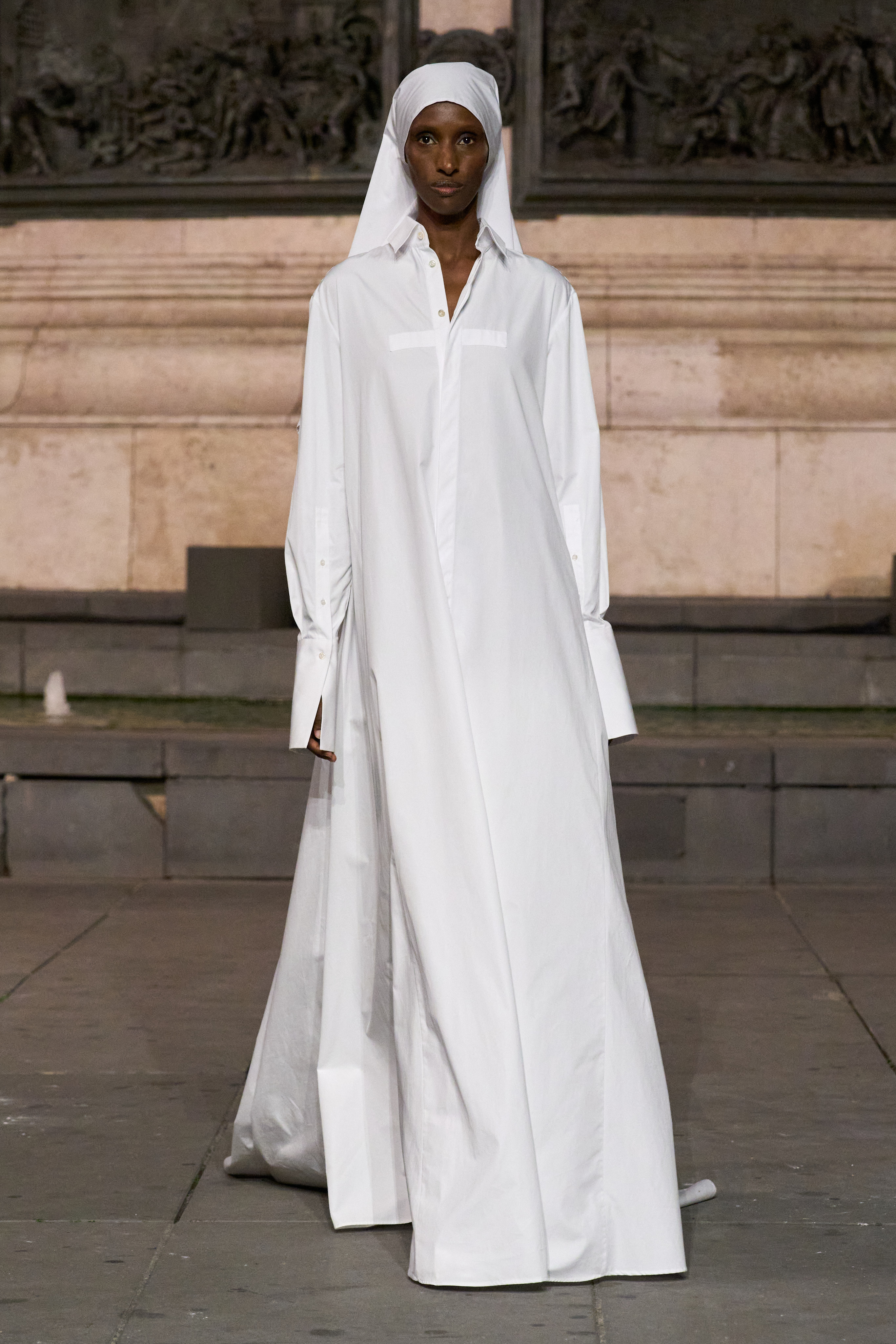
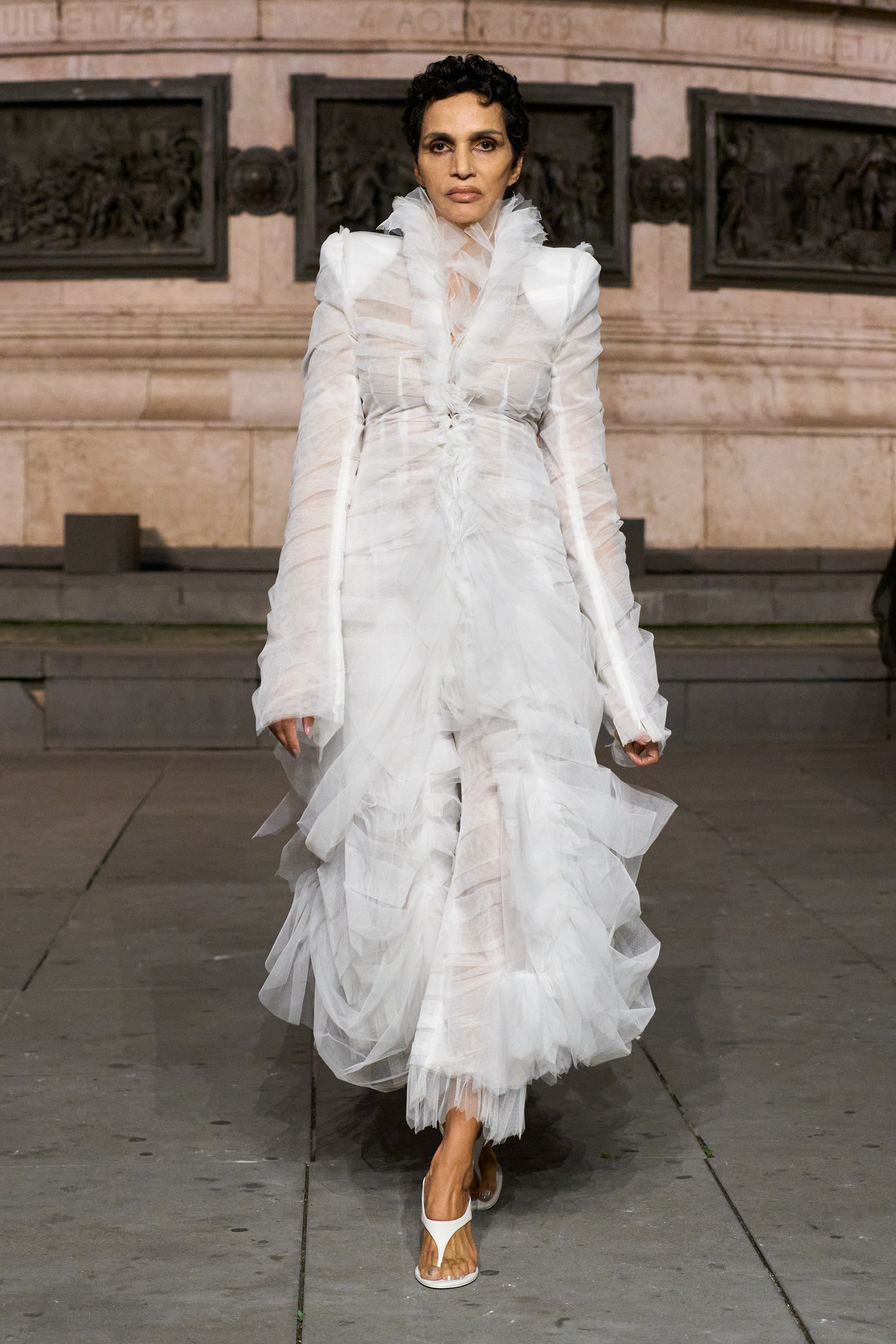
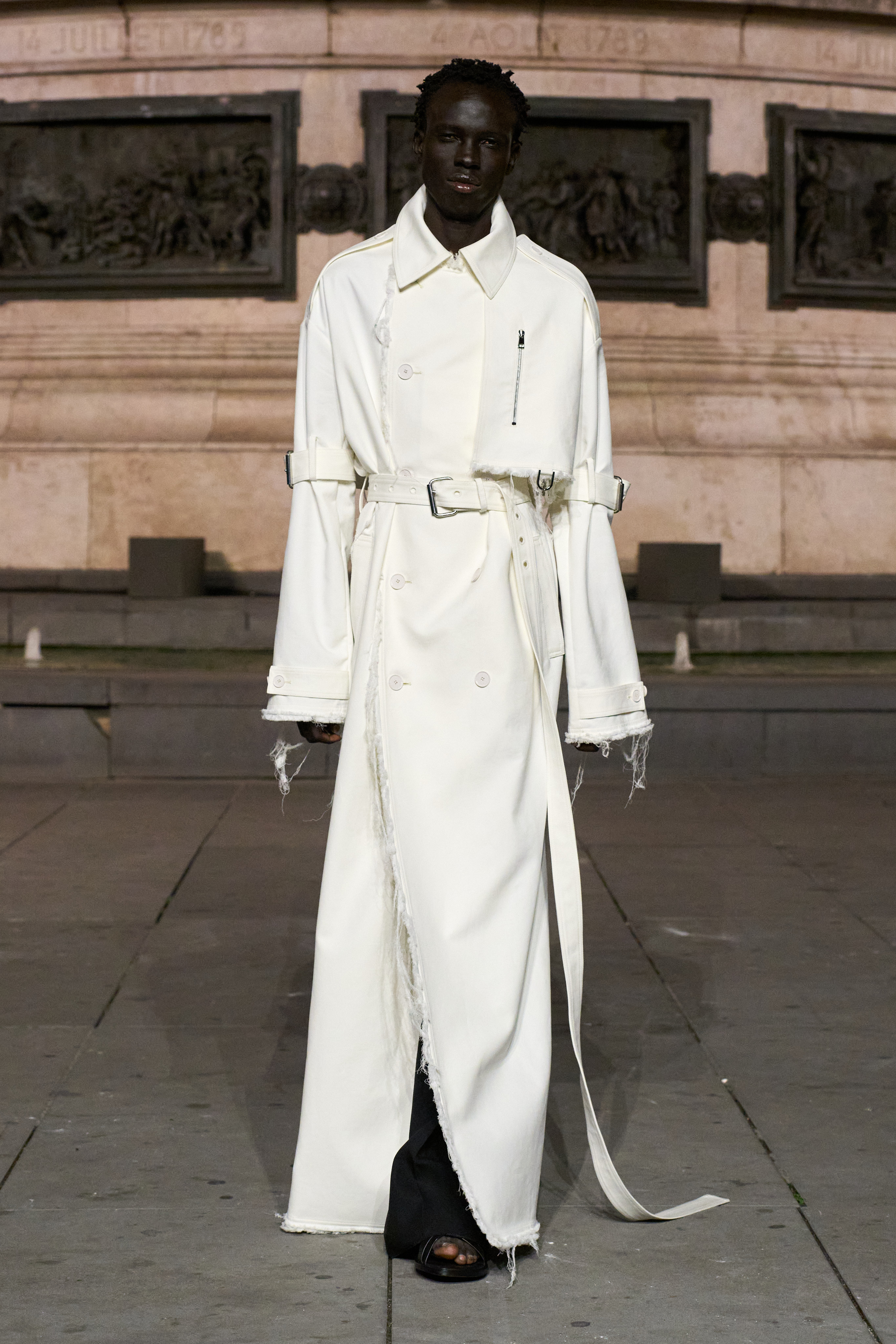
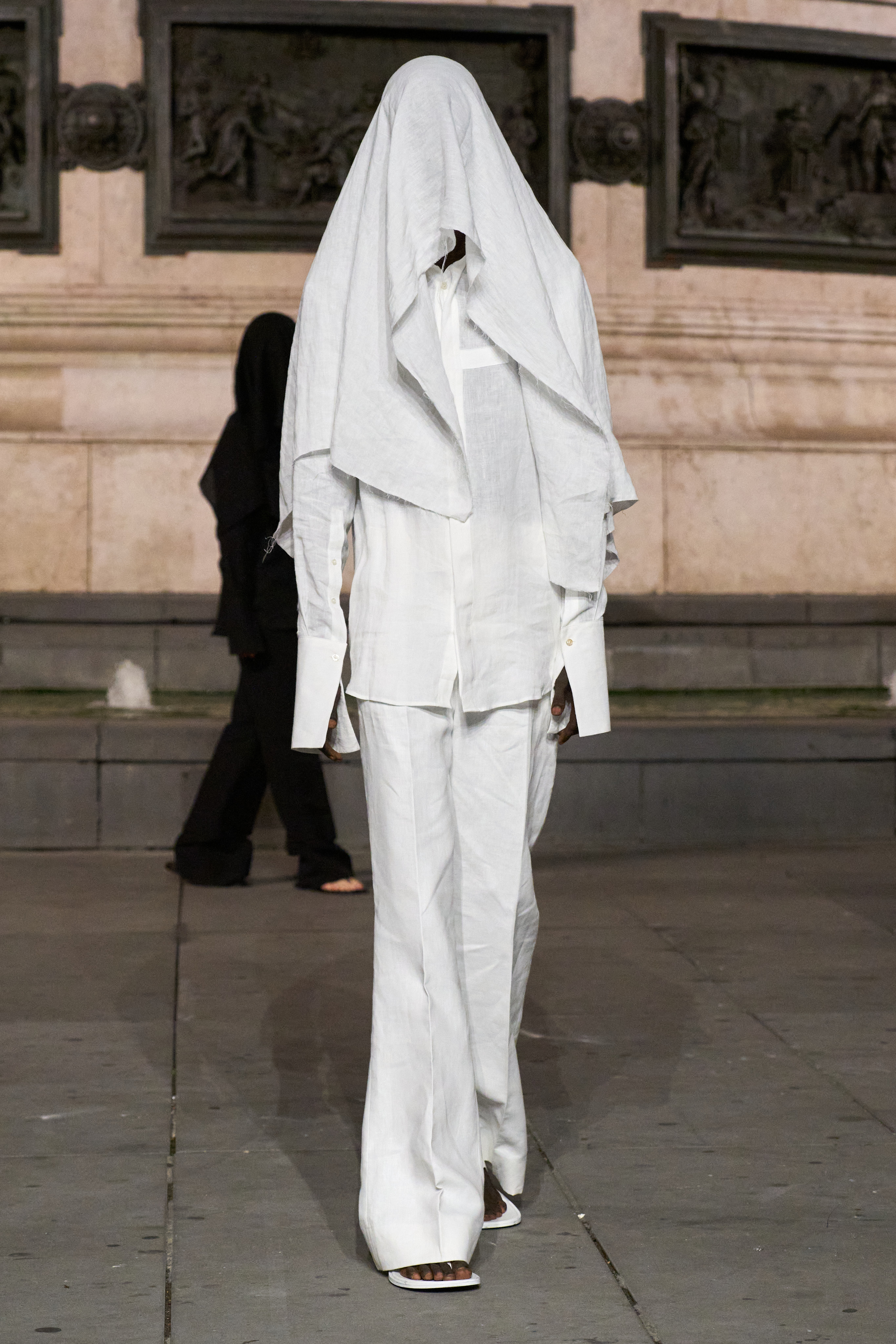
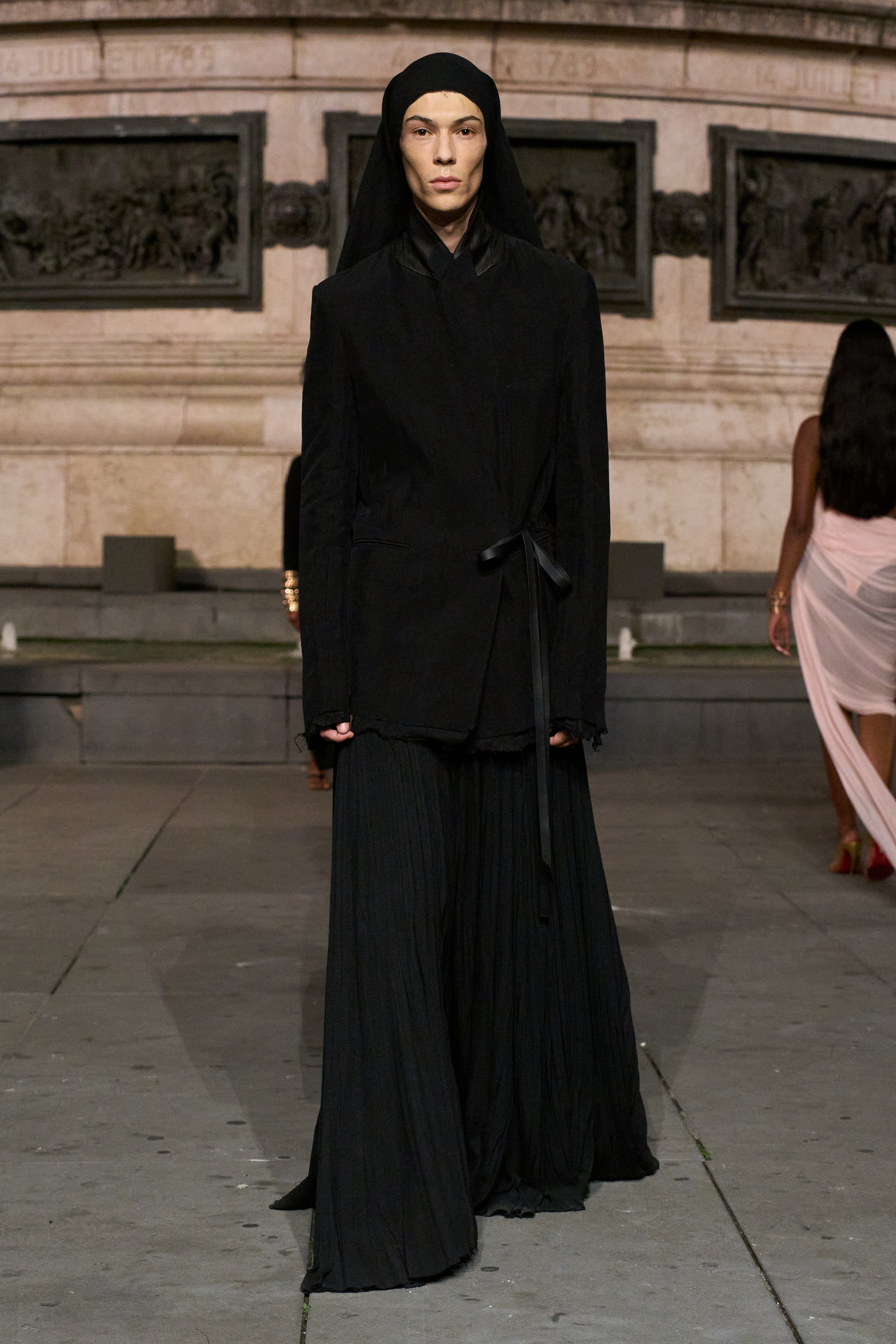
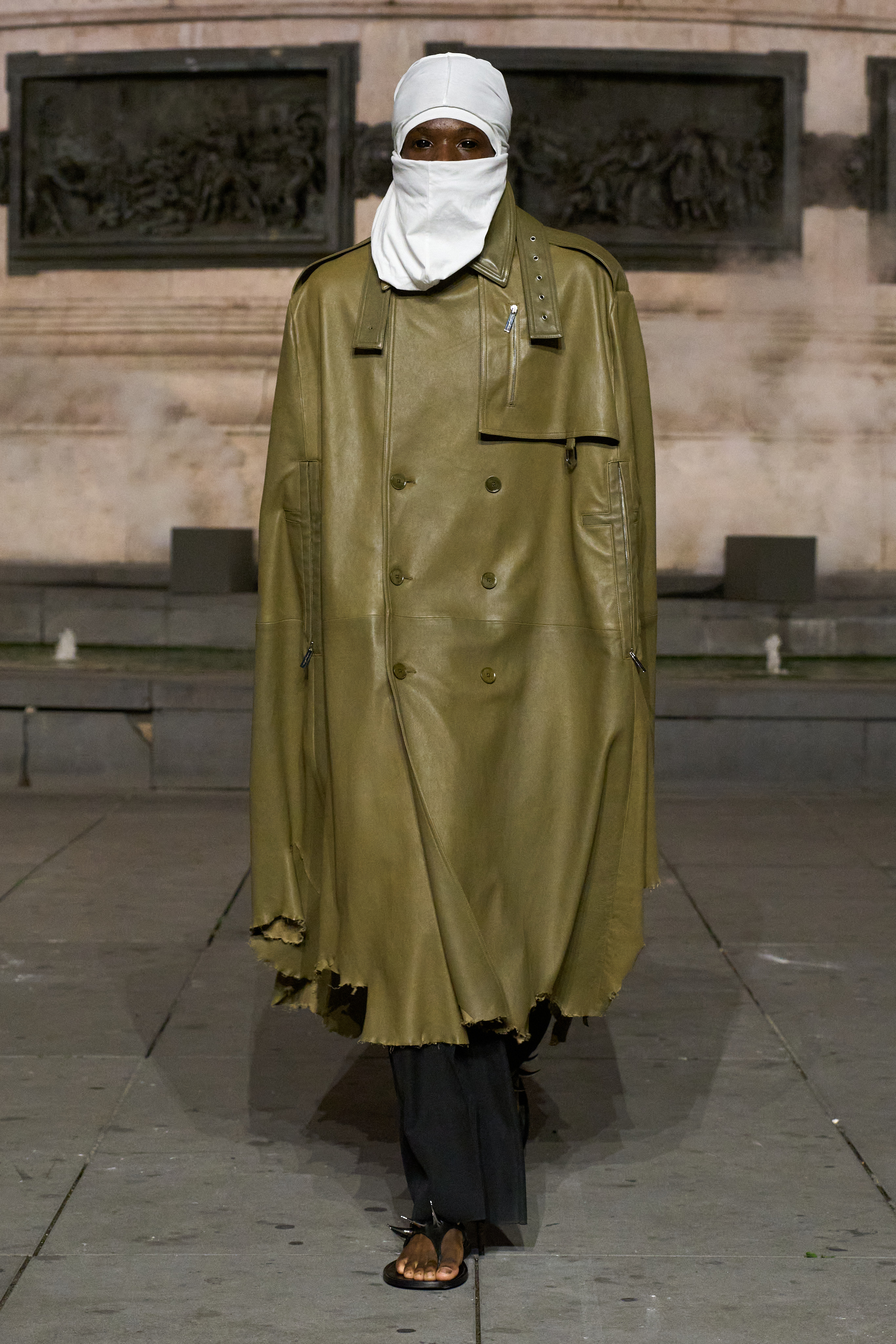
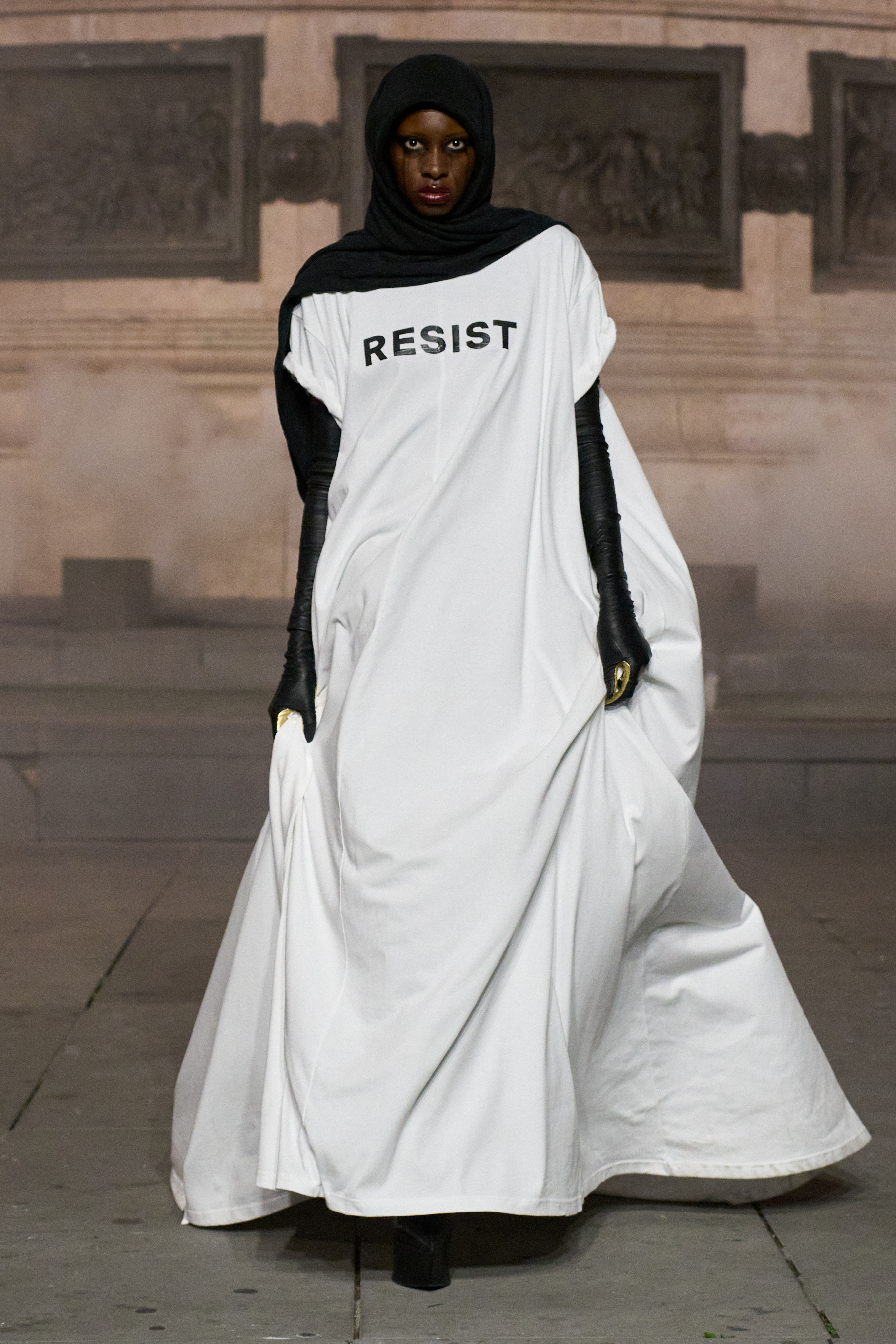
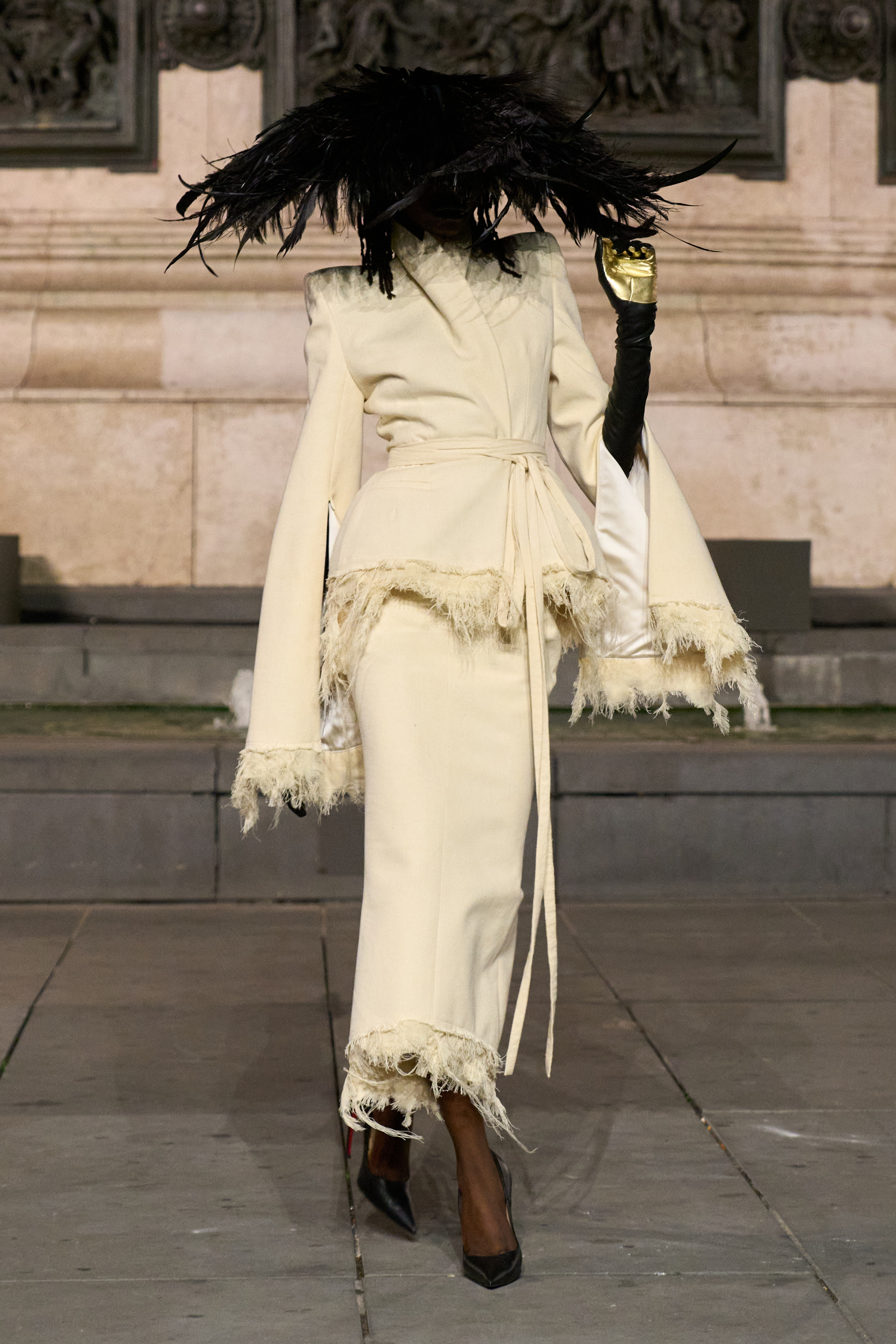
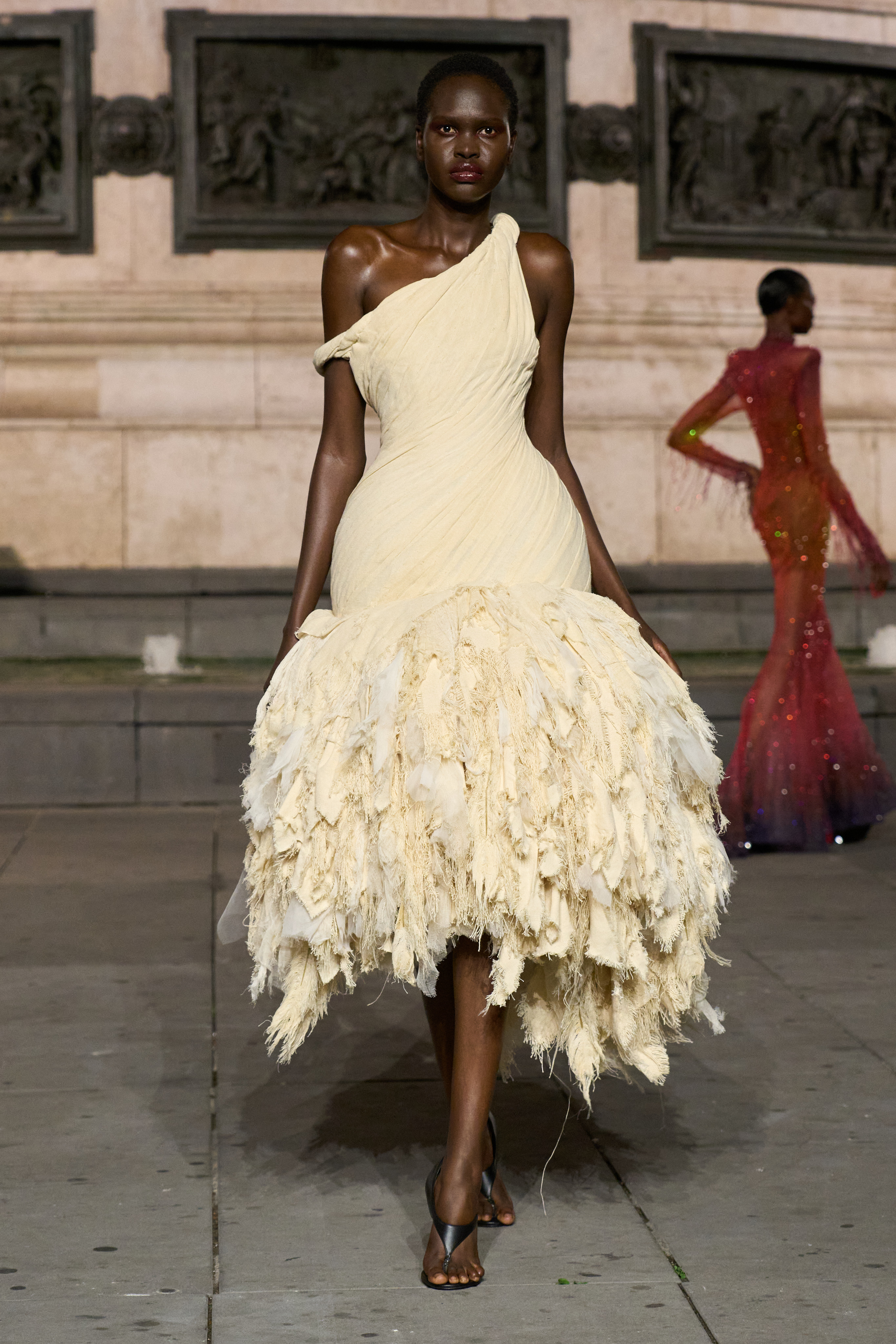
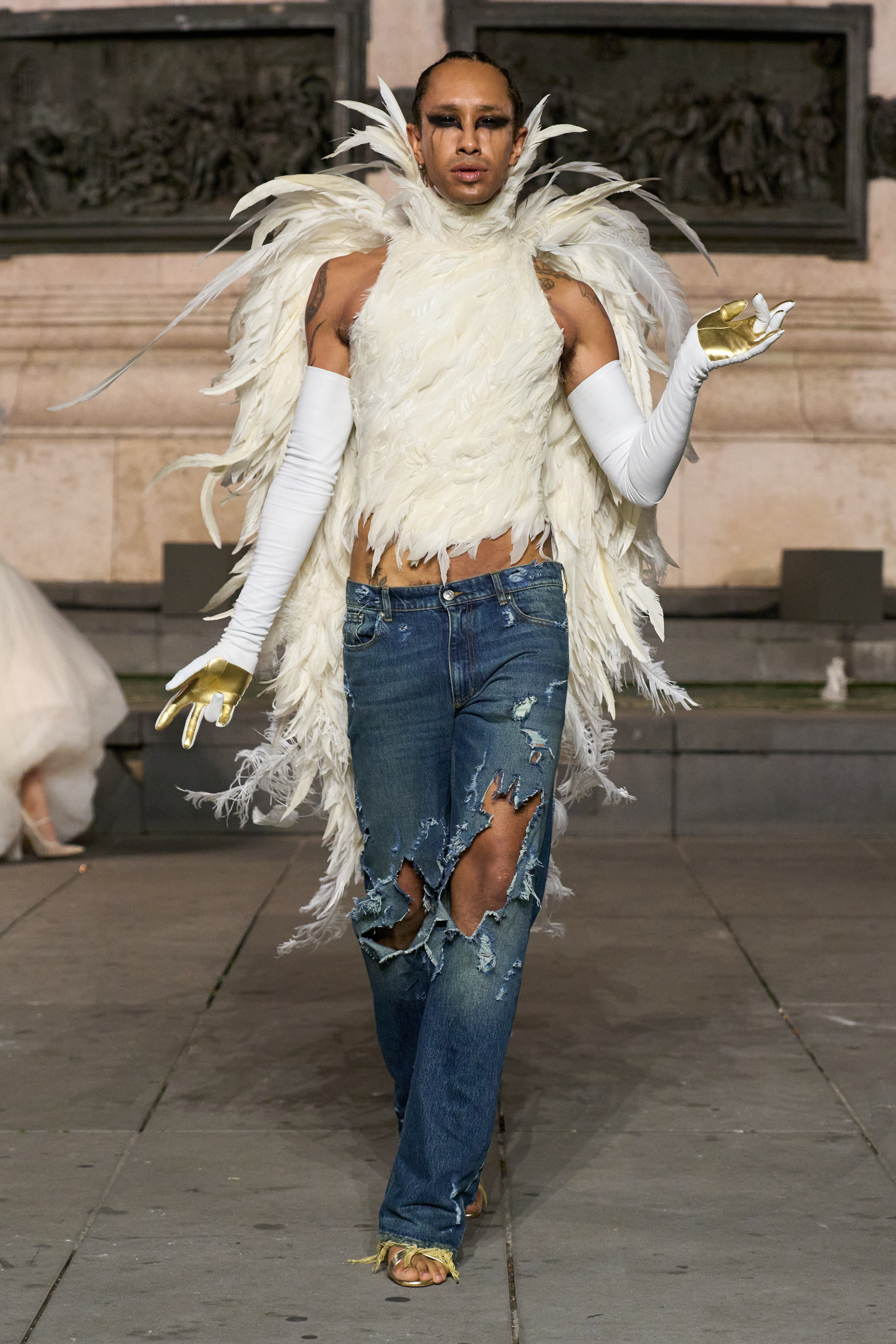
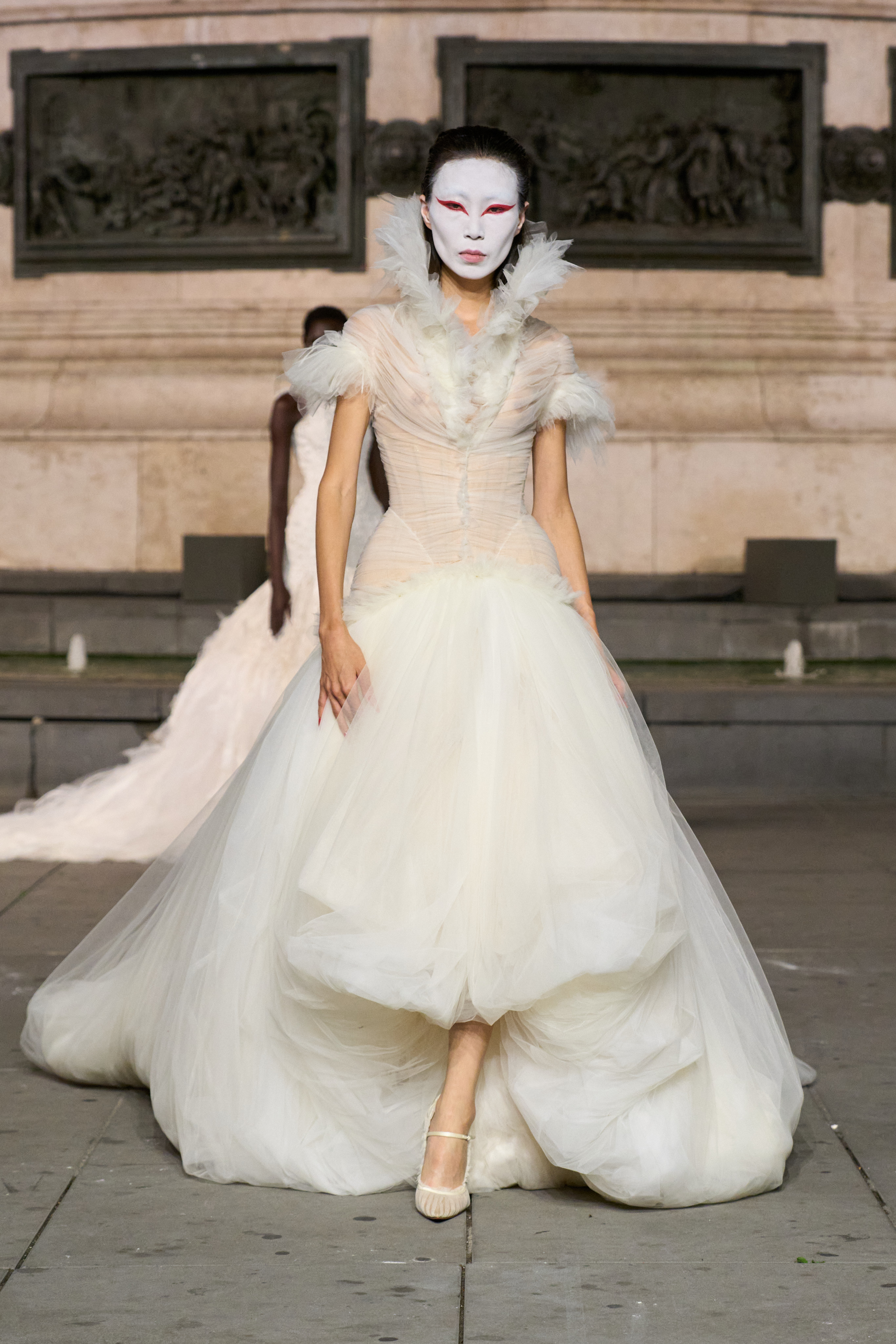
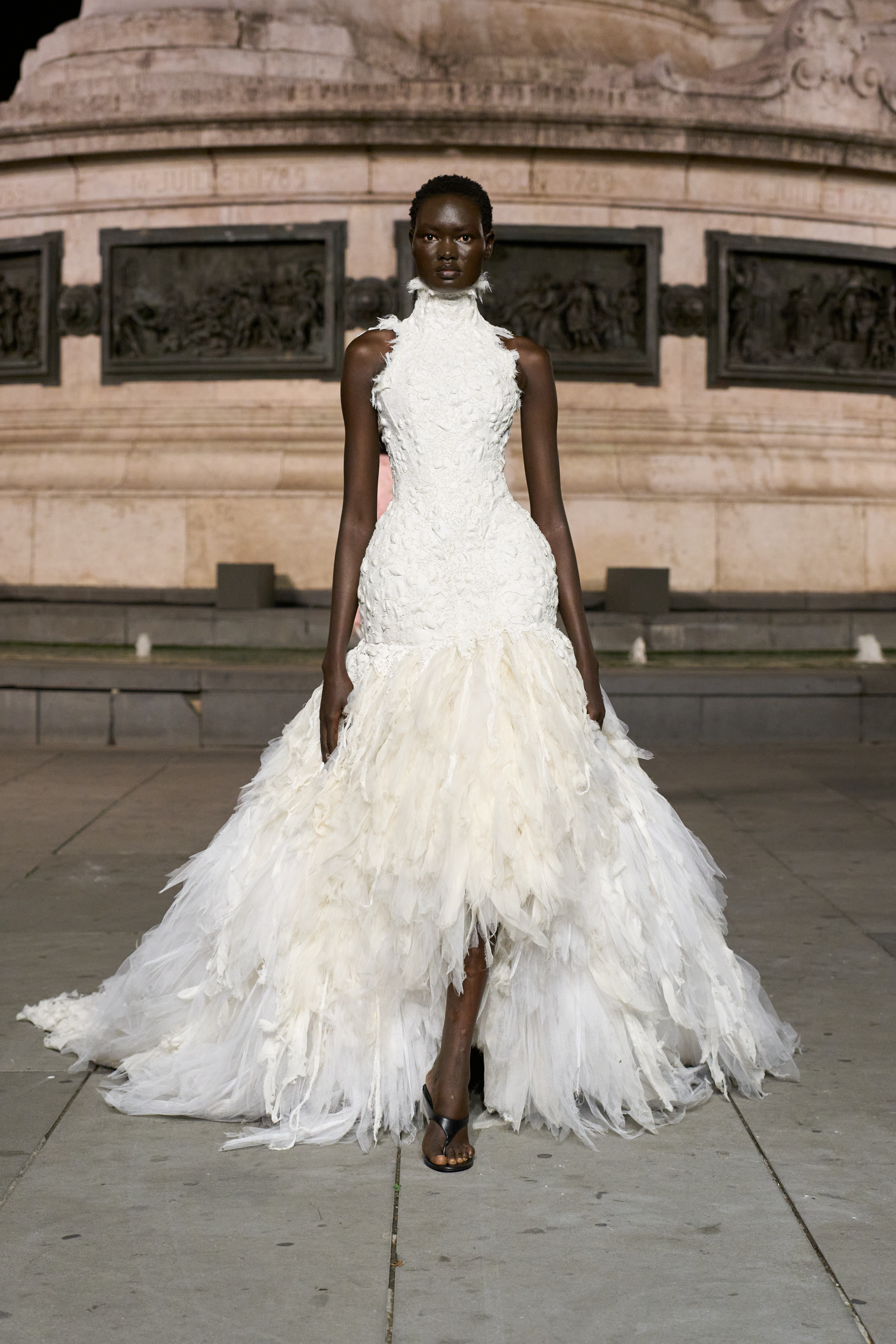
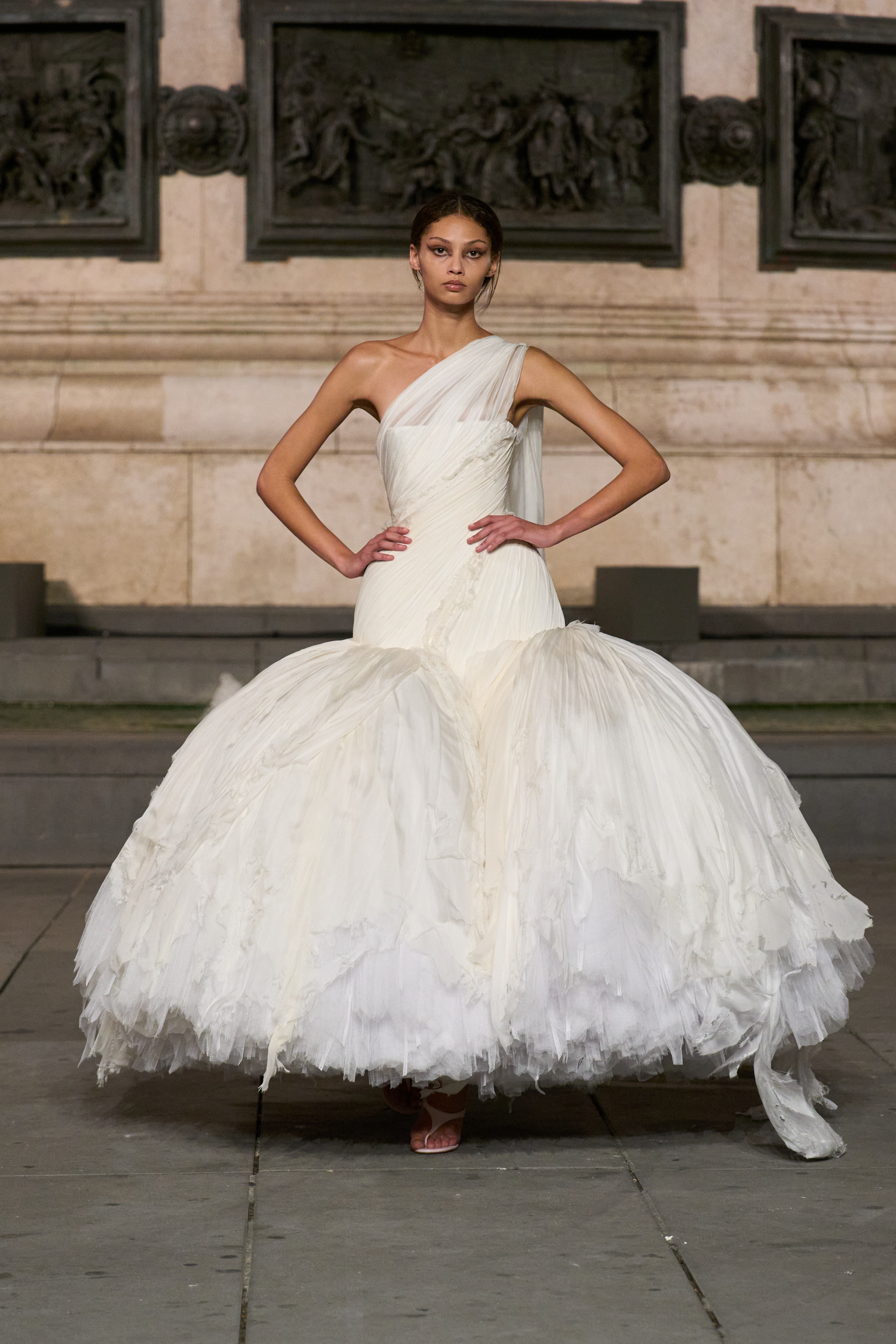
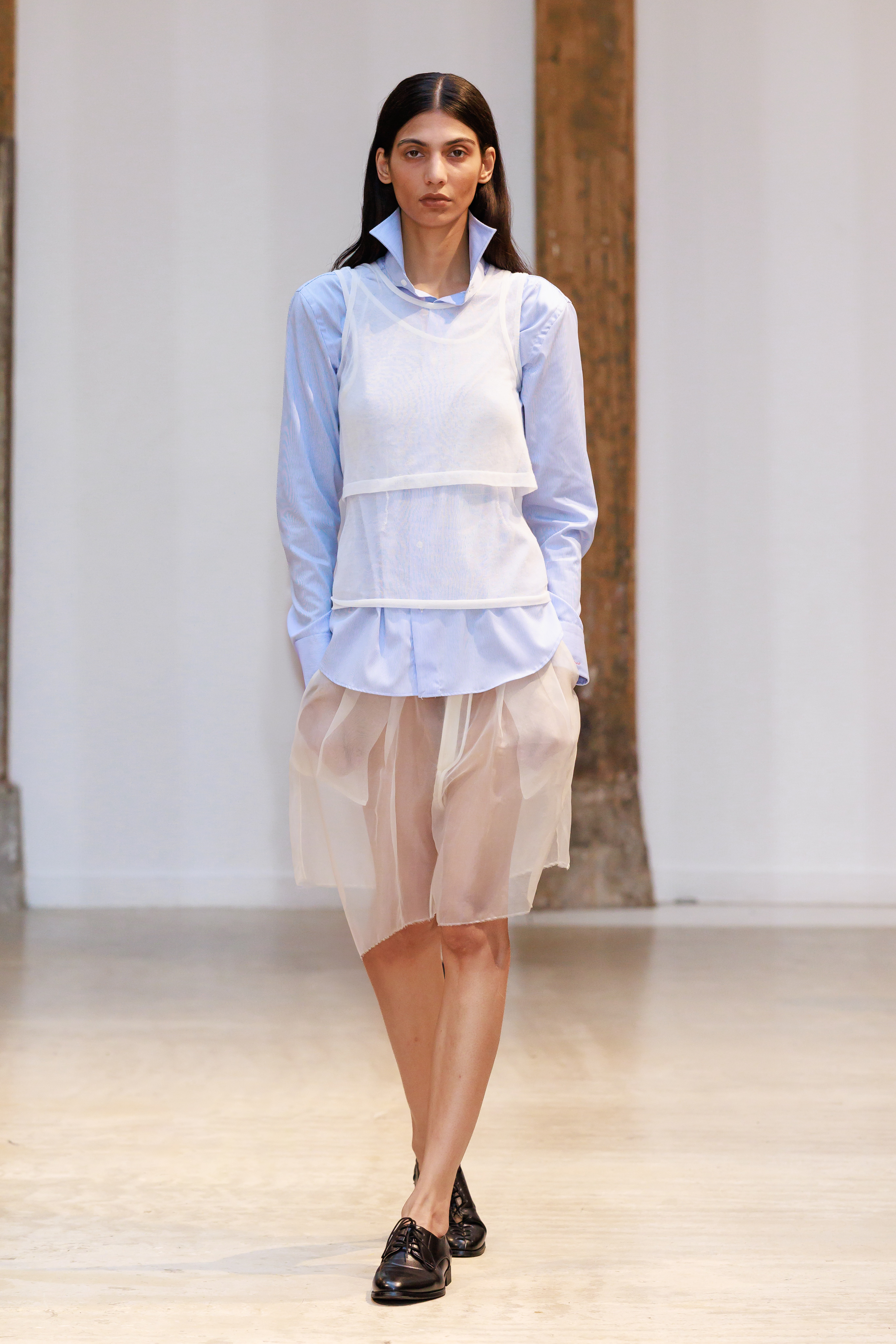
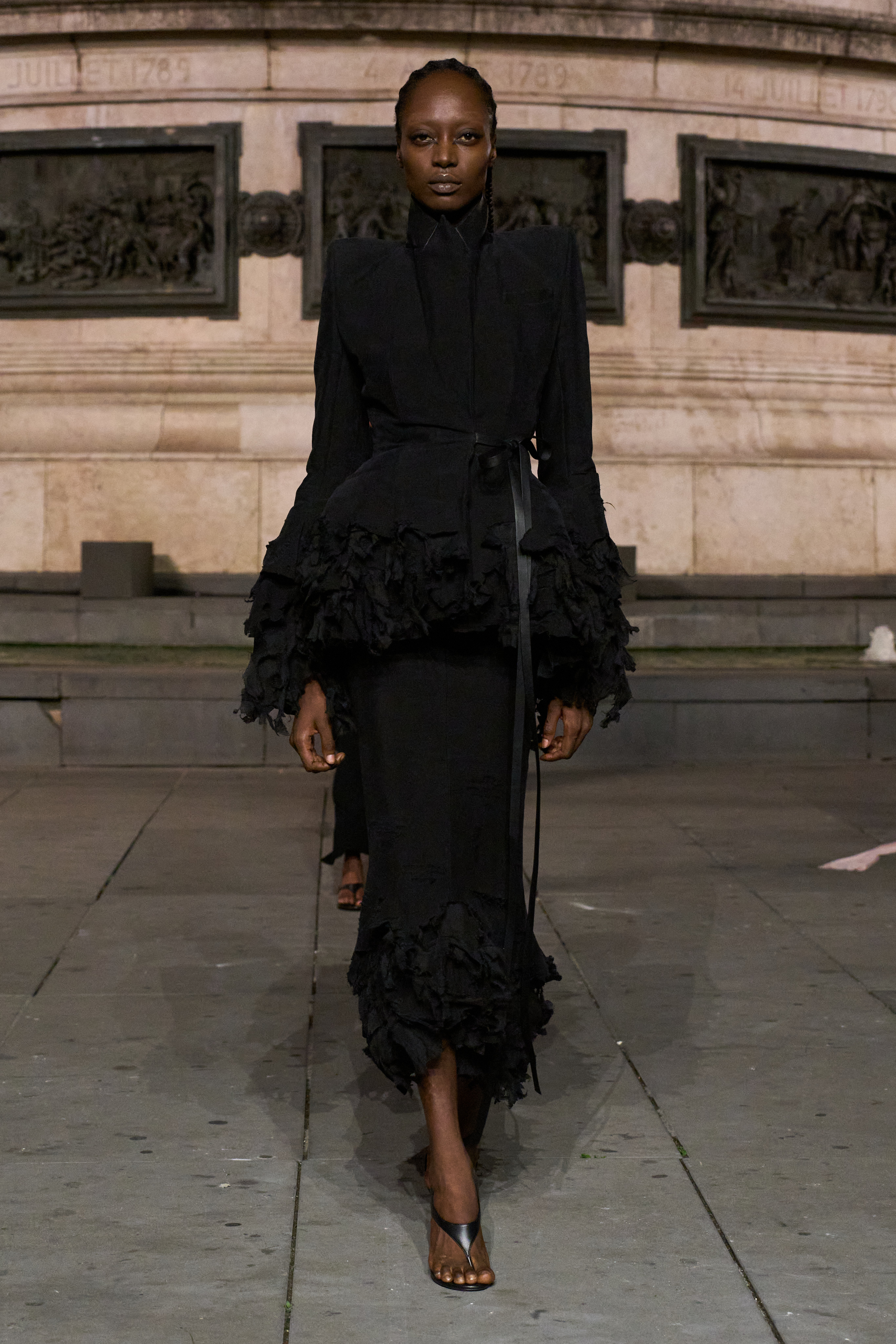
Family, the first act, opens almost entirely in white. The silhouettes take on a liturgical, almost sacred quality: floor-length garments, draping, veils and constructions that evoke religious and, at times, almost mythological figures. Yet the apparent purity of the white is disrupted by irregular surfaces and deliberately distressed details, as though some of the garments had been worn down, torn apart or corroded by time.
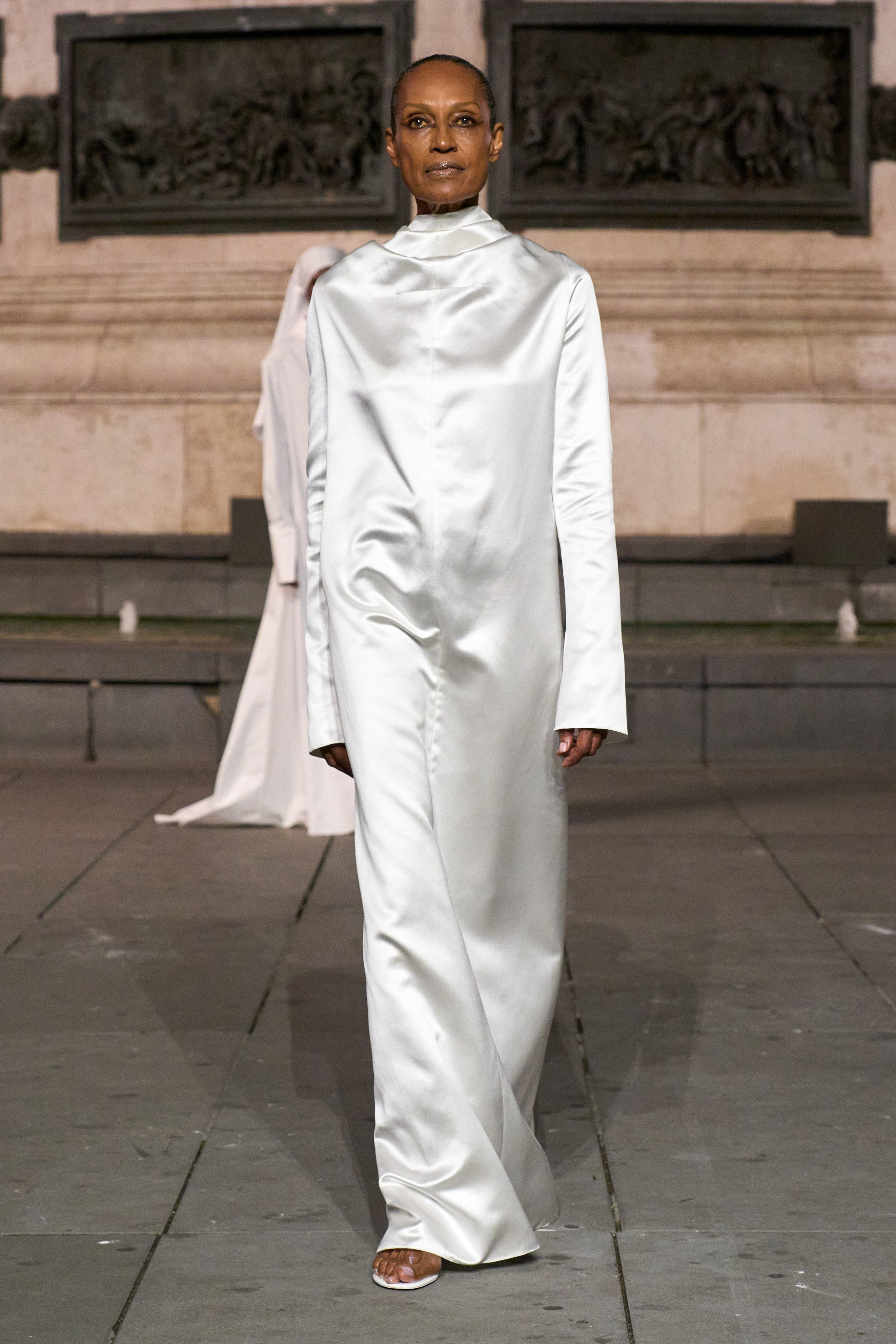
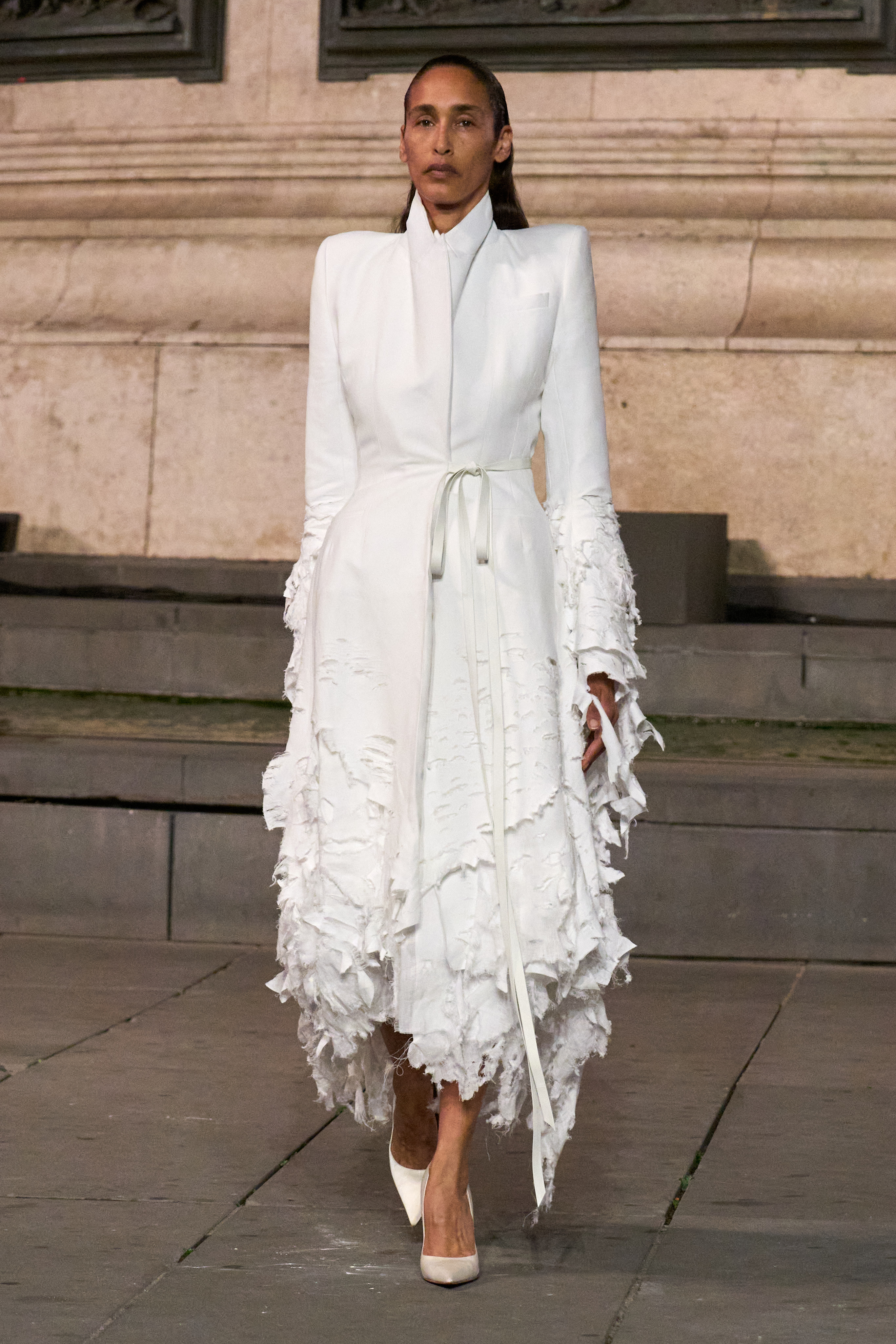
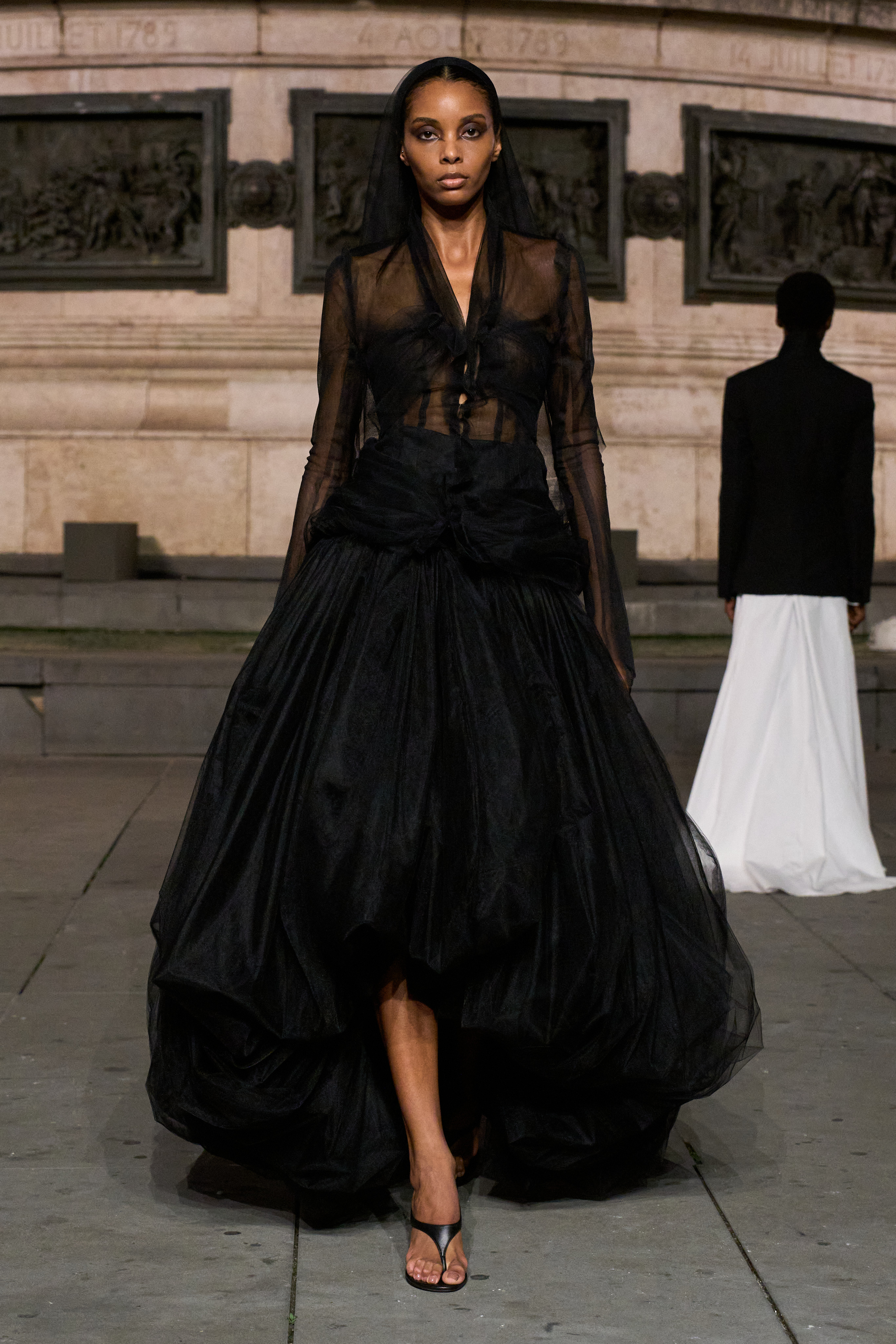
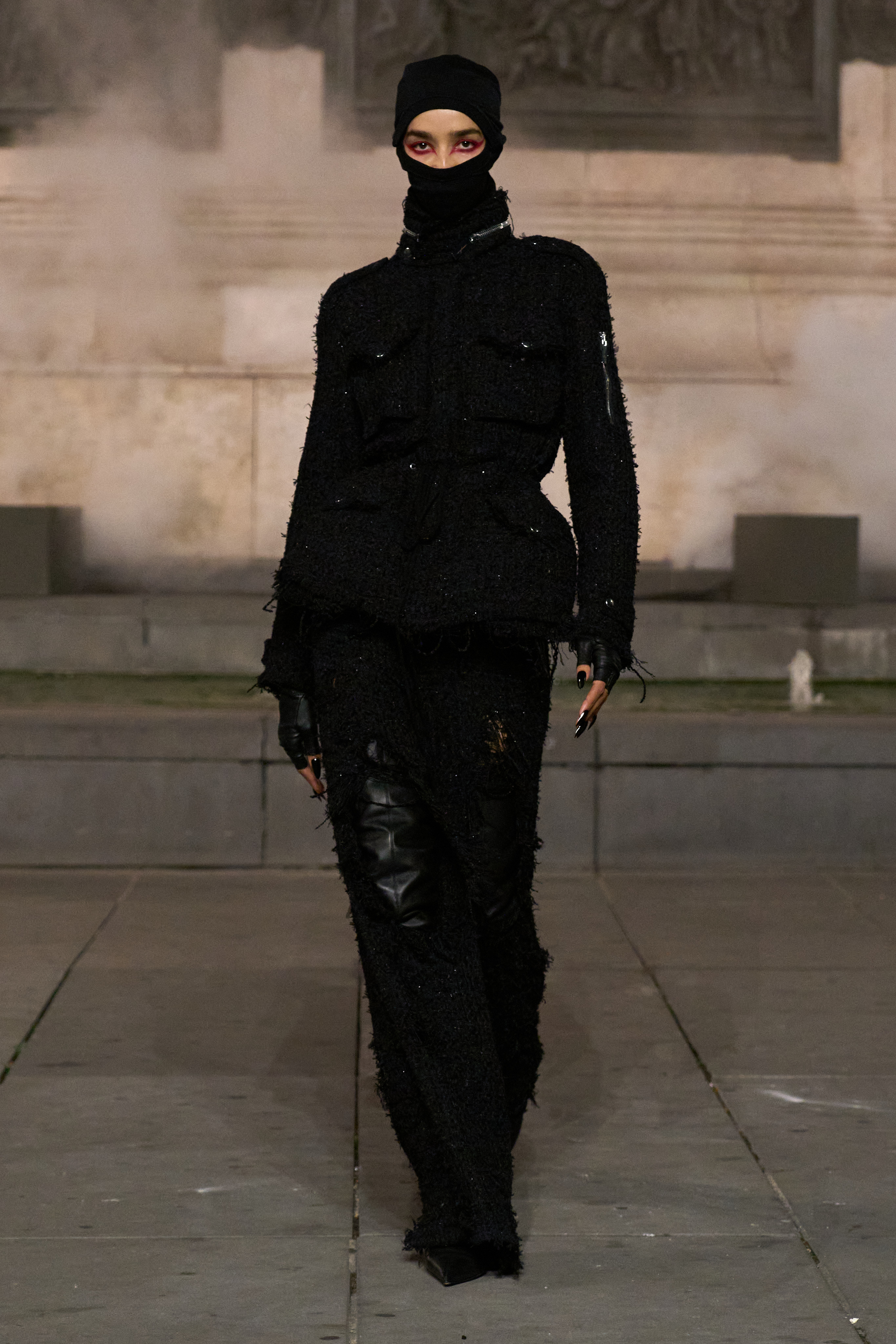
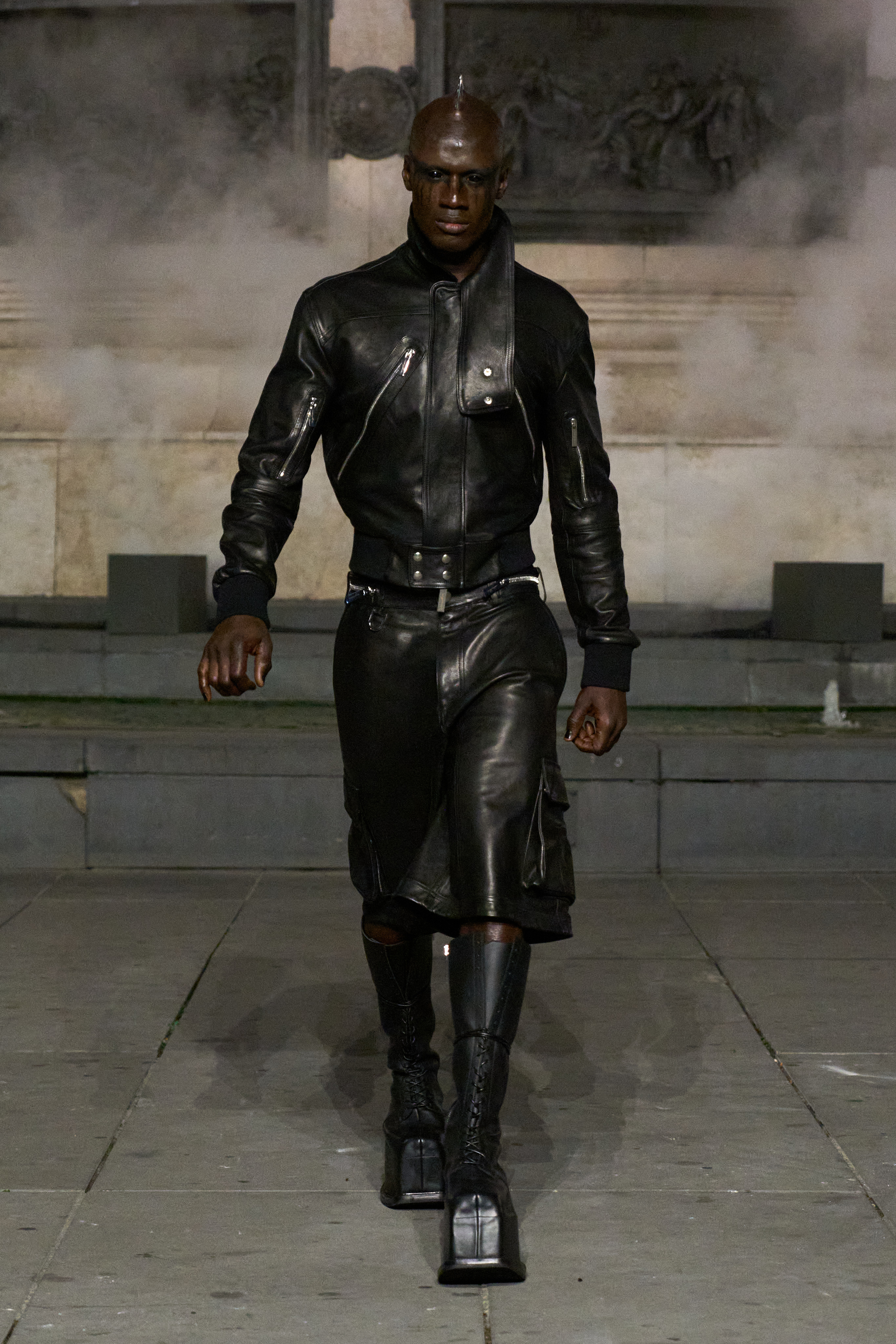
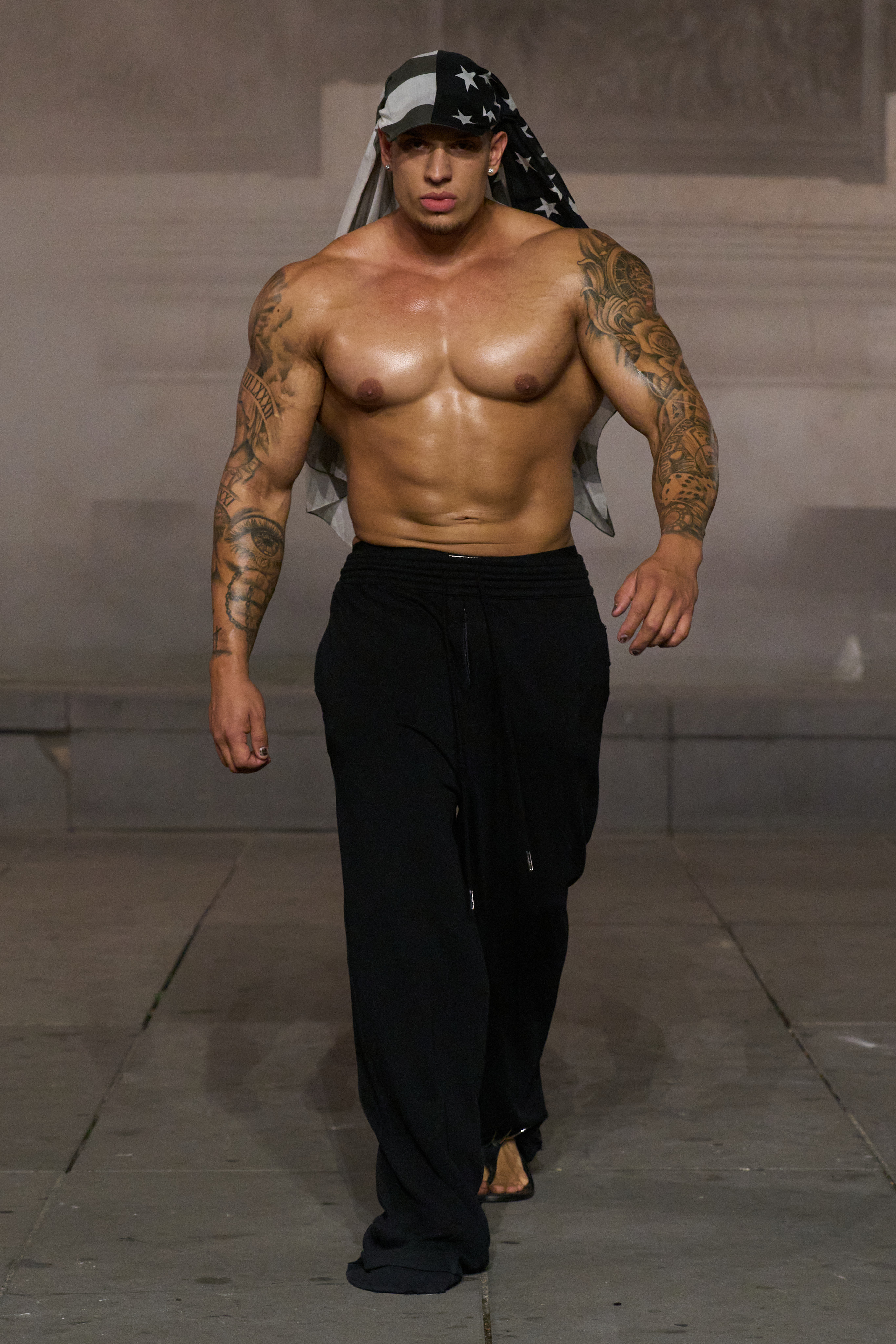
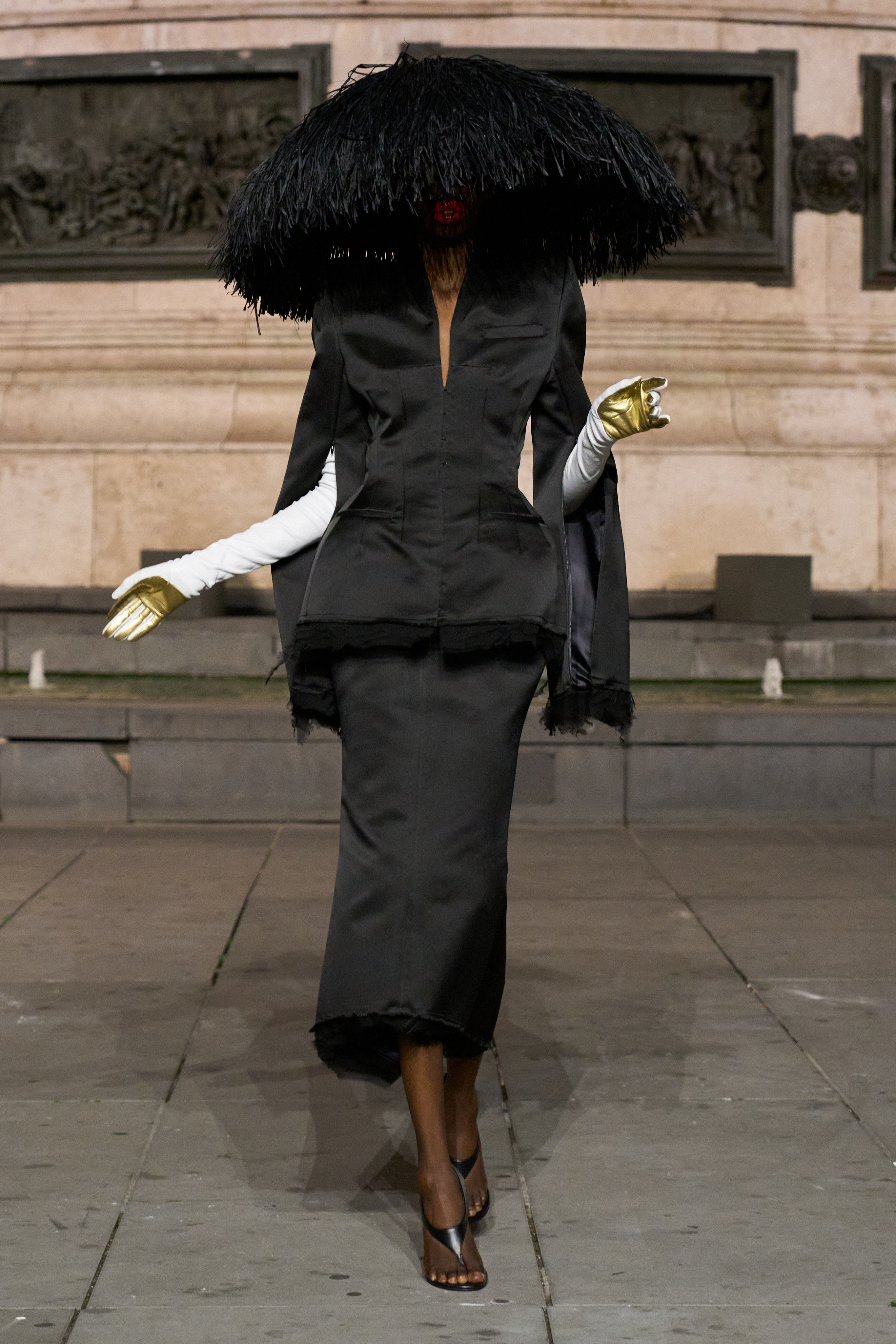
Gradually, the palette plunges into black. Faces are once again concealed, but here the veil takes on a different meaning. Bhaskaran explained that he wanted to invert an element traditionally associated with the female body by transferring it onto the male one: hypermasculinity becomes another kind of veil, a construction capable of concealing a man’s identity and vulnerability.
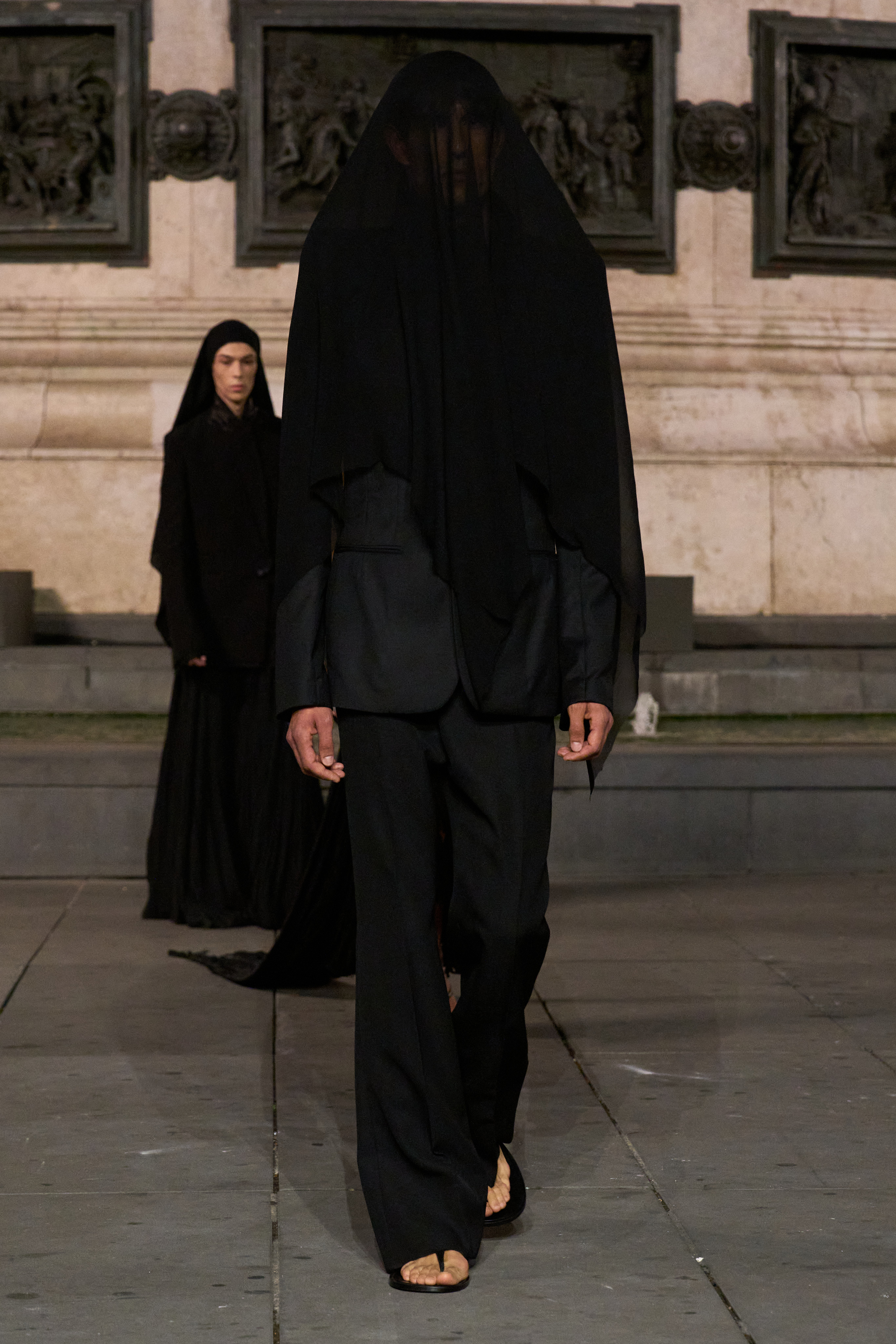
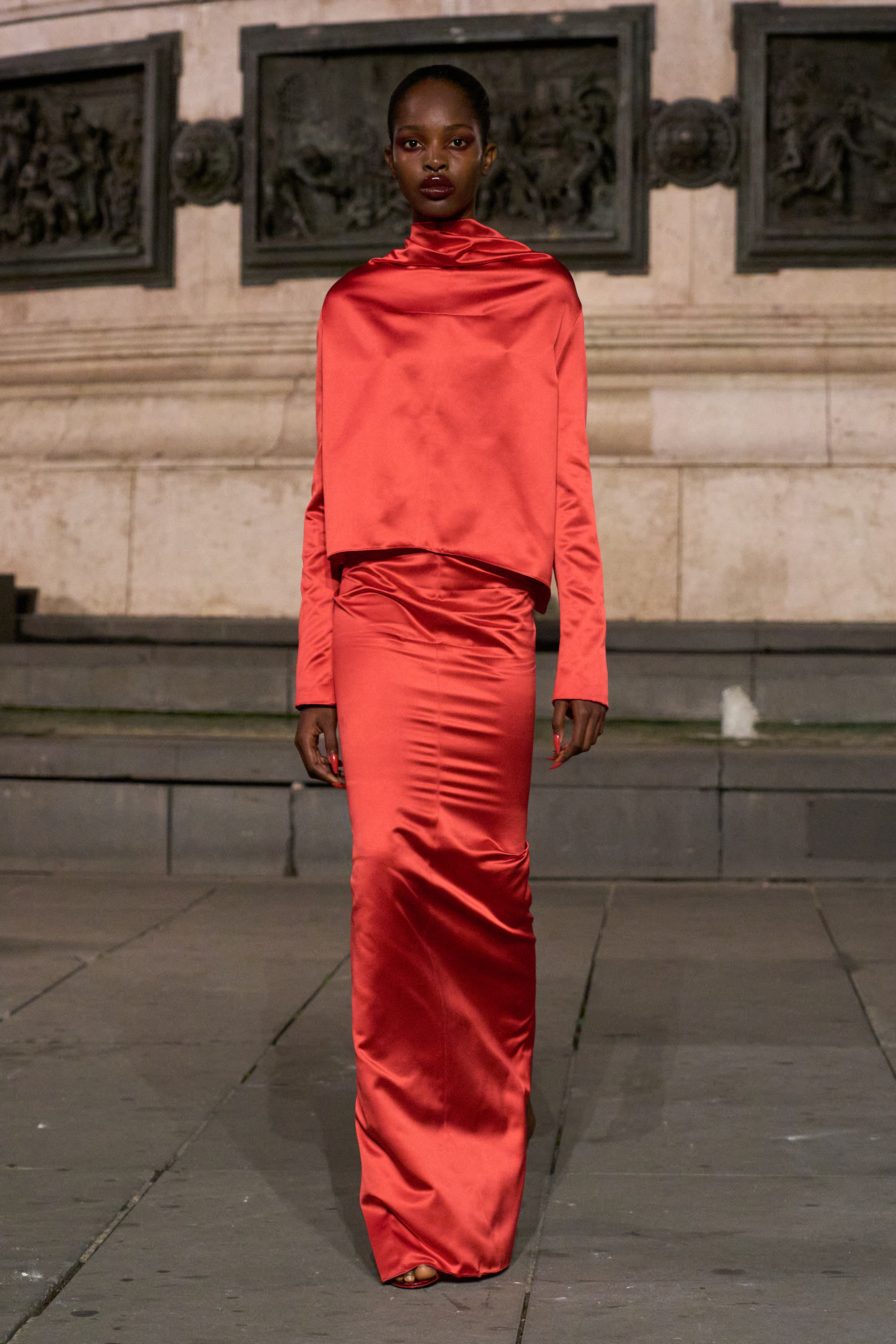
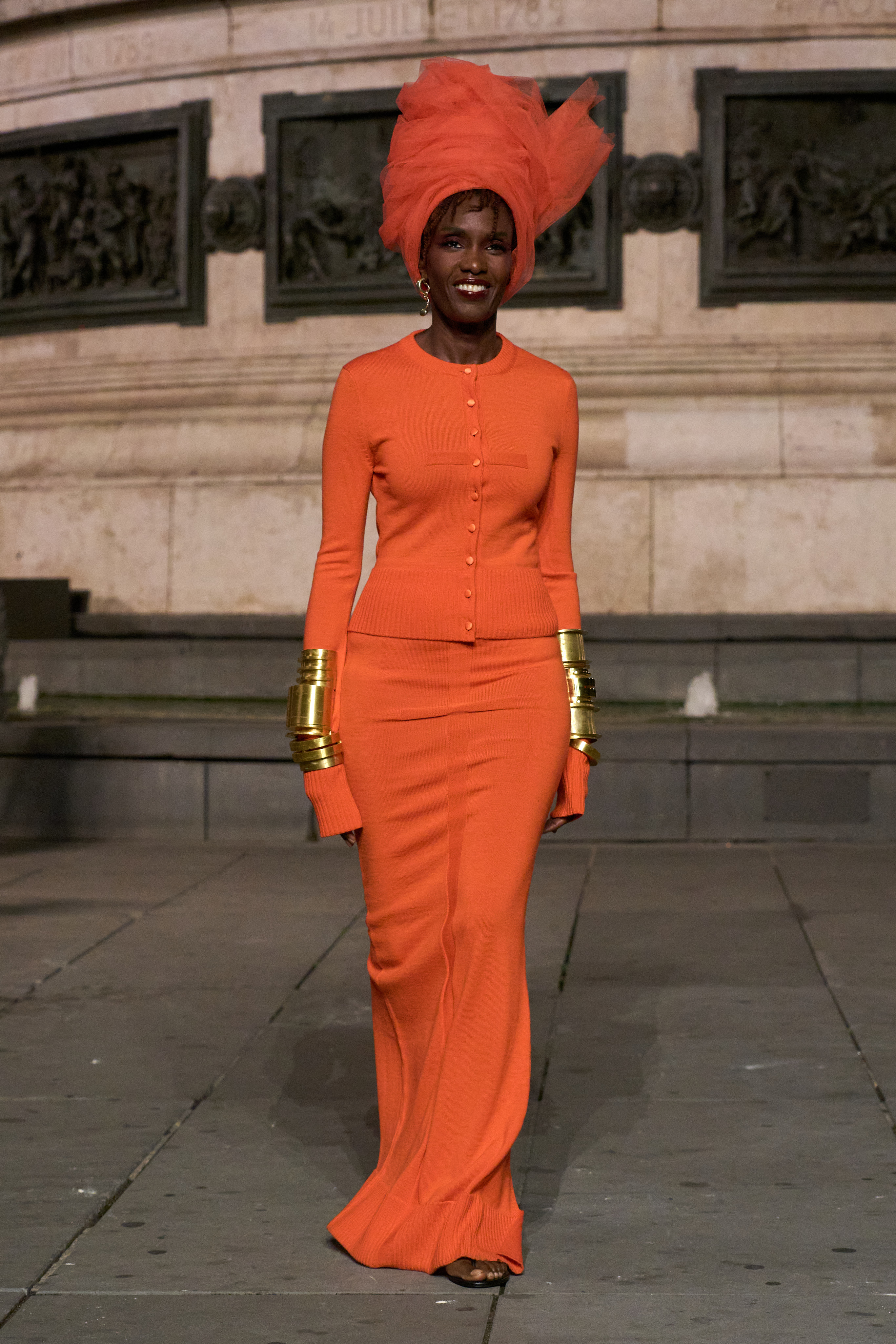
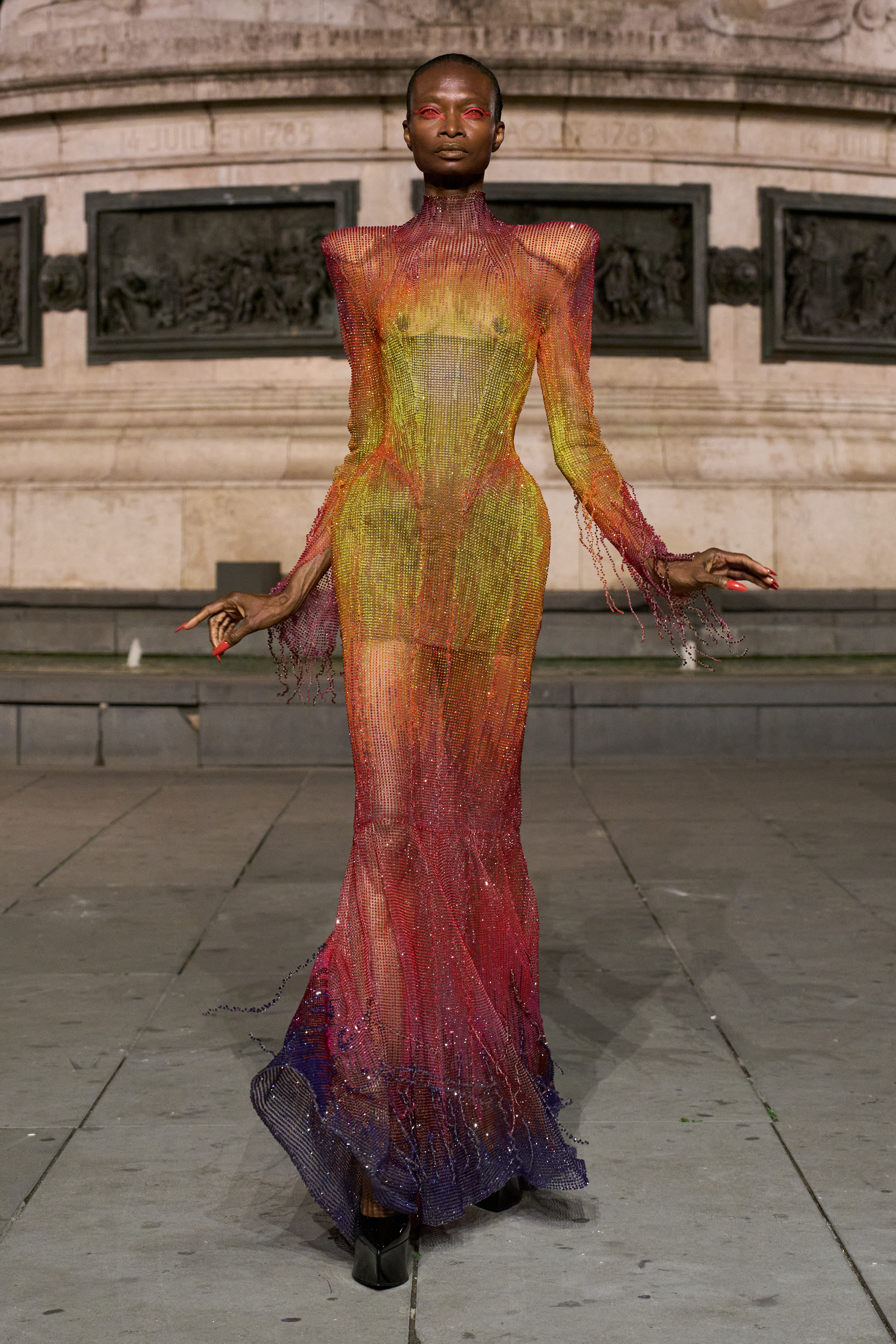
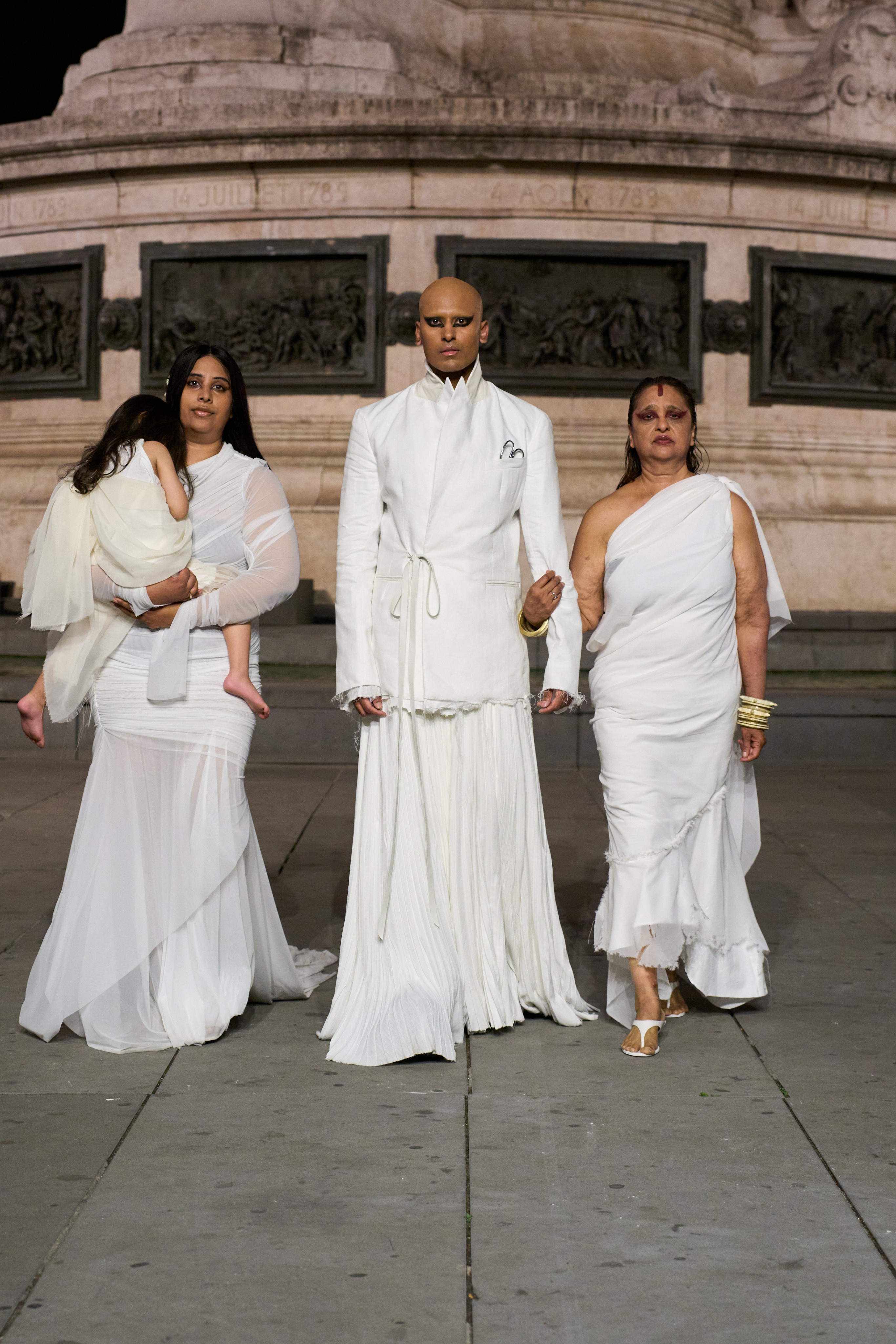
From the black, shades of red, orange, pink and light blue gradually emerge, before the collection returns to white with look 40, one of the show’s most intimate moments. Raj himself steps onto the runway, accompanied by his mother, sister and niece. The Family of the title ceases to be an abstract concept and becomes, quite literally, his own family.
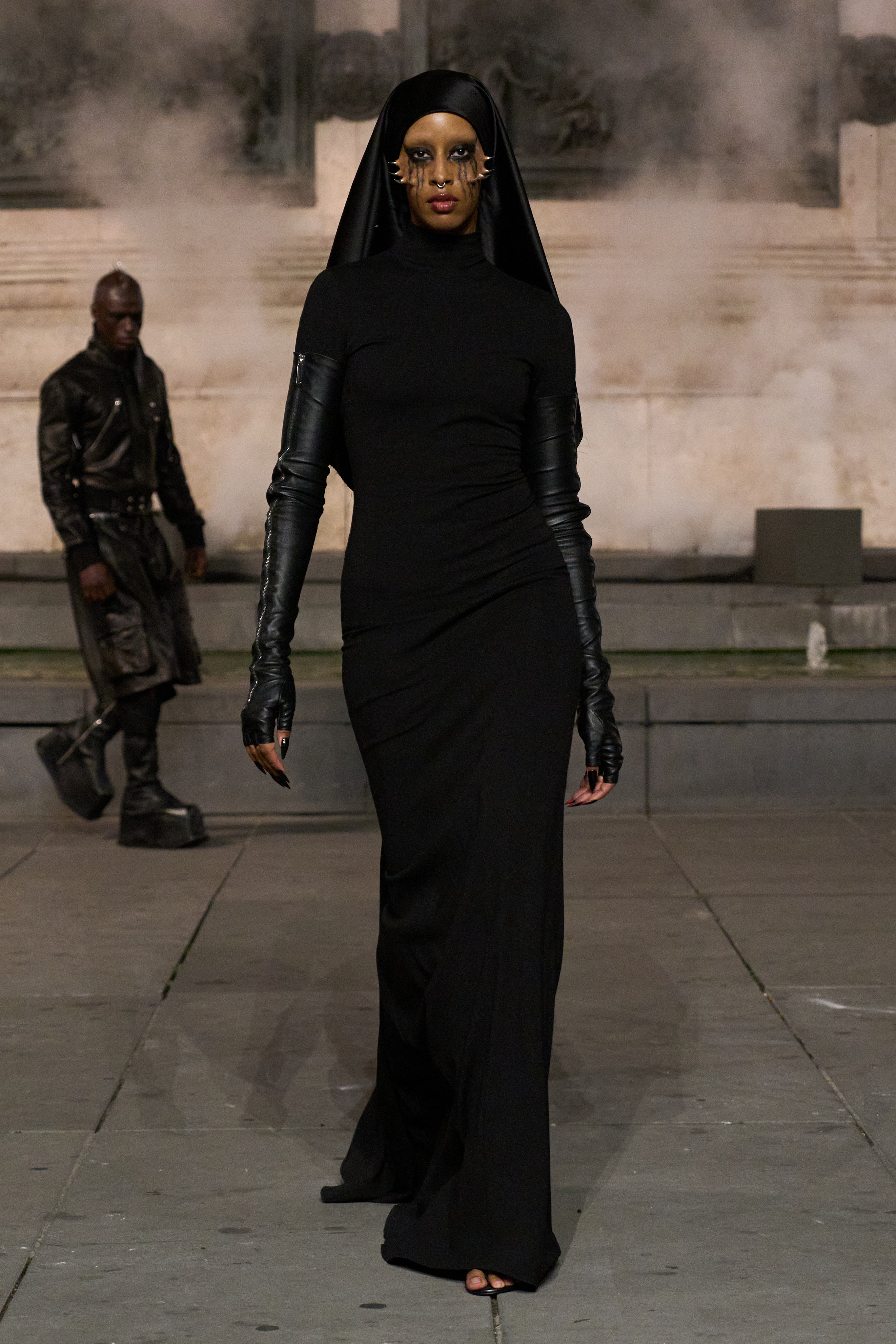
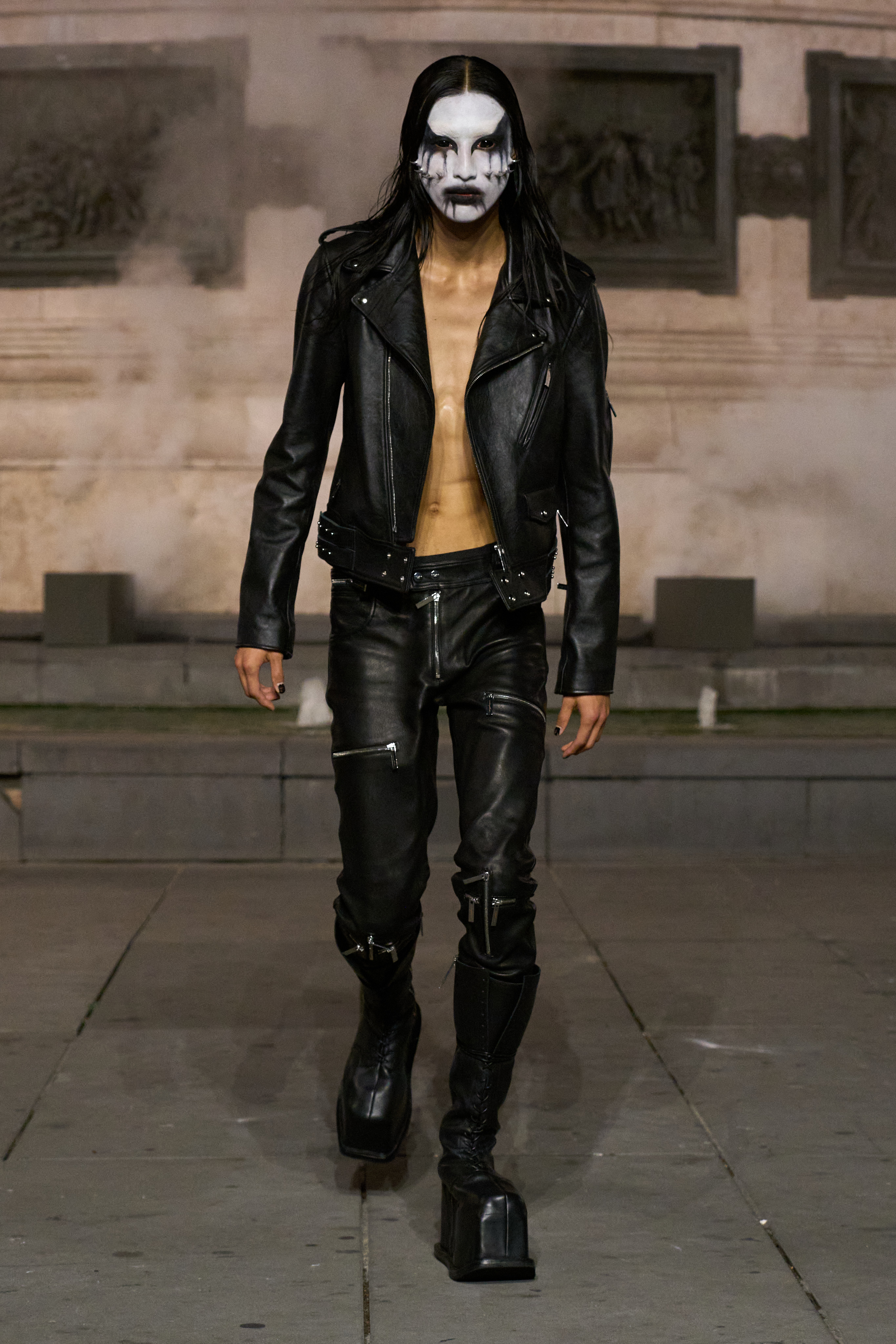
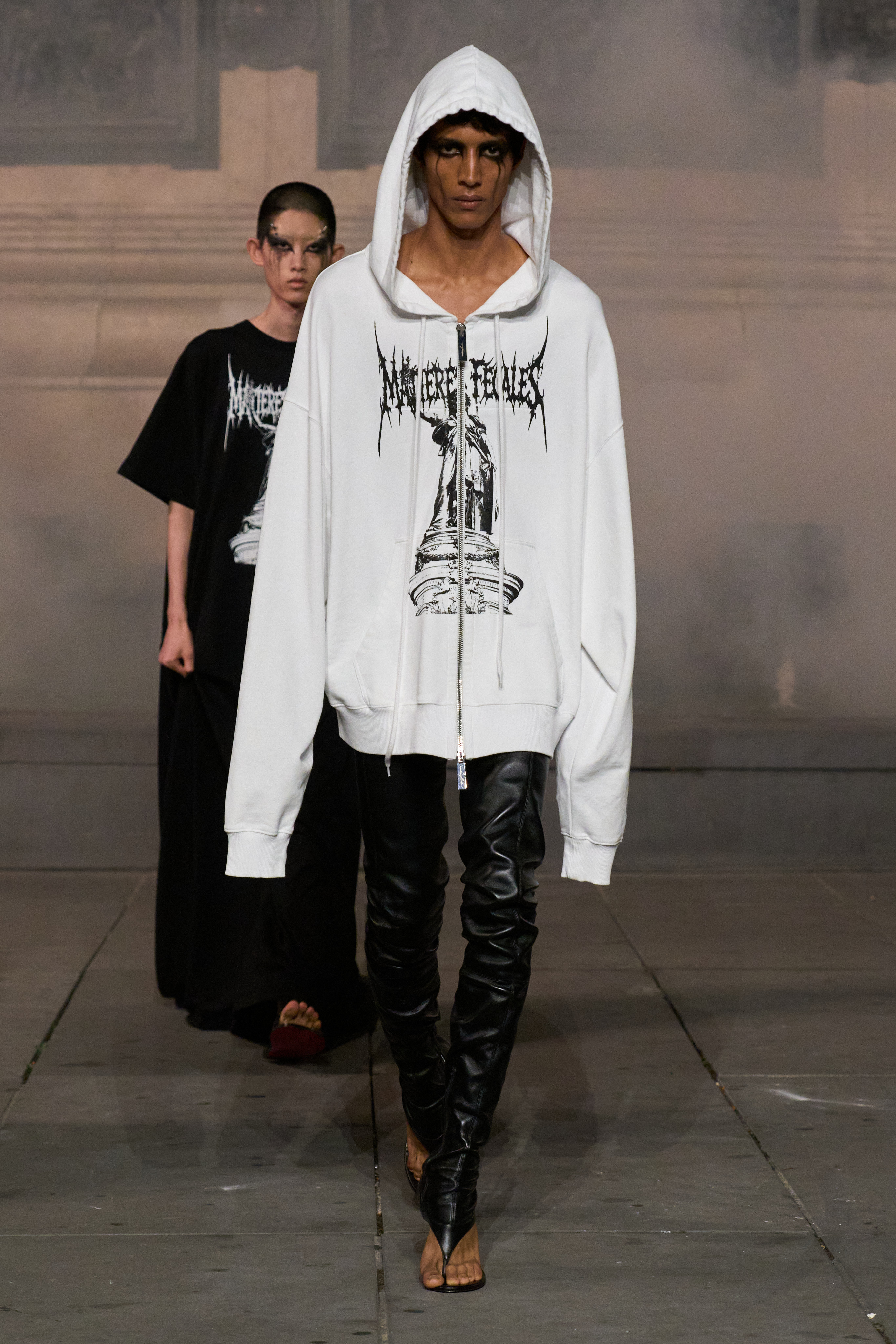
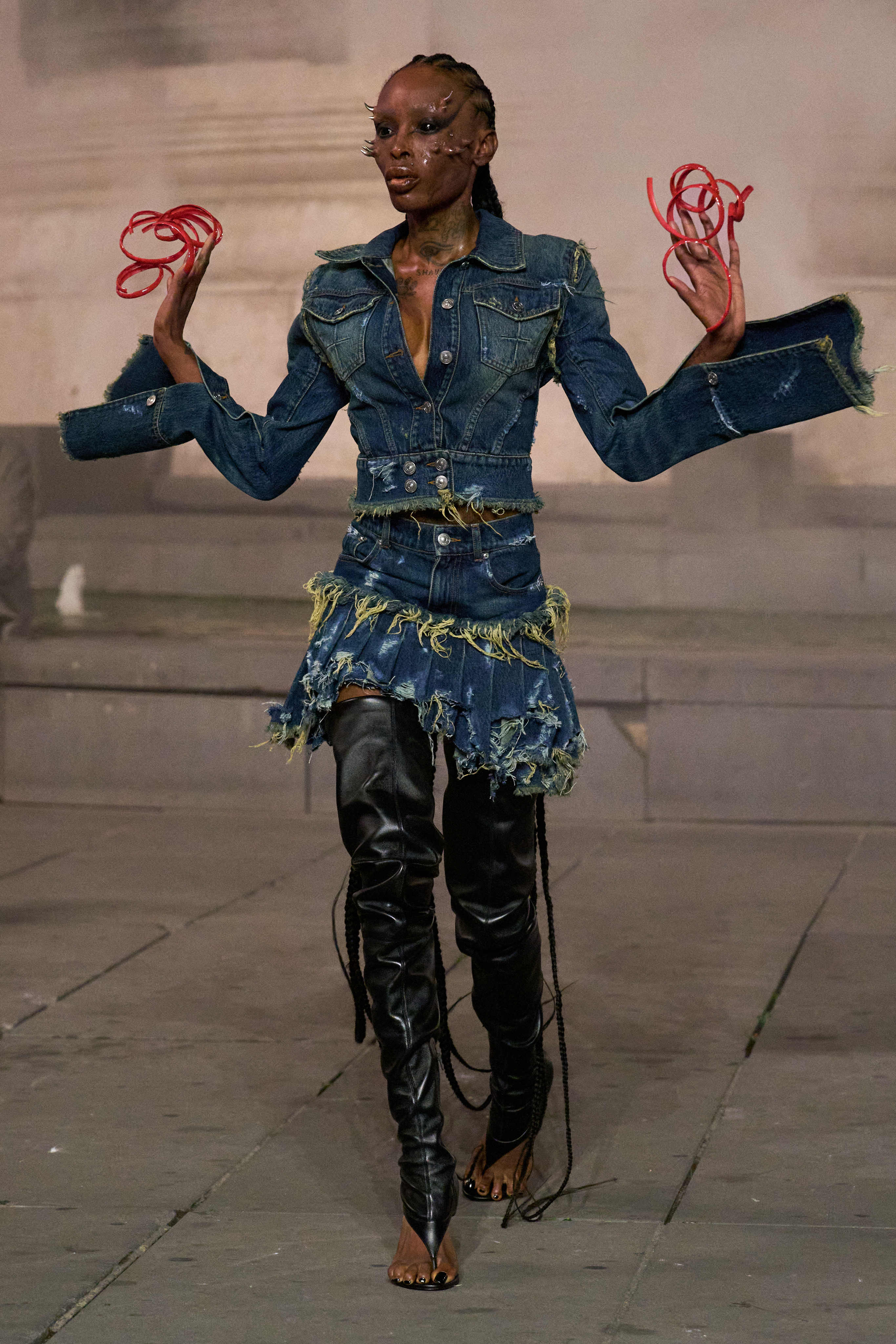
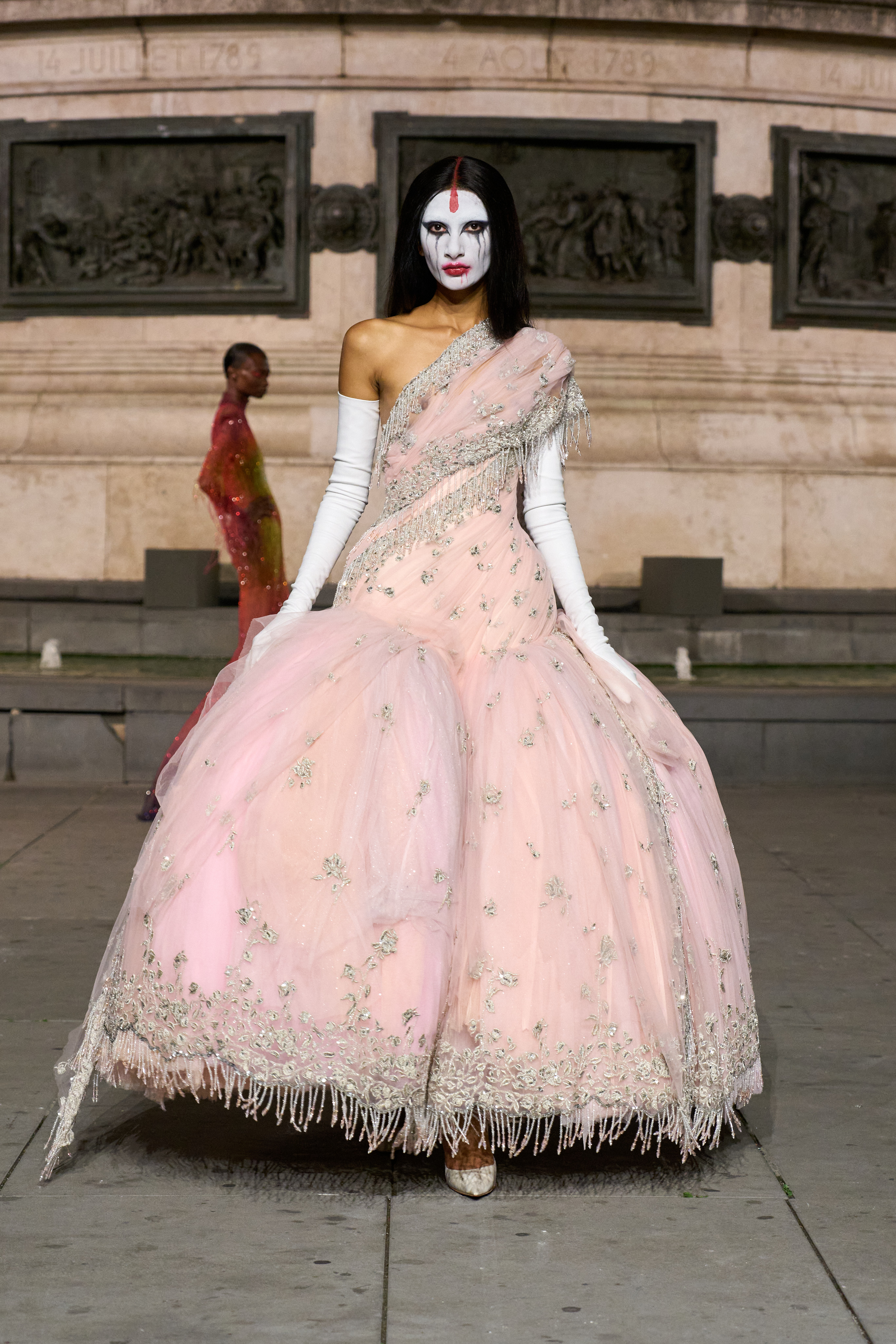
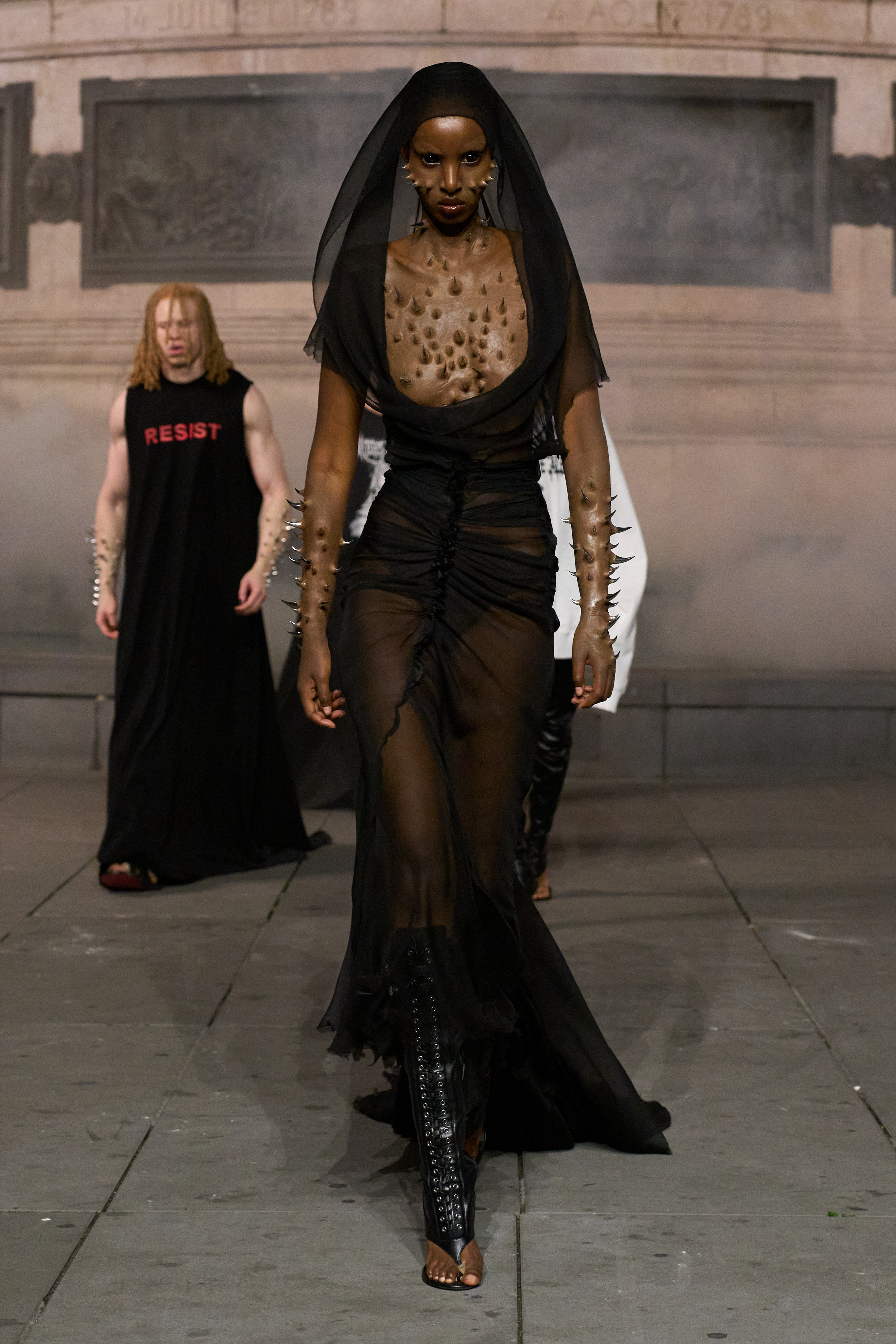
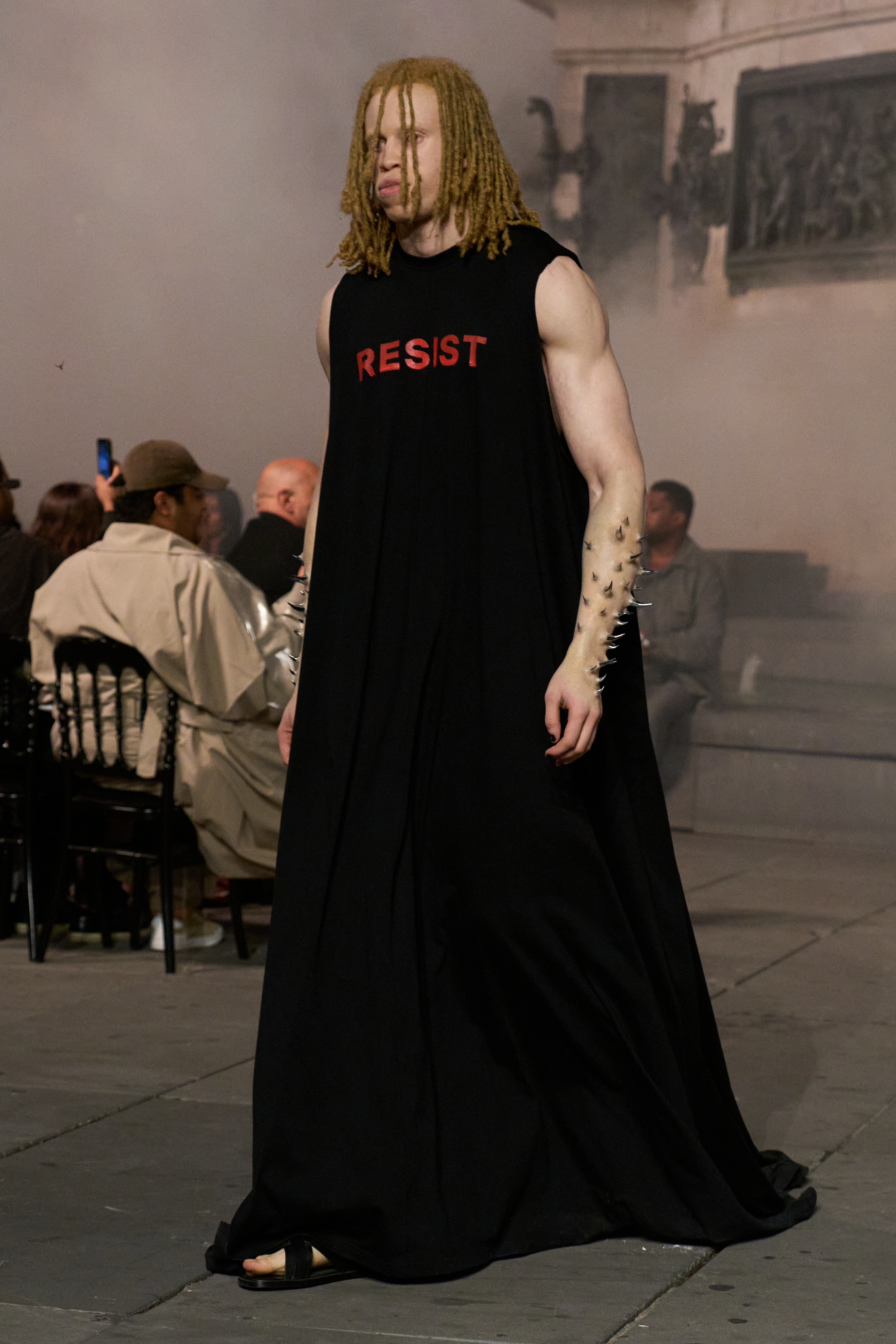
With Tribe, the procession turns into protest. References to punk, metal, uniforms and subcultures enter the picture: bodies covered in spikes, altered faces, makeup running down the skin like tears, and the word RESIST emblazoned across garments. Once again, the imagery stems from Bhaskaran’s own biography. During his adolescence, the punk and metal scenes offered him a space for belonging and a community of his own.
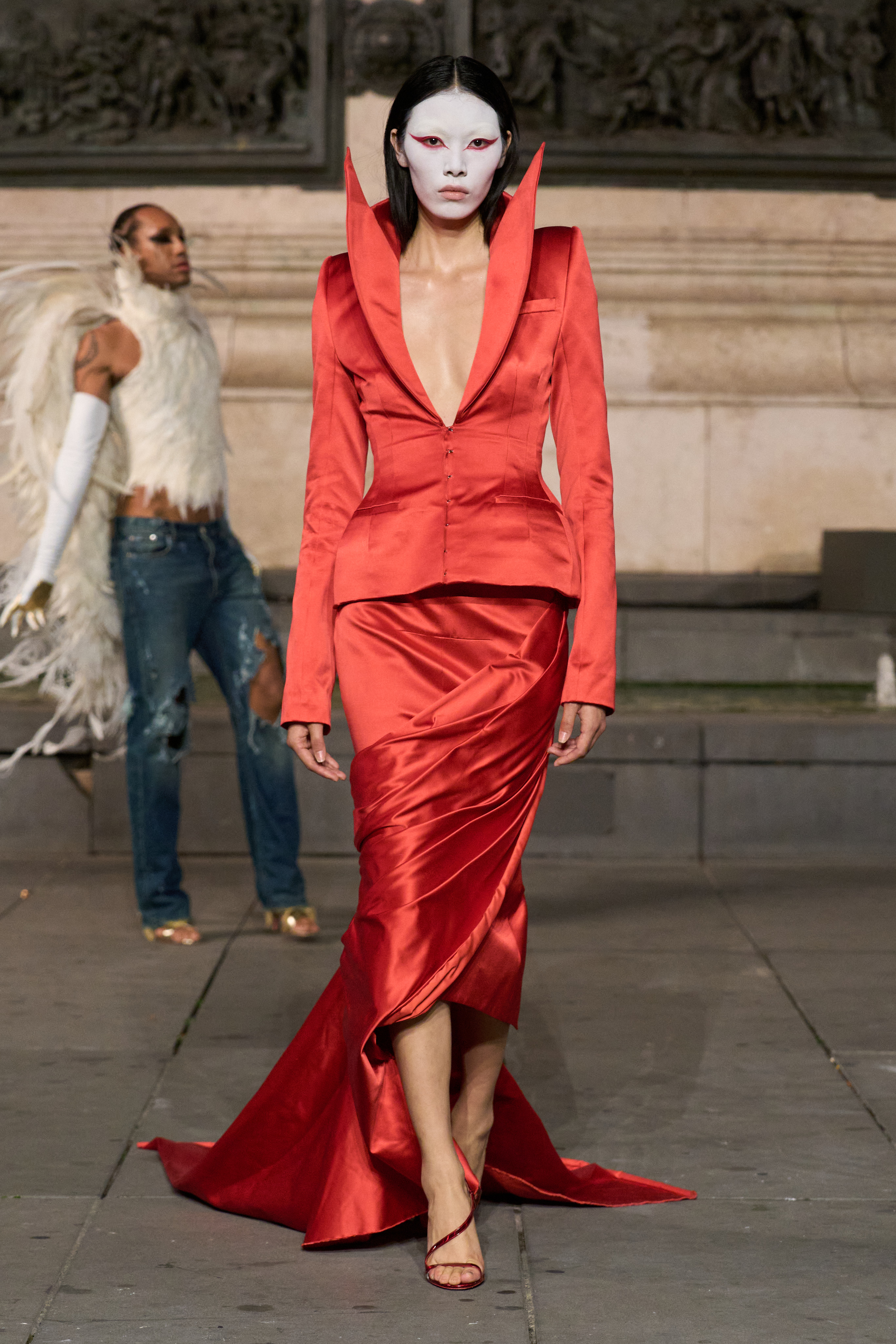
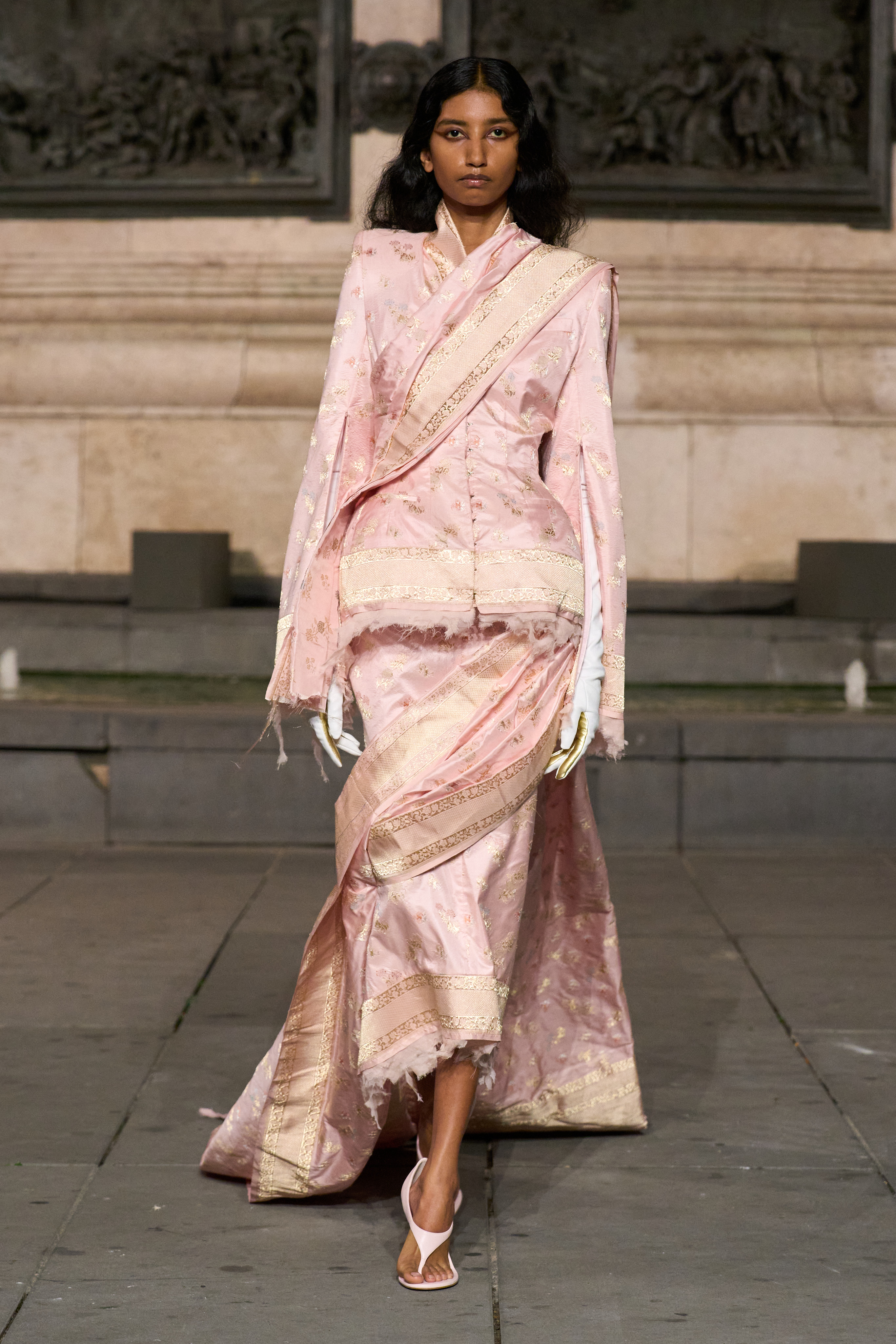
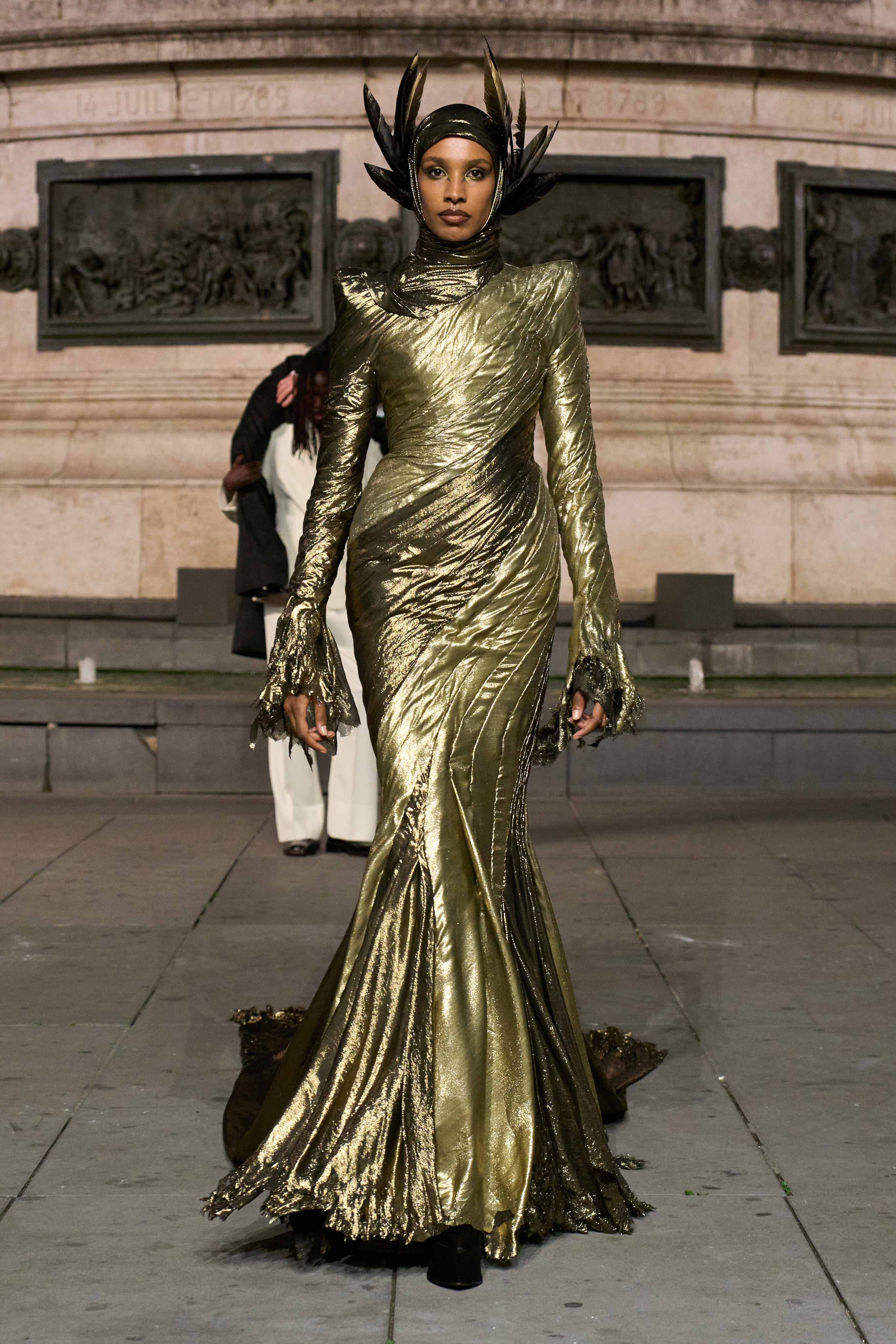
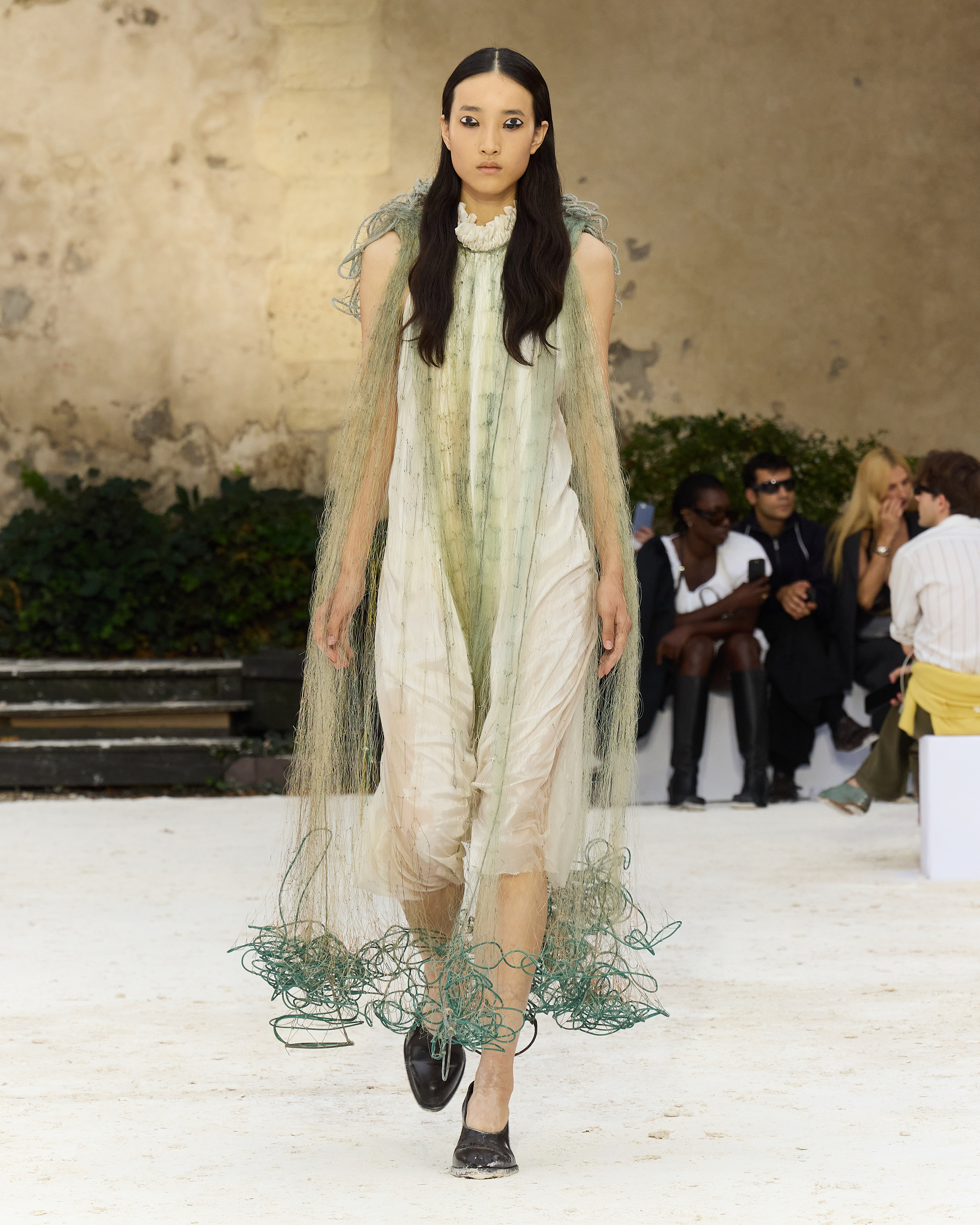
The final act, Gods, shifts the collection’s language towards haute couture. The focus turns to craftsmanship, volume and historical 1950s silhouettes, but through materials and techniques that relocate their geographical and cultural center. Fabrics made in India and handwoven cotton from Burkina Faso are incorporated into structures traditionally associated with Parisian couture, bringing together worlds that Western fashion has often kept apart.
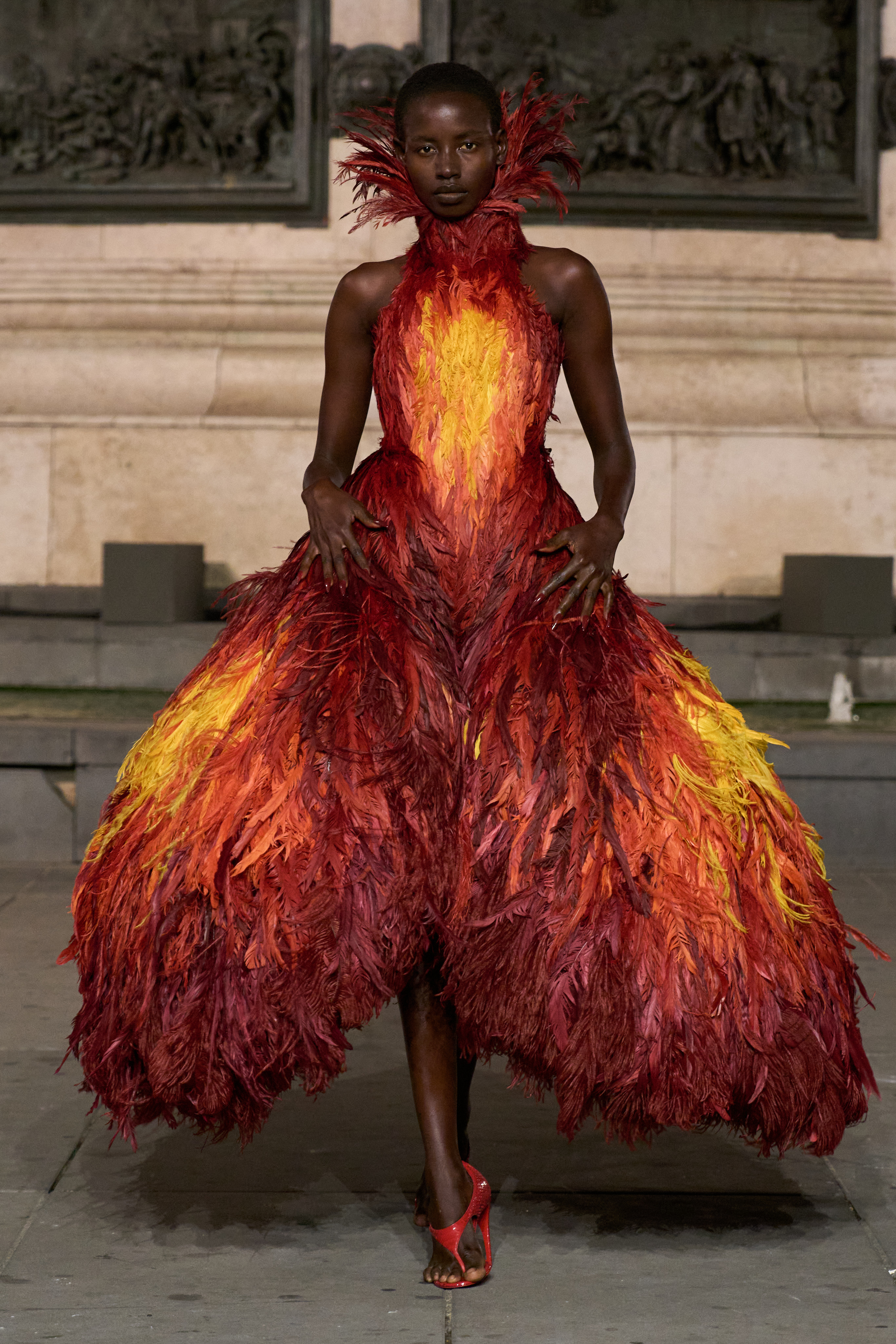
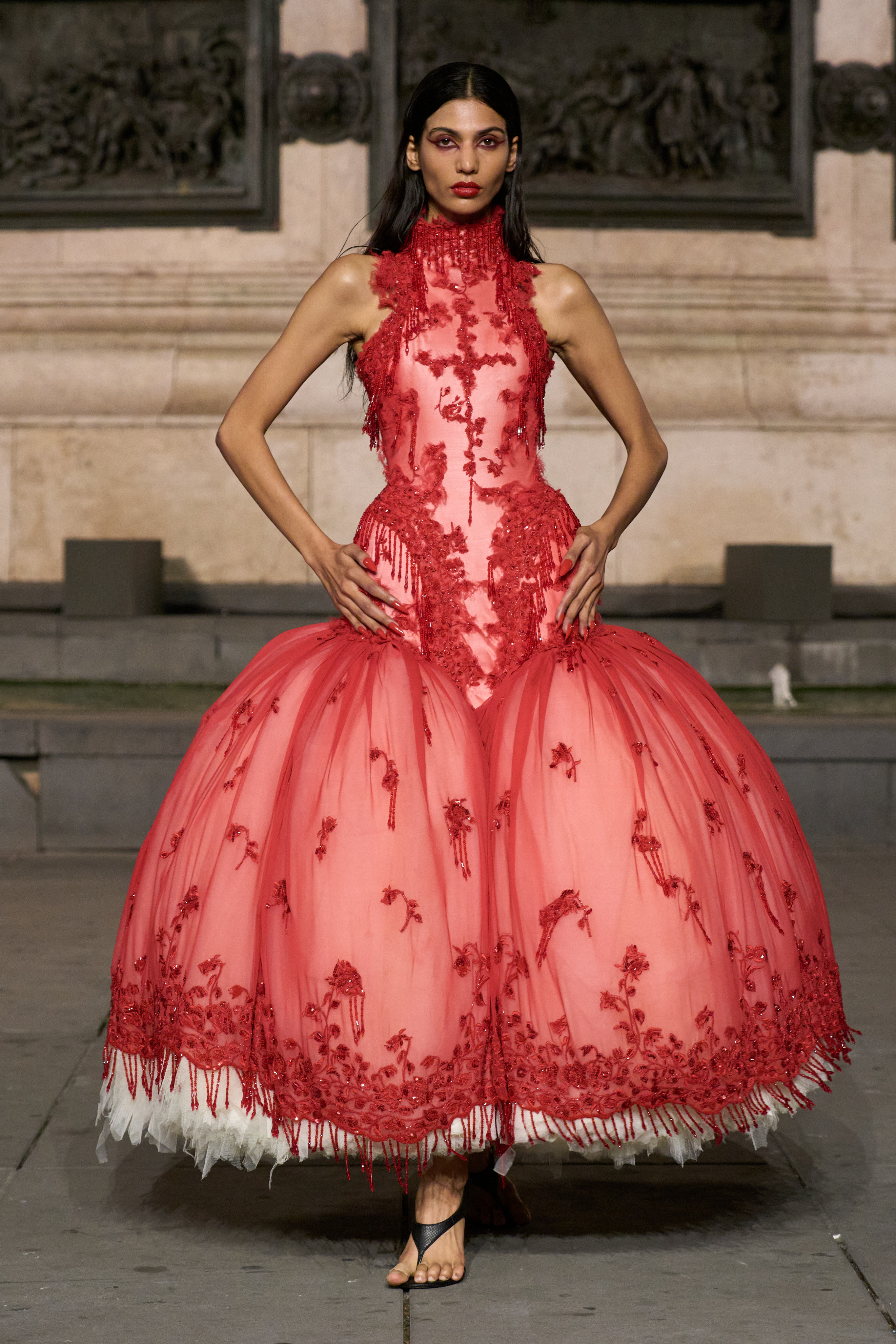
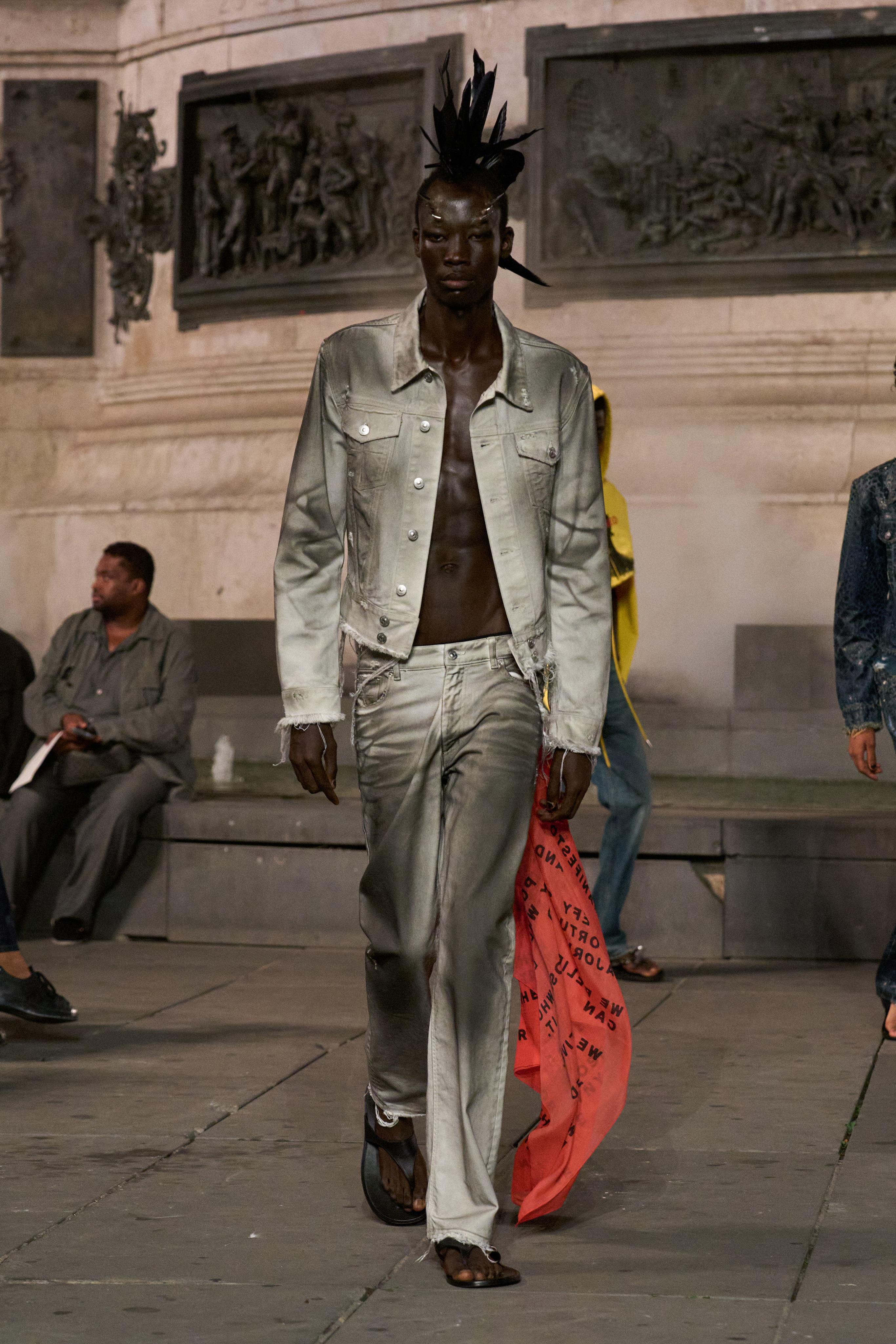
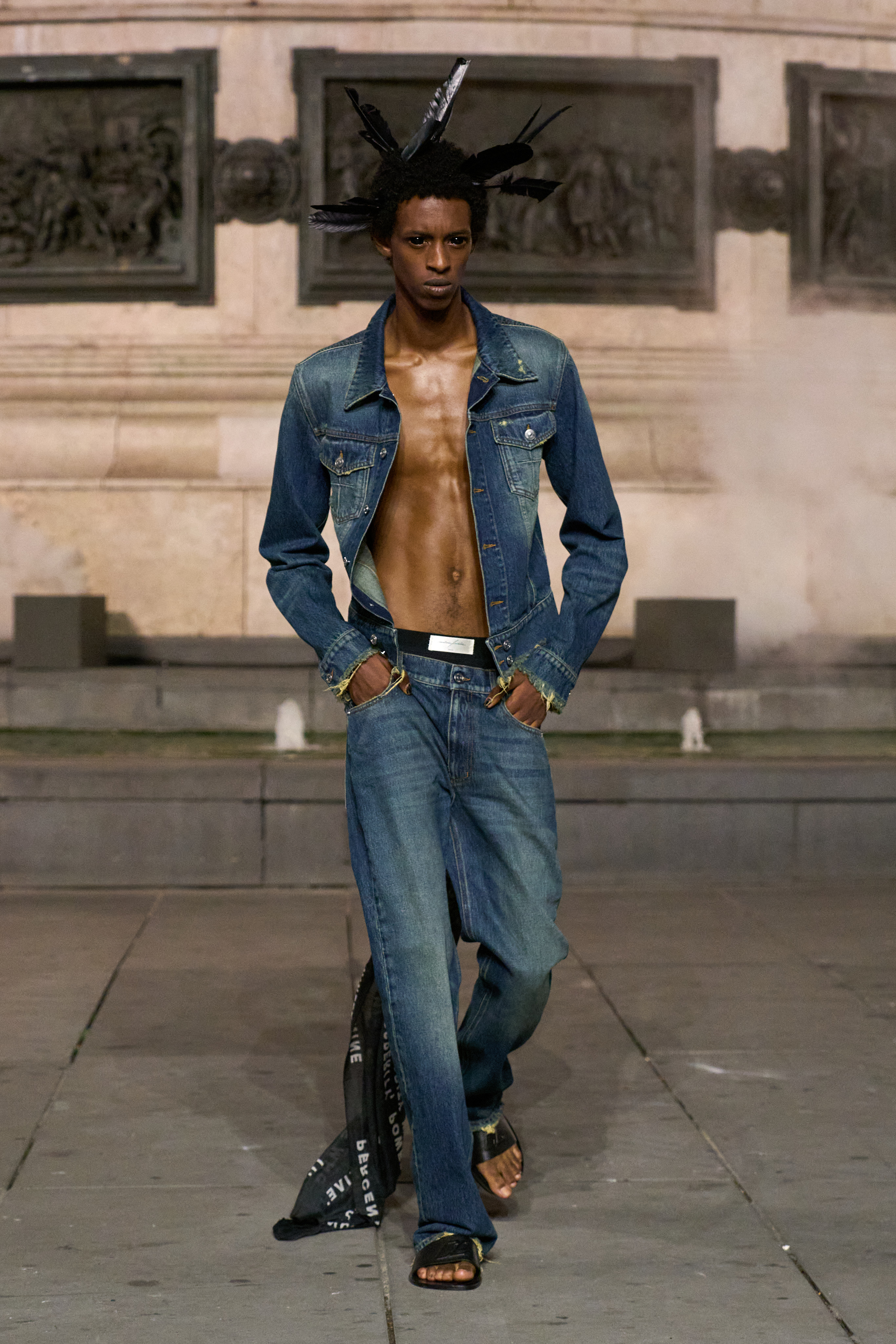
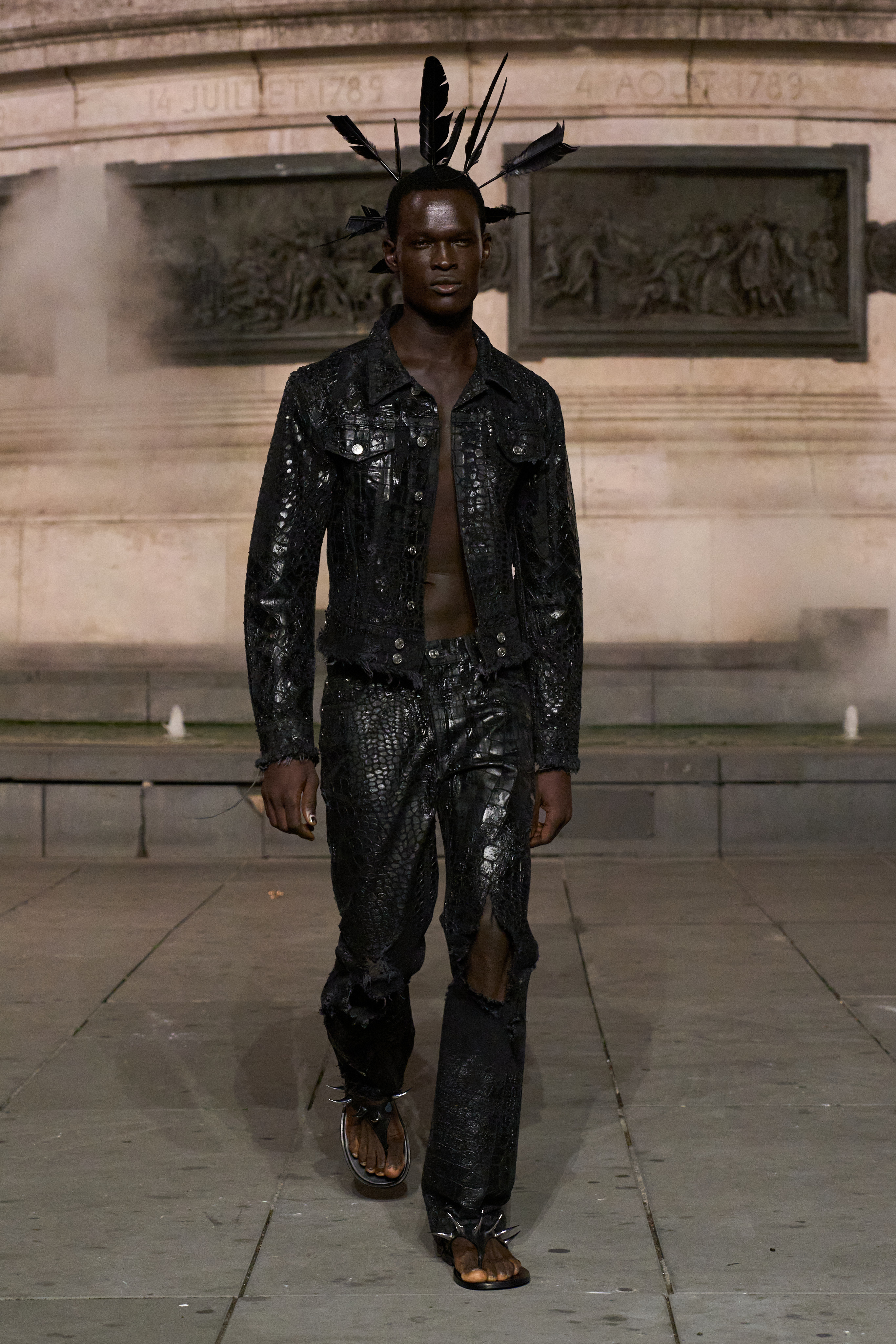
The location itself becomes part of the message. Bringing 99 models to Place de la République means transforming a space historically associated with protests, public gatherings and collective demands into a runway. The boundary between fashion show and demonstration becomes deliberately blurred.
Among those seated in the front row were Rihanna, Rick Owens and Michèle Lamy, Daphne Guinness, Tyrone Dylan, Nikki Lilly and Gigi Goode. But “The Ninety Nine Percent” extends beyond the spectacle and symbolism of the show itself. A portion of the proceeds from the SS27 collection will be donated to La Maison d’Allanah, a French organization providing housing and support to LGBTQIA+ refugees.
With The Ninety Nine Percent, Matières Fécales builds its vision of couture around a question of belonging. Family, religion, subculture, class and identity become parts of the same narrative, while the divide between the one percent and the 99 percent is transformed from an economic concept into a physical image: by the end of the show, the weight of privilege is literally carried on the shoulders of those who sustain it.
Matières Fécales SS27 images