Sportmax goes back to the base.
At a time when fashion can sometimes seem more interested in creating an image than answering the very basic question of why clothes exist, Sportmax returns to the original job of clothing: protect the body without restricting it.
For Spring/Summer 2027, the Sportmax Studio responds to a world getting hotter by reconsidering one of fashion’s most persistent uniforms: the suit.
The collection emerged from the experience of a canicule – extreme heat experienced across cities from Milan and Venice to Paris and Tokyo. Instead of imagining some futuristic wardrobe detached from reality, Sportmax looked at what people actually do when temperatures become unbearable: commuters, workers and city dwellers trying to get through the day while still having to get dressed.
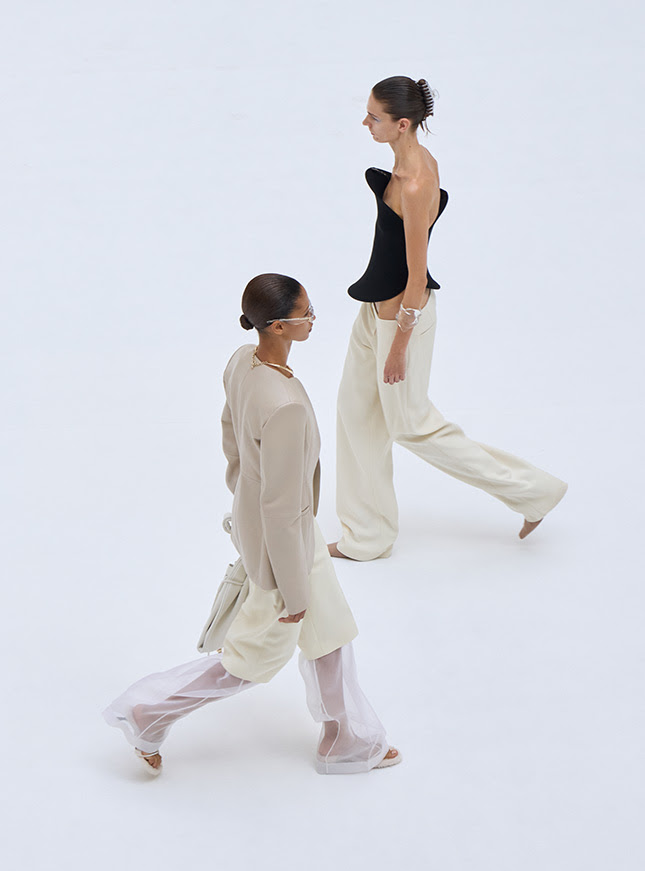
The result was shown on a completely stripped-back white rectangular runway, putting the clothes – rather than an elaborate set – at the centre.
FIGHTING THE HEAT, A LITTLE DIFFERENTLY
The studio isn’t pretending that a lighter fabric is going to fix the climate crisis. And the collection isn’t built around a parade of recycled materials either.
Instead, Sportmax seems more interested in what clothes are expected to do in the first place.
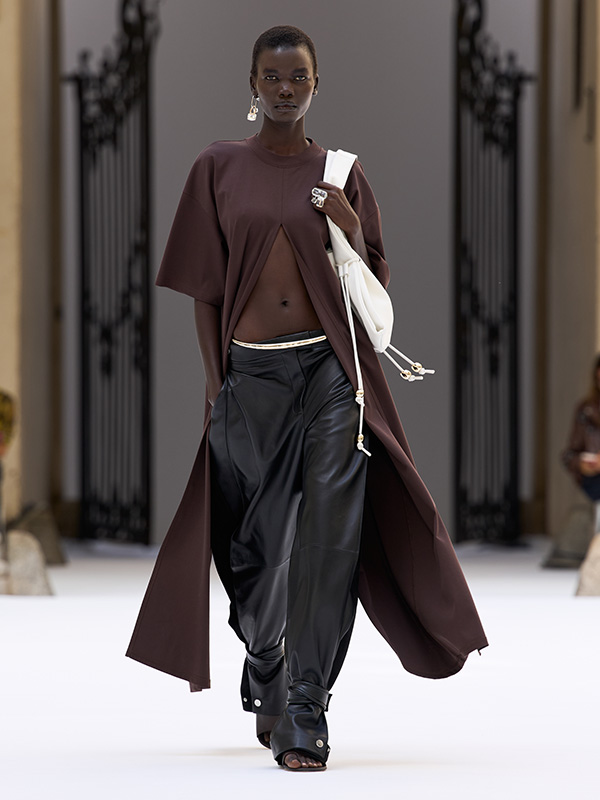
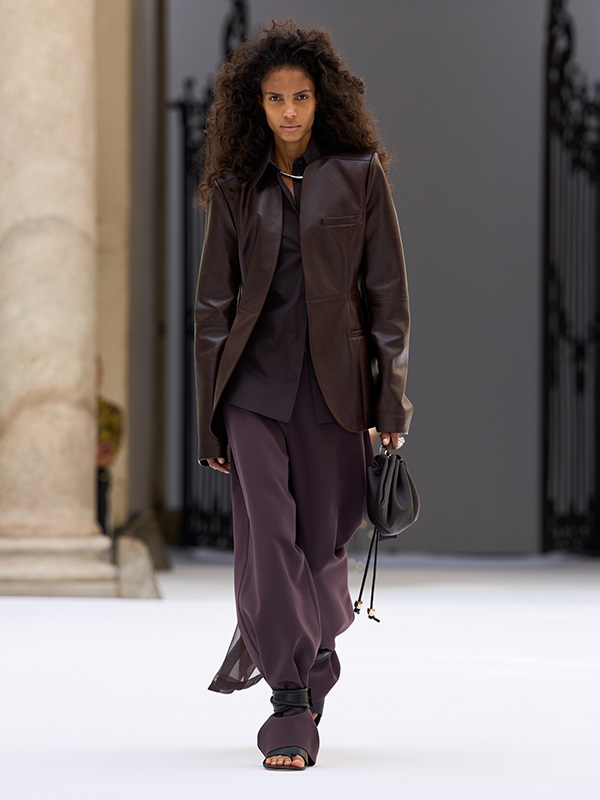
The suit gets opened up. Pinstripe tailoring becomes shorter, jackets reveal the body and left without buttons, while below-knee trousers with elasticated finishes are entering casual – dressed like a businessman, undressed like the season demands.
It’s a small but effective disruption of the traditional idea of formalwear: what if the suit didn’t have to mean being completely covered?
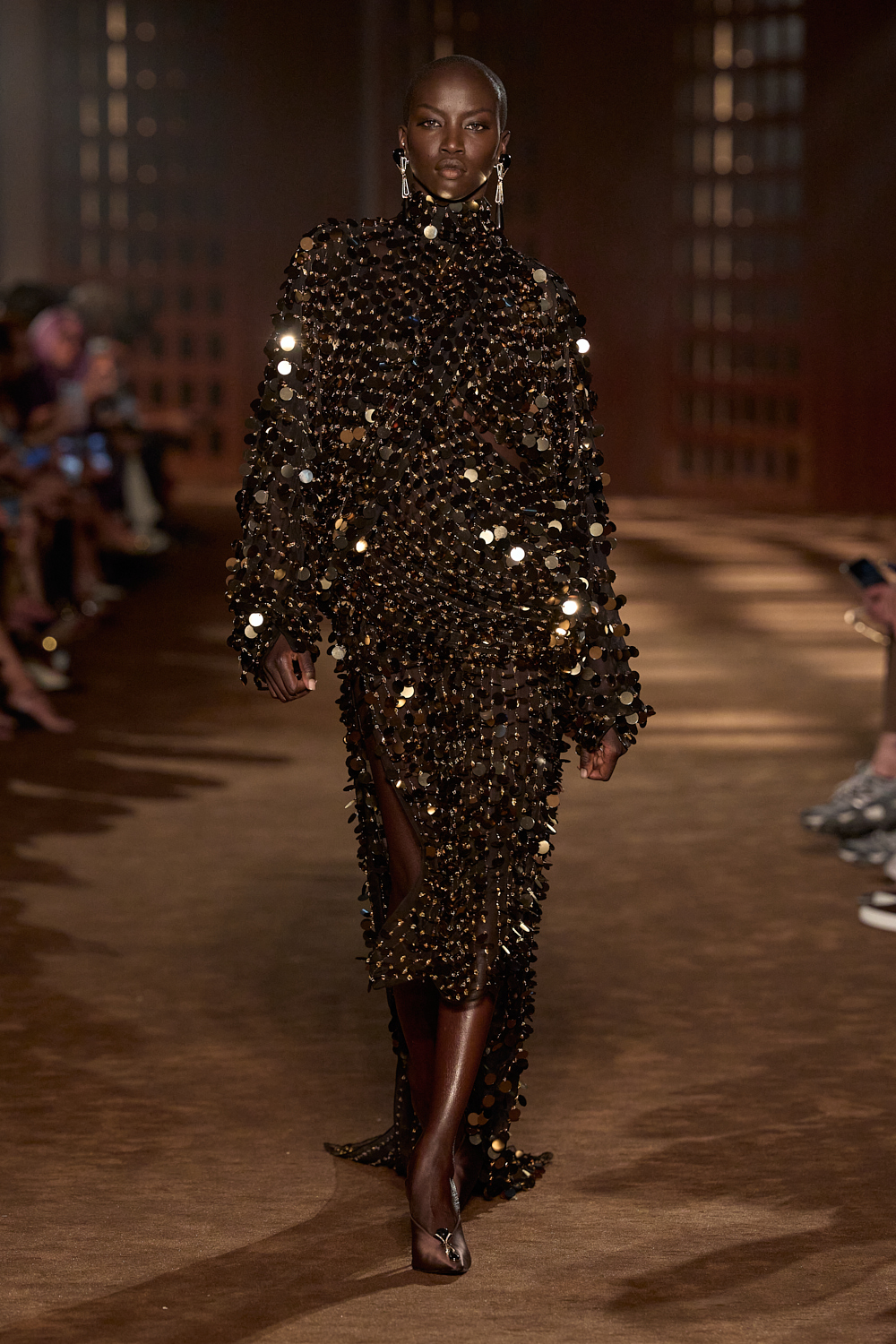
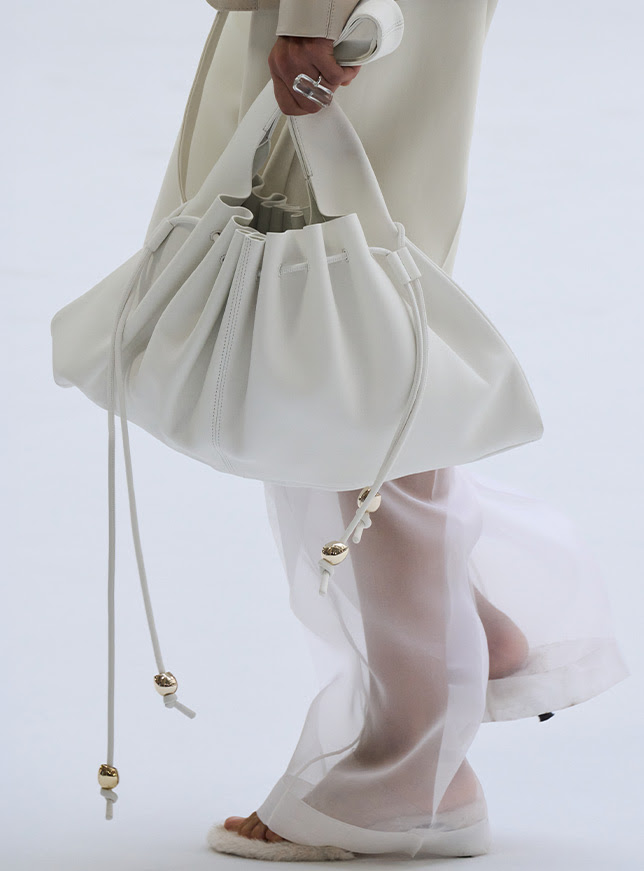
Transparency becomes one of the collection’s main tools. Silk organza layers in écru, orange and blush pink create soft colour gradients, while sheer tailoring allows air, light and skin to become part of the silhouette.
Long belts and waistbands pull in otherwise loose shapes, giving the garments just enough structure while allowing them to move.
And the same idea appears elsewhere.
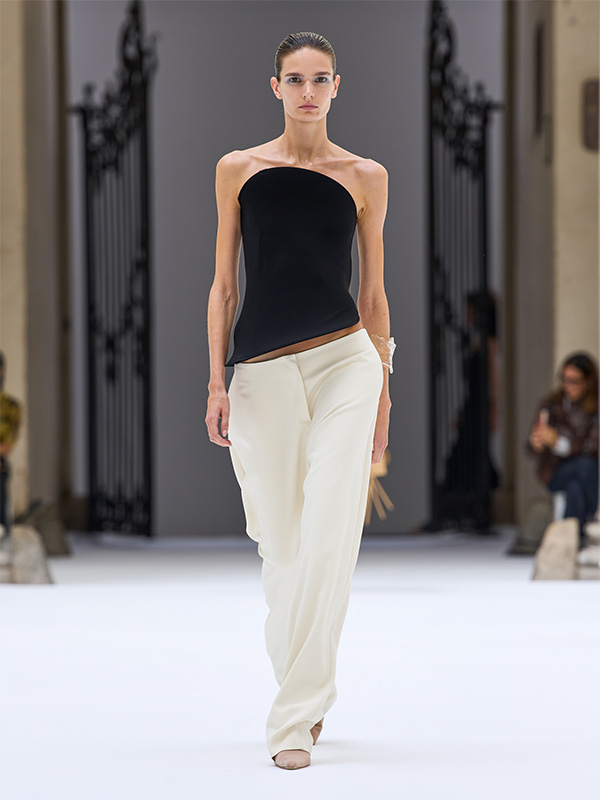
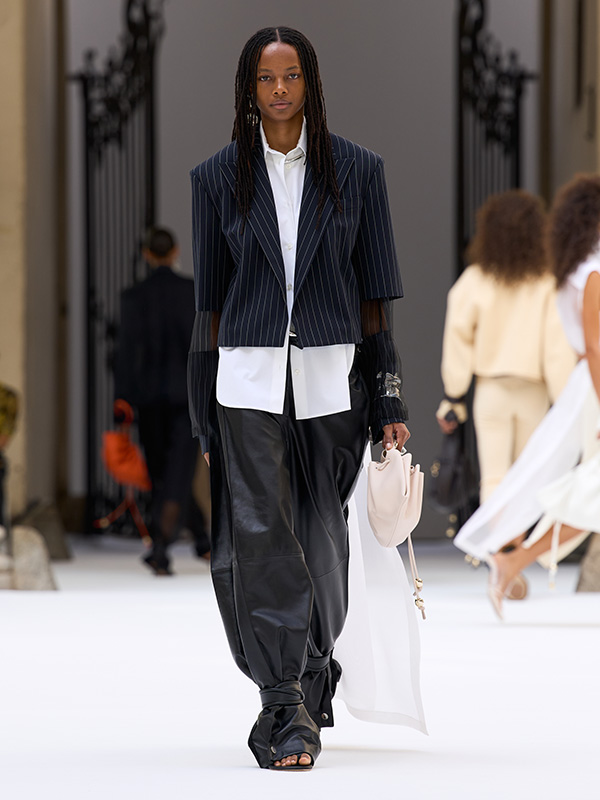
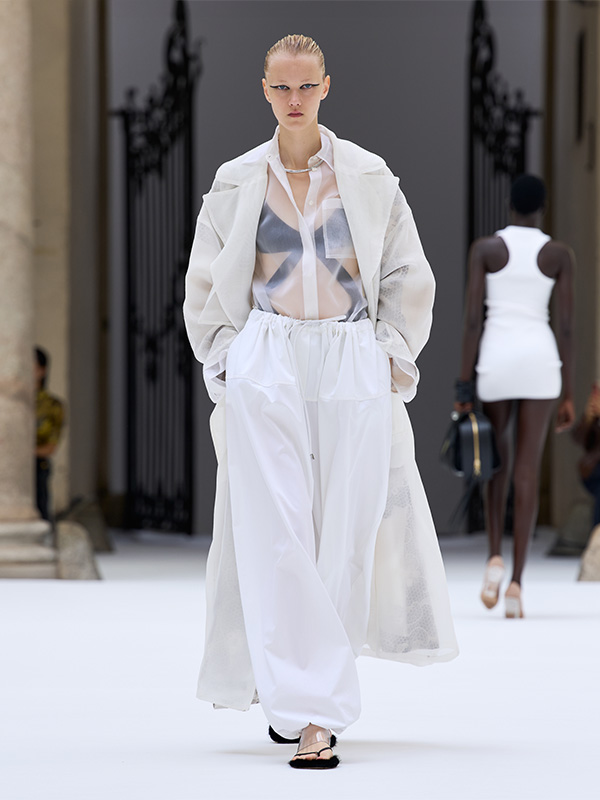
Some jackets and coats come with convertible panels that can be opened up. Denim becomes softer and closer to flou than traditional rigid denim. Even the illusion of tailoring is questioned through trompe-l’œil lapels stitched directly onto the chest.
The clothes remember what a suit is supposed to look like without necessarily behaving like one.
DRESSED LIKE A BUSINESSMAN, UNDRESSED LIKE THE SEASON DEMANDS
This might be the most interesting part of Sportmax’s approach.
Rather than abandoning tailoring because the weather has changed, the collection reworks the rules around it.
The traditional language of pinstripes, lapels and structured silhouettes remains, but the construction becomes increasingly fluid. Sheer panels replace the visual heaviness of conventional suiting, while lighter proportions and exposed skin make the idea of formalwear feel less rigid.
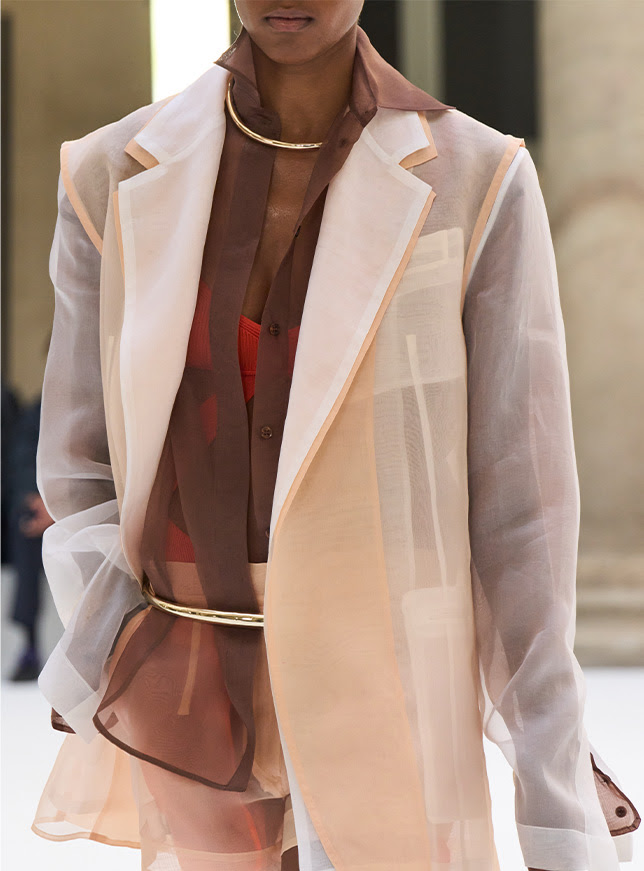
It’s almost as if the collection asks: how much of a suit do you actually need?
When temperatures rise, dressing for the weather doesn’t necessarily mean abandoning the codes that make an outfit feel polished. It can mean taking those codes apart and deciding which parts are actually necessary.
THE STREET IS THE REAL RUNWAY
The collection’s soundtrack was Logic1000’s Under the Sun Beneath the Rainfall, and Sportmax describes the idea behind the season quite simply: “the real fashion show is in the street.”
It makes sense.
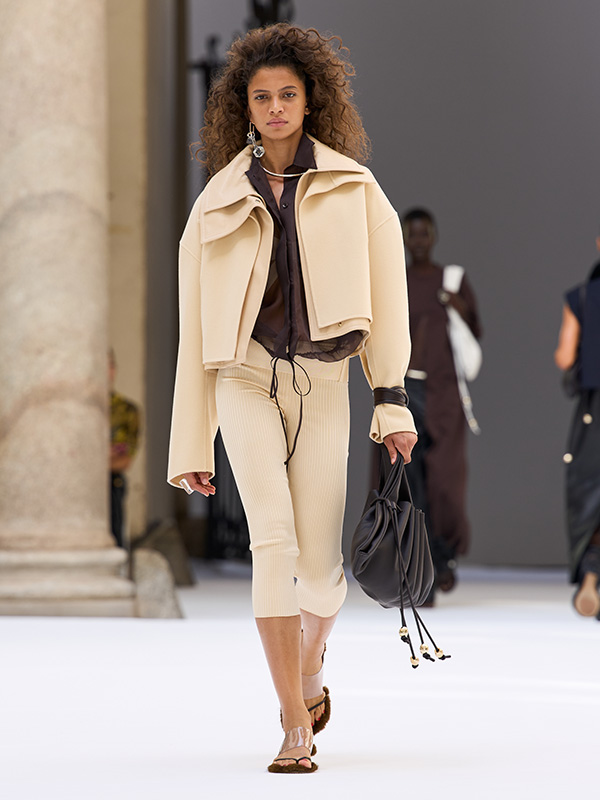
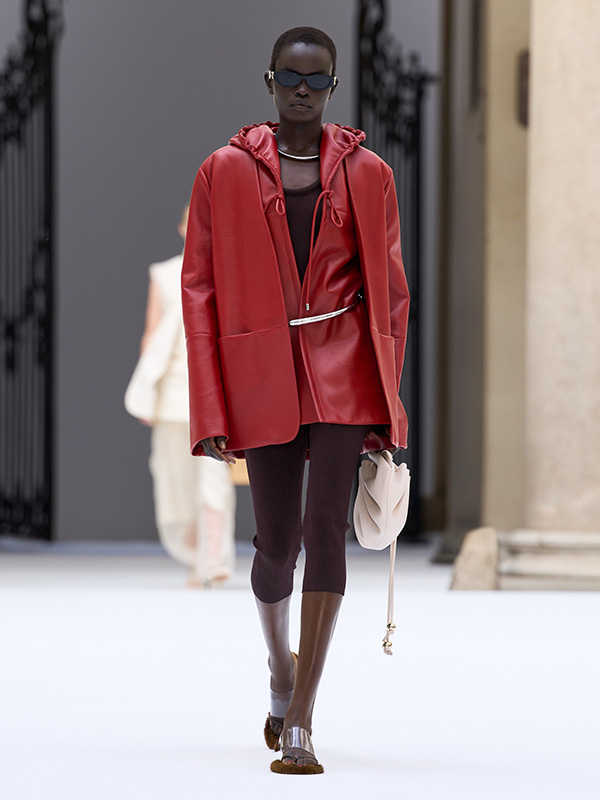
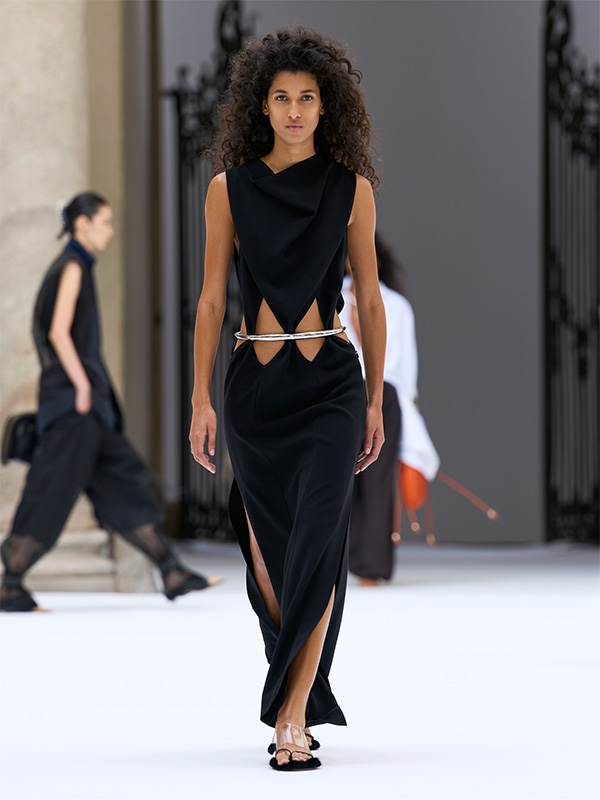
These aren’t clothes designed around the fantasy of standing still in perfect lighting. They are designed around moving through a city when it’s too hot, getting from one place to another, going to work and then somewhere else afterwards. But still looking like the heat doesn’t control what to wear, we are just aware of it.
What remains is a wardrobe that is lighter, more exposed and more adaptable – still recognisably Sportmax, but designed around the reality of actually having to live in it.
Sportmax isn’t designing for the store window. It’s designing for the moment after you leave it.