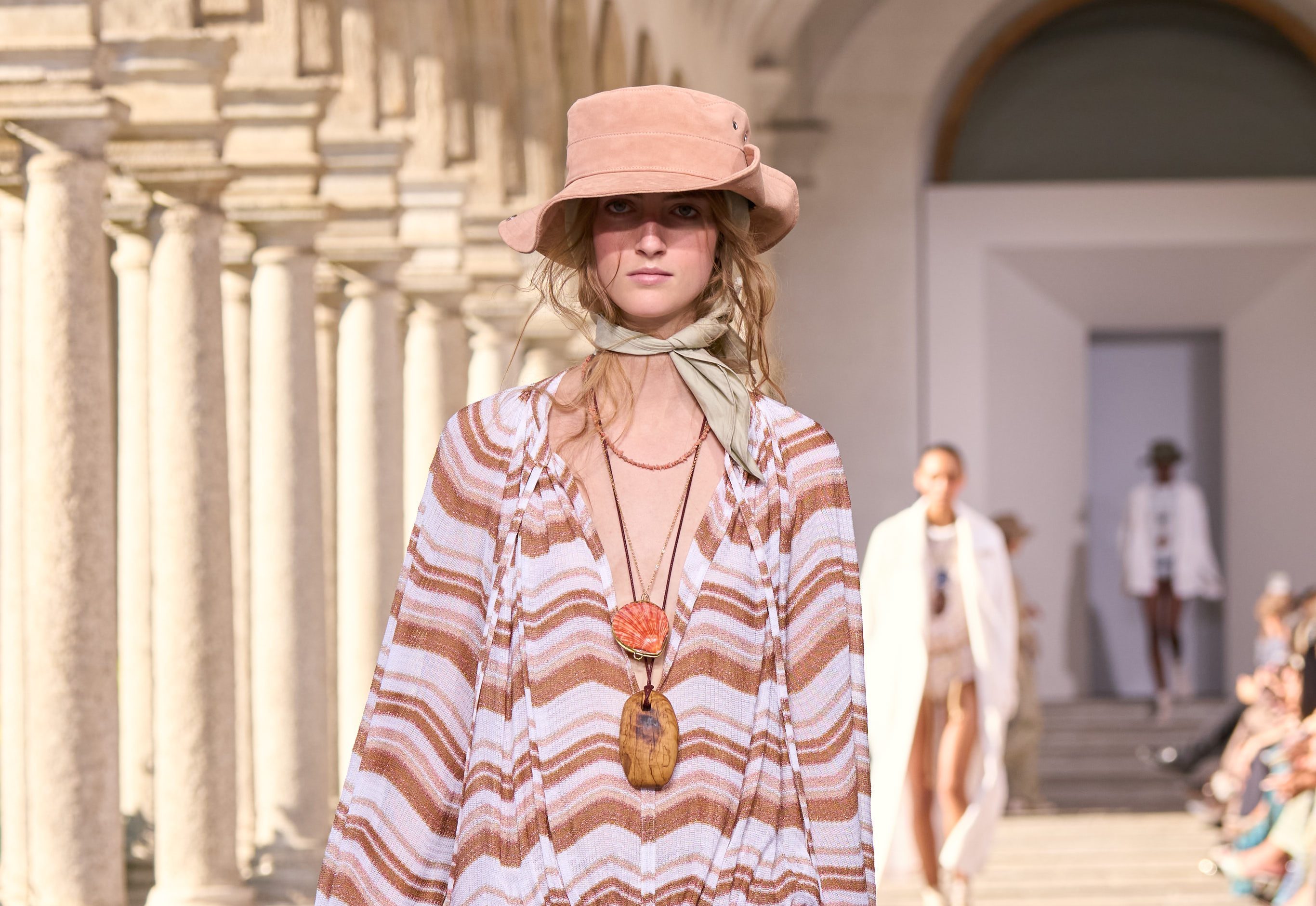
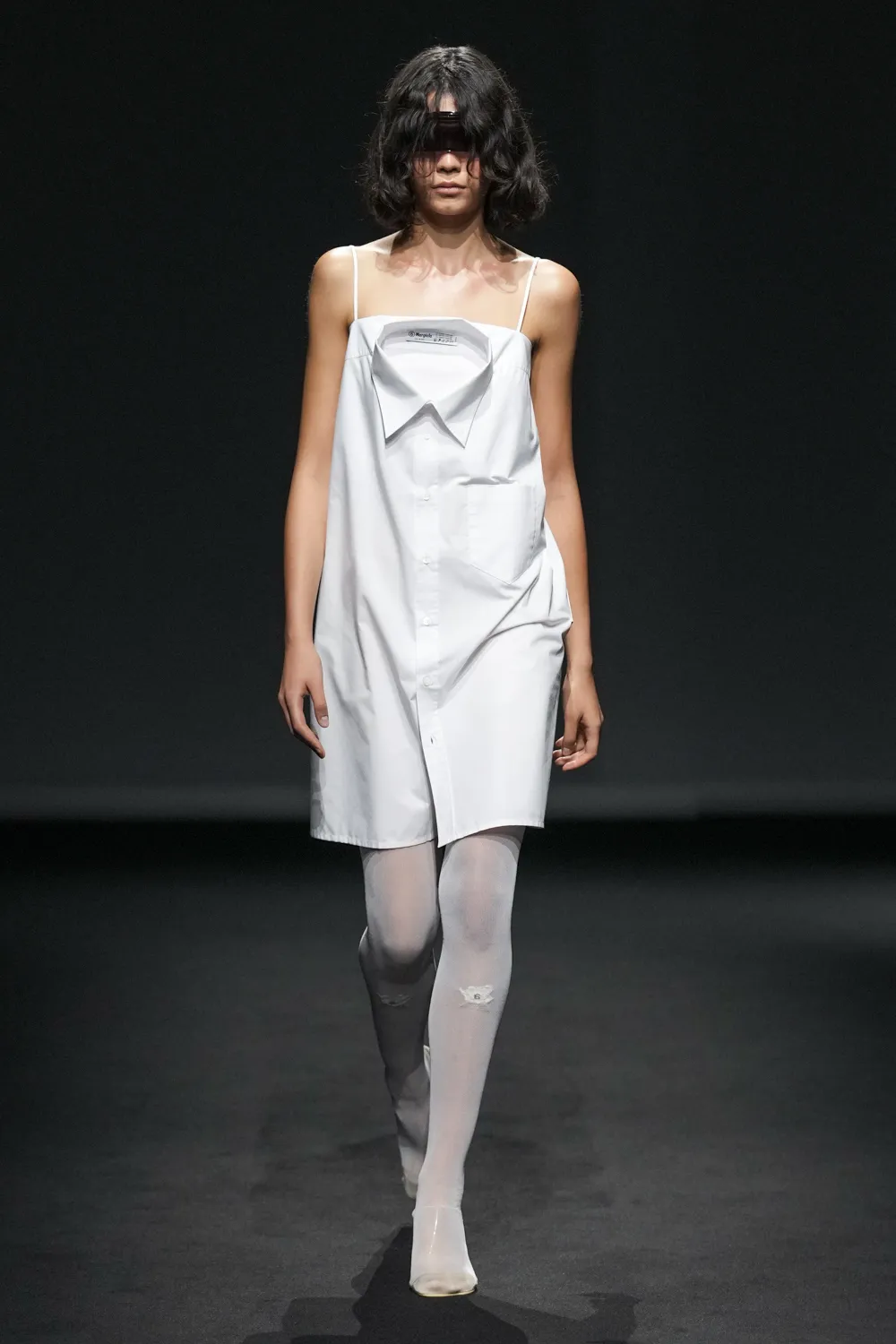
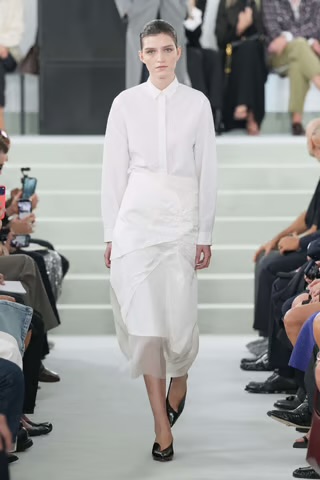
What happens when the woman who learned fashion inside Fendi returns to reinvent the house that taught her how to see it? Let’s talk about Fendi Spring Summer 2027 collection.
Fendi has always been a strange kind of fashion house.
Born in Rome in 1925 as a leather and fur business, it was never built around one single idea of luxury. It was built around the transformation of materials: fur becoming light, leather becoming technique, craftsmanship becoming attitude. Then came the five Fendi sisters, Karl Lagerfeld, the collision between Roman tradition and Parisian modernity, the Baguette, the logo, the accessories, the ready-to-wear. Fendi grew by changing what its own traditions could mean.
That contradiction is important because Maria Grazia Chiuri is, in many ways, a product of exactly that system.
She entered Fendi as a young accessories designer and spent a decade inside the house, learning the language of bags, shoes, fur and craftsmanship. She was there when the Baguette was becoming an object capable of turning an accessory into cultural currency. She left in 1999 with Pierpaolo Piccioli for Valentino, where the pair would eventually become creative directors, before Chiuri moved alone to Dior in 2016.
Every house added another layer.
Fendi taught her objects.
Valentino taught her couture, image and the scale of a global fashion house.
Dior gave her a platform to turn femininity itself into a cultural argument.
Now she is back where the story started.
And that makes Fendi Spring/Summer 2027 more interesting than simply another collection by Maria Grazia Chiuri.
Because this is not really about returning to Fendi.
It is about what happens when a designer returns to a place that helped create her own vocabulary.
THE HOUSE THAT TAUGHT HER
Fendi has always understood that tradition is only useful when it can be manipulated.
The five sisters did not protect the house by freezing it in time. They invited Karl Lagerfeld into a family business and allowed an outsider to radically transform one of its most traditional materials. The result was one of the most important creative relationships in modern fashion: Roman craftsmanship meeting a distinctly modern, sometimes almost provocative, approach to fur.
That logic continued through Silvia Venturini Fendi, accessories, the Baguette and the transformation of Fendi from a specialist Roman maison into a global cultural brand.
The history of Fendi is therefore not really about heritage.
It is about what you do with heritage once you inherit it.
Chiuri knows this because she learned it there.
THE WOMAN WHO LEFT AND CAME BACK
Her career after Fendi was essentially an education in different versions of femininity.
At Valentino, Chiuri and Piccioli worked through accessories before taking control of the entire house. At Dior, she became the first woman to lead its womenswear creative direction, building a vocabulary around women, artists, politics, the body and the idea of fashion as a form of cultural conversation.
It was a language that could sometimes feel almost too clearly articulated.
Feminism. Sisterhood. Empowerment. The female body.
Sometimes the idea arrived before the garment.
That has always been one of the more complicated aspects of Chiuri’s work: her ability to make fashion speak about women is also what can make the woman herself feel like a concept.
Fendi offers a different challenge.
Here, the body is not simply an ideological subject.
It is a material.
SPRING/SUMMER 2027
So Chiuri starts with the body.
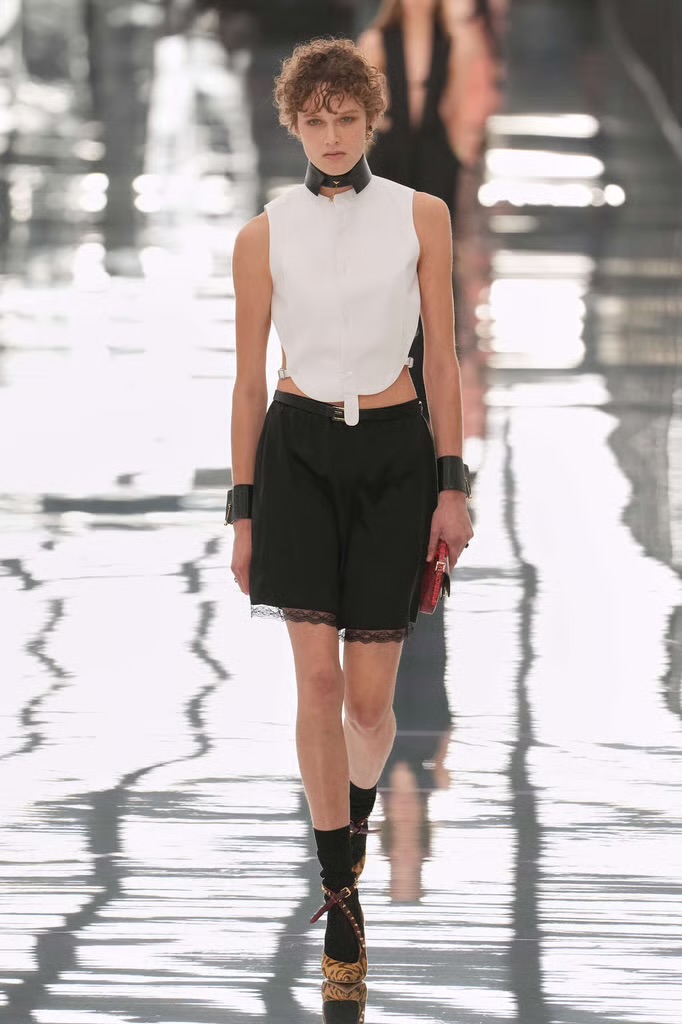
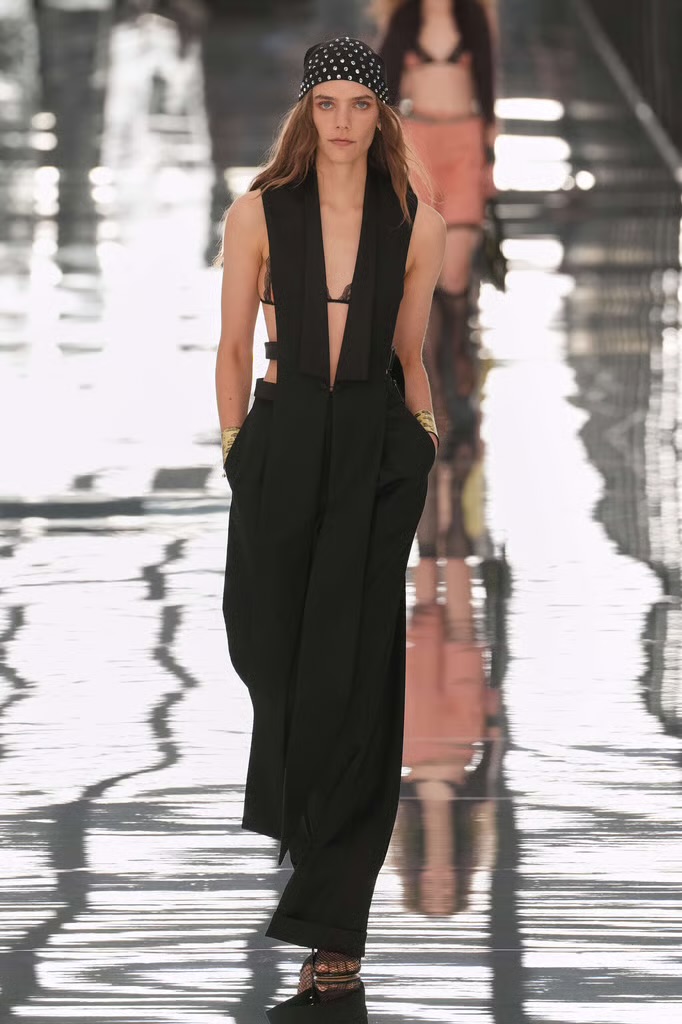
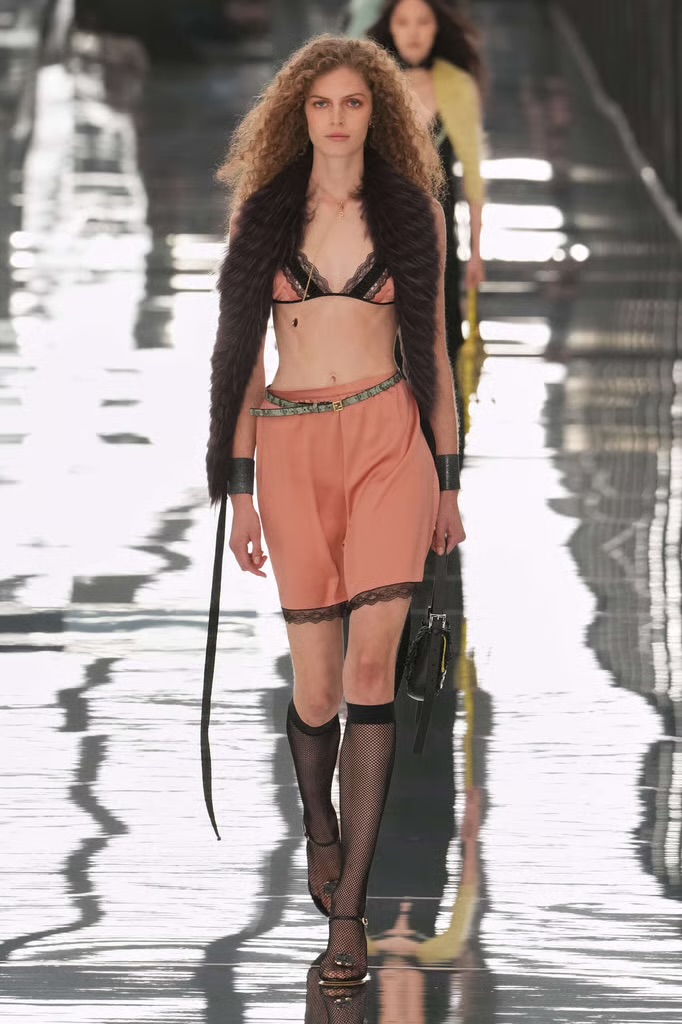
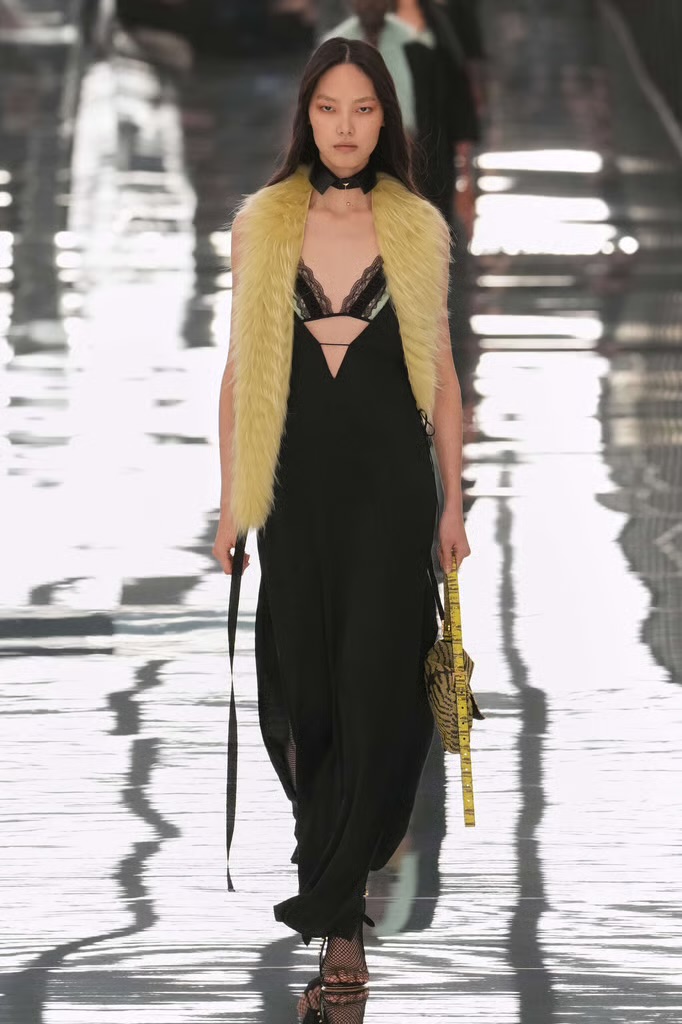
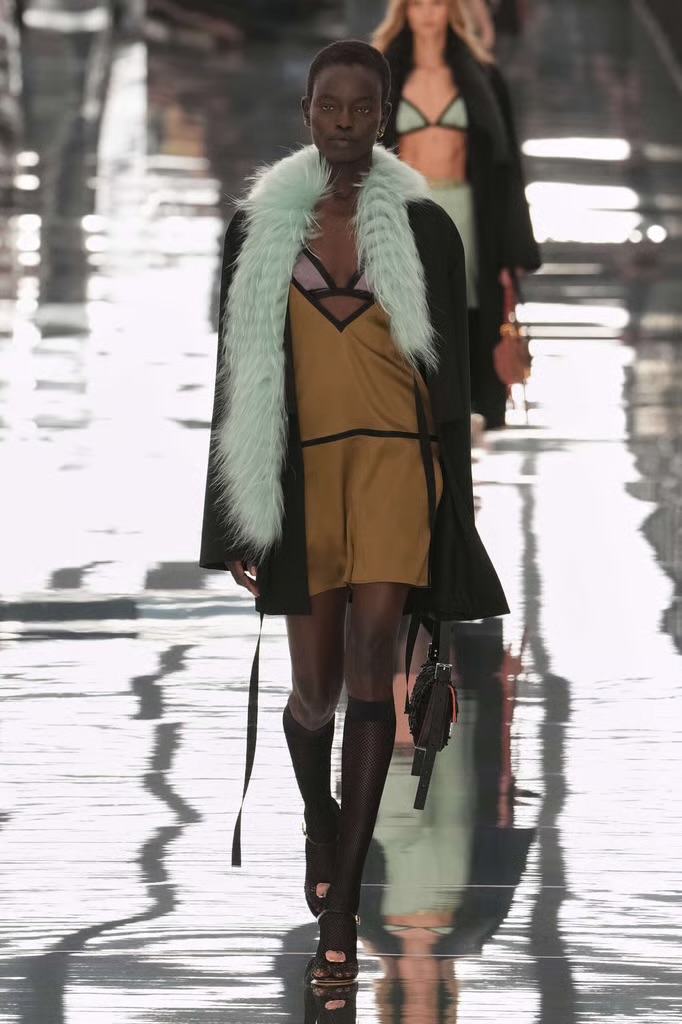
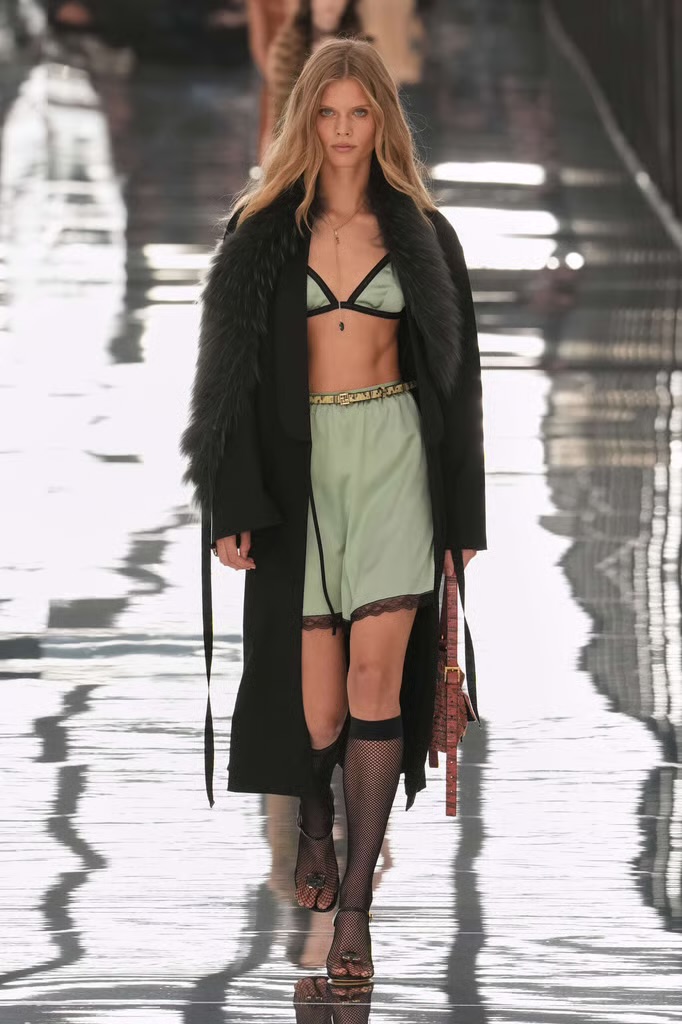
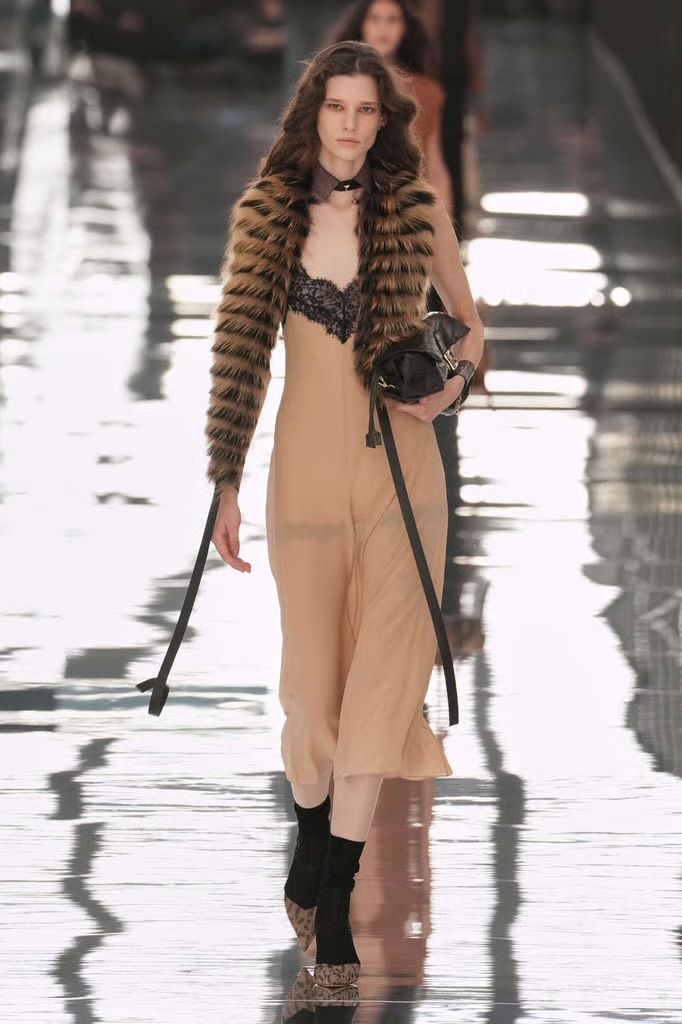
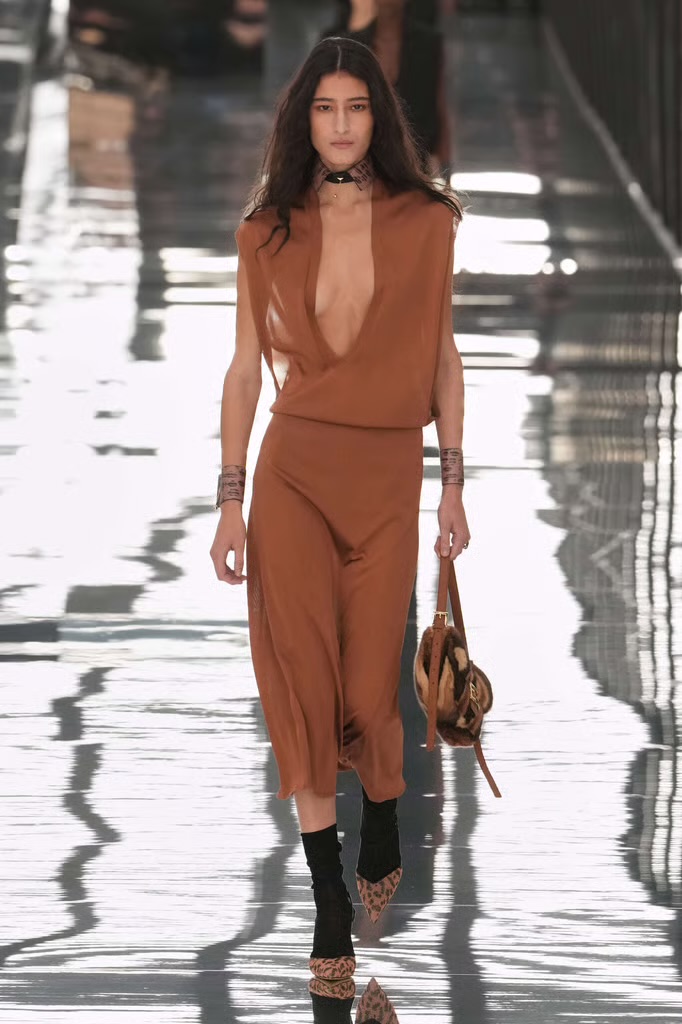
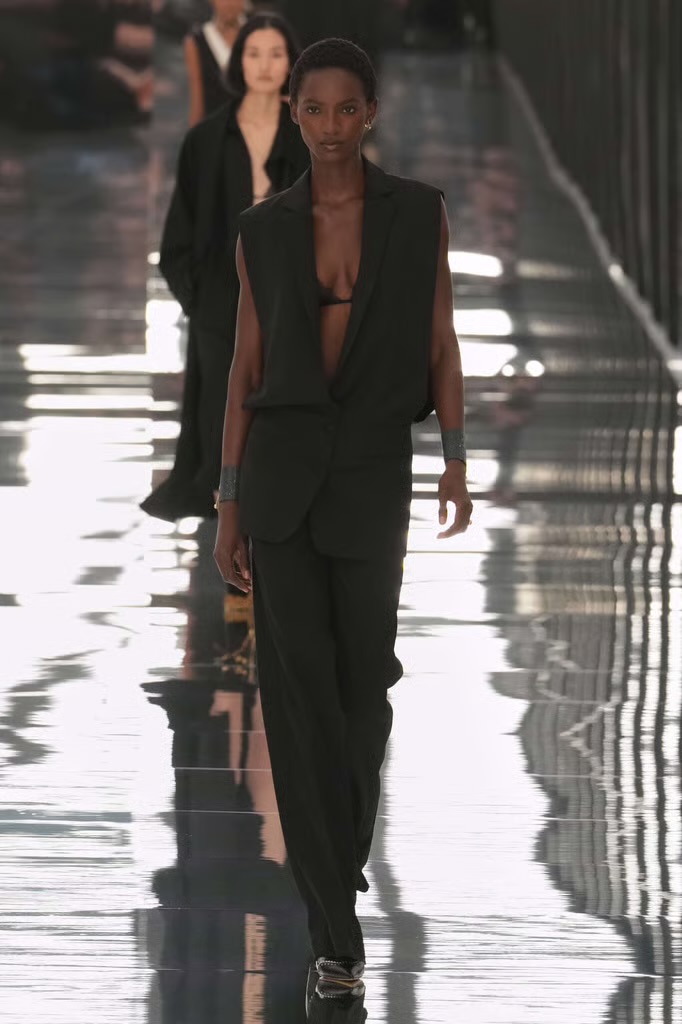
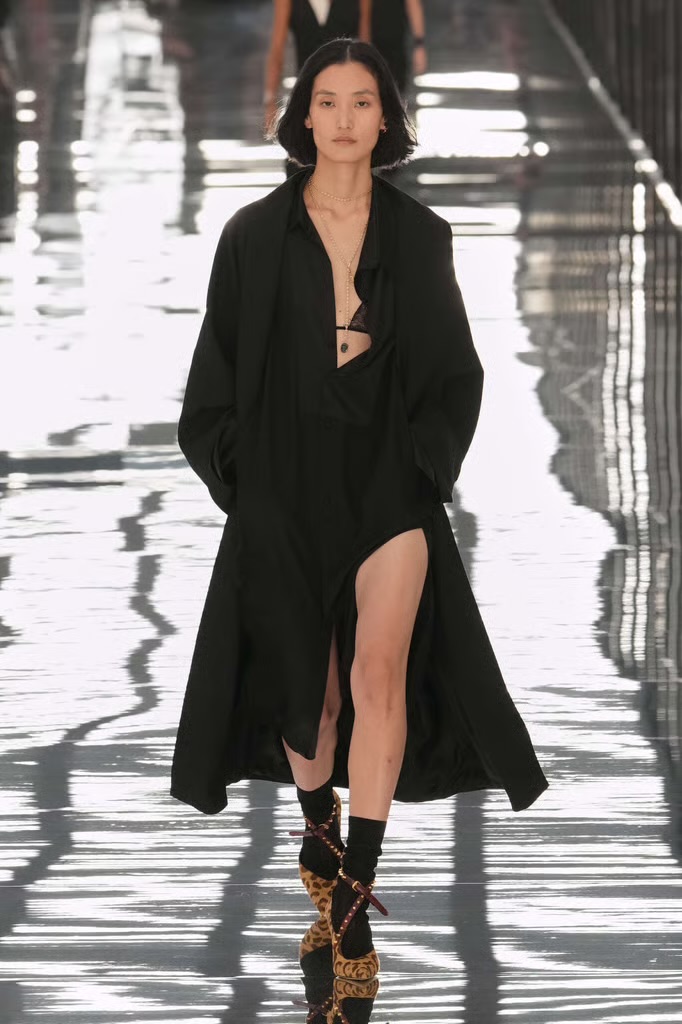
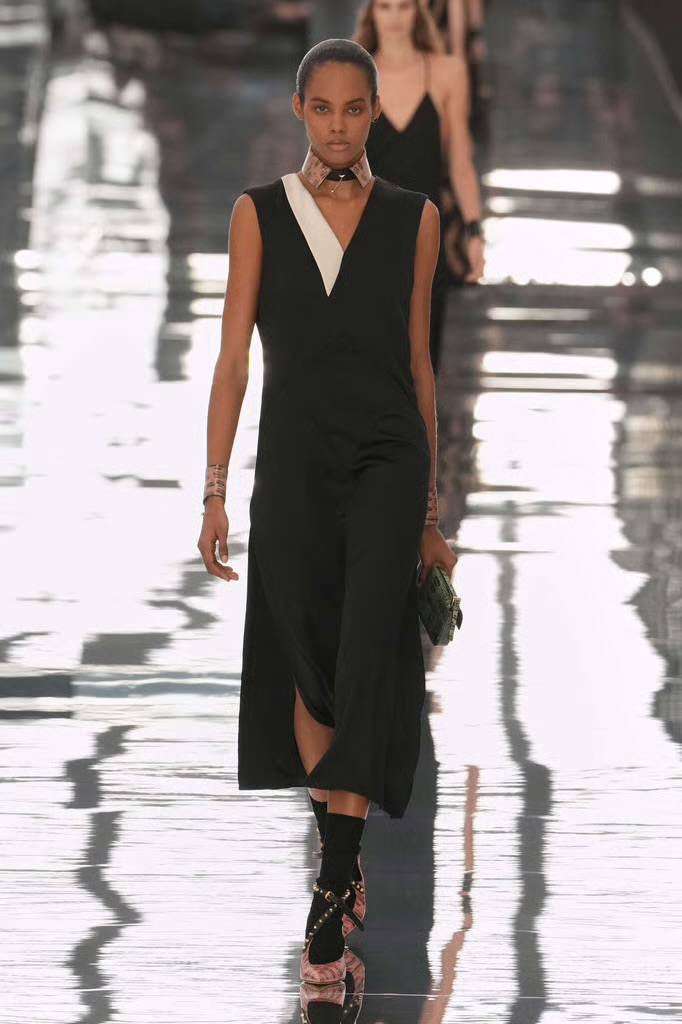
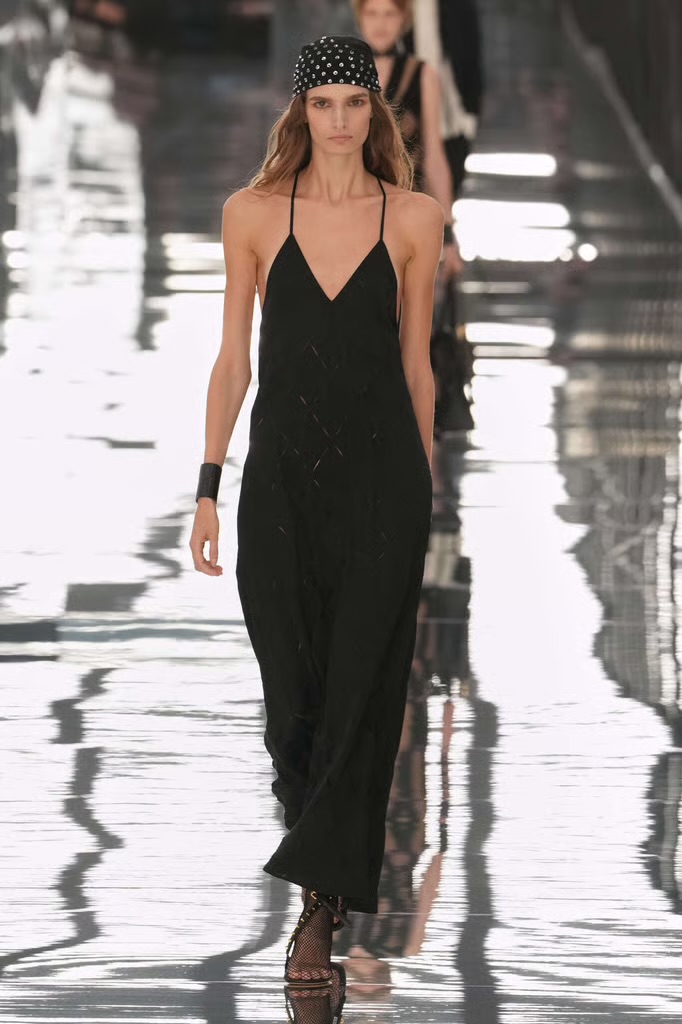
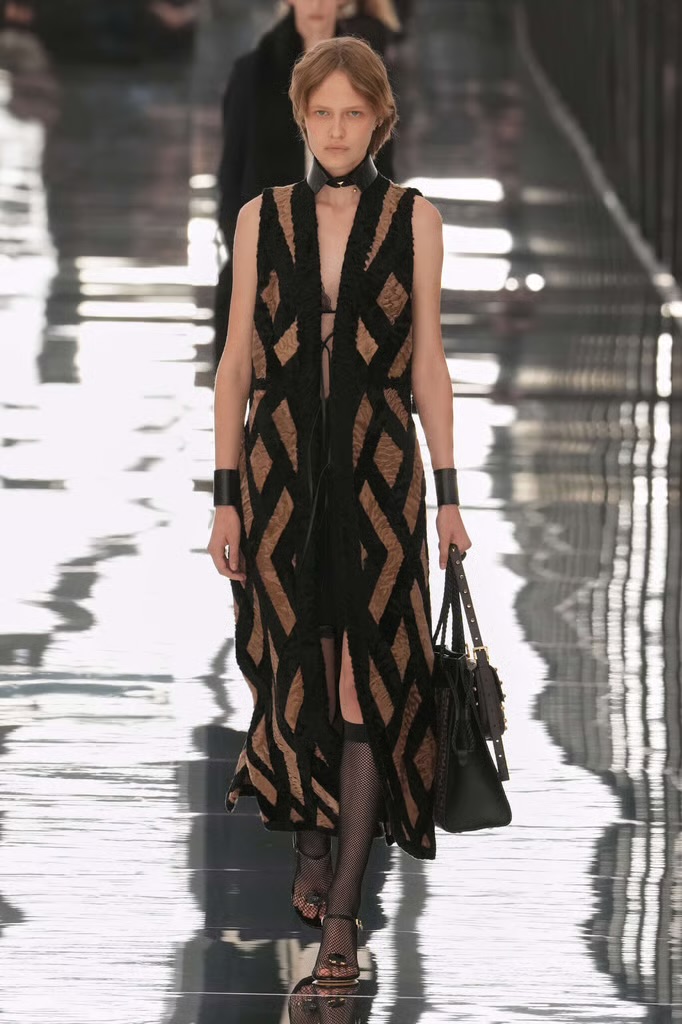
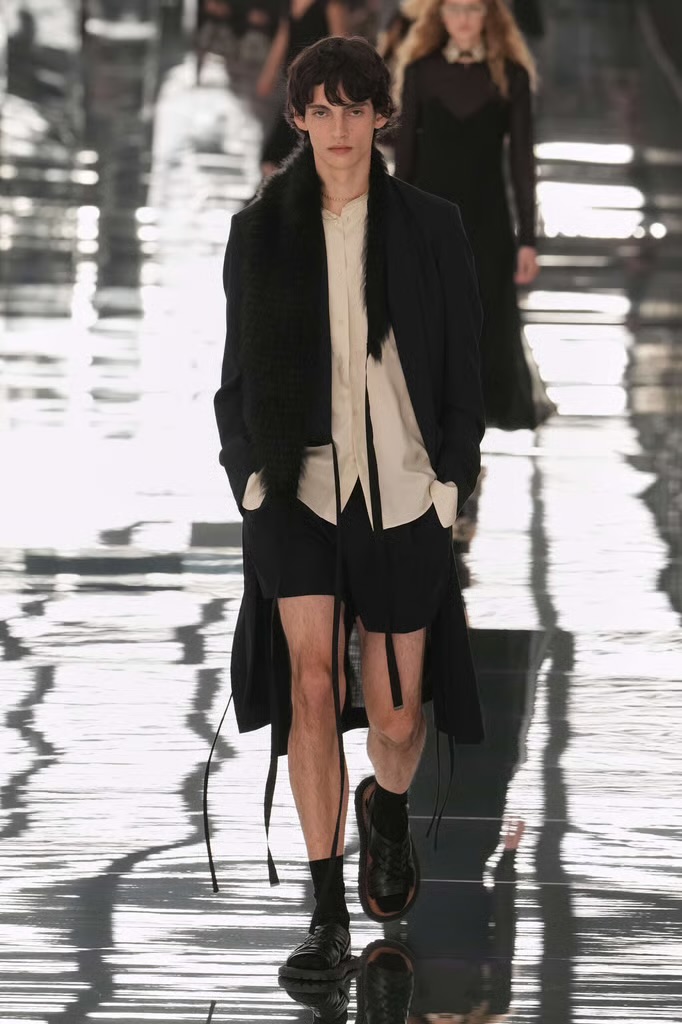
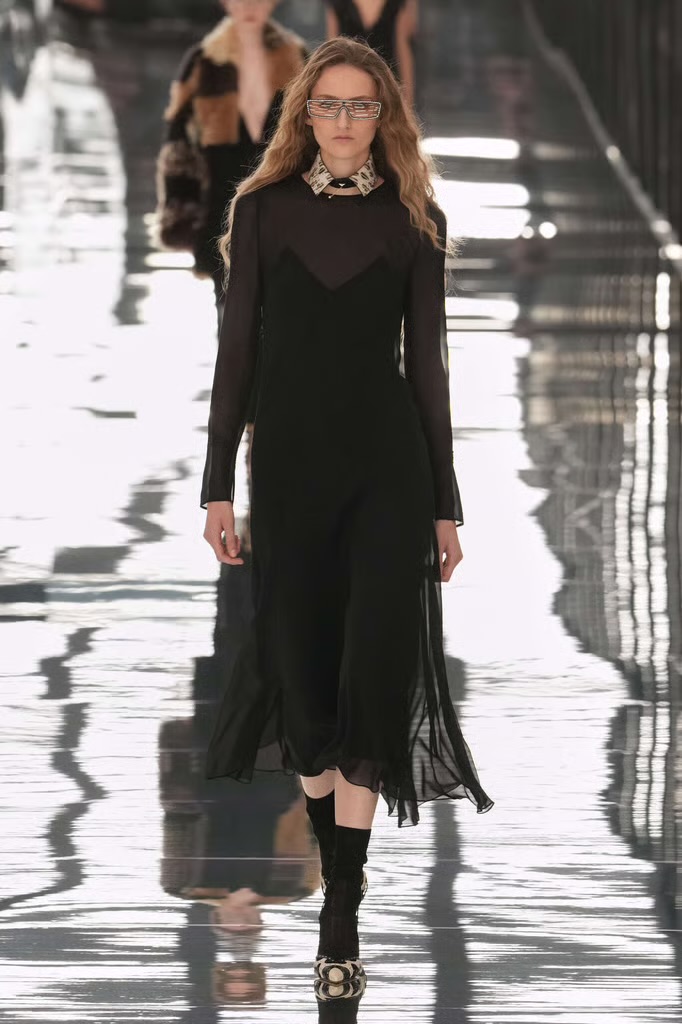
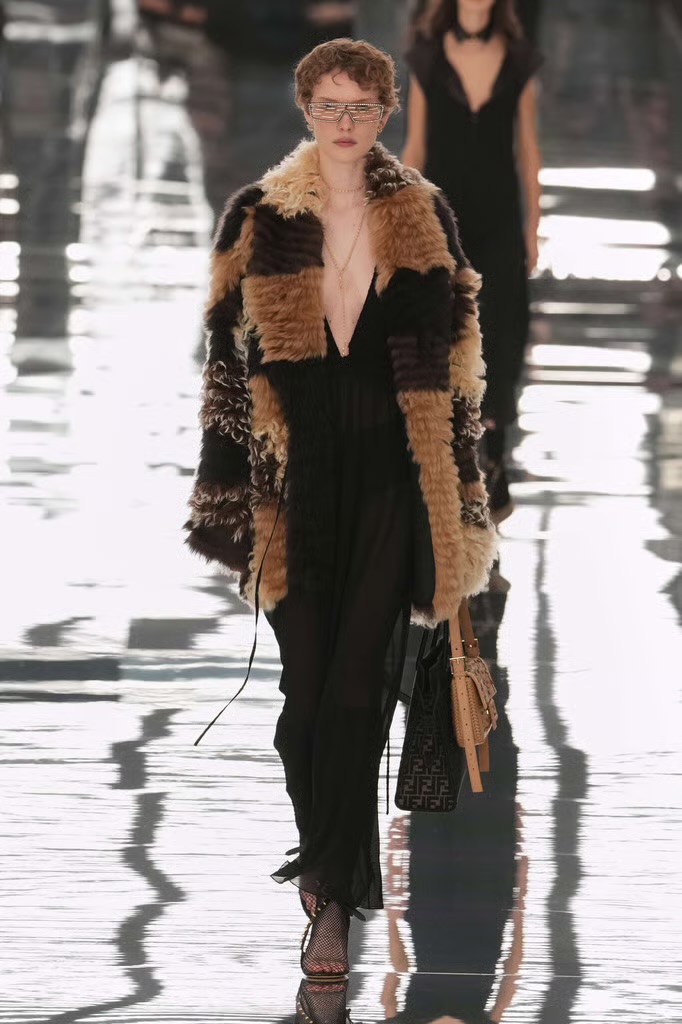
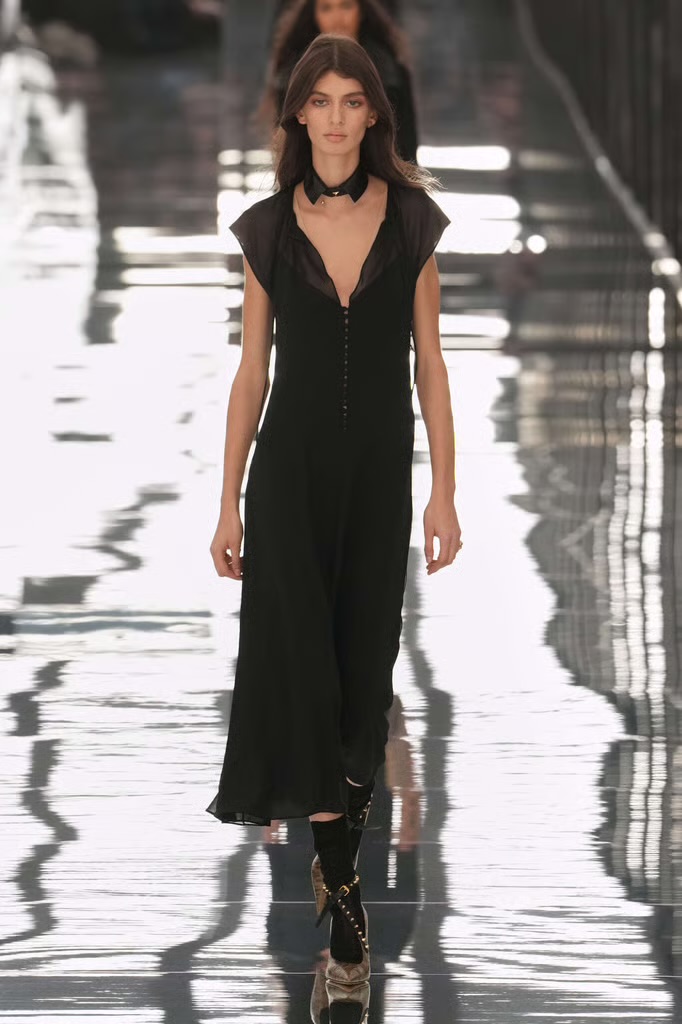
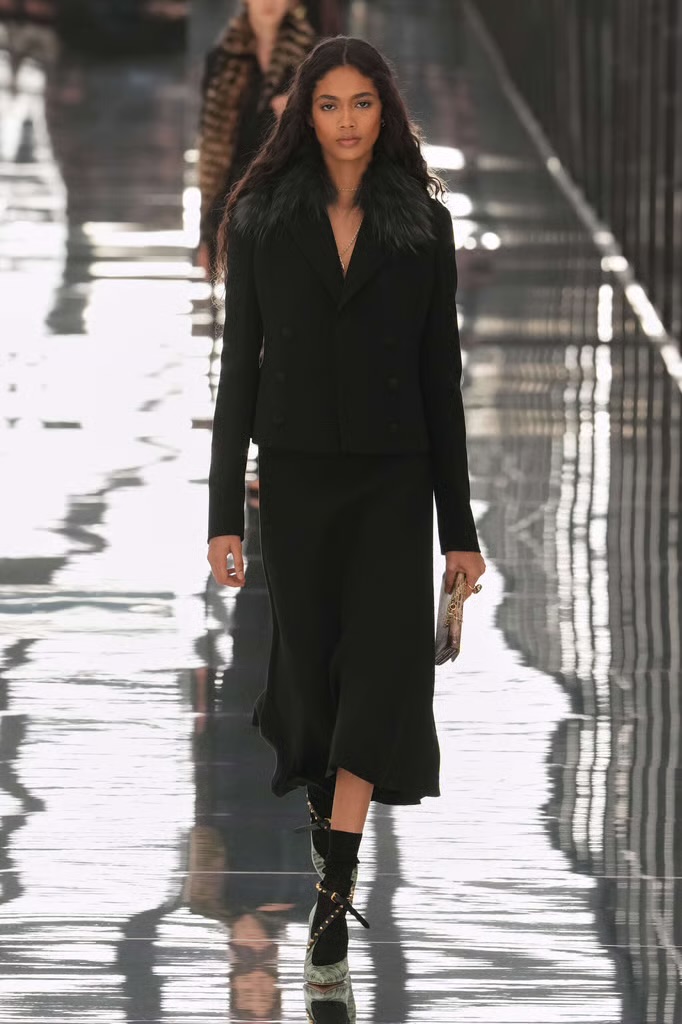
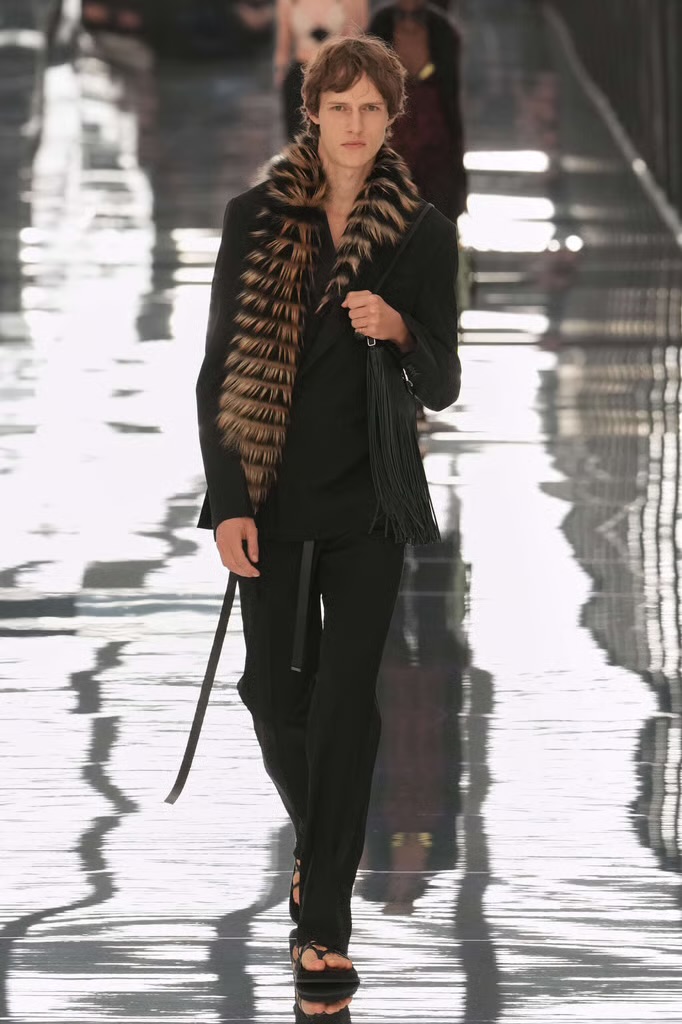
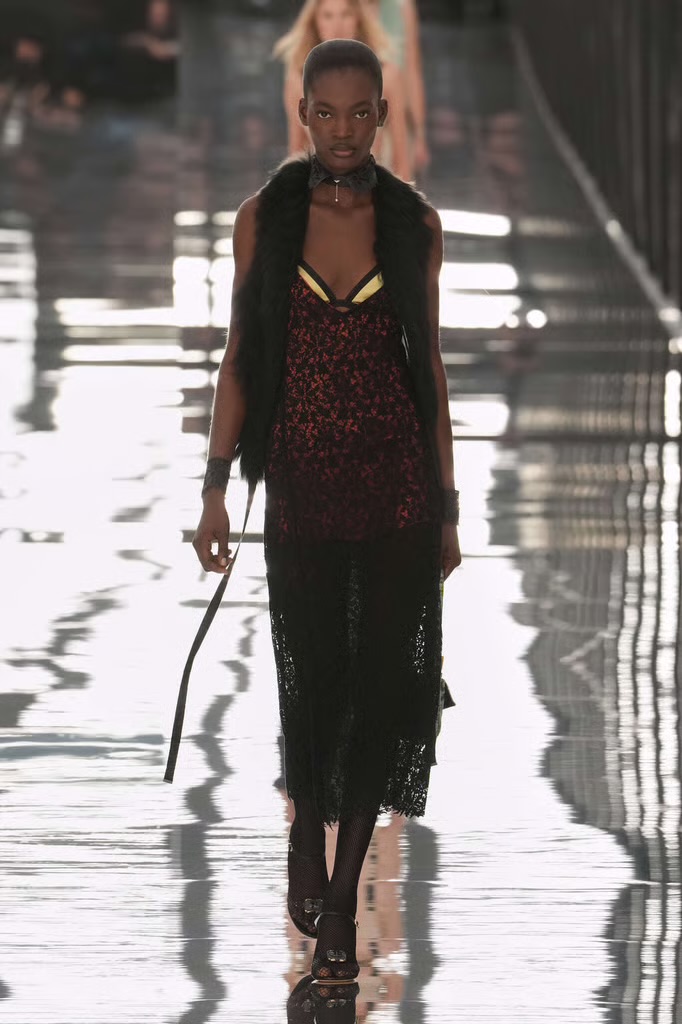
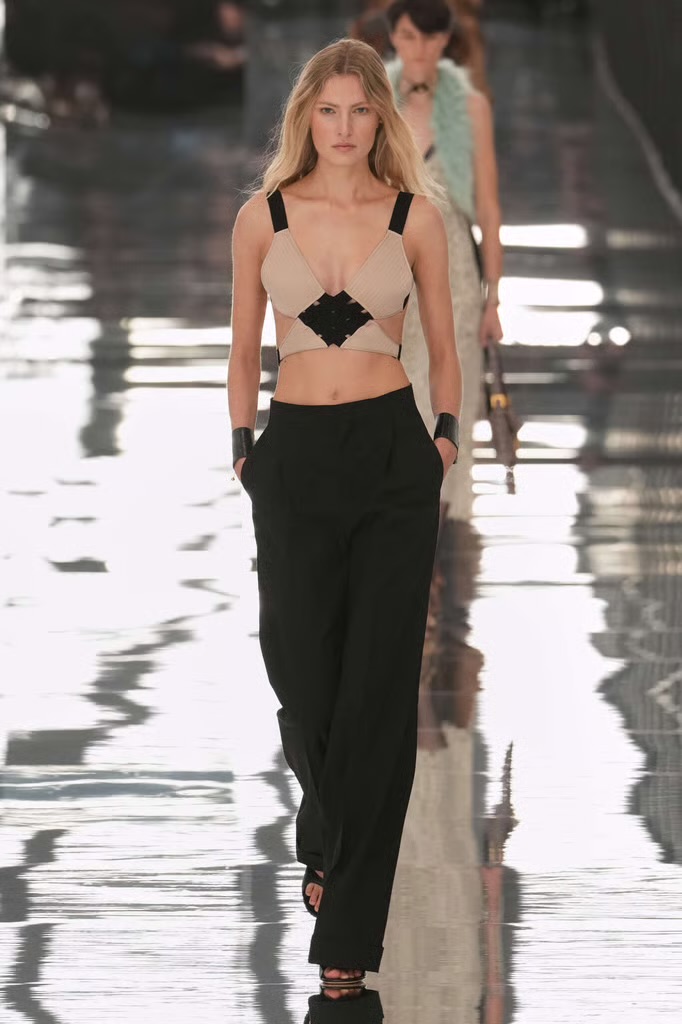
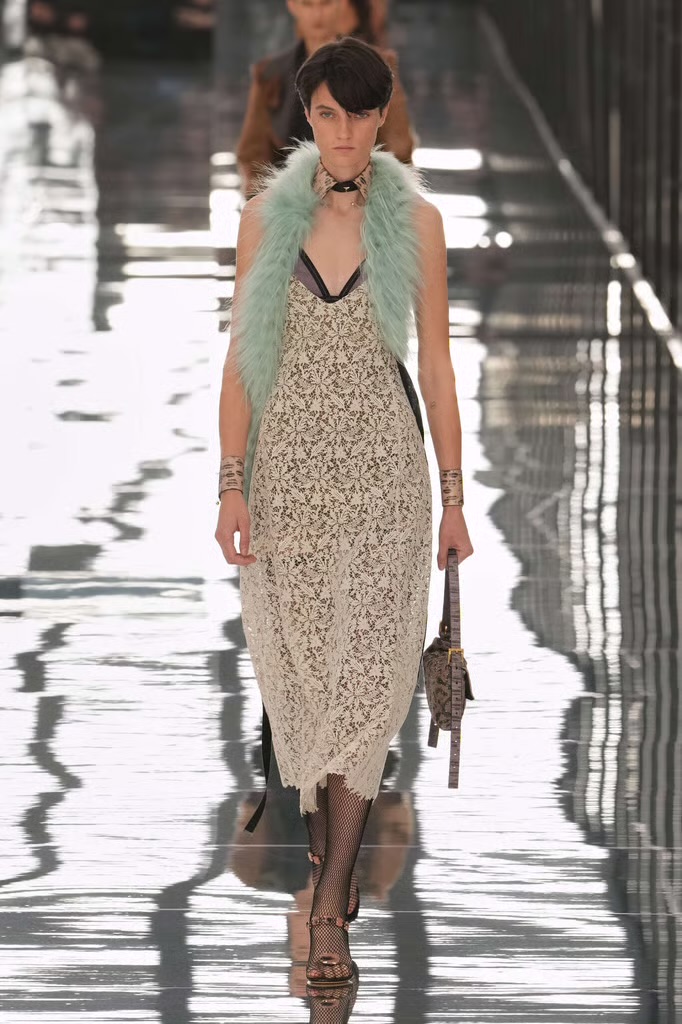
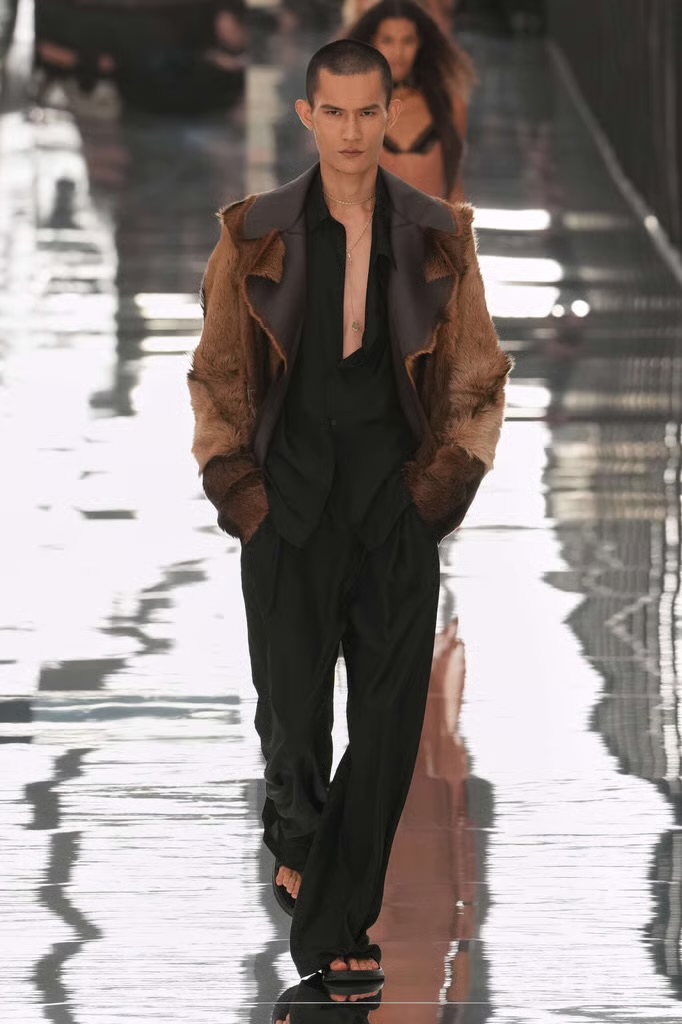
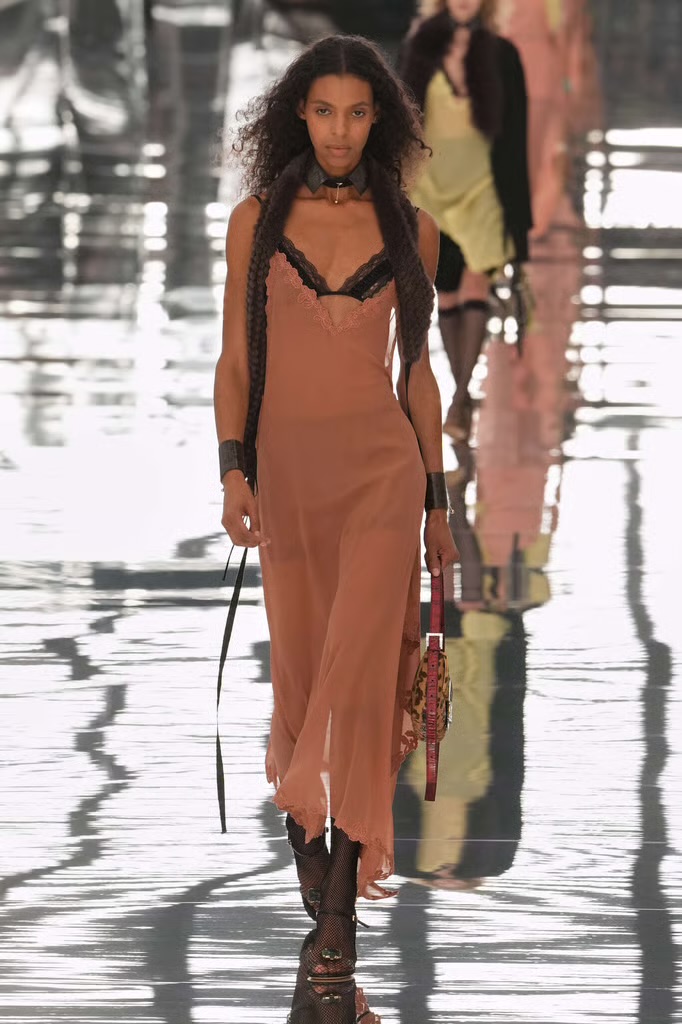
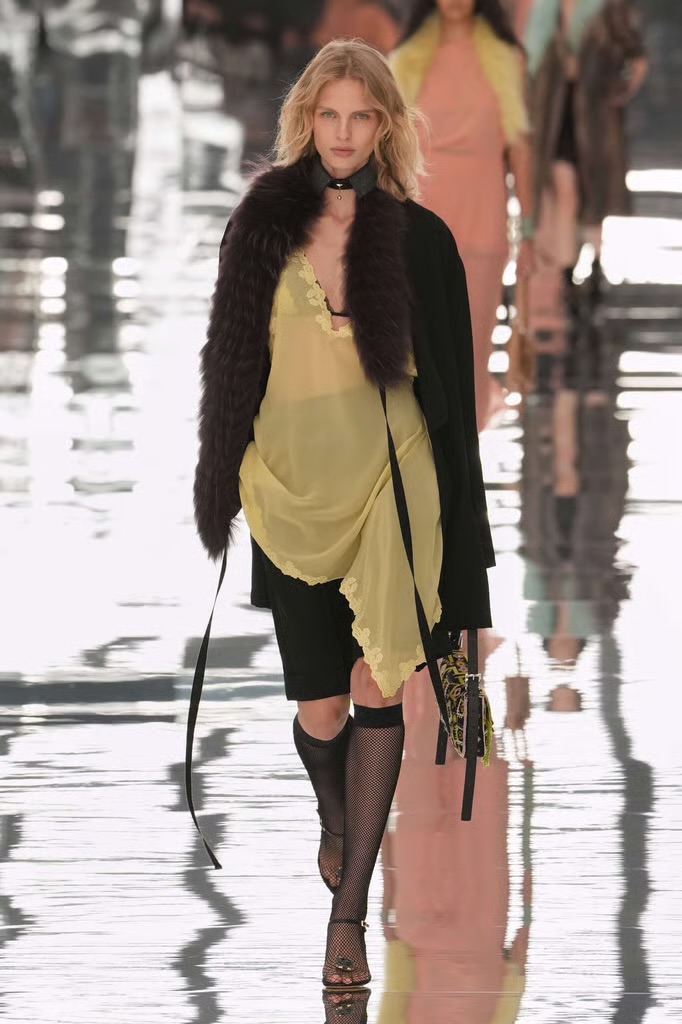
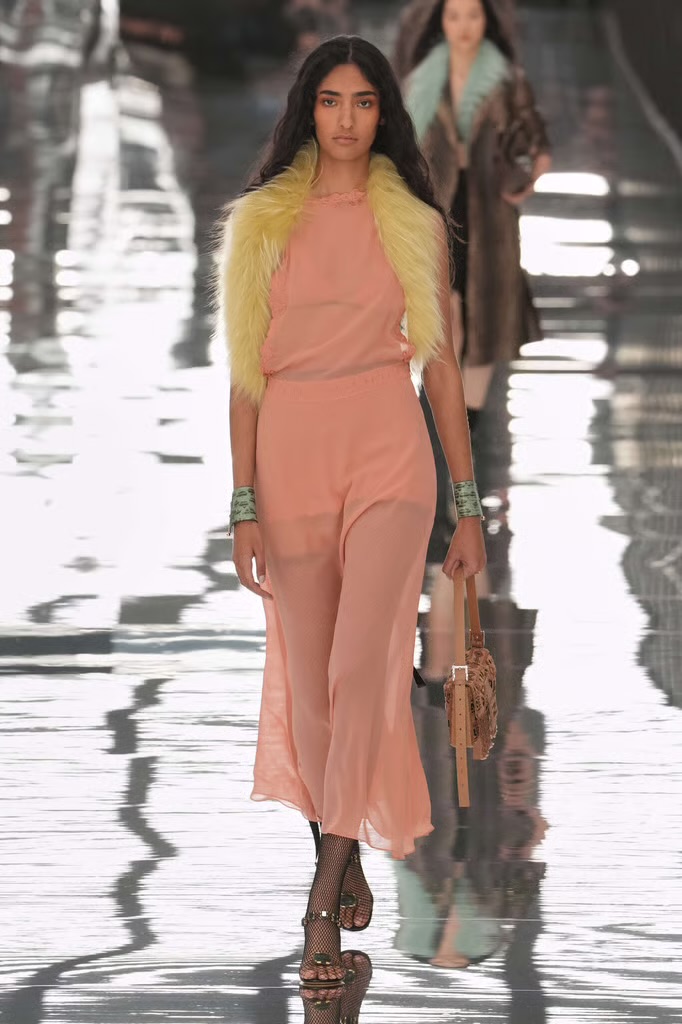
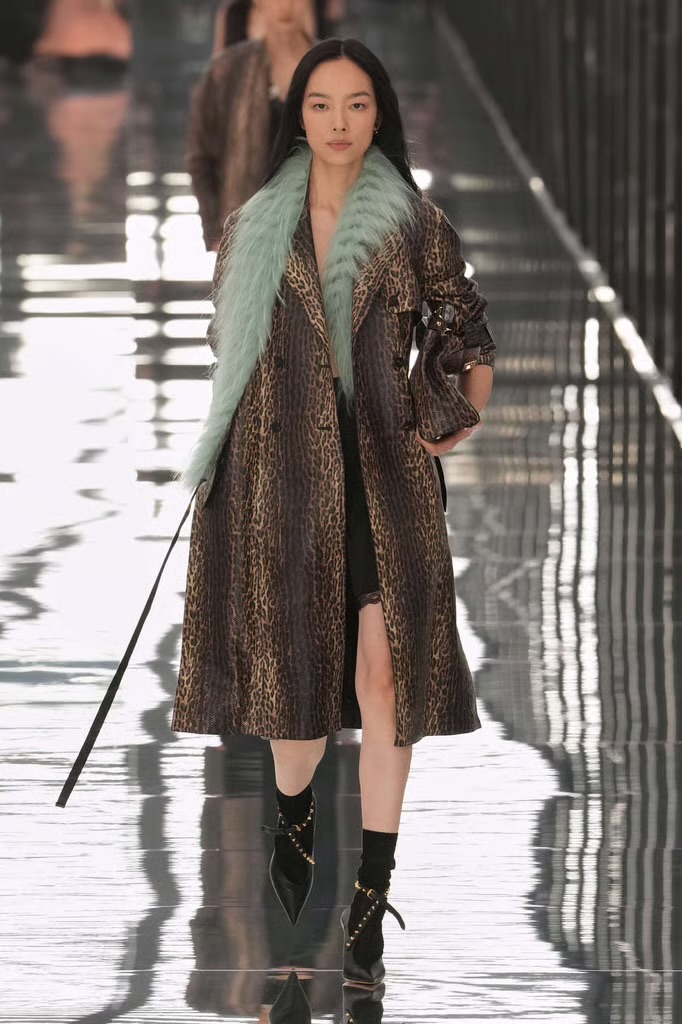
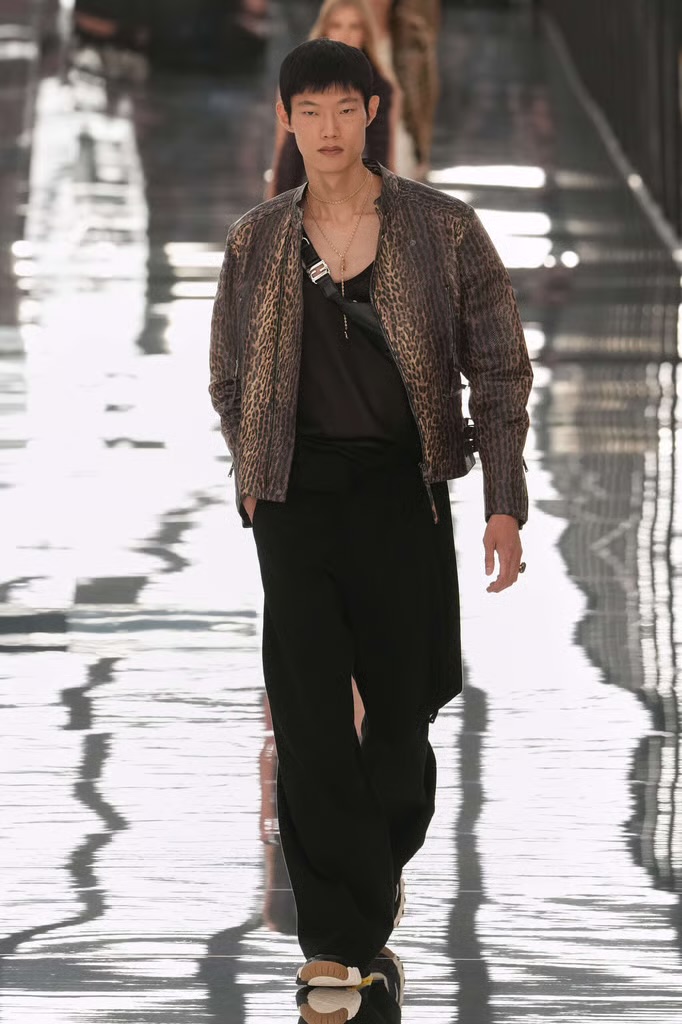
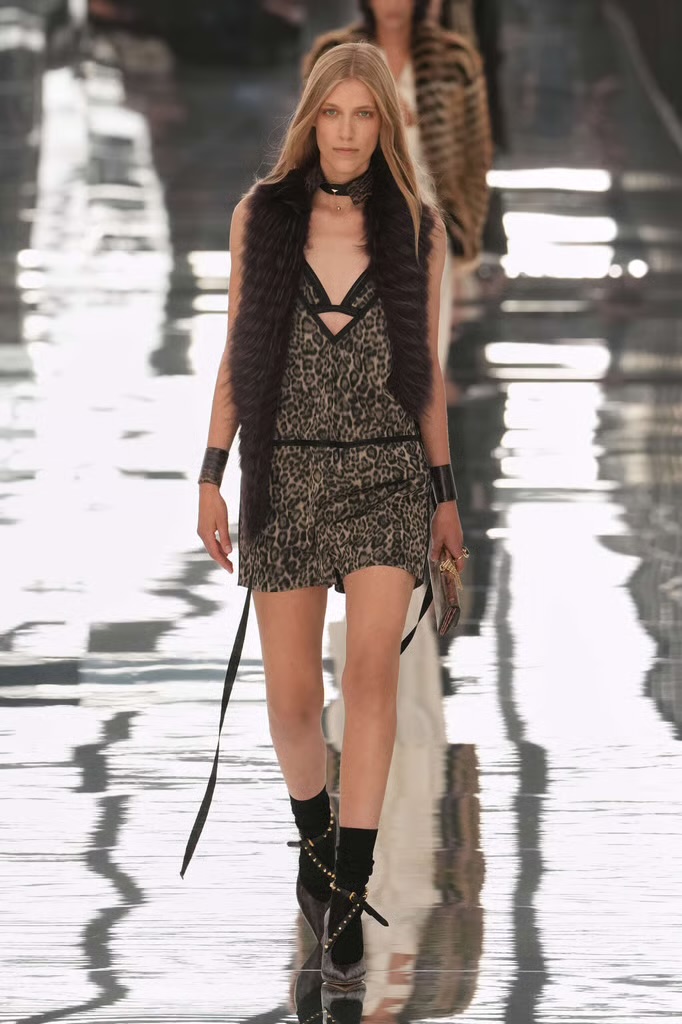
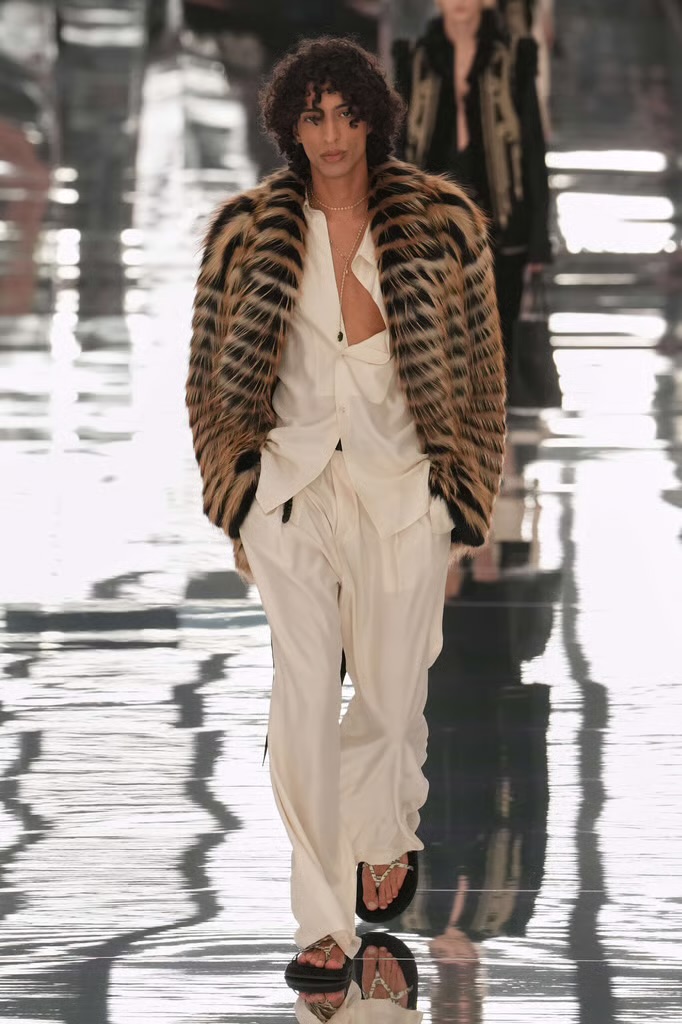
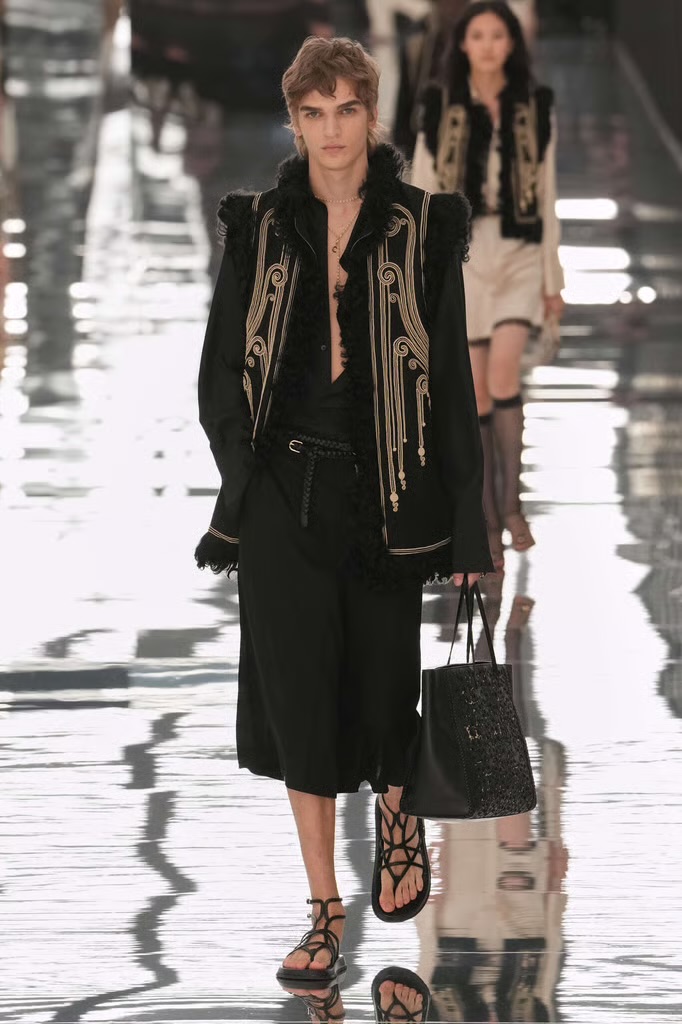
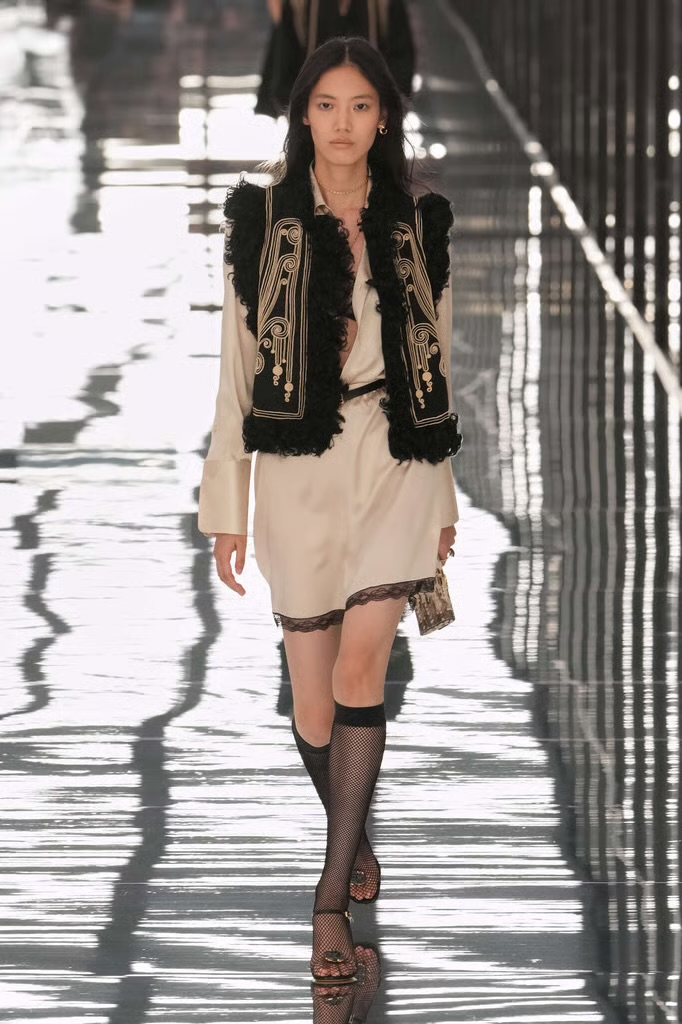
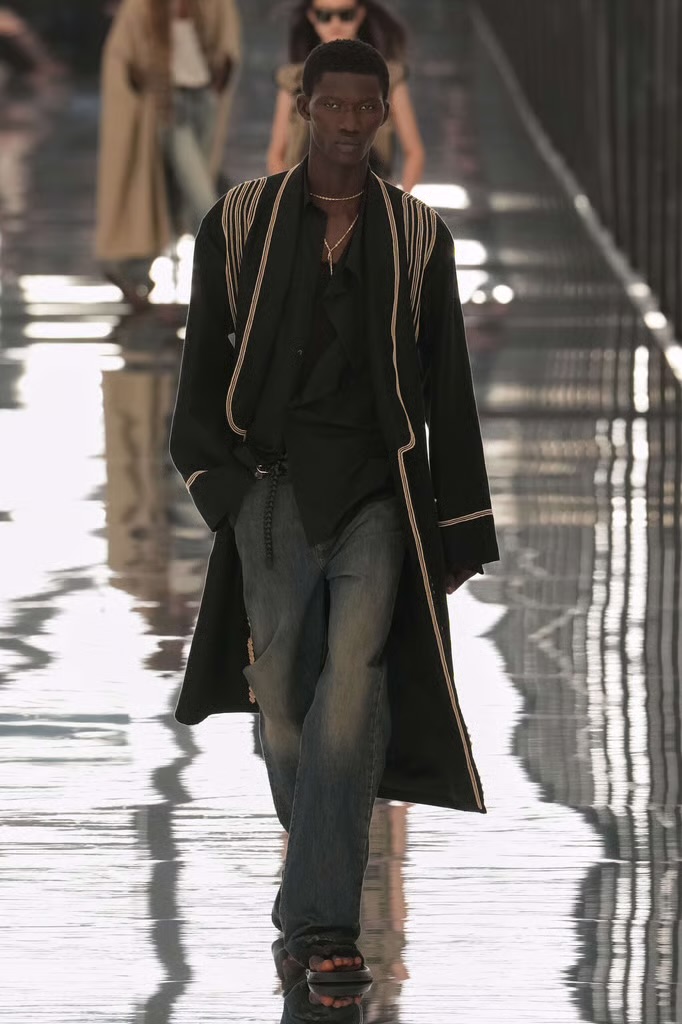
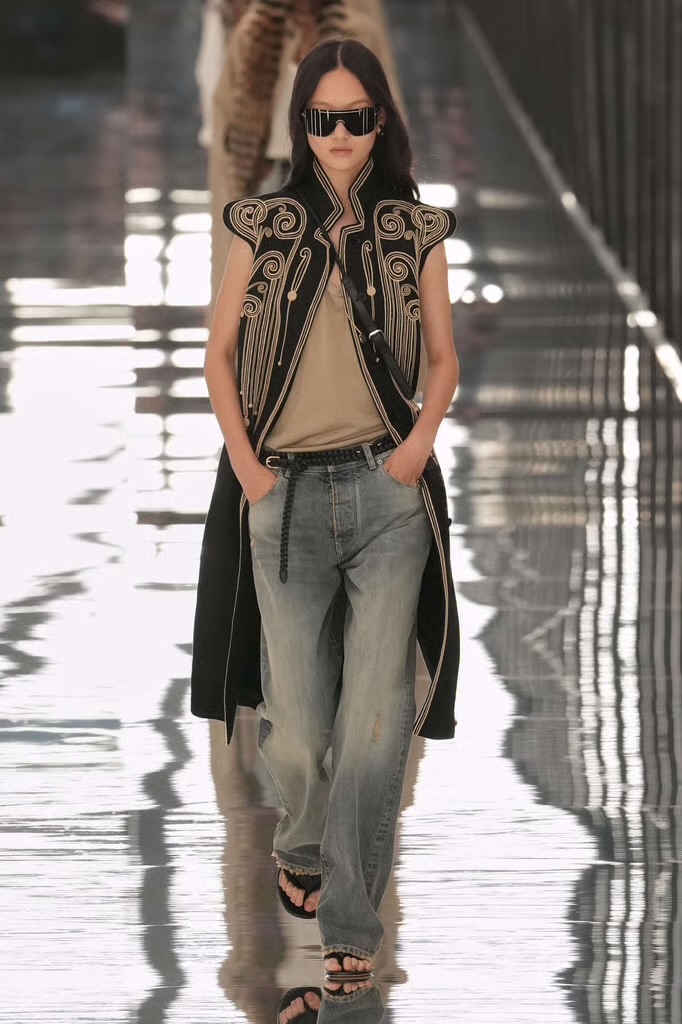
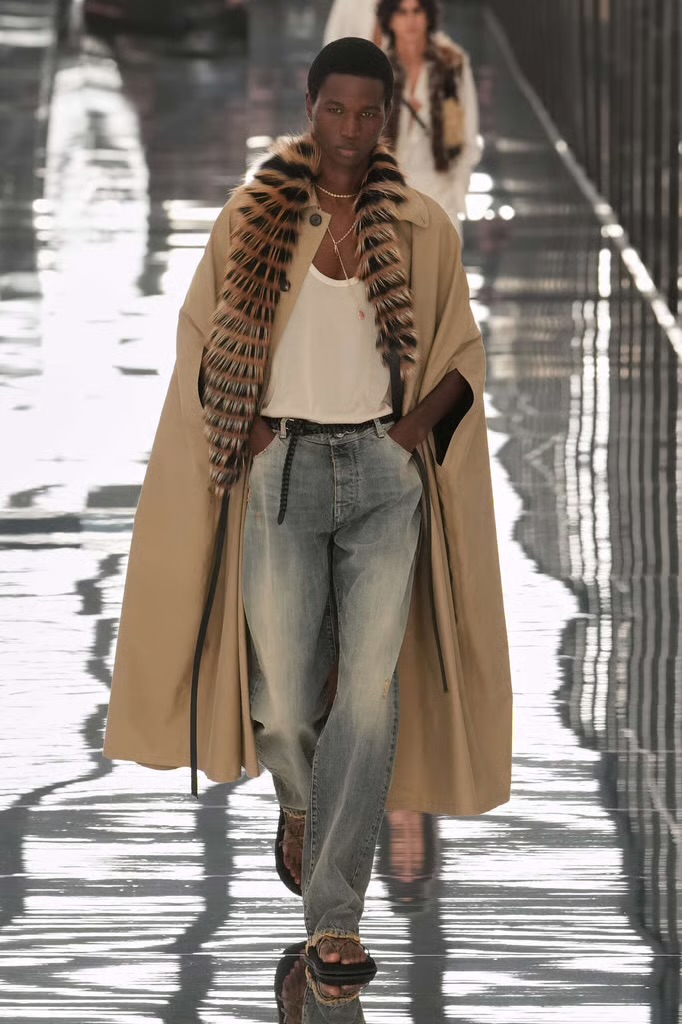
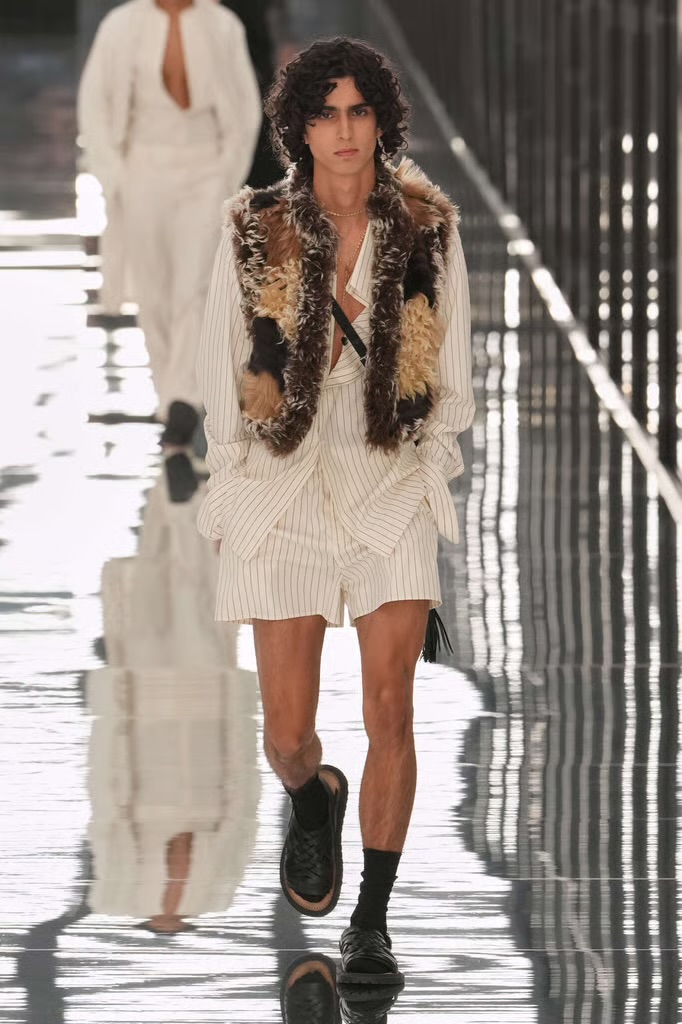
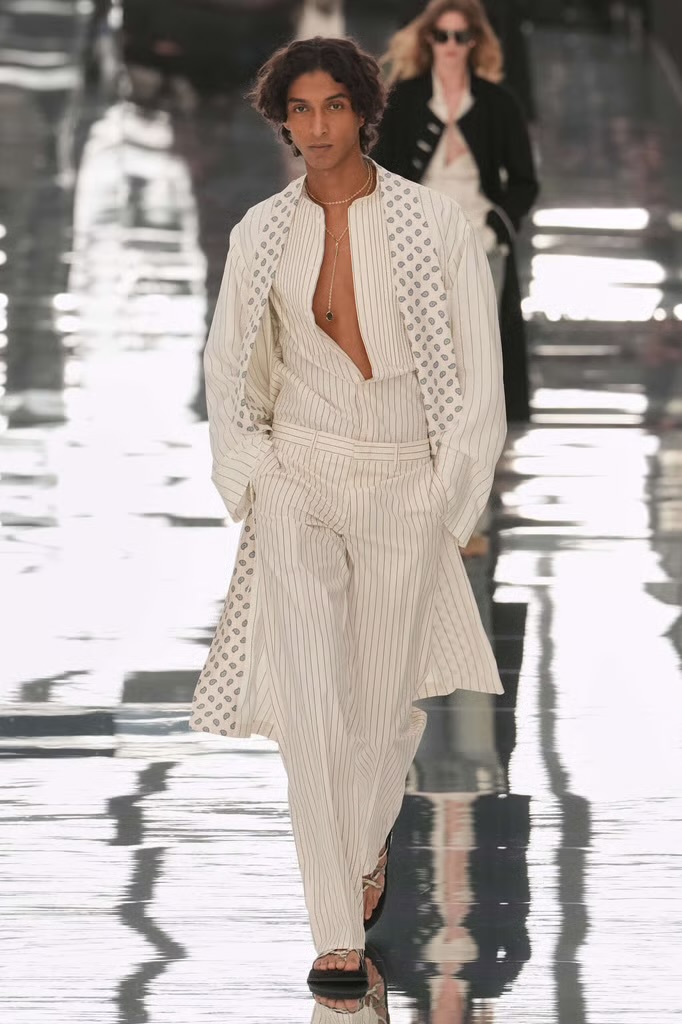
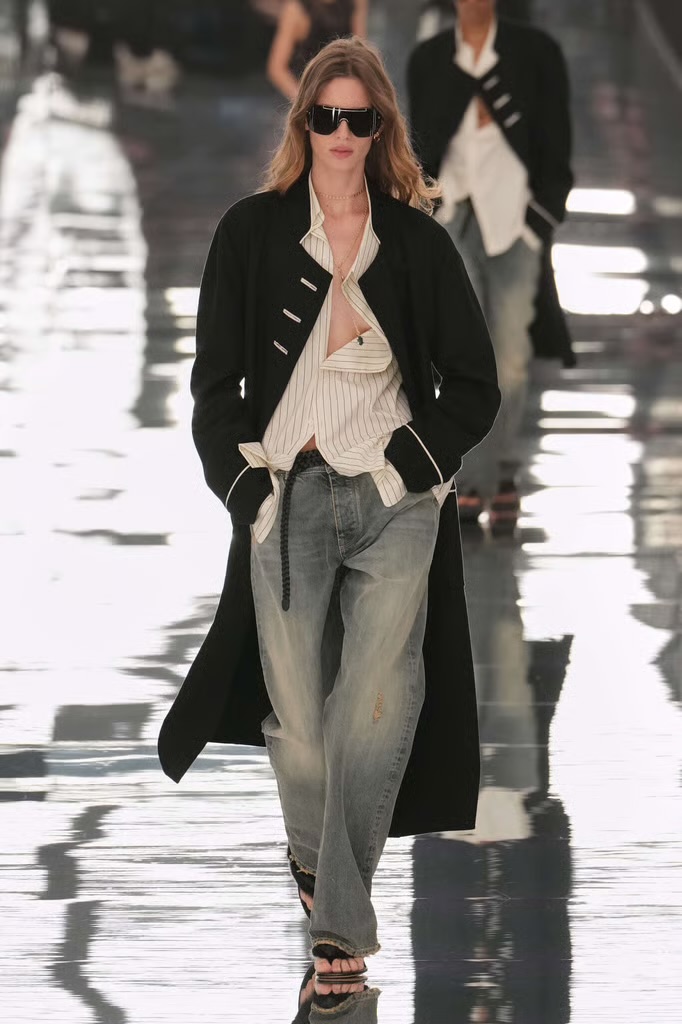
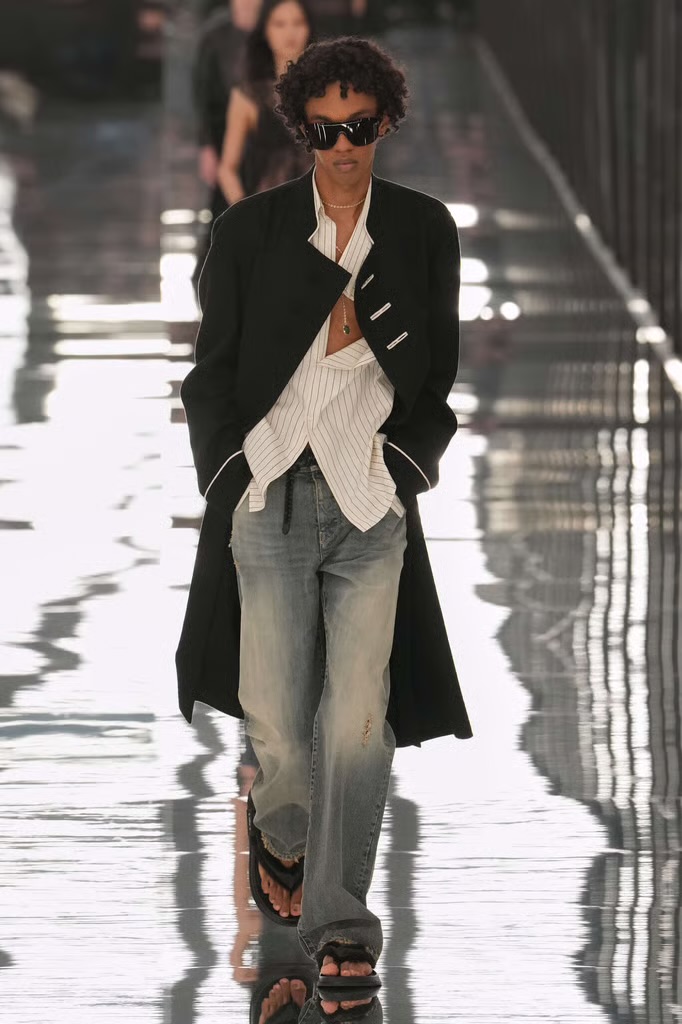
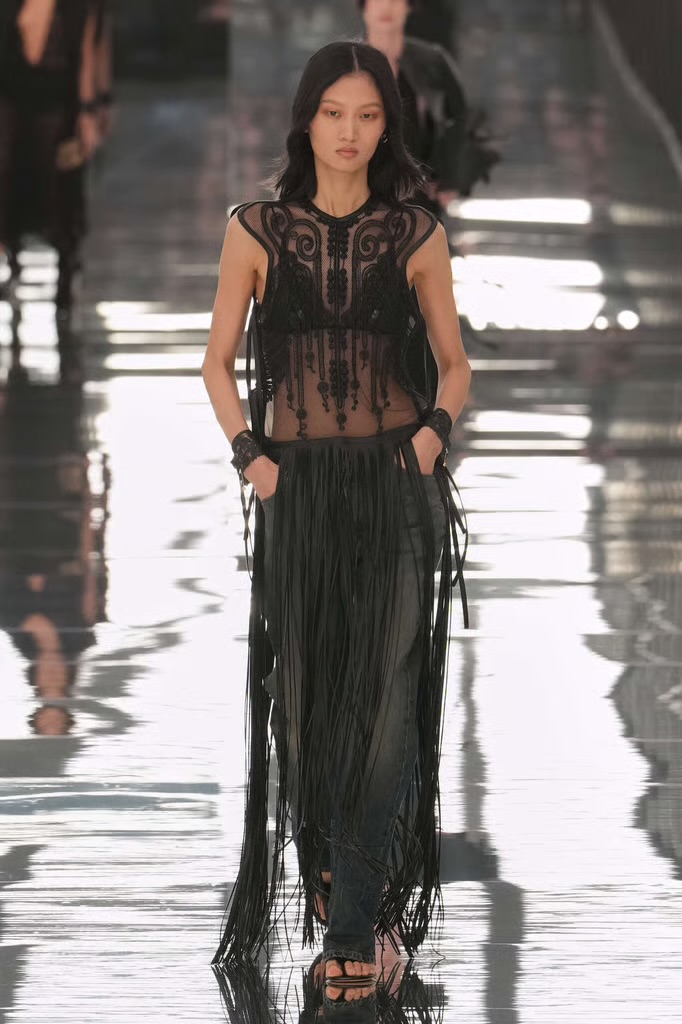
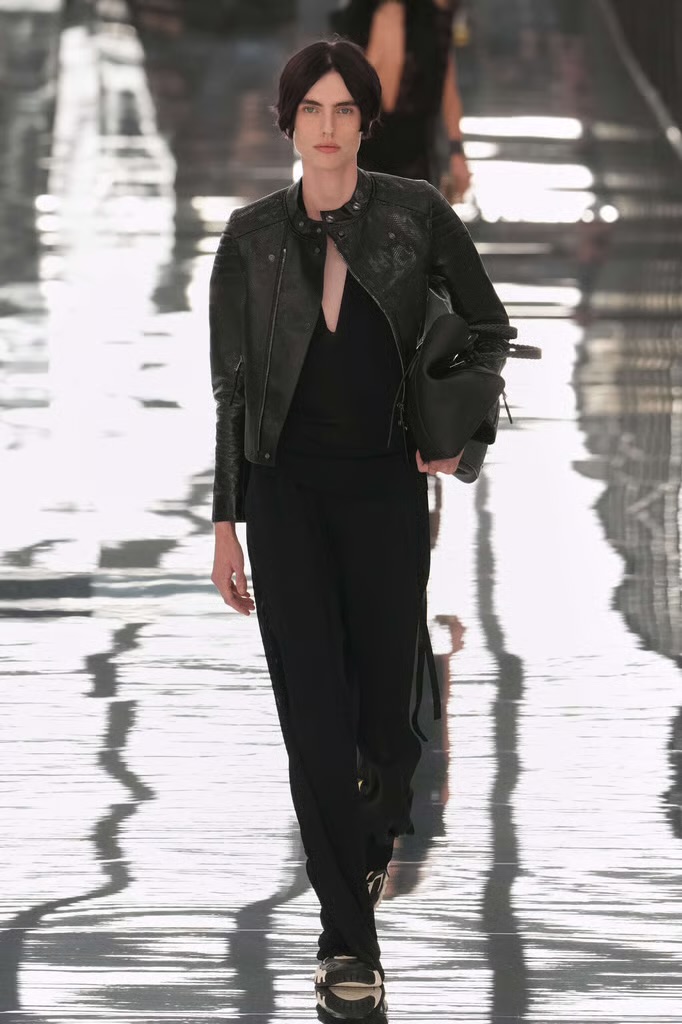
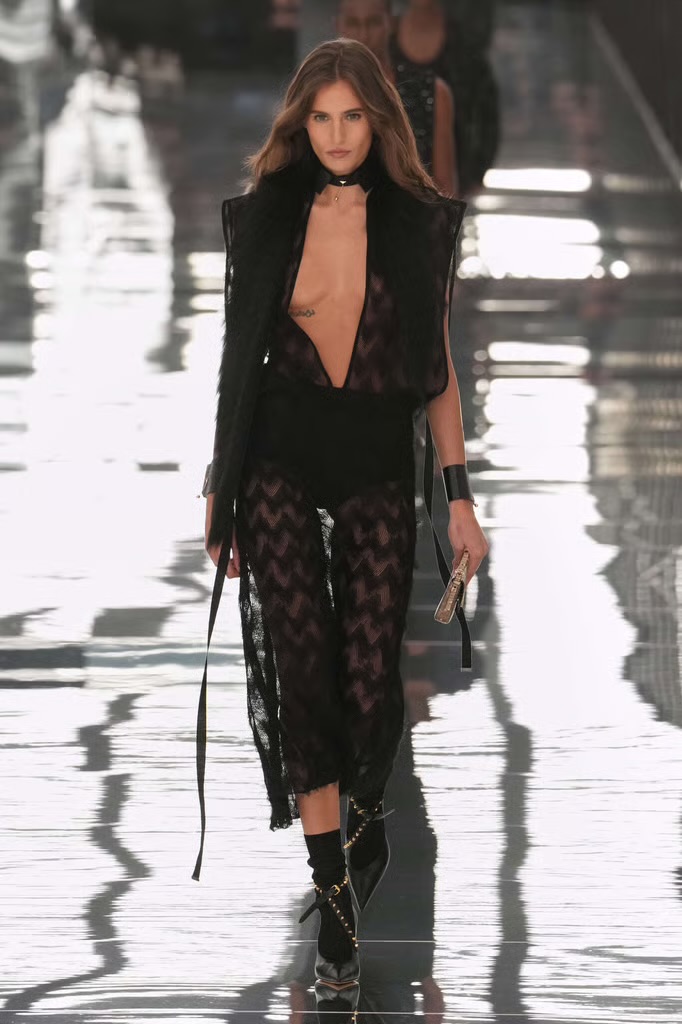
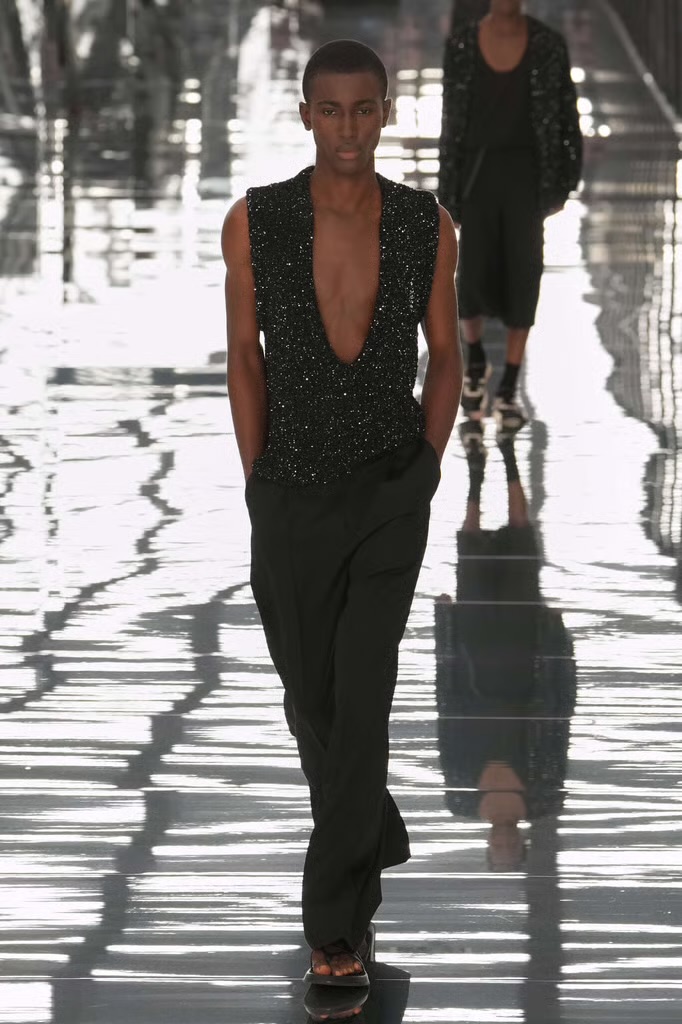
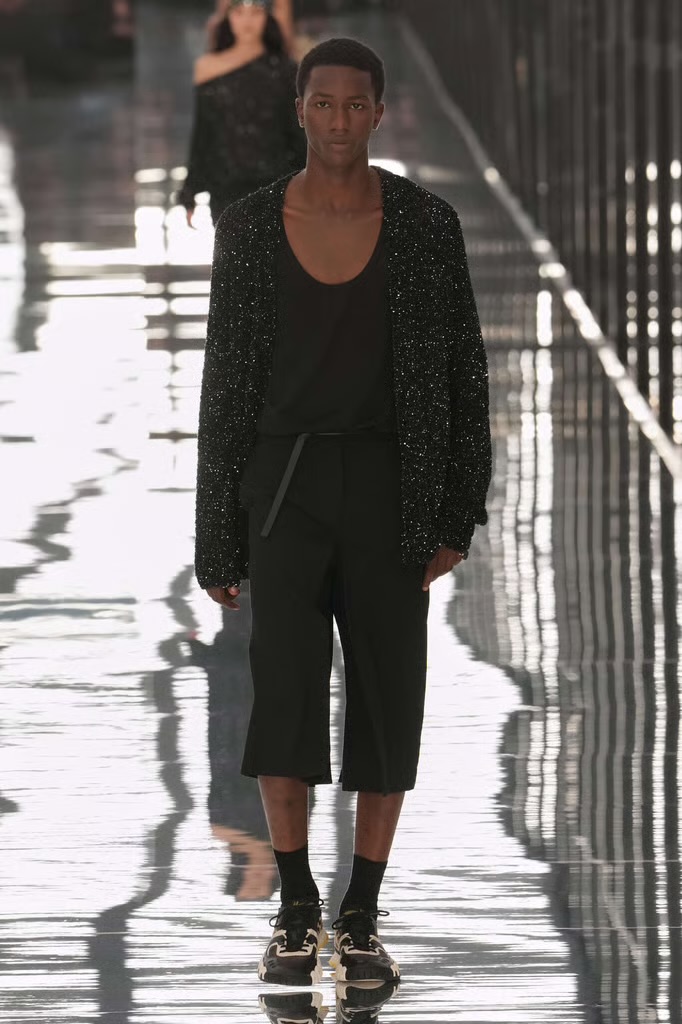
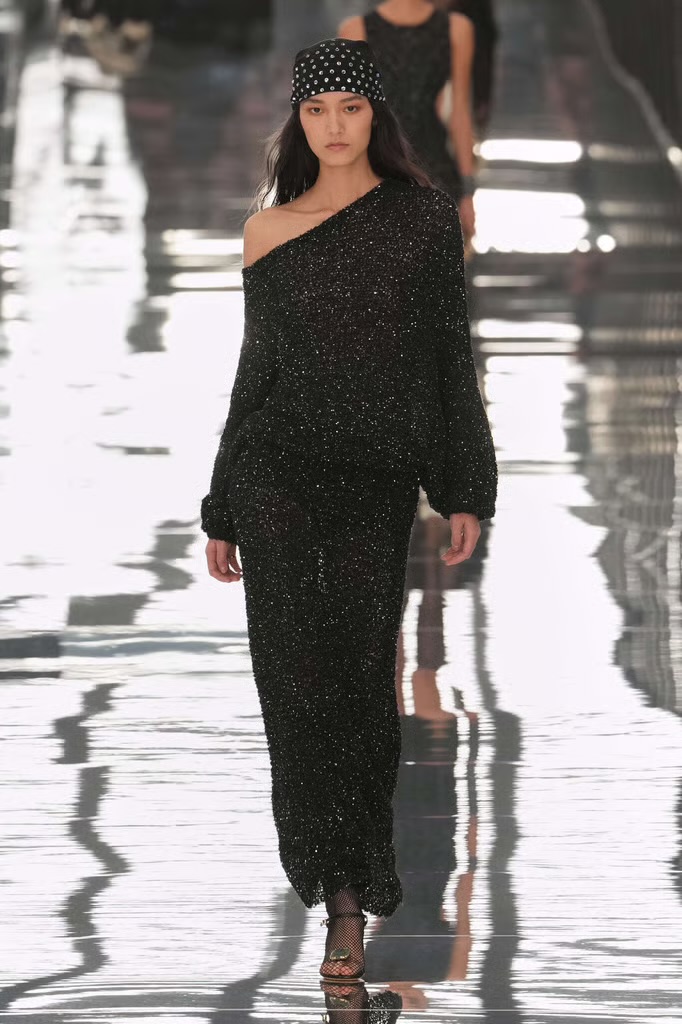
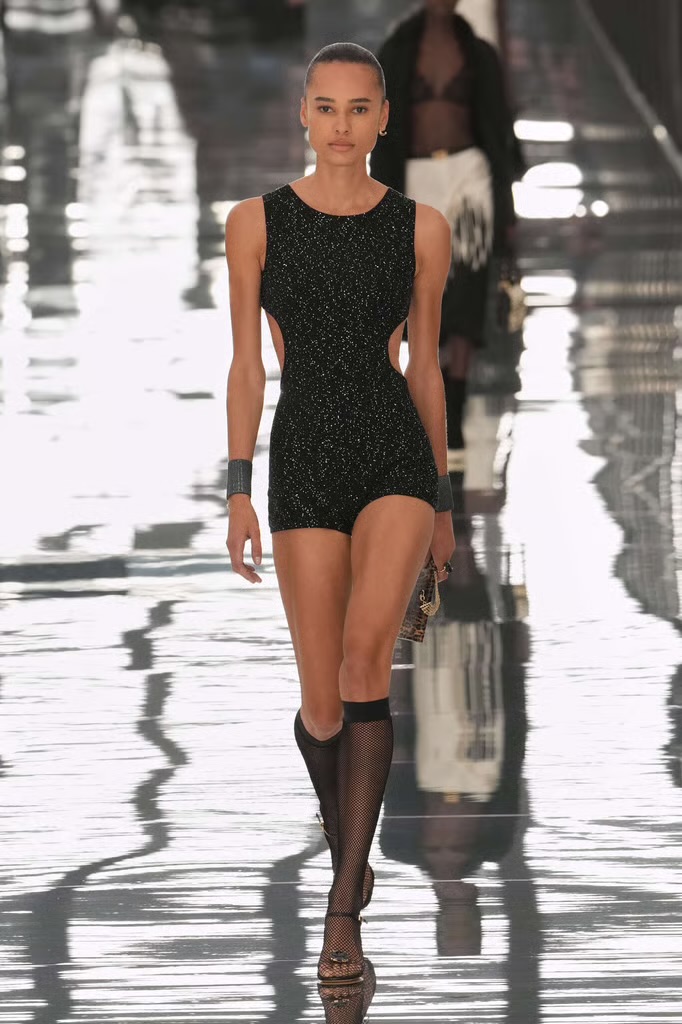
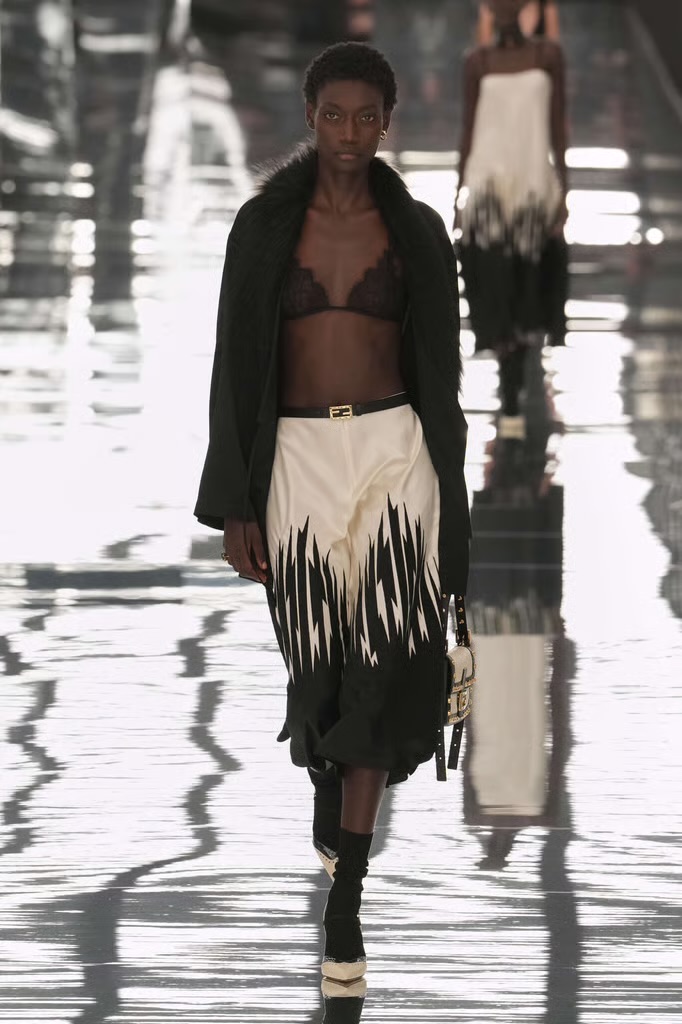
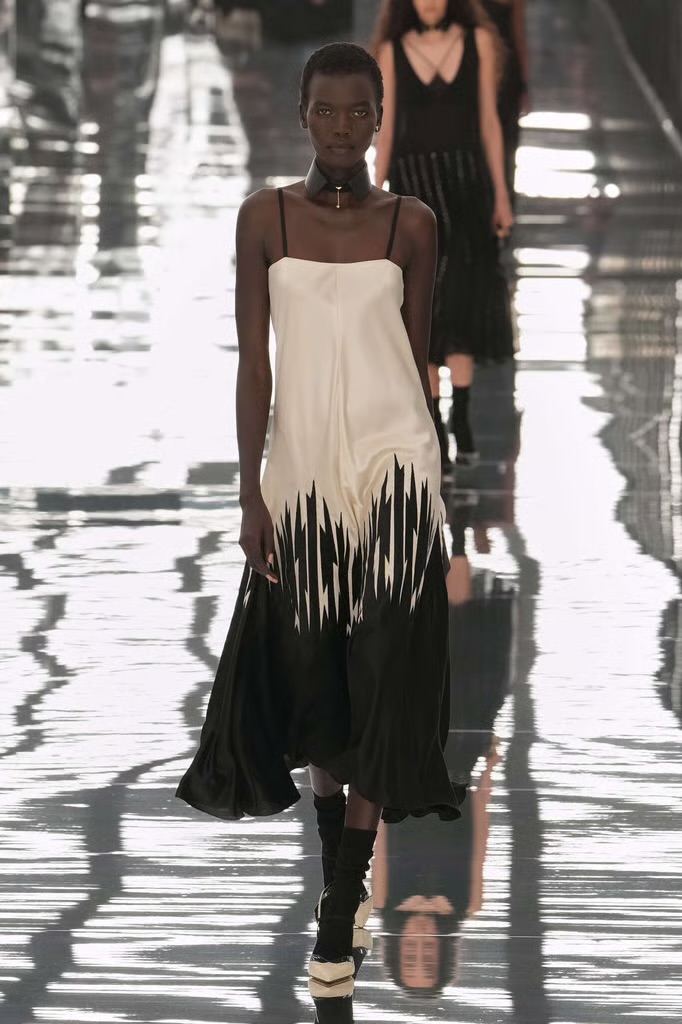
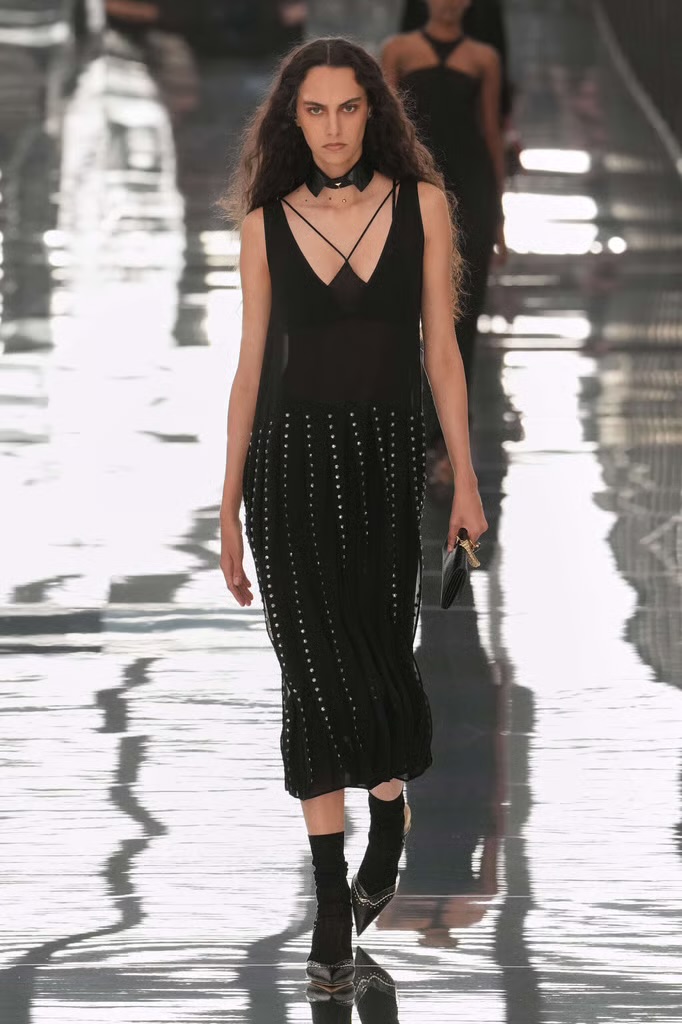
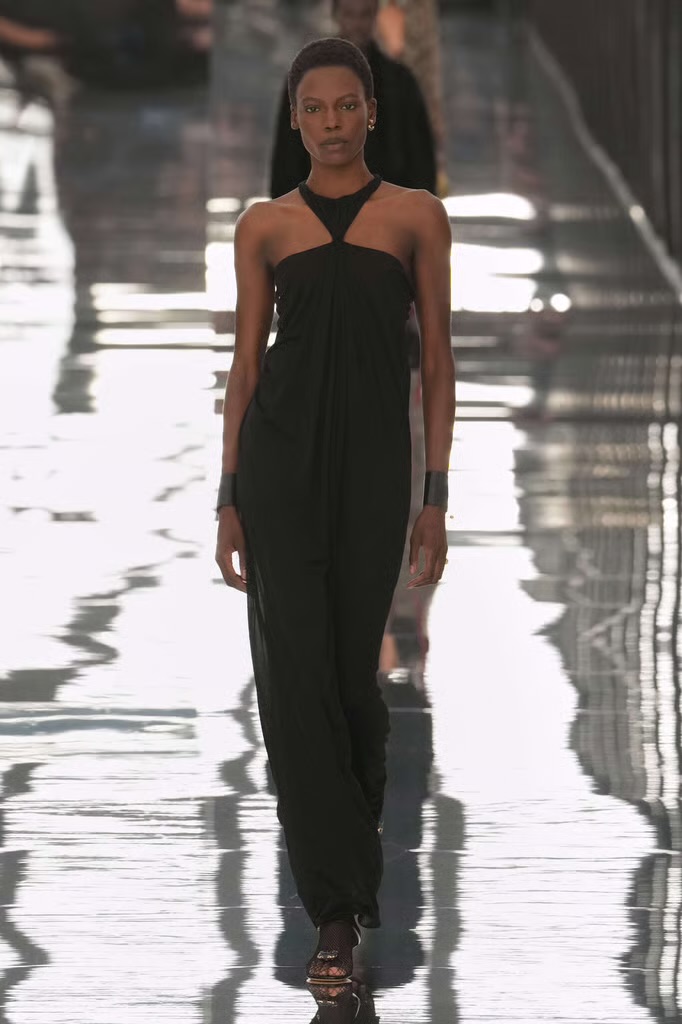
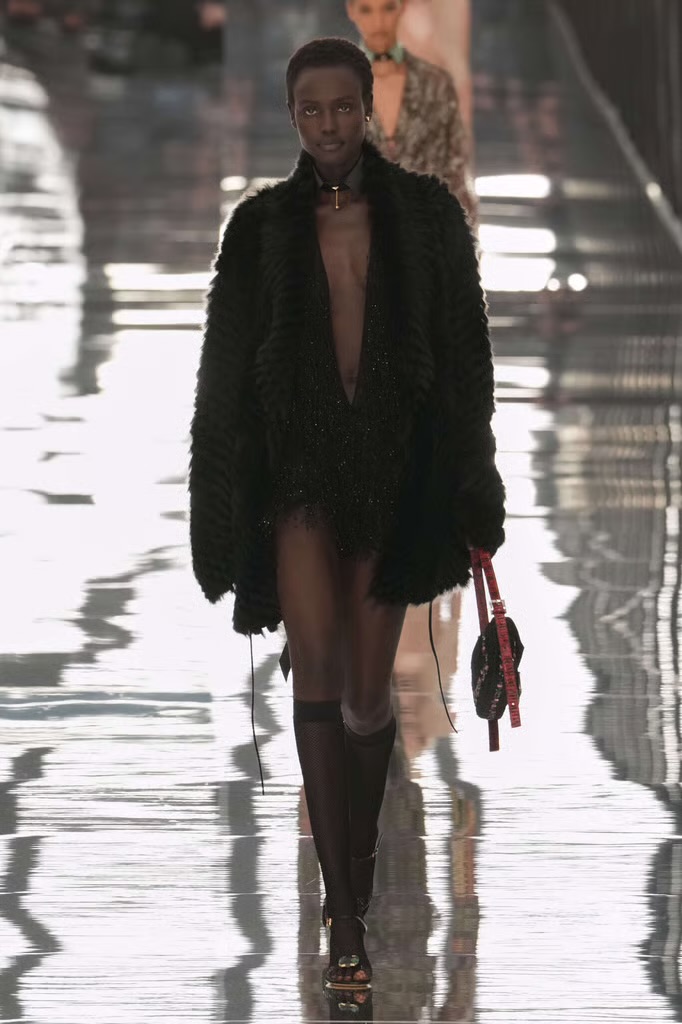
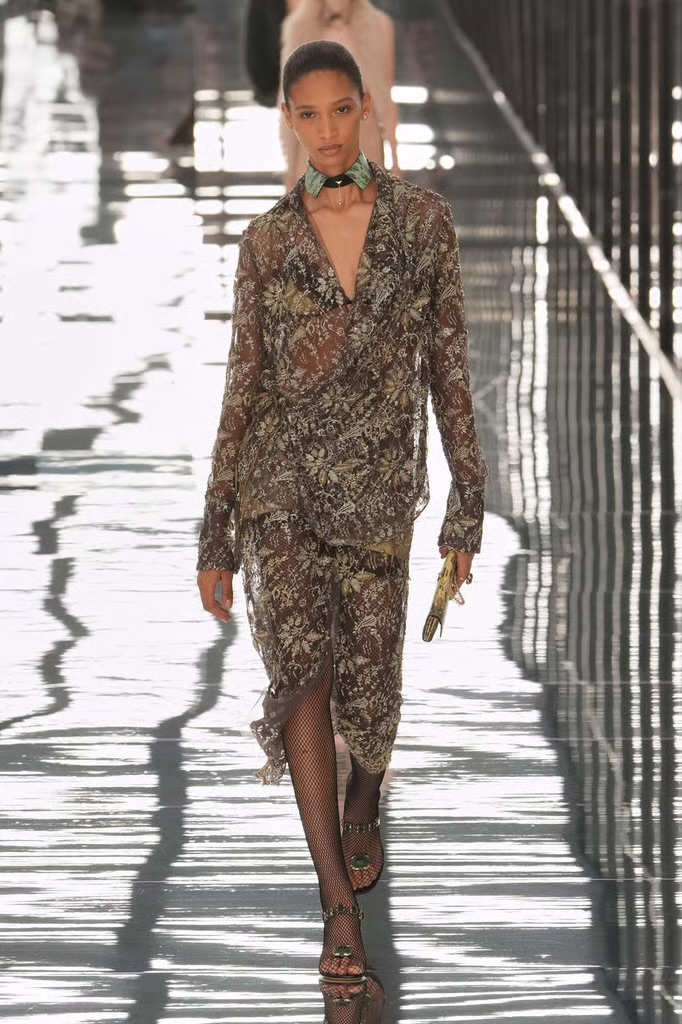
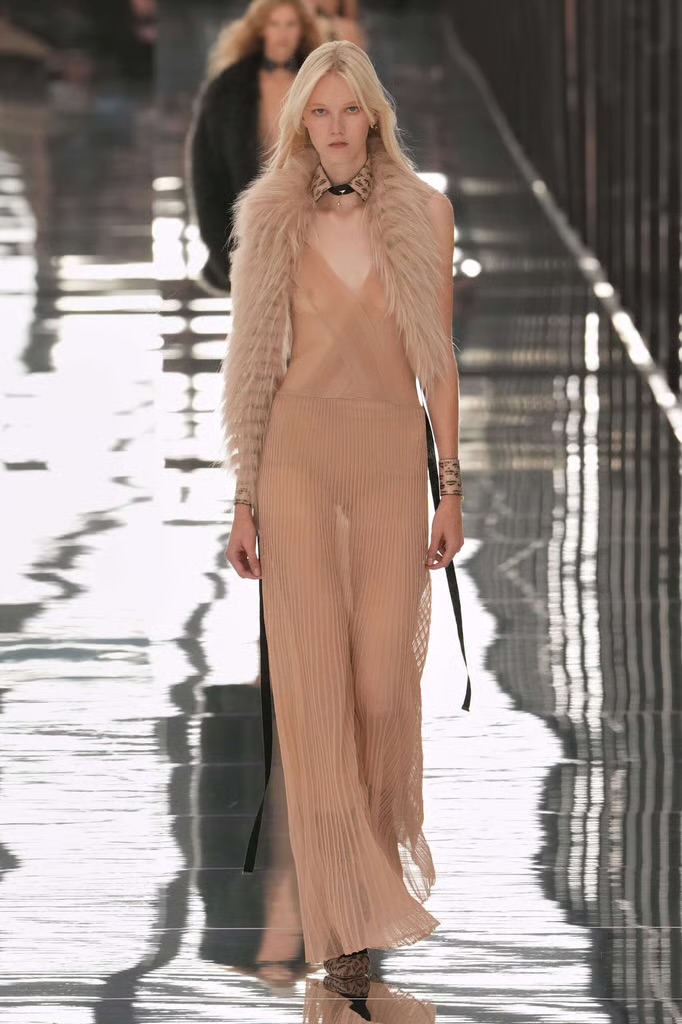
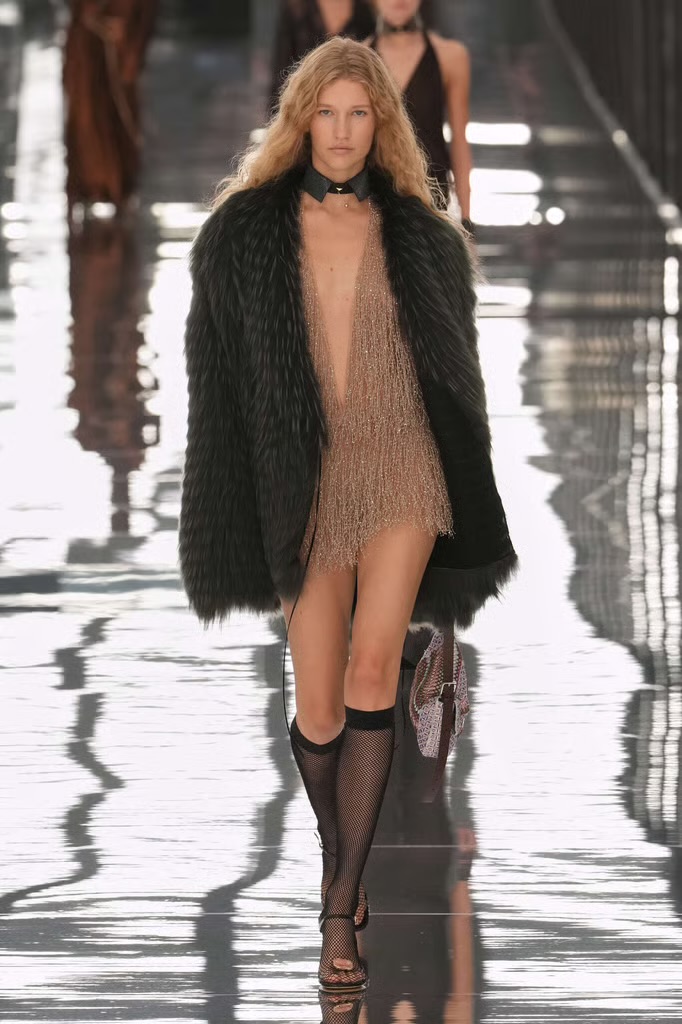
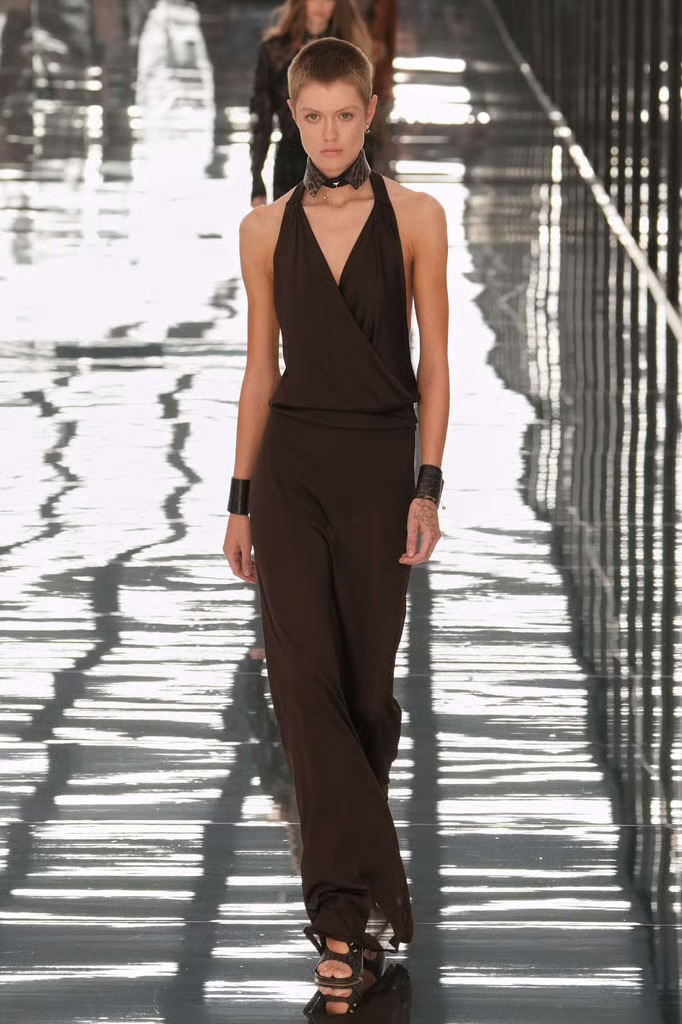
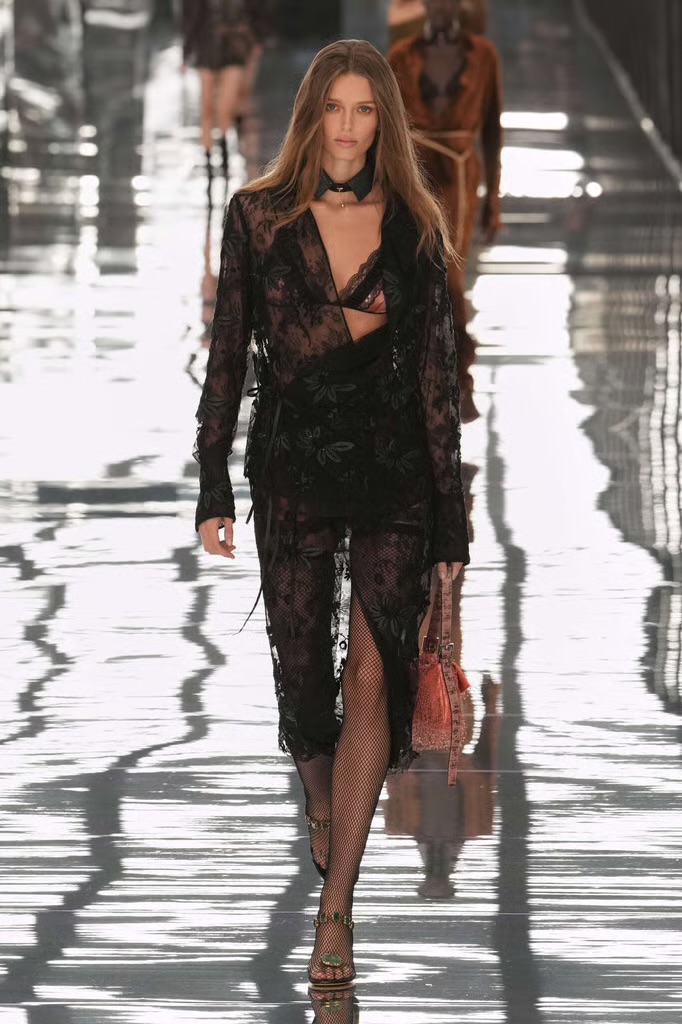
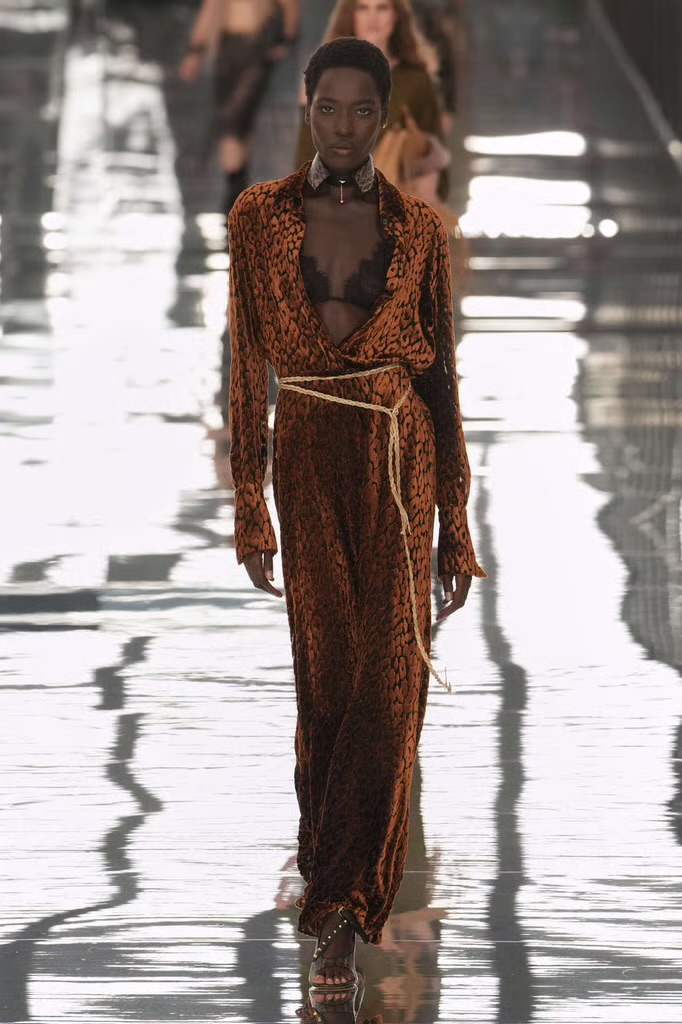
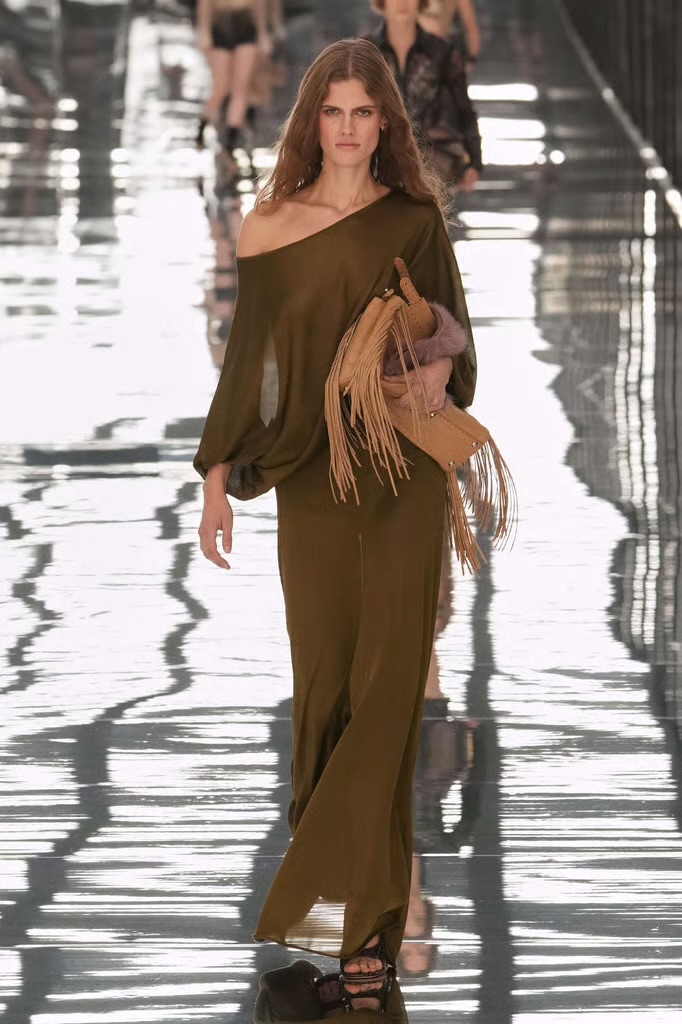
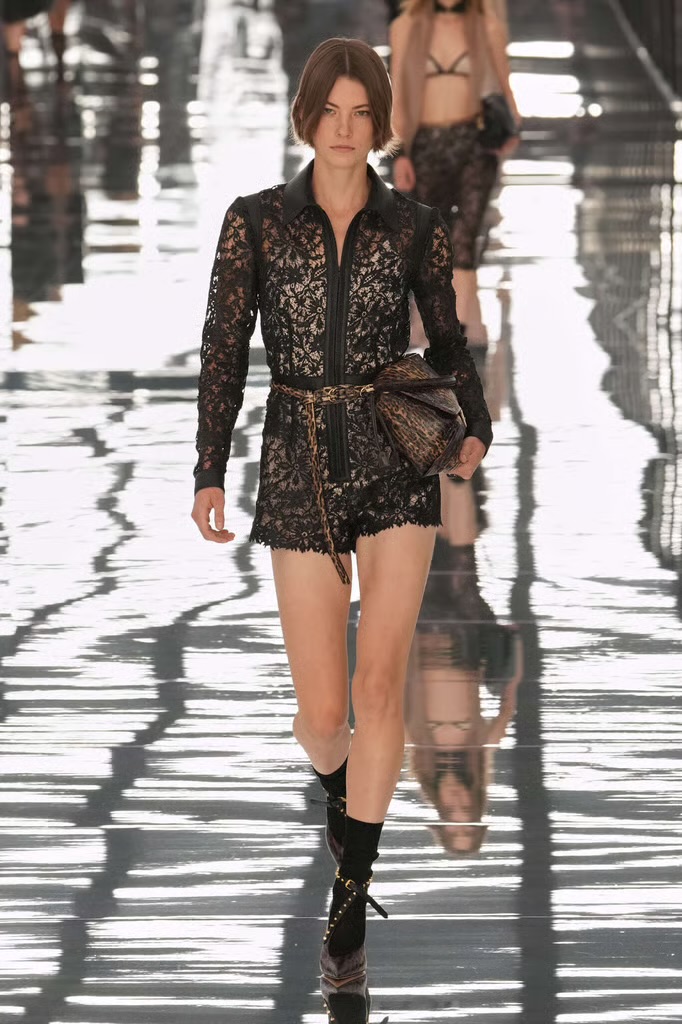
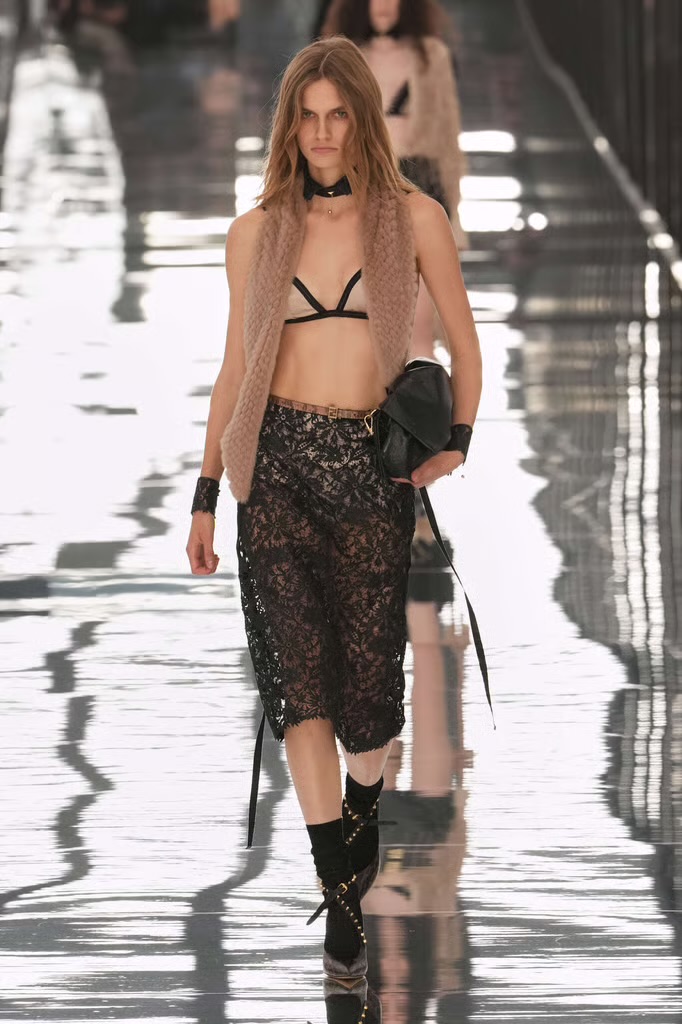
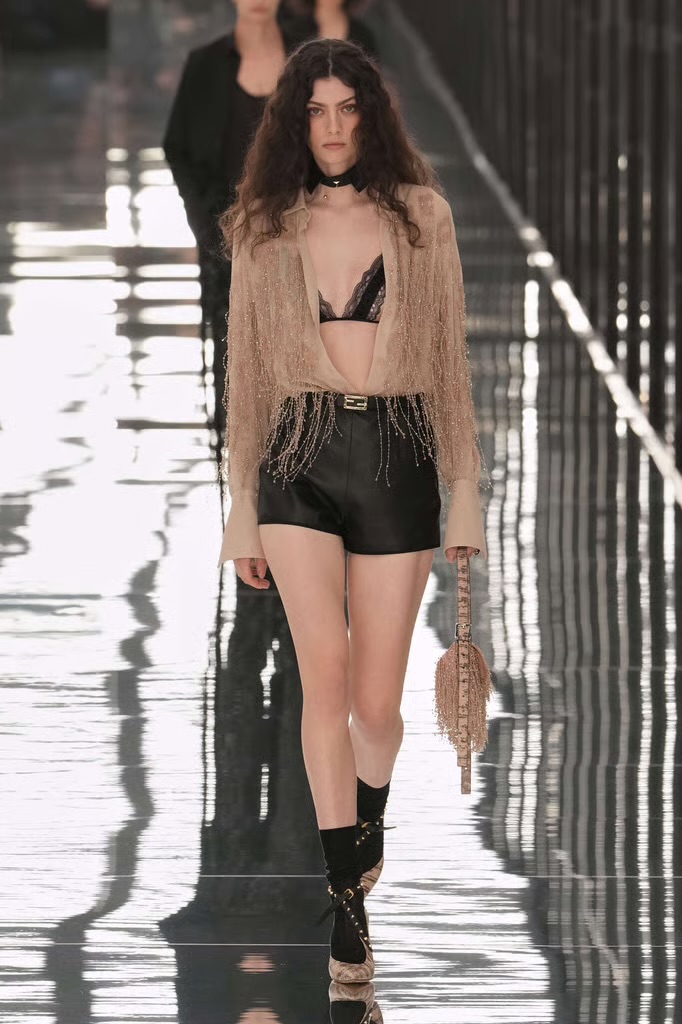
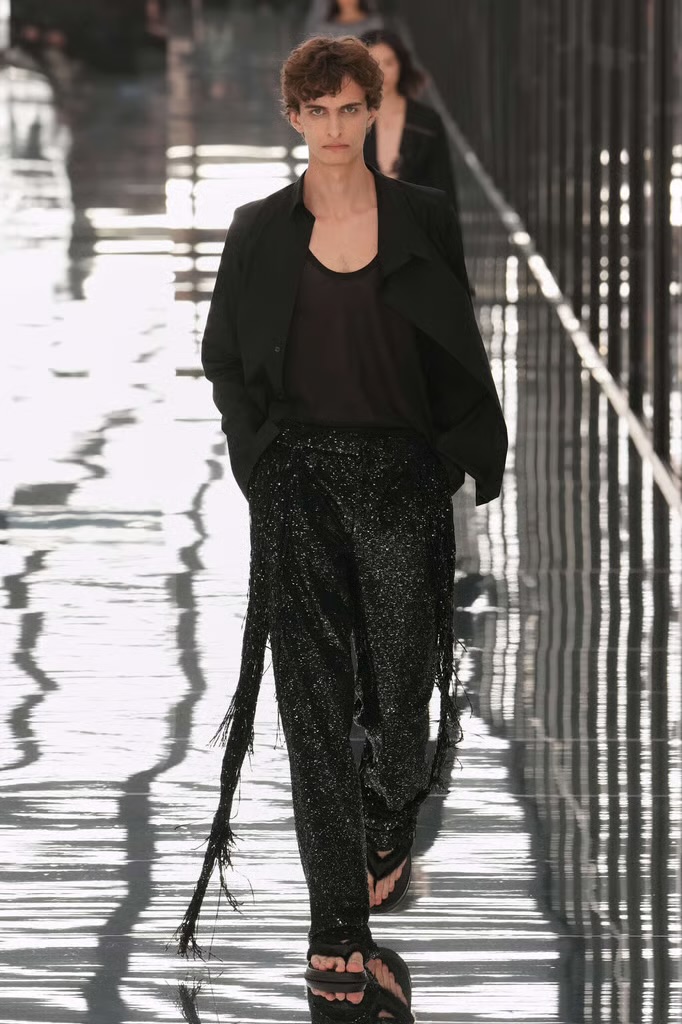
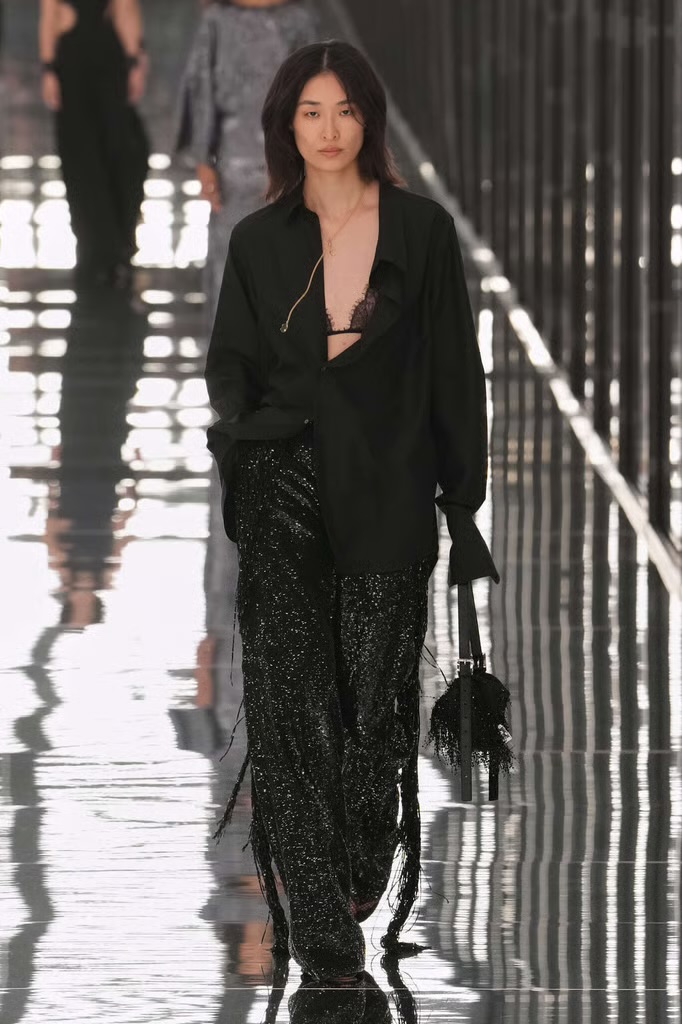
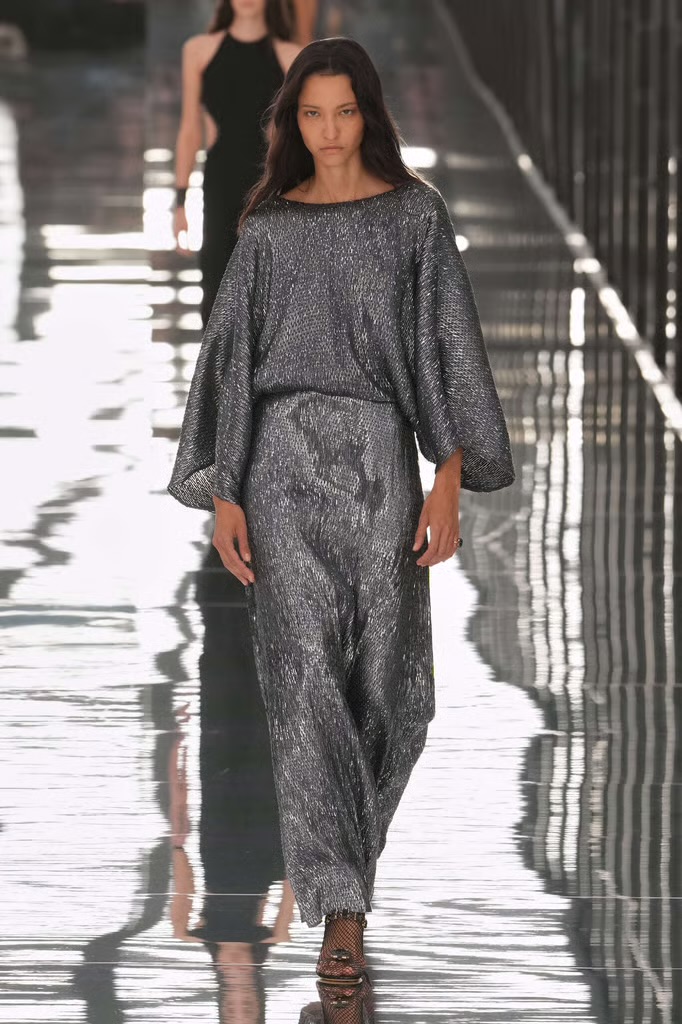
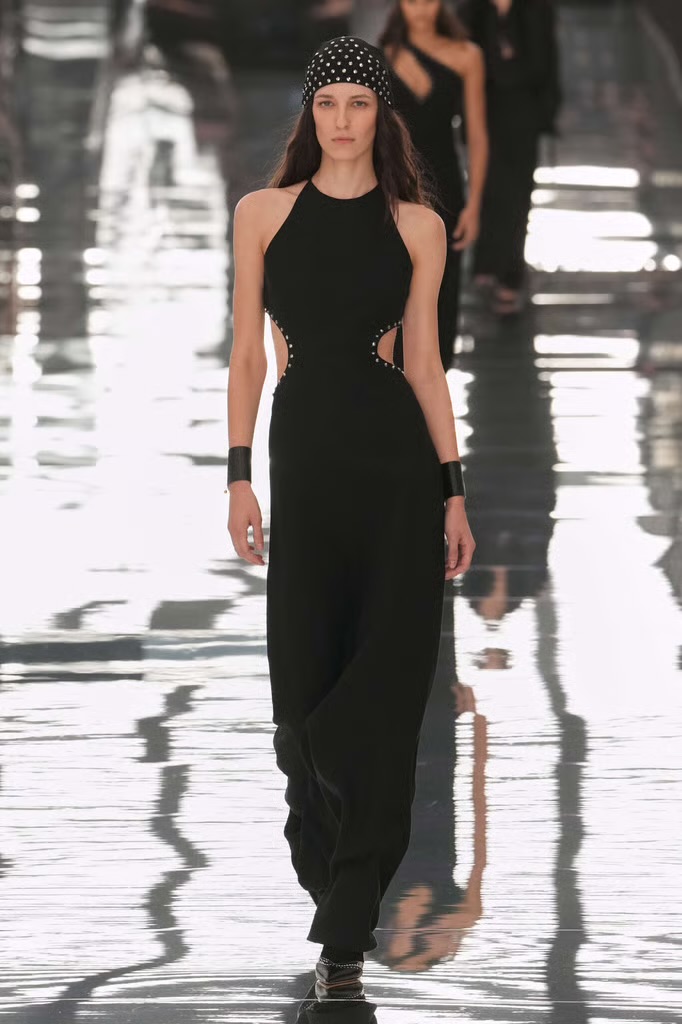
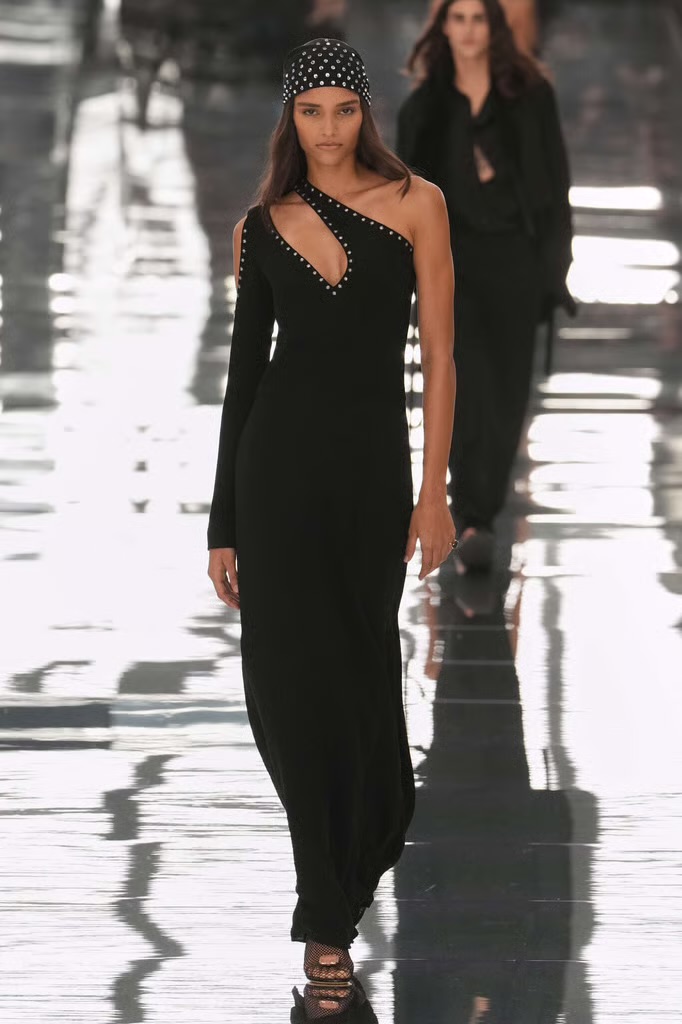
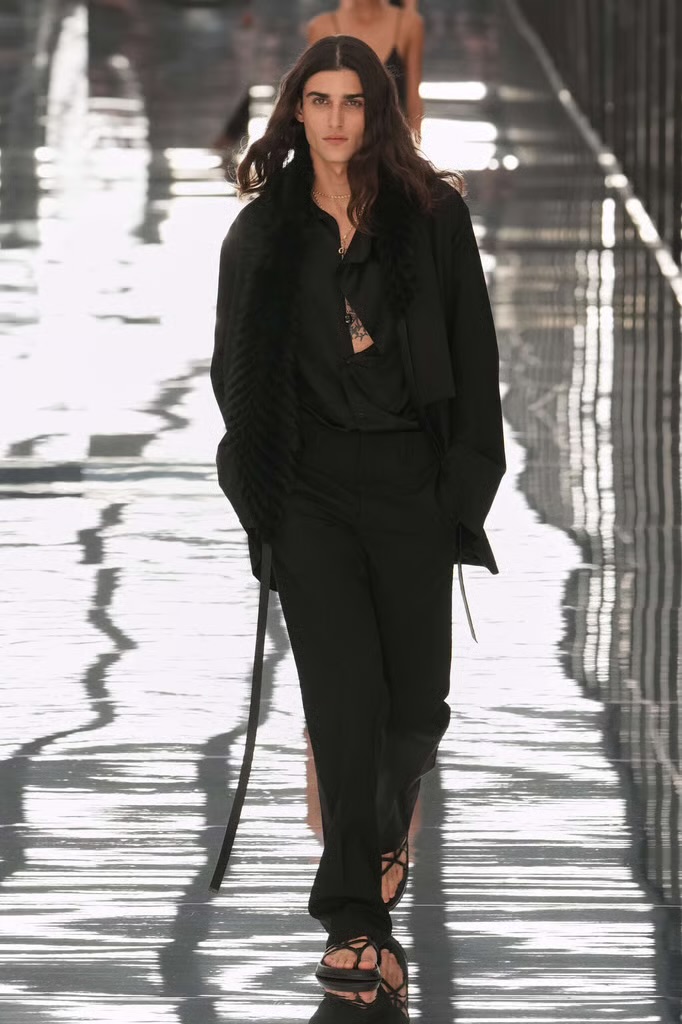
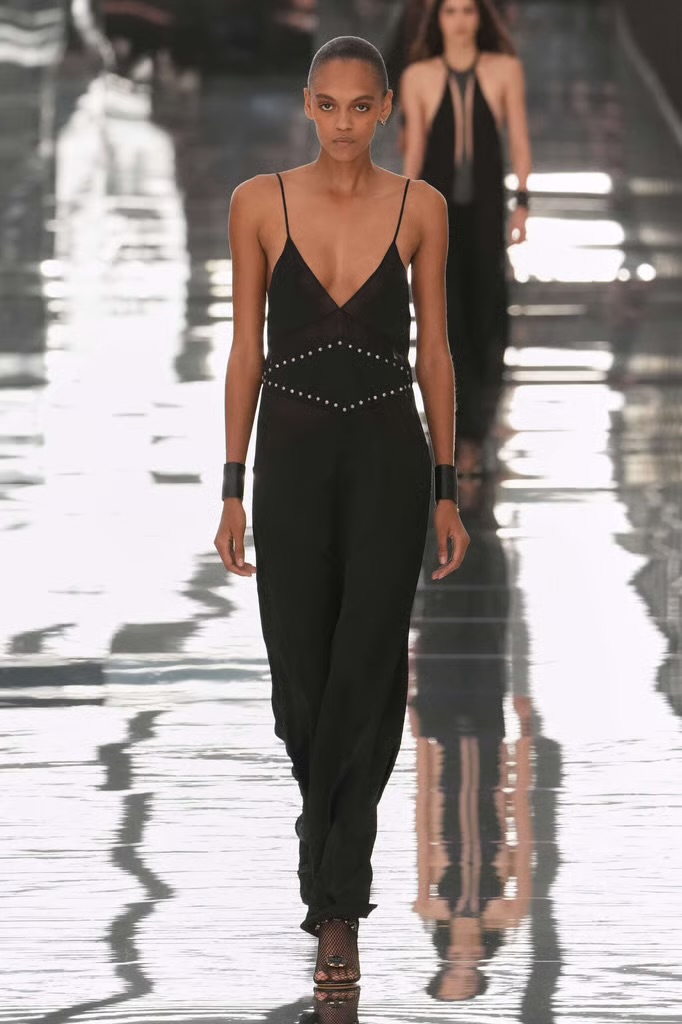
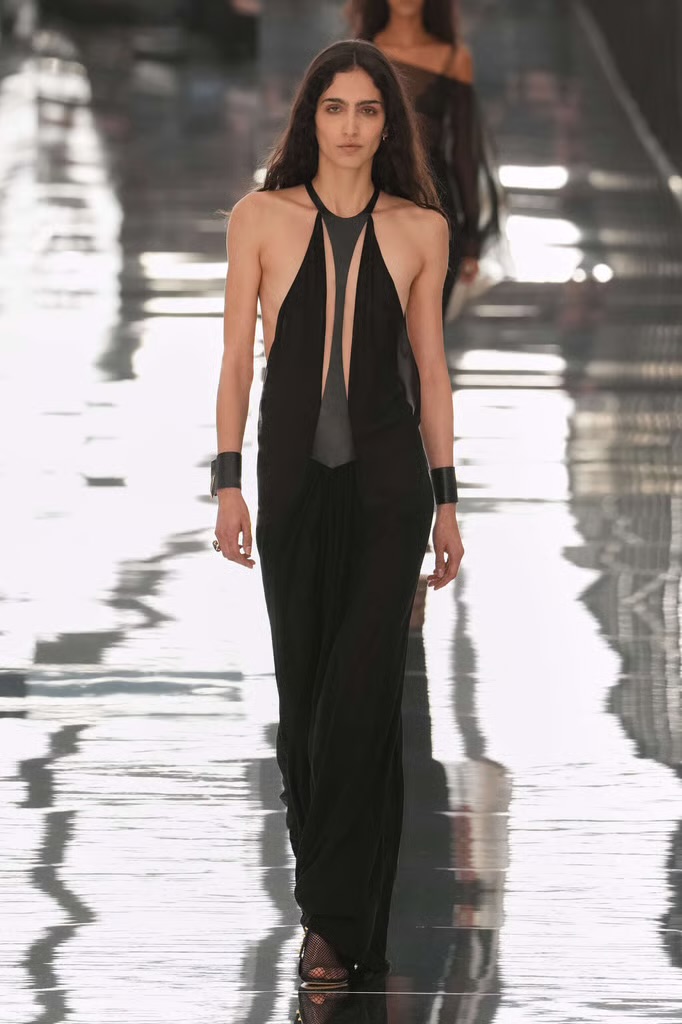
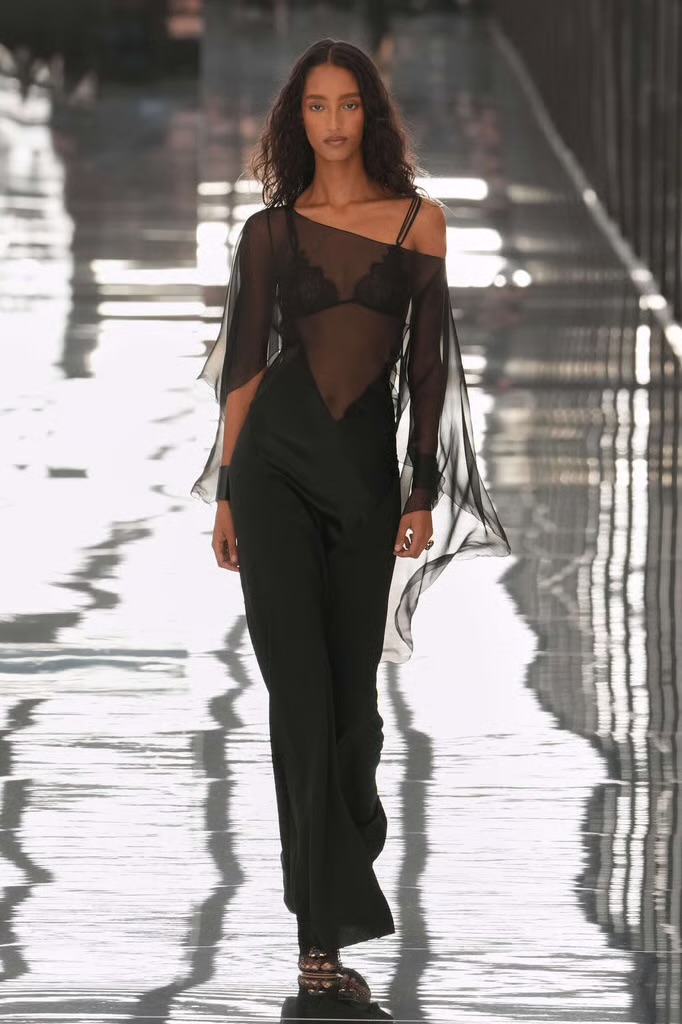
The invitation quotes e.e. cummings: “When I like my body, it is with your body.” The show takes place among mirrors. The collection begins almost privately, with lingerie, underwear, soft outerwear and pieces that appear to sit somewhere between dressing and undressing, before moving toward leather, tailoring, fur, sequins and the theatrical energy of Raffaella Carrà and Adriano Celentano.
And then comes Raffaella Carrà — not as nostalgia, but as a soundtrack. Her voice, her rhythm, her unapologetic relationship with the body turn the collection from an exercise in femininity into something more physical, more instinctive, more alive.
The reference to Carrà is crucial.
Because suddenly the body is no longer just “the female body”.
It is a body that moves.
A body that performs.
A body that looks back.
A body that wants to be seen and, perhaps more importantly, decides how it wants to be seen.
This makes the collection less about empowerment as a slogan and more about the unstable relationship between intimacy and spectacle.
The bedroom becomes the nightclub.
Underwear becomes clothing.
The private becomes public.
The mirror becomes both witness and judge.
And Fendi, a house historically obsessed with transforming materials, starts transforming the most obvious material of all: the body itself.
THE FENDI QUESTION
This is where Chiuri and Fendi finally begin to make sense together.
Her career has been about turning clothing into a conversation about women.
Fendi’s history has been about turning materials into a conversation about what luxury can become.
SS27 puts those two instincts in the same room.
And, importantly, it does not completely resolve them.
Because the collection is strongest when Chiuri stops trying to explain femininity and simply gives us different states of being: covered, exposed, protected, provocative, masculine, feminine, intimate, spectacular.
The body does not have one meaning.
Neither does the woman wearing it.
That ambiguity is more interesting than any manifesto.
WHAT DOES IT MEAN TO COME HOME?
There is something almost circular about Chiuri returning to Fendi.
She left the house having learned how to make accessories speak.
She spent decades learning how to make fashion speak about women.
Now she returns to a house that has spent a century learning how to make tradition speak in different ways.
Maybe that is why SS27 feels less like a beginning than a collision between two archives: Fendi’s archive of materials, craftsmanship and Roman identity, and Chiuri’s personal archive of women, bodies, objects and cultural references.
The collection works when those two histories stop competing.
But it also leaves us with the question that matters more than whether the clothes are beautiful, commercial or desirable:
If Maria Grazia Chiuri learned how to see fashion at Fendi, can she now teach Fendi how to see itself differently?