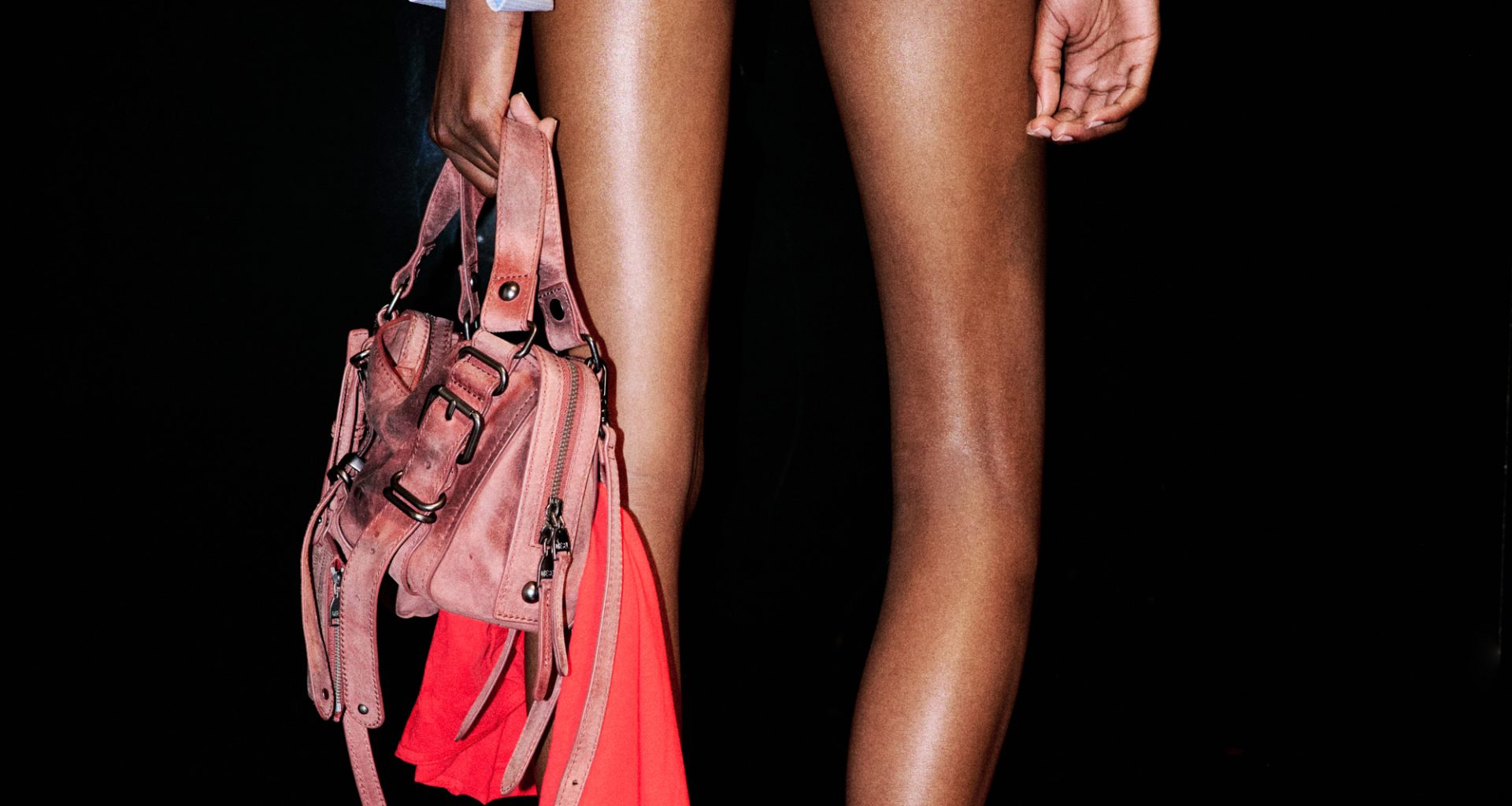
Six years of messing with denim
Glenn Martens is leaving Diesel after six years at the helm, and his final show was a pretty good way to go out.
The Diesel SS27 runway was surrounded by scaffolding. Huge fans pushed the air and smoke around while red lights made everything feel like we had arrived halfway through a construction site.
Except this wasn’t really a construction site.
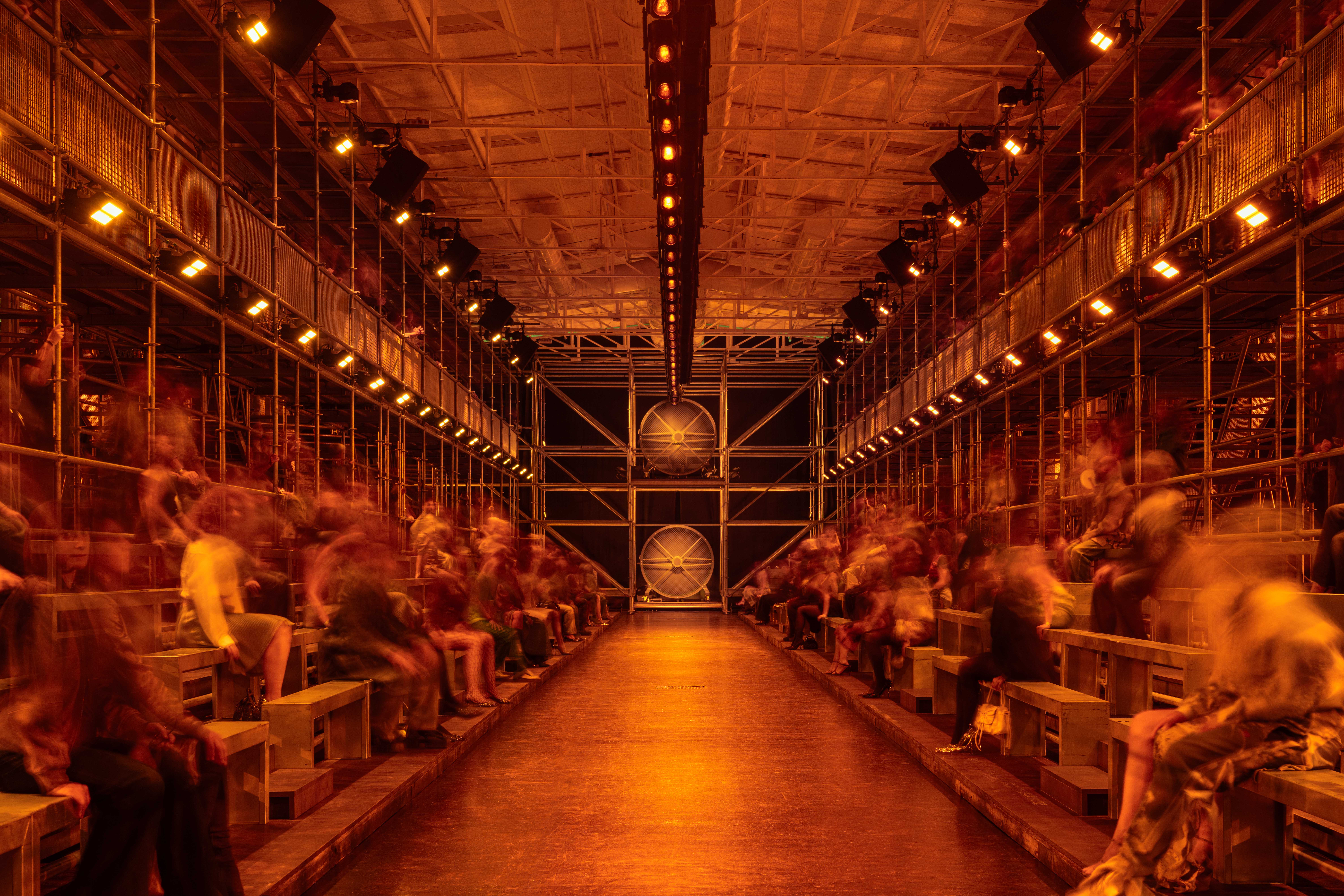
It felt more like a revolution that had just started.
Martens joined Diesel in 2020 and spent the next six years rebuilding much more than its clothes. He gave the brand a cultural reset, creating a narrative and a world around it at a moment when that was exactly what Diesel needed. He distressed denim, supersized it, shredded it, dyed it and mixed it with knitwear, leather and separates until a pair of jeans could barely be called a pair of jeans anymore.
He didn’t make Diesel younger by putting young people in Diesel clothes. He made the brand behave like the internet generation behaved: messy, horny, hot, ironic, collaborative and impossible to neatly put into one category.
And the shows became part of that world too.
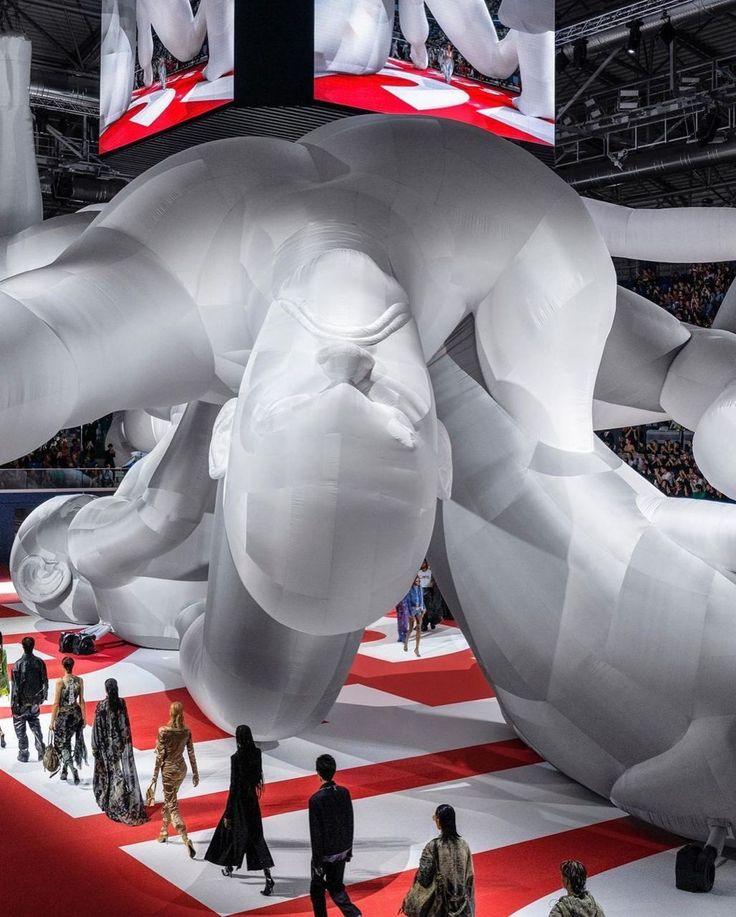
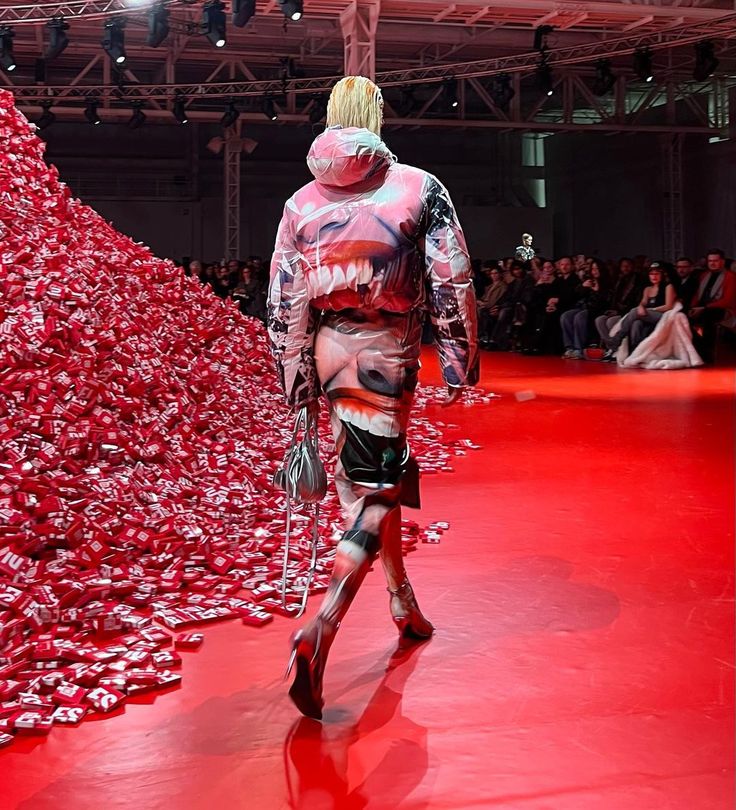
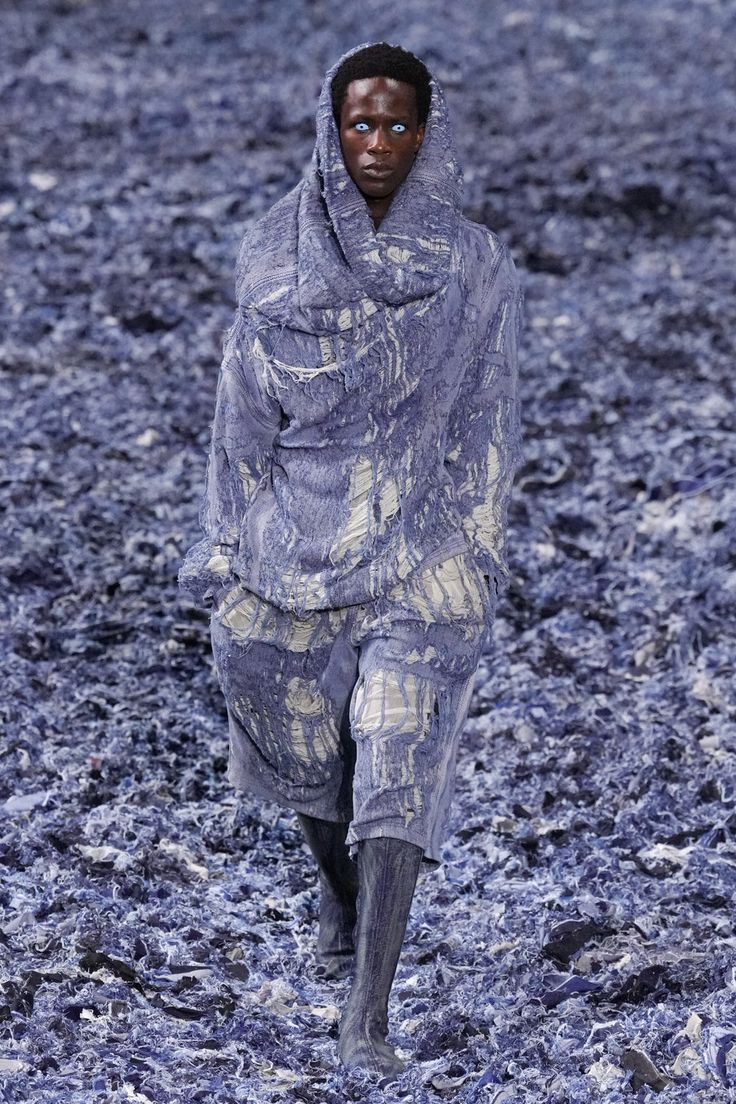
There was the enormous inflatable sculpture for SS23. The 7,000-person rave for SS24. The mountain of denim scraps for SS25. The 50,000-piece archive “walk of shame” for FW26.
Now, with SS27, Martens gets one last chance to fuck with Diesel.
And he does.
THE REVOLUTION HAS STARTED
The first thing you notice is how familiar everything feels.
Not boring-familiar. Diesel-familiar. But then you start looking closer, and things aren’t quite what they seem.
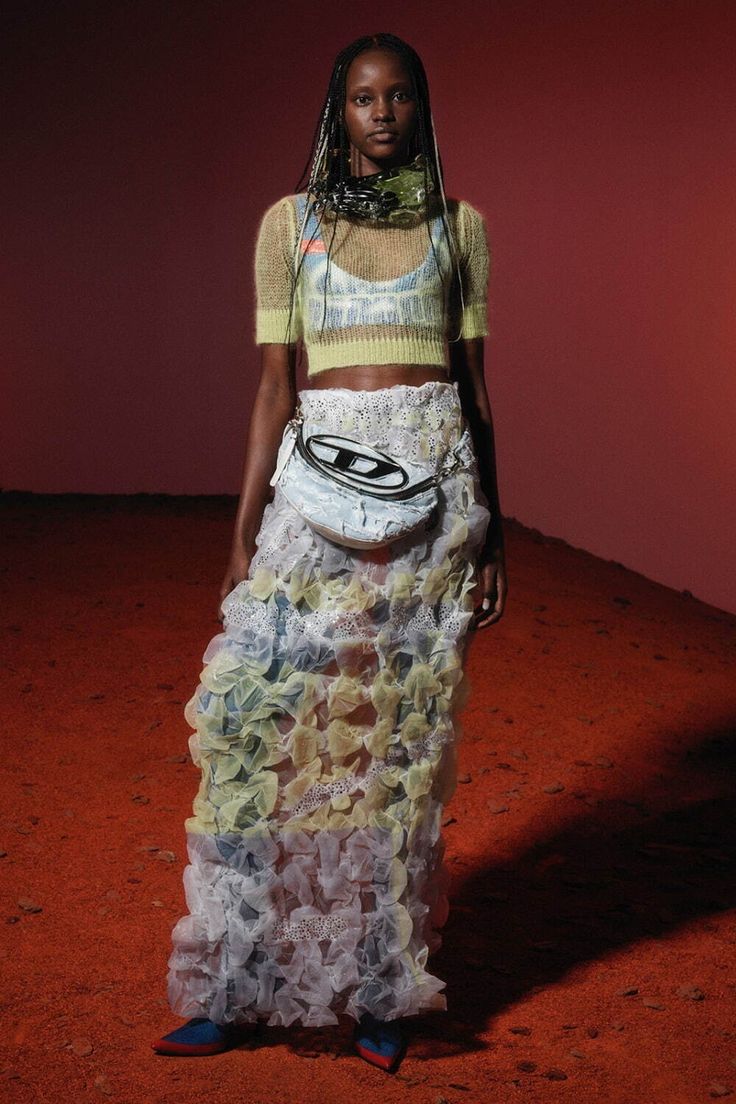
Denim is coated and lasered until it looks like leather. Lightweight shirts are printed to look like heavy tweed coats and winter jackets. A raw-edged shearling coat from Martens’s first Diesel runway is turned into a trompe l’oeil print.
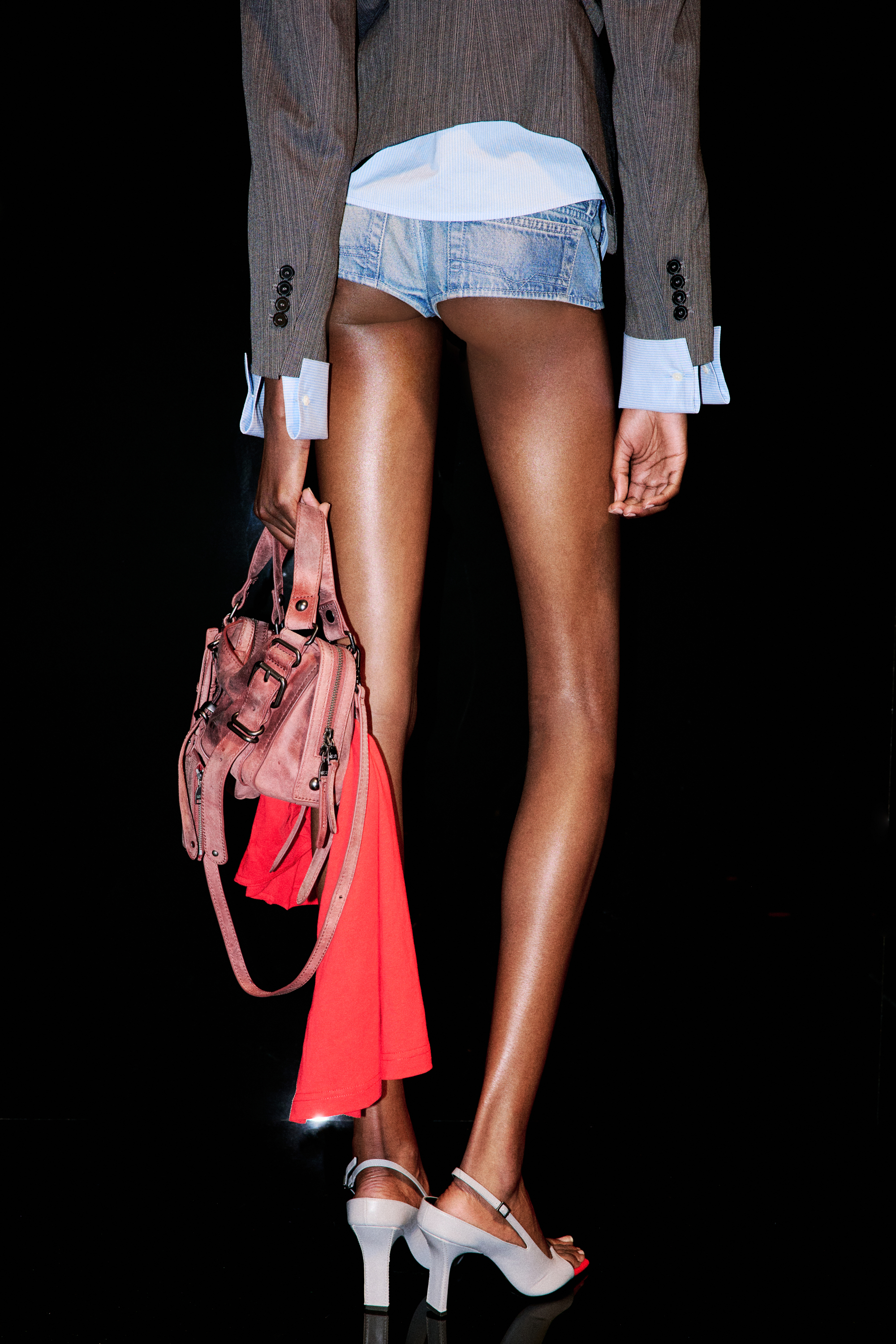
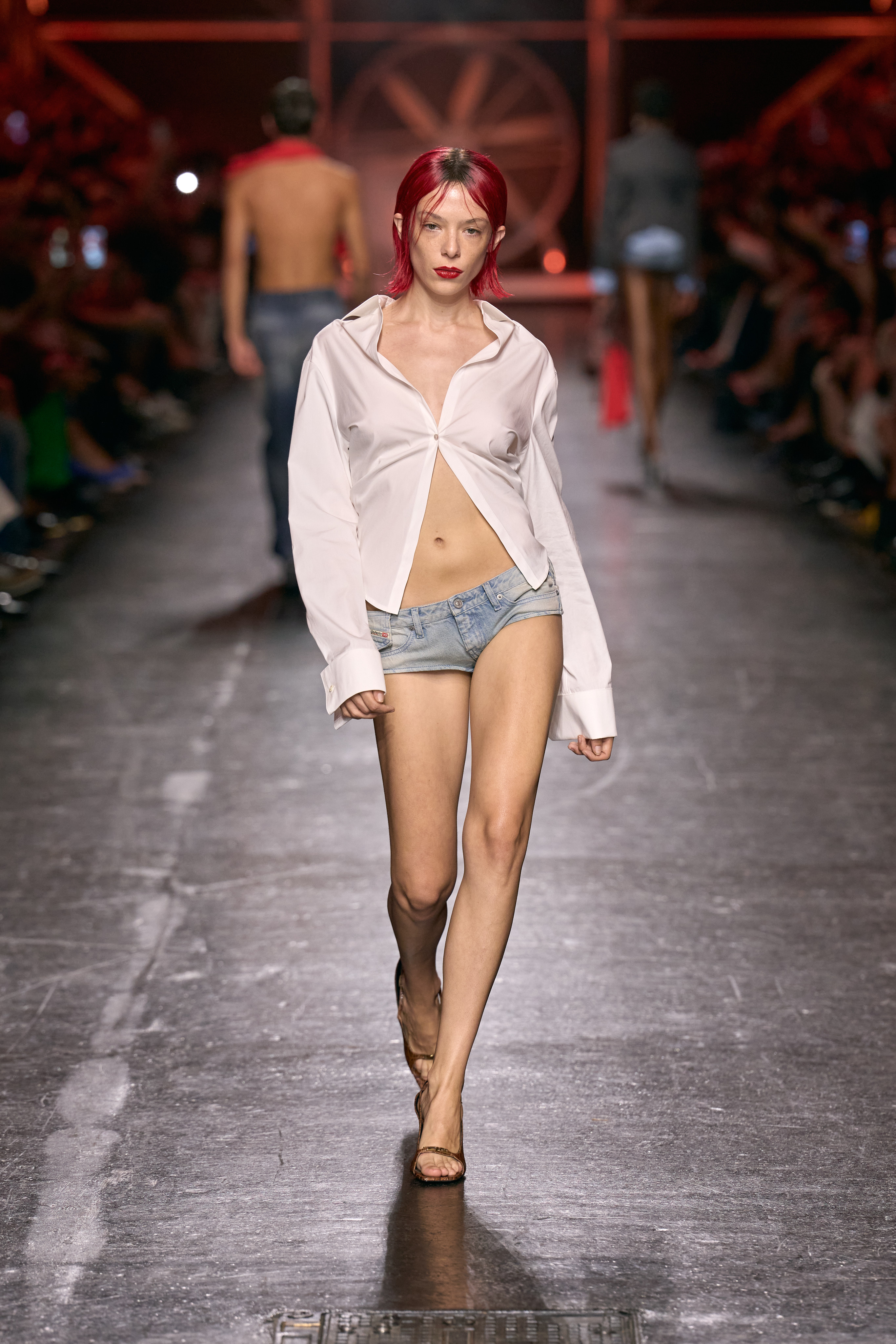
Even the tiny denim shorts aren’t necessarily denim. Some are actually rough transfer prints on jersey.
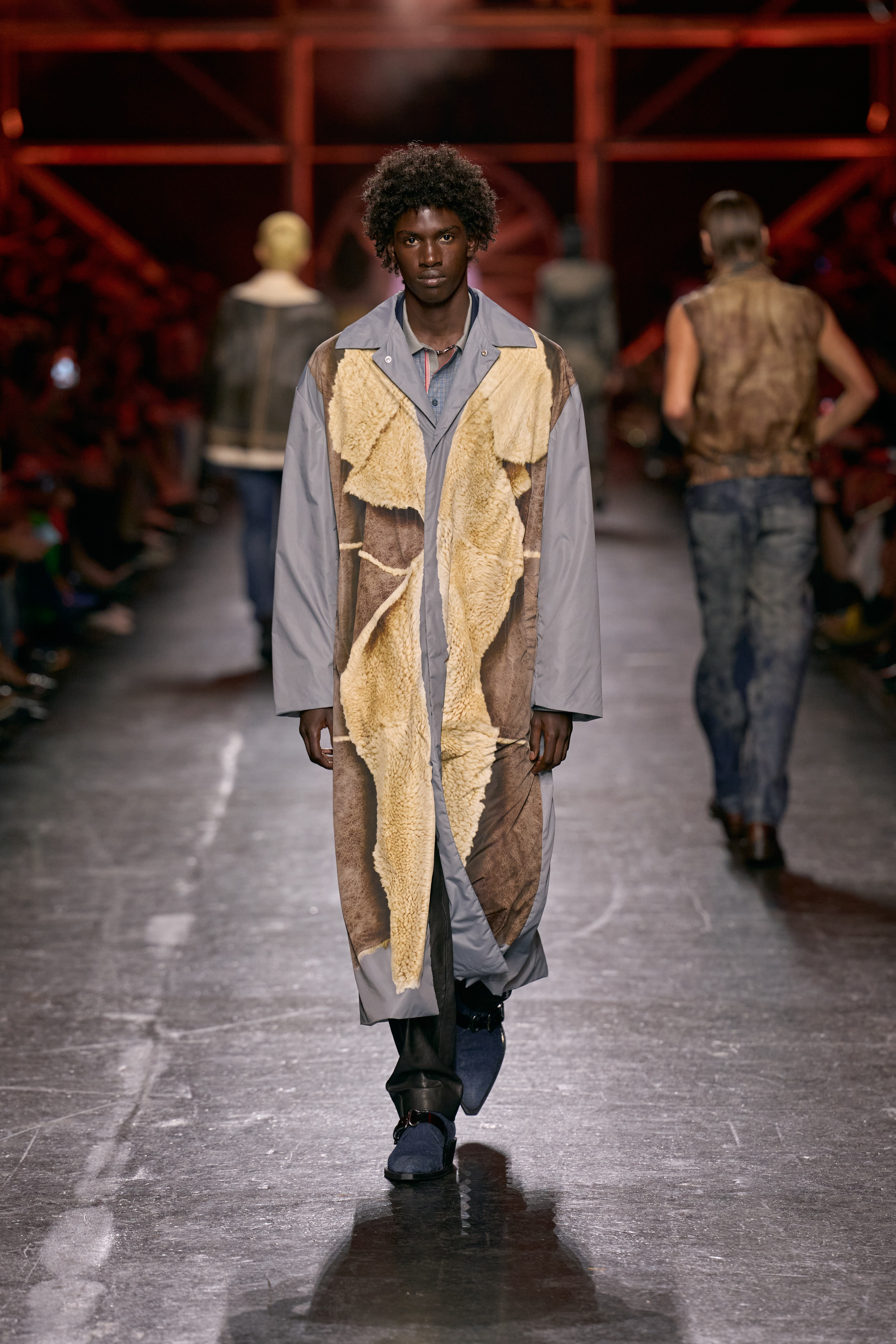
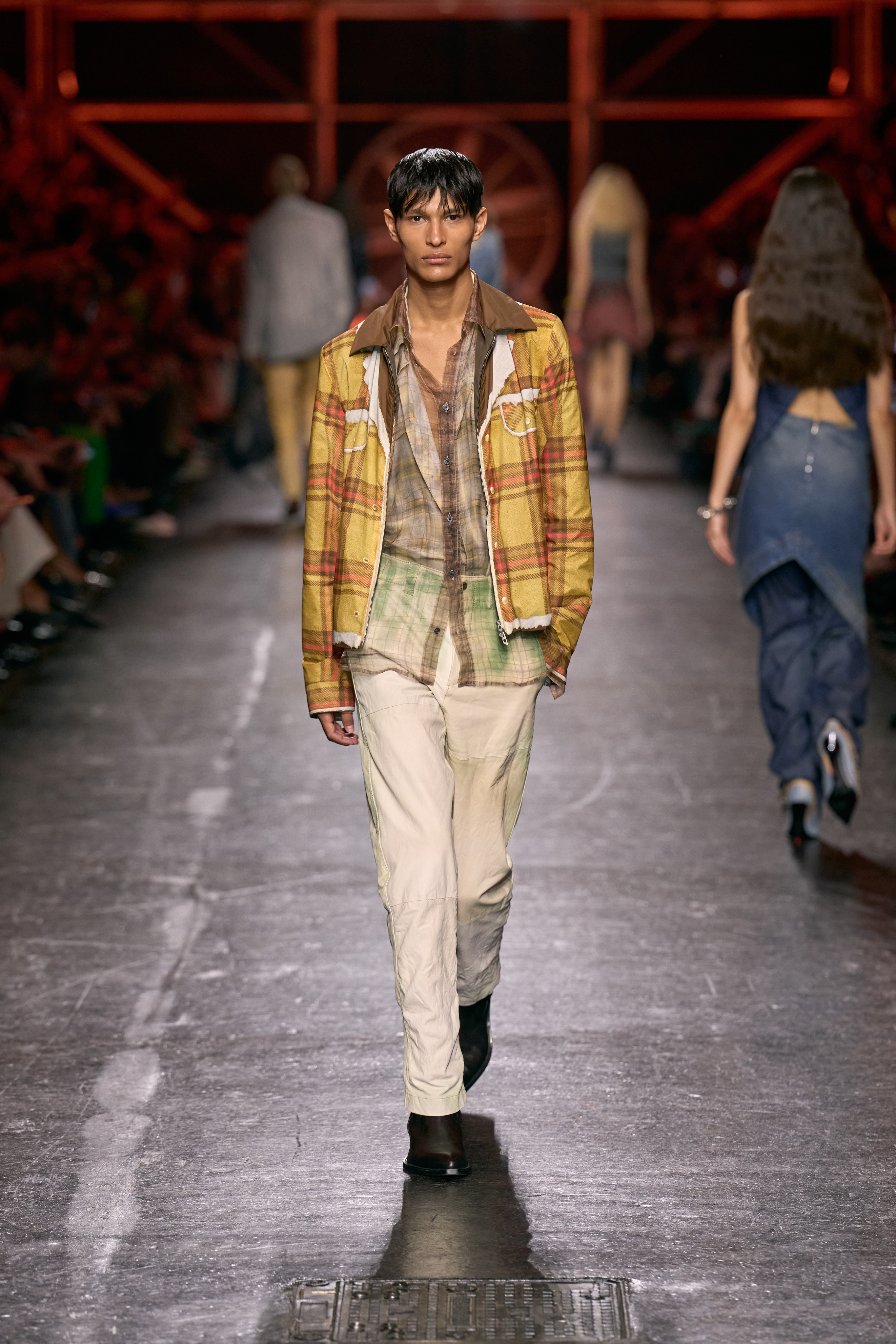
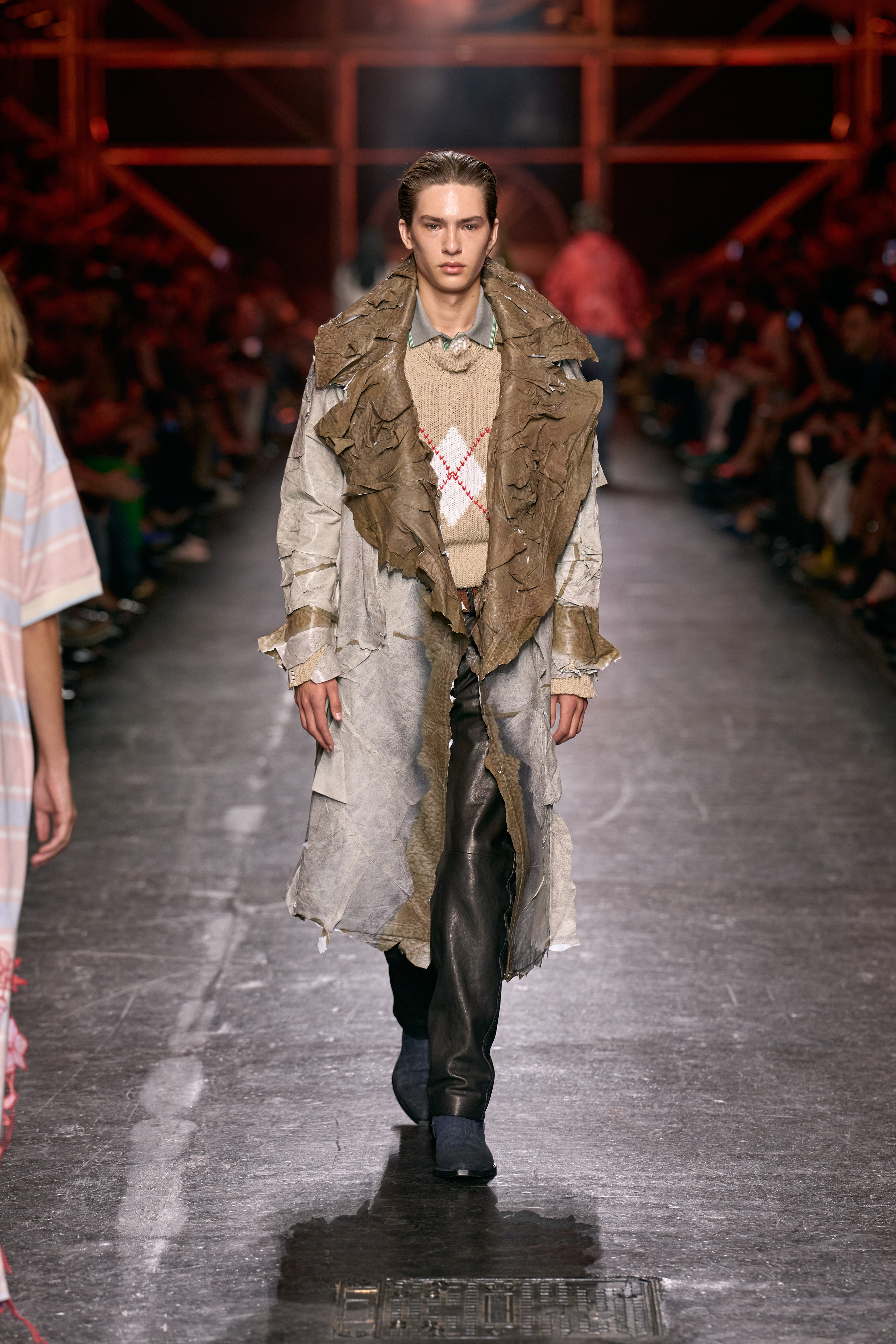
Then the garments start merging.
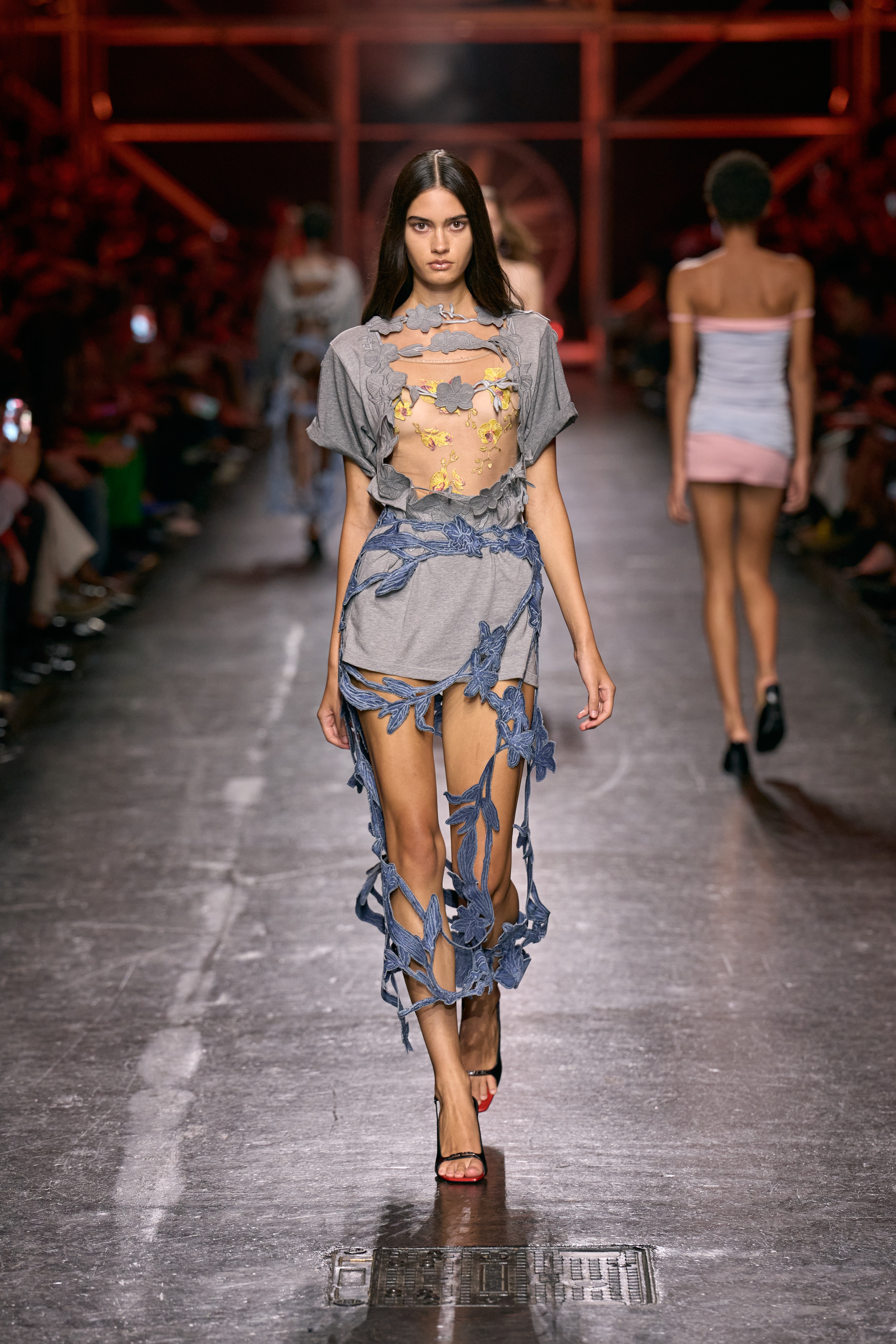
A waxed leather jacket sits over a topstitched blazer, which sits over a ribbed knit sweater with a tracksuit collar and shirt cuffs. Shirts become dresses. T-shirts get twisted into bra tops and bandeaus. A top held in place by a belt references the very first piece Martens showed at Diesel.
And the further the show goes, the less interested the clothes seem in staying in their original form.
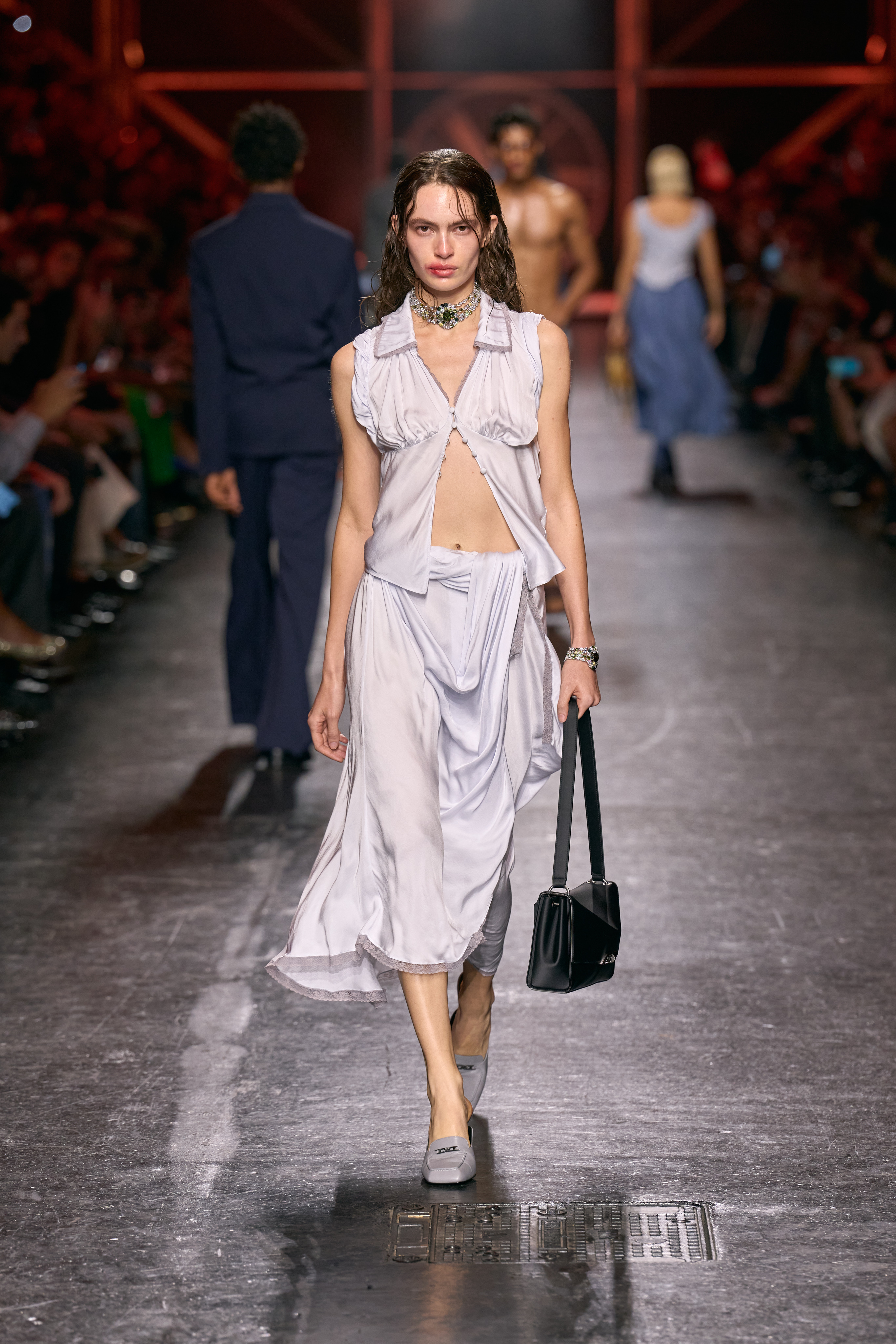
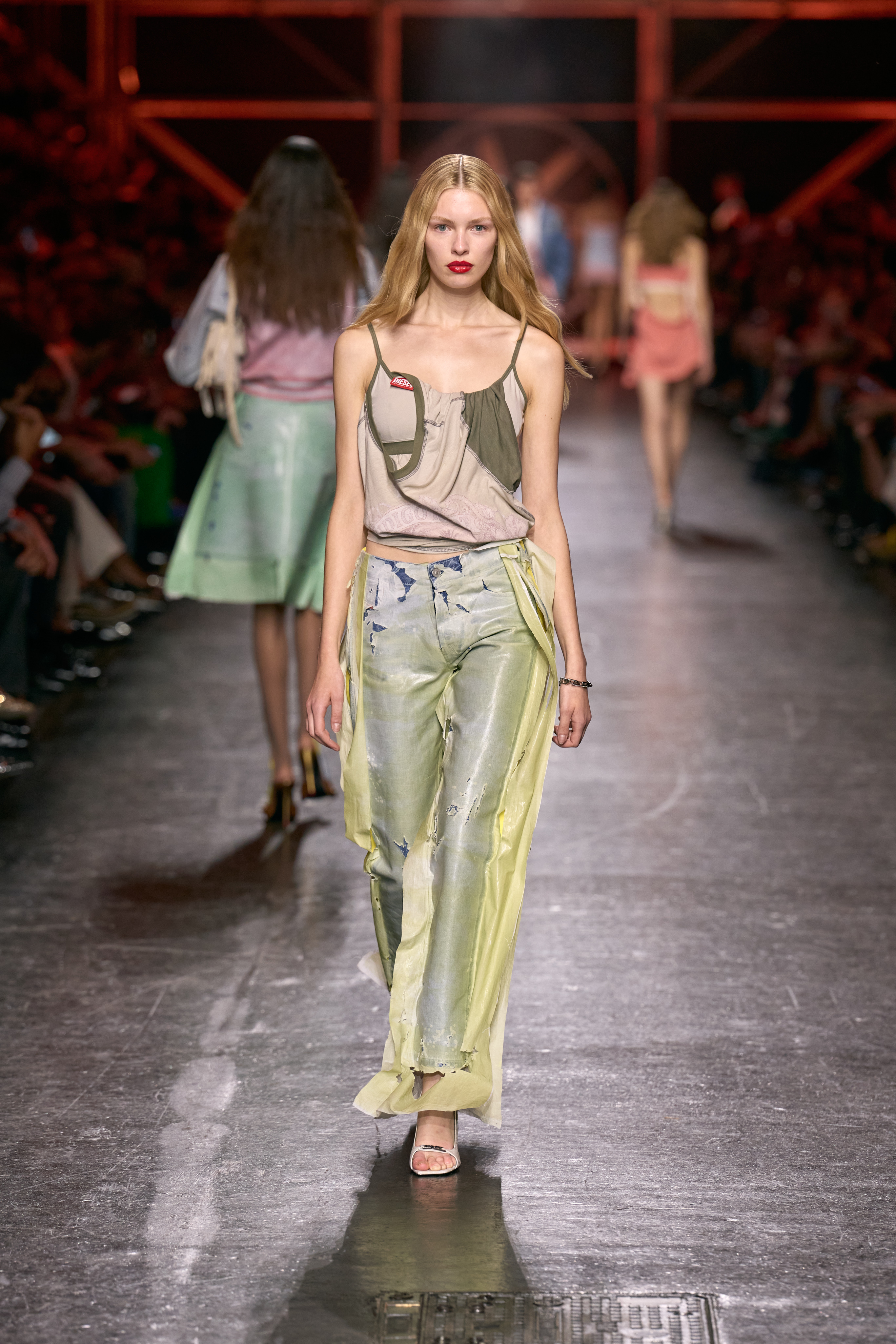
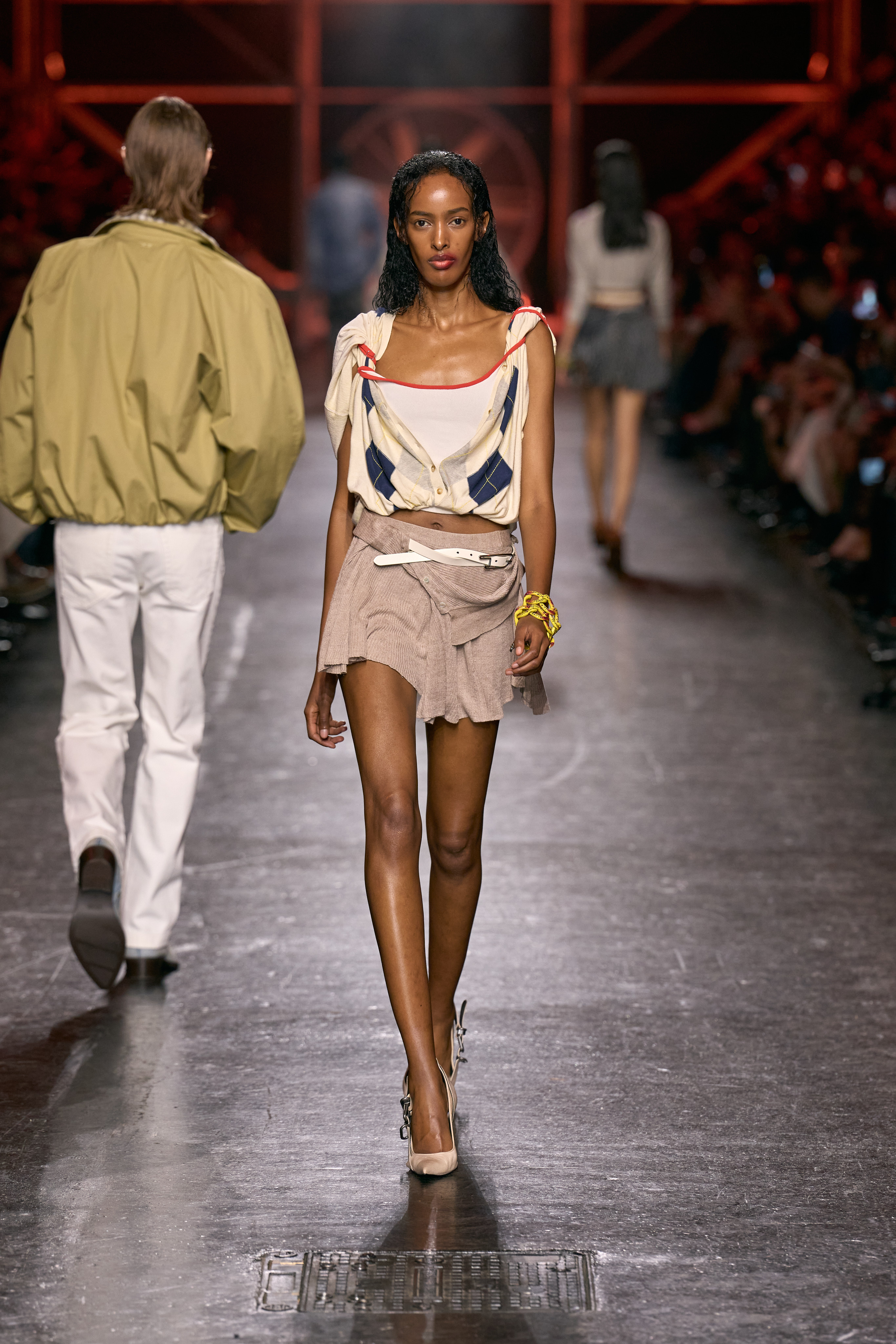
Tailored trousers are cut cleanly around the leg, but extra fabric hangs around them, as if they’re halfway through becoming something else. Skinny jeans seem to be trying to come back — but in a much stranger form.
Then things start getting sexier.
Pencil skirts come with sharp V-shaped openings at the back. Sheer shirts reveal more underneath. Jackets and tailoring are worn directly against the body. Tiny denim shorts appear. At one point, a model walks out in ripped denim with nothing underneath, her ass completely visible through the holes.
Skin becomes more and more visible as the show goes on.
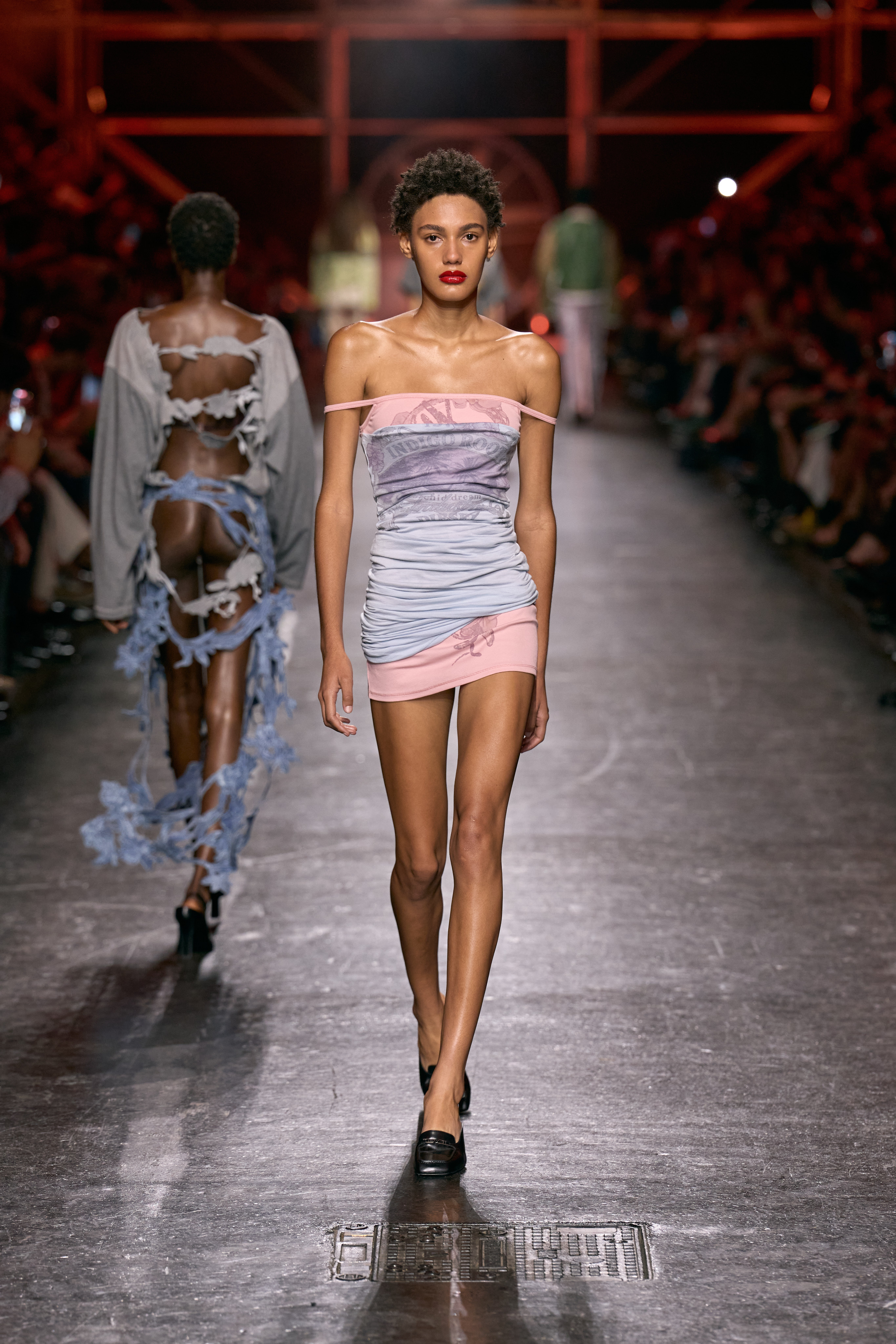
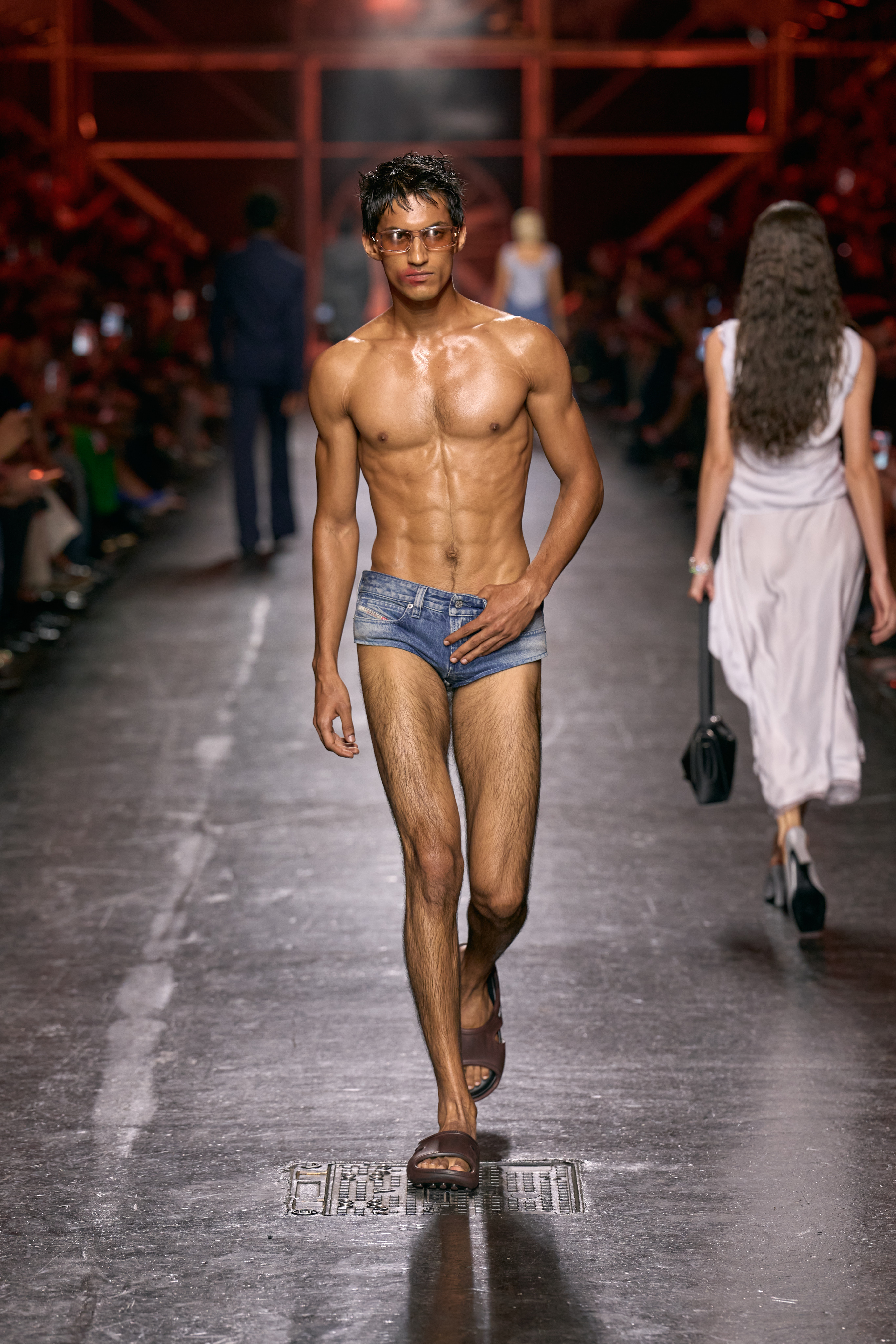
The cutaways also start revealing another recurring detail: orchids. They appear as embroidery around exposed sections of the clothes, get eaten into striped knit jacquards and turn up again in the jewellery. By the time you notice them everywhere, they’re impossible to miss.
The flower also connects to Diesel’s newest fragrance, Only Desire, which makes the whole collection feel even more deliberately built around desire.
DIESEL SS27 – THE RUNWAY WASN’T JUST A RUNWAY
The clothes weren’t the only thing getting more chaotic.
Hidden among the audience were 200 performers from the Marseille-based artist collective (LA)HORDE, initially impossible to distinguish from the actual guests. Then, at different points during the show, they started reacting to what was happening around them: headbanging, kissing, making out, moaning, even putting their fingers down on their own throats.
The really good part was that you couldn’t immediately tell they were part of the show.
They looked like guests.
Then suddenly there was a massive make-out session happening next to the runway.
The actions became increasingly uncomfortable, strange and sensual as the show progressed, making it harder to separate the performance from the audience itself. Some people online found the whole thing disgusting or distracting from the clothes.
But fashion shows aren’t really just about clothes anymore.
The set, the music, the casting, the audience and whatever the fuck happens in the room can all become part of the performance. Martens has spent six years turning Diesel’s shows into events, and this time he literally put the performance inside the audience.
The soundtrack followed the same escalation.
It started tense and electronic, getting harder as the show went on, while fragments of Donna Summer’s “Love to Love You Baby” kept appearing underneath. The clothes became more revealing, the performers became more unhinged, and the whole room seemed to keep pushing towards something.
Then the reworked Donna Summer track returned for the finale.
Climax. Release. End of the party.
A MORE WEARABLE DIESEL?
Despite all the destruction, sex and chaos, the collection feels surprisingly wearable.
There are proper trousers. Tailoring. Pencil skirts. Leather handbags. Knitwear. Shirts. Pieces that could actually leave the runway without needing to be explained.
After six years of pushing Diesel further and further into spectacle, SS27 doesn’t feel like Martens is trying to make his final show the craziest one yet. Instead, he’s taking the codes he’s built over the years and letting them exist as clothes.
And I guess that’s what makes the final collection feel like a goodbye rather than one last attempt to shock us.
AND OF COURSE, THE CAST
The casting and guest list were also very Diesel.
Gigi Goode walked the runway in a brown leather look, while ATEEZ’s Yunho was among the guests, alongside Kim Petras in the audience. Yunho’s attendance was confirmed ahead of the show, and Diesel’s recent relationship with Gigi Goode also makes her appearance particularly relevant: she previously led the brand’s Diesel x Tinder “For Successful Loving” campaign.
SO, WHAT HAPPENS NOW?
Six years ago, Martens inherited a Diesel that needed to remind people why they cared.
He gave it a new language: destroyed denim, sex, humour, spectacle, internet culture and a very specific kind of chaos.
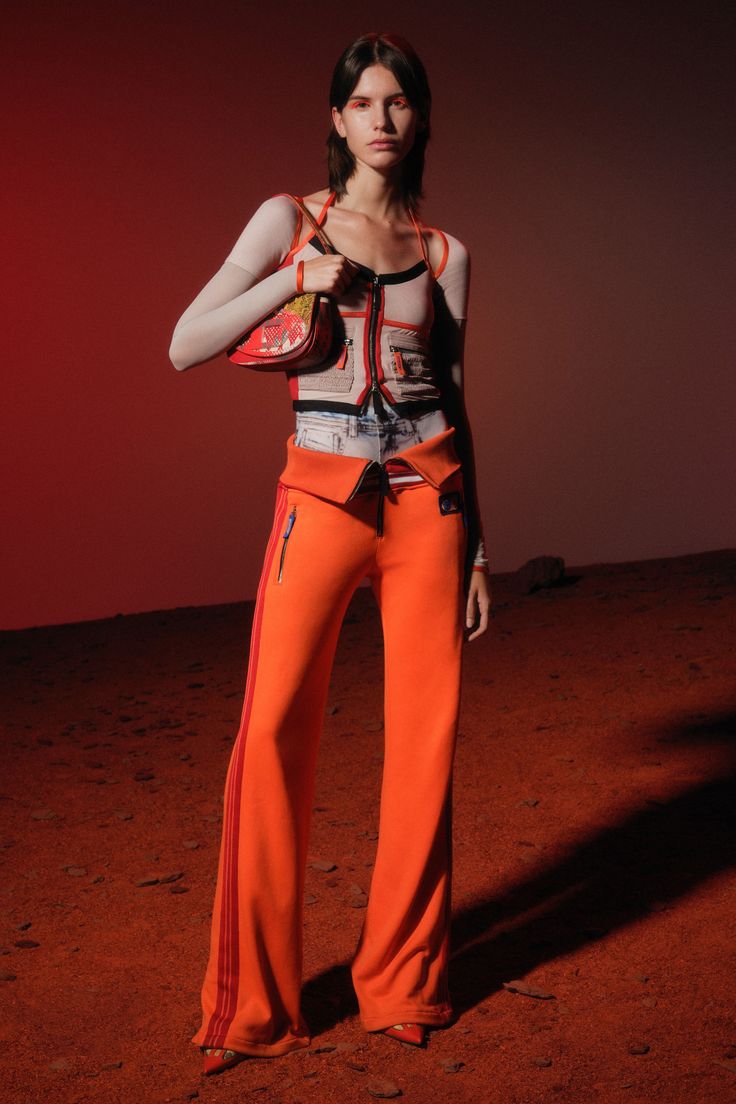
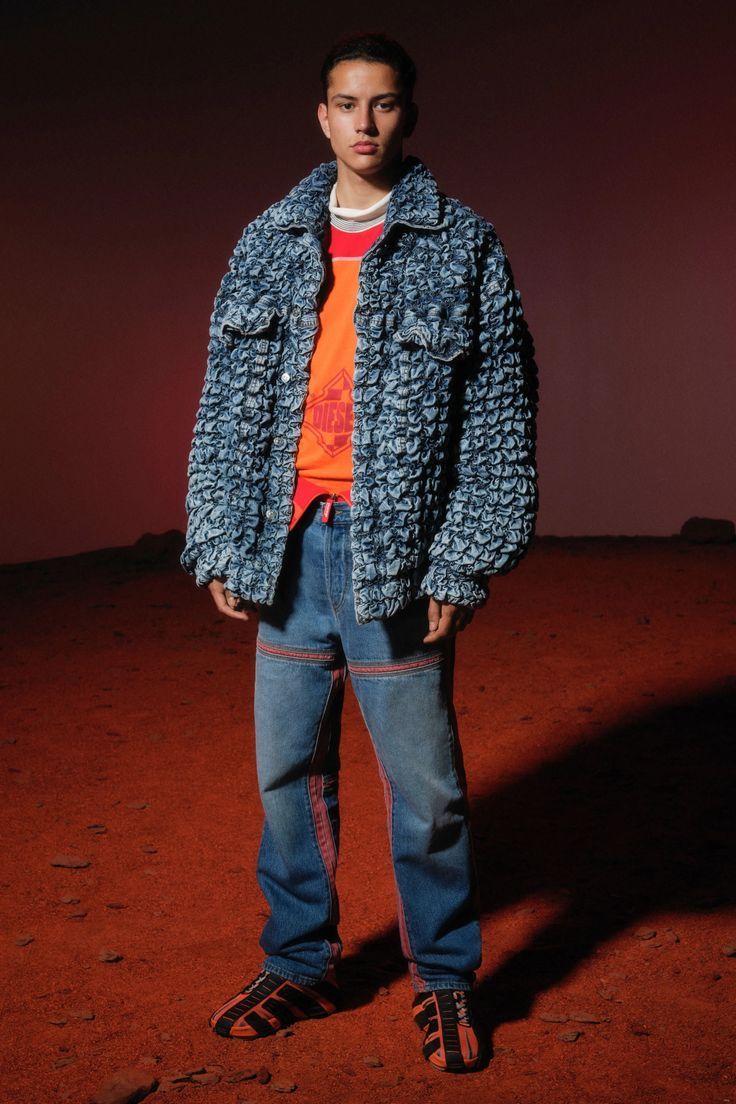
Now the brand has to continue without him.
And his final look was worn by Ella Snyder, the same model who opened his first Diesel show six years ago.
That’s a pretty good way to close a chapter.
But who’s taking his seat?
Diesel hasn’t announced the next creative director yet. For now, Martens leaves behind a brand that looks very different from the one he walked into in 2020.
And judging by the last six years, whoever comes next has a pretty difficult act to follow.