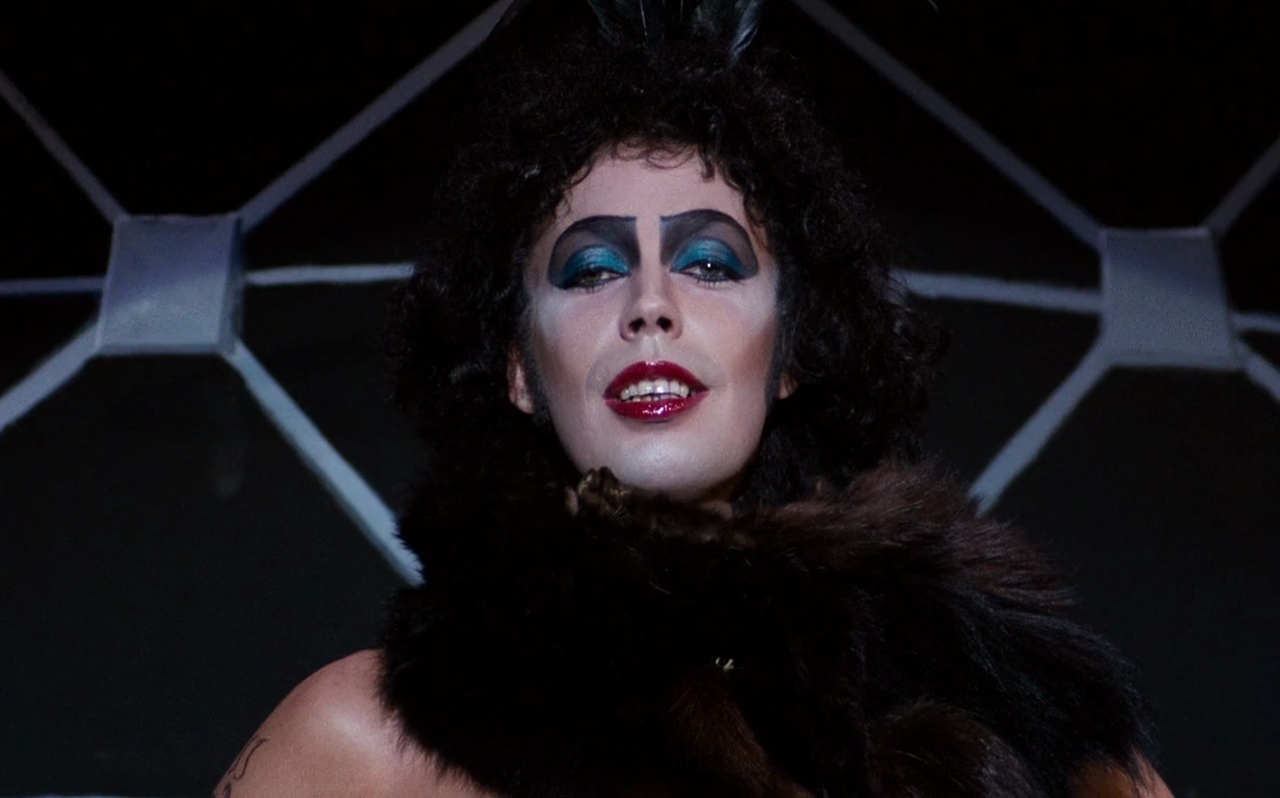
“I play Frank-N-Furter, who is a kind of new variation on the mad scientist of horror films that we all know and love. It is parody, but it also, I play it and think it as a kind of grisly reality. And Frank-N-Furter, as a variation on Frankenstein, is obsessed with image and the way that things look. I see him and play him as a kind of grisly, real freak.”
The idea that Tim Curry could simply fade away feels like a terrifyingly real piece of news. Thinking of him, however, means evoking an otherworldly and timeless creature, sculpted in leather corsets, greasepaint, and that unmistakable feline smirk that forever redefined the boundaries of desire and identity, an art always played on a dual key, ruthless, brazen, and performative on the one hand, yet pierced on the other by a pained humanity, steeped in a deep and irreducible fragility. More than just a film, The Rocky Horror Picture Show (1975) planted disruptive seeds in an era of rigid social codes, laying the essential groundwork for a queer world, as it is one of those works that serves as a precursor to everything that today feels normal to us, but back then was anything but.
Among the cinematic landscape of 1975, a year dense with films destined to become immortal monuments of cult cinema, sandwiched between the rock-infused and hallucinated fury of Ken Russell’s Tommy, the primordial terror of Jaws, and the claustrophobic descent into the asylum of One Flew Over the Cuckoo’s Nest, cinema was choosing to put fears, neuroses, and shadows front and center, stamping a radical and disorienting shift in innovation for the era. The creation of Jim Sharman and Richard O’Brien took that very same spirit of restlessness and injected it into a genre, the musical, that until then had remained anchored to a polished and reassuring surface, upending its rules forever.
Over the decades, Tim Curry has established himself as the ultimate incarnation of the monster on both the big and small screen: an actor of extraordinary versatility capable of inhabiting the bizarre with unmatched class. Yet, the absolute peak of this artistic trajectory condenses into just two masks destined to forever redefine the collective imagination: the seductive Dr. Frank-N-Furter and the archetype of childhood terror, the clown Pennywise, in 1990.
Just a Sweet Transvestite
It is through the first of these metamorphoses that the revolution is accomplished: transforming the classic mad scientist into a brilliantly queer Dr. Frank-N-Furter, Tim Curry shapes a living manifesto of ambiguity and magnetic power. With his husky voice, theatricality borrowed from West End stages, and unusual grace, he turns transgression not into a sin to be hidden, but into a liberating art form. This magnetic subversion explodes on screen at the exact moment he descends in the laboratory elevator, letting his lab coat drop to reveal fishnet stockings, heavy makeup, and high heels while introducing himself with Sweet Transvestite. Planted straight in front of Brad Majors and Janet Weiss, the quintessential conventional American bourgeois couple of the era, Curry smashes his transgression right in their faces. That challenge was a true scream of rebellion hurled against an entire rigid and conformist society.
Wearing The Revolution
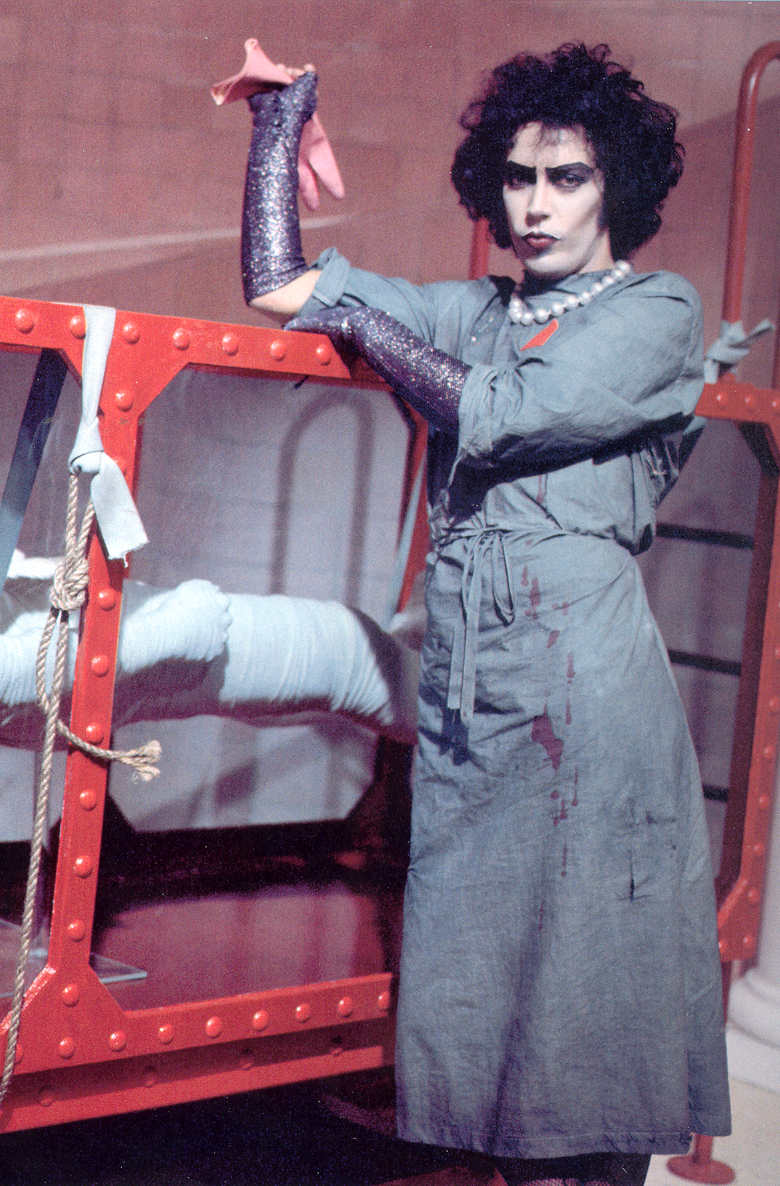
Sue Blane gave body and soul to this visual universe, anticipating the codes of punk and glam rock even before they hit the streets. By designing Tim Curry’s famous corset, ripped fishnet stockings, and heavy makeup, Blane stitched true uniforms of emancipation, offering viewers an unprecedented vocabulary of desire. This aesthetic revolution was cemented through emblematic wardrobe choices: the raw corset that showcases lived-in bodies while destigmatizing drag aesthetics, the torn stockings and smudged makeup that capture the visceral excesses of shadowcast fans worldwide, down to the housewife apron that pairs rubber cleaning gloves with bold lingerie to desecrate traditional family models.
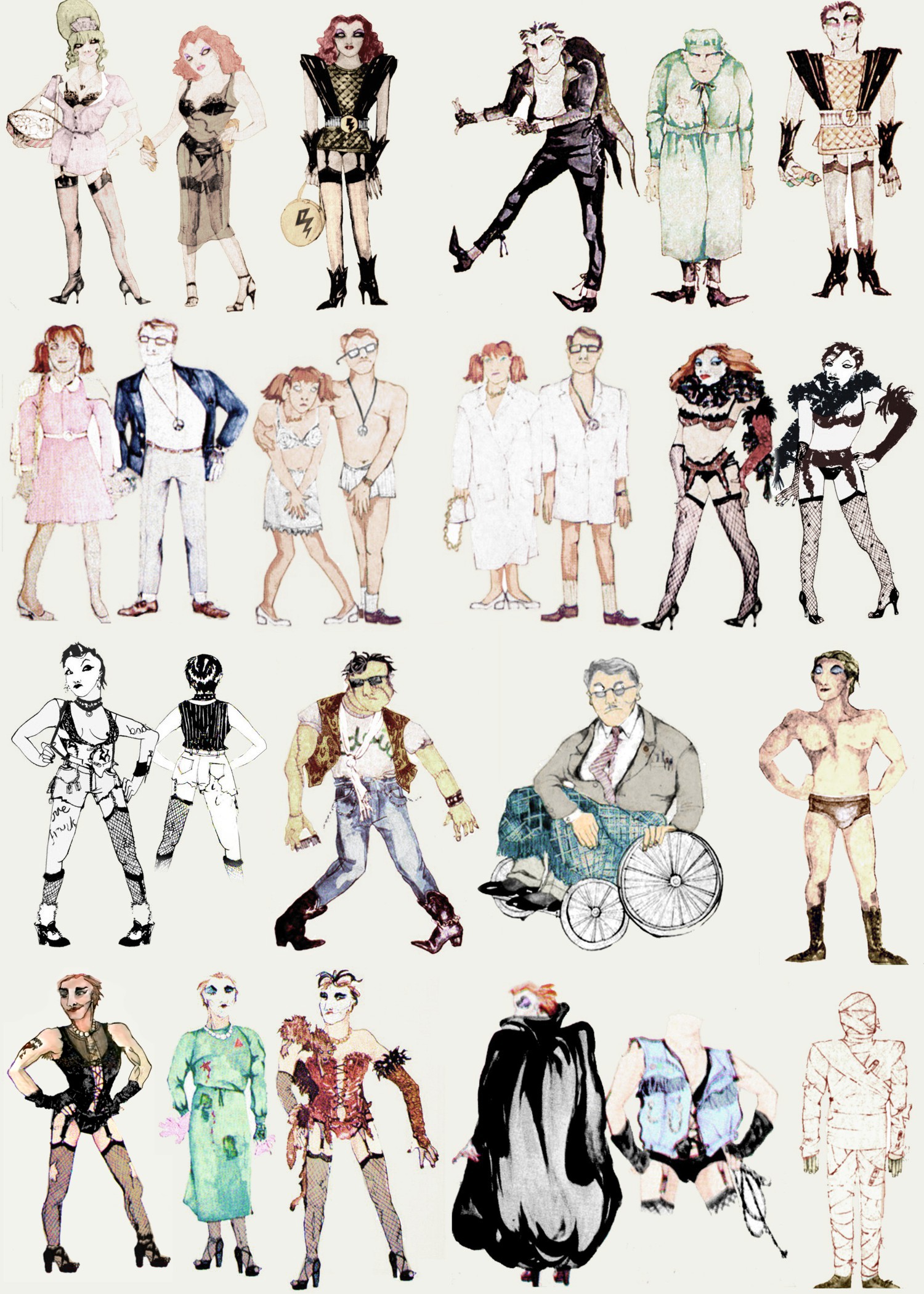
Original costume design sketches by Sue Blane for The Rocky Horror Picture Show (1975).
A Middle Finger to the Canon
When The Rocky Horror Picture Show poured into theaters, mainstream entertainment was still clinging to reassuring bourgeois illusions. Tuning into the dark, impudent frequencies of David Bowie or the New York Dolls’ glam rock, the film tore prevailing machismo to pieces. More than just a provocation, it was a glorious middle finger raised against conformity, a portal that gave marginalized youth a definitive sanctuary where they could celebrate themselves without reservation.
Pennywise: The Quintessential Clown Icon
That same audacity and unique, original expressiveness are channeled directly into his portrayal of the screen’s most infamous clown: Pennywise.
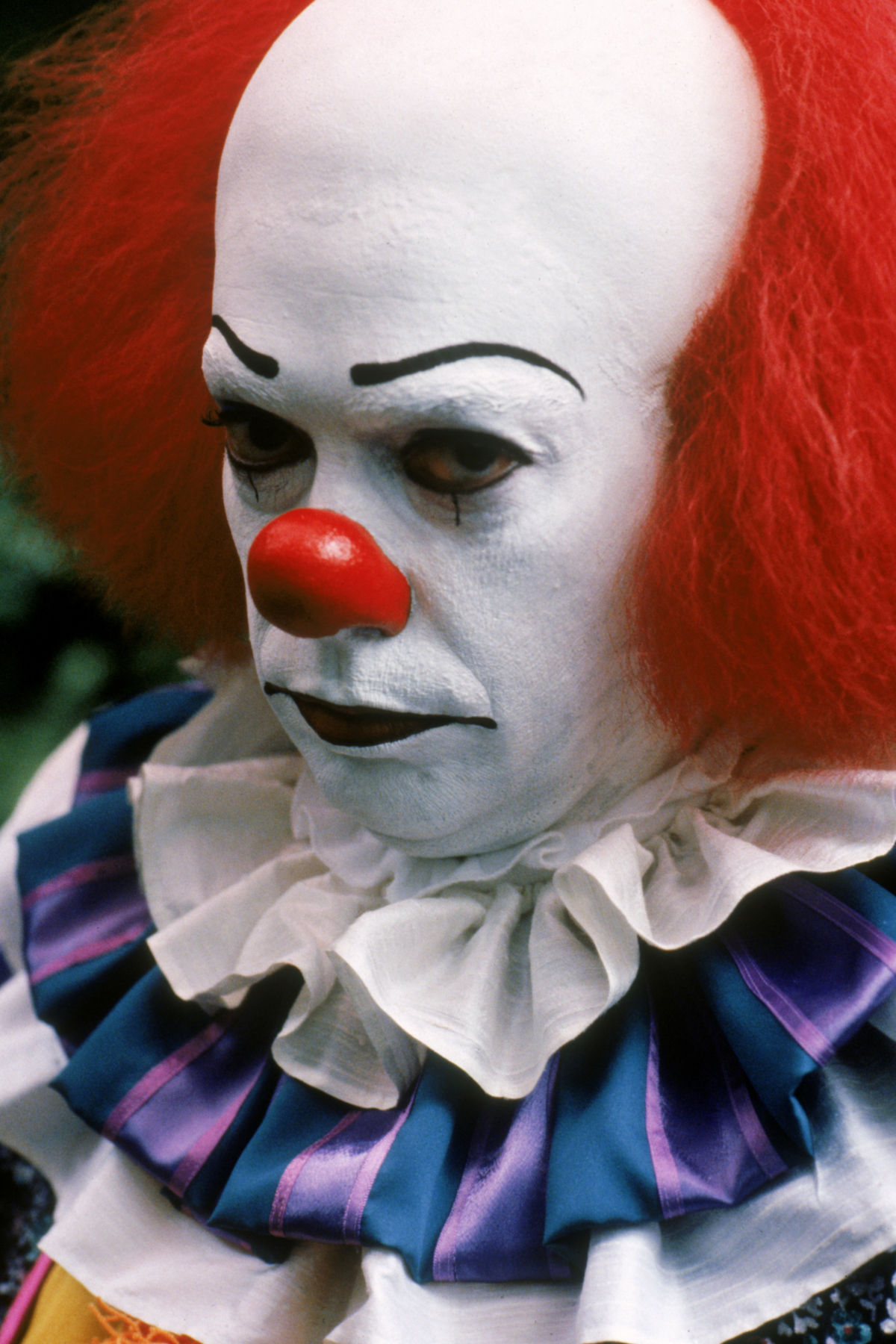
In the 1990 miniseries It, Tim Curry accepted the challenge despite a visceral aversion to such figures, turning that aversion into a monstrous and total performance. In his hands, the killer clown transcends Stephen King’s written page to become a primordial deity of terror, an ironic and grotesque force that digs deep into the psyche of his victims. First he seduces them, then he annihilates them. Pennywise embodies the disturbing figure of a predator luring childhood from the depths of the storm drain, moving with the slick shadow of a manic tormentor of children. Yet, on a more subtle level, he also serves as the warping mirror of our deepest anxieties: a creature that devours us from within, reminding us that our own fears are the true monsters ready to kill us in an infinitely more real way.
From Transgression to Common Language
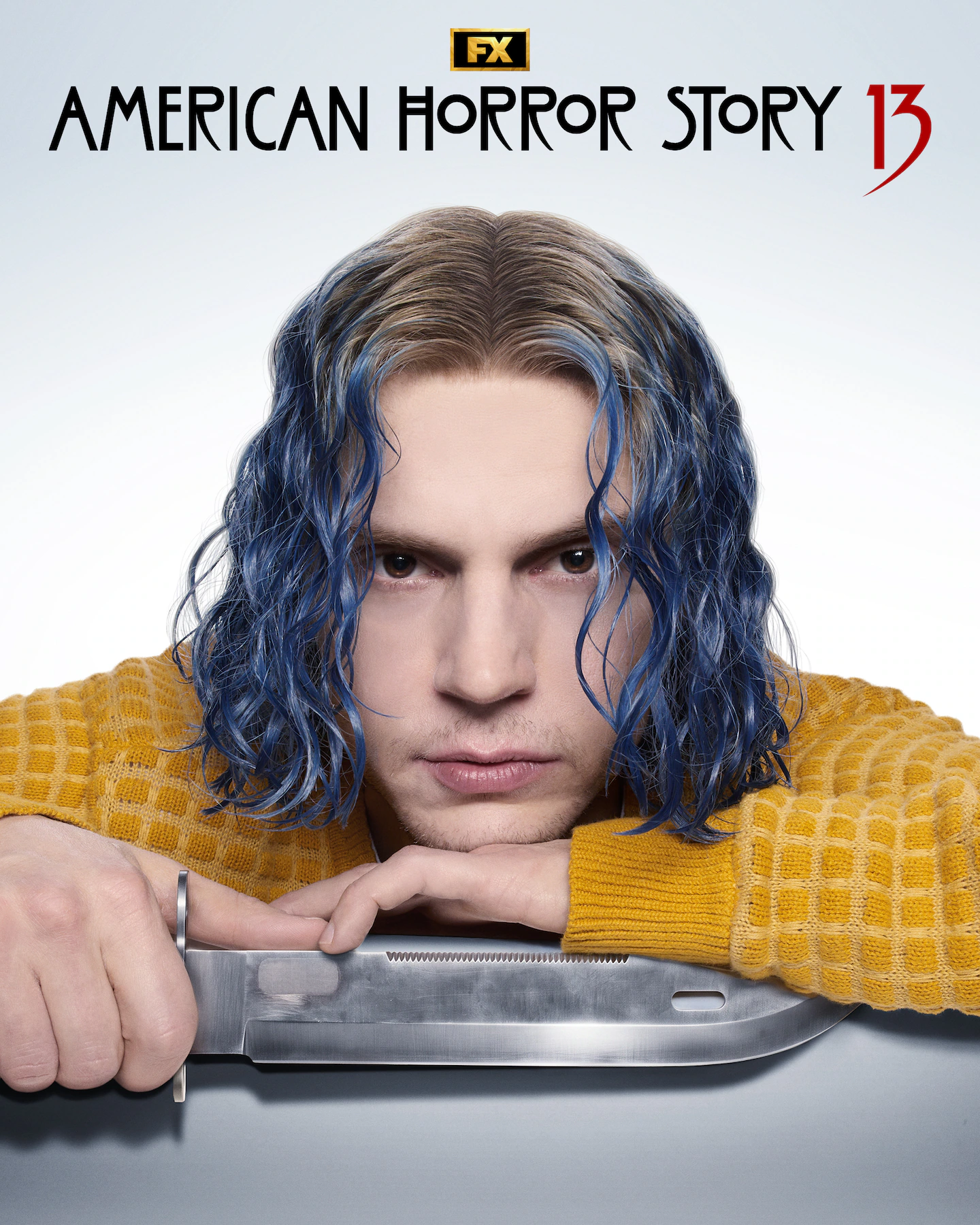
Today’s film and television landscape has mainstreamed elements of these iconic works, demonstrating an impact that endures today albeit in a modern form and key. This legacy is directly reflected in works like Euphoria, where makeup acts as a theatrical and baroque armor exactly like Frank-N-Furter’s greasepaint, transforming the surface of the face into a shield to protect a profound and aching vulnerability. Similarly, Ryan Murphy’s serial aesthetic in American Horror Story borrows Tim Curry’s intuition in It, blending seduction, irony, and a grotesque theatricality that forces the viewer to experience an unsettling attraction to evil. Furthermore, it traces a direct line that, passing through Pennywise’s perverted smile and mephistophelean pantomime, laid the foundations for the modern clown: a figure who, inheriting Curry’s lesson, revolutionized the attitude and psychology of fear, shaping the current and well-known character of Art the Clown in Terrifier.
The Weight of Being the Monster
Behind that iconic makeup and the character’s disruptive energy, Tim Curry never hid the strain of living with such an all-consuming creation. He described Frank-N-Furter not as a simple, sleek glam icon, but as a monstrous and disturbing variation of Frankenstein, an authentic flesh-and-bone freak obsessed with appearance. While the theatrical stage allowed him to reclaim his identity after two hours, the camera made that presence total, turning the disguise into a second skin that was hard to shake off.
Why It’s Still Relevant
The disruptive force of his performance lies not so much in aesthetics or nostalgia, but in having brought to life an immortal character capable of crossing eras while keeping his subversive charge entirely intact. By giving a voice to our most secret desires and to the radical freedom of self-expression, Frank-N-Furter remains an eternal icon whose legacy is anchored in an eternal and urgent call to action: Don’t dream it, be it.
Giulia Calbi