By Alegria Haro
Paris Men’s Fashion Week Spring/Summer 2027 unveiled its first collections in the middle of a heatwave, with the city moving between crowded venues, outdoor arrivals and late-night events. The temperature did little to slow the calendar. If anything, it made the first days feel more charged: shows, presentations and capsules unfolded across Paris with a sense of urgency around what menswear can look like now.
While the week opened with major names across the official schedule, several independent and emerging labels stood out for the way they approached format as much as clothing. Études Studio looked at the city as a site of transformation. Beautiful People questioned what it means for clothing to feel natural. Meryll Rogge turned garments and everyday objects into an exhibition. EGONlab searched for calm inside uncertainty. YOKE explored texture through Surrealist displacement.
Études Studio
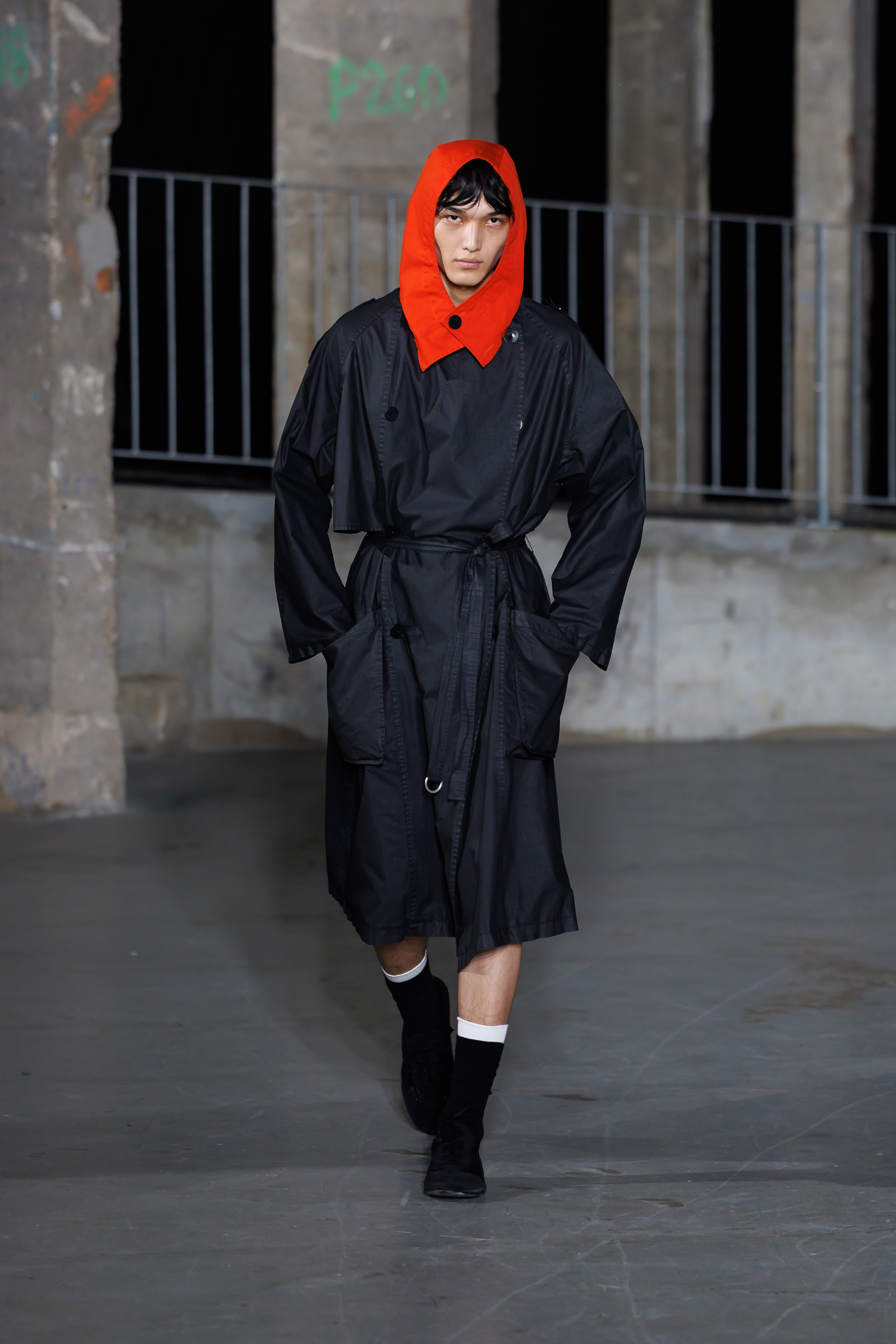
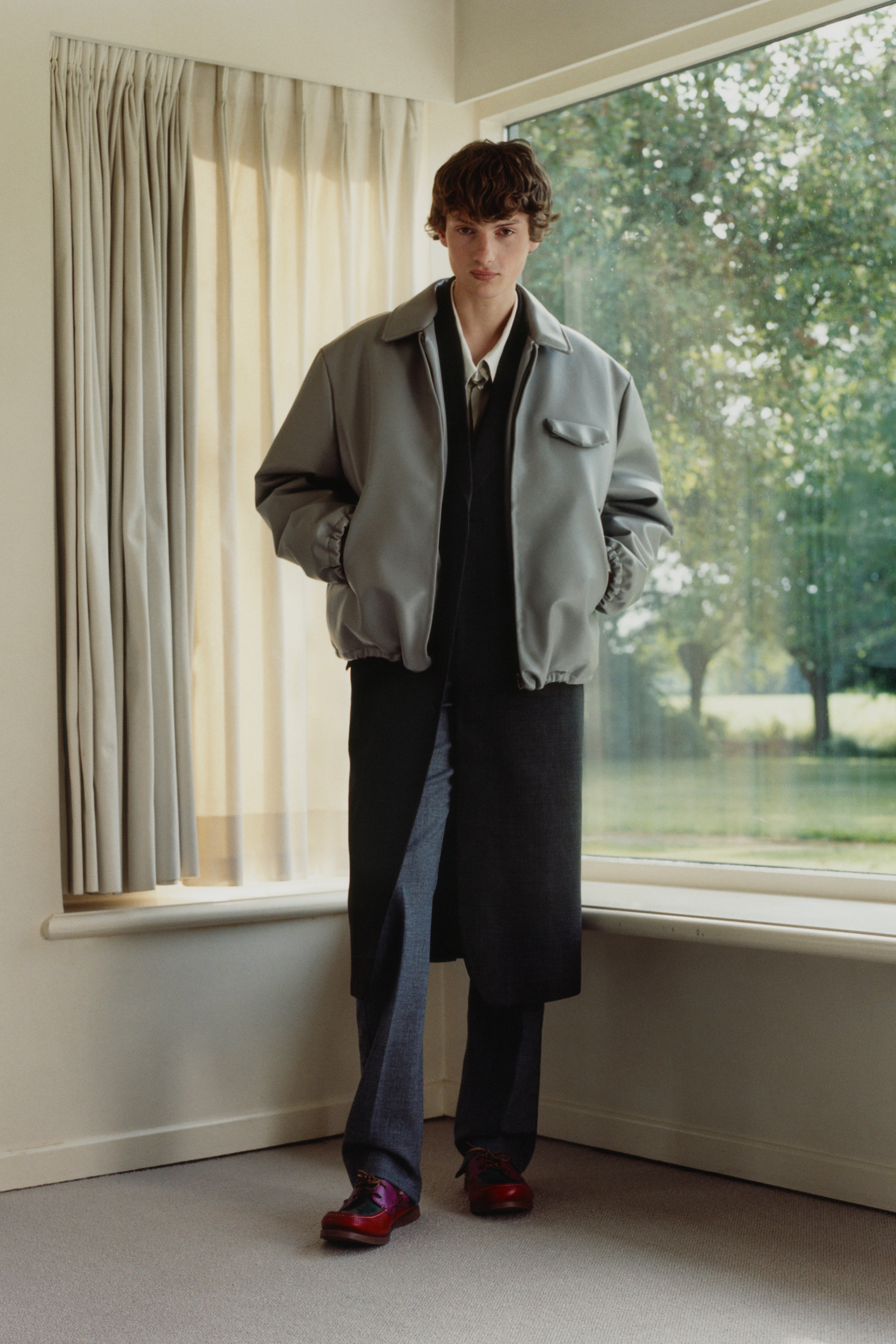
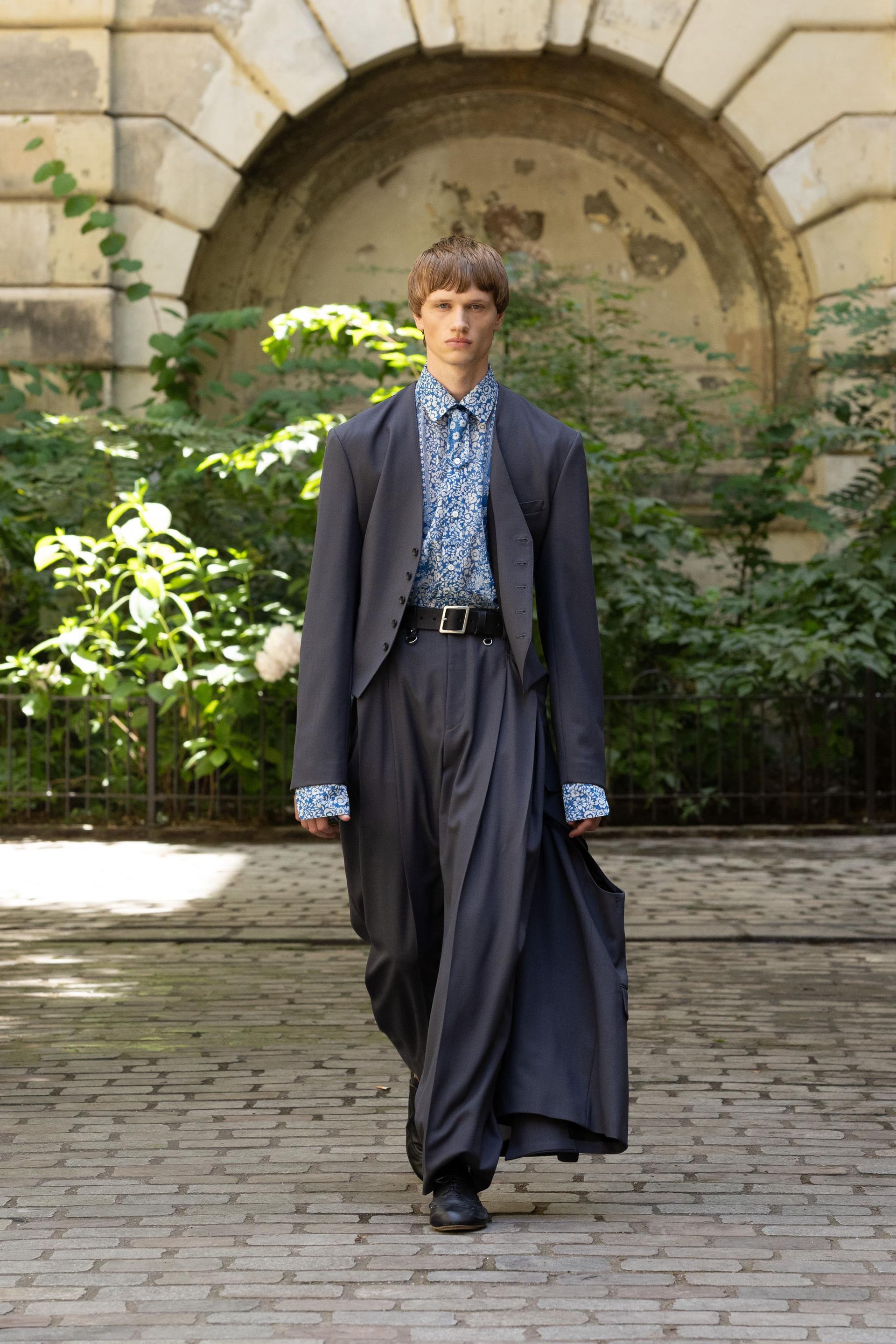
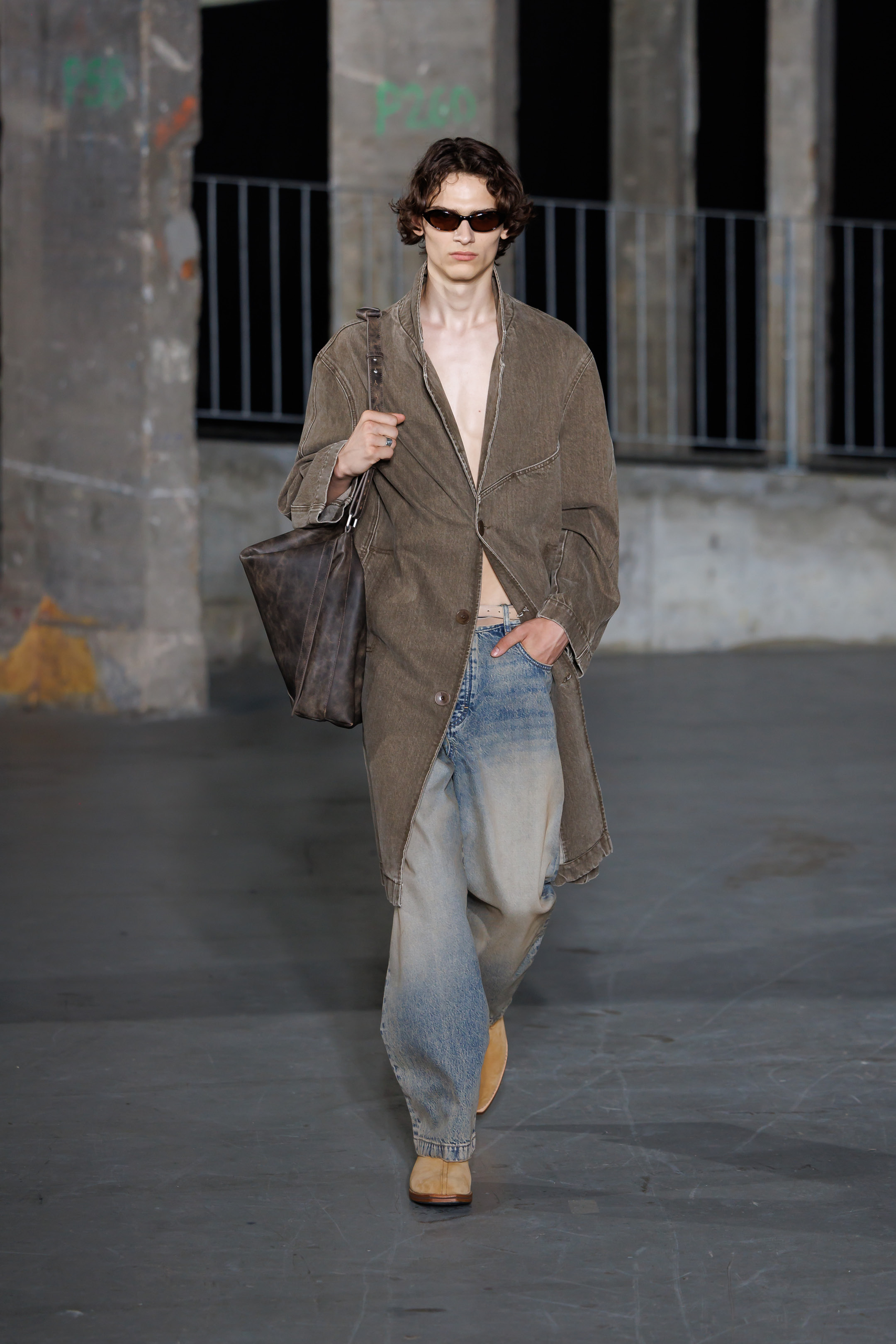
Études Studio presented Collection No.29, Short Term Eternity, on June 23 at the Palais de Tokyo. The collection continued the Paris-based label’s long-standing interest in the relationship between contemporary art, clothing and urban space.
This season, the starting point was Gordon Matta-Clark, the American artist and trained architect known for his interventions into abandoned or soon-to-be-demolished buildings. His work gave the collection a precise framework: the city as something unstable, marked by alteration, demolition, repair and temporary gestures.
The clothes moved between tailoring and workwear. Structured overcoats, softened jackets and technical details gave the collection a practical base, while removable elements, zippers and pockets allowed small changes in volume and proportion. Denim appeared through overdyeing, acid washes, stone washes, resin finishes and spray treatments, echoing the surfaces of walls, streets and industrial materials.
The presentation also included a site-specific installation by David Douard. Screen-printed vertical blinds created a shifting interior landscape for the models to move through, extending the collection’s central idea of impermanence into the space itself.
Beautiful People
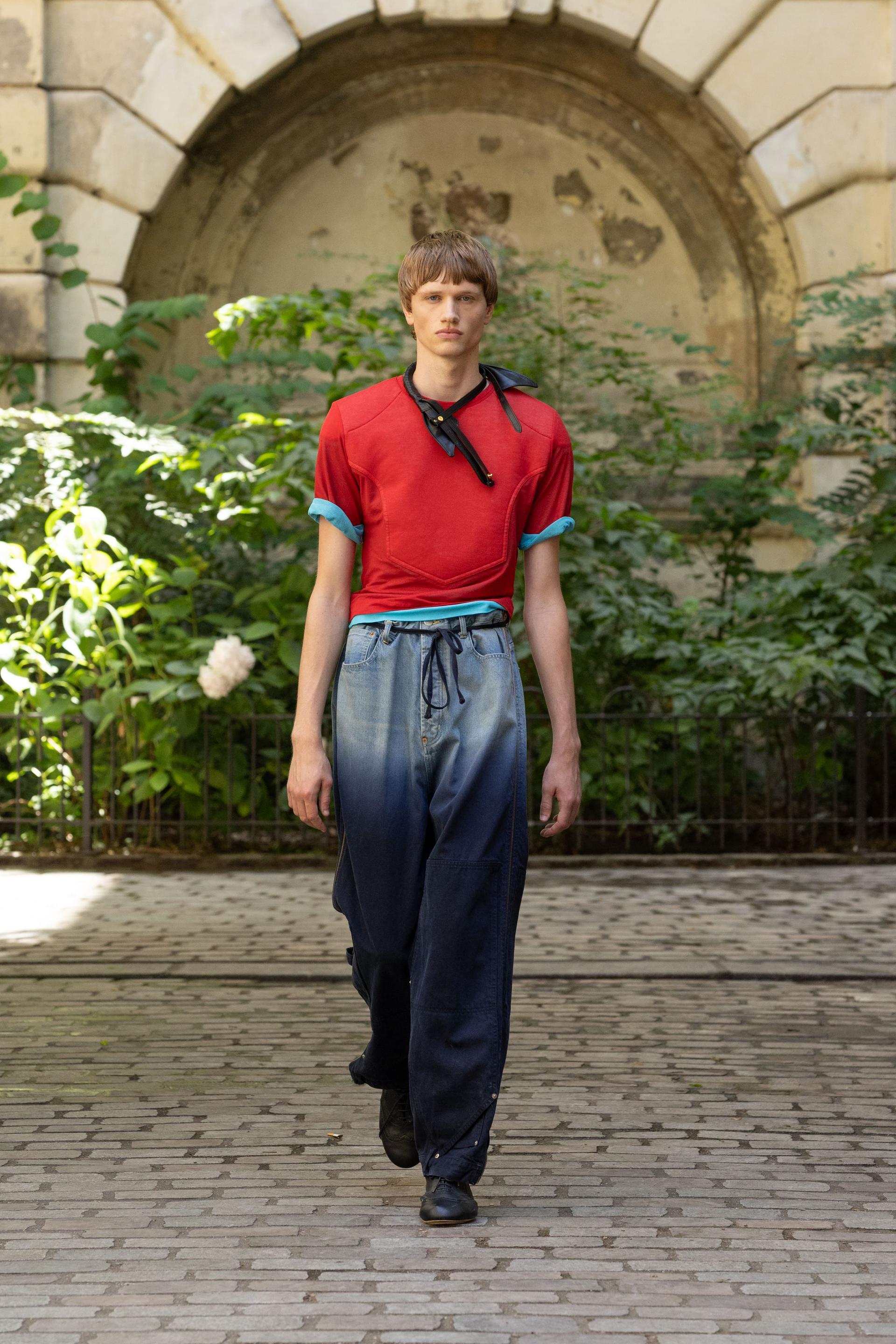
Beautiful People presented Tuned to a Natural E on June 24, using its 20th anniversary as a moment of self-examination. The title refers to The Beatles’ “Baby, You’re a Rich Man,” where the phrase “beautiful people” carries both admiration and irony.
The collection questioned what “natural” can mean when values such as freedom, ethics, health and tolerance are constantly turned into visible signs. Rather than answering through slogans, the brand approached the question through construction.
Layering, wrapping, tying, mending and carrying appeared as practical gestures before becoming styling devices. Pieces that looked improvised were built through precise patternmaking. Garments with the surface familiarity of vintage clothing were made with refined materials and exact structures. The tension between apparent ease and technical control gave the collection its intelligence.
For Beautiful People, “natural” was not treated as purity. It appeared as a condition shaped by contradiction, use and the body’s relation to clothing.
Meryll Rogge
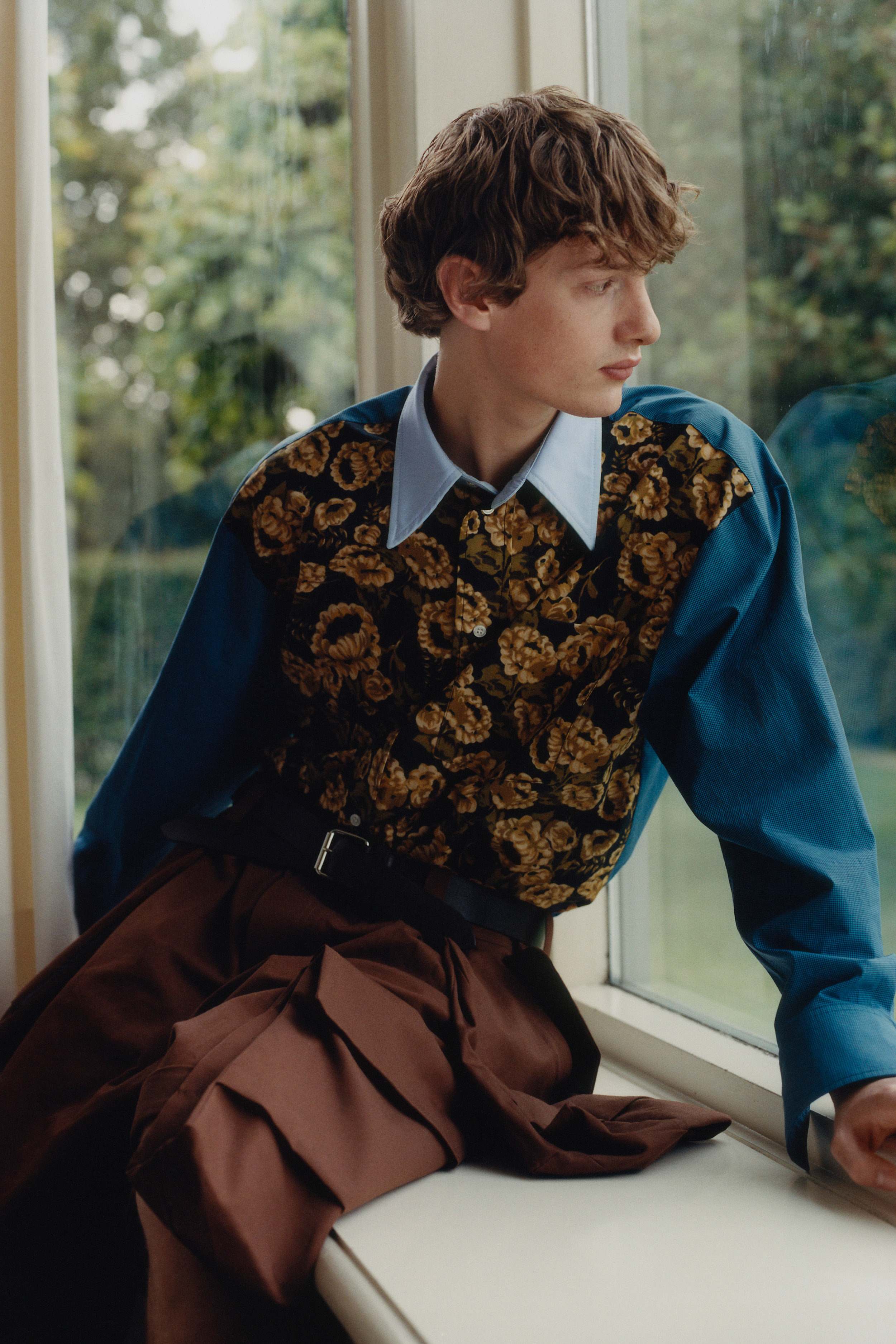
Meryll Rogge presented her Spring/Summer 2027 collection on June 24 at the official residence of the Belgian Ambassador in Paris. The format was a site-specific installation inspired by Claes Oldenburg’s Mouse Museum.
The installation placed everyday objects, books and garments together without hierarchy. Folded, stacked and arranged alongside photography by Julie Greve, the pieces became part of a larger visual system of references. The collection was presented through accumulation rather than spectacle, allowing the viewer to read the clothes in relation to objects, images and gestures.
Rogge’s presentation stood out for its control of scale. It avoided the drama of a runway and focused instead on proximity: how a garment sits among the objects that surround it, and how references become part of a wardrobe before they become visible on the body.
EGONLAB
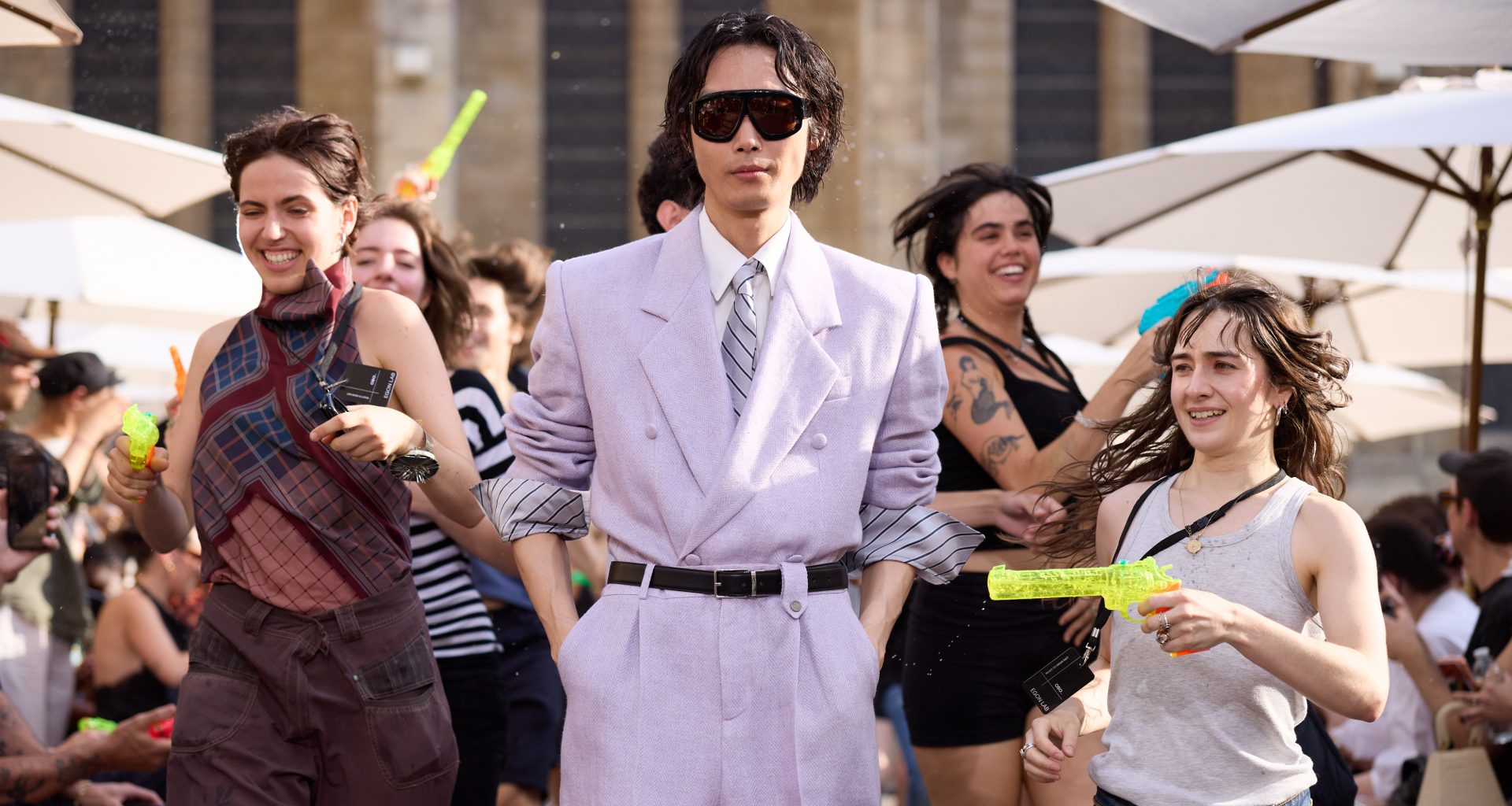
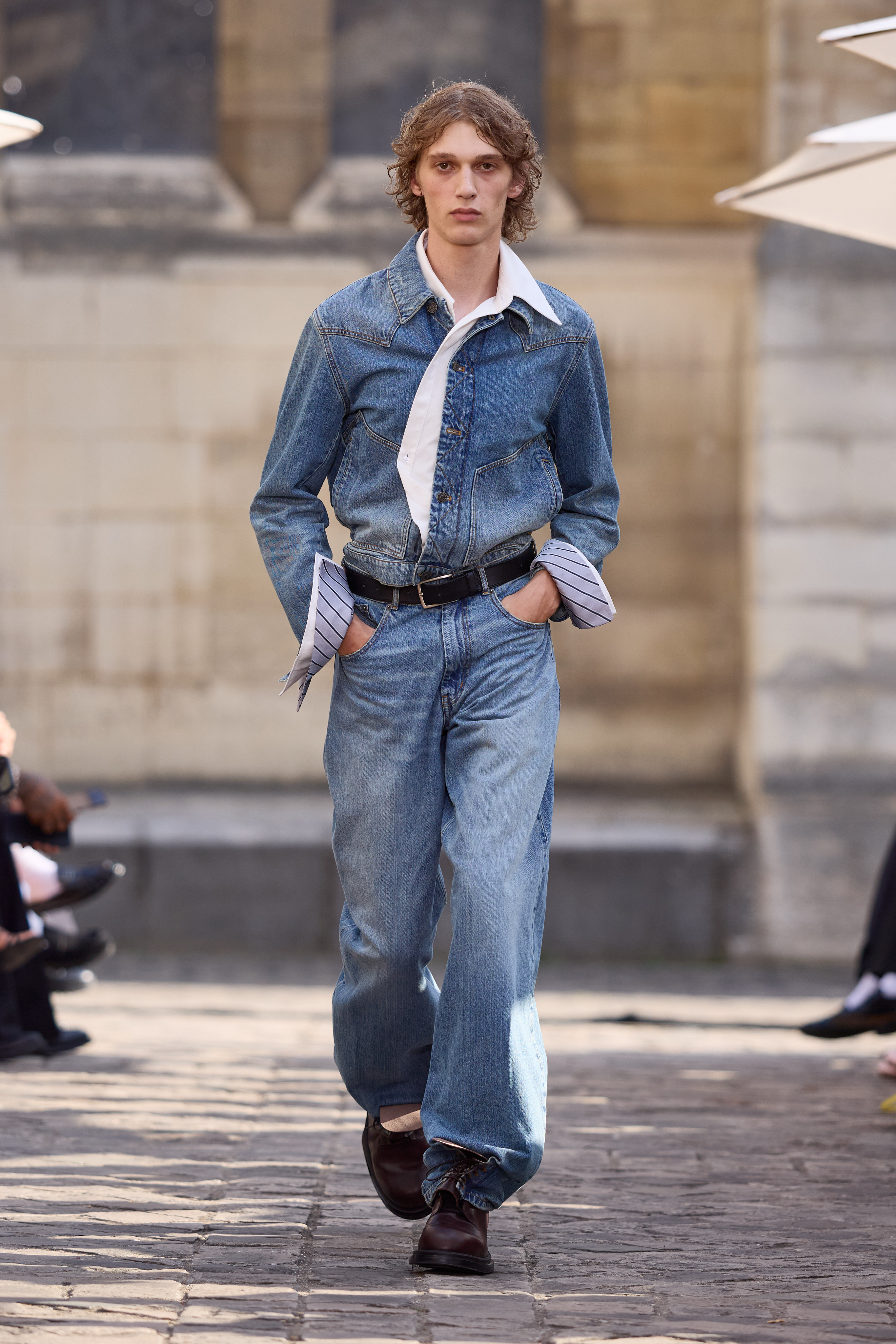
EGONlab presented Ataraxia on June 24. Designed by Florentin Glémarec and Kevin Nompeix, the collection addressed anxiety, uncertainty and the need for clothing to act as a form of reassurance without becoming defensive.
The designers used the idea of liminal spaces, a visual language associated with empty corridors, digital communities and suspended environments. In the collection, that reference appeared through garments caught between states. A denim jacket revealed a lining shaped like a poplin collar. Shirts suggested transitions between formal and technical clothing. A track jacket created the illusion of a second garment at the waist.
Tailoring remained central, though it was made lighter. Blazers sat close to the body, jackets were tucked into trousers and shorts, and the waist became a point of emphasis. The collection also introduced an EGONlab x Eastpak collaboration, translating the brand’s interest in proportion and gender-fluid dressing into functional bags with trolley loops, laptop sleeves, belt attachments and enlarged volumes.
At the end of the show, water guns appeared around the tailored looks, a gesture that matched the mood of a Paris week marked by extreme heat. It gave the finale a sudden change in tone, cutting through the collection’s controlled silhouettes with humor and physical immediacy.
YOKE
YOKE presented its Spring/Summer 2027 collection, Dépaysement, with Meret Oppenheim as a central reference. Drawing from the Surrealist idea that an object can become something else when removed from its usual context, the collection focused on the transformation of texture.
The strongest pieces played with the gap between what the eye recognizes and what the material actually is. Leather was made to resemble denim through embossing and discharge-dyeing, while lightweight cupro was treated to carry the richness of corduroy. Materials usually associated with autumn and winter, including fur, long-pile fabrics, leather and wool, were moved into a Spring/Summer setting.
YOKE also continued to blur the line between menswear and womenswear, allowing both to merge into a more fluid wardrobe. The result was quiet but precise: a collection built around dissonance, craftsmanship and the strange familiarity of objects seen differently.
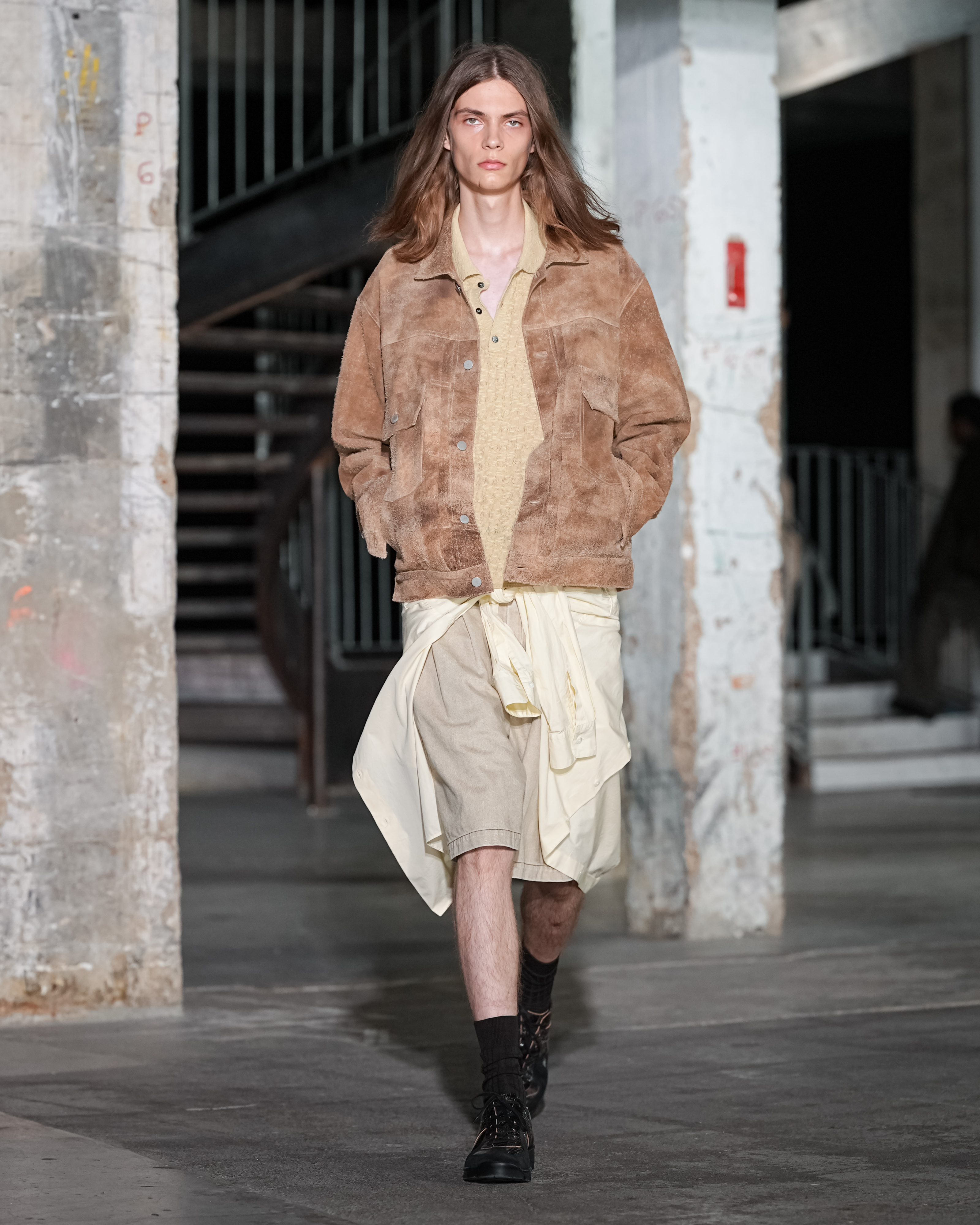
A Calendar Built Around Different Forms
Across the first three days of Paris Men’s Fashion Week SS27, several emerging brands used the calendar to test different ways of presenting menswear. Études Studio worked through art and urban space. Beautiful People used construction as self-examination. Meryll Rogge turned the wardrobe into an installation. EGONlab used tailoring to address uncertainty. YOKE approached texture as a form of transformation.
The strongest work came from brands with a precise point of view. The first days of the Paris calendar did not produce one dominant direction. They showed designers using different formats to ask what menswear can hold: art history, anxiety, commerce, installation, technology, craft and the habits of daily dressing.