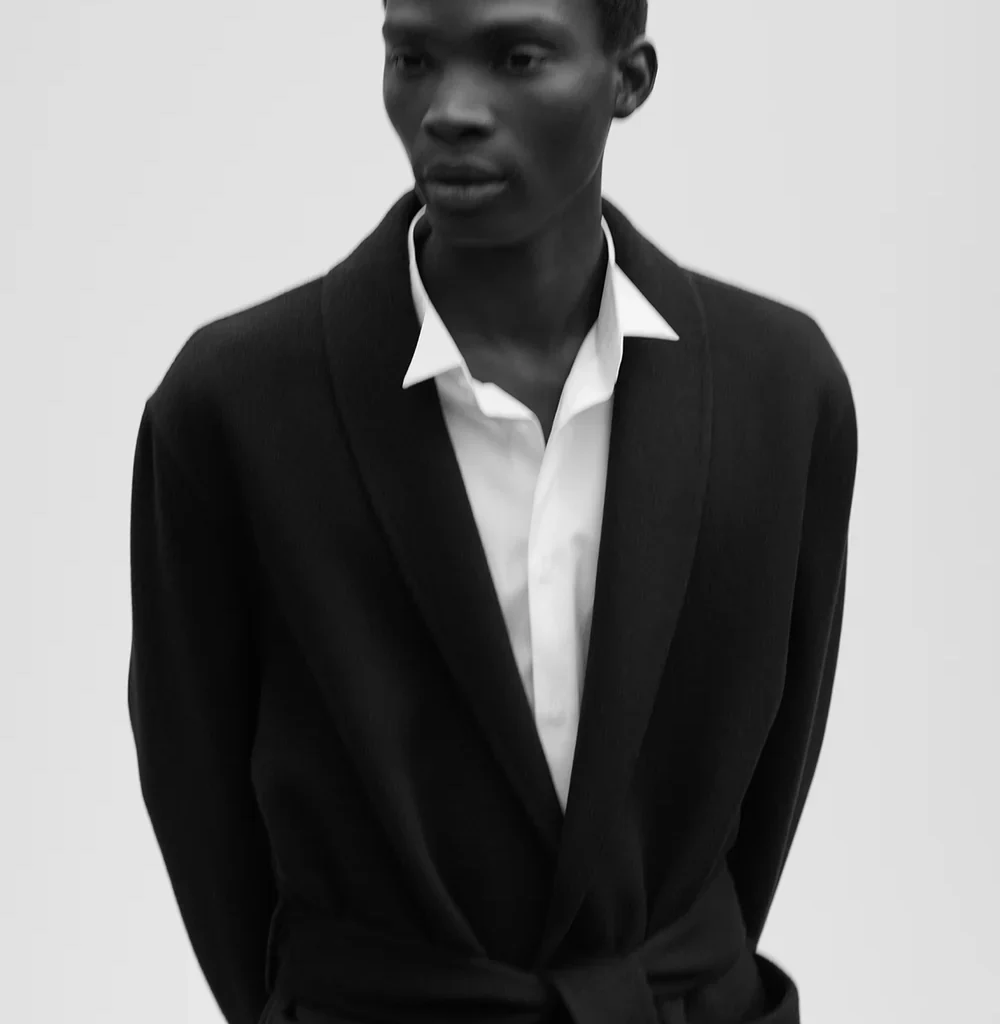
TOTEME MEN AND THE FIRST CHAPTER OF A NEW WARDROBE
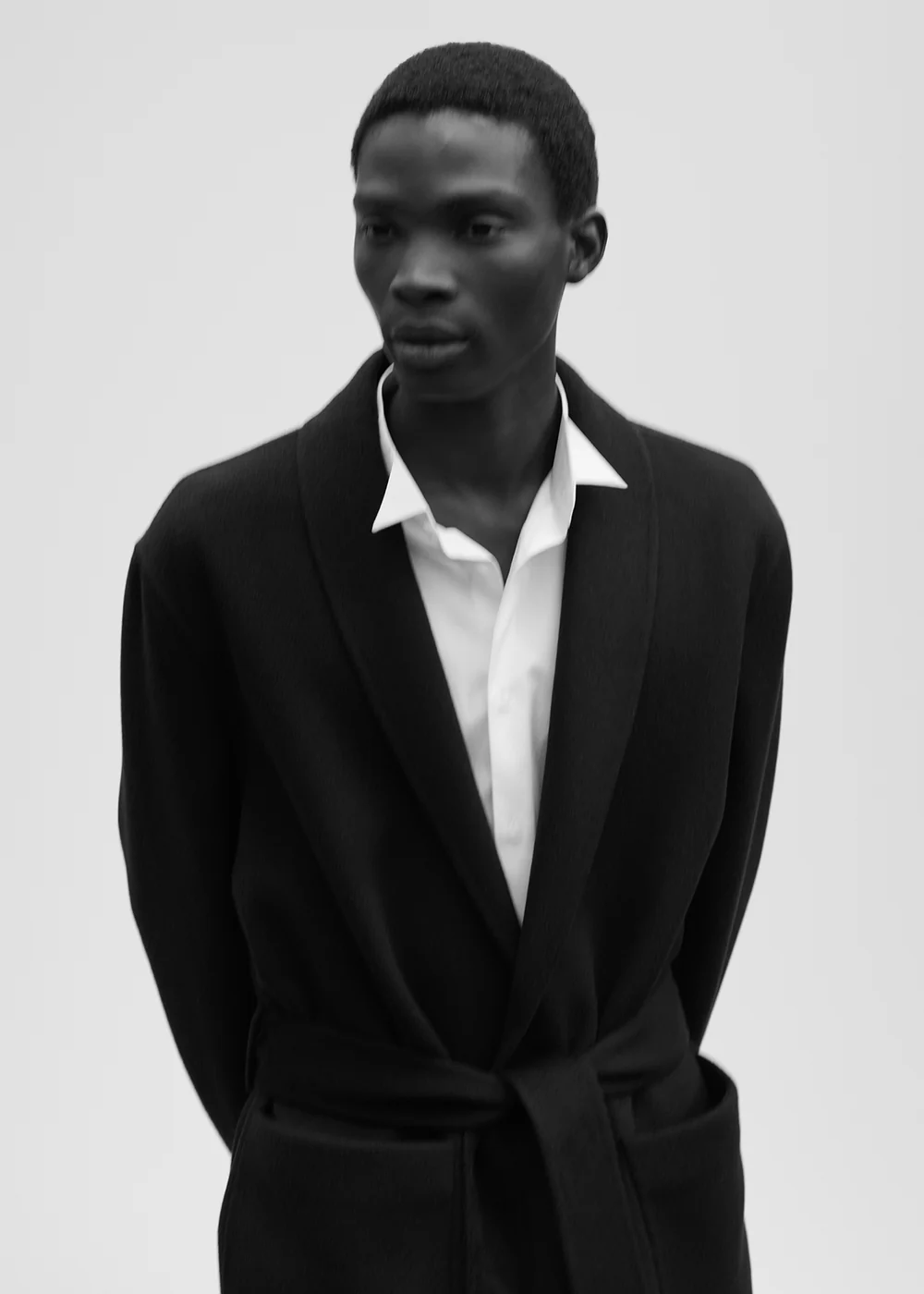
“One is not born, but rather becomes, a woman.”
— Simone de Beauvoir, The Second Sex, 1949
What if the same could be said of a man?
For centuries, masculinity has been dressed before it has been defined.
The suit. The uniform. The leather jacket. The polished shoe. The broad shoulder. The watch. The status symbol. We inherited these codes long before we understood them. We learned to recognise the man before we learned to become one.
And fashion, naturally, was part of the lesson.
Clothes taught us what power looked like. What rebellion looked like. What success looked like. Even what silence looked like.
But somewhere between the collapse of old dress codes and the explosion of new ones, something shifted. Gender became less of a fixed costume and more of a language. Masculinity could soften, expand, contradict itself.
Then came the age of aesthetics.
Old money. Clean girl. Mob wife. Indie sleaze. Office siren. Quiet luxury.
Every few weeks, a new identity arrives with its own uniform, references and mythology. We choose a version of ourselves, wear it, photograph it, move on.
Perhaps this is why the idea of a uniform feels strangely radical now.
Not one imposed from above.
One chosen from within.
And this is precisely where TOTEME MEN enters the conversation.
Not with a manifesto shouted from a runway. Not with a celebrity army. Not with another desperate attempt to make masculinity “cool”.
The Swedish house has simply opened the door and placed a wardrobe inside.
Its first men’s collection, Fall Winter 2026, spans ready-to-wear, footwear and accessories, developed over more than a year with Swedish designer Alexander Häggblad alongside Karl Lindman.
It is the first men’s chapter of a house that has spent years refining a very particular idea of dressing: repetition over reinvention, proportion over spectacle, recognition over noise.
And somehow, the quietest entrance feels like the loudest.
Because TOTEME is not really entering menswear.
TOTEME is entering masculinity.
The house has always understood something fashion tends to forget: the most powerful clothes aren’t necessarily the ones that transform you.
Sometimes they’re the ones that make you feel like you were already yourself.
Founded by Elin Kling and Karl Lindman, TOTEME grew from Kling’s intensely personal relationship with clothes into something larger: a system of dressing built around proportion, material, repetition and memory.
The coat becomes a coat again.
The trouser becomes a trouser again.
The knit becomes a knit again.
But something shifts every time.
A shoulder. A texture. A proportion. A line.
This isn’t fashion as constant reinvention.
It’s fashion as editing.
And perhaps that’s why TOTEME feels so relevant now, in a culture that rarely edits anything.
Pierre Bourdieu understood that taste is never simply taste. It is a form of social language, a way of locating ourselves without necessarily saying a word.
For decades, luxury made that language obvious.
The logo became the sentence.
TOTEME removes the sentence.
What remains is the accent.
A long coat. A generous trouser. A beautifully cut shirt. Knitwear that doesn’t need to announce itself.
The kind of clothes whose value becomes visible only if you know what you’re looking at.
And that is the paradox of contemporary luxury:
the less it needs to prove, the more cultural knowledge it can require.
The logo says:
I can afford this.
The perfect cut says:
I know why this matters.
TOTEME lives somewhere between the two.
This is why calling the brand “quiet luxury” feels almost lazy.
Quiet luxury was a trend.
TOTEME is a philosophy.
Its obsession is not silence for the sake of silence. It is methodic repetition: the belief that a wardrobe can become stronger by evolving rather than constantly starting over.
And when that philosophy moves into menswear, it becomes something even more interesting.
Because menswear has historically been obsessed with performance.
The powerful man.
The successful man.
The dangerous man.
The rich man.
The rebellious man.
The cool man.
TOTEME proposes something almost suspiciously different:
the man who doesn’t need to perform being a man.
There is softness here.
Not weakness.
Softness.
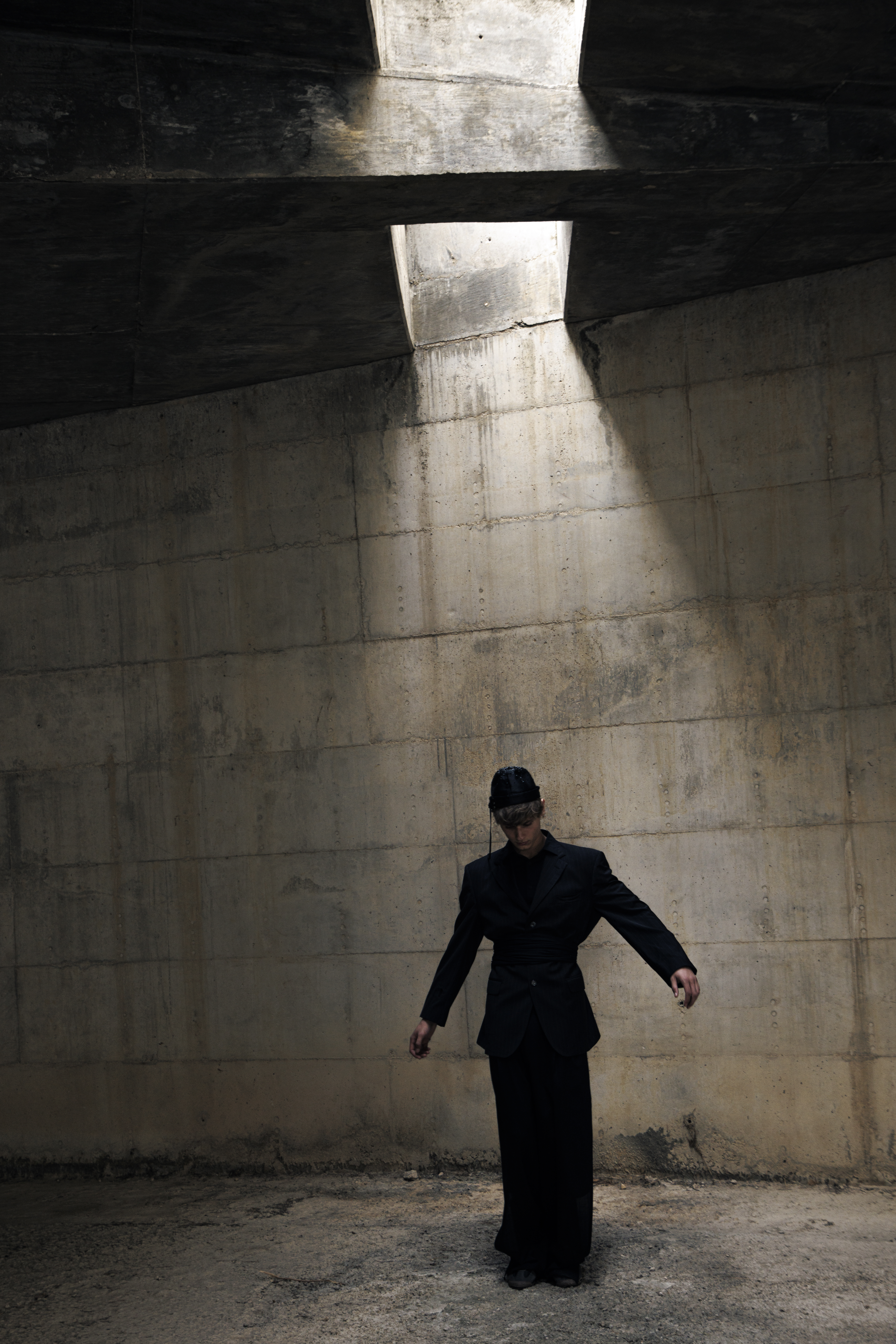
The silhouette breathes. The body isn’t squeezed into authority. Tailoring becomes architecture rather than armour.
A coat becomes volume.
A trouser becomes movement.
A knit becomes texture.
A shoe becomes punctuation.
The body becomes architecture.
And there is something quietly radical about a luxury house creating menswear without making the man the centre of attention.
The collection doesn’t scream:
LOOK AT THE MAN.
It asks you to look at the relationship between the man and what surrounds him.
Perhaps masculinity doesn’t need to become louder.
Perhaps it simply needs more room.
There is another beautiful contradiction inside TOTEME.
Elin Kling emerged from one of the earliest forms of fashion internet culture: the personal style blog. She helped establish a world in which a woman’s wardrobe could become media, identity could become content and personal taste could become influence.
TOTEME is almost the afterlife of that idea.
The influencer becomes the institution.
The personal style becomes a house code.
The feed becomes a world.
And now that world has a man in it.
Not a male version of the TOTEME woman.
Not a translated collection with bigger shoulders and deeper pockets.
A new participant in the same cultural system.
The first TOTEME man doesn’t arrive to create a new tribe.
He arrives to prove that the tribe no longer needs to be visible.
The collection has been deliberately slow in the making. Häggblad has reportedly worked with Lindman on the men’s project since March 2025, giving the debut something increasingly rare in contemporary fashion:
time.
This isn’t a token capsule.
It’s a wardrobe.
And the strategy reflects the same restraint. Controlled access, a carefully constructed digital presence, and a debut presented by MR PORTER as the Swedish label’s first men’s collection.
No need to scream when anticipation is already doing the work.
Perhaps this is where TOTEME’s real power lies.
In a culture addicted to novelty, recognition can be more powerful than surprise.
A TOTEME piece doesn’t necessarily need to make you ask:
What is that?
It wants you to look twice.
Then remember.
Then recognise it again six months later.
Then five years later.
That’s how an icon happens.
The Scarf Jacket didn’t become powerful because it screamed for attention. It became powerful because it created a shape people remembered.
The men’s collection now faces the same challenge.
Not to create more clothes.
To create the next thing you cannot unsee.
If TOTEME succeeds in menswear, it won’t simply have expanded its customer base.
It will have completed a much larger transformation:
from women’s label to fashion house.
From personal style to collective language.
From wardrobe to worldview.
From what do I wear? to how do I want to exist?
The first TOTEME man might therefore be the most interesting kind of fashion character:
one who refuses to become a character at all.
He doesn’t need the uniform of wealth.
He doesn’t need the uniform of rebellion.
He doesn’t need the uniform of masculinity.
He has his own.
And maybe that’s what makes him so new.
Fashion has always promised freedom while quietly telling us what to wear.
TOTEME does something stranger.
It gives you fewer answers.
And somehow, that feels like more freedom.
Because perhaps the ultimate luxury isn’t being able to afford everything.
Perhaps it’s not needing everything.
The future of menswear might not belong to the man with the strongest aesthetic.
It might belong to the man who finally doesn’t need one.
Welcome to TOTEME MEN.