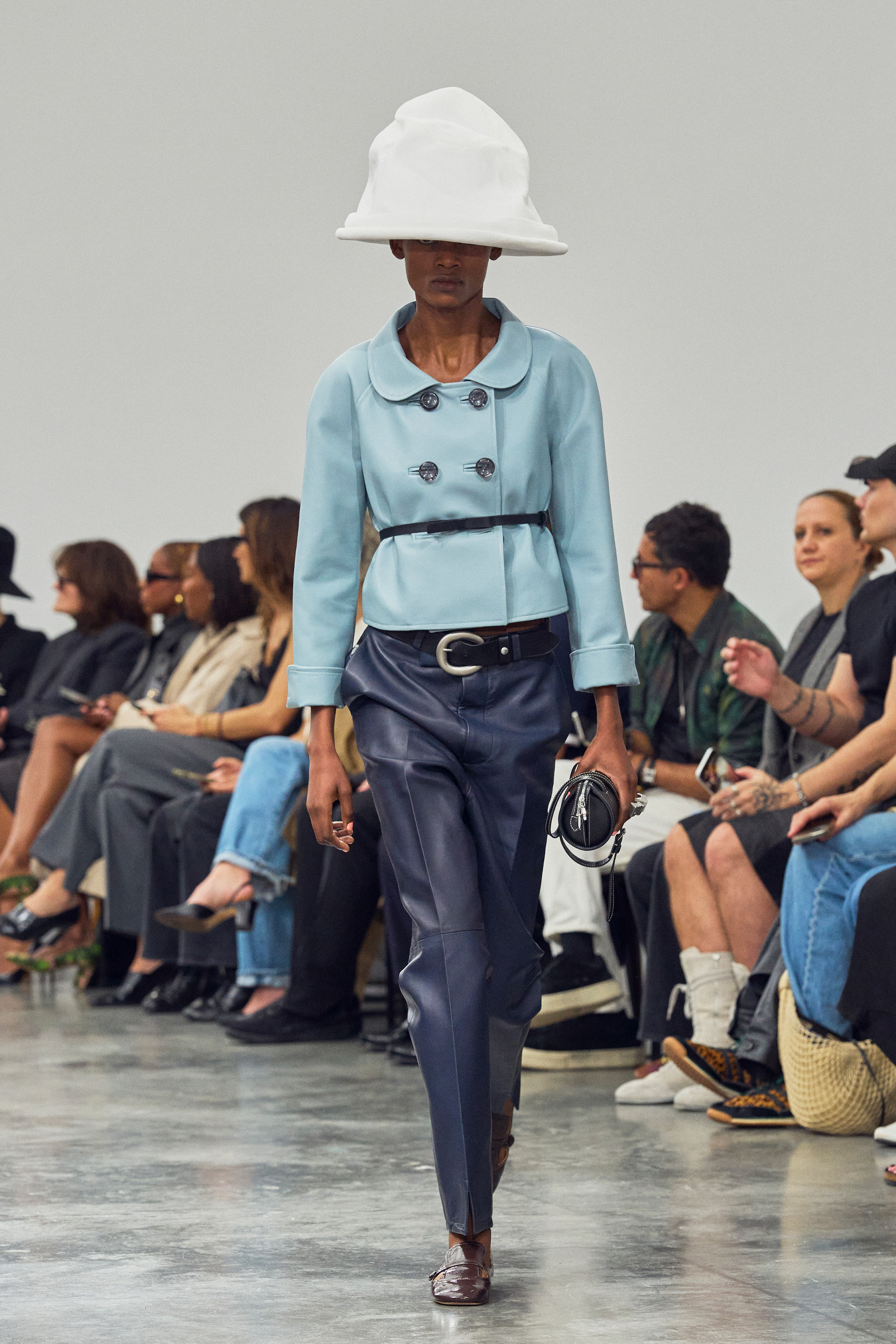
For Courrèges Spring/Summer 2027, Drew Henry doesn’t rewrite the house codes so much as loosen them. Belts are left hanging, tailoring frays at the edges, hats slump over the eyes and familiar Courrèges signatures return with a little more room to misbehave.
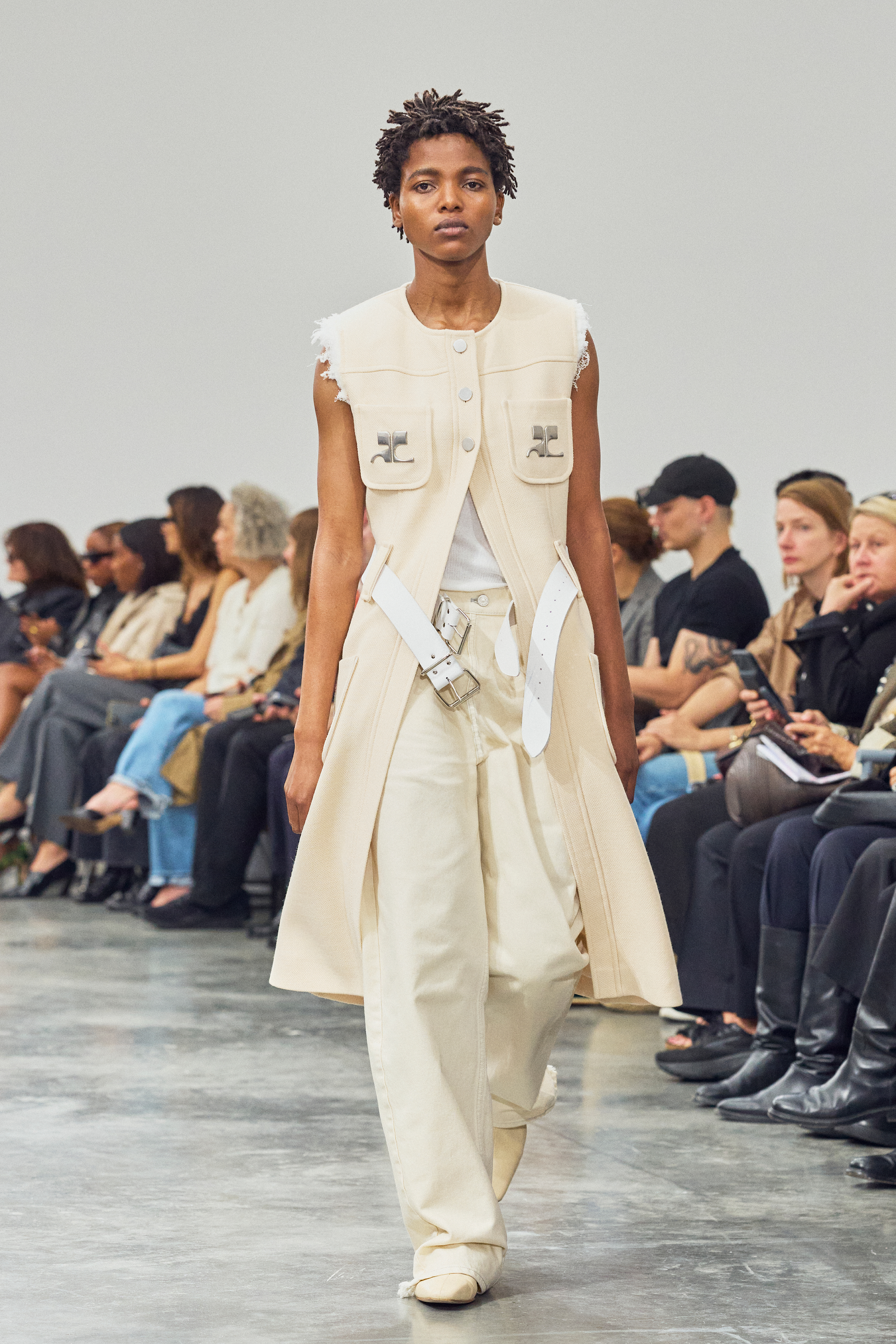
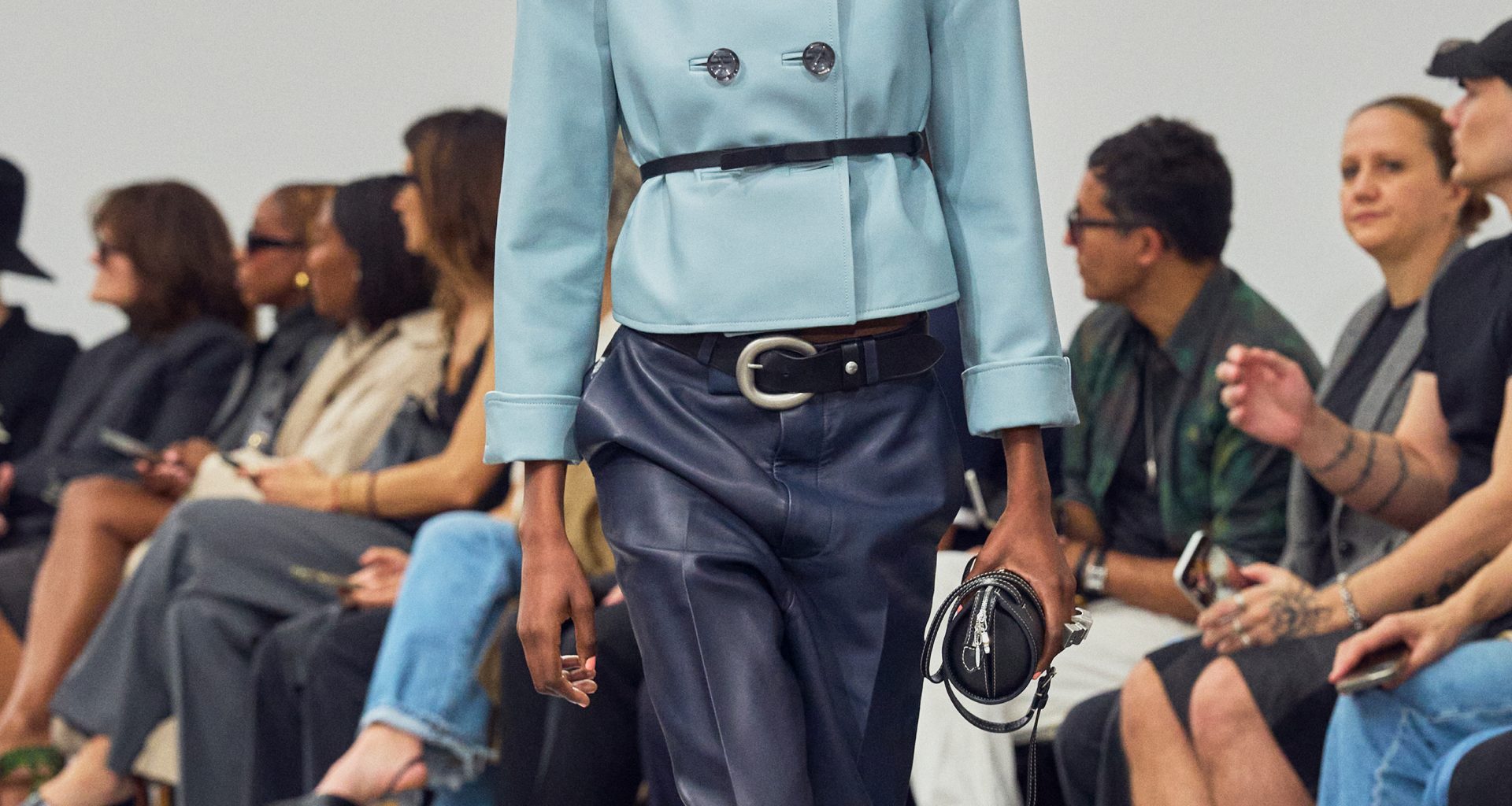
What really stood out from the opening look was not a particular garment, but the way Henry treated the belts. It wasn’t there to hold anything up. Instead, an open belt cut diagonally across a cream vest, hanging from the body almost like an afterthought. The second look repeats the gesture in navy, before the belts double up over a butter-yellow skirt suit. They look less like functional accessories than something you picked up, put on, but never bothered to put on properly.
That small act of getting something wrong sets the tone for Drew Henry’s first ready-to-wear collection for Courrèges. Presented at the Palais de Tokyo during Paris Fashion Week, the show is full of details that feel familiar to the house but slightly loosened, shifted or left unfinished. Henry was appointed Creative Director of Courrèges in March this year, stepping into the challenge of pushing the house forward and expanding its reach without losing the vocabulary that makes it Courrèges in the first place. For his debut, he doesn’t seem interested in rewriting that vocabulary. He knows the words already and is playing with the grammar of the house instead.
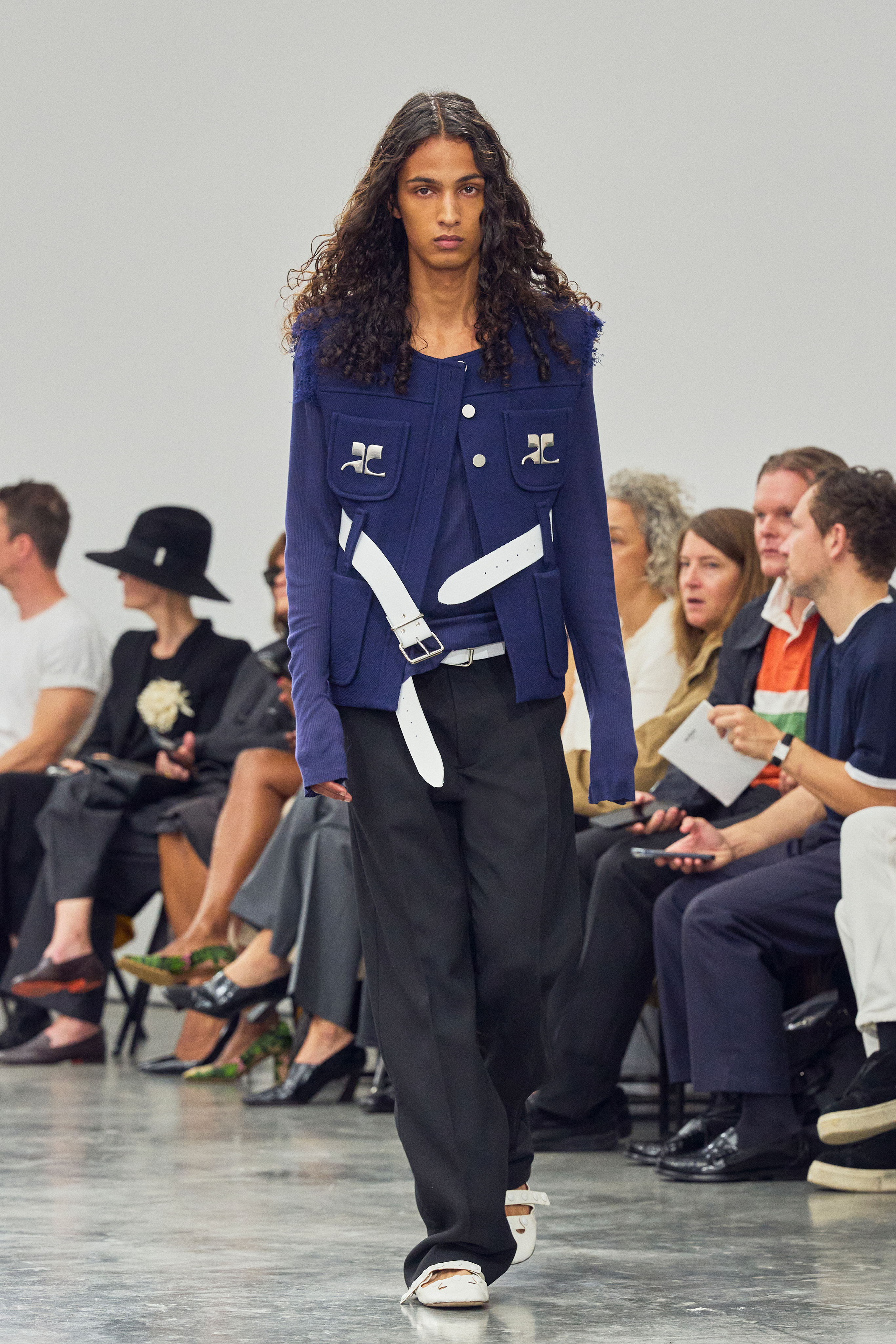
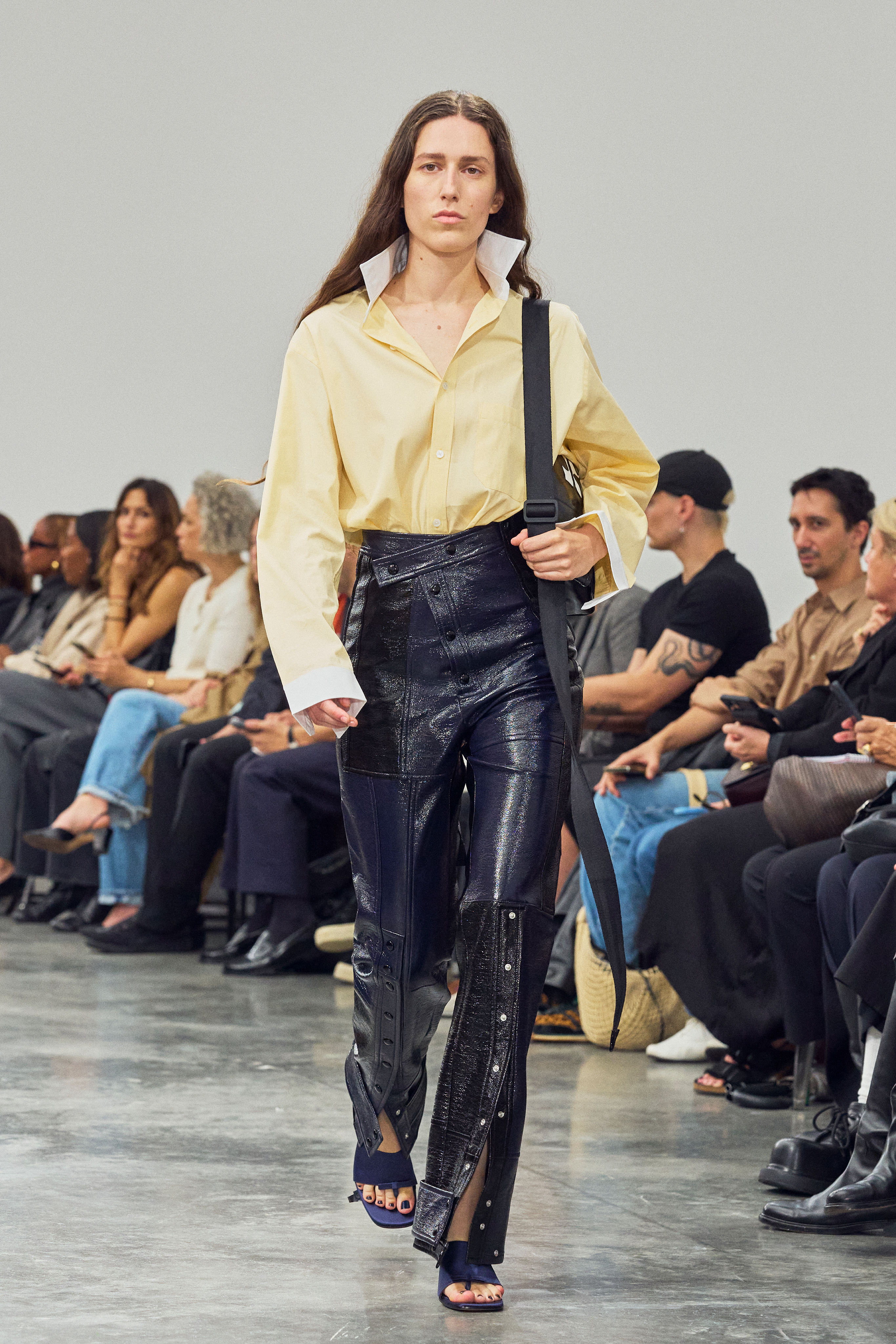
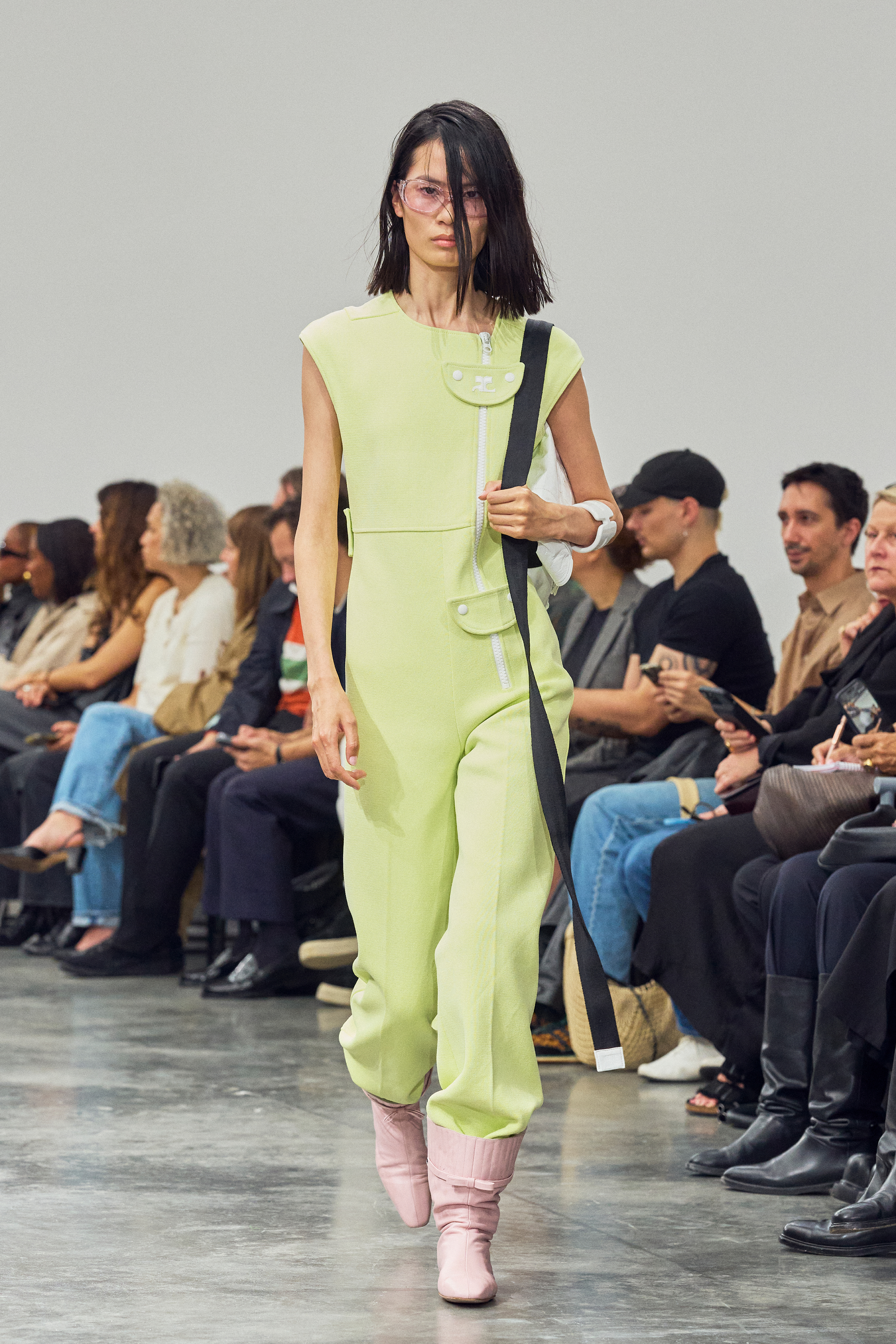
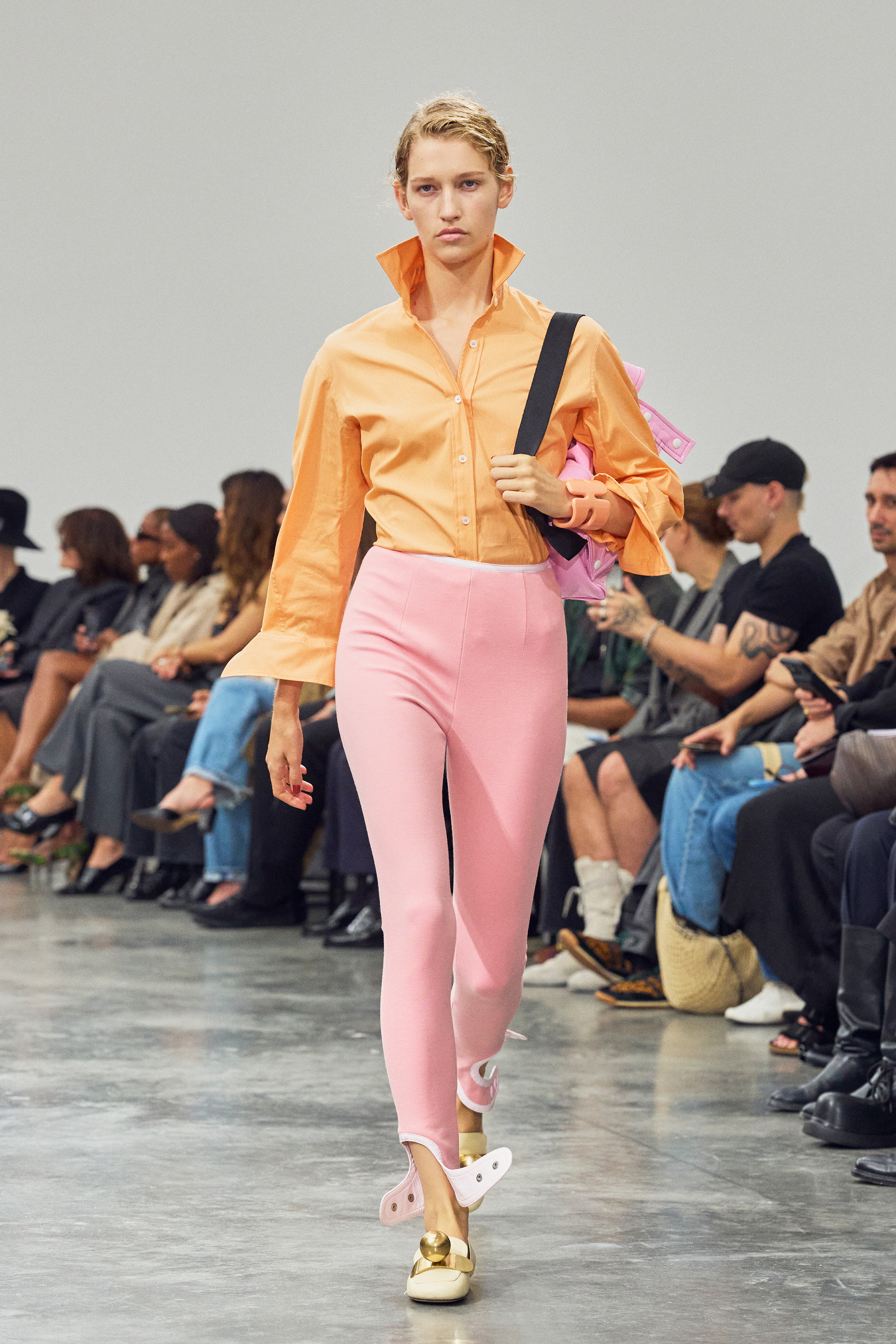
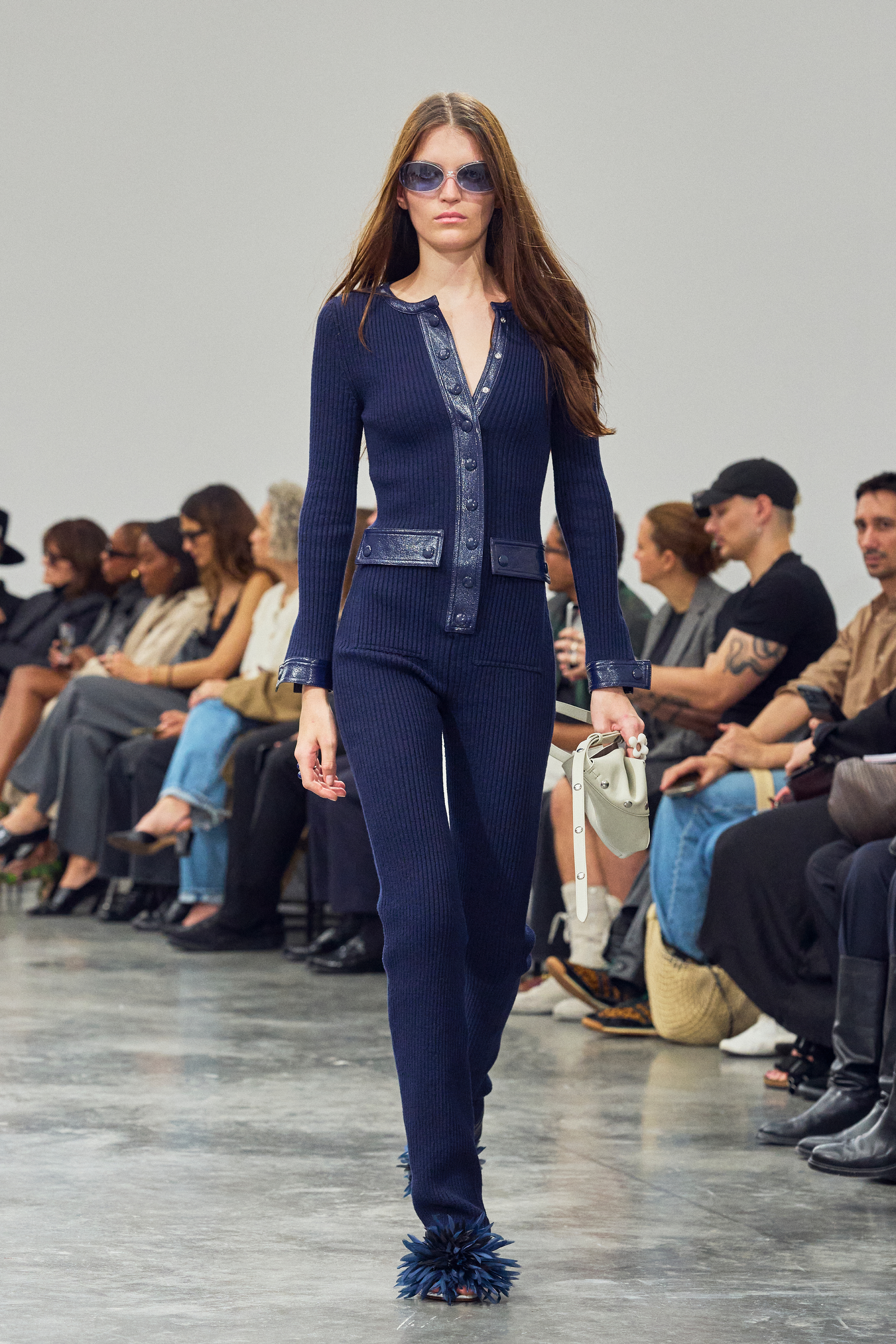
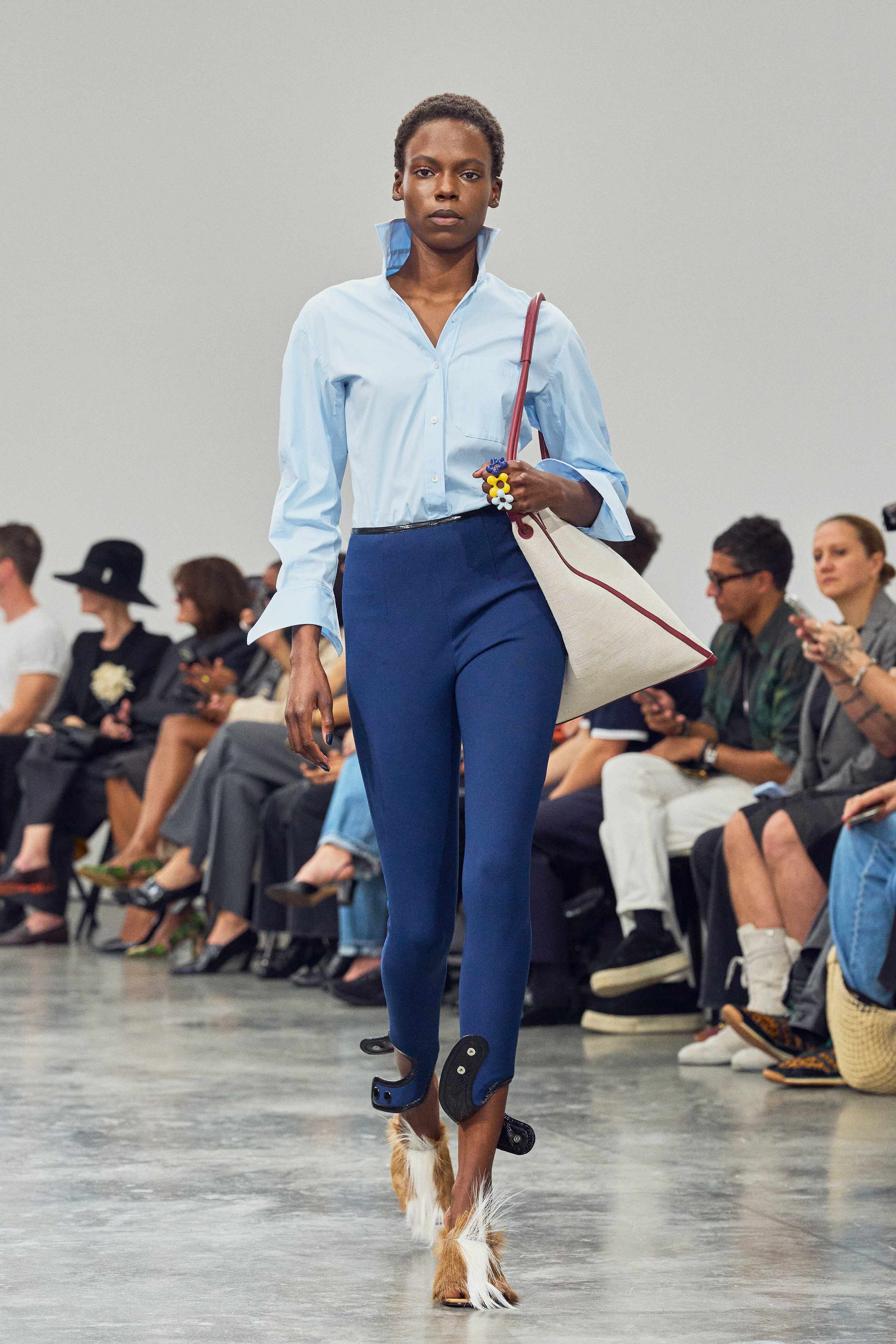
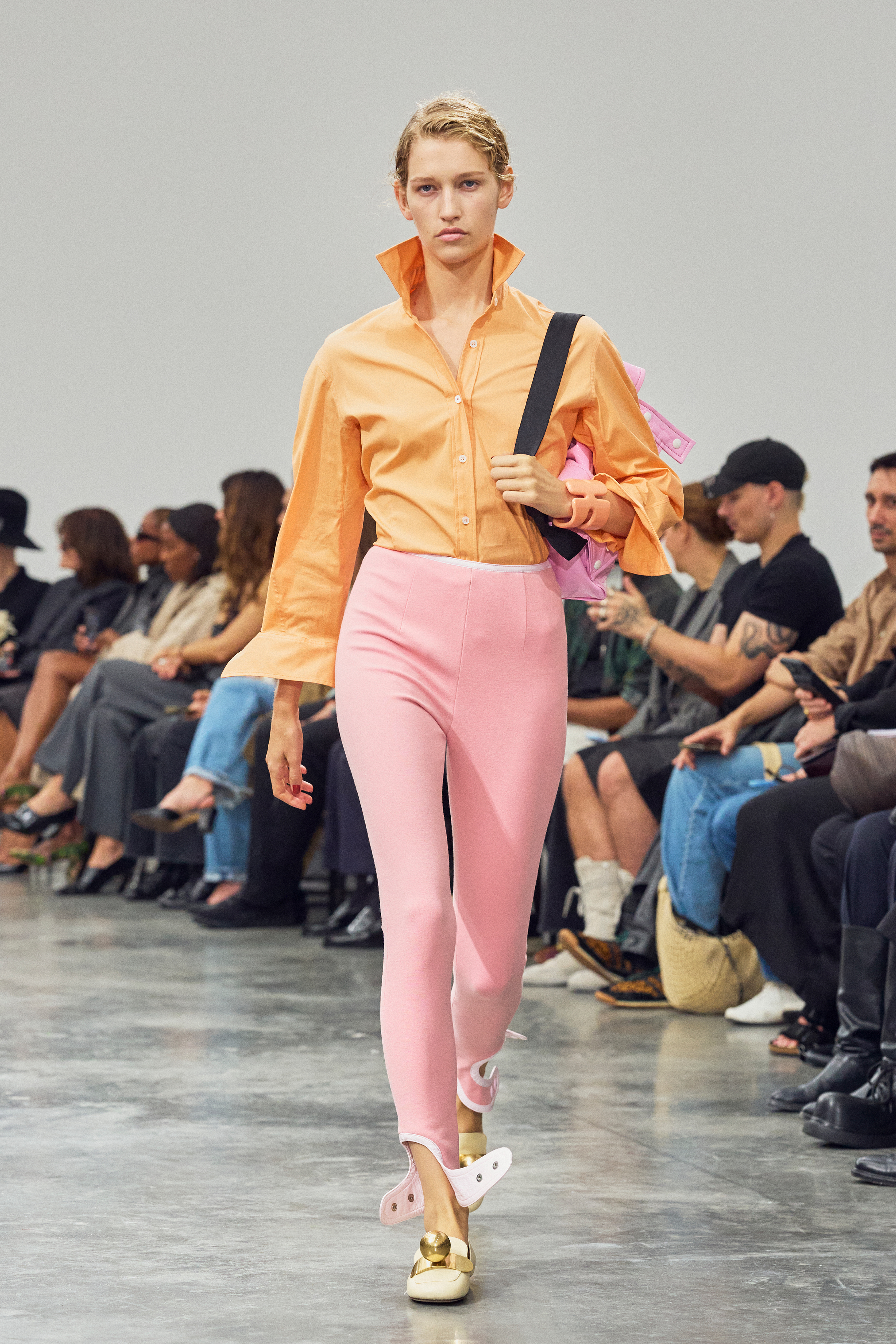
The house codes arrive early and clearly. Silver logo plaques sit on patch pockets. Snaps run down the legs of cream and navy patent trousers. The A-line shift makes its return, while zip-front pieces come with small curved flaps and stirrup leggings finish with curled hardware at the ankle. None of this feels like archival costume. These are recognisably Courrèges signatures, but Henry gives them room to move.
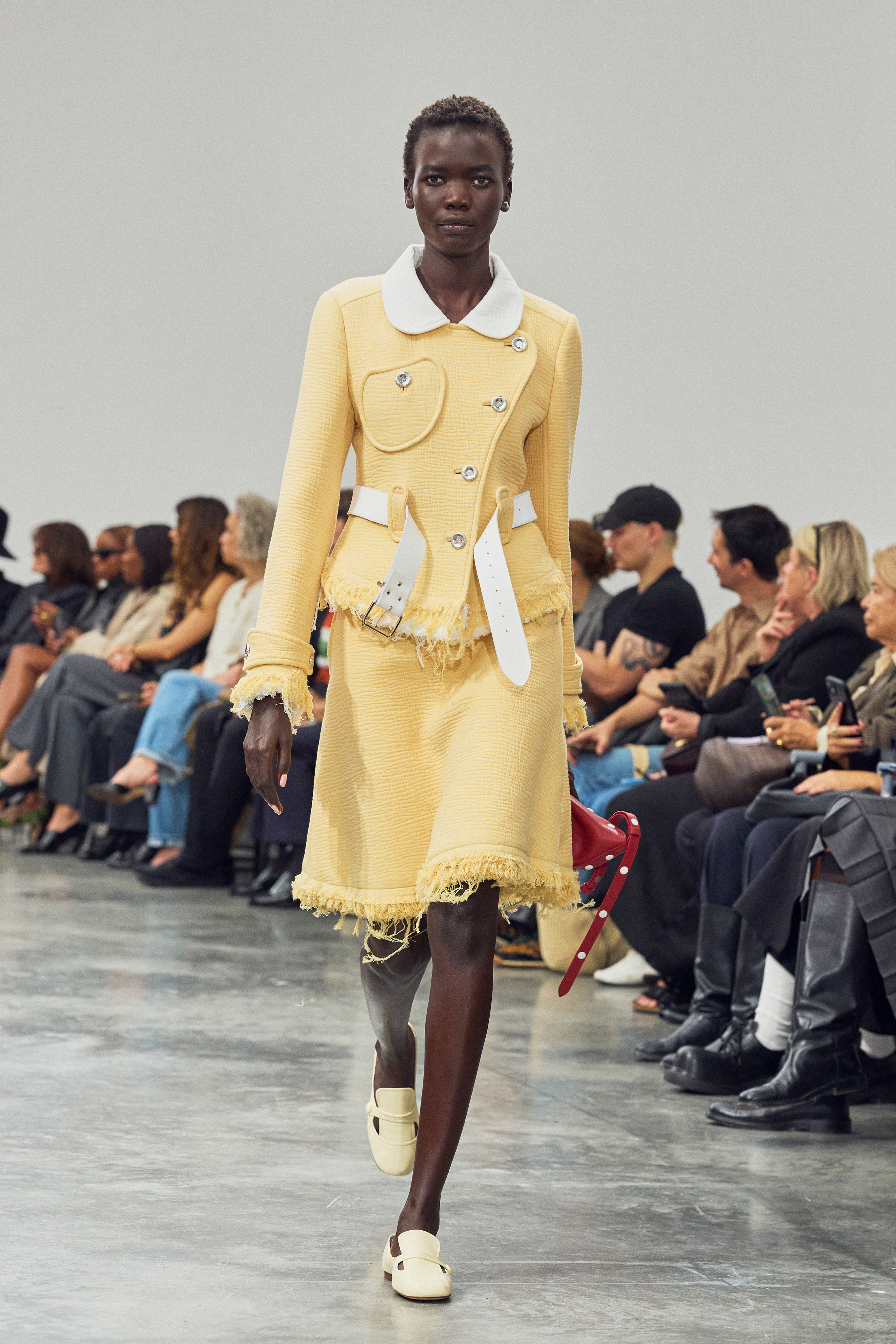
And then things start to come apart. Hems and cuffs dissolve into fringe on a two-tone green skirt suit, turning otherwise precise tailoring into something a little unruly. The sharpest tailoring moment comes in pale yellow: a jacket with a round white collar and an off-centre line of buttons, finished with fringe at the cuffs, hem and matching skirt. It looks like tailoring that has been through a long summer and decided it no longer needs to stay perfectly pressed.
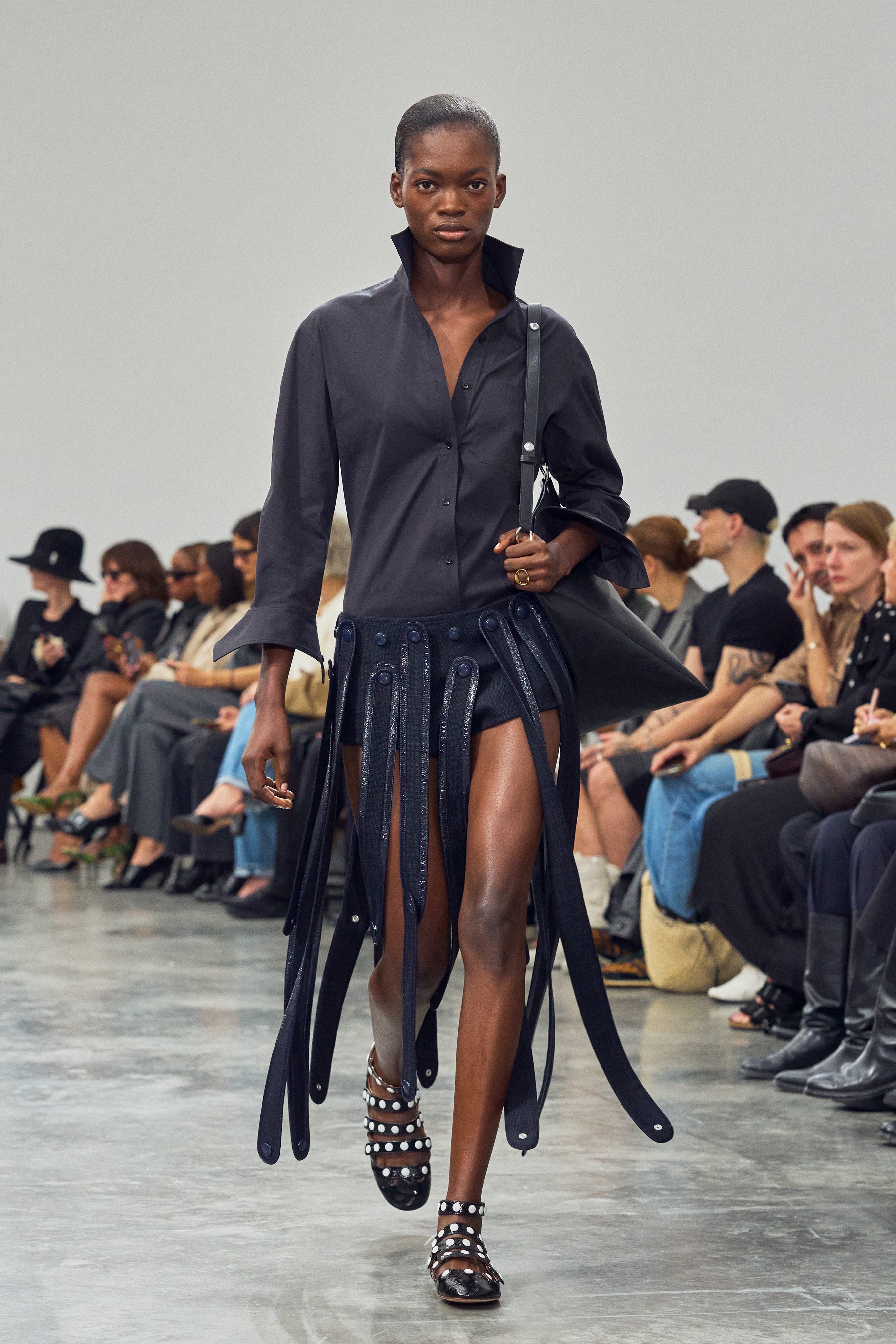
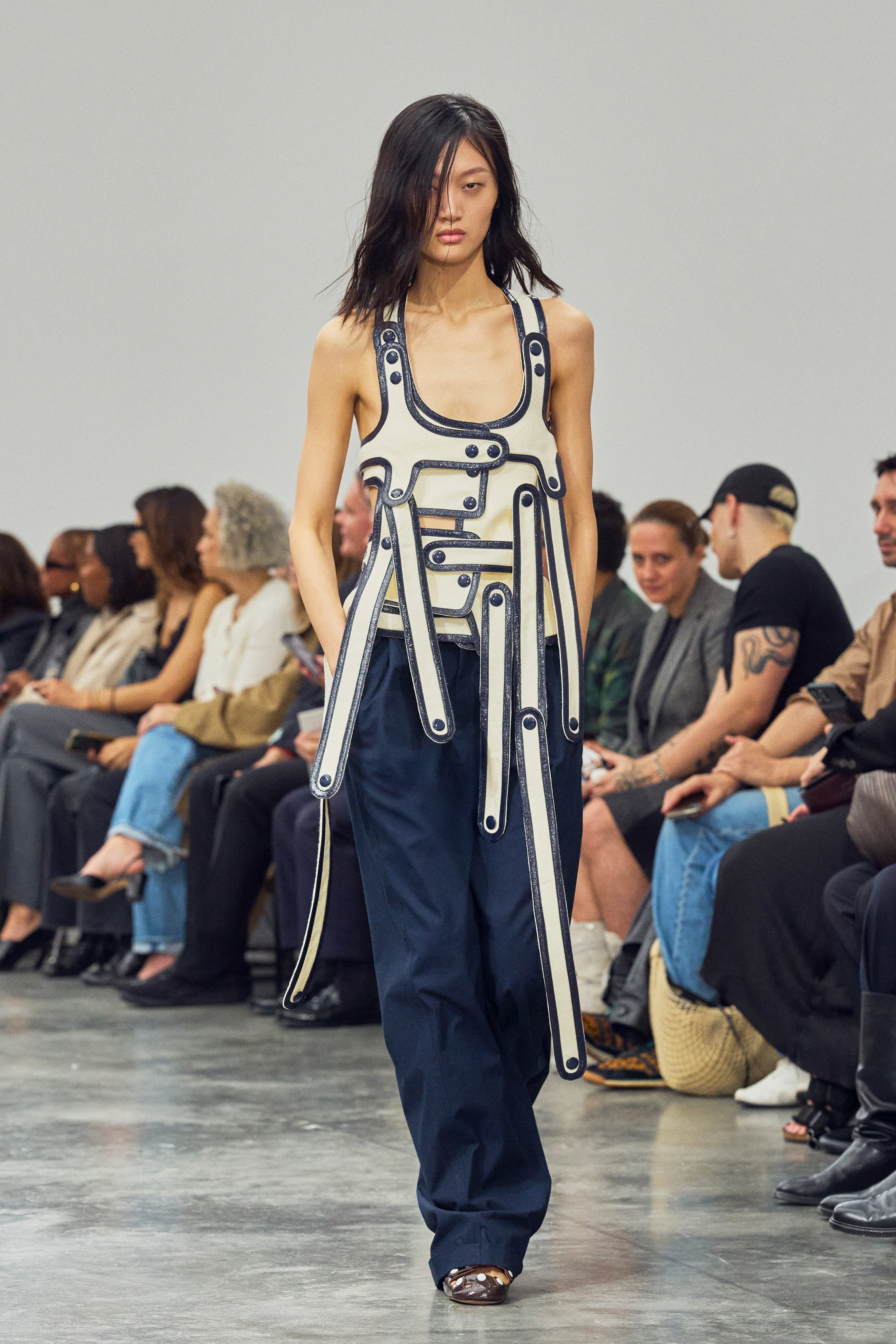
Navy belts hang from snaps on a skirt, recalling the dangling straps and military references of Napoleonic jackets, but stripped of their historical seriousness and rebuilt in Courrèges’ own language. The same construction returns as a top, almost like someone has taken the pieces apart and put them back together like Lego. That sense of assembly, of clothes being rearranged rather than simply worn,< becomes one of the collection’s more charming habits.
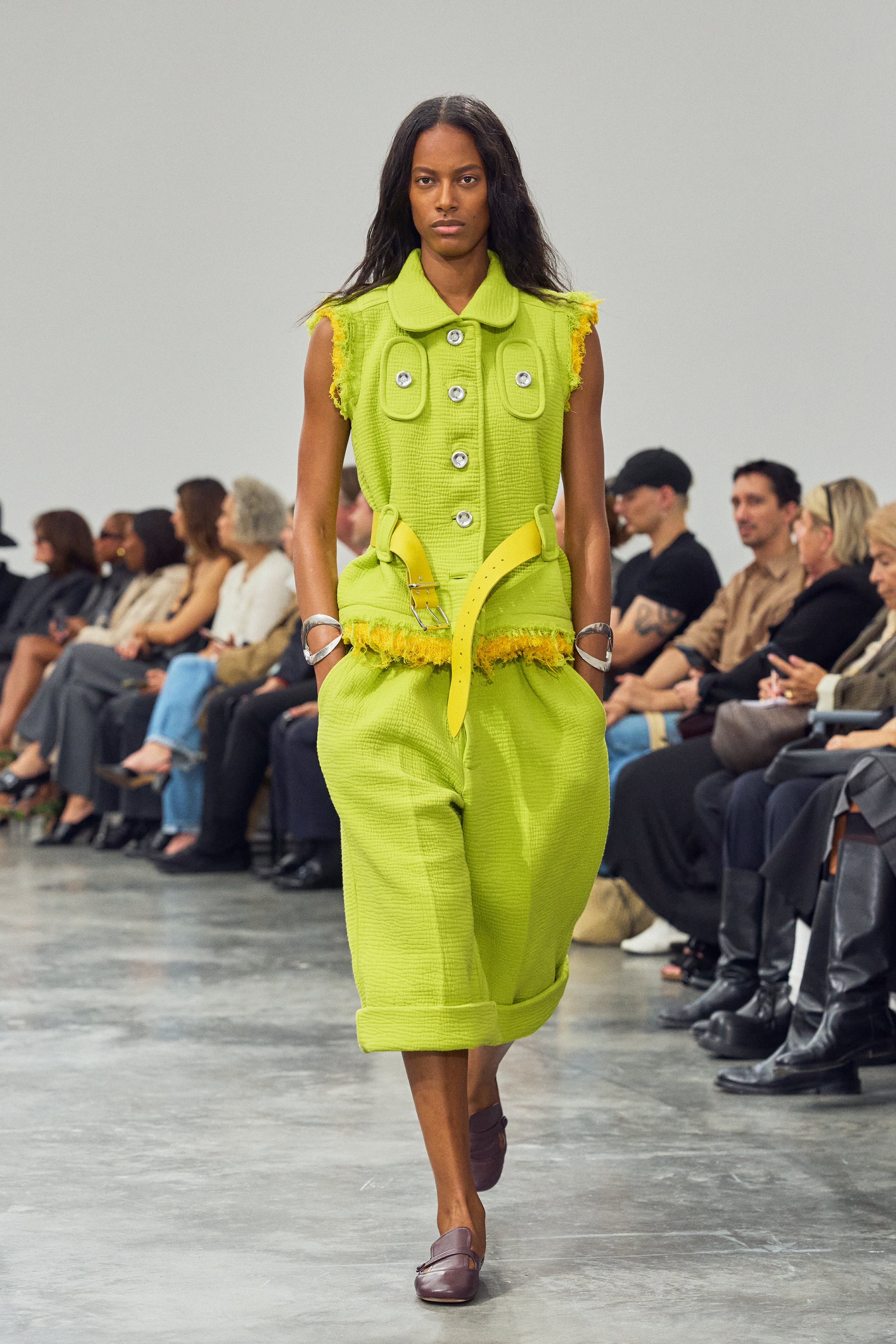
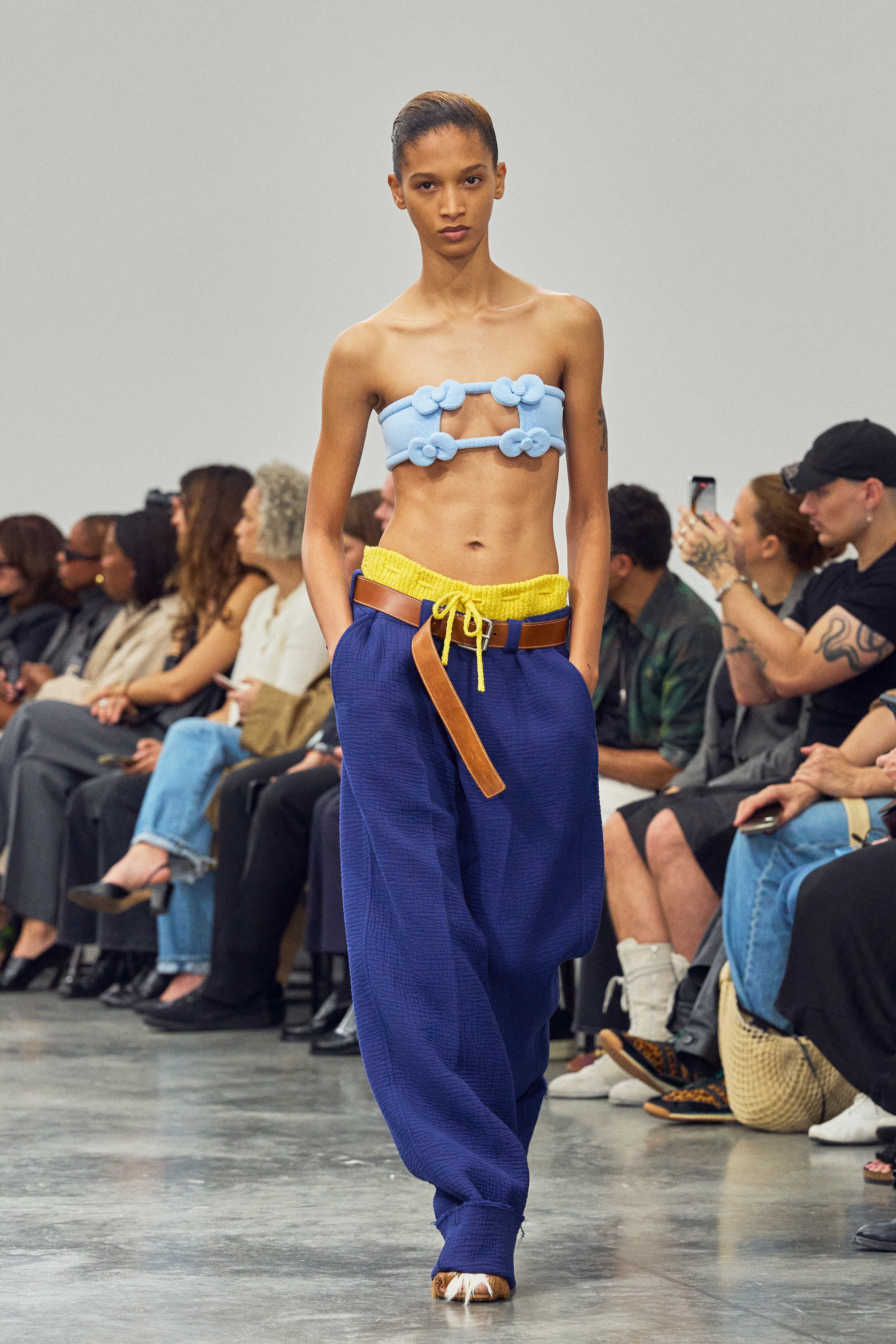
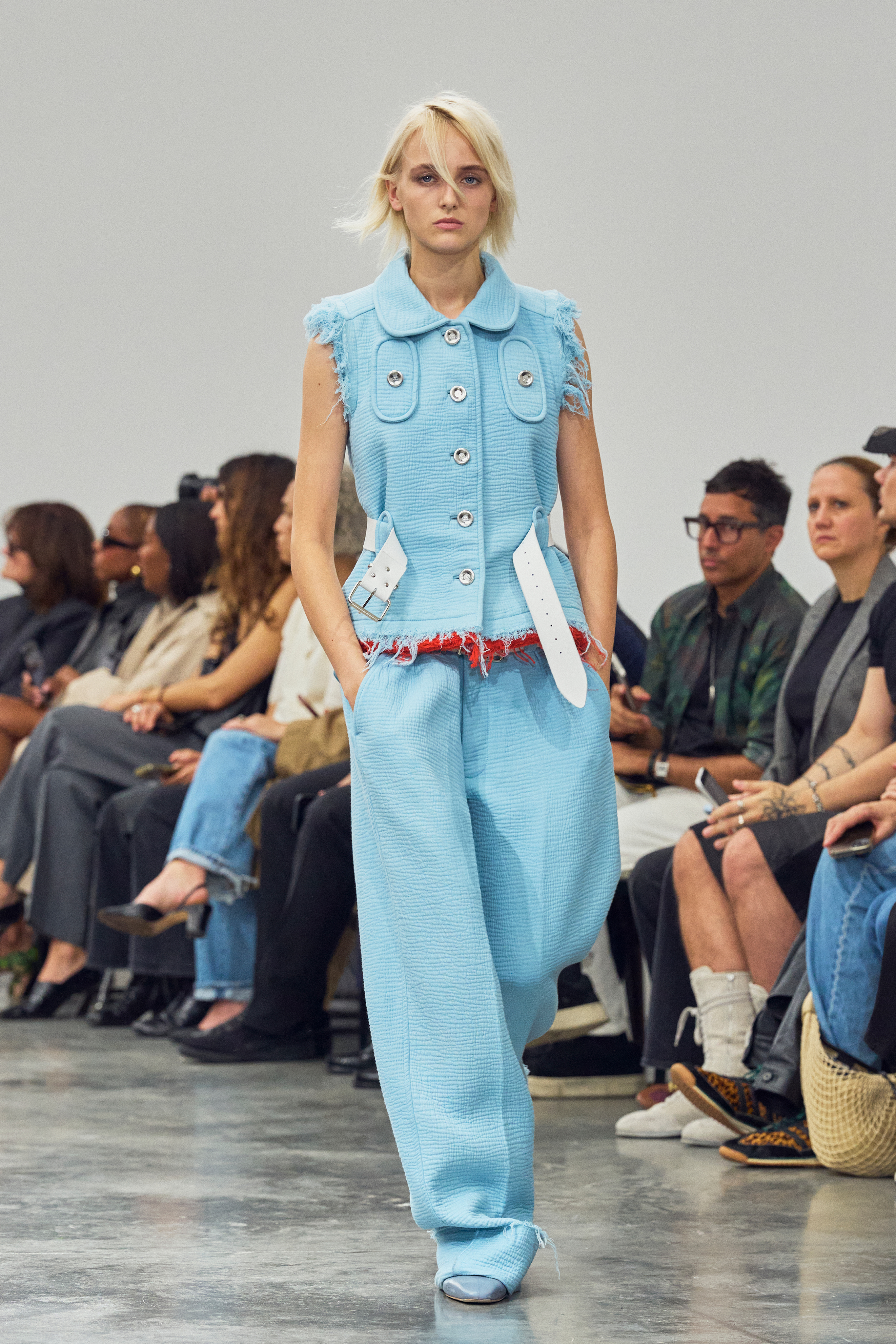
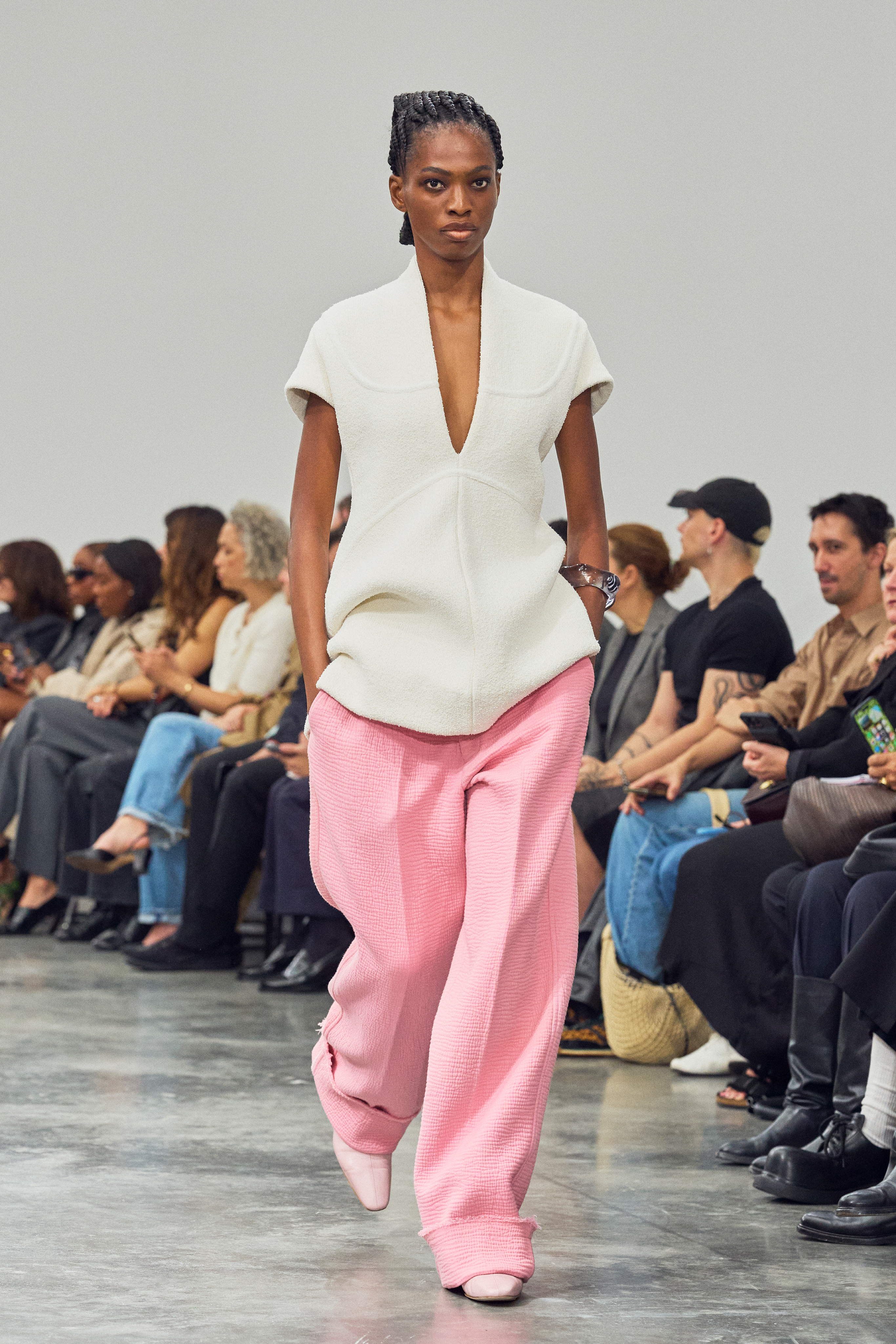
Texture does just as much work as shape. A crinkled, puckered fabric appears in lime, cobalt, pink and sky blue, pushed into soft, almost inflated volumes. The surface makes the clothes look slightly squashed, slightly swollen, as though the fabric has its own memory and isn’t particularly interested in lying flat.
Then comes the checkerboard. It keeps resurfacing in different forms: sheer and layered over cream and navy, beaded across a white top, sequinned into a red tunic which is the most interesting narrative.
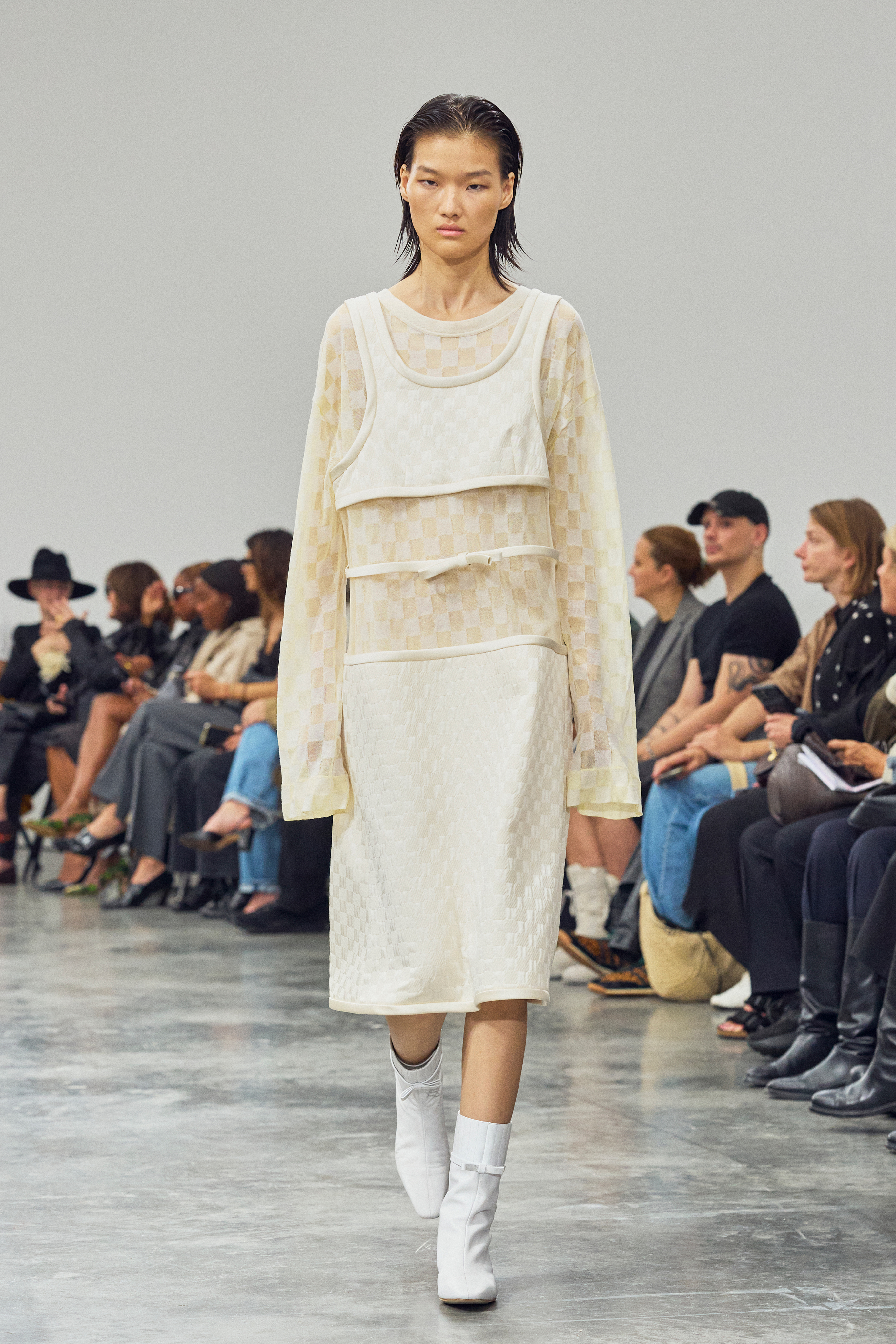
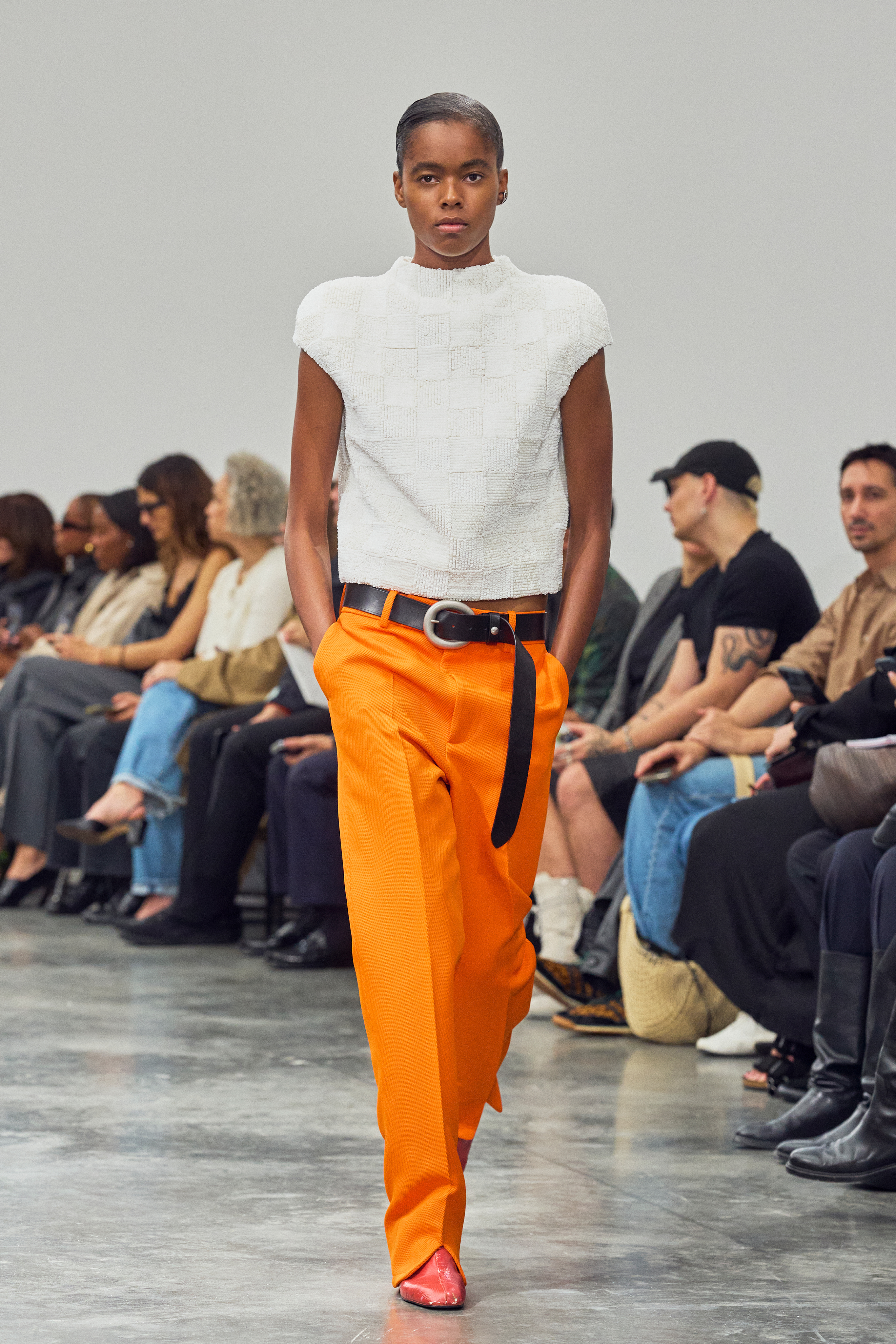
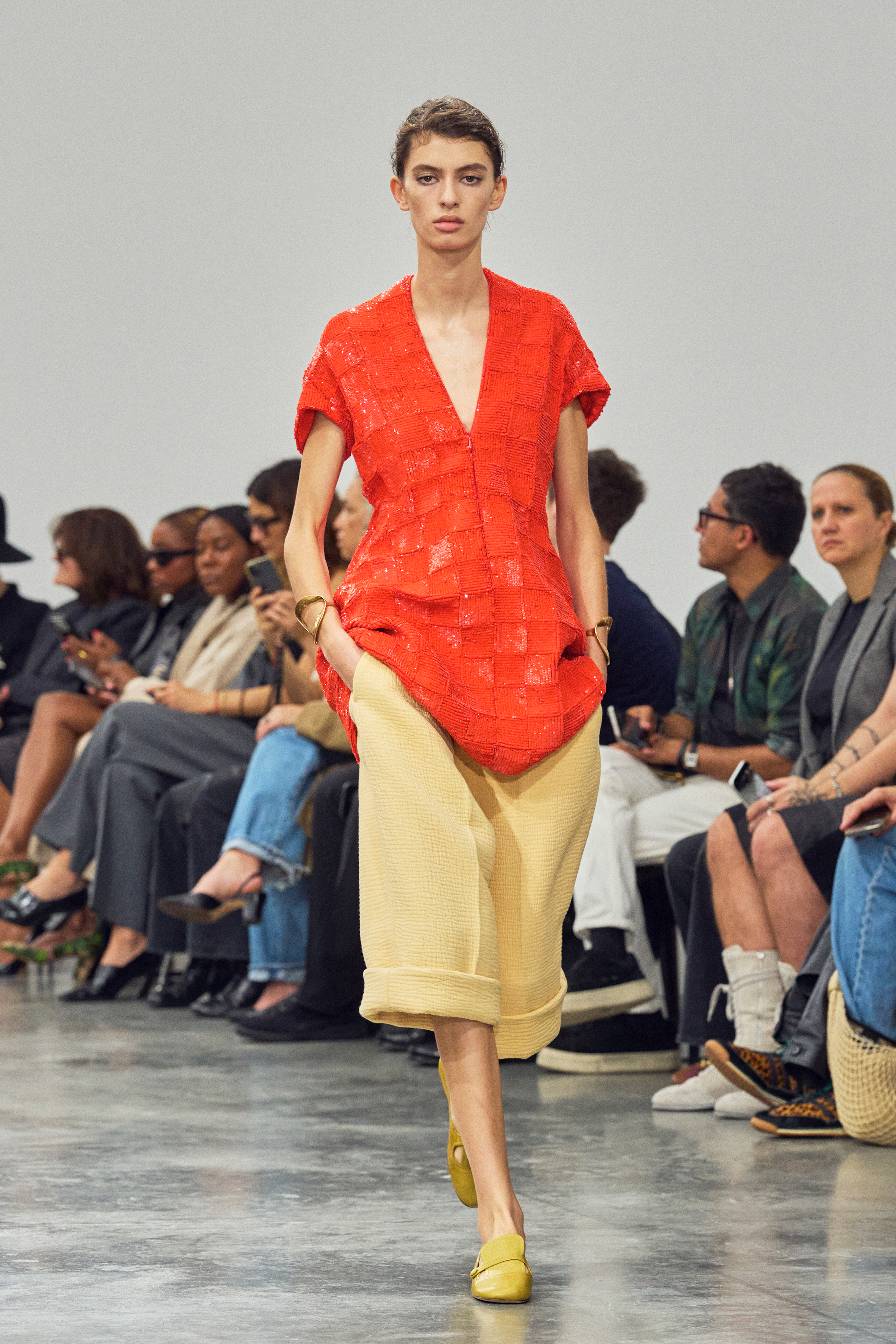
While the beginning stays relatively restrained with its colors like cream, navy and black, the palette starts getting louder, bolder and more confident as the show continues. A lime tunic comes with yolk-yellow trousers and matching yellow boots. Orange trousers meet a white beaded top and red shoes. A red coat sits over peach trousers with brown loafers, while a sky-blue look flashes red where its hem starts to fray.
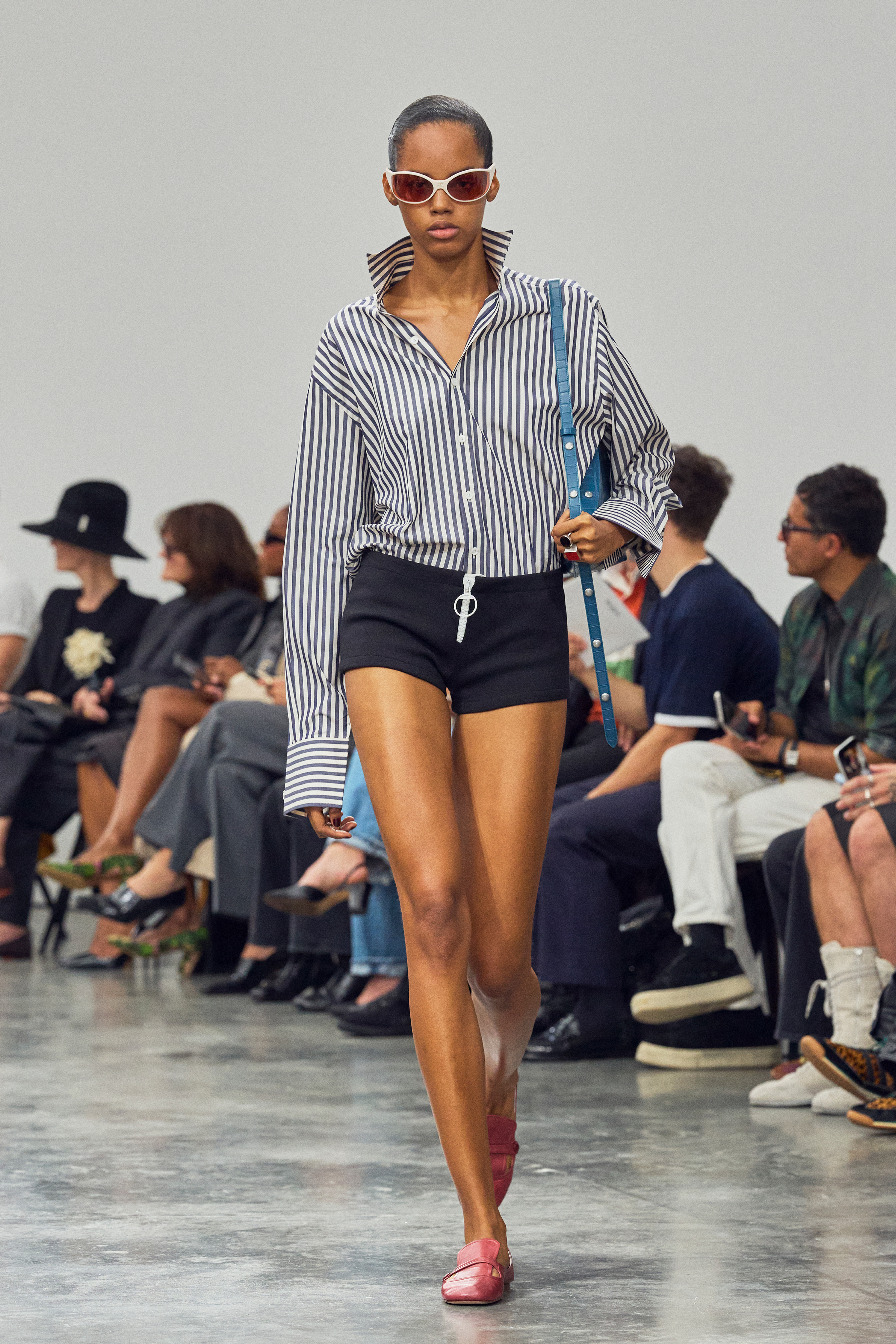
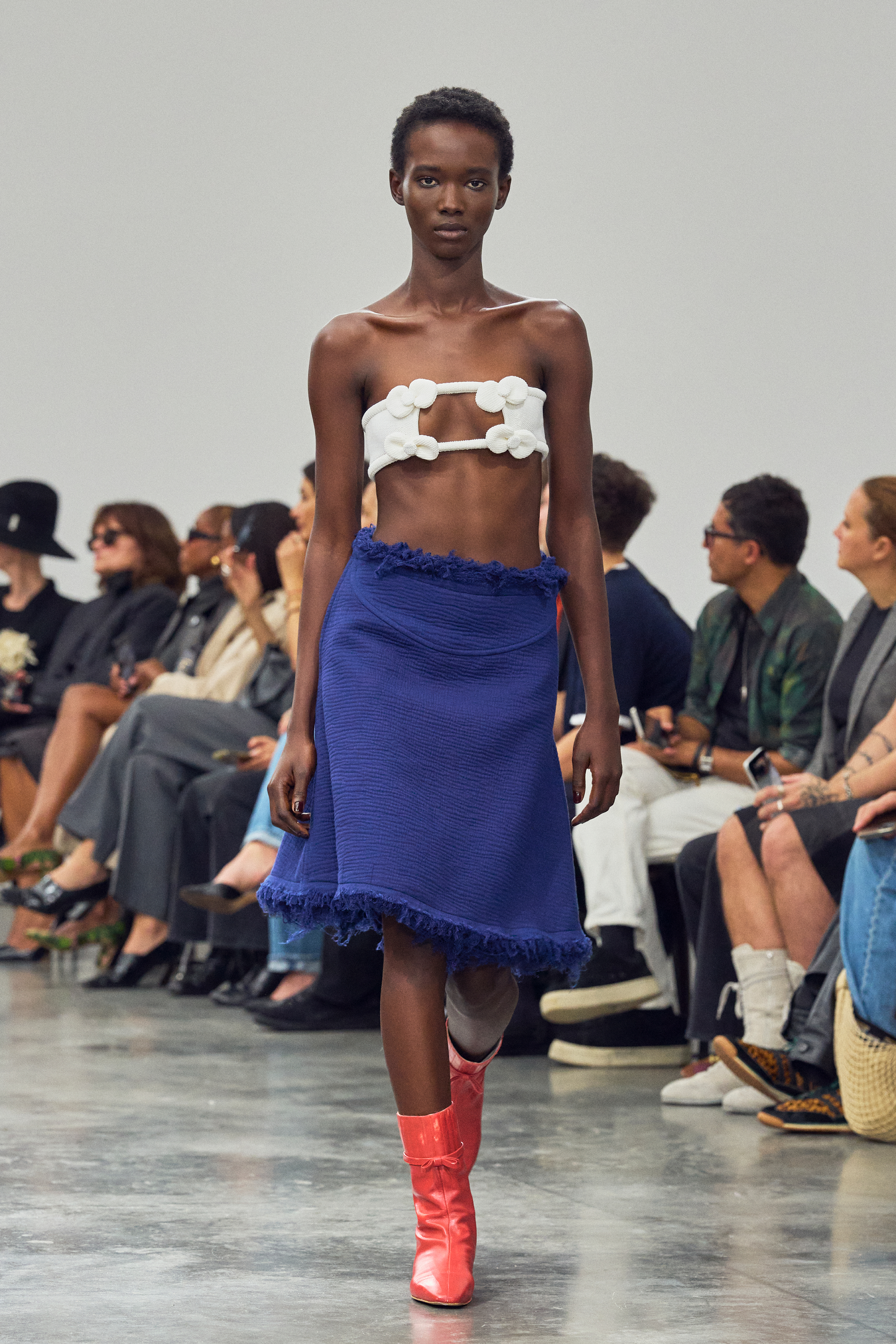
Proportion follows suit. Trousers balloon out with rolled cuffs and raw edges, while the other end of the silhouette gets much closer to the body. Stirrup leggings, micro-shorts, tiny bandeaus and shirts with sleeves long enough to swallow the hands all appear throughout the collection. The flashes of skin are small and almost incidental. Sweet rather than sexy, which here is very much a compliment.
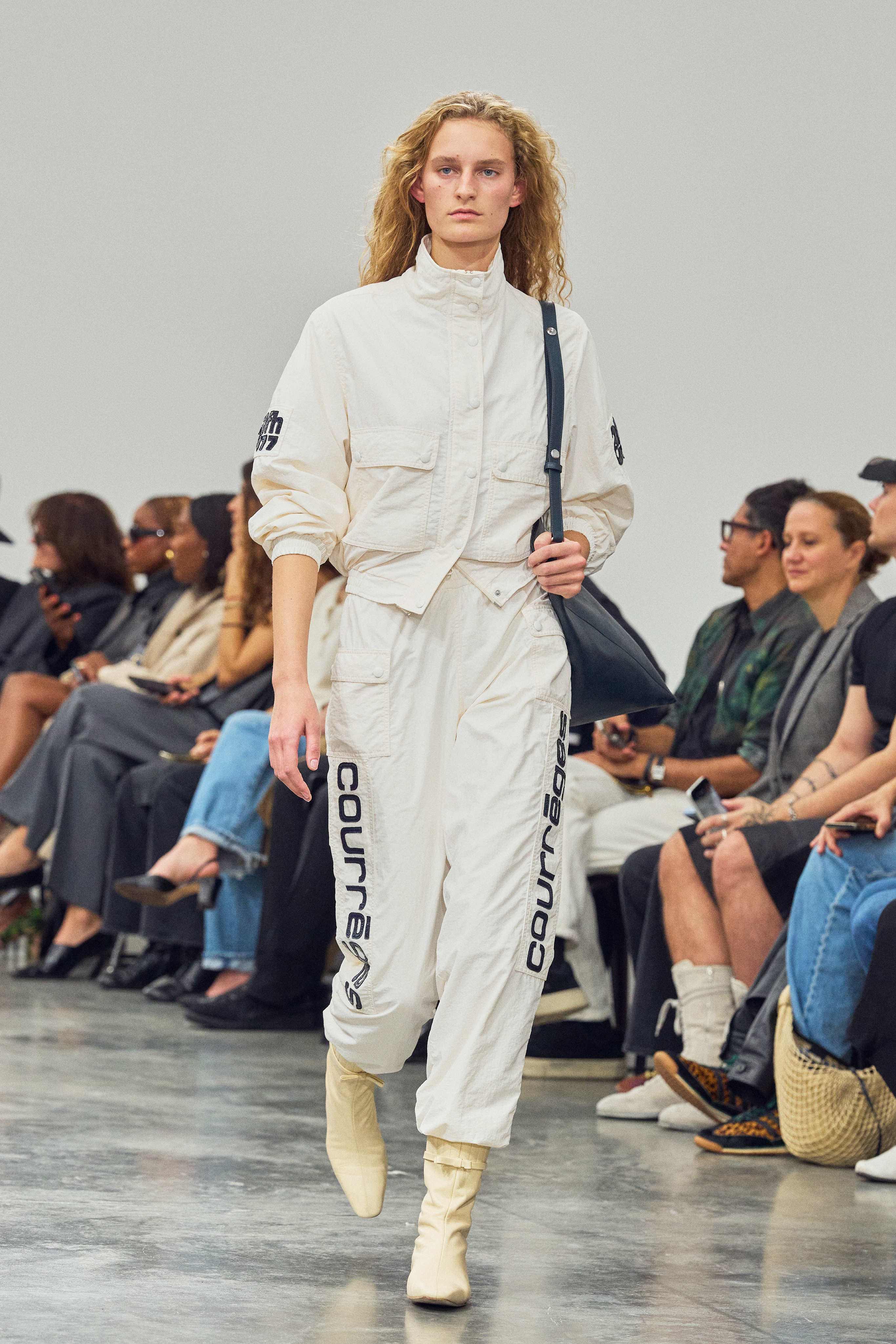
The sportiest look is a cream nylon set that has the Courrèges name running down both legs, but it doesn’t feel like an outfit designed to be admired from a distance. It looks made to be moved in, worn loose, lived in. Again, Henry takes something that could easily become too polished and gives it a little slack and realism.
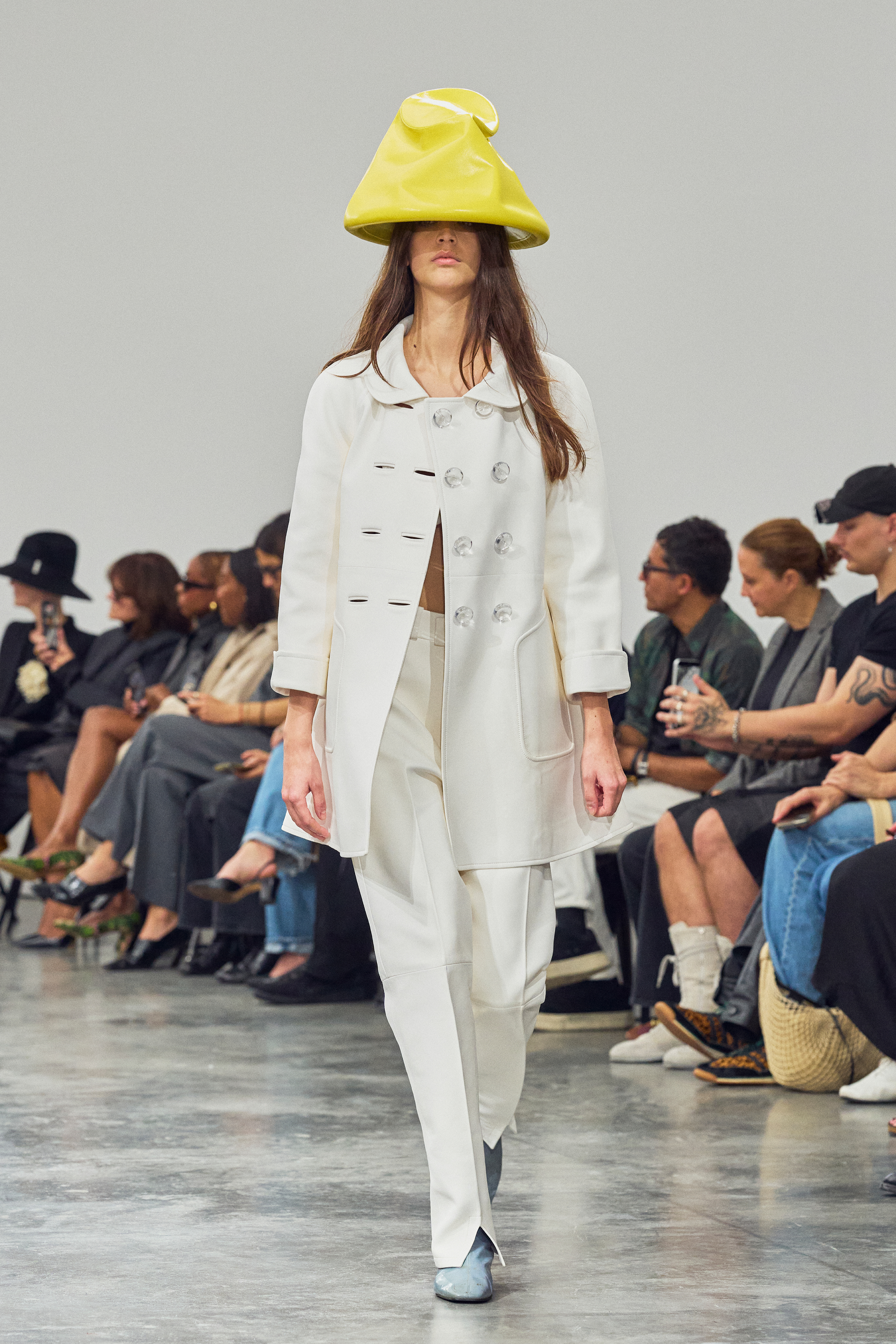
Another recurring motive in his show were the hats that slump and twist. Cobalt patent, orange, canary yellow and pistachio turn them into moving blocks of color.
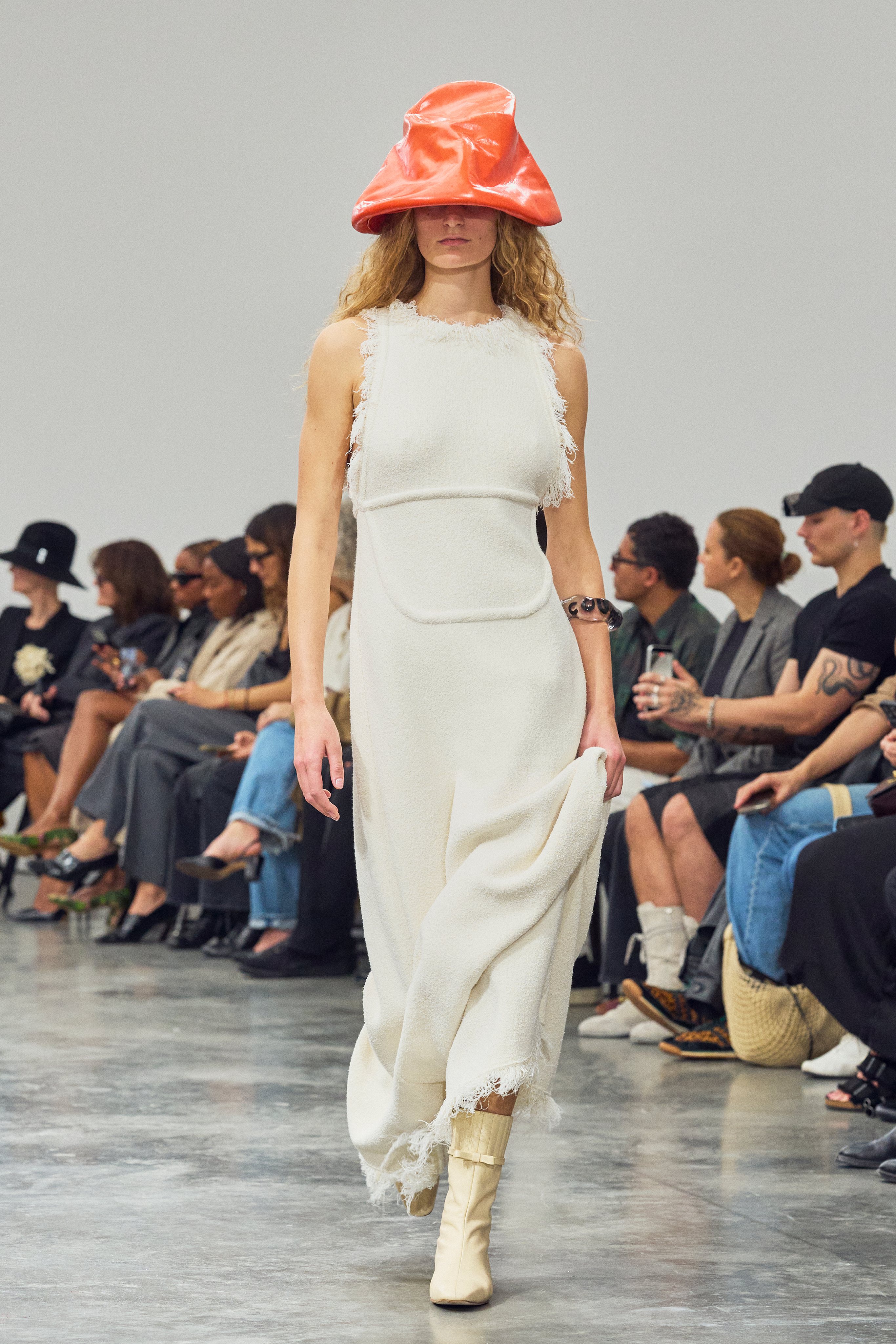
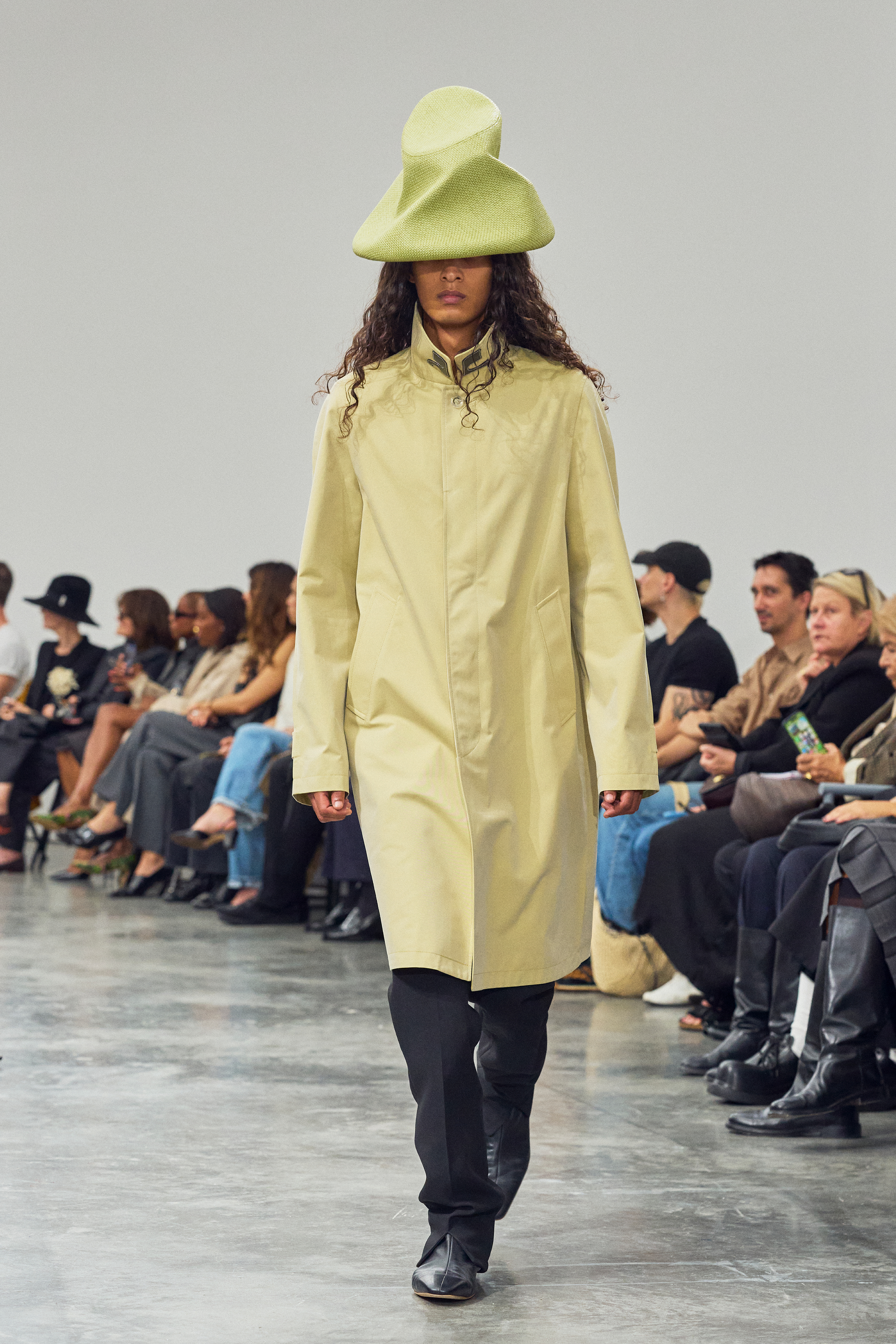
And if the hats provide the joke at the top, the shoes get the last word. Feather pom-poms sit around ankles, fur trims the edges of shoes, and gold-ball loafers add another little flash of absurdity. These are not accessories trying to complete the outfit. They are there to interrupt it.
What stays with you is how naturally Drew Henry lets Courrèges be imperfect. The house has always been associated with the future: clean lines, new materials, youth, movement, a vision of modernity that once looked almost impossibly sleek.
He doesn’t need to abandon the codes. The A-line dresses, patent, silver hardware, snaps, logo plaques and geometric shapes are all still there. He simply leaves some belts open, lets some hems fray, lets a hat slip over the eyes and adds a pom-pom where nobody really needs one.
That’s the most convincing way to make a Courrèges piece feel personal: wear it a little wrong.