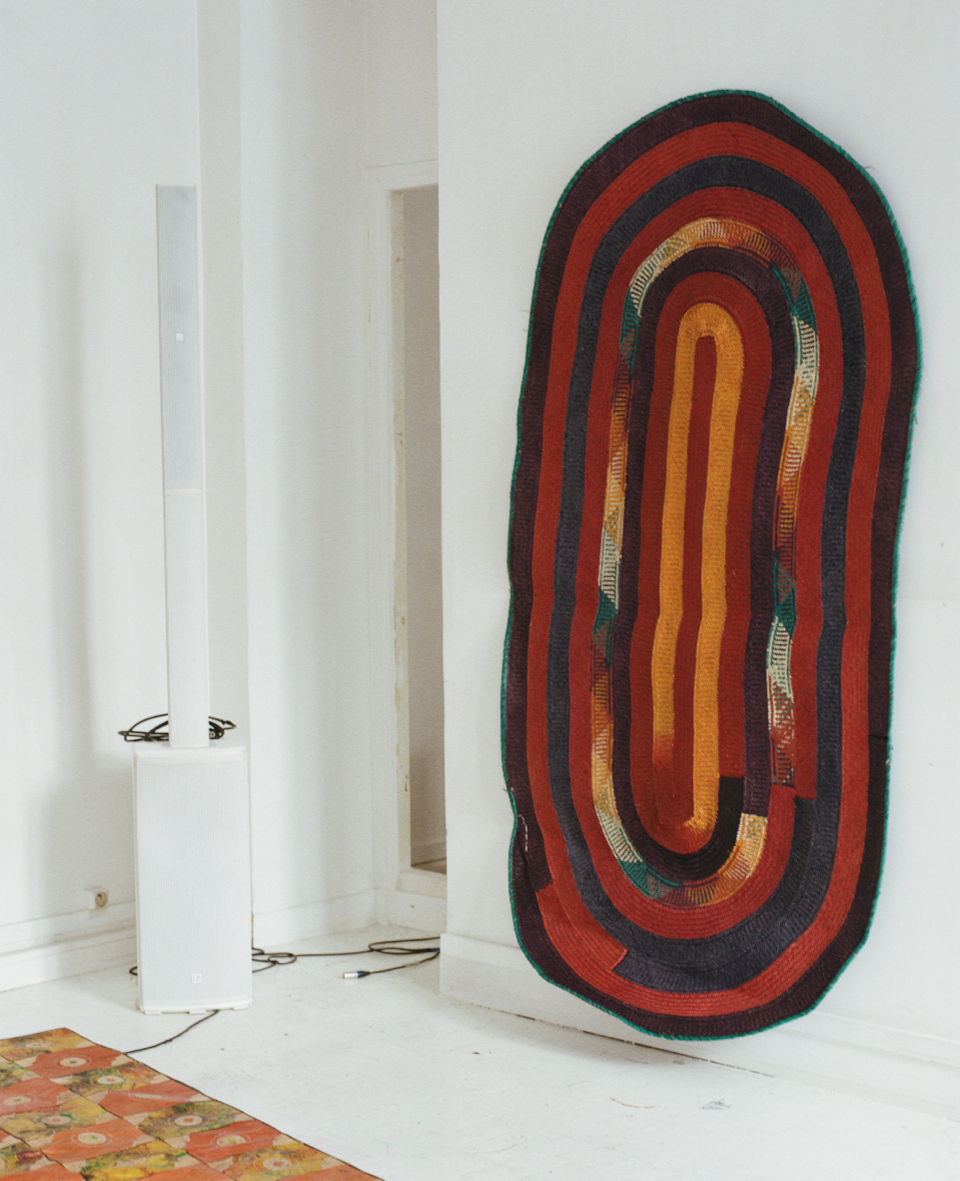



With Failed Industrial Utopias, Mattia Varini and Jan Grombirik turn an embroidery machine into a question about labor, power, cultural exchange, and what industry can still make possible.
What happens when a machine outlives the future it was built to produce?
The industry is obsessed with the next big thing.
Pilotti is looking somewhere else: at what already exists, what has been left behind, and what might still be made from it. Its answer is not another collectible object, another limited-edition collaboration, or another exercise in aesthetic recycling. It is an industrial embroidery machine traveling from Italy to Ghana, carrying decades of technical knowledge, working memory, and the possibility of a new beginning.
Presented in Paris on October 24, 2026, during Art Basel Paris week, Failed Industrial Utopias marks the first public chapter of Pilotti, a project conceived by artist Mattia Varini and developed with co-founder Jan Grombirik, in dialogue with Ghanaian artist Ibrahim Mahama and his cultural and production ecosystem, Red Clay, in Tamale. The timing is anything but incidental. The gathering coincided with the opening of Mahama’s The Harvest Season at Fondation Cartier pour l’art contemporain, placing Pilotti’s proposition inside a wider conversation about industrial memory, collective knowledge, and the unfinished political promises of modernity.
The machine is the protagonist. Everything else revolves around it.
THE FUTURE WAS BUILT IN FACTORIES
To understand why this transfer matters, it helps to go back to the industrial dreams that shaped two very different countries.
In Italy, the economic miracle of the late 1950s and early 1960s transformed the country’s social and economic landscape. Manufacturing expanded, cities grew, millions of people moved in search of work, and industrial production became one of the engines of a new national identity. Northern Italy, with its dense network of small and medium-sized enterprises, workshops, and specialized manufacturing districts, developed a particular relationship with production: one in which technical expertise, family businesses, and skilled labor could become the foundations of long-term economic growth.
The story of Confezioni Grazia belongs to this world, although its origins are more intimate than the grand narratives of industrial expansion might suggest.
In Castenedolo, near Brescia, Giulia Pilotti and Orsola Bonini started with a small workshop in 1968, working alongside a group of approximately fifteen women. They made shirts, skirts, and garments for women employed in the area’s growing industrial district. In 1976, they founded Confezioni Grazia in a former agricultural setting, gradually expanding the workshop and its production capabilities. Giulia led production, Orsola managed the accounts, and the business grew through the knowledge and work of the people who built it. Today, the company brings together around sixty people and continues to produce garments for leading international fashion houses.
This history matters because it places labor before luxury. Before the finished garment, before the runway, before the image consumed by the fashion system, there are hands, decisions, patterns, technical skills, and hours of work. There is an entire world that rarely makes it into the final picture.
Ghana’s industrial ambition emerged from a different historical and political landscape, yet it was driven by a remarkably similar belief: that production could determine a nation’s future.
Following independence in 1957, Kwame Nkrumah pursued an ambitious industrialization program, investing in manufacturing, infrastructure, and state-owned enterprises as instruments of economic autonomy. Factories were not simply facilities for making things. They represented a political proposition: a newly independent country should have the means to produce, transform, and control its own resources.
The 1966 coup that removed Nkrumah interrupted that project. Subsequent decades brought profound economic and political changes, and many of the industrial structures associated with the independence era were abandoned, repurposed, or stripped of their original function. The promise of industrial self-determination remained unfinished.
Two histories. Two industrial landscapes. Two different versions of a future that did not unfold as originally imagined.
The important question is what happens after the promise fails.
IBRAHIM MAHAMA KNOWS THAT RUINS ARE NOT THE END
Few contemporary artists have examined this question with the material intelligence of Ibrahim Mahama.
Born in Tamale in 1987, Mahama has developed a practice around the physical remains of economic and industrial histories. Jute sacks, wooden structures, archival materials, discarded objects, and fragments of infrastructure become carriers of stories that conventional historical narratives often overlook. His materials retain the marks of circulation, labor, trade, and use. They are never just materials. They are evidence.
His monumental textile installations, often assembled from used jute sacks once employed in the transportation of commodities such as cocoa and charcoal, make visible the histories embedded in ordinary objects. The surfaces record an economy of movement and exchange, but also the inequalities and human labor behind it.
His approach extends well beyond the production of artworks. Through the Savannah Centre for Contemporary Art, established in 2019, Red Clay, founded in 2020, and Nkrumah Voli-ni, established in 2022, Mahama has developed an independent network of cultural spaces in northern Ghana. These are not simply extensions of an artist’s studio or platforms for exhibitions. They are infrastructures for research, education, preservation, experimentation, and the transmission of knowledge.
This distinction is essential.
Mahama does not approach industrial heritage as something to be aesthetically rescued from oblivion. He is interested in what these structures can still do, how they can be reactivated, and who gets to determine their next purpose.
At Red Clay, the past is not a closed archive. It is a resource for making something else possible.
A MACHINE IS NOT A METAPHOR
This is where Pilotti’s project becomes particularly interesting.
The collaboration takes shape through the donation of a large industrial embroidery machine to Red Clay. Donated by Ricamificio Fontana and artist Camilla Alberti, the machine was brought to Confezioni Grazia in Castenedolo before its planned transfer to Tamale.
Its journey is not simply geographical. It moves between two production cultures, two historical contexts, and two communities with different relationships to industrial knowledge.
In Italy, it comes from a manufacturing environment where embroidery and garment production are part of an established technical ecosystem. In Ghana, it is expected to become part of Red Clay’s artistic and production infrastructure, supporting new activities and creating opportunities to exchange and transmit technical knowledge.
The distinction between donating an object and transferring productive capacity is crucial. One provides a machine. The other potentially provides access to skills, experimentation, collaboration, and future forms of production.
There is something refreshing about the fact that the machine is not being transformed into an artwork, displayed behind glass, or stripped of its original function to become a design statement. Its value lies precisely in its ability to keep working.
That is also where the project avoids the familiar trap of sustainability as visual language. Reuse is not presented as an aesthetic gesture. It is a question of circulation: how can existing resources acquire new relevance without being reduced to nostalgia or romanticized as industrial relics?
The machine does not need to look different. Its context does.
FROM THE FACTORY FLOOR TO THE CULTURAL INFRASTRUCTURE
Pilotti’s own origins make this exchange more layered than a conventional art-and-industry collaboration.
Founded in 2022 by Mattia Varini and Jan Grombirik, Pilotti emerges from a working industrial environment rather than from an abstract design concept. Its roots are connected to Confezioni Grazia and to a family history that began with Giulia Pilotti and Orsola Bonini in the late 1960s. The company remains active in the international fashion production system, while its cultural platform, Materia, has been creating encounters between artists, designers, researchers, and the people who inhabit the factory since 2020.
This is a relevant position from which to question the relationship between industry and culture. Pilotti is not looking at production from the outside. It operates within the very system it wants to examine.
Its interest in the factory extends beyond the garments leaving the production line. It focuses on the processes that make them possible: the knowledge held by workers, the gestures repeated every day, the machinery, the material leftovers, the spaces, and the invisible structures supporting the final product.
In this sense, Failed Industrial Utopias is less concerned with what a factory produces than with what it can enable.
The project also introduces a shift in the direction of cultural exchange. Rather than positioning Ghana as a source of inspiration for an Italian creative project, it directs attention toward Tamale, where the machine will enter an already active ecosystem of artistic production and community-based knowledge. Red Clay is not a passive recipient. It is a place with its own history, ambitions, expertise, and infrastructure.
That difference should not be underestimated. International collaborations often celebrate exchange while leaving the underlying distribution of resources and decision-making untouched. Here, the transfer of a working machine offers a more tangible proposition: knowledge and productive capacity can move, too.
The real test, of course, will be what happens after the machine arrives. Who will use it? What will be produced? Which new skills and relationships will emerge? How will this equipment become part of the everyday life of Red Clay?
These are not secondary questions. They are the project.
PARIS, THE ART MARKET, AND WHAT HAPPENS OUTSIDE THE FRAME

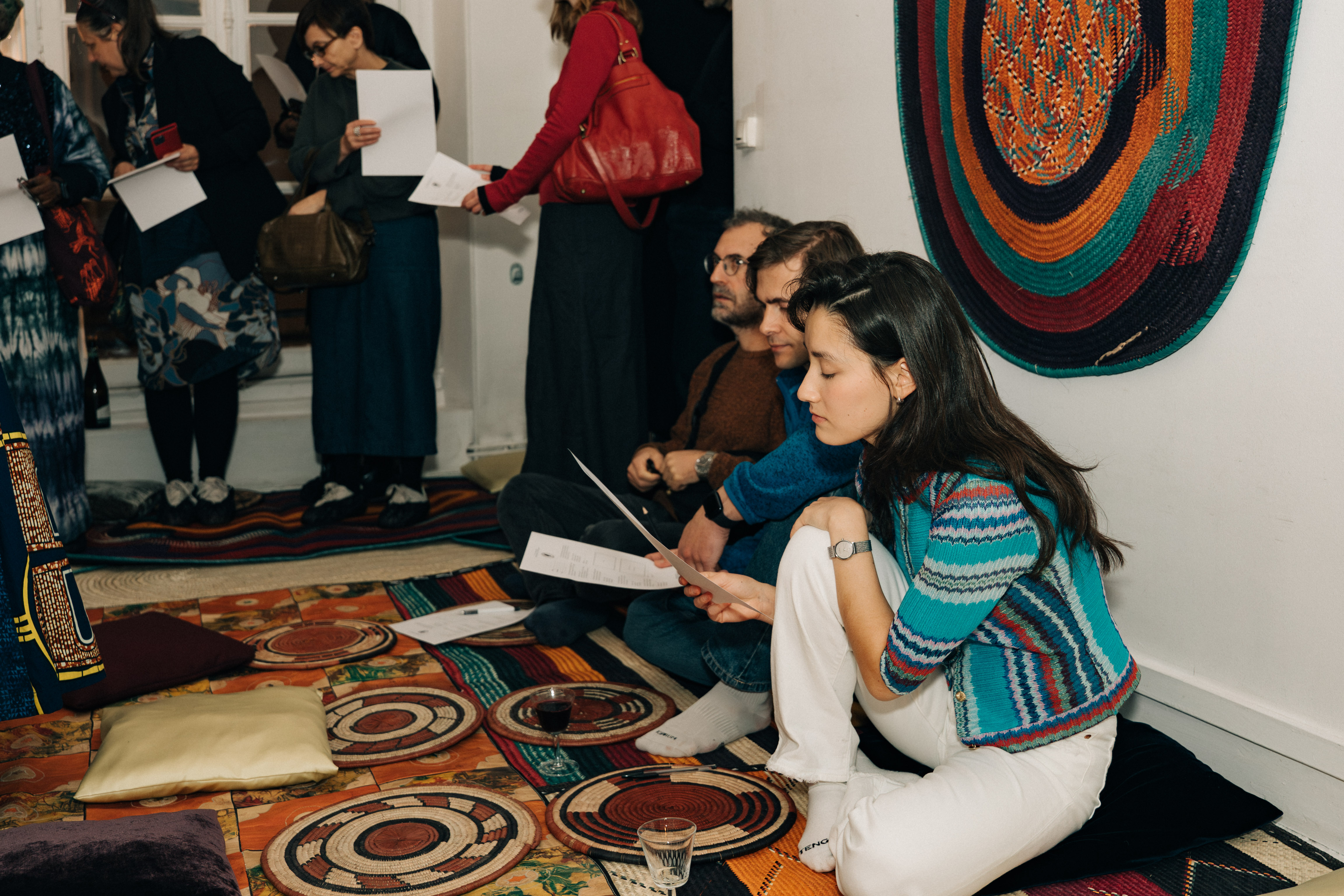
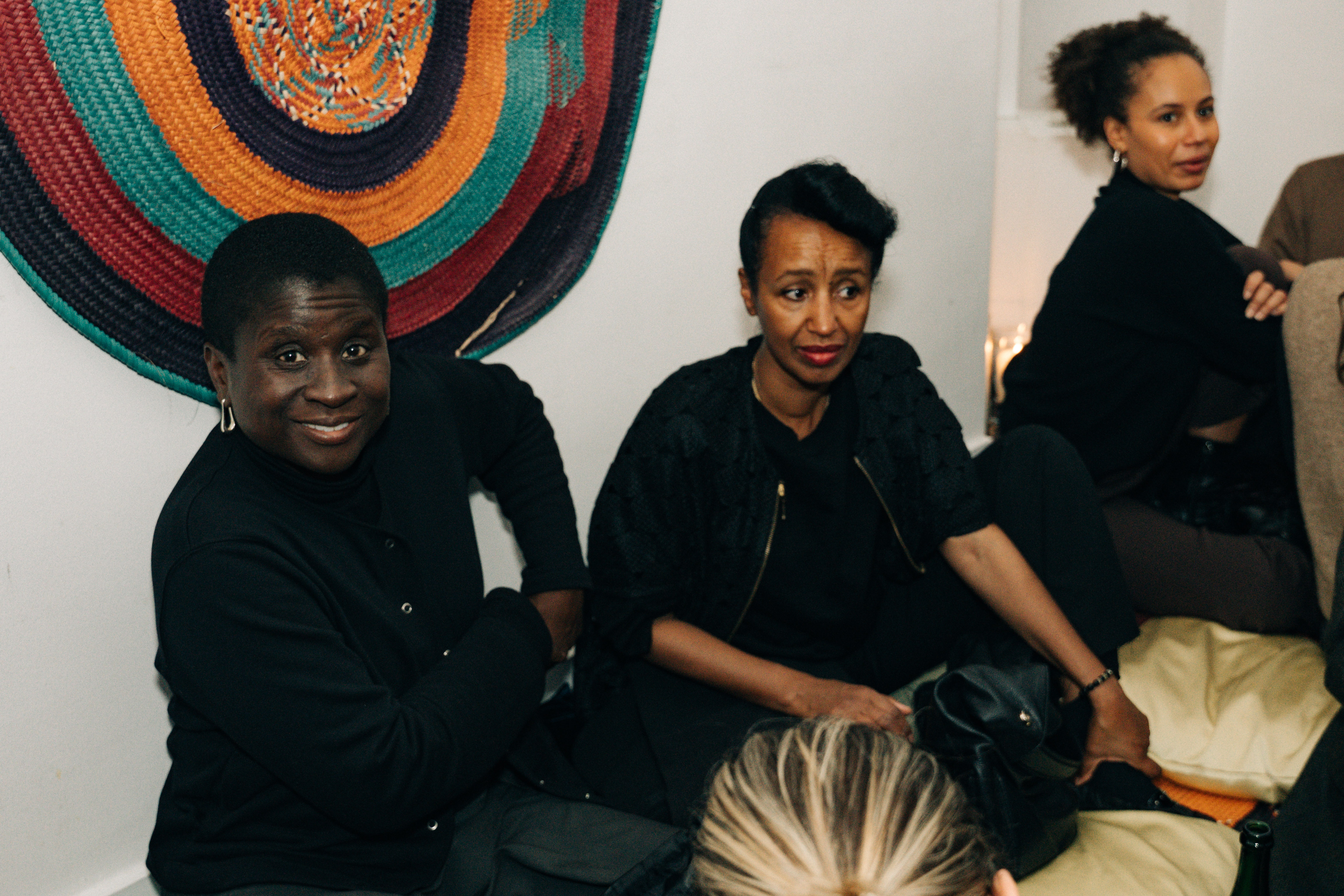
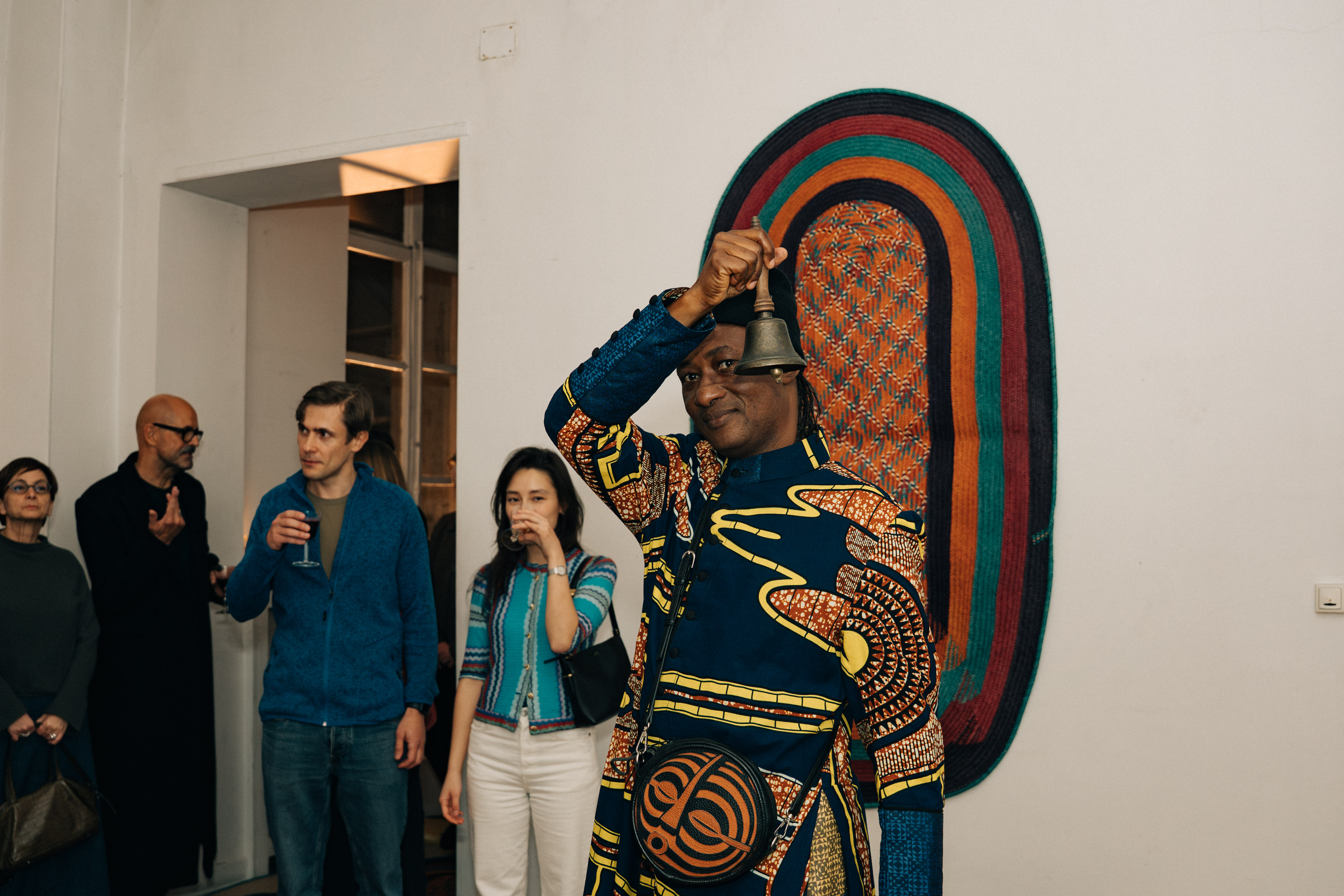
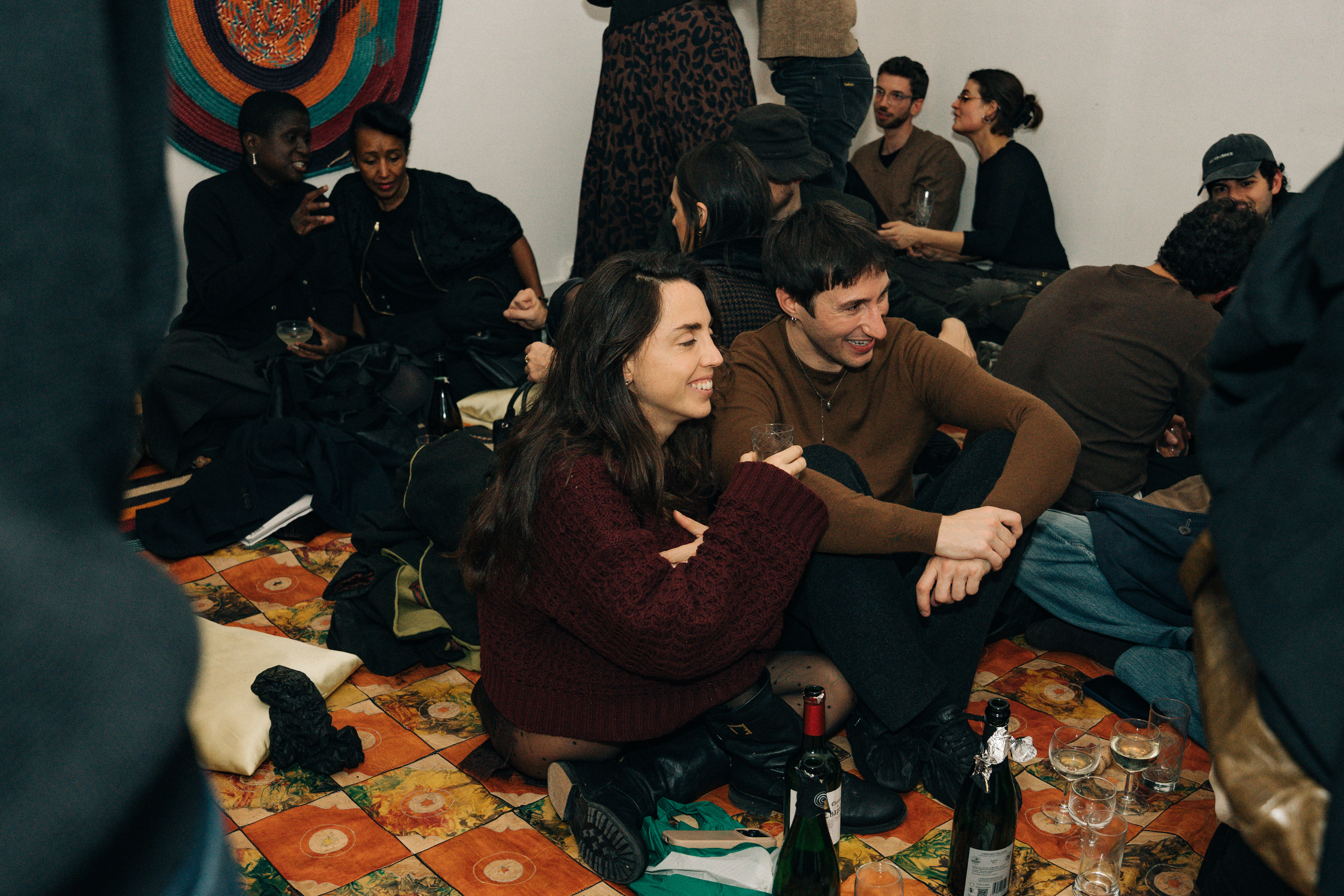
The first public presentation of Failed Industrial Utopias took place during one of the most concentrated moments in the international art calendar.
Art Basel Paris, running from October 23 to 25, 2026, brought together 211 exhibitors from 41 countries at the Grand Palais, while museums, galleries, foundations, and independent cultural initiatives activated the city beyond the fair itself.
On October 22, Fondation Cartier opened The Harvest Season, Mahama’s first major exhibition in Paris. Bringing together nine associated artists and collectives, the exhibition expanded his approach into a broader reflection on artistic communities, historical memory, and the possibilities of cultural infrastructure.
Pilotti’s October 24 gathering entered this same conversation from a different angle.
There is an interesting tension here. Paris during Art Basel week is a city operating at the highest level of cultural visibility, where artworks circulate through institutions, galleries, collections, and markets. Failed Industrial Utopias, however, proposes that some of the most meaningful forms of cultural production might take place far away from the exhibition space, beyond the spotlight, in a workshop where a machine is being prepared for a new life.
The contrast is productive. The event is not simply another addition to the Paris art-week calendar. It asks what an art-world gathering can actually set in motion.
A one-night presentation can easily become another image, another social moment, another name added to an already crowded cultural conversation. Pilotti’s proposition has the potential to go further because its story does not end when the guests leave the room. The project is designed to continue through the machine’s journey, its arrival in Tamale, and the activities and exchanges that follow.
The exhibition is the moment of visibility. The work itself happens elsewhere.
THE MOST INTERESTING THING IS WHAT COMES NEXT
The title Failed Industrial Utopias might initially sound pessimistic. It is not.
The word “failed” acknowledges the distance between the promises of industrial modernity and the realities left behind. Yet failure does not necessarily mean that everything produced by those histories has lost its value. Factories may close, political projects may collapse, and economic systems may change, but skills, materials, memories, and infrastructures do not simply disappear. They remain available for reinterpretation, redistribution, and use.
This is where the project finds its strongest proposition: not in restoring an old industrial dream, but in questioning who gets to build the next one.
A machine traveling from Castenedolo to Tamale might seem like a modest gesture within the scale of global industry. Its implications are more interesting than its size. It challenges the idea that productive knowledge should remain confined to the places and systems that originally accumulated it. It suggests that an industrial object can have more than one life, and that its next chapter does not have to reproduce the logic of its first.
There is also a question of authorship here. The machine will not arrive as a finished cultural statement. Its meaning will be shaped by the people who work with it, the knowledge they bring, and the things they decide to make. That future cannot be fully scripted in advance.
Perhaps this is the most compelling aspect of Pilotti’s first project: it does not pretend to have already solved the questions it raises.
The machine is still on its way. Its real story has yet to begin.
In an age when the creative industries are constantly selling us newness, Pilotti proposes something considerably more challenging: the possibility of making the existing world useful again. Not by preserving it unchanged, not by turning its ruins into beautiful objects, but by allowing its resources to enter another cycle of production.
The future, it seems, does not always need a new machine. Sometimes it needs a new destination.