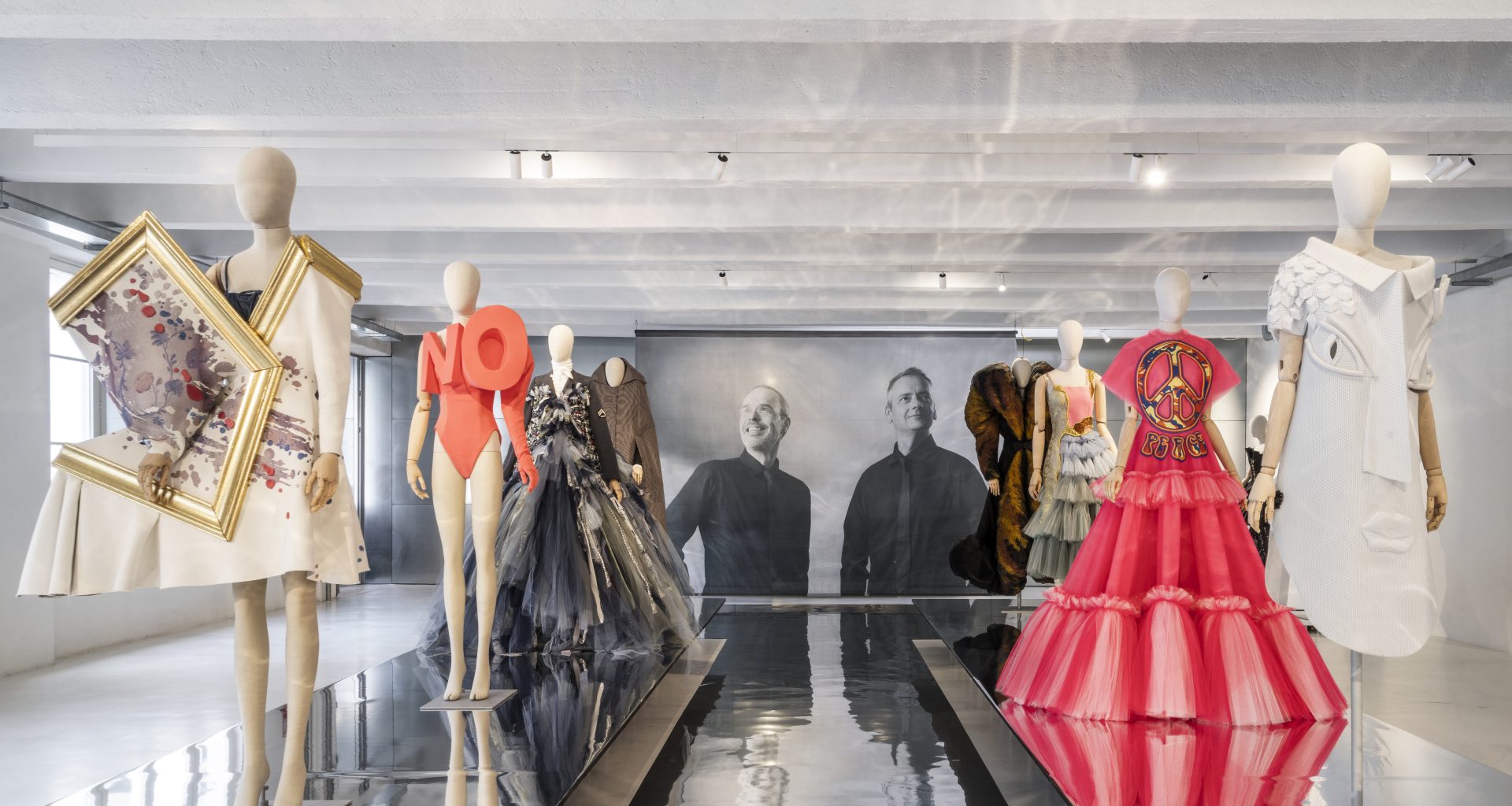
At 10 Corso Como, in Milan, twenty haute couture looks meet in pairs, echoes and reflections. More than a retrospective, Viktor&Rolf. Spectrum offers a way into the creative world of a duo who have spent more than thirty years asking what fashion can become when it is treated not simply as something to wear, but as a language, an experiment and an act of self-expression.
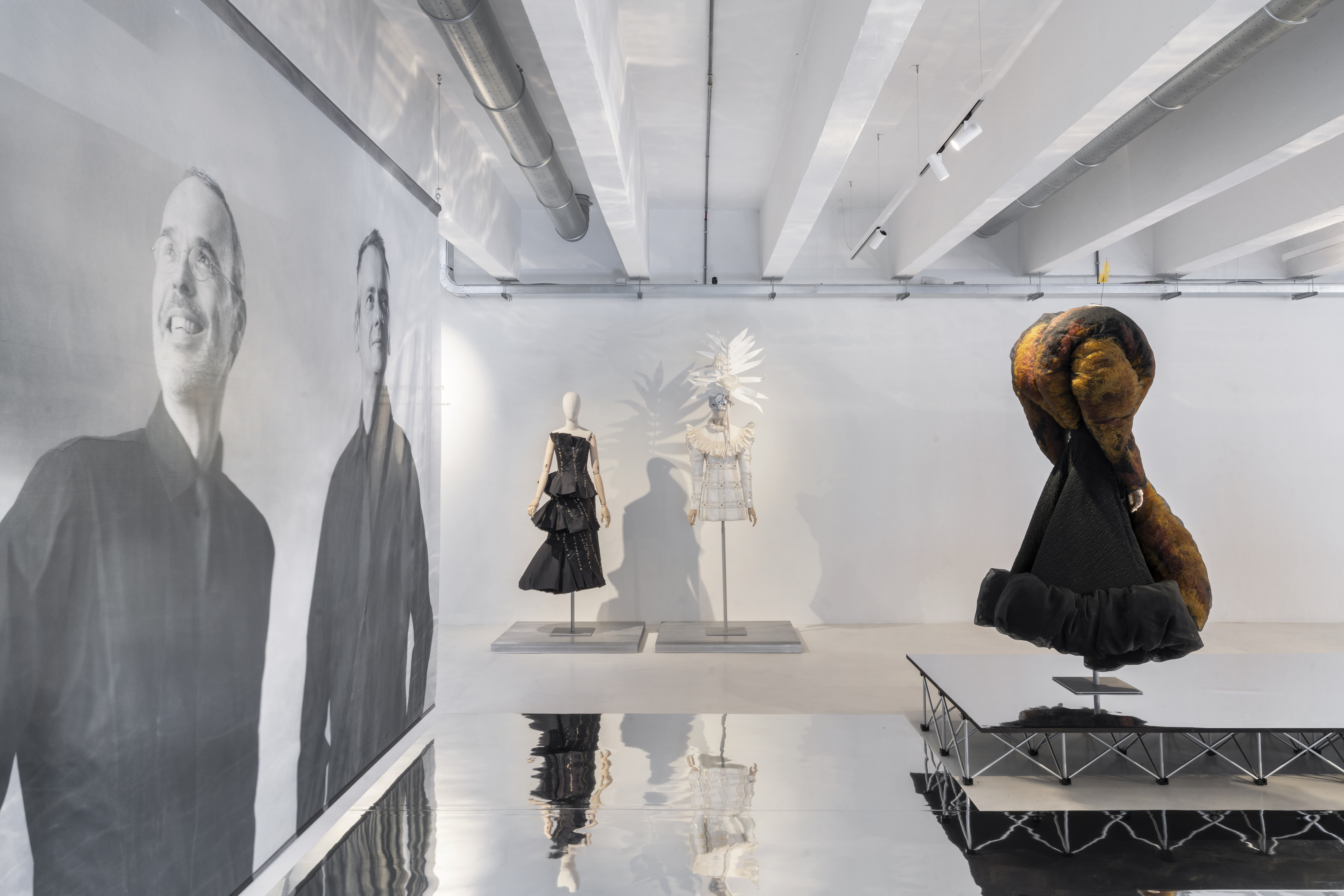
On view until 22 November 2026, 10 Corso Como presents Viktor&Rolf. Spectrum, the first exhibition in Italy devoted to the celebrated Dutch design duo Viktor Horsting and Rolf Snoeren. The exhibition continues 10 Corso Como’s exploration of influential figures in contemporary culture, following the success of Yohji Yamamoto. Letter to the Future, which welcomed more than 20,000 visitors in just two months in 2024. For over thirty years, Viktor&Rolf have transformed haute couture into a space for artistic experimentation. Their practice reaches beyond the boundaries of fashion, moving between contemporary art, performance and visual culture. Each collection begins with an idea, a reflection or a provocation, and is conceived as a work in its own right. At the 10 Corso Como Gallery, Spectrum offers visitors an opportunity to encounter this distinctive creative language and consider how couture can become a form of artistic expression.
There is something fitting in this layered history. A spectrum is both what appears before us and what asks us to look more closely: a shifting range of colours, ideas and ways of seeing. At 10 Corso Como, Viktor&Rolf’s Spectrum invites us to do just that—to encounter fashion not as a fixed image, but as a world of reflections, differences and possibilities. But today, fashion’s language can feel increasingly crowded. The pressure to keep up with rapidly changing trends often competes with the desire to dress in a way that feels personal and lasting. Behind the pleasure of invention lies an industry with a considerable environmental and social footprint. At the same time, people are looking more closely at what they buy, how long it lasts and what values it represents.
In fashion, the question is no longer only what is new, but what feels true.
In days like these—days marked by change, by young people raising their voices and asking for a future shaped by greater hope—it feels important to return to art. Art can offer care; it can open a door when the way forward seems unclear. It can invite reflection, and remind us that the future is not fixed. Sometimes a visit to an exhibition does not provide an answer. Instead, it gives us the space to imagine that things might change. That is why I did not want to treat Viktor&Rolf. Spectrum as a passing item of news. Exhibitions, shows and events can be discussed for a day and then disappear from view, often before we have had the chance to look closely. Spectrum deserves a different kind of attention: not only because it brings the Dutch designers’ work to Milan, but because it offers an invitation to pause and enter their ideas. The exhibition will remain at 10 Corso Como until 22 November 2026. Its presence gives us time to return, to look again and perhaps to find a small point of hope in the power of a single idea.
Viktor Horsting and Rolf Snoeren have built a career around the conviction that fashion can be more than a product. Since founding their Amsterdam-based house in 1993, they have approached couture as a meeting place for fashion, art, performance and imagination. They describe themselves as Fashion Artists, and their work has continually questioned the conventions of what clothes should look like, how they should be presented and what they can communicate.
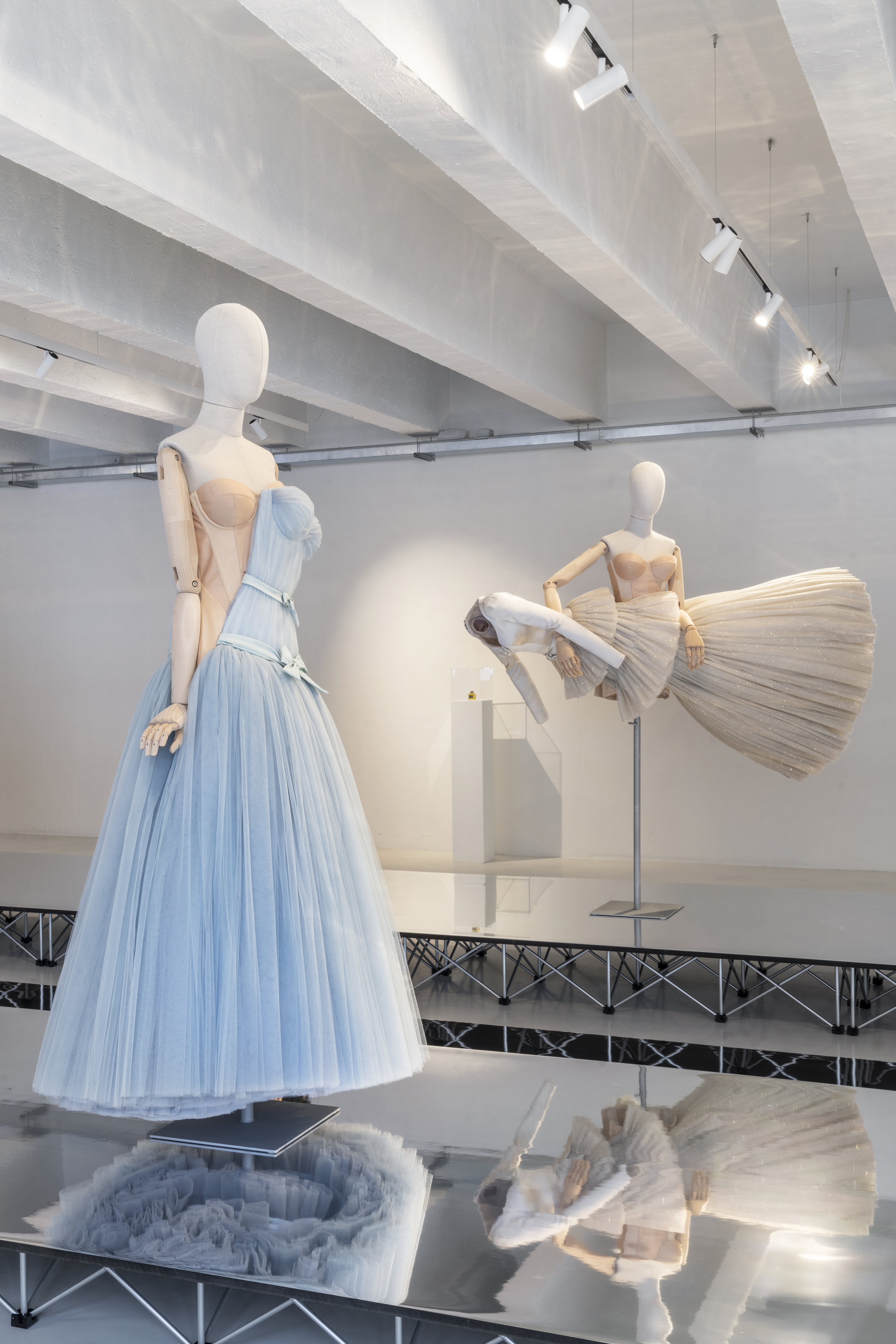
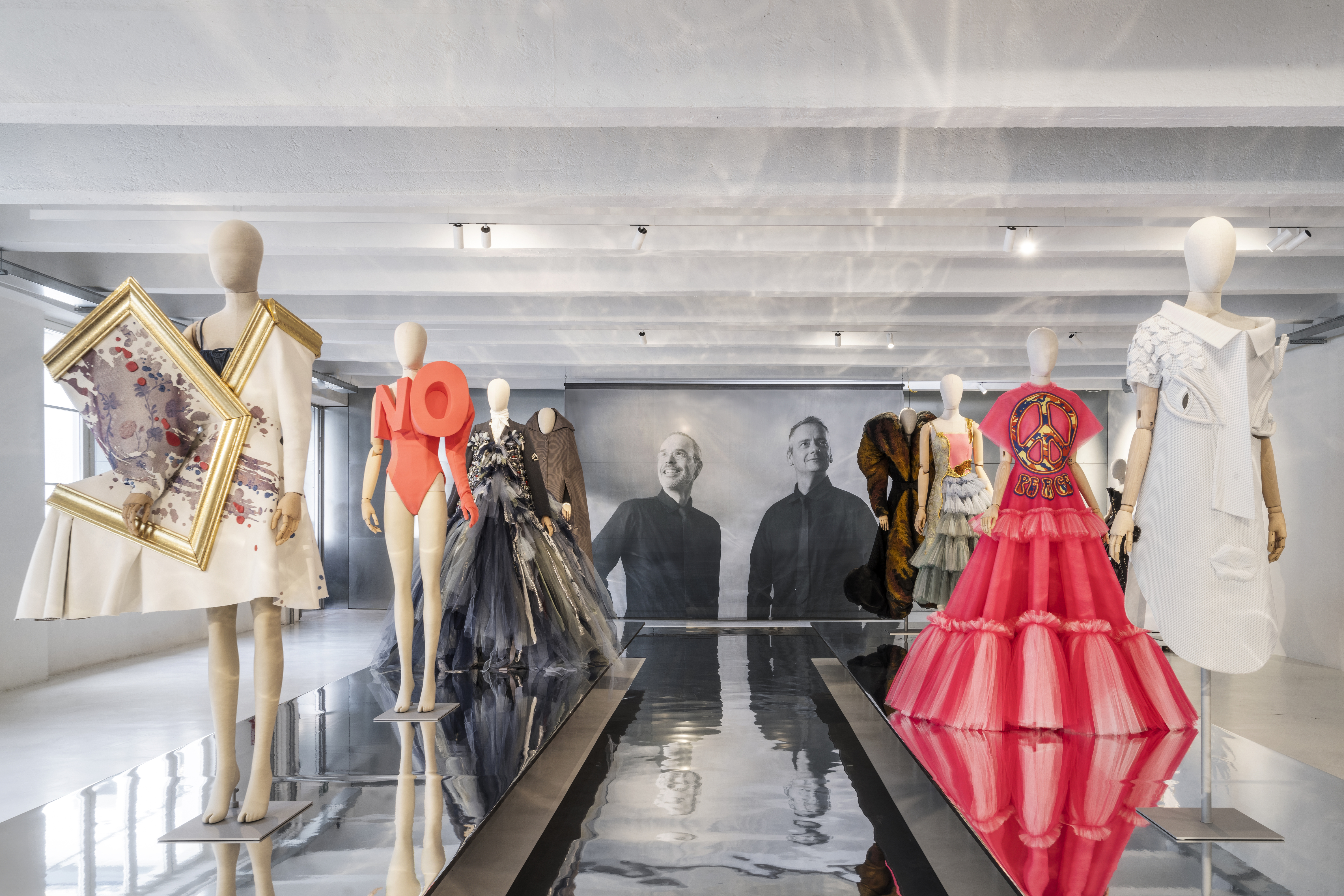
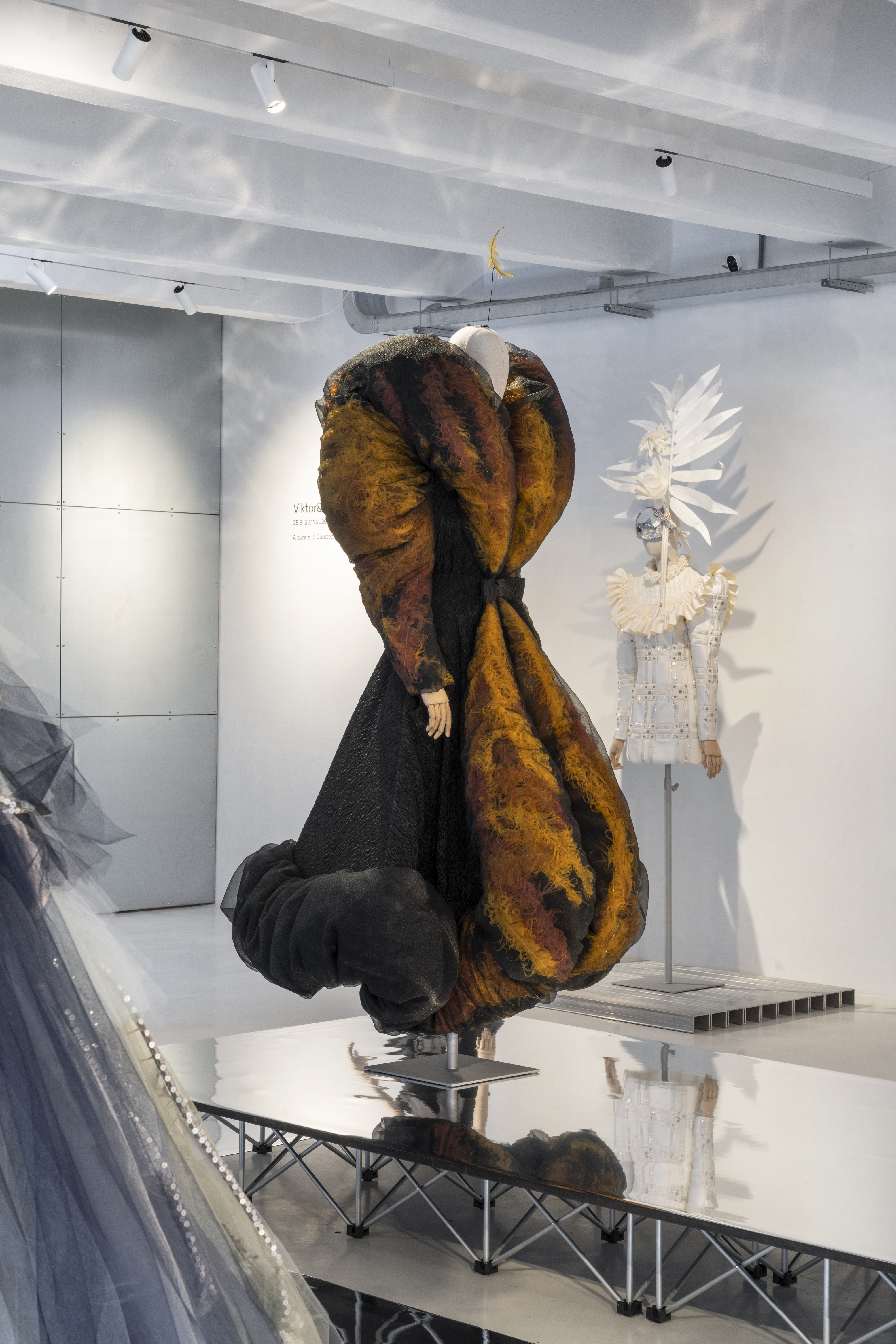
Spectrum is the first in Italy devoted to the duo. Curated by Alessio de’ Navasques and created specifically for the gallery by Maison Viktor&Rolf, it brings together twenty haute couture looks from more than three decades of work. Rather than arranging the garments in a conventional chronology, Spectrum gathers them into a single large-scale installation. The result is less a timeline than a conversation—between collections, between forms, and between two designers whose creative partnership has become one language.
The title suggests a range: a movement through different positions, colours, ideas and possibilities. For Viktor&Rolf, fashion is a subject that can be approached from many angles. “Spectrum is clever during our times,” they say. “We need different kinds of perspectives to see fashion, as we have always approached it differently. Fashion, for us, is a tool to express ourselves.”
That idea is reflected in the exhibition’s structure. The looks are presented in pairs, connected not by exact repetition but by formal affinities, variations and visual echoes. One garment may seem to answer another across the room; a shape returns in altered form, a detail is repeated with a difference. The visitor is encouraged to look back and forth, noticing how a thought can change without disappearing. This is a way of seeing that mirrors the designers’ relationship to one another. Viktor&Rolf work as a single creative entity: two individual perspectives brought into dialogue. In the exhibition, duality becomes more than a design principle. It speaks to the space between two people and the possibility of making something shared. “In this exhibition duality is important,” they explain, “as two making one, unity, love.”
The idea is quietly moving. A pair does not have to mean sameness. In Spectrum, each look retains its own character while entering into relation with another. The garments become part of a network, their meanings shaped not only by how they appear individually, but by what happens when they are placed together. The installation asks us to consider how difference and connection can exist at once.
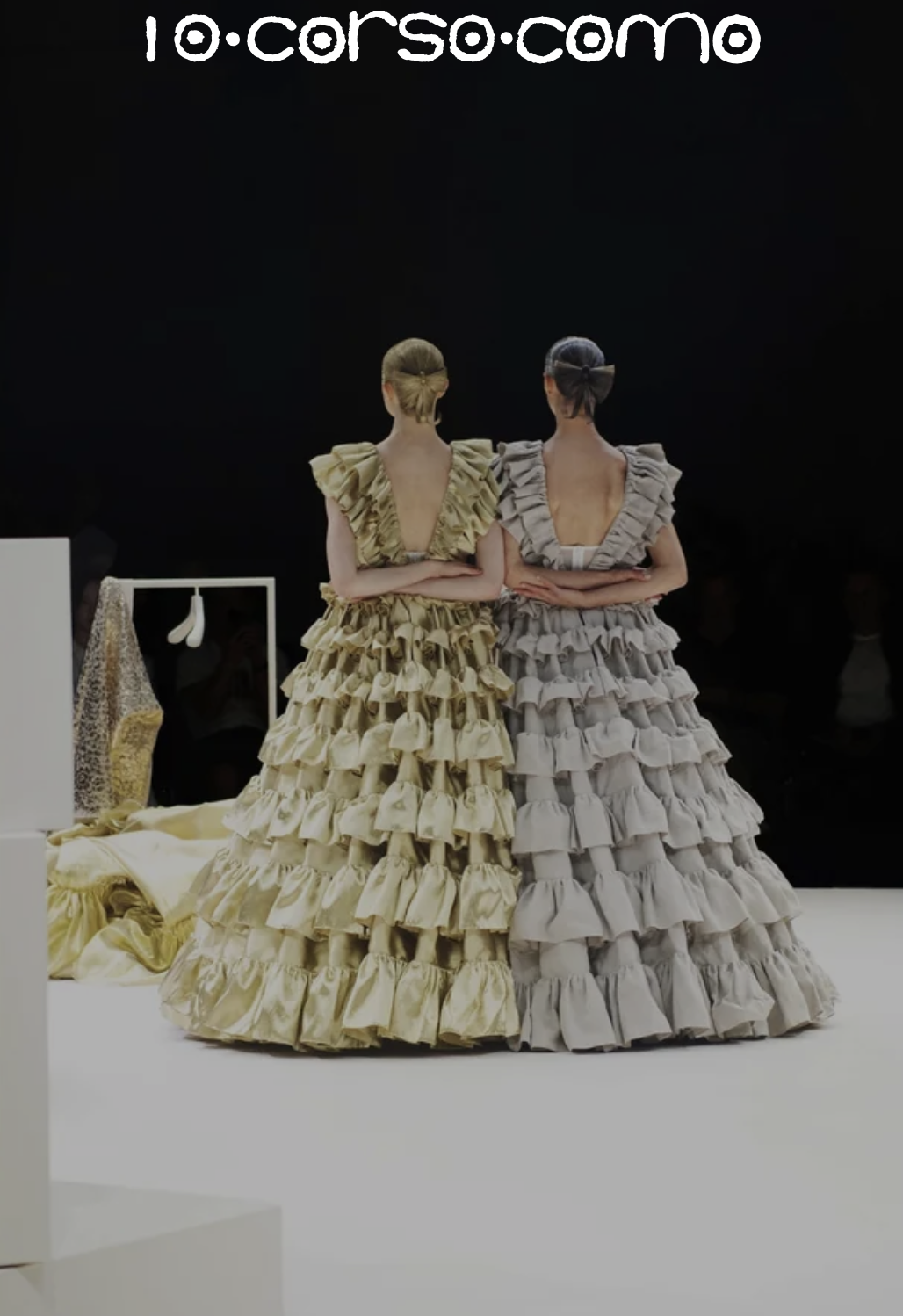
That question has long been present in Viktor&Rolf’s practice. Their collections often begin with a concept, a reflection or a provocation, and then develop through an exploration of fashion’s own codes: its structure, its image, its conventions. The designers describe their process as a laboratory—a place to test possibilities and develop ideas. “The central focus is always fashion itself. Its codes, its appearance, its structure,” they say.
A laboratory is not a place where every outcome is known in advance. It is a space for trial and discovery, where a familiar material can be examined from a new angle. For Viktor&Rolf, couture becomes a means of thinking through fashion: What can a garment express? What happens when its expected form is altered? How might clothing become sculpture, image or performance, as well as something made to be worn?
Their answer is not to abandon fashion, but to look at it more closely. “Couture in fashion is never easy,” they say. “It is about expressing yourself without fear.” The phrase suggests both the challenge and the possibility of the medium. Couture requires craft, precision and patience, but it can also offer extraordinary freedom: the freedom to make an idea visible without shrinking it to fit familiar expectations. That freedom is one reason Viktor&Rolf’s work has found a place in major museum collections, including the Metropolitan Museum of Art, the Victoria and Albert Museum and the Kyoto Costume Institute. Their designs have also featured in significant exhibitions around the world. These collections and presentations recognise fashion not only as an industry, but as a cultural record—a way of understanding the images and ideas that shape a particular moment.
At 10 Corso Como, that understanding feels especially at home. Founded in Milan in 1991, the concept store has brought together fashion, design, art, food and culture, treating shopping and looking as part of a wider experience. Spectrum forms part of 10 Corso Como’s renewed vision as a laboratory for contemporary language, as well as the programme marking its thirty-fifth anniversary. It also continues the gallery’s exploration of influential figures, following the 2024 exhibition Yohji Yamamoto. Letter to the Future.
The setting matters because Spectrum is not simply a display of beautiful clothes. It asks us to consider how fashion communicates and how it might be encountered outside the runway or the wardrobe. The garments are not arranged as illustrations of a career, one season following another. Instead, the installation creates new relationships between them. Past and present sit alongside one another; a design from one collection can offer a fresh way of reading another. The exhibition suggests that continuity does not mean standing still. A creative language can remain recognisable while continuing to transform. This balance between return and reinvention is part of what gives the show its name. A spectrum contains many variations, but those variations belong to a larger whole. Over more than thirty years, Viktor&Rolf have returned to fashion as their central subject, each season approaching it from another position. Their work changes, but the underlying curiosity remains.
That curiosity is accompanied by a sense of humour. Viktor&Rolf say they love irony in their work, describing it as “an irony made as therapy.” It is a revealing phrase. Irony can create distance from the rules we are expected to follow; it can expose the absurdities hidden inside convention. Yet here it is also a form of care: a way to play with the world rather than simply accept its terms. We live in a culture that often asks us to take trends, images and even ourselves at face value, so humour can be a small act of release.
The garments gathered in Spectrum invite visitors to spend time with that complexity. Their pairings encourage comparison, while their differences prevent any single reading from settling into place. Looking becomes active: we notice, reconsider and make connections of our own. A museum or gallery encounter may begin with visual pleasure, but it can also lead to questions about identity, beauty, value and the meanings clothes carry into public life. That is part of fashion’s enduring power as a non-verbal language. What we wear can tell a story about belonging or independence, ease or ambition, memory or possibility. But fashion’s language is not always simple. The same system that gives people tools for self-expression can also create pressure: to keep up, spend more, fit in or become someone else. Its economic force is immense, and its environmental costs are real. To take fashion seriously, then, is not to ignore its contradictions. It is to make room for them—to ask what the industry produces, what it discards and what kinds of futures its images make imaginable.
Art can help create that room. It slows the encounter down. It gives an object the chance to become more than a quick image on a screen, and gives the viewer time to respond. Spectrum does not promise that couture can solve the problems of the world. Its hope is quieter and perhaps more honest: that ideas, forms and acts of expression can make us look differently. Sometimes a changed perspective is where change begins.
When I ask what they would say to future generations, Viktor&Rolf offer a direct message: “Keep going and believe in yourself, no matter what. Build your own language.” It is simple, but it carries the spirit of a creative practice built on persistence—the decision to keep asking questions, to experiment again and to make work without fear of being entirely understood in advance.
As visitors move among the paired garments at 10 Corso Como, Viktor & Rolf. Spectrum curated by Alessio De Navasques offers more than a survey of a celebrated fashion house. It opens a view into a way of working, attentive to fashion’s history, but unwilling to be confined by it; committed to technique, yet drawn to experimentation; rooted in a partnership, yet alive to difference. Perhaps that is why the exhibition feels worth meeting on its own terms, beyond the brief life of an announcement. Its subject is fashion, but its invitation is broader, to be curious, to look again, to trust that imagination still has room to act. In a time when the future can feel uncertain, that invitation matters. Art may not make the path easy, but it can help us see that another path is possible—and that even a single idea can hold a small measure of hope.
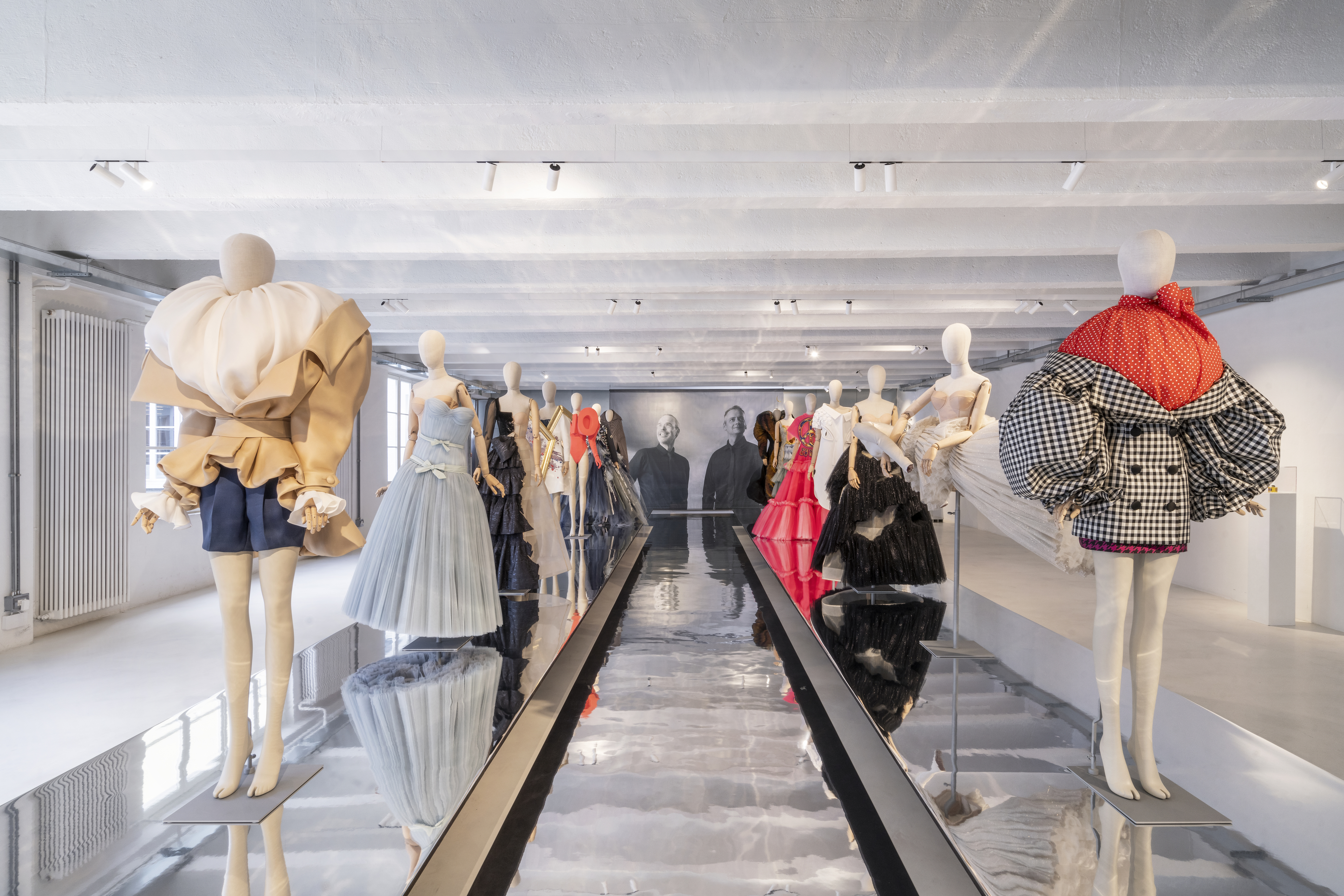
Viktor&Rolf. Spectrum at 10 Corso Como Gallery, Milan
Until 22 November 2026
Daily, 10:30 a.m.–7:30 p.m.
Admission is free.