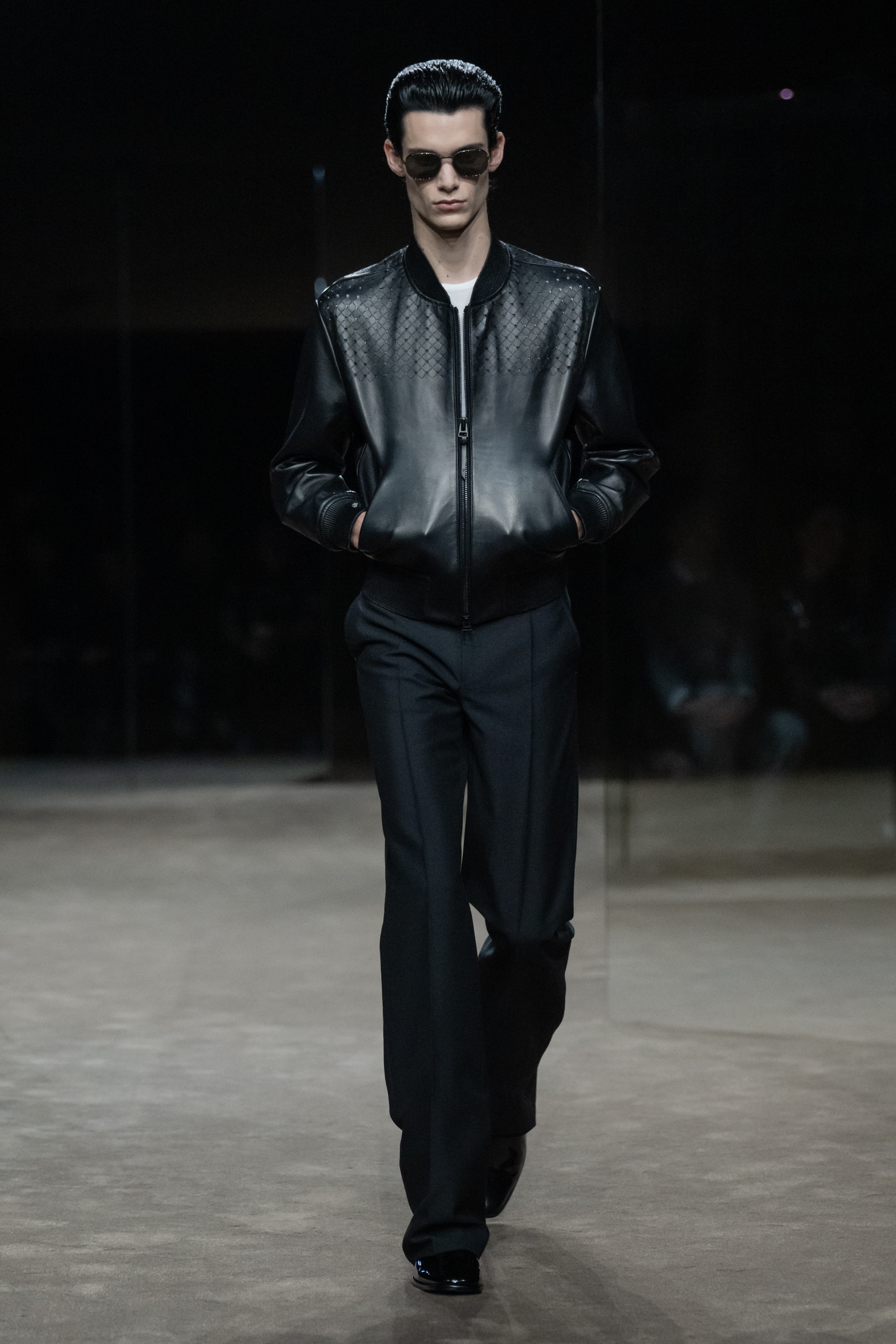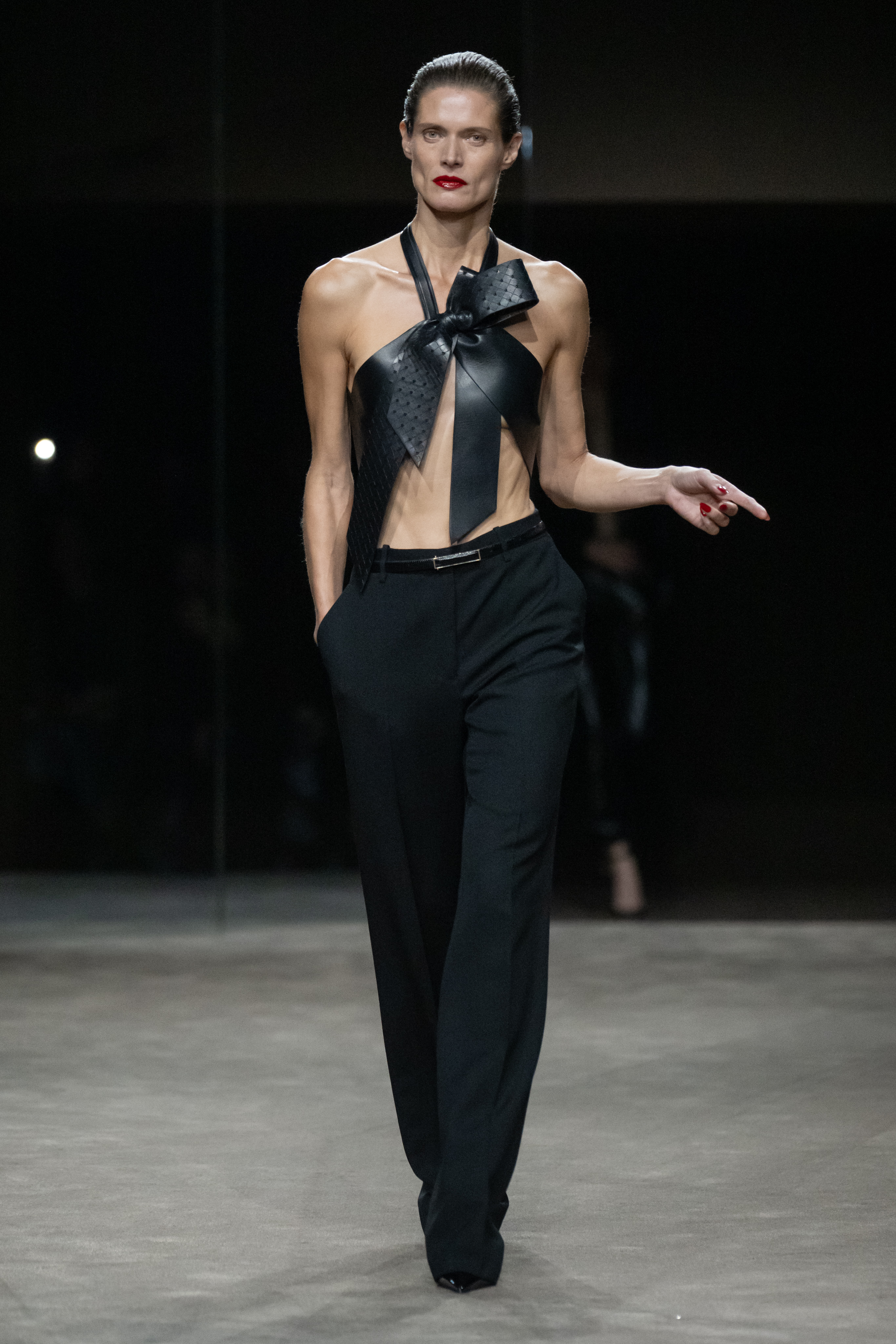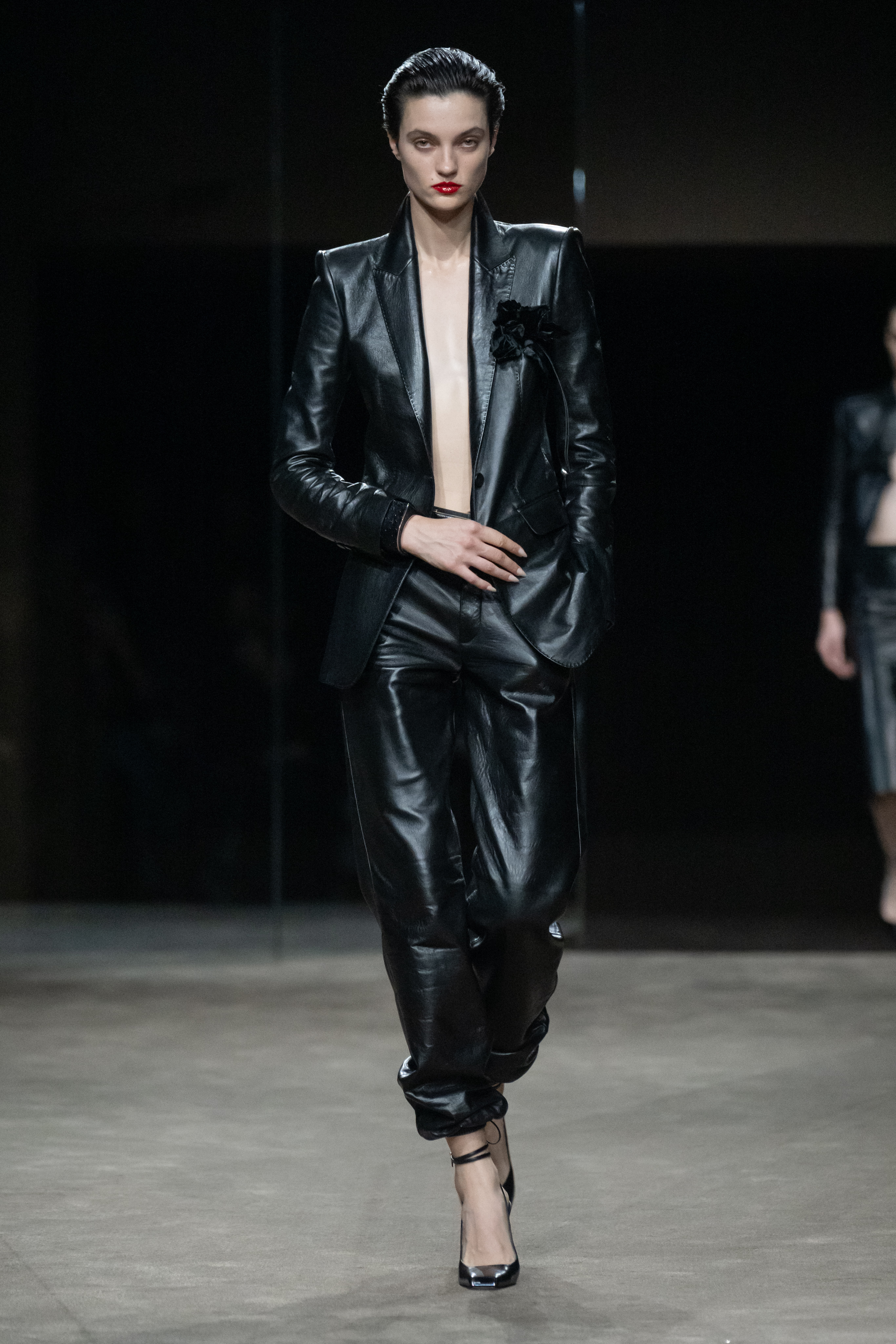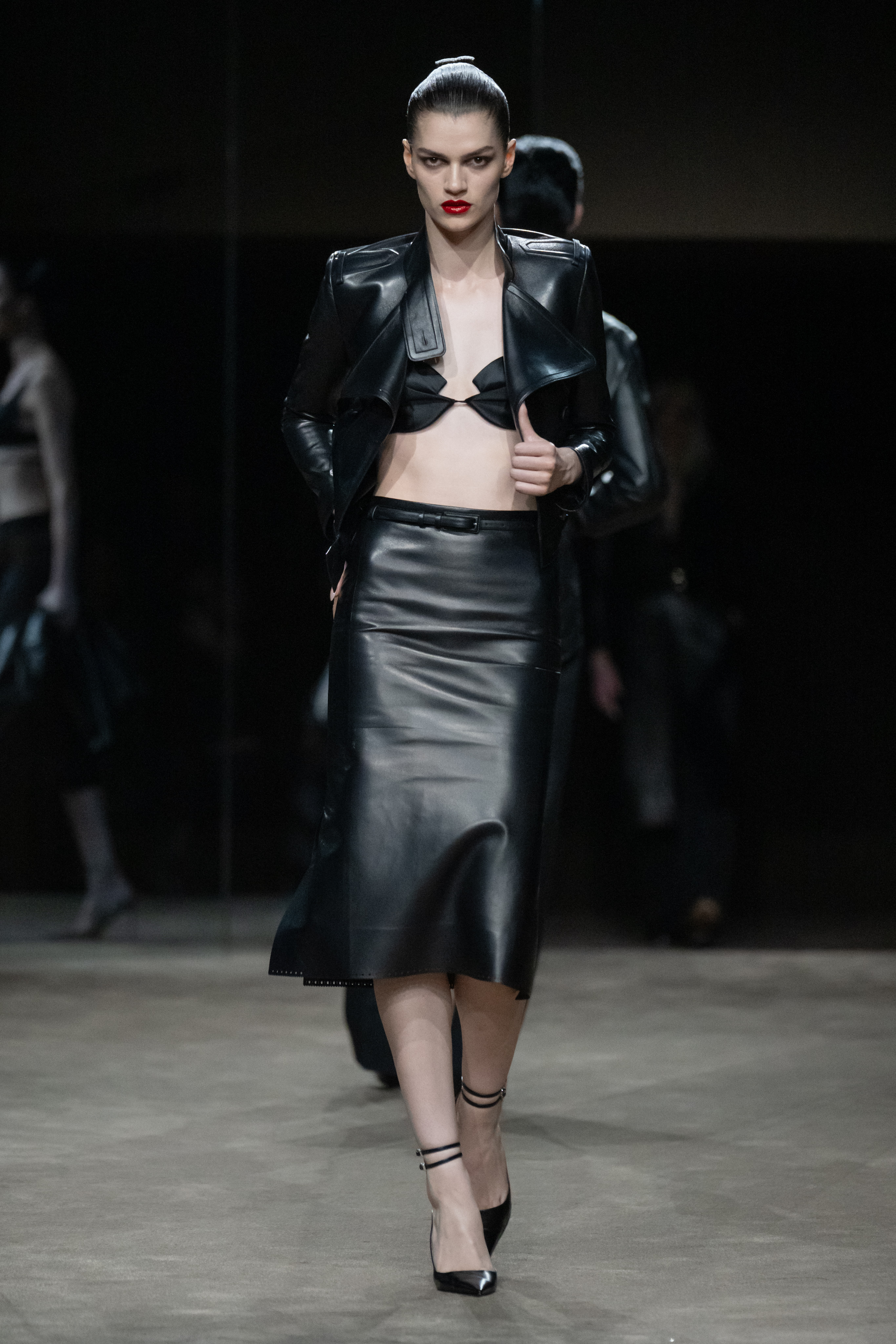
What happens when luxury stops asking to be admired and starts asking to be understood?
At Tom Ford, seduction has never been decoration. It has been architecture: a way of constructing the body, the gaze, the room around it.
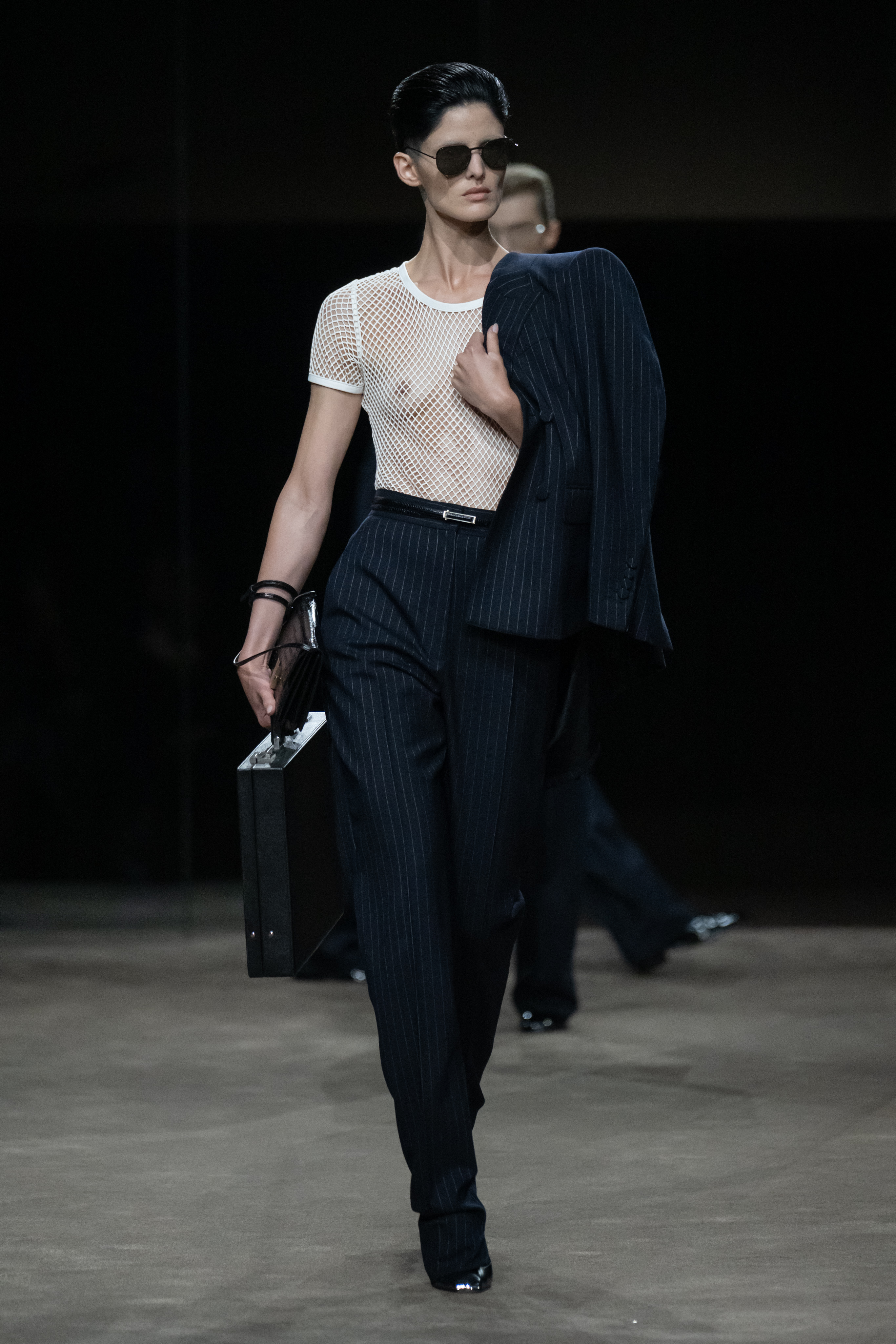
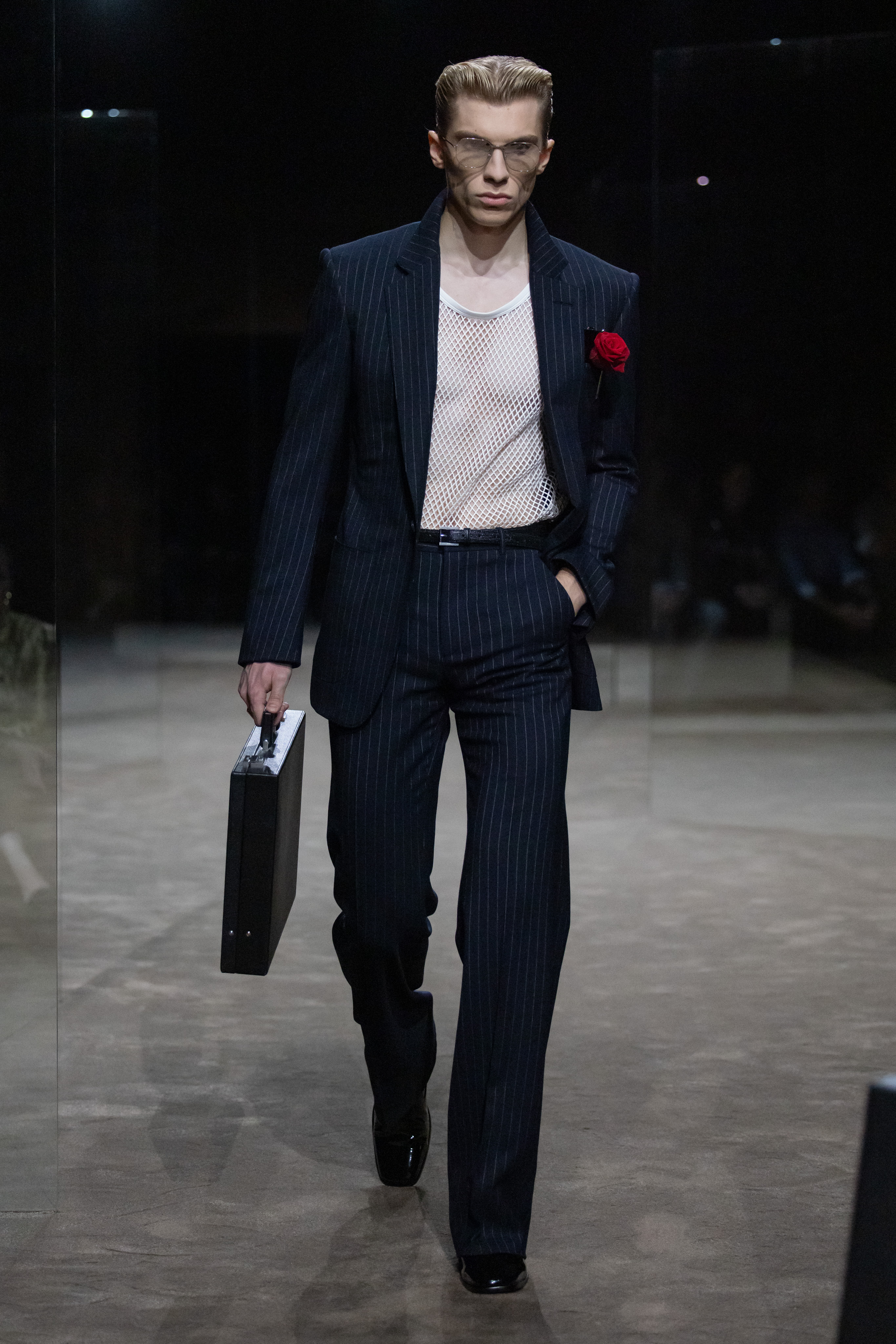
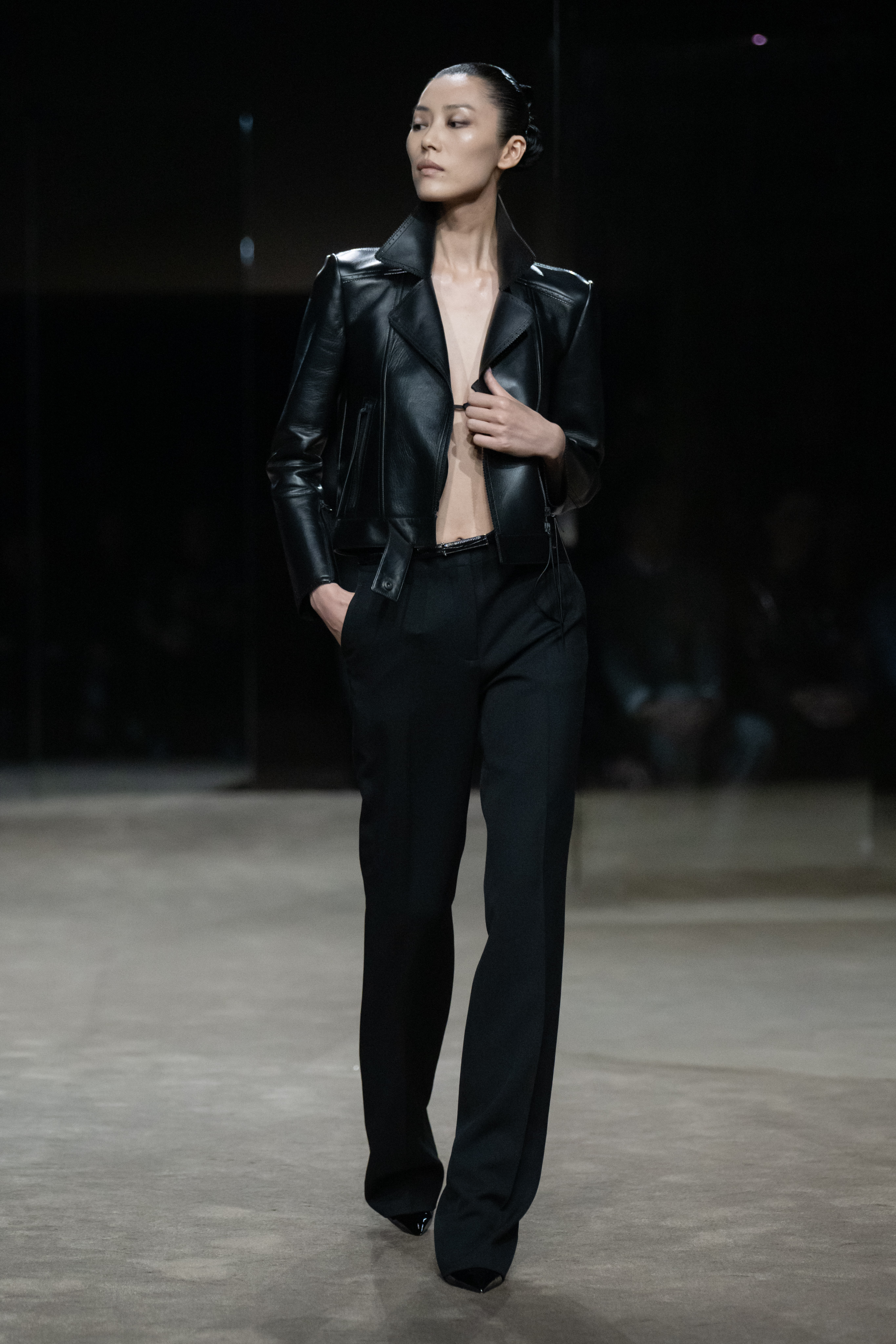
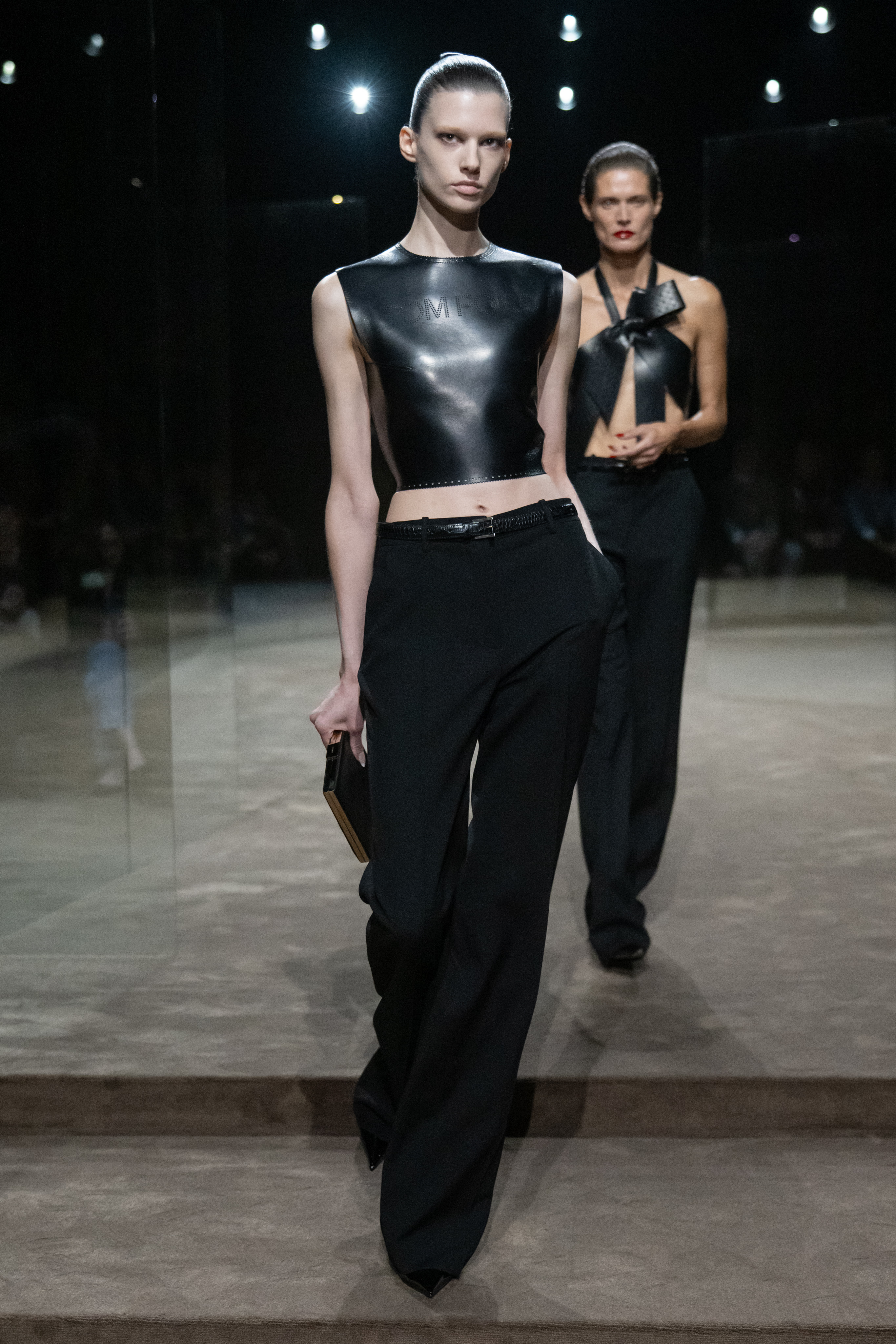
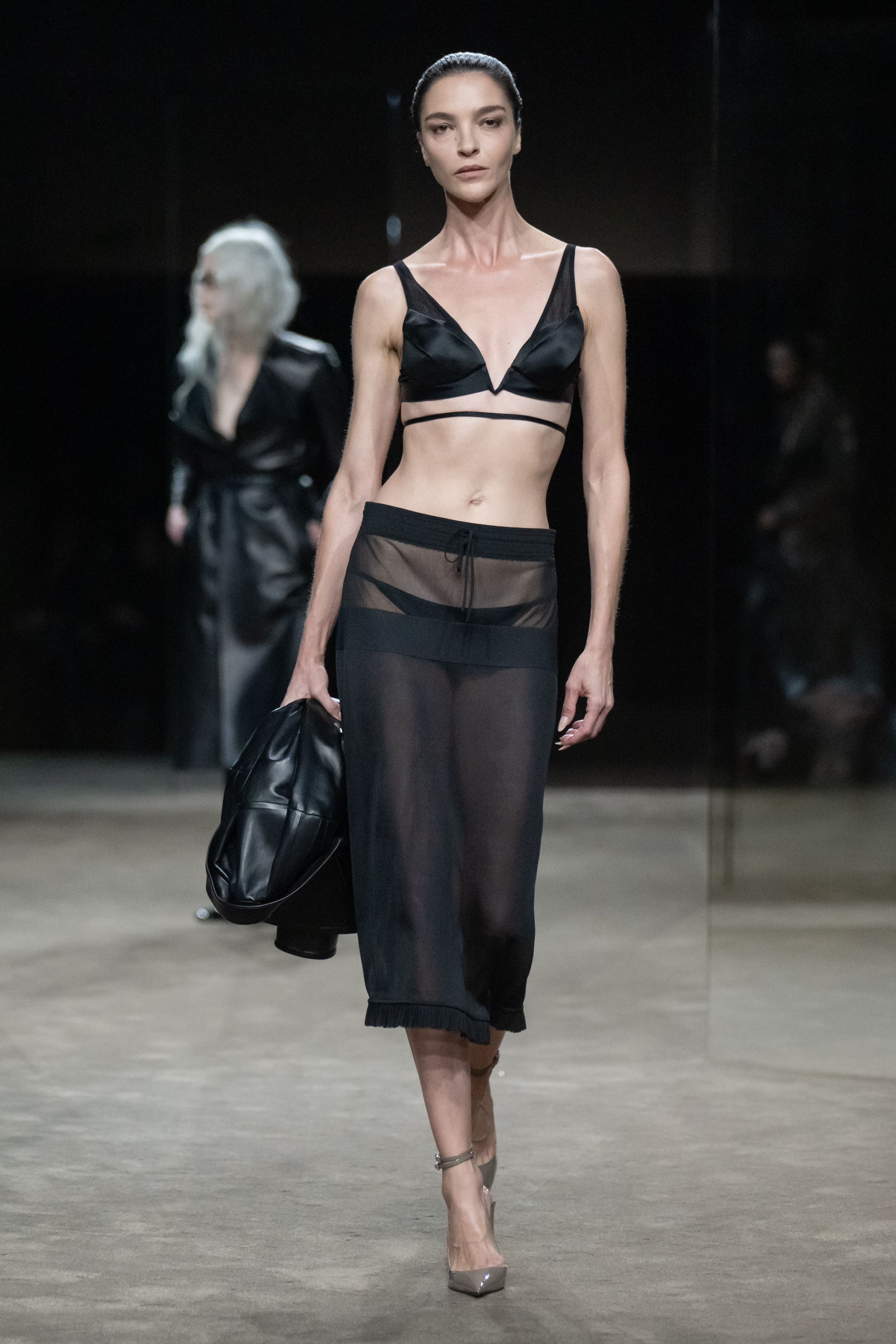
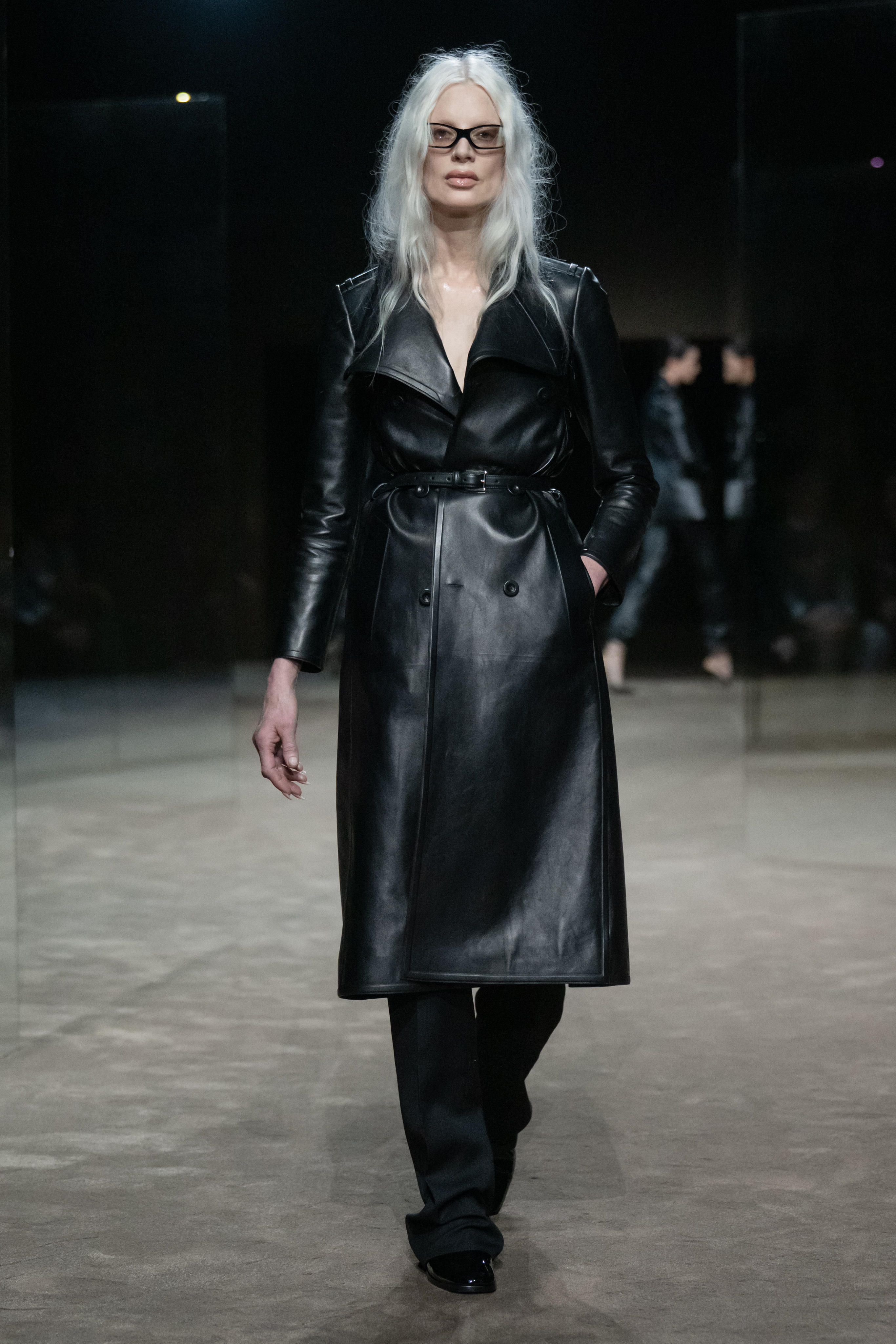
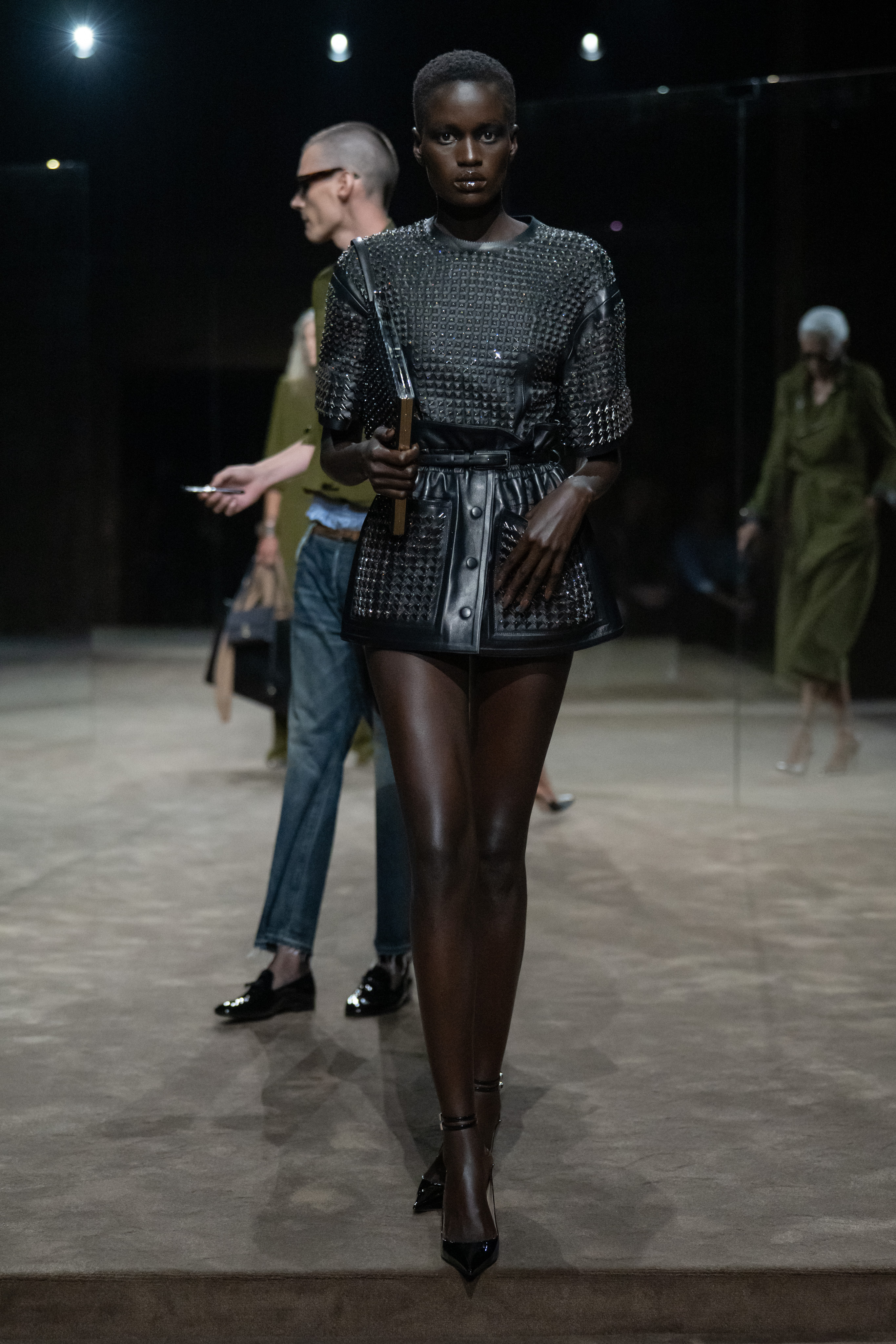
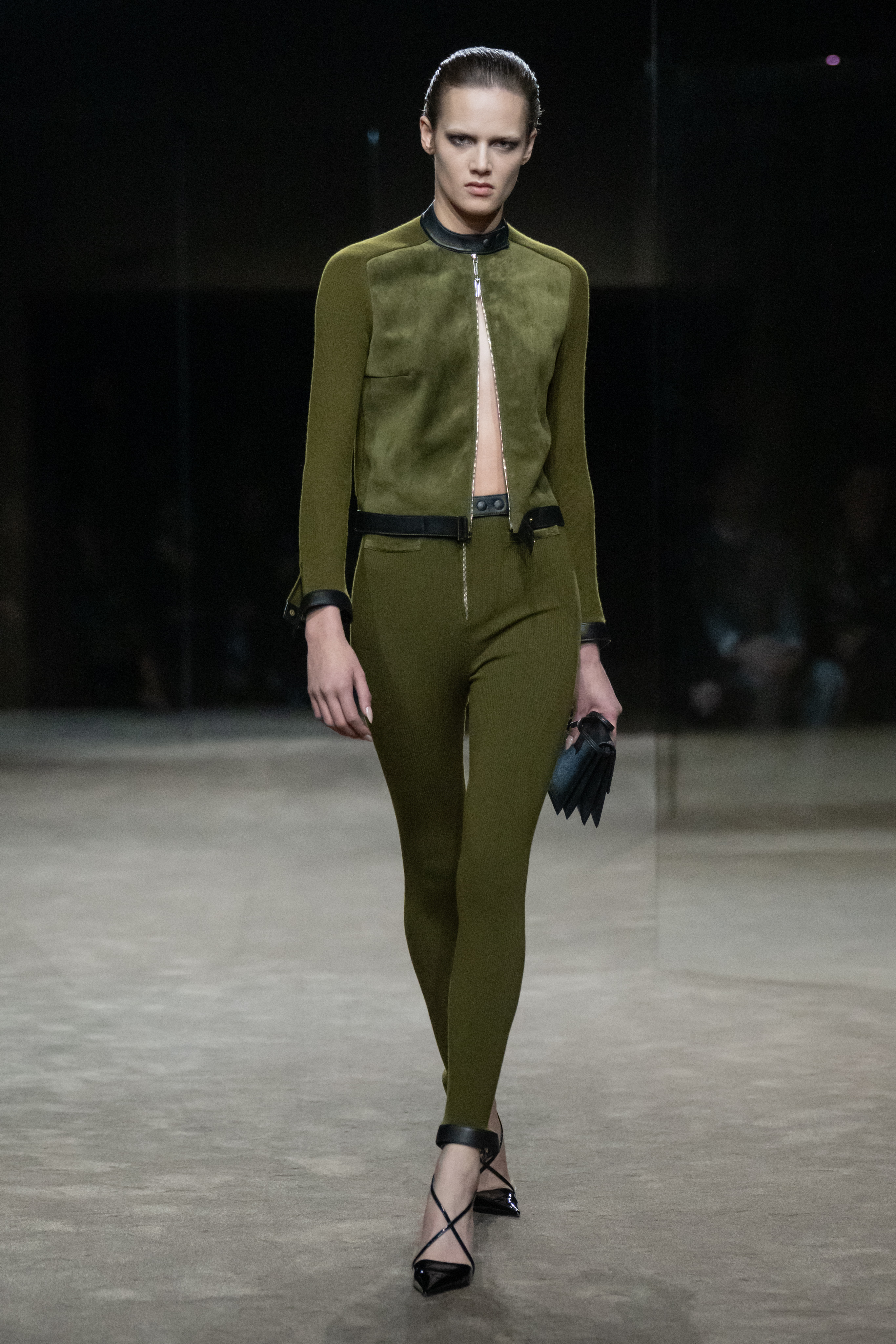
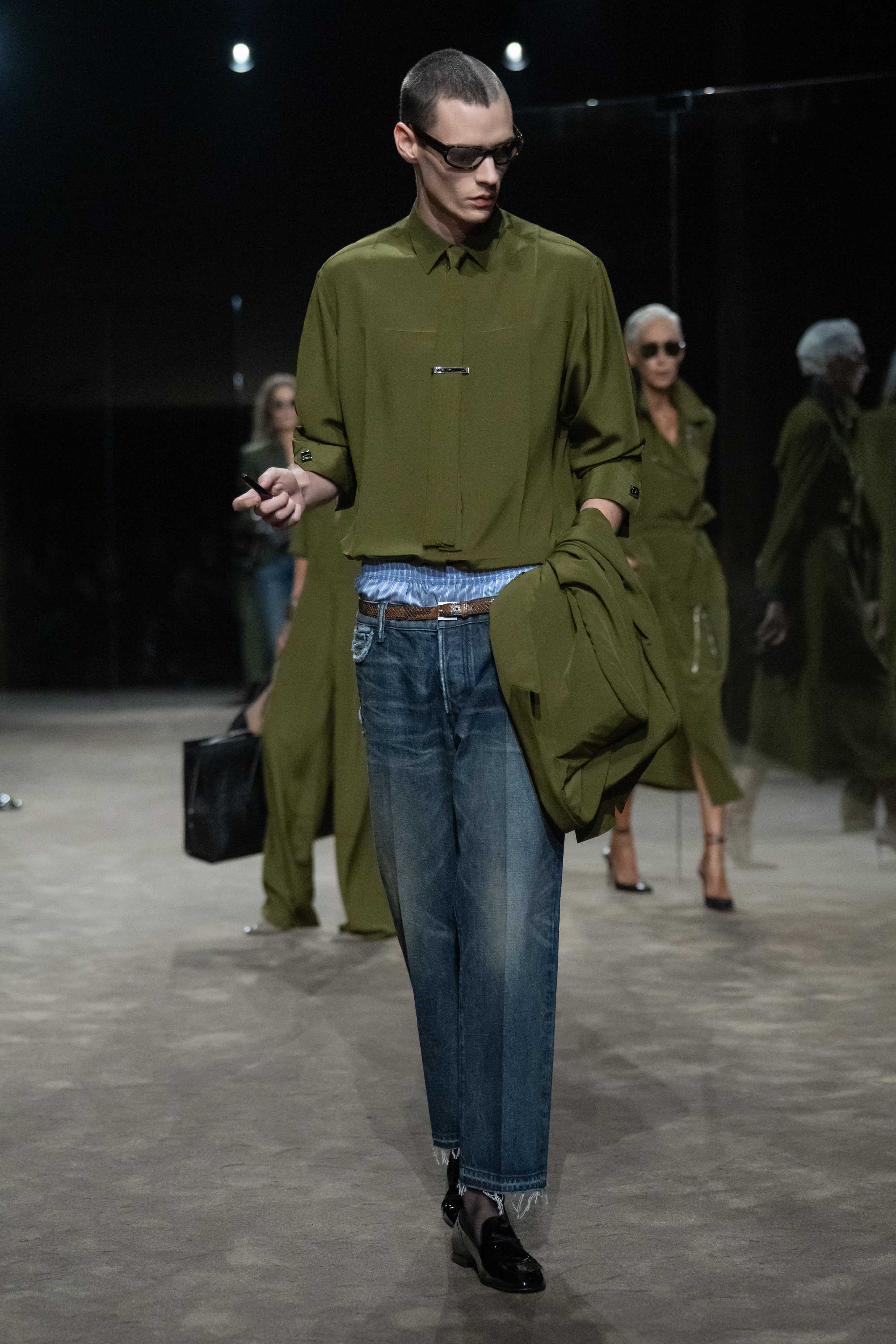
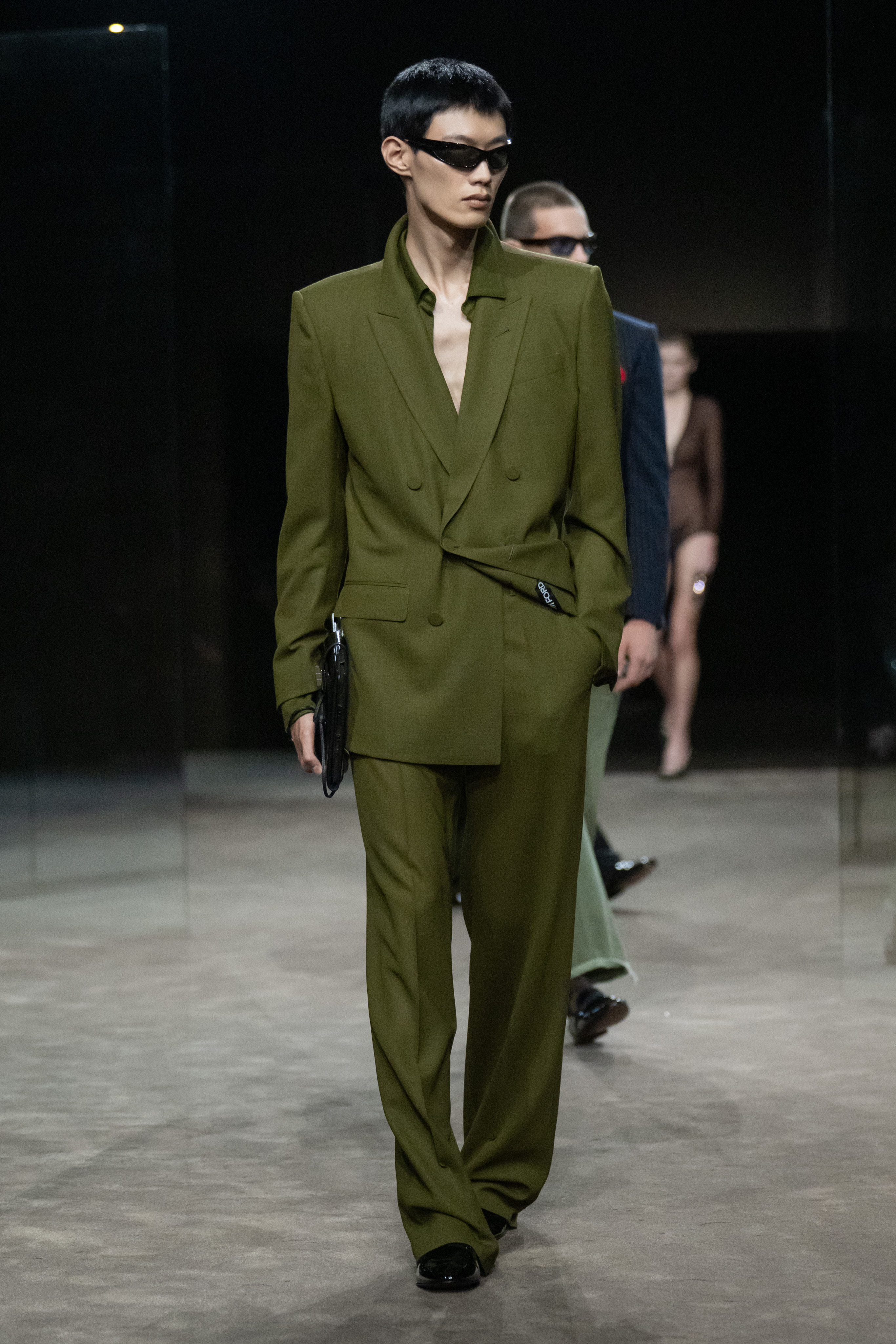
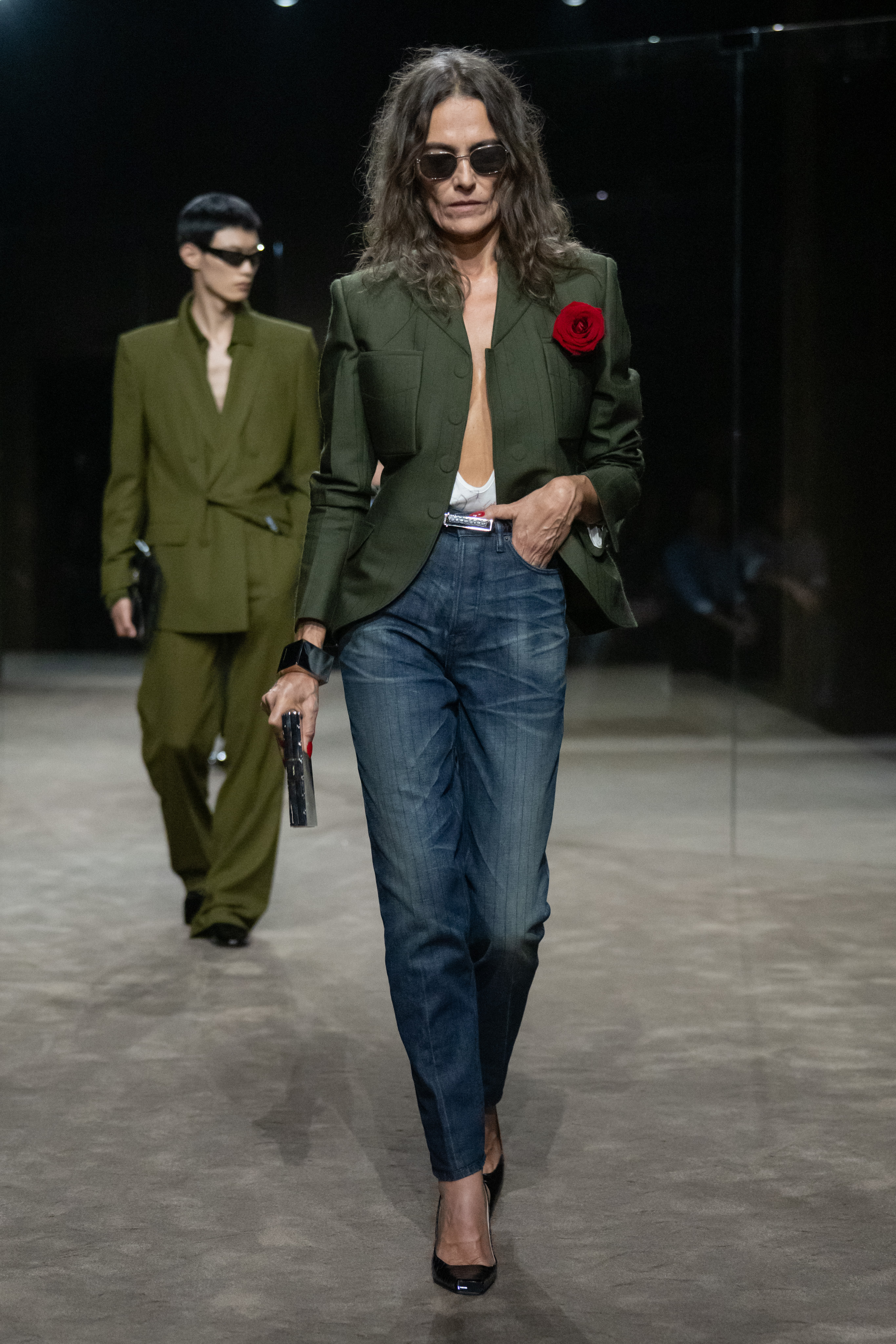
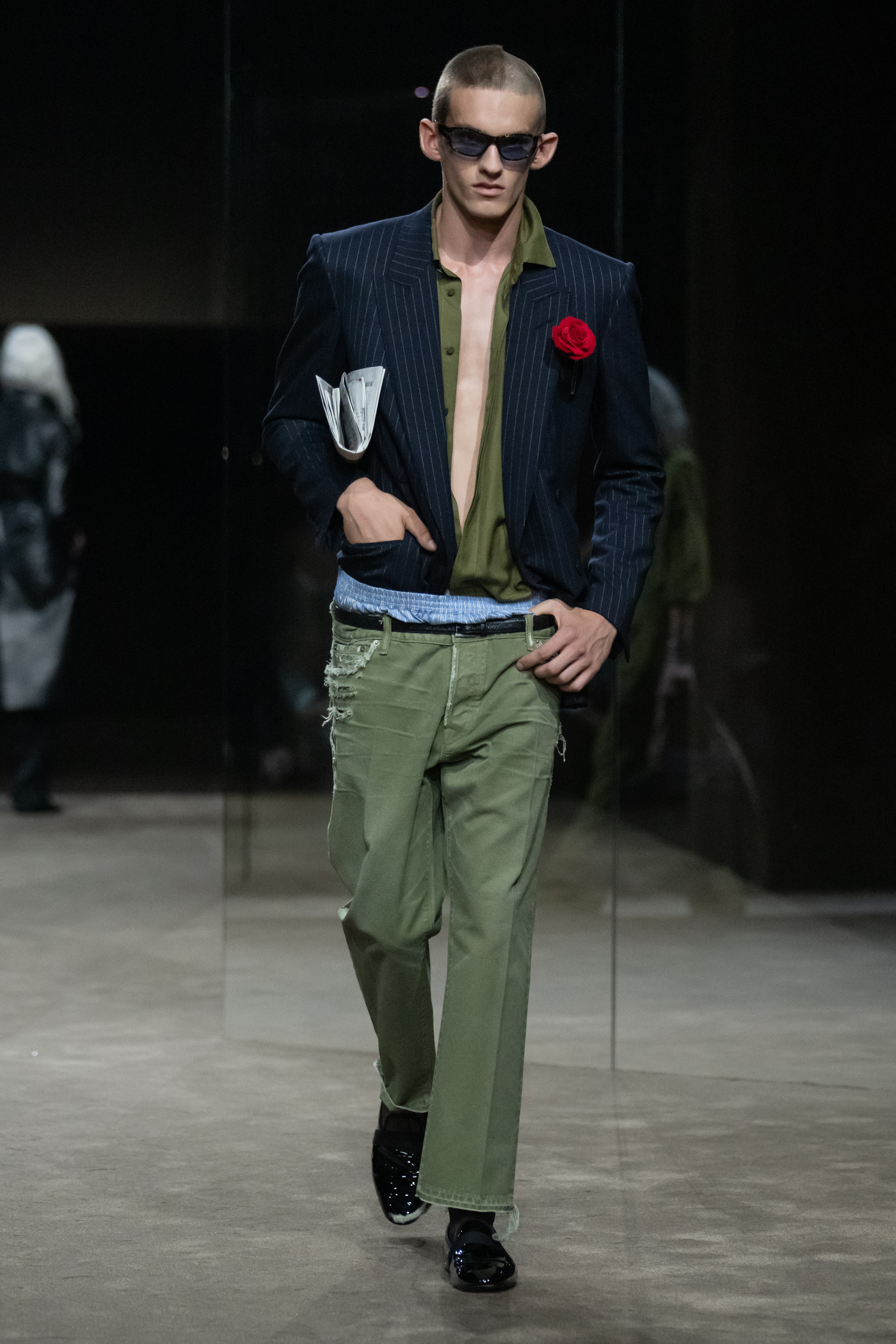
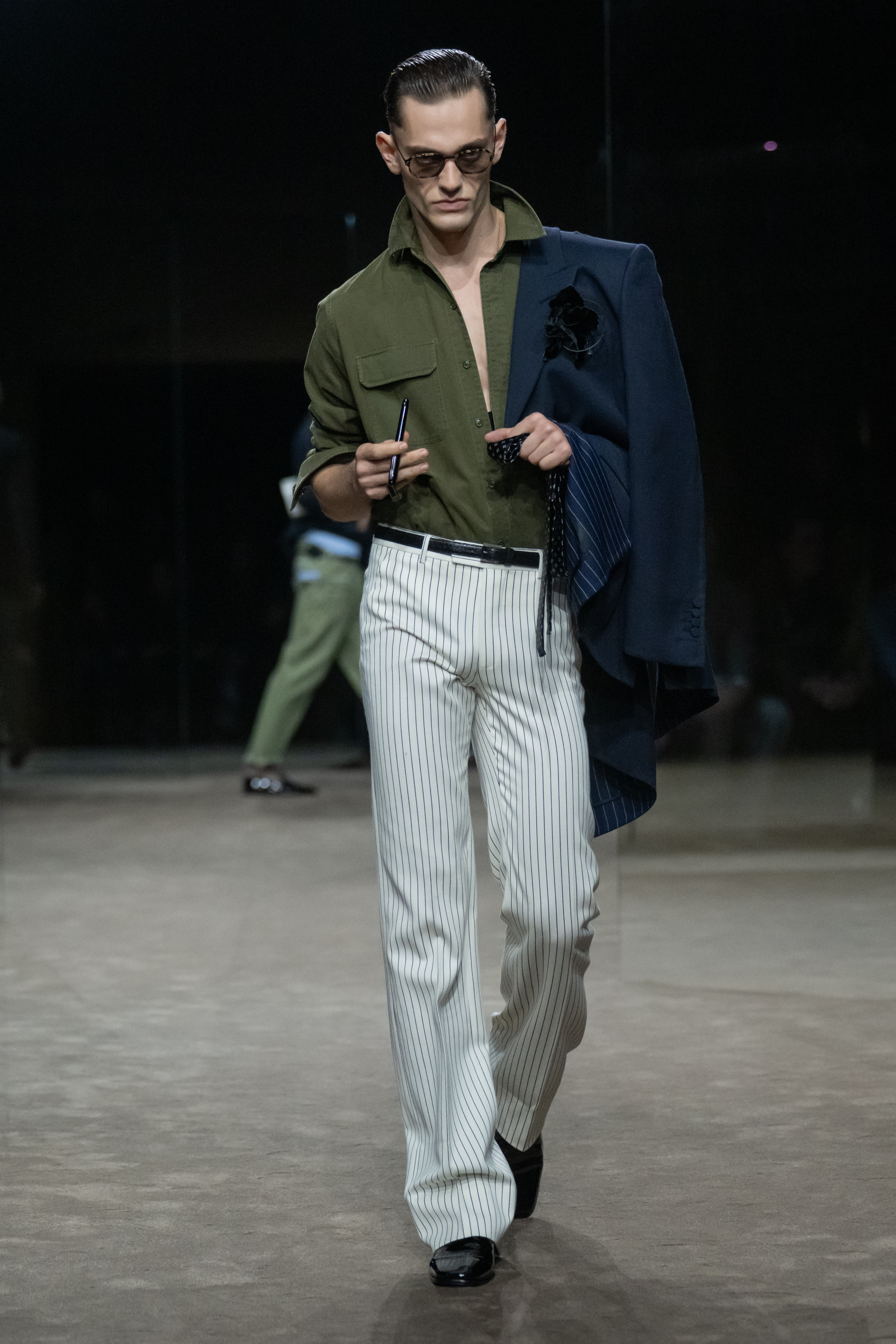
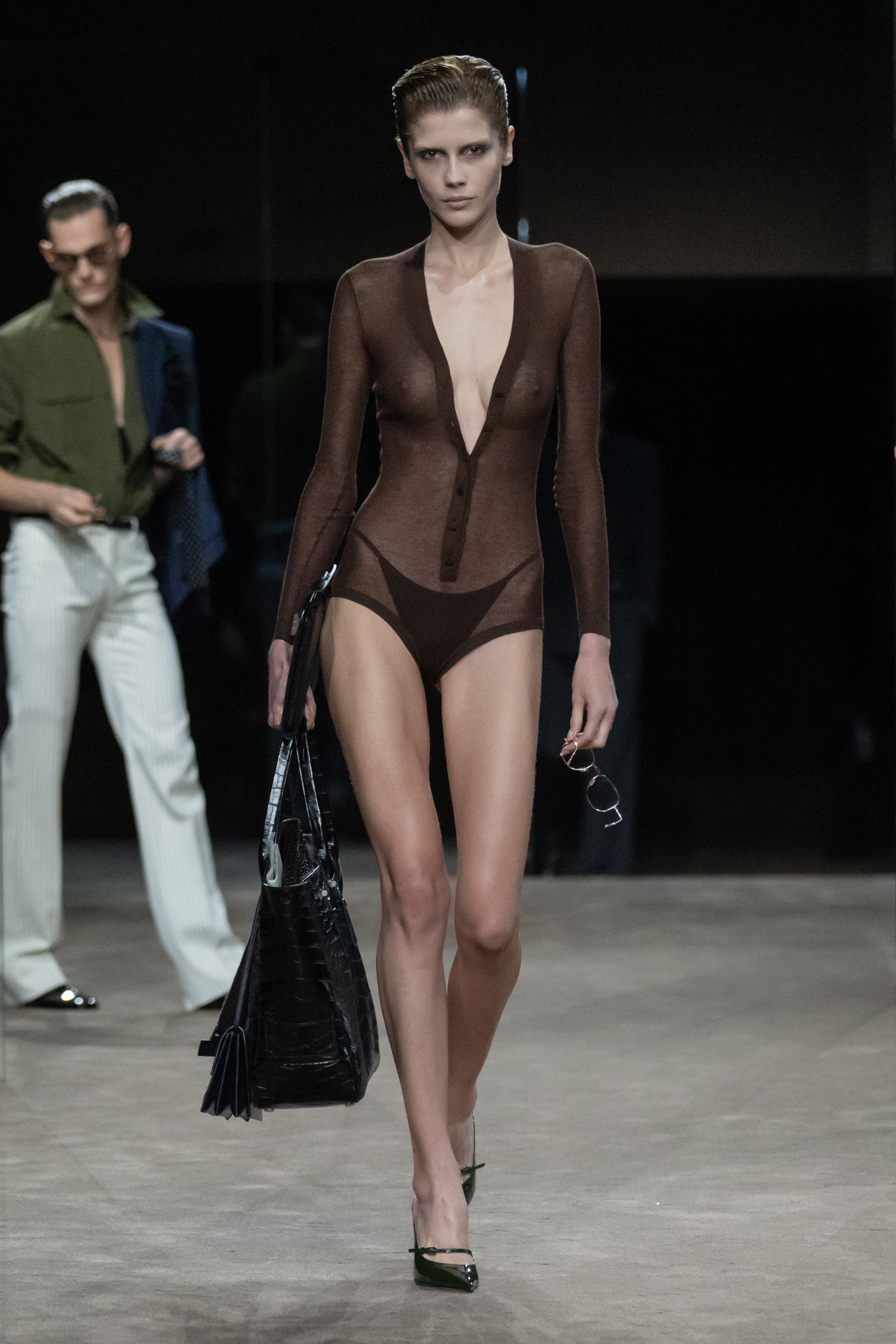
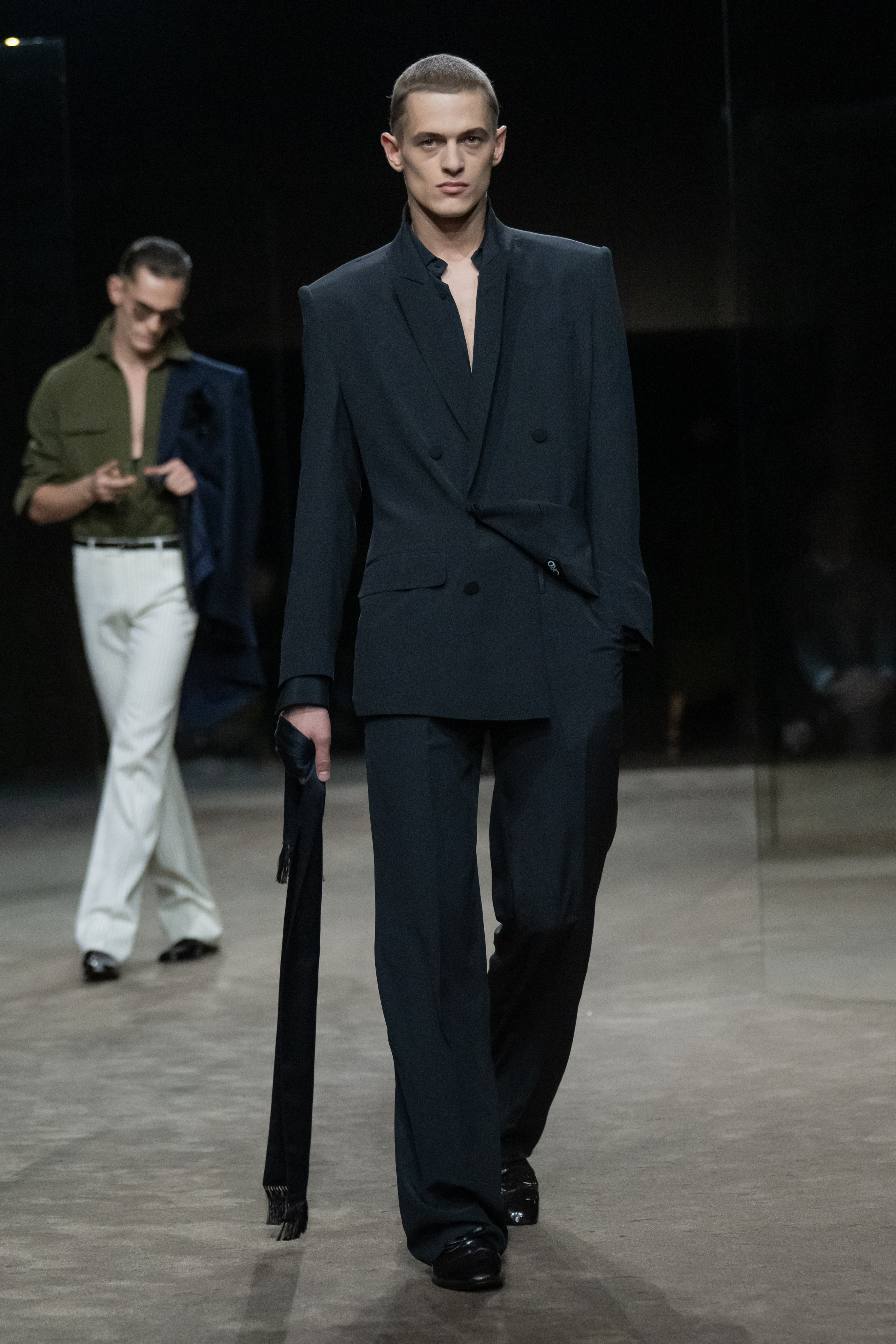
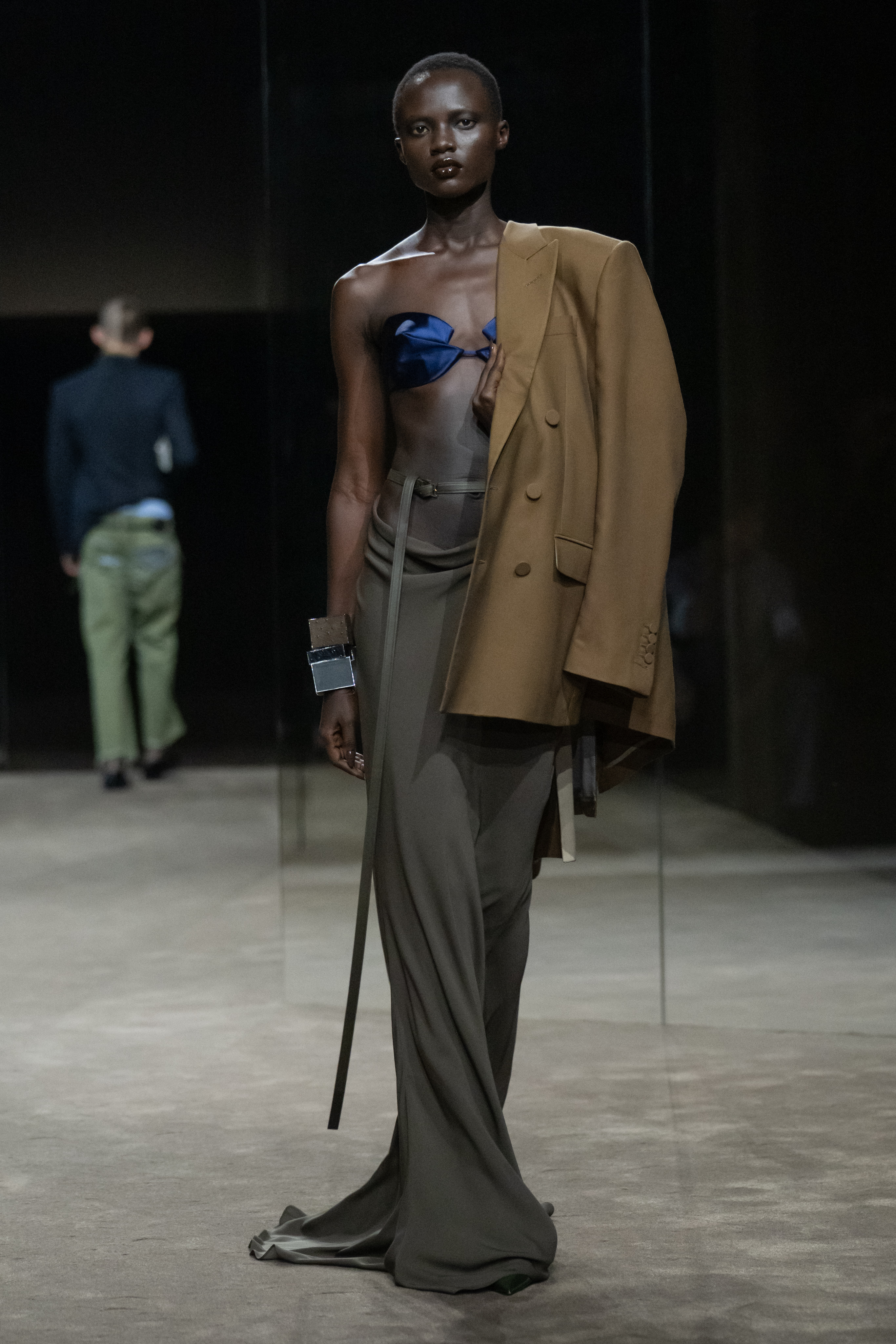
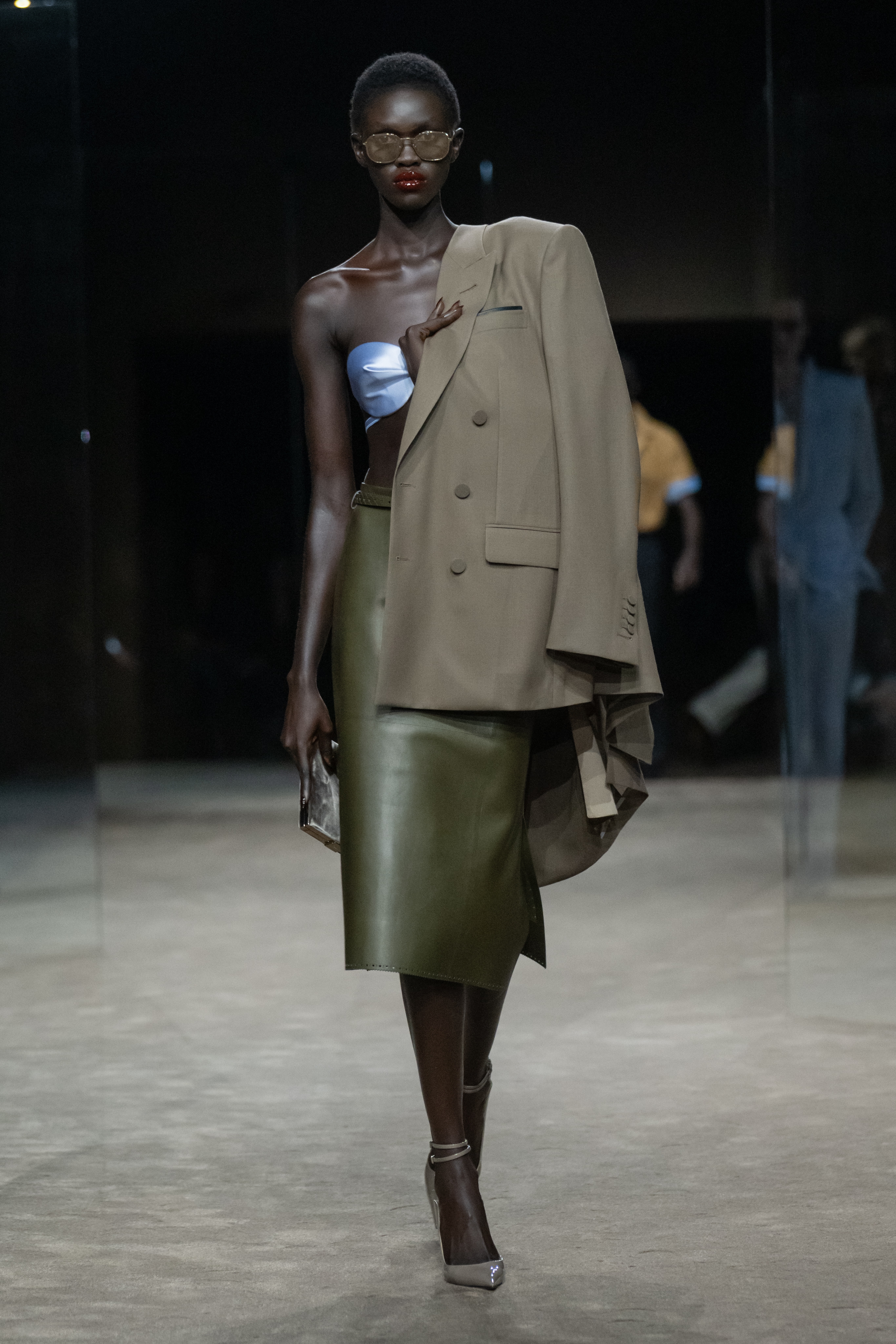
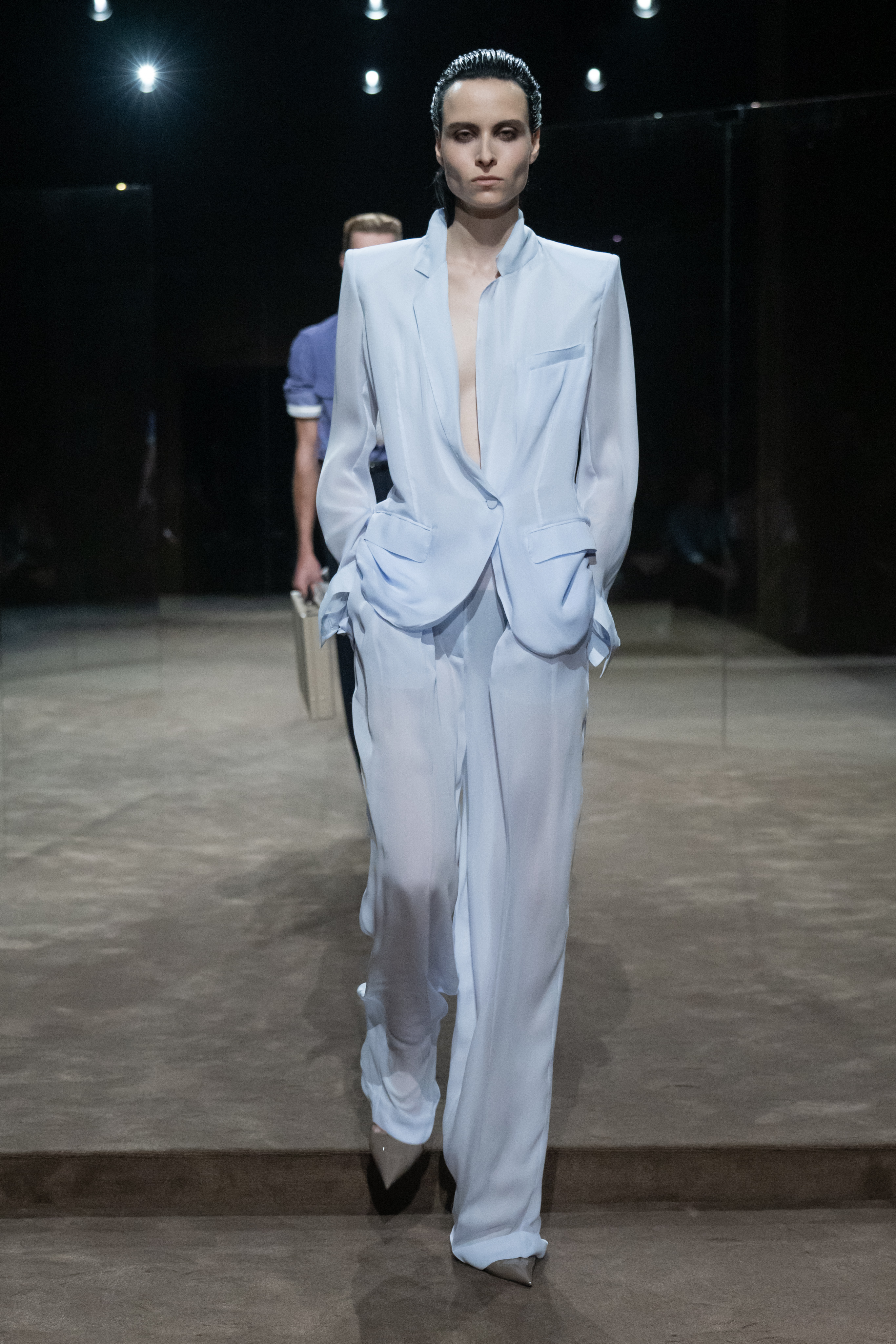
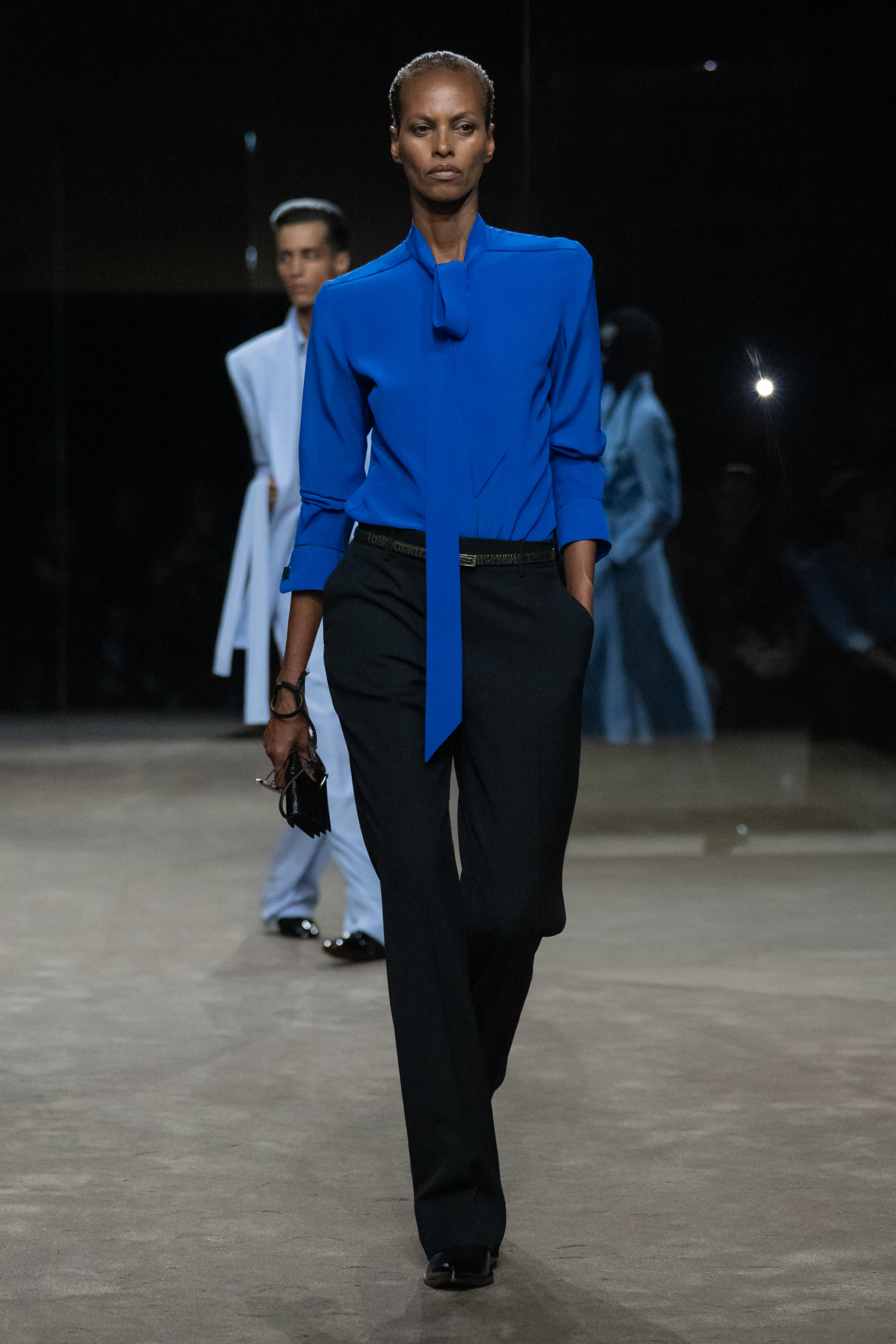
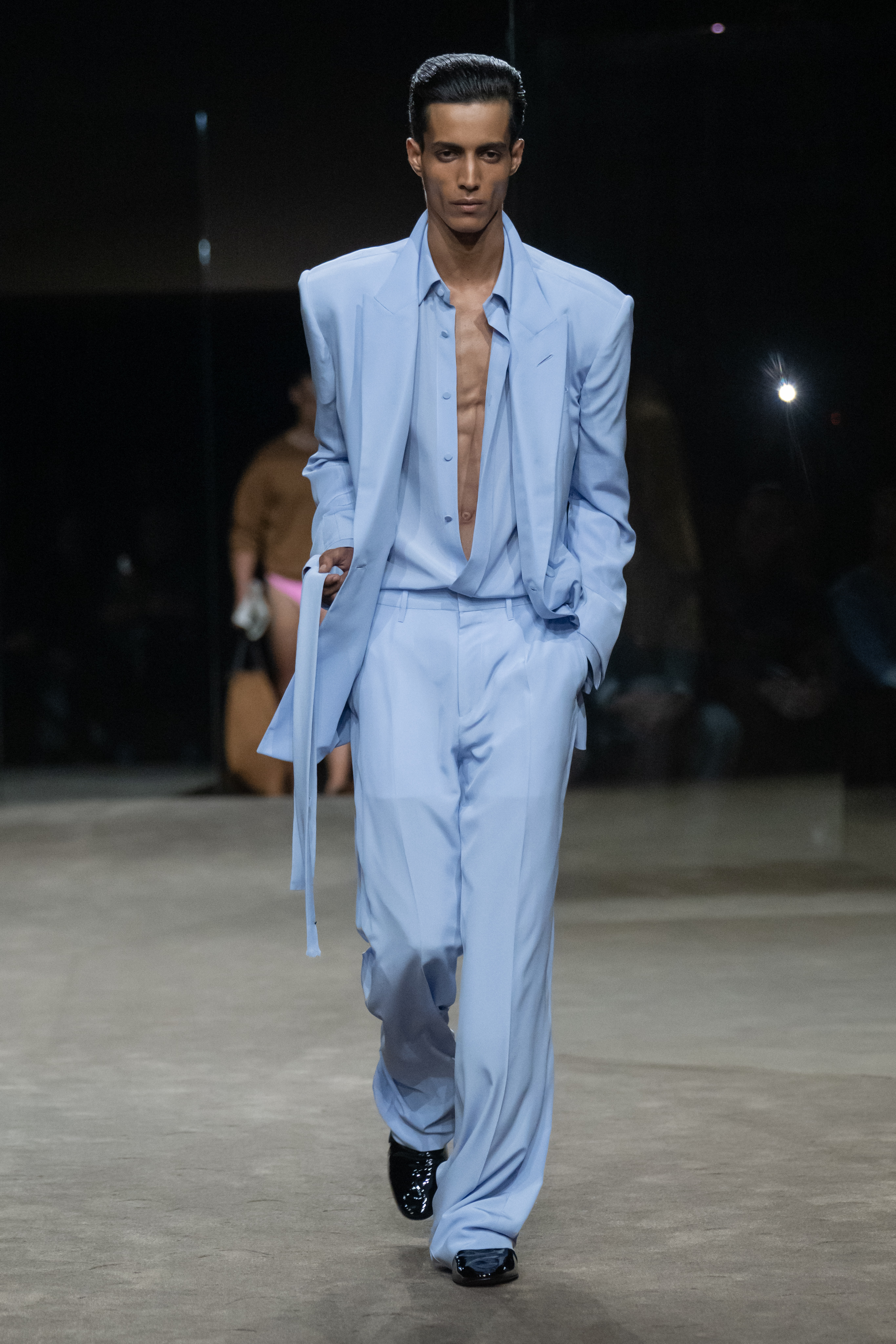
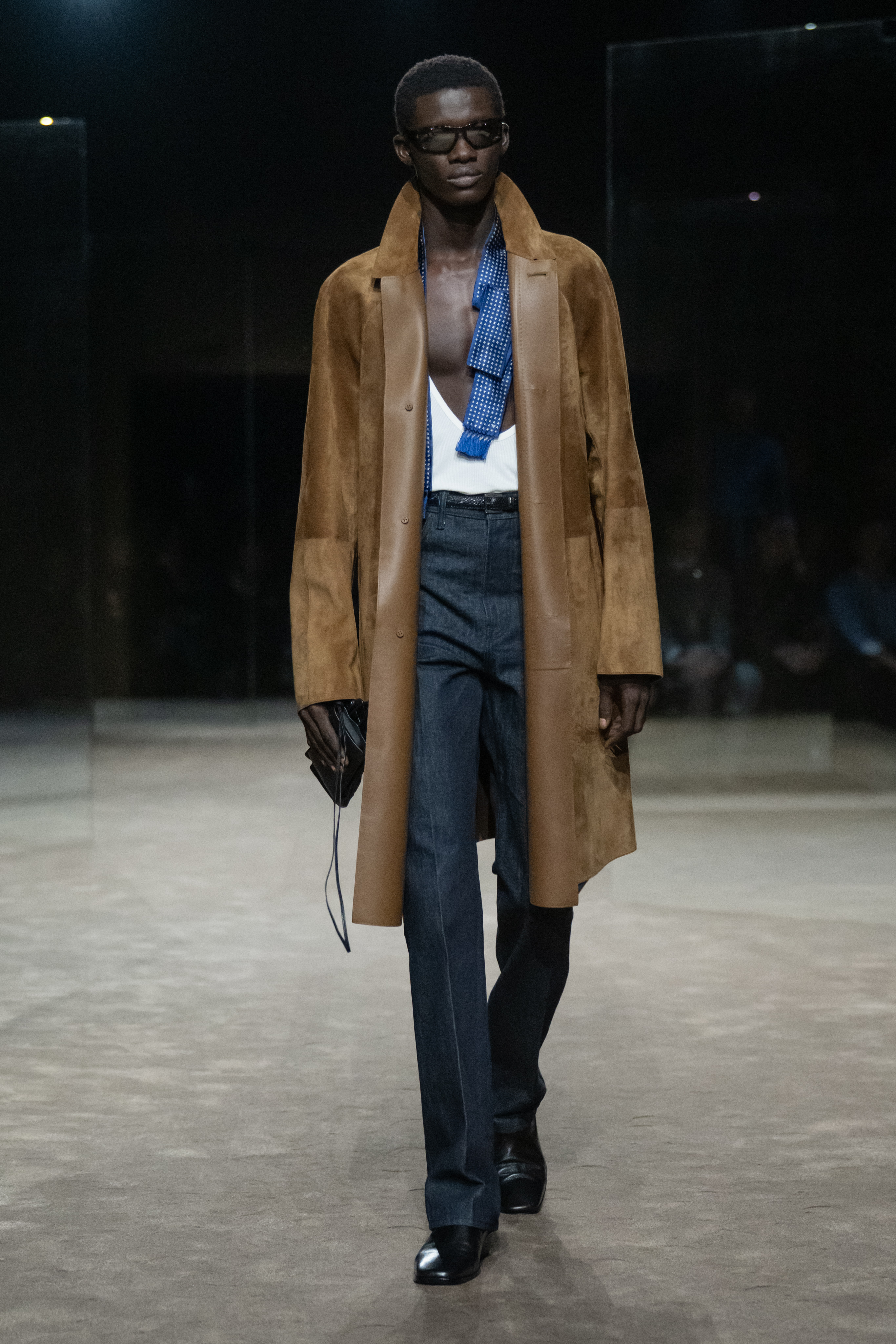
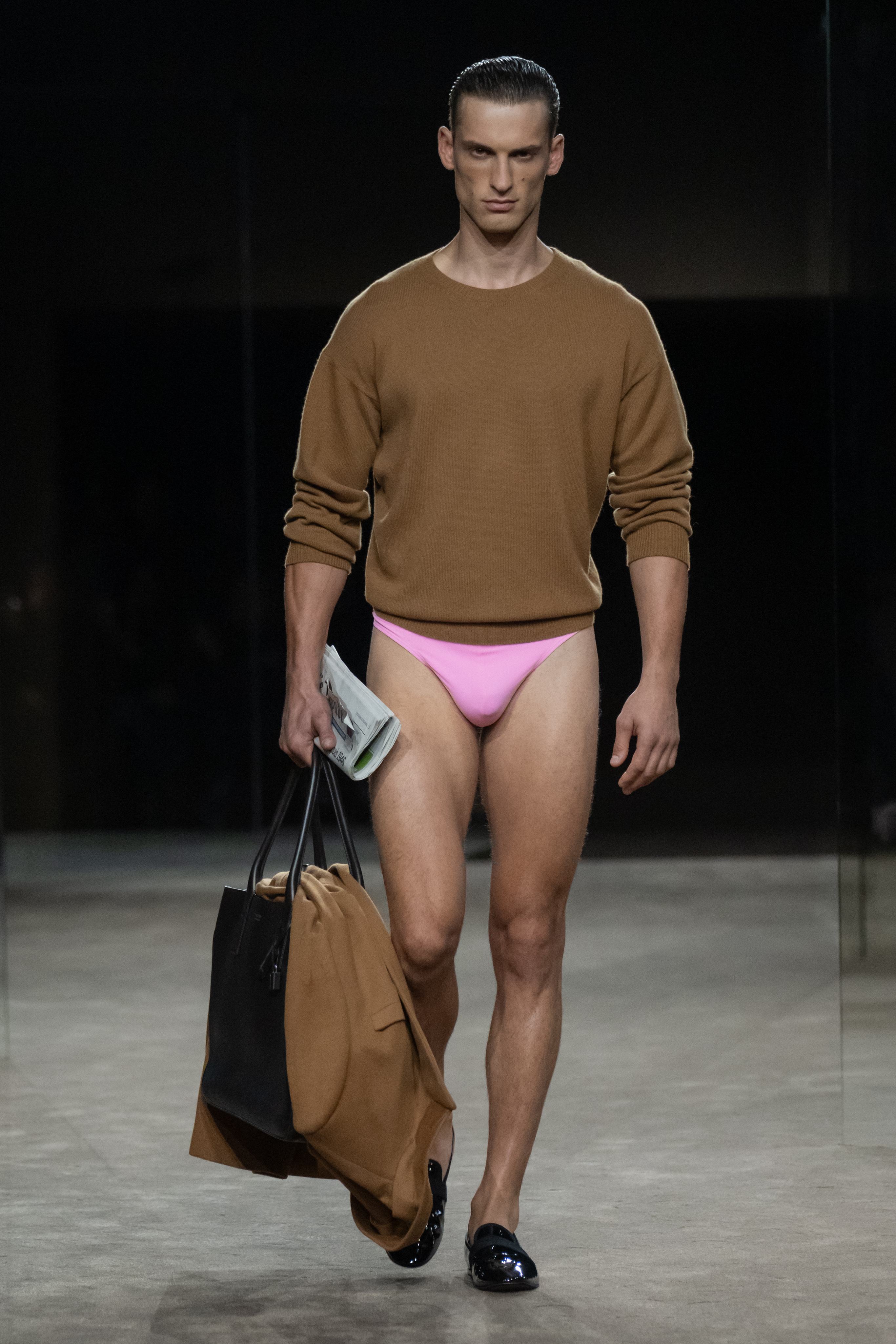
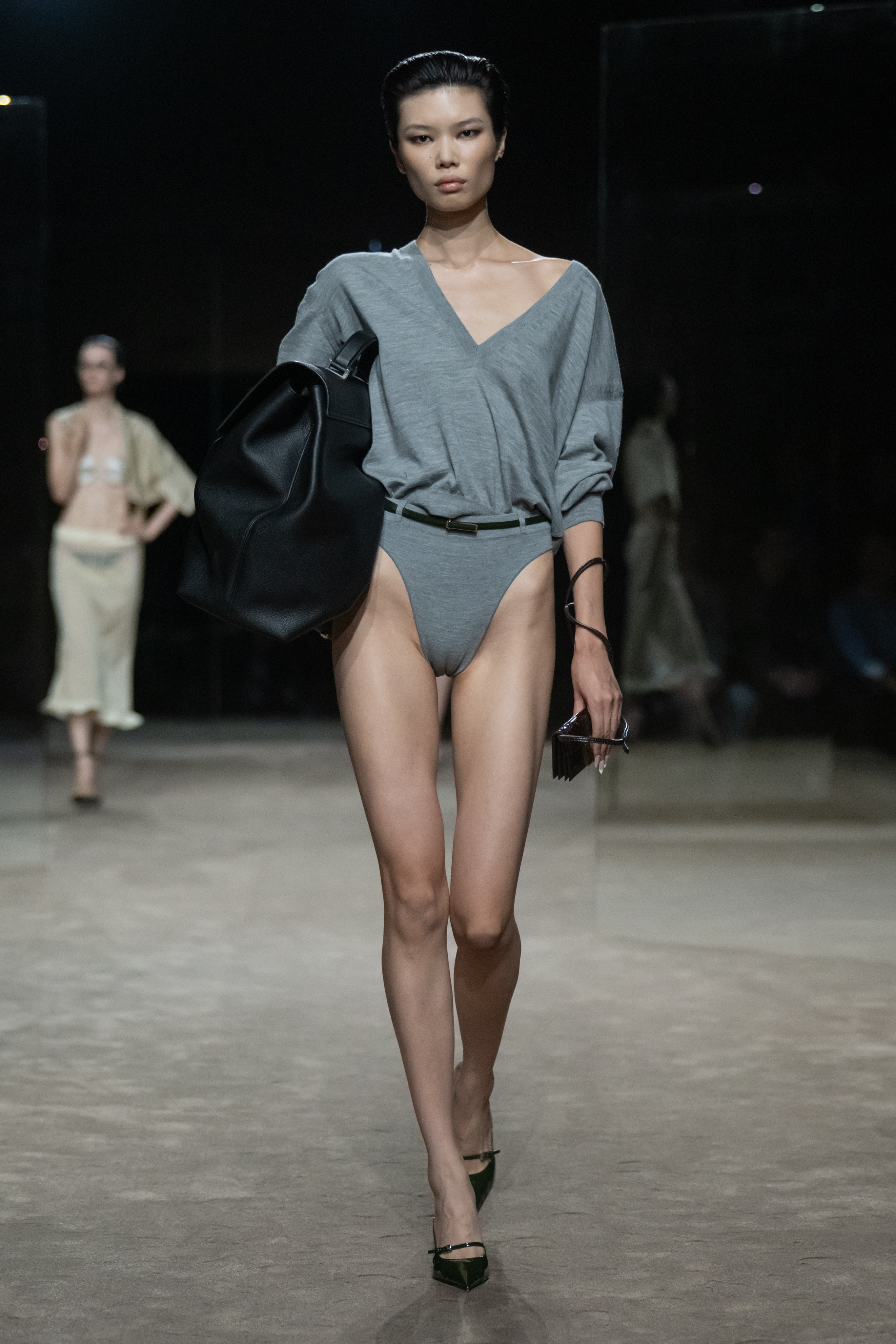
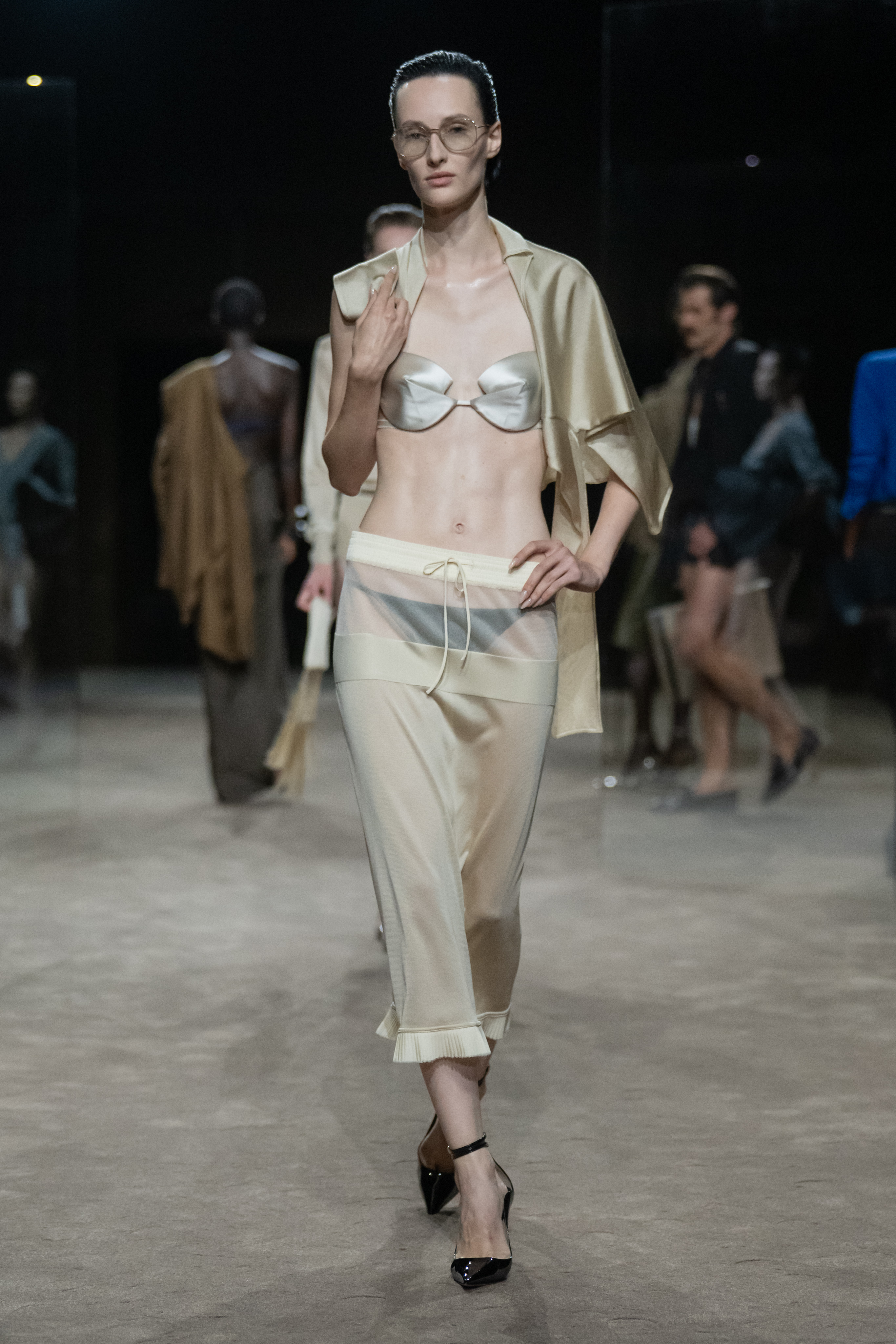
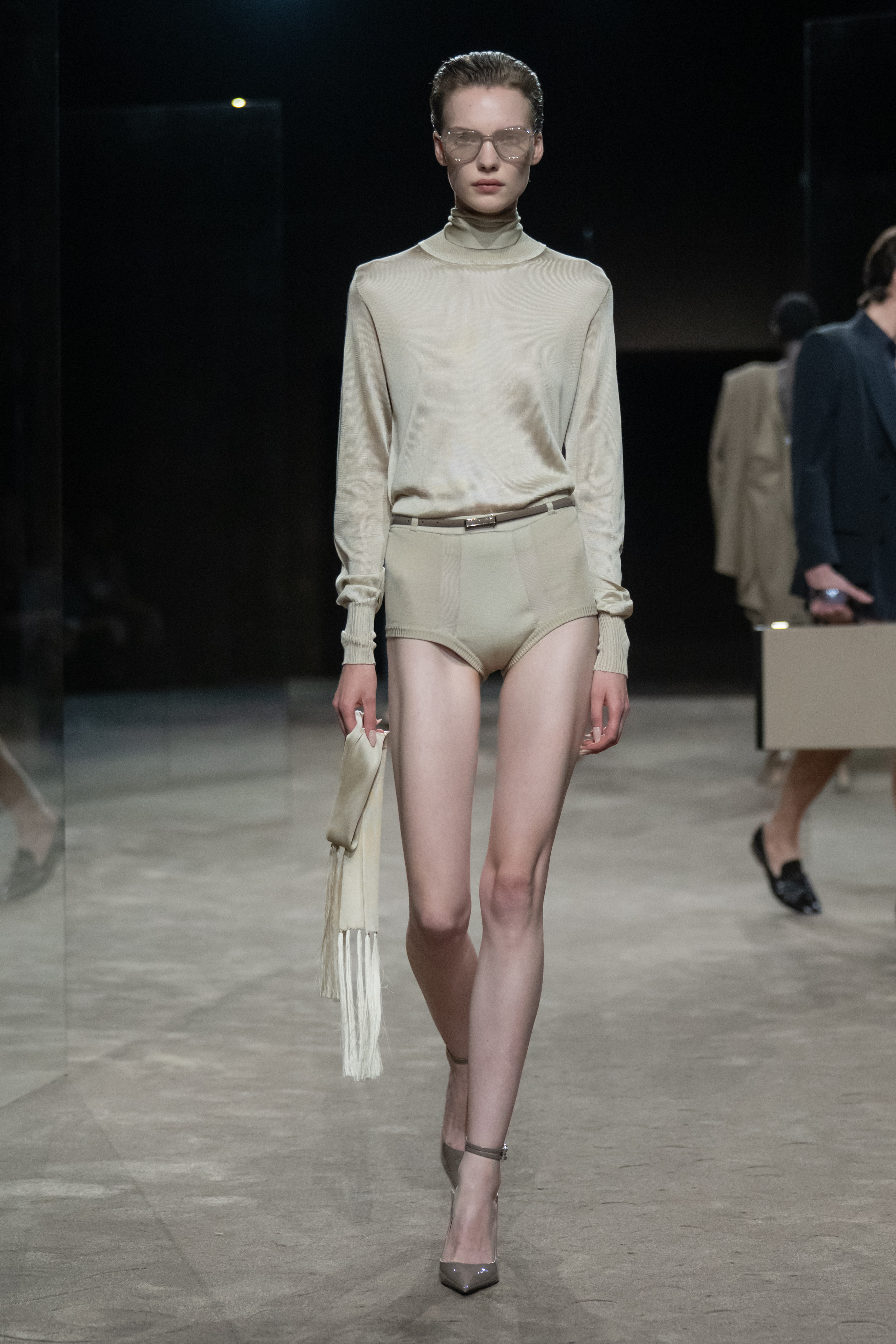
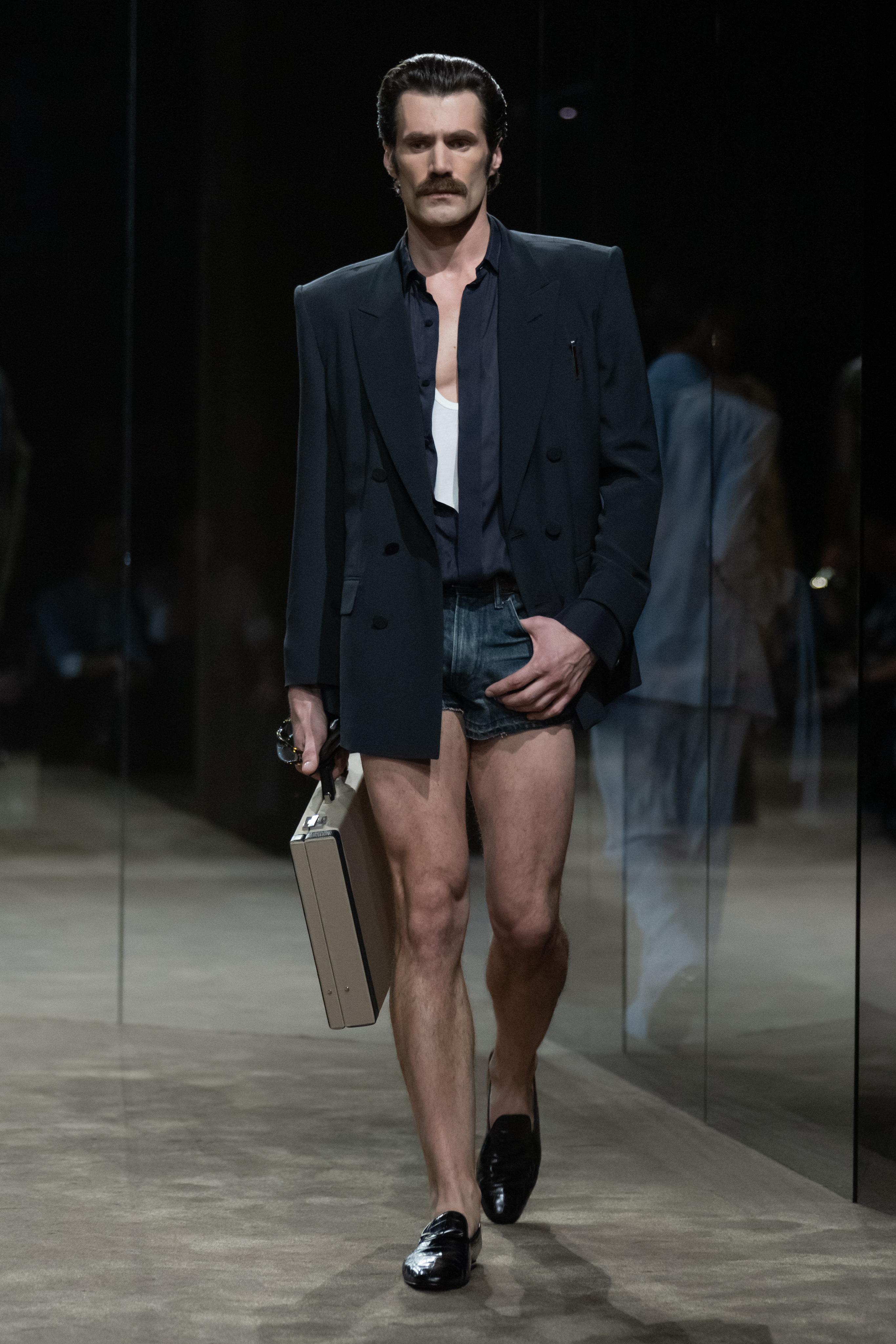
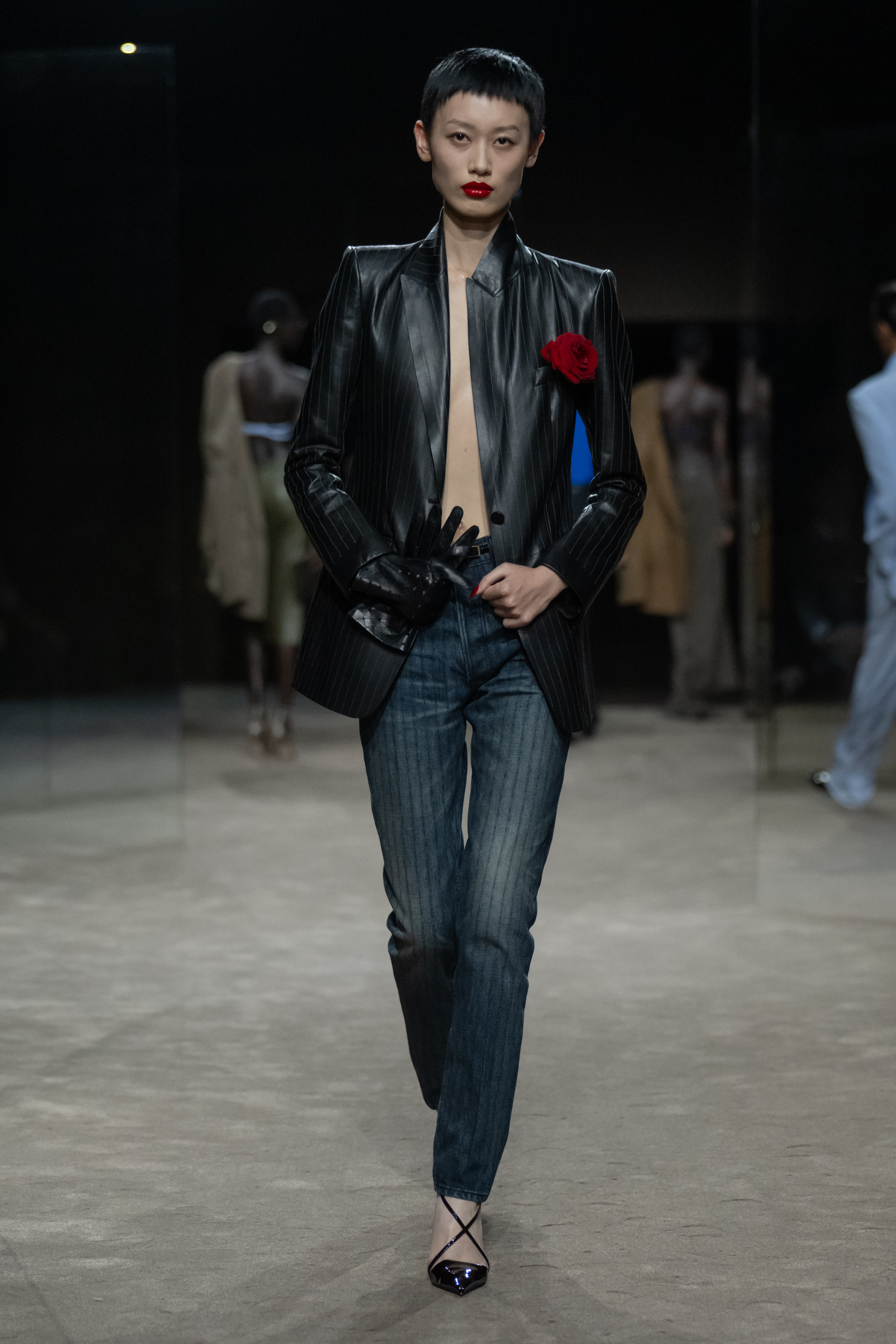
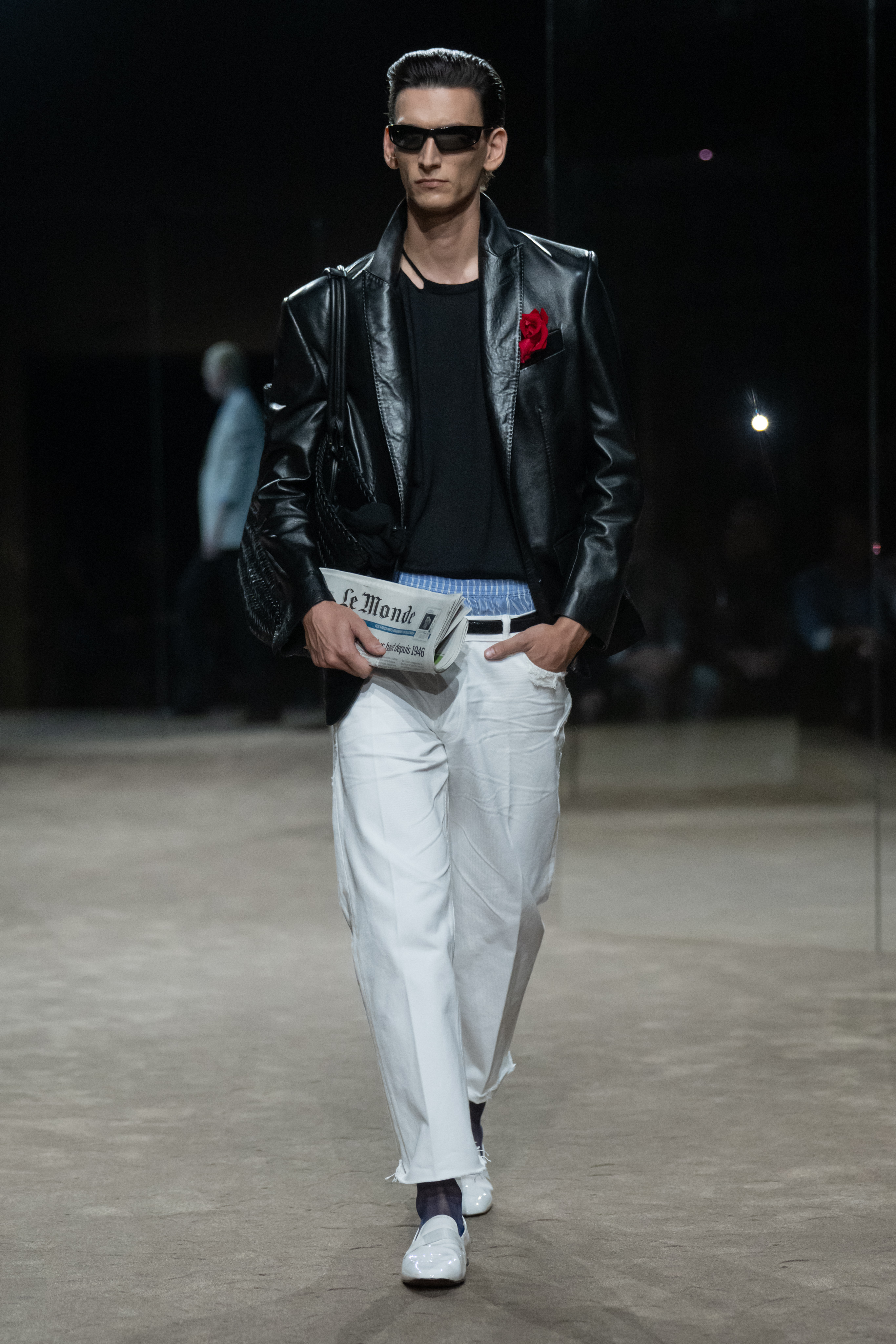
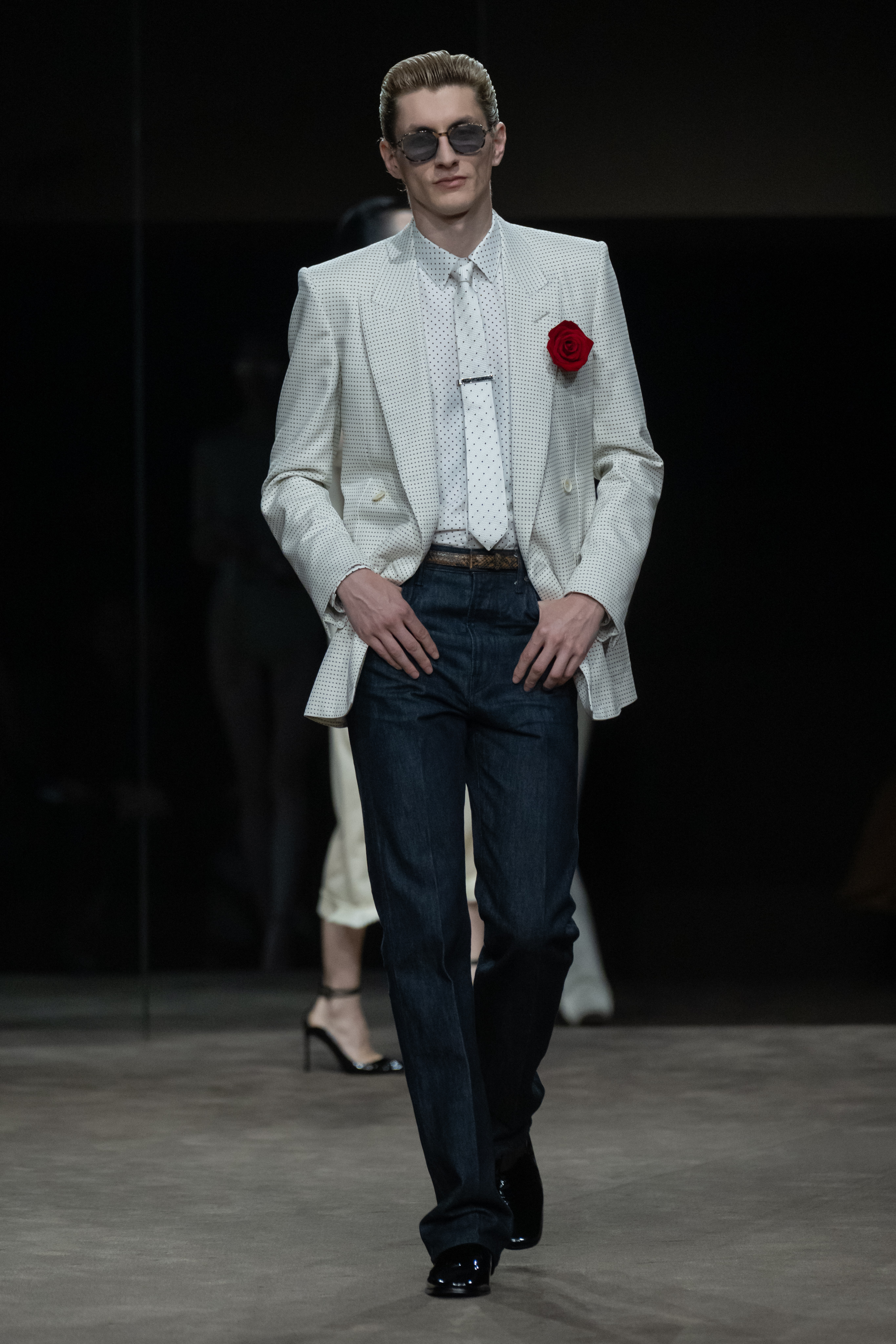
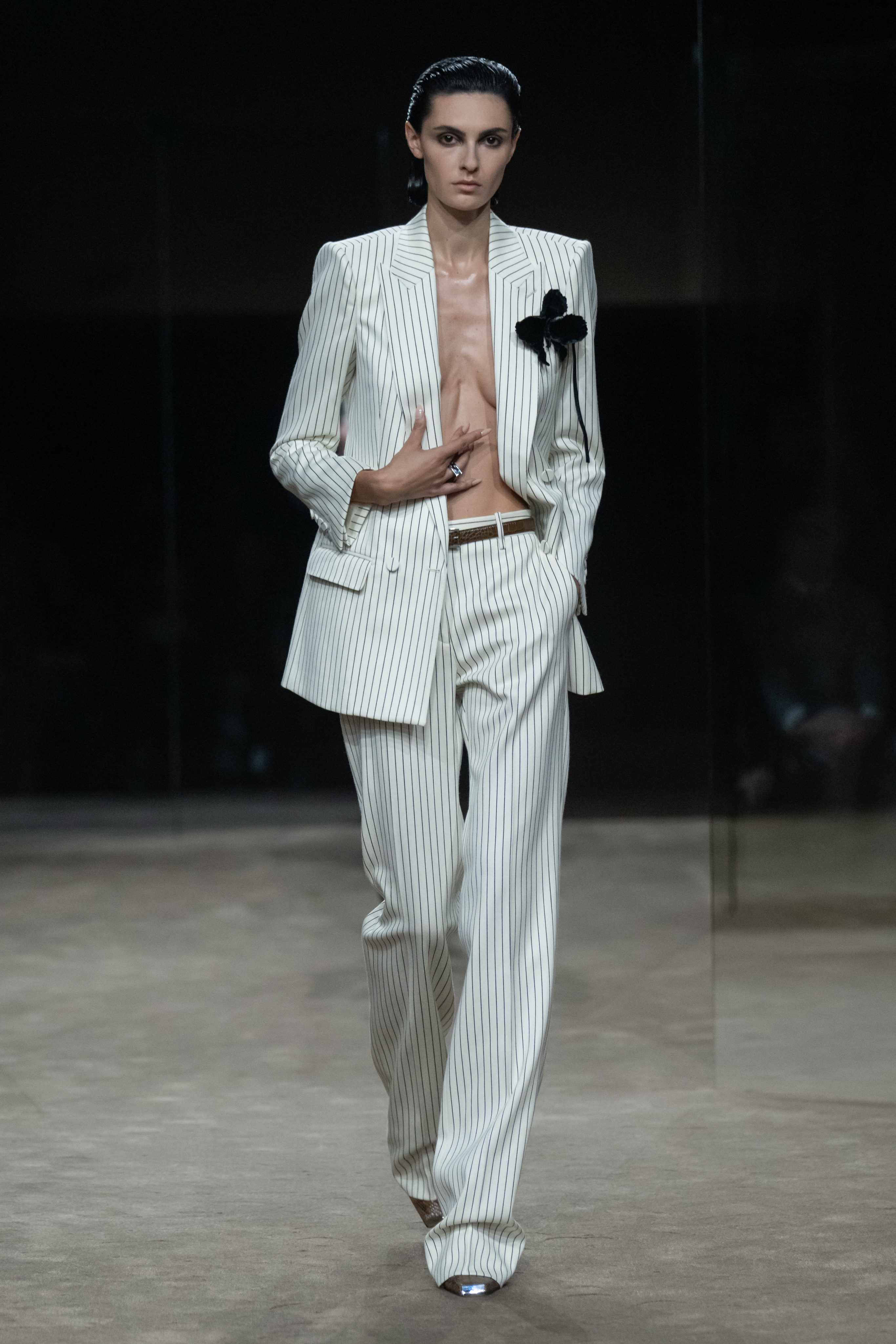
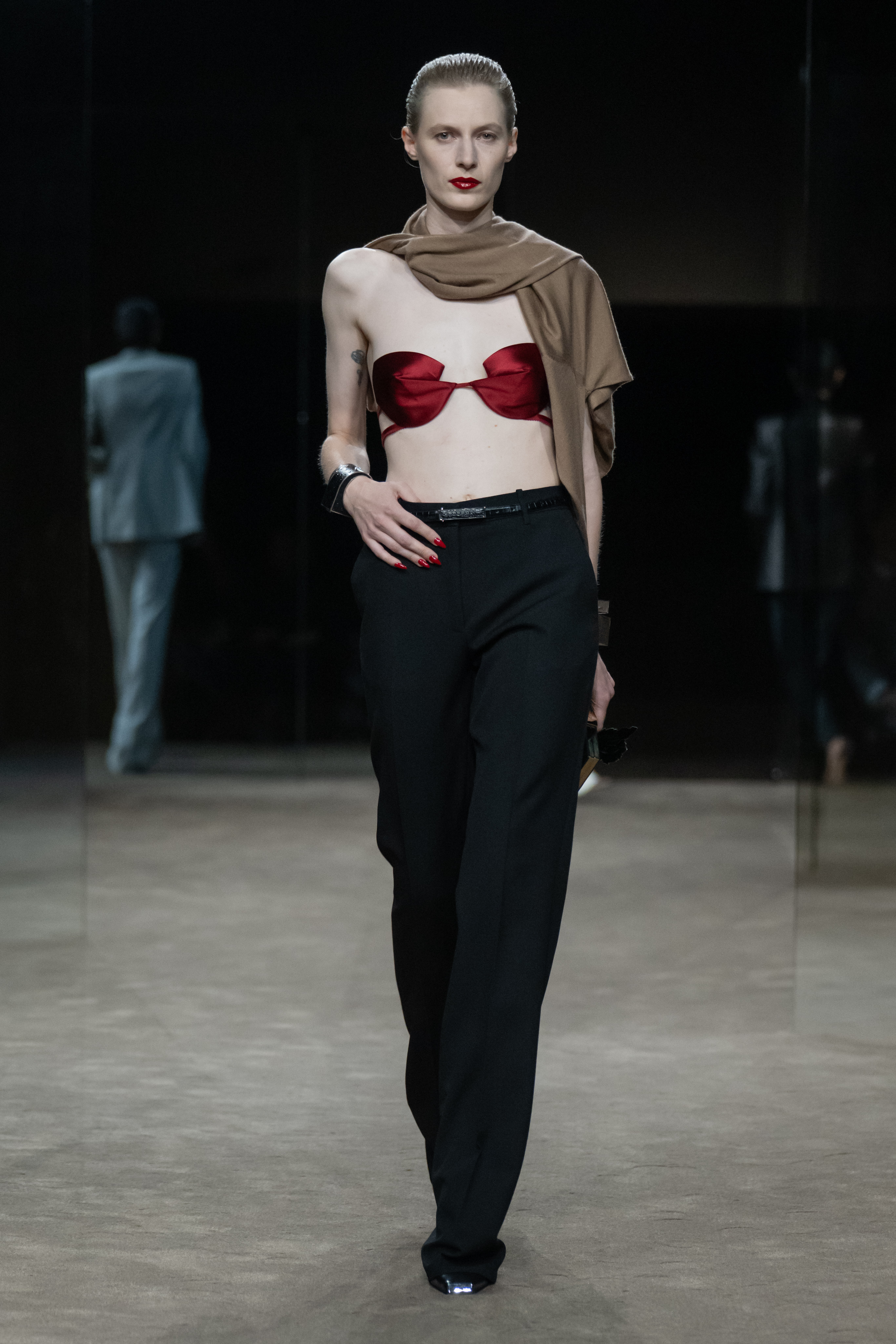
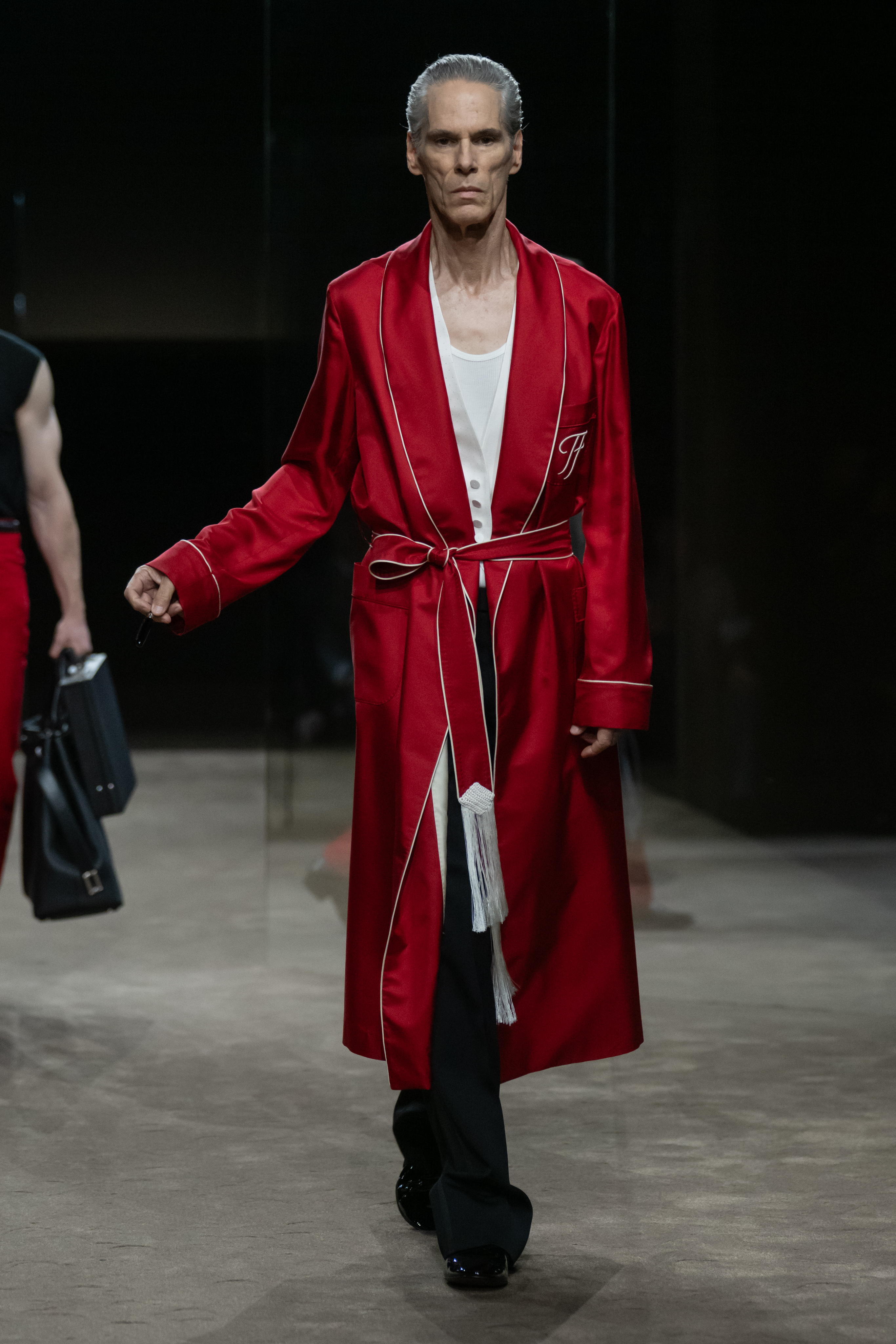
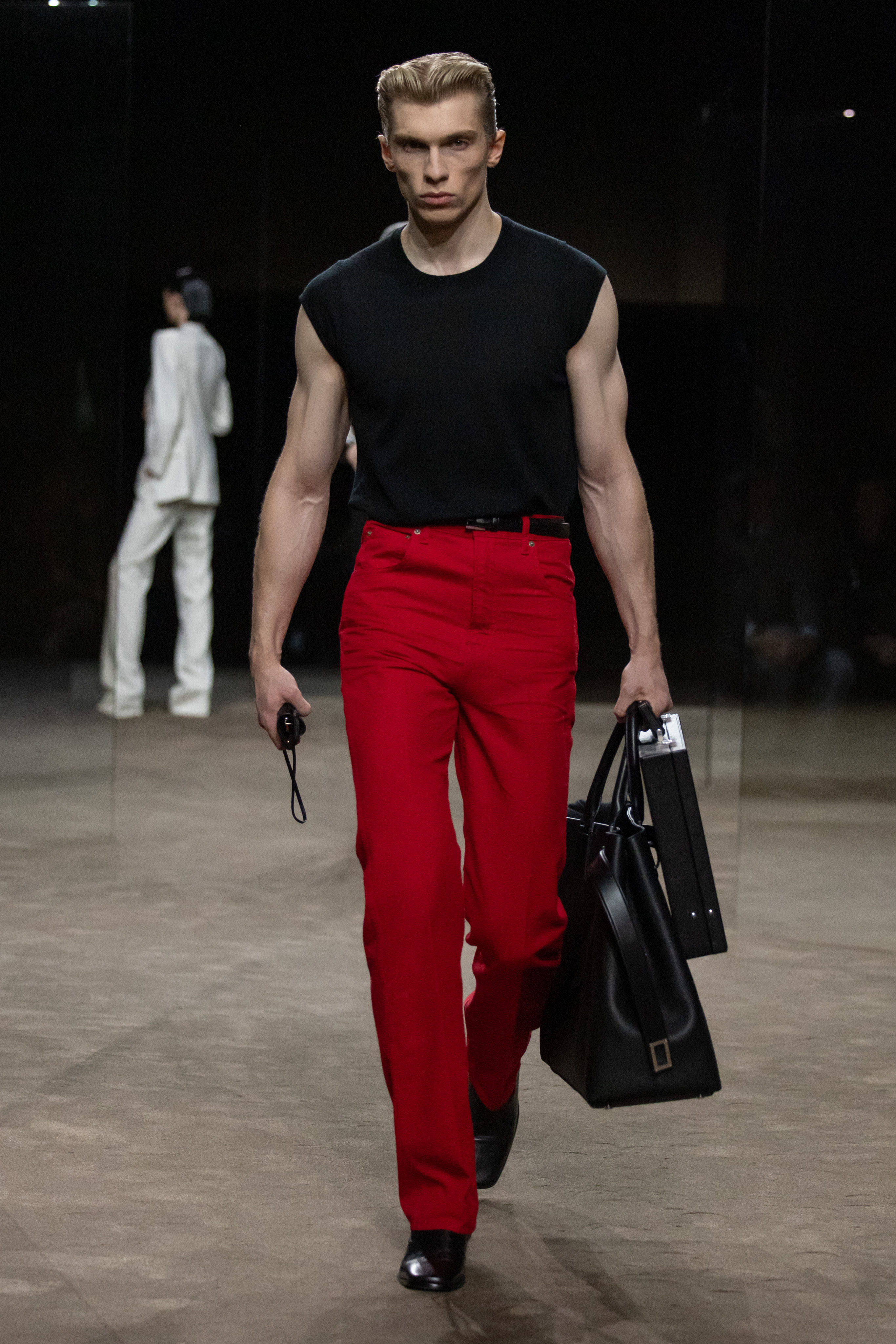
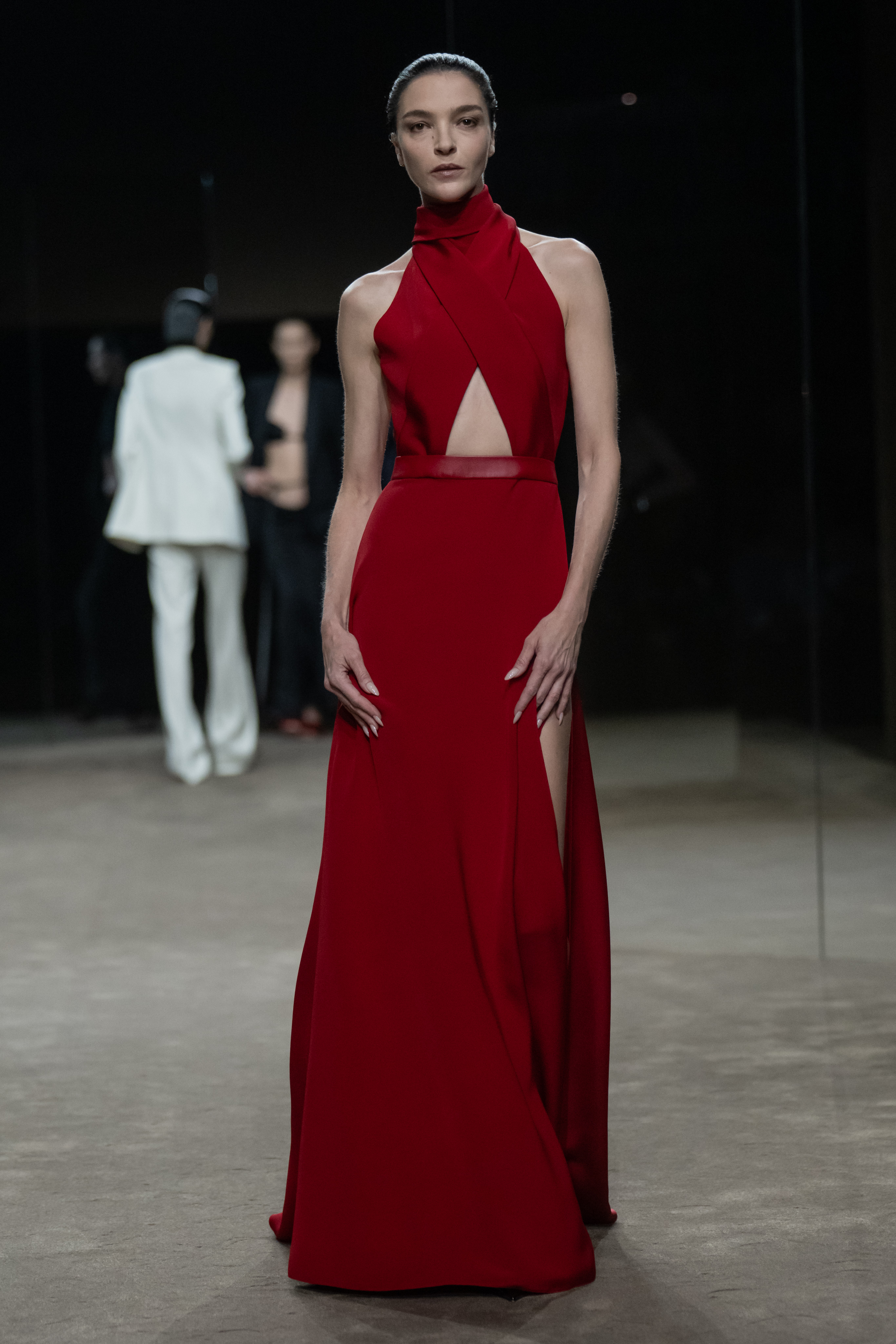
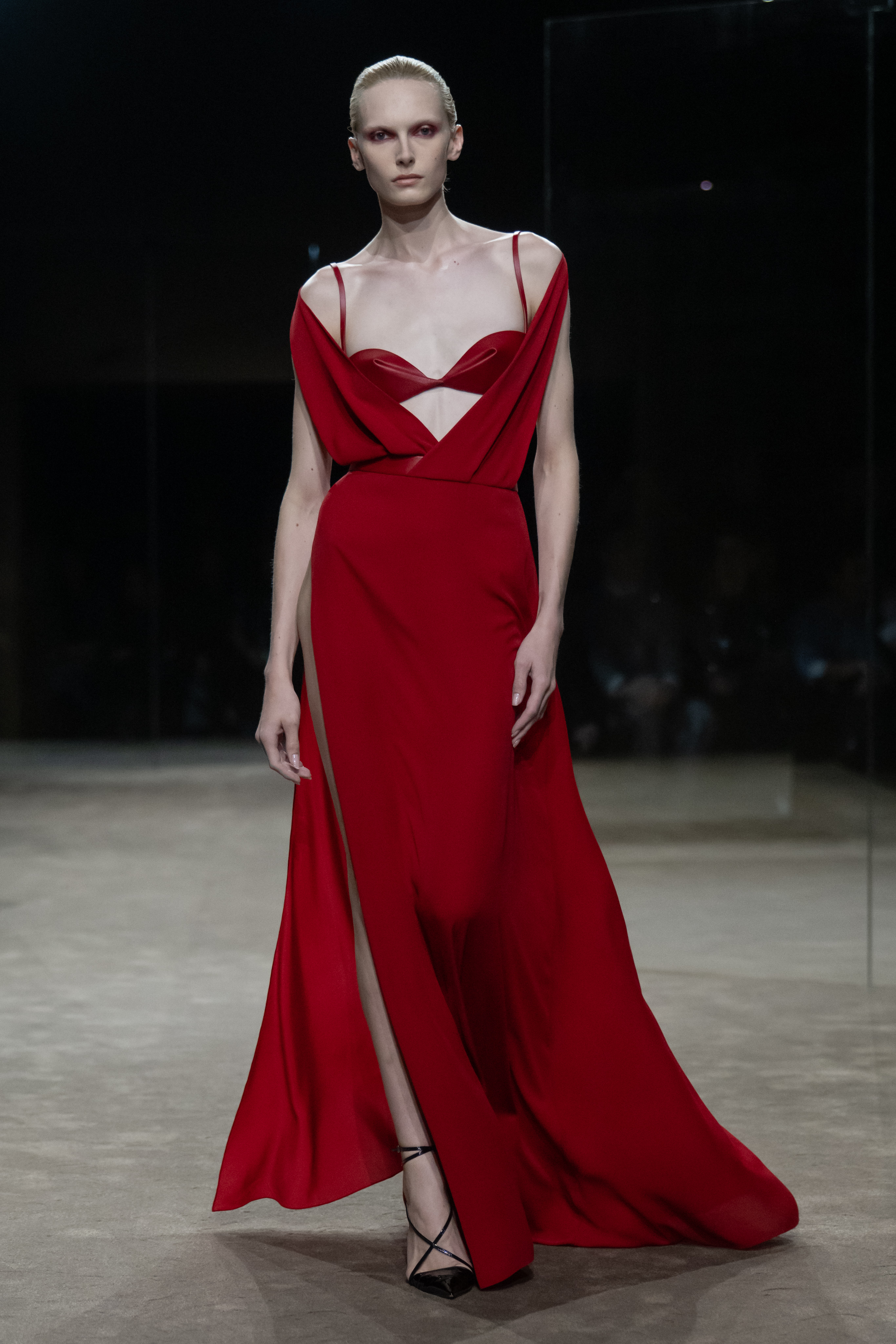
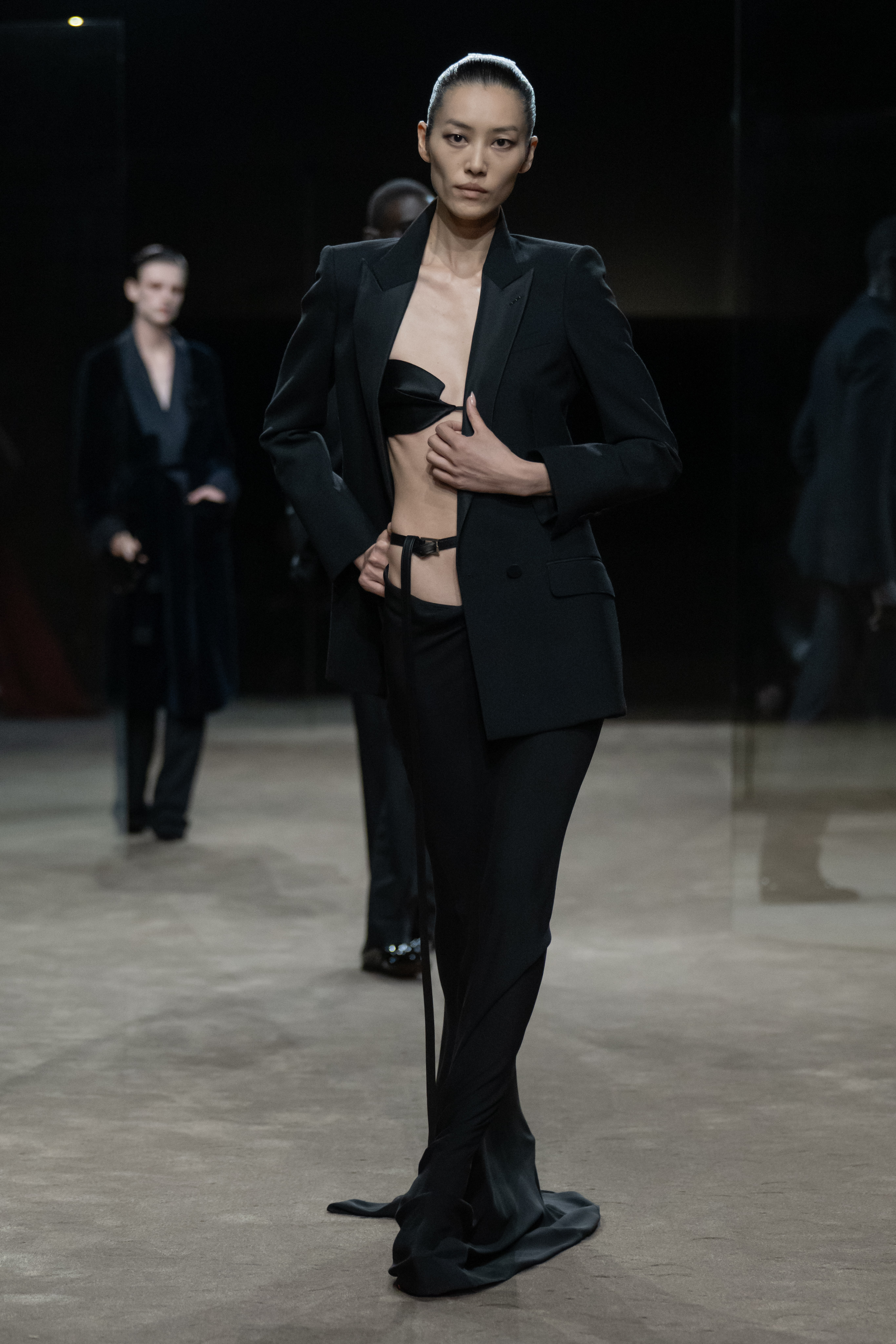
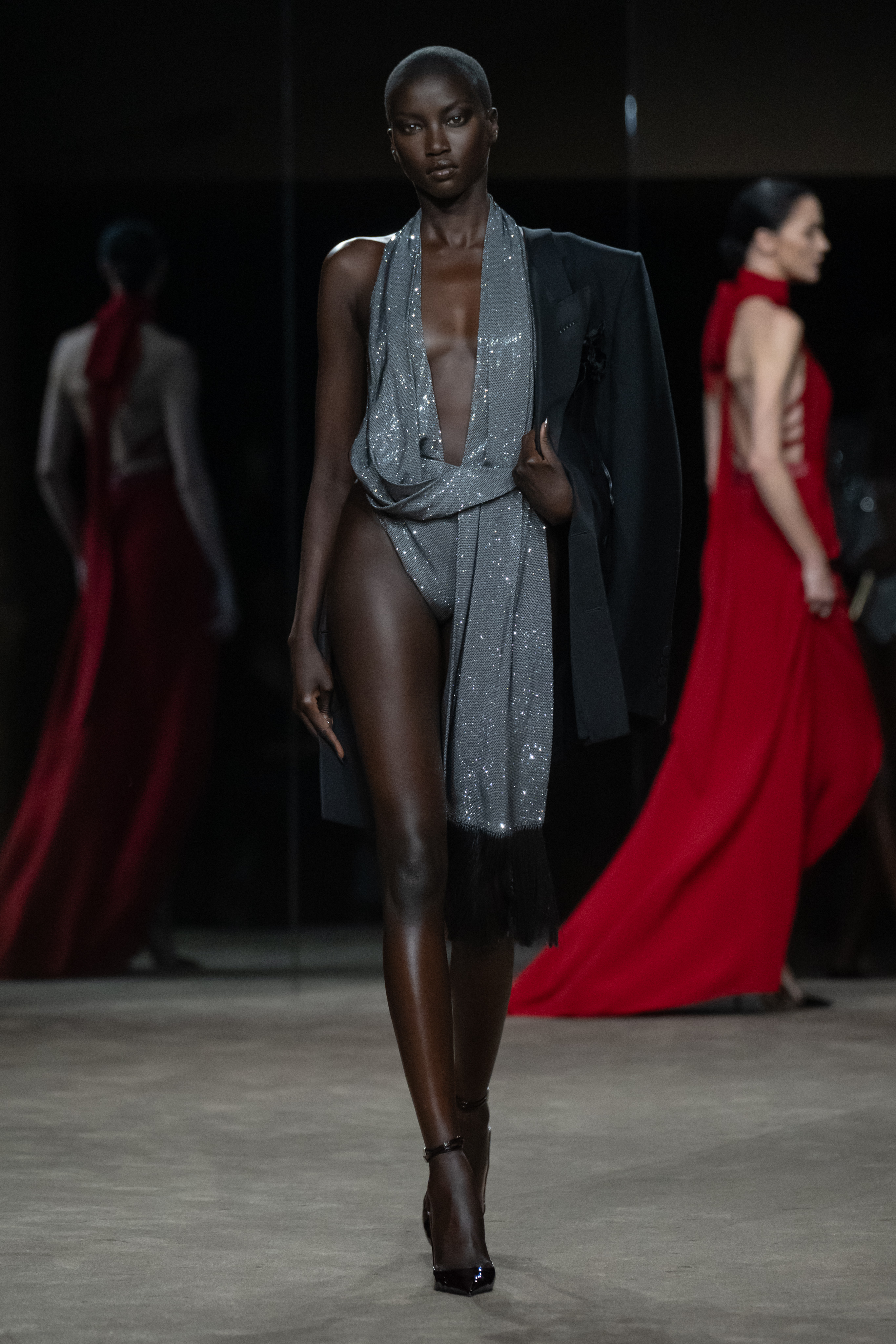
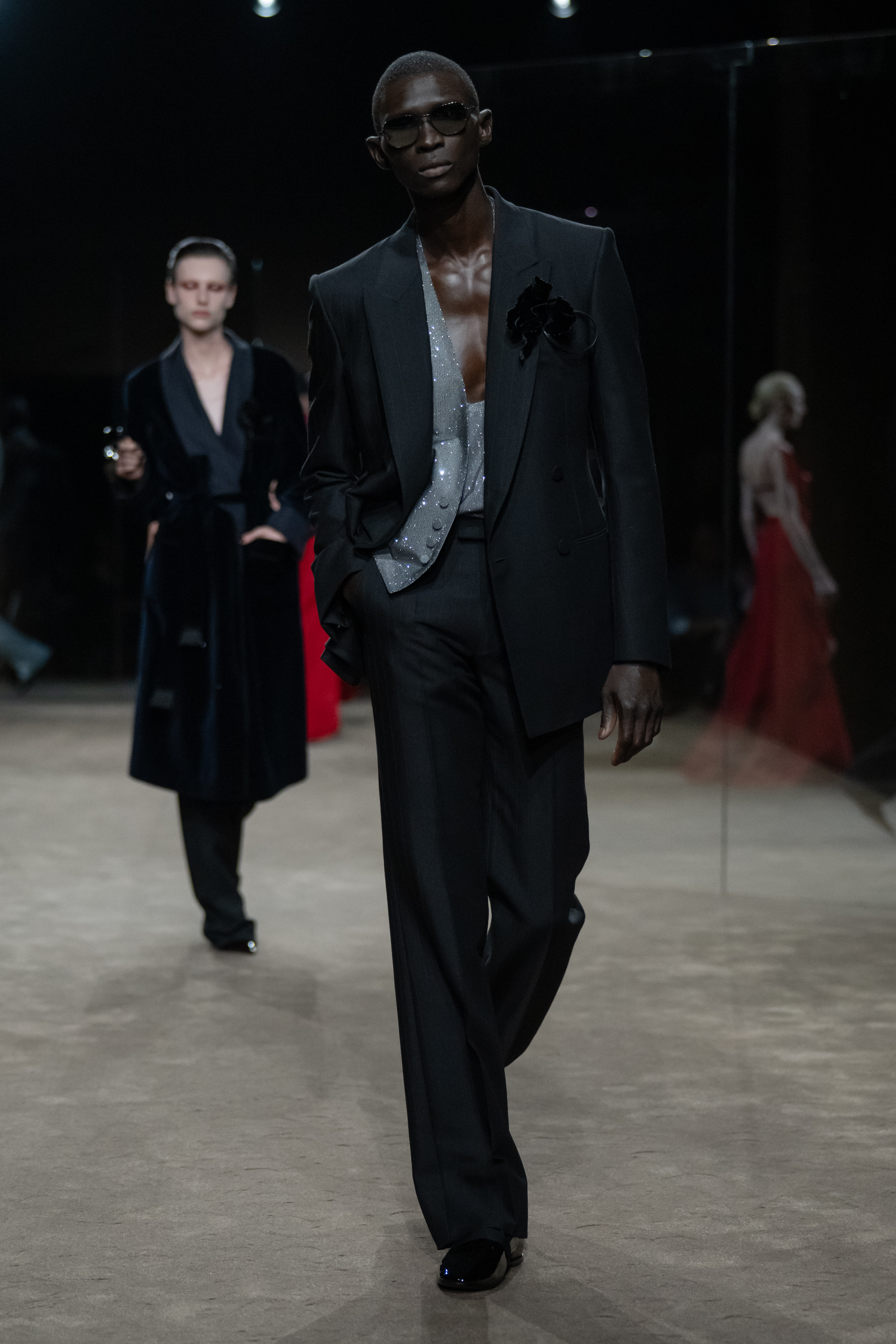
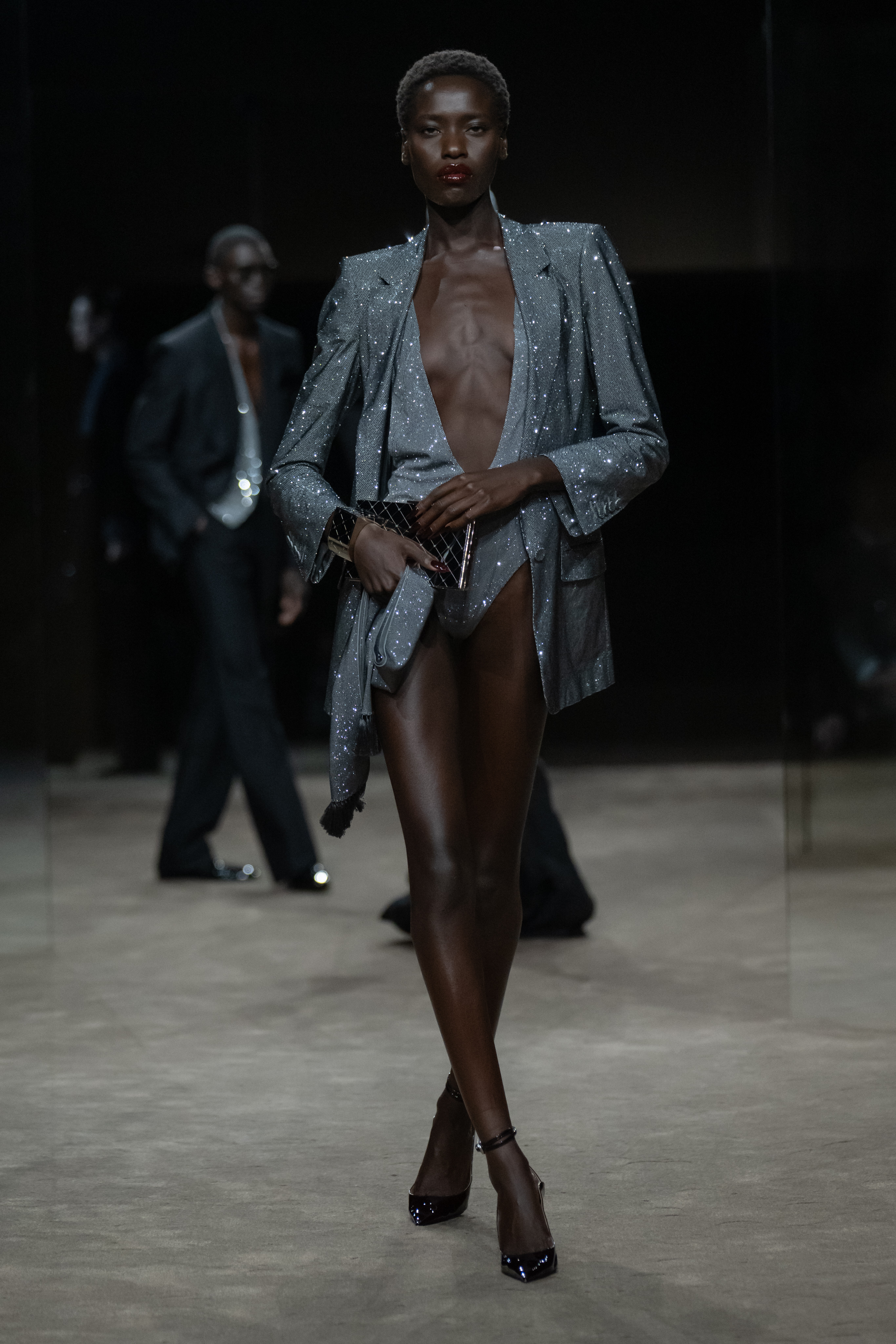
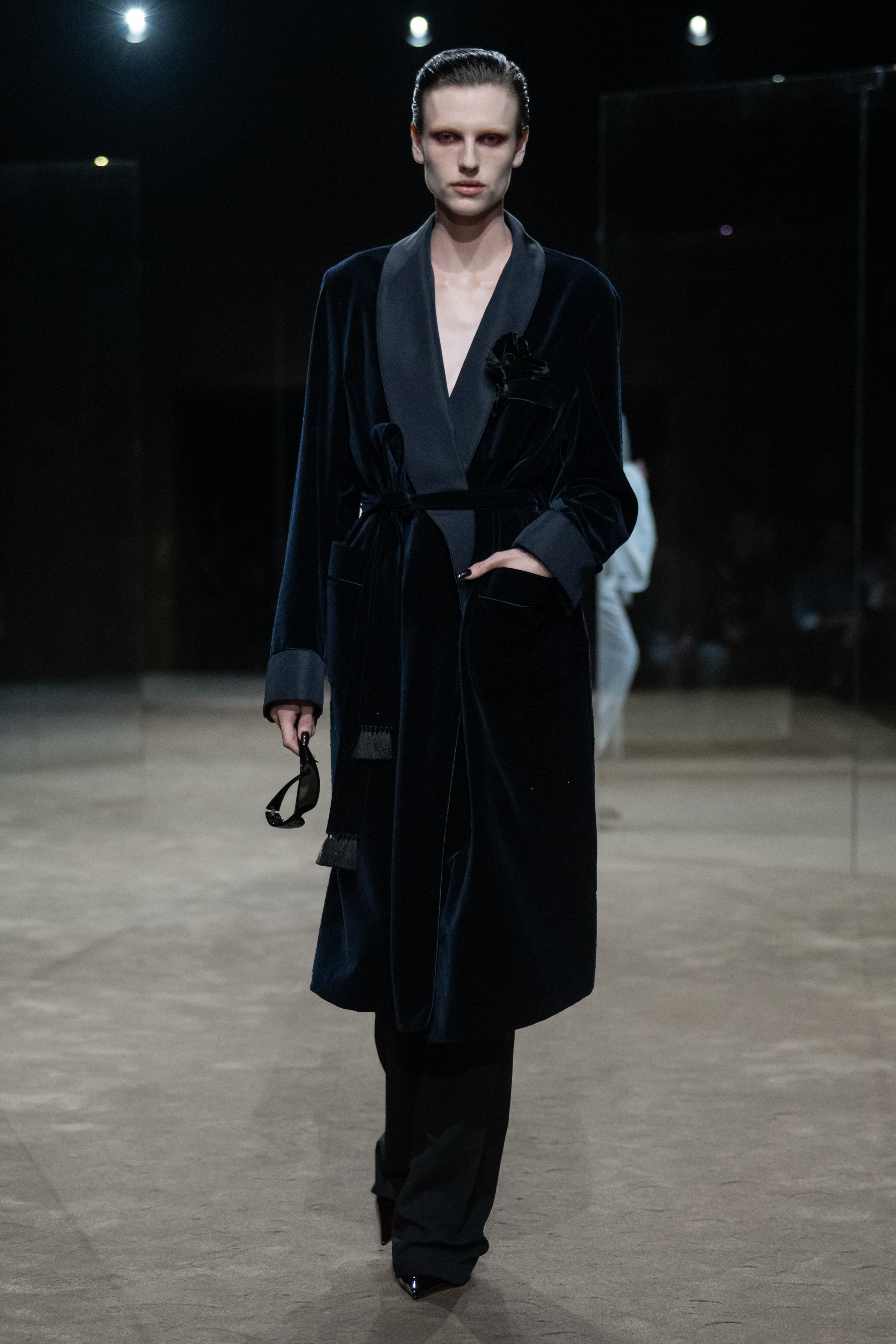
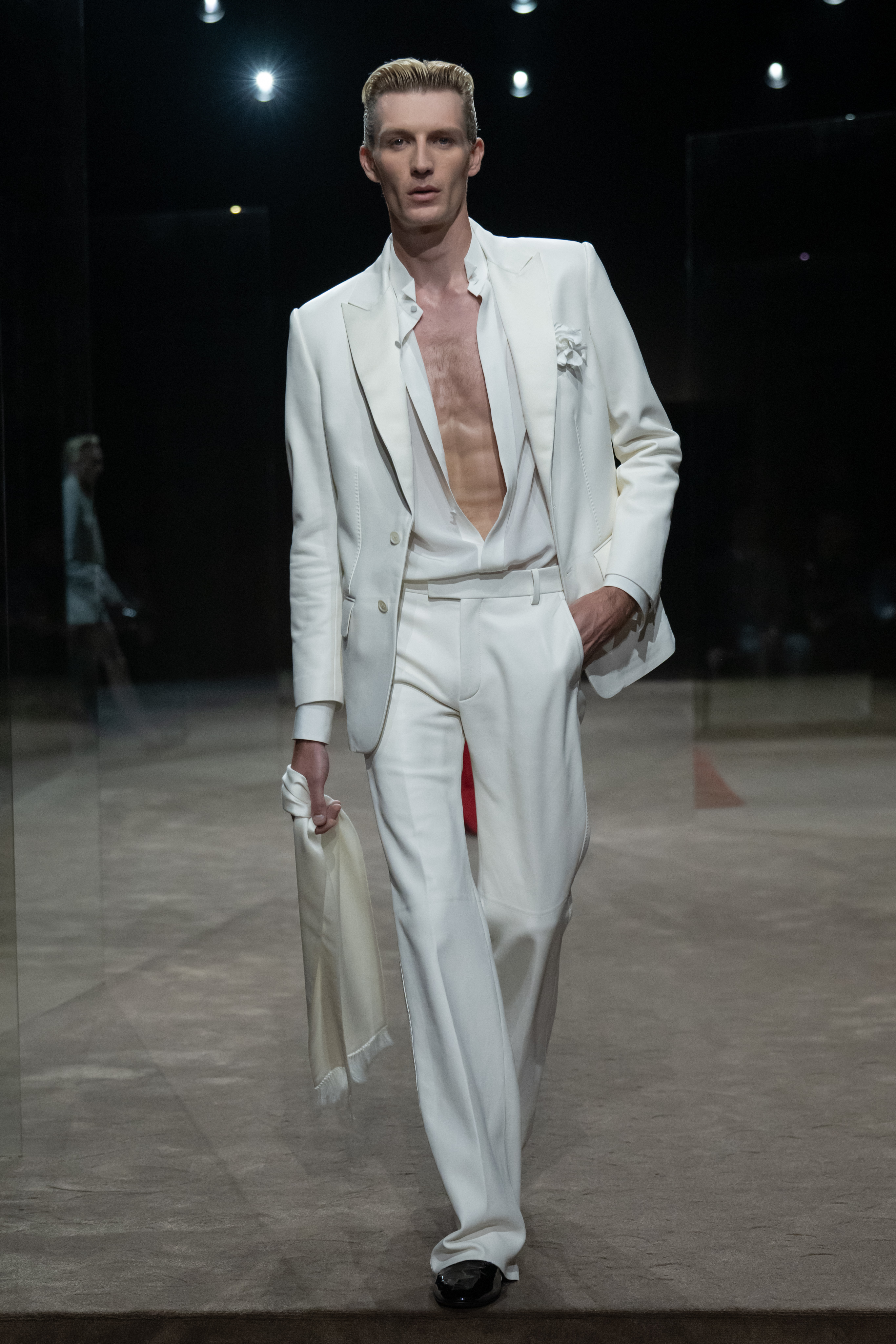
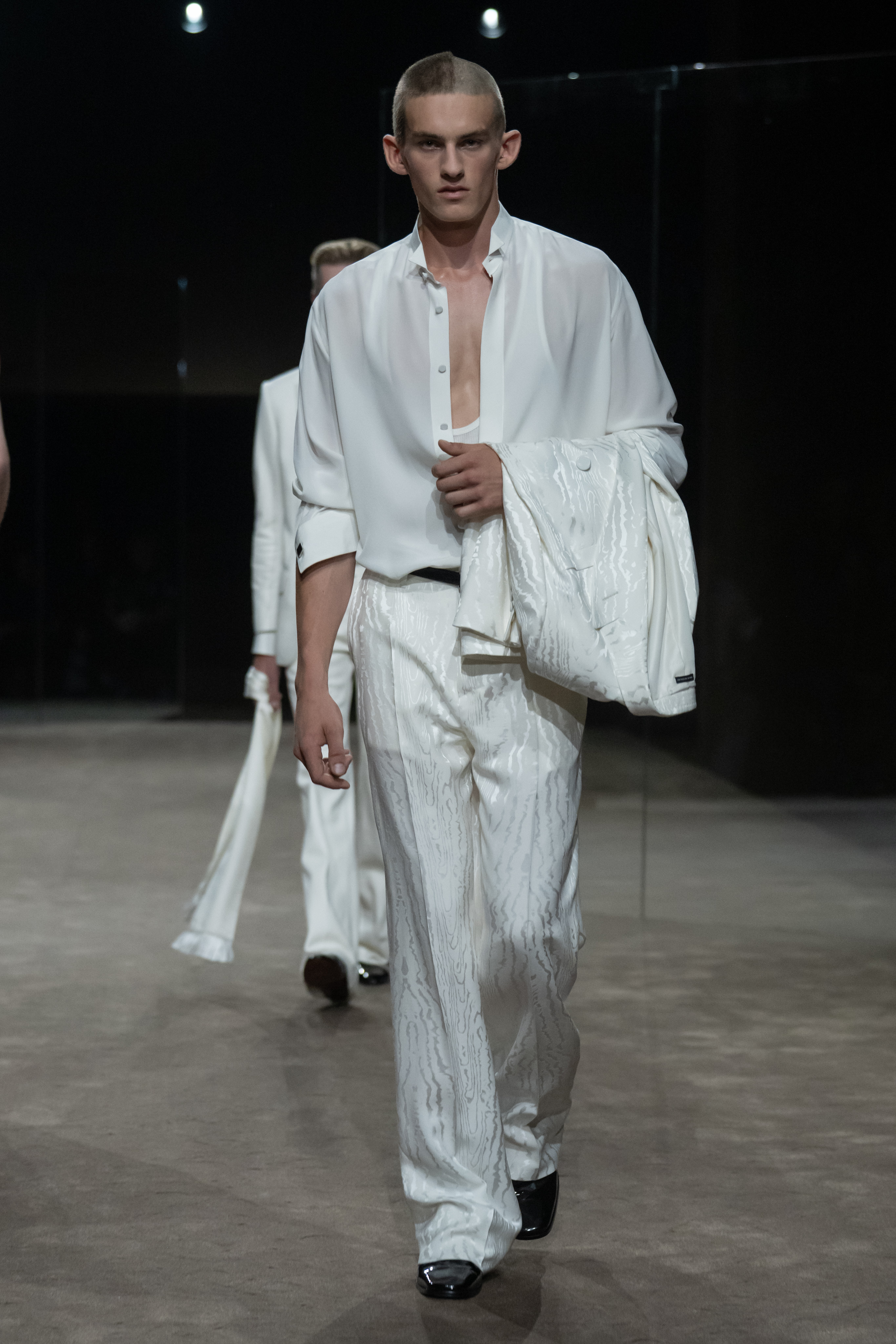
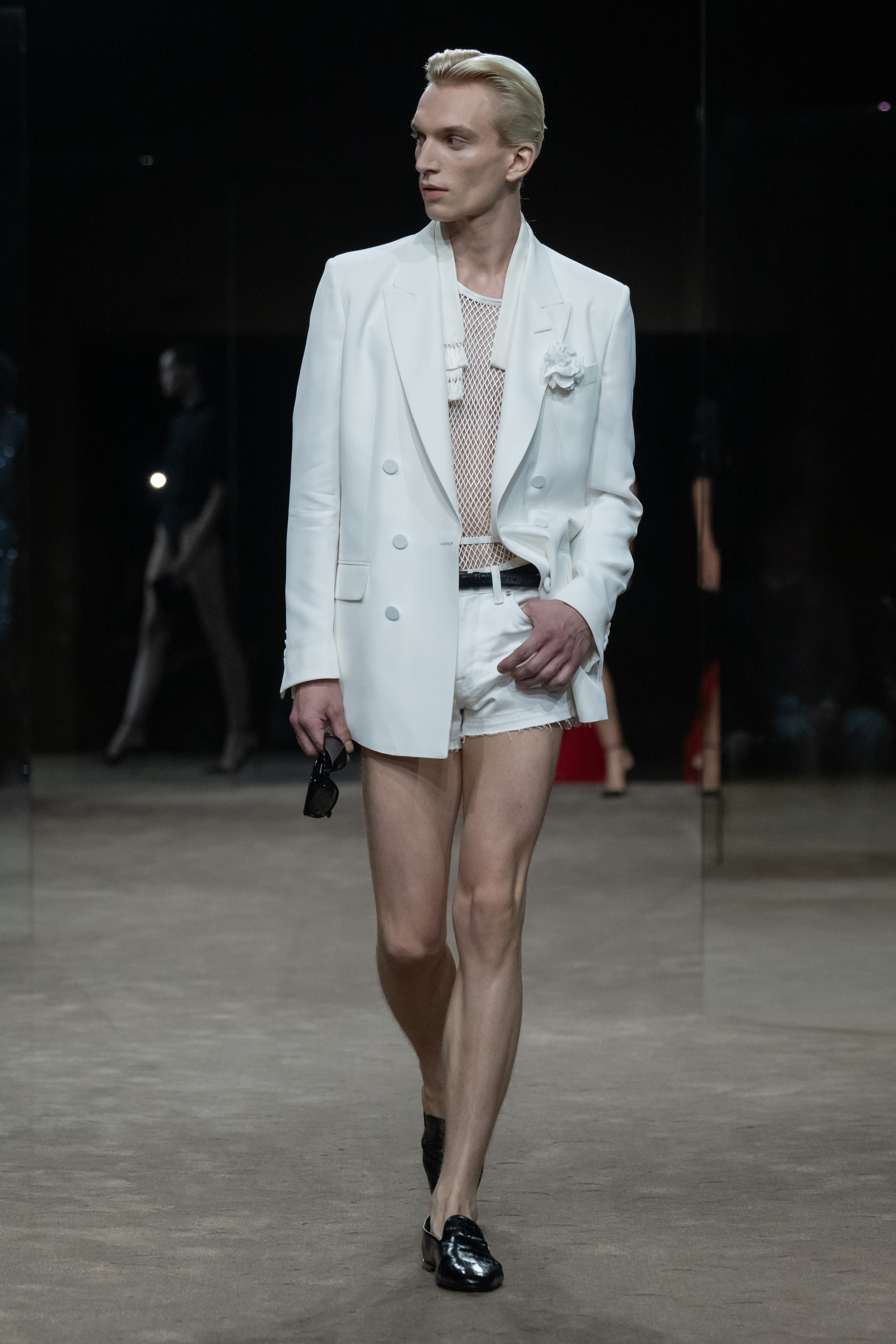
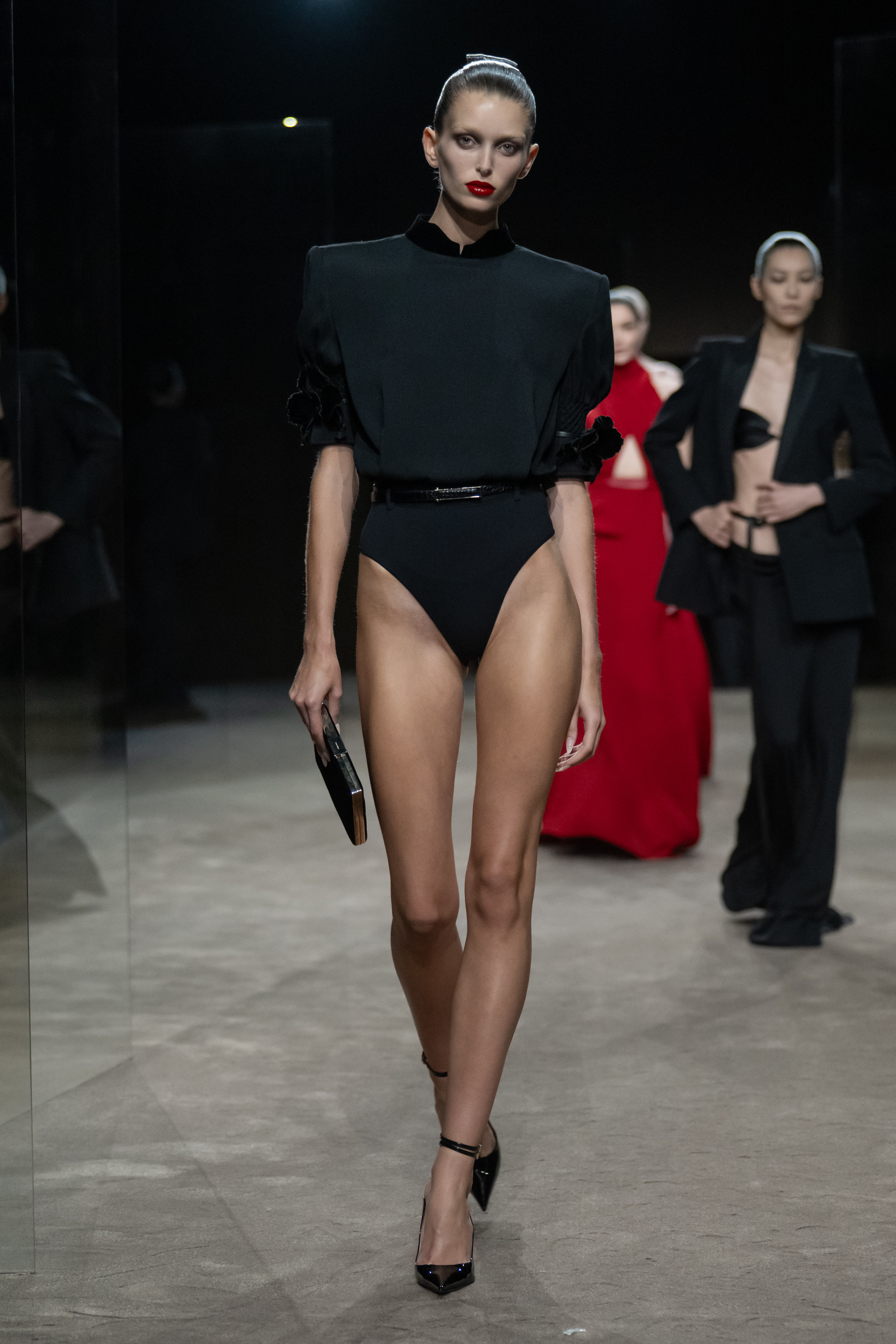
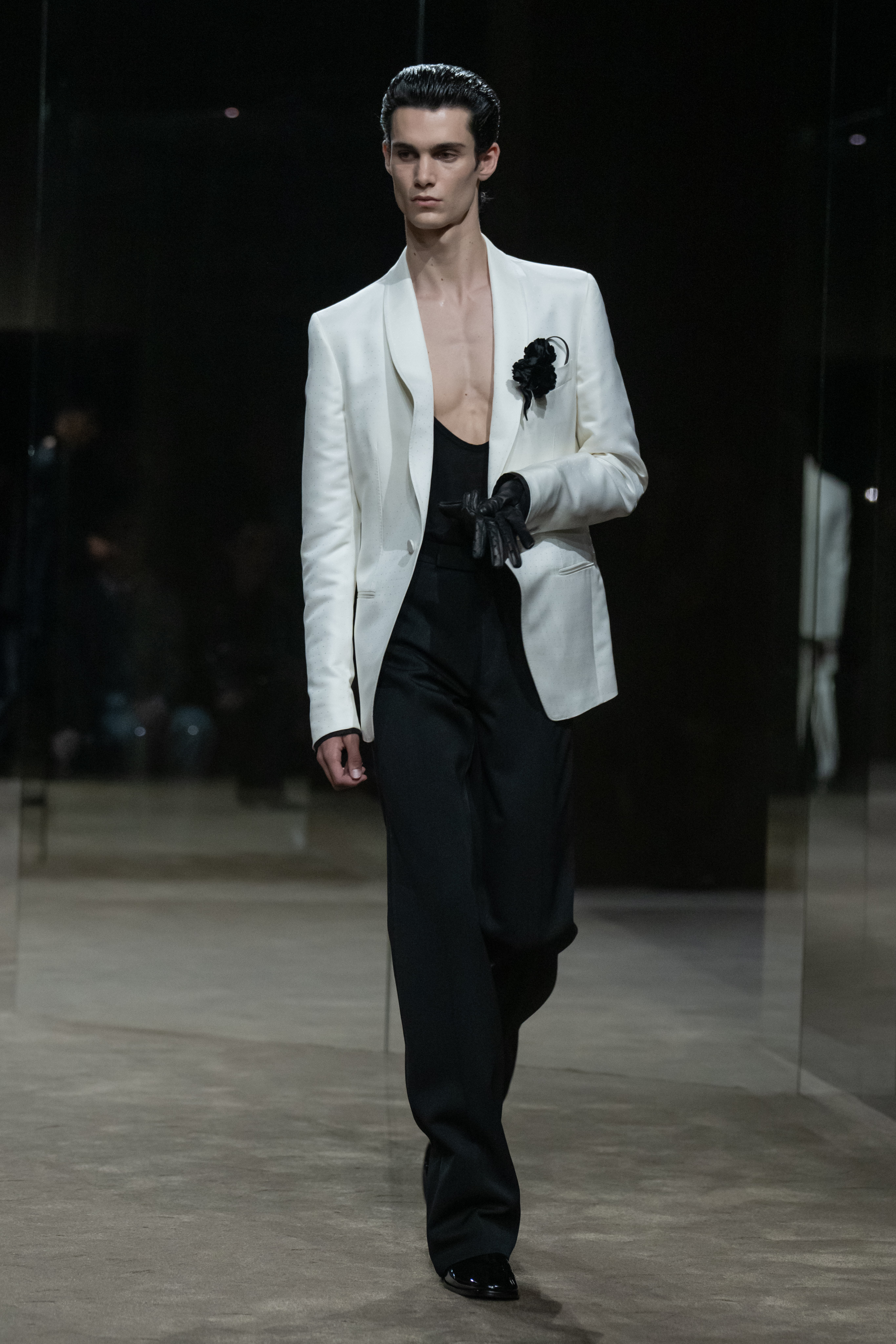
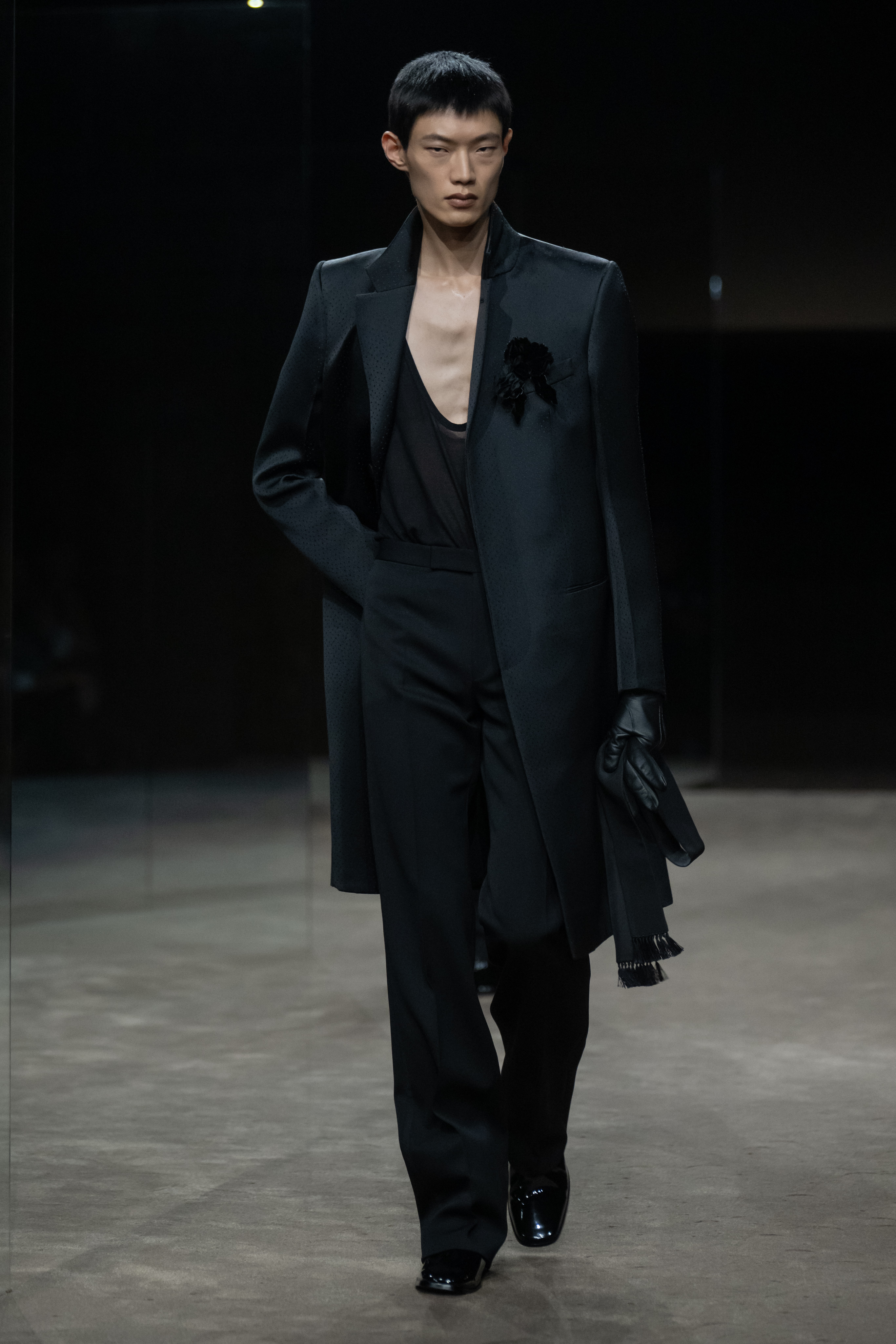
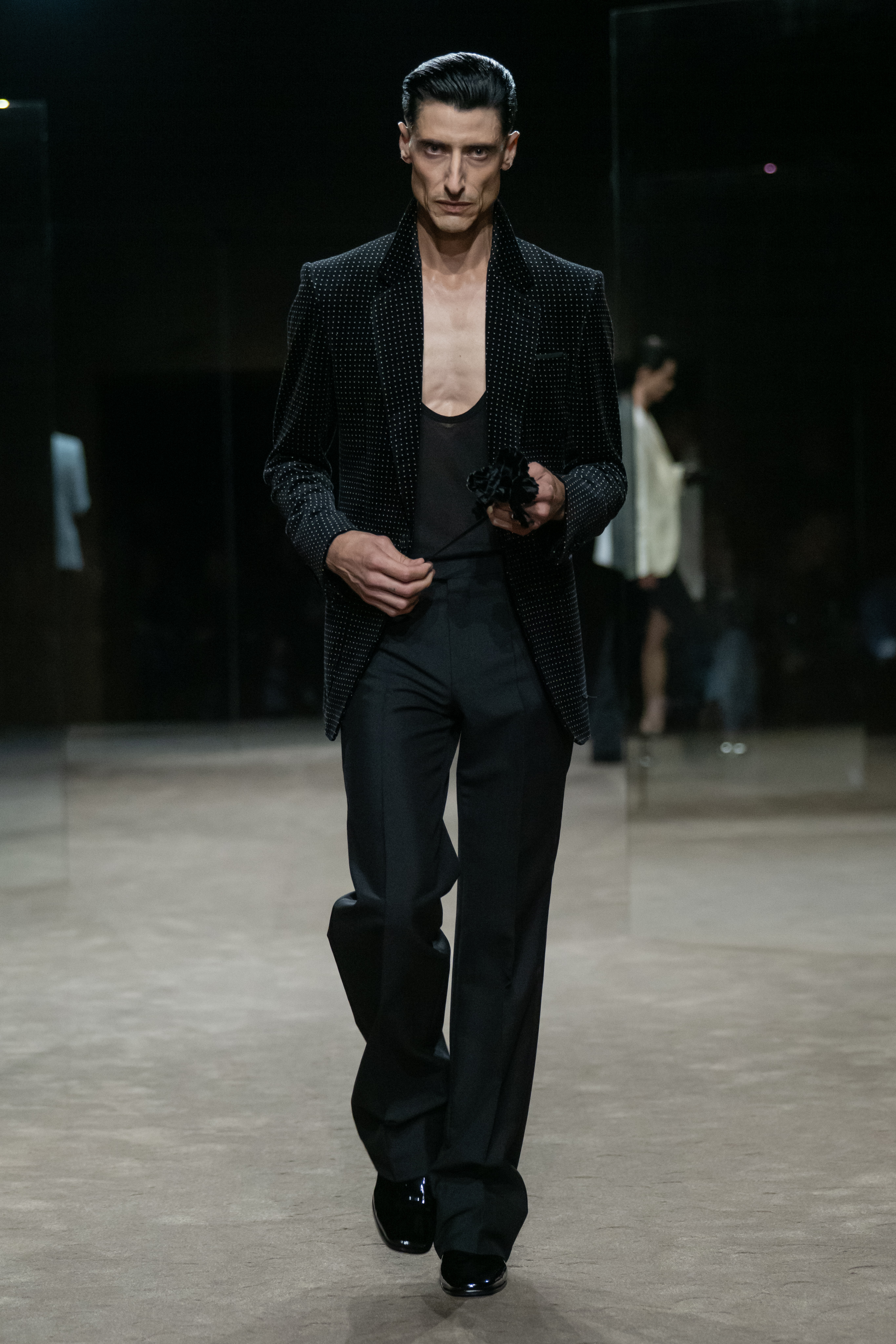
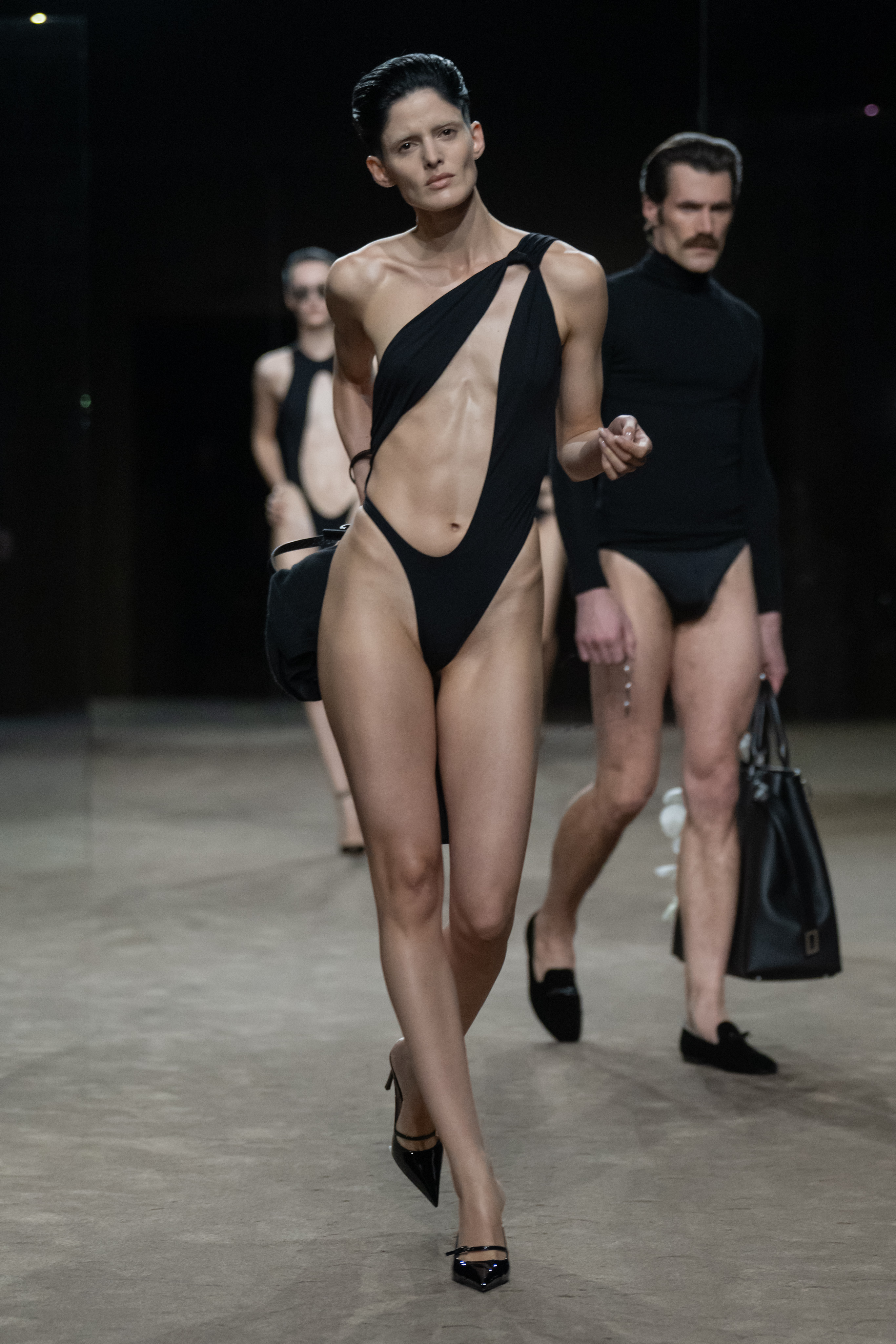
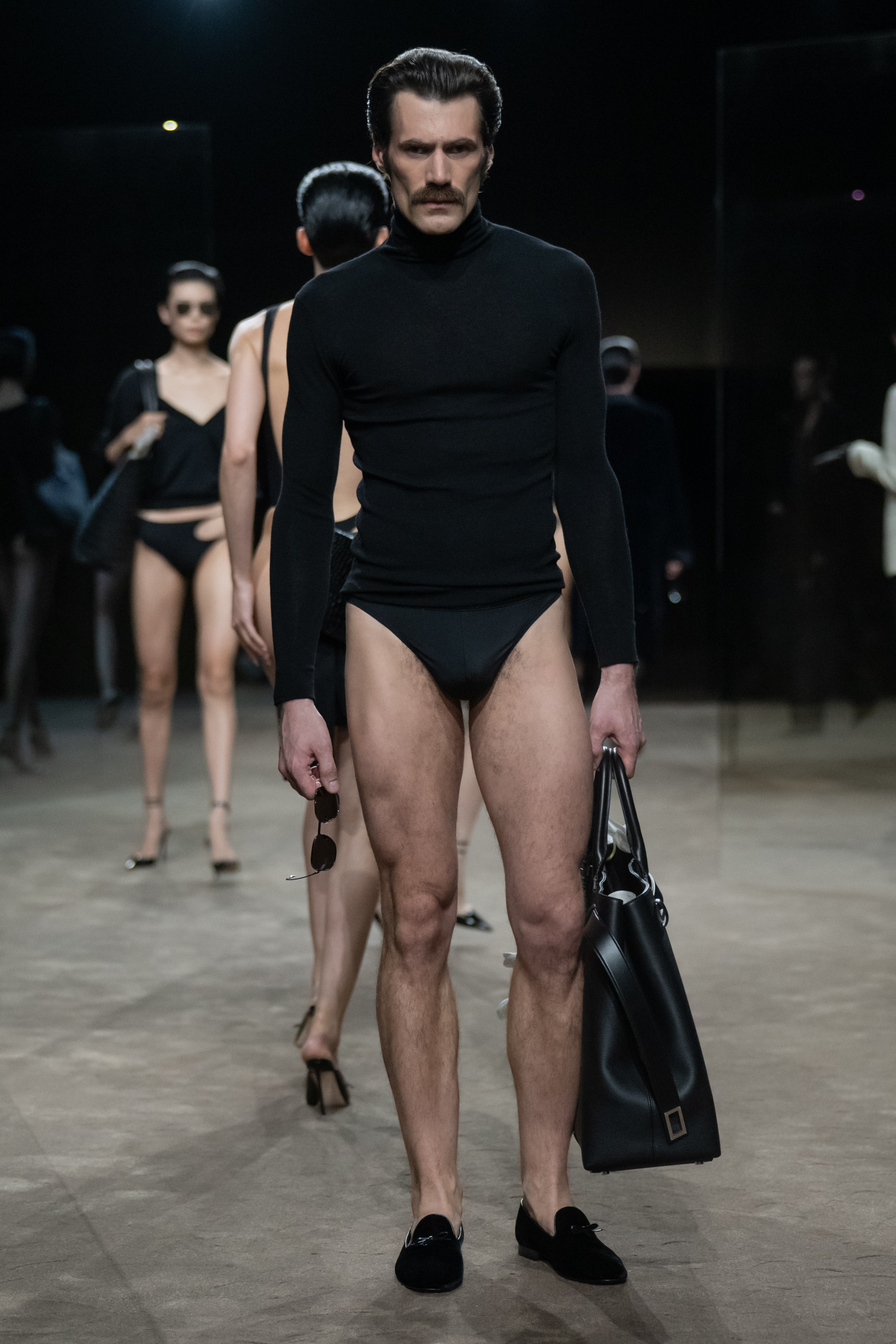
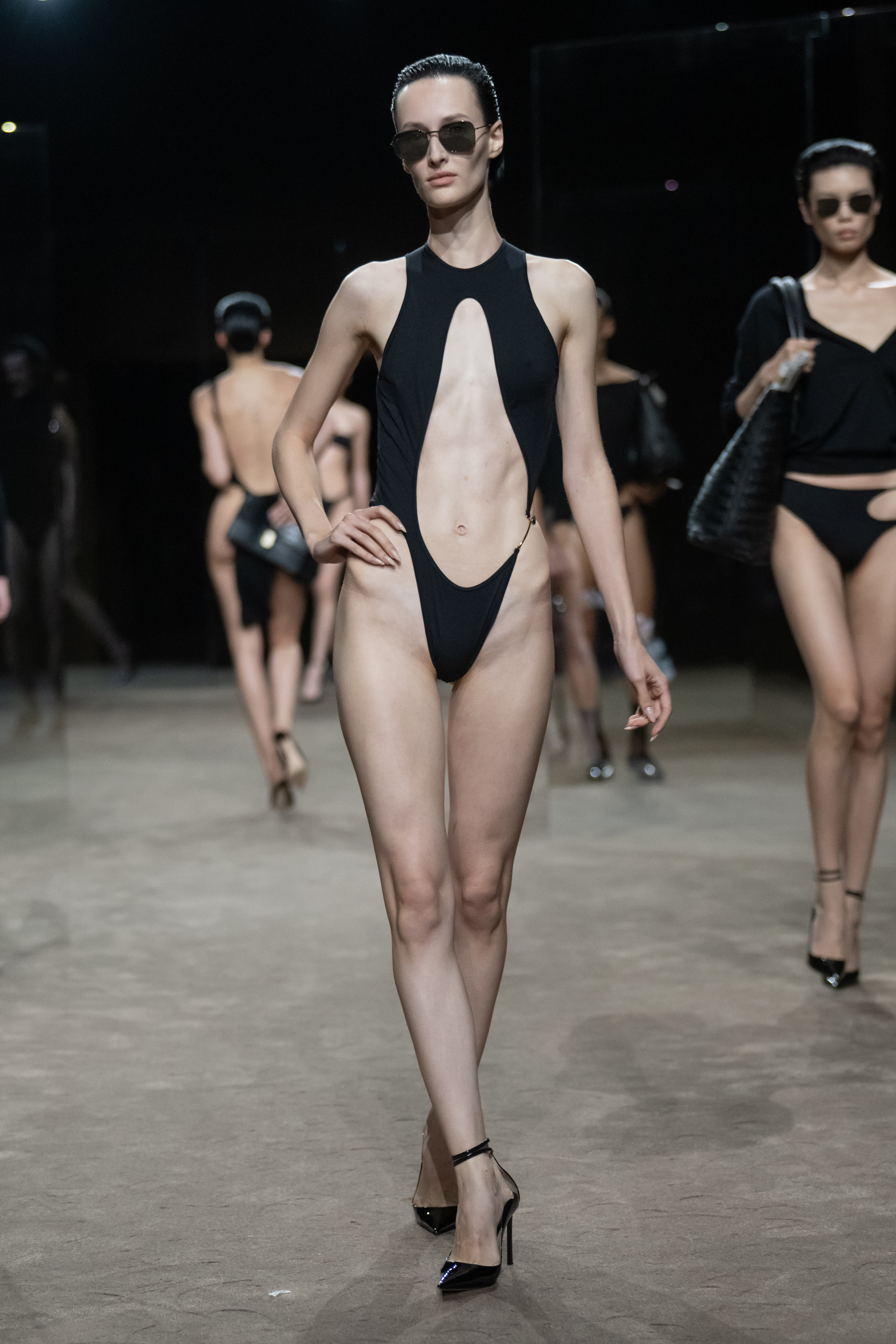
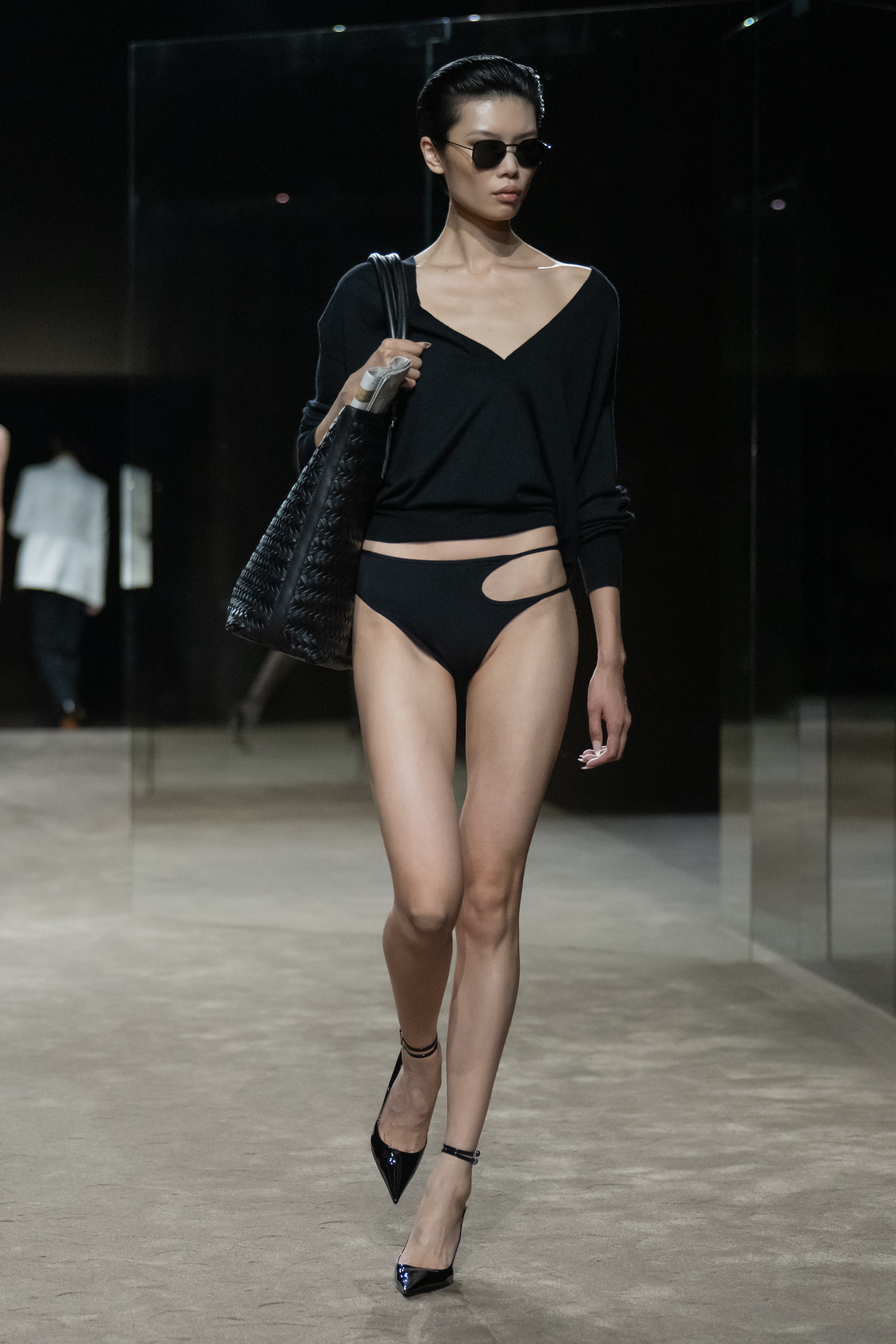
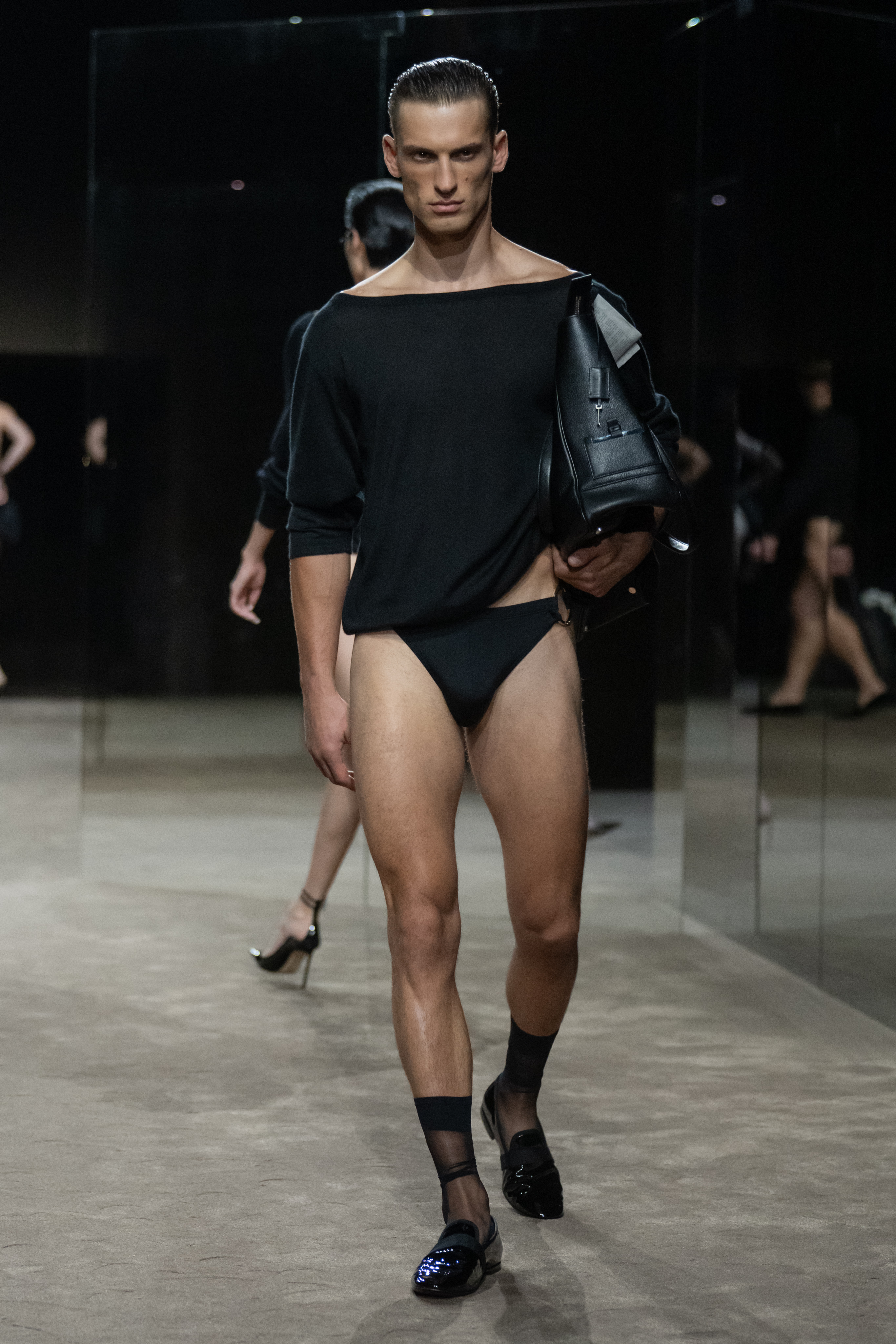
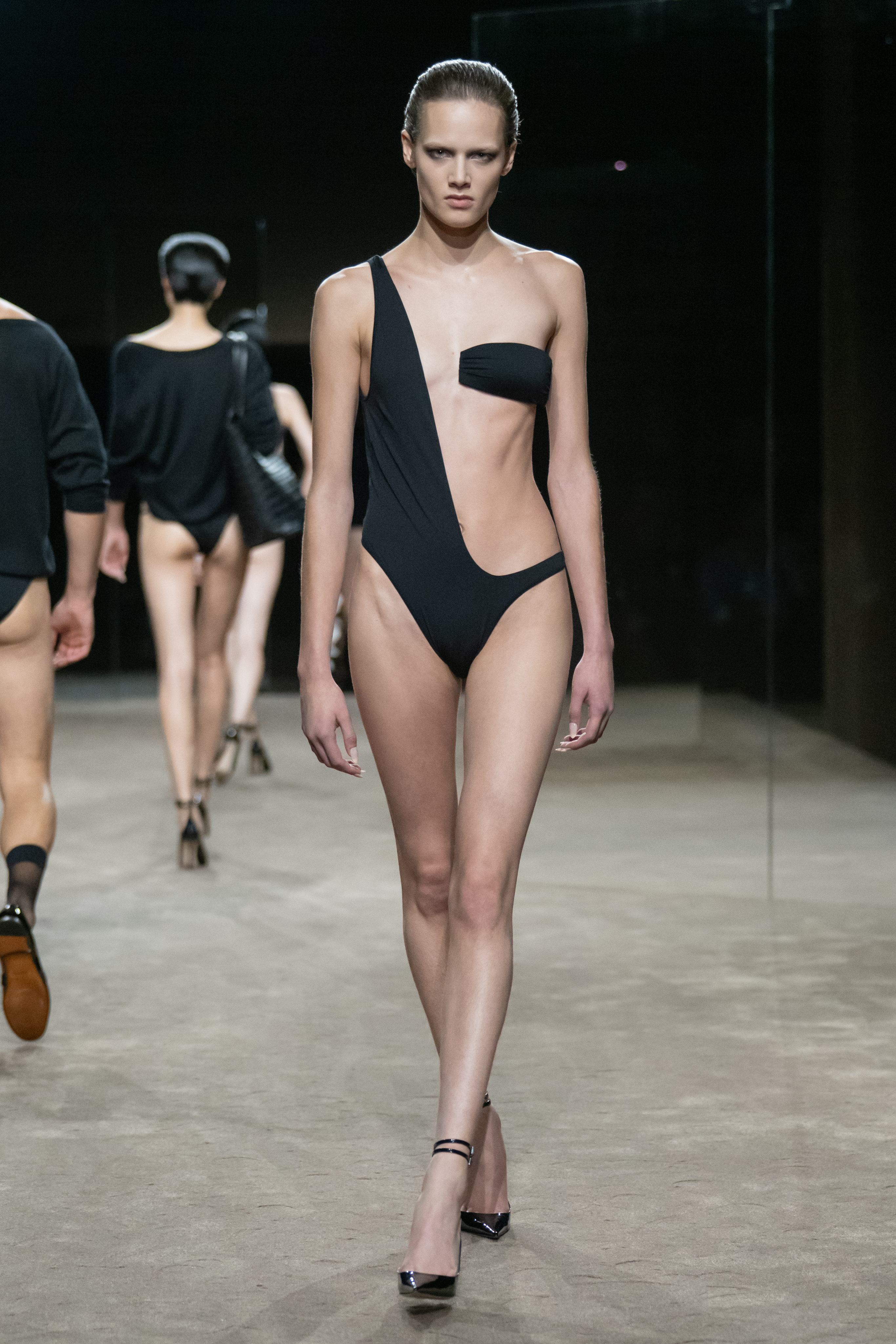
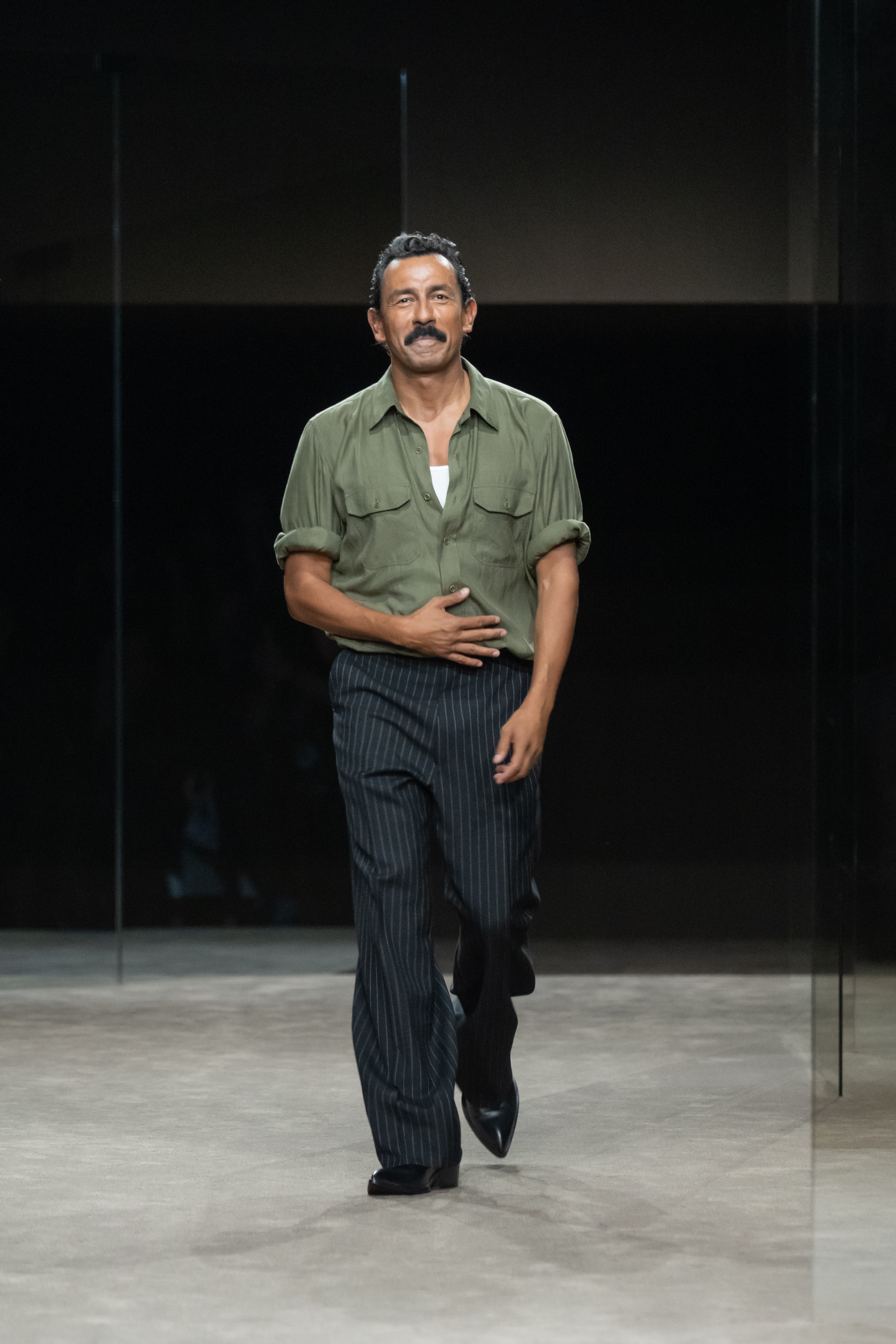
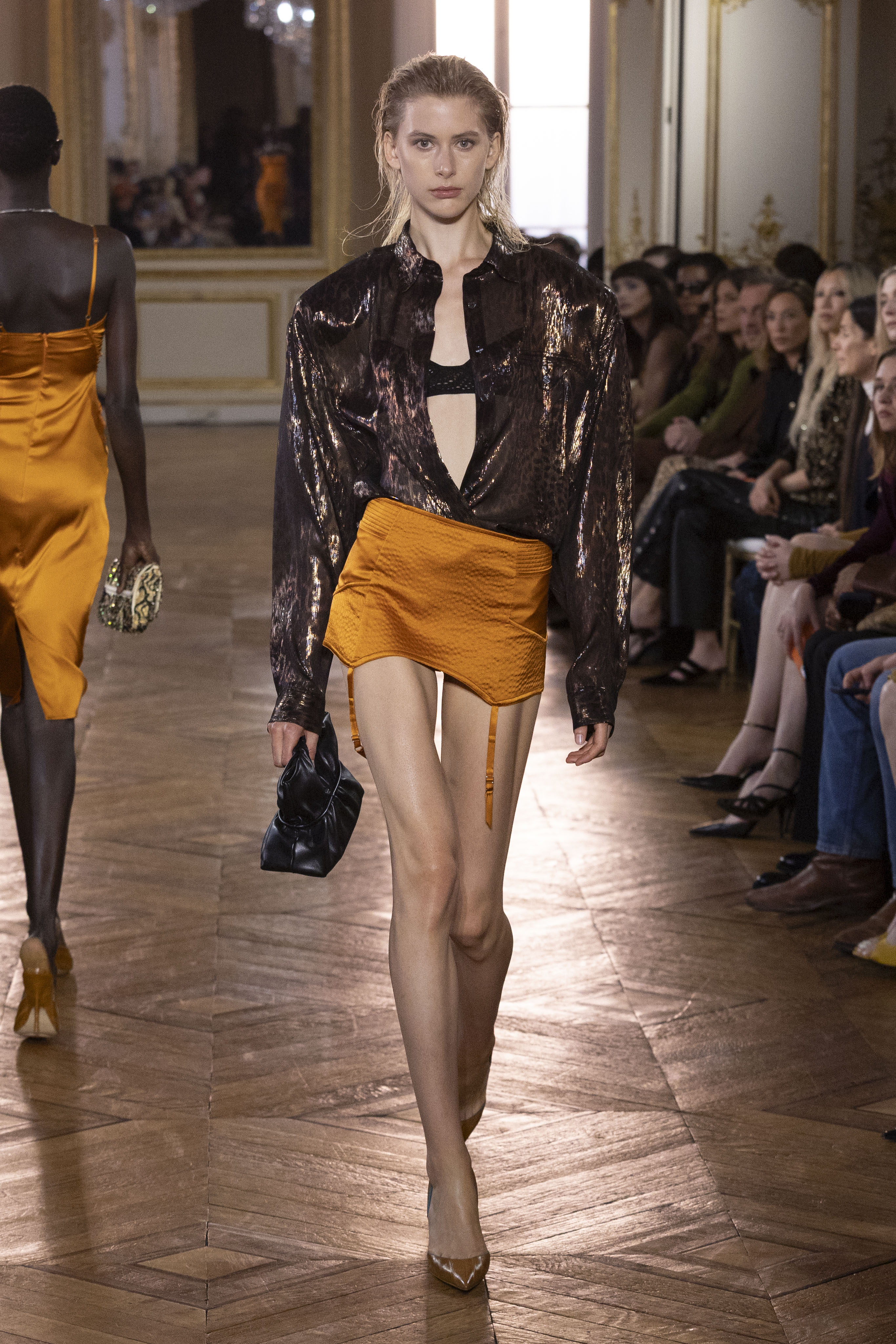
For Spring/Summer 2027, Haider Ackermann takes that architecture apart without dismantling the house. He loosens the tailoring, removes the shirt, exposes the skin, lets lingerie surface, turns robes into outerwear and places the body inside a field of mirrors. Yet the gesture is not one of provocation. It is one of risk.
That distinction matters.
“I am not interested in provocation. I am interested in the risk of being free.”
The sentence could be read as the manifesto of Ackermann’s Tom Ford. Because what he is doing is not attempting to reproduce the mythology of the founder, nor to escape it. He is testing what remains when the mythology is stripped to its essential elements: desire, precision, glamour, danger.
Tom Ford built a language in which luxury became erotic. Ackermann introduces something Ford’s vocabulary did not always need: uncertainty. His clothes have always inhabited the unstable territory between strength and fragility, masculine and feminine, discipline and dissolution. At Tom Ford, those tensions encounter a house whose identity was built on control. The result is not a collision, but a productive friction.
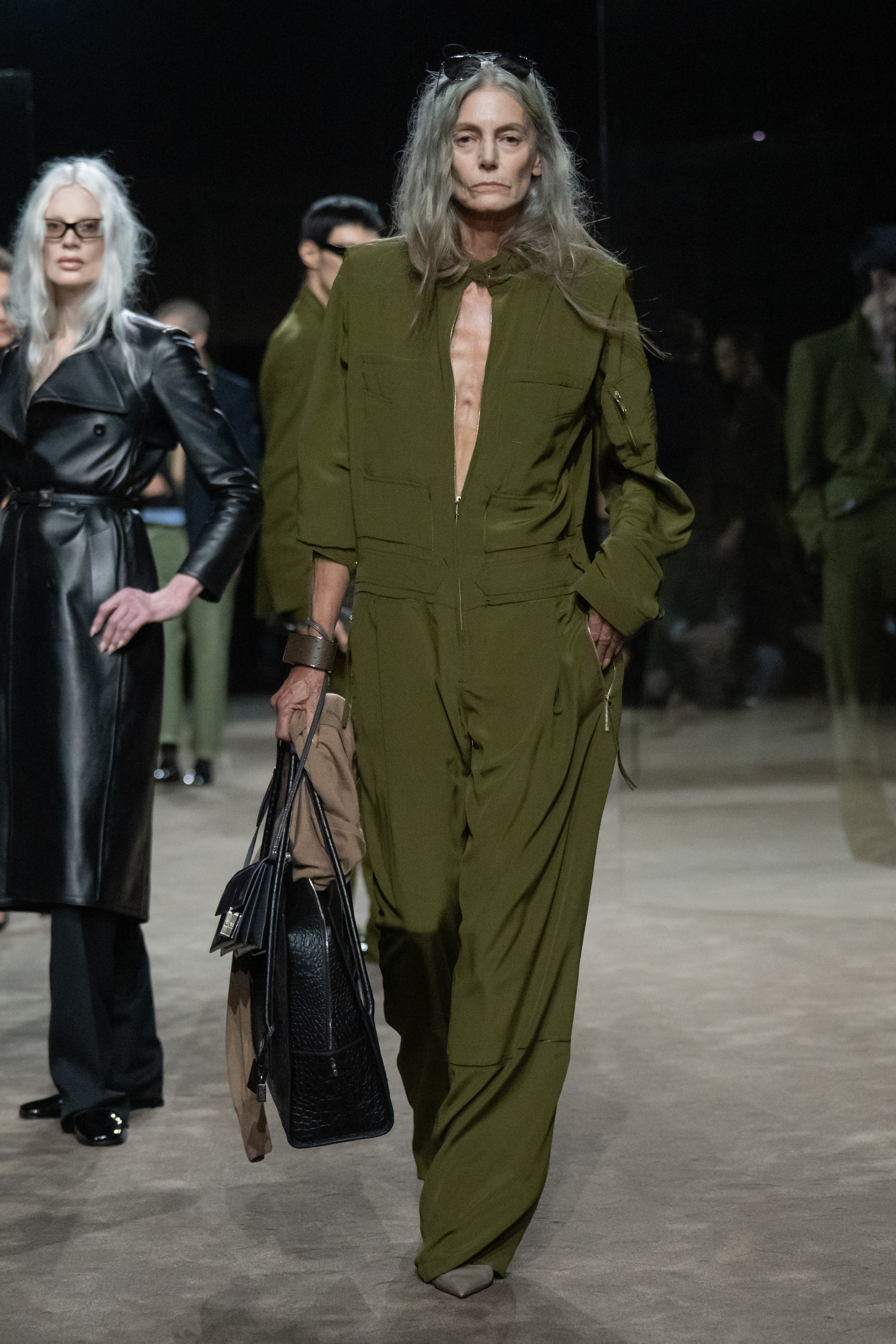
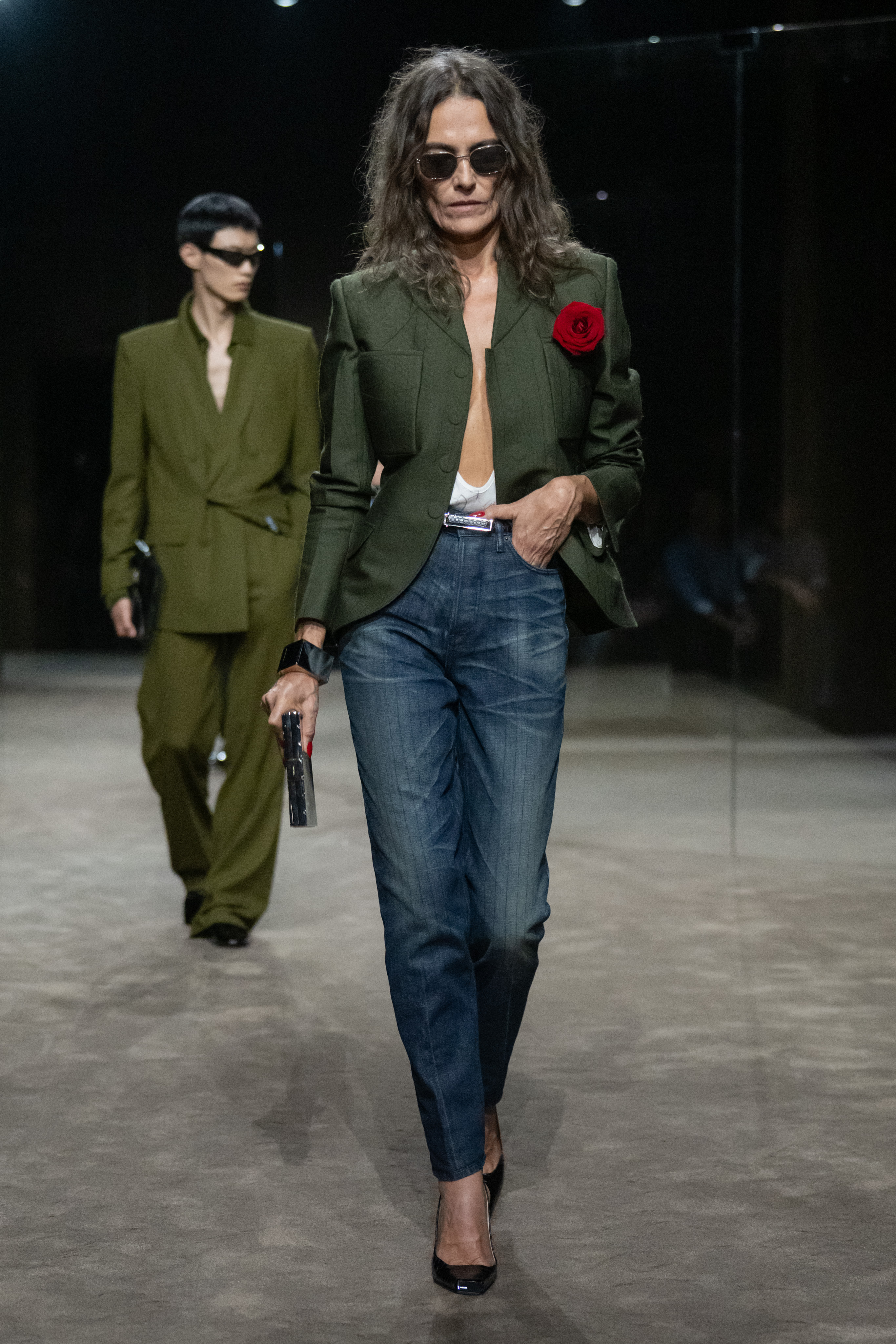
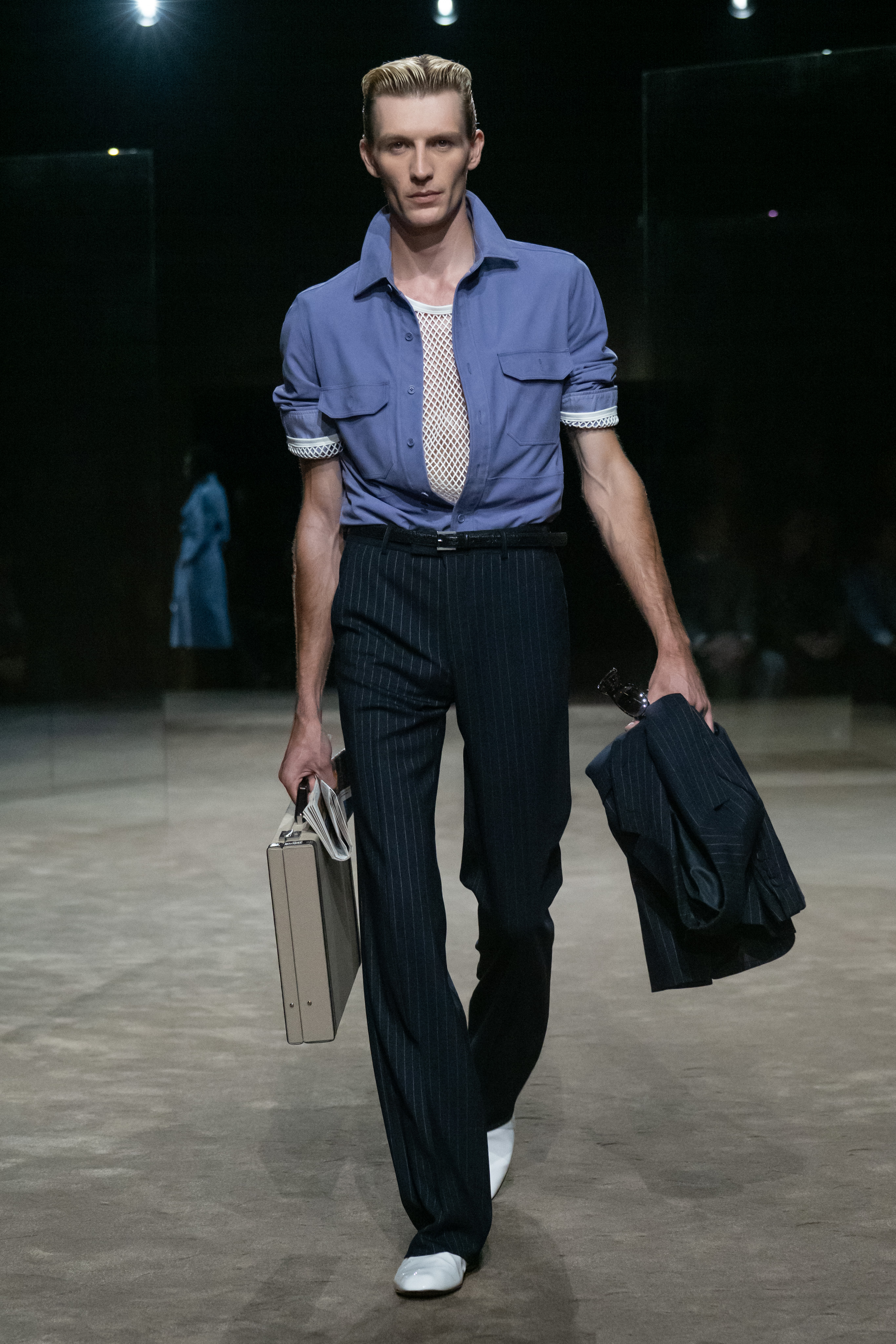
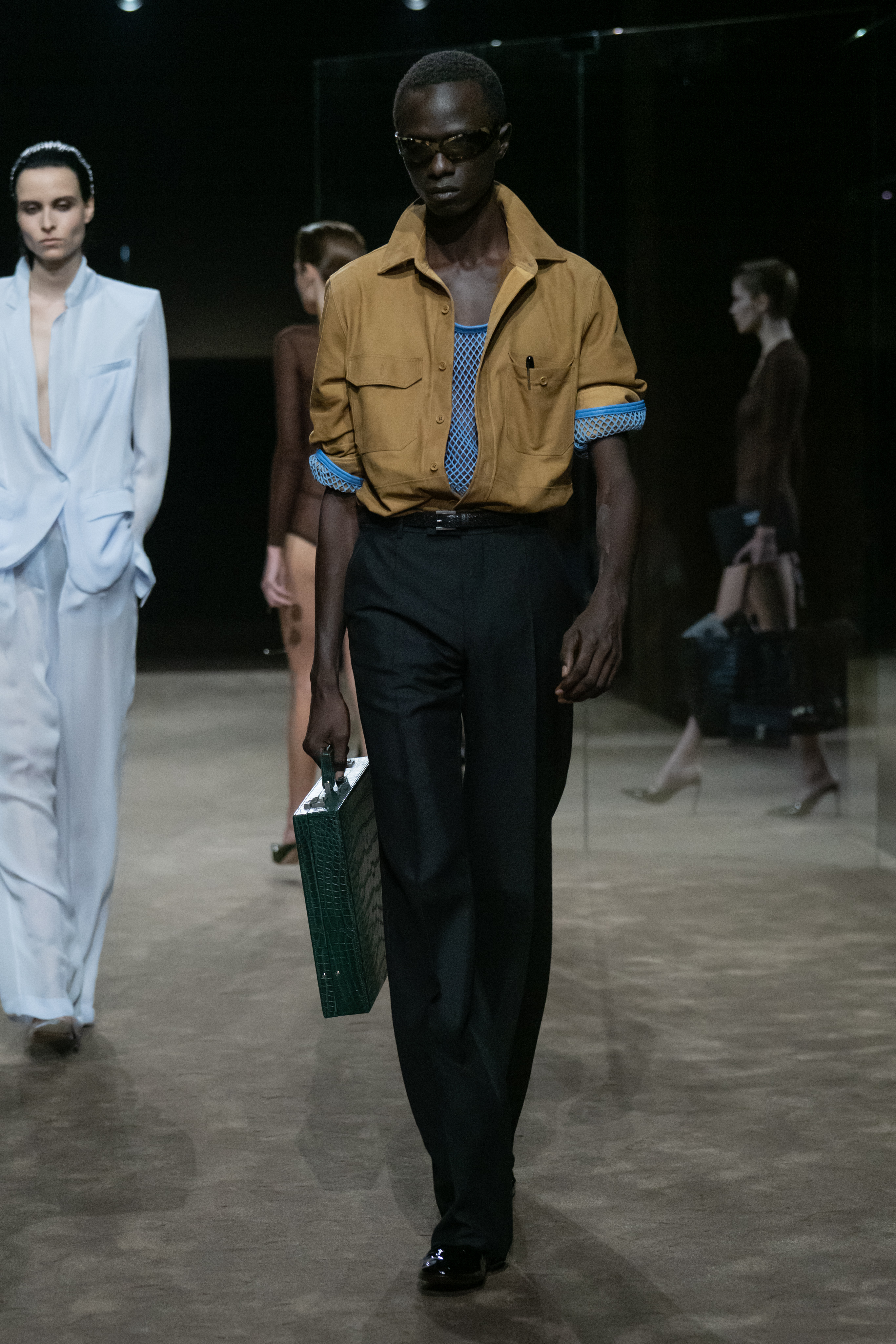
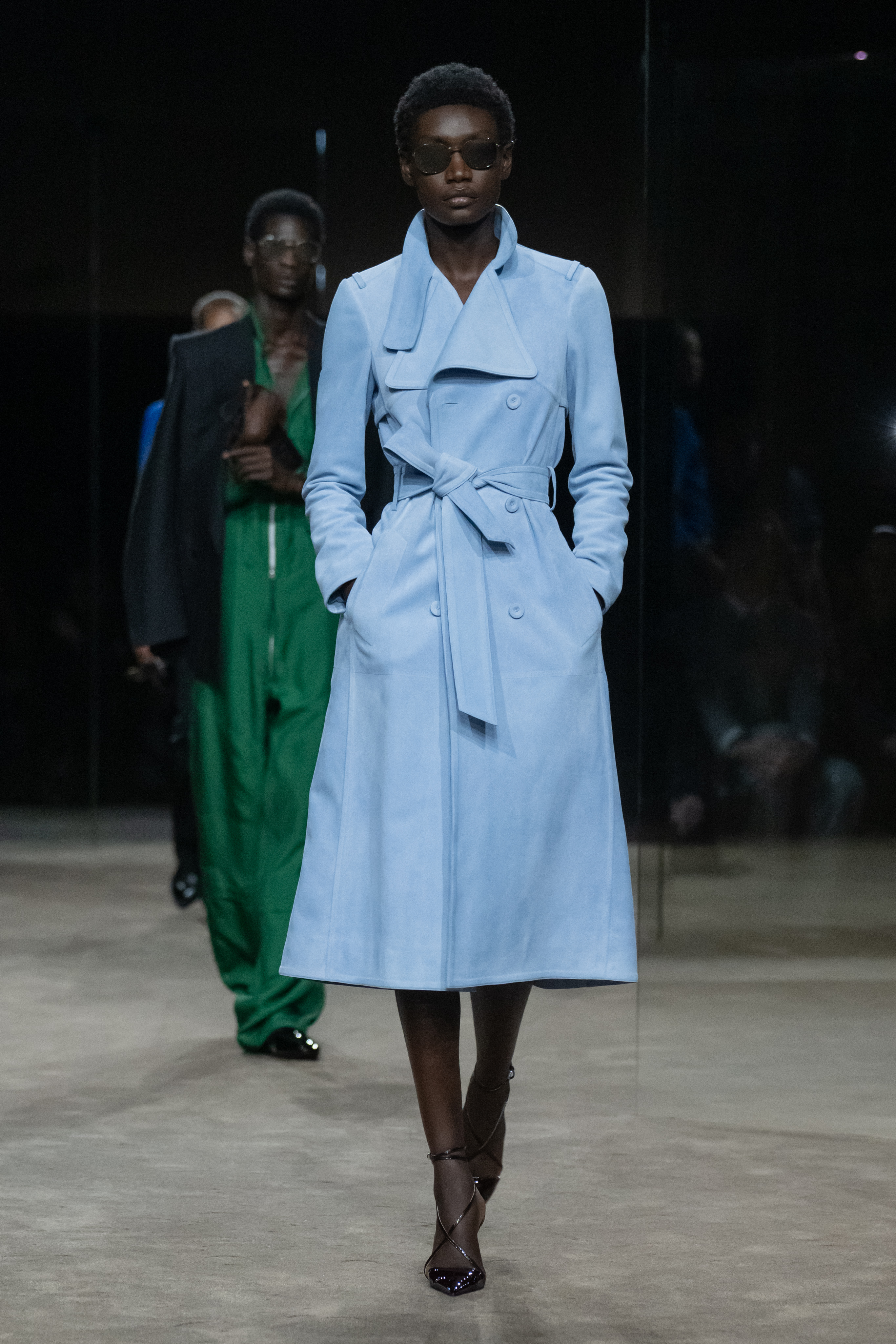
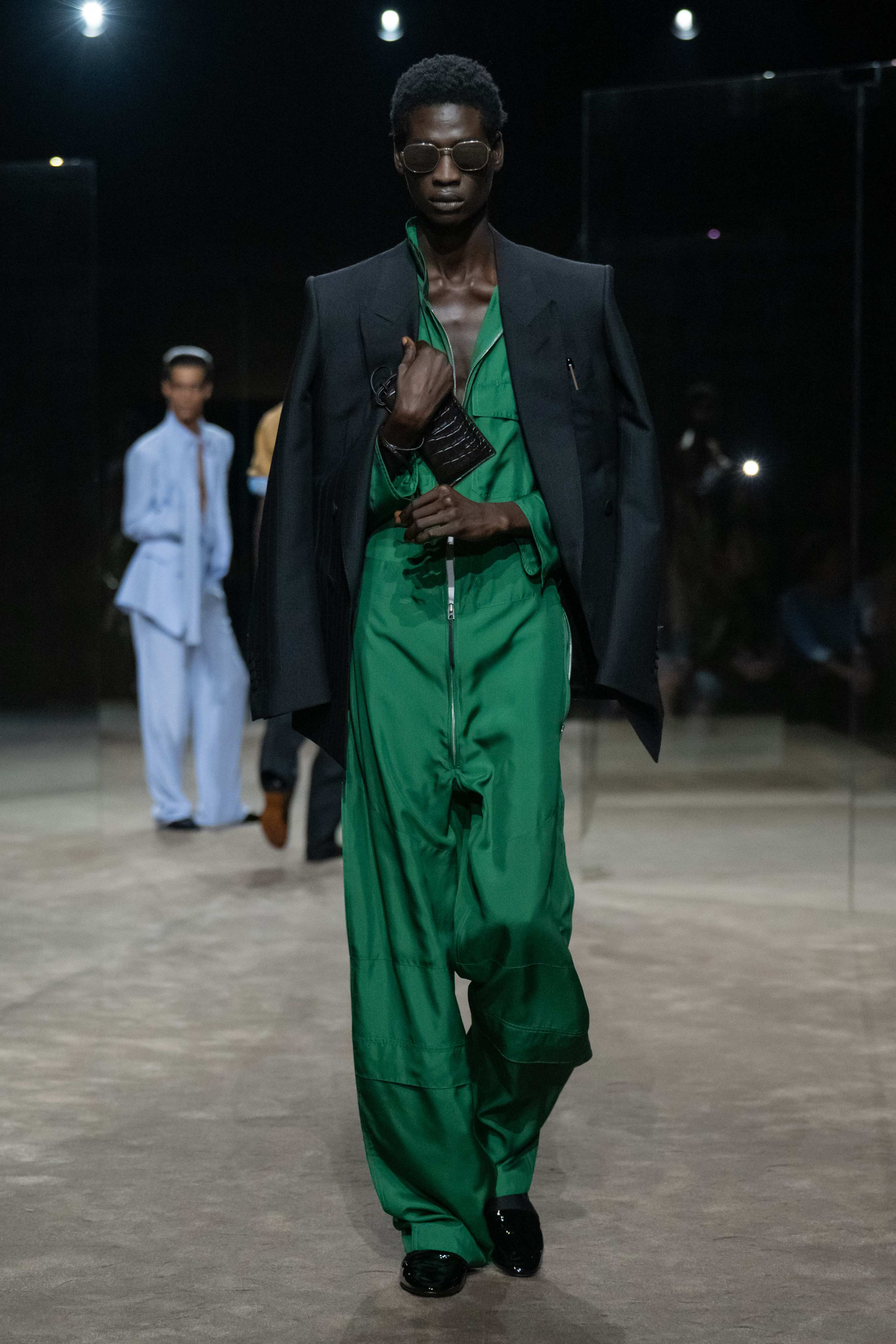
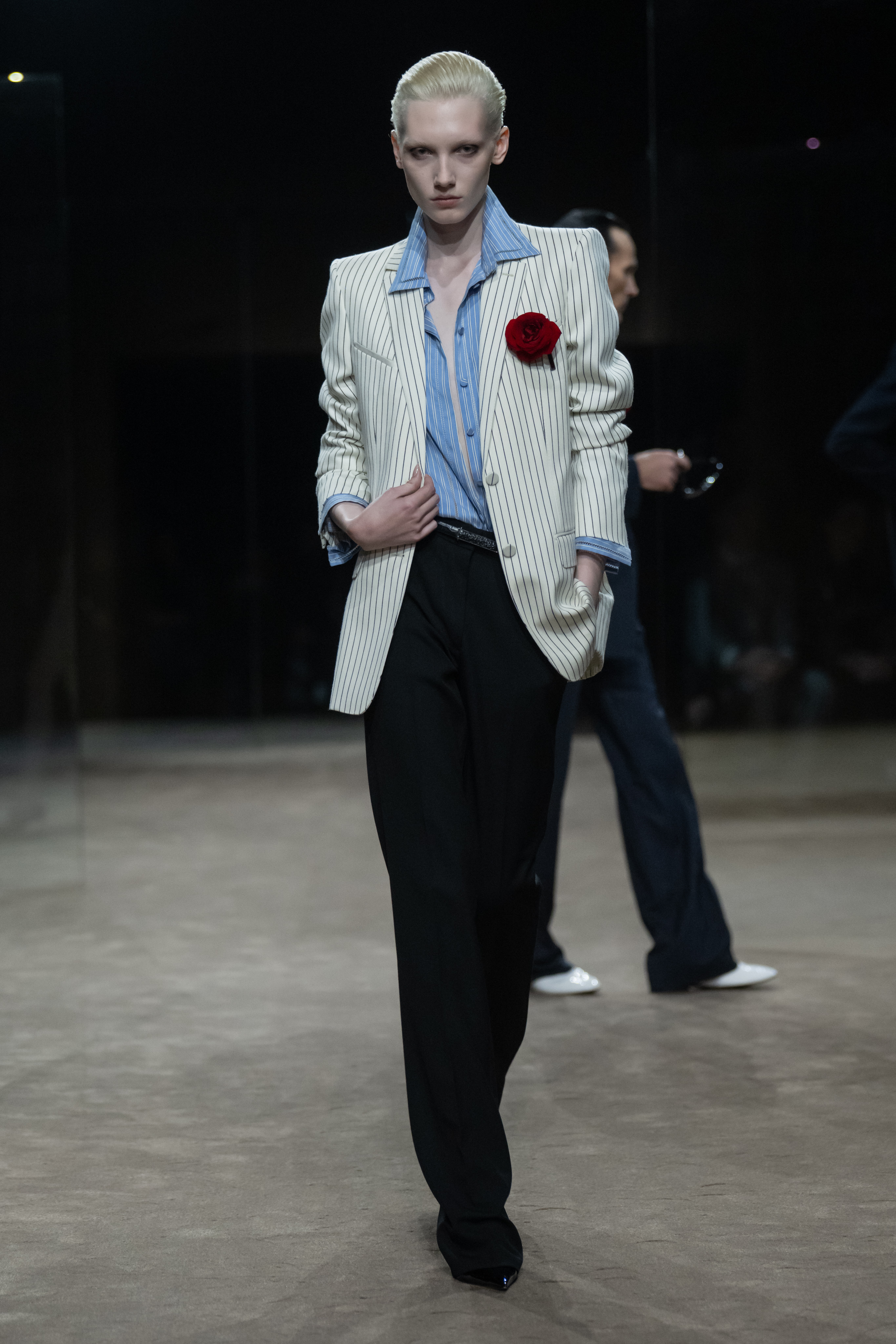
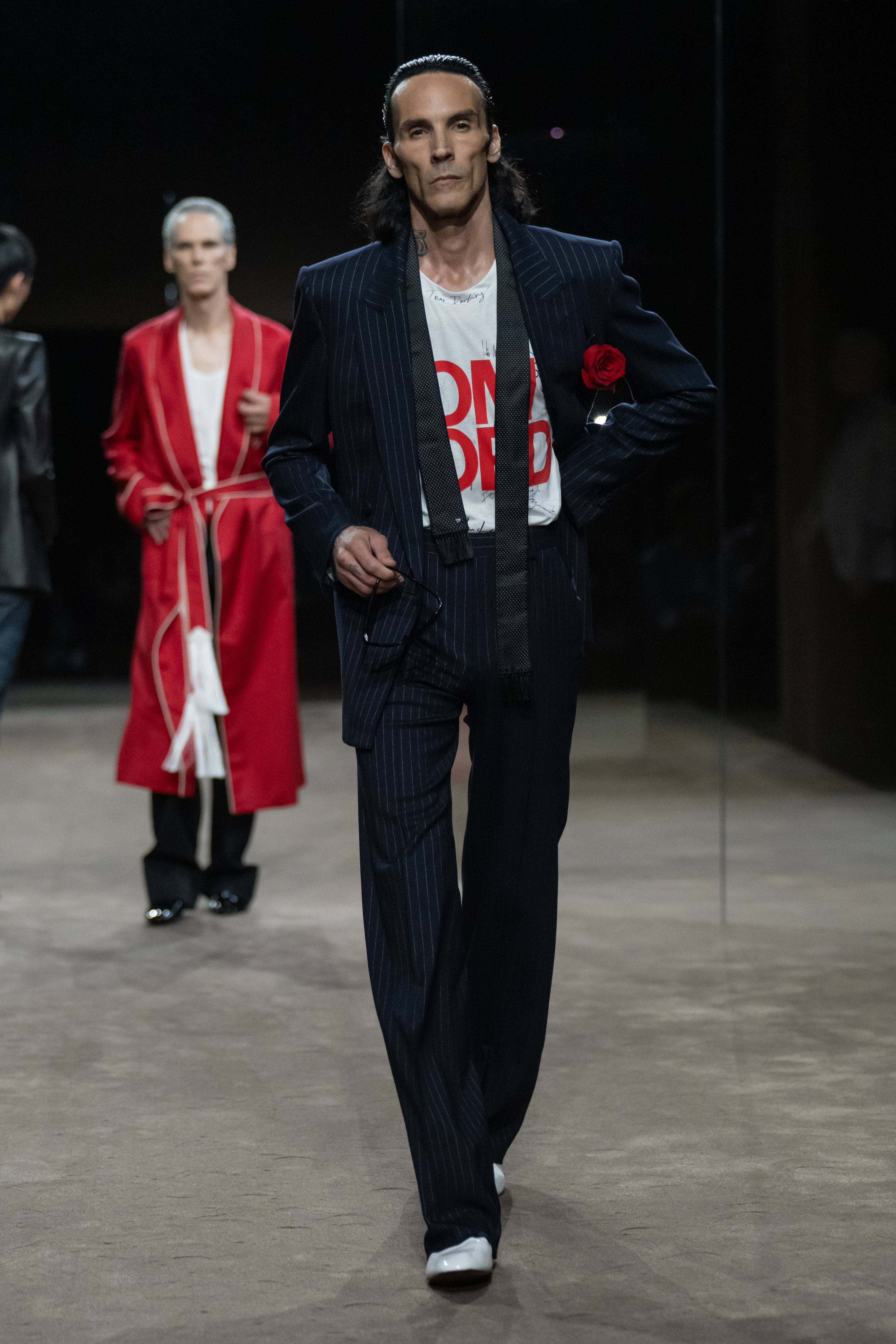
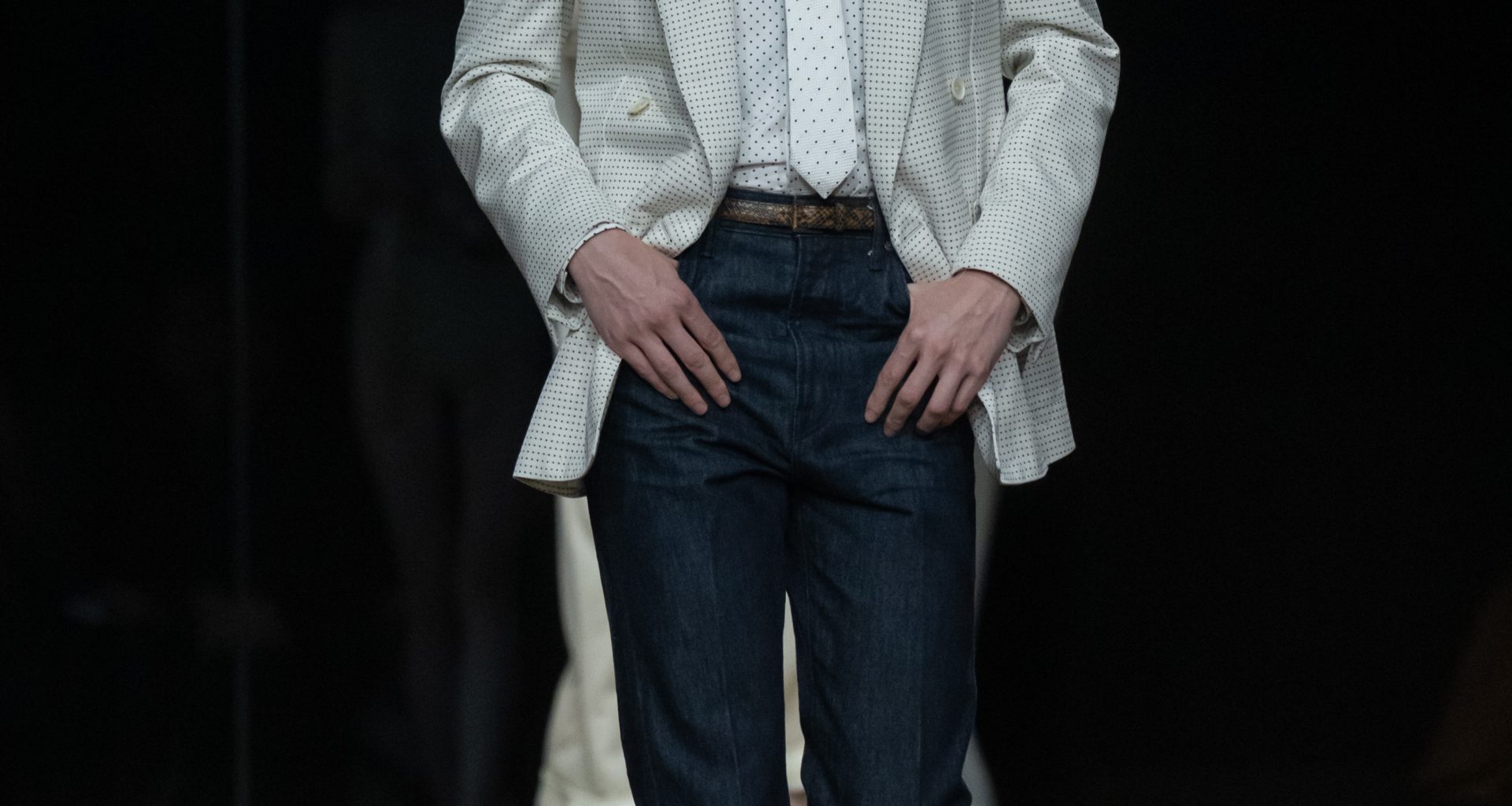
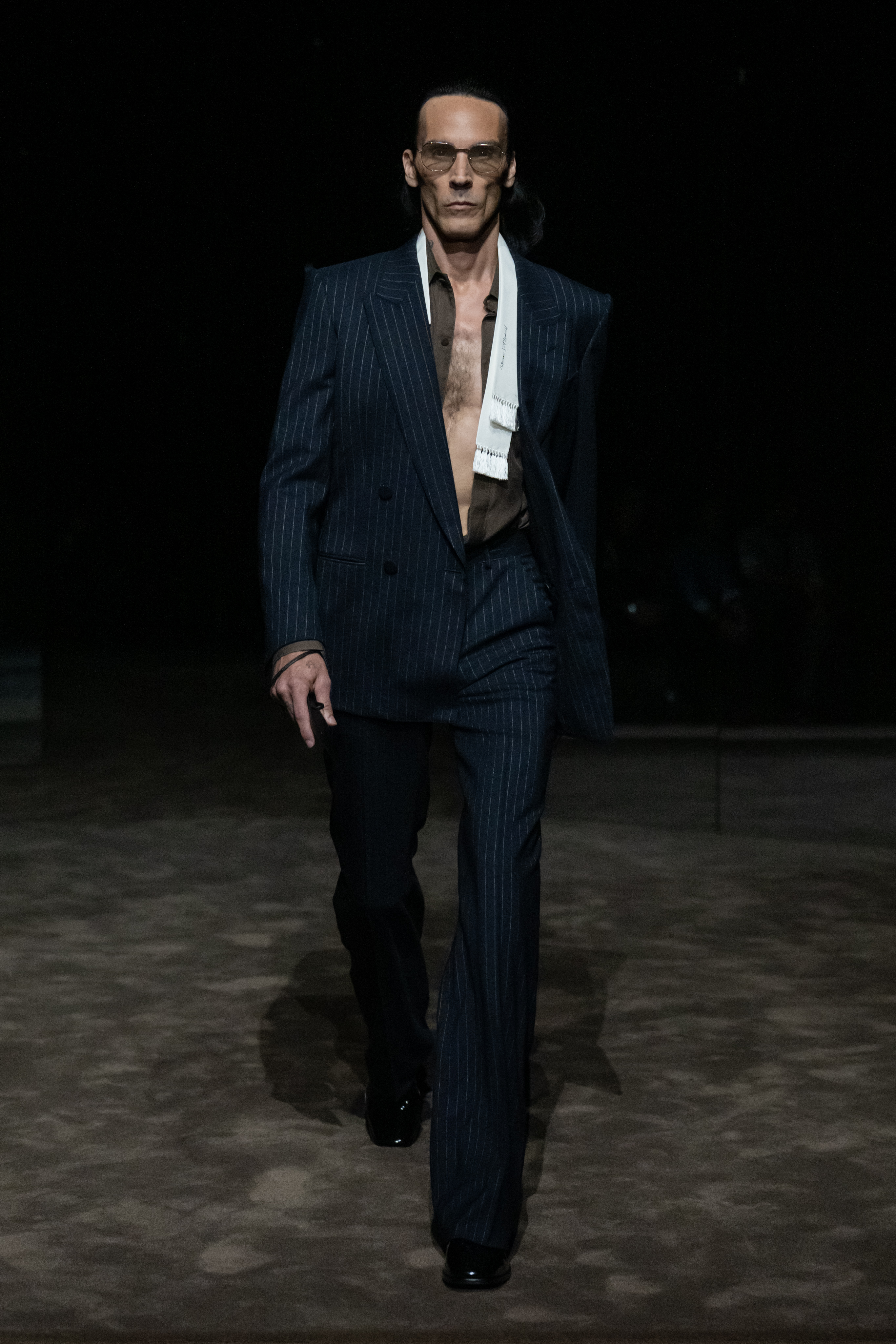
The tailoring remains exact. That is the anchor. Jackets retain their authority even when there is nothing beneath them; pinstripes, leather, eveningwear and structured coats preserve the grammar of power. But the body is no longer contained by that grammar. It interrupts it. A swimsuit can replace a shirt. A robe can become a coat. A flash of skin can become more eloquent than an entire outfit.
This is where Ackermann’s intelligence becomes visible.
Not in abstraction. Not in intellectual references placed on top of clothes. In the way an idea changes the way a garment is worn.
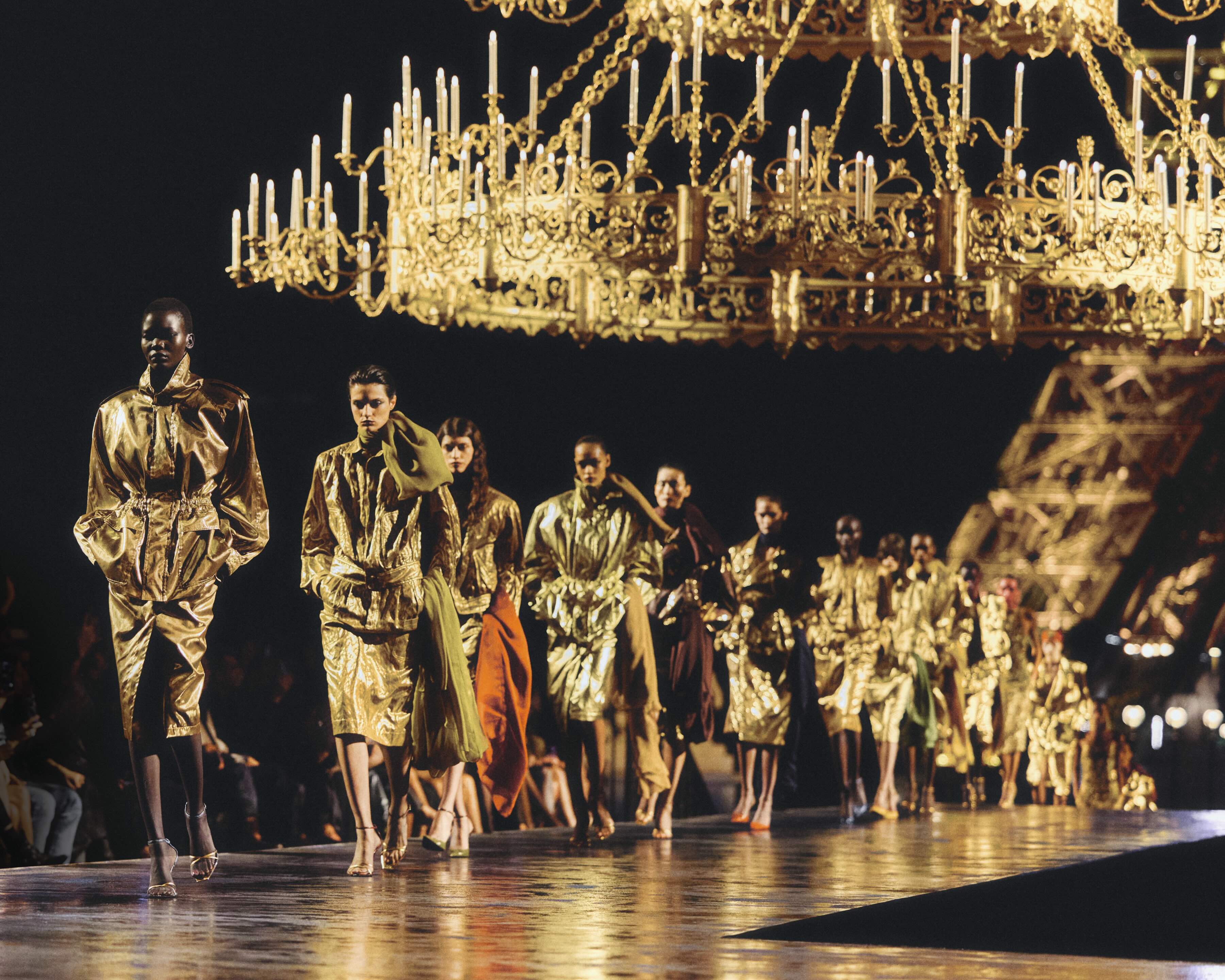
The mirrors at Place Vendôme make the argument physical. A body passes; its reflection remains. The gaze is returned. The spectator is no longer outside the image but implicated in it. The collection becomes a conversation between flesh and representation, between what is shown and what is withheld.
And this is perhaps where luxury, intellect and sensuality converge.
Luxury without intellect becomes spectacle.
Intellect without sensuality becomes exercise.
Sensuality without tension becomes advertising.
Ackermann understands that the three need one another.
His Tom Ford is therefore not “quiet luxury”, nor maximalist luxury, nor nostalgia. It is thinking luxury: clothes that retain the physical pleasure of fashion while allowing an idea to remain underneath the surface.
That is particularly relevant now, when fashion is increasingly required to explain itself instantly, photograph itself instantly, sell itself instantly. Ackermann does something almost unfashionable: he leaves things unresolved.
A door at night. A gaze held too long. Red on somebody else’s lips. Something that may have happened, or may be about to.
The collection operates in that interval.
And the interval is where desire lives.
Ford understood that desire could sell a garment. Ackermann seems interested in something more difficult: what desire can make a garment mean.
This is why the naked body is not necessarily the most provocative element here. The more radical gesture is the refusal to turn exposure into an offer. “A body that reveals itself without offering itself” is a precise description of Ackermann’s approach. The body is visible, but it remains autonomous. Sexuality becomes a condition of presence rather than a performance for consumption.
That shift gives the collection its modernity.
It also explains why Ackermann can place an almost absurdly glamorous Tom Ford fantasy – the silk robe, the red satin, the towering heels, the oversized weekend bags – beside something as stripped-back as a jacket worn directly on skin.
The contradiction is the point.
Luxury becomes more interesting when it is allowed to be unstable.
And perhaps this is where Ackermann is most faithful to Tom Ford: not by reproducing Ford’s images, but by preserving his appetite for excess while changing its psychology.
Ford gave fashion the confidence to make desire visible.
Ackermann gives that desire vulnerability, ambiguity and air.
That is the real dialogue between them.
Not American versus European.
Not founder versus successor.
Not past versus future.
Power meeting fragility. Discipline meeting freedom. Image meeting thought.
And somewhere between the two, sensuality stops being an effect and becomes an intelligence.
That may be the most valuable thing a fashion house can still offer: not another image to consume, but an image that makes you stop, look again, and wonder what exactly you are looking at.
Desire needs air.
So does fashion.