For his Spring Summer 2027 Ready-to-Wear collection, titled Milk and Wine, Burç Akyol moves between primitive instinct and elaborate ritual, turning tailoring, jersey and draping into clothes that cling, shift and move with the body.
What does a piece of clothing leave behind once it has been worn? For Burç Akyol, it might be the faint impression of a beaded car seat against bare skin, a tan line left after a summer in Pantelleria, or simply the feeling of having inhabited something that moved with you rather than around you. Milk and Wine, takes this physical relationship with dress and stretches it between two extremes: the primitive, ancestral intimacy of milk and the manufactured ritual of wine.
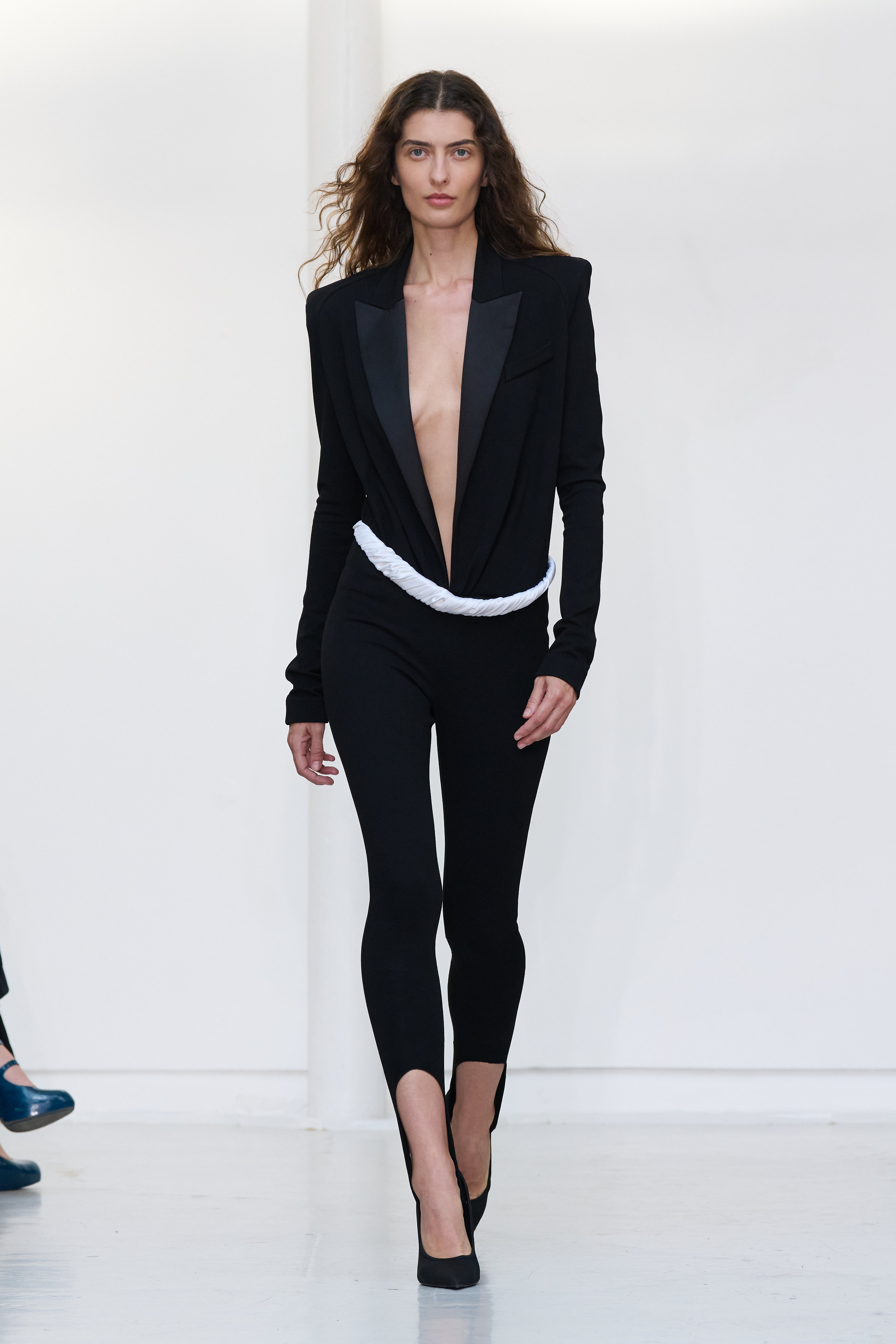
The opening look is a tuxedo jacket that never stops being a bodysuit. Black jersey, satin peak lapels, shoulders pushed to a hard line, and a neckline that plunges almost to the waist before the fabric gathers at the hips. Below it come stirrup leggings, with a thick white rope of ruched fabric slung low across the pelvis and black pumps at the bottom. The room around it was white, the floor pale and glossy, the audience close on both sides, two weathered classical columns standing at the far end.
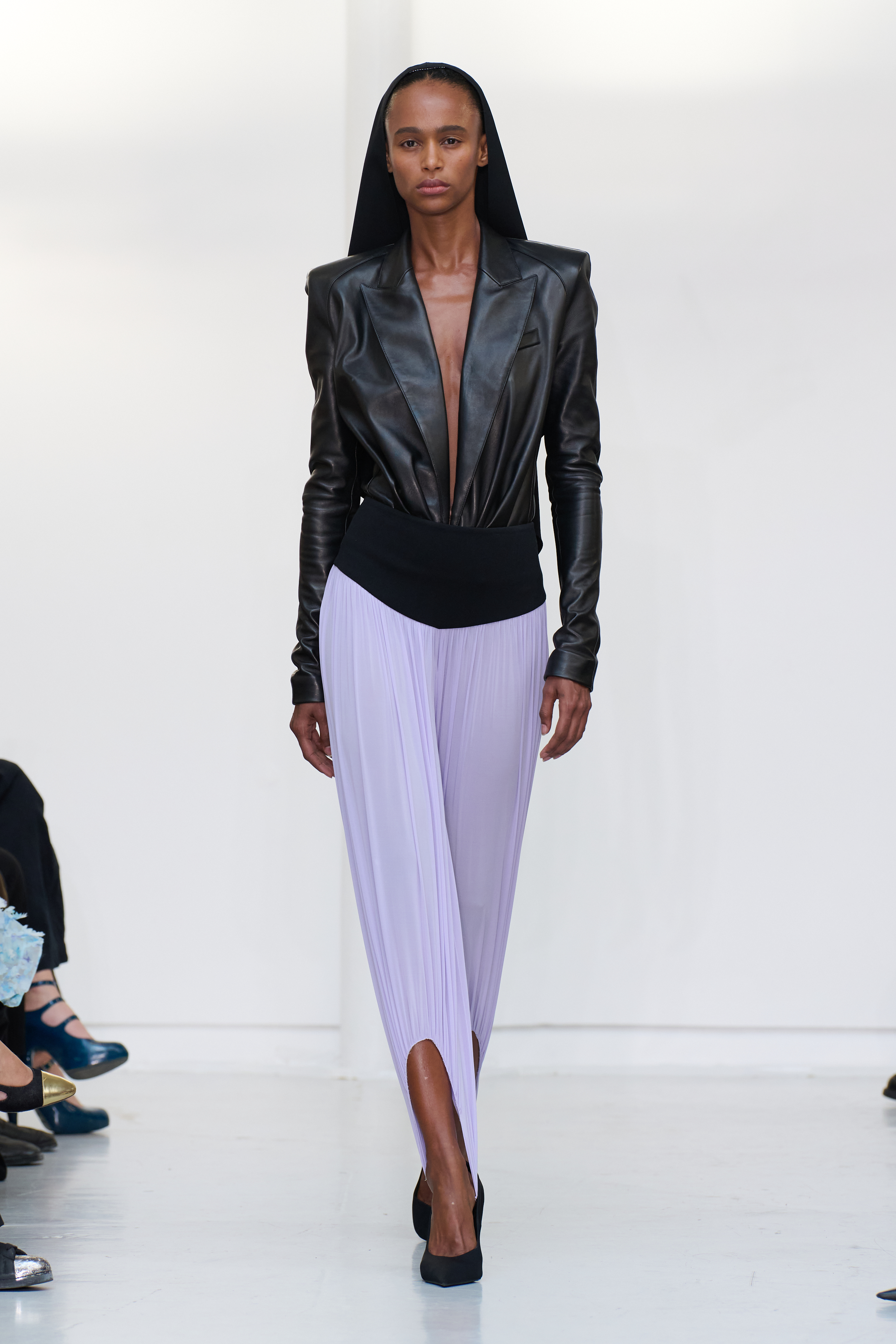
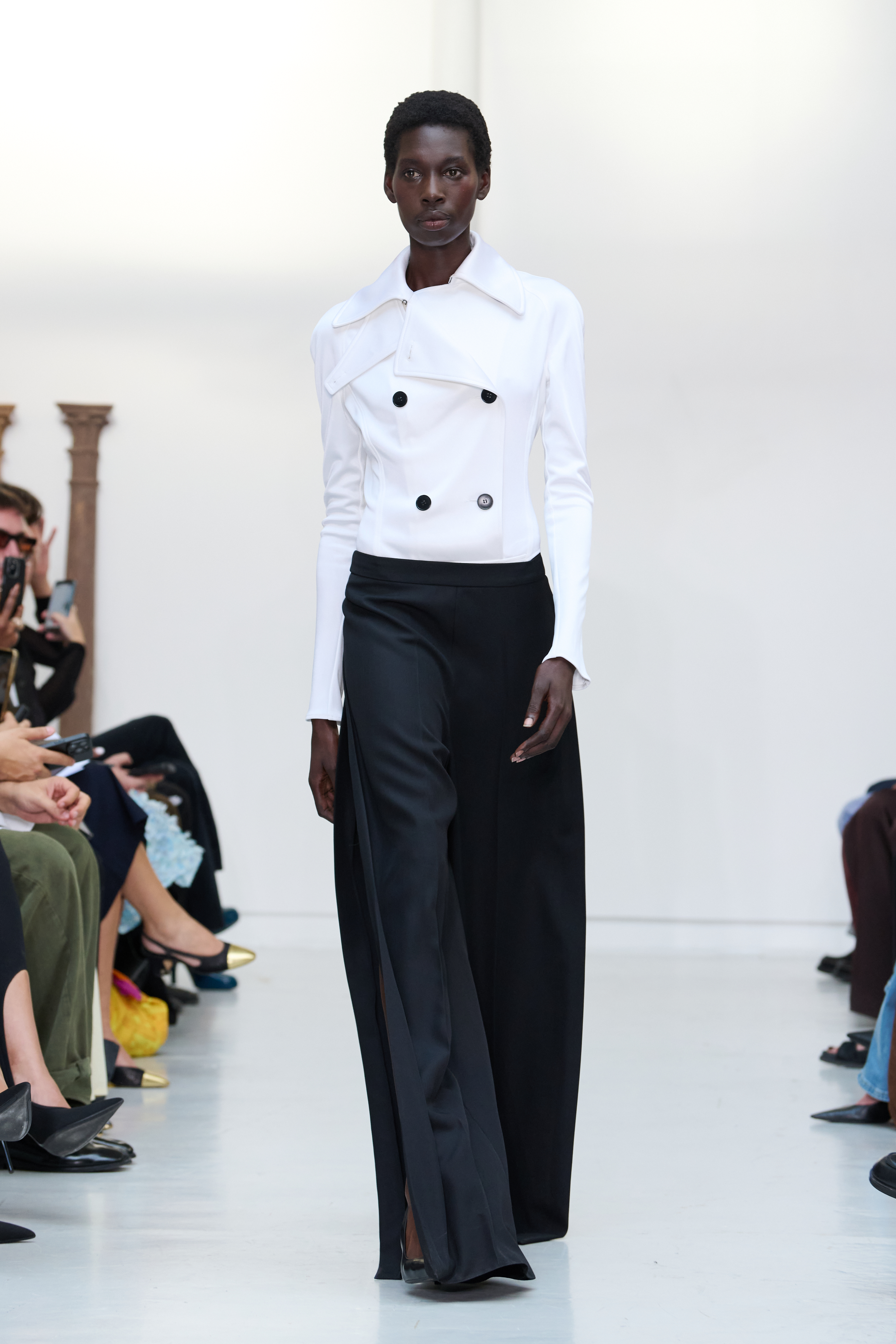
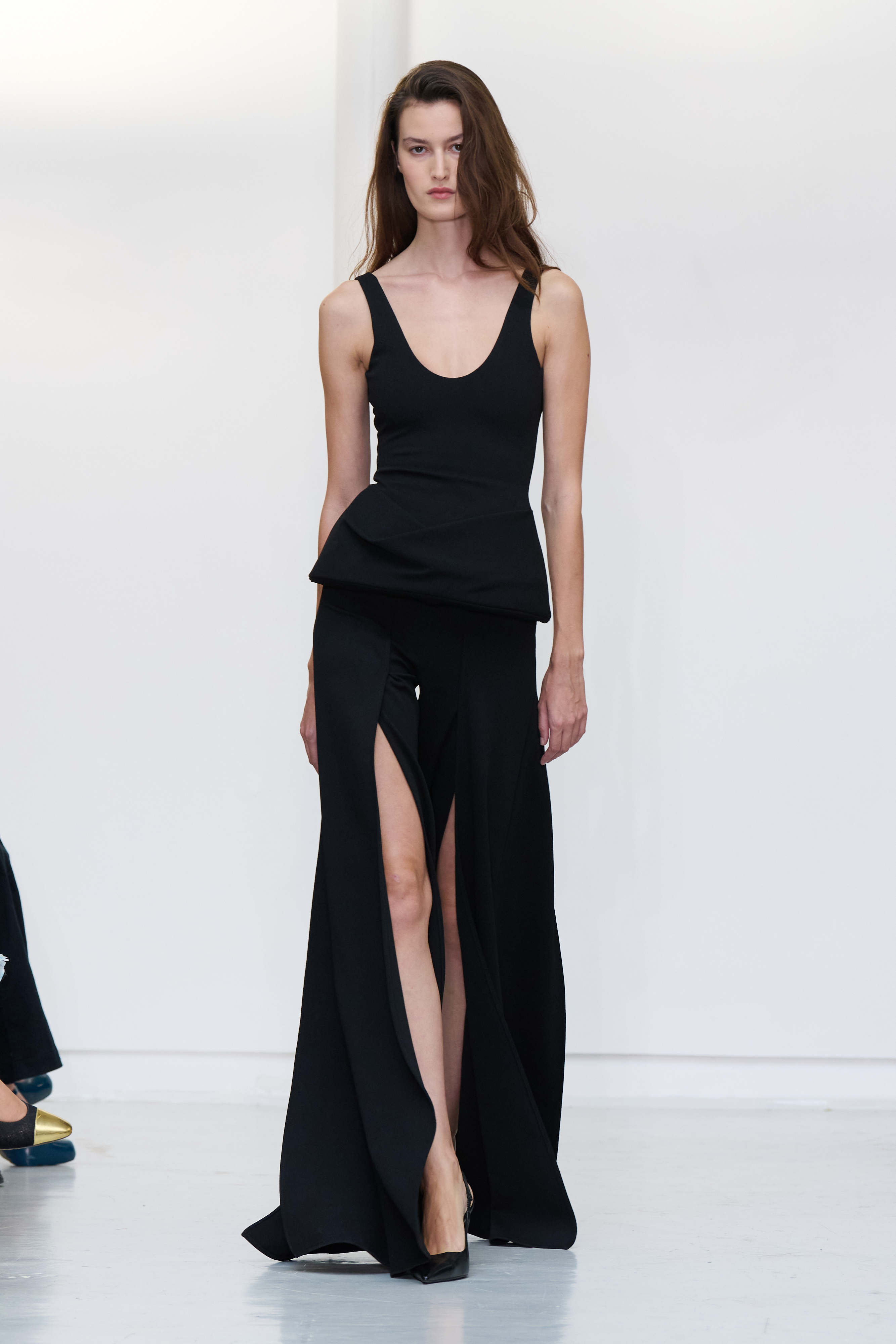
Akyol’s collection plays out in tailoring, all black and white with the odd flare of rust, lilac and red. Then come dresses, and the sunglasses that arrive with them (eyewear is credited to Shevoke). One proportion holds throughout: a narrow, exact top half and a bottom half that either vanishes into stretch or flares out. A black leather blazer over a wide black waistband and lilac pleated trousers follows that logic. So does a cropped white double-breasted jacket with a shirt-wing collar, set on wide black trousers. A black scoop top with a folded, asymmetric peplum sits above trousers slit to the thigh, and the flare at the hem moves half a second after the leg does.
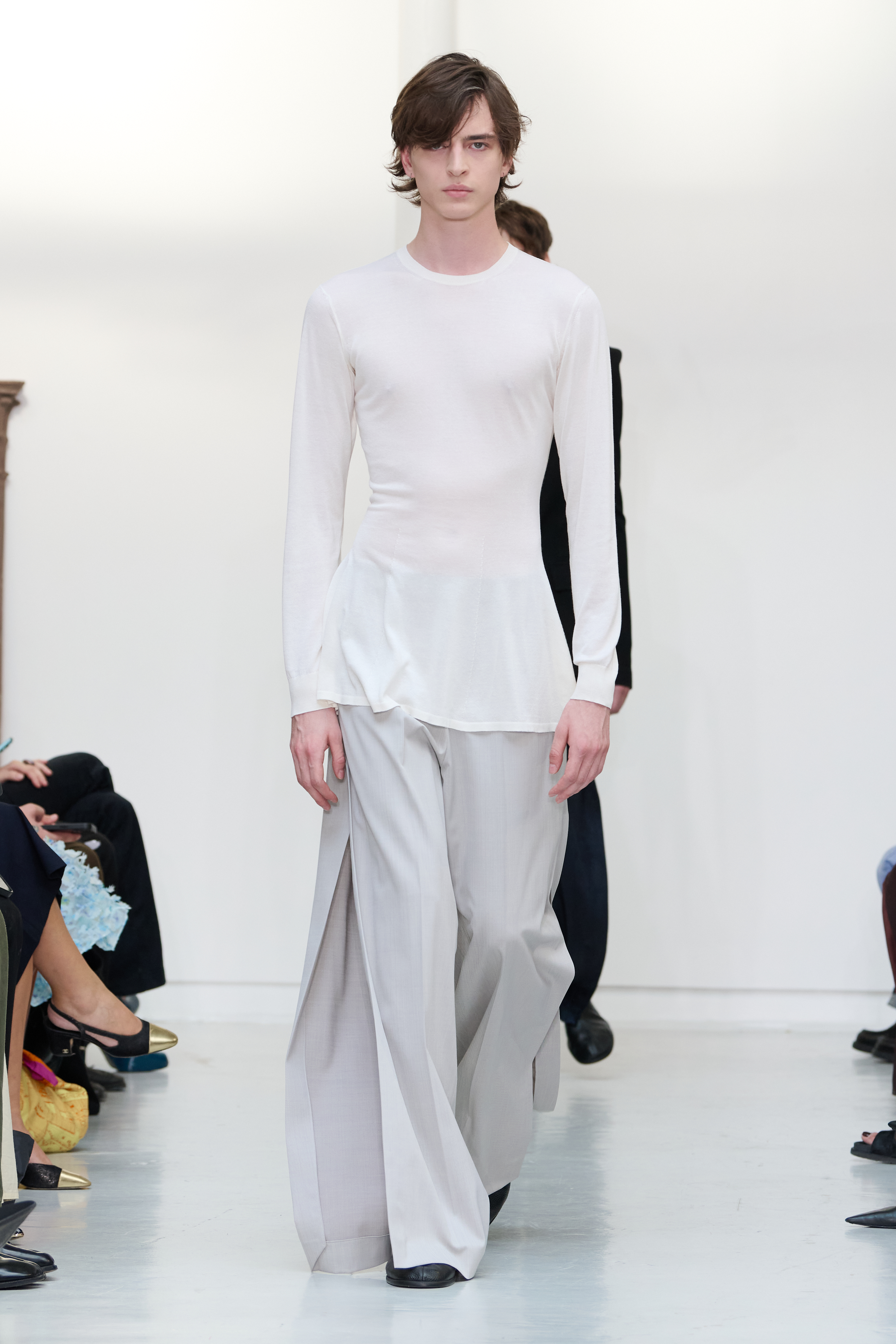
The two menswear looks are cut on the same principle: a fitted white knit that widens slightly at the hem over pale, side-split trousers, and a black stand-collar jacket with razor shoulders over navy velvet trousers wide enough to read as a skirt.
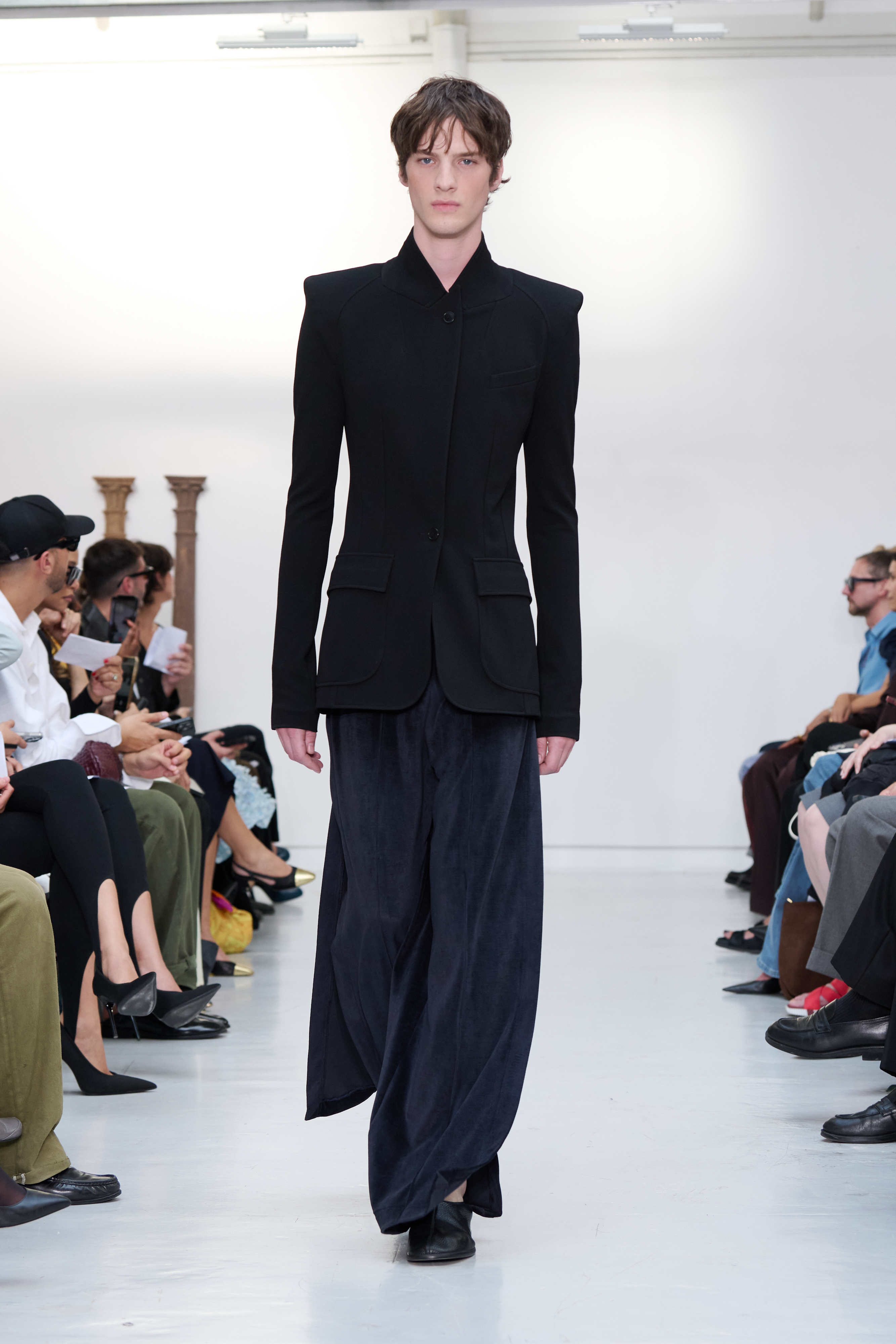
The jersey is the quiet technical decision. Burç says the stretch blazers are inspired by summers in Pantelleria, where you end up dusty and salty, dressed in almost nothing, tan line guaranteed. He wanted tailoring as mobile as a yoga outfit. You can see it in how the jackets settle. The shoulder keeps its shape, but everything below follows the body instead of arguing with it.
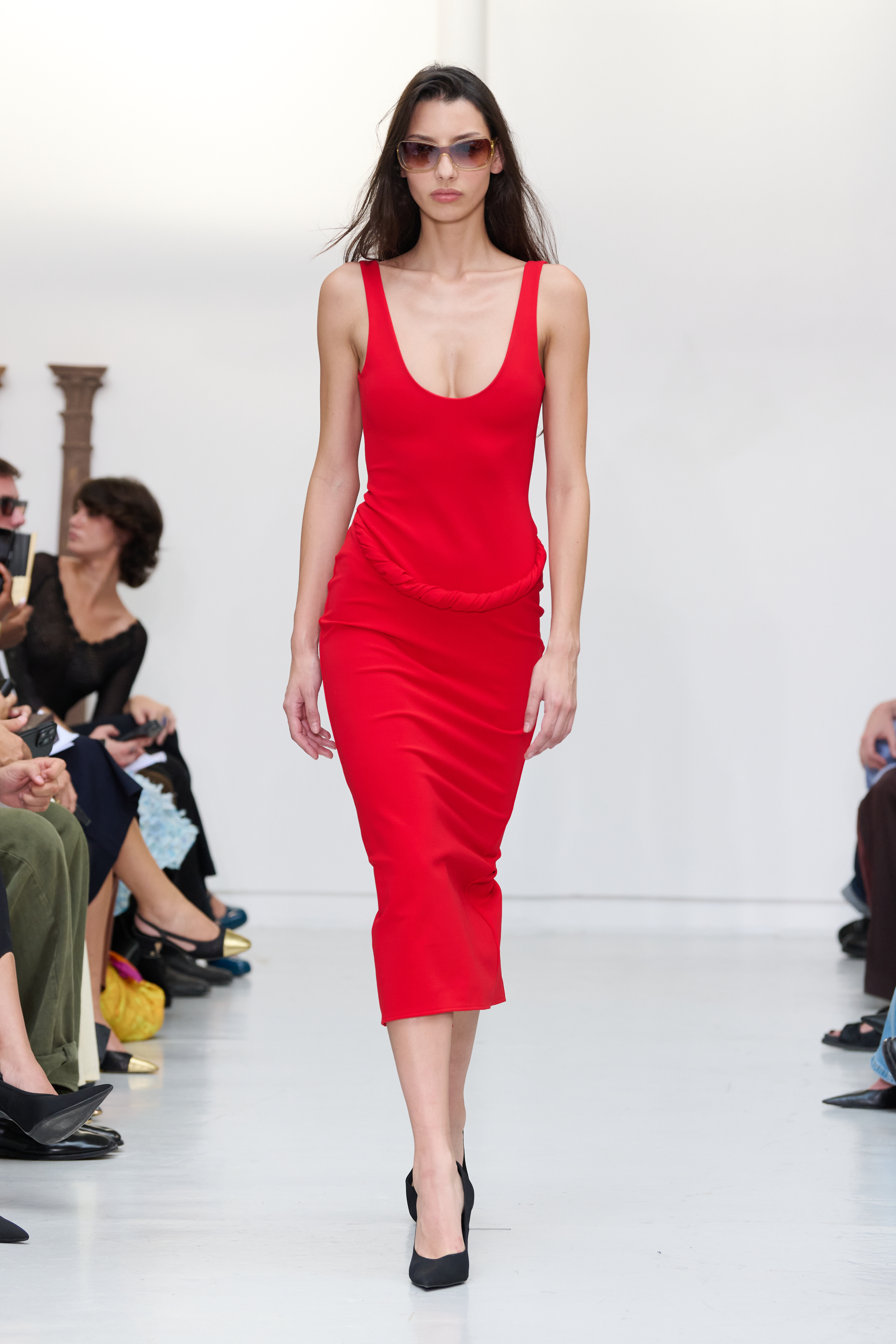
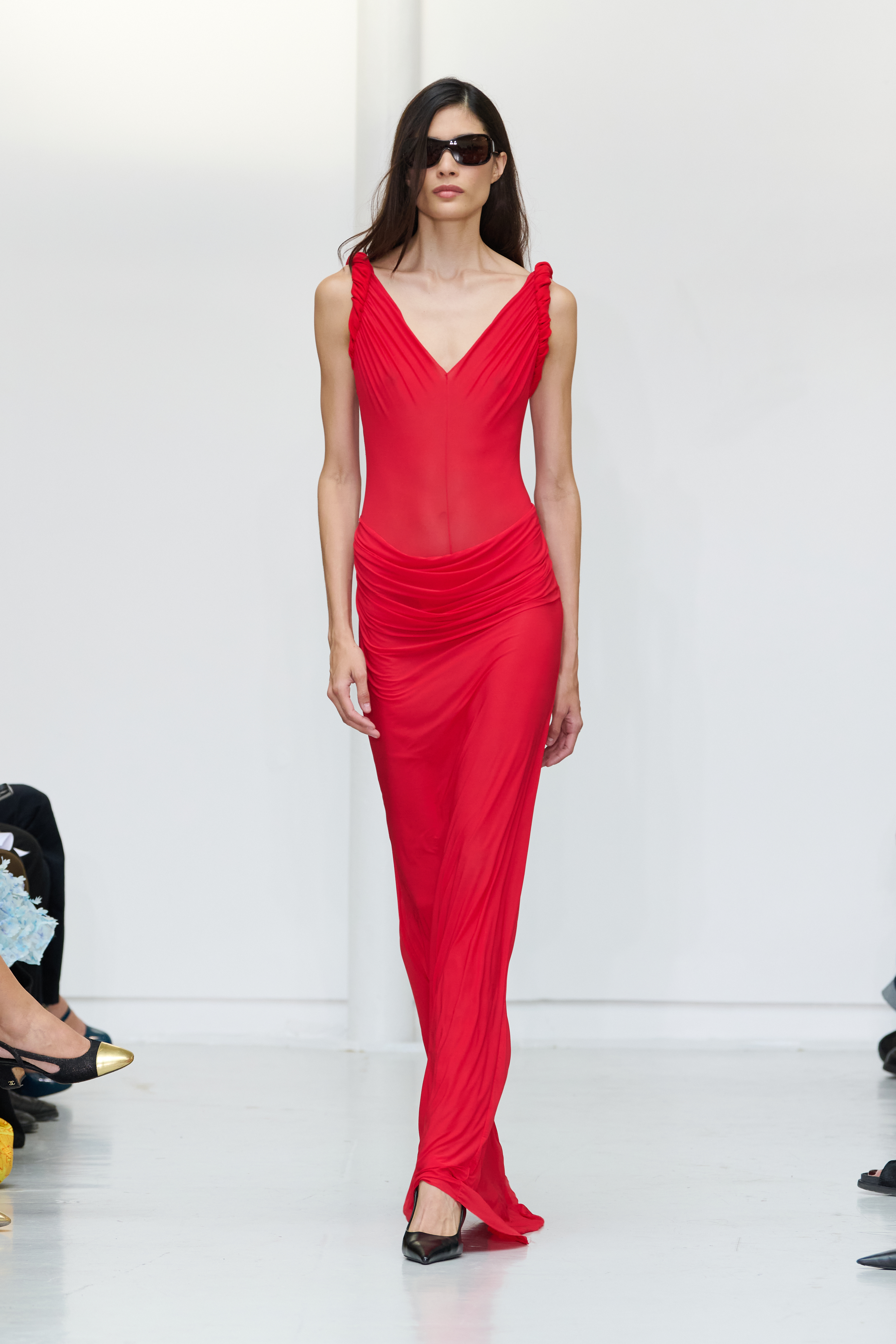
The dresses take that softness and run. A red scoop-neck midi hugs the body, with a twisted rope of fabric looped across the hip. Another long red gown is draped low over a near-sheer bodice, with ruched, rope-like straps on the shoulders, showing the body through its own layers.
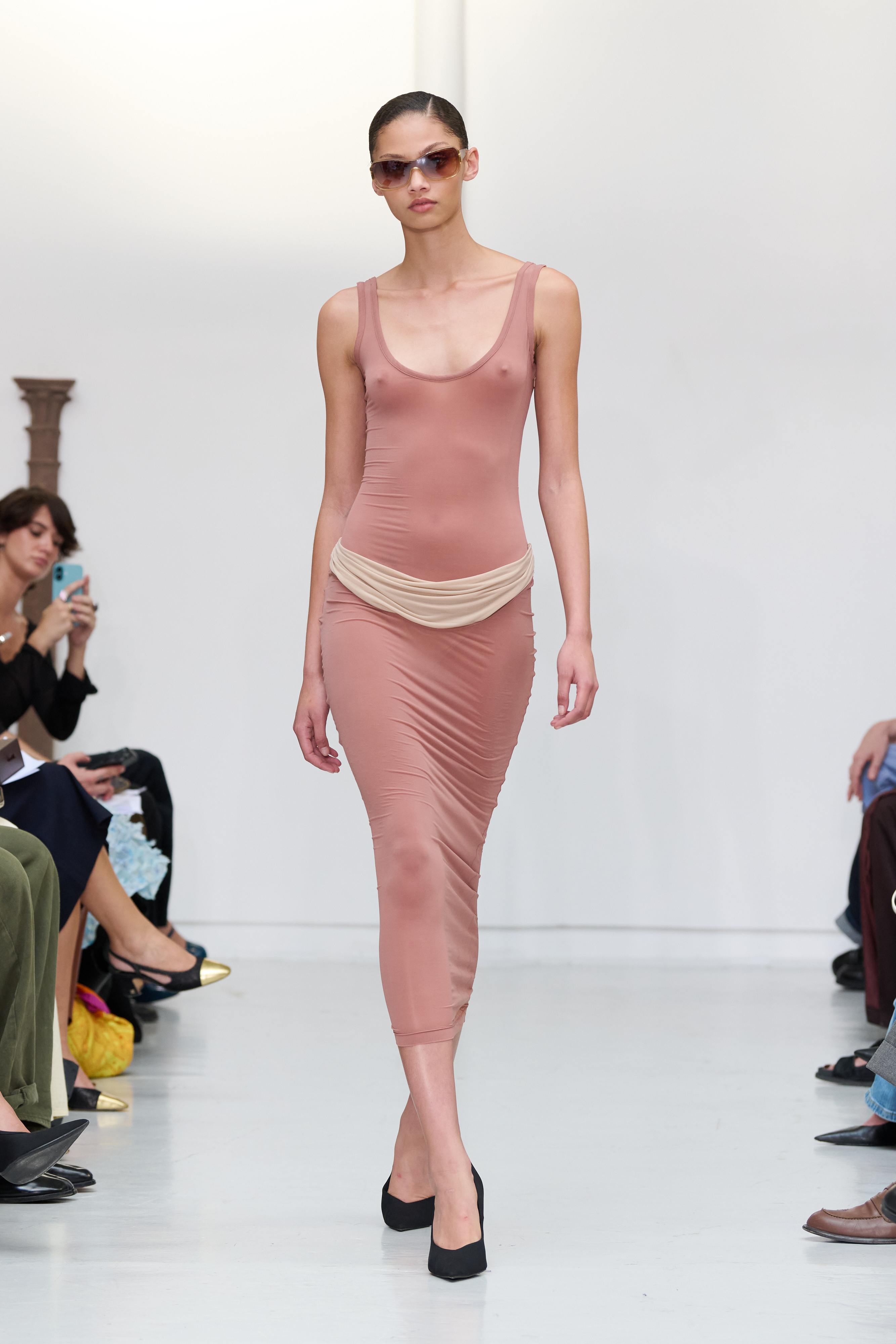
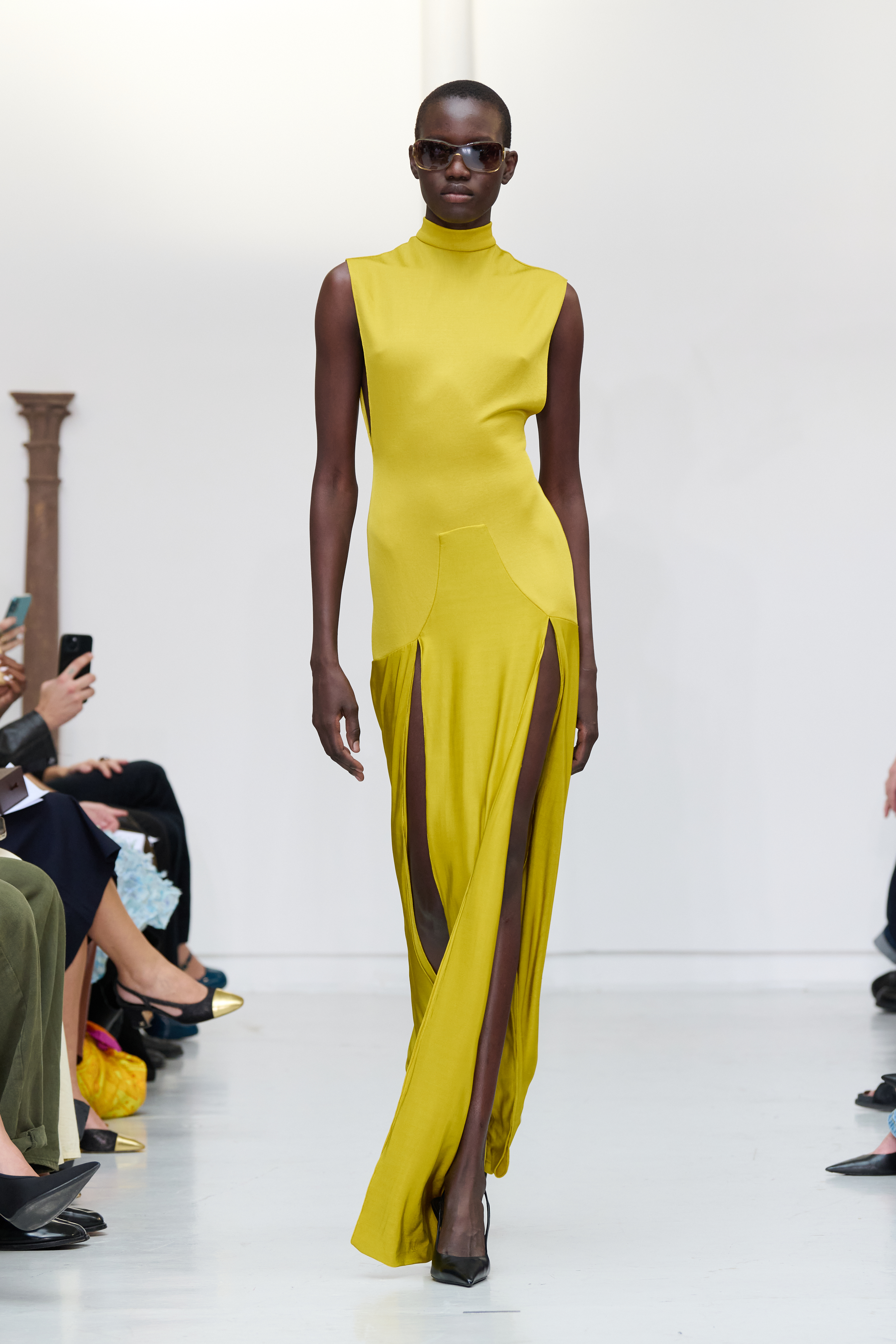
A dusty rose one does the same with a beige band gathered at the hip. Then comes the sharpest color of the show, an acid yellow high-neck gown with two slits opening from the thigh. Against all the black and white, Burç landed it like a flare.
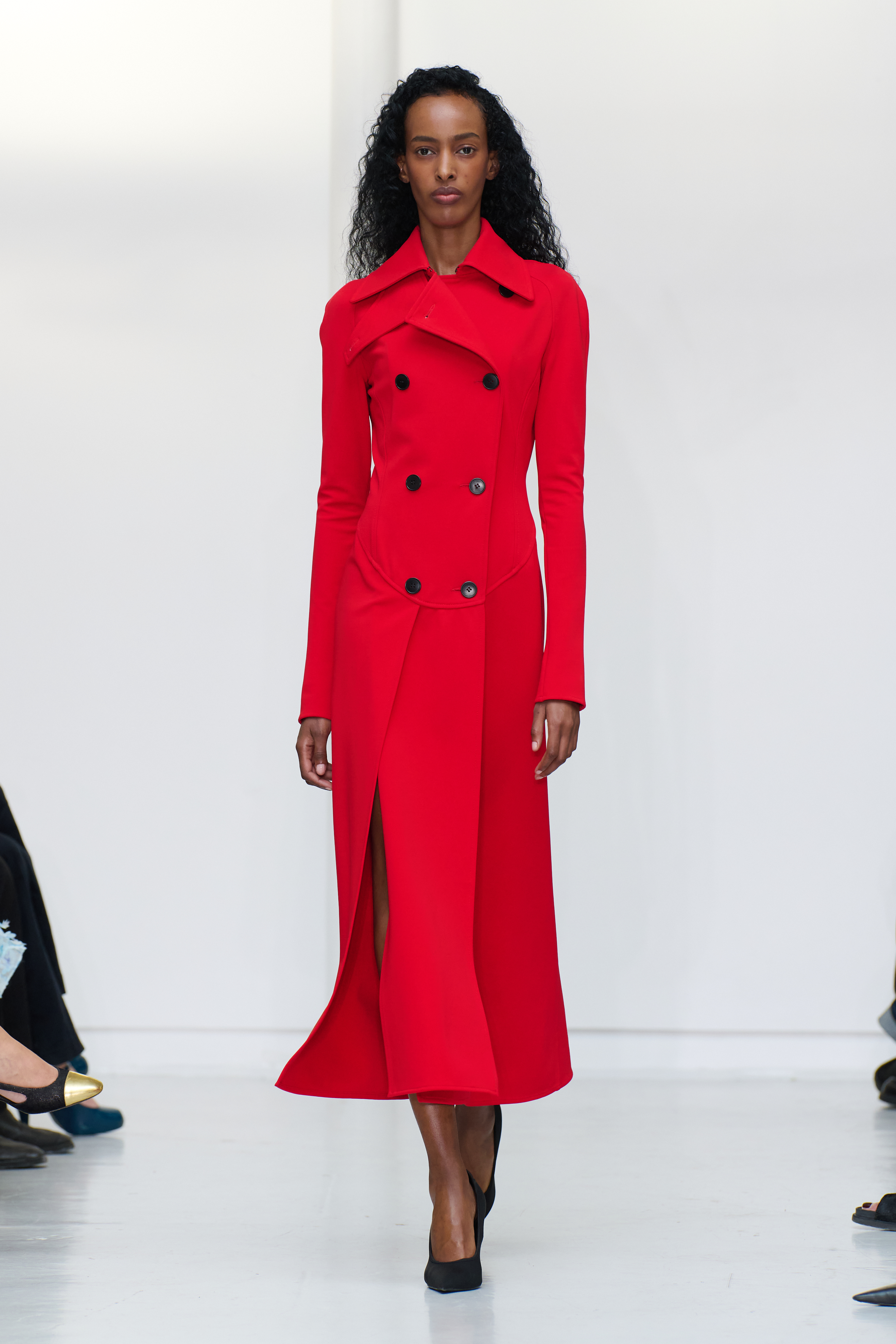
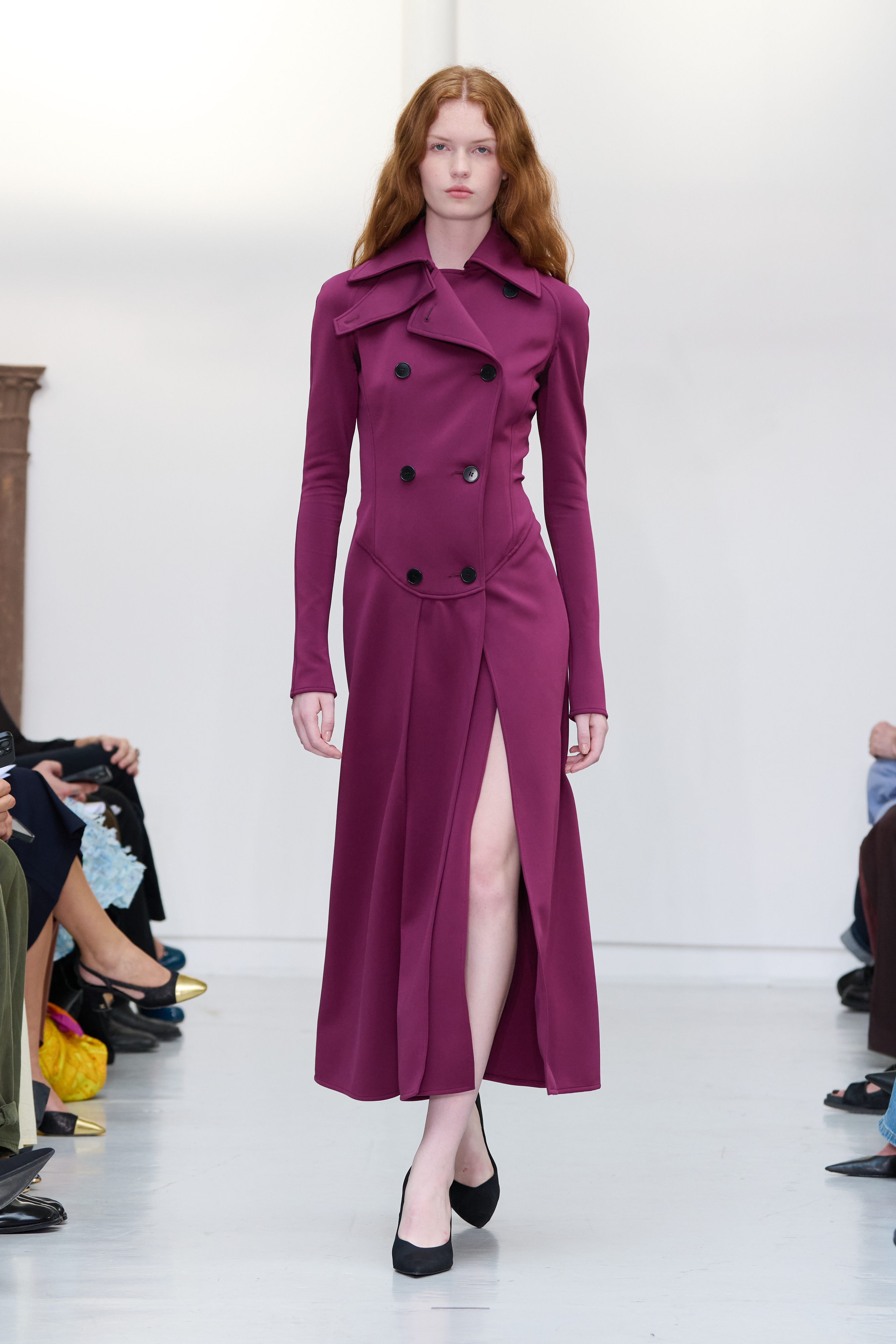
Akyol’s idea of making tailoring as mobile as a yoga outfit comes through most clearly in two double-breasted coat dresses, one in red and the other in deep plum. Their skirts open with the stride, while slits allow the body to move freely underneath. With the collar of a trench and the fit of a knit dress, they blur the line between structured outerwear and something much more fluid.
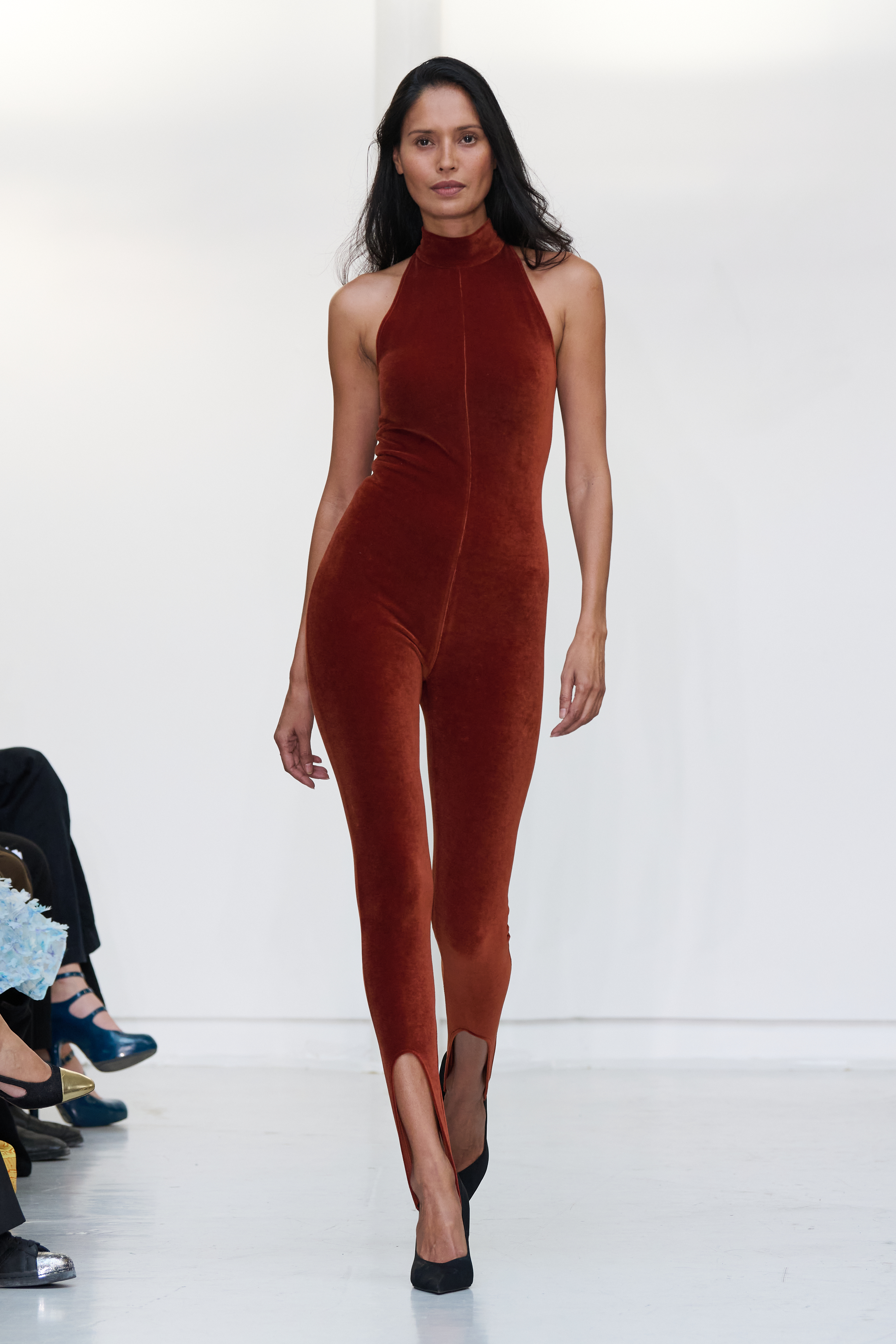
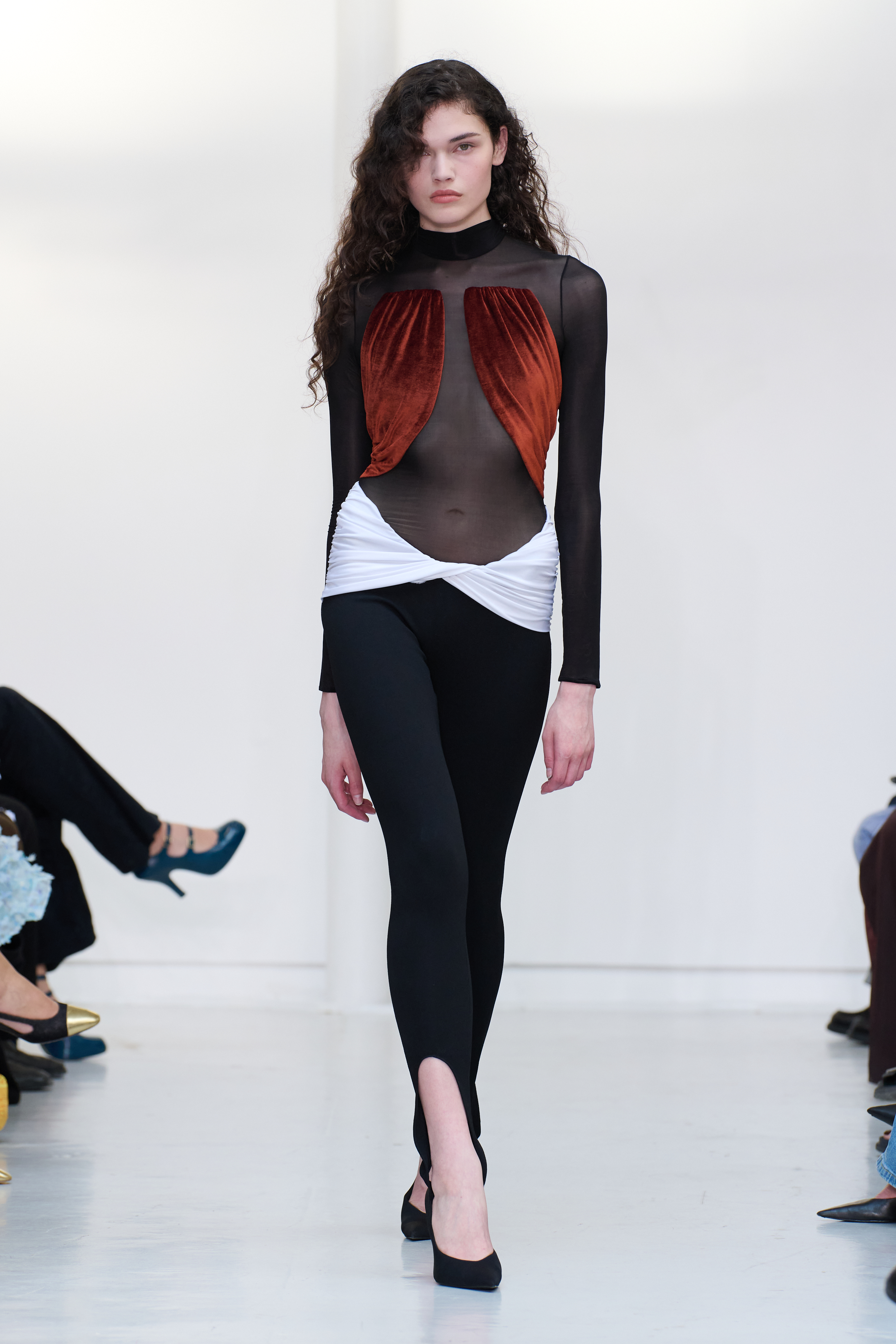
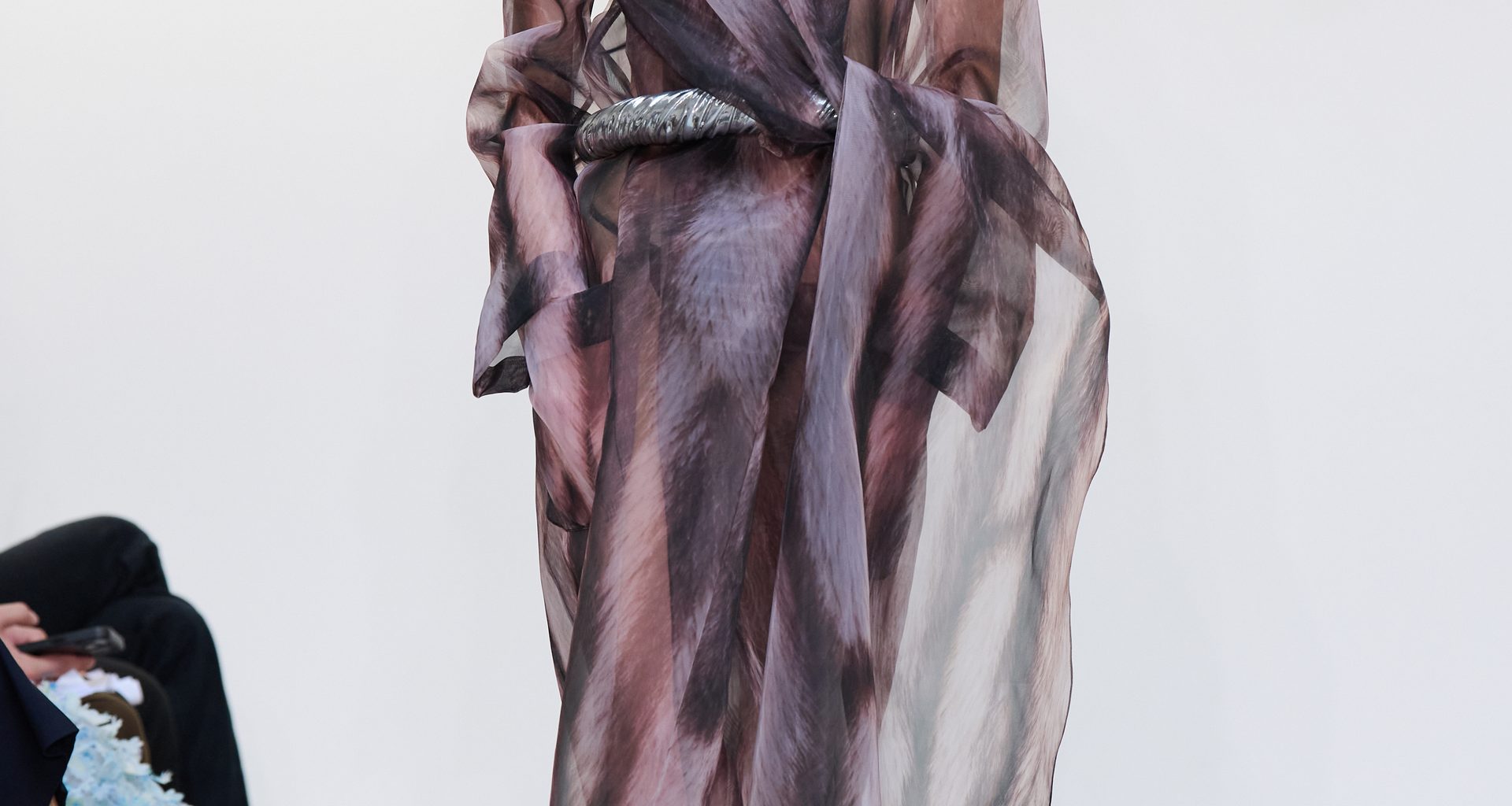
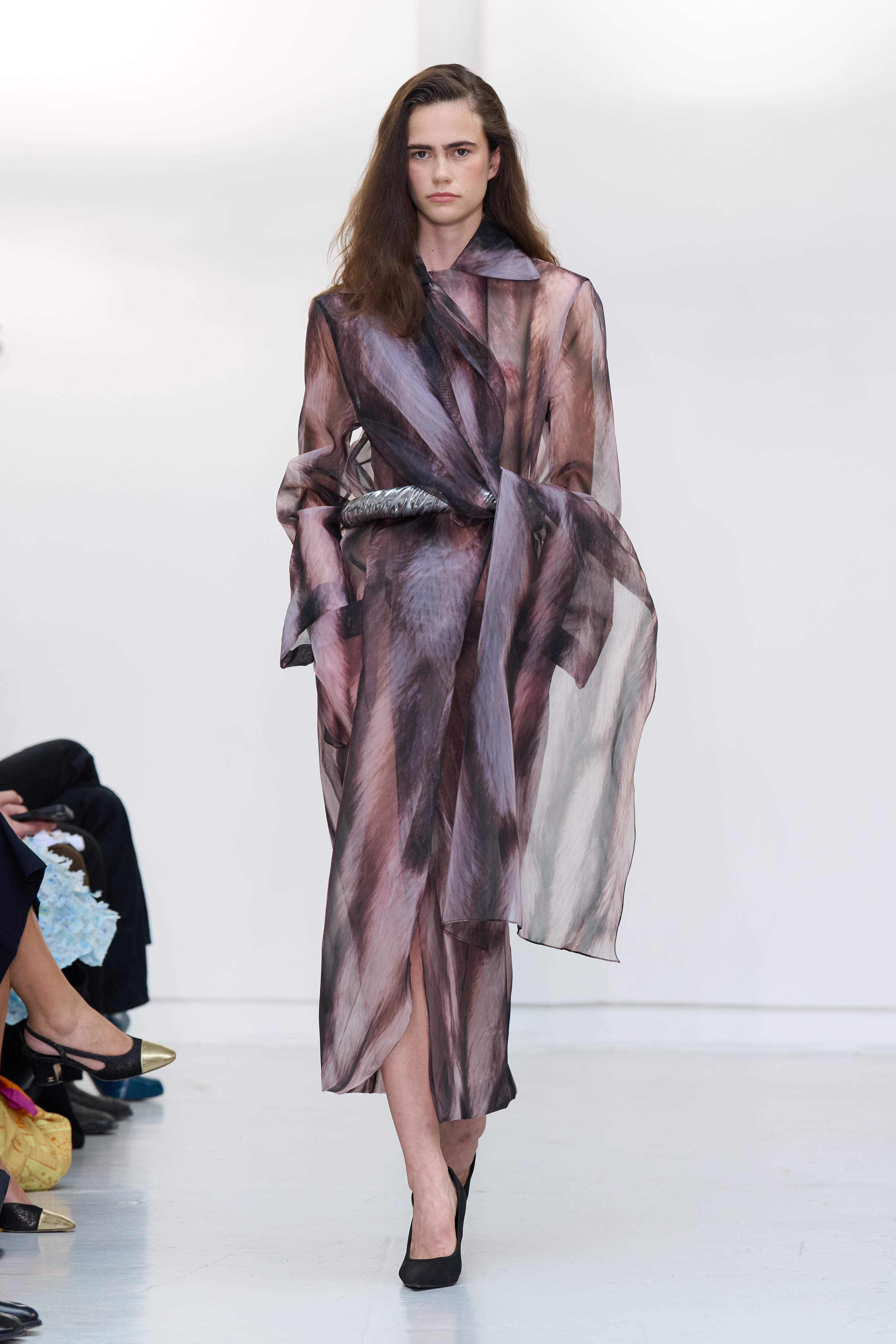
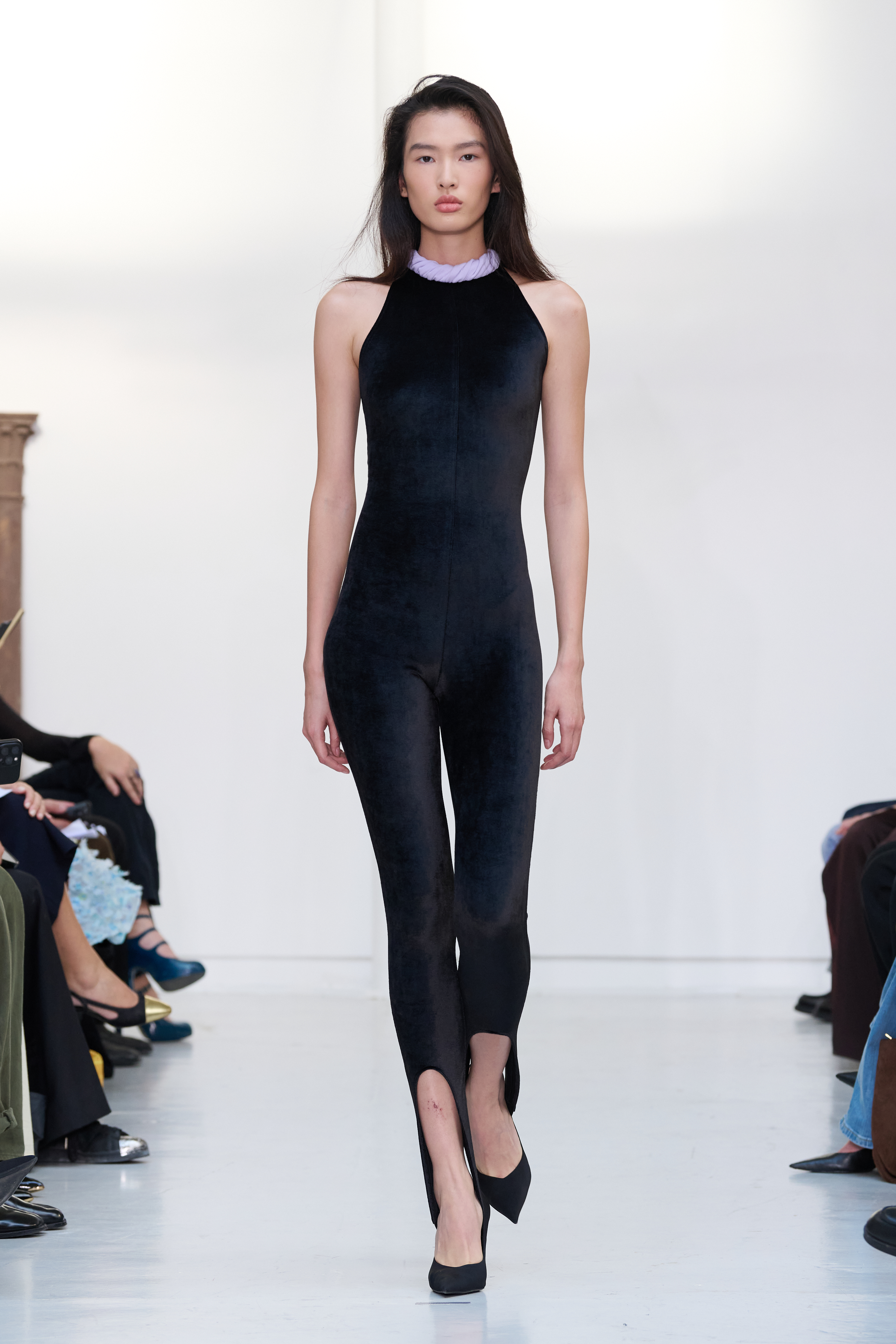
Materials keep the palette from going flat. Velvet appears as halter jumpsuits in rust and black, and as gathered panels floating over sheer black tops, rust on one and black on another over a cream satin skirt. Organza does the heavy lifting elsewhere. There is a coat printed in blurred, pelt-like streaks of mauve and grey and a silver rope ties at the waist and trails a sash. And another mirror-silver trench crinkles like foil around a gold rope.
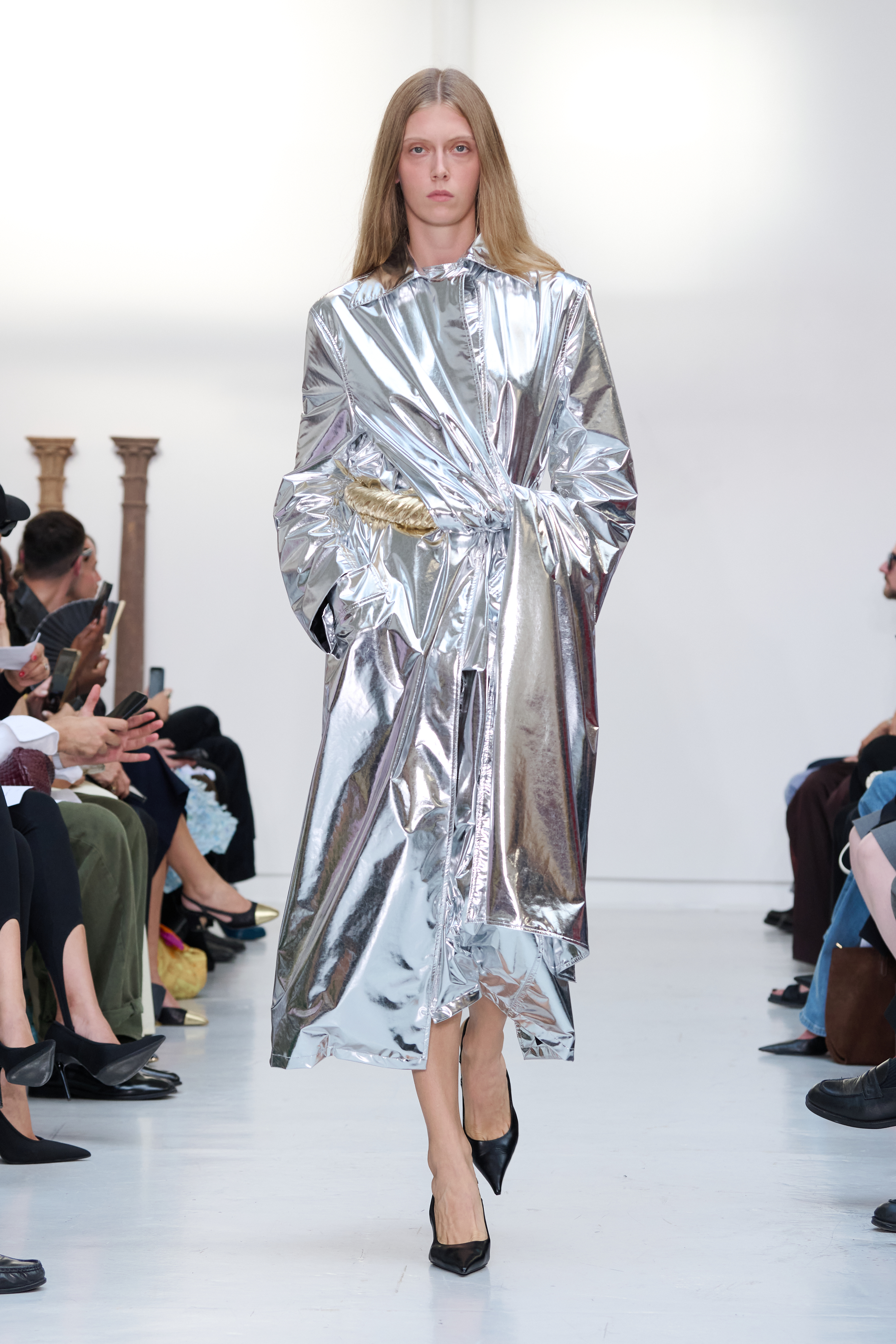
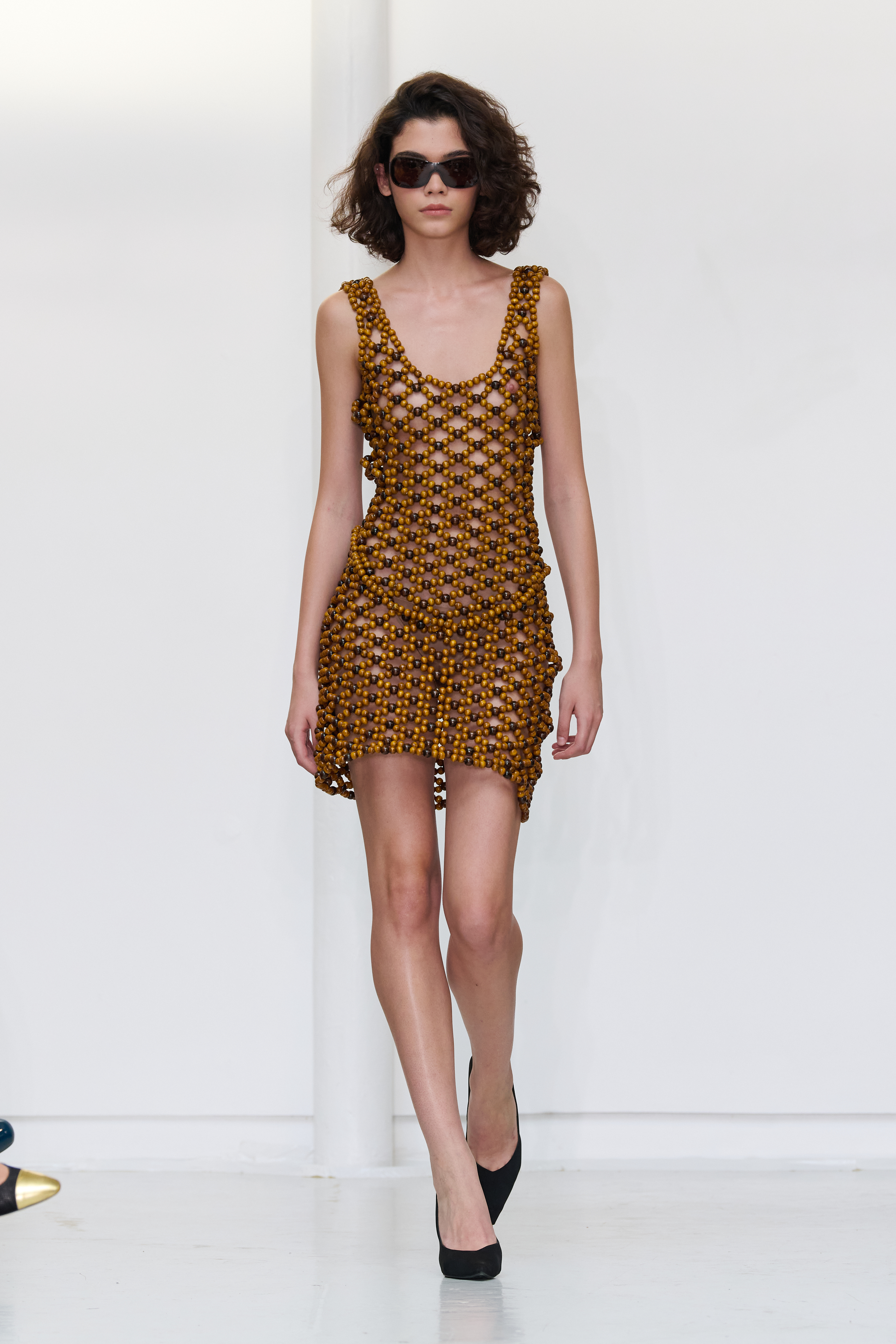
Akyol’s notes mention a silver sarcophagus, and this is the nearest the runway gets. Then there is the beaded mini dress in ochre and dark brown, open as a net. The collection’s central line, that clothes go out into the world and engage with people in ways he wouldn’t be comfortable doing himself, came to him while imagining sitting naked on a car seat covered in wooden beads. The dress is that thought made wearable, and the most literal piece in the show.
The Binding Element
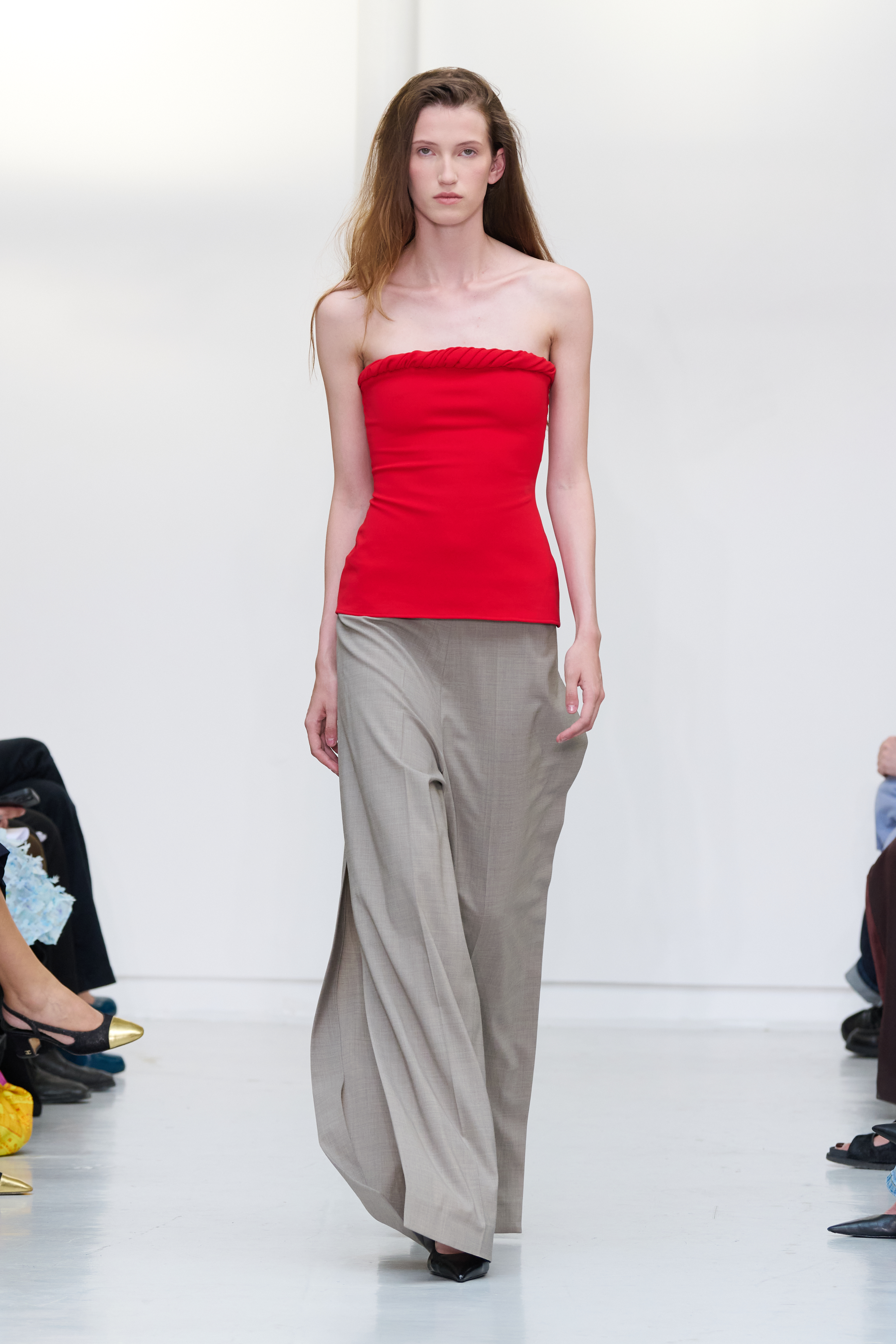
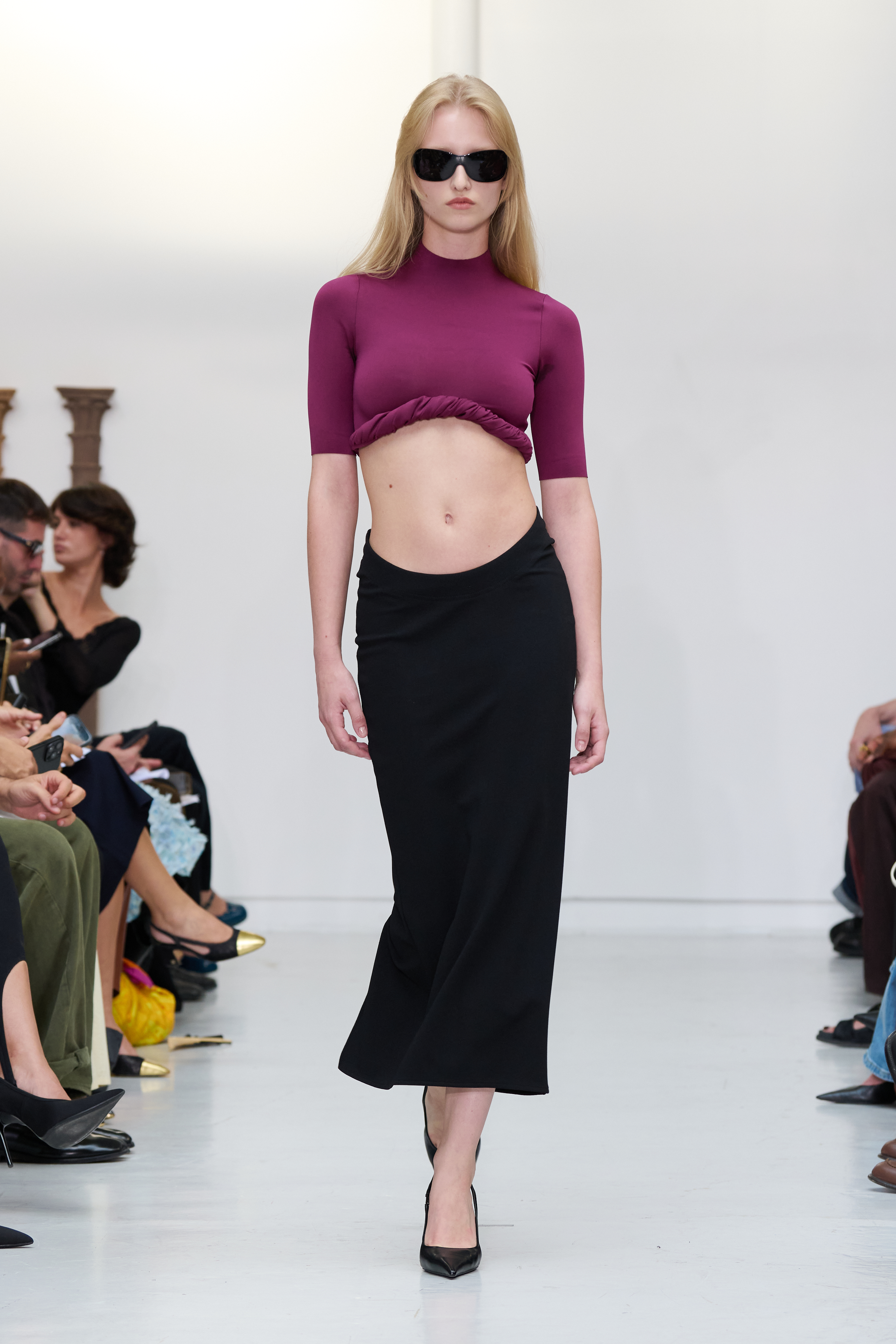
What brings all of this collection together is a small, stubborn motif: the ropes. It shows up as the white rope on look one, the lilac collar, the silver belt, the gold cord, the braided edge of a red tube top, the pale blue waistband on denim leggings, the plum crop top with a twisted hem, and the rope straps of the red gown. Reading it as a binding or a cord suits a collection interested in ritual, though that is my interpretation, not Akyol’s. In practice it is soft padding where a body meets a garment, and it makes the 32 looks feel like one world.
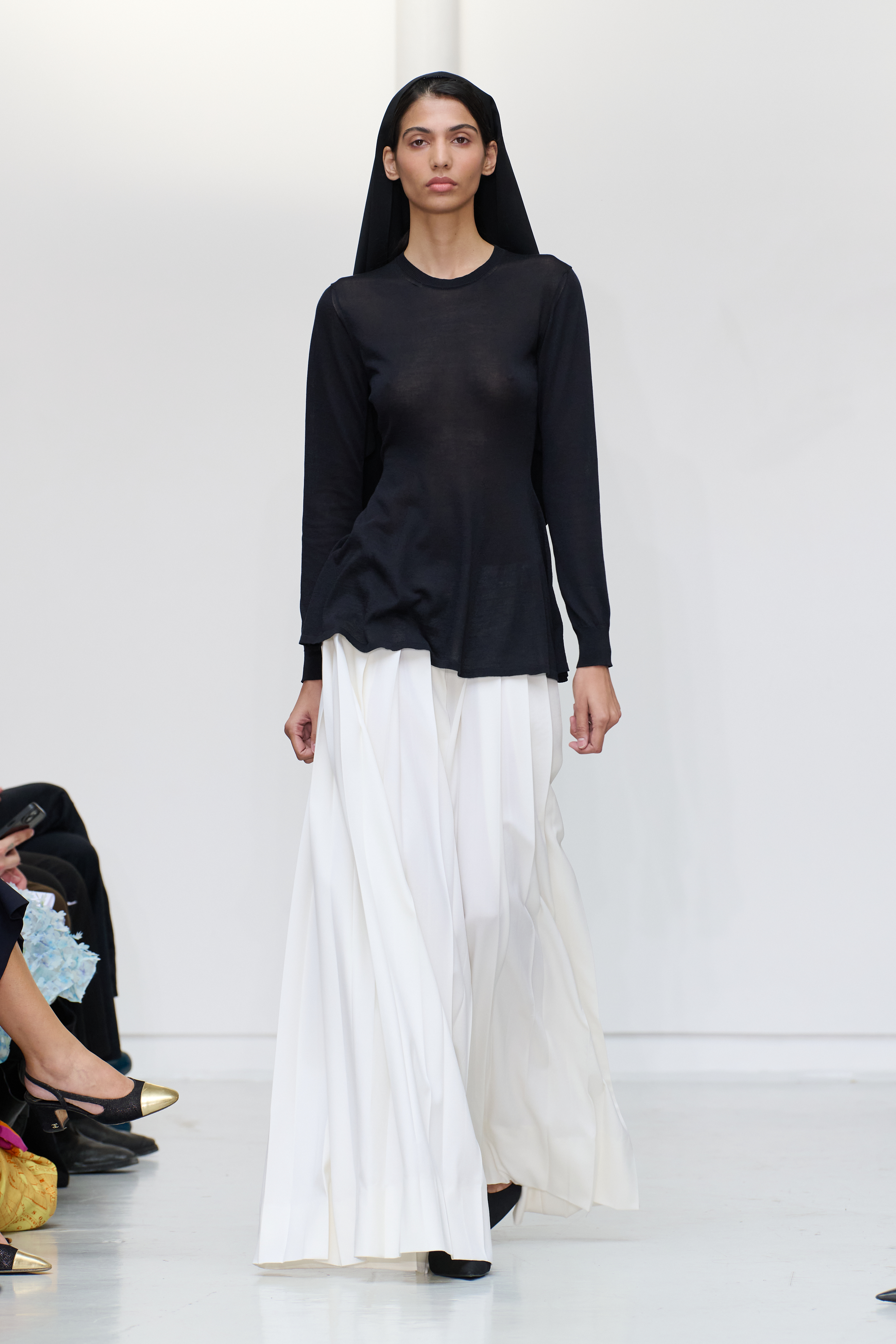
The show also closes on a quiet image. The final look is the hooded one: a sheer black knit tunic, flared at the hem, over an enormous white pleated skirt, with a black veil-like hood framing the face. It reads as habit and veil, and it maps onto the title. Akyol frames milk as the most primitive, motherly, animal thing we know, and wine as the first manufactured pleasure, a matter of ritual and spirituality. Then he asks what happens to us in between. The runway seems to answer with the body itself, bare in one look, veiled in the next, wrapped in organza, beads, velvet or jersey.
What makes the collection work is how little of its inspiration is taken literally. Akyol’s references stretch from Man Ray and Adrienne Fidelin to wigs found in Pharaohs’ tombs, his grandmother, a cabaret singer in 1960s Turkey, Bülent Ersoy, the violet and green lights of Cairo, and a motorbike left in a mausoleum. The clothes don’t try to recreate any of these images. Instead, they seem to absorb something from them: the glamour, the strangeness, the sensuality. On the runway, all of that comes back through cut and fabric. You don’t see a silver sarcophagus; you see a silhouette that could belong beside one.
What stays with you is how physical the clothes are: the way they press against the body, gather at the hip, open with a step or leave something behind on the skin. They are made for a woman who, as Akyol puts it, doesn’t need to be defended. She is already there, and the clothes meet her where she is.