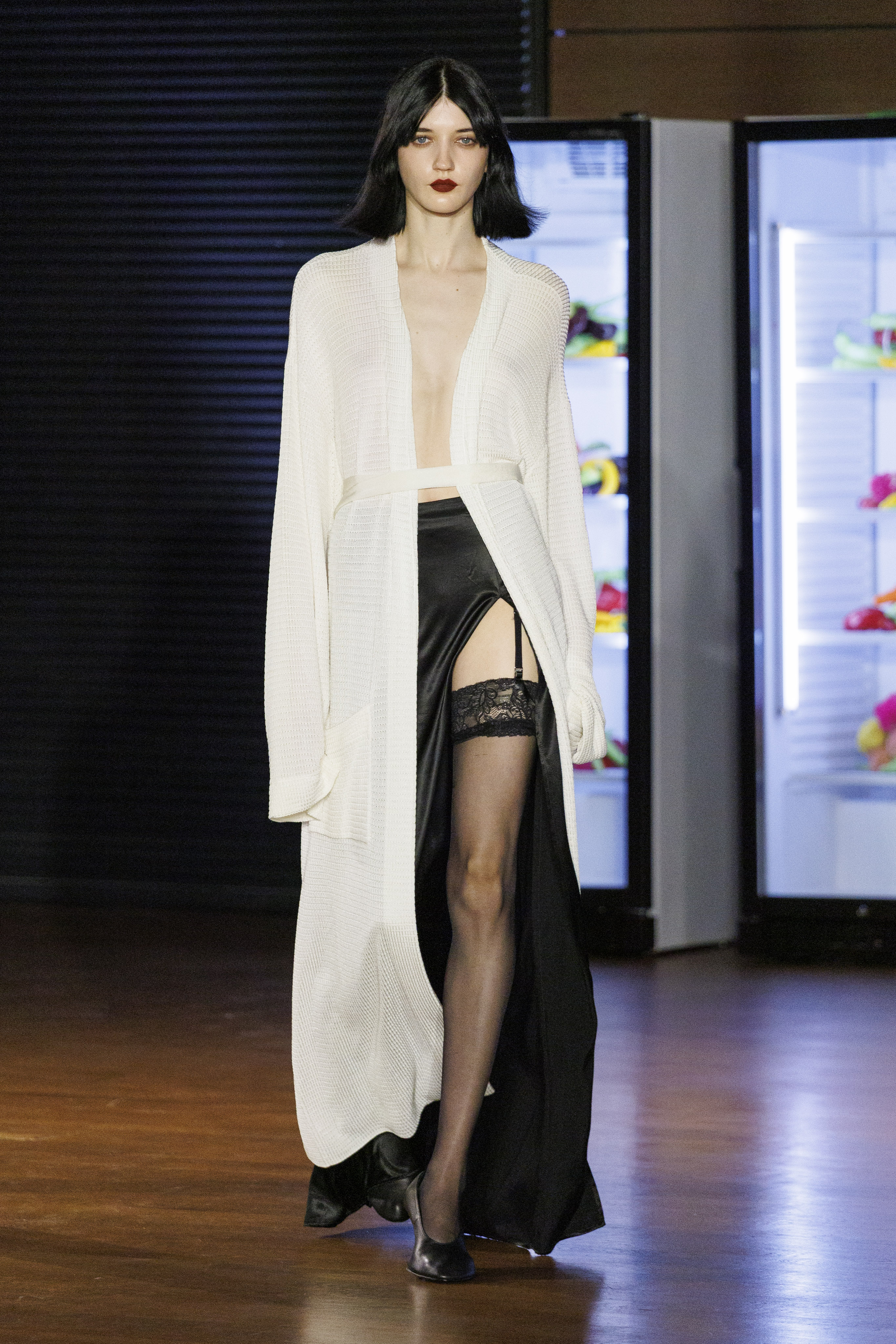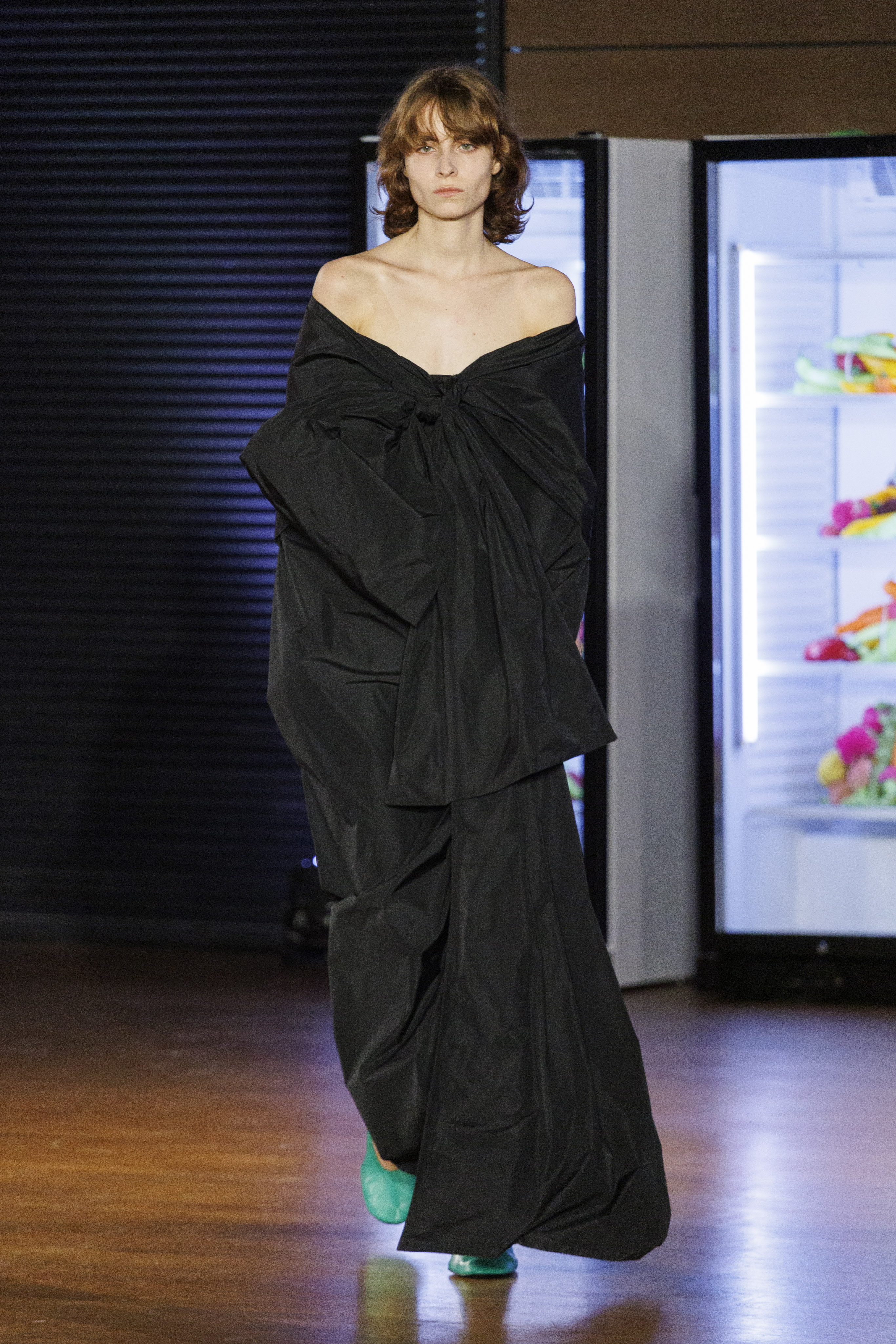
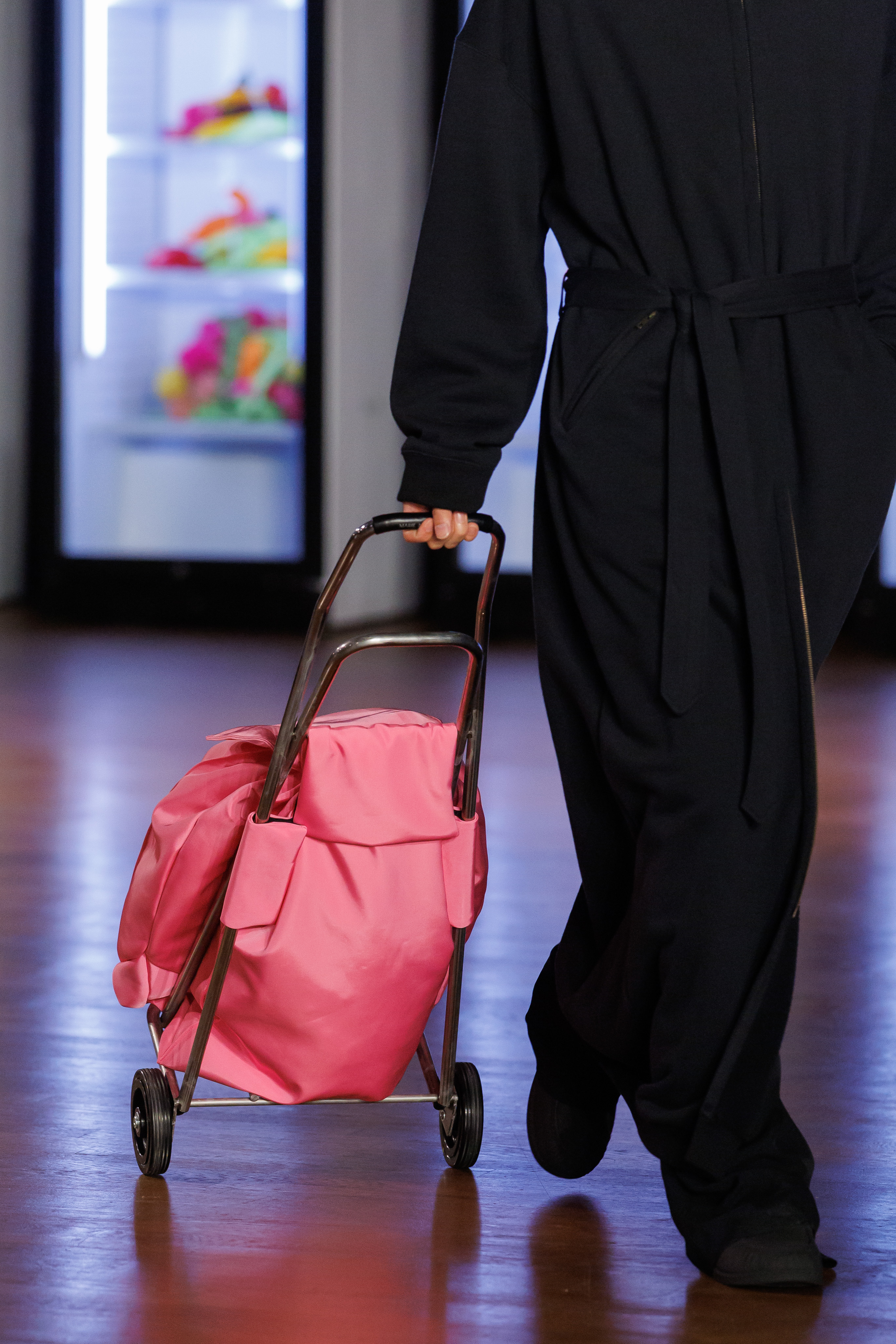

A wall of refrigerators filled with brightly coloured fruit and vegetables, each basket displayed behind glass as if it were something precious. Ordinary food was turned into spectacle. Then came the clothes, doing something similar with everyday dressing.
Marie Adam-Leenaerdt’s SS27 collection is built around a simple idea: making chic ordinary. The designer imagines elegance not as something reserved for a special occasion, but as something that can follow you to the market, the supermarket, the garden or wherever the day happens to take you.
Maybe some fruits are just sexier than others?
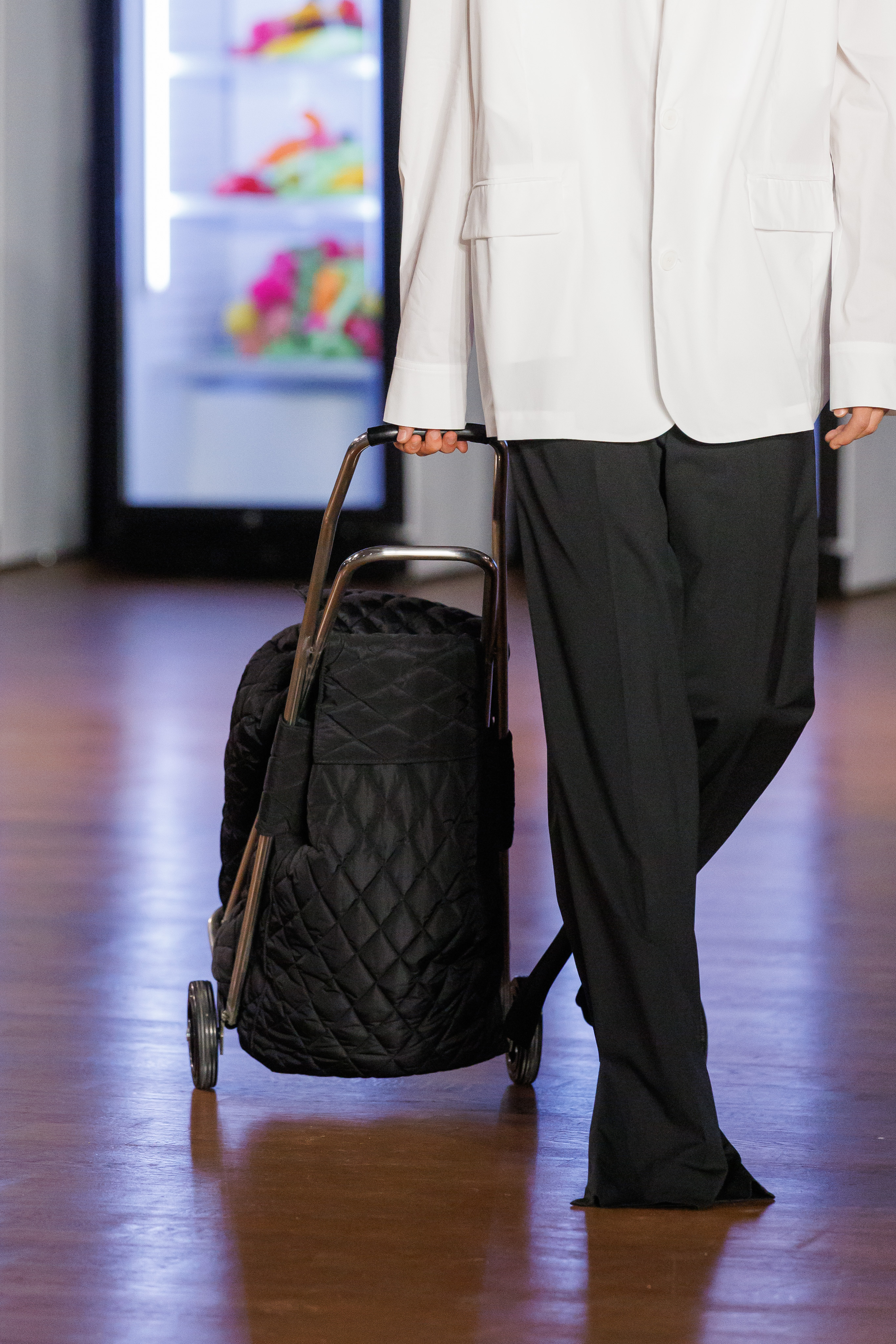
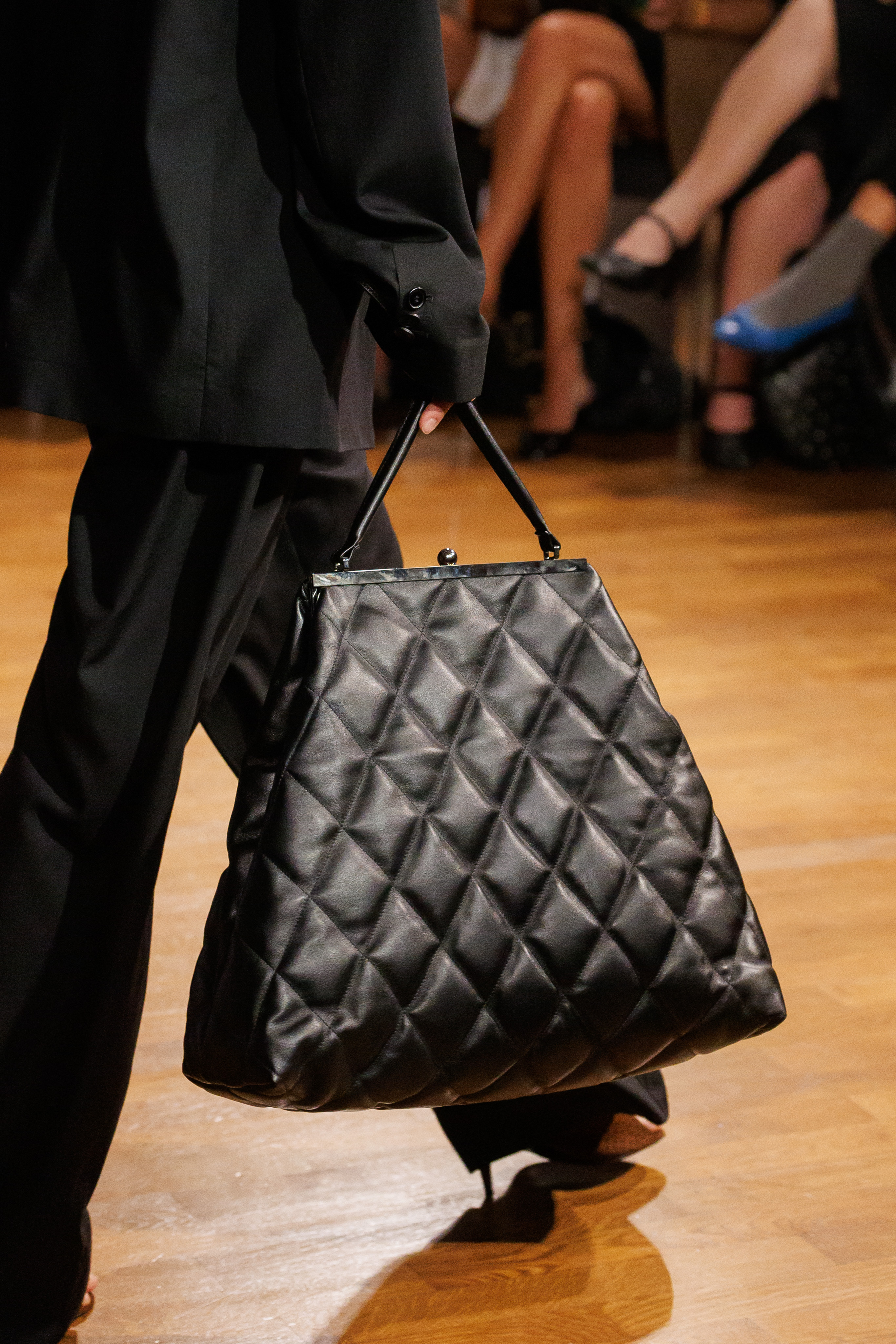
The clothes seemed to think so. Simple tailoring and suits appeared alongside sheer dresses, thigh-high stockings, deep cuts and skirts with high slits. There were huge bags that looked ready for a serious grocery run, quilted dresses and jackets, leather, oversized collars and silhouettes that could move from the practical to the provocative within a few looks.

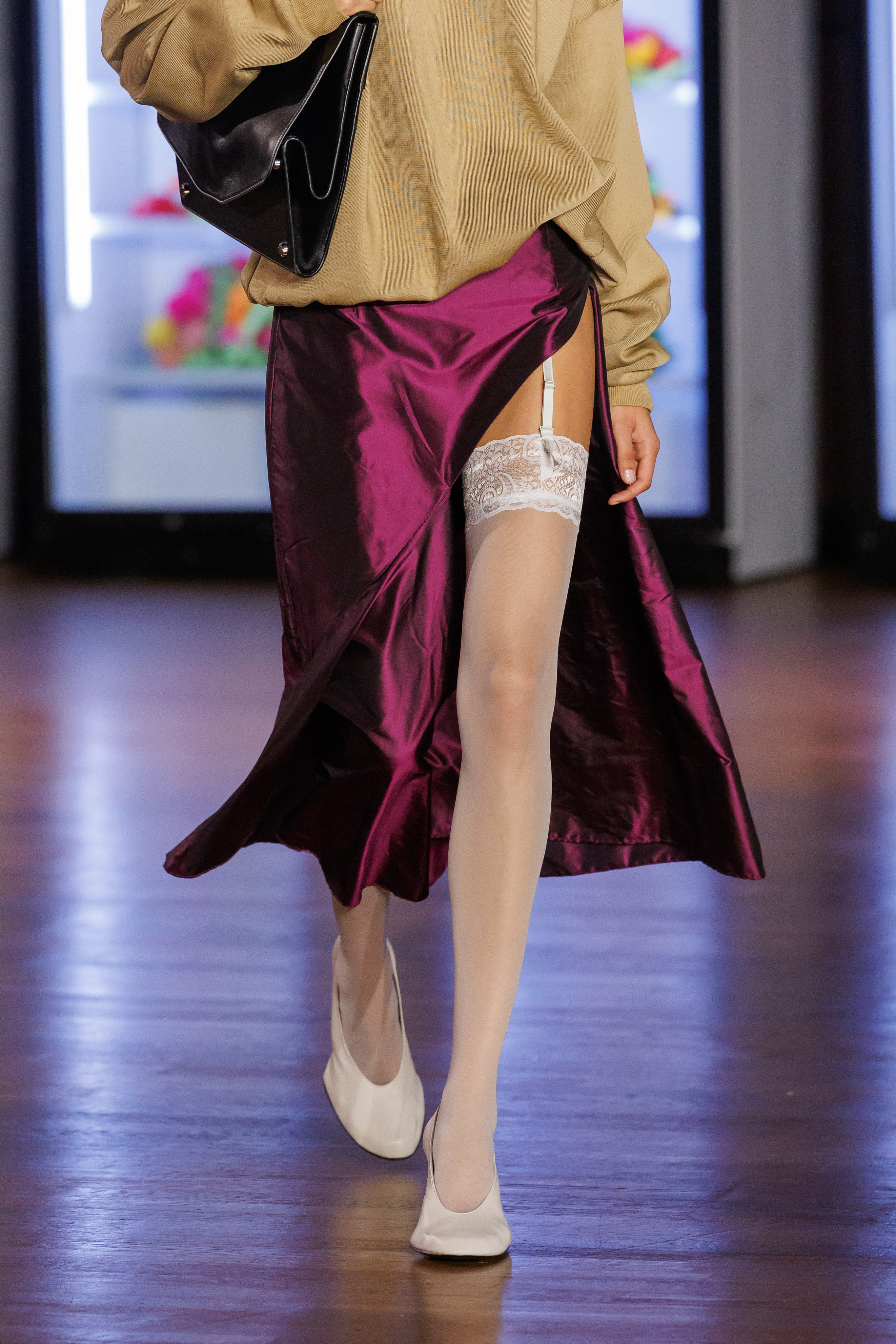
Quilted dresses and jackets brought a practical quality to the collection, while suits kept the silhouettes straightforward and wearable. Huge bags, including rolling shopping bags, reinforced the everyday side of the wardrobe. Elsewhere, the mood became more sensual: low and open necklines, sheer fabrics, thigh-high stockings and cuts that exposed the leg appeared throughout the show. Black dominated, with flashes of deep purple, red and a muted green breaking up the darker palette.
The clothes did not literally reproduce the grocery list that had appeared in the show’s visual material. There were no obvious dresses made to look like packets of flour or aluminium foil. Instead, the supermarket reference stayed largely in the environment: the refrigerators, the fruit, the shopping trolley and the circular movement of the runway.
That distinction makes the show feel less like a supermarket-themed fashion stunt and more like a collision between two parts of everyday life.
The presentation itself followed the logic of a shopping trip. Models looped around the room in a loose circular route, passing the refrigerators again and again, while the soundtrack kept changing between unexpected song choices and stretches of silence. The repetition made the room feel less like a conventional runway and more like wandering through a supermarket without quite knowing what you came in for.
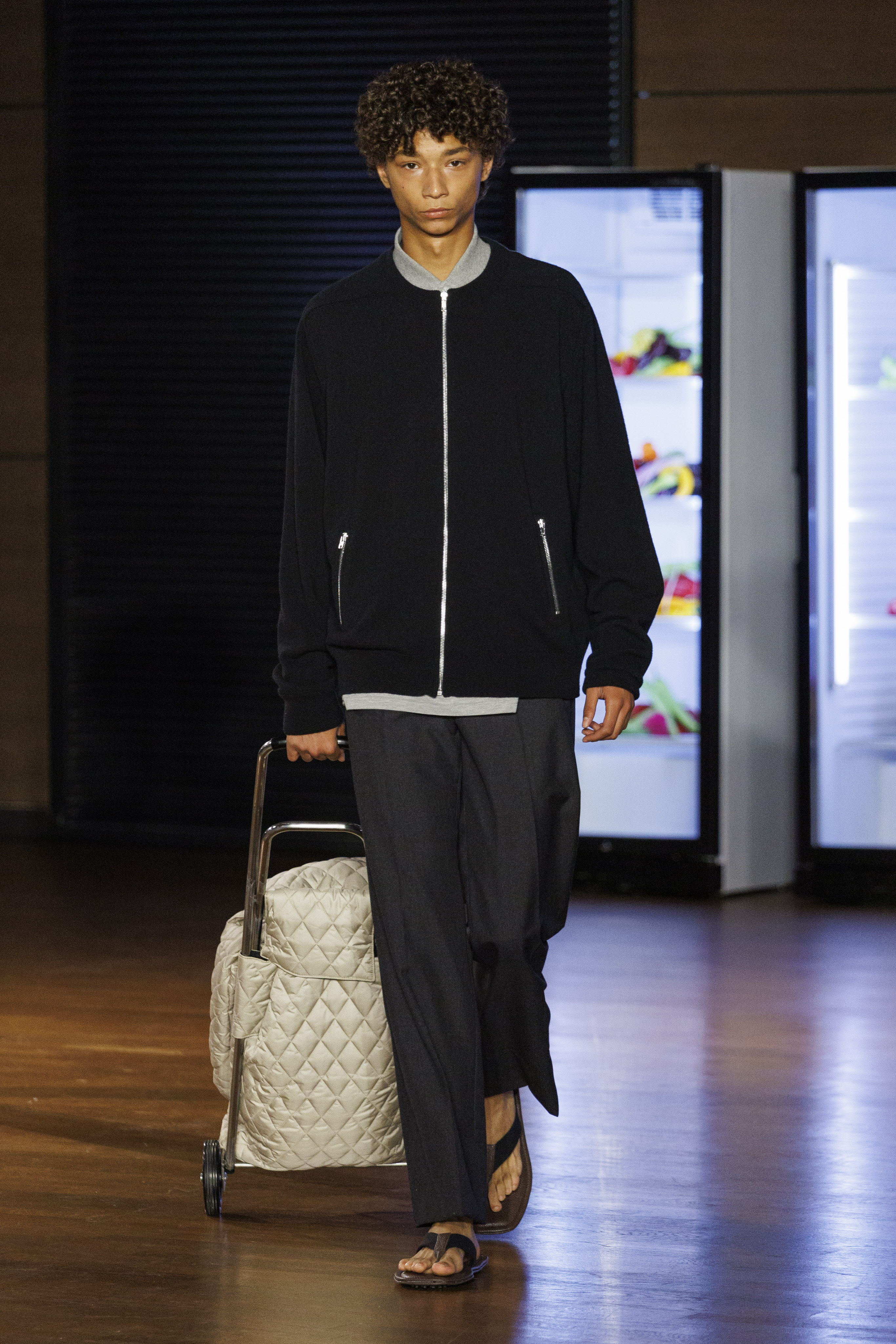
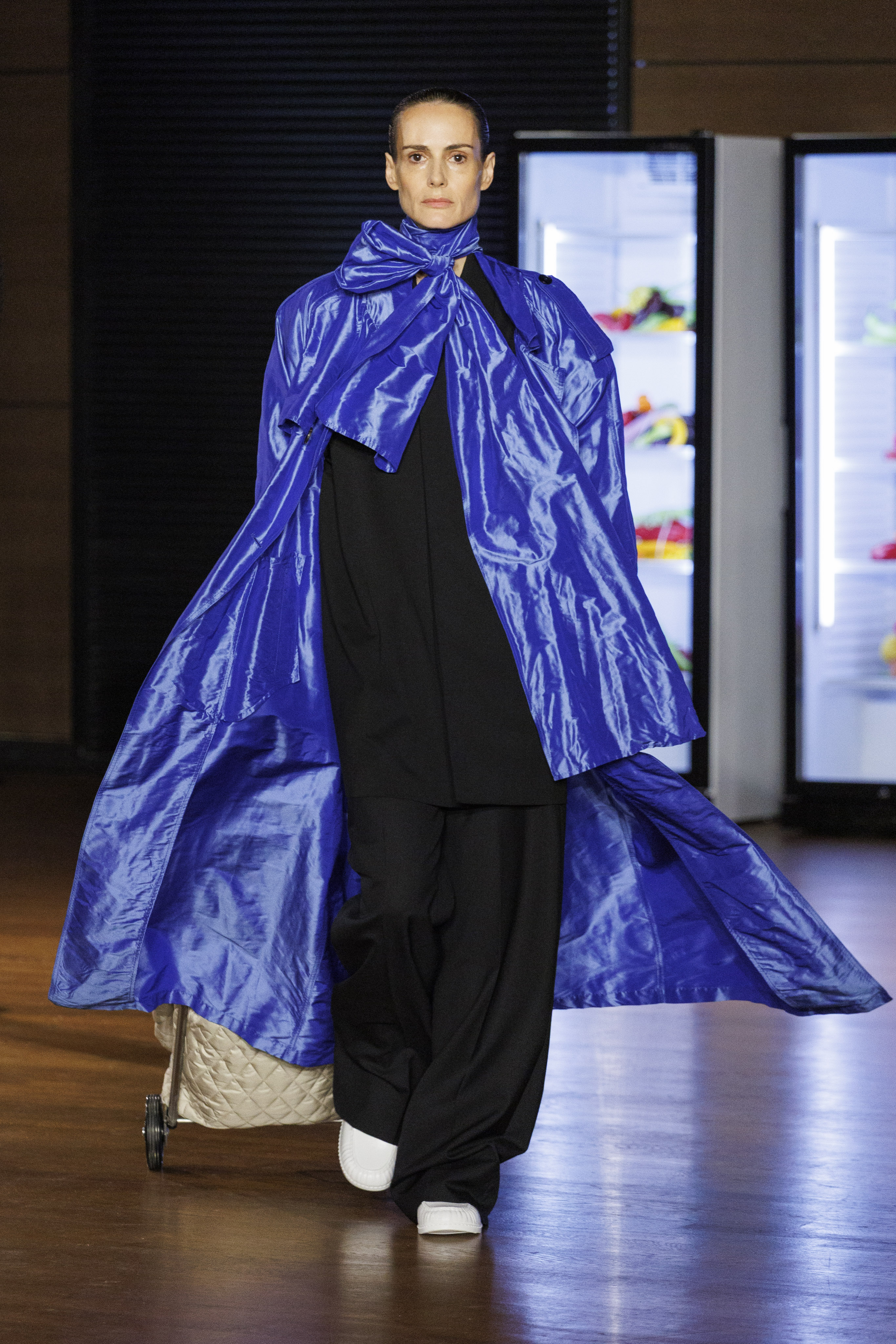
And that was perhaps the most interesting tension in the Marie Adam-Leenaerdt SS27 collection. One look could make you ready to do the groceries; the next looked like it belonged in a nightclub. A black quilted dress was followed by a shiny suit, then a sheer evening look, red, deep purple and flashes of green. The clothes didn’t separate “everyday” from “dressed up” so much as allow both to exist in the same wardrobe.
It is hard to talk about fashion shows using grocery stores without mentioning Chanel’s Fall 2014 spectacle. Karl Lagerfeld transformed Paris’s Grand Palais into a fully stocked Chanel supermarket, complete with branded food, household products, shopping baskets and trolleys. The models actually moved through the aisles, making the supermarket itself part of the performance.
And the supermarket runway reference has resurfaced this season. Earlier in September, Camiel Fortgens presented his SS27 collection inside an actual Albert Heijn in Amsterdam. Models walked through the aisles among shoppers’ everyday surroundings, carrying baskets and trolleys while adding layers to their looks as they made several rounds through the store.
The three approaches are very different.
Chanel:
“Let’s turn fashion into a supermarket.”
“Let’s actually put fashion inside a supermarket.”
Marie Adam-Leenaerdt:
“Let’s make getting dressed for the supermarket feel like getting dressed for anything else.”
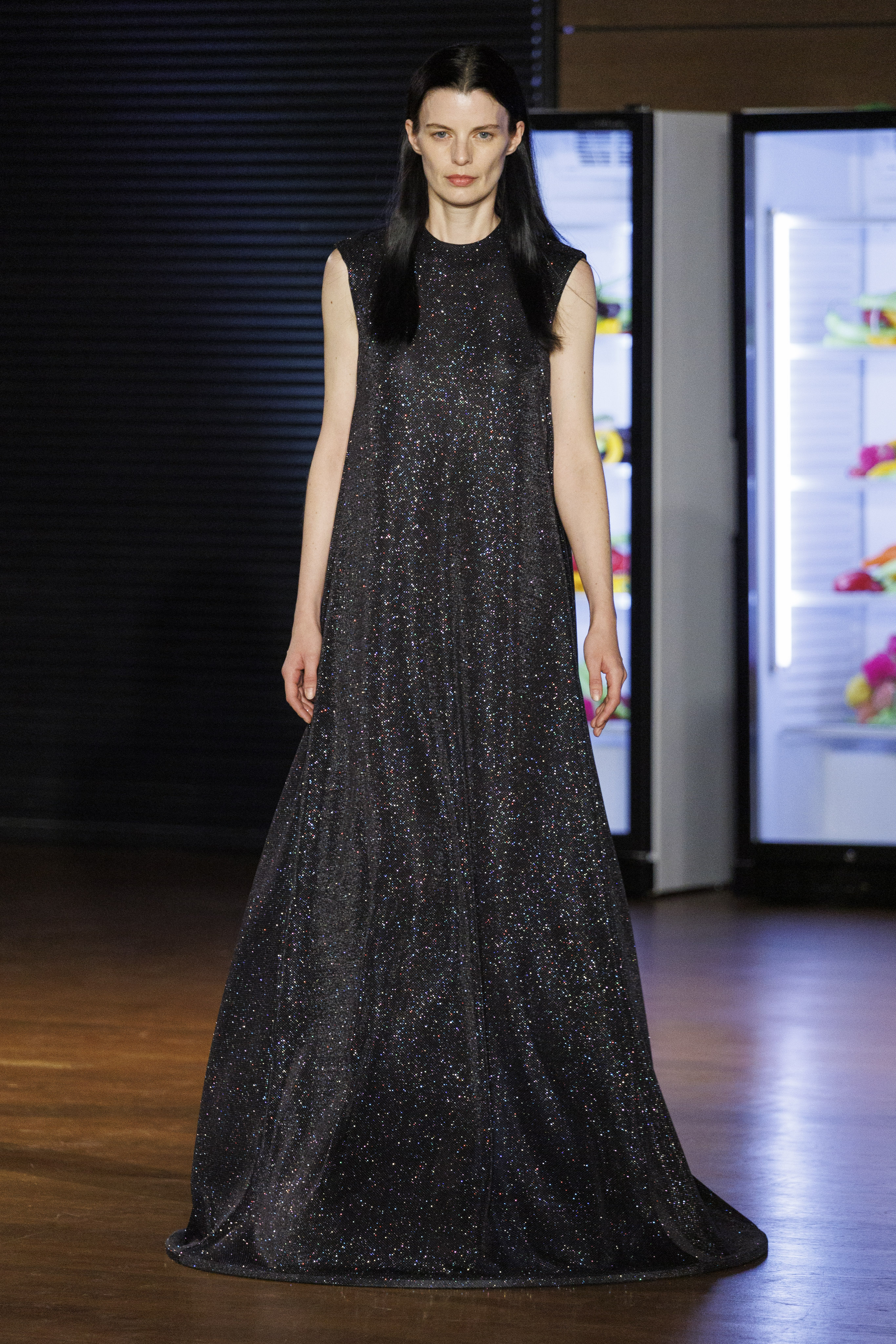
That last part is where the collection becomes most interesting. Rather than dressing the models as shoppers, Marie Adam-Leenaerdt places the mundane and the glamorous next to each other. A quilted dress and a glittering evening gown can occupy the same world. A giant shopping bag can sit alongside a sheer, body-conscious look. The practical and the sexy are not presented as opposites; they simply become different reasons to get dressed.
The refrigerators remained in the background throughout, filled with colourful fruit that looked almost jewel-like under the cold light. It created a strange reversal: ordinary food was being presented like precious objects, while ordinary clothes were being pushed into fashion spectacle.
The final song was “Forever Young”, which gave the collection its last little wink before the lights went down. No special occasion, no reason required. Just getting dressed — and getting on with the day.