

The legendary designer opens his archive in Drawings, a rare journey inside the mind that changed fashion forever
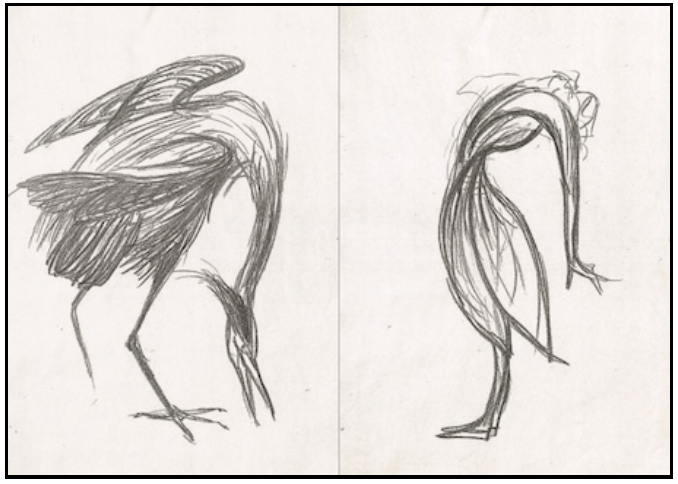
On 29 October 2026, Thames & Hudson publishes Yohji Yamamoto Drawings, an extraordinary 320-page volume bringing together more than 180 illustrations personally selected by Yohji Yamamoto himself. Rather than celebrating finished garments, the book returns to where every collection truly began: the sketch.
But calling them sketches almost feels reductive.
Discovered in a Tokyo warehouse in 2024 by fashion historian and curator Alexandre Samson, hundreds of forgotten drawings – stored for decades inside anonymous cardboard boxes and ring binders – revealed themselves as the hidden blueprint of one of fashion’s greatest revolutionaries. What looked like forgotten paperwork turned out to be the visual DNA behind every Yohji Yamamoto menswear and womenswear collection from his groundbreaking Paris debut in 1981 through to 1999.
Yamamoto dismisses them with characteristic humility.
“Just drawings.”
They’re anything but.
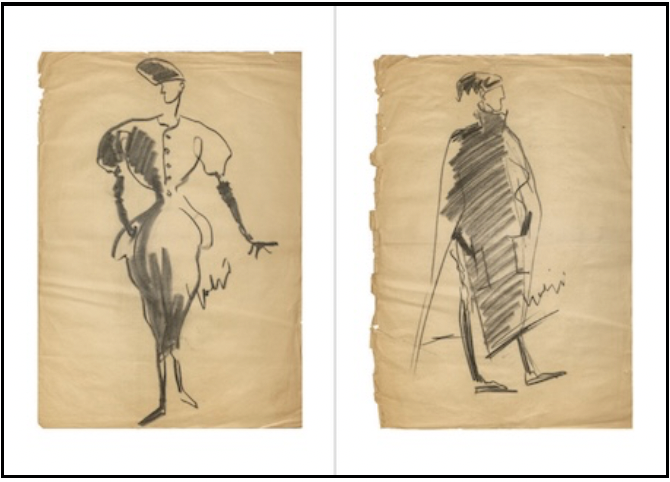
Flaming coats. Elongated bodies. Dresses suspended somewhere between dream and gravity. Figures that seem to dissolve before becoming garments. These aren’t illustrations designed to seduce; they’re fragments of thought, coded messages exchanged between imagination and construction. Fashion stripped back to its most instinctive gesture.
As Yamamoto once wrote in My Dear Bomb, a fashion drawing is neither a miniature garment nor an artistic performance. It is a language, a private code shared only by the designer and the pattern maker. This book finally invites the rest of us to decipher it.
Designed with the visual precision of Peter Saville, whose graphic work has defined generations of cultural imagery, Yohji Yamamoto Drawings becomes more than an archive. It is an intimate portrait of a creative process that has remained almost entirely hidden for over four decades.
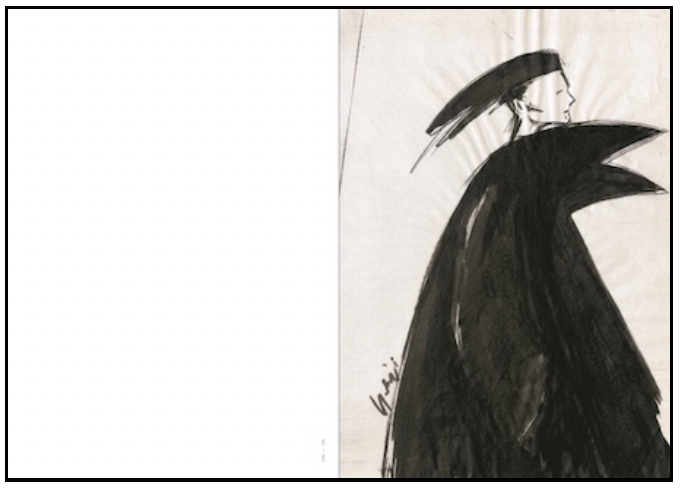
Long before mood boards became Instagram content and studio process became marketing strategy, Yamamoto was quietly building entire worlds with nothing more than graphite and paper.
This book reminds us that fashion doesn’t begin on the runway.
It begins with a line. Sometimes uncertain. Sometimes violent. Always enough to change everything.
,