
by Giorgia Cantarini
With Sonic Starquakes, the Iris van Herpen Fall Winter 2026-2027 proves once again proves that technology does not have to make fashion feel colder. In her hands, it becomes the source of wonder.
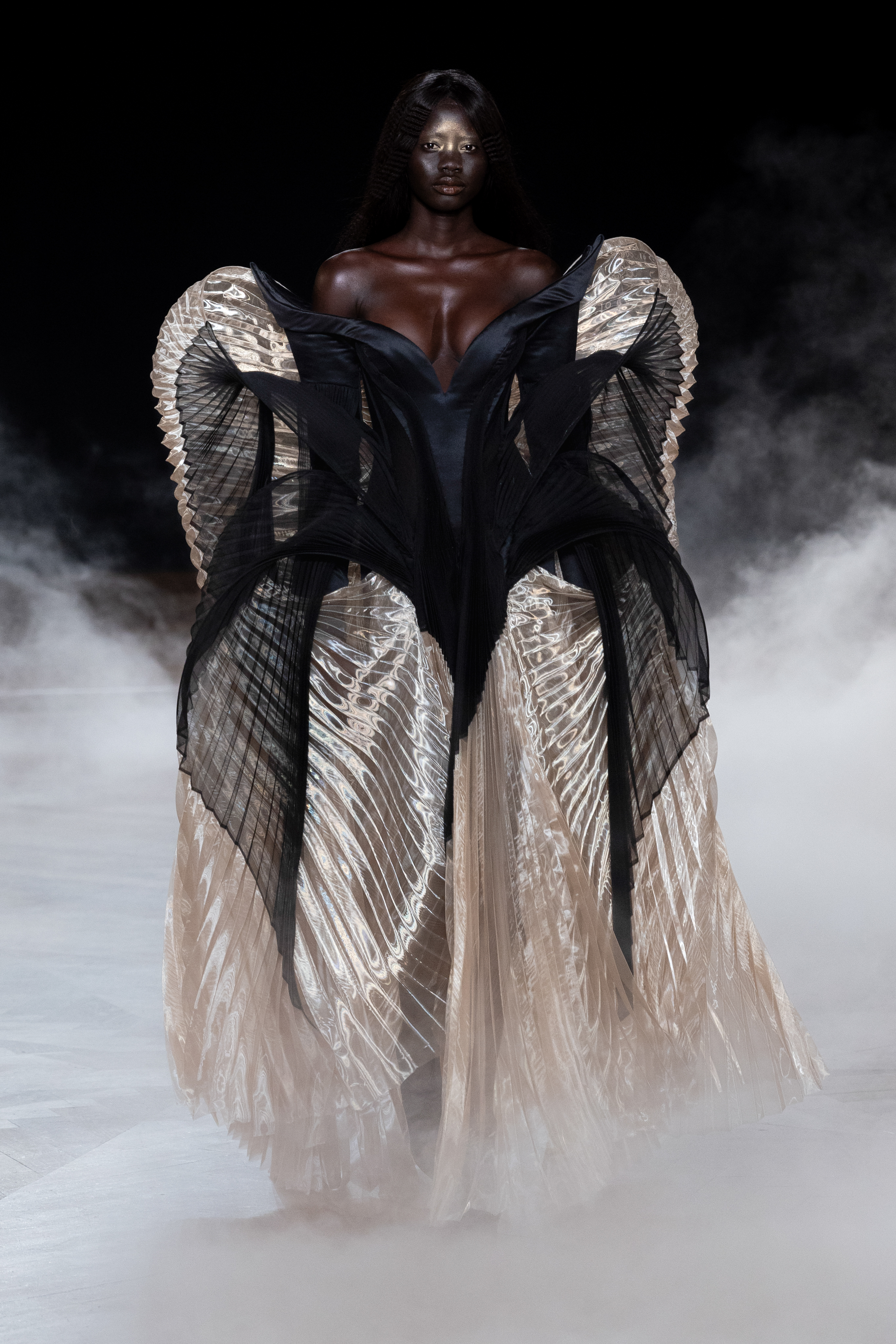
There is a rare quality to an Iris van Herpen Haute Couture show: the sensation of witnessing something that belongs simultaneously to the future, the natural world and a dream.
For her Fall/Winter 2026–2027 Haute Couture collection, titled Sonic Starquakes, the Dutch designer looked beyond Earth, drawing inspiration from the vibrations that travel through stars, the spiralling structures of galaxies and the unstable energy of plasma.
Yet despite the scientific complexity behind the collection, the result never felt clinical. Instead, van Herpen transformed fashion technology into something emotional, delicate and almost otherworldly.
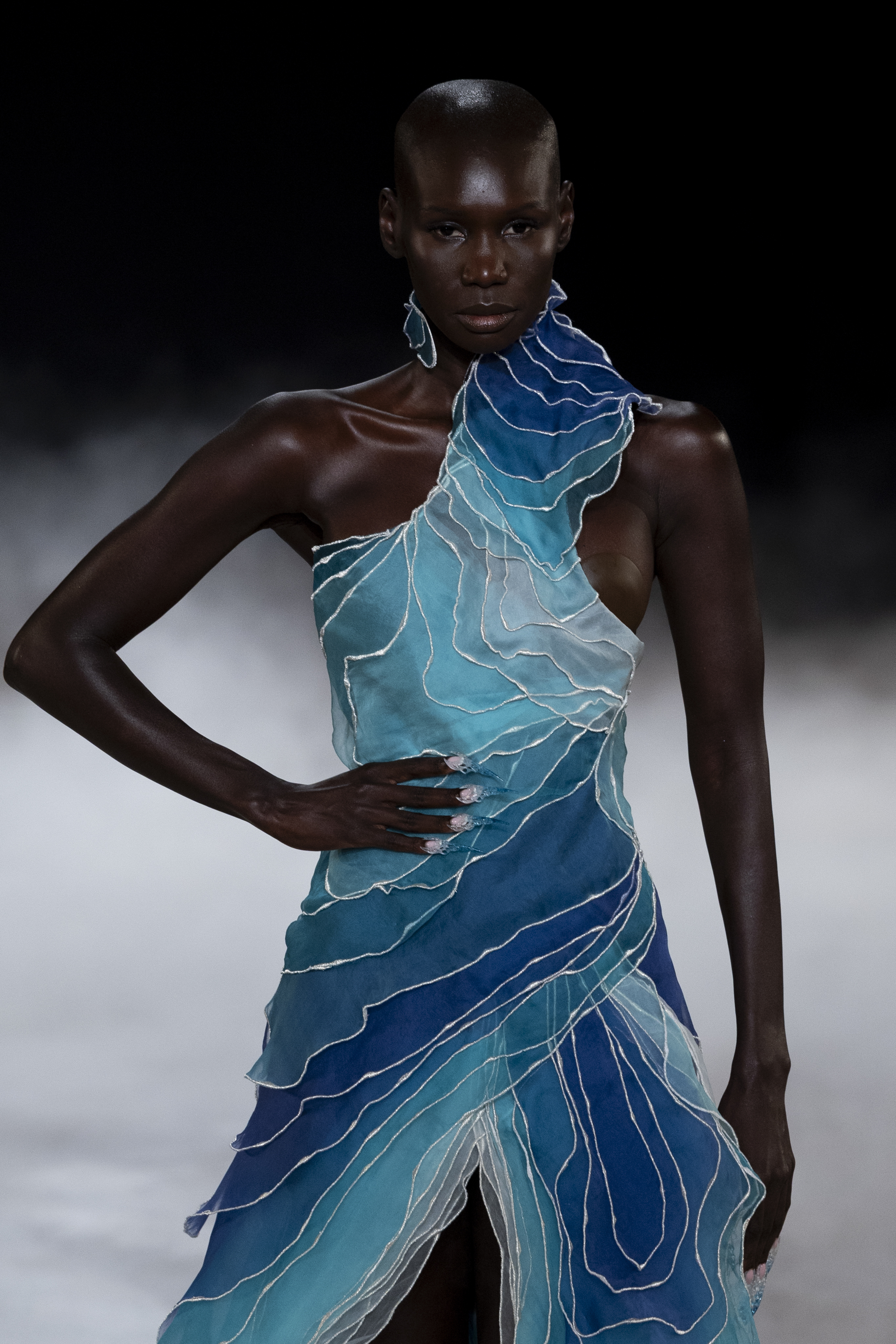
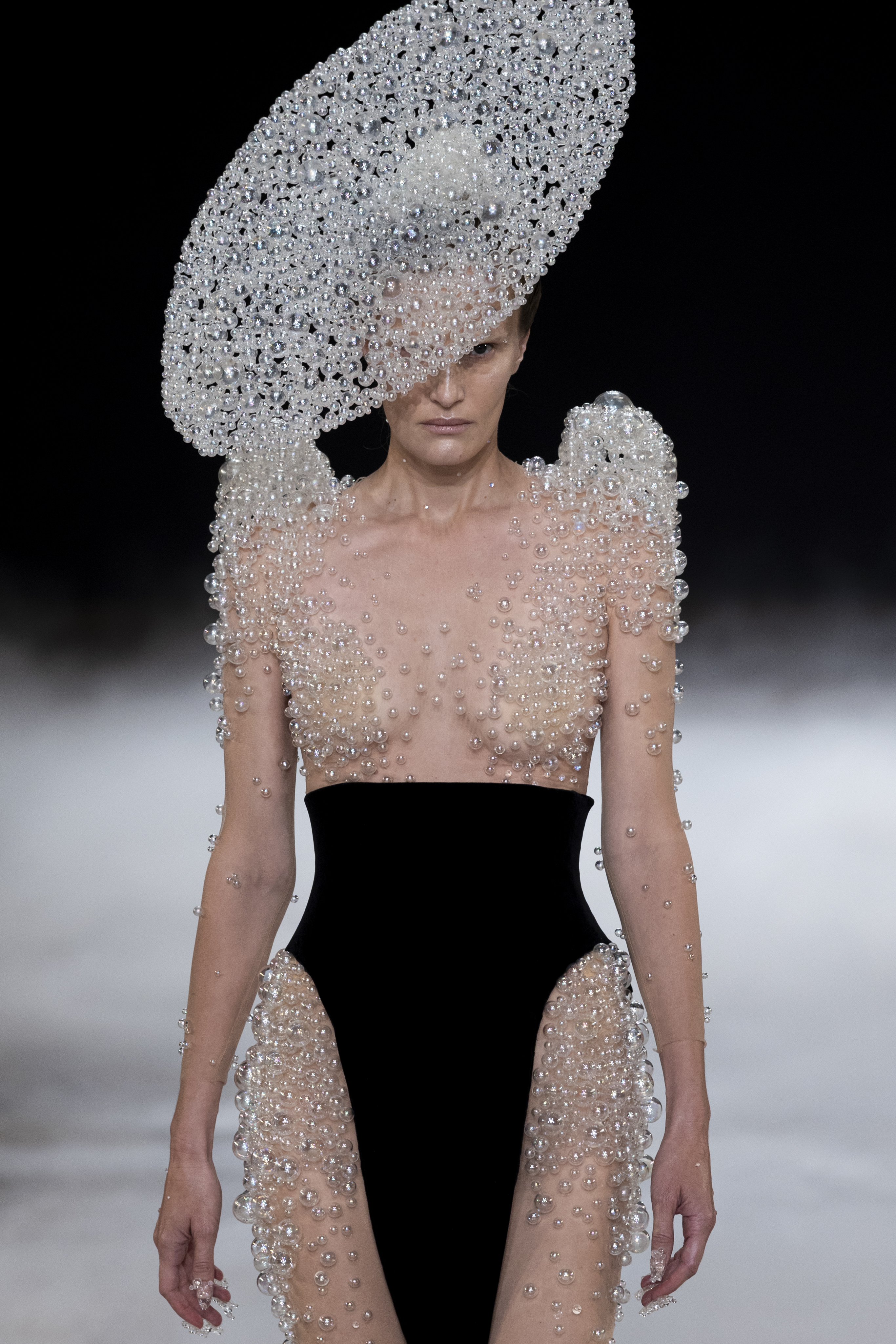
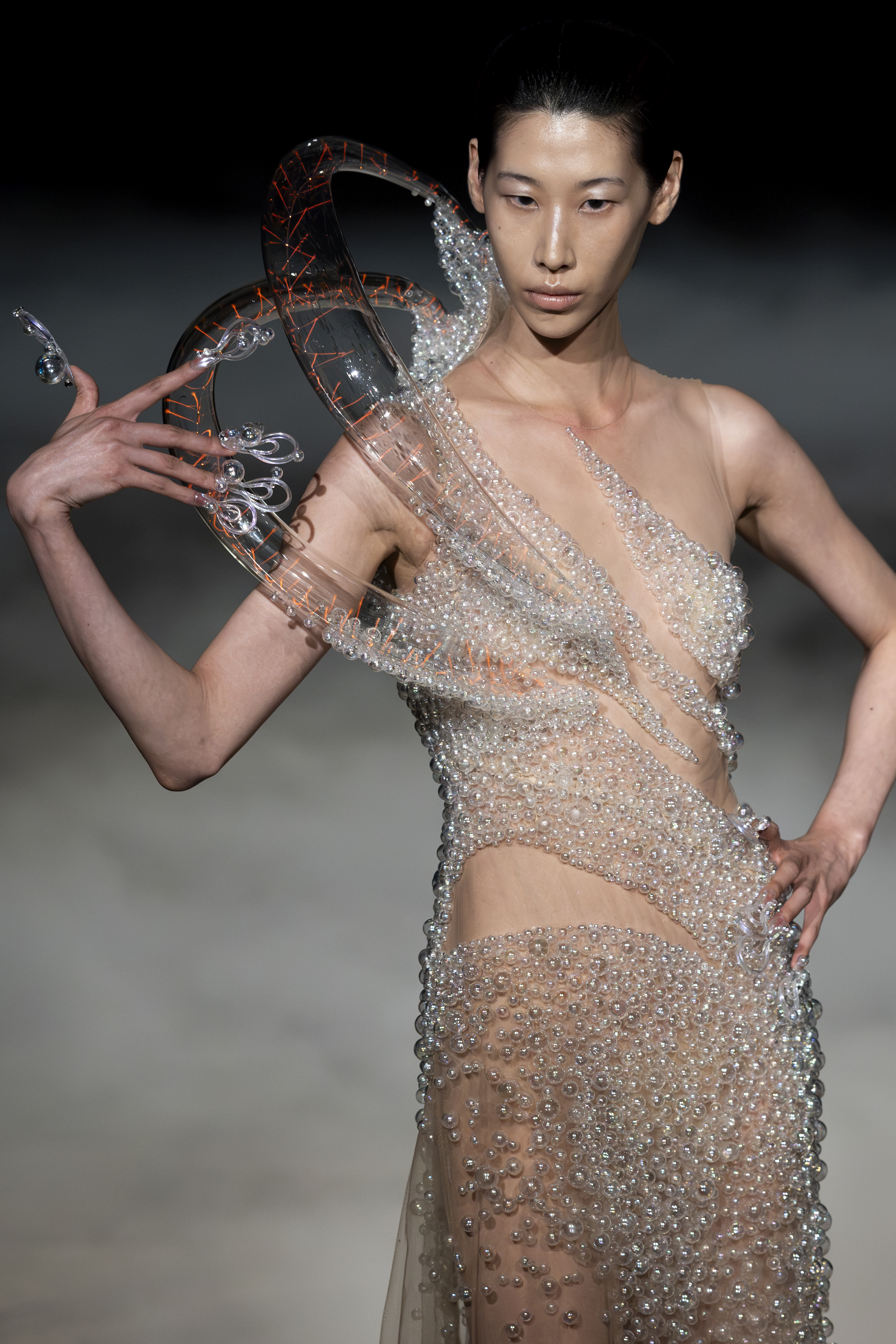
This is precisely where her strength lies. While other designers might use innovation to create a futuristic effect, Iris van Herpen approaches science as a creative language. Technology is not added to the clothes as a spectacle; it becomes part of their construction, movement and meaning.
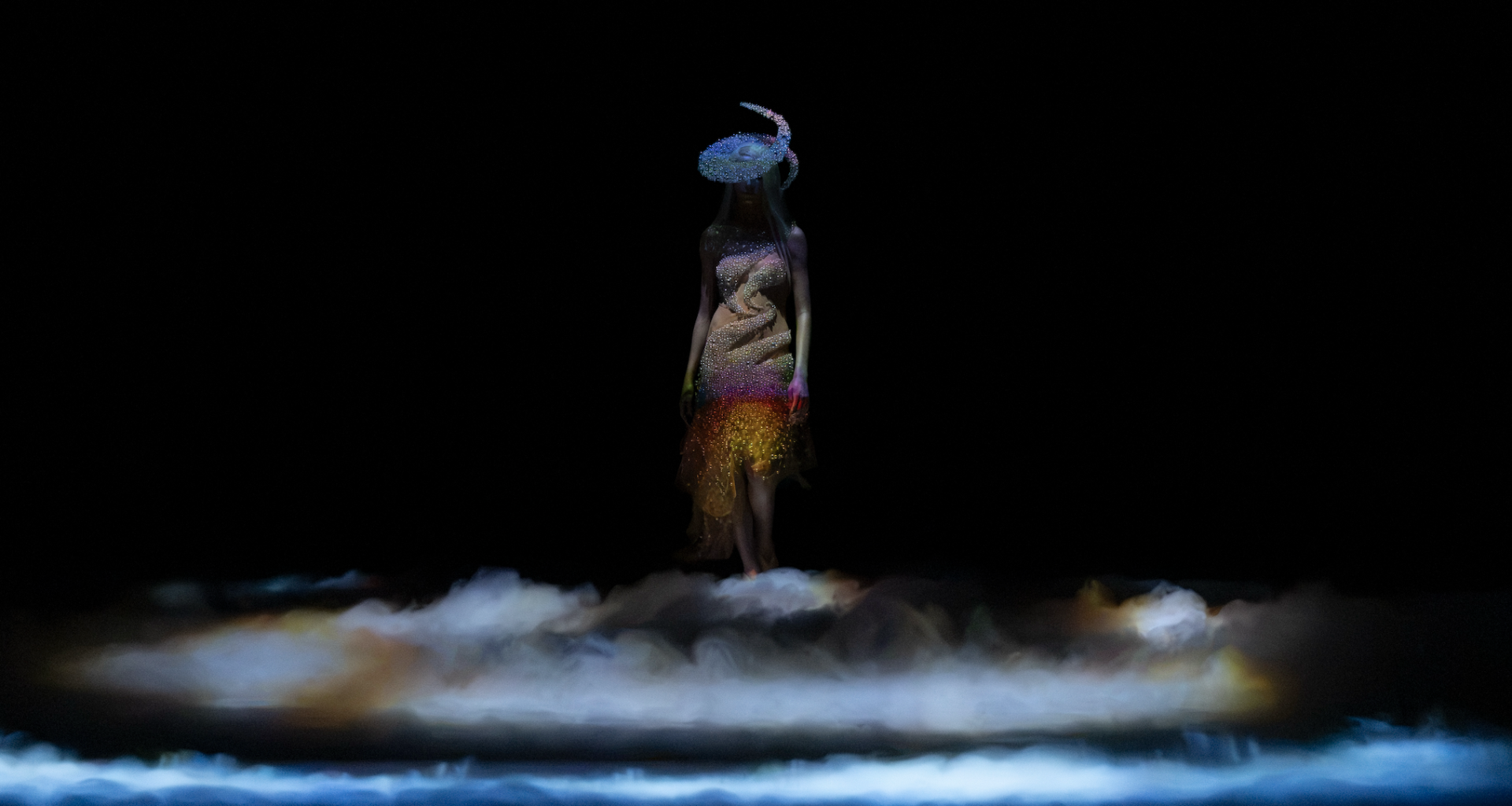
The most extraordinary example was the Helix Nebula dress, which brought plasma technology—the fourth state of matter—into the realm of haute couture fashion. Two curved, hand-blown glass structures filled with luminous plasma floated around the body, reacting to human touch and to the wearer’s electromagnetic field. Thousands of iridescent glass spheres appeared suspended across illusion tulle, dissolving the silhouette into particles of light. The body was no longer simply wearing the dress: it became part of its electrical system.
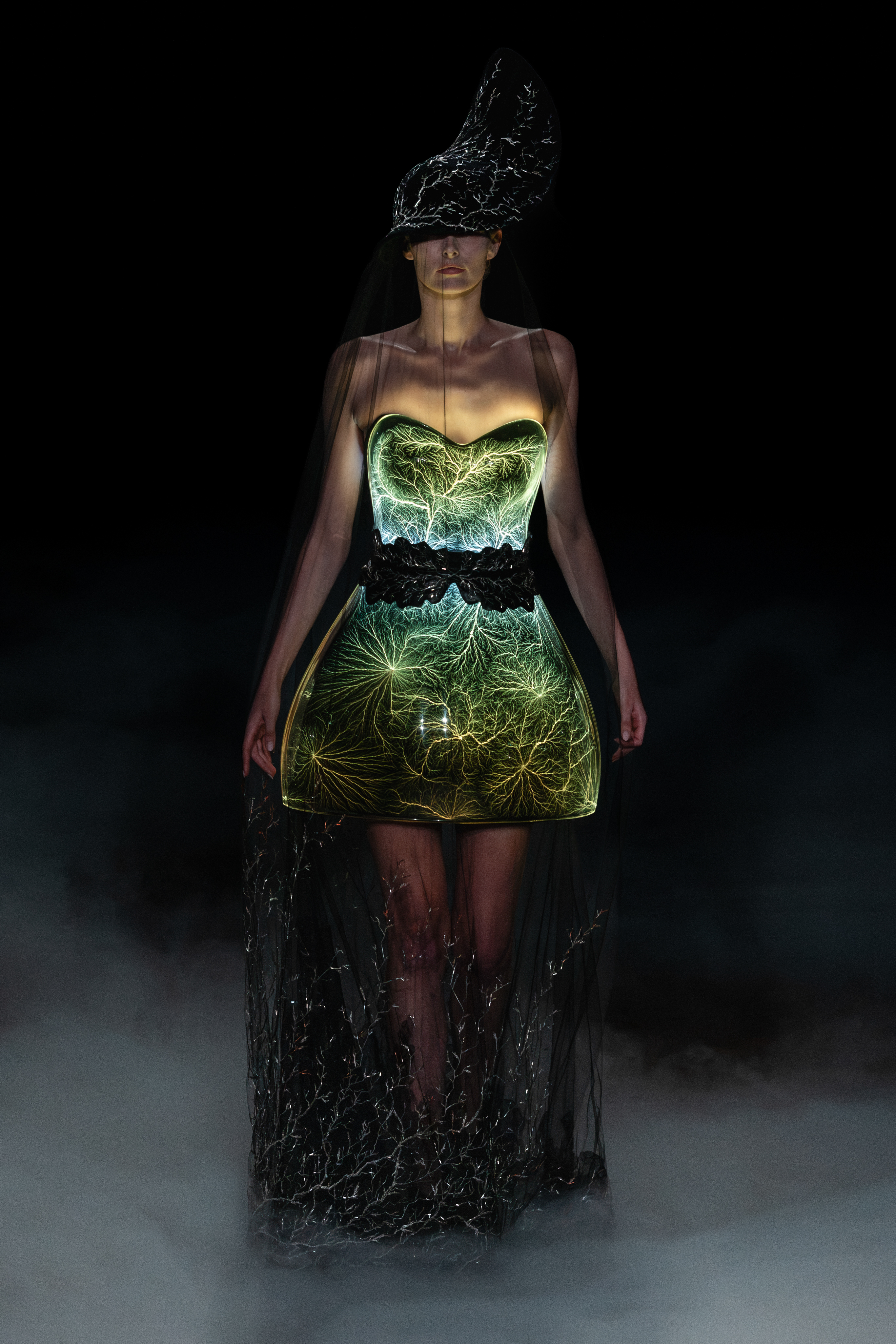
Another defining creation, the Fractal Universe look, was charged inside a particle accelerator and cryogenically preserved before the presentation. The intention was for its stored energy to be released during the show, creating lightning-like patterns across the garment. Instead, the electrical discharge began independently in the days before the runway, leaving branching structures inside the material. That tension between discipline and unpredictability ran throughout the Iris van Herpen couture collection.
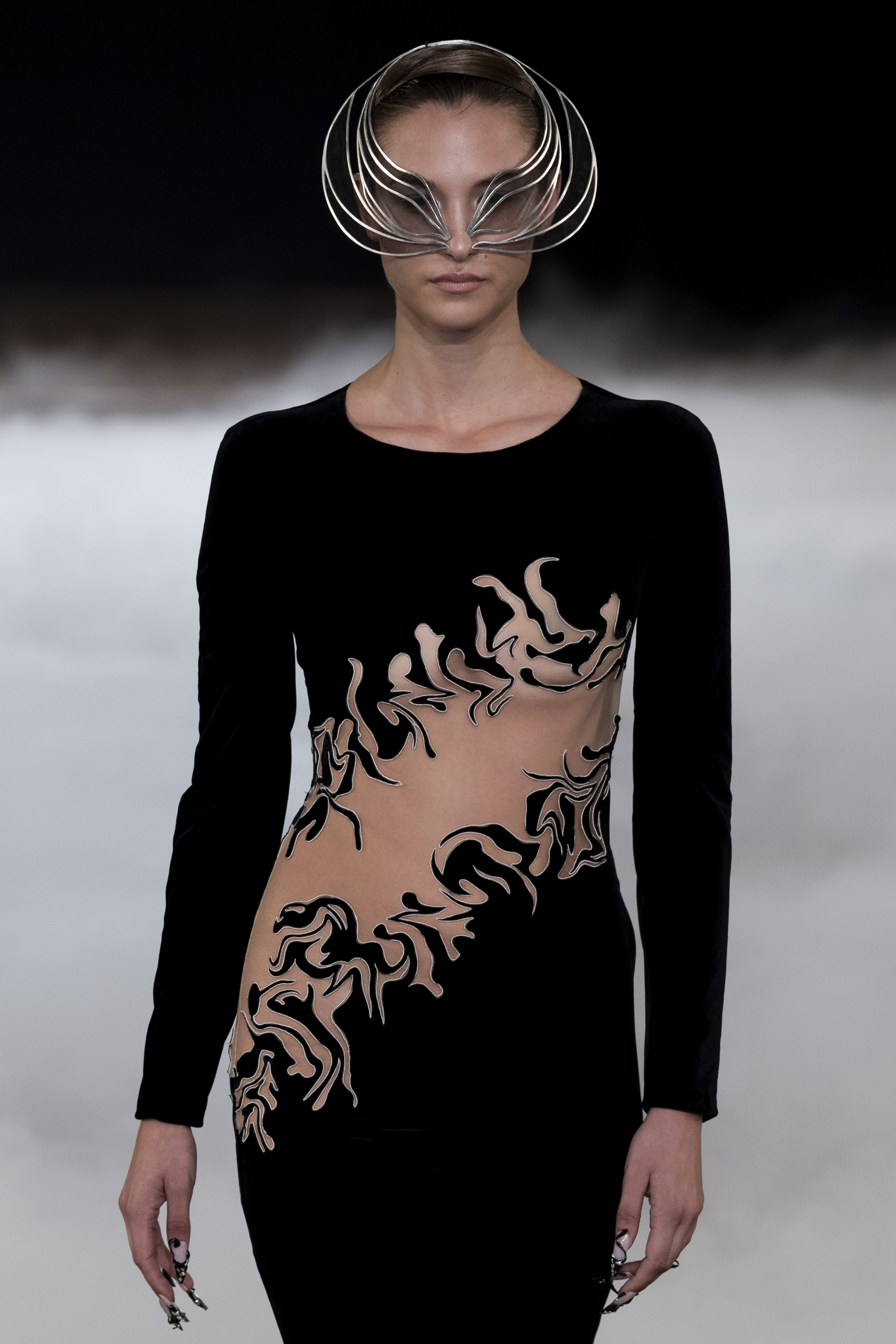
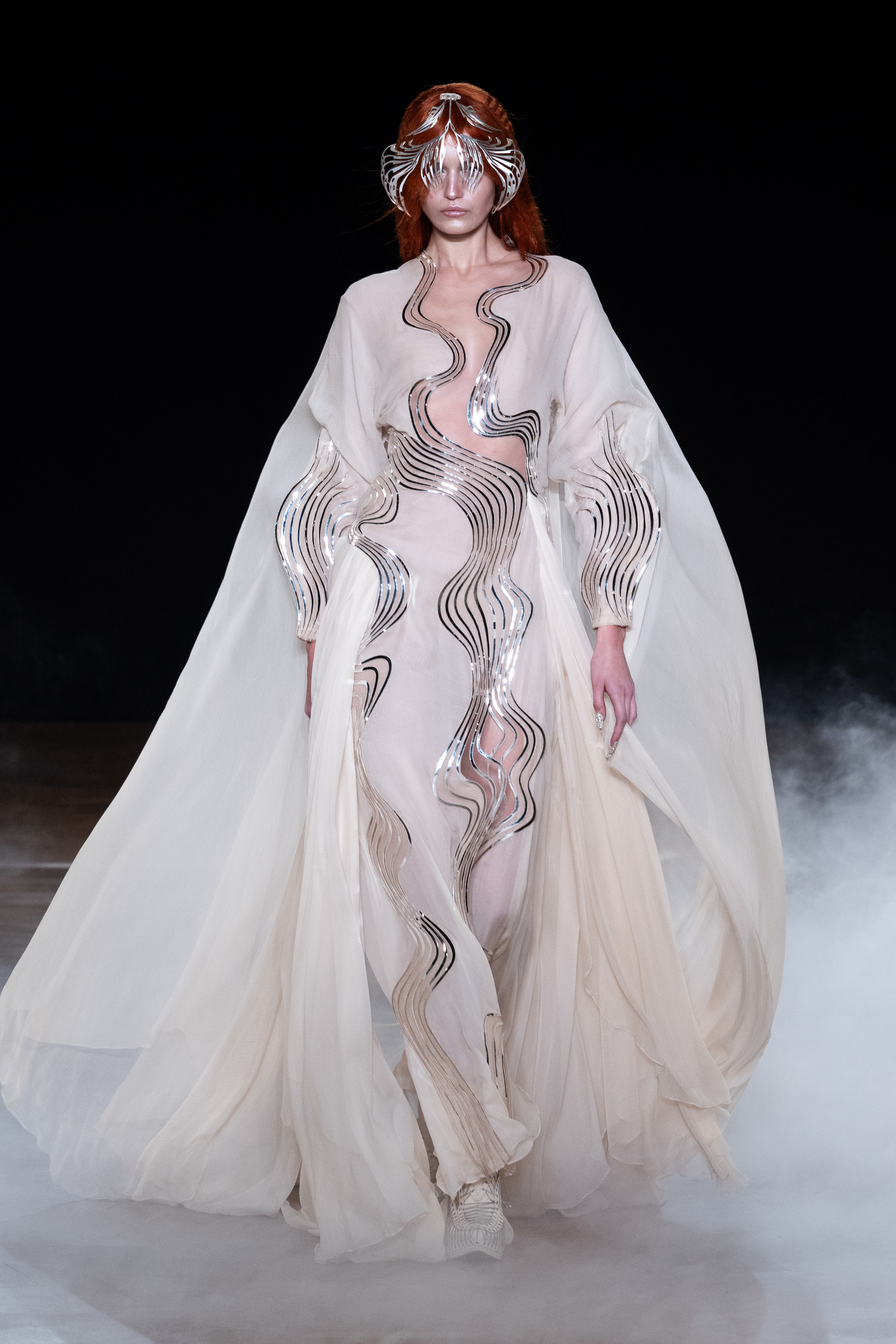
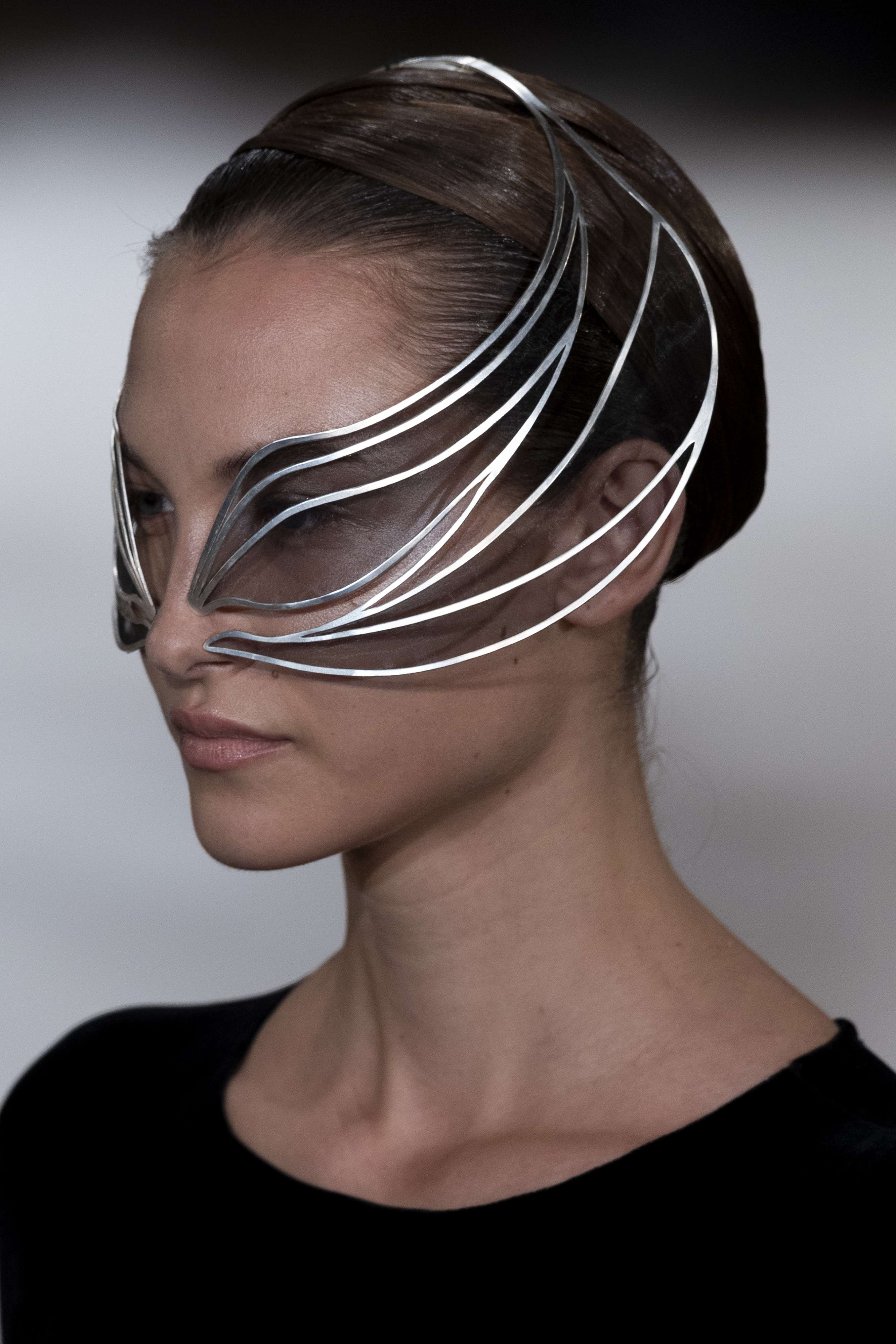
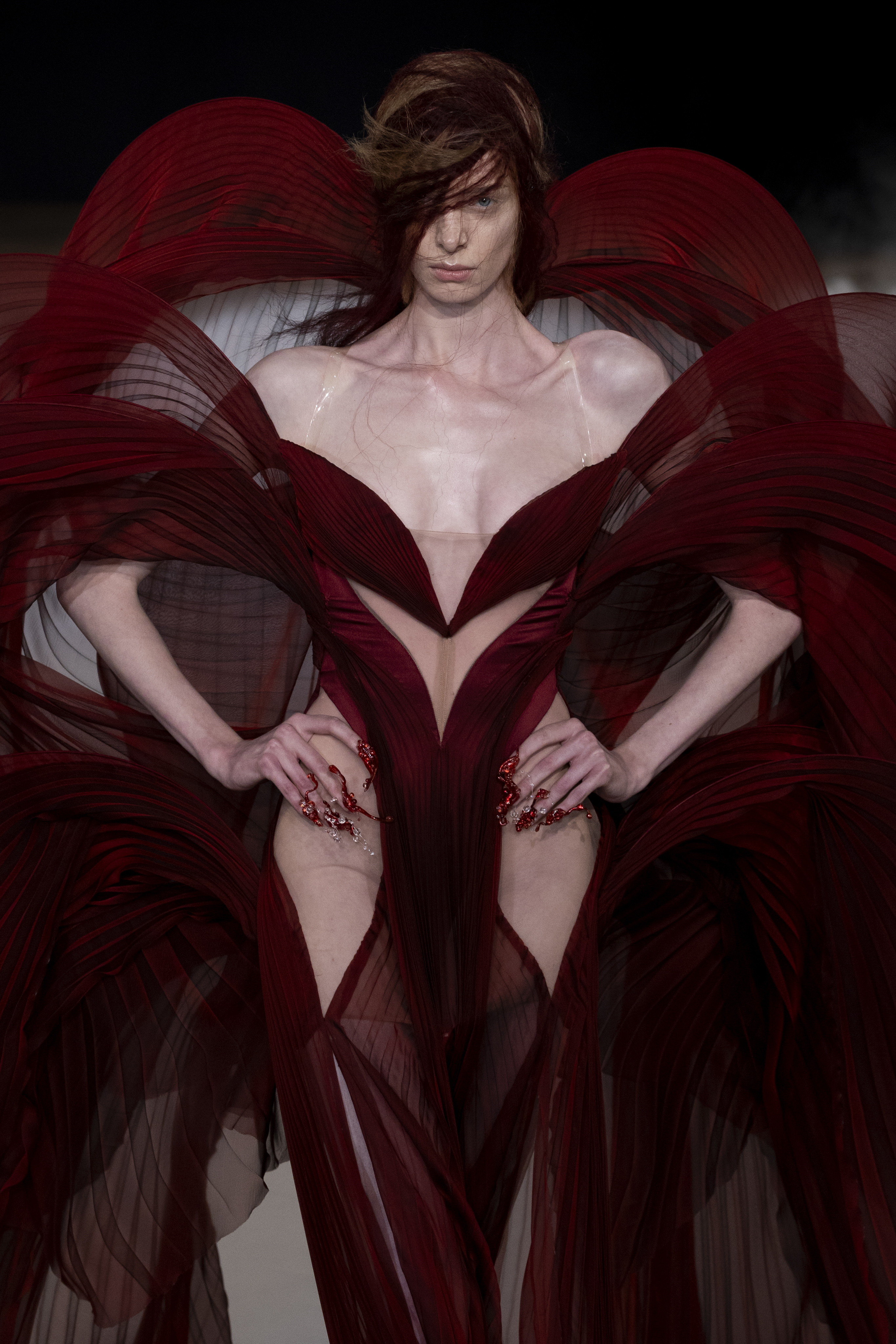
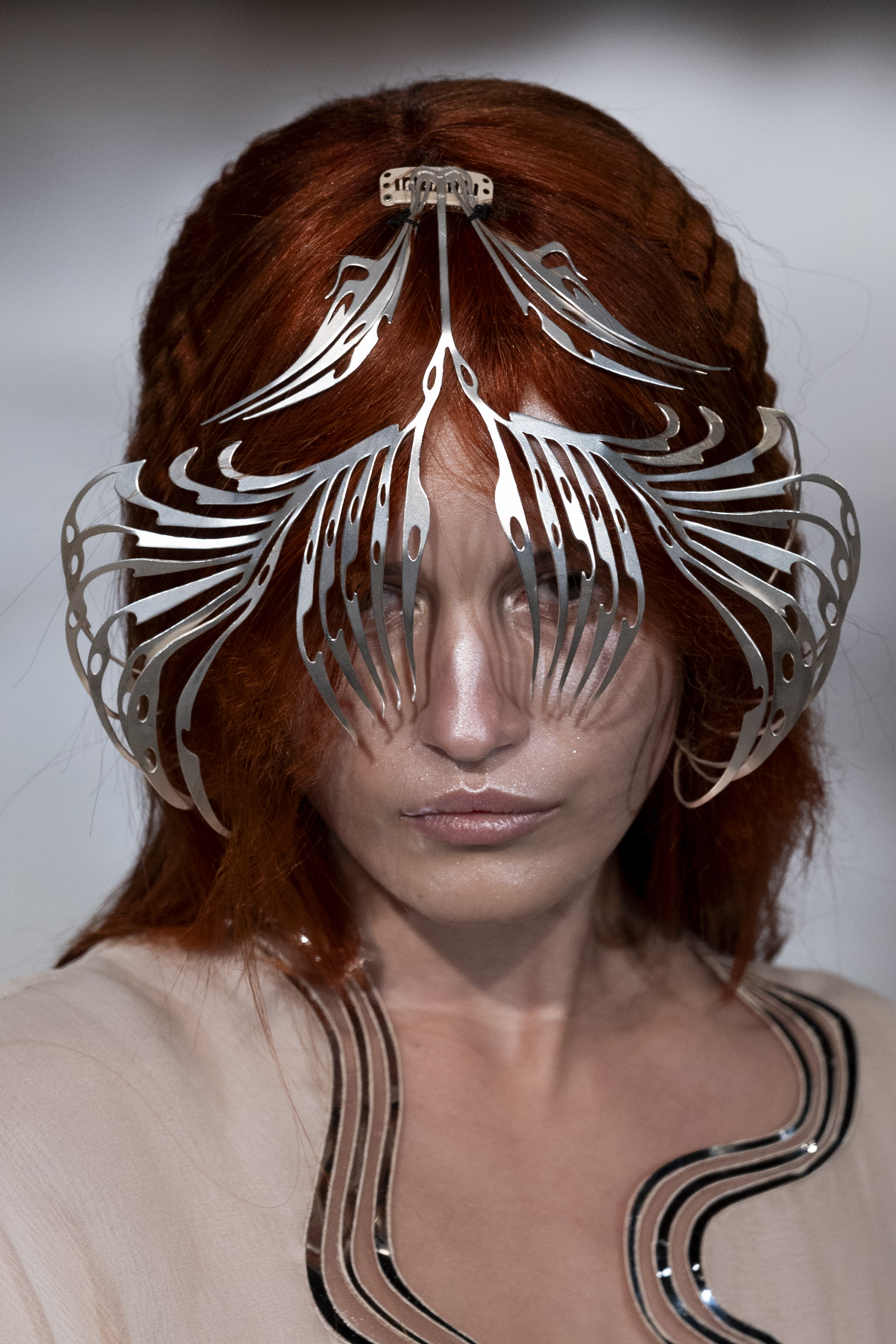
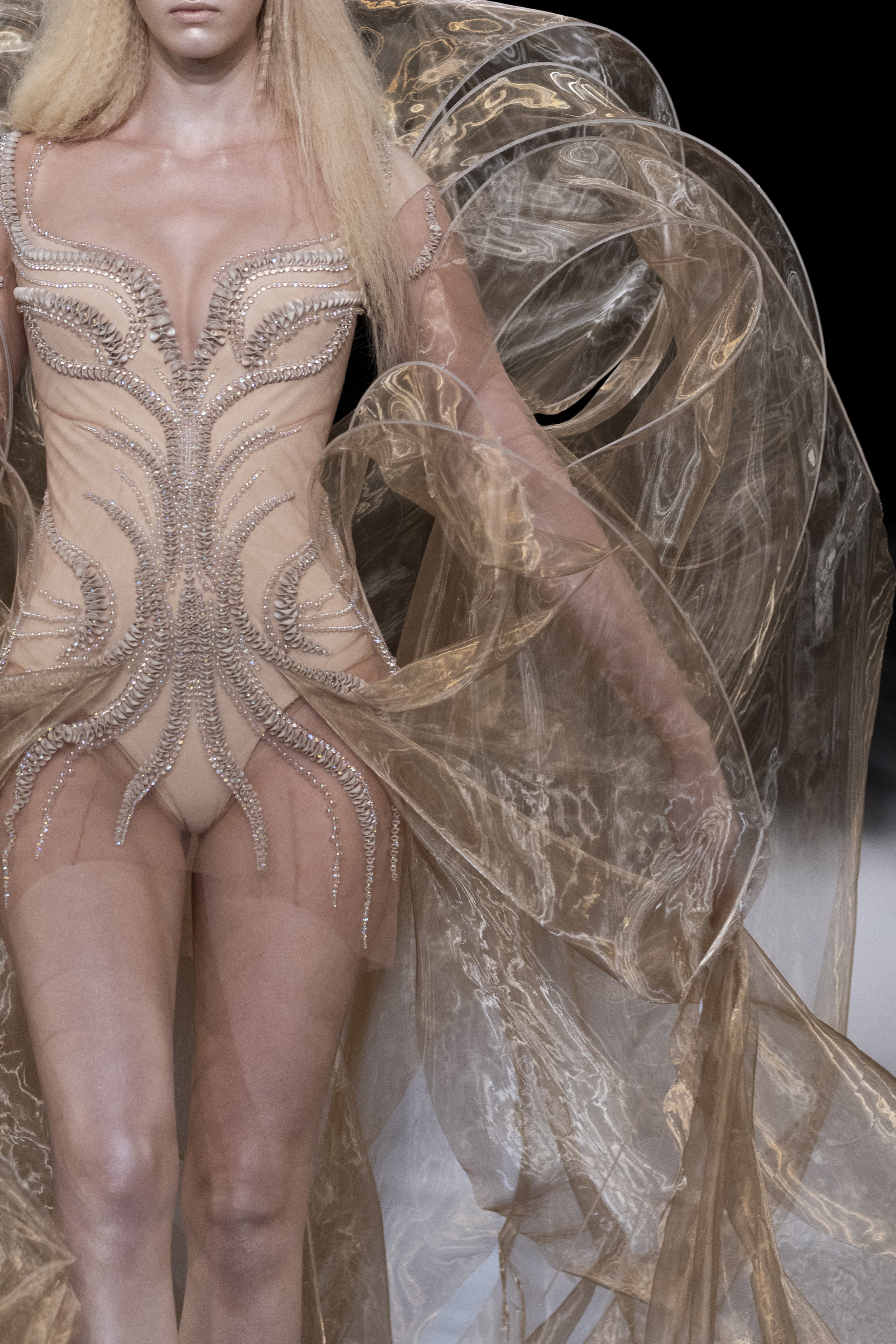
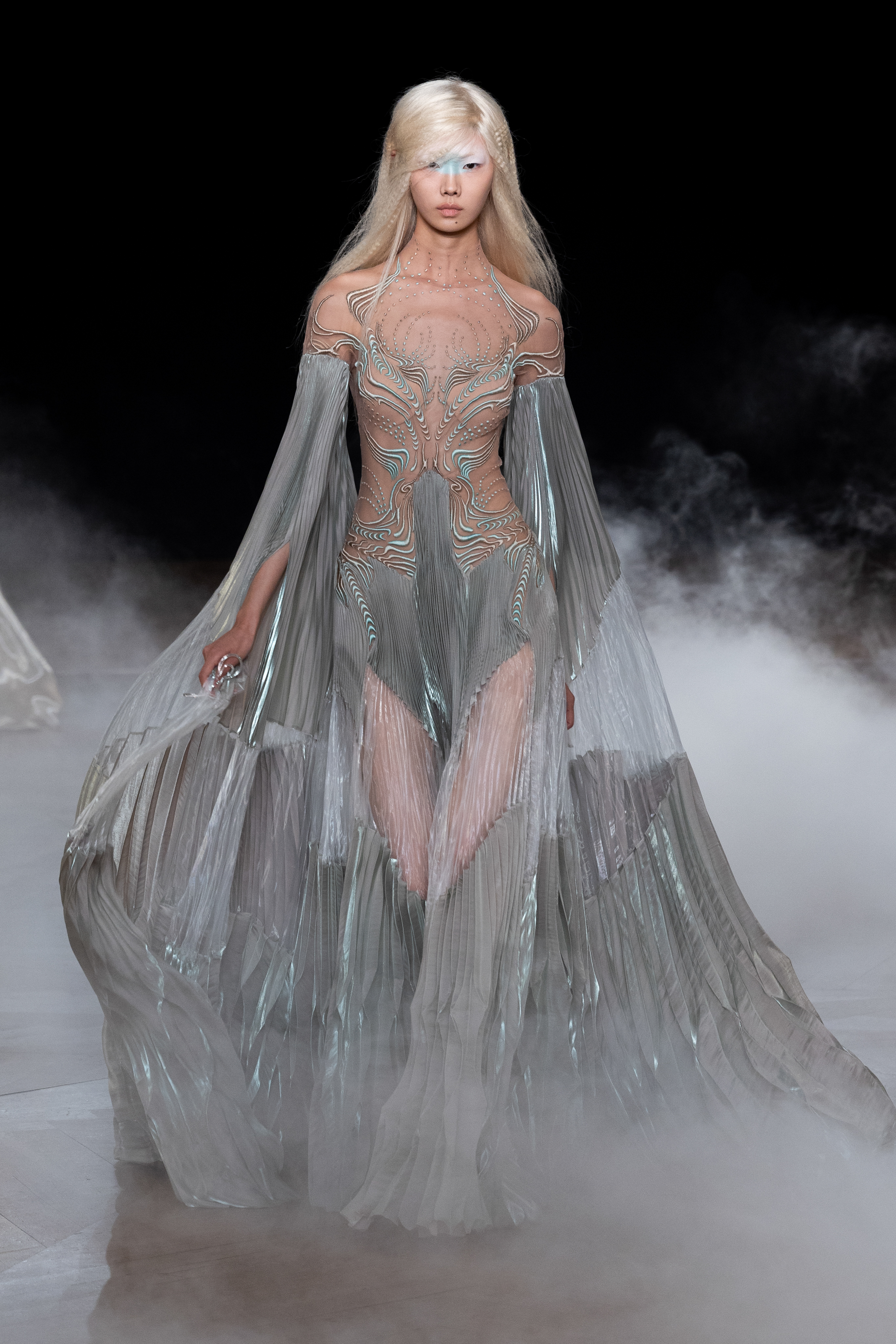
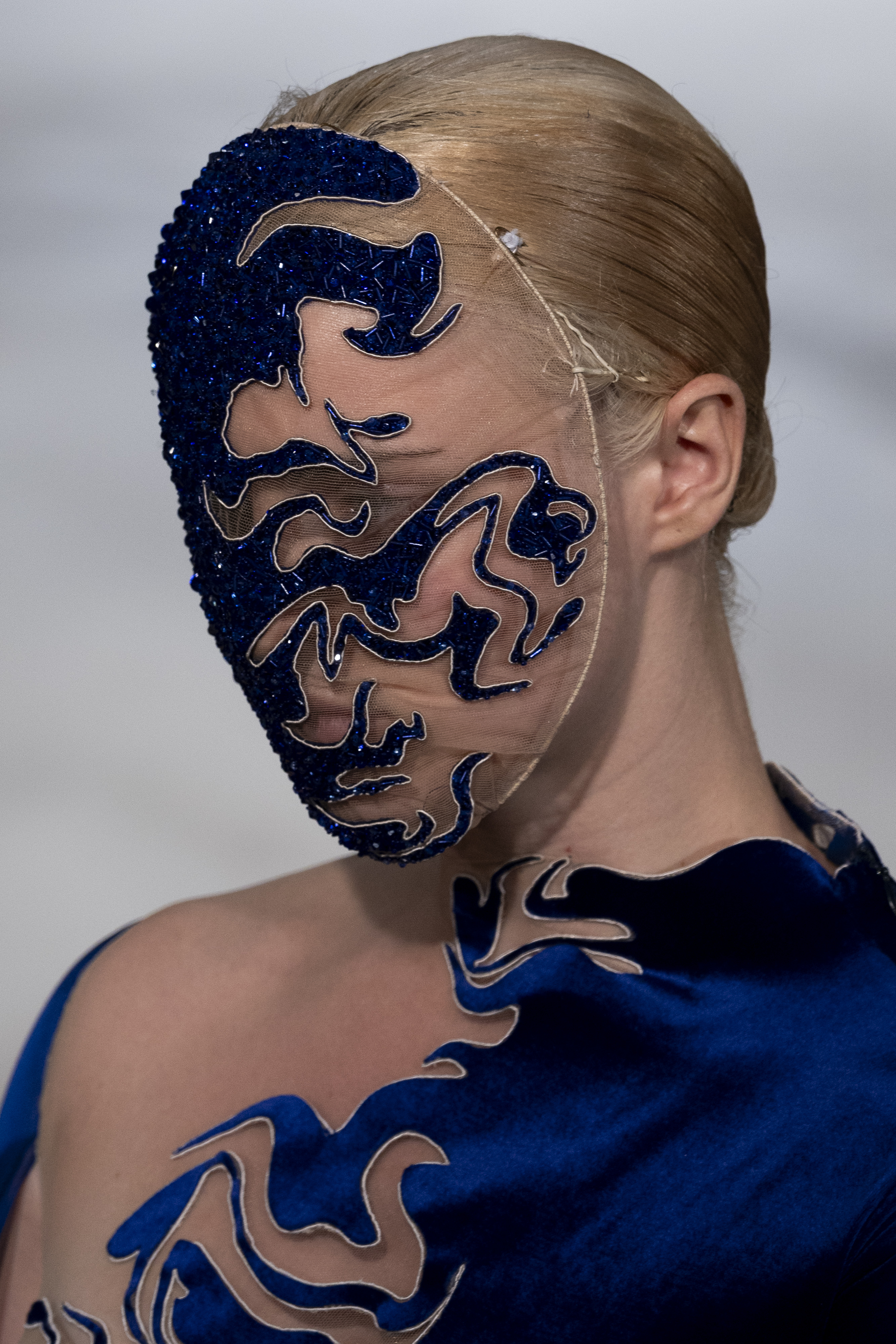
Laser-cut velvet curved over the body before continuing onto the skin through embroidery. Chiffon and organza were pleated into sweeping, weightless structures, suspended by crescent-shaped carbon-fibre frameworks. Shades of midnight black, cobalt, moonstone green, nebula red and stormy silver shifted under the light, making the garments appear less like fixed objects than constantly changing fields of energy.
The concept was also connected to Margaret Watts Hughes, the 19th-century artist and inventor who developed the Eidophone, an instrument that translated the vibrations of the human voice into visual patterns. In van Herpen’s universe, her experiments find an unexpected connection with astrophysics: from a single voice to a distant star, invisible frequencies can generate form. The sculptural couture gowns moved like wings, waves and celestial organisms. The silhouettes were dramatic without becoming heavy, intricate without losing their sense of movement.
Her work continues to evolve because the questions behind it remain open: What can a garment become? Where does the body end? Can something as immaterial as light, sound or energy be worn? Van Herpen does not abandon the codes that have defined her career. She refines them, pushes them further and discovers new territories within them. Her creative identity is immediately recognisable, yet the fascination remains intact.
In a couture season built around exceptional craftsmanship, Iris van Herpen Fall/Winter 2026–2027 offered something even rarer: a vision of technology in fashion that still leaves room for mystery. And still, beneath all this scientific research, the collection remained unapologetically romantic.
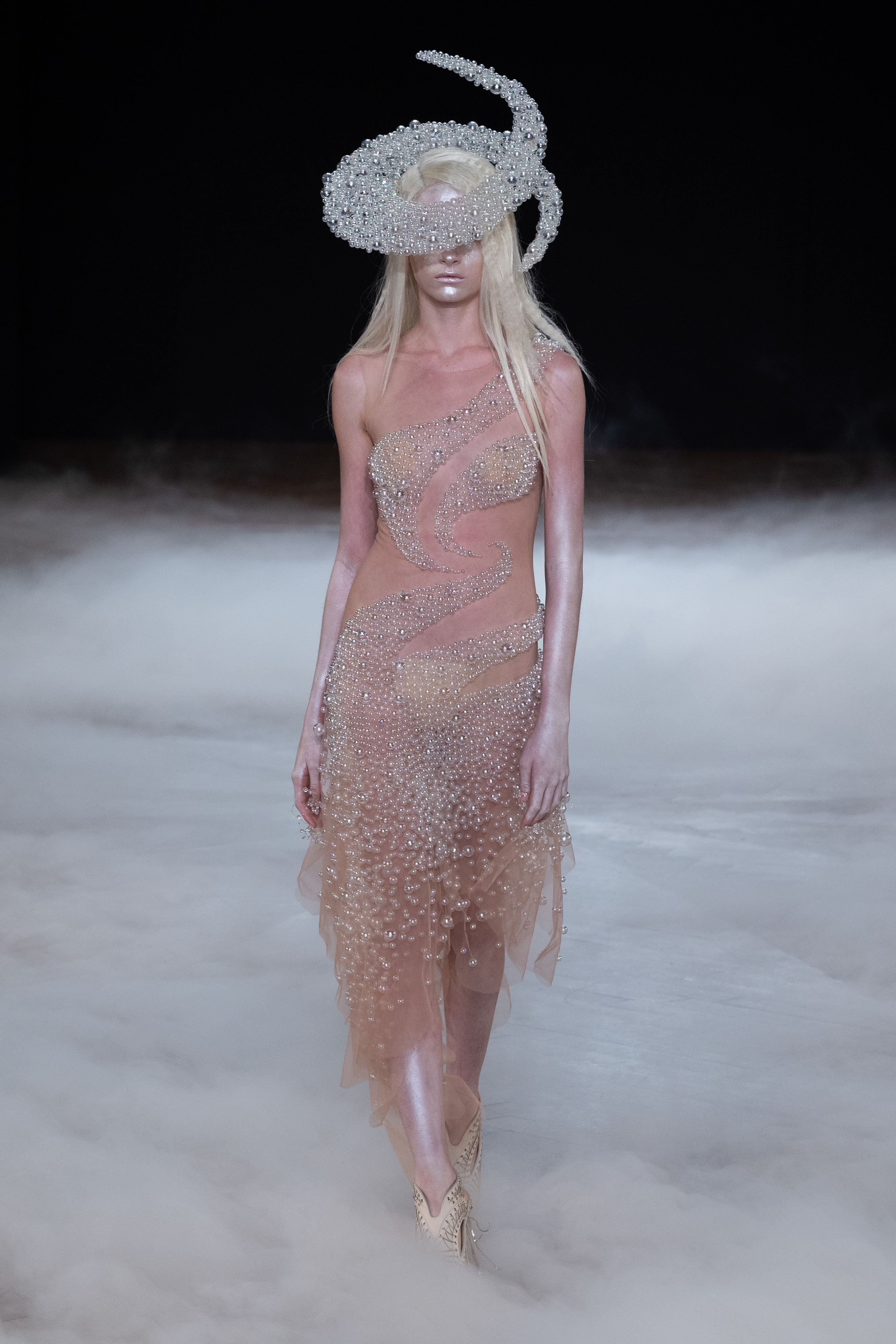
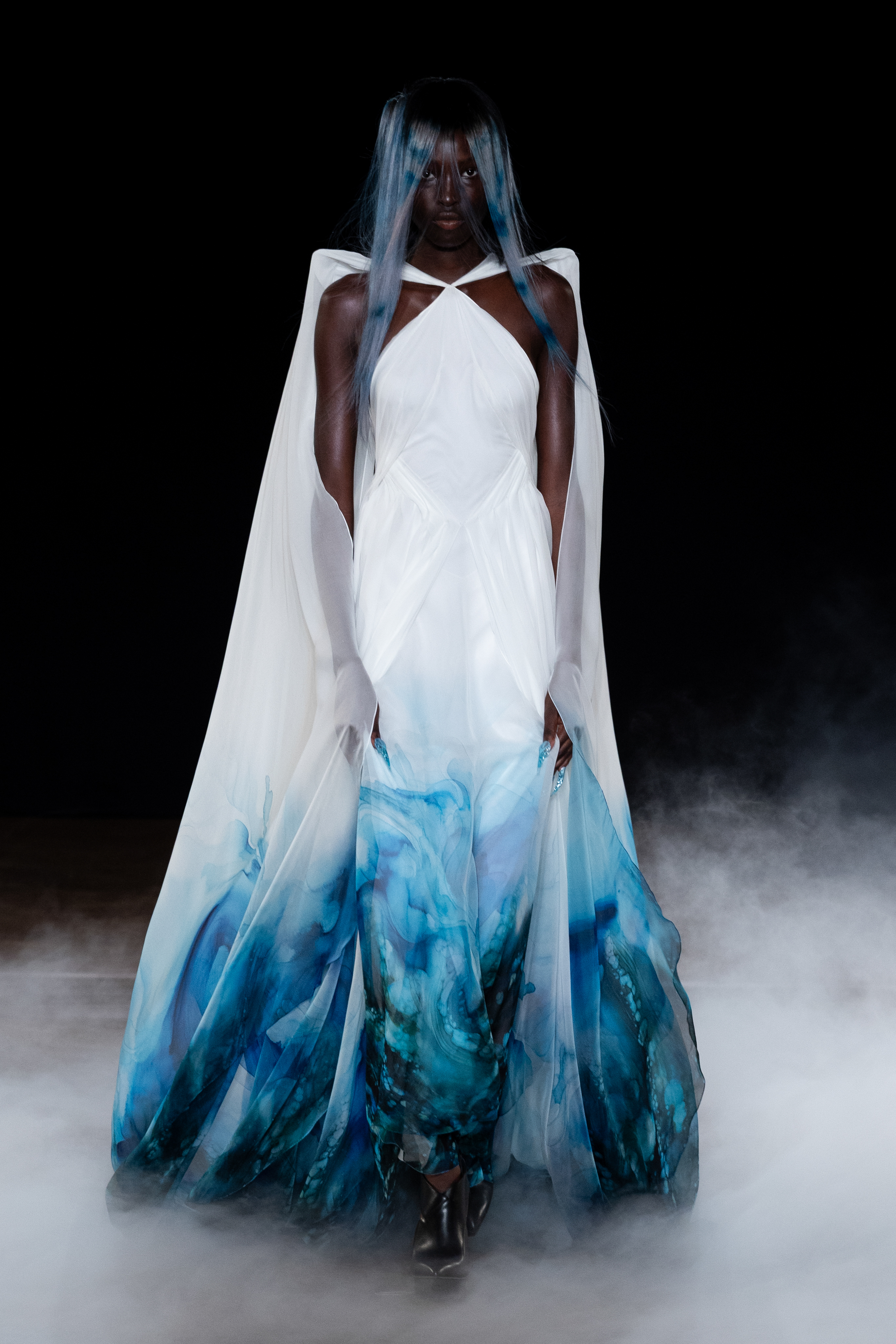
The sculptural couture gowns moved like wings, waves and celestial organisms. The silhouettes were dramatic without becoming heavy, intricate without losing their sense of movement. This was dreamlike couture created through some of the most advanced processes imaginable. After years of exploring the relationship between the body, nature, architecture and technology, van Herpen could easily risk becoming predictable. Instead, Sonic Starquakes demonstrates that remaining faithful to a signature vision—loyal to her clients, her principles and her instinct to explore other dimensions—does not mean standing still. Van Herpen remains connected to the universe, plays with the boundaries of the body and invites us into a world where art, fashion and technology collide without restraint.
Images courtesy of Iris Van Herpen
Images courtesy of Iris Van Herpen