by Ada Maria Francesca Romeo
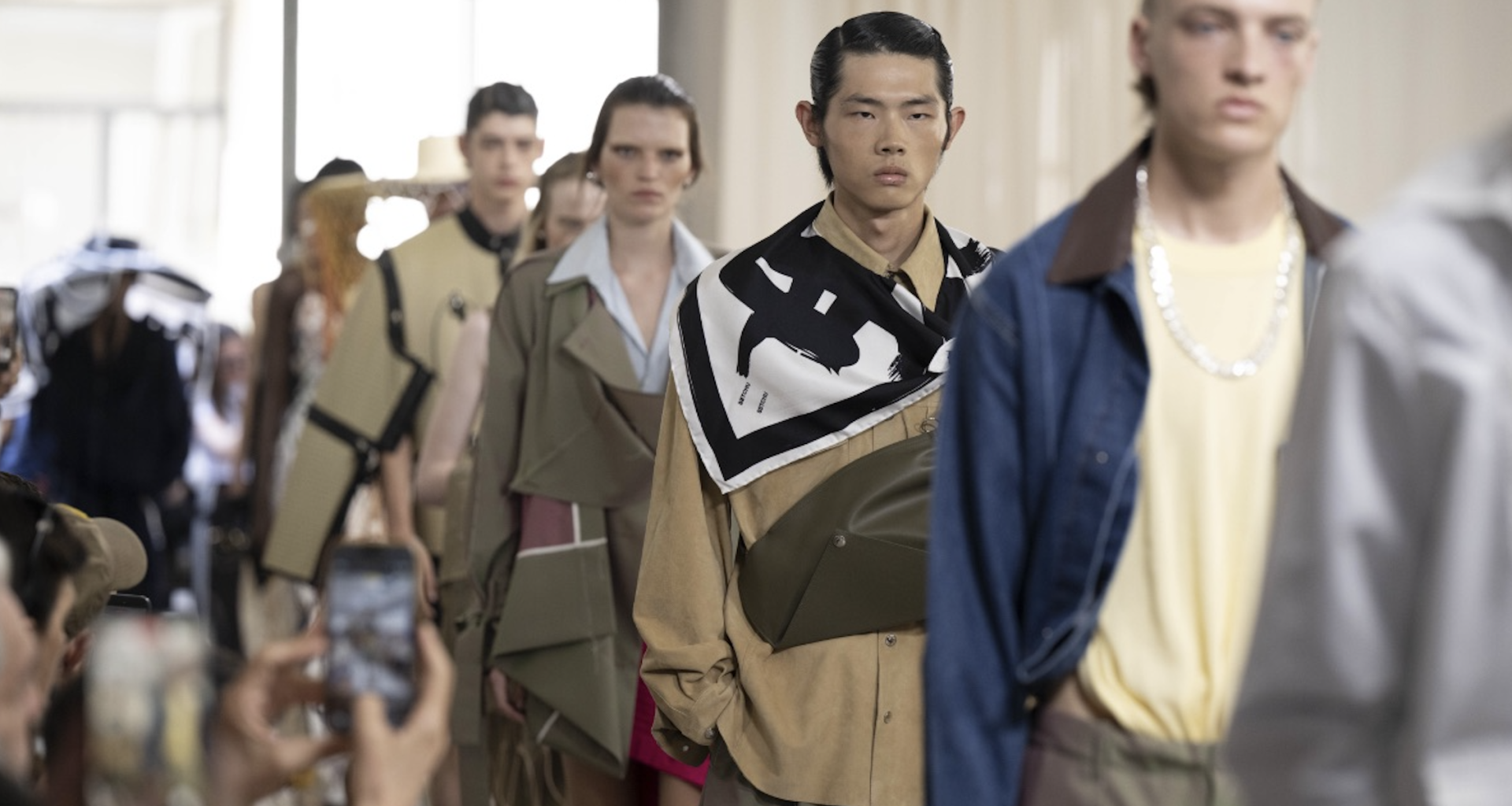
From Setchu’s Japanese heritage to Moarno’s Southern Italian rural traditions, and Sergio Davila’s cross-cultural vision, the new talents of Milan Fashion Week Men’s Spring/Summer 2027 demonstrated how contemporary fashion continues to draw its greatest strength from cultural identity, transforming heritage into a language of modern menswear.
Despite their distinct creative languages, all three brands share a common vision: transforming places, memories, and traditions into design tools, creating collections that go beyond aesthetics to tell stories of belonging, craftsmanship, and authenticity. The result is a new vision of menswear that embraces the future without losing sight of its roots, reinterpreting heritage through a contemporary lens.
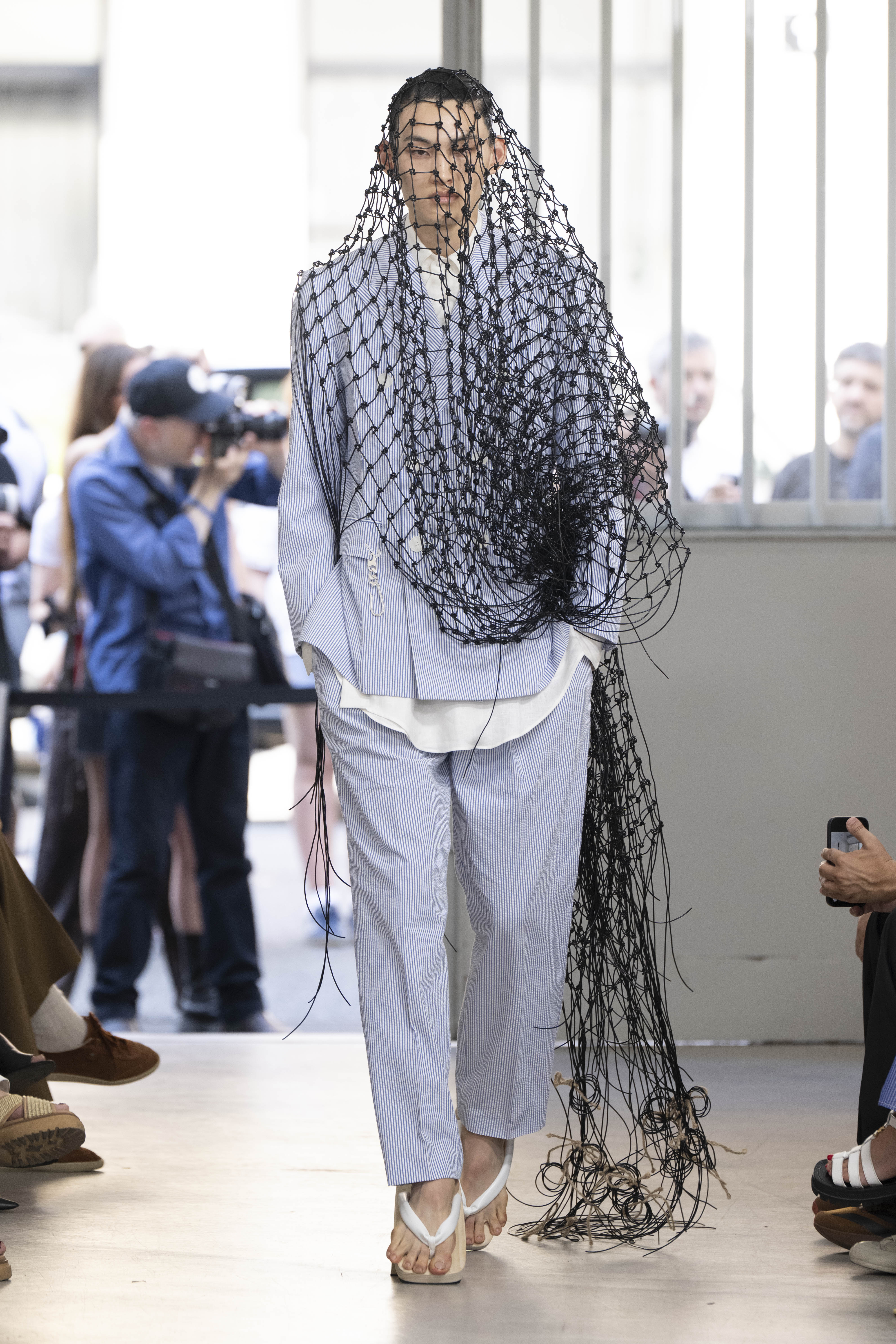
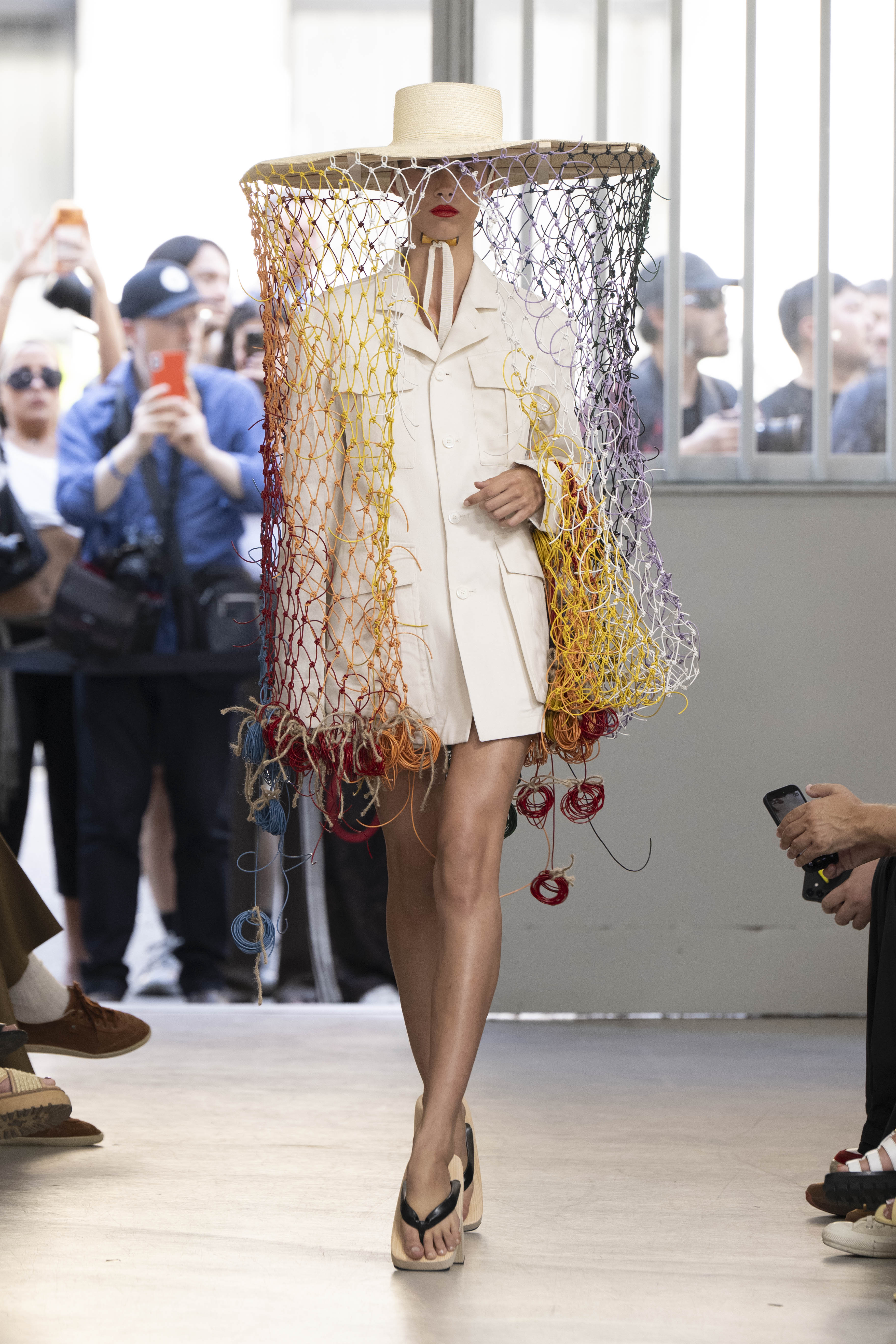
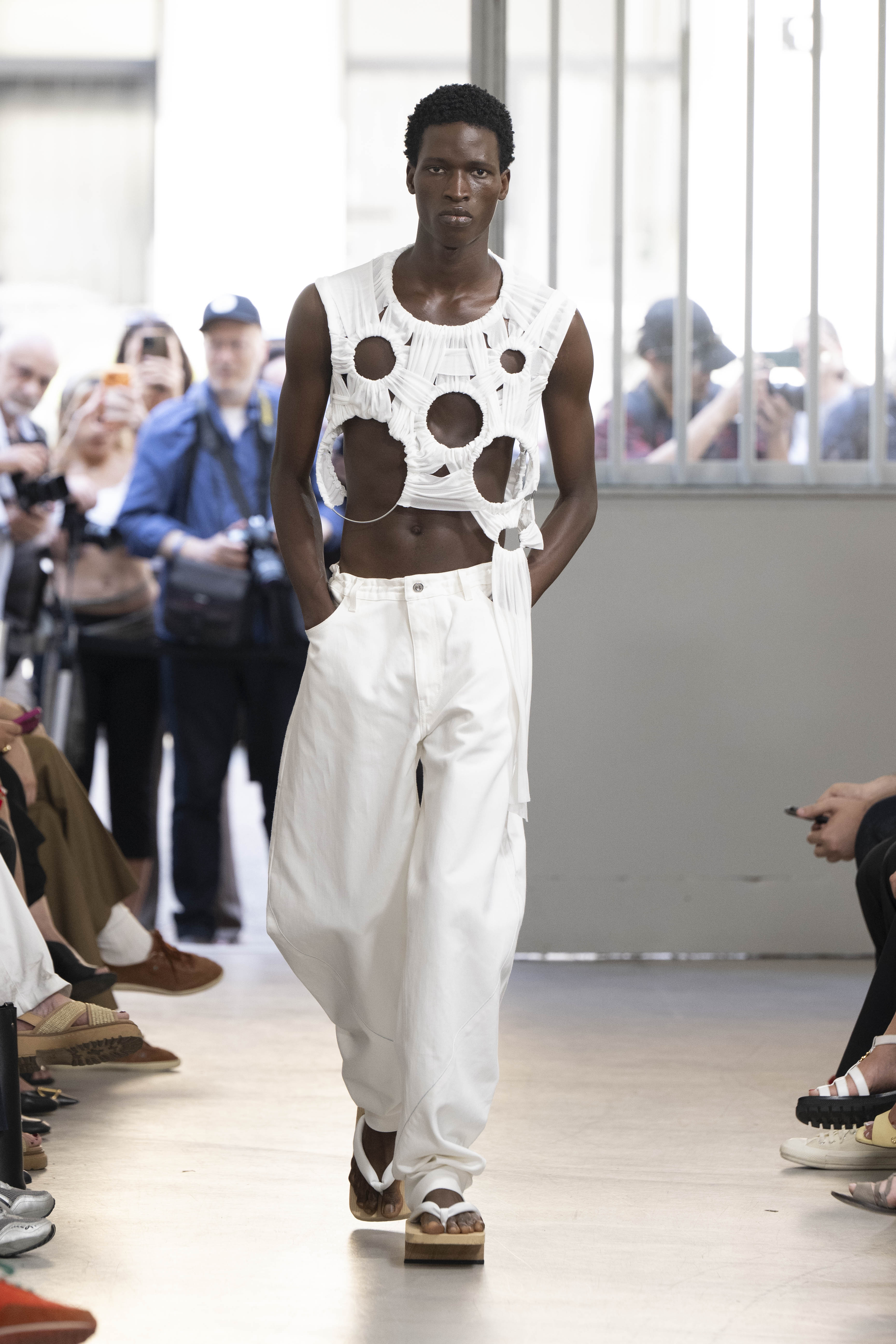
For SS27, Japanese designer Satoshi Kuwata unveiled Caught in the Nets, Setchu‘s collection limited to just 17 looks as a deliberate reflection on consumerism and the fashion industry’s culture of overproduction. Deeply connected to the world of fishing, Kuwata translated his travels into design, drawing inspiration this season from a trip to Gabon, where he observed traditional river fishing practices. The collection’s defining element is a series of leather fishing nets hand-knotted using the traditional Japanese square-knot technique.
These nets become both a visual motif and a structural device, shaping garments conceived as contemporary armor, fluid, elegant, and protective in an increasingly unstable world. Highlights include a grey pinstripe suit entirely enveloped by a dramatic black fishing net trailing across the floor, alongside an oversized straw hat supporting a sculptural, multicolored netted structure above the torso. The collection is further defined by the interplay of geometric forms, particularly rectangles and circles, inspired by the proportions of origami paper, one of Setchu’s signature design codes.
Images courtesy of Setchu
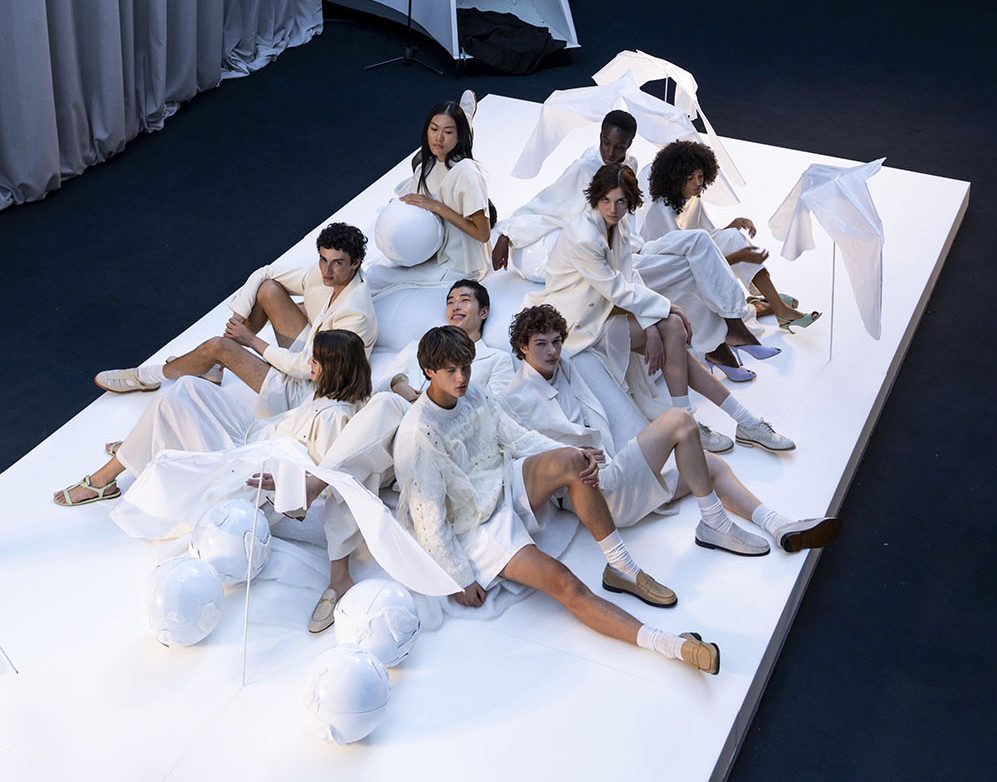
Italian label Moarno presented La Controra, a collection rooted in the rural culture of Southern Italy. Its title refers to the hottest hours of the day, when the sun becomes too intense for fieldwork, creating a natural pause for rest, reflection, and regeneration. La controra becomes a contemporary metaphor, an invitation to slow down, rediscover an authentic rhythm, and reflect on what remains once the noise of everyday life fades away.
This suspended atmosphere is inhabited by archetypal figures inspired by Southern Italian tradition, including farmers, shepherds, harvesters, cheesemakers, drifters, and intellectuals, portrayed as ordinary people with rich inner lives. The garments are designed to accompany the wearer over time, evolving through use and becoming part of their personal story. Relaxed, gender-fluid silhouettes feature aprons, smocks, boxy shirts, skirts, bermuda shorts, and pajama-inspired uniforms. Functional pockets, loose knots, and unfinished details soften the garments’ rigorous construction, creating movement that echoes the gentle transition from labor to the restorative calm of the controra.
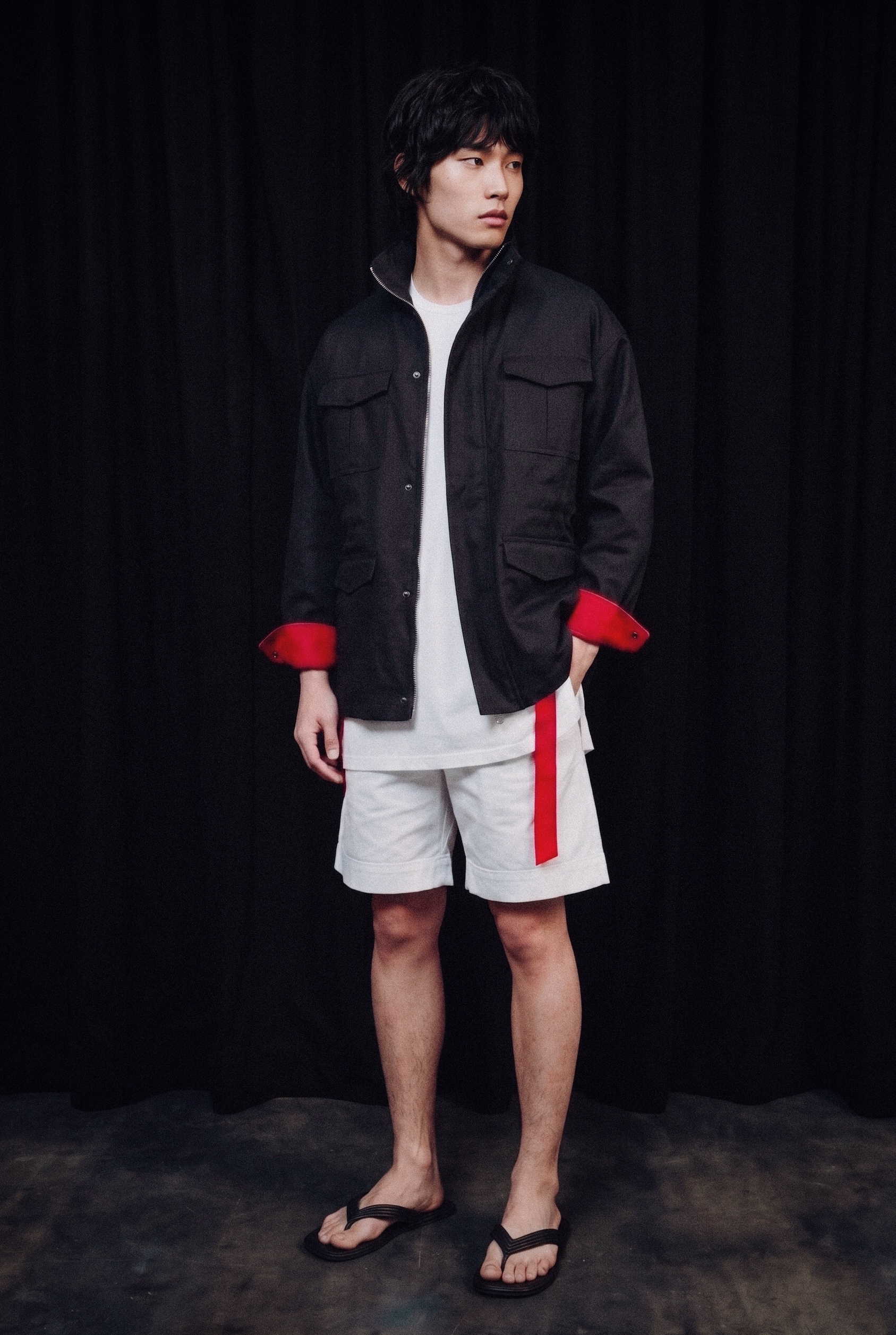
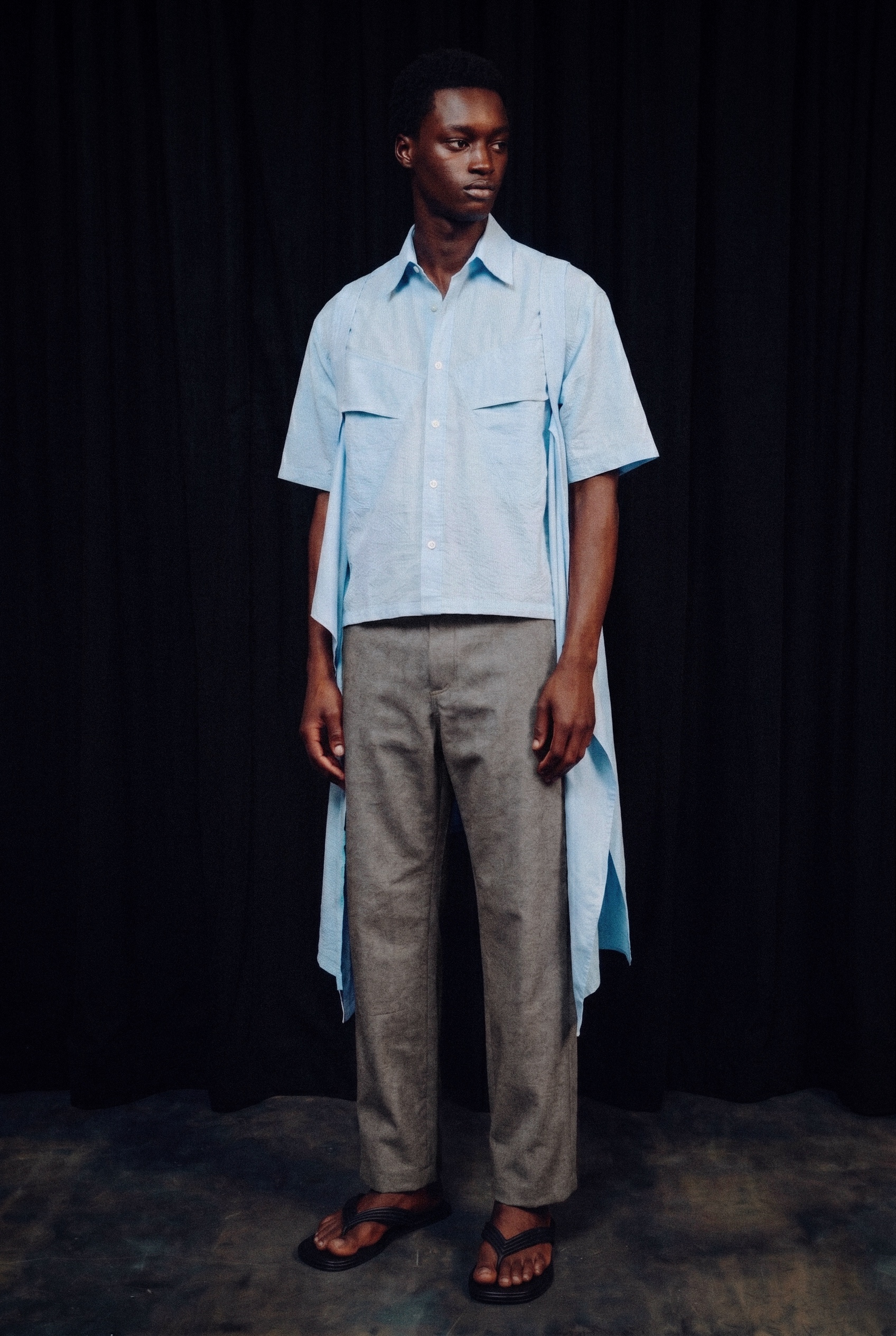
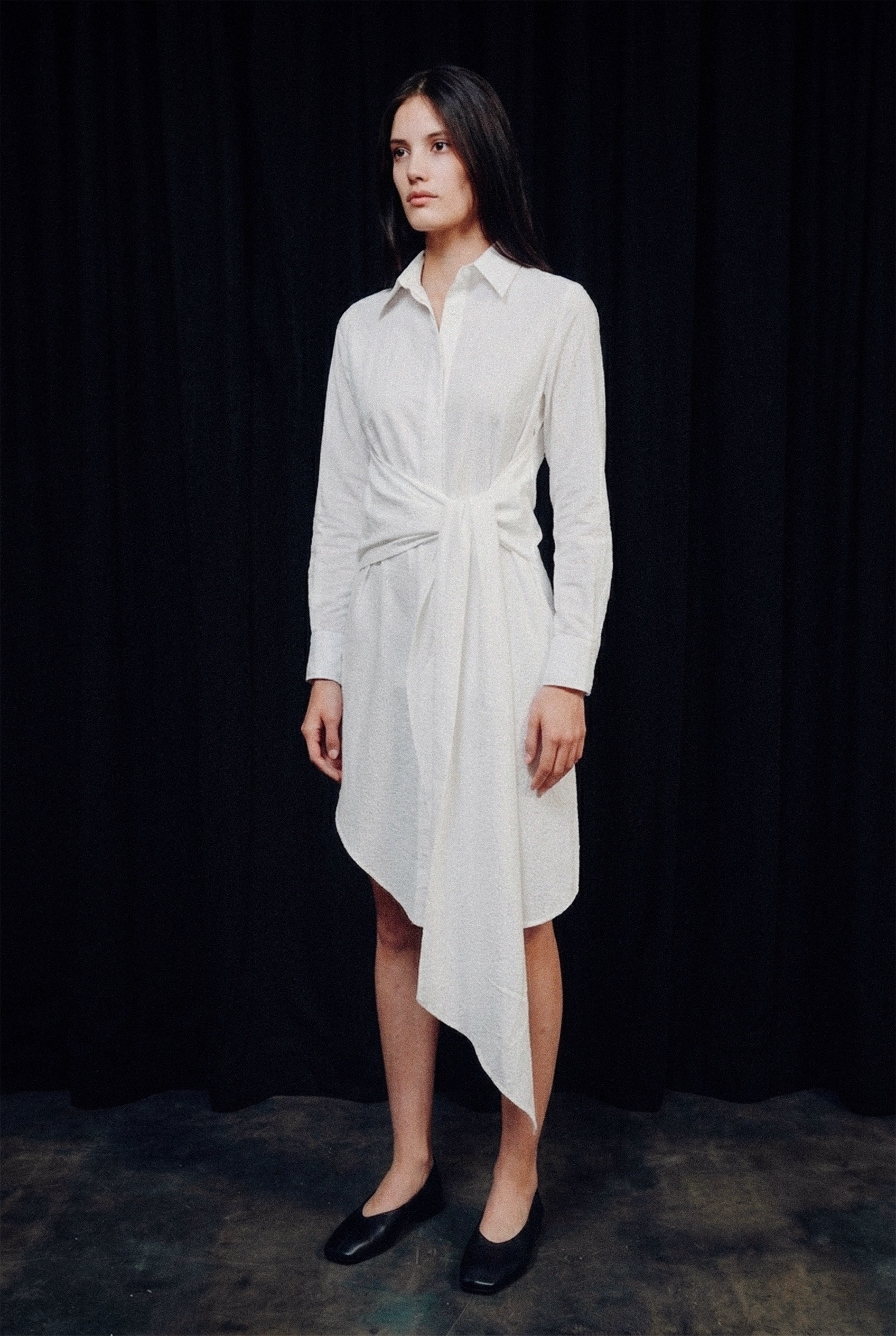
Images courtesy of Moarno
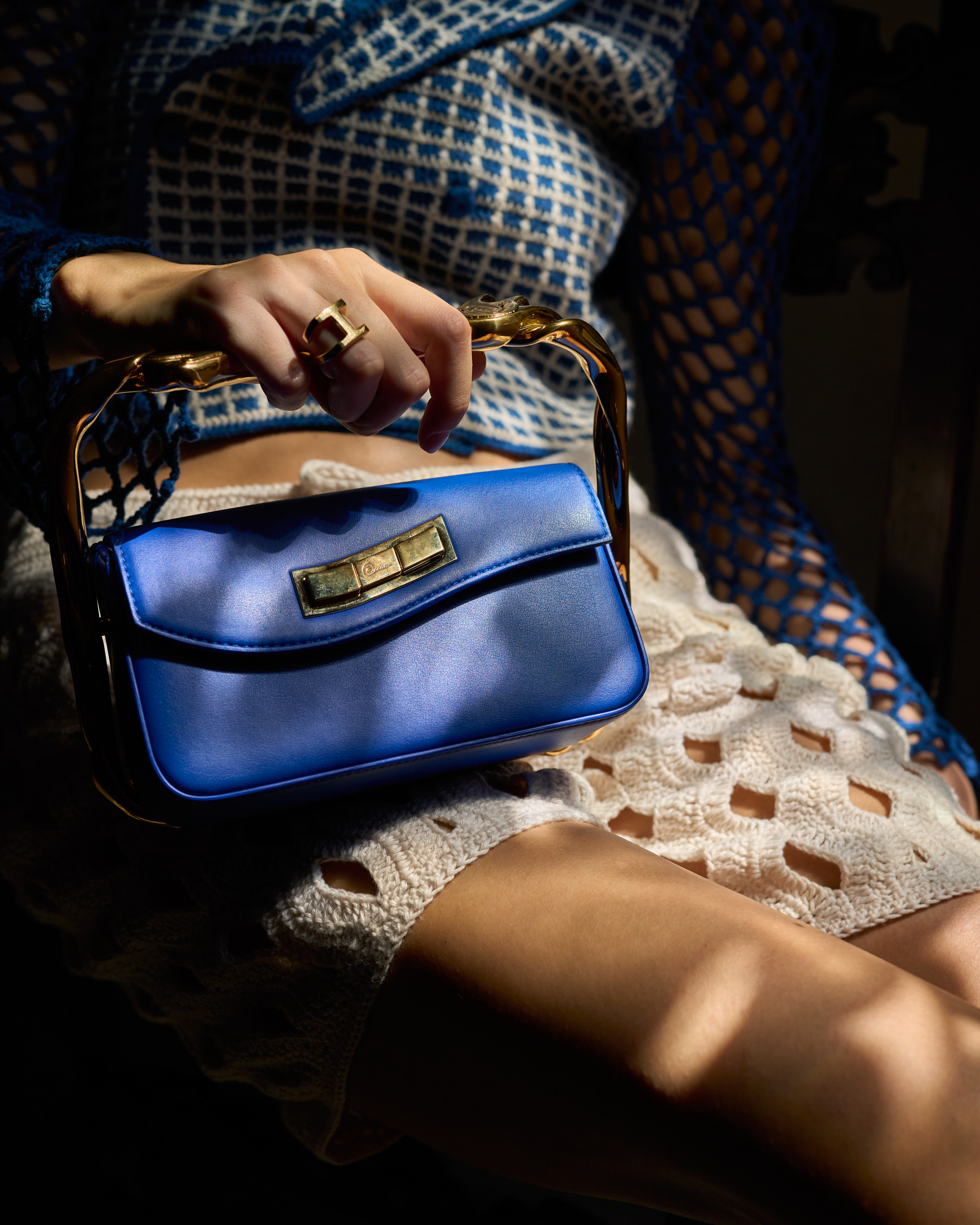
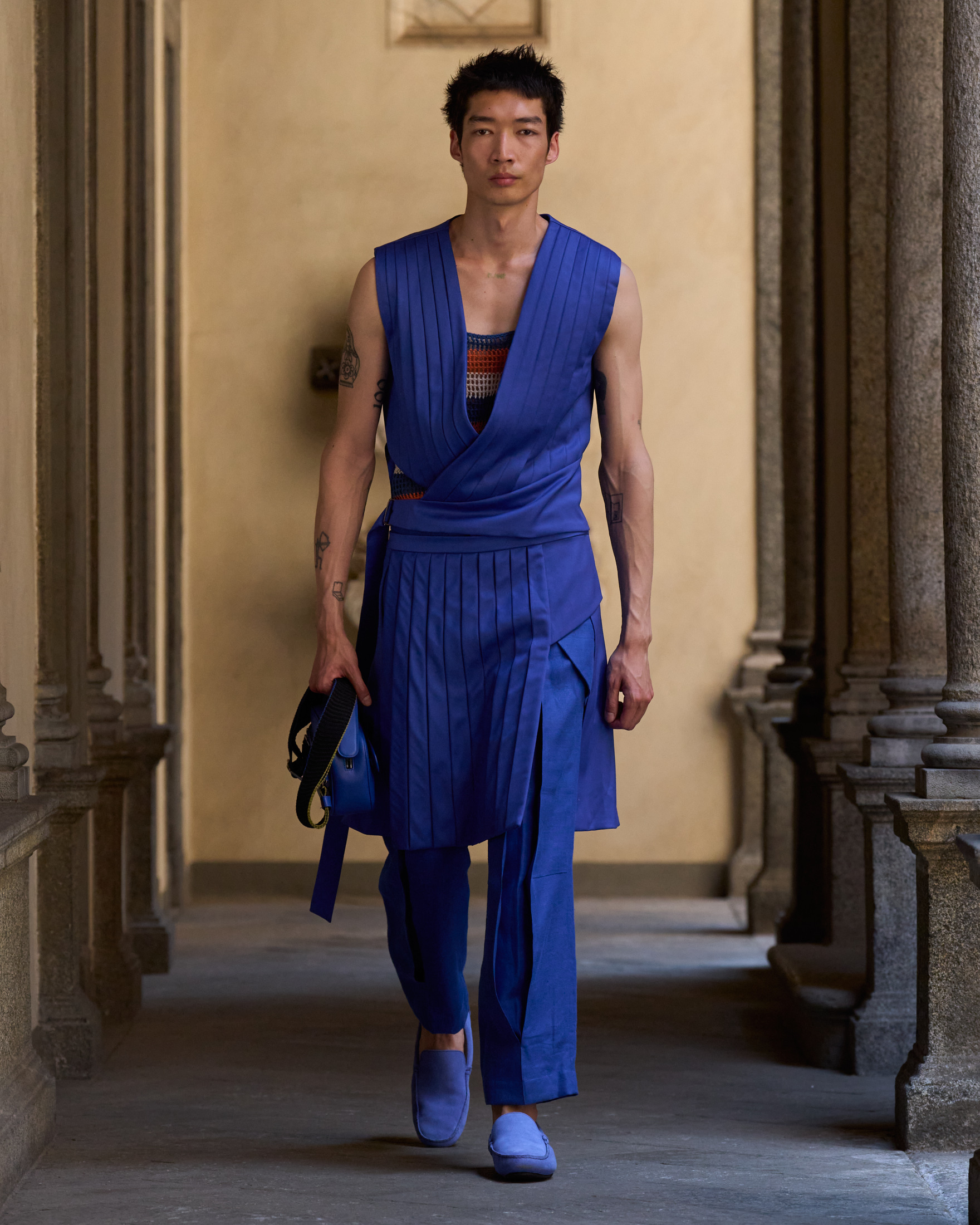
With his Spring/Summer 2027 collection, New York–based designer Sergio Davila presents a personal narrative shaped by the places, cultures, and experiences that have defined his creative identity. The freedom and individuality of late-1990s San Francisco meet the structured energy of early-2000s New York, where the designer created his first collections. Peru remains the emotional and material foundation of the brand through the use of precious fibers and ancestral textile techniques. Italy also plays a significant role: extended stays in Rome inspired Davila through the dynamic sculptures of Gian Lorenzo Bernini, whose sense of movement is reflected in fluid silhouettes that wrap naturally around the body.
The collection is further enriched by artwork from Peruvian illustrator Alvaro Felliu, whose colorful imagery introduces a vibrant summer atmosphere. Luxurious materials, including vicuña, baby alpaca, Pima cotton, and Tangüis cotton, reinforce the collection’s connection to Peru’s textile heritage, resulting in a wardrobe that treats craftsmanship as a living practice capable of bringing together cultural roots and contemporary design.
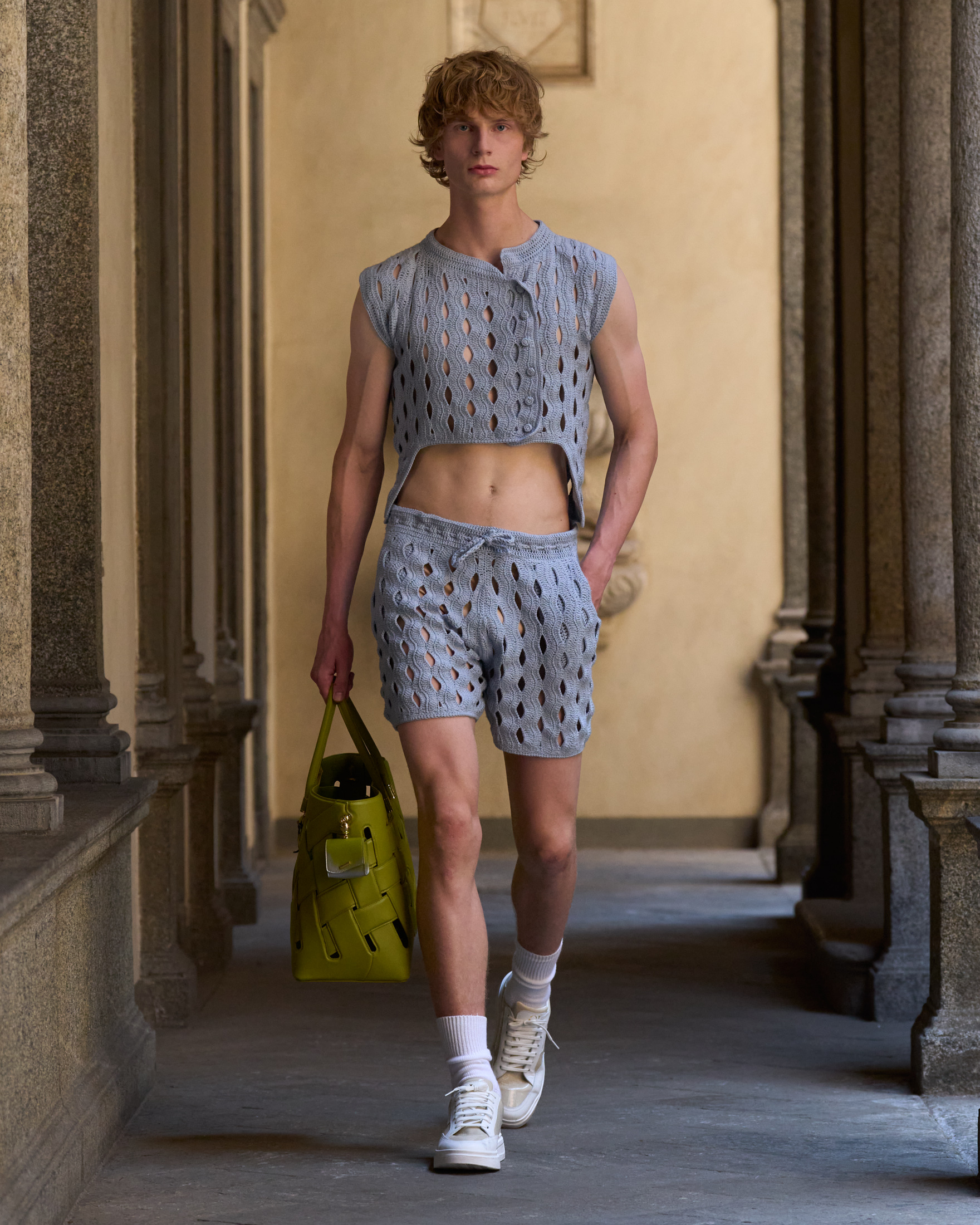
Images courtesy of Sergio Davila
In an increasingly global fashion landscape, these designers remind us that the most innovative ideas often spring from a deep connection to their origins.